Article

Model for Green AI and Sustainable Computing: Energy-Efficient Architectures and Carbon-Aware Deployment in Industrial Systems


Information and Technology Department, Durban University of Technology, Durban 4001, South Africa
*
Authors to whom correspondence should be addressed.
Computers 2026, 15(6), 339; https://doi.org/10.3390/computers15060339

Submission received: 23 April 2026 / Revised: 21 May 2026 / Accepted: 25 May 2026 / Published: 26 May 2026

Abstract

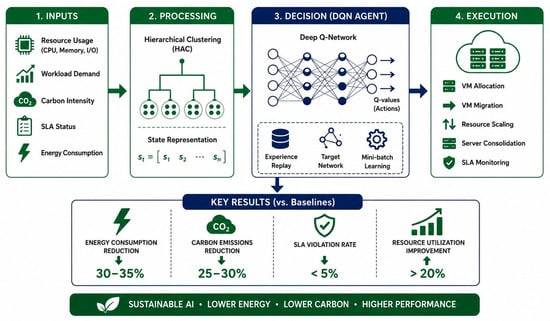
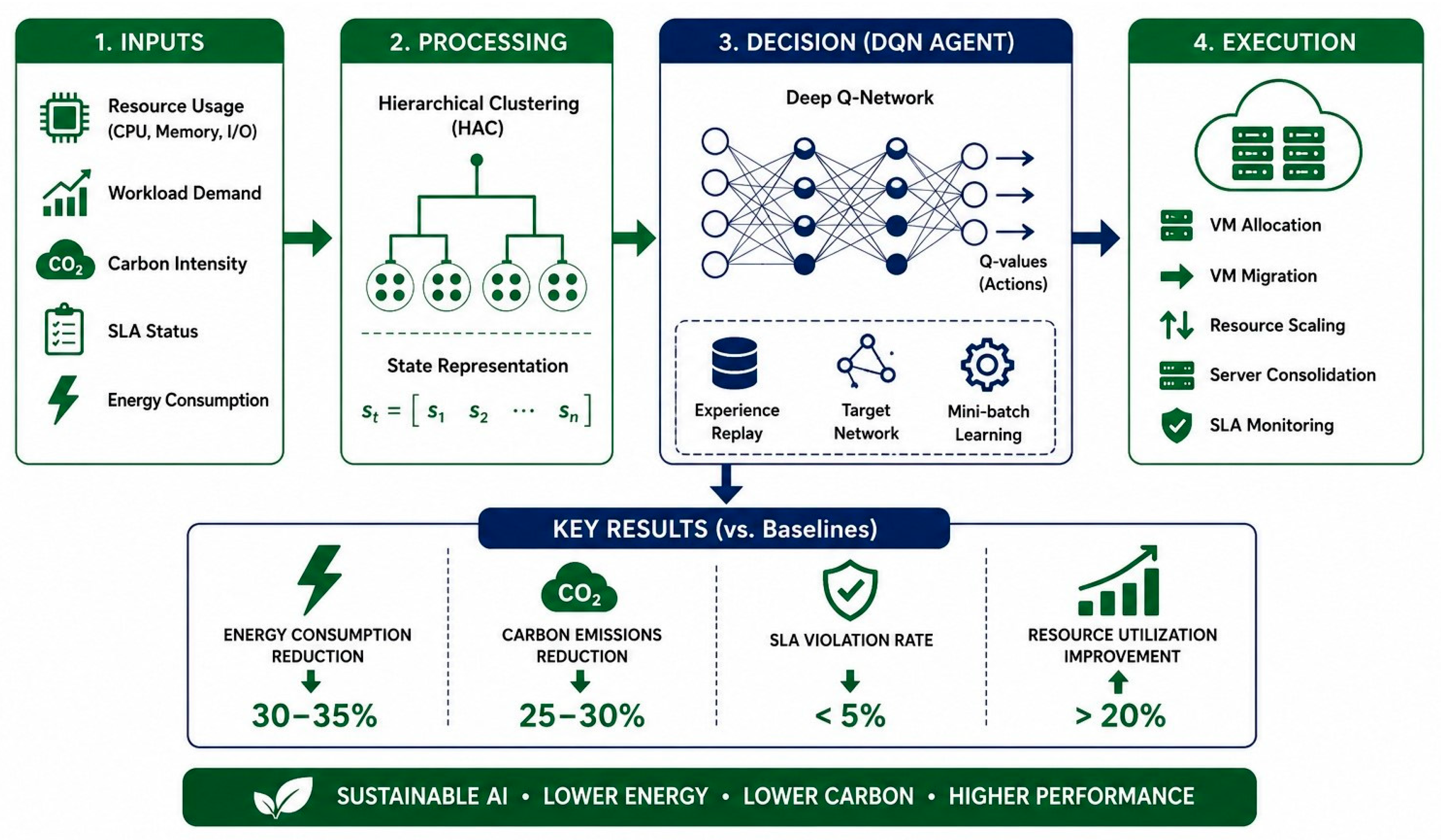
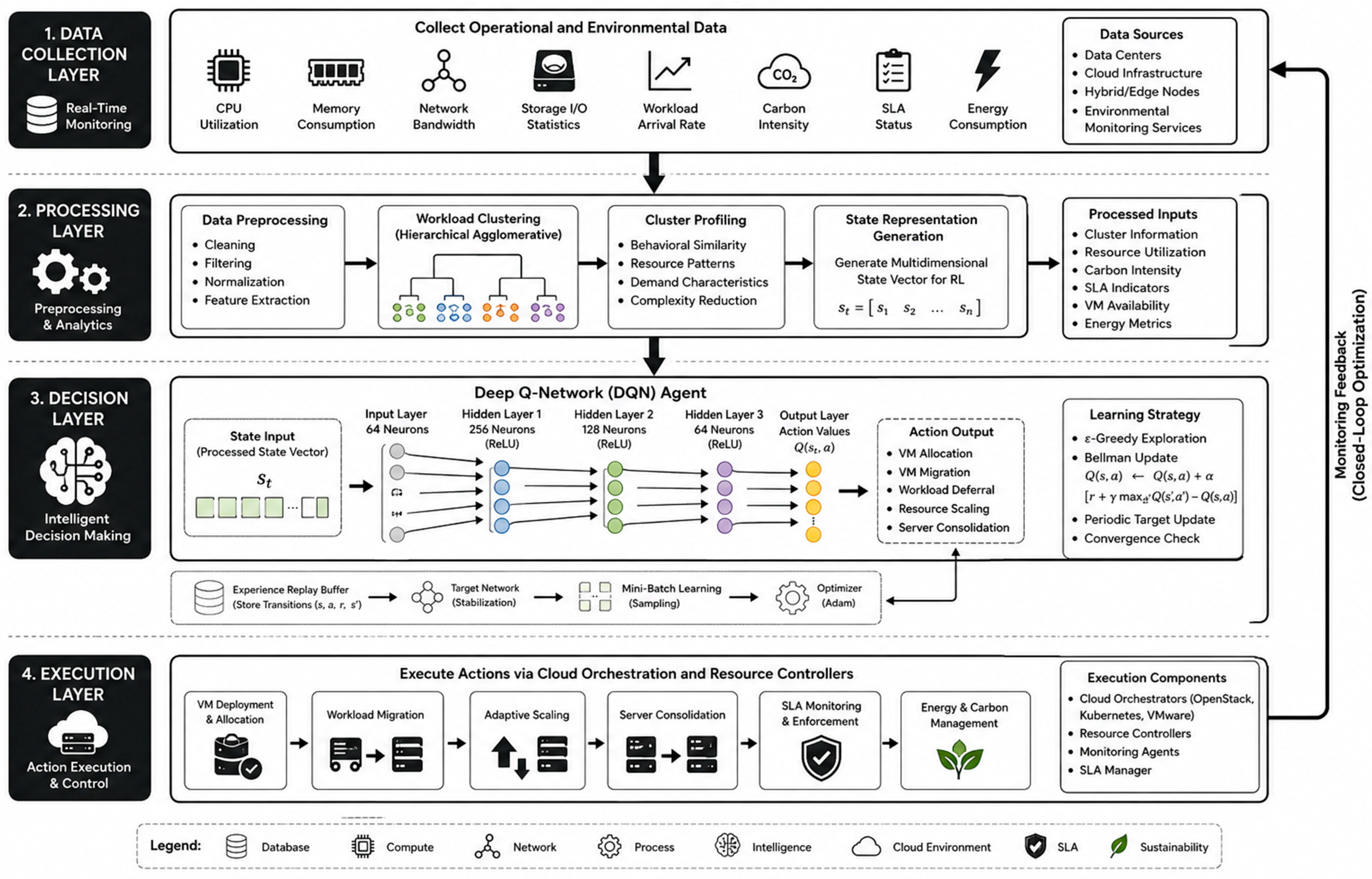
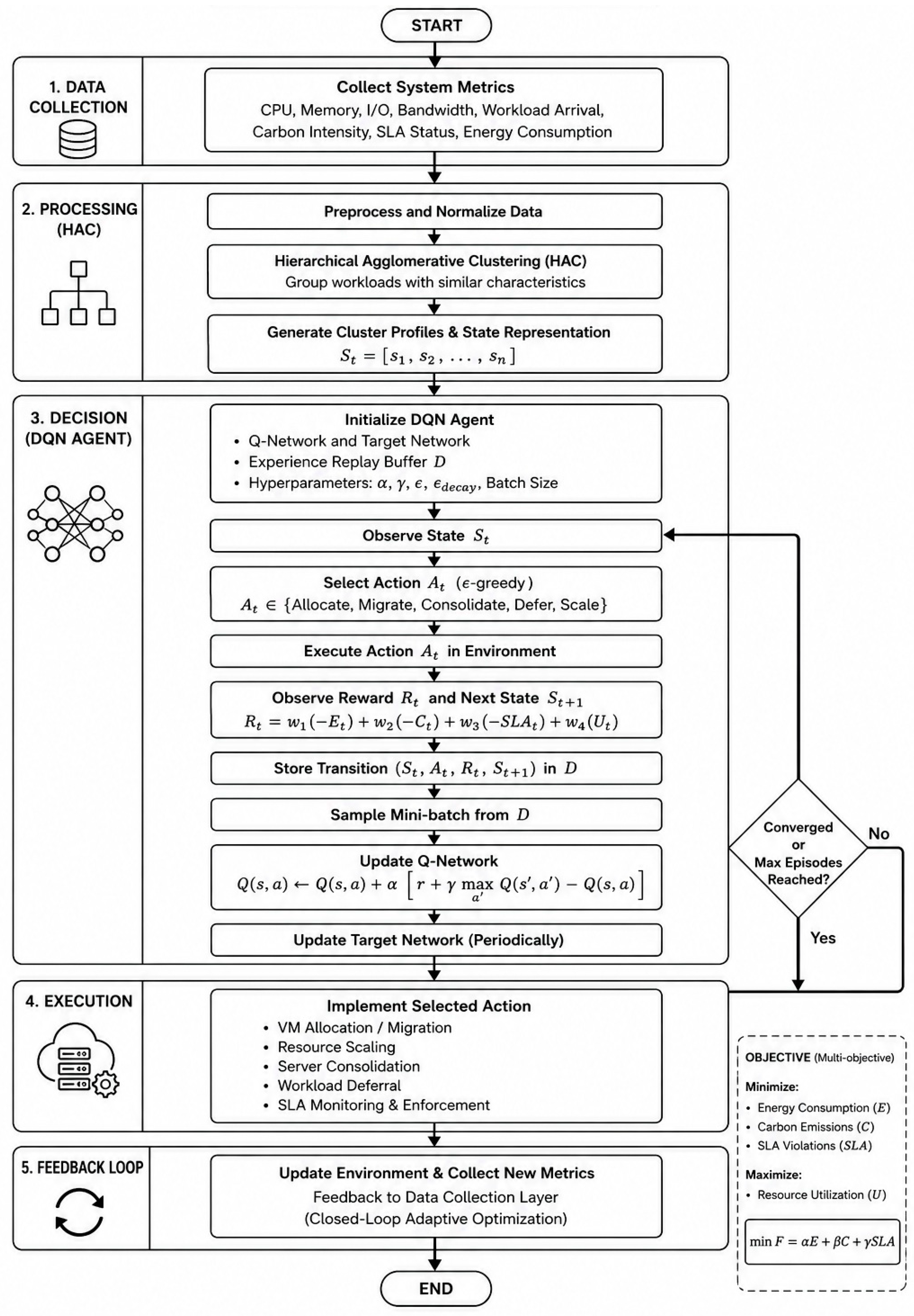
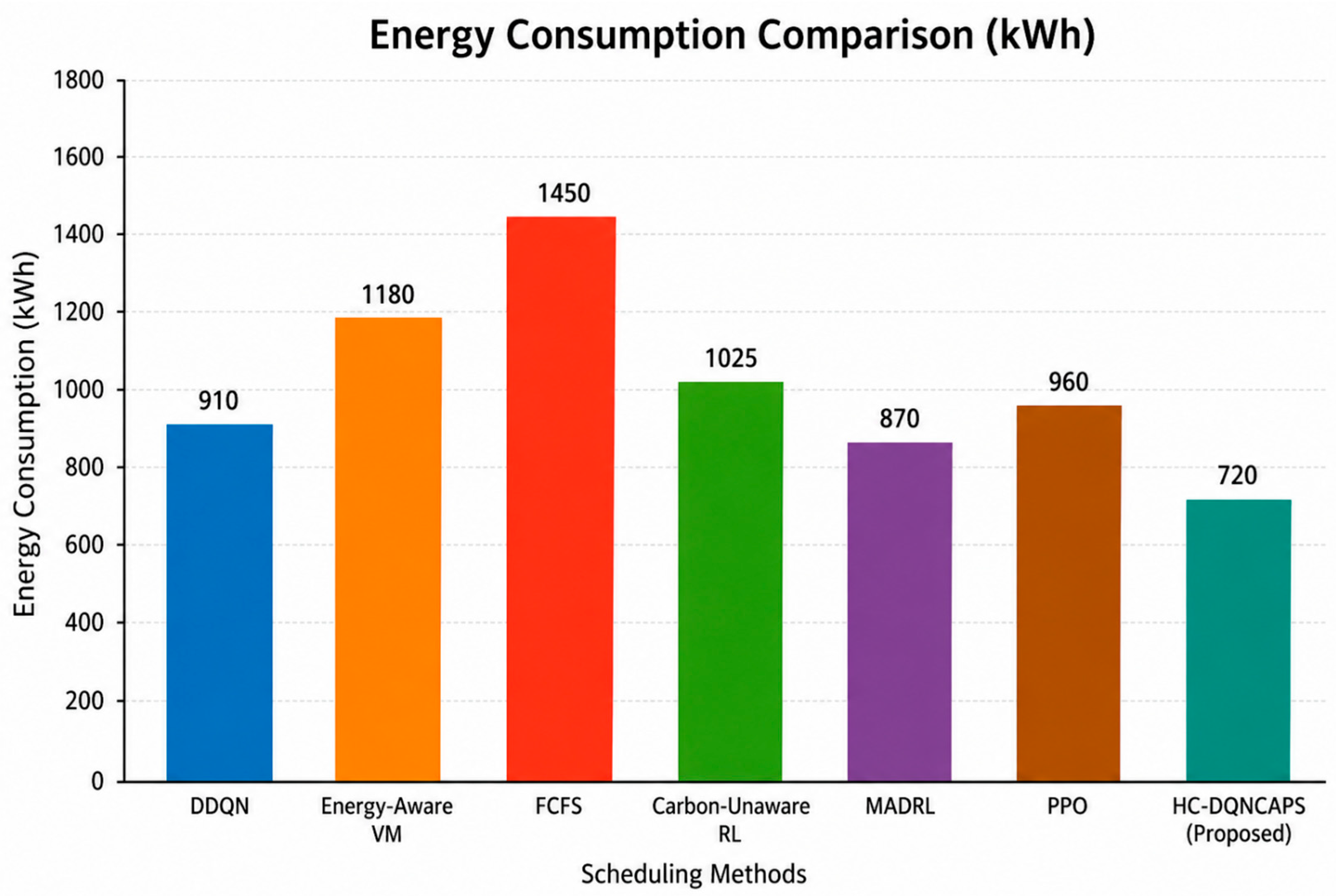
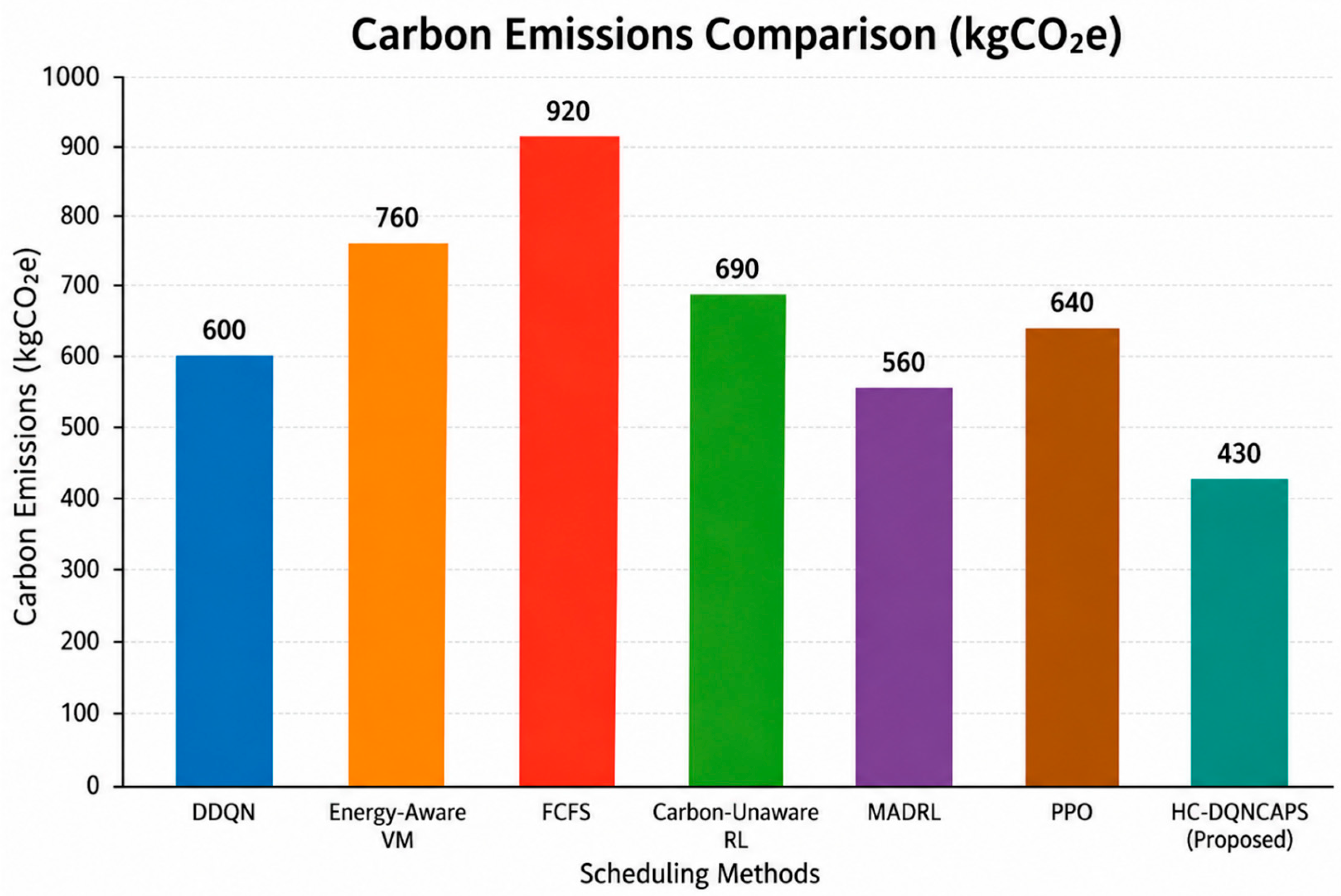
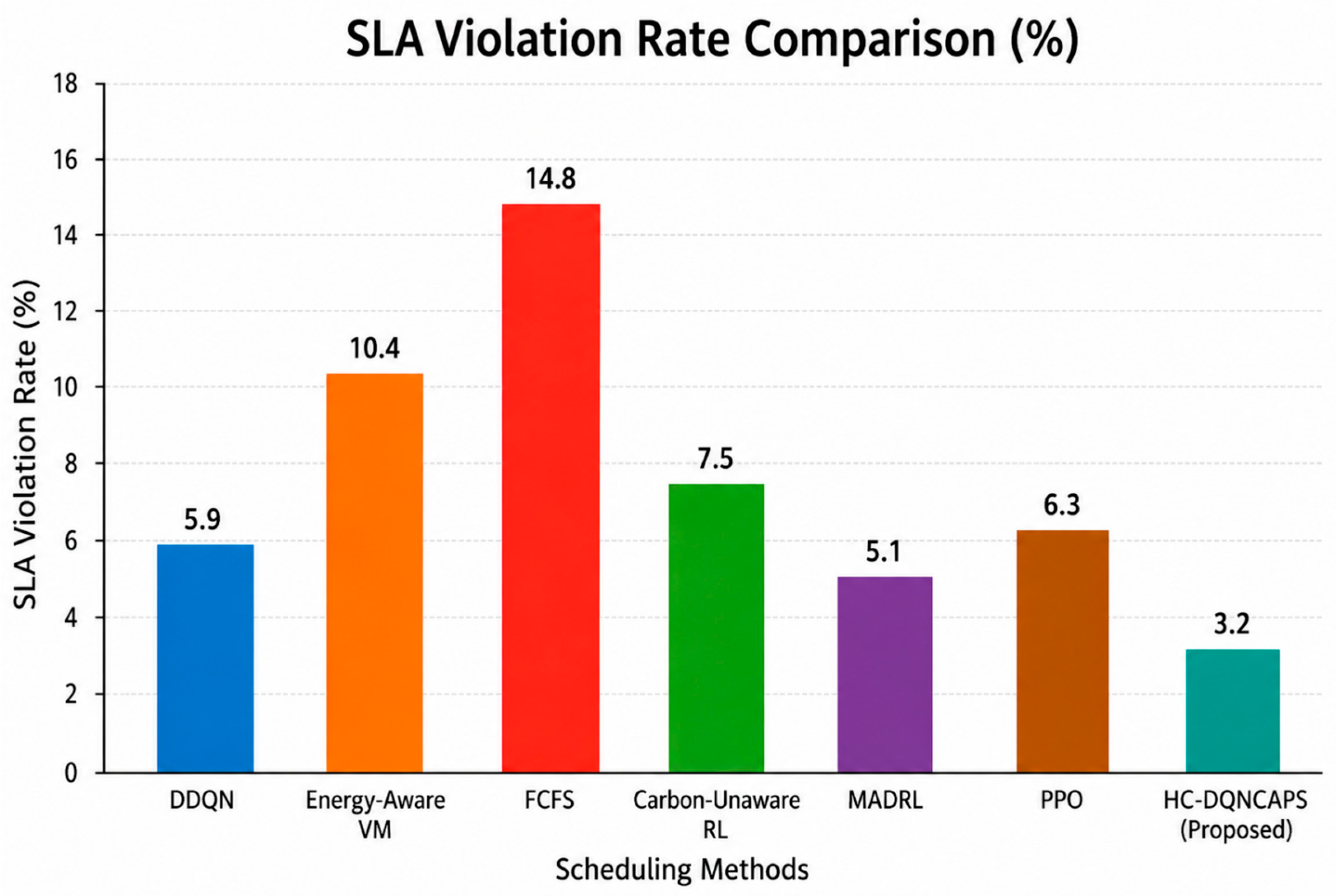
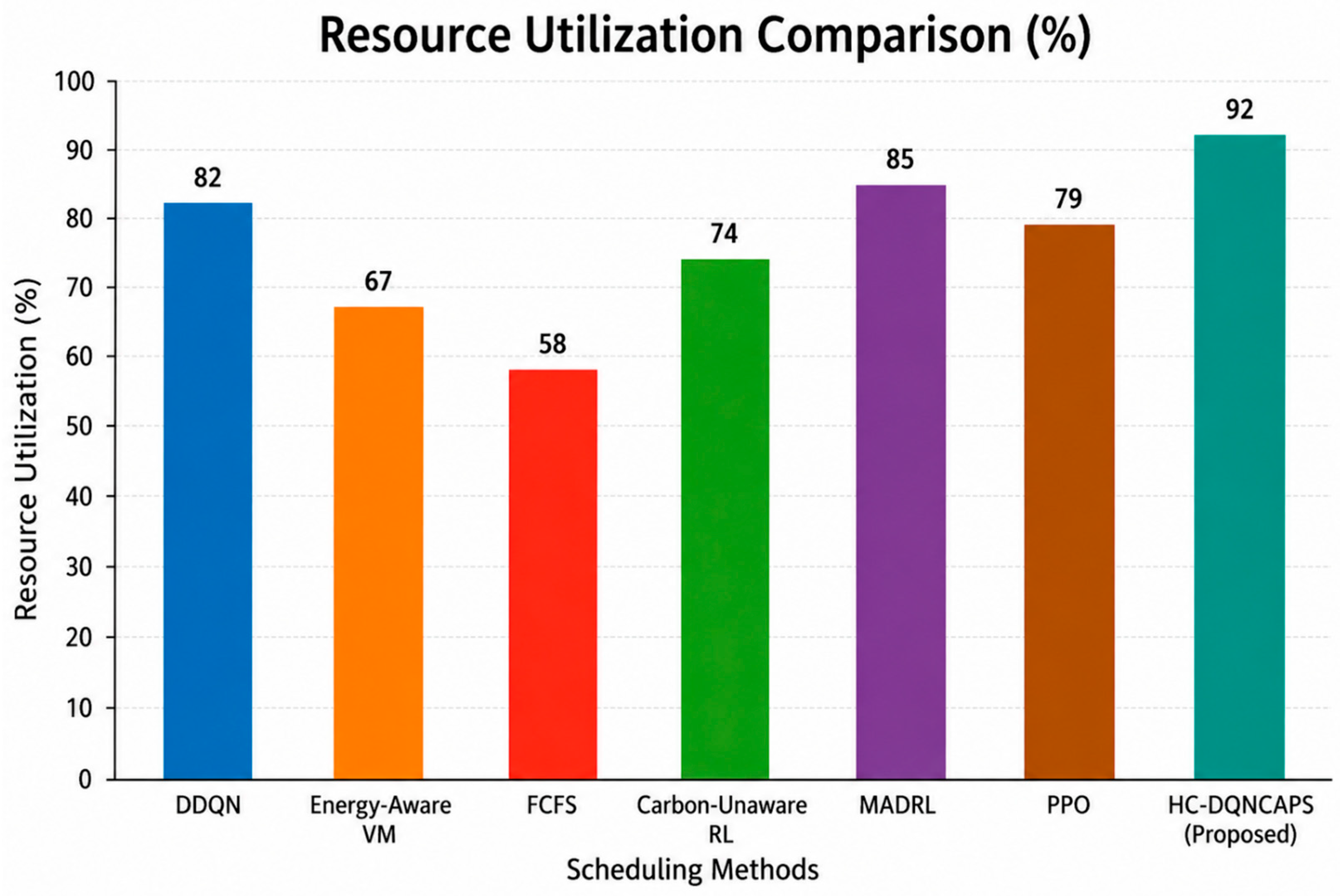
The fast growth of AI and large-scale industrial compute infrastructures has led to unsustainable increases in energy consumption and greenhouse gas emissions on a global scale, creating serious sustainability issues in today’s modern cloud computing. The proposed hybrid framework called the Hierarchical Clustering Deep Q-Network Carbon-Aware Placement System (HC-DQNCAPS) was developed as a means to combine energy efficient design with carbon-aware deployment strategies to support intelligent, adaptive and environmentally sustainable workload scheduling and resource allocation for industrial computing systems. This framework uses real time metrics of resource utilization (server and network) and information about carbon intensity to improve the distribution of workloads across geographically distributed cloud and hybrid infrastructures through both Hierarchical Agglomerative Clustering (HAC)- and Deep Q-Network (DQN)-based reinforcement learning models. Multi-objective optimization is leveraged to optimize energy usage, carbon emissions and SLA violations while optimizing resource utilization. The HC-DQNCAPS architecture significantly outperformed such work practices as FCFS, Energy-Aware VM Allocation, Carbon-Unaware RL, PPO, DDQN and MADRL Scheduling, with SLA breaches always less than 5%, and with energy utilization consistently reduced by 30–35%, carbon emissions reduced by 25–30% and resource utilization increased by +20%. The model’s significance and stability were demonstrated using both ANOVA and Wilcoxon signed-rank statistical tests to be significant (p < 0.05) at 95% confidence intervals. Overall, the findings show that there is potential for implementing carbon-aware AI methods in order to maintain economic viability for all computing systems involved in the industrial cloud.
Keywords: green AI; energy-efficient; carbon-aware; SLA compliance; deep reinforcement learning green AI; energy-efficient; carbon-aware; SLA compliance; deep reinforcement learning
Graphical Abstract