Article

Reducing Teachers’ Stress Through a Virtual Reality Game: A Feasibility Study of the XRSkills Game


1
Department of Psychology, Educational Sciences and Human Movement, University of Palermo, 90133 Palermo, Italy
2
Department of Public Health and Clinical Medicine, Umea University, 901 87 Umeå, Sweden
3
Instituto Superior de Engenharia do Porto, Instituto Politécnico do Porto, 4249-015 Porto, Portugal
*
Author to whom correspondence should be addressed.
Computers 2026, 15(3), 175; https://doi.org/10.3390/computers15030175
Submission received: 27 January 2026 / Revised: 5 March 2026 / Accepted: 6 March 2026 / Published: 8 March 2026

Abstract

Teaching is widely recognized as a highly stressful profession, and recent educational changes have further increased the pressure on teachers to manage demanding classroom situations while adapting to new technologies. To address this challenge, the present study examines the feasibility and user acceptance of XRSkills, a virtual reality serious game designed to strengthen teachers’ coping and problem-solving strategies through realistic school-based scenarios. A feasibility evaluation was conducted with teachers from all school grades and students from multiple European countries, combining a standardized usability measure with open-ended feedback on the game experience. Overall results indicate that XRSkills achieved a good level of usability and was generally perceived as engaging and relevant, particularly for in-service teachers. Participants appreciated the game format and learning approach, while also reporting areas for improvement such as clearer guidance, richer content, and smoother technical performance. These findings support the potential of virtual reality serious games as a practical and scalable training pathway to help teachers rehearse responses to stressors in a safe environment, while also fostering confidence in using immersive technologies for professional development.

1. Introduction

Teaching has always been considered a stressful job, with 8% of workers leaving the job as early as in the first 5 years [1]. Indeed, several features might impact teachers’ stress levels: at the classroom level, teachers frequently face disruptive student behaviour [2], lack of engagement, and increasing heterogeneity in learning needs, which require constant monitoring and classroom management skills [3]. Interpersonal stressors may also arise from challenging interactions with students’ families and the pressure to maintain positive relationships while enforcing discipline and academic expectations [4]. At the organizational level, stress is often linked to working in a low-resource school [5], attrition with administrative staff or other teachers [1], heavy workload [6], administrative burden, time pressure, and the accumulation of tasks beyond teaching itself, while tensions with colleagues or school leadership may further intensify this experience [1]. In low-resource schools, these difficulties may be compounded by limited materials, inadequate infrastructure, and staff shortages, which can increase the demands placed on teachers [4].
After the COVID-19 pandemic, this situation worsened due to the challenges determined by the restrictions for limiting the contagion [7], and a recent study from Reinke et al. reported that teachers experienced even higher levels of stress in the post-pandemic era [8]. In this context, teachers have also been required to address learning gaps, increased socio-emotional needs in students, and ongoing organizational changes, which further amplifies stress and contributes to burnout.
Prolonged exposure to high stress levels can have significant negative effects on teachers’ psychological and occupational wellbeing. Chronic stress and sustained emotional exhaustion are key precursors to burnout, a multidimensional syndrome involving emotional exhaustion, depersonalization, and reduced personal accomplishment, which has been widely documented in research on educators’ occupational health [9]. Burnout among teachers is strongly associated with increased absenteeism, diminished job satisfaction, and a higher likelihood of leaving the profession altogether, creating a cycle of turnover that further destabilizes school environments and increases pressure on the remaining staff [10]. Teachers experiencing burnout often report reduced engagement with their work, lower perceived self-efficacy, and a decline in motivation, all of which can undermine instructional quality and professional development participation [11]. Furthermore, systematic reviews of burnout research in occupational settings indicate that chronic stress and burnout are linked to adverse physical and psychological health outcomes, including sleep disturbances, anxiety, depression, and somatic complaints, which may further impair teachers’ capacity to perform effectively at work [12]. These patterns suggest that high stress not only affects teachers’ immediate wellbeing but also their long-term career trajectories and sustainability in the profession. According to a study by Herman et al., the high levels of stress, low utilization of coping strategies and high levels of burnout end up reflected in the students themselves and lead to poor academic outcomes [5].
A body of research has examined strategies aimed at reducing teacher stress and preventing burnout, focusing primarily on interventions at the individual, organizational, and systemic levels. At the individual level, commonly implemented strategies include stress management training, mindfulness-based interventions, cognitive–behavioural techniques, and resilience-building programs [13]. These approaches aim to enhance teachers’ coping skills, emotional regulation, and perceived self-efficacy, with evidence suggesting short-term improvements in psychological wellbeing and reductions in emotional exhaustion [12,14]. However, their effects are often modest and tend to diminish over time when broader work-related stressors remain unchanged.
Organizational strategies represent the most frequently recommended avenue for sustainable change. These include reducing workload, improving leadership support, enhancing collegial relationships, increasing autonomy, and providing access to professional development and mentoring [14]. Research consistently shows that supportive school leadership, clear role expectations, and adequate resources are associated with lower burnout levels and higher job satisfaction among teachers [15,16].
Interventions targeting job demands and job resources have demonstrated stronger effects than individual-level approaches alone, particularly in reducing emotional exhaustion and turnover intentions [17].
At the systemic level, policy-oriented strategies focus on teacher workload regulation, accountability reforms, class size reduction, staffing stability, and improved employment conditions [18]. Large-scale reviews highlight that chronic stress among teachers is closely linked to structural factors such as excessive administrative demands, performance pressures, and staffing shortages, which cannot be effectively addressed through individual coping interventions alone [9]. Organizational interventions evaluated in systematic reviews show potential benefits, but the overall quality of evidence remains mixed, and implementation fidelity is often inconsistent across educational contexts [13].
As such, despite decades of intervention efforts, teacher stress and burnout remain persistent problems. One key reason is that many interventions disproportionately emphasize individual responsibility, implicitly framing burnout as a coping deficit rather than a response to chronic structural stressors. This mismatch limits long-term effectiveness when high workloads, emotional labour, and resource constraints remain unchanged [11]. Additionally, systemic constraints such as budget limitations, policy instability, and teacher shortages often prevent schools from fully implementing organizational-level solutions, leading to fragmented or short-lived interventions [19].
Recently, serious games have been increasingly used to upskill and reskill workers dealing with stressful environments. Serious games are understood as games designed for purposes beyond pure entertainment, where interactive game elements are deliberately used to support “serious” goals such as learning, training, skill development, assessment, or professional practice [20]. This definition helps explain why serious games are particularly suitable for high-pressure professional training, as they can simulate demanding conditions while still providing a controlled and repeatable learning setting.
For example, Daylamani-Zad et al. created a serious game for firefighters to enhance decision-making in high-level stressful situations (such as saving people in a burning building) [21]. The game consisted of several visual, auditory and cognitive stressors, such as time pressure, the gravity of the decision, life-or-death situations, information overload, sensory overload, and a partially visible environment. Other serious games concerned skills like group decision-making [22] or nursing students’ decision-making [23]. Concerning the existence of serious games for developing teachers’ skills, the scarce existing studies do not specifically tackle stress management. For instance, Cavioni et al. developed an online platform with a serious game for the promotion of wellbeing among teachers. The participants created their own character and followed the game storytelling as it guided them into different situations [24]. Romero, Usart, and Ott argue that serious games can effectively support the development and sustained practice of 21st-century skills—such as problem-solving, collaboration, creativity, and self-regulation—when they are intentionally designed, pedagogically integrated, and aligned with clear learning objectives [25]. Gao et al.’s review article confirms the scarcity of studies in the area and emphasizes that most studies report short-term gains and rely on small samples, underscoring the need for more robust empirical validation [26]. The analysed studies cover different skills, like pedagogical, content-related, digital and technological, reflective and socio-emotional (motivation, engagement, confidence, attitudes towards innovation), but not specifically stress or time management or self-efficacy.
On the other hand, the use of virtual reality (VR) for delivering skill training has several advantages: VR can simulate risky real-life situations in a safe environment, allowing the user to make mistakes without consequences. Furthermore, VR games are characterized by a multisensorial environment with cognitive demanding situations, which are known to enhance brain neuroplasticity, suggesting the higher effectiveness of VR training programmes compared to traditional ones [27,28]. Finally, VR immersiveness allows a feeling of “presence”, defined as a psychological process allowing the user to create a better mental model of the AR/VR environment by feeling “inside” the environment [29]. Despite its potential benefits, the use of immersive virtual reality is associated with well-documented limitations. Prior research has shown that VR experiences may induce cybersickness, a condition characterized by symptoms such as dizziness, nausea, disorientation, eye strain, and headaches, which can negatively affect user comfort and engagement [30]. These effects are particularly pronounced in first-time users, as well as in individuals with lower technological confidence, potentially leading to increased stress and frustration during interaction.
Seemingly, VR-based serious games can be particularly relevant for teacher development because they enable immersive, multisensory simulations of complex and stressful classroom situations in a safe environment, allowing teachers to practise decision-making, self-regulation, and coping strategies without real-world consequences. By fostering a strong sense of presence and high cognitive engagement, VR can address skill areas such as stress management, time pressure, and self-efficacy that are largely missing from existing serious-game approaches for teachers.
According to the Stress-Exposure Training approach [31], the design of a serious game for stress management should consist of three main goals: first, stress training should identify all the environmental stressors that may occur in a particular situation, to form accurate expectations about the environment and to avoid mistakes that can occur during practice. Secondly, the training should emphasize skill development, so that individuals learn how to cope with the detrimental effects of stress (e.g., quickened heartbeat, shivers, fear, anxiety, narrowed attention, and so on). Finally, the training is considered successful when the trainee experiences a sense of mastery during the training performance. This framework assumes that enhancing familiarity with the stress environment, building skills for an effective performance under stress and boosting confidence during performance are the key elements for successful stress training.
The XRSkills project was created to help teachers and educators strengthen essential soft skills in response to growing pressures in modern education, including post-pandemic challenges and rapid digitalisation. The project delivers this training through an immersive VR serious game that places participants in realistic classroom and professional scenarios, allowing them to practise decision-making in a safe, engaging, and motivating environment. By focusing on key areas such as stress management, time management, pedagogical performance, and self-efficacy, XRSkills supports upskilling and reskilling while also fostering “digital confidence” and helping education professionals stay aligned with technological and pedagogical innovation.
The development and application of the XRSkills game followed the indications of the Stress-Exposure Training approach: at the very beginning of the process, the main stressors in the school environment were identified through the scientific literature and focus groups with teachers. Afterwards, the game was structured to stimulate teachers’ decision-making abilities during the flow of an ordinary school day. For a single episode, teachers were required to choose between four behavioural alternatives, which corresponded to feedback and tips after the users made their choices. Finally, the increasing difficulty of the game, together with the incorporated feedback after each scenario, was supposed to favour a sense of mastery while practising. As such, XRSkills was specifically designed to cope with precise stressors, to transfer the acquired coping skills in real school situations.
The current study is deliberately limited to evaluating the feasibility and user acceptance of the XRSkills game, using both qualitative and quantitative data to identify its main strengths and challenges and to guide improvements in usability and acceptability; this focus was adopted because establishing the practicality, usability, and acceptability of the tool is a necessary first step before rigorously assessing its effectiveness. Consequently, other important outcomes—such as the game’s impact on stress reduction and teachers’ self-efficacy—are beyond the scope of this article and will be examined in subsequent publications once the tool has been adequately validated for use.

2. Materials and Methods

To evaluate the usability and perceived effectiveness of the XRSkills VR game, a mixed-methods assessment approach was adopted, combining a standardized usability instrument with qualitative feedback from the target group. The qualitative feedback also allowed to get the perception of the participants in relation to the relation of technologies and learning. This section describes the measures used to capture both quantitative usability scores and more detailed insights into users’ experiences with the content, learning approach, and overall game quality. In addition, it outlines the analytical procedures applied to summarize the data and compare results across participant groups.

2.1. The XRSkills Virtual Reality Serious Game

The purpose behind the XRSkills VR serious game was to enhance teacher and educators’ soft skills and, at the same time, to promote an innovative digital pedagogy approach and tool. The structure and the contents of the game were organized around four skills, namely: Stress management, Time management, Pedagogical performance, and Self-accomplishment. This way it would be possible to enhance teachers’ wellbeing by potentiating their coping and problem-solving skills and their self-efficacy. The game was based on a simulation/role play game where the player assumes the perspective of a teacher and must take decisions in specific situations from the profession (Figure 1).
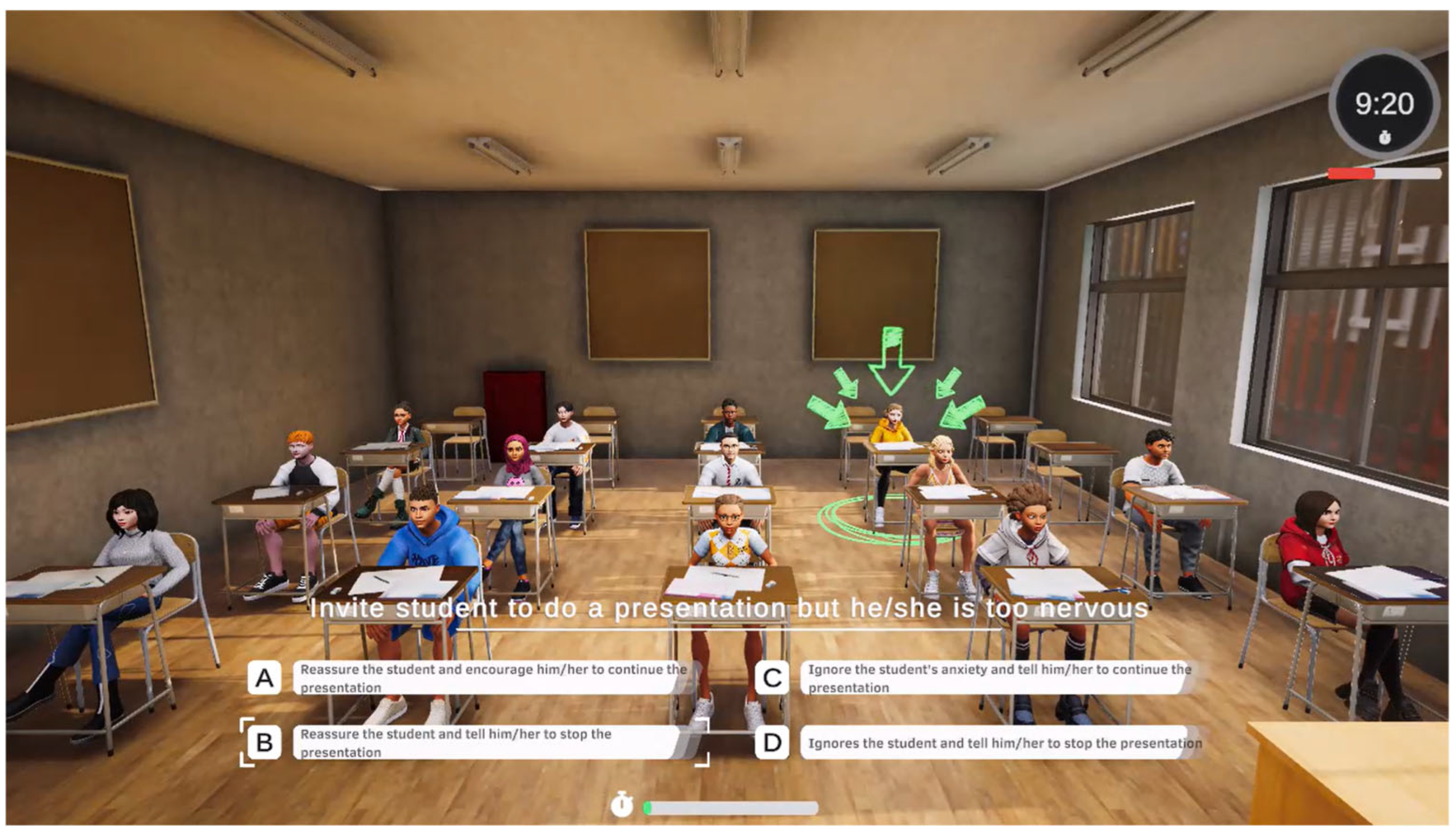
To develop the game structure, the scientific literature was reviewed to identify the main stressors present in school environments. The literature was scanned using a combination of the following keywords: “Teachers”, “stressors”, “stress factors”, “sources of stress”, “classroom”, “school”, “teaching”. The research was conducted through electronic databases (Web of Science, PubMed, and EBSCO) through the Boolean syntax employing the operators ’AND’ and ‘OR’. An initial set of 127 stressors was identified and discussed in a meeting with four experts in teaching. The experts were university professors from psychology and pedagogy. Subsequently, a brainstorming session was conducted to translate these stressors into realistic, real-life situations. This process resulted in a pool of 76 situations occurring in key school settings, namely the classroom, hallway, office, principal’s office, and teachers’ room. Each situation was embedded within a daily classroom routine, allowing teachers to select the action to be undertaken in each specific context. In addition, general suggestions for addressing each situation accompanied the scenes. The situations were organized to provide increasing levels of challenge, enabling teachers to manage stress while developing selected soft skills. The game consists of rapid decision-making situations that guide players through a stress-inducing flow, requiring the application of stress- and time-management techniques while enhancing pedagogical performance and promoting a sense of self-accomplishment (Figure 2). The decisions made by the teachers have consequences in terms of the game parameters but also in terms of the actual progress of the game.
Once the scenes were defined, the game was then developed using the Unity game engine. This game engine was selected because it provides a mature, research- and production-ready environment for developing interactive serious games with rapid iteration and broad deployment options. Unity supports efficient prototyping of branching, quick-decision scenarios through its scene management, UI system, and event-driven scripting in C#, which was essential for implementing stress-inducing decision flows and feedback loops. It also offers strong cross-platform support (PC, WebGL, VR, and mobile), enabling dissemination to different school contexts without redesigning the application for each target device [32].
Regarding the testing phases, the game underwent three sequential stages. First, it was internally tested by the development staff to identify bugs and functional issues (alpha testing). Second, beta testing was conducted with small samples of end users to assess usability and content adequacy. These two stages were also crucial for identifying and mitigating situations that induced discomfort, such as dizziness, nausea, or headaches, particularly among more sensitive participants, and for defining a safe exposure duration for gameplay. Finally, after addressing the most significant issues, pilot testing was carried out in the research laboratories of several universities (University of Palermo, Porto Polytechnic, and Umeå University). During this phase, participants were invited to explore the game features and complete a simulated working day. In all locations, gameplay sessions were supervised by a researcher who provided assistance throughout the procedure.

2.2. Participants

The current feasibility study was conducted on 111 participants (Table 1) from the project target group (60% Females). They were mainly teachers (59%) or education students (41%) from the consortium countries (Portugal, Italy, Greece, France, Sweden). Participants had a mean age of 30.48 years (SD: 9.84). Data were collected respecting the Declaration of Helsinki Principles.

2.3. Measures

To evaluate the usability and perceived effectiveness of the XRSkills platform and VR game, a mixed-methods assessment approach was adopted, combining a standardized usability instrument with qualitative feedback from the target group. This section describes the measures used to capture both quantitative usability scores and more detailed insights into users’ experiences with the content, learning approach, and overall game quality. In addition, it outlines the analytical procedures applied to summarize the data and compare results across participant groups.
System Usability Scale: The System Usability Scale (SUS) is a 10-item self-reported questionnaire assessing a system/software’s overall usability [33]. The 10 statements related the user experience to a system, and the results were standardized on a scale from 0 to 100, where higher scores indicated higher system usability. The threshold score indicating an acceptable system is 68 or higher. The score of the items 2, 4, 6, 8, and 10 is reversed. The reliability of the scale was excellent (Cronbach alpha: 0.90). Descriptive statistics can be found in Table 1. A t-test comparison was performed to compare the usability scores of teachers and education students. Qualitative data were grouped in categories by two researchers (AG and CVC), who independently coded the answers into semantic categories. The inconsistencies were solved through dialogue. Afterwards, frequencies were calculated on the response categories.
Survey with the target group: The survey consisted of three open questions developed by the consortium partners concerning: the content format of the game (e.g., adequacy of the audio, quality of the visual appearance, general technical quality), the learning approach (e.g., adequacy, completeness, effectiveness, and so on) and the quality of the game (e.g., playability, functioning) (also on Appendix A):
  • Please, write your comments (positive and/or negative) on the CONTENT FORMAT (visually appealing, adequate audio, general technical quality, etc.);
  • Please, write your comments (positive and/or negative) on the GAME (easy to use, playability, working issues, etc.);
  • Please, write your comments (positive and/or negative) on the LEARNING APPROACH (adequacy, completeness, effectiveness, etc.).
Participants could identify both positive and negative aspects. The survey was developed by the research team and was not adopted from a single pre-existing instrument. Its structure was informed by the team’s prior experience in designing and implementing evaluation tools for serious games and immersive learning environments across multiple previous projects. The instrument was intentionally kept concise, comprising only three core items, in order to minimize participant burden and ensure rapid completion within the feasibility-testing context. The questions were primarily qualitative in nature, allowing participants to provide open-ended reflections on usability, perceived relevance, and overall experience. This approach was considered appropriate for the exploratory scope of the study, as it enabled the collection of nuanced user feedback to inform iterative refinement rather than generating extensive quantitative measurements.
Other standard tools: Additional data were collected using a battery of standardized tests that included:
  • Ohio State Teacher Efficacy Scale Short Form (OSTES-SF): a self-report questionnaire consisting of 12 items to assess the circumstances and situations creating difficulties for teachers in their school activities [34].
  • Teacher Thriving Scale (TTS): a self-report questionnaire that detects thriving opportunities within stressful situations. It consists of 20 questions [35].
  • The Basic Psychological Need Satisfaction and Frustration Scale (BPNSNF): a self-report questionnaire assessing life satisfaction and frustration towards people’s own needs. The questionnaire consists of 24 questions [36].
These standardized instruments were selected due to their strong validation record and frequent use in studies assessing the usability and acceptance of digital and immersive learning tools. The tools were used after each player tested game.

3. Results

3.1. System Usability Scale Results

The results of the System Usability Scale are presented in Table 2.
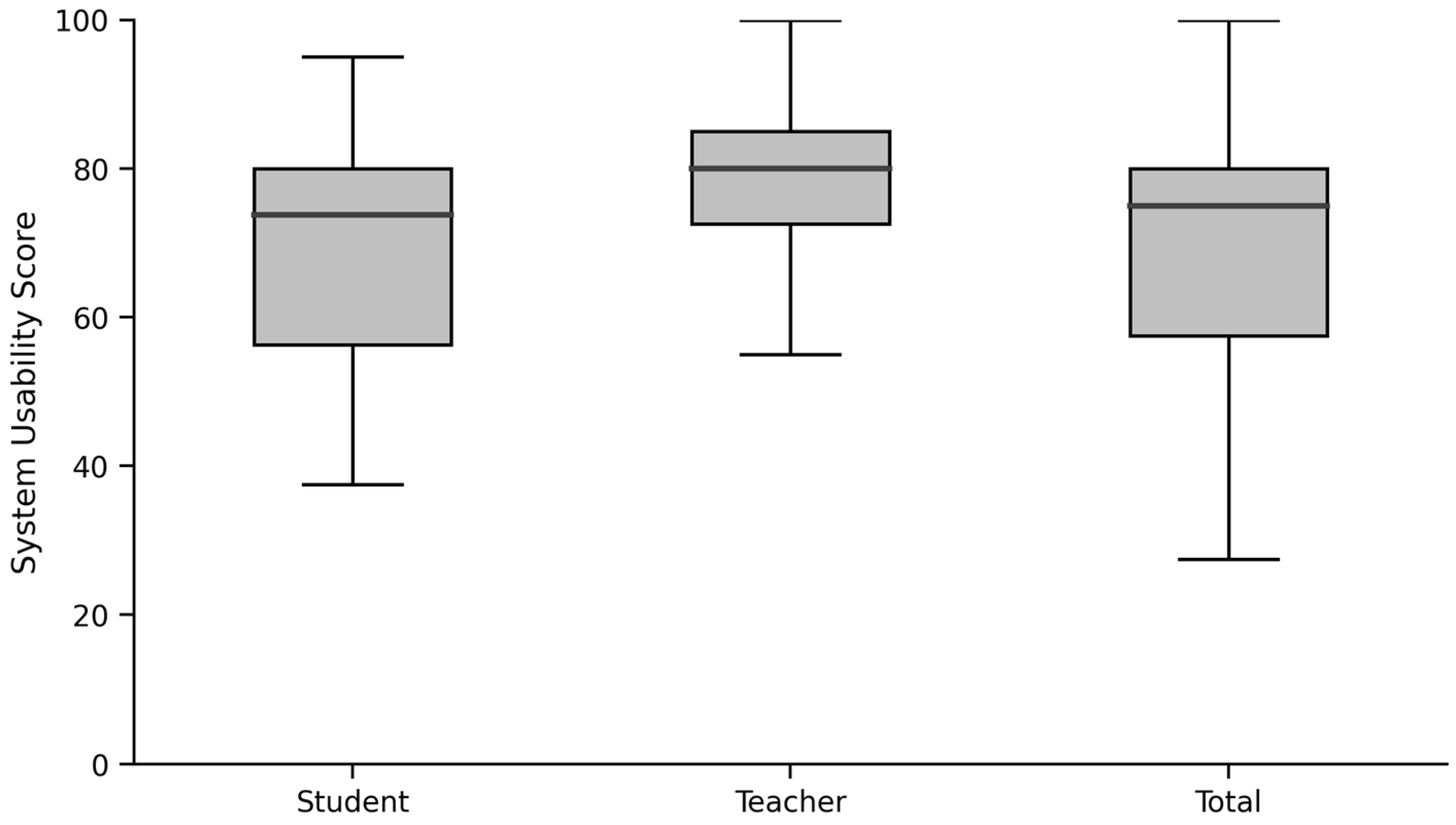
Concerning the results of the System Usability Scale, participants gave a mean score of 70.25 (SD = 17.42), indicating an above-average score (Figure 3).
Since the total scores were non-normally distributed, the comparison between the students and teachers was calculated through the Kruskal–Wallis test. The results showed that the comparison between teachers and students’ SUS total score was nonsignificant (χ2 = 1.69, df = 1, p = 0.19).
Regarding the items, significant differences emerged on item 1 (“I think that I would like to use this game frequently”), where teachers reported a higher score compared to students (χ2 = 4.44, p = 0.035), and on item 6 (“I thought there was too much inconsistency in this game”), with students reporting higher scores than teachers (χ2 = 5.09, p = 0.024).
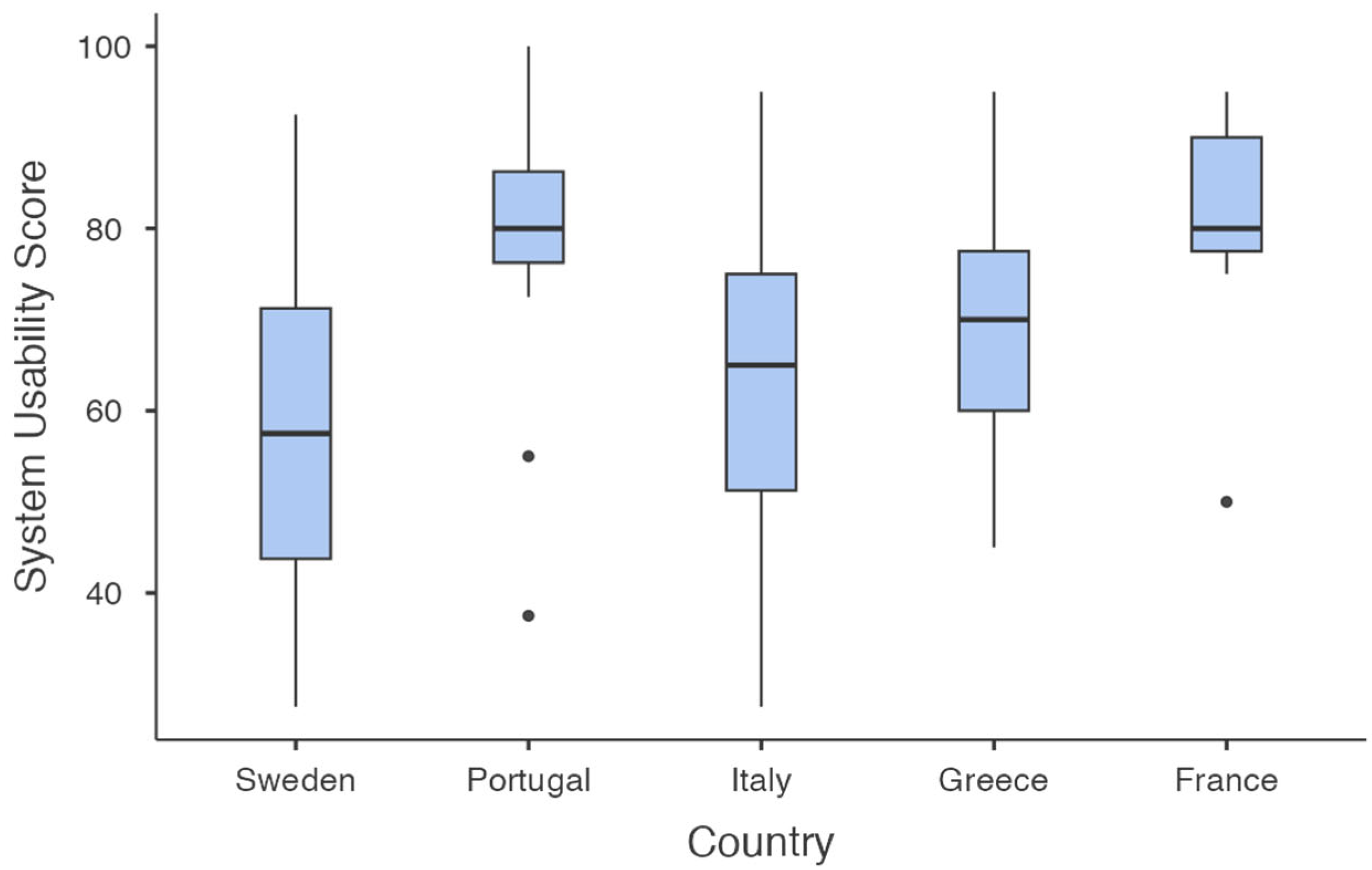
No gender difference (χ2 = 1.13, df = 2, p = 0.57) was found. Instead, as reported in Figure 4, we found a general difference between countries (χ2 = 36.69, df = 4, p < 0.001). Specifically, the post hoc test, conducted with Dwass–Steel–Critchlow–Fligner pairwise comparison, showed significant differences between Sweden and Portugal (W = 6.64, p < 0.001), Sweden and France (W = 4.90, p = 0.005), Portugal and Italy (W = −5.64, p < 0.001), Portugal and Greece (W = −5.04, p = 0.003), and Italy and France (W = 4.18, p = 0.03). These differences might be connected to the availability of technological tools within classes in the different countries, which make some countries more or less familiar with virtual reality.

3.2. Survey with the Target Group

The first question of the target group survey related the quality of the content format. A total of 74% of the respondents indicated that the content format is generally good and visually appealing, with a good technical quality (e.g., “The content format was visually appealing and had excellent general technical quality”). Concerning negative feedback, 17% reported that the graphics were too simple and that they could have been improved (e.g., “Contents are too simple, needed more depth”).
Concerning the second question, the learning approach of the game was generally evaluated with positive comments in 61% of the responses (e.g., “The learning approach was adequate, comprehensive, and effective in promoting learning through games”), highlighting the quality and efficacy of the learning approach, while the 17% found the learning approach to be improvable (e.g., “The learning approach is too shallow, and needs more advanced contents”).
In the third question, participants were asked to evaluate the game, in terms of usability, playability and working issues. Among the positive comments, 69% of the respondents indicated that the game was easy to play and that it was generally a good game without issues (e.g., “The game is fun to play with”, “I liked it, it looks real”). Conversely, among the negative comments, 13% found the game hard to use (e.g., “I didn’t quite get the objective of the game”), while the 7% identified occasional working issues (e.g., “It’s still a bit laggy, especially when walking through doors”).
The qualitative findings are largely consistent with the quantitative System Usability Scale (SUS) results, which indicated an above-average level of usability for the XRSkills game. High SUS scores are reflected in the participants’ frequent descriptions of the system as easy-to-use, functional, user-friendly, and responsive, as well as in comments highlighting smooth interaction, clear organization, and overall playability. These perceptions support the quantitative evidence that most users were able to interact with the game effectively and felt confident using it. At the same time, qualitative feedback helps contextualize the variability observed in individual SUS items, particularly those related to complexity and confidence, by revealing that some users experienced initial confusion in navigation, unclear objectives, or minor usability barriers during early interactions.
Similarly, the generally positive evaluation of the content format and learning approach aligns with the acceptable usability threshold reached by the SUS total score. Participants’ appreciation of the game’s visual appeal, technical quality, and structured presentation complements SUS items related to system integration and learnability. However, recurring qualitative critiques—such as perceptions of shallow or overly simple content, limited feedback on decisions, and a lack of advanced or varied scenarios—suggest that high usability does not necessarily equate to perceived learning depth. These findings indicate that while the interface and interaction design support ease of use, further refinement of content complexity and pedagogical feedback may be required to enhance learning effectiveness.
Finally, reports of technical glitches, occasional lag, and navigation issues help explain why some participants rated certain SUS items less favourably, particularly those concerning system consistency and the need for support. Participants were also asked to report their perceptions regarding the relationship between learning and the introduction of new technologies and gaming, in order to assess their willingness to adopt these approaches. Overall, responses indicated a generally positive attitude toward the integration of interactive media and game-based technologies in education. Most participants believed that interactive media and gaming can enhance learning outcomes and increase student engagement, while only a small proportion expressed concerns that these methods might distract students from learning content. This pattern suggests a favourable predisposition toward technology-enhanced learning, which should be taken into account when interpreting the overall assessment of the results, as such positive bias may have influenced participants’ evaluations.

3.3. Standardized Tools: OSTES-SF, TTS, BPNSNF

As mentioned before, three standardized testing tools were also used to reinforce the overall results analysis: the Ohio State Teacher Efficacy Scale Short Form (OSTES-SF), the Teacher Thriving Scale (TTS) and the Basic Psychological Need Satisfaction and Frustration Scale (BPNSNF). Considering that reporting these data in detail would shift the focus away from the primary outcomes related to usability and feasibility, it was decided to just provide a summarized view of their contribution, i.e., when they contributed to the article’s main goals, rather than presenting the full datasets. A common critique of immersive training environments such as virtual reality is that their apparent effectiveness may be driven primarily by a novelty effect, whereby increased enjoyment, motivation, or engagement does not necessarily translate into sustained or meaningful learning outcomes. While participants indeed reported high levels of interest and enthusiasm when engaging with the VR-based experience—particularly among younger users—these reactions alone do not fully account for the observed learning impact. Importantly, outcomes from standardized measures of efficacy, thriving, and motivation indicated improvements that extend beyond superficial engagement. This suggests that, when thoughtfully designed and aligned with learners’ needs, the novelty inherent in VR can be strategically leveraged to enhance learning rather than distract from it. In this sense, novelty acts as an entry point that captures attention and motivation, which, when paired with appropriate pedagogical structure, supports deeper cognitive and affective learning processes.
A defining strength of learning within a VR environment is the opportunity it provides for users to experiment with different behaviours in a realistic yet risk-free setting. Participants perceived the ability to explore alternative actions and immediately observe their consequences as a highly valuable feature of the experience. The structured feedback embedded within each scenario enabled users to reflect on their decisions and understand the implications of their behaviour without fear of real-world repercussions. Moreover, the possibility to replay scenarios and adopt different strategies encouraged iterative learning, allowing participants to refine their responses over time. This process of trial, reflection, and adjustment fostered a deeper understanding of cause–effect relationships and supported skill development through experiential learning. As a result, users reported greater confidence and insight into their performance, indicating that mistake-forgiving virtual environments can effectively promote learning transfer and performance optimization.
Overall, the convergence of quantitative and qualitative results suggests that XRSkills is a usable and engaging tool, while also highlighting specific design and content improvements that could strengthen both user experience and perceived educational value.

4. Discussion

The purpose of the current feasibility study was to assess the feasibility and acceptability of the XRSkills game, a virtual reality serious game aimed to reduce teachers’ stress by enhancing their problem-solving and self-efficacy. The feedback collection was administered through a quantitative method, with the System Usability Scale, and through three quantitative questions concerning the content format of the game (e.g., adequacy of the audio, quality of the visual appearance, general technical quality), the learning approach (e.g., adequacy, completeness, effectiveness, and so on) and quality of the game (e.g., playability, functioning).
The quantitative survey administered to teachers and education students showed an above-average score concerning the usability of the game. No differences emerged between teachers and students concerning the total usability score. Regarding the single items, differences emerged concerning the probability of using the game in the future, where teachers reported a higher probability than students. Moreover, students reported that the game was a little bit more complex than teachers did. Concerning the qualitative feedback, the comments were generally positive, with some criticism regarding the easiness of the game use and occasional working issues.
In general, both teachers and education students reported positive feedback regarding the game, with teachers also interested in using the game in the future but students finding it complex. This result can be explained according to the different levels of experience between teachers and education students: indeed, teachers have already faced stressful situations in the classroom and could be more interested in finding new practical ways for managing them [37]. Conversely, students could be less used to and interested in practical classroom situations since the academic system focuses more on the theoretical side than the practical side of classroom management [38]. Indeed, a previous study by Larson et al. [39] tested the acceptability of a mixed-reality simulator to prepare pre-service teachers for managing behaviour problems within the classroom, finding that pre-service teachers tended to be anxious before the simulator administration, probably because they did not have sufficient prior information about the game content, as revealed in the focus groups. Similarly, with our results, there were differences between students’ and teachers’ feedback concerning the probability of using the game in the future, where students were not interested in undergoing the training again in the future.
Although studies in the literature recognize the effectiveness of gamified approaches in teacher skill acquisition and management, few studies exist on this topic [40]. Similarly, the potential of VR for teacher education has been previously demonstrated, especially concerning skill acquisition; thanks to the role-changing mechanism, teachers could understand the students’ problems, while when the experience of incidents was perceived as real, the effectiveness of the tool was higher [41,42].
Despite the importance of the gamified approach and the potential of VR for teachers’ education and training, the current study has some limitations: first, the study aimed to examine the acceptability and the usability of the game, but no information about the effectiveness of the game was reported. A future study will explicitly address this aspect, with a particular focus on self-efficacy, decision-making and coping skills prior to and after game administration. Additionally, in future research, individual usability testing will be preferred. Moreover, although the game was initially addressed to primary school teachers, we tested the game on teachers from all school grades. Future research should also distinguish effectiveness at different school levels.
The XRSkills game was considered to be acceptable and feasible, especially by teachers, who were the main target group. The practical implication of the study concerns the reduction of stress among teachers, who notably represent a population at risk of chronic stress, turnover or burnout. Working on teachers’ psychological resources might reduce the negative consequences of the environmental stressors impacting their wellness and mental health. Moreover, delivering the training as gamified contents could enhance its potential, thanks to the immersiveness of the VR tool and teachers’ digital skills, because the training is being administered through an innovative technology.

5. Conclusions

This feasibility study suggests that XRSkills is a usable and acceptable VR serious game for supporting teachers’ wellbeing through simulated school-based stressors. Overall usability scores were above the acceptability threshold, and qualitative feedback indicated that the experience was generally engaging, relevant, and easy to use, particularly for in-service teachers who may perceive stronger transferability to real classroom demands.
However, study limitations should be explicitly acknowledged. First, not all teachers may be receptive to game-based or immersive training approaches, which may affect engagement and acceptance. Second, the use of VR can induce adverse effects such as dizziness, nausea, headaches, or increased stress, especially among first-time users or individuals with lower technological confidence. Third, accessibility remains a concern, as some teachers may have physical, sensory, or cognitive disabilities that limit or prevent the use of immersive VR technologies. These factors may restrict the generalizability of the findings and should be considered when interpreting the results.
At the same time, the results highlight important directions for refinement, including clearer onboarding and objectives, richer and more immersive content, and continued technical optimization to ensure smooth navigation and interaction. Although the present work focused on feasibility and acceptance rather than effectiveness, the findings support XRSkills’ potential as a scalable training approach for practising coping and decision-making strategies in a safe environment. Future research should assess its impact on outcomes, such as stress management, self-efficacy, and classroom decision-making, while also exploring alternative interaction modes or non-VR versions to enhance inclusivity and adoption across different teacher profiles and school levels.

Author Contributions

Conceptualization, A.G., S.M. and C.V.d.C.; methodology, A.G. and C.V.d.C.; software, C.V.d.C.; validation, A.G., S.M. and C.V.d.C.; formal analysis, A.G. and C.V.d.C.; investigation, A.G., M.A. and C.V.d.C.; resources, C.V.d.C.; data curation, A.G., M.A. and C.V.d.C.; writing—original draft preparation, A.G. and M.A.; writing—review and editing, A.G. and C.V.d.C.; supervision, S.M.; project administration, S.M.; funding acquisition, S.M. All authors have read and agreed to the published version of the manuscript.

Funding

This research was funded by the European Commission under the Erasmus+ programme, grant number 2021-1-SE01-KA220-VET-000030106.

Data Availability Statement

Data will be provided upon request due to confidentiality issues.

Acknowledgments

The authors would like to acknowledge the support from the other members of the consortium that contributed data to this article. During the preparation of this manuscript, the author(s) used ChatGPT 5.2 for the purposes of improving the language of the document. The authors have reviewed and edited the output and take full responsibility for the content of this publication.

Conflicts of Interest

The authors declare no conflicts of interest.

Abbreviations

The following abbreviations are used in this manuscript:
XRExtended Reality
VRVirtual Reality
ARAugmented Reality
SUSSystem Usability Scale
SDStandard Deviation
EUEuropean Union
KA220 VETKey Action 2Vocational Education and Training

Appendix A. Survey Questions

  • Please, write your comments (positive and/or negative) on the CONTENT FORMAT (visually appealing, adequate audio, general technical quality, etc.);
  • Please, write your comments (positive and/or negative) on the GAME (easy to use, playability, working issues, etc.);
  • Please, write your comments (positive and/or negative) on the LEARNING APPROACH (adequacy, completeness, effectiveness, etc.).

References

  1. Ryan, S.V.; von der Embse, N.P.; Pendergast, L.L.; Saeki, E.; Segool, N.; Schwing, S. Leaving the teaching profession: The role of teacher stress and educational accountability policies on turnover intent. Teach. Teach. Educ. 2017, 66, 1–11. [Google Scholar] [CrossRef] [Scilit]
  2. Bottiani, J.H.; Duran, C.A.; Pas, E.T.; Bradshaw, C.P. Teacher stress and burnout in urban middle schools: Associations with job demands, resources, and effective classroom practices. J. Sch. Psychol. 2019, 77, 36–51. [Google Scholar] [CrossRef] [Scilit]
  3. Clunies-Ross, P.; Little, E.; Kienhuis, M. Self-reported and actual use of proactive and reactive classroom management strategies and their relationship with teacher stress and student behaviour. Educ. Psychol. 2008, 28, 693–710. [Google Scholar] [CrossRef] [Scilit]
  4. Haydon, T.; Leko, M.M.; Stevens, D. Teacher stress: Sources, effects, and protective factors. Teach. Educ. Spec. Educ. 2018, 41, 279–293. [Google Scholar]
  5. Herman, K.C.; Hickmon-Rosa, J.E.; Reinke, W.M. Empirically derived profiles of teacher stress, burnout, self-efficacy, and coping and associated student outcomes. J. Posit. Behav. Interv. 2018, 20, 90–100. [Google Scholar] [CrossRef] [Scilit]
  6. Skaalvik, E.M.; Skaalvik, S. Job Satisfaction, Stress and Coping Strategies in the Teaching Profession-What Do Teachers Say? Int. Educ. Stud. 2015, 8, 181–192. [Google Scholar] [CrossRef] [Scilit]
  7. Pressley, T.; Ha, C.; Learn, E. Teacher stress and anxiety during COVID-19: An empirical study. Sch. Psychol. 2021, 36, 367. [Google Scholar] [CrossRef] [Scilit]
  8. Reinke, W.M.; Herman, K.C.; Stormont, M.; Ghasemi, F. Teacher stress, coping, burnout, and plans to leave the field: A post-pandemic survey. Sch. Ment. Health 2025, 17, 32–44. [Google Scholar] [CrossRef] [Scilit]
  9. Nwoko, J.C.; Emeto, T.I.; Malau-Aduli, A.E.O.; Malau-Aduli, B.S. A Systematic Review of the Factors That Influence Teachers’ Occupational Wellbeing. Int. J. Environ. Res. Public Health 2023, 20, 6070. [Google Scholar] [CrossRef] [Scilit]
  10. Maslach, C.; Schaufeli, W.B.; Leiter, M.-P. Job Burnout. Annu. Rev. Psychol. 2021, 52, 397–422. [Google Scholar] [CrossRef] [Scilit] [PubMed]
  11. Kim, L.E.; Burić, I. Teacher self-efficacy and burnout: Determining the directions of prediction through an autoregressive cross-lagged panel model. J. Educ. Psychol. 2020, 112, 166–180. [Google Scholar] [CrossRef] [Scilit]
  12. Sohail, M.M.; Baghdady, A.; Choi, J.; Huynh, H.V.; Whetten, K.; Proeschold-Bell, R.J. Factors influencing teacher wellbeing and burnout in schools: A scoping review. Work. A J. Prev. Assess. Rehabil. 2023, 76, 1317–1331. [Google Scholar] [CrossRef] [Scilit] [PubMed]
  13. von der Embse, N.; Ryan, S.V.; Gibbs, T.; Mankin, A. Teacher stress interventions: A systematic review. Psychol. Sch. 2019, 56, 1328–1343. [Google Scholar] [CrossRef] [Scilit]
  14. Naghieh, A.; Montgomery, P.; Bonell, C.P.; Thompson, M.; Aber, J.L. Organisational interventions for improving wellbeing and reducing work-related stress in teachers. Cochrane Database Syst. Rev. 2015, 2015, CD010306. [Google Scholar] [CrossRef] [Scilit] [PubMed]
  15. Collie, R.J. Teacher well-being and turnover intentions: Investigating the roles of job resources and job demands. Br. J. Educ. Psychol. 2023, 93, 712–726. [Google Scholar] [CrossRef] [Scilit]
  16. Grant, A.A.; Jeon, L.; Buettner, C.K. Relating early childhood teachers’ working conditions and well-being to their turnover intentions. Educ. Psychol. 2019, 39, 294–312. [Google Scholar] [CrossRef] [Scilit]
  17. Rajendran, N.; Watt, H.M.G.; Richardson, P.W. Teacher burnout and turnover intent. Aust. Educ. Res. 2020, 47, 477–500. [Google Scholar] [CrossRef] [Scilit]
  18. Creagh, S.; Thompson, G.; Mockler, N.; Stacey, M.; Hogan, A. Workload, work intensification and time poverty for teachers and school leaders: A systematic research synthesis. Educ. Rev. 2025, 77, 661–680. [Google Scholar] [CrossRef] [Scilit]
  19. Arnold, B.; Rahimi, M. Teachers’ working conditions, wellbeing and retention: An exploratory analysis to identify the key factors associated with teachers’ intention to leave. Aust. Educ. Res. 2025, 52, 1947–1973. [Google Scholar] [CrossRef] [Scilit]
  20. Santos, J.; Jesmin, T.; Martis, A.; Maunder, M.; Cruz, S.; Novo, C.; Schiff, H.; Bessa, P.; Costa, R.; Carvalho, C.V.d. Developing Emotional Intelligence with a Game: The League of Emotions Learners Approach. Computers 2021, 10, 97. [Google Scholar] [CrossRef] [Scilit]
  21. Daylamani-Zad, D.; Spyridonis, F.; Al-Khafaaji, K. A framework and serious game for decision making in stressful situations; a fire evacuation scenario. Int. J. Hum.-Comput. Stud. 2022, 162, 102790. [Google Scholar] [CrossRef] [Scilit]
  22. Linehan, C.; Lawson, S.; Doughty, M.; Kirman, B. Developing a serious game to evaluate and train group decision making skills. In Proceedings of the 13th international MindTrek conference: Everyday Life in the Ubiquitous Era, Tampere, Finland, 30 September–2 October 2009. [Google Scholar]
  23. Johnsen, H.M.; Fossum, M.; Vivekananda-Schmidt, P.; Fruhling, A.; Slettebø, Å. Teaching clinical reasoning decision-making skills to nursing students: Design development usability evaluation of a serious game. Int. J. Med. Inform. 2016, 94, 39–48. [Google Scholar] [CrossRef] [Scilit]
  24. Cavioni, V.; Conte, E.; Ornaghi, V. Promoting teachers’ wellbeing through a serious game intervention: A qualitative exploration of teachers’ experiences. Front. Psychol. 2024, 15, 1339242. [Google Scholar] [CrossRef] [Scilit]
  25. Romero, M.; Usart, M.; Ott, M. Can serious games contribute to developing and sustaining 21st century skills? Games Cult. 2015, 10, 148–177. [Google Scholar] [CrossRef] [Scilit]
  26. Gao, L.; Fabricatore, C.; Lopez, X. Feasibility of Using Serious Games for Teachers’ Professional Development: A Review of the Current Literature. In Proceedings of the 14th European Conference on Games Based Learning, Brighton, UK, 24–25 September 2020. [Google Scholar] [CrossRef]
  27. Gangemi, A.; De Luca, R.; Fabio, R.A.; Lauria, P.; Rifici, C.; Pollicino, P.; Marra, A.; Olivo, A.; Quartarone, A.; Calabrò, R.S. Effects of virtual reality cognitive training on neuroplasticity: A quasi-randomized clinical trial in patients with stroke. Biomedicines 2023, 11, 3225. [Google Scholar] [CrossRef] [Scilit]
  28. Wankhede, N.L.; Koppula, S.; Ballal, S.; Doshi, H.; Kumawat, R.; Raju, S.; Arora, I.; Sammeta, S.S.; Khalid, M.; Zafar, A.; et al. Virtual reality modulating dynamics of neuroplasticity: Innovations in neuro-motor rehabilitation. Neuroscience 2025, 566, 97–111. [Google Scholar] [CrossRef] [Scilit]
  29. Iachini, T.; Maffei, L.; Masullo, M.; Senese, V.P.; Rapuano, M.; Pascale, A.; Ruggiero, G. The experience of virtual reality: Are individual differences in mental imagery associated with sense of presence? Cogn. Process. 2019, 20, 291–298. [Google Scholar] [CrossRef] [Scilit]
  30. Oh, H.; Son, W. Cybersickness and Its Severity Arising from Virtual Reality Content: A Comprehensive Study. Sensors 2022, 22, 1314. [Google Scholar] [CrossRef] [Scilit]
  31. Driskell, J.E.; Johnston, J.H. Stress exposure training. In Making Decisions under Stress: Implications for Individual and Team Training; Cannon-Bowers, J.A., Salas, E., Eds.; American Psychological Association: Washington, DC, USA, 1998; pp. 191–217. [Google Scholar]
  32. Unity Technologies. Unity User Manual; Unity Technologies: San Francisco, CA, USA, 2024; Available online: https://docs.unity3d.com/Manual/index.html (accessed on 9 February 2026).
  33. Brooke, J. SUS: A “quick and dirty” usability scale. In Usability Evaluation in Industry; Jordan, P.W., Thomas, B., McClelland, I.L., Weerdmeester, B., Eds.; Taylor & Francis: Abingdon, UK, 1996. [Google Scholar]
  34. Tschannen-Moran, M.; Hoy, A.W. Ohio State Teacher Efficacy Scale. 2001. Available online: https://psycnet.apa.org/doiLanding?doi=10.1037/t11400-000 (accessed on 5 March 2026).
  35. Chen, J.J.; Li, Z.; Rodrigues, W.; Kaufman, S. Thriving beyond resilience despite stress: A psychometric evaluation of the newly developed Teacher Stress Scale and Teacher Thriving Scale. Front. Psychol. 2022, 13, 862342. [Google Scholar] [CrossRef] [Scilit] [PubMed]
  36. Chen, B.; Vansteenkiste, M.; Beyers, W.; Boone, L.; Deci, E.L.; Van der Kaap-Deeder, J.; Duriez, B.; Lens, W.; Matos, L.; Mouratidis, A.; et al. Basic psychological need satisfaction, need frustration, and need strength across four cultures. Motiv. Emot. 2015, 39, 216–236. [Google Scholar] [CrossRef] [Scilit]
  37. Mudziwapasi, L. Classroom Management Strategies Employed by Postgraduate Certificate in Education Foundation Phase Trainee Teachers During Teaching Practice. J. Educ. Stud. 2024, 23, 6–28. [Google Scholar] [CrossRef] [Scilit]
  38. Jackson, C.; Simoncini, K.; Davidson, M. Classroom profiling training: Increasing preservice teachers’ confidence and knowledge of classroom management skills. Aust. J. Teach. Educ. (Online) 2013, 38, 30–46. [Google Scholar] [CrossRef] [Scilit]
  39. Larson, K.E.; Hirsch, S.E.; McGraw, J.P.; Bradshaw, C.P. Preparing preservice teachers to manage behavior problems in the classroom: The feasibility and acceptability of using a mixed-reality simulator. J. Spec. Educ. Technol. 2020, 35, 63–75. [Google Scholar] [CrossRef] [Scilit]
  40. Pozzi, F.; Volta, E.; Passarelli, M.; Persico, D. A Systematic Mapping Review of Research Concerning the Use of Games in Teacher Training. In Smart Learning Ecosystems as Engines of the Green and Digital Transition; Springer: Singapore, 2023. [Google Scholar]
  41. Stavroulia, K.-E.; Lanitis, A. On the potential of using Virtual Reality for teacher education. In Proceedings of the International Conference on Learning and Collaboration Technologies, Vancouver, BC, Canada, 9–14 July 2017. [Google Scholar]
  42. Stavroulia, K.E.; Baka, E.; Lanitis, A.; Thalmann, N.M. Virtual Reality-Based Learning Environments in Teacher Training: New Opportunities and Challenges. In Proceedings of the 10th International Conference of Education, Research and Innovation (Iceri2017), Seville, Spain, 16–18 November 2017; pp. 3562–3571. [Google Scholar]
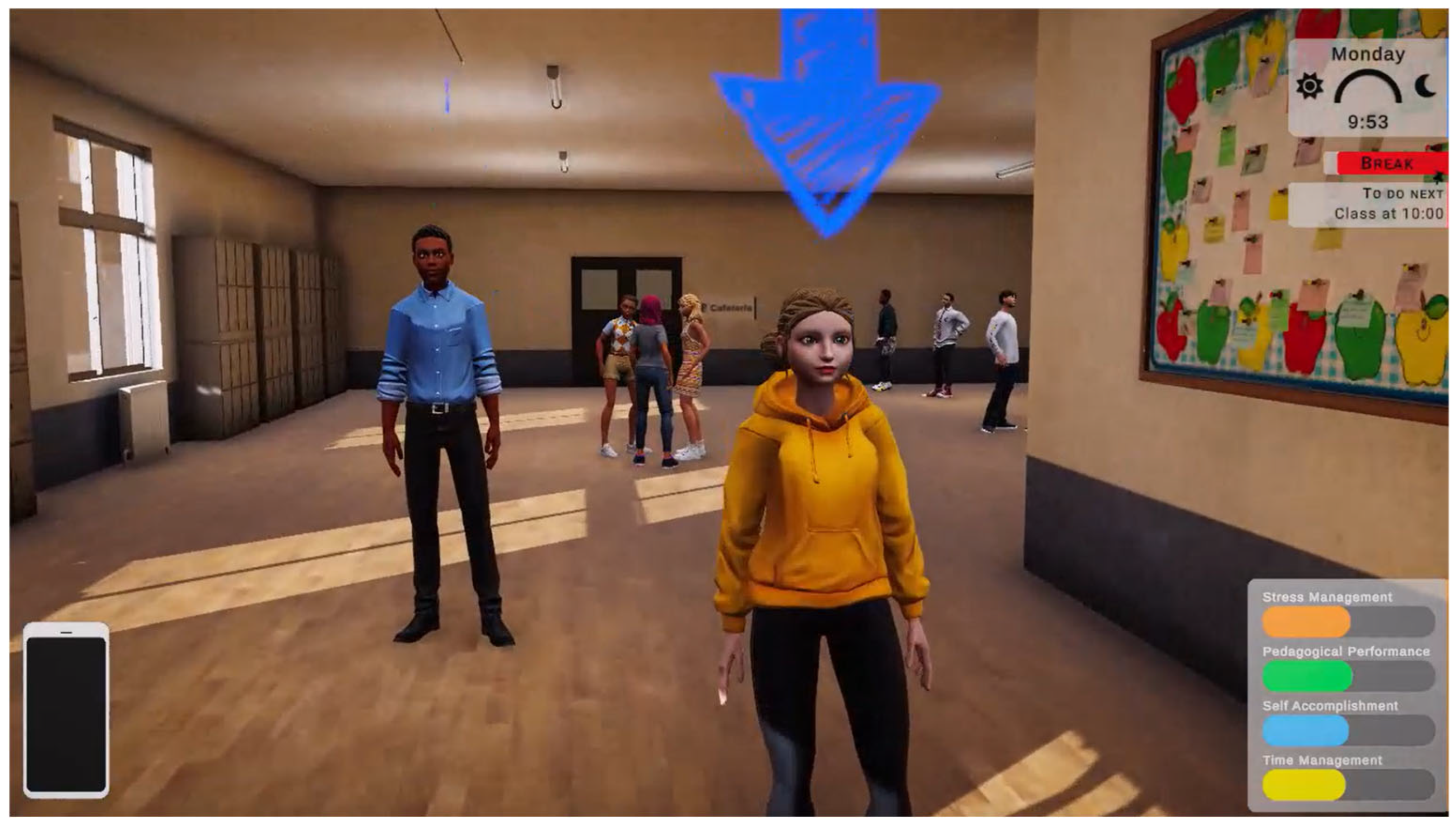
Figure 1. XRSkills game environment.
Computers 15 00175 g001
Figure 2. Decision-making in the game.
Computers 15 00175 g002
Figure 3. Boxplot distribution of the Usability Score results.
Computers 15 00175 g003
Figure 4. Comparisons between countries concerning System Usability Scale scores.
Computers 15 00175 g004
Table 1. Participants’ demographics.
PortugalItalyGreeceFranceSwedenTotal
Female20141351567
Male11786840
Prefer not to say 2 2 4
Total3123211125111
Table 2. Detailed responses to the 10-items System Usability Scale.
Total SampleTeachersStudentsχ2
ItemMedianIQRMinMaxMedianIQRMinMaxMedianIQRMinMax
Usability
I think that I would like to use this game frequently3.001.00043.001.00043.001.00044.44 *
I found the game unnecessarily complex3.002.00043.001.25043.001.50040.16
I thought that the game was easy to use3.001.00043.001.00043.001.00040.63
I found the various functions in this game were well integrated3.001.00043.001.00043.001.00042.41
I thought there was too much inconsistency in this game3.001.00043.001.00043.001.00045.09 *
I would imagine that the most people would learn to use this game very quickly3.001.00043.000.25043.001.00040.83
I found this game very awkward to use3.001.00042.501.00042.501.00141.28
I felt very confident using the game3.001.00043.001.00043.001.00040.12
Learnability
I think that I would need the support of a technical person to be able to use this game3.002.00043.001.25043.002.00140.61
I needed to learn a lot of things before I could get going with this game3.001.00043.001.00043.002.00040.80
Legend: IQR = Interquartile Range; * p < 0.05.
Disclaimer/Publisher’s Note: The statements, opinions and data contained in all publications are solely those of the individual author(s) and contributor(s) and not of MDPI and/or the editor(s). MDPI and/or the editor(s) disclaim responsibility for any injury to people or property resulting from any ideas, methods, instructions or products referred to in the content.