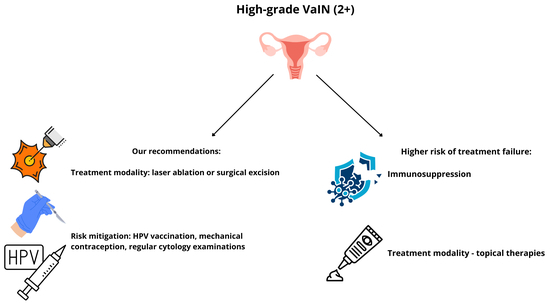
Comparative Efficacy of Treatment Methods and Risk Factors for Treatment Failure in High-Grade Vaginal Intraepithelial Neoplasia: A Systematic Review and Meta-Analysis



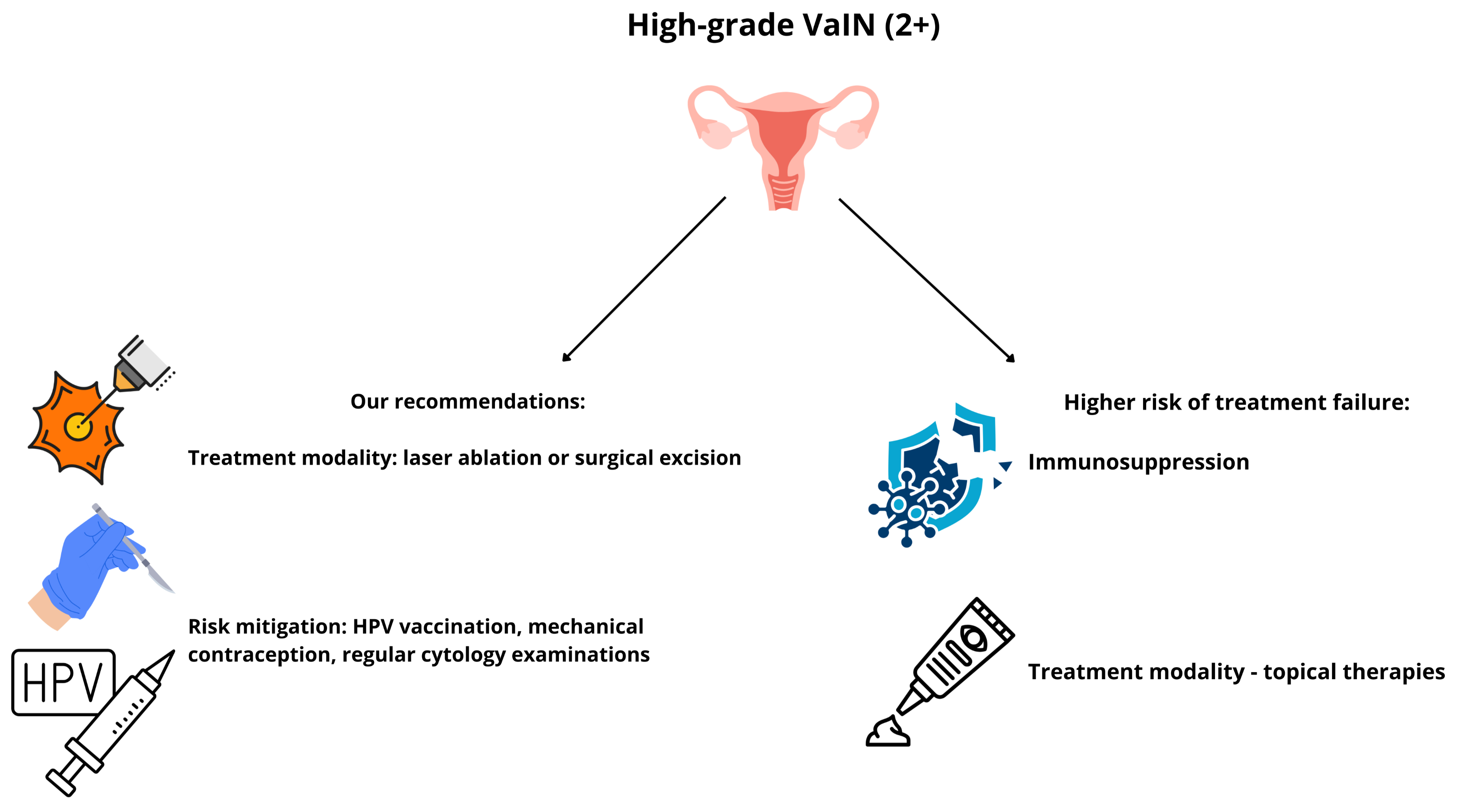
Simple Summary
Abstract
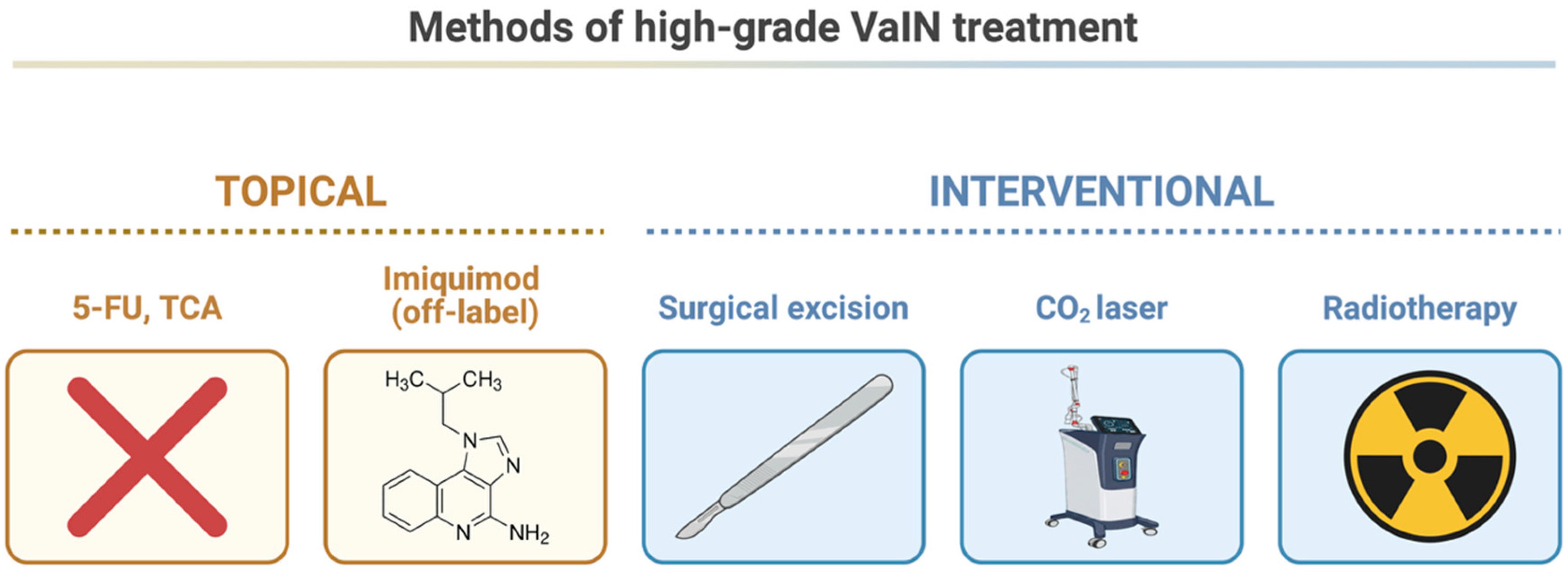
1. Introduction
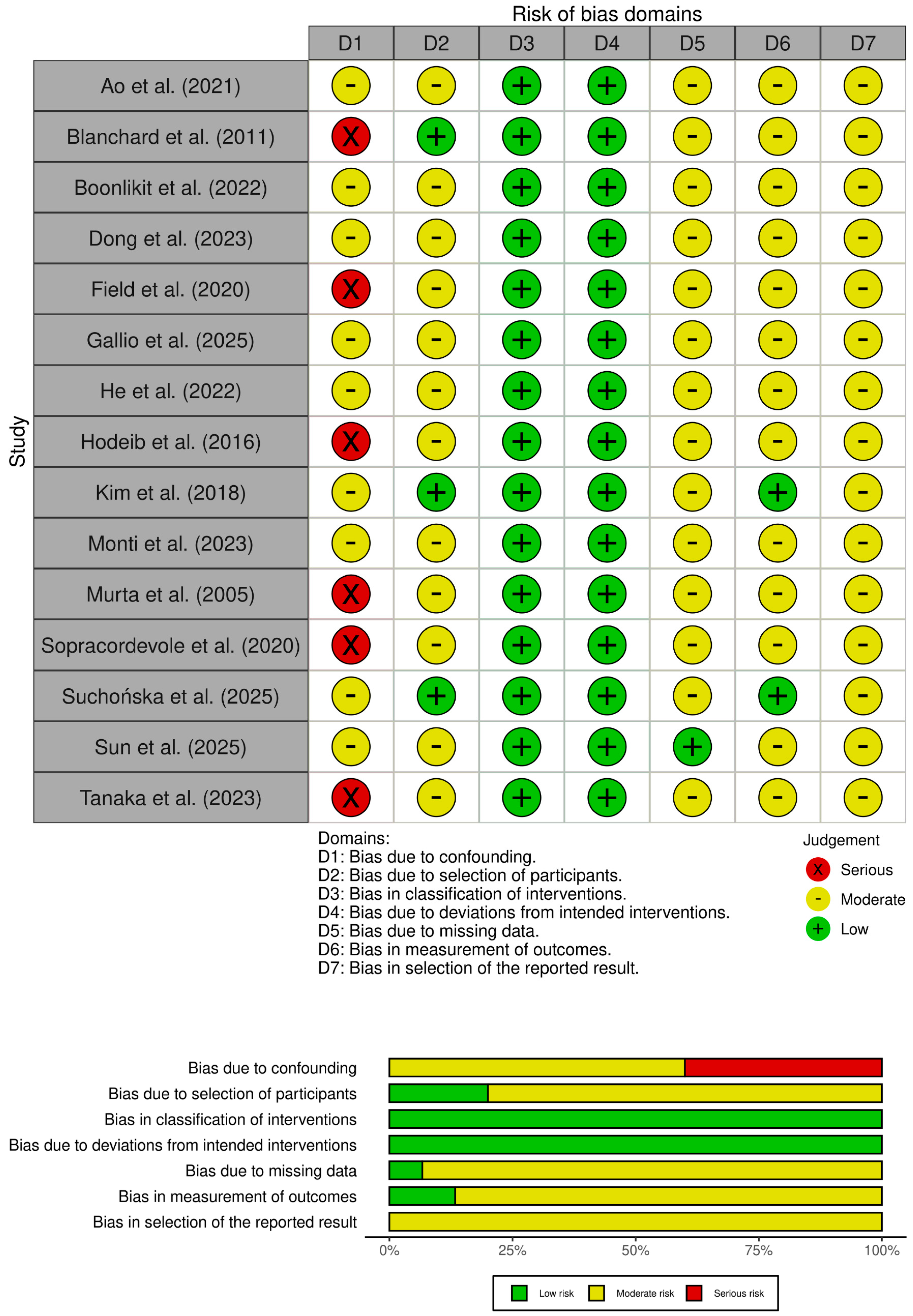
2. Materials and Methods
2.1. Search Strategy
2.2. Data Extraction
2.3. Outcomes
2.4. Statistical Analysis
3. Results
3.1. Treatment Modality
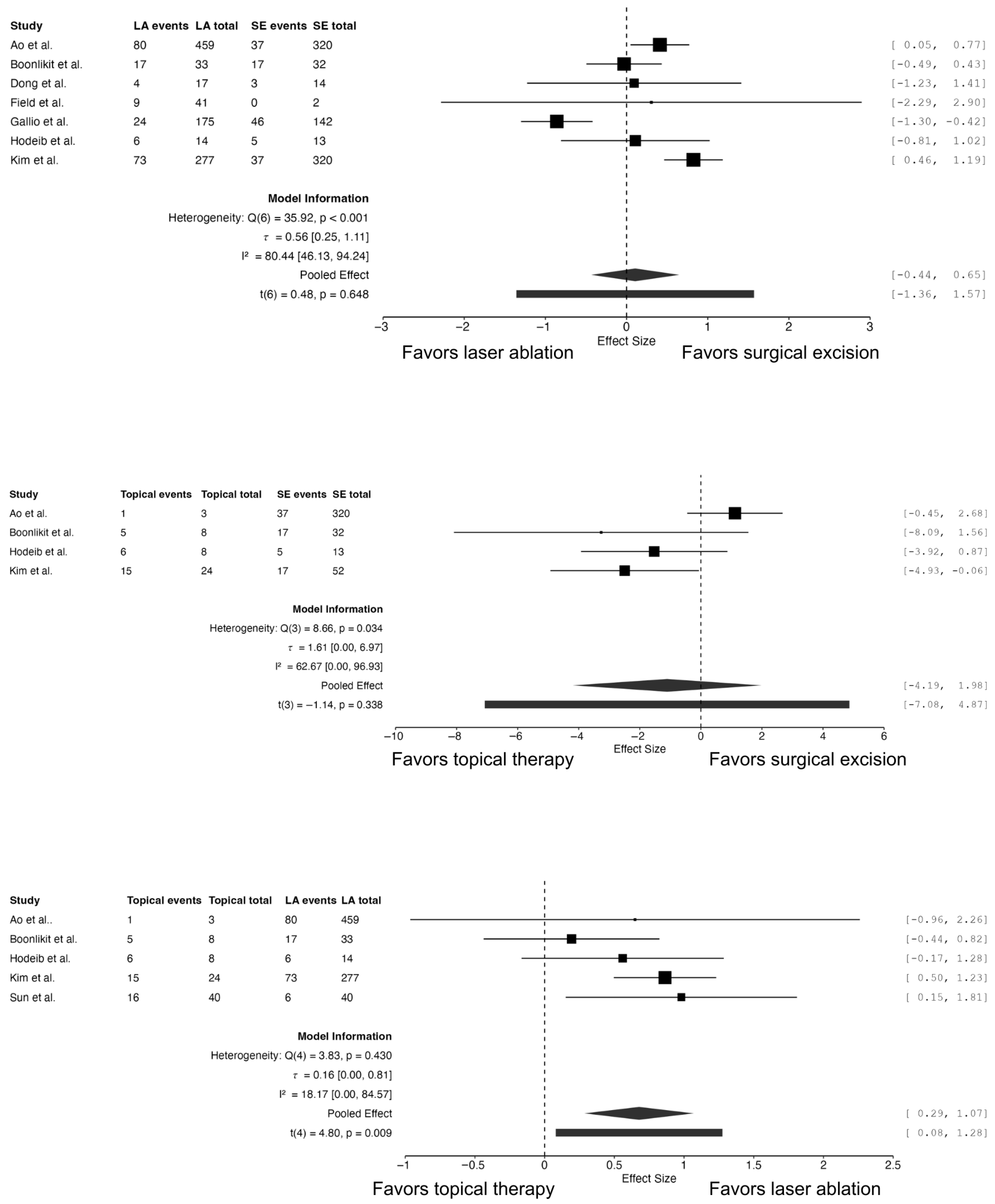
3.1.1. Laser Ablation vs. Surgical Excision
3.1.2. Topical Therapy vs. Laser Ablation
3.1.3. Topical Therapy vs. Surgical Excision
3.2. Clinical Risk Factors for Treatment Failure
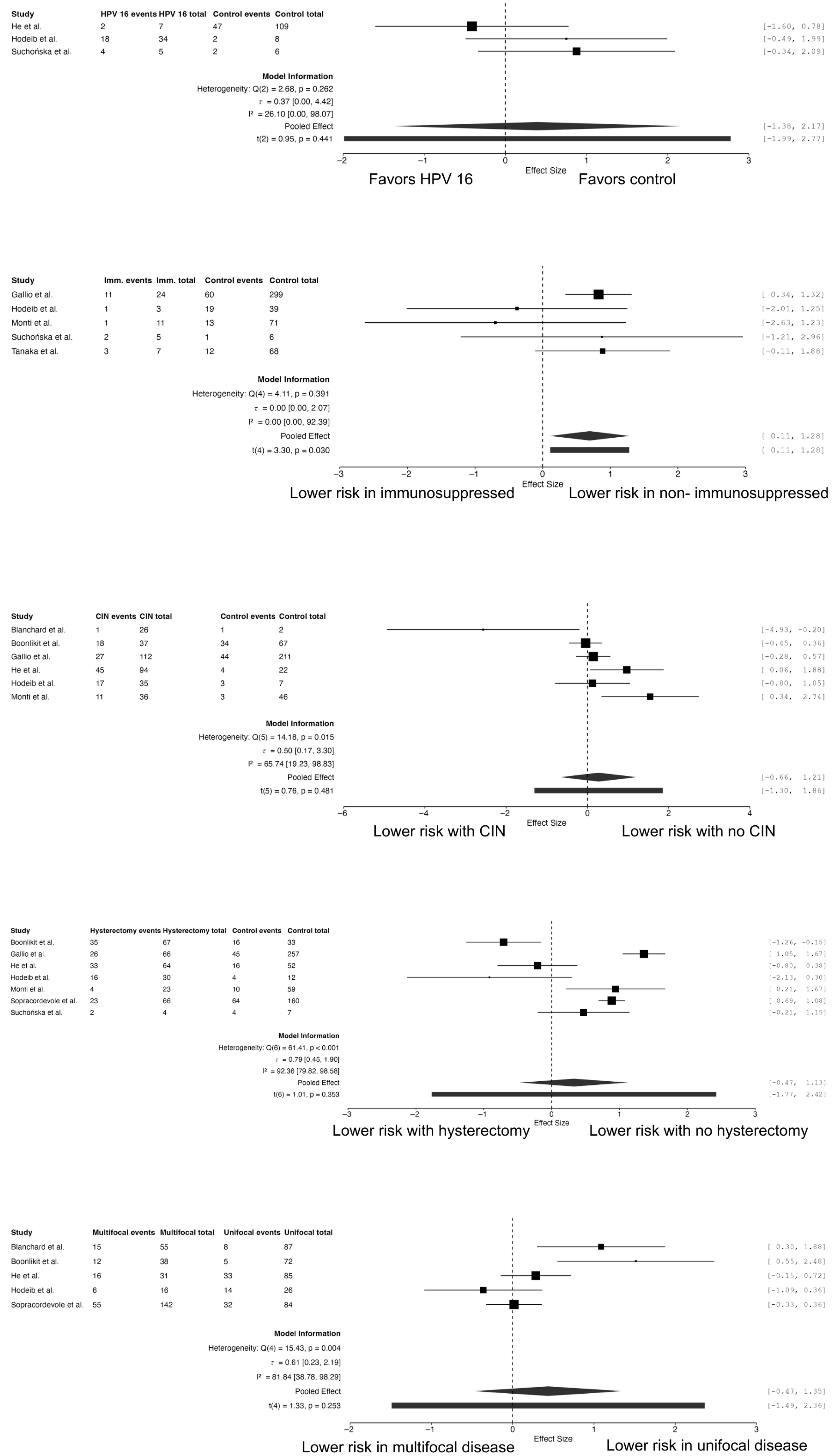
3.2.1. Prior Hysterectomy
3.2.2. Multifocality
3.2.3. Immunosuppression
3.2.4. HPV16 Infection
3.2.5. History of Cervical Intraepithelial Neoplasia (CIN)
4. Discussion
5. Conclusions
Supplementary Materials
Author Contributions
Funding
Data Availability Statement
Acknowledgments
Conflicts of Interest
Abbreviations
| 5-FU | 5-fluorouracil |
| ALA-PDT/PDT | 5-aminolevulinic acid photodynamic therapy/Photodynamic therapy |
| CI | Confidence interval |
| CIN | Cervical intraepithelial neoplasia |
| CO2 | Carbon dioxide |
| ECSVD | European College for the Study of Vulval Disease |
| EFC | European Federation for Colposcopy |
| ESGO | European Society of Gynaecological Oncology |
| HIV | Human immunodeficiency virus |
| HPV | Human papillomavirus |
| hrHPV | High-risk human papillomavirus |
| ISSVD | International Society for the Study of Vulvovaginal Disease |
| LA | Laser ablation |
| MeSH | Medical Subject Headings |
| NRSI | Non-randomized studies of interventions |
| PRISMA | Preferred Reporting Items for Systematic Reviews and Meta-Analyses |
| PROSPERO | International Prospective Register of Systematic Reviews |
| RCT | Randomized controlled trial |
| ROBINS-I | Risk Of Bias In Non-randomized Studies—of Interventions |
| RR | Risk ratio |
| SE | Surgical excision |
| SIL | Squamous intraepithelial lesion |
| TCA | Trichloroacetic acid |
| VaIN | Vaginal intraepithelial neoplasia |
| WHO | World Health Organization |
References
- Gurumurthy, M.; Cruickshank, M.E. Management of Vaginal Intraepithelial Neoplasia. J. Low. Genit. Tract. Dis. 2012, 16, 306–312. [Google Scholar] [CrossRef] [PubMed]
- De Vuyst, H.; Clifford, G.M.; Nascimento, M.C.; Madeleine, M.M.; Franceschi, S. Prevalence and type distribution of human papillomavirus in carcinoma and intraepithelial neoplasia of the vulva, vagina and anus: A meta-analysis. Int. J. Cancer 2009, 124, 1626–1636. [Google Scholar] [CrossRef]
- Baral, S.K.; Biswas, P.; Kaium, A.; Islam, A.; Dey, D.; Saber, A.; Rahaman, T.I.; M, A.; Bin Emran, T.; Hasan, N.; et al. A Comprehensive Discussion in Vaginal Cancer Based on Mechanisms, Treatments, Risk Factors and Prevention. Front. Oncol. 2022, 12, 883805. [Google Scholar] [CrossRef] [PubMed]
- Singer, A.; Monaghan, J.M.; Quek, S.C. Lower Genital Tract Precancer: Colposcopy, Pathology and Treatment; John Wiley & Sons, Incorporated: Weinheim, Germany, 2008; p. 341. [Google Scholar]
- Gunderson, C.C.; Nugent, E.K.; Elfrink, S.H.; Gold, M.A.; Moore, K.N. A contemporary analysis of epidemiology and management of vaginal intraepithelial neoplasia. Am. J. Obstet. Gynecol. 2013, 208, 410.e1–410.e6. [Google Scholar] [CrossRef] [PubMed]
- Kurman, R.J. Blaustein’s Pathology of the Female Genital Tract; Springer: New York, NY, USA, 2002. [Google Scholar]
- Sillman, F.H.; Fruchter, R.G.; Chen, Y.-S.; Camilien, L.; Sedlis, A.; McTigue, E. Vaginal intraepithelial neoplasia: Risk factors for persistence, recurrence, and invasion and its management. Am. J. Obstet. Gynecol. 1997, 176, 93–99. [Google Scholar] [CrossRef] [PubMed]
- Baltzer, J.; Löning, T.; Riethdorf, L.; Sinn, H.P.; Wagner, G. Klassifikation Maligner Tumoren Der Weiblichen Genitalorgane; Springer: Berlin/Heidelberg, Germany, 2005. [Google Scholar] [CrossRef]
- Li, H.; Guo, Y.-L.; Zhang, J.-X.; Qiao, J.; Geng, L. Risk factors for the development of vaginal intraepithelial neoplasia. Chin. Med. J. 2012, 125, 1219–1223. [Google Scholar]
- Massad, L.S.; Xie, X.; Greenblatt, R.M.; Minkoff, H.; Sanchez-Keeland, L.; Watts, D.H.; Wright, R.L.; D’souza, G.; Merenstein, D.; Strickler, H. Effect of Human Immunodeficiency Virus Infection on the Prevalence and Incidence of Vaginal Intraepithelial Neoplasia. Obstet. Gynecol. 2012, 119, 582–589. [Google Scholar] [CrossRef]
- Cao, D.; Wu, D.; Xu, Y. Vaginal intraepithelial neoplasia in patients after total hysterectomy. Curr. Probl. Cancer 2021, 45, 100687. [Google Scholar] [CrossRef]
- Brusselaers, N.; Shrestha, S.; van de Wijgert, J.; Verstraelen, H. Vaginal dysbiosis and the risk of human papillomavirus and cervical cancer: Systematic review and meta-analysis. Am. J. Obstet. Gynecol. 2019, 221, 9–18.e8. [Google Scholar] [CrossRef]
- Sherman, J.F.; Mount, S.L.; Evans, M.F.; Skelly, J.; Simmons-Arnold, L.; Eltabbakh, G.H. Smoking increases the risk of high-grade vaginal intraepithelial neoplasia in women with oncogenic human papillomavirus. Gynecol. Oncol. 2008, 110, 396–401. [Google Scholar] [CrossRef]
- Höhn, A.K.; Brambs, C.E.; Hiller, G.G.R.; May, D.; Schmoeckel, E.; Horn, L.-C. 2020 WHO Classification of Female Genital Tumors. Geburtshilfe Und Frauenheilkd. 2021, 81, 1145–1153. [Google Scholar] [CrossRef] [PubMed]
- Nucci, M.R.; Zaino, R.J.; Kurman, R.J. Diseases of the Vagina. In Blaustein’s Pathology of the Female Genital Tract; Springer: Cham, Switzerland, 2019; pp. 131–191. [Google Scholar] [CrossRef]
- Tranoulis, A.; Laios, A.; Mitsopoulos, V.; Lutchman-Singh, K.; Thomakos, N. Efficacy of 5% imiquimod for the treatment of Vaginal intraepithelial neoplasia—A systematic review of the literature and a meta-analysis. Eur. J. Obstet. Gynecol. Reprod. Biol. 2017, 218, 129–136. [Google Scholar] [CrossRef]
- Sopracordevole, F.; Clemente, N.; Di Giuseppe, J.; Barbero, M.; Fallani, M.G.; Cattani, P.; Agarossi, A.; Del Fabro, A.; De Piero, G.; Pieralli, A.; et al. Clinical Characteristics and Long-Term Follow-up of Patients Treated for High-Grade Vaginal Intraepithelial Neoplasia: Results From a 20-Year Survey in Italy. J. Low. Genit. Tract. Dis. 2020, 24, 381–386. [Google Scholar] [CrossRef]
- Kesic, V.; Carcopino, X.; Preti, M.; Vieira-Baptista, P.; Bevilacqua, F.; Bornstein, J.; Chargari, C.; Cruickshank, M.; Erzeneoglu, E.; Gallio, N.; et al. The European Society of Gynaecological Oncology (ESGO), the International Society for the Study of Vulvovaginal Disease (ISSVD), the European College for the Study of Vulval Disease (ECSVD), and the European Federation for Colposcopy (EFC) consensus statement on the management of vaginal intraepithelial neoplasia. Int. J. Gynecol. Cancer 2023, 33, 446–461. [Google Scholar] [CrossRef]
- Wang, X.; Li, J.; Li, X.; Huang, C. Efficacy and safety of photodynamic therapy for vaginal intraepithelial neoplasia: A systematic review and meta-analysis. Photodiagnosis Photodyn. Ther. 2026, 58, 105340. [Google Scholar] [CrossRef]
- Sterne, J.A.C.; Hernán, M.A.; Reeves, B.C.; Savović, J.; Berkman, N.D.; Viswanathan, M.; Henry, D.; Altman, D.G.; Ansari, M.T.; Boutron, I.; et al. ROBINS-I: A tool for assessing risk of bias in non-randomised studies of interventions. BMJ 2016, 355, i4919. [Google Scholar] [CrossRef] [PubMed]
- Ao, M.; Zheng, D.; Wang, J.; Gu, X.; Xi, M. Risk factors analysis of persistence, progression and recurrence in vaginal intraepithelial neoplasia. Gynecol. Oncol. 2021, 162, 584–589. [Google Scholar] [CrossRef] [PubMed]
- Blanchard, P.; Monnier, L.; Dumas, I.; Morice, P.; Pautier, P.; Duvillard, P.; Azoury, F.; Mazeron, R.; Haie-Meder, C. Low-Dose-Rate Definitive Brachytherapy for High-Grade Vaginal Intraepithelial Neoplasia. Oncologist 2011, 16, 182–188. [Google Scholar] [CrossRef]
- Boonlikit, S. Recurrence of high-grade vaginal intraepithelial neoplasia after various treatments. Curr. Probl. Cancer 2022, 46, 100792. [Google Scholar] [CrossRef]
- Dong, H.; Li, H.; Wang, L.; Yuan, Y.; Zhang, D.; Zhou, L.; Wang, T.; Yang, C. Clinical analysis of 175 cases of vaginal intraepithelial neoplasia. Eur. J. Obstet. Gynecol. Reprod. Biol. 2023, 287, 232–236. [Google Scholar] [CrossRef]
- Field, A.; Bhagat, N.; Clark, S.; Speed, T.; Razvi, K. Vaginal Intraepithelial Neoplasia: A Retrospective Study of Treatment and Outcomes Among a Cohort of UK Women. J. Low. Genit. Tract. Dis. 2020, 24, 43–47. [Google Scholar] [CrossRef]
- Gallio, N.; Preti, M.; Boldorini, R.; Cavagnetto, C.; Borella, F.; Bevilacqua, F.; Barbierato, I.; Ribaldone, R.; Bovio, E.; Airoldi, C.; et al. High-Grade Vaginal Intraepithelial Neoplasia: Clinical Profile, HPV Vaccination Status, and Treatment Outcomes at Two Italian Referral Centers. Vaccines 2025, 13, 1089. [Google Scholar] [CrossRef] [PubMed]
- He, M.Y.; Yu, E.L.-M.; Hui, S.K.; Kung, Y.L.F. Clinical outcomes of laser vaporization for vaginal intraepithelial neoplasia—A 20-year retrospective review. Eur. J. Obstet. Gynecol. Reprod. Biol. 2022, 277, 101–109. [Google Scholar] [CrossRef]
- Hodeib, M.; Cohen, J.G.; Mehta, S.; Rimel, B.; Walsh, C.S.; Li, A.J.; Karlan, B.Y.; Cass, I. Recurrence and risk of progression to lower genital tract malignancy in women with high grade VAIN. Gynecol. Oncol. 2016, 141, 507–510. [Google Scholar] [CrossRef] [PubMed]
- Kim, M.-K.; Lee, I.H.; Lee, K.H. Clinical outcomes and risk of recurrence among patients with vaginal intraepithelial neoplasia: A comprehensive analysis of 576 cases. J. Gynecol. Oncol. 2018, 29, e6. [Google Scholar] [CrossRef]
- Monti, E.; Libutti, G.; Di Loreto, E.; Boero, V.; Barbara, G.; Iorio, M.; Cetera, G.E.; Cipriani, S.; Parazzini, F. High-grade vaginal intraepithelial neoplasia and recurrence risk: Analysis of an Italian regional referral center series. Arch. Gynecol. Obstet. 2023, 308, 201–206. [Google Scholar] [CrossRef]
- Murta, E.F.C.; Junior, M.A.N.; Sempionato, L.R.F.; Costa, M.C.; Maluf, P.J. Vaginal intraepithelial neoplasia: Clinical-therapeutic analysis of 33 cases. Arch. Gynecol. Obstet. 2005, 272, 261–264. [Google Scholar] [CrossRef] [PubMed]
- Suchońska, B.; Ługowski, F.; Papież, M.; Ludwin, A. Vaginal Intraepithelial Neoplasia (VaIN)—A Retrospective Cohort Analysis of Epidemiology, Risk Factors, and Management in an Academic Clinical Center. J. Clin. Med. 2025, 14, 5386. [Google Scholar] [CrossRef]
- Sun, B.; Chen, Y.; Cao, D.; Xu, Y.; Wu, D. Evaluation of the efficacy of carbon dioxide laser combined with 5-aminolevulinic acid photodynamic therapy in treating high-grade vaginal squamous intraepithelial lesions following hysterectomy. Photodiagnosis Photodyn. Ther. 2025, 56, 105256. [Google Scholar] [CrossRef]
- Tanaka, M.; Yamanoi, K.; Taki, M.; Kitamura, S.; Sunada, M.; Chigusa, Y.; Horie, A.; Yamaguchi, K.; Hamanishi, J.; Mandai, M. High-grade vaginal intraepithelial neoplasia after hysterectomy for high-grade cervical intraepithelial neoplasia: Is hysterectomy a “definitive” treatment compared to conization? J. Obstet. Gynaecol. Res. 2023, 49, 2361–2369. [Google Scholar] [CrossRef]
- Moscicki, A.-B.; Flowers, L.; Huchko, M.J.; Long, M.E.; MacLaughlin, K.L.; Murphy, J.P.; Spiryda, L.B.; Scheckel, C.J.D.; Gold, M.A. Updated Review for Guidelines for Cervical Cancer Screening in Immunosuppressed Women Without HIV Infection. J. Low. Genit. Tract. Dis. 2025, 29, 168–179. [Google Scholar] [CrossRef]
- Wieland, U.; Kreuter, A.; Pfister, H. Human Papillomavirus and Immunosuppression. Curr. Probl. Dermatol. 2014, 45, 154–165. [Google Scholar] [CrossRef]
- Swase, T.D.; Fasogbon, I.V.; Eseoghene, I.J.; Etukudo, E.M.; Mbina, S.A.; Joan, C.; Dangana, R.S.; Anyanwu, C.; Vandu, C.D.; Agbaje, A.B.; et al. The impact of HPV/HIV co-infection on immunosuppression, HPV genotype, and cervical cancer biomarkers. BMC Cancer 2025, 25, 202. [Google Scholar] [CrossRef] [PubMed]
- D’ORia, O.; Giannini, A.; Buzzaccarini, G.; Tinelli, A.; Corrado, G.; Frega, A.; Vizza, E.; Caserta, D. Fractional Co2 laser for vulvo-vaginal atrophy in gynecologic cancer patients: A valid therapeutic choice? A systematic review. Eur. J. Obstet. Gynecol. Reprod. Biol. 2022, 277, 84–89. [Google Scholar] [CrossRef] [PubMed]
- Page, M.J.; McKenzie, J.E.; Bossuyt, P.M.; Boutron, I.; Hoffmann, T.C.; Mulrow, C.D.; Shamseer, L.; Tetzlaff, J.M.; Akl, E.A.; Brennan, S.E.; et al. The PRISMA 2020 statement: An updated guideline for reporting systematic reviews. BMJ 2021, 372, n71. [Google Scholar] [CrossRef] [PubMed]
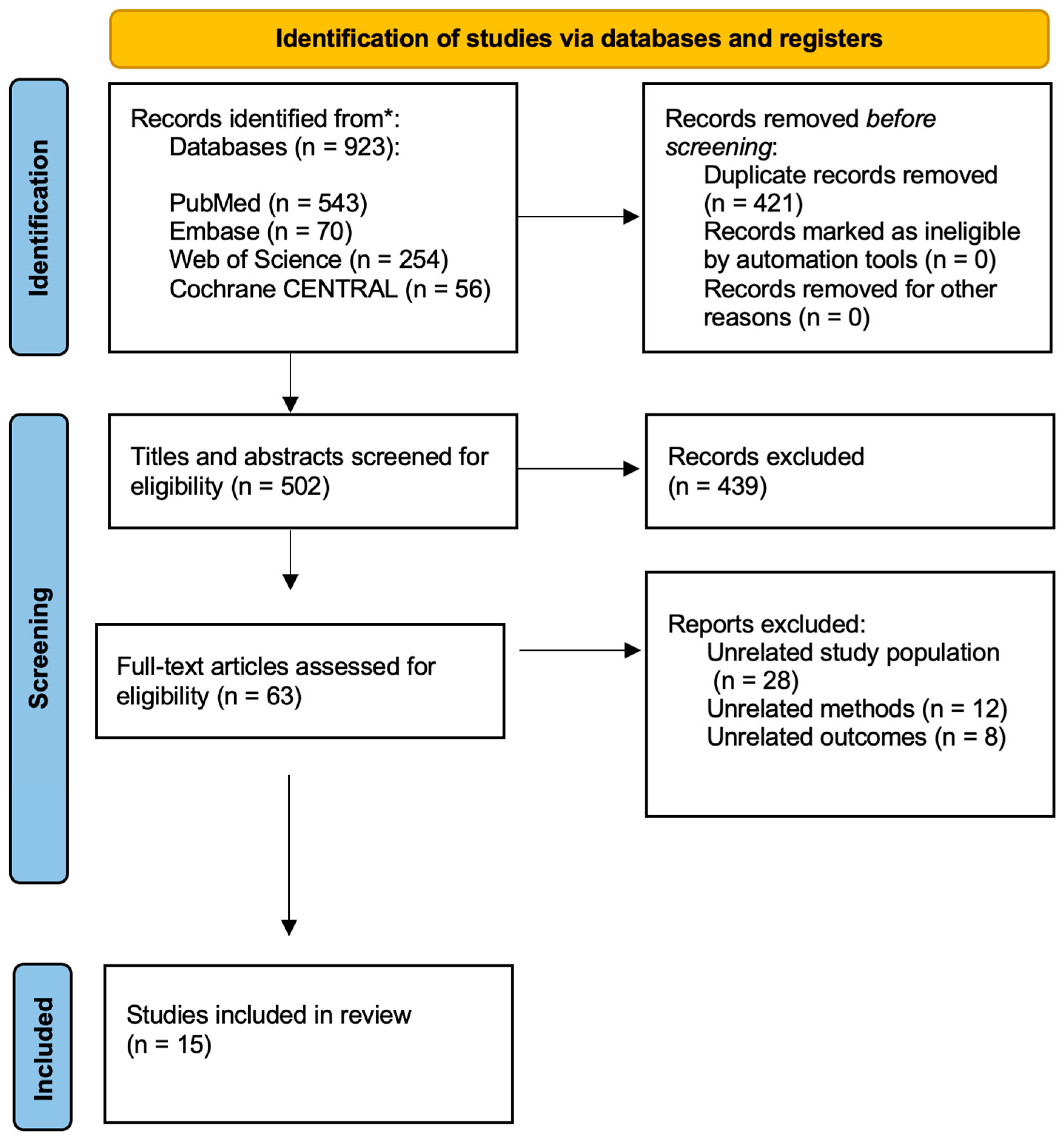



| Study (Author, Year) | Country | Study Design | Population (N) | High-Grade VaIN (N) * | Treatment Modalities Analyzed | Follow-Up (Months) ** |
|---|---|---|---|---|---|---|
| Ao et al. (2021) [21] | China | Retrospective | 1478 | 832 | Laser ablation, surgical excision, ALA-PDT | Mean: 34.5; Median: 14 |
| Blanchard et al. (2011) [22] | France | Retrospective | 28 | 28 | Laser ablation | Median: 41 |
| Boonlikit et al. (2022) [23] | Thailand | Retrospective | 104 | 104 | Laser ablation, surgical excision, topical | Median: 23.6 |
| Dong et al. (2023) [24] | China | Retrospective | 175 | 40 | Laser ablation, surgical excision, PDT | Median: 8 |
| Field et al. (2020) [25] | UK | Retrospective | 88 | 53 | Laser ablation, surgical excision | Median: 26 |
| Gallio et al. (2025) [26] | Italy | Retrospective | 323 | 323 | Laser ablation, surgical excision | Mean: 62.43 |
| He et al. (2022) [27] | China | Retrospective | 116 | 116 | Laser ablation | Mean: 49.5 |
| Hodeib et al. (2016) [28] | USA | Retrospective | 42 | 42 | Laser ablation, surgical excision, topical | Median: 64 |
| Kim et al. (2018) [29] | South Korea | Retrospective | 576 | 397 | Laser ablation, surgical Excision, topical | Median: 44.6 |
| Monti et al. (2023) [30] | Italy | Retrospective | 82 | 82 | Laser ablation, surgical excision | Median: 15.5 |
| Murta et al. (2005) [31] | Brazil | Retrospective | 38 | 38 | Laser ablation, surgical excision, topical | Range: 6–60 |
| Sopracordevole et al. (2020) [17] | Italy | Retrospective | 226 | 226 | Laser ablation, surgical excision | Median: 42.8 |
| Suchońska et al. (2025) [32] | Poland | Retrospective | 24 | 11 | Laser ablation, surgical excision, topical | Median: 12.3 |
| Sun et al. (2025) [33] | China | Retrospective | 125 | 125 | Laser, ALA-PDT | Median: 5 |
| Tanaka et al. (2023) [34] | Japan | Retrospective | 647 | 647 | Laser ablation | Median: 48 |
Disclaimer/Publisher’s Note: The statements, opinions and data contained in all publications are solely those of the individual author(s) and contributor(s) and not of MDPI and/or the editor(s). MDPI and/or the editor(s) disclaim responsibility for any injury to people or property resulting from any ideas, methods, instructions or products referred to in the content. |
© 2026 by the authors. Licensee MDPI, Basel, Switzerland. This article is an open access article distributed under the terms and conditions of the Creative Commons Attribution (CC BY) license.
Share and Cite
Ługowski, F.; Papież, M.; Suchońska, B. Comparative Efficacy of Treatment Methods and Risk Factors for Treatment Failure in High-Grade Vaginal Intraepithelial Neoplasia: A Systematic Review and Meta-Analysis. Cancers 2026, 18, 1302. https://doi.org/10.3390/cancers18081302
Ługowski F, Papież M, Suchońska B. Comparative Efficacy of Treatment Methods and Risk Factors for Treatment Failure in High-Grade Vaginal Intraepithelial Neoplasia: A Systematic Review and Meta-Analysis. Cancers. 2026; 18(8):1302. https://doi.org/10.3390/cancers18081302
Chicago/Turabian StyleŁugowski, Franciszek, Magdalena Papież, and Barbara Suchońska. 2026. "Comparative Efficacy of Treatment Methods and Risk Factors for Treatment Failure in High-Grade Vaginal Intraepithelial Neoplasia: A Systematic Review and Meta-Analysis" Cancers 18, no. 8: 1302. https://doi.org/10.3390/cancers18081302
APA StyleŁugowski, F., Papież, M., & Suchońska, B. (2026). Comparative Efficacy of Treatment Methods and Risk Factors for Treatment Failure in High-Grade Vaginal Intraepithelial Neoplasia: A Systematic Review and Meta-Analysis. Cancers, 18(8), 1302. https://doi.org/10.3390/cancers18081302