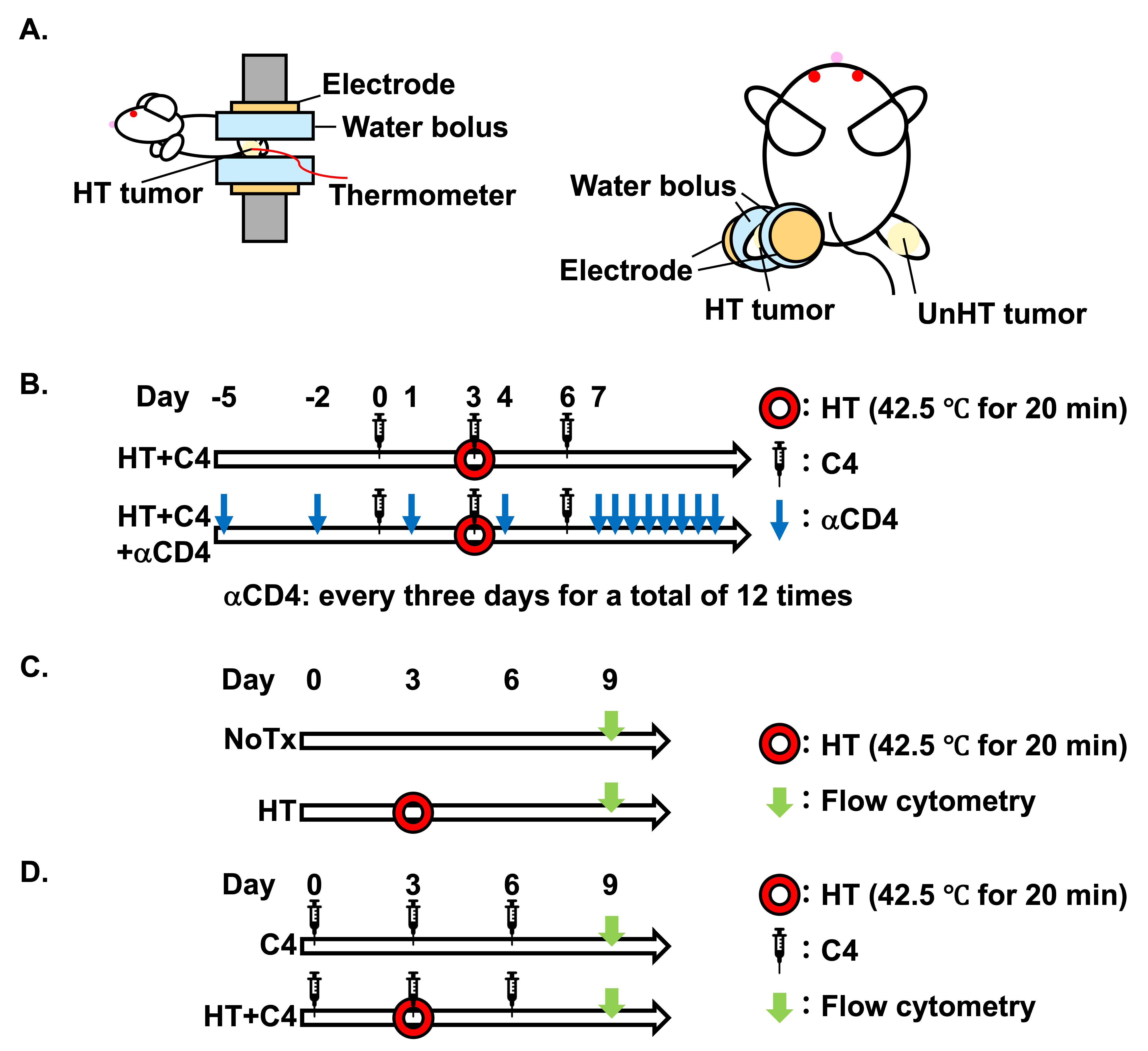
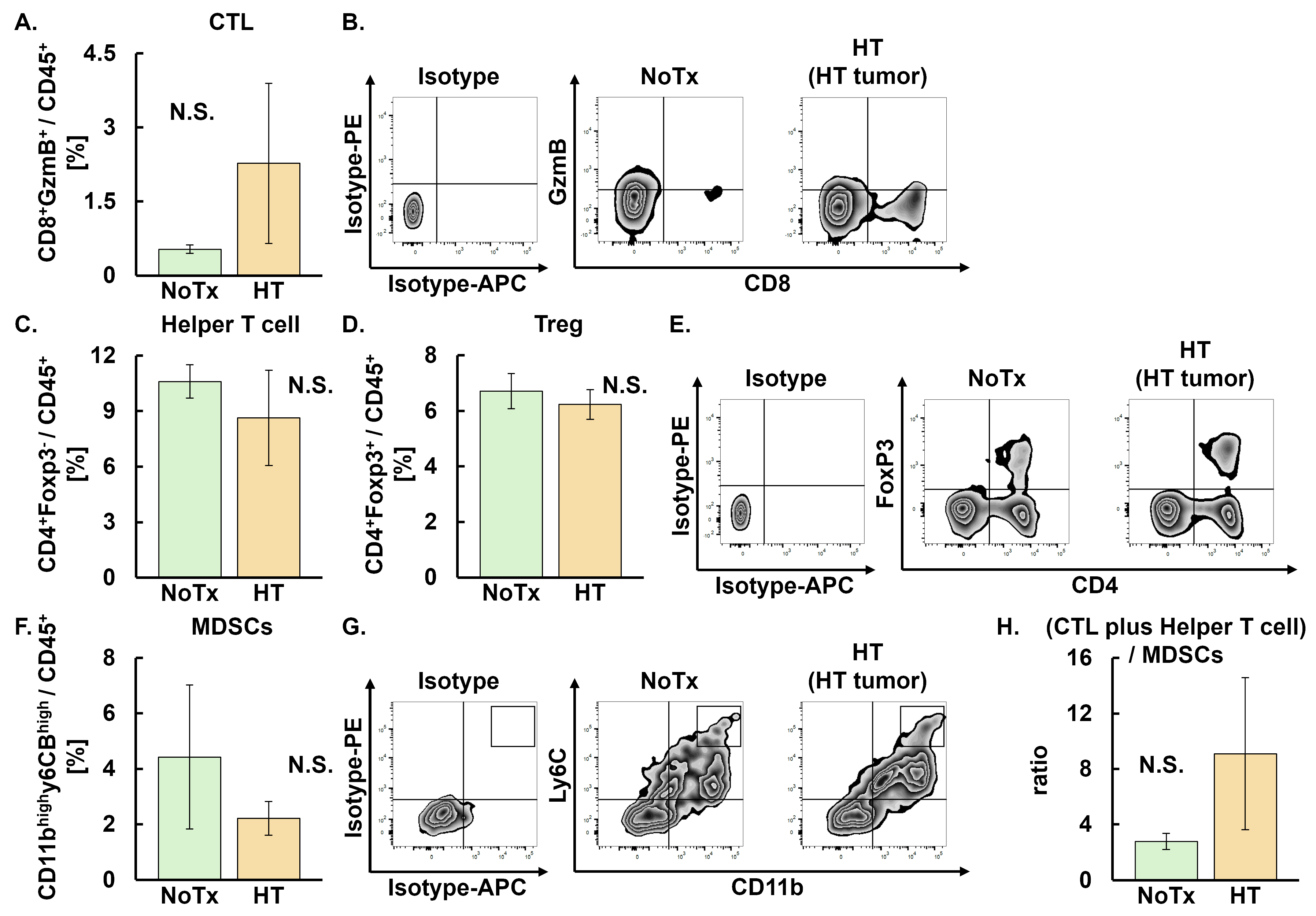
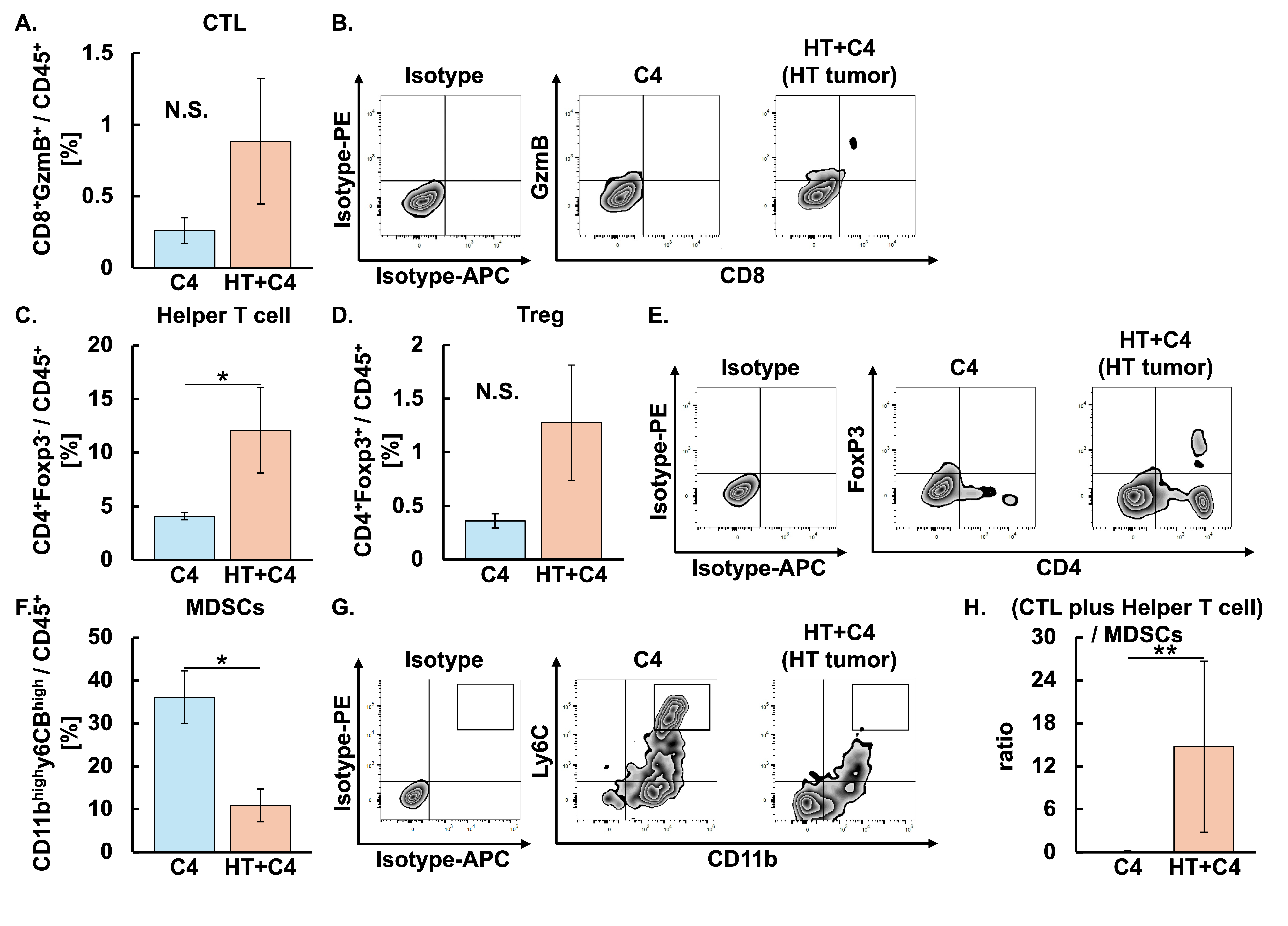
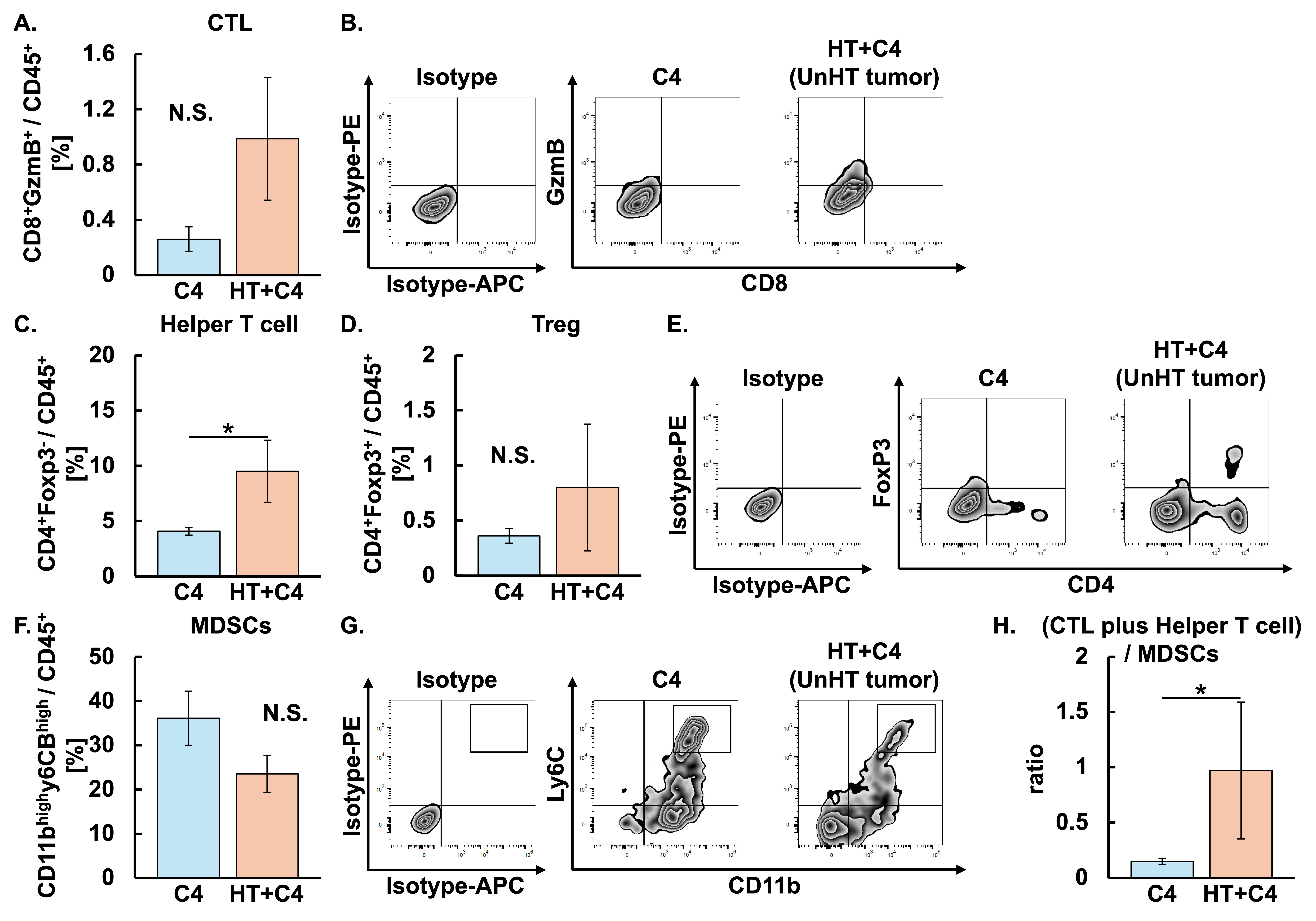
Hyperthermia Combined with Anti-CTLA-4 Antibody Induces Tumor Microenvironment Remodeling Involving CD4+ T Cells in Local and Distant Antitumor Effects in a Murine Triple-Negative Breast Cancer

 , , ,
, , ,
Simple Summary
Abstract
1. Introduction
2. Materials and Methods
2.1. Cell Lines
2.2. Hyperthermia
2.3. Reagents
2.4. Animal Experiments
2.5. Flow Cytometry
2.6. Tumor Volume Study
2.7. Statistics
3. Results
3.1. Immune Microenvironment Alterations in Heated Tumors
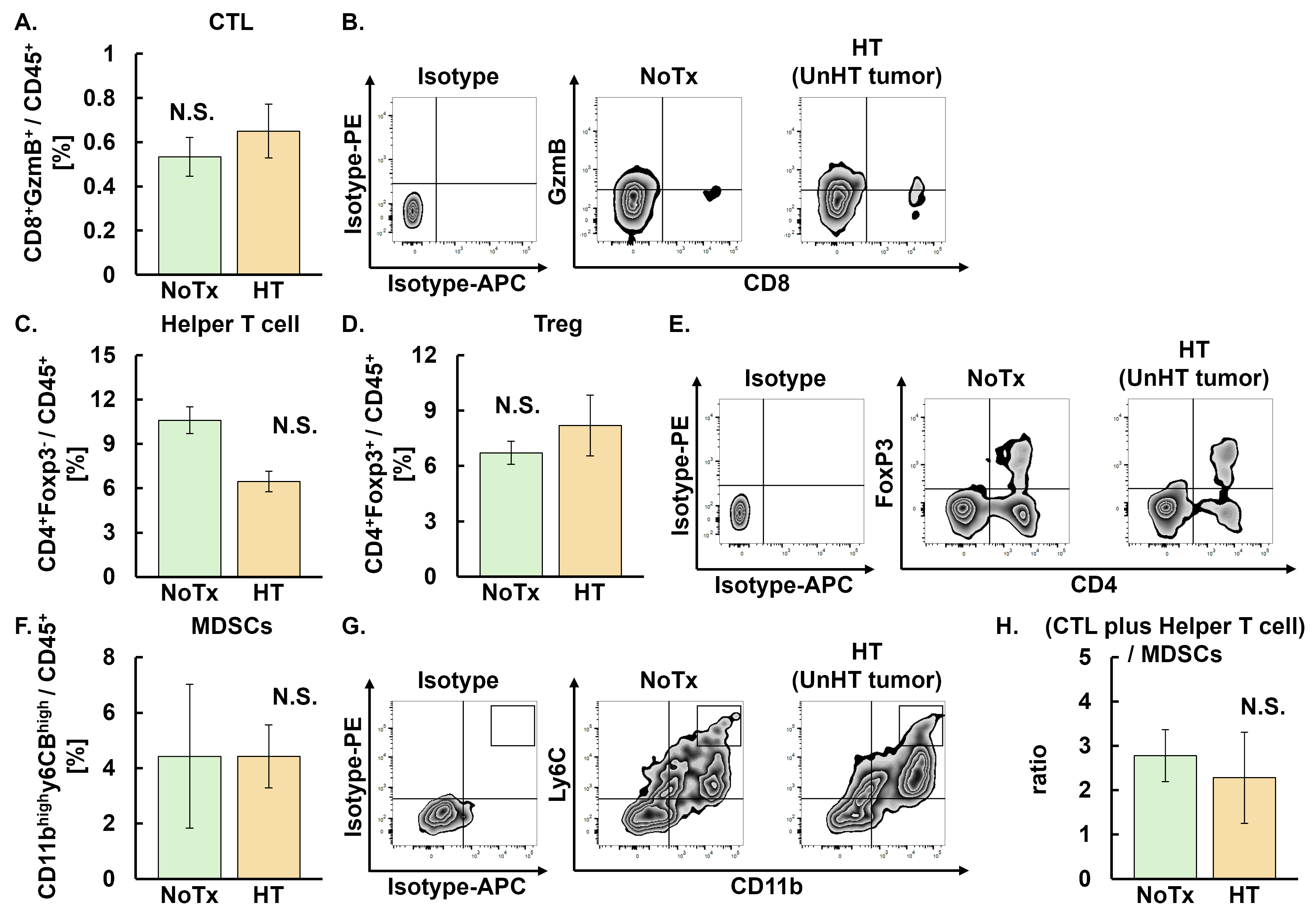
3.2. Immune Microenvironment Alterations in Unheated Distant Tumors
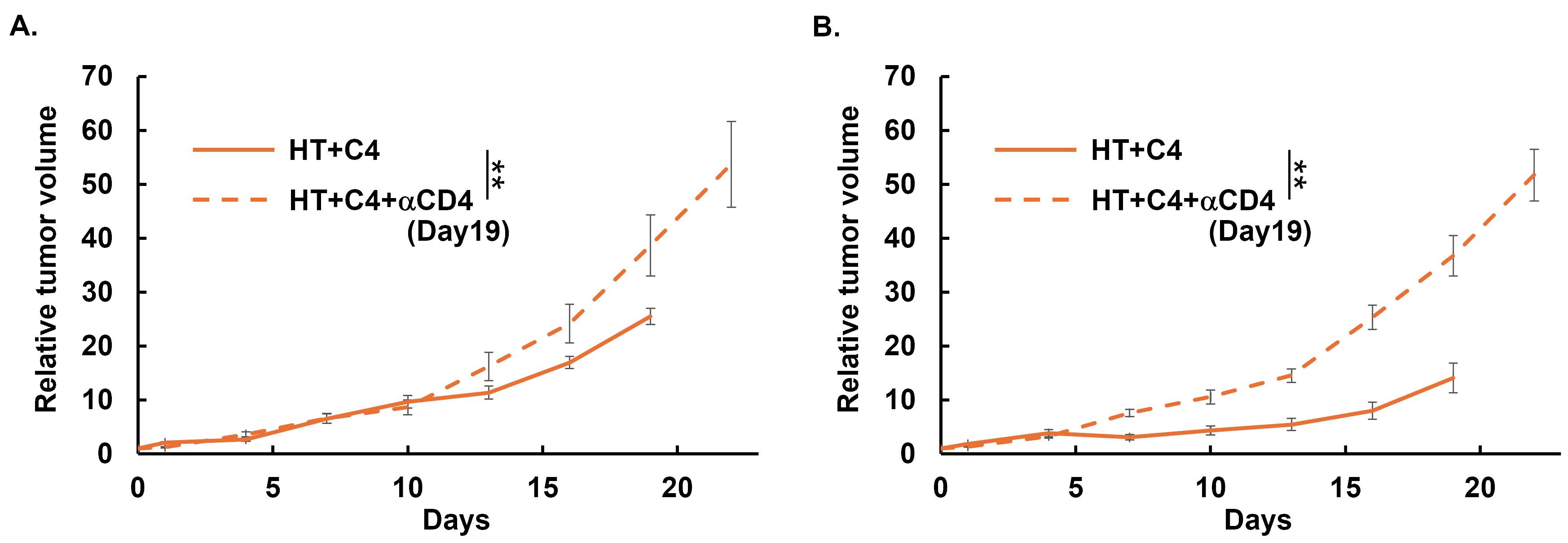
3.3. Depletion of CD4+ T Cells Diminishes the Efficacy of HT + C4 Therapy
4. Discussion
5. Conclusions
Author Contributions
Funding
Institutional Review Board Statement
Informed Consent Statement
Data Availability Statement
Acknowledgments
Conflicts of Interest
Abbreviations
| TNBC | Triple-negative breast cancer |
| ER | Estrogen receptor |
| PR | Progesterone receptor |
| HER2 | Human epidermal growth factor receptor 2 |
| ICI | Immune checkpoint inhibitor |
| PD-1 | Programmed cell death protein-1 |
| PD-L1 | Programmed cell death ligand-1 |
| CTLA-4 | Cytotoxic T-lymphocyte-associated antigen-4 |
| TME | Tumor microenvironment |
| TILs | Tumor-infiltrating lymphocytes |
| CTL | Cytotoxic T lymphocytes |
| APC | Antigen-presenting cells |
| DC | Dendritic cells |
| C4 | Anti-CTLA-4 antibody |
| Treg | Regulatory T cells |
| MDSCs | Myeloid-derived suppressor cells |
| HT | Hyperthermia |
| RPMI | Roswell Park Memorial Institute |
| FBS | Fetal bovine serum |
| RF | Radiofrequency |
| αCD4 | Anti-CD4 antibody |
| PBS | Phosphate-buffered saline |
| NoTx | No treatment |
| GzmB | Granzyme B |
References
- Derakhshan, F.; Reis-Filho, J.S. Pathogenesis of Triple-Negative Breast Cancer. Annu. Rev. Pathol. Mech. Dis. 2022, 17, 181–204. [Google Scholar] [CrossRef]
- Liu, Y.; Hu, Y.; Xue, J.; Li, J.; Yi, J.; Bu, J.; Zhang, Z.; Qiu, P.; Gu, X. Advances in immunotherapy for triple-negative breast cancer. Mol. Cancer 2023, 22, 145. [Google Scholar] [CrossRef]
- Obidiro, O.; Battogtokh, G.; Akala, E.O. Triple Negative Breast Cancer Treatment Options and Limitations: Future Outlook. Pharmaceutics 2023, 15, 1796. [Google Scholar] [CrossRef] [PubMed]
- Zhu, S.; Wu, Y.; Song, B.; Yi, M.; Yan, Y.; Mei, Q.; Wu, K. Recent advances in targeted strategies for triple-negative breast cancer. J. Hematol. Oncol. 2023, 16, 100. [Google Scholar] [CrossRef] [PubMed]
- Li, Y.; Zhang, H.; Merkher, Y.; Chen, L.; Liu, N.; Leonov, S.; Chen, Y. Recent advances in therapeutic strategies for triple-negative breast cancer. J. Hematol. Oncol. 2022, 15, 121. [Google Scholar] [CrossRef]
- Kumar, P.; Aggarwal, R. An overview of triple-negative breast cancer. Arch. Gynecol. Obstet. 2016, 293, 247–269. [Google Scholar] [CrossRef]
- Liu, Y.T.; Sun, Z.J. Turning cold tumors into hot tumors by improving T-cell infiltration. Theranostics 2021, 11, 5365–5386. [Google Scholar] [CrossRef]
- Tang, S.; Qin, C.; Hu, H.; Liu, T.; He, Y.; Guo, H.; Yan, H.; Zhang, J.; Tang, S.; Zhou, H. Immune Checkpoint Inhibitors in Non-Small Cell Lung Cancer: Progress, Challenges, and Prospects. Cells 2022, 11, 320. [Google Scholar] [CrossRef]
- Hodi, F.S.; O’Day, S.J.; McDermott, D.F.; Weber, R.W.; Sosman, J.A.; Haanen, J.B.; Gonzalez, R.; Robert, C.; Schadendorf, D.; Hassel, J.C.; et al. Improved Survival with Ipilimumab in Patients with Metastatic Melanoma. N. Engl. J. Med. 2010, 363, 711–723. [Google Scholar] [CrossRef] [PubMed]
- Peng, Z.; Su, P.; Yang, Y.; Yao, X.; Zhang, Y.; Jin, F.; Yang, B. Identification of CTLA-4 associated with tumor microenvironment and competing interactions in triple negative breast cancer by co-expression network analysis. J. Cancer 2020, 11, 6365–6375. [Google Scholar] [CrossRef]
- Schoenfeld, A.J.; Hellmann, M.D. Acquired Resistance to Immune Checkpoint Inhibitors. Cancer Cell 2020, 37, 443–455. [Google Scholar] [CrossRef]
- Bianchini, G.; De Angelis, C.; Licata, L.; Gianni, L. Treatment landscape of triple-negative breast cancer—Expanded options, evolving needs. Nat. Rev. Clin. Oncol. 2022, 19, 91–113. [Google Scholar] [CrossRef]
- Lotfinejad, P.; Jafarabadi, M.A.; Shadbad, M.A.; Kazemi, T.; Pashazadeh, F.; Shotorbani, S.S.; Niaragh, F.J.; Baghbanzadeh, A.; Vahed, N.; Silvestris, N.; et al. Prognostic Role and Clinical Significance of Tumor-Infiltrating Lymphocyte (TIL) and Programmed Death Ligand 1 (PD-L1) Expression in Triple-Negative Breast Cancer (TNBC): A Systematic Review and Meta-Analysis Study. Diagnostics 2020, 10, 704. [Google Scholar]
- Leon-Ferre, R.A.; Jonas, S.F.; Salgado, R.; Loi, S.; De Jong, V.; Carter, J.M.; Nielsen, T.O.; Leung, S.; Riaz, N.; Chia, S.; et al. Tumor-Infiltrating Lymphocytes in Triple-Negative Breast Cancer. JAMA 2024, 331, 1135–1144. [Google Scholar] [CrossRef]
- Chen, D.S.; Mellman, I. Oncology Meets Immunology: The Cancer-Immunity Cycle. Immunity 2013, 39, 1–10. [Google Scholar] [CrossRef]
- Mellman, I.; Chen, D.S.; Powles, T.; Turley, S.J. The Cancer-Immunity Cycle: Indication, Genotype, and Immunotype. Immunity 2023, 56, 2188–2205. [Google Scholar] [CrossRef]
- Leach, D.R.; Krummel, M.F.; Allison, J.P. Enhancement of Antitumor Immunity by CTLA-4 Blockade. Science 1996, 271, 1734–1736. [Google Scholar] [CrossRef]
- Farhood, B.; Najafi, M.; Mortezaee, K. CD8+ cytotoxic T lymphocytes in cancer immunotherapy: A review. J. Cell. Physiol. 2019, 234, 8509–8521. [Google Scholar]
- Hossen, M.M.; Ma, Y.; Yin, Z.; Xia, Y.; Du, J.; Huang, J.Y.; Huang, J.J.; Zou, L.; Ye, Z.; Huang, Z. Current understanding of CTLA-4: From mechanism to autoimmune diseases. Front. Immunol. 2023, 14, 1198365. [Google Scholar] [CrossRef] [PubMed]
- Montauti, E.; Oh, D.Y.; Fong, L. CD4+ T cells in antitumor immunity. Trends Cancer 2024, 10, 969–985. [Google Scholar] [CrossRef] [PubMed]
- Oh, D.Y.; Fong, L. Cytotoxic CD4+ T Cells in cancer: Expanding the immune effector toolbox. Immunity 2021, 54, 2701–2711. [Google Scholar] [CrossRef]
- Yi, M.; Li, T.; Niu, M.; Mei, Q.; Zhao, B.; Chu, Q.; Dai, Z.; Wu, K. Exploiting innate immunity for cancer immunotherapy. Mol. Cancer 2023, 22, 187. [Google Scholar] [CrossRef]
- Dewhirst, M.W.; Vujaskovic, Z.; Jones, E.; Thrall, D. Re-setting the biologic rationale for thermal therapy. Int. J. Hyperth. 2005, 21, 779–790. [Google Scholar] [CrossRef]
- Liu, P.; Ye, M.; Wu, Y.; Wu, L.; Lan, K.; Wu, Z. Hyperthermia combined with immune checkpoint inhibitor therapy: Synergistic sensitization and clinical outcomes. Cancer Med. 2023, 12, 3201–3221. [Google Scholar] [CrossRef]
- Xu, D.; Liu, Z.; Liang, M.X.; Chen, W.Q.; Fei, Y.J.; Yang, S.J.; Wu, Y.; Zhang, W.; Tang, J.H. Hyperthermia promotes M1 polarization of macrophages via exosome-mediated HSPB8 transfer in triple negative breast cancer. Discov. Oncol. 2023, 14, 81. [Google Scholar] [CrossRef] [PubMed]
- Ibuki, Y.; Takahashi, Y.; Tamari, K.; Minami, K.; Seo, Y.; Isohashi, F.; Koizumi, M.; Ogawa, K. Local hyperthermia combined with CTLA-4 blockade induces both local and abscopal effects in a murine breast cancer model. Int. J. Hyperth. 2021, 38, 363–371. [Google Scholar] [CrossRef]
- Ueha, S.; Yokochi, S.; Ishiwata, Y.; Ogiwara, H.; Chand, K.; Nakajima, T.; Hachiga, K.; Shichino, S.; Terashima, Y.; Toda, E.; et al. Robust Antitumor Effects of Combined Anti-CD4-Depleting Antibody and Anti-PD-1/PD-L1 Immune Checkpoint Antibody Treatment in Mice. Cancer Immunol. Res. 2015, 3, 631–640. [Google Scholar]
- Toraya-Brown, S.; Sheen, M.; Zhang, P.; Chen, L.; Baird, J.; Demidenko, E.; Turk, M.; Hoopes, P.; Conejo-Garcia, J.; Fiering, S. Local hyperthermia treatment of tumors induces CD8+ T cell-mediated resistance against distal and secondary tumors. Nanomed. Nanotechnol. Biol. Med. 2014, 6, 1273–1285. [Google Scholar] [CrossRef] [PubMed]
- Twyman-Saint Victor, C.; Rech, A.J.; Maity, A.; Rengan, R.; Pauken, K.E.; Stelekati, E.; Benci, J.L.; Xu, B.; Dada, H.; Odorizzi, P.M.; et al. Radiation and dual checkpoint blockade activate non-redundant immune mechanisms in cancer. Nature 2015, 520, 373–377. [Google Scholar] [CrossRef] [PubMed]
- Newton, J.M.; Flores-Arredondo, J.H.; Suki, S.; Ware, M.J.; Krzykawska-Serda, M.; Agha, M.; Law, J.J.; Sikora, A.G.; Curley, S.A.; Corr, S.J. Non-Invasive Radiofrequency Field Treatment of 4T1 Breast Tumors Induces T-Cell Dependent Inflammatory Response. Sci. Rep. 2018, 8, 3474. [Google Scholar] [CrossRef]
- Hu, A.; Pu, Y.; Xu, N.; Cai, Z.; Sun, R.; Fu, S.; Jin, R.; Guo, Y.; Ai, H.; Nie, Y.; et al. Controlled intracellular aggregation of magnetic particles improves permeation and retention for magnetic hyperthermia promotion and immune activation. Theranostics 2023, 13, 1454–1469. [Google Scholar] [CrossRef]
- Covarrubias, G.; Lorkowski, M.E.; Sims, H.M.; Loutrianakis, G.; Rahmy, A.; Cha, A.; Abenojar, E.; Wickramasinghe, S.; Moon, T.J.; Samia, A.C.S.; et al. Hyperthermia-mediated changes in the tumor immune microenvironment using iron oxide nanoparticles. Nanoscale Adv. 2021, 3, 5890–5899. [Google Scholar] [CrossRef]
- Ito, A.; Fujioka, M.; Tanaka, K.; Kobayashi, T.; Honda, H. Screening of Cytokines to Enhance Vaccine Effects of Heat Shock Protein 70-Rich Tumor Cell Lysate. J. Biosci. Bioeng. 2005, 100, 36–42. [Google Scholar] [CrossRef]
- Li, Z.; Deng, J.; Sun, J.; Ma, Y. Hyperthermia Targeting the Tumor Microenvironment Facilitates Immune Checkpoint Inhibitors. Front. Immunol. 2020, 11, 595207. [Google Scholar] [CrossRef]
- Abreu, M.M.; Chocron, A.F.; Smadja, D.M. From cold to hot: Mechanisms of hyperthermia in modulating tumor immunology for enhanced immunotherapy. Front. Immunol. 2025, 16, 1487296. [Google Scholar] [CrossRef] [PubMed]
- Huang, L.; Li, Y.; Du, Y.; Zhang, Y.; Wang, X.; Ding, Y.; Yang, X.; Meng, F.; Tu, J.; Luo, L.; et al. Mild photothermal therapy potentiates anti-PD-L1 treatment for immunologically cold tumors via an all-in-one and all-in-control strategy. Nat. Commun. 2019, 10, 4871. [Google Scholar] [PubMed]
- Albores-Mendez, E.M.; Casanas-Pimentel, R.G.; Reyes-Chacon, I.R.; Cubas, J.M.; Lopez-Cruz, J.; Rincon-Huerta, J.A.; Camacho-Ibarra, A.; Martin-Martinez, E.S. Cancer Progression Is not Different in Mice of Different Gender Inoculated with Cells of the Triple-Negative 4T1 Breast Cancer Model. World. J. Oncol. 2022, 13, 249–258. [Google Scholar] [CrossRef]
- Ciavattone, N.G.; Guan, N.; Farfel, A.; Stauff, J.; Desmond, T.; Viglianti, B.L.; Scott, P.J.H.; Brooks, A.F.; Luker, G.D. Evaluating immunotherapeutic outcomes in triple-negative breast cancer with a cholesterol radiotracer in mice. JCI Insight 2024, 9, e175320. [Google Scholar] [CrossRef] [PubMed]




Disclaimer/Publisher’s Note: The statements, opinions and data contained in all publications are solely those of the individual author(s) and contributor(s) and not of MDPI and/or the editor(s). MDPI and/or the editor(s) disclaim responsibility for any injury to people or property resulting from any ideas, methods, instructions or products referred to in the content. |
© 2026 by the authors. Licensee MDPI, Basel, Switzerland. This article is an open access article distributed under the terms and conditions of the Creative Commons Attribution (CC BY) license.
Share and Cite
Okuuchi, A.; Ibuki, Y.; Katsuki, S.; Minami, K.; Tatekawa, S.; Tamari, K.; Takenaka, W.; Koizumi, M.; Ogawa, K.; Takahashi, Y. Hyperthermia Combined with Anti-CTLA-4 Antibody Induces Tumor Microenvironment Remodeling Involving CD4+ T Cells in Local and Distant Antitumor Effects in a Murine Triple-Negative Breast Cancer. Cancers 2026, 18, 1295. https://doi.org/10.3390/cancers18081295
Okuuchi A, Ibuki Y, Katsuki S, Minami K, Tatekawa S, Tamari K, Takenaka W, Koizumi M, Ogawa K, Takahashi Y. Hyperthermia Combined with Anti-CTLA-4 Antibody Induces Tumor Microenvironment Remodeling Involving CD4+ T Cells in Local and Distant Antitumor Effects in a Murine Triple-Negative Breast Cancer. Cancers. 2026; 18(8):1295. https://doi.org/10.3390/cancers18081295
Chicago/Turabian StyleOkuuchi, Ayaka, Yoriko Ibuki, Shohei Katsuki, Kazumasa Minami, Shotaro Tatekawa, Keisuke Tamari, Wataru Takenaka, Masahiko Koizumi, Kazuhiko Ogawa, and Yutaka Takahashi. 2026. "Hyperthermia Combined with Anti-CTLA-4 Antibody Induces Tumor Microenvironment Remodeling Involving CD4+ T Cells in Local and Distant Antitumor Effects in a Murine Triple-Negative Breast Cancer" Cancers 18, no. 8: 1295. https://doi.org/10.3390/cancers18081295
APA StyleOkuuchi, A., Ibuki, Y., Katsuki, S., Minami, K., Tatekawa, S., Tamari, K., Takenaka, W., Koizumi, M., Ogawa, K., & Takahashi, Y. (2026). Hyperthermia Combined with Anti-CTLA-4 Antibody Induces Tumor Microenvironment Remodeling Involving CD4+ T Cells in Local and Distant Antitumor Effects in a Murine Triple-Negative Breast Cancer. Cancers, 18(8), 1295. https://doi.org/10.3390/cancers18081295