The Intraoperative Golden Hour in Minimally Invasive Parafascicular Surgery for Brain Tumors

 , , , , ,

Simple Summary
Abstract
1. Introduction
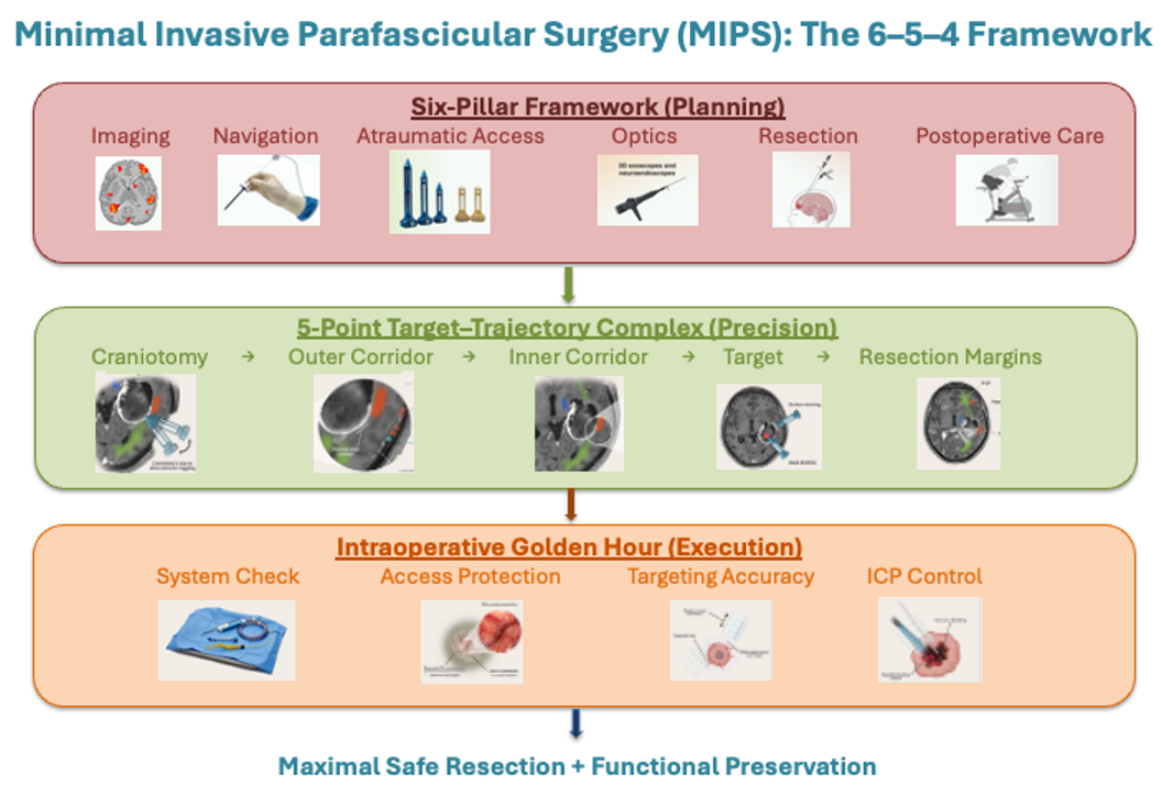
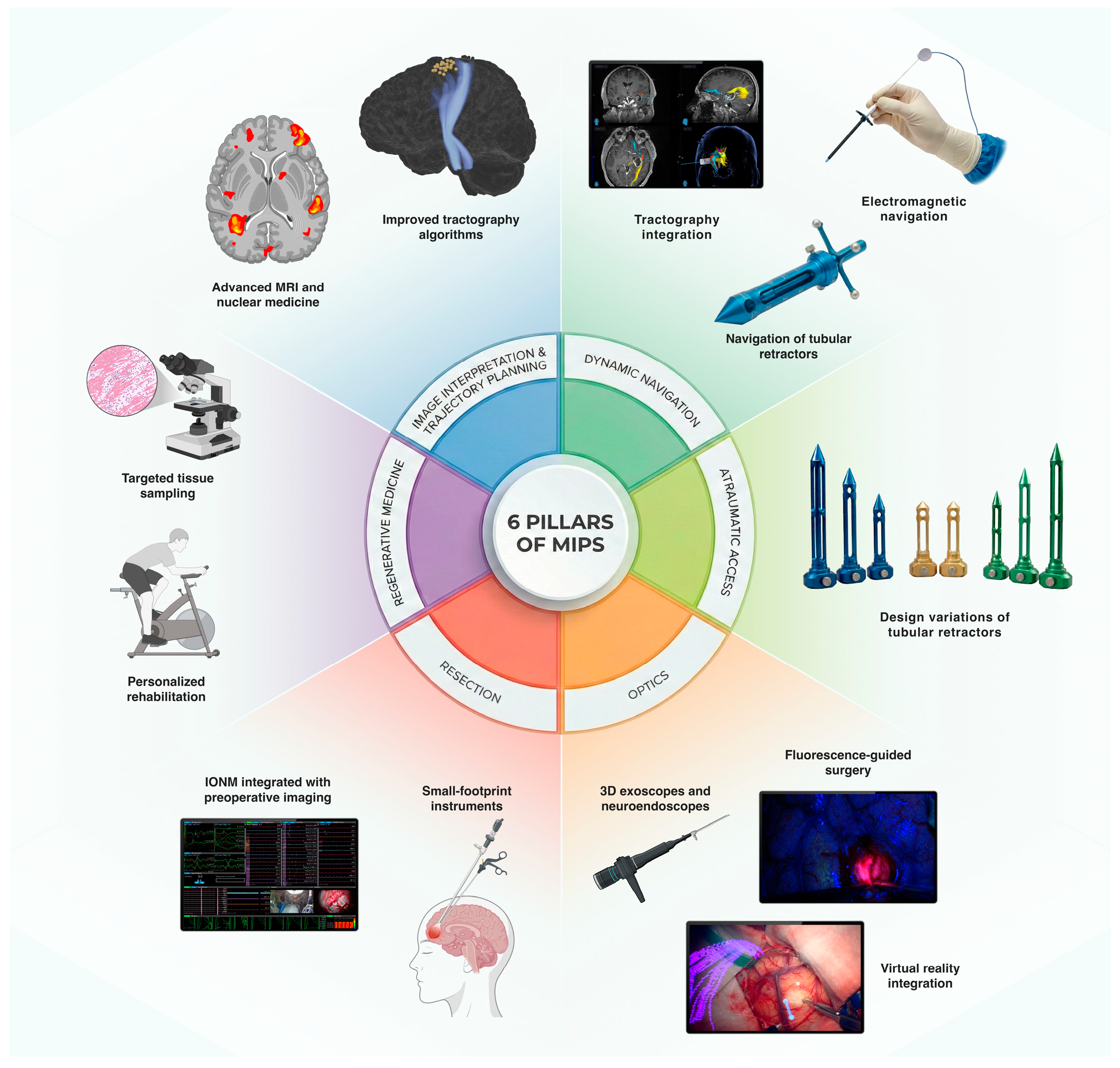
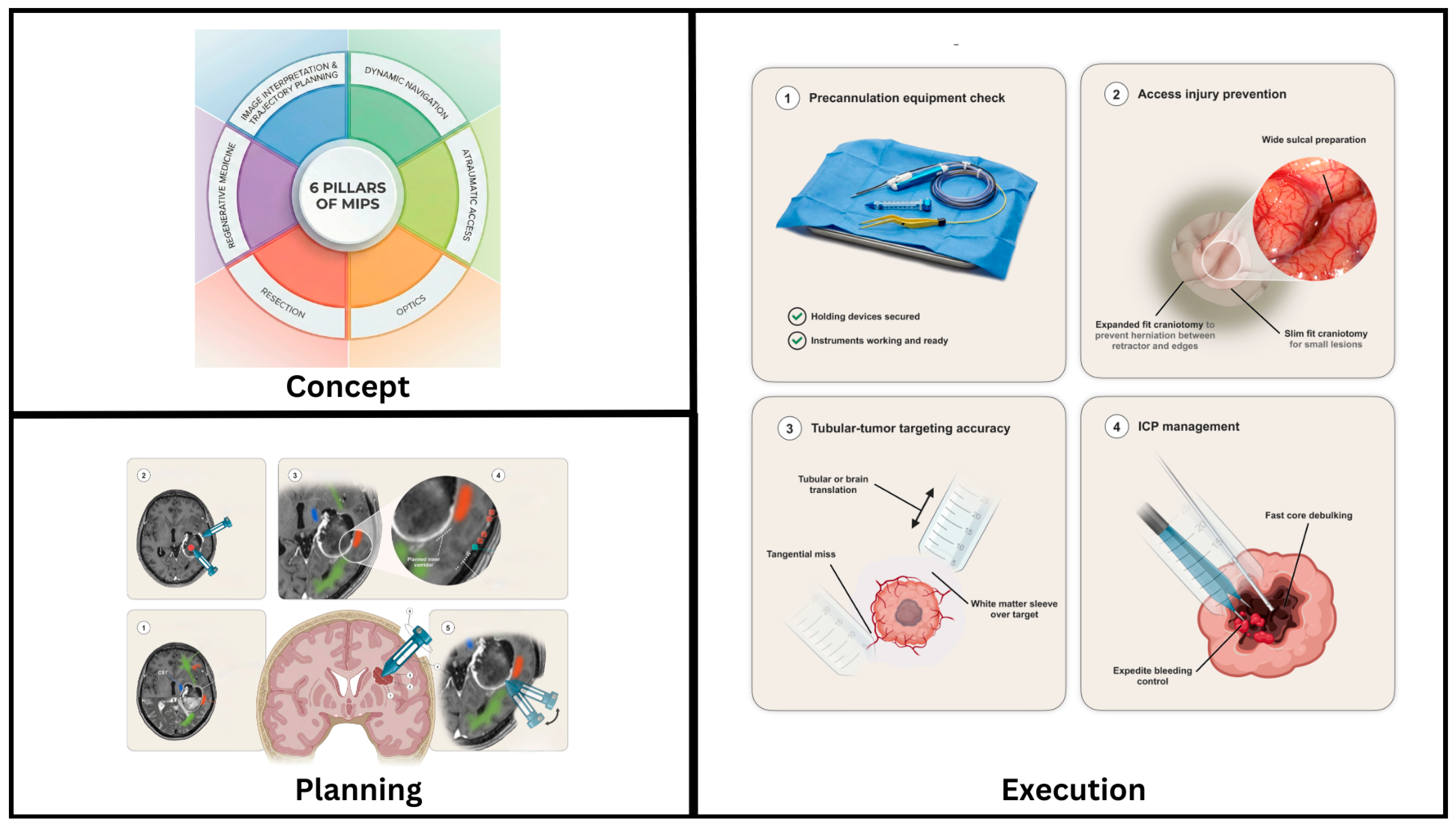
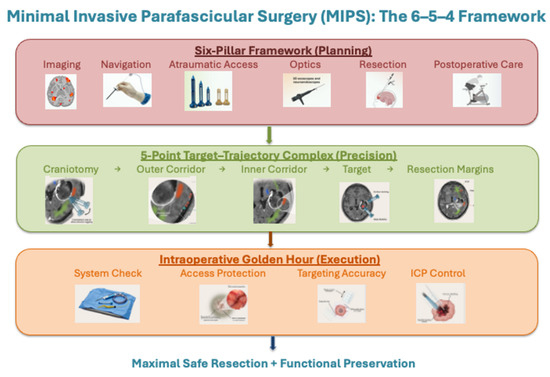
2. Minimally Invasive Parafascicular Surgery: The Six-Pillar Concept
2.1. Image Interpretation
2.2. Navigation Systems
2.3. Atraumatic Access
2.4. Optics
2.5. Resection
2.6. Regenerative Medicine
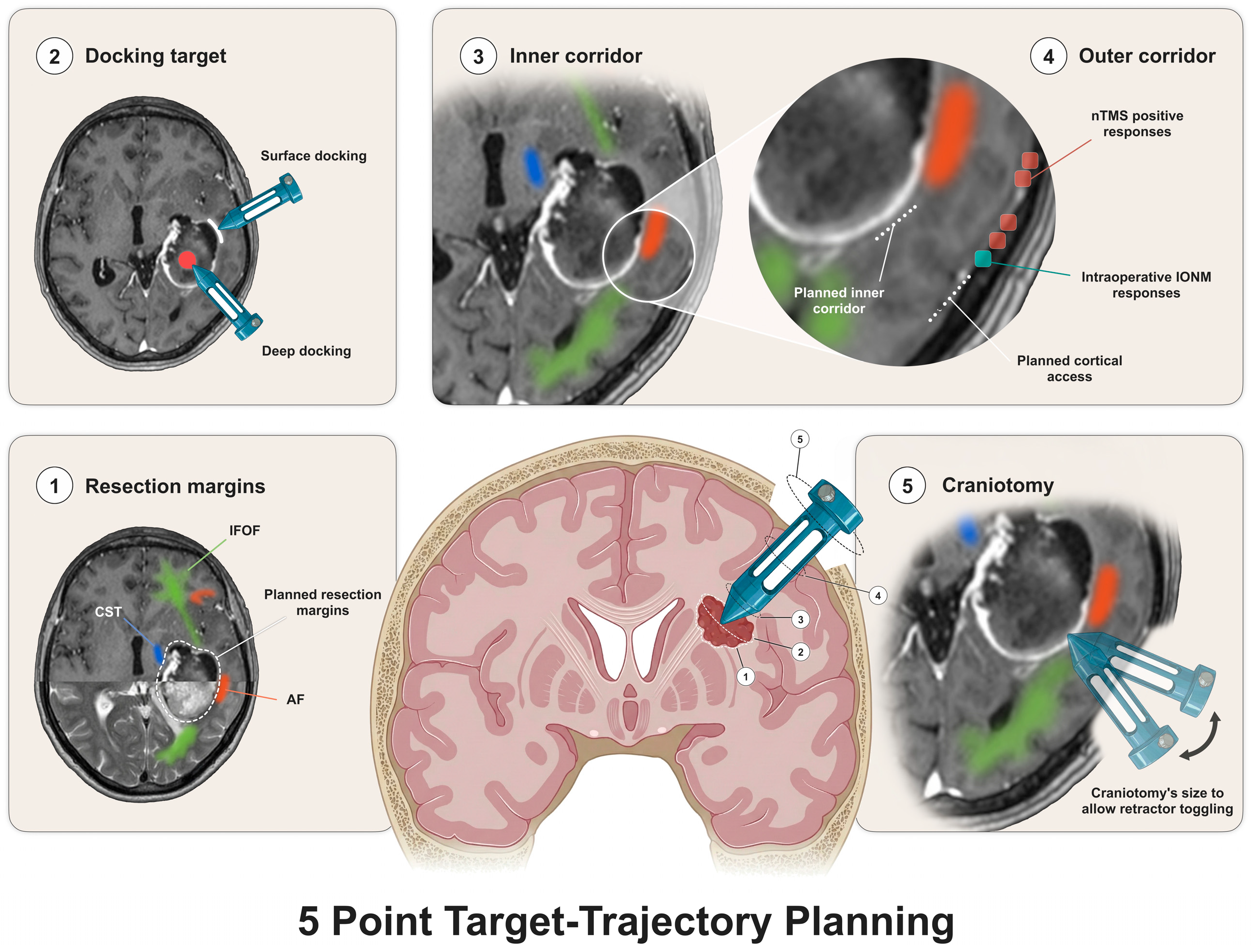
3. Minimally Invasive Parafascicular Surgery: Five-Point Target-Trajectory Complex Planning
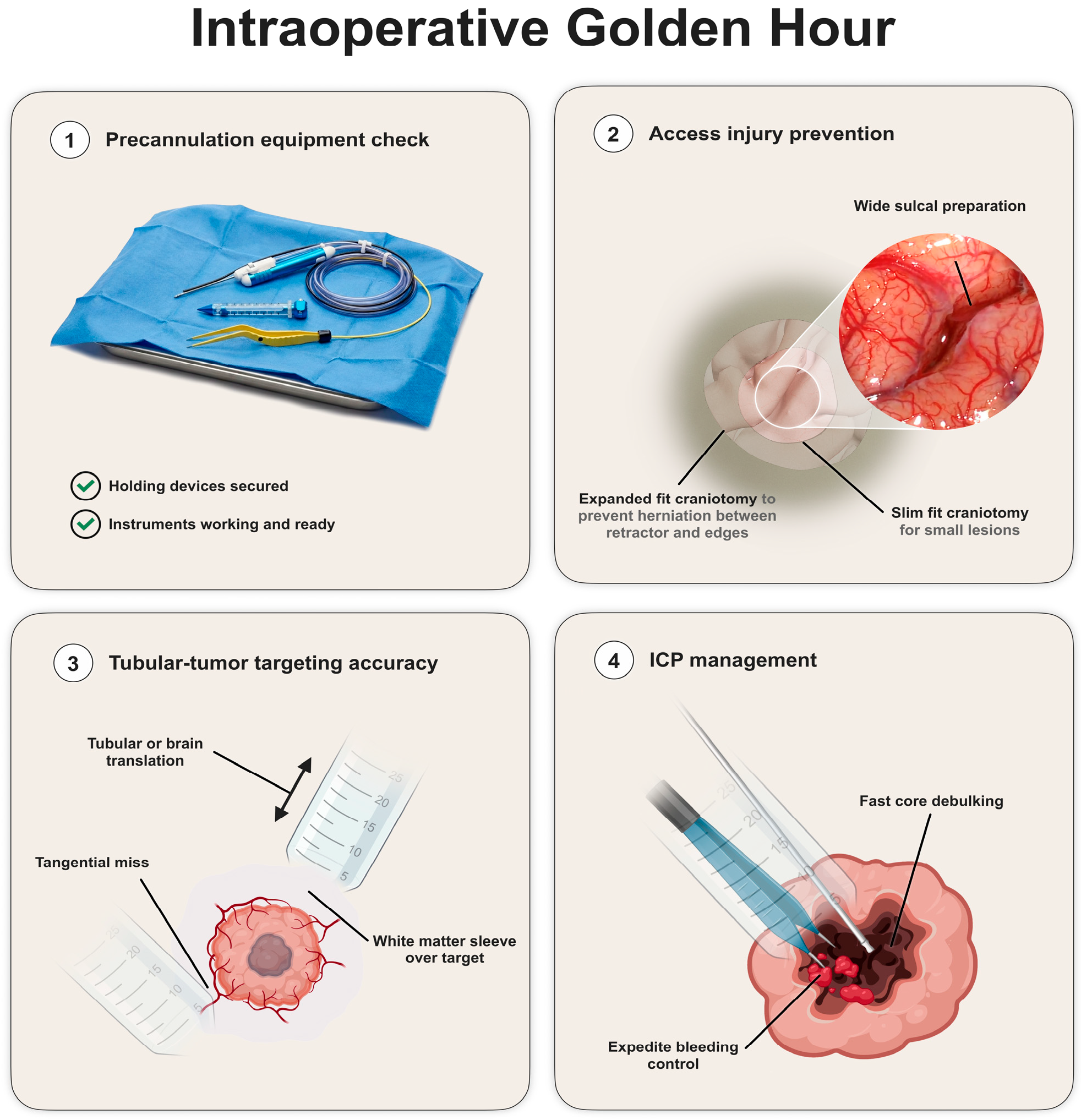
4. Minimally Invasive Parafascicular Surgery: Intraoperative Golden Hour
4.1. Precannulation System Check
- (1)
- Correct placement of the holding devices to secure the tubular retractor, making sure the planned cannulation can be done without the instruments being caught in skin retractors or other devices and so they do not obstruct visualization down the corridor.
- (2)
- Debulking/resecting instruments are working properly and ready to use if required during/after cannulation. This is relevant as they are usually different from the instruments used until this stage of surgery either because of length considerations (different bipolar diameters and configurations) or de novo instruments altogether (micro-debrider instrument and ultrasonic aspirator). Finally, if personalized adjustments to the instruments are to be done, they should happen before cannulation to minimize the cannulation time (such as electrification or navigation of surgical instruments) [25].
4.2. Access Injury Management and Prevention
4.3. Tubular-Tumor Targeting Accuracy
- (1)
- Tubular-Brain Translation during Cannulation: Two types of translation movements occur during brain cannulation: brain translation and tubular translation. The first one refers to the movement away from the skull along the axis of the cannulation produced by the tubular introduction against the brain. This displaces the target deeper in the direction of the cannulation and, even though it cannot be completely prevented, it can be minimized by performing a larger sulcal split to minimize the resistance during the tubular introduction. The tubular translation relates to the tubular displacement during removal of the obturator. This can produce a tubular dislocation in both directions along the axis of the cannulation. Surgical experience may play an important role in minimizing this second translation movement. Overall, tubular-brain translation most often produces a displacement of the target (tumor) away from the docking site along the cannulation axis.
- (2)
- White-Matter Sleeve over the Target: Two mechanisms are responsible for the interposition of a sleeve of white-matter tissue in between the docking site and the target (tumor). One has been described above (tubular translation). The second is related to the transient negative pressure created by the removal of the tubular obturator, which displaces white-matter tissue inside the tubular retractor over the lesion. This tissue sleeve creates the illusion of an inaccurate targeting that must be overcome by its resection before encountering the tumor.
- (3)
- Tumor Displacement: This is related with the triangulation between docking target, tumor consistency and the angle between the cannulation axis and the tumor. It has been mentioned above how preoperative imaging has aimed to inform the surgical team about tumor consistency and why surface docking is preferable for tumor resection. In a situation where the tumor is firm and our docking is beyond the surface of the lesion, displacement away from the surgical corridor can happen, particularly with smaller lesions. Also, if the angulation between the tumor and the cannulation axis deviates significantly from an orthogonal angle, there is a higher chance of lesional displacement away from the surgical corridor during the cannulation—a tangential effect. This displacement can be addressed via a systematic inspection of all the corridor quadrants, progressive retraction of the tube along the cannulation axis to allow for normalization of the tumor location in the case of a deep docking strategy, or utilization of intraoperative ultrasound down the tubular retractor (if available) or in a paratubular position if an expanded-fit craniotomy has been performed.
- (4)
- Inappropriate Cannulation due to Limitation of the Craniotomy: Even though less common, this highlights the need for consideration of the target and the cannulation axis (inner radial corridor) for craniotomy planning and not only the outer radial corridor (cortical/sulcal entry point) so the tubular retractor can be introduced along the planned trajectory without being limited by the edges of the craniotomy. This is particularly relevant if a slim-fit craniotomy is planned.
4.4. Intracranial Pressure Control Strategy
5. Minimally Invasive Parafascicular Surgery: After Storm, Clarity and Focusing on Resection Challenge
6. Strengths, Limitations and Future Directions
7. Conclusions
Author Contributions
Funding
Institutional Review Board Statement
Informed Consent Statement
Data Availability Statement
Acknowledgments
Conflicts of Interest
Abbreviations
| MIPS | Minimally Invasive Parafascicular Surgery |
| ICH | Intracranial Hematoma |
| MRI | Magnetic Resonance Imaging |
| IONM | Intra-operative Neuromonitoring |
References
- Gassie, K.; Alvarado-Estrada, K.; Bechtle, P.; Chaichana, K.L. Surgical management of deep-seated metastatic brain tumors using minimally invasive approaches. J. Neurol. Surg. A Cent. Eur. Neurosurg. 2019, 80, 198–204. [Google Scholar] [CrossRef]
- Gassie, K.; Wijesekera, O.; Chaichana, K.L. Minimally invasive tubular retractor-assisted biopsy and resection of subcortical intra-axial gliomas and other neoplasms. J. Neurosurg. Sci. 2018, 62, 682–689. [Google Scholar] [CrossRef]
- Marenco-Hillembrand, L.; Prevatt, C.; Suarez-Meade, P.; Ruiz-Garcia, H.; Quinones-Hinojosa, A.; Chaichana, K.L. Minimally invasive surgical outcomes for deep-seated brain lesions treated with different tubular retraction systems: A systematic review and meta-analysis. World Neurosurg. 2020, 143, 537–545.e3. [Google Scholar] [CrossRef]
- Taylor, Z.; Gupta, A.; Mehta, N.H.; Pishva, S.; Gupta, N.; Barrington, N.M.; Kashanian, A.; D’Amico, R.S. Evaluating the impact of tubular retractors in glioma surgery: A systematic review and meta-analysis. Clin. Neurol. Neurosurg. 2024, 245, 108461. [Google Scholar] [CrossRef]
- Bander, E.D.; Jones, S.H.; Kovanlikaya, I.; Schwartz, T.H. Utility of tubular retractors to minimize surgical brain injury in the removal of deep intraparenchymal lesions: A quantitative analysis of FLAIR hyperintensity and apparent diffusion coefficient maps. J. Neurosurg. 2016, 124, 1053–1060. [Google Scholar] [CrossRef]
- Awan, M.; Elshalakany, A.; Kalaitzoglou, D.; Kalyal, N.; Sinha, S.; Perera, A.; Wroe Wright, O.; Gallagher, M.J.; Richardson, D.; Elhag, A.; et al. Diffusion changes in minimally invasive parafascicular approach for deep-seated tumors: Impact on clinical outcomes. Neurosurg. Rev. 2025, 48, 63. [Google Scholar] [CrossRef]
- Sinha, S.; Kalyal, N.; Gallagher, M.J.; Richardson, D.; Kalaitzoglou, D.; Abougamil, A.; Silva, M.; Oviedova, A.; Patel, S.; Mirallave-Pescador, A.; et al. Impact of preoperative mapping and intraoperative neuromonitoring in minimally invasive parafascicular surgery for deep-seated lesions. World Neurosurg. 2024, 181, e1019–e1037. [Google Scholar] [CrossRef]
- Kelly, P.J.; Goerss, S.J.; Kall, B.A. The stereotaxic retractor in computer-assisted stereotaxic microsurgery. J. Neurosurg. 1988, 69, 301–306. [Google Scholar] [CrossRef] [PubMed]
- Pradilla, G.; Ratcliff, J.J.; Hall, A.J.; Saville, B.R.; Allen, J.W.; Paulon, G.; McGlothlin, A.; Lewis, R.J.; Fitzgerald, M.; Caveney, A.F.; et al. Trial of early minimally invasive removal of intracerebral hemorrhage. N. Engl. J. Med. 2024, 390, 1277–1289. [Google Scholar] [CrossRef] [PubMed]
- Rafati Fard, A.; Hibberd, O.; Akinduro, I.; Bhatti, Z.; Smith, K.J.; Patel, R.; Karmarkar, S.; Mowforth, O.D.; Hill, C.S. Tubular retractors in neuro-oncological surgery: A systematic review and meta-analysis. Neurosurg. Rev. 2025, 48, 530. [Google Scholar] [CrossRef] [PubMed]
- Kassam, A.B.; Labib, M.A.; Bafaquh, M.; Ghinda, D.; Fukui, M.B.; Nguyen, T.; Corsten, M. Part II: An evaluation of an integrated systems approach using diffusion-weighted, image-guided, exoscopic-assisted, transulcal radial corridors. Innov. Neurosurg. 2015, 3, 25–33. [Google Scholar] [CrossRef]
- Martucci, M.; Russo, R.; Schimperna, F.; D’Apolito, G.; Panfili, M.; Grimaldi, A.; Perna, A.; Ferranti, A.M.; Varcasia, G.; Giordano, C.; et al. Magnetic resonance imaging of primary adult brain tumors: State of the art and future perspectives. Biomedicines 2023, 11, 364. [Google Scholar] [CrossRef]
- Guarnera, A.; Ius, T.; Romano, A.; Bagatto, D.; Denaro, L.; Aiudi, D.; Iacoangeli, M.; Palmieri, M.; Frati, A.; Santoro, A.; et al. Advanced MRI, radiomics and radiogenomics in unravelling incidental glioma grading and genetic status: Where are we? Medicina 2025, 61, 1453. [Google Scholar] [CrossRef] [PubMed]
- Tuncer, M.S.; Salvati, L.F.; Grittner, U.; Hardt, J.; Schilling, R.; Bährend, I.; Silva, L.L.; Fekonja, L.S.; Faust, K.; Vajkoczy, P.; et al. Towards a tractography-based risk stratification model for language area associated gliomas. Neuroimage Clin. 2021, 29, 102541. [Google Scholar] [CrossRef] [PubMed]
- Rosenstock, T.; Grittner, U.; Acker, G.; Schwarzer, V.; Kulchytska, N.; Vajkoczy, P.; Picht, T. Risk stratification in motor area-related glioma surgery based on navigated transcranial magnetic stimulation data. J. Neurosurg. 2017, 126, 1227–1237. [Google Scholar] [CrossRef]
- Sollmann, N.; Zhang, H.; Kloth, C.; Zimmer, C.; Wiestler, B.; Rosskopf, J.; Kreiser, K.; Schmitz, B.; Beer, M.; Krieg, S.M. Modern preoperative imaging and functional mapping in patients with intracranial glioma. Rofo 2023, 195, 989–1000. [Google Scholar] [CrossRef] [PubMed]
- Bercu, M.M.; Restrepo-Orozco, A.F.; Verhey, L.H.; Madura, C.J.; Avellino, A.M.; Petronio, J.A.; Mazaris, P.A.; Singer, J.A. Minimally invasive interventions for intracranial pathologies using tubular retractors in the pediatric population: Safety, efficacy, technical aspects and outcomes. PLoS ONE 2025, 20, e0315744. [Google Scholar] [CrossRef]
- Sasagawa, Y.; Tanaka, S.; Kinoshita, M.; Nakada, M. Endoscopic and exoscopic surgery for brain tumors. Int. J. Clin. Oncol. 2024, 29, 1399–1406. [Google Scholar] [CrossRef]
- Hong, C.S.; Prevedello, D.M.; Elder, J.B. Comparison of endoscope- versus microscope-assisted resection of deep-seated intracranial lesions using a minimally invasive port retractor system. J. Neurosurg. 2016, 124, 799–810. [Google Scholar] [CrossRef]
- Cuellar-Hernandez, J.J.; Lopez-Gonzalez, M.A.; Olivas-Campos, J.R.; Tabera-Tarello, P.M.; Seañez-Prieto, C.; Eastin, T.M.; Song, M. The use of exoscope combined with tubular retractor system for minimally invasive transsulcal resection of a ventricular atrium atypical choroid plexus papilloma: Three-dimensional operative video. Surg. Neurol. Int. 2021, 12, 444. [Google Scholar] [CrossRef]
- Lin, M.; Bakhsheshian, J.; Strickland, B.; Rennert, R.C.; Chu, R.M.; Chaichana, K.L.; Zada, G. Exoscopic resection of atrial intraventricular meningiomas using a navigation-assisted channel-based trans-sulcal approach: Case series and literature review. J. Clin. Neurosci. 2020, 71, 58–65. [Google Scholar] [CrossRef]
- Lavrador, J.P.; Marchi, F.; Elhag, A.; Kalyal, N.; Mthunzi, E.; Awan, M.; Wroe-Wright, O.; Díaz-Baamonde, A.; Mirallave-Pescador, A.; Reisz, Z.; et al. In situ light-source delivery during 5-aminolevulinic acid-guided high-grade glioma resection: Spatial, functional and oncological informed surgery. Biomedicines 2024, 12, 2748. [Google Scholar] [CrossRef]
- De Witt Hamer, P.C.; Robles, S.G.; Zwinderman, A.H.; Duffau, H.; Berger, M.S. Impact of intraoperative stimulation brain mapping on glioma surgery outcome: A meta-analysis. J. Clin. Oncol. 2012, 30, 2559–2565. [Google Scholar] [CrossRef]
- Baig Mirza, A.; Vastani, A.; Suvarna, R.; Rashed, S.; Al-Omari, A.; Mthunzi, E.; Fayez, F.; Rampersad, N.; Jung, J.; Baamonde, A.D.; et al. Preoperative and intraoperative neuromonitoring and mapping techniques impact oncological and functional outcomes in supratentorial function-eloquent brain tumors: A systematic review and meta-analysis. eClinicalMedicine 2025, 80, 103055. [Google Scholar] [CrossRef]
- Gallagher, M.J.; Lavrador, J.P.; Coelho, P.; Mirallave-Pescador, A.; Bleil, C.; Gullan, R.; Ashkan, K.; Vergani, F.; Bhangoo, R. Continuous microdebrider-based dynamic subcortical motor mapping: A technical advance in tubular retractor-assisted surgery. Oper. Neurosurg. 2022, 23, 217–224. [Google Scholar] [CrossRef] [PubMed]
- Ille, S.; Kelm, A.; Schroeder, A.; Albers, L.E.; Negwer, C.; Butenschoen, V.M.; Sollmann, N.; Picht, T.; Vajkoczy, P.; Meyer, B.; et al. Navigated repetitive transcranial magnetic stimulation improves the outcome of postsurgical paresis in glioma patients: A randomized, double-blinded trial. Brain Stimul. 2021, 14, 780–787. [Google Scholar] [CrossRef]
- Darrigues, E.; Elberson, B.W.; De Loose, A.; Lee, M.P.; Green, E.; Benton, A.M.; Sink, L.G.; Scott, H.; Gokden, M.; Day, J.D.; et al. Brain tumor biobank development for precision medicine: Role of the neurosurgeon. Front. Oncol. 2021, 11, 662260. [Google Scholar] [CrossRef] [PubMed]
- Wang, J.H.; Xia, J.; Wu, P.F.; Yi, L.; Yu, S.C. An optimized tissue sampling scheme guided by MRI features reveals intratumoral heterogeneity in glioblastoma. Sci. Rep. 2025, 15, 33194. [Google Scholar] [CrossRef]
- Oh, Y.T.; Cho, H.J.; Kim, J.; Lee, J.H.; Rho, K.; Seo, Y.J.; Choi, Y.S.; Jung, H.J.; Song, H.S.; Kong, D.S.; et al. Translational validation of personalized treatment strategy based on genetic characteristics of glioblastoma. PLoS ONE 2014, 9, e103327. [Google Scholar] [CrossRef]
- Ivren, M.; Grittner, U.; Khakhar, R.; Belotti, F.; Schneider, H.; Pöser, P.; D’Agata, F.; Spena, G.; Vajkoczy, P.; Picht, T.; et al. Comparison of anatomical-based vs. nTMS-based risk stratification model for predicting postoperative motor outcome and extent of resection in brain tumor surgery. Neuroimage Clin. 2023, 38, 103436. [Google Scholar] [CrossRef] [PubMed]
- Sollmann, N.; Kelm, A.; Ille, S.; Schröder, A.; Zimmer, C.; Ringel, F.; Meyer, B.; Krieg, S.M. Setup presentation and clinical outcome analysis of treating highly language-eloquent gliomas via preoperative navigated transcranial magnetic stimulation and tractography. Neurosurg. Focus 2018, 44, E2. [Google Scholar] [CrossRef] [PubMed]
- Raffa, G.; Quattropani, M.C.; Scibilia, A.; Conti, A.; Angileri, F.F.; Esposito, F.; Sindorio, C.; Cardali, S.M.; Germanò, A.; Tomasello, F. Surgery of language-eloquent tumors in patients not eligible for awake surgery: The impact of a protocol based on navigated transcranial magnetic stimulation on presurgical planning and language outcome, with evidence of tumor-induced intra-hemispheric plasticity. Clin. Neurol. Neurosurg. 2018, 168, 127–139. [Google Scholar] [CrossRef] [PubMed]
- Kram, L.; Schroeder, A.; Meyer, B.; Krieg, S.M.; Ille, S. Function-guided differences of arcuate fascicle and inferior fronto-occipital fascicle tractography as diagnostic indicators for surgical risk stratification. Brain Struct. Funct. 2024, 229, 2219–2235. [Google Scholar] [CrossRef]
- Sollmann, N.; Fratini, A.; Zhang, H.; Zimmer, C.; Meyer, B.; Krieg, S.M. Associations between clinical outcome and tractography based on navigated transcranial magnetic stimulation in patients with language-eloquent brain lesions. J. Neurosurg. 2020, 132, 1033–1042. [Google Scholar] [CrossRef] [PubMed]
- Raffa, G.; Marzano, G.; Curcio, A.; Espahbodinea, S.; Germanò, A.; Angileri, F.F. Personalized surgery of brain tumors in language areas: The role of preoperative brain mapping in patients not eligible for awake surgery. Neurosurg. Focus 2022, 53, E3. [Google Scholar] [CrossRef]
- Feng, J.J.; Cheok, S.K.; Shiroishi, M.S.; Zada, G. Tumor characteristics guiding selection of channel-based versus open microscopic approaches for resection of atrial intraventricular meningiomas: Patient series. J. Neurosurg. Case Lessons 2023, 6, CASE23558. [Google Scholar] [CrossRef]
- Dannhoff, G.; Poudel, P.P.; Bhattarai, C.; Kalthur, S.G.; Maldonado, I.L. Depicting the anatomy of the gyral white matter: Ubi sumus? quo vadimus? Brain Commun. 2023, 5, fcad265. [Google Scholar] [CrossRef]
- Umana, G.E.; Scalia, G.; Graziano, F.; Maugeri, R.; Alberio, N.; Barone, F.; Crea, A.; Fagone, S.; Giammalva, G.R.; Brunasso, L.; et al. Navigated transcranial magnetic stimulation motor mapping usefulness in the surgical management of patients affected by brain tumors in eloquent areas: A systematic review and meta-analysis. Front. Neurol. 2021, 12, 644198. [Google Scholar] [CrossRef]
- Bennett, C.; González, M.; Tapia, G.; Riveros, R.; Torres, F.; Loyola, N.; Veloz, A.; Chabert, S. Cortical mapping in glioma surgery: Correlation of fMRI and direct electrical stimulation with Human Connectome Project parcellations. Neurosurg. Focus 2022, 53, E2. [Google Scholar] [CrossRef]
- Rajashekar, D.; Lavrador, J.P.; Ghimire, P.; Keeble, H.; Harris, L.; Pereira, N.; Patel, S.; Beyh, A.; Gullan, R.; Ashkan, K.; et al. Simultaneous motor and visual intraoperative neuromonitoring in asleep parietal lobe surgery: Dual strip technique. J. Pers. Med. 2022, 12, 1478. [Google Scholar] [CrossRef]
- Genel, O.; Price, S.; Marchi, F.; Elhag, A.; WroeWright, O.; Mirallave-Pescador, A.; Bibby, S.; Ashkan, K.; Vergani, F.; Bhangoo, R.; et al. O-ARM navigation in tubular retractor-assisted minimal invasive parafascicular approach: Technical note. J. Surg. Case Rep. 2024, 2024, rjae036. [Google Scholar] [CrossRef] [PubMed]
- Capitanio, J.F.; Donofrio, C.A.; Panni, P.; Barzaghi, L.R.; Bailo, M.; Gagliardi, F.; Mortini, P. Microsurgical endoportal MRI/US-navigated approach for the resection of large intraventricular tumors: A 20-consecutive patients case series. Br. J. Neurosurg. 2021, 35, 570–577. [Google Scholar] [CrossRef] [PubMed]



Precannulation System Check |
|
Access Injury Prevention |
|
Tubular-Target Accuracy |
|
ICP Management |
|
Disclaimer/Publisher’s Note: The statements, opinions and data contained in all publications are solely those of the individual author(s) and contributor(s) and not of MDPI and/or the editor(s). MDPI and/or the editor(s) disclaim responsibility for any injury to people or property resulting from any ideas, methods, instructions or products referred to in the content. |
© 2026 by the authors. Licensee MDPI, Basel, Switzerland. This article is an open access article distributed under the terms and conditions of the Creative Commons Attribution (CC BY) license.
Share and Cite
Lavrador, J.P.; Chowdhury, Y.A.; Sinosi, F.A.; Marchi, F.; Prasad, V.; Genel, O.; Mirallave-Pescador, A.; Diaz-Baamonde, A.; Gullan, R.; Ashkan, K.; et al. The Intraoperative Golden Hour in Minimally Invasive Parafascicular Surgery for Brain Tumors. Cancers 2026, 18, 1241. https://doi.org/10.3390/cancers18081241
Lavrador JP, Chowdhury YA, Sinosi FA, Marchi F, Prasad V, Genel O, Mirallave-Pescador A, Diaz-Baamonde A, Gullan R, Ashkan K, et al. The Intraoperative Golden Hour in Minimally Invasive Parafascicular Surgery for Brain Tumors. Cancers. 2026; 18(8):1241. https://doi.org/10.3390/cancers18081241
Chicago/Turabian StyleLavrador, José Pedro, Yasir A. Chowdhury, Filippo Andrea Sinosi, Francesco Marchi, Vindhya Prasad, Oktay Genel, Ana Mirallave-Pescador, Alba Diaz-Baamonde, Richard Gullan, Keyoumars Ashkan, and et al. 2026. "The Intraoperative Golden Hour in Minimally Invasive Parafascicular Surgery for Brain Tumors" Cancers 18, no. 8: 1241. https://doi.org/10.3390/cancers18081241
APA StyleLavrador, J. P., Chowdhury, Y. A., Sinosi, F. A., Marchi, F., Prasad, V., Genel, O., Mirallave-Pescador, A., Diaz-Baamonde, A., Gullan, R., Ashkan, K., Vergani, F., & Bhangoo, R. (2026). The Intraoperative Golden Hour in Minimally Invasive Parafascicular Surgery for Brain Tumors. Cancers, 18(8), 1241. https://doi.org/10.3390/cancers18081241