Neural Innervation of Tumors: Mechanisms, Hallmarks, and Therapeutic Opportunities



Simple Summary
Abstract
1. Introduction
2. Foundations and Molecular Architecture of Tumor Innervation
2.1. From Passive Innervation to Active Neural Integration
2.2. Tumor-Induced Axonogenesis and Neurogenesis
2.3. Neuronal Reprogramming by Tumor Cells
2.4. Neurotransmitter Receptors and Ion Channels by Tumor Cells
2.5. Activity-Dependent Transcriptional Control
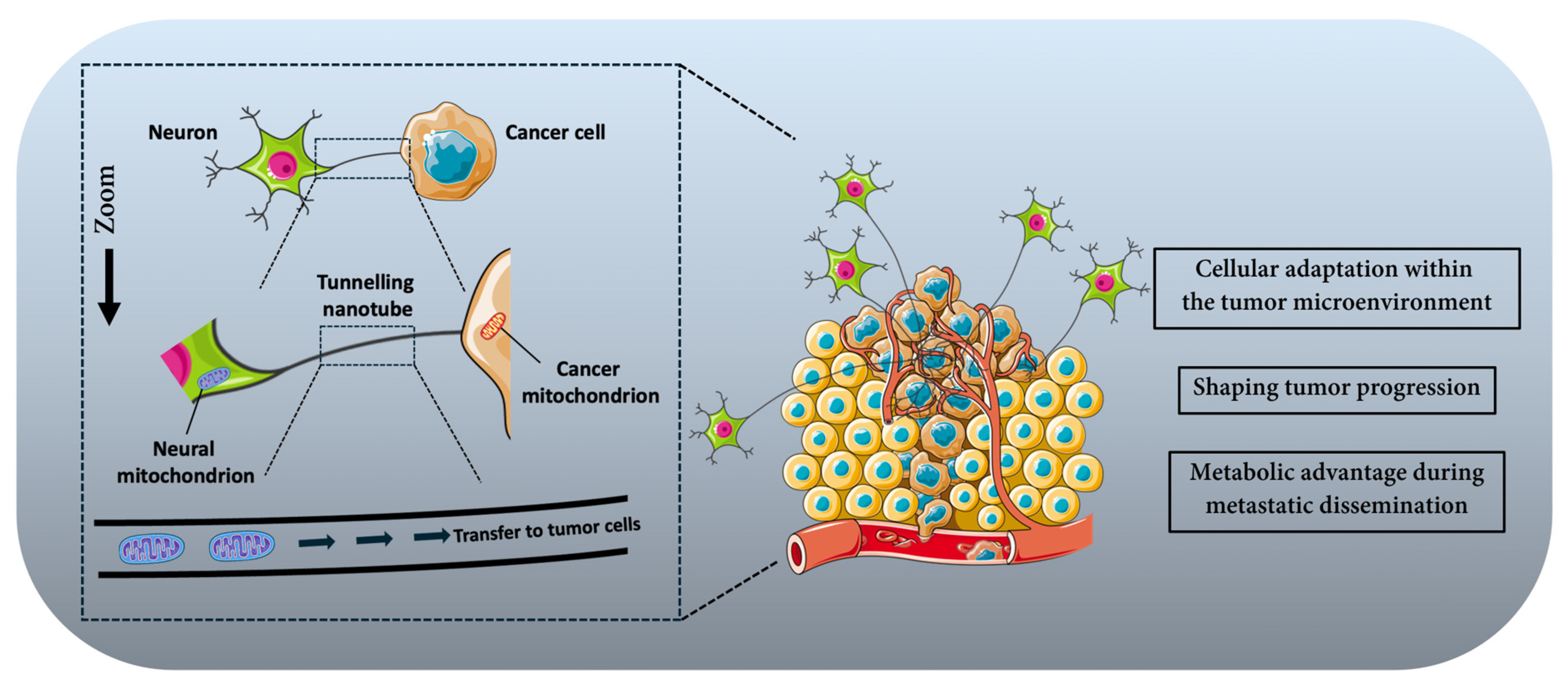
2.6. Metabolic Coupling and Mitochondrial Transfer
3. Neuron—Cancer Interfaces and Activity-Dependent Tumor Control
3.1. From Paracrine Signaling to Direct Cellular Interfaces
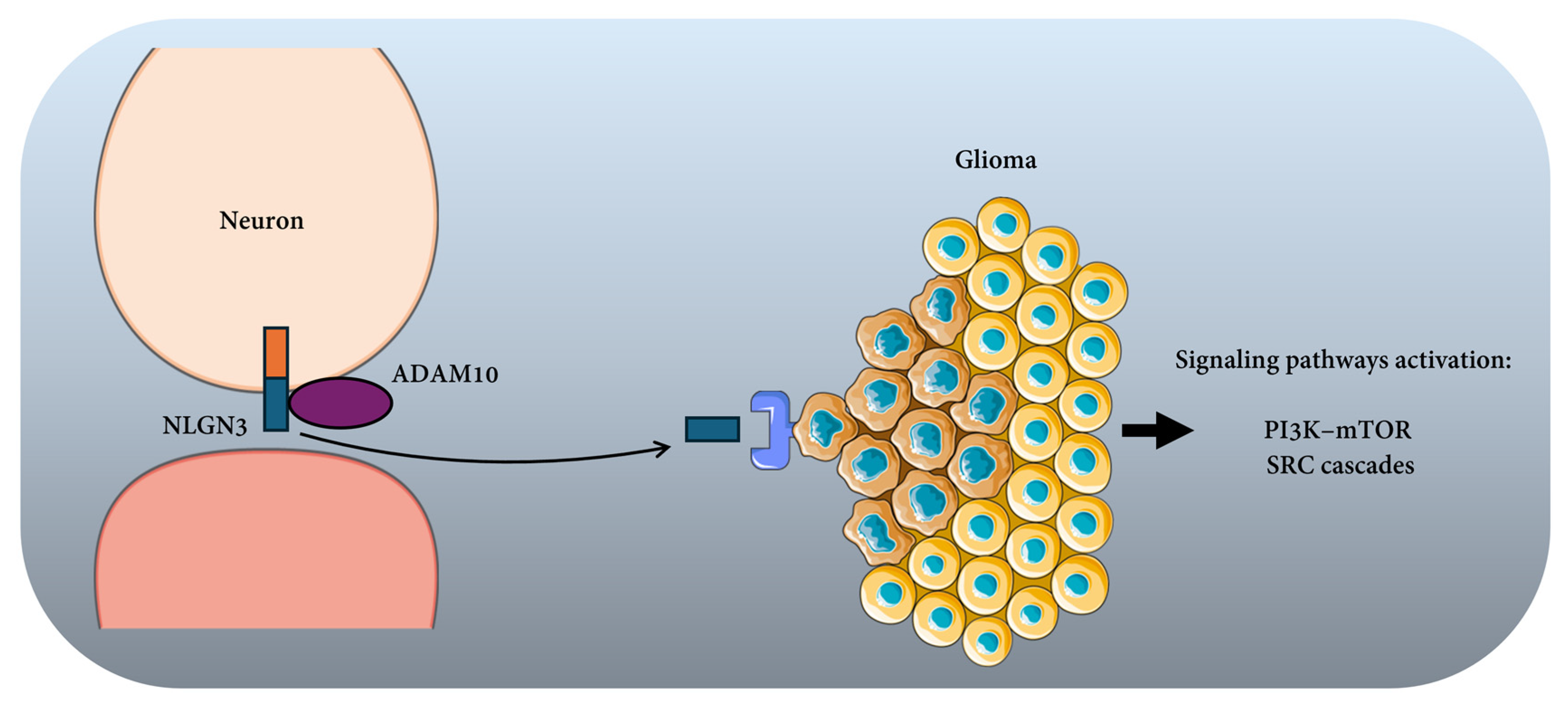
3.2. Molecular Composition of Neuron–Cancer Pseudo-Synapses
3.3. Neurotransmitter-Specific Signaling Modalities
3.4. Neuronal Activity as an Oncogenic Signal
3.5. Neural Regulation of Invasion and Metastasis
3.6. Integration with Stromal and Immune Components
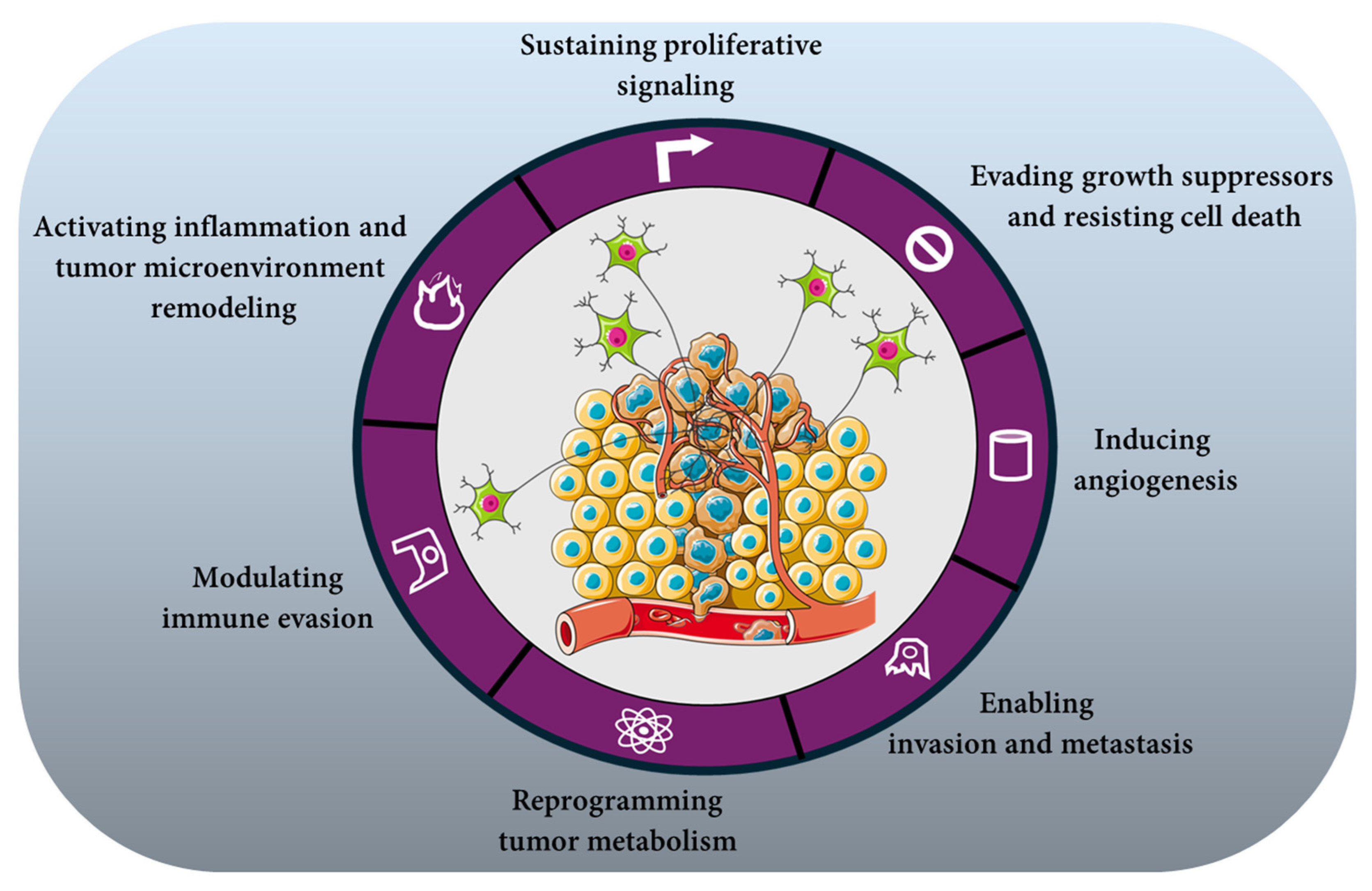
4. Neural Regulation Across the Hallmarks of Cancer
4.1. Sustaining Proliferative Signaling
4.2. Evading Growth Suppressors and Resisting Cell Death
4.3. Inducing Angiogenesis
4.4. Enabling Invasion and Metastasis
4.5. Reprogramming Tumor Metabolism
4.6. Modulating Immune Evasion
4.7. Activating Inflammation and Tumor Microenvironment Remodeling
5. Therapeutic Outlook and Combined Strategies
5.1. Targeting Neural Inputs in Cancer Therapy
5.2. Modulating Pseudo-Synaptic Interfaces
5.3. Neuromodulatory Interventions
5.4. Combined Therapies
5.5. Imaging the Neural–Tumor Axis: PET-Based Biomarkers
6. Conclusions
Author Contributions
Funding
Institutional Review Board Statement
Informed Consent Statement
Data Availability Statement
Conflicts of Interest
References
- Winkler, F.; Venkatesh, H.S.; Amit, M.; Batchelor, T.; Demir, I.E.; Deneen, B.; Gutmann, D.H.; Hervey-Jumper, S.; Kuner, T.; Mabbott, D.; et al. Cancer Neuroscience: State of the Field, Emerging Directions. Cell 2023, 186, 1689–1707. [Google Scholar] [CrossRef] [PubMed]
- Huang, S.; Zhu, J.; Yu, L.; Huang, Y.; Hu, Y. Cancer-Nervous System Crosstalk: From Biological Mechanism to Therapeutic Opportunities. Mol. Cancer 2025, 24, 133. [Google Scholar] [CrossRef] [PubMed]
- Magnon, C.; Hall, S.J.; Lin, J.; Xue, X.; Gerber, L.; Freedland, S.J.; Frenette, P.S. Autonomic Nerve Development Contributes to Prostate Cancer Progression. Science 2013, 341, 1236361. [Google Scholar] [CrossRef] [PubMed]
- Hanahan, D.; Weinberg, R.A. Hallmarks of Cancer: The next Generation. Cell 2011, 144, 646–674. [Google Scholar] [CrossRef]
- Hanahan, D. Hallmarks of Cancer-Then and Now, and Beyond. Cell 2026. [Google Scholar] [CrossRef]
- Wei, H.K.; Yu, C.D.; Hu, B.; Zeng, X.; Ichise, H.; Li, L.; Wang, Y.; Wang, R.L.; Germain, R.N.; Chang, R.B.; et al. Tumour-Brain Crosstalk Restrains Cancer Immunity via a Sensory-Sympathetic Axis. Nature 2026, 650, 1007–1016. [Google Scholar] [CrossRef]
- Wang, X.; Fan, Y.; Wang, Q.; Shu, X.; Lin, J.; Guo, J.; Li, Z.; Xu, J. Tumor-Infiltrating Nerves: Unraveling the Role of Cancer Neuroscience in Tumorigenesis, Disease Progression, and Emerging Therapies. Discov. Oncol. 2025, 16, 1209. [Google Scholar] [CrossRef]
- Zahalka, A.H.; Frenette, P.S. Nerves in Cancer. Nat. Rev. Cancer 2020, 20, 143–157. [Google Scholar] [CrossRef]
- McCallum, G.A.; Shiralkar, J.; Suciu, D.; Covarrubias, G.; Yu, J.S.; Karathanasis, E.; Durand, D.M. Chronic Neural Activity Recorded within Breast Tumors. Sci. Rep. 2020, 10, 14824. [Google Scholar] [CrossRef]
- Xu, T.; Zhang, X.; Jiang, Y.; Sheng, K.; Li, J.; Ren, J.; He, J.; Liang, C.; Yu, Z.; Jin, H.; et al. A Machine Learning-Driven Electrophysiological Platform for Real-Time Tumor-Neural Interaction Analysis and Modulation. Nat. Commun. 2026, 17, 49. [Google Scholar] [CrossRef]
- Reavis, H.D.; Chen, H.I.; Drapkin, R. Tumor Innervation: Cancer Has Some Nerve. Trends Cancer 2020, 6, 1059–1067. [Google Scholar] [CrossRef] [PubMed]
- Baraldi, J.H.; Martyn, G.V.; Shurin, G.V.; Shurin, M.R. Tumor Innervation: History, Methodologies, and Significance. Cancers 2022, 14, 1979. [Google Scholar] [CrossRef] [PubMed]
- Yaniv, D.; Mattson, B.; Talbot, S.; Gleber-Netto, F.O.; Amit, M. Targeting the Peripheral Neural-Tumour Microenvironment for Cancer Therapy. Nat. Rev. Drug Discov. 2024, 23, 780–796. [Google Scholar] [CrossRef]
- Monje, M. Synaptic Communication in Brain Cancer. Cancer Res. 2020, 80, 2979–2982. [Google Scholar] [CrossRef]
- Park, H.; Lee, C.H. The Contribution of the Nervous System in the Cancer Progression. BMB Rep. 2024, 57, 167–175. [Google Scholar] [CrossRef]
- Madeo, M.; Colbert, P.L.; Vermeer, D.W.; Lucido, C.T.; Cain, J.T.; Vichaya, E.G.; Grossberg, A.J.; Muirhead, D.; Rickel, A.P.; Hong, Z.; et al. Cancer Exosomes Induce Tumor Innervation. Nat. Commun. 2018, 9, 4284. [Google Scholar] [CrossRef]
- Kobayashi, H.; Ochiai, Y.; Arai, J.; Hata, M.; Wu, F.; Sunagawa, M.; Iida, T.; Baba, T.; Malagola, E.; Tanaka, T.; et al. Netrin-1 Promotes Pancreatic Tumorigenesis and Innervation through NEO1. Cancer Res. 2025. [Google Scholar] [CrossRef]
- Kimpinski, K.; Campenot, R.B.; Mearow, K. Effects of the Neurotrophins Nerve Growth Factor, Neurotrophin-3, and Brain-Derived Neurotrophic Factor (BDNF) on Neurite Growth from Adult Sensory Neurons in Compartmented Cultures. J. Neurobiol. 1997, 33, 395–410. [Google Scholar] [CrossRef]
- Ventimiglia, R.; Mather, P.E.; Jones, B.E.; Lindsay, R.M. The Neurotrophins BDNF, NT-3 and NT-4/5 Promote Survival and Morphological and Biochemical Differentiation of Striatal Neurons in Vitro. Eur. J. Neurosci. 1995, 7, 213–222. [Google Scholar] [CrossRef]
- Fornaro, M.; Giovannelli, A.; Foggetti, A.; Muratori, L.; Geuna, S.; Novajra, G.; Perroteau, I. Role of Neurotrophic Factors in Enhancing Linear Axonal Growth of Ganglionic Sensory Neurons in Vitro. Neural Regen. Res. 2020, 15, 1732–1739. [Google Scholar] [CrossRef]
- Di Pompo, G.; Mitsiadis, T.A.; Pagella, P.; Pasquarelli, A.; Bettini, G.; Sabattini, S.; Righi, A.; Avnet, S.; Baldini, N. Mesenchymal Stroma Drives Axonogenesis and Nerve-Induced Aggressiveness in Osteosarcoma. J. Exp. Clin. Cancer Res. 2025, 44, 276. [Google Scholar] [CrossRef]
- Mauffrey, P.; Tchitchek, N.; Barroca, V.; Bemelmans, A.-P.; Firlej, V.; Allory, Y.; Roméo, P.-H.; Magnon, C. Progenitors from the Central Nervous System Drive Neurogenesis in Cancer. Nature 2019, 569, 672–678. [Google Scholar] [CrossRef] [PubMed]
- Liu, Q.-Q.; Dong, Z.-K.; Wang, Y.-F.; Jin, W.-L. Reprogramming Neural-Tumor Crosstalk: Emerging Therapeutic Dimensions and Targeting Strategies. Mil. Med. Res. 2025, 12, 73. [Google Scholar] [CrossRef]
- Ren, L.; Liu, C.; Çifcibaşı, K.; Ballmann, M.; Rammes, G.; Mota Reyes, C.; Tokalov, S.; Klingl, A.; Grünert, J.; Goyal, K.; et al. Sensory Neurons Drive Pancreatic Cancer Progression through Glutamatergic Neuron-Cancer Pseudo-Synapses. Cancer Cell 2025, 43, 2241–2258.e8. [Google Scholar] [CrossRef]
- Hoover, G.; Gilbert, S.; Curley, O.; Obellianne, C.; Lin, M.T.; Hixson, W.; Pierce, T.W.; Andrews, J.F.; Alexeyev, M.F.; Ding, Y.; et al. Nerve-to-Cancer Transfer of Mitochondria during Cancer Metastasis. Nature 2025, 644, 252–262. [Google Scholar] [CrossRef]
- Aronowitz, A.L.; Ali, S.R.; Glaun, M.D.E.; Amit, M. Acetylcholine in Carcinogenesis and Targeting Cholinergic Receptors in Oncology. Adv. Biol. 2022, 6, e2200053. [Google Scholar] [CrossRef] [PubMed]
- Herner, A.; Sauliunaite, D.; Michalski, C.W.; Erkan, M.; De Oliveira, T.; Abiatari, I.; Kong, B.; Esposito, I.; Friess, H.; Kleeff, J. Glutamate Increases Pancreatic Cancer Cell Invasion and Migration via AMPA Receptor Activation and Kras-MAPK Signaling. Int. J. Cancer 2011, 129, 2349–2359. [Google Scholar] [CrossRef]
- Stepulak, A.; Rola, R.; Polberg, K.; Ikonomidou, C. Glutamate and Its Receptors in Cancer. J. Neural Transm. 2014, 121, 933–944. [Google Scholar] [CrossRef] [PubMed]
- Gallo, S.; Vitacolonna, A.; Crepaldi, T. NMDA Receptor and Its Emerging Role in Cancer. Int. J. Mol. Sci. 2023, 24, 2540. [Google Scholar] [CrossRef]
- Corsi, L.; Mescola, A.; Alessandrini, A. Glutamate Receptors and Glioblastoma Multiforme: An Old “Route” for New Perspectives. Int. J. Mol. Sci. 2019, 20, 1796. [Google Scholar] [CrossRef]
- Shah, N.; Khurana, S.; Cheng, K.; Raufman, J.-P. Muscarinic Receptors and Ligands in Cancer. Am. J. Physiol. Cell Physiol. 2009, 296, C221-232. [Google Scholar] [CrossRef]
- Jiménez, E.; Montiel, M. Activation of MAP Kinase by Muscarinic Cholinergic Receptors Induces Cell Proliferation and Protein Synthesis in Human Breast Cancer Cells. J. Cell Physiol. 2005, 204, 678–686. [Google Scholar] [CrossRef]
- Cole, S.W.; Sood, A.K. Molecular Pathways: Beta-Adrenergic Signaling in Cancer. Clin. Cancer Res. 2012, 18, 1201–1206. [Google Scholar] [CrossRef]
- Jacob, F.; Pérez Novo, C.; Bachert, C.; Van Crombruggen, K. Purinergic Signaling in Inflammatory Cells: P2 Receptor Expression, Functional Effects, and Modulation of Inflammatory Responses. Purinergic Signal. 2013, 9, 285–306. [Google Scholar] [CrossRef]
- Rao, V.R.; Perez-Neut, M.; Kaja, S.; Gentile, S. Voltage-Gated Ion Channels in Cancer Cell Proliferation. Cancers 2015, 7, 849–875. [Google Scholar] [CrossRef]
- Lopez-Charcas, O.; Pukkanasut, P.; Velu, S.E.; Brackenbury, W.J.; Hales, T.G.; Besson, P.; Gomora, J.C.; Roger, S. Pharmacological and Nutritional Targeting of Voltage-Gated Sodium Channels in the Treatment of Cancers. iScience 2021, 24, 102270. [Google Scholar] [CrossRef]
- Pardo, L.A.; Contreras-Jurado, C.; Zientkowska, M.; Alves, F.; Stühmer, W. Role of Voltage-Gated Potassium Channels in Cancer. J. Membr. Biol. 2005, 205, 115–124. [Google Scholar] [CrossRef] [PubMed]
- Venkatesh, H.S.; Morishita, W.; Geraghty, A.C.; Silverbush, D.; Gillespie, S.M.; Arzt, M.; Tam, L.T.; Espenel, C.; Ponnuswami, A.; Ni, L.; et al. Electrical and Synaptic Integration of Glioma into Neural Circuits. Nature 2019, 573, 539–545. [Google Scholar] [CrossRef] [PubMed]
- Angus, M.; Ruben, P. Voltage Gated Sodium Channels in Cancer and Their Potential Mechanisms of Action. Channels 2019, 13, 400–409. [Google Scholar] [CrossRef]
- Venkatesh, H.S.; Johung, T.B.; Caretti, V.; Noll, A.; Tang, Y.; Nagaraja, S.; Gibson, E.M.; Mount, C.W.; Polepalli, J.; Mitra, S.S.; et al. Neuronal Activity Promotes Glioma Growth through Neuroligin-3 Secretion. Cell 2015, 161, 803–816. [Google Scholar] [CrossRef] [PubMed]
- Choi, M.J.; Cho, K.H.; Lee, S.; Bae, Y.J.; Jeong, K.J.; Rha, S.Y.; Choi, E.J.; Park, J.H.; Kim, J.M.; Lee, J.-S.; et al. hTERT Mediates Norepinephrine-Induced Slug Expression and Ovarian Cancer Aggressiveness. Oncogene 2015, 34, 3402–3412. [Google Scholar] [CrossRef]
- Deutsch, S.I.; Tang, A.H.; Burket, J.A.; Benson, A.D. NMDA Receptors on the Surface of Cancer Cells: Target for Chemotherapy? Biomed. Pharmacother. 2014, 68, 493–496. [Google Scholar] [CrossRef]
- Chen, W.; Yu, J.; Ge, S.; Yuan, T.; Ding, X.; Yan, B.; Ye, L.; Wang, Y.; Jia, R. Neurotransmitters in Tumors: Chemical Cross-Talk Shaping Tumor Progression. Biomark Res. 2025, 13, 125. [Google Scholar] [CrossRef]
- Lucido, C.T.; Callejas-Valera, J.L.; Colbert, P.L.; Vermeer, D.W.; Miskimins, W.K.; Spanos, W.C.; Vermeer, P.D. Β2-Adrenergic Receptor Modulates Mitochondrial Metabolism and Disease Progression in Recurrent/Metastatic HPV(+) HNSCC. Oncogenesis 2018, 7, 81. [Google Scholar] [CrossRef] [PubMed]
- Gutierrez-Leal, I.; Caballero-Hernández, D.; Orozco-Flores, A.A.; Gomez-Flores, R.; Quistián-Martínez, D.; Tamez-Guerra, P.; Tamez-Guerra, R.; Rodríguez-Padilla, C. Role of the Sympathetic Nervous System in Cancer-Associated Cachexia and Tumor Progression in Tumor-Bearing BALB/c Mice. BMC Neurosci. 2024, 25, 37. [Google Scholar] [CrossRef]
- Cueto-Ureña, C.; Ramírez-Expósito, M.J.; Martínez-Martos, J.M. Neuron-Glioma Synapses in Tumor Progression. Biomedicines 2025, 14, 72. [Google Scholar] [CrossRef]
- Sakthivelu, V.; Schmitt, A.; Odenthal, F.; Ndoci, K.; Touet, M.; Shaib, A.H.; Chihab, A.; Wani, G.A.; Nieper, P.; Hartmann, G.G.; et al. Functional Synapses between Neurons and Small Cell Lung Cancer. Nature 2025, 646, 1243–1253. [Google Scholar] [CrossRef]
- Taylor, K.R.; Barron, T.; Hui, A.; Spitzer, A.; Yalçin, B.; Ivec, A.E.; Geraghty, A.C.; Hartmann, G.G.; Arzt, M.; Gillespie, S.M.; et al. Glioma Synapses Recruit Mechanisms of Adaptive Plasticity. Nature 2023, 623, 366–374. [Google Scholar] [CrossRef]
- Koda, S.; Hu, J.; Ju, X.; Sun, G.; Shao, S.; Tang, R.-X.; Zheng, K.-Y.; Yan, J. The Role of Glutamate Receptors in the Regulation of the Tumor Microenvironment. Front. Immunol. 2023, 14, 1123841. [Google Scholar] [CrossRef] [PubMed]
- Prickett, T.D.; Samuels, Y. Molecular Pathways: Dysregulated Glutamatergic Signaling Pathways in Cancer. Clin. Cancer Res. 2012, 18, 4240–4246. [Google Scholar] [CrossRef]
- Parnell, E.A.; Calleja-Macias, I.E.; Kalantari, M.; Grando, S.A.; Bernard, H.-U. Muscarinic Cholinergic Signaling in Cervical Cancer Cells Affects Cell Motility via ERK1/2 Signaling. Life Sci. 2012, 91, 1093–1098. [Google Scholar] [CrossRef]
- Zhang, D.; Ma, Q.-Y.; Hu, H.-T.; Zhang, M. Β2-Adrenergic Antagonists Suppress Pancreatic Cancer Cell Invasion by Inhibiting CREB, NFκB and AP-1. Cancer Biol. Ther. 2010, 10, 19–29. [Google Scholar] [CrossRef] [PubMed]
- Zhang, H.; Kong, Q.; Wang, J.; Jiang, Y.; Hua, H. Complex Roles of cAMP-PKA-CREB Signaling in Cancer. Exp. Hematol. Oncol. 2020, 9, 32. [Google Scholar] [CrossRef]
- Wang, X.; Jiang, S.-H.; Ma, M.; Cai, S.; Song, D.; Han, B. P2 Purinergic Receptors in Tumor Immunity. Cancer Res. 2025, 85, 3826–3841. [Google Scholar] [CrossRef] [PubMed]
- Xu, Y.-S.; Xiang, J.; Lin, S.-J. Functional Role of P2X7 Purinergic Receptor in Cancer and Cancer-Related Pain. Purinergic Signal. 2025, 21, 801–813. [Google Scholar] [CrossRef]
- Zhang, W.-J.; Zhang, L.-P.; Lin, S.-J.; Wang, C.-Y.; Le, Y.-G. P2 Purinergic Receptors Regulate the Progression of Colorectal Cancer. Purinergic Signal. 2025, 21, 767–780. [Google Scholar] [CrossRef]
- Campos-Contreras, A.D.R.; Díaz-Muñoz, M.; Vázquez-Cuevas, F.G. Purinergic Signaling in the Hallmarks of Cancer. Cells 2020, 9, 1612. [Google Scholar] [CrossRef]
- Venkatesh, H.S.; Tam, L.T.; Woo, P.J.; Lennon, J.; Nagaraja, S.; Gillespie, S.M.; Ni, J.; Duveau, D.Y.; Morris, P.J.; Zhao, J.J.; et al. Targeting Neuronal Activity-Regulated Neuroligin-3 Dependency in High-Grade Glioma. Nature 2017, 549, 533–537. [Google Scholar] [CrossRef]
- Zeng, Q.; Michael, I.P.; Zhang, P.; Saghafinia, S.; Knott, G.; Jiao, W.; McCabe, B.D.; Galván, J.A.; Robinson, H.P.C.; Zlobec, I.; et al. Synaptic Proximity Enables NMDAR Signalling to Promote Brain Metastasis. Nature 2019, 573, 526–531. [Google Scholar] [CrossRef]
- Ramaswamy, P.; Aditi Devi, N.; Hurmath Fathima, K.; Dalavaikodihalli Nanjaiah, N. Activation of NMDA Receptor of Glutamate Influences MMP-2 Activity and Proliferation of Glioma Cells. Neurol. Sci. 2014, 35, 823–829. [Google Scholar] [CrossRef] [PubMed]
- Hering, N.A.; Liu, V.; Kim, R.; Weixler, B.; Droeser, R.A.; Arndt, M.; Pozios, I.; Beyer, K.; Kreis, M.E.; Seeliger, H. Blockage of Cholinergic Signaling via Muscarinic Acetylcholine Receptor 3 Inhibits Tumor Growth in Human Colorectal Adenocarcinoma. Cancers 2021, 13, 3220. [Google Scholar] [CrossRef]
- Wang, K.; Ni, B.; Xie, Y.; Li, Z.; Yuan, L.; Meng, C.; Zhao, T.; Gao, S.; Huang, C.; Wang, H.; et al. Nociceptor Neurons Promote PDAC Progression and Cancer Pain by Interaction with Cancer-Associated Fibroblasts and Suppression of Natural Killer Cells. Cell Res. 2025, 35, 362–380. [Google Scholar] [CrossRef]
- Mashaghi, A.; Marmalidou, A.; Tehrani, M.; Grace, P.M.; Pothoulakis, C.; Dana, R. Neuropeptide Substance P and the Immune Response. Cell Mol. Life Sci. 2016, 73, 4249–4264. [Google Scholar] [CrossRef]
- Sigorski, D.; Sejda, A.; Abualsaud, N.; Krawczyk, E.; Izycka-Swieszewska, E.; Kitlinska, J. Neuropeptide Y in Cancer-Biological Functions and Potential Clinical Implications. Cancer Metastasis Rev. 2025, 44, 21. [Google Scholar] [CrossRef]
- Peng, Z.; Heath, J.; Drachenberg, C.; Raufman, J.-P.; Xie, G. Cholinergic Muscarinic Receptor Activation Augments Murine Intestinal Epithelial Cell Proliferation and Tumorigenesis. BMC Cancer 2013, 13, 204. [Google Scholar] [CrossRef]
- Ishiuchi, S.; Yoshida, Y.; Sugawara, K.; Aihara, M.; Ohtani, T.; Watanabe, T.; Saito, N.; Tsuzuki, K.; Okado, H.; Miwa, A.; et al. Ca2+-Permeable AMPA Receptors Regulate Growth of Human Glioblastoma via Akt Activation. J. Neurosci. 2007, 27, 7987–8001. [Google Scholar] [CrossRef]
- Chao, C.C.; Ma, Y.L.; Lee, E.H.Y. Brain-Derived Neurotrophic Factor Enhances Bcl-xL Expression through Protein Kinase Casein Kinase 2-Activated and Nuclear Factor Kappa B-Mediated Pathway in Rat Hippocampus. Brain Pathol. 2011, 21, 150–162. [Google Scholar] [CrossRef] [PubMed]
- Chen, H.; Zhang, W.; Cheng, X.; Guo, L.; Xie, S.; Ma, Y.; Guo, N.; Shi, M. Β2-AR Activation Induces Chemoresistance by Modulating P53 Acetylation through Upregulating Sirt1 in Cervical Cancer Cells. Cancer Sci. 2017, 108, 1310–1317. [Google Scholar] [CrossRef] [PubMed]
- Zhang, C.; Yuan, X.; Li, H.; Zhao, Z.; Liao, Y.; Wang, X.; Su, J.; Sang, S.; Liu, Q. Anti-Cancer Effect of Metabotropic Glutamate Receptor 1 Inhibition in Human Glioma U87 Cells: Involvement of PI3K/Akt/mTOR Pathway. Cell Physiol. Biochem. 2015, 35, 419–432. [Google Scholar] [CrossRef] [PubMed]
- Tsurutani, J.; Castillo, S.S.; Brognard, J.; Granville, C.A.; Zhang, C.; Gills, J.J.; Sayyah, J.; Dennis, P.A. Tobacco Components Stimulate Akt-Dependent Proliferation and NFkappaB-Dependent Survival in Lung Cancer Cells. Carcinogenesis 2005, 26, 1182–1195. [Google Scholar] [CrossRef]
- West, K.A.; Brognard, J.; Clark, A.S.; Linnoila, I.R.; Yang, X.; Swain, S.M.; Harris, C.; Belinsky, S.; Dennis, P.A. Rapid Akt Activation by Nicotine and a Tobacco Carcinogen Modulates the Phenotype of Normal Human Airway Epithelial Cells. J. Clin. Investig. 2003, 111, 81–90. [Google Scholar] [CrossRef]
- Shalabi, S.; Belayachi, A.; Larrivée, B. Involvement of Neuronal Factors in Tumor Angiogenesis and the Shaping of the Cancer Microenvironment. Front. Immunol. 2024, 15, 1284629. [Google Scholar] [CrossRef]
- Restaino, A.C.; Vermeer, P.D. Neural Regulations of the Tumor Microenvironment. FASEB Bioadv. 2022, 4, 29–42. [Google Scholar] [CrossRef]
- Hu, H.; Ma, Q.; Zhang, D.; Shen, S.; Han, L.; Ma, Y.; Li, R.; Xie, K. HIF-1alpha Links Beta-Adrenoceptor Agonists and Pancreatic Cancer Cells under Normoxic Condition. Acta Pharmacol. Sin. 2010, 31, 102–110. [Google Scholar] [CrossRef]
- Fiszman, G.L.; Middonno, M.C.; de la Torre, E.; Farina, M.; Español, A.J.; Sales, M.E. Activation of Muscarinic Cholinergic Receptors Induces MCF-7 Cells Proliferation and Angiogenesis by Stimulating Nitric Oxide Synthase Activity. Cancer Biol. Ther. 2007, 6, 1106–1113. [Google Scholar] [CrossRef] [PubMed]
- Wu, J.C.F.; Chruscinski, A.; De Jesus Perez, V.A.; Singh, H.; Pitsiouni, M.; Rabinovitch, M.; Utz, P.J.; Cooke, J.P. Cholinergic Modulation of Angiogenesis: Role of the 7 Nicotinic Acetylcholine Receptor. J. Cell Biochem. 2009, 108, 433–446. [Google Scholar] [CrossRef] [PubMed]
- Speyer, C.L.; Hachem, A.H.; Assi, A.A.; Johnson, J.S.; DeVries, J.A.; Gorski, D.H. Metabotropic Glutamate Receptor-1 as a Novel Target for the Antiangiogenic Treatment of Breast Cancer. PLoS ONE 2014, 9, e88830. [Google Scholar] [CrossRef] [PubMed]
- Schurov, I.L.; McNulty, S.; Best, J.D.; Sloper, P.J.; Hastings, M.H. Glutamatergic Induction of CREB Phosphorylation and Fos Expression in Primary Cultures of the Suprachiasmatic Hypothalamus in Vitro Is Mediated by Co-Ordinate Activity of NMDA and Non-NMDA Receptors. J. Neuroendocrinol. 1999, 11, 43–51. [Google Scholar] [CrossRef]
- Ziche, M.; Morbidelli, L.; Masini, E.; Amerini, S.; Granger, H.J.; Maggi, C.A.; Geppetti, P.; Ledda, F. Nitric Oxide Mediates Angiogenesis in Vivo and Endothelial Cell Growth and Migration in Vitro Promoted by Substance P. J. Clin. Investig. 1994, 94, 2036–2044. [Google Scholar] [CrossRef]
- Mapp, P.I.; McWilliams, D.F.; Turley, M.J.; Hargin, E.; Walsh, D.A. A Role for the Sensory Neuropeptide Calcitonin Gene-Related Peptide in Endothelial Cell Proliferation in Vivo. Br. J. Pharmacol. 2012, 166, 1261–1271. [Google Scholar] [CrossRef]
- Leroux, A.; Paiva Dos Santos, B.; Leng, J.; Oliveira, H.; Amédée, J. Sensory Neurons from Dorsal Root Ganglia Regulate Endothelial Cell Function in Extracellular Matrix Remodelling. Cell Commun. Signal. 2020, 18, 162. [Google Scholar] [CrossRef]
- Mondal, J.; Nylund, P.; Malgulwar, P.B.; Johnson, W.E.; Huse, J.T. Synaptic Transmission Promotes Brain Metastatic Outgrowth in Breast Cancer. JCI Insight 2025, 10, e193119. [Google Scholar] [CrossRef] [PubMed]
- Sahai, E.; Marshall, C.J. RHO-GTPases and Cancer. Nat. Rev. Cancer 2002, 2, 133–142. [Google Scholar] [CrossRef] [PubMed]
- Parsons, J.T.; Horwitz, A.R.; Schwartz, M.A. Cell Adhesion: Integrating Cytoskeletal Dynamics and Cellular Tension. Nat. Rev. Mol. Cell Biol. 2010, 11, 633–643. [Google Scholar] [CrossRef]
- Ma, J.; Jiang, Y.; Jiang, Y.; Sun, Y.; Zhao, X. Expression of Nerve Growth Factor and Tyrosine Kinase Receptor A and Correlation with Perineural Invasion in Pancreatic Cancer. J. Gastroenterol. Hepatol. 2008, 23, 1852–1859. [Google Scholar] [CrossRef]
- Malekan, M.; Nezamabadi, S.S.; Samami, E.; Mohebalizadeh, M.; Saghazadeh, A.; Rezaei, N. BDNF and Its Signaling in Cancer. J. Cancer Res. Clin. Oncol. 2023, 149, 2621–2636. [Google Scholar] [CrossRef]
- Torres-Juárez, K.V.; Queiroga, F.L.; Romero-Romero, L.P. The Nervous System as a Regulator of Cancer Hallmarks: Insights into Therapeutic Implications. Cancers 2022, 14, 4372. [Google Scholar] [CrossRef]
- Shin, S.; Myoung, S.Y.; Cho, H.J.; Kim, S.; Lee, N.; Park, S.J. Neural Hijacking in Cancer Metabolism: From Nutrients to Organelles. Trends Cancer 2025, 12, 221–234. [Google Scholar] [CrossRef] [PubMed]
- Chen, H.; Liu, D.; Yang, Z.; Sun, L.; Deng, Q.; Yang, S.; Qian, L.; Guo, L.; Yu, M.; Hu, M.; et al. Adrenergic Signaling Promotes Angiogenesis through Endothelial Cell-Tumor Cell Crosstalk. Endocr. Relat. Cancer 2014, 21, 783–795. [Google Scholar] [CrossRef]
- Kuol, N.; Stojanovska, L.; Apostolopoulos, V.; Nurgali, K. Role of the Nervous System in Tumor Angiogenesis. Cancer Microenviron. 2018, 11, 1–11. [Google Scholar] [CrossRef]
- Tilan, J.; Kitlinska, J. Sympathetic Neurotransmitters and Tumor Angiogenesis-Link between Stress and Cancer Progression. J. Oncol. 2010, 2010, 539706. [Google Scholar] [CrossRef] [PubMed]
- Hinkle, L.; Liu, Y.; Meng, C.; Chen, Z.; Mai, J.; Zhang, L.; Xu, Y.; Pan, P.-Y.; Chen, S.-H.; Shen, H. The Sympathetic Nervous System Modulates Cancer Vaccine Activity through Monocyte-Derived Cells. J. Immunol. 2021, 207, 3131–3140. [Google Scholar] [CrossRef]
- Qin, J.; Jin, F.; Li, N.; Guan, H.; Lan, L.; Ni, H.; Wang, Y. Adrenergic Receptor Β2 Activation by Stress Promotes Breast Cancer Progression through Macrophages M2 Polarization in Tumor Microenvironment. BMB Rep. 2015, 48, 295–300. [Google Scholar] [CrossRef] [PubMed]
- Park, H.-J.; Lee, S.-C.; Park, S.-H. Norepinephrine Stimulates M2 Macrophage Polarization via Β2-Adrenergic Receptor-Mediated IL-6 Production in Breast Cancer Cells. Biochem. Biophys. Res. Commun. 2024, 741, 151087. [Google Scholar] [CrossRef] [PubMed]
- Dolci, S.; Mannino, L.; Rossi, E.; Bottani, E.; Ciarpella, F.; Piazza, N.; Karkossa, I.; Di Chio, M.; Savino, B.; Lucidi, B.; et al. Tumor-Associated Macrophages Enhance Peripheral Nerve Tumor Infiltration and Spinal Cord Repair. Immunity 2026, 59, 438–457.e16. [Google Scholar] [CrossRef]
- Qiao, G.; Bucsek, M.J.; Winder, N.M.; Chen, M.; Giridharan, T.; Olejniczak, S.H.; Hylander, B.L.; Repasky, E.A. β-Adrenergic Signaling Blocks Murine CD8+ T-Cell Metabolic Reprogramming during Activation: A Mechanism for Immunosuppression by Adrenergic Stress. Cancer Immunol. Immunother. 2019, 68, 11–22. [Google Scholar] [CrossRef]
- Wang, W.; Cao, X. Beta-Adrenergic Signaling in Tumor Immunology and Immunotherapy. Crit. Rev. Immunol. 2019, 39, 93–103. [Google Scholar] [CrossRef]
- Qiao, G.; Chen, M.; Mohammadpour, H.; MacDonald, C.R.; Bucsek, M.J.; Hylander, B.L.; Barbi, J.J.; Repasky, E.A. Chronic Adrenergic Stress Contributes to Metabolic Dysfunction and an Exhausted Phenotype in T Cells in the Tumor Microenvironment. Cancer Immunol. Res. 2021, 9, 651–664. [Google Scholar] [CrossRef]
- Balood, M.; Ahmadi, M.; Eichwald, T.; Ahmadi, A.; Majdoubi, A.; Roversi, K.; Roversi, K.; Lucido, C.T.; Restaino, A.C.; Huang, S.; et al. Nociceptor Neurons Affect Cancer Immunosurveillance. Nature 2022, 611, 405–412. [Google Scholar] [CrossRef]
- Hou, Y.; Lin, B.; Xu, T.; Jiang, J.; Luo, S.; Chen, W.; Chen, X.; Wang, Y.; Liao, G.; Wang, J.; et al. The Neurotransmitter Calcitonin Gene-Related Peptide Shapes an Immunosuppressive Microenvironment in Medullary Thyroid Cancer. Nat. Commun. 2024, 15, 5555. [Google Scholar] [CrossRef]
- Tang, Y.; Feng, Y.; Wang, X. Calcitonin Gene-Related Peptide Potentiates LPS-Induced IL-6 Release from Mouse Peritoneal Macrophages. J. Neuroimmunol. 1998, 84, 207–212. [Google Scholar] [CrossRef]
- Mo, R.-J.; Han, Z.-D.; Liang, Y.-K.; Ye, J.-H.; Wu, S.-L.; Lin, S.X.; Zhang, Y.-Q.; Song, S.-D.; Jiang, F.-N.; Zhong, W.-D.; et al. Expression of PD-L1 in Tumor-Associated Nerves Correlates with Reduced CD8+ Tumor-Associated Lymphocytes and Poor Prognosis in Prostate Cancer. Int. J. Cancer 2019, 144, 3099–3110. [Google Scholar] [CrossRef]
- Guereschi, M.G.; Araujo, L.P.; Maricato, J.T.; Takenaka, M.C.; Nascimento, V.M.; Vivanco, B.C.; Reis, V.O.; Keller, A.C.; Brum, P.C.; Basso, A.S. Beta2-Adrenergic Receptor Signaling in CD4+ Foxp3+ Regulatory T Cells Enhances Their Suppressive Function in a PKA-Dependent Manner. Eur. J. Immunol. 2013, 43, 1001–1012. [Google Scholar] [CrossRef] [PubMed]
- Farooq, M.A.; Ajmal, I.; Hui, X.; Chen, Y.; Ren, Y.; Jiang, W. Β2-Adrenergic Receptor Mediated Inhibition of T Cell Function and Its Implications for CAR-T Cell Therapy. Int. J. Mol. Sci. 2023, 24, 12837. [Google Scholar] [CrossRef]
- Wieboldt, R.; Sandholzer, M.; Carlini, E.; Lin, C.-W.; Börsch, A.; Zingg, A.; Lardinois, D.; Herzig, P.; Don, L.; Zippelius, A.; et al. Engagement of Sialylated Glycans with Siglec Receptors on Suppressive Myeloid Cells Inhibits Anticancer Immunity via CCL2. Cell Mol. Immunol. 2024, 21, 495–509. [Google Scholar] [CrossRef] [PubMed]
- Stanczak, M.A.; Siddiqui, S.S.; Trefny, M.P.; Thommen, D.S.; Boligan, K.F.; von Gunten, S.; Tzankov, A.; Tietze, L.; Lardinois, D.; Heinzelmann-Schwarz, V.; et al. Self-Associated Molecular Patterns Mediate Cancer Immune Evasion by Engaging Siglecs on T Cells. J. Clin. Investig. 2018, 128, 4912–4923. [Google Scholar] [CrossRef] [PubMed]
- Macauley, M.S.; Crocker, P.R.; Paulson, J.C. Siglec-Mediated Regulation of Immune Cell Function in Disease. Nat. Rev. Immunol. 2014, 14, 653–666. [Google Scholar] [CrossRef]
- Stark, J.C.; Gray, M.A.; Ibarlucea-Benitez, I.; Lustig, M.; Bond, A.; Cho, B.; Govil, I.; Luu, T.; Priestley, M.J.; Veth, T.S.; et al. Antibody-Lectin Chimeras for Glyco-Immune Checkpoint Blockade. Nat. Biotechnol. 2025. [Google Scholar] [CrossRef]
- Keough, M.B.; Monje, M. Neural Signaling in Cancer. Annu. Rev. Neurosci. 2022, 45, 199–221. [Google Scholar] [CrossRef]
- Martyn, G.V.; Shurin, G.V.; Keskinov, A.A.; Bunimovich, Y.L.; Shurin, M.R. Schwann Cells Shape the Neuro-Immune Environs and Control Cancer Progression. Cancer Immunol. Immunother. 2019, 68, 1819–1829. [Google Scholar] [CrossRef]
- Zhang, S.; Chen, J.; Cheng, F.; Zheng, F. The Emerging Role of Schwann Cells in the Tumor Immune Microenvironment and Its Potential Clinical Application. Int. J. Mol. Sci. 2024, 25, 13722. [Google Scholar] [CrossRef]
- Sun, L.; Chen, S.; Chen, M. Schwann Cells in the Tumor Microenvironment: Need More Attention. J. Oncol. 2022, 2022, 1058667. [Google Scholar] [CrossRef]
- Deborde, S.; Omelchenko, T.; Lyubchik, A.; Zhou, Y.; He, S.; McNamara, W.F.; Chernichenko, N.; Lee, S.-Y.; Barajas, F.; Chen, C.-H.; et al. Schwann Cells Induce Cancer Cell Dispersion and Invasion. J. Clin. Investig. 2016, 126, 1538–1554. [Google Scholar] [CrossRef]
- Demir, I.E.; Friess, H.; Ceyhan, G.O. Neural Plasticity in Pancreatitis and Pancreatic Cancer. Nat. Rev. Gastroenterol. Hepatol. 2015, 12, 649–659. [Google Scholar] [CrossRef]
- Hunt, P.J.; Kabotyanski, K.E.; Calin, G.A.; Xie, T.; Myers, J.N.; Amit, M. Interrupting Neuron-Tumor Interactions to Overcome Treatment Resistance. Cancers 2020, 12, 3741. [Google Scholar] [CrossRef]
- Tetzlaff, S.K.; Reyhan, E.; Layer, N.; Bengtson, C.P.; Heuer, A.; Schroers, J.; Faymonville, A.J.; Langeroudi, A.P.; Drewa, N.; Keifert, E.; et al. Characterizing and Targeting Glioblastoma Neuron-Tumor Networks with Retrograde Tracing. Cell 2025, 188, 390–411.e36. [Google Scholar] [CrossRef] [PubMed]
- Stepulak, A.; Sifringer, M.; Rzeski, W.; Endesfelder, S.; Gratopp, A.; Pohl, E.E.; Bittigau, P.; Felderhoff-Mueser, U.; Kaindl, A.M.; Bührer, C.; et al. NMDA Antagonist Inhibits the Extracellular Signal-Regulated Kinase Pathway and Suppresses Cancer Growth. Proc. Natl. Acad. Sci. USA 2005, 102, 15605–15610. [Google Scholar] [CrossRef]
- Lange, F.; Weßlau, K.; Porath, K.; Hörnschemeyer, M.F.; Bergner, C.; Krause, B.J.; Mullins, C.S.; Linnebacher, M.; Köhling, R.; Kirschstein, T. AMPA Receptor Antagonist Perampanel Affects Glioblastoma Cell Growth and Glutamate Release in Vitro. PLoS ONE 2019, 14, e0211644. [Google Scholar] [CrossRef]
- Yu, L.J.; Wall, B.A.; Wangari-Talbot, J.; Chen, S. Metabotropic Glutamate Receptors in Cancer. Neuropharmacology 2017, 115, 193–202. [Google Scholar] [CrossRef] [PubMed]
- Spindel, E.R. Muscarinic Receptor Agonists and Antagonists: Effects on Cancer. Handb. Exp. Pharmacol. 2012, 208, 451–468. [Google Scholar] [CrossRef]
- Fjæstad, K.Y.; Rømer, A.M.A.; Goitea, V.; Johansen, A.Z.; Thorseth, M.-L.; Carretta, M.; Engelholm, L.H.; Grøntved, L.; Junker, N.; Madsen, D.H. Blockade of Beta-Adrenergic Receptors Reduces Cancer Growth and Enhances the Response to Anti-CTLA4 Therapy by Modulating the Tumor Microenvironment. Oncogene 2022, 41, 1364–1375. [Google Scholar] [CrossRef] [PubMed]
- Scott, O.W.; Tin Tin, S.; Botteri, E. Beta Blocker Use and Breast Cancer Survival by Subtypes: A Population-Based Cohort Study. Breast 2025, 81, 104474. [Google Scholar] [CrossRef] [PubMed]
- Strell, C.; Smith, D.R.; Valachis, A.; Woldeyesus, H.; Wadsten, C.; Micke, P.; Fredriksson, I.; Schiza, A. Use of Beta-Blockers in Patients with Ductal Carcinoma in Situ and Risk of Invasive Breast Cancer Recurrence: A Swedish Retrospective Cohort Study. Breast Cancer Res. Treat. 2024, 207, 293–299. [Google Scholar] [CrossRef]
- Li, R.; Chen, J.; Chen, Y.; Jin, K.; Chen, Y.; Deng, C.; Liu, X.; Li, Y. Beta-Blocker Use and Survival Outcomes in Pancreatic Cancer Patients: A Systematic Review and Meta-Analysis. Clin. Med. Insights Oncol. 2026, 20, 11795549251411762. [Google Scholar] [CrossRef]
- Venkataramani, V.; Tanev, D.I.; Strahle, C.; Studier-Fischer, A.; Fankhauser, L.; Kessler, T.; Körber, C.; Kardorff, M.; Ratliff, M.; Xie, R.; et al. Glutamatergic Synaptic Input to Glioma Cells Drives Brain Tumour Progression. Nature 2019, 573, 532–538. [Google Scholar] [CrossRef]
- Guo, X.; Qiu, W.; Wang, C.; Qi, Y.; Li, B.; Wang, S.; Zhao, R.; Cheng, B.; Han, X.; Du, H.; et al. Neuronal Activity Promotes Glioma Progression by Inducing Proneural-to-Mesenchymal Transition in Glioma Stem Cells. Cancer Res. 2024, 84, 372–387. [Google Scholar] [CrossRef]
- Costa, P.A.C.; Silva, W.N.; Prazeres, P.H.D.M.; Picoli, C.C.; Guardia, G.D.A.; Costa, A.C.; Oliveira, M.A.; Guimarães, P.P.G.; Gonçalves, R.; Pinto, M.C.X.; et al. Chemogenetic Modulation of Sensory Neurons Reveals Their Regulating Role in Melanoma Progression. Acta Neuropathol. Commun. 2021, 9, 183. [Google Scholar] [CrossRef]
- Saloman, J.L.; Albers, K.M.; Li, D.; Hartman, D.J.; Crawford, H.C.; Muha, E.A.; Rhim, A.D.; Davis, B.M. Ablation of Sensory Neurons in a Genetic Model of Pancreatic Ductal Adenocarcinoma Slows Initiation and Progression of Cancer. Proc. Natl. Acad. Sci. USA 2016, 113, 3078–3083. [Google Scholar] [CrossRef]
- Conceição, F.; Sousa, D.M.; Paredes, J.; Lamghari, M. Sympathetic Activity in Breast Cancer and Metastasis: Partners in Crime. Bone Res. 2021, 9, 9. [Google Scholar] [CrossRef] [PubMed]
- Cui, Q.; Jiang, D.; Zhang, Y.; Chen, C. The Tumor-Nerve Circuit in Breast Cancer. Cancer Metastasis Rev. 2023, 42, 543–574. [Google Scholar] [CrossRef]
- Bucsek, M.J.; Qiao, G.; MacDonald, C.R.; Giridharan, T.; Evans, L.; Niedzwecki, B.; Liu, H.; Kokolus, K.M.; Eng, J.W.-L.; Messmer, M.N.; et al. β-Adrenergic Signaling in Mice Housed at Standard Temperatures Suppresses an Effector Phenotype in CD8+ T Cells and Undermines Checkpoint Inhibitor Therapy. Cancer Res. 2017, 77, 5639–5651. [Google Scholar] [CrossRef]
- North, W.G.; Liu, F.; Dragnev, K.H.; Demidenko, E. Small-Cell Lung Cancer Growth Inhibition: Synergism between NMDA Receptor Blockade and Chemotherapy. Clin. Pharmacol. 2019, 11, 15–23. [Google Scholar] [CrossRef] [PubMed]
- Stokholm, M.G.; Høyer, S.; Borre, M.; Bender, D.; Jakobsen, S.; Frøkiær, J.; Borghammer, P. Molecular Imaging of Cholinergic Processes in Prostate Cancer Using 11C-Donepezil and 18F-FEOBV. Eur. J. Nucl. Med. Mol. Imaging 2016, 43, 906–910. [Google Scholar] [CrossRef] [PubMed]
- Albert, N.L.; Unterrainer, M.; Fleischmann, D.F.; Lindner, S.; Vettermann, F.; Brunegraf, A.; Vomacka, L.; Brendel, M.; Wenter, V.; Wetzel, C.; et al. TSPO PET for Glioma Imaging Using the Novel Ligand 18F-GE-180: First Results in Patients with Glioblastoma. Eur. J. Nucl. Med. Mol. Imaging 2017, 44, 2230–2238. [Google Scholar] [CrossRef] [PubMed]


| Hallmark of Cancer | Neural Input | Key Signaling Pathways | Representative Mechanisms |
|---|---|---|---|
| Sustaining proliferative signaling | Glutamatergic, cholinergic, adrenergic signaling | MAPK/ERK; PI3K/AKT; CaMKII; cAMP/PKA | Calcium influx, CREB activation, cyclin upregulation |
| Evading growth suppressors and resisting cell death | Adrenergic, cholinergic, glutamatergic signaling | PI3K/AKT; ERK; NF-κB; p53 modulation | BCL-2 family regulation, p53 inhibition, anti-apoptotic signaling |
| Inducing angiogenesis | Adrenergic, cholinergic, sensory neuropeptides | cAMP/PKA; HIF1α; VEGF signaling | VEGF induction, endothelial activation, NO production |
| Enabling invasion and metastasis | Glutamatergic and cholinergic inputs | Ca2+ signaling; Rho GTPases; MMP activation | Cytoskeletal remodeling, invadopodia formation, ECM degradation |
| Reprogramming tumor metabolism | Glutamatergic, adrenergic signaling | CaMKII; AMPK; mTOR; OXPHOS regulation | Mitochondrial transfer, metabolic coupling, lipid mobilization |
| Modulating immune evasion | Adrenergic and sensory signaling | cAMP/PKA; STAT3; immune checkpoint pathways | PD-L1 regulation, Treg recruitment, macrophage polarization |
| Tumor-promoting inflammation and microenvironment remodeling | Neural–stromal interactions | Cytokine signaling; NF-κB; IL-6 pathways | Fibroblast activation, Schwann cell recruitment, ECM remodeling |
Disclaimer/Publisher’s Note: The statements, opinions and data contained in all publications are solely those of the individual author(s) and contributor(s) and not of MDPI and/or the editor(s). MDPI and/or the editor(s) disclaim responsibility for any injury to people or property resulting from any ideas, methods, instructions or products referred to in the content. |
© 2026 by the authors. Licensee MDPI, Basel, Switzerland. This article is an open access article distributed under the terms and conditions of the Creative Commons Attribution (CC BY) license.
Share and Cite
Cassim, S.; Montemagno, C. Neural Innervation of Tumors: Mechanisms, Hallmarks, and Therapeutic Opportunities. Cancers 2026, 18, 1063. https://doi.org/10.3390/cancers18071063
Cassim S, Montemagno C. Neural Innervation of Tumors: Mechanisms, Hallmarks, and Therapeutic Opportunities. Cancers. 2026; 18(7):1063. https://doi.org/10.3390/cancers18071063
Chicago/Turabian StyleCassim, Shamir, and Christopher Montemagno. 2026. "Neural Innervation of Tumors: Mechanisms, Hallmarks, and Therapeutic Opportunities" Cancers 18, no. 7: 1063. https://doi.org/10.3390/cancers18071063
APA StyleCassim, S., & Montemagno, C. (2026). Neural Innervation of Tumors: Mechanisms, Hallmarks, and Therapeutic Opportunities. Cancers, 18(7), 1063. https://doi.org/10.3390/cancers18071063