Downregulation of the Long Non-Coding RNA MDL1AS Alters Metabolism, Differentiation, and Radiosensitivity in NTERA2 and SH-SY5Y Cells


Simple Summary
Abstract
1. Introduction
2. Materials and Methods
2.1. Cell Lines and Culture
2.2. Gene Downregulation
2.3. RNA Extraction and qRT-PCR
2.4. RNAseq
2.5. Western Blotting
2.6. Viability Assay
2.7. Irradiation Assays
2.8. Mitochondrial Metabolism
2.9. Retinoic Acid-Induced Cell Differentiation
2.10. Statistical Analysis
3. Results
3.1. MDL1AS Expression Is Downregulated by Different DsiRNAs
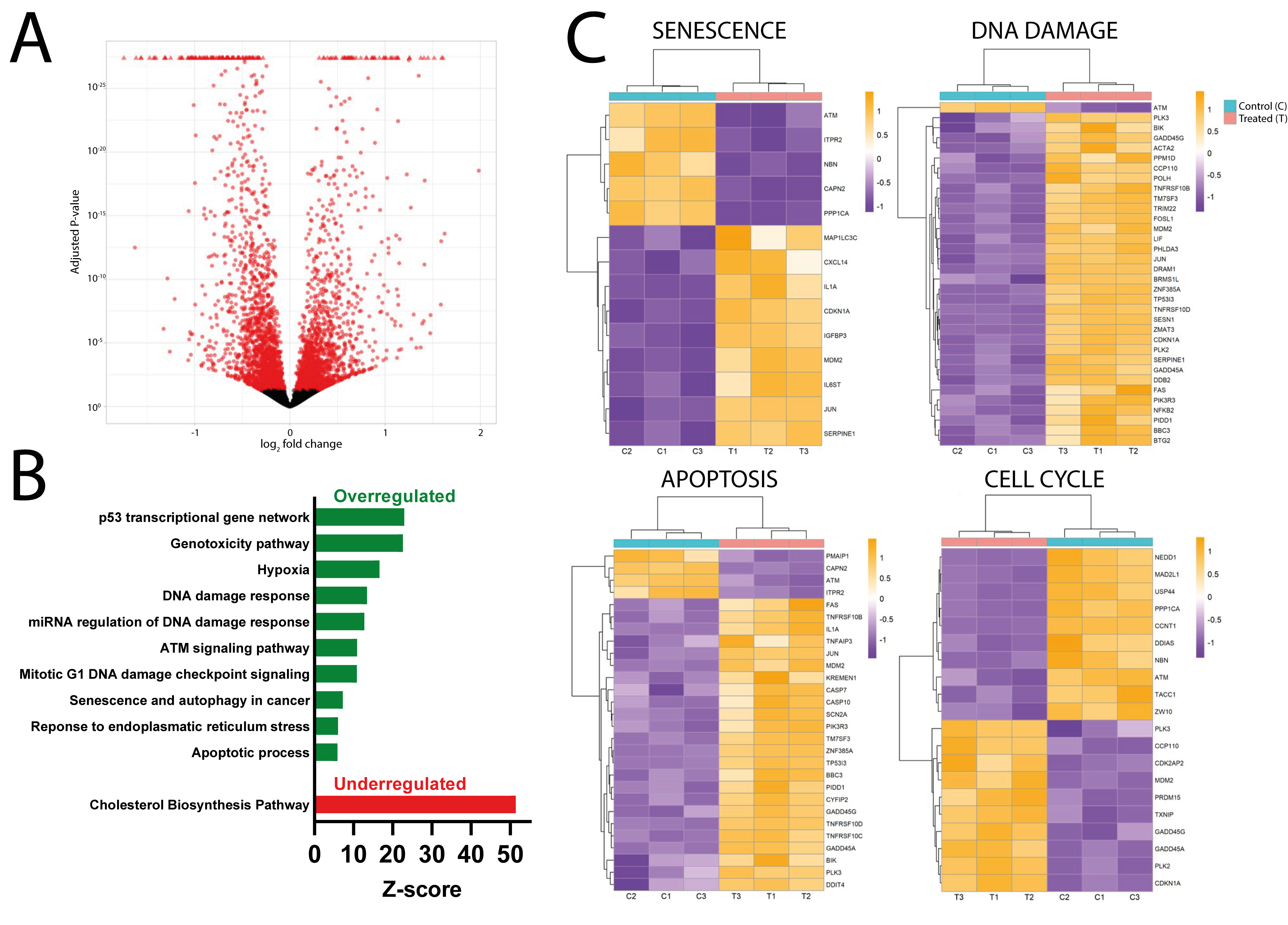
3.2. MDL1AS Downregulation Affects the DDR, Senescence, Autophagy, and Apoptosis Pathways on the NTERA2 Cell Line
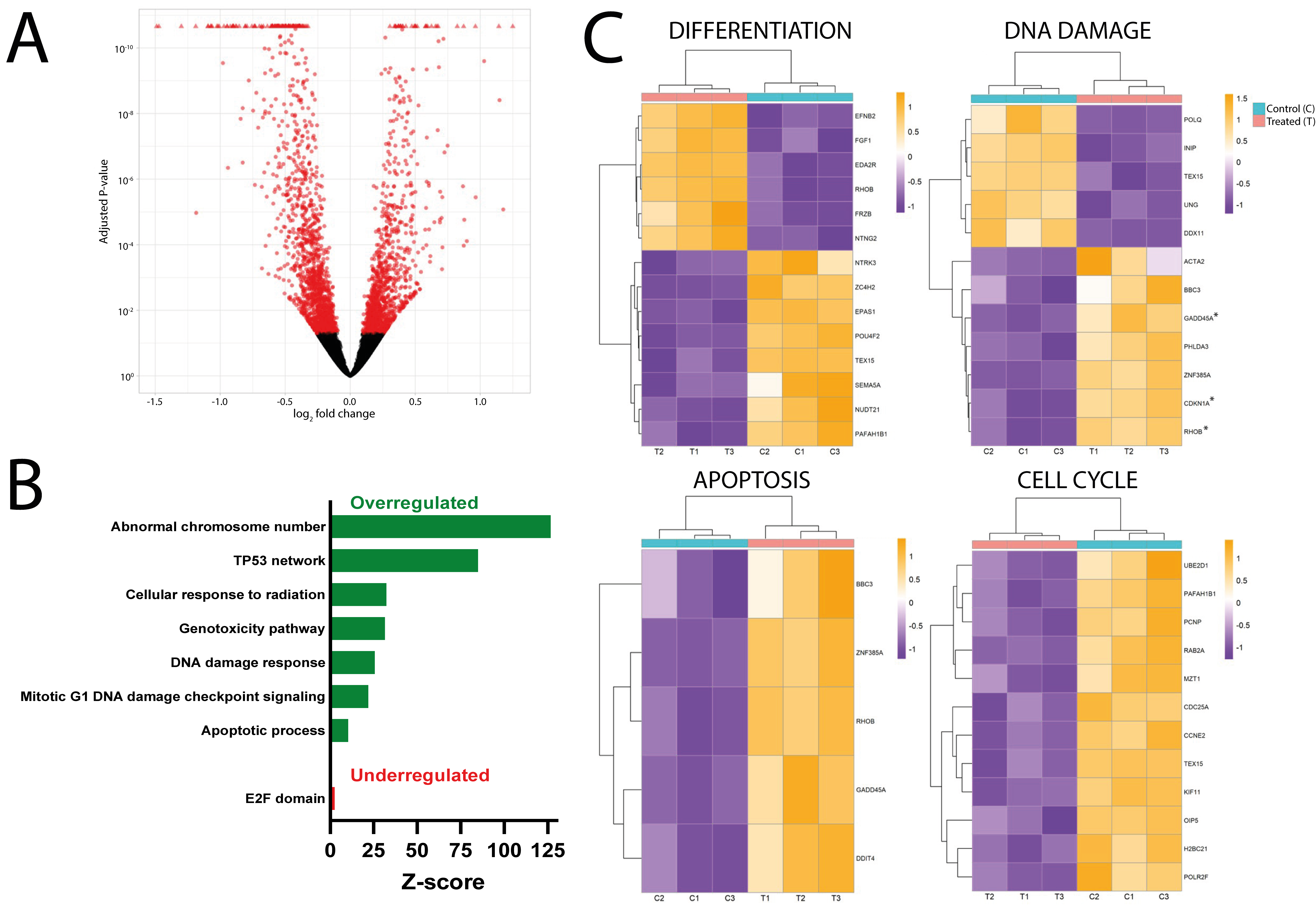
3.3. MDL1AS Downregulation Affects the DDR and Apoptosis Pathways on the SH-SY5Y Cell Line
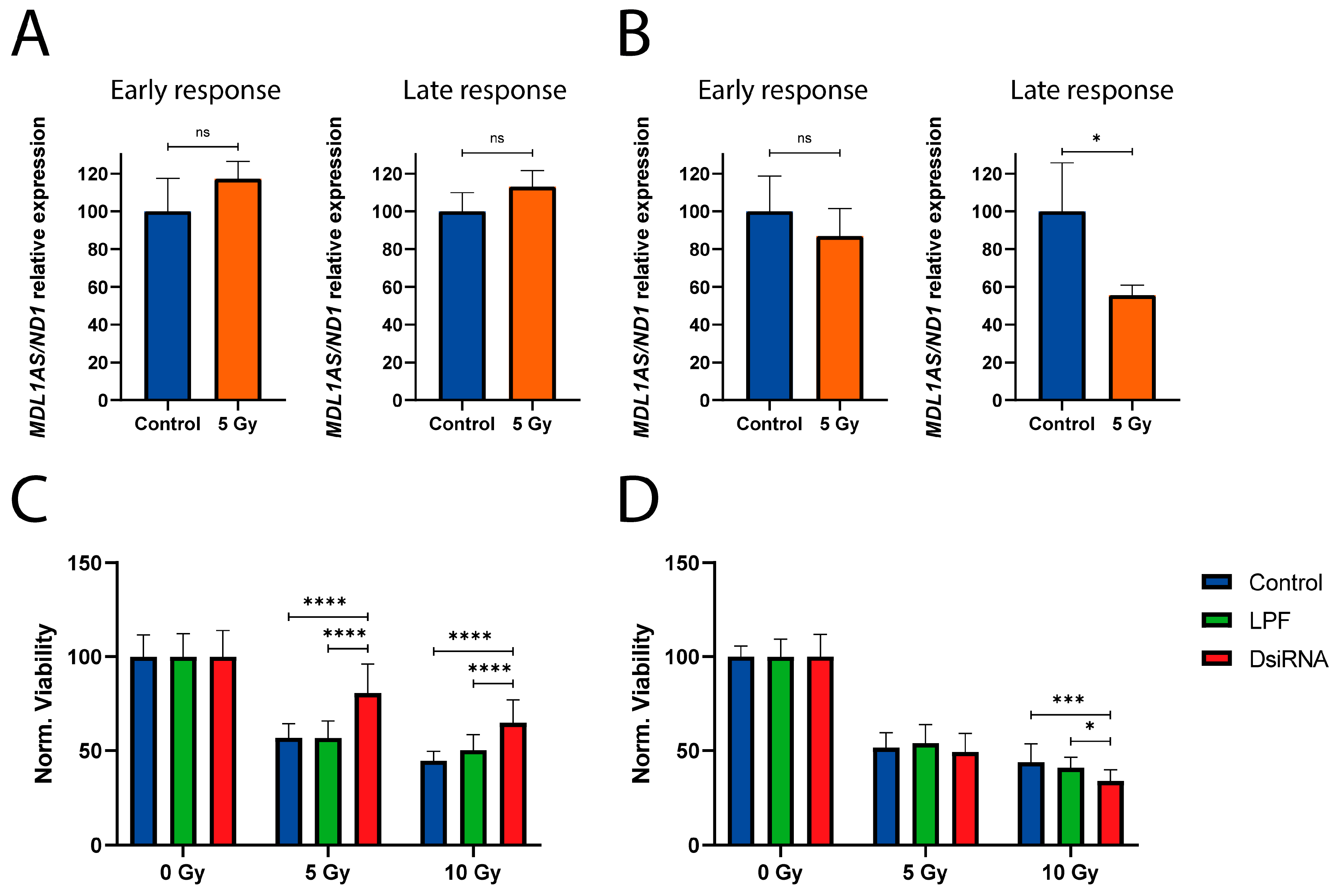
3.4. MDL1AS Downregulation Induces Radiation Resistance in NTERA2 but No Clear Effect Is Seen in SH-SY5Y Cells
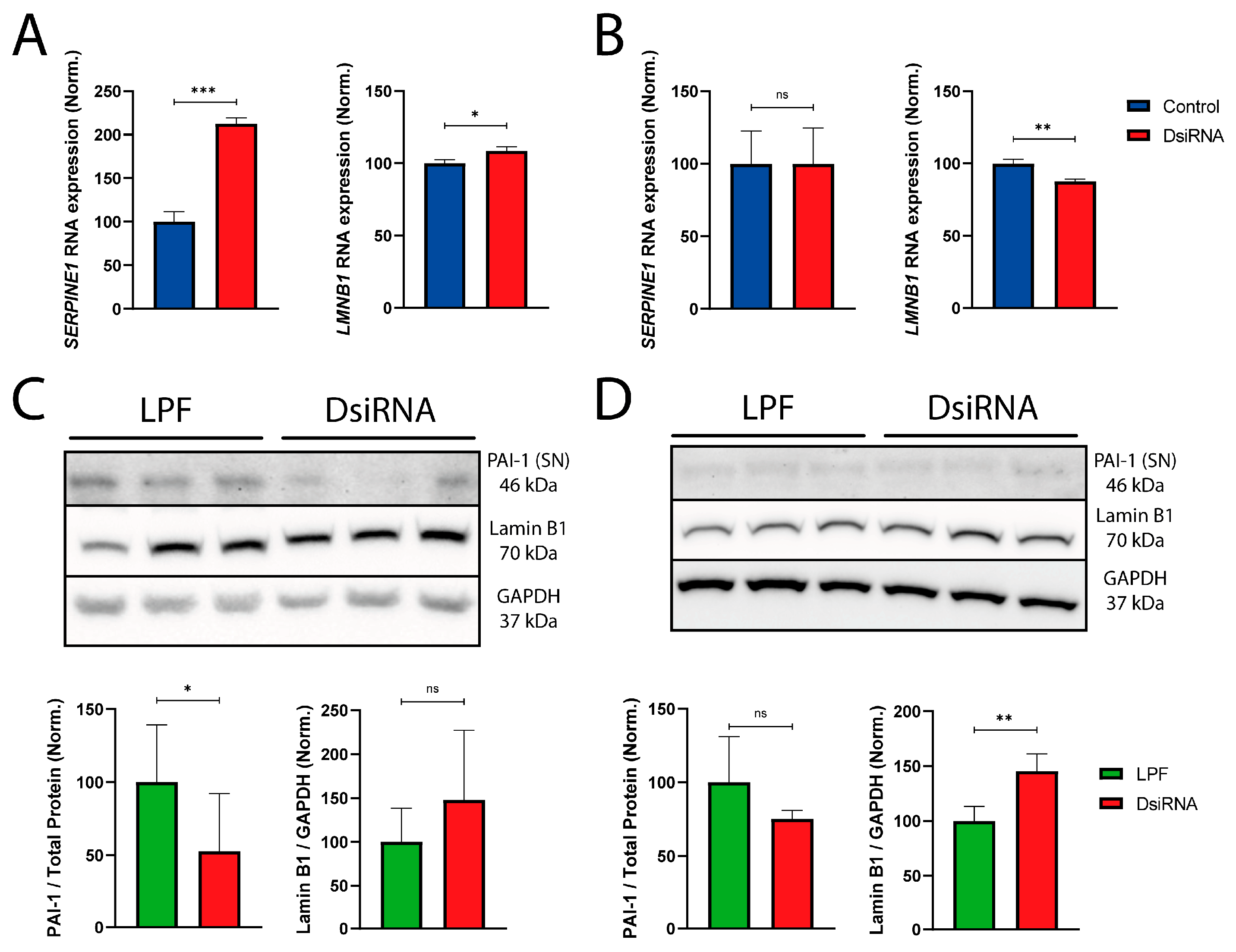
3.5. MDL1AS Downregulation Reduces PAI-1 Secretion in NTERA2 Cells and Increases Lamin B1 Protein Expression in SH-SY5Y Cells
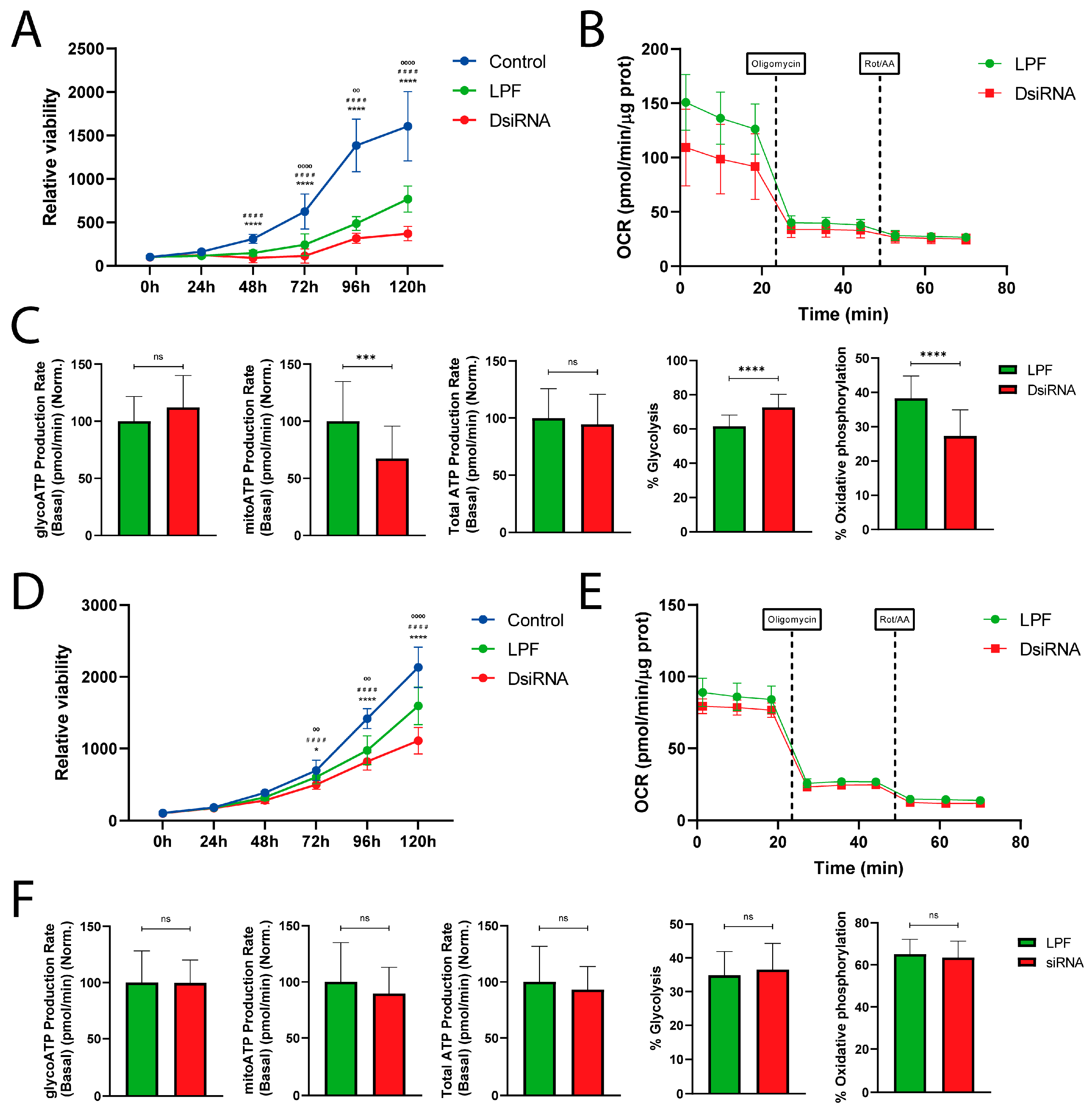
3.6. MDL1AS Downregulation Decreases Tumor Cell Growth in NTERA2 and SH-SY5Y and Increases Glycolytic Status in NTERA2 Cells
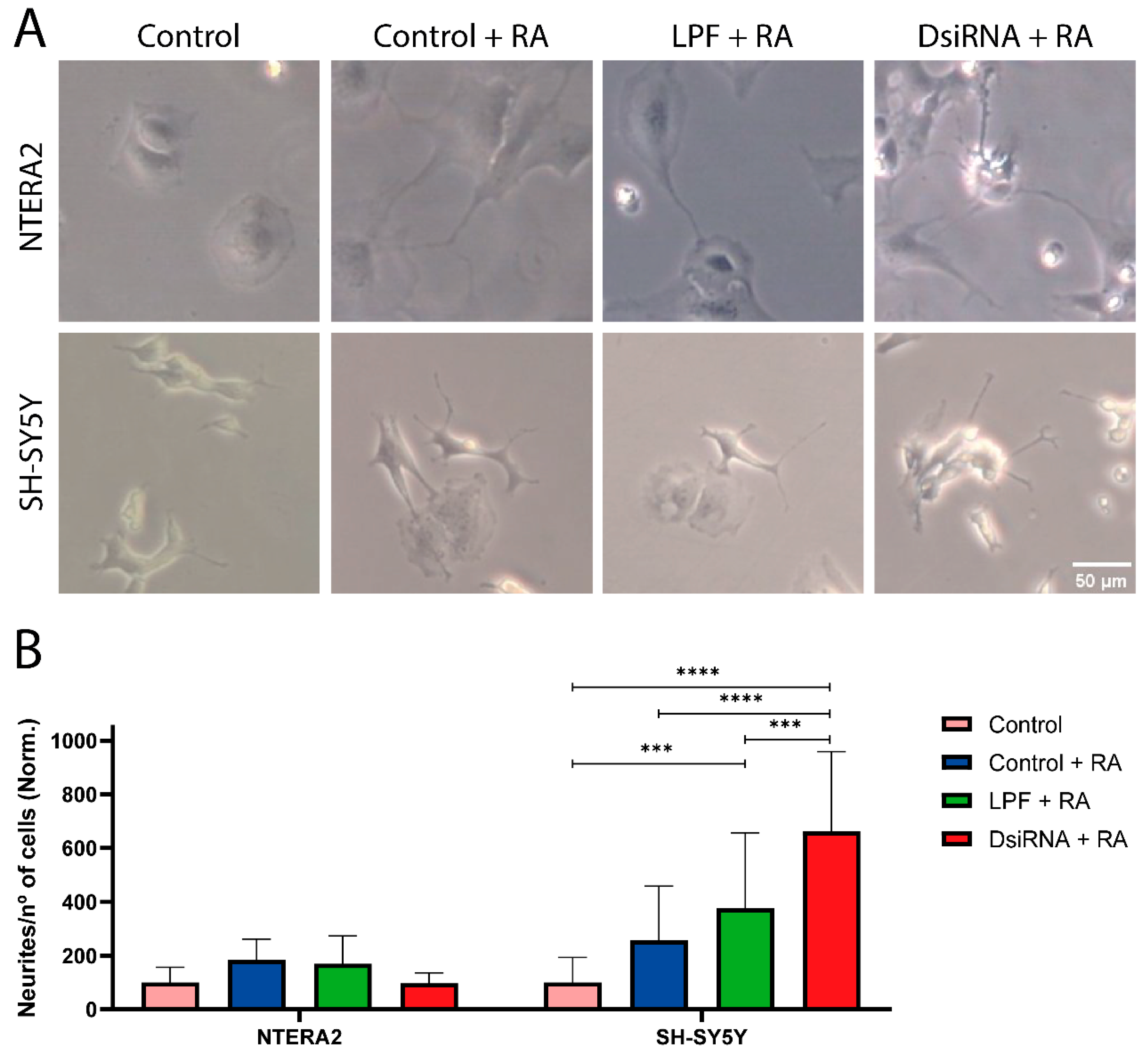
3.7. MDL1AS Downregulation Favors RA-Induced Neuronal Differentiation in SH-SY5Y Cells but Not in NTERA2 Cells
4. Discussion
5. Conclusions
Supplementary Materials
Author Contributions
Funding
Institutional Review Board Statement
Informed Consent Statement
Data Availability Statement
Acknowledgments
Conflicts of Interest
Abbreviations
| lncRNA | Long non-coding RNA |
| MDL1AS | Mitochondrial D-loop 1 antisense lncRNA |
| DDR | DNA damage response |
| CSC | Cancer stem cell |
| SASP | Senescence-associated secretory phenotype |
| OXPHOS | Oxidative phosphorylation |
| FBS | Fetal bovine serum |
| DsiRNA | Dicer-substrate small interfering RNA |
| LPF | Lipofectamine |
| OCR | Oxygen consumption rate |
| RA | Retinoic acid |
| PCA | Principal component analysis |
| DEG | Differentially expressed gene |
| FC | Fold change |
| Rot | Rotenone |
| AA | Antimycin A |
References
- Russo, M.; Siravegna, G.; Blaszkowsky, L.S.; Corti, G.; Crisafulli, G.; Ahronian, L.G.; Mussolin, B.; Kwak, E.L.; Buscarino, M.; Lazzari, L.; et al. Tumor Heterogeneity and Lesion-Specific Response to Targeted Therapy in Colorectal Cancer. Cancer Discov. 2016, 6, 147–153. [Google Scholar] [CrossRef] [PubMed]
- El-Deiry, W.S.; Taylor, B.; Neal, J.W. Tumor Evolution, Heterogeneity, and Therapy for Our Patients With Advanced Cancer: How Far Have We Come? Am. Soc. Clin. Oncol. Educ. Book 2017, 37, e8–e15. [Google Scholar] [CrossRef] [PubMed]
- Yu, T.; Gao, X.; Zheng, Z.; Zhao, X.; Zhang, S.; Li, C.; Liu, G. Intratumor Heterogeneity as a Prognostic Factor in Solid Tumors: A Systematic Review and Meta-Analysis. Front. Oncol. 2021, 11, 744064. [Google Scholar] [CrossRef]
- Kim, R.Y.; Xu, H.; Myllykangas, S.; Ji, H. Genetic-based biomarkers and next-generation sequencing: The future of personalized care in colorectal cancer. Pers. Med. 2011, 8, 331–345. [Google Scholar] [CrossRef]
- Bhat, G.R.; Sethi, I.; Sadida, H.Q.; Rah, B.; Mir, R.; Algehainy, N.; Albalawi, I.A.; Masoodi, T.; Subbaraj, G.K.; Jamal, F.; et al. Cancer cell plasticity: From cellular, molecular, and genetic mechanisms to tumor heterogeneity and drug resistance. Cancer Metastasis Rev. 2024, 43, 197–228. [Google Scholar] [CrossRef]
- Phi, L.T.H.; Sari, I.N.; Yang, Y.G.; Lee, S.H.; Jun, N.; Kim, K.S.; Lee, Y.K.; Kwon, H.Y. Cancer Stem Cells (CSCs) in Drug Resistance and their Therapeutic Implications in Cancer Treatment. Stem Cells Int. 2018, 2018, 5416923. [Google Scholar] [CrossRef]
- Almendro, V.; Marusyk, A.; Polyak, K. Cellular Heterogeneity and Molecular Evolution in Cancer. Annu. Rev. Pathol. Mech. Dis. 2013, 8, 277–302. [Google Scholar] [CrossRef]
- Marusyk, A.; Polyak, K. Tumor heterogeneity: Causes and consequences. Biochim. Biophys. Acta (BBA) Rev. Cancer 2010, 1805, 105–117. [Google Scholar] [CrossRef]
- Meacham, C.E.; Morrison, S.J. Tumour heterogeneity and cancer cell plasticity. Nature 2013, 501, 328–337. [Google Scholar] [CrossRef] [PubMed]
- O’Brien, C.A.; Kreso, A.; Jamieson, C.H.M. Cancer Stem Cells and Self-renewal. Clin. Cancer Res. 2010, 16, 3113–3120. [Google Scholar] [CrossRef] [PubMed]
- Lee, H.; Kim, B.; Park, J.; Park, S.; Yoo, G.; Yum, S.; Kang, W.; Lee, J.-M.; Youn, H.; Youn, B. Cancer stem cells: Landscape, challenges and emerging therapeutic innovations. Signal Transduct. Target. Ther. 2025, 10, 248. [Google Scholar] [CrossRef] [PubMed]
- Visvader, J.E.; Lindeman, G.J. Cancer stem cells in solid tumours: Accumulating evidence and unresolved questions. Nat. Rev. Cancer 2008, 8, 755–768. [Google Scholar] [CrossRef]
- Feitelson, M.A.; Arzumanyan, A.; Kulathinal, R.J.; Blain, S.W.; Holcombe, R.F.; Mahajna, J.; Marino, M.; Martinez-Chantar, M.L.; Nawroth, R.; Sanchez-Garcia, I.; et al. Sustained proliferation in cancer: Mechanisms and novel therapeutic targets. Semin. Cancer Biol. 2015, 35, S25–S54. [Google Scholar] [CrossRef]
- Maleki, E.H.; Bahrami, A.R.; Matin, M.M. Cancer cell cycle heterogeneity as a critical determinant of therapeutic resistance. Genes Dis. 2024, 11, 189–204. [Google Scholar] [CrossRef] [PubMed]
- Zhang, J.W.; Zhang, D.; Yu, B.P. Senescent cells in cancer therapy: Why and how to remove them. Cancer Lett. 2021, 520, 68–79. [Google Scholar] [CrossRef]
- Kim, M.J. Tracing Quiescent Cancer Cells In Vivo. Cancers 2024, 16, 3822. [Google Scholar] [CrossRef]
- Baldominos, P.; Barbera-Mourelle, A.; Barreiro, O.; Huang, Y.; Wight, A.; Cho, J.W.; Zhao, X.; Estivill, G.; Adam, I.; Sanchez, X.; et al. Quiescent cancer cells resist T cell attack by forming an immunosuppressive niche. Cell 2022, 185, 1694–1708.e19. [Google Scholar] [CrossRef]
- Peitzsch, C.; Kurth, I.; Kunz-Schughart, L.; Baumann, M.; Dubrovska, A. Discovery of the cancer stem cell related determinants of radioresistance. Radiother. Oncol. 2013, 108, 378–387. [Google Scholar] [CrossRef]
- Casas-Benito, A.; Martínez-Herrero, S.; Martínez, A. Succinate-Directed Approaches for Warburg Effect-Targeted Cancer Management, an Alternative to Current Treatments? Cancers 2023, 15, 2862. [Google Scholar] [CrossRef] [PubMed]
- Loh, J.J.; Ma, S. Hallmarks of cancer stemness. Cell Stem Cell 2024, 31, 617–639. [Google Scholar] [CrossRef] [PubMed]
- Sancho, P.; Barneda, D.; Heeschen, C. Hallmarks of cancer stem cell metabolism. Br. J. Cancer 2016, 114, 1305–1312. [Google Scholar] [CrossRef]
- Janiszewska, M.; Suvà, M.L.; Riggi, N.; Houtkooper, R.H.; Auwerx, J.; Clément-Schatlo, V.; Radovanovic, I.; Rheinbay, E.; Provero, P.; Stamenkovic, I. Imp2 controls oxidative phosphorylation and is crucial for preserving glioblastoma cancer stem cells. Genes Dev. 2012, 26, 1926–1944. [Google Scholar] [CrossRef]
- Chen, C.L.; Kumar, D.B.U.; Punj, V.; Xu, J.; Sher, L.; Tahara, S.M.; Hess, S.; Machida, K. NANOG Metabolically Reprograms Tumor-Initiating Stem-like Cells through Tumorigenic Changes in Oxidative Phosphorylation and Fatty Acid Metabolism. Cell Metab. 2016, 23, 206–219. [Google Scholar] [CrossRef] [PubMed]
- Zhu, K.; Xia, Y.; Tian, X.; He, Y.; Zhou, J.; Han, R.; Guo, H.; Song, T.; Chen, L.; Tian, X. Characterization and therapeutic perspectives of differentiation-inducing therapy in malignant tumors. Front. Genet. 2023, 14, 1271381. [Google Scholar] [CrossRef]
- Wu, X.; Yang, L.; Wang, J.; Hao, Y.; Wang, C.; Lu, Z. The Involvement of Long Non-Coding RNAs in Glioma: From Early Detection to Immunotherapy. Front. Immunol. 2022, 13, 897754. [Google Scholar] [CrossRef]
- Pokorná, M.; Černá, M.; Boussios, S.; Ovsepian, S.V.; O’Leary, V.B. lncRNA Biomarkers of Glioblastoma Multiforme. Biomedicines 2024, 12, 932. [Google Scholar] [CrossRef]
- Gareev, I.; Ramirez, M.d.J.E.; Nurmukhametov, R.; Ivliev, D.; Shumadalova, A.; Ilyasova, T.; Beilerli, A.; Wang, C. The role and clinical relevance of long non-coding RNAs in glioma. Non-Coding RNA Res. 2023, 8, 562–570. [Google Scholar] [CrossRef]
- Xu, J.; Liu, S. Noncoding RNAs in Cancer Cell Plasticity. Adv. Exp. Med. Biol. 2016, 927, 173–189. [Google Scholar] [CrossRef] [PubMed]
- Chen, B.; Dragomir, M.P.; Yang, C.; Li, Q.; Horst, D.; Calin, G.A. Targeting non-coding RNAs to overcome cancer therapy resistance. Signal Transduct. Target. Ther. 2022, 7, 121. [Google Scholar] [CrossRef]
- Gao, S.; Tian, X.; Chang, H.; Sun, Y.; Wu, Z.; Cheng, Z.; Dong, P.; Zhao, Q.; Ruan, J.; Bu, W. Two novel lncRNAs discovered in human mitochondrial DNA using PacBio full-length transcriptome data. Mitochondrion 2018, 38, 41–47. [Google Scholar] [CrossRef]
- Garrido, P.; Casas-Benito, A.; Larrayoz, I.M.; Narro-Íñiguez, J.; Rubio-Mediavilla, S.; Zozaya, E.; Martín-Carnicero, A.; Martínez, A. Expression of Mitochondrial Long Non-Coding RNAs, MDL1 and MDL1AS, Are Good Prognostic and/or Diagnostic Biomarkers for Several Cancers, Including Colorectal Cancer. Cancers 2024, 16, 960. [Google Scholar] [CrossRef] [PubMed]
- Li, J.; Bai, R.; Zhou, Y.; Song, X.; Li, L. A mitochondria-to-nucleus regulation mediated by the nuclear-translocated mitochondrial lncRNAs. PLoS Genet. 2025, 21, e1011580. [Google Scholar] [CrossRef] [PubMed]
- Batliner, J.; Mancarelli, M.M.; Jenal, M.; Reddy, V.A.; Fey, M.F.; Torbett, B.E.; Tschan, M.P. CLEC5A (MDL-1) is a novel PU.1 transcriptional target during myeloid differentiation. Mol. Immunol. 2011, 48, 714–719. [Google Scholar] [CrossRef] [PubMed]
- Hämmerle, B.; Yañez, Y.; Palanca, S.; Cañete, A.; Burks, D.J.; Castel, V.; De Mora, J.F. Targeting Neuroblastoma Stem Cells with Retinoic Acid and Proteasome Inhibitor. PLoS ONE 2013, 8, e76761. [Google Scholar] [CrossRef]
- Saeed, Y.; Xie, B.; Xu, J.; Rehman, A.; Hong, M.; Hong, Q.; Deng, Y. Glial U87 cells protect neuronal SH-SY5Y cells from indirect effect of radiation by reducing oxidative stress and apoptosis. Acta Biochim. Biophys. Sin. 2015, 47, 250–257. [Google Scholar] [CrossRef]
- Tortolici, F.; Vumbaca, S.; Incocciati, B.; Dayal, R.; Aquilano, K.; Giovanetti, A.; Rufini, S. Ionizing Radiation-Induced Extracellular Vesicle Release Promotes AKT-Associated Survival Response in SH-SY5Y Neuroblastoma Cells. Cells 2021, 10, 107. [Google Scholar] [CrossRef]
- Yoo, J.Y.; Lee, Y.J.; Kim, Y.J.; Baik, T.K.; Lee, J.H.; Lee, M.; Woo, R.-S. Multiple low-dose radiation-induced neuronal cysteine transporter expression and oxidative stress are rescued by N-acetylcysteine in neuronal SH-SY5Y cells. Neurotoxicology 2023, 95, 205–217. [Google Scholar] [CrossRef]
- Suthapot, P.; Xiao, T.; Felsenfeld, G.; Hongeng, S.; Wongtrakoongate, P. The RNA helicases DDX5 and DDX17 facilitate neural differentiation of human pluripotent stem cells NTERA2. Life Sci. 2022, 291, 120298. [Google Scholar] [CrossRef]
- Simões, P.D.; Ramos, T. Human pluripotent embryonal carcinoma NTERA2 cl.D1 cells maintain their typical morphology in an angiomyogenic medium. J. Negat. Results Biomed. 2007, 6, 5. [Google Scholar] [CrossRef]
- Borlongan, M.C.; Rodriguez, T.; Putthanbut, N.; Wang, H.; Lee, J.Y. Modeling of cancer stem cells and the tumor microenvironment Via NT2/D1 cells to probe pathology and treatment for cancer and beyond. Discov. Oncol. 2025, 16, 605. [Google Scholar] [CrossRef]
- Johari, B.; Tavangar-Roosta, S.; Gharbavi, M.; Sharafi, A.; Kaboli, S.; Rezaeejam, H. Suppress the cell growth of cancer stem-like cells (NTERA-2) using Sox2-Oct4 decoy oligodeoxynucleotide−encapsulated niosomes-zinc hybrid nanocarriers under X-irradiation. Heliyon 2024, 10, e34096. [Google Scholar] [CrossRef]
- Stanisavljevic, D.; Popovic, J.; Petrovic, I.; Davidovic, S.; Atkinson, M.J.; Anastasov, N.; Stevanovic, M. Radiation effects on early phase of NT2/D1 neural differentiation in vitro. Int. J. Radiat. Biol. 2019, 95, 1627–1639. [Google Scholar] [CrossRef] [PubMed]
- Anders, S.; Huber, W. Differential expression analysis for sequence count data. Genome Biol. 2010, 11, R106. [Google Scholar] [CrossRef]
- Robinson, M.D.; McCarthy, D.J.; Smyth, G.K. edgeR: A Bioconductor package for differential expression analysis of digital gene expression data. Bioinformatics 2010, 26, 139–140. [Google Scholar] [CrossRef]
- Varet, H.; Brillet-Guéguen, L.; Coppée, J.Y.; Dillies, M.A. SARTools: A DESeq2- and EdgeR-Based R Pipeline for Comprehensive Differential Analysis of RNA-Seq Data. PLoS ONE 2016, 11, e0157022. [Google Scholar] [CrossRef]
- Kuleshov, M.V.; Jones, M.R.; Rouillard, A.D.; Fernandez, N.F.; Duan, Q.; Wang, Z.; Koplev, S.; Jenkins, S.L.; Jagodnik, K.M.; Lachmann, A.; et al. Enrichr: A comprehensive gene set enrichment analysis web server 2016 update. Nucleic Acids Res. 2016, 44, W90–W97. [Google Scholar] [CrossRef] [PubMed]
- Jean Miller, M.; Martínez, A.; Unsworth, E.J.; Thiele, C.J.; Moody, T.W.; Elsasser, T.; Cuttitta, F. Adrenomedullin Expression in Human Tumor Cell Lines its Potential Role as an Autocrine Growth Factor. J. Biol. Chem. 1996, 271, 23345–23351. [Google Scholar] [CrossRef]
- Vilariño, M.; García-Sanmartín, J.; Ochoa-Callejero, L.; López-Rodríguez, A.; Blanco-Urgoiti, J.; Martínez, A. Macrocybin, a Natural Mushroom Triglyceride, Reduces Tumor Growth In Vitro and In Vivo through Caveolin-Mediated Interference with the Actin Cytoskeleton. Molecules 2020, 25, 6010. [Google Scholar] [CrossRef] [PubMed]
- Su, Y.H.; Wu, Y.Z.; Ann, D.K.; Chen, J.L.Y.; Kuo, C.Y. Obesity promotes radioresistance through SERPINE1-mediated aggressiveness and DNA repair of triple-negative breast cancer. Cell Death Dis. 2023, 14, 53. [Google Scholar] [CrossRef]
- Kang, J.; Kim, W.; Kwon, T.; Youn, H.; Kim, J.S.; Youn, B. Plasminogen activator inhibitor-1 enhances radioresistance and aggressiveness of non-small cell lung cancer cells. Oncotarget 2016, 7, 23961–23974. [Google Scholar] [CrossRef] [PubMed]
- Oubaha, M.; Miloudi, K.; Dejda, A.; Guber, V.; Mawambo, G.; Germain, M.A.; Bourdel, G.; Popovic, N.; Rezende, F.A.; Kaufman, R.J.; et al. Senescence-associated secretory phenotype contributes to pathological angiogenesis in retinopathy. Sci. Transl. Med. 2016, 8, 362ra144. [Google Scholar] [CrossRef] [PubMed]
- Bautista-Niño, P.; Portilla-Fernandez, E.; Vaughan, D.; Danser, A.; Roks, A. DNA Damage: A Main Determinant of Vascular Aging. Int. J. Mol. Sci. 2016, 17, 748. [Google Scholar] [CrossRef]
- Niro, F.; Pecoraro, G.; Balestrieri, A.; Soricelli, A.; D’aiuto, M.; Mossetti, G.; Ciaramella, V. Cellular senescence as a prognostic marker for predicting breast cancer progression in 2D and 3D organoid models. Biomed. Pharmacother. 2025, 189, 118324. [Google Scholar] [CrossRef]
- Zhang, D.; Zhang, J.W.; Xu, H.; Chen, X.; Gao, Y.; Jiang, H.G.; Wang, Y.; Wu, H.; Yang, L.; Wang, W.-B.; et al. Therapy-induced senescent tumor cell-derived extracellular vesicles promote colorectal cancer progression through SERPINE1-mediated NF-κB p65 nuclear translocation. Mol. Cancer 2024, 23, 70. [Google Scholar] [CrossRef]
- Liu, N.; Sun, J.; Kono, K.; Horikoshi, Y.; Ikura, T.; Tong, X.; Haraguchi, T.; Tashiro, S. Regulation of homologous recombinational repair by lamin B1 in radiation-induced DNA damage. FASEB J. 2015, 29, 2514–2525. [Google Scholar] [CrossRef] [PubMed]
- Higashi, M.; Kolla, V.; Iyer, R.; Naraparaju, K.; Zhuang, T.; Kolla, S.; Brodeur, G.M. Retinoic acid-induced CHD5 upregulation and neuronal differentiation of neuroblastoma. Mol. Cancer 2015, 14, 150. [Google Scholar] [CrossRef] [PubMed]
- Stern, M.; Gierse, A.; Tan, S.; Bicker, G. Human Ntera2 cells as a predictive in vitro test system for developmental neurotoxicity. Arch. Toxicol. 2014, 88, 127–136. [Google Scholar] [CrossRef] [PubMed]
- Hindley, C.J.; Condurat, A.L.; Menon, V.; Thomas, R.; Azmitia, L.M.; Davis, J.A.; Pruszak, J. The Hippo pathway member YAP enhances human neural crest cell fate and migration. Sci. Rep. 2016, 6, 23208. [Google Scholar] [CrossRef]
- Jiang, M.C.; Ni, J.J.; Cui, W.Y.; Wang, B.Y.; Zhuo, W. Emerging roles of lncRNA in cancer and therapeutic opportunities. Am. J. Cancer Res. 2019, 9, 1354–1366. [Google Scholar] [PubMed]
- Andrews, P.W. Teratocarcinomas and human embryology: Pluripotent human EC cell lines. APMIS 1998, 106, 158–168. [Google Scholar] [CrossRef] [PubMed]
- Behm, L.V.J.; Gerike, S.; Grauel, M.K.; Uhlig, K.; Pfisterer, F.; Baumann, W.; Bier, F.F.; Duschl, C.; Kirschbaum, M. Micropatterned Thermoresponsive Cell Culture Substrates for Dynamically Controlling Neurite Outgrowth and Neuronal Connectivity in Vitro. ACS Appl. Bio Mater. 2019, 2, 2853–2861. [Google Scholar] [CrossRef]
- Zheng, X.; Boyer, L.; Jin, M.; Mertens, J.; Kim, Y.; Ma, L.; Hamm, M.; Gage, F.H.; Hunter, T. Metabolic reprogramming during neuronal differentiation from aerobic glycolysis to neuronal oxidative phosphorylation. eLife 2016, 5, e13374. [Google Scholar] [CrossRef] [PubMed]
- Agathocleous, M.; Love, N.K.; Randlett, O.; Harris, J.J.; Liu, J.; Murray, A.J.; Harris, W.A. Metabolic differentiation in the embryonic retina. Nat. Cell Biol. 2012, 14, 859–864. [Google Scholar] [CrossRef]
- Kolios, G.; Moodley, Y. Introduction to Stem Cells and Regenerative Medicine. Respiration 2013, 85, 3–10. [Google Scholar] [CrossRef] [PubMed]
- Humphries, B.A.; Buschhaus, J.M.; Chen, Y.C.; Haley, H.R.; Qyli, T.; Chiang, B.; Shen, N.; Rajendran, S.; Cutter, A.; Cheng, Y.-H.; et al. Plasminogen Activator Inhibitor 1 (PAI1) Promotes Actin Cytoskeleton Reorganization and Glycolytic Metabolism in Triple-Negative Breast Cancer. Mol. Cancer Res. 2019, 17, 1142–1154. [Google Scholar] [CrossRef]
- Lee, S.Y.; Jeong, E.K.; Ju, M.K.; Jeon, H.M.; Kim, M.Y.; Kim, C.H.; Park, H.G.; Han, S.I.; Kang, H.S. Induction of metastasis, cancer stem cell phenotype, and oncogenic metabolism in cancer cells by ionizing radiation. Mol. Cancer 2017, 16, 10. [Google Scholar] [CrossRef]
- Garvalov, B.K.; Muhammad, S.; Dobreva, G. Lamin B1 in cancer and aging. Aging 2019, 11, 7336–7338. [Google Scholar] [CrossRef] [PubMed]
- Bhatt, A.N.; Chauhan, A.; Khanna, S.; Rai, Y.; Singh, S.; Soni, R.; Kalra, N.; Dwarakanath, B.S. Transient elevation of glycolysis confers radio-resistance by facilitating DNA repair in cells. BMC Cancer 2015, 15, 335. [Google Scholar] [CrossRef]
- Fiorica, F.; Tebano, U.; Napoli, G.; Franceschetto, A.; Muraro, M.; Giorgi, C.; Pinton, P. Metabolic-Modulating Effects of Radiation: Undetectable Yet Deadly—A Review on Radiotherapy. Cancers 2024, 17, 54. [Google Scholar] [CrossRef]
- Wu, Y.; Song, Y.; Wang, R.; Wang, T. Molecular mechanisms of tumor resistance to radiotherapy. Mol. Cancer 2023, 22, 96. [Google Scholar] [CrossRef] [PubMed]
- Kang, H.; Kim, B.; Park, J.; Youn, H.; Youn, B. The Warburg effect on radioresistance: Survival beyond growth. Biochim. Biophys. Acta (BBA) Rev. Cancer 2023, 1878, 188988. [Google Scholar] [CrossRef]
- Machado, N.D.; Heather, L.C.; Harris, A.L.; Higgins, G.S. Targeting mitochondrial oxidative phosphorylation: Lessons, advantages, and opportunities. Br. J. Cancer 2023, 129, 897–899. [Google Scholar] [CrossRef] [PubMed]
- Zhou, T.; Zhang, L.Y.; He, J.Z.; Miao, Z.M.; Li, Y.Y.; Zhang, Y.M.; Liu, Z.-W.; Zhang, S.-Z.; Chen, Y.; Zhou, G.-C.; et al. Review: Mechanisms and perspective treatment of radioresistance in non-small cell lung cancer. Front. Immunol. 2023, 14, 1133899. [Google Scholar] [CrossRef] [PubMed]
- Gorodetska, I.; Offermann, A.; Püschel, J.; Lukiyanchuk, V.; Gaete, D.; Kurzyukova, A.; Freytag, V.; Haider, M.-T.; Fjeldbo, C.S.; Di Gaetano, S.; et al. ALDH1A1 drives prostate cancer metastases and radioresistance by interplay with AR- and RAR-dependent transcription. Theranostics 2024, 14, 714–737. [Google Scholar] [CrossRef] [PubMed]
- Mori, Y.; Yamawaki, K.; Ishiguro, T.; Yoshihara, K.; Ueda, H.; Sato, A.; Ohata, H.; Yoshida, Y.; Minamino, T.; Okamoto, K.; et al. ALDH-Dependent Glycolytic Activation Mediates Stemness and Paclitaxel Resistance in Patient-Derived Spheroid Models of Uterine Endometrial Cancer. Stem Cell Rep. 2019, 13, 730–746. [Google Scholar] [CrossRef] [PubMed]
- Xu, Y.; Yang, L.; Jiang, X.; Yu, J.; Yang, J.; Zhang, H.; Tai, G.; Yuan, X.; Liu, F. Adenovirus-Mediated Coexpression of DCX and SPARC Radiosensitizes Human Malignant Glioma Cells. Cell. Mol. Neurobiol. 2013, 33, 965–971. [Google Scholar] [CrossRef]
- Balentova, S.; Hajtmanova, E.; Adamkov, M.; Lehotsky, J. Differential Expression of Doublecortin and Microglial Markers in the Rat Brain Following Fractionated Irradiation. Neurochem. Res. 2015, 40, 501–513. [Google Scholar] [CrossRef]
- Pinarbasi-Degirmenci, N.; Sur-Erdem, I.; Akcay, V.; Bolukbasi, Y.; Selek, U.; Solaroglu, I.; Bagci-Onder, T. Chronically Radiation-Exposed Survivor Glioblastoma Cells Display Poor Response to Chk1 Inhibition under Hypoxia. Int. J. Mol. Sci. 2022, 23, 7051. [Google Scholar] [CrossRef]



| Name | Sequence 5′ → 3′ | Strand |
|---|---|---|
| DsiRNA2 | GUACUACAGGUGGUCAAGUAUUUAT | + |
| AUAAAUACUUGACCACCUGUAGUACAU | − | |
| DsiRNA3 | GUCGGAUACAGUUCACUUUAGCUAC | + |
| GUAGCUAAAGUGAACUGUAUCCGACAU | − | |
| DsiRNA4 | GACAUUCAAUUGUUAUUAUUAUGTC | + |
| GACAUAAUAAUAACAAUUGAAUGUCUG | − |
| Target | Forward 5′ → 3′ | Reverse 5′ → 3′ |
|---|---|---|
| MDL1AS | ACATTACTGCCAGCCACCAT | TGCTTGTAAGCATGGGGAGG |
| MDL1AS | GTCCCTTGACCACCATCCTC | GGGGAACGTGTGGGCTATTT |
| ND1 | CCTCCTACTCCTCATTGTACCC | CAGCGAAGGGTTGTAGTAGC |
| GAPDH | AAATCCCATCACCATCTTCC | GACTCCACGACGTACTCAGC |
| Blotting | Target | Species | Ab Type | Dilution | Reference | RRID |
|---|---|---|---|---|---|---|
| 1st | Pai-1 | Mouse | Monoclonal | 1:1000 | Santa Cruz (sc5297) | AB_628154 |
| Lamin B1 | Rabbit | Polyclonal | 1:1000 | Abclonal (A1910) | AB_2862592 | |
| GAPDH | Mouse | Monoclonal | 1:10,000 | Abcam (ab8245) | AB_2107448 | |
| 2nd | Mouse IgG | Donkey | Polyclonal | 1:30,000 | Jackson Immunoresearch (715-035-151) | AB_2340771 |
| Rabbit IgG | Goat | Polyclonal | 1:10,000 | Cell Signaling (7074) | AB_2099233 |
| NTERA2 | SH-SY5Y | |
|---|---|---|
| DsiRNA2 | 19.72% | 69.27% |
| DsiRNA3 | 50.87% | 67.63% |
| DsiRNA4 | 24.05% | 52.46% |
Disclaimer/Publisher’s Note: The statements, opinions and data contained in all publications are solely those of the individual author(s) and contributor(s) and not of MDPI and/or the editor(s). MDPI and/or the editor(s) disclaim responsibility for any injury to people or property resulting from any ideas, methods, instructions or products referred to in the content. |
© 2026 by the authors. Licensee MDPI, Basel, Switzerland. This article is an open access article distributed under the terms and conditions of the Creative Commons Attribution (CC BY) license.
Share and Cite
Casas-Benito, A.; Garrido, P.; Martínez, A. Downregulation of the Long Non-Coding RNA MDL1AS Alters Metabolism, Differentiation, and Radiosensitivity in NTERA2 and SH-SY5Y Cells. Cancers 2026, 18, 928. https://doi.org/10.3390/cancers18060928
Casas-Benito A, Garrido P, Martínez A. Downregulation of the Long Non-Coding RNA MDL1AS Alters Metabolism, Differentiation, and Radiosensitivity in NTERA2 and SH-SY5Y Cells. Cancers. 2026; 18(6):928. https://doi.org/10.3390/cancers18060928
Chicago/Turabian StyleCasas-Benito, Adrián, Pablo Garrido, and Alfredo Martínez. 2026. "Downregulation of the Long Non-Coding RNA MDL1AS Alters Metabolism, Differentiation, and Radiosensitivity in NTERA2 and SH-SY5Y Cells" Cancers 18, no. 6: 928. https://doi.org/10.3390/cancers18060928
APA StyleCasas-Benito, A., Garrido, P., & Martínez, A. (2026). Downregulation of the Long Non-Coding RNA MDL1AS Alters Metabolism, Differentiation, and Radiosensitivity in NTERA2 and SH-SY5Y Cells. Cancers, 18(6), 928. https://doi.org/10.3390/cancers18060928