Poseidon’s Trident: “Divine” Intervention in Cervical Cancer Through Chemoradiation, Immunotherapy, and Antibody–Drug Conjugates

Simple Summary
Abstract
1. Introduction
2. Materials and Methods
3. Molecular and Diagnostic Foundations for Treatment
3.1. HPV-Driven Biology That Matters for Therapy
3.2. The Tumor–Immune Microenvironment: Hot, Cold, and Excluded Phenotypes
3.3. Fédération Internationale de Gynécologie et D’Obstétrique (FIGO) Staging and Imaging: Mapping Local Versus Metastatic Disease
3.4. Biomarkers That Matter for Treatment Selection
3.5. Treating HPV Precancer: Preventing Malignancy Before It Starts
4. Chemoradiation Backbone
4.1. Why Chemoradiation Works as the Mature First-Line Curative Platform
4.2. Current Standard: Cisplatin-Based CCRT Plus Image-Guided (Often MRI-Guided) Brachytherapy
4.3. Why This Backbone Remains Essential, Even in the IO/ADC Era
4.4. Radiosensitizers and Future Chemo–RT Refinements
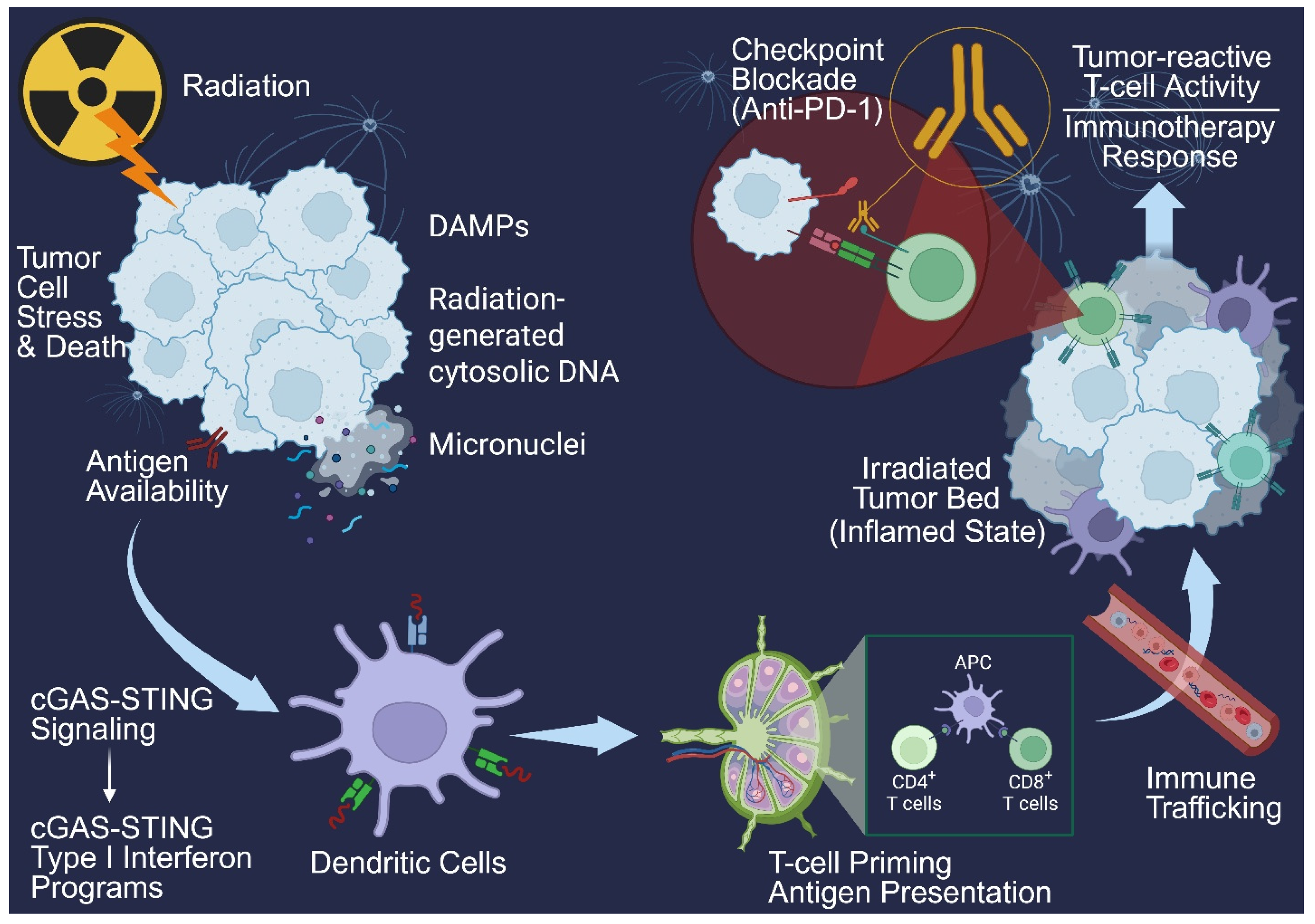
4.5. Bridge to the Immunotherapy Section: Why CRT Is a Logical Partner for IO
5. Immunotherapy
5.1. The Perfect Setup
5.2. Key Agents and Trials
5.3. Biomarkers and Resistance Mechanisms
5.4. Next Wave
6. Antibody–Drug Conjugates
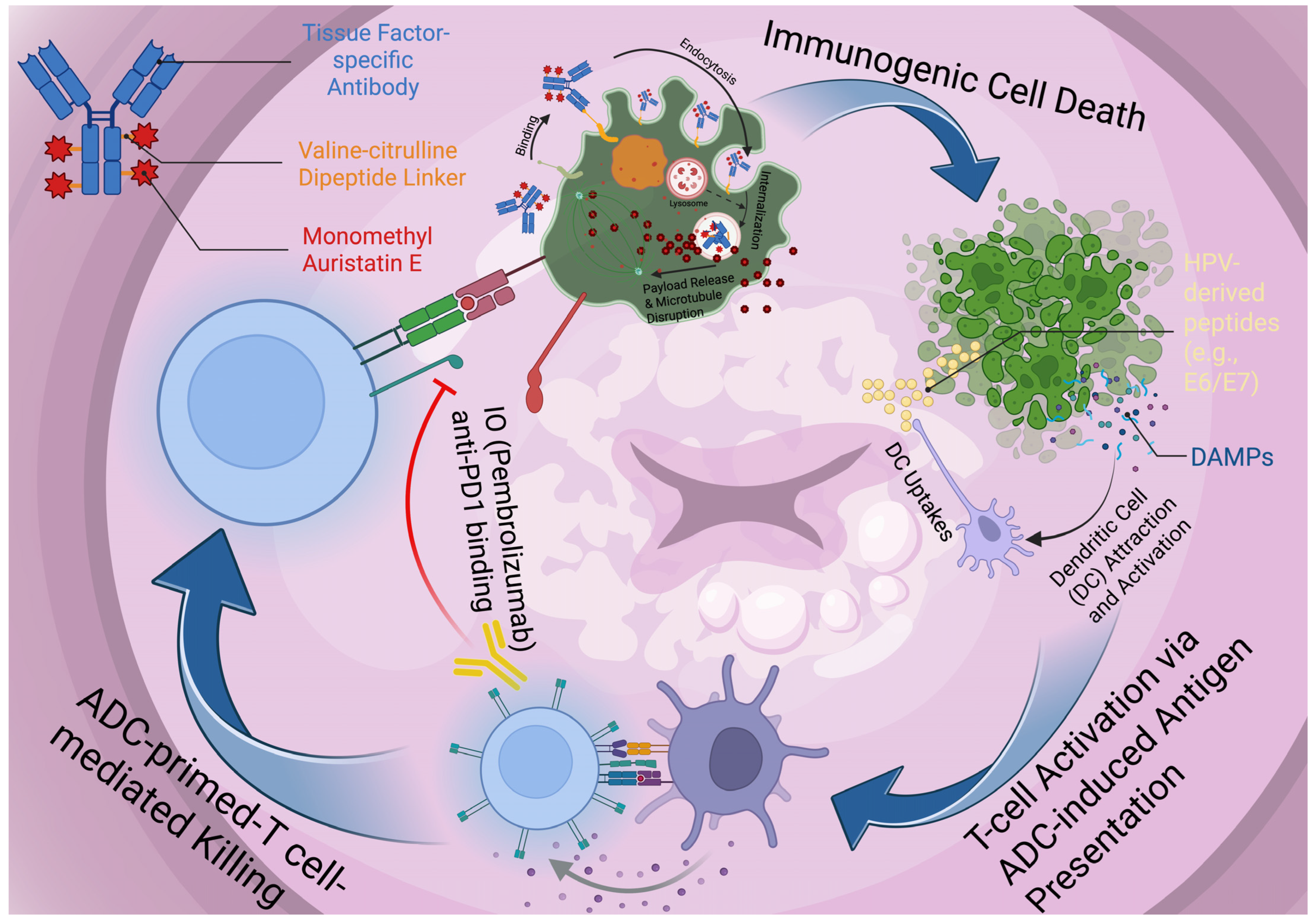
6.1. The Best of Both Worlds
6.2. New Kid on the Block
6.3. Why Is ADC Still Not First-Line
6.4. ADC and IO Synergy
7. Limitations
7.1. Limitations of the Clinical Trials
7.2. Toxicity, Fertility, and Survivorship Considerations Within the Conceptual Triad (CRT ± IO ± ADC)
7.3. Global Disparities in Brachytherapy Access and Implementation
8. Conclusions
Author Contributions
Funding
Data Availability Statement
Acknowledgments
Conflicts of Interest
Abbreviations
| ADC | Antibody–drug conjugate |
| ATP | Adenosine triphosphate |
| CIN | Cervical intraepithelial neoplasia |
| CCRT | Concurrent chemoradiation |
| CPS | Combined positive score |
| CRT | Chemoradiation |
| CT | Computed tomography |
| CTLA-4 | Cytotoxic T-lymphocyte-associated protein 4 |
| DAMPs | Damage-associated molecular patterns |
| DC | Dendritic cell |
| DSS | Disease-specific survival |
| EBRT | External beam radiotherapy |
| FDG | Fluorodeoxyglucose |
| FIGO | Fédération Internationale de Gynécologie et d’Obstétrique |
| FRα | Folate receptor alpha |
| GZMB | Granzyme B |
| HMGB1 | High-mobility group box 1 |
| HPV | Human papillomavirus |
| HR | Hazard ratio |
| ICD | Immunogenic cell death |
| ICI | Immune checkpoint inhibitor |
| IFNG | Interferon gamma |
| IgG1κ | Immunoglobulin G1 kappa |
| IHC | Immunohistochemistry |
| IO | Immunotherapy |
| LAG-3 | Lymphocyte activation gene 3 |
| mc–Val–Cit–PABC | maleimidocaproyl–valine–citrulline–p-aminobenzyl carbamate |
| MMAE | Monomethyl auristatin E |
| MRI | Magnetic resonance imaging |
| ORR | Objective response rate |
| OS | Overall survival |
| PD-1 | Programmed Death-1 |
| PD-L1 | Programmed Death-Ligand 1 |
| PET | Positron emission tomography |
| PFI | Progression-free interval |
| PFS | Progression-free survival |
| PRF1 | Perforin 1 |
| RR | Relative risk |
| RT | Radiotherapy |
| SG | Sacituzumab govitecan |
| TCGA | The Cancer Genome Atlas |
| T-DXd | Trastuzumab deruxtecan |
| TF | Tissue factor |
| TIGIT | T-cell immunoreceptor with immunoglobulin and ITIM domains |
| TIL | Tumor-infiltrating lymphocyte |
| TIM-3 | T-cell immunoglobulin and mucin-domain containing protein 3 |
| TIME | Tumor-immune microenvironment |
| TROP2 | Trophoblast cell-surface antigen 2 |
| TV | Tisotumab vedotin |
References
- LaVigne, A.W.; Triedman, S.A.; Randall, T.C.; Trimble, E.L.; Viswanathan, A.N. Cervical cancer in low and middle income countries: Addressing barriers to radiotherapy delivery. Gynecol. Oncol. Rep. 2017, 22, 16–20. [Google Scholar] [CrossRef] [PubMed]
- Pal, A.; Kundu, R. Human Papillomavirus E6 and E7: The Cervical Cancer Hallmarks and Targets for Therapy. Front. Microbiol. 2019, 10, 3116. [Google Scholar] [CrossRef] [PubMed]
- Kobayashi, R.; Yamashita, H.; Okuma, K.; Ohtomo, K.; Nakagawa, K. Details of recurrence sites after definitive radiation therapy for cervical cancer. J. Gynecol. Oncol. 2016, 27, e16. [Google Scholar] [CrossRef] [PubMed]
- Xie, Y.; Kong, W.; Zhao, X.; Zhang, H.; Luo, D.; Chen, S. Immune checkpoint inhibitors in cervical cancer: Current status and research progress. Front. Oncol. 2022, 12, 984896. [Google Scholar] [CrossRef]
- Camarda, F.; Paderno, M.; Cannizzaro, M.C.; Nero, C.; Sabatucci, I.; Fuca, G.; Musacchio, L.; Salutari, V.; Scambia, G.; Lorusso, D. Antibody drug conjugates in recurrent or metastatic cervical cancer: A focus on tisotumab vedotin state of art. Ther. Adv. Med. Oncol. 2024, 16, 17588359241277647. [Google Scholar] [CrossRef]
- Cibula, D.; Rosaria Raspollini, M.; Planchamp, F.; Centeno, C.; Chargari, C.; Felix, A.; Fischerova, D.; Jahnn-Kuch, D.; Joly, F.; Kohler, C.; et al. ESGO/ESTRO/ESP Guidelines for the management of patients with cervical cancer—Update 2023. Radiother. Oncol. 2023, 184, 109682. [Google Scholar] [CrossRef]
- Huang, Y.; Zou, D.; Guo, M.; He, M.; He, H.; Li, X.; Zheng, Q.; Li, Q.; Mao, Z. HPV and radiosensitivity of cervical cancer: A narrative review. Ann. Transl. Med. 2022, 10, 1405. [Google Scholar] [CrossRef]
- Someya, M.; Fukushima, Y.; Hasegawa, T.; Tsuchiya, T.; Kitagawa, M.; Gocho, T.; Mafune, S.; Ikeuchi, Y.; Kozuka, Y.; Hirohashi, Y.; et al. Radiotherapy for HPV-related cancers: Prediction of therapeutic effects based on the mechanism of tumor immunity and the application of immunoradiotherapy. Jpn. J. Radiol. 2022, 40, 458–465. [Google Scholar] [CrossRef]
- Li, Y.; Deng, J.; Liu, Y.; Yu, S. HPV infection and the immune microenvironment in cervical cancer. Front. Immunol. 2025, 16, 1645019. [Google Scholar] [CrossRef]
- Rocha Martins, P.; Luciano Pereira Morais, K.; de Lima Galdino, N.A.; Jacauna, A.; Paula, S.O.C.; Magalhaes, W.C.S.; Zuccherato, L.W.; Campos, L.S.; Salles, P.G.O.; Gollob, K.J. Linking tumor immune infiltrate and systemic immune mediators to treatment response and prognosis in advanced cervical cancer. Sci. Rep. 2023, 13, 22634. [Google Scholar] [CrossRef]
- Li, X.; Deng, J.; Liu, X.; Zhou, Y.; Bi, T.; Chen, J.; Wang, J. Tissue-resident immune cells in cervical cancer: Emerging roles and therapeutic implications. Front. Immunol. 2025, 16, 1541950. [Google Scholar] [CrossRef] [PubMed]
- Lee, S.I.; Atri, M. 2018 FIGO Staging System for Uterine Cervical Cancer: Enter Cross-sectional Imaging. Radiology 2019, 292, 15–24. [Google Scholar] [CrossRef] [PubMed]
- Kouhen, F.; El Ghanmi, A.; Inghaoun, H.; Miftah, H.; Ghazi, B.; Badou, A. The promise of PD1/PDL1 targeted immunotherapy in locally advanced cervical cancer: A game-changer for patients outcome? Front. Immunol. 2025, 16, 1573576. [Google Scholar] [CrossRef] [PubMed]
- Noh, J.J.; Kim, M.K.; Choi, M.C.; Lee, J.W.; Park, H.; Jung, S.G.; Joo, W.D.; Song, S.H.; Lee, C. Frequency of Mismatch Repair Deficiency/High Microsatellite Instability and Its Role as a Predictive Biomarker of Response to Immune Checkpoint Inhibitors in Gynecologic Cancers. Cancer Res. Treat. 2022, 54, 1200–1208. [Google Scholar] [CrossRef]
- Kowalkowska, M.E.; Kaminska, K.; Wojtysiak, J.; Koper, K.; Makarewicz, A.; Pietrzak, B.; Bomba-Opon, D.; Debska, M.; Wielgos, M.; Grabiec, M.; et al. Tumor Mutational Burden in Cervical Cancer as Potential Marker for Immunotherapy Responders. Cancers 2025, 17, 2963. [Google Scholar] [CrossRef]
- Hong, D.S.; Concin, N.; Vergote, I.; de Bono, J.S.; Slomovitz, B.M.; Drew, Y.; Arkenau, H.T.; Machiels, J.P.; Spicer, J.F.; Jones, R.; et al. Tisotumab Vedotin in Previously Treated Recurrent or Metastatic Cervical Cancer. Clin. Cancer Res. 2020, 26, 1220–1228. [Google Scholar] [CrossRef]
- Kim, N.; Park, W.; Cho, W.K.; Bae, D.S.; Kim, B.G.; Lee, J.W.; Kim, T.J.; Choi, C.H.; Lee, Y.Y.; Cho, Y.S. Early Metabolic Response Assessed Using 18F-FDG-PET/CT for Image-Guided Intracavitary Brachytherapy Can Better Predict Treatment Outcomes in Patients with Cervical Cancer. Cancer Res. Treat. 2021, 53, 803–812. [Google Scholar] [CrossRef]
- Nayar, R. Cervical cancer prevention in the United States-where we’ve been and where we’re going: The American Cancer Society Primary HPV Screening Initiative. Cancer Cytopathol. 2023, 131, 747–750. [Google Scholar] [CrossRef]
- Perkins, R.B.; Guido, R.S.; Castle, P.E.; Chelmow, D.; Einstein, M.H.; Garcia, F.; Huh, W.K.; Kim, J.J.; Moscicki, A.B.; Nayar, R.; et al. 2019 ASCCP Risk-Based Management Consensus Guidelines for Abnormal Cervical Cancer Screening Tests and Cancer Precursors. J. Low. Genit. Tract Dis. 2020, 24, 102–131. [Google Scholar] [CrossRef]
- Kyrgiou, M.; Athanasiou, A.; Paraskevaidi, M.; Mitra, A.; Kalliala, I.; Martin-Hirsch, P.; Arbyn, M.; Bennett, P.; Paraskevaidis, E. Adverse obstetric outcomes after local treatment for cervical preinvasive and early invasive disease according to cone depth: Systematic review and meta-analysis. BMJ 2016, 354, i3633. [Google Scholar] [CrossRef]
- Biliatis, I. Pregnancy outcomes after treatment for preinvasive cervical lesions. BMJ 2016, 354, i4027. [Google Scholar] [CrossRef] [PubMed]
- Trimble, C.L.; Morrow, M.P.; Kraynyak, K.A.; Shen, X.; Dallas, M.; Yan, J.; Edwards, L.; Parker, R.L.; Denny, L.; Giffear, M.; et al. Safety, efficacy, and immunogenicity of VGX-3100, a therapeutic synthetic DNA vaccine targeting human papillomavirus 16 and 18 E6 and E7 proteins for cervical intraepithelial neoplasia 2/3: A randomised, double-blind, placebo-controlled phase 2b trial. Lancet 2015, 386, 2078–2088. [Google Scholar] [CrossRef] [PubMed]
- Chargari, C.; Tanderup, K.; Planchamp, F.; Chiva, L.; Humphrey, P.; Sturdza, A.; Tan, L.T.; van der Steen-Banasik, E.; Zapardiel, I.; Nout, R.A.; et al. ESGO/ESTRO quality indicators for radiation therapy of cervical cancer. Radiother. Oncol. 2023, 183, 109589. [Google Scholar] [CrossRef] [PubMed]
- Potter, R.; Tanderup, K.; Schmid, M.P.; Jurgenliemk-Schulz, I.; Haie-Meder, C.; Fokdal, L.U.; Sturdza, A.E.; Hoskin, P.; Mahantshetty, U.; Segedin, B.; et al. MRI-guided adaptive brachytherapy in locally advanced cervical cancer (EMBRACE-I): A multicentre prospective cohort study. Lancet Oncol. 2021, 22, 538–547. [Google Scholar] [CrossRef]
- Lorusso, D.; Xiang, Y.; Hasegawa, K.; Scambia, G.; Leiva, M.; Ramos-Elias, P.; Acevedo, A.; Cvek, J.; Randall, L.; Pereira de Santana Gomes, A.J.; et al. Pembrolizumab or placebo with chemoradiotherapy followed by pembrolizumab or placebo for newly diagnosed, high-risk, locally advanced cervical cancer (ENGOT-cx11/GOG-3047/KEYNOTE-A18): Overall survival results from a randomised, double-blind, placebo-controlled, phase 3 trial. Lancet 2024, 404, 1321–1332. [Google Scholar] [CrossRef]
- Heitz, N.; Greer, S.C.; Halford, Z. A Review of Tisotumab Vedotin-tftv in Recurrent or Metastatic Cervical Cancer. Ann. Pharmacother. 2023, 57, 585–596. [Google Scholar] [CrossRef]
- Zhu, J.; Zhang, Z.; Bian, D.; Chen, Q.; Hu, Q.; Ji, S.; Gu, K. Weekly versus triweekly cisplatin-based concurrent chemoradiotherapy in the treatment of locally advanced cervical carcinoma: An updated meta-analysis based on randomized controlled trials. Medicine 2020, 99, e18663. [Google Scholar] [CrossRef]
- Zhang, Z.; Liu, X.; Chen, D.; Yu, J. Radiotherapy combined with immunotherapy: The dawn of cancer treatment. Signal Transduct. Target. Ther. 2022, 7, 258. [Google Scholar] [CrossRef]
- Mortaja, M.; Adams, S.R.; McKay, R.R.; Gutkind, J.S.; Advani, S.J. Spatially precise chemo-radio-immunotherapy by antibody drug conjugate directed tumor radiosensitization to potentiate immunotherapies. npj Precis. Oncol. 2025, 9, 97. [Google Scholar] [CrossRef]
- Pardoll, D.M. The blockade of immune checkpoints in cancer immunotherapy. Nat. Rev. Cancer 2012, 12, 252–264. [Google Scholar] [CrossRef]
- Sharma, P.; Allison, J.P. The future of immune checkpoint therapy. Science 2015, 348, 56–61. [Google Scholar] [CrossRef] [PubMed]
- Almeida, A.M.; Queiroz, J.A.; Sousa, F.; Sousa, A. Cervical cancer and HPV infection: Ongoing therapeutic research to counteract the action of E6 and E7 oncoproteins. Drug Discov. Today 2019, 24, 2044–2057. [Google Scholar] [CrossRef] [PubMed]
- Waldman, A.D.; Fritz, J.M.; Lenardo, M.J. A guide to cancer immunotherapy: From T cell basic science to clinical practice. Nat. Rev. Immunol. 2020, 20, 651–668. [Google Scholar] [CrossRef] [PubMed]
- Schmidt, M.W.; Battista, M.J.; Schmidt, M.; Garcia, M.; Siepmann, T.; Hasenburg, A.; Anic, K. Efficacy and Safety of Immunotherapy for Cervical Cancer-A Systematic Review of Clinical Trials. Cancers 2022, 14, 441. [Google Scholar] [CrossRef]
- Colombo, N.; Dubot, C.; Lorusso, D.; Caceres, M.V.; Hasegawa, K.; Shapira-Frommer, R.; Tewari, K.S.; Salman, P.; Hoyos Usta, E.; Yanez, E.; et al. Pembrolizumab for Persistent, Recurrent, or Metastatic Cervical Cancer. N. Engl. J. Med. 2021, 385, 1856–1867. [Google Scholar] [CrossRef]
- Chung, H.C.; Ros, W.; Delord, J.P.; Perets, R.; Italiano, A.; Shapira-Frommer, R.; Manzuk, L.; Piha-Paul, S.A.; Xu, L.; Zeigenfuss, S.; et al. Efficacy and Safety of Pembrolizumab in Previously Treated Advanced Cervical Cancer: Results From the Phase II KEYNOTE-158 Study. J. Clin. Oncol. 2019, 37, 1470–1478. [Google Scholar] [CrossRef]
- Oaknin, A.; Monk, B.J.; de Melo, A.C.; Kim, H.S.; Kim, Y.M.; Lisyanskaya, A.S.; Samouelian, V.; Lorusso, D.; Damian, F.; Chang, C.L.; et al. Cemiplimab in recurrent cervical cancer: Final analysis of overall survival in the phase III EMPOWER-Cervical 1/GOG-3016/ENGOT-cx9 trial. Eur. J. Cancer 2025, 216, 115146. [Google Scholar] [CrossRef]
- Tewari, K.S.; Monk, B.J.; Vergote, I.; Miller, A.; de Melo, A.C.; Kim, H.S.; Kim, Y.M.; Lisyanskaya, A.; Samouelian, V.; Lorusso, D.; et al. Survival with Cemiplimab in Recurrent Cervical Cancer. N. Engl. J. Med. 2022, 386, 544–555. [Google Scholar] [CrossRef]
- Grau-Bejar, J.F.; Garcia-Duran, C.; Garcia-Illescas, D.; Mirallas, O.; Oaknin, A. Advances in immunotherapy for cervical cancer. Ther. Adv. Med. Oncol. 2023, 15, 17588359231163836. [Google Scholar] [CrossRef]
- Caserta, S.; Cancemi, G.; Murdaca, G.; Stagno, F.; Di Gioacchino, M.; Gangemi, S.; Allegra, A. The Effects of Cancer Immunotherapy on Fertility: Focus on Hematological Malignancies. Biomedicines 2024, 12, 2106. [Google Scholar] [CrossRef]
- Wang, Z.T.; Dang, C.W.; You, R.L.; Li, S.; Jiang, T.T.; Zhu, F.B.; Gu, C.L. Age-period-cohort analysis of global, regional, and national cervical cancer prevalence trends in women of childbearing age (15–49 years), 1990–2021. BMC Womens Health 2025, 25, 374. [Google Scholar] [CrossRef]
- Kusakabe, M.; Taguchi, A.; Sone, K.; Mori, M.; Osuga, Y. Carcinogenesis and management of human papillomavirus-associated cervical cancer. Int. J. Clin. Oncol. 2023, 28, 965–974. [Google Scholar] [CrossRef]
- Cai, H.; Feng, Y.; Fan, P.; Guo, Y.; Kuerban, G.; Chang, C.; Yao, X.; Peng, Y.; Wang, R. HPV16 E6-specific T cell response and HLA-A alleles are related to the prognosis of patients with cervical cancer. Infect. Agents Cancer 2021, 16, 61. [Google Scholar] [CrossRef]
- Fan, P.; Li, X.; Feng, Y.; Cai, H.; Dong, D.; Peng, Y.; Yao, X.; Guo, Y.; Ma, M.; Dong, T.; et al. PD-1 Expression Status on CD8+ Tumour Infiltrating Lymphocytes Associates with Survival in Cervical Cancer. Front. Oncol. 2021, 11, 678758. [Google Scholar] [CrossRef] [PubMed]
- Zhu, X.; Feng, Y.; Fan, P.; Dong, D.; Yuan, J.; Chang, C.; Wang, R. Increased co-expression of 4-1BB with PD-1 on CD8+ tumor-infiltrating lymphocytes is associated with improved prognosis and immunotherapy response in cervical cancer. Front. Oncol. 2024, 14, 1381381. [Google Scholar] [CrossRef] [PubMed]
- Shamseddine, A.A.; Burman, B.; Lee, N.Y.; Zamarin, D.; Riaz, N. Tumor Immunity and Immunotherapy for HPV-Related Cancers. Cancer Discov. 2021, 11, 1896–1912. [Google Scholar] [CrossRef] [PubMed]
- Allouch, S.; Malki, A.; Allouch, A.; Gupta, I.; Vranic, S.; Al Moustafa, A.E. High-Risk HPV Oncoproteins and PD-1/PD-L1 Interplay in Human Cervical Cancer: Recent Evidence and Future Directions. Front. Oncol. 2020, 10, 914. [Google Scholar] [CrossRef]
- Centanni, M.; Moes, D.; Troconiz, I.F.; Ciccolini, J.; van Hasselt, J.G.C. Clinical Pharmacokinetics and Pharmacodynamics of Immune Checkpoint Inhibitors. Clin. Pharmacokinet. 2019, 58, 835–857. [Google Scholar] [CrossRef]
- Roach, C.; Zhang, N.; Corigliano, E.; Jansson, M.; Toland, G.; Ponto, G.; Dolled-Filhart, M.; Emancipator, K.; Stanforth, D.; Kulangara, K. Development of a Companion Diagnostic PD-L1 Immunohistochemistry Assay for Pembrolizumab Therapy in Non-Small-cell Lung Cancer. Appl. Immunohistochem. Mol. Morphol. 2016, 24, 392–397. [Google Scholar] [CrossRef]
- Sandu, I.; Cerletti, D.; Claassen, M.; Oxenius, A. Exhausted CD8+ T cells exhibit low and strongly inhibited TCR signaling during chronic LCMV infection. Nat. Commun. 2020, 11, 4454. [Google Scholar] [CrossRef]
- Jin, H.T.; Anderson, A.C.; Tan, W.G.; West, E.E.; Ha, S.J.; Araki, K.; Freeman, G.J.; Kuchroo, V.K.; Ahmed, R. Cooperation of Tim-3 and PD-1 in CD8 T-cell exhaustion during chronic viral infection. Proc. Natl. Acad. Sci. USA 2010, 107, 14733–14738. [Google Scholar] [CrossRef]
- Yang, Z.Z.; Kim, H.J.; Villasboas, J.C.; Chen, Y.P.; Price-Troska, T.; Jalali, S.; Wilson, M.; Novak, A.J.; Ansell, S.M. Expression of LAG-3 defines exhaustion of intratumoral PD-1+ T cells and correlates with poor outcome in follicular lymphoma. Oncotarget 2017, 8, 61425–61439. [Google Scholar] [CrossRef] [PubMed]
- Chiang, E.Y.; Mellman, I. TIGIT-CD226-PVR axis: Advancing immune checkpoint blockade for cancer immunotherapy. J. Immunother. Cancer 2022, 10, e004711. [Google Scholar] [CrossRef] [PubMed]
- Garcia-Barrientos, N.T.; Solorzano-Ibarra, F.; Klimov-Kravtchenko, K.; Rojas-Diaz, J.M.; Guitron-Avina, M.S.; Ceja-Flores, F.J.; Cruz-Ramos, J.A.; Ortiz-Lazareno, P.C.; Bustos-Rodriguez, F.J.; Vazquez-Limon, J.C.; et al. T Cell Exhaustion in the Cervical Cancer Tumor Microenvironment: PD-1 Overexpression and Co-Expression with TIGIT, Tim-3, LAG-3, and NKG2A. Cancers 2025, 17, 3627. [Google Scholar] [CrossRef] [PubMed]
- Massarelli, E.; William, W.; Johnson, F.; Kies, M.; Ferrarotto, R.; Guo, M.; Feng, L.; Lee, J.J.; Tran, H.; Kim, Y.U.; et al. Combining Immune Checkpoint Blockade and Tumor-Specific Vaccine for Patients With Incurable Human Papillomavirus 16-Related Cancer: A Phase 2 Clinical Trial. JAMA Oncol. 2019, 5, 67–73. [Google Scholar] [CrossRef]
- Hillemanns, P.; Zikan, M.; Forget, F.; Denys, H.G.; Baurain, J.F.; Rob, L.; Woelber, L.; Blecharz, P.; Bidzinski, M.; Chovanec, J.; et al. Safety and efficacy of the therapeutic DNA-based vaccine VB10.16 in combination with atezolizumab in persistent, recurrent or metastatic HPV16-positive cervical cancer: A multicenter, single-arm phase 2a study. J. Immunother. Cancer 2025, 13, e010827. [Google Scholar] [CrossRef]
- Sakellariou-Thompson, D.; Forget, M.A.; Hinchcliff, E.; Celestino, J.; Hwu, P.; Jazaeri, A.A.; Haymaker, C.; Bernatchez, C. Potential clinical application of tumor-infiltrating lymphocyte therapy for ovarian epithelial cancer prior or post-resistance to chemotherapy. Cancer Immunol. Immunother. 2019, 68, 1747–1757. [Google Scholar] [CrossRef]
- Zhang, W.; Liu, Y.M.; Li, D.; Liu, S.; Cai, X.J.; Tang, J.Y.; Zuo, Z.G.; Li, X.H.; Zhao, Y. Research progress on tumor-infiltrating lymphocyte therapy for cervical cancer. Front. Immunol. 2025, 16, 1524842. [Google Scholar] [CrossRef]
- Mallmann, M.R.; Tamir, S.; Alfter, K.; Ratiu, D.; Quaas, A.; Domroese, C.M. Expression of Potential Antibody-Drug Conjugate Targets in Cervical Cancer. Cancers 2024, 16, 1787. [Google Scholar] [CrossRef]
- Breij, E.C.; de Goeij, B.E.; Verploegen, S.; Schuurhuis, D.H.; Amirkhosravi, A.; Francis, J.; Miller, V.B.; Houtkamp, M.; Bleeker, W.K.; Satijn, D.; et al. An antibody-drug conjugate that targets tissue factor exhibits potent therapeutic activity against a broad range of solid tumors. Cancer Res. 2014, 74, 1214–1226. [Google Scholar] [CrossRef]
- Vergote, I.; Gonzalez-Martin, A.; Fujiwara, K.; Kalbacher, E.; Bagameri, A.; Ghamande, S.; Lee, J.Y.; Banerjee, S.; Maluf, F.C.; Lorusso, D.; et al. Tisotumab Vedotin as Second- or Third-Line Therapy for Recurrent Cervical Cancer. N. Engl. J. Med. 2024, 391, 44–55. [Google Scholar] [CrossRef]
- Ando, R.; Kase, S.; Ohashi, T.; Dong, Z.; Fukuhara, J.; Kanda, A.; Murata, M.; Noda, K.; Kitaichi, N.; Ishida, S. Tissue factor expression in human pterygium. Mol. Vis. 2011, 17, 63–69. [Google Scholar]
- Shimizu, S.; Ogawa, T.; Takezawa, K.; Tojima, I.; Kouzaki, H.; Shimizu, T. Tissue factor and tissue factor pathway inhibitor in nasal mucosa and nasal secretions of chronic rhinosinusitis with nasal polyp. Am. J. Rhinol. Allergy 2015, 29, 235–242. [Google Scholar] [CrossRef]
- Chen, B.; Zheng, X.; Wu, J.; Chen, G.; Yu, J.; Xu, Y.; Wu, W.K.K.; Tse, G.M.K.; To, K.F.; Kang, W. Antibody-drug conjugates in cancer therapy: Current landscape, challenges, and future directions. Mol. Cancer 2025, 24, 279. [Google Scholar] [CrossRef]
- Pretelli, G.; Mati, K.; Motta, L.; Stathis, A. Antibody-drug conjugates combinations in cancer treatment. Explor. Target. Antitumor Ther. 2024, 5, 714–741. [Google Scholar] [CrossRef]
- Fuentes-Antras, J.; Genta, S.; Vijenthira, A.; Siu, L.L. Antibody-drug conjugates: In search of partners of choice. Trends Cancer 2023, 9, 339–354. [Google Scholar] [CrossRef] [PubMed]
- Siu, L.L.; Powles, T. Antibody-drug conjugates in combination therapy: Defining the next chapter. Ann. Oncol. 2026, 37, 129–132. [Google Scholar] [CrossRef]
- Li, S.; Zhao, X.; Fu, K.; Zhu, S.; Pan, C.; Yang, C.; Wang, F.; To, K.K.W.; Fu, L. Resistance to antibody-drug conjugates: A review. Acta Pharm. Sin. B 2025, 15, 737–756. [Google Scholar] [CrossRef]
- Stadler, J.C.; Belloum, Y.; Deitert, B.; Sementsov, M.; Heidrich, I.; Gebhardt, C.; Keller, L.; Pantel, K. Current and Future Clinical Applications of ctDNA in Immuno-Oncology. Cancer Res. 2022, 82, 349–358. [Google Scholar] [CrossRef]
- Vergote, I.; Van Nieuwenhuysen, E.; O’Cearbhaill, R.E.; Westermann, A.; Lorusso, D.; Ghamande, S.; Collins, D.C.; Banerjee, S.; Mathews, C.A.; Gennigens, C.; et al. Tisotumab Vedotin in Combination With Carboplatin, Pembrolizumab, or Bevacizumab in Recurrent or Metastatic Cervical Cancer: Results From the innovaTV 205/GOG-3024/ENGOT-cx8 Study. J. Clin. Oncol. 2023, 41, 5536–5549. [Google Scholar] [CrossRef]
- Kavanaugh, W.M. Antibody prodrugs for cancer. Expert Opin. Biol. Ther. 2020, 20, 163–171. [Google Scholar] [CrossRef] [PubMed]
- Johnson, M.; El-Khoueiry, A.; Hafez, N.; Lakhani, N.; Mamdani, H.; Rodon, J.; Sanborn, R.E.; Garcia-Corbacho, J.; Boni, V.; Stroh, M.; et al. Phase I, First-in-Human Study of the Probody Therapeutic CX-2029 in Adults with Advanced Solid Tumor Malignancies. Clin. Cancer Res. 2021, 27, 4521–4530. [Google Scholar] [CrossRef] [PubMed]
- Singh, S.; Serwer, L.; DuPage, A.; Elkins, K.; Chauhan, N.; Ravn, M.; Buchanan, F.; Wang, L.; Krimm, M.; Wong, K.; et al. Nonclinical Efficacy and Safety of CX-2029, an Anti-CD71 Probody-Drug Conjugate. Mol. Cancer Ther. 2022, 21, 1326–1336. [Google Scholar] [CrossRef] [PubMed]
- Nolan-Stevaux, O.; Smith, R. Logic-gated and contextual control of immunotherapy for solid tumors: Contrasting multi-specific T cell engagers and CAR-T cell therapies. Front. Immunol. 2024, 15, 1490911. [Google Scholar] [CrossRef]
- Gu, Y.; Wang, Z.; Wang, Y. Bispecific antibody drug conjugates: Making 1 + 1 > 2. Acta Pharm. Sin. B 2024, 14, 1965–1986. [Google Scholar] [CrossRef]
- Varughese, J.; Cocco, E.; Bellone, S.; Ratner, E.; Silasi, D.A.; Azodi, M.; Schwartz, P.E.; Rutherford, T.J.; Buza, N.; Pecorelli, S.; et al. Cervical carcinomas overexpress human trophoblast cell-surface marker (Trop-2) and are highly sensitive to immunotherapy with hRS7, a humanized monoclonal anti-Trop-2 antibody. Am. J. Obstet. Gynecol. 2011, 205, 567.e1–567.e7. [Google Scholar] [CrossRef]
- Ulvang, M.L.; Kvile, O.F.; Berg, H.F.; Woie, K.; Haldorsen, I.S.; Santin, A.D.; Bertelsen, B.I.; Krakstad, C.; Halle, M.K. Co-expression of tissue factor, TROP2, and NECTIN4 in primary and matched metastatic cervical cancer lesions. Transl. Oncol. 2025, 59, 102453. [Google Scholar] [CrossRef]
- Yazaki, S.; Kojima, Y.; Yoshida, H.; Takamizawa, S.; Kitadai, R.; Nishikawa, T.; Shimoi, T.; Sudo, K.; Saito, A.; Okuma, H.S.; et al. High expression of folate receptor alpha is associated with poor prognosis in patients with cervical cancer. J. Gynecol. Oncol. 2022, 33, e82. [Google Scholar] [CrossRef]
- Kontos, F.; Michelakos, T.; Kurokawa, T.; Sadagopan, A.; Schwab, J.H.; Ferrone, C.R.; Ferrone, S. B7-H3: An Attractive Target for Antibody-based Immunotherapy. Clin. Cancer Res. 2021, 27, 1227–1235. [Google Scholar] [CrossRef]
- Sheng, Y.; Han, D.M.; Wakefield, M.R.; Fang, Y. Inflammatory signatures across four photon radiotherapy and proton radiotherapy: Mechanisms, mitigation, and quality of life impact. Explor. Target. Antitumor Ther. 2025, 6, 1002334. [Google Scholar] [CrossRef]
- Bauzon, M.; Drake, P.M.; Barfield, R.M.; Cornali, B.M.; Rupniewski, I.; Rabuka, D. Maytansine-bearing antibody-drug conjugates induce in vitro hallmarks of immunogenic cell death selectively in antigen-positive target cells. Oncoimmunology 2019, 8, e1565859. [Google Scholar] [CrossRef]
- Tsao, L.C.; Wang, J.S.; Ma, X.; Sodhi, S.; Ragusa, J.V.; Liu, B.; McBane, J.; Wang, T.; Wei, J.; Liu, C.X.; et al. Effective extracellular payload release and immunomodulatory interactions govern the therapeutic effect of trastuzumab deruxtecan (T-DXd). Nat. Commun. 2025, 16, 3167. [Google Scholar] [CrossRef]
- Oh, K.S.; Nam, A.R.; Bang, J.H.; Jeong, Y.; Choo, S.Y.; Kim, H.J.; Lee, S.I.; Kim, J.M.; Yoon, J.; Kim, T.Y.; et al. Immunomodulatory effects of trastuzumab deruxtecan through the cGAS-STING pathway in gastric cancer cells. Cell Commun. Signal 2024, 22, 518. [Google Scholar] [CrossRef] [PubMed]
- Forveille, S.; Leduc, M.; Sauvat, A.; Kroemer, G.; Kepp, O. Datopotamab deruxtecan induces hallmarks of immunogenic cell death. Cell Stress 2025, 9, 194–200. [Google Scholar] [CrossRef] [PubMed]
- Tolaney, S.M.; Azambuja, E.d.; Kalinsky, K.; Loi, S.; Kim, S.-B.; Yam, C.; Rapoport, B.L.; Im, S.-A.; Pistilli, B.; McHayleh, W.; et al. Sacituzumab govitecan (SG) + pembrolizumab (pembro) vs chemotherapy (chemo) + pembro in previously untreated PD-L1–positive advanced triple-negative breast cancer (TNBC): Primary results from the randomized phase 3 ASCENT-04/KEYNOTE-D19 study. J. Clin. Oncol. 2025, 43, LBA109. [Google Scholar] [CrossRef]
- Villacampa, G.; Cresta Morgado, P.; Carita, L.; Navarro, V.; Pascual, T.; Dienstmann, R. Safety and efficacy of antibody-drug conjugates plus immunotherapy in solid tumours: A systematic review and meta-analysis. Cancer Treat. Rev. 2024, 131, 102847. [Google Scholar] [CrossRef]
- Wang, Z.; Li, H.; Gou, L.; Li, W.; Wang, Y. Antibody-drug conjugates: Recent advances in payloads. Acta Pharm. Sin. B 2023, 13, 4025–4059. [Google Scholar] [CrossRef]
- Beck, A.; Goetsch, L.; Dumontet, C.; Corvaia, N. Strategies and challenges for the next generation of antibody-drug conjugates. Nat. Rev. Drug Discov. 2017, 16, 315–337. [Google Scholar] [CrossRef]
- Kumar, R.; Sherwani, Z.; Lopez, M.; Vergalasova, I.; Zhang, X.; Eckroate, B.; Hollingsworth, J.; Girda, E.; Hathout, L. Disparities in brachytherapy utilization in cervical cancer in the United States: A comprehensive literature review. Gynecol. Oncol. 2023, 179, 79–84. [Google Scholar] [CrossRef]



| Group | Clinically Actionable | Emerging | Exploratory/Research |
|---|---|---|---|
| Immune (IO-related) | PD-L1 (CPS) | TILs/CD8 density | IFN-γ/T-cell-inflamed signatures; spatial profiling; TCR clonality |
| Genomic instability | dMMR/MSI-H | TMB-high | APOBEC signatures; aneuploidy/CIN metrics |
| Targets (ADC/targeted) | — | Tissue factor (TF); HER2; TROP2 | Target heterogeneity (H-score/%+); antigen loss |
| Clinical surrogates | FIGO stage; nodes; tumor size | Early imaging response; circulating HPV DNA | Radiomics; composite risk models |
| Domain | High-Level Principle | Why It Matters for CRT ± IO/ADC |
|---|---|---|
| Staging/selection | Use modern imaging to define extent (local + nodes) | Aligns patients to appropriate backbone and trial eligibility |
| Radiation delivery | Use conformal techniques and image guidance when available | Reduces toxicity → improves completion of multimodality regimens |
| Brachytherapy | Ensure timely, high-quality brachytherapy completion | Major determinant of local control; delays undermine outcomes |
| Overall treatment time | Avoid unplanned breaks; streamline logistics | Prolongation can reduce tumor control; impacts sequencing of systemic agents |
| Concurrent chemo | Use radiosensitizing chemotherapy as standard backbone when feasible | Sets the baseline against which added systemic agents are evaluated |
| Toxicity mitigation | Proactive supportive care (GI/GU, hematologic, renal) | Preserves dose intensity and feasibility of adding IO/ADC |
| Quality metrics | Track completion, dose, and timing | Enables comparability across studies and real-world implementation |
| FIGO-Based Setting | Backbone Modality | PD-L1 (CPS) | TIME Phenotype | HPV Biology | ADC Targets | Practical Takeaway |
|---|---|---|---|---|---|---|
| Early stage (localized) | Surgery ± adjuvant therapy | Optional | Mostly investigational | Contextual | Trial-based | Biomarkers mainly support risk stratification and trial eligibility; systemic sequencing usually not biomarker-driven |
| Locally advanced | Definitive CRT | ± | Investigational | Contextual | Trial-based | CRT remains the anchor; biomarkers guide trial selection and support hypothesis-generating intensification (CRT ± IO and/or ADC) |
| Recurrent/metastatic | Systemic therapy | Decision-guiding | Investigational | Contextual | Emerging | PD-L1 most directly informs IO use where applicable; ADC targets inform ADC selection/clinical trials; sequencing limited by efficacy/toxicity data |
Disclaimer/Publisher’s Note: The statements, opinions and data contained in all publications are solely those of the individual author(s) and contributor(s) and not of MDPI and/or the editor(s). MDPI and/or the editor(s) disclaim responsibility for any injury to people or property resulting from any ideas, methods, instructions or products referred to in the content. |
© 2026 by the authors. Licensee MDPI, Basel, Switzerland. This article is an open access article distributed under the terms and conditions of the Creative Commons Attribution (CC BY) license.
Share and Cite
Sheng, Y.; Wujcik, H.E.; Wakefield, M.R.; Fang, Y. Poseidon’s Trident: “Divine” Intervention in Cervical Cancer Through Chemoradiation, Immunotherapy, and Antibody–Drug Conjugates. Cancers 2026, 18, 774. https://doi.org/10.3390/cancers18050774
Sheng Y, Wujcik HE, Wakefield MR, Fang Y. Poseidon’s Trident: “Divine” Intervention in Cervical Cancer Through Chemoradiation, Immunotherapy, and Antibody–Drug Conjugates. Cancers. 2026; 18(5):774. https://doi.org/10.3390/cancers18050774
Chicago/Turabian StyleSheng, Yuting, Hunter E. Wujcik, Mark R. Wakefield, and Yujiang Fang. 2026. "Poseidon’s Trident: “Divine” Intervention in Cervical Cancer Through Chemoradiation, Immunotherapy, and Antibody–Drug Conjugates" Cancers 18, no. 5: 774. https://doi.org/10.3390/cancers18050774
APA StyleSheng, Y., Wujcik, H. E., Wakefield, M. R., & Fang, Y. (2026). Poseidon’s Trident: “Divine” Intervention in Cervical Cancer Through Chemoradiation, Immunotherapy, and Antibody–Drug Conjugates. Cancers, 18(5), 774. https://doi.org/10.3390/cancers18050774