Increasing the Response of Mismatch Repair Proficient Rectal Cancer to Immunotherapy with Particle Radiation and DNA Damage Response Inhibitors—Preclinical Evidence

 ,
,  , , ,
, , , 


Simple Summary
Abstract
1. Introduction
2. Materials and Methods
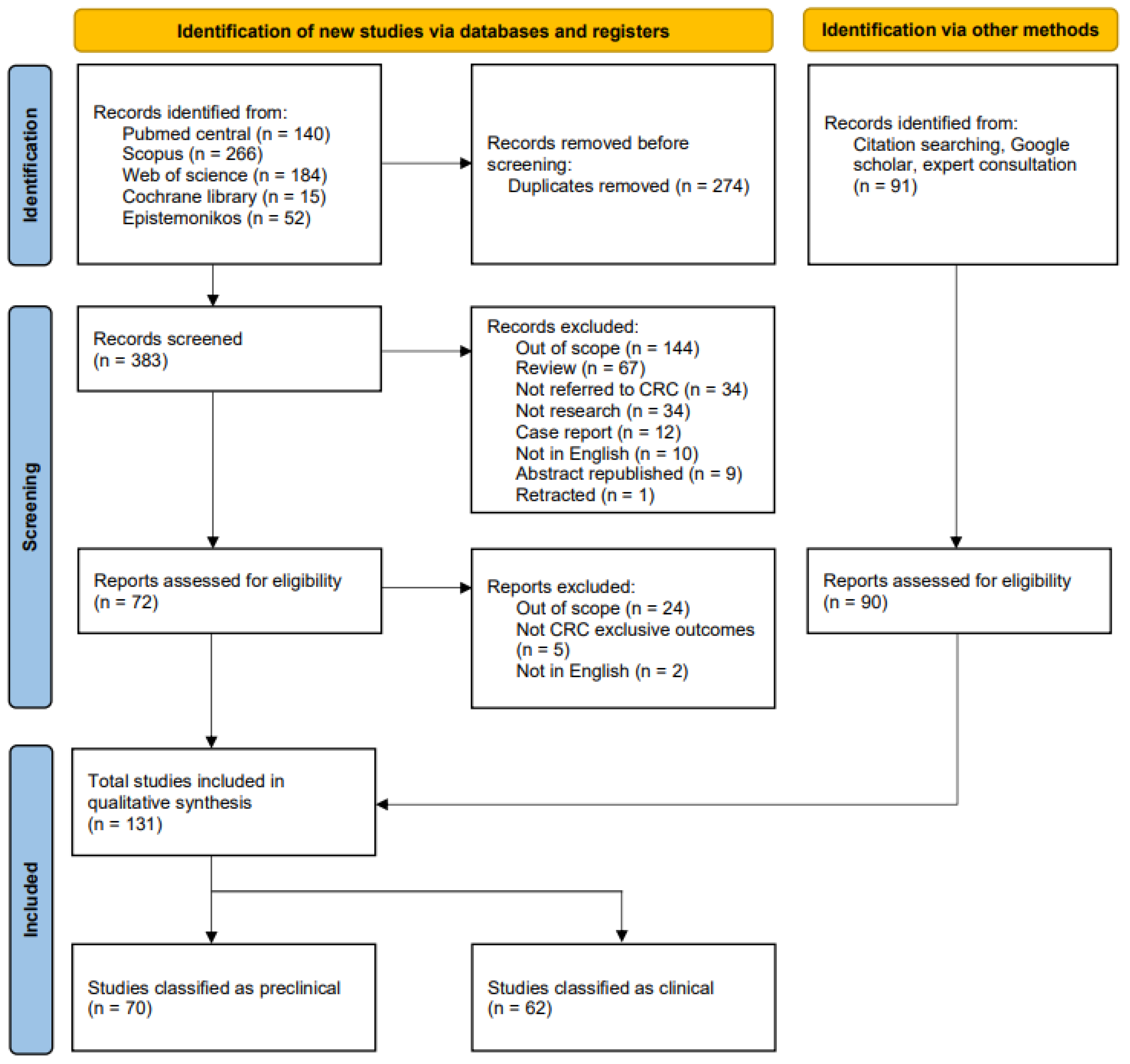
2.1. Literature Search
2.2. Review and Synthesis
3. Results
3.1. Preclinical Studies
3.1.1. X-Rays vs. Particle Therapies
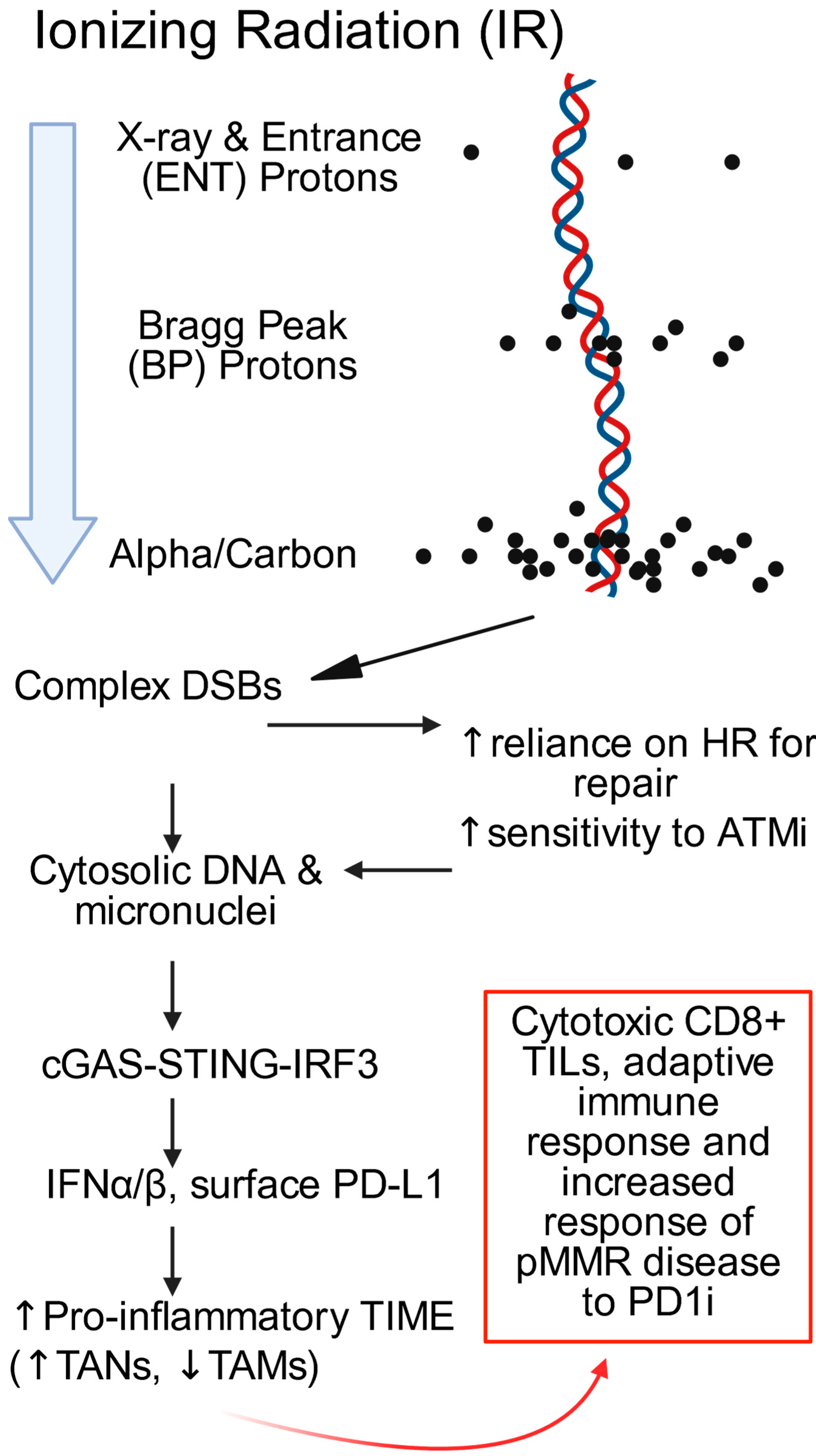
DNA Damage Response in XRT vs. Particle Radiation
Immune Stimulation XRT vs. Particle Radiation
3.1.2. Immune Checkpoint Inhibitors (ICIs) with Radiotherapy
Comparing ICI Classes for Optimal Combination Therapy with IR
PD-1/PD-L1 Checkpoint Inhibitors
CTLA-4 Checkpoint Inhibitors
Dual Checkpoint Inhibition
Other ICI Targets/Immunomodulators
Optimal Timing and Sequencing of IR and ICI
Optimal Radiation Dose and Fractionation for Combination with ICI
3.1.3. DDRi Radiosensitization
Radiosensitization of DDRi Combined with Particle Radiation vs. XRT
Radiosensitization Across Different Classes of DDRi
Inhibitors of DNA-PK, ATM, ATR, and PARP
Other DDRi Classes
Normal Tissue Toxicity with IR+DDRi
3.1.4. Triple Combination Therapy of IR+DDRi+ICI
Efficacy and Mechanisms of Immune Priming with IR+DDRi
3.1.5. Diffusing Alpha-Emitters Radiation Therapy (DaRT)
4. Discussion
5. Conclusions
Supplementary Materials
Author Contributions
Funding
Institutional Review Board Statement
Informed Consent Statement
Data Availability Statement
Conflicts of Interest
References
- Bray, F.; Laversanne, M.; Sung, H.; Ferlay, J.; Siegel, R.L.; Soerjomataram, I.; Jemal, A. Global cancer statistics 2022: GLOBOCAN estimates of incidence and mortality worldwide for 36 cancers in 185 countries. CA Cancer J. Clin. 2024, 74, 229–263. [Google Scholar] [CrossRef] [PubMed]
- Du, M.; Drew, D.A.; Goncalves, M.D.; Cao, Y.; Chan, A.T. Early-onset colorectal cancer as an emerging disease of metabolic dysregulation. Nat. Rev. Endocrinol. 2025, 21, 686–702. [Google Scholar] [CrossRef] [PubMed]
- van Geffen, E.G.M.; Hogewoning, C.R.C.; Hazen, S.J.A.; Sluckin, T.C.; Lange, M.M.; Snaebjornsson, P.; Beets-Tan, R.G.H.; Marijnen, C.A.M.; Verhoef, C.; Chalabi, M.; et al. Incidence and Outcomes of Patients with Mismatch Repair Deficient Rectal Cancer Operated in 2016: A Nationwide Cohort from The Netherlands. Clin. Color. Cancer 2025, 24, 188–197.e1. [Google Scholar] [CrossRef] [PubMed]
- Williams, C.J.M.; Peddle, A.M.; Kasi, P.M.; Seligmann, J.F.; Roxburgh, C.S.; Middleton, G.W.; Tejpar, S. Neoadjuvant immunotherapy for dMMR and pMMR colorectal cancers: Therapeutic strategies and putative biomarkers of response. Nat. Rev. Clin. Oncol. 2024, 21, 839–851. [Google Scholar] [CrossRef]
- NCCN. NCCN Clinical Practice Guidelines in Oncology (NCCN Guidelines) for Rectal Cancer V.3.2025 NCCN.Org; National Comprehensive Cancer Network: Plymouth Meeting, PA, USA, 2025. [Google Scholar]
- Anker, C.J.; Tchelebi, L.T.; Selfridge, J.E.; Jabbour, S.K.; Akselrod, D.; Cataldo, P.; Abood, G.; Berlin, J.; Hallemeier, C.L.; Jethwa, K.R.; et al. Executive Summary of the American Radium Society on Appropriate Use Criteria for Nonoperative Management of Rectal Adenocarcinoma: Systematic Review and Guidelines. Int. J. Radiat. Oncol. Biol. Phys. 2024, 120, 946–977. [Google Scholar] [CrossRef]
- Rummel, K.A.; Sutton, E.A.; Hallemeier, C.L.; Merrell, K.W.; Callaghan, C.M.; Haddock, M.G.; Waddle, M.R.; Jethwa, K.R. Non-Operative Management of Rectal or Anal Canal Adenocarcinoma: National Cancer Database Analysis of the Impact of Disease, Treatment, and Social Determinants of Health on Overall Survival. Int. J. Radiat. Oncol. Biol. Phys. 2023, 117, e336. [Google Scholar] [CrossRef]
- Ganesh, K.; Stadler, Z.K.; Cercek, A.; Mendelsohn, R.B.; Shia, J.; Segal, N.H.; Diaz, L.A., Jr. Immunotherapy in colorectal cancer: Rationale, challenges and potential. Nat. Rev. Gastroenterol. Hepatol. 2019, 16, 361–375. [Google Scholar] [CrossRef]
- O’Connor, M.J. Targeting the DNA Damage Response in Cancer. Mol. Cell 2015, 60, 547–560. [Google Scholar] [CrossRef]
- Amodio, V.; Vitiello, P.P.; Bardelli, A.; Germano, G. DNA repair-dependent immunogenic liabilities in colorectal cancer: Opportunities from errors. Br. J. Cancer 2024, 131, 1576–1590. [Google Scholar] [CrossRef]
- Le, D.T.; Uram, J.N.; Wang, H.; Bartlett, B.R.; Kemberling, H.; Eyring, A.D.; Skora, A.D.; Luber, B.S.; Azad, N.S.; Laheru, D.; et al. PD-1 Blockade in Tumors with Mismatch-Repair Deficiency. N. Engl. J. Med. 2015, 372, 2509–2520. [Google Scholar] [CrossRef]
- Cercek, A.; Bachet, J.B.; Capdevila, J.; Starling, N.; Chen, E.; Salvatore, L.; Bando, H.; O’Donnell, S.; Harfst, L.; Szijgyarto, Z.; et al. A Phase Two, Single-Arm, Open-Label Study with Dostarlimab Monotherapy in Participants with Untreated Stage II/III dMMR/MSI-H Locally Advanced Rectal Cancer (AZUR-1). Clin. Color. Cancer 2025, 24, 325–330. [Google Scholar] [CrossRef]
- Concannon, K.; Morris, B.B.; Gay, C.M.; Byers, L.A. Combining targeted DNA repair inhibition and immune-oncology approaches for enhanced tumor control. Mol. Cell 2023, 83, 660–680. [Google Scholar] [CrossRef]
- Zhang, Q.; Jiang, L.; Wang, W.; Huber, A.K.; Valvo, V.M.; Jungles, K.M.; Holcomb, E.A.; Pearson, A.N.; The, S.; Wang, Z.; et al. Potentiating the radiation-induced type I interferon antitumoral immune response by ATM inhibition in pancreatic cancer. JCI Insight 2024, 9, e168824. [Google Scholar] [CrossRef] [PubMed]
- Nikitaki, Z.; Velalopoulou, A.; Zanni, V.; Tremi, I.; Havaki, S.; Kokkoris, M.; Gorgoulis, V.G.; Koumenis, C.; Georgakilas, A.G. Key biological mechanisms involved in high-LET radiation therapies with a focus on DNA damage and repair. Expert Rev. Mol. Med. 2022, 24, e15. [Google Scholar] [CrossRef] [PubMed]
- Zhang, J.; Si, J.; Gan, L.; Zhou, R.; Guo, M.; Zhang, H. Harnessing the targeting potential of differential radiobiological effects of photon versus particle radiation for cancer treatment. J. Cell. Physiol. 2021, 236, 1695–1711. [Google Scholar] [CrossRef] [PubMed]
- Zhou, Q.; Howard, M.E.; Tu, X.; Zhu, Q.; Denbeigh, J.M.; Remmes, N.B.; Herman, M.G.; Beltran, C.J.; Yuan, J.; Greipp, P.T.; et al. Inhibition of ATM Induces Hypersensitivity to Proton Irradiation by Upregulating Toxic End Joining. Cancer Res. 2021, 81, 3333–3346. [Google Scholar] [CrossRef]
- Huang, R.-X.; Zhou, P.-K. DNA damage response signaling pathways and targets for radiotherapy sensitization in cancer. Signal Transduct. Target. Ther. 2020, 5, 60. [Google Scholar] [CrossRef]
- Bright, S.J.; Flint, D.B.; Martinus, D.K.J.; Turner, B.X.; Manandhar, M.; Ben Kacem, M.; McFadden, C.H.; Yap, T.A.; Shaitelman, S.F.; Sawakuchi, G.O. Targeted Inhibition of DNA-PKcs, ATM, ATR, PARP, and Rad51 Modulate Response to X Rays and Protons. Radiat. Res. 2022, 198, 336–346. [Google Scholar] [CrossRef]
- Du, J.; Kageyama, S.I.; Hirata, H.; Motegi, A.; Nakamura, M.; Hirano, Y.; Okumura, M.; Yamashita, R.; Tsuchihara, K.; Hojo, H.; et al. Comparative analysis of the immune responses in cancer cells irradiated with X-ray, proton and carbon-ion beams. Biochem. Biophys. Res. Commun. 2021, 585, 55–60. [Google Scholar] [CrossRef]
- Schiavo, J.H. PROSPERO: An International Register of Systematic Review Protocols. Med. Ref. Serv. Q. 2019, 38, 171–180. [Google Scholar] [CrossRef]
- Flint, D.B.; Ruff, C.E.; Bright, S.J.; Yepes, P.; Wang, Q.; Manandhar, M.; Ben Kacem, M.; Turner, B.X.; Martinus, D.K.J.; Shaitelman, S.F.; et al. An empirical model of proton RBE based on the linear correlation between x-ray and proton radiosensitivity. Med. Phys. 2022, 49, 6221–6236. [Google Scholar] [CrossRef]
- Zafar, F.; Seidler, S.B.; Kronenberg, A.; Schild, D.; Wiese, C. Homologous recombination contributes to the repair of DNA double-strand breaks induced by high-energy iron ions. Radiat. Res. 2010, 173, 27–39. [Google Scholar] [CrossRef] [PubMed]
- Suetens, A.; Konings, K.; Moreels, M.; Quintens, R.; Verslegers, M.; Soors, E.; Tabury, K.; Grégoire, V.; Baatout, S. Higher Initial DNA Damage and Persistent Cell Cycle Arrest after Carbon Ion Irradiation Compared to X-irradiation in Prostate and Colon Cancer Cells. Front. Oncol. 2016, 6, 87. [Google Scholar] [CrossRef] [PubMed]
- Pape, K.; Lossner, A.J.; William, D.; Czempiel, T.; Beyreuther, E.; Klimova, A.; Lehmann, C.; Schmache, T.; Merker, S.R.; Naumann, M.; et al. Sensitization of Patient-Derived Colorectal Cancer Organoids to Photon and Proton Radiation by Targeting DNA Damage Response Mechanisms. Cancers 2022, 14, 4984. [Google Scholar] [CrossRef] [PubMed]
- Ma, J.; Dragojevic, S.; Remmes, N.B.; Mendelson, N.L.; Kloeber, J.A.; Ebner, D.K.; Wu, Z.; Gunn, H.J.; Merrell, K.W.; Hallemeier, C.L.; et al. Linear energy transfer optimized proton therapy for rectal cancer. Radiother. Oncol. 2025, 207, 110850. [Google Scholar] [CrossRef]
- Keisari, Y.; Kelson, I. The Potentiation of Anti-Tumor Immunity by Tumor Abolition with Alpha Particles, Protons, or Carbon Ion Radiation and Its Enforcement by Combination with Immunoadjuvants or Inhibitors of Immune Suppressor Cells and Checkpoint Molecules. Cells 2021, 10, 228. [Google Scholar] [CrossRef]
- Burckel, H.; Nicol, A.; Mura, C.; Rousseau, M.; Bou-Gharios, J.; Froidurot, L.; Richard, C.; Morgand, V.; Laurent, P.A.; Limagne, E.; et al. Distinct immune responses to proton and photon radiotherapy: Implications for anti-PD-L1 combination therapy in colorectal cancer. J. Transl. Med. 2025, 23, 360. [Google Scholar] [CrossRef]
- Mirjolet, C.; Nicol, A.; Limagne, E.; Mura, C.; Richard, C.; Morgand, V.; Rousseau, M.; Boidot, R.; Ghiringhelli, F.; Noel, G.; et al. Impact of proton therapy on antitumor immune response. Sci. Rep. 2021, 11, 13444. [Google Scholar] [CrossRef]
- Hsieh, R.C.; Krishnan, S.; Wu, R.C.; Boda, A.R.; Liu, A.; Winkler, M.; Hsu, W.H.; Lin, S.H.; Hung, M.C.; Chan, L.C.; et al. ATR-mediated CD47 and PD-L1 up-regulation restricts radiotherapy-induced immune priming and abscopal responses in colorectal cancer. Sci. Immunol. 2022, 7, eabl9330. [Google Scholar] [CrossRef]
- Mahadevan, L.S.K.; Sahoo, N.; Aliru, M.L.; Krishnan, S. Dependence of Immunogenic Modulation of Tumor Cells by Proton Radiation on the Linear Energy Transfer. Int. J. Radiat. Oncol. Biol. Phys. 2017, 99, E607. [Google Scholar] [CrossRef]
- Ma, L.; Sakamoto, Y.; Ando, K.; Fujita, H.; Takahashi, A.; Takeshima, T.; Otsuka, H.; Ebner, D.K.; Kakimi, K.; Imai, T.; et al. Th Balance-Related Host Genetic Background Affects the Therapeutic Effects of Combining Carbon-Ion Radiation Therapy with Dendritic Cell Immunotherapy. Int. J. Radiat. Oncol. Biol. Phys. 2022, 112, 780–789. [Google Scholar] [CrossRef] [PubMed]
- Dovedi, S.J.; Cheadle, E.J.; Popple, A.L.; Poon, E.; Morrow, M.; Stewart, R.; Yusko, E.C.; Sanders, C.M.; Vignali, M.; Emerson, R.O.; et al. Fractionated Radiation Therapy Stimulates Antitumor Immunity Mediated by Both Resident and Infiltrating Polyclonal T-cell Populations when Combined with PD-1 Blockade. Clin. Cancer Res. 2017, 23, 5514–5526. [Google Scholar] [CrossRef] [PubMed]
- Dovedi, S.J.; Adlard, A.L.; Lipowska-Bhalla, G.; McKenna, C.; Jones, S.; Cheadle, E.J.; Stratford, I.J.; Poon, E.; Morrow, M.; Stewart, R.; et al. Acquired Resistance to Fractionated Radiotherapy Can Be Overcome by Concurrent PD-L1 Blockade. Cancer Res. 2014, 74, 5458–5468. [Google Scholar] [CrossRef] [PubMed]
- Crittenden, M.R.; Zebertavage, L.; Kramer, G.; Bambina, S.; Friedman, D.; Troesch, V.; Blair, T.; Baird, J.R.; Alice, A.; Gough, M.J.; et al. Tumor cure by radiation therapy and checkpoint inhibitors depends on pre-existing immunity. Sci. Rep. 2018, 8, 7012. [Google Scholar] [CrossRef]
- Ma, L.; Li, Y.; Sakamoto, Y.; Xie, L.; Suzuki, S.; Yoshida, Y.; Sui, L.; Guo, G.; Wen, J.; Ren, W.; et al. Optimal radiation dose to induce an abscopal effect by combining carbon-ion radiotherapy and anti-CTLA4 antibody. Neoplasia 2025, 60, 101099. [Google Scholar] [CrossRef]
- Sato, Y.; Fu, Y.; Liu, H.; Lee, M.Y.; Shaw, M.H. Tumor-immune profiling of CT-26 and Colon 26 syngeneic mouse models reveals mechanism of anti-PD-1 response. BMC Cancer 2021, 21, 1222. [Google Scholar] [CrossRef]
- Ieranò, C.; Righelli, D.; D’Alterio, C.; Napolitano, M.; Portella, L.; Rea, G.; Auletta, F.; Santagata, S.; Trotta, A.M.; Guardascione, G.; et al. In PD-1+ human colon cancer cells NIVOLUMAB promotes survival and could protect tumor cells from conventional therapies. J. Immunother. Cancer 2022, 10, e004032. [Google Scholar] [CrossRef]
- Luo, R.; Firat, E.; Gaedicke, S.; Guffart, E.; Watanabe, T.; Niedermann, G. Cisplatin Facilitates Radiation-Induced Abscopal Effects in Conjunction with PD-1 Checkpoint Blockade Through CXCR3/CXCL10-Mediated T-cell Recruitment. Clin. Cancer Res. 2019, 25, 7243–7255. [Google Scholar] [CrossRef]
- Wu, Y.; Yan, Y.; Guo, Y.; Niu, M.; Zhou, B.; Zhang, J.; Zhou, P.; Chu, Q.; Mei, Q.; Yi, M.; et al. Anti-TGF-β/PD-L1 bispecific antibody synergizes with radiotherapy to enhance antitumor immunity and mitigate radiation-induced pulmonary fibrosis. J. Hematol. Oncol. 2025, 18, 24. [Google Scholar] [CrossRef]
- Wang, S.; Xu, D.; Wang, Y.; Zhou, Y.; Xiao, L.; Li, F.; Tu, J.; Qin, W.; Tian, S.; Zheng, B.; et al. A Bifunctional Antibody Targeting PD-1 and TGF-β Signaling Has Antitumor Activity in Combination with Radiotherapy and Attenuates Radiation-Induced Lung Injury. Cancer Immunol. Res. 2025, 13, 767–784. [Google Scholar] [CrossRef]
- Guan, X.; Sun, L.; Shen, Y.; Jin, F.; Bo, X.; Zhu, C.; Han, X.; Li, X.; Chen, Y.; Xu, H.; et al. Nanoparticle-enhanced radiotherapy synergizes with PD-L1 blockade to limit post-surgical cancer recurrence and metastasis. Nat. Commun. 2022, 13, 2834. [Google Scholar] [CrossRef]
- Pimentel, V.O.; Marcus, D.; Wiel, A.M.v.d.; Lieuwes, N.G.; Biemans, R.; Lieverse, R.I.; Neri, D.; Theys, J.; Yaromina, A.; Dubois, L.J.; et al. Releasing the brakes of tumor immunity with anti-PD-L1 and pushing its accelerator with L19–IL2 cures poorly immunogenic tumors when combined with radiotherapy. J. Immunother. Cancer 2021, 9, e001764. [Google Scholar] [CrossRef] [PubMed]
- Pierini, S.; Mishra, A.; Perales-Linares, R.; Uribe-Herranz, M.; Beghi, S.; Giglio, A.; Pustylnikov, S.; Costabile, F.; Rafail, S.; Amici, A.; et al. Combination of vasculature targeting, hypofractionated radiotherapy, and immune checkpoint inhibitor elicits potent antitumor immune response and blocks tumor progression. J. Immunother. Cancer 2021, 9, e001636. [Google Scholar] [CrossRef] [PubMed]
- Wang, L.; Zhang, T.; Zheng, Y.; Li, Y.; Tang, X.; Chen, Q.; Mao, W.; Li, W.; Liu, X.; Zhu, J. Combination of irinotecan silicasome nanoparticles with radiation therapy sensitizes immunotherapy by modulating the activation of the cGAS/STING pathway for colorectal cancer. Mater. Today Bio 2023, 23, 100809. [Google Scholar] [CrossRef] [PubMed]
- Ni, K.; Lan, G.; Chan, C.; Quigley, B.; Lu, K.; Aung, T.; Guo, N.; La Riviere, P.; Weichselbaum, R.R.; Lin, W.; et al. Nanoscale metal-organic frameworks enhance radiotherapy to potentiate checkpoint blockade immunotherapy. Nat. Commun. 2018, 9, 2351. [Google Scholar] [CrossRef]
- Ni, K.; Luo, T.; Culbert, A.; Kaufmann, M.; Jiang, X.; Lin, W. Nanoscale Metal-Organic Framework Co-delivers TLR-7 Agonists and Anti-CD47 Antibodies to Modulate Macrophages and Orchestrate Cancer Immunotherapy. J. Am. Chem. Soc. 2020, 142, 12579–12584. [Google Scholar] [CrossRef]
- Meng, L.; Cheng, Y.; Tong, X.; Gan, S.; Ding, Y.; Zhang, Y.; Wang, C.; Xu, L.; Zhu, Y.; Wu, J.; et al. Tumor Oxygenation and Hypoxia Inducible Factor-1 Functional Inhibition via a Reactive Oxygen Species Responsive Nanoplatform for Enhancing Radiation Therapy and Abscopal Effects. ACS Nano 2018, 12, 8308–8322. [Google Scholar] [CrossRef]
- Shen, W.; Pei, P.; Zhang, C.; Li, J.; Han, X.; Liu, T.; Shi, X.; Su, Z.; Han, G.; Hu, L.; et al. A Polymeric Hydrogel to Eliminate Programmed Death-Ligand 1 for Enhanced Tumor Radio-Immunotherapy. ACS Nano 2023, 17, 23998–24011. [Google Scholar] [CrossRef]
- Wang, W.; Xu, H.; Ye, Q.; Tao, F.; Wheeldon, I.; Yuan, A.; Hu, Y.; Wu, J. Systemic immune responses to irradiated tumours via the transport of antigens to the tumour periphery by injected flagellate bacteria. Nat. Biomed. Eng. 2022, 6, 44–53. [Google Scholar] [CrossRef]
- Young, K.H.; Baird, J.R.; Savage, T.; Cottam, B.; Friedman, D.; Bambina, S.; Messenheimer, D.J.; Fox, B.; Newell, P.; Bahjat, K.S.; et al. Optimizing Timing of Immunotherapy Improves Control of Tumors by Hypofractionated Radiation Therapy. PLoS ONE 2016, 11, e0157164. [Google Scholar] [CrossRef]
- Rakhmilevich, A.L.; Tsarovsky, N.W.; Felder, M.; Zaborek, J.; Moram, S.; Erbe, A.K.; Pieper, A.A.; Spiegelman, D.V.; Cheng, E.M.; Witt, C.M.; et al. A combined radio-immunotherapy regimen eradicates late-stage tumors in mice. Front. Immunol. 2024, 15, 1419773. [Google Scholar] [CrossRef] [PubMed]
- Chen, Q.; Chen, J.; Yang, Z.; Xu, J.; Xu, L.; Liang, C.; Han, X.; Liu, Z. Nanoparticle-Enhanced Radiotherapy to Trigger Robust Cancer Immunotherapy. Adv. Mater. 2019, 31, e1802228. [Google Scholar] [CrossRef] [PubMed]
- Grapin, M.; Richard, C.; Limagne, E.; Boidot, R.; Morgand, V.; Bertaut, A.; Derangere, V.; Laurent, P.-A.; Thibaudin, M.; Fumet, J.D.; et al. Optimized fractionated radiotherapy with anti-PD-L1 and anti-TIGIT: A promising new combination. J. Immunother. Cancer 2019, 7, 160. [Google Scholar] [CrossRef] [PubMed]
- Lauret Marie Joseph, E.; Kirilovsky, A.; Lecoester, B.; El Sissy, C.; Boullerot, L.; Rangan, L.; Marguier, A.; Tochet, F.; Dosset, M.; Boustani, J.; et al. Chemoradiation triggers antitumor Th1 and tissue resident memory-polarized immune responses to improve immune checkpoint inhibitors therapy. J. Immunother. Cancer 2021, 9, e002256. [Google Scholar] [CrossRef]
- Blair, T.; Baird, J.; Bambina, S.; Kramer, G.; Gostissa, M.; Harvey, C.J.; Gough, M.J.; Crittenden, M.R. ICOS is upregulated on T cells following radiation and agonism combined with radiation results in enhanced tumor control. Sci. Rep. 2022, 12, 14954. [Google Scholar] [CrossRef]
- Ke, T.W.; Chen, C.Y.; Chen, W.T.; Tsai, Y.Y.; Chiang, S.F.; Huang, C.H.; Lin, Y.S.; Chen, T.H.; Chen, T.W.; Liang, J.A.; et al. Targeting B7-H3 enhances the efficacy of neoantigen-based cancer vaccine in combination with radiotherapy. NPJ Vaccines 2025, 10, 80. [Google Scholar] [CrossRef]
- An, R.; Wu, C.; Tang, C.; Zhang, C.; Han, F.; Xu, Z.; Zou, Y.; Wang, J.; Yuan, Z.; Jiang, S.; et al. Blockade of CD73 potentiates radiotherapy antitumor immunity and abscopal effects via STING pathway. Cell Death Discov. 2024, 10, 404. [Google Scholar] [CrossRef]
- Tsukui, H.; Horie, H.; Koinuma, K.; Ohzawa, H.; Sakuma, Y.; Hosoya, Y.; Yamaguchi, H.; Yoshimura, K.; Lefor, A.K.; Sata, N.; et al. CD73 blockade enhances the local and abscopal effects of radiotherapy in a murine rectal cancer model. BMC Cancer 2020, 20, 411. [Google Scholar] [CrossRef]
- Wang, H.; Sun, Y.; Zhou, X.; Chen, C.; Jiao, L.; Li, W.; Gou, S.; Li, Y.; Du, J.; Chen, G.; et al. CD47/SIRPα blocking peptide identification and synergistic effect with irradiation for cancer immunotherapy. J. Immunother. Cancer 2020, 8, e000905. [Google Scholar] [CrossRef]
- Frankish, J.; Mukherjee, D.; Romano, E.; Billian-Frey, K.; Schroder, M.; Heinonen, K.; Merz, C.; Redondo Muller, M.; Gieffers, C.; Hill, O.; et al. The CD40 agonist HERA-CD40L results in enhanced activation of antigen presenting cells, promoting an anti-tumor effect alone and in combination with radiotherapy. Front. Immunol. 2023, 14, 1160116. [Google Scholar] [CrossRef]
- Ghaffari-Nazari, H.; Alimohammadi, M.; Alimohammadi, R.; Rostami, E.; Bakhshandeh, M.; Webster, T.J.; Chalbatani, G.M.; Tavakkol-Afshari, J.; Jalali, S.A. Radiation dose and schedule influence the abscopal effect in a bilateral murine CT26 tumor model. Int. Immunopharmacol. 2022, 108, 108737. [Google Scholar] [CrossRef]
- Witek, M.; Blomain, E.; Magee, M.S.; Xiang, B.; Waldman, S.A.; Snook, A.E. Tumor Radiation Therapy Creates Therapeutic Vaccine Responses to the Colorectal Cancer Antigen GUCY2C. Int. J. Radiat. Oncol. Biol. Phys. 2014, 88, 1188–1195. [Google Scholar] [CrossRef] [PubMed][Green Version]
- Lee, S.S.; Pagacz, J.; Averbek, S.; Scholten, D.; Liu, Y.; Kron, S.J. Timing Anti-PD-L1 Checkpoint Blockade Immunotherapy to Enhance Tumor Irradiation. Cancers 2025, 17, 391. [Google Scholar] [CrossRef] [PubMed]
- Boustani, J.; Lecoester, B.; Baude, J.; Latour, C.; Limagne, E.; Ladjohoulou, R.; Morgand, V.; Froidurot, L.; Ghiringhelli, F.; Truc, G.; et al. Targeting two radiation-induced immunosuppressive pathways to improve the efficacy of normofractionated radiation therapy in a preclinical colorectal cancer model. Int. J. Radiat. Biol. 2024, 100, 912–921. [Google Scholar] [CrossRef] [PubMed]
- Alinezhad, M.; Bakhshandeh, M.; Rostami, E.; Alimohamadi, R.; Mosaffa, N.; Jalali, S.A. Synergistic effects of anti-PDL-1 with ablative radiation comparing to other regimens with same biological effect dose based on different immunogenic response. PLoS ONE 2020, 15, e0231507. [Google Scholar] [CrossRef]
- Bergeron, P.; Dos Santos, M.; Sitterle, L.; Tarlet, G.; Lavigne, J.; Liu, W.; Gerbe de Thore, M.; Clemenson, C.; Meziani, L.; Schott, C.; et al. Non-homogenous intratumor ionizing radiation doses synergize with PD1 and CXCR2 blockade. Nat. Commun. 2024, 15, 8845. [Google Scholar] [CrossRef]
- Han, Y.; Zhou, Q.; Dibbs, A.; Chen, B.; Weiskittel, T.; Remmes, N.; Wu, Z.; Ebner, D.; Kloeber, J.; Callaghan, C.; et al. Poly ADP Ribose Polymerase Inhibitors Potentiate Proton Therapy End-of-Range Effects by Accelerating Replication Forks and Promoting Transcription Conflict. Int. J. Radiat. Oncol. Biol. Phys. 2025, 124, 451–464. [Google Scholar] [CrossRef]
- Callaghan, C.M.; Abukhiran, I.M.; Masaadeh, A.; Van Rheeden, R.V.; Kalen, A.L.; Rodman, S.N.; Petronek, M.S.; Mapuskar, K.A.; George, B.N.; Coleman, M.C.; et al. Manipulation of Redox Metabolism using Pharmacologic Ascorbate Opens a Therapeutic Window for Radio-sensitization by ATM Inhibitors in Colorectal Cancer. Int. J. Radiat. Oncol. Biol. Phys. 2022, 115, 933–944. [Google Scholar] [CrossRef]
- Seyedin, S.N.; Hasibuzzaman, M.M.; Pham, V.; Petronek, M.S.; Callaghan, C.; Kalen, A.L.; Mapuskar, K.A.; Mott, S.L.; Spitz, D.R.; Allen, B.G.; et al. Combination Therapy with Radiation and PARP Inhibition Enhances Responsiveness to Anti-PD-1 Therapy in Colorectal Tumor Models. Int. J. Radiat. Oncol. Biol. Phys. 2020, 108, 81–92. [Google Scholar] [CrossRef]
- Sun, Q.; Guo, Y.; Liu, X.; Czauderna, F.; Carr, M.I.; Zenke, F.T.; Blaukat, A.; Vassilev, L.T. Therapeutic Implications of p53 Status on Cancer Cell Fate Following Exposure to Ionizing Radiation and the DNA-PK Inhibitor M3814. Mol. Cancer Res. 2019, 17, 2457–2468. [Google Scholar] [CrossRef]
- Zenke, F.T.; Zimmermann, A.; Sirrenberg, C.; Dahmen, H.; Kirkin, V.; Pehl, U.; Grombacher, T.; Wilm, C.; Fuchss, T.; Amendt, C.; et al. Pharmacologic Inhibitor of DNA-PK, M3814, Potentiates Radiotherapy and Regresses Human Tumors in Mouse Models. Mol. Cancer Ther. 2020, 19, 1091–1101. [Google Scholar] [CrossRef] [PubMed]
- Nakamura, K.; Karmokar, A.; Farrington, P.M.; James, N.H.; Ramos-Montoya, A.; Bickerton, S.J.; Hughes, G.D.; Illidge, T.M.; Cadogan, E.B.; Davies, B.R.; et al. Inhibition of DNA-PK with AZD7648 Sensitizes Tumor Cells to Radiotherapy and Induces Type I IFN-Dependent Durable Tumor Control. Clin. Cancer Res. 2021, 27, 4353–4366. [Google Scholar] [CrossRef] [PubMed]
- Smithson, M.; Irwin, R.K.; Williams, G.; McLeod, M.C.; Choi, E.K.; Ganguly, A.; Pepple, A.; Cho, C.S.; Willey, C.D.; Leopold, J.; et al. Inhibition of DNA-PK may improve response to neoadjuvant chemoradiotherapy in rectal cancer. Neoplasia 2022, 25, 53–61. [Google Scholar] [CrossRef] [PubMed]
- Tang, S.; Li, Z.; Yang, L.; Shen, L.; Wang, Y. A potential new role of ATM inhibitor in radiotherapy: Suppressing ionizing Radiation-Activated EGFR. Int. J. Radiat. Biol. 2020, 96, 461–468. [Google Scholar] [CrossRef]
- Xie, Y.; Liu, Y.; Lin, M.; Li, Z.; Shen, Z.; Yin, S.; Zheng, Y.; Zou, Y.; Zhang, Y.; Zhan, Y.; et al. Targeting ATM enhances radiation sensitivity of colorectal cancer by potentiating radiation-induced cell death and antitumor immunity. J. Adv. Res. 2024, 74, 513–530. [Google Scholar] [CrossRef]
- Li, C.; Wang, B.; Tu, J.; Liu, C.; Wang, Y.; Chen, J.; Huang, Y.; Liu, B.; Yuan, X. ATM inhibition enhance immunotherapy by activating STING signaling and augmenting MHC Class I. Cell Death Dis. 2024, 15, 519. [Google Scholar] [CrossRef]
- Qin, C.; Ji, Z.; Zhai, E.; Xu, K.; Zhang, Y.; Li, Q.; Jing, H.; Wang, X.; Song, X. PARP inhibitor olaparib enhances the efficacy of radiotherapy on XRCC2-deficient colorectal cancer cells. Cell Death Dis. 2022, 13, 505. [Google Scholar] [CrossRef]
- Seo, Y.; Tamari, K.; Takahashi, Y.; Minami, K.; Tatekawa, S.; Isohashi, F.; Suzuki, O.; Akino, Y.; Ogawa, K. Poly (ADP-ribose) polymerase inhibitors sensitize cancer cells to hypofractionated radiotherapy through altered selection of DNA double-strand break repair pathways. Int. J. Radiat. Biol. 2022, 98, 1222–1234. [Google Scholar] [CrossRef]
- Ng, V.; Sinha, S.; Novaj, A.; Ma, J.; McDermott, N.; Pei, X.; Longhini, A.L.F.; Grimsley, H.; Gardner, R.; Rosen, E.; et al. Genotype-Directed Synthetic Cytotoxicity of ATR Inhibition with Radiotherapy. Clin. Cancer Res. 2024, 30, 5643–5656. [Google Scholar] [CrossRef]
- Gupta, P.; Saha, B.; Chattopadhyay, S.; Patro, B.S. Pharmacological targeting of differential DNA repair, radio-sensitizes WRN-deficient cancer cells in vitro and in vivo. Biochem. Pharmacol. 2021, 186, 114450. [Google Scholar] [CrossRef]
- Kim, H.S.; Park, J.E.; Lee, W.H.; Kwon, Y.B.; Seu, Y.B.; Kim, K.S. Novel Amidine Derivative K1586 Sensitizes Colorectal Cancer Cells to Ionizing Radiation by Inducing Chk1 Instability. Int. J. Mol. Sci. 2024, 25, 4396. [Google Scholar] [CrossRef] [PubMed]
- Pang, S.-G.; Zhang, X.; Li, Z.-X.; He, L.-F.; Chen, F.; Liu, M.-L.; Huang, Y.-Z.; Mo, J.-M.; Luo, K.-L.; Xiao, J.-J.; et al. TOPK Inhibition Enhances the Sensitivity of Colorectal Cancer Cells to Radiotherapy by Reducing the DNA Damage Response. Curr. Med. Sci. 2024, 44, 545–553. [Google Scholar] [CrossRef] [PubMed]
- Huang, M.Y.; Huang, Y.J.; Cheng, T.L.; Jhang, W.Y.; Ke, C.C.; Chen, Y.T.; Kuo, S.H.; Lin, I.L.; Huang, Y.H.; Chuang, C.H. XPF-ERCC1 Blocker Improves the Therapeutic Efficacy of 5-FU- and Oxaliplatin-Based Chemoradiotherapy in Colorectal Cancer. Cells 2023, 12, 1475. [Google Scholar] [CrossRef] [PubMed]
- Liu, C.; Wang, X.; Qin, W.; Tu, J.; Li, C.; Zhao, W.; Ma, L.; Liu, B.; Qiu, H.; Yuan, X. Combining radiation and the ATR inhibitor berzosertib activates STING signaling and enhances immunotherapy via inhibiting SHP1 function in colorectal cancer. Cancer Commun. 2023, 43, 435–454. [Google Scholar] [CrossRef]
- Vendetti, F.P.; Pandya, P.; Clump, D.A.; Schamus-Haynes, S.; Tavakoli, M.; diMayorca, M.; Islam, N.M.; Chang, J.; Delgoffe, G.M.; Beumer, J.H.; et al. The schedule of ATR inhibitor AZD6738 can potentiate or abolish antitumor immune responses to radiotherapy. JCI Insight 2023, 8, e165615. [Google Scholar] [CrossRef]
- Keisari, Y.; Hochman, I.; Confino, H.; Korenstein, R.; Kelson, I. Activation of local and systemic anti-tumor immune responses by ablation of solid tumors with intratumoral electrochemical or alpha radiation treatments. Cancer Immunol. Immunother. 2014, 63, 1–9. [Google Scholar] [CrossRef]
- Confino, H.; Hochman, I.; Efrati, M.; Schmidt, M.; Umansky, V.; Kelson, I.; Keisari, Y. Tumor ablation by intratumoral Ra-224-loaded wires induces anti-tumor immunity against experimental metastatic tumors. Cancer Immunol. Immunother. 2015, 64, 191–199. [Google Scholar] [CrossRef]
- Reitkopf-Brodutch, S.; Confino, H.; Schmidt, M.; Cooks, T.; Efrati, M.; Arazi, L.; Rath-Wolfson, L.; Marshak, G.; Kelson, I.; Keisari, Y. Ablation of experimental colon cancer by intratumoral 224Radium-loaded wires is mediated by alpha particles released from atoms which spread in the tumor and can be augmented by chemotherapy. Int. J. Radiat. Biol. 2015, 91, 179–186. [Google Scholar] [CrossRef]
- Domankevich, V.; Cohen, A.; Efrati, M.; Schmidt, M.; Rammensee, H.G.; Nair, S.S.; Tewari, A.; Kelson, I.; Keisari, Y. Combining alpha radiation-based brachytherapy with immunomodulators promotes complete tumor regression in mice via tumor-specific long-term immune response. Cancer Immunol. Immunother. 2019, 68, 1949–1958. [Google Scholar] [CrossRef]
- Michaeli, O.; Luz, I.; Vatarescu, M.; Manko, T.; Weizman, N.; Korotinsky, Y.; Tsitrina, A.; Braiman, A.; Arazi, L.; Cooks, T. APR-246 as a radiosensitization strategy for mutant p53 cancers treated with alpha-particles-based radiotherapy. Cell Death Dis. 2024, 15, 426. [Google Scholar] [CrossRef]
- Suetens, A.; Moreels, M.; Quintens, R.; Soors, E.; Buset, J.; Chiriotti, S.; Tabury, K.; Gregoire, V.; Baatout, S. Dose- and time-dependent gene expression alterations in prostate and colon cancer cells after in vitro exposure to carbon ion and X-irradiation. J. Radiat. Res. 2015, 56, 11–21. [Google Scholar] [CrossRef]


| Subclass (IR, DDRi, and ICI Class/ Target) | Potential Biomarker/End | |
|---|---|---|
| Particle/ High-LET IR | CIRT | Cell lines with loss of function of p53 were relatively radioresistant to X-rays but not CIRT [24]. |
| CIRT | Cells with more intrinsic radioresistance may benefit more from CIRT compared to XRT that intrinsically radiosensitive lines (no specific marker) [92]. | |
| DaRT—alpha | p53 loss-of-function mutations were sensitive to alpha radiation and even more radiosensitized with APR-246 (a p53 reactivating compound) [91]. | |
| DDRi | PARPi | XRCC2-deficient cells were especially radiosensitized by olaparib [78]. |
| ATRi | ATM-deficient cells were more radiosensitized with the addition of ATRi than ATM wild types [80]. | |
| ATMi | Radioresistant CRC patient-derived organoids (PDOs) did not benefit from the addition of 5-FU to XRT but were radiosensitized with ATMi [25]. | |
| ICI | αCTLA-4 | CT26 models required pre-existing CD8+ T-cell immunity to achieve tumor cures, underscoring the necessity of an established adaptive immune response when treated with XRT (20 Gy × 1) with αCTLA-4 in CT26 models [35]. |
| αPD-1 | One study examined the effects of ICI alone and found that CT26 was responsive to αPD-1 monotherapy, but Colon-26 was not, potentially due to higher Wnt pathway signaling in Colon-26, while both were responsive to αCTLA-4 [37]. |
Disclaimer/Publisher’s Note: The statements, opinions and data contained in all publications are solely those of the individual author(s) and contributor(s) and not of MDPI and/or the editor(s). MDPI and/or the editor(s) disclaim responsibility for any injury to people or property resulting from any ideas, methods, instructions or products referred to in the content. |
© 2026 by the authors. Licensee MDPI, Basel, Switzerland. This article is an open access article distributed under the terms and conditions of the Creative Commons Attribution (CC BY) license.
Share and Cite
Salazar-Vilches, C.J.; Ebner, D.K.; Kloeber, J.A.; Dragojevic, S.; Singh, J.; Haddock, M.; Sharifzadeh, Y.; Sherry, A.D.; Jethwa, K.R.; Hallemeier, C.L.; et al. Increasing the Response of Mismatch Repair Proficient Rectal Cancer to Immunotherapy with Particle Radiation and DNA Damage Response Inhibitors—Preclinical Evidence. Cancers 2026, 18, 682. https://doi.org/10.3390/cancers18040682
Salazar-Vilches CJ, Ebner DK, Kloeber JA, Dragojevic S, Singh J, Haddock M, Sharifzadeh Y, Sherry AD, Jethwa KR, Hallemeier CL, et al. Increasing the Response of Mismatch Repair Proficient Rectal Cancer to Immunotherapy with Particle Radiation and DNA Damage Response Inhibitors—Preclinical Evidence. Cancers. 2026; 18(4):682. https://doi.org/10.3390/cancers18040682
Chicago/Turabian StyleSalazar-Vilches, Cristian J., Daniel K. Ebner, Jake A. Kloeber, Sonja Dragojevic, Jasvinder Singh, Michael Haddock, Yasamin Sharifzadeh, Alexander D. Sherry, Krishan R. Jethwa, Christopher L. Hallemeier, and et al. 2026. "Increasing the Response of Mismatch Repair Proficient Rectal Cancer to Immunotherapy with Particle Radiation and DNA Damage Response Inhibitors—Preclinical Evidence" Cancers 18, no. 4: 682. https://doi.org/10.3390/cancers18040682
APA StyleSalazar-Vilches, C. J., Ebner, D. K., Kloeber, J. A., Dragojevic, S., Singh, J., Haddock, M., Sharifzadeh, Y., Sherry, A. D., Jethwa, K. R., Hallemeier, C. L., Merrell, K. W., Mutter, R. W., Lou, Z., & Callaghan, C. M. (2026). Increasing the Response of Mismatch Repair Proficient Rectal Cancer to Immunotherapy with Particle Radiation and DNA Damage Response Inhibitors—Preclinical Evidence. Cancers, 18(4), 682. https://doi.org/10.3390/cancers18040682