Natural Compounds Derived from Chilean Species and Their Cytotoxic Potential Against Cancer


Simple Summary
Abstract
1. Introduction
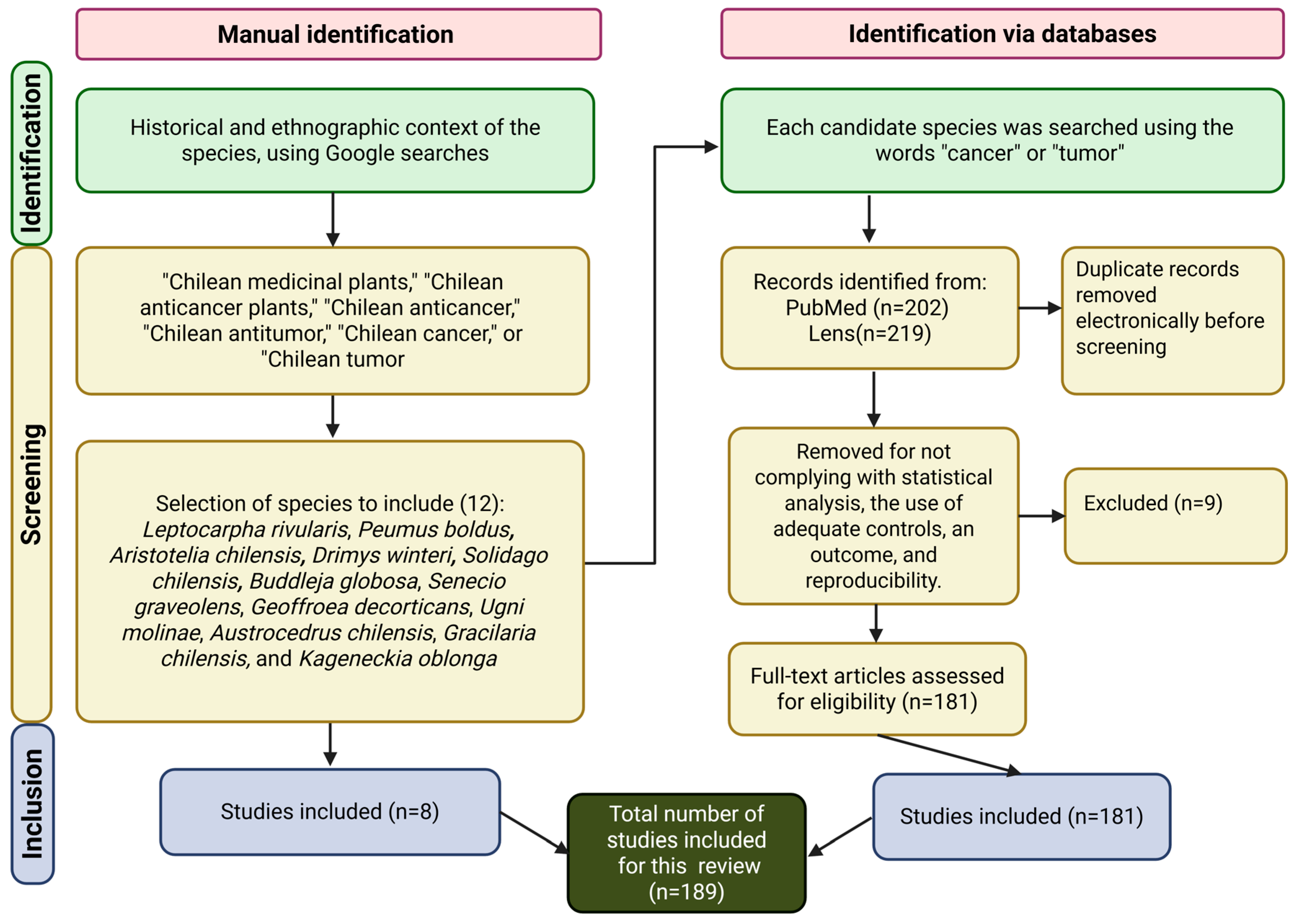
2. Data Collection Method
3. Chilean Species and Their Cytotoxic Potential Against Cancer
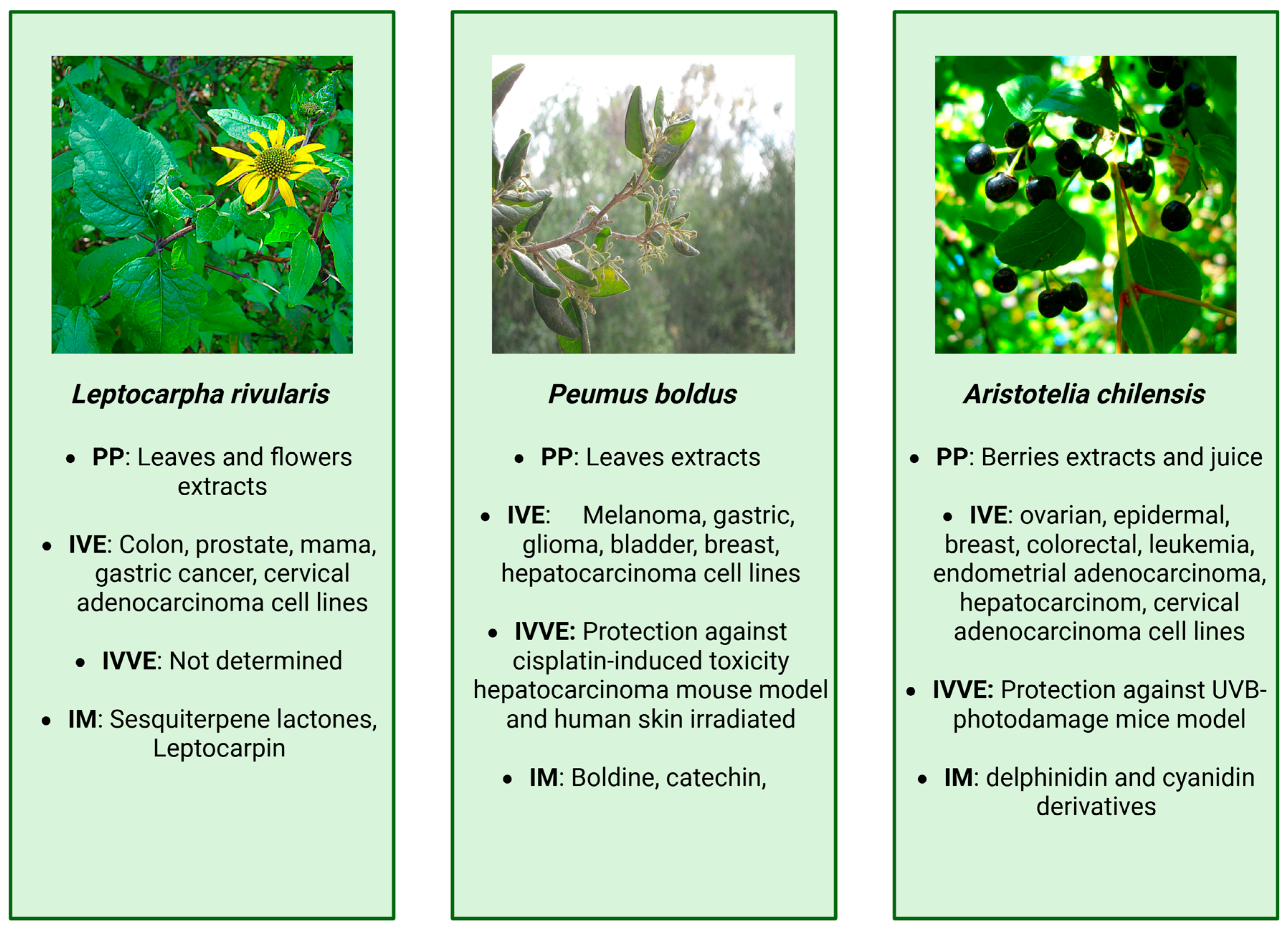
3.1. Leptocarpha rivularis
3.2. Pemus boldus
3.3. Aristotelia chilensis
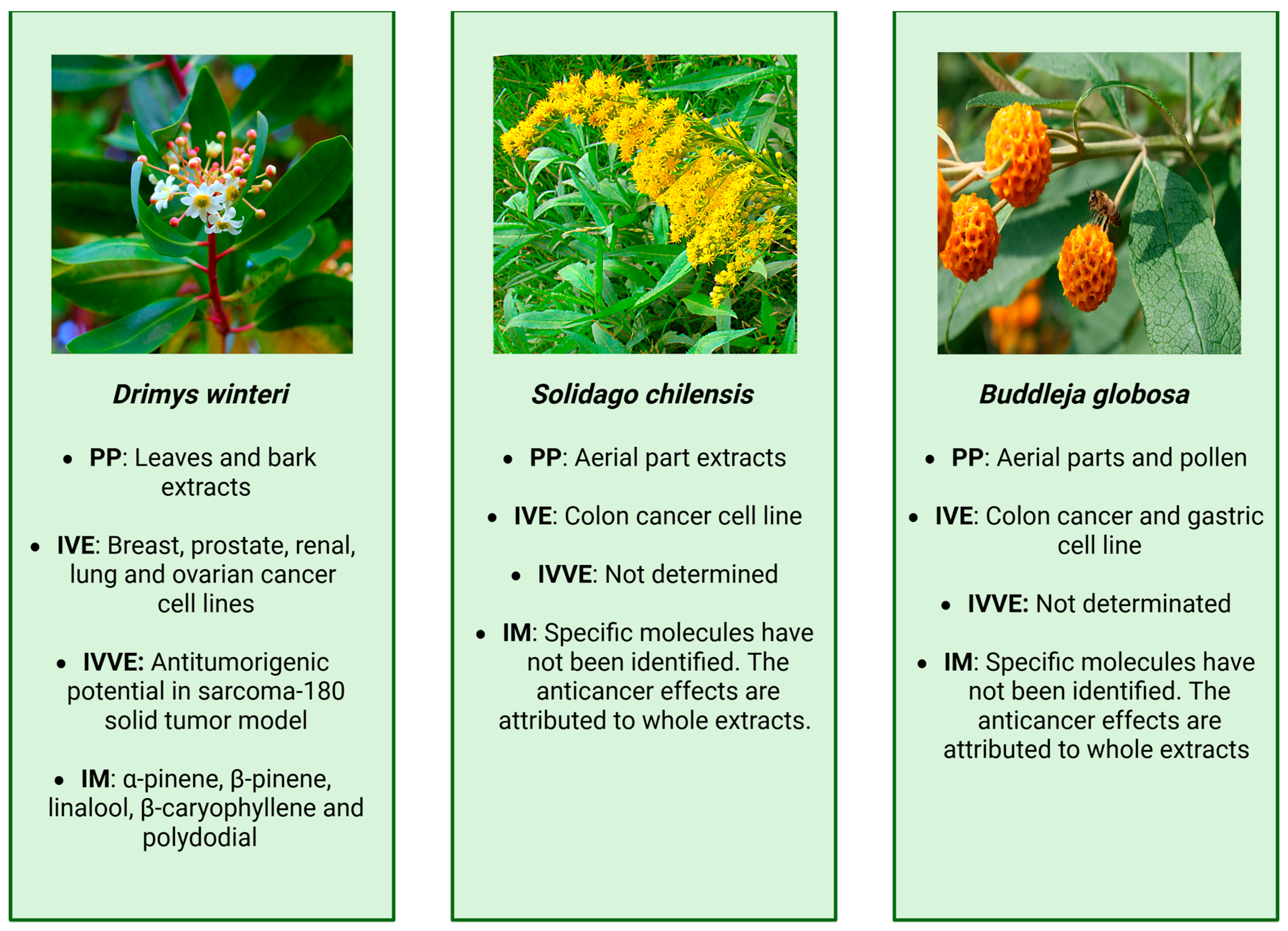
3.4. Drimys winteri
3.5. Solidago chilensis
3.6. Buddleja globosa
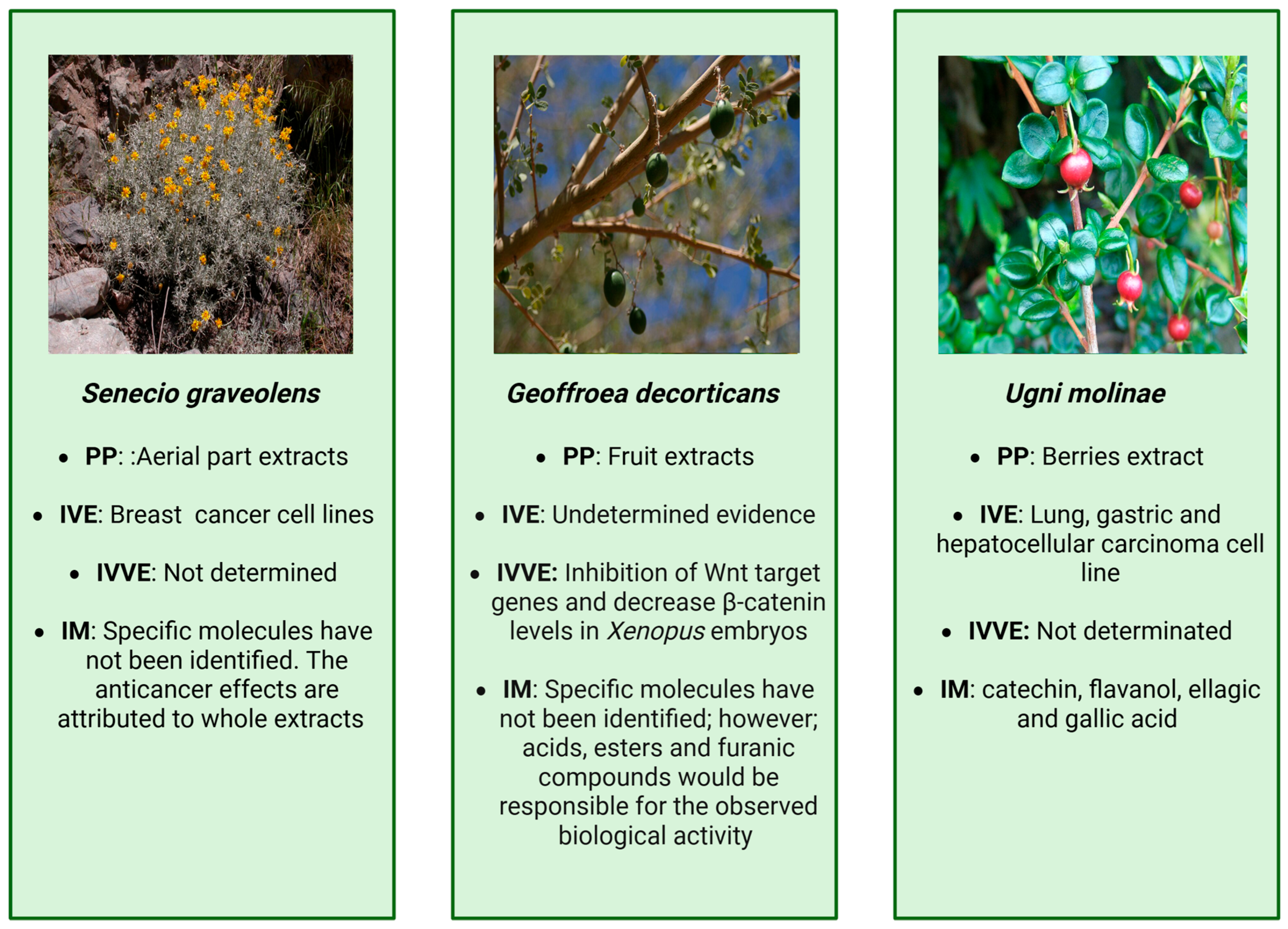
3.7. Senecio graveolens
3.8. Geoffroea decorticans
3.9. Ugni molinae
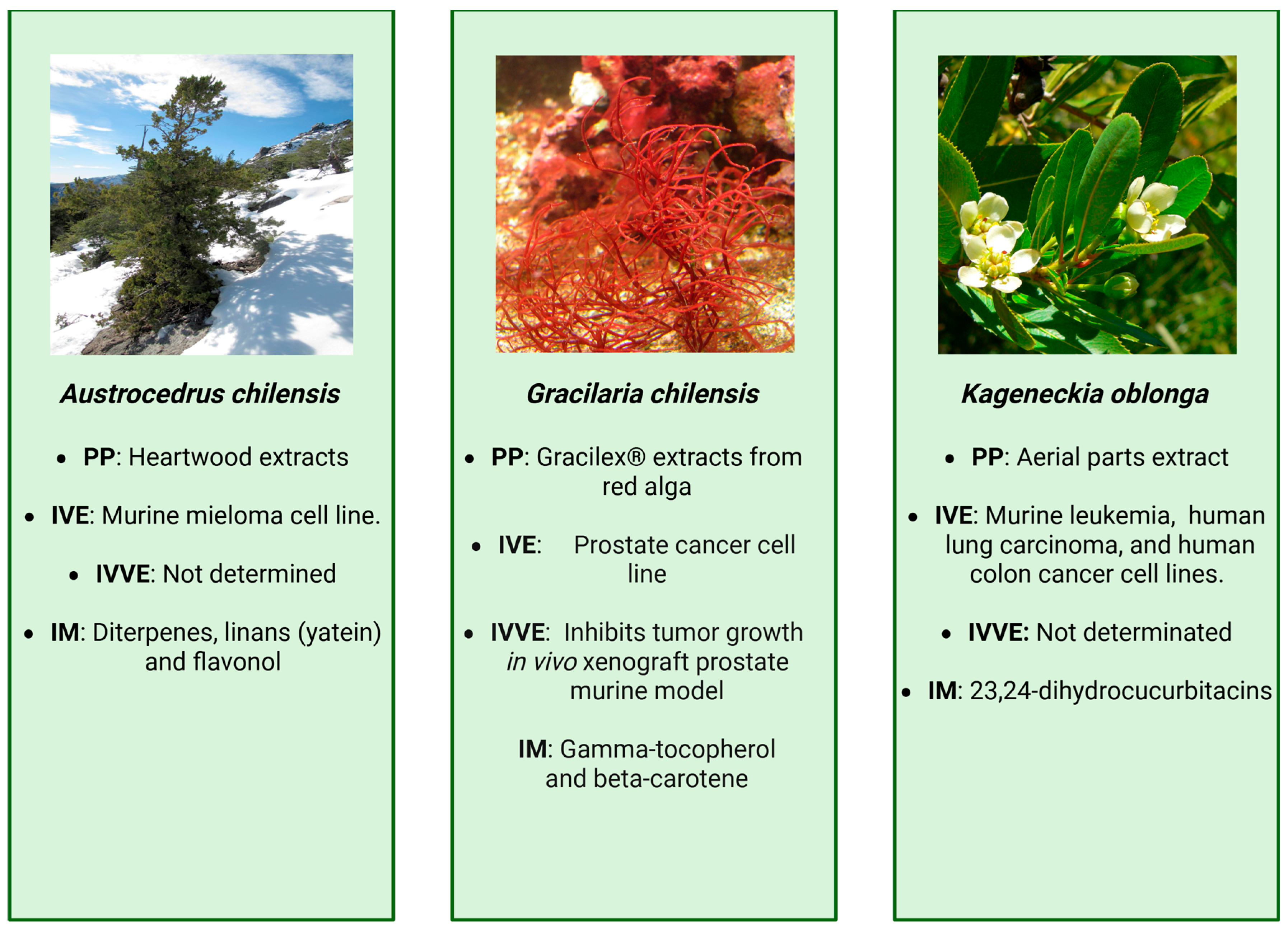
3.10. Austrocedrus chilensis
3.11. Gracilaria chilensis
3.12. Kageneckia oblonga
4. Current Limitation and Future Direction
5. Conclusions
Author Contributions
Funding
Institutional Review Board Statement
Informed Consent Statement
Data Availability Statement
Acknowledgments
Conflicts of Interest
Abbreviations
| A-549 | Human lung carcinoma cell line |
| ACHN | Human renal epithelial cancer cell line |
| AcOEt | Ethyl acetate |
| AGS | Human gastric adenocarcinoma cell line |
| AKT | Protein kinase B |
| Bax | Bcl-2-associated X protein |
| Bcl-2 | B-cell lymphoma 2, protein |
| BE | Boldus extracts |
| BSB | N-benzylsecoboldine hydrochloride |
| C6 | A glial cell line isolated from the rat with a glioma |
| CaCo-2 | Immortalized human colorectal adenocarcinoma cell line |
| CCD841/CoN | Epithelial cell line isolated from the colon |
| c-fos | Fos proto-oncogene |
| COX-2 | Cyclooxygenase 2 |
| DCM | Dichloromethane |
| DNA | Deoxyribonucleic Acid |
| DU-145 | Human prostate cancer cell line |
| EA.hy926 | Endothelial somatic hybrid cell line |
| ERK | Extracellular Signal-Regulated Kinase |
| EtOH | Ethanol |
| F5 | Fraction 5 |
| G2 | Gap 2 phase |
| G2/M | Gap 2/mitosis transition phase |
| GAE | Gallic acid equivalents |
| GES-1 | Human gastric epithelial cell line |
| GRX | Immortalized murine hepatic stellate cell line |
| GSK-3β | Glycogen synthase kinase-3 beta |
| H2O2 | Hydrogen peroxide |
| H460 | Human lung carcinoma cell line |
| HaCaT | Human spontaneously immortal keratinocyte cell line |
| HBPs | Honeybee pollen |
| HEK-293 | Human embryonic kidney 293 cells |
| HeLa | Epithelial cell line isolated from cervical carcinoma |
| HepG2 | Human hepatocellular carcinoma cell line |
| Hex | Hexane |
| HPLC | High-Performance Liquid Chromatography |
| HSP70 | Heat shock 70 protein |
| HT-22 | Mouse neuronal immortalized cell line |
| HT-29 | Human colon adenocarcinoma cell line |
| HTC 116 | Human colorectal carcinoma cell line |
| HTR-8/SVneo | Human trophoblast cell line |
| Huh-7 | Human hepatocarcinoma cell line |
| IARC | International agency for research on cancer |
| IC50 | Half maximal inhibitory concentration |
| IκBα | Inhibitor kappa B alpha |
| IL-10 | Interleukin 10 |
| IL-4 | Interleukin 4 |
| IL-6 | Interleukin 6 |
| iNOS | Inducible nitric oxide synthase |
| Ki67 | Proliferation marker protein Ki-67 |
| LD25 | 25% of the maximal lethal dose |
| LD50 | 50% of the maximal lethal dose |
| LDH | Lactate dehydrogenase |
| LNCap | Human prostate cancer cell line |
| LTC | Leptocarpin |
| M14 | Human melanoma cell line |
| MAPK | Mitogen-Activated Protein Kinase |
| MAPLC3α | Microtubule-associated protein light chain 3 alpha |
| MAPLC3β | Microtubule-associated protein light chain 3 beta |
| MCF-10F | Non-tumorigenic epithelial cell line from the human breast |
| MCF-7 | Breast cancer cell line, estrogen receptor positive |
| MDA-MB-231 | Breast cancer cell line, estrogen receptor negative |
| MEE | Maqui berry ethanol extract |
| MKN-45 | Human gastric adenocarcinoma cell line |
| mmp2 | Matrix metalloproteinase 2 gene |
| MnSOD | Superoxide dismutase |
| NBol | Nanoparticles of boldine |
| NCI-H1975 | Human non-small cell lung cancer cell line |
| NFAT | Nuclear Factor of Activated T-cells |
| NF-κB | Nuclear factor kappa B |
| NO | Nitric oxide |
| P-388 | Murine lymphocytic leukemia cell line |
| P3X | B lymphoblast cell line isolated from a plasmacytoma mouse |
| p53 | Protein 53 (tumoral) |
| PC-3 | Human prostate cancer cell line |
| PLGA | Poly lactide-co-glycolide, nanoparticles |
| PPARγ | Peroxisome proliferator-activated receptor gamma |
| QE | Quercetin equivalent, phalvoneoid |
| RAW-264.7 | Murine macrophage cell line |
| SCC-4 | Human squamous carcinoma cell line |
| SKHep-1 | Human endothelial cell line, isolated from the liver adenocarcinoma patient. |
| SKOV3 | Ovarian cancer cell line |
| SLs | Sesquiterpene lactones |
| SPF | Sun protection factor |
| STAT3 | Signal transducer and activator of transcription 3 |
| T84 | Human colon adenocarcinoma cell line |
| TERT | Telomerase reverse transcriptase |
| TNF-α | Tumor necrosis factor Alpha |
| TopII | DNA topoisomerase II |
| U138-MG | Human glioblastoma cell line |
| U87-MG | Human glioblastoma cell line |
| UV | Ultraviolet |
| UVB | Ultraviolet B radiation |
| UVR | Ultraviolet radiation |
| WHO | World Health Organization |
| ZR-75-1 | Breast cancer cell lines |
References
- Bray, F.; Laversanne, M.; Sung, H.; Ferlay, J.; Siegel, R.L.; Soerjomataram, I.; Jemal, A. Global cancer statistics 2022: GLOBOCAN estimates of incidence and mortality worldwide for 36 cancers in 185 countries. CA Cancer J. Clin. 2024, 74, 229–263. [Google Scholar] [CrossRef]
- Chen, S.; Cao, Z.; Prettner, K.; Kuhn, M.; Yang, J.; Jiao, L.; Wang, Z.; Li, W.; Geldsetzer, P.; Barnighausen, T.; et al. Estimates and Projections of the Global Economic Cost of 29 Cancers in 204 Countries and Territories from 2020 to 2050. JAMA Oncol. 2023, 9, 465–472. [Google Scholar] [CrossRef]
- WHO. The Promotion and Development of Traditional Medicine: Report of a WHO Meeting [Held in Geneva from 28 November to 2 December 1977]; WHO: Geneva, Switzerland, 1978; p. 44. Available online: https://www.who.int/publications/i/item/9241206225 (accessed on 3 January 2025).
- Russo, E.B. Taming THC: Potential cannabis synergy and phytocannabinoid-terpenoid entourage effects. Br. J. Pharmacol. 2011, 163, 1344–1364. [Google Scholar] [CrossRef]
- Newman, D.J.; Cragg, G.M. Natural products as sources of new drugs over the 30 years from 1981 to 2010. J. Nat. Prod. 2012, 75, 311–335. [Google Scholar] [CrossRef]
- MMA. Biodiversidad de Chile: Patrimonio y Desafíos, 3rd ed.; Ministerio del Medio Ambiente: Santiago, Chile, 2018; Volume 1, p. 430. Available online: https://bibliotecadigital.ciren.cl/items/3fd38a1c-8437-49cd-8ebd-8339065f6bce (accessed on 17 January 2025).
- Kessler, A.; Kalske, A. Plant secondary metabolite diversity and species interactions. Annu. Rev. Ecol. Evol. Syst. 2018, 49, 115–138. [Google Scholar] [CrossRef]
- Gull, A.; Lone, A.A.; Wani, N.U.I. Biotic and abiotic stresses in plants. In Abiotic and Biotic Stress in Plants; IntechOpen: London, UK, 2019. [Google Scholar]
- Obando-Camino, M.; Silva, M.; Zemelman, R. Scientific evidence of the medicinal properties of plants for use in intercultural medicine in Chile. Boletín Latinoam. Caribe Plantas Med. Aromáticas 2020, 19, 207–220. [Google Scholar]
- Jimenez-Gonzalez, A.; Quispe, C.; Borquez, J.; Sepulveda, B.; Riveros, F.; Areche, C.; Nagles, E.; Garcia-Beltran, O.; Simirgiotis, M.J. UHPLC-ESI-ORBITRAP-MS analysis of the native Mapuche medicinal plant palo negro (Leptocarpha rivularis DC.—Asteraceae) and evaluation of its antioxidant and cholinesterase inhibitory properties. J. Enzyme Inhib. Med. Chem. 2018, 33, 936–944. [Google Scholar] [CrossRef] [PubMed]
- Montenegro, I.; Moreira, J.; Ramirez, I.; Dorta, F.; Sanchez, E.; Alfaro, J.F.; Valenzuela, M.; Jara-Gutierrez, C.; Munoz, O.; Alvear, M.; et al. Chemical Composition, Antioxidant and Anticancer Activities of Leptocarpha rivularis DC Flower Extracts. Molecules 2020, 26, 67. [Google Scholar] [CrossRef] [PubMed]
- Martinez, R.; Kesternich, V.; Gutierrez, E.; Dolz, H.; Mansilla, H. Conformational analysis and biological activity of leptocarpin and leptocarpin acetate. Planta Med. 1995, 61, 188–189. [Google Scholar] [CrossRef]
- Robles, M.; Aregullin, M.; West, J.; Rodriguez, E. Recent studies on the zoopharmacognosy, pharmacology and neurotoxicology of sesquiterpene lactones. Planta Med. 1995, 61, 199–203. [Google Scholar] [CrossRef] [PubMed]
- Babaei, G.; Aliarab, A.; Abroon, S.; Rasmi, Y.; Aziz, S.G. Application of sesquiterpene lactone: A new promising way for cancer therapy based on anticancer activity. Biomed. Pharmacother. 2018, 106, 239–246. [Google Scholar] [CrossRef]
- Kaushal, K.; Kapoor, D.U.; Kumar, S.; Sony, A.; Viswanath, A.; Chaitanya, M.; Singh, M.; Singh, S.K.; Mazumder, A. Natural sesquiterpene lactones in prostate cancer therapy: Mechanisms and sources. Med. Oncol. 2025, 42, 212. [Google Scholar] [CrossRef]
- Bosio, C.; Tomasoni, G.; Martinez, R.; Olea, A.F.; Carrasco, H.; Villena, J. Cytotoxic and apoptotic effects of leptocarpin, a plant-derived sesquiterpene lactone, on human cancer cell lines. Chem. Biol. Interact. 2015, 242, 415–421. [Google Scholar] [CrossRef]
- Carrasco, N.; Garrido, M.; Montenegro, I.; Madrid, A.; Hartley, R.; Gonzalez, I.; Rubilar, M.; Villena, J.; Valenzuela-Valderrama, M. Antitumoral Activity of Leptocarpha rivularis Flower Extracts against Gastric Cancer Cells. Int. J. Mol. Sci. 2023, 24, 1439. [Google Scholar] [CrossRef] [PubMed]
- Cordero Tulleres, C.F. Propagación vegetativa de leptocarpha rivularis DC, especie nativa de uso medicinal. Bachelor of Arts Thesis, Universidad Católica de Valparaíso, Valparaiso, Chile, 2000. [Google Scholar]
- Dorta, F.; Polanco, V.; Ramírez, I.; Seeger, M.; Madrid, A.; Montenegro, I. In vitro propagation of Leptocarpha rivularis, a native medicinal plant. In Vitro Cell. Dev. Biol.-Plant 2020, 56, 827–832. [Google Scholar] [CrossRef]
- Rubio, J.; Arias, G.; Robles-Kelly, C.; Silva-Moreno, E.; Espinoza, L.; Carrasco, H.; Olea, A.F. Phytochemical Profiling and Assessment of Anticancer Activity of Leptocarpha rivularis Extracts Obtained from In Vitro Cultures. Plants 2022, 11, 546. [Google Scholar] [CrossRef]
- Wikimedia; Culbert, D. Leptocarpha rivularis (8477044431).jpg. Wikimedia Commons. Available online: https://commons.wikimedia.org/wiki/File:Leptocarpha_rivularis_(8477044431).jpg (accessed on 11 November 2025).
- Wikimedia; Penarc. Peumus boldus Raceme 11.jpg. Wikimedia Commons. Available online: https://commons.wikimedia.org/wiki/File:Peumus_boldus_raceme_11.jpg (accessed on 11 November 2025).
- Wikimedia; Morrana. Maqui Chileno.jpg. Wikimedia Commons. Available online: https://commons.wikimedia.org/wiki/File:Maqui_chileno.jpg (accessed on 11 November 2025).
- Gajardo, R. La Vegetación Natural de Chile: Clasificación y Distribución Geográfica; Editorial Universitaria Santiago: Santiago, Chile, 1994; p. 165. [Google Scholar]
- Boericke, W. Pocket Manual of Homoeopathic Materia Medica & Repertory: Comprising of the Characteristic and Guiding Symptoms of All Remedies (Clinical and Pahtogenetic [sic]) Including Indian Drugs; B. Jain Publishers: New Delhi, India, 2002. [Google Scholar]
- EMMA; HMPC. Assessment Report on Peumus boldus Molina, Folium; European Medicines Agency/Herbal Medicinal Products Committee: London, UK, 2016; p. 21. Available online: https://www.ema.europa.eu/en/documents/herbal-report/final-assessment-report-peumus-boldus-molina-folium_en.pdf (accessed on 23 January 2025).
- Fernandez, J.; Lagos, P.; Rivera, P.; Zamorano-Ponce, E. Effect of boldo (Peumus boldus Molina) infusion on lipoperoxidation induced by cisplatin in mice liver. Phytother. Res. 2009, 23, 1024–1027. [Google Scholar] [CrossRef] [PubMed]
- Schmeda-Hirschmann, G.; Rodriguez, J.A.; Theoduloz, C.; Astudillo, S.L.; Feresin, G.E.; Tapia, A. Free-radical scavengers and antioxidants from Peumus boldus Mol. (“Boldo”). Free. Radic. Res. 2003, 37, 447–452. [Google Scholar] [CrossRef]
- Russo, A.; Cardile, V.; Caggia, S.; Gunther, G.; Troncoso, N.; Garbarino, J. Boldo prevents UV light and nitric oxide-mediated plasmid DNA damage and reduces the expression of Hsp70 protein in melanoma cancer cells. J. Pharm. Pharmacol. 2011, 63, 1219–1229. [Google Scholar] [CrossRef] [PubMed]
- Petigny, L.; Périno-Issartier, S.; Wajsman, J.; Chemat, F. Batch and continuous ultrasound assisted extraction of boldo leaves (Peumus boldus Mol.). Int. J. Mol. Sci. 2013, 14, 5750–5764. [Google Scholar] [CrossRef]
- Passone, M.A.; Etcheverry, M. Antifungal impact of volatile fractions of Peumus boldus and Lippia turbinata on Aspergillus section Flavi and residual levels of these oils in irradiated peanut. Int. J. Food Microbiol. 2014, 168–169, 17–23. [Google Scholar] [CrossRef]
- Gotteland, M.; Espinoza, J.; Cassels, B.; Speisky, H. Effecto de un extracto seco de boldo sobre el tránsito intestinal oro-cecal en voluntarios sanos [Effect of a dry boldo extract on oro-cecal intestinal transit in healthy volunteers]. Rev. Medica Chile 1995, 123, 955–960. [Google Scholar]
- Speisky, H.; Cassels, B.K.; Lissi, E.A.; Videla, L.A. Antioxidant properties of the alkaloid boldine in systems undergoing lipid peroxidation and enzyme inactivation. Biochem. Pharmacol. 1991, 41, 1575–1581. [Google Scholar] [CrossRef]
- Martinez, L.A.; Rios, J.L.; Paya, M.; Alcaraz, M.J. Inhibition of nonenzymic lipid peroxidation by benzylisoquinoline alkaloids. Free Radic. Biol. Med. 1992, 12, 287–292. [Google Scholar] [CrossRef] [PubMed]
- Cederbaum, A.I.; Kukielka, E.; Speisky, H. Inhibition of rat liver microsomal lipid peroxidation by boldine. Biochem. Pharmacol. 1992, 44, 1765–1772. [Google Scholar] [CrossRef]
- Lanhers, M.C.; Joyeux, M.; Soulimani, R.; Fleurentin, J.; Sayag, M.; Mortier, F.; Younos, C.; Pelt, J.M. Hepatoprotective and anti-inflammatory effects of a traditional medicinal plant of Chile, Peumus boldus. Planta Med. 1991, 57, 110–115. [Google Scholar] [CrossRef] [PubMed]
- Hoet, S.; Stevigny, C.; Block, S.; Opperdoes, F.; Colson, P.; Baldeyrou, B.; Lansiaux, A.; Bailly, C.; Quetin-Leclercq, J. Alkaloids from Cassytha filiformis and related aporphines: Antitrypanosomal activity, cytotoxicity, and interaction with DNA and topoisomerases. Planta Med. 2004, 70, 407–413. [Google Scholar] [CrossRef]
- Mondal, J.; Bishayee, K.; Panigrahi, A.K.; Khuda-Bukhsh, A.R. Low doses of ethanolic extract of Boldo (Peumus boldus) can ameliorate toxicity generated by cisplatin in normal liver cells of mice in vivo and in WRL-68 cells in vitro, but not in cancer cells in vivo or in vitro. J. Integr. Med. 2014, 12, 425–438. [Google Scholar] [CrossRef] [PubMed]
- Pastene, E.; Parada, V.; Avello, M.; Ruiz, A.; Garcia, A. Catechin-based procyanidins from Peumus boldus Mol. aqueous extract inhibit Helicobacter pylori urease and adherence to adenocarcinoma gastric cells. Phytother. Res. 2014, 28, 1637–1645. [Google Scholar] [CrossRef]
- Parkin, D.M.; Bray, F.; Ferlay, J.; Pisani, P. Global cancer statistics, 2002. CA Cancer J. Clin. 2005, 55, 74–108. [Google Scholar] [CrossRef]
- Gerhardt, D.; Horn, A.P.; Gaelzer, M.M.; Frozza, R.L.; Delgado-Canedo, A.; Pelegrini, A.L.; Henriques, A.T.; Lenz, G.; Salbego, C. Boldine: A potential new antiproliferative drug against glioma cell lines. Investig. New Drugs 2009, 27, 517–525. [Google Scholar] [CrossRef]
- Gerhardt, D.; Bertola, G.; Dietrich, F.; Figueiro, F.; Zanotto-Filho, A.; Moreira Fonseca, J.C.; Morrone, F.B.; Barrios, C.H.; Battastini, A.M.; Salbego, C.G. Boldine induces cell cycle arrest and apoptosis in T24 human bladder cancer cell line via regulation of ERK, AKT, and GSK-3beta. Urol. Oncol. 2014, 32, 36.e1–36.e9. [Google Scholar] [CrossRef] [PubMed]
- Dobruch, J.; Oszczudlowski, M. Bladder Cancer: Current Challenges and Future Directions. Medicina 2021, 57, 749. [Google Scholar] [CrossRef]
- Nomikos, M.; Pappas, A.; Kopaka, M.E.; Tzoulakis, S.; Volonakis, I.; Stavrakakis, G.; Avgenakis, G.; Anezinis, P. Urothelial Carcinoma of the Urinary Bladder in Young Adults: Presentation, Clinical Behavior and Outcome. Adv. Urol. 2011, 2011, 480738. [Google Scholar] [CrossRef][Green Version]
- Johnstone, R.W.; Ruefli, A.A.; Lowe, S.W. Apoptosis: A link between cancer genetics and chemotherapy. Cell 2002, 108, 153–164. [Google Scholar] [CrossRef]
- Boulalas, I.; Zaravinos, A.; Karyotis, I.; Delakas, D.; Spandidos, D.A. Activation of RAS family genes in urothelial carcinoma. J. Urol. 2009, 181, 2312–2319. [Google Scholar] [CrossRef]
- Bartholomeusz, C.; Gonzalez-Angulo, A.M. Targeting the PI3K signaling pathway in cancer therapy. Expert Opin. Ther. Targets 2012, 16, 121–130. [Google Scholar] [CrossRef]
- Paydar, M.; Kamalidehghan, B.; Wong, Y.L.; Wong, W.F.; Looi, C.Y.; Mustafa, M.R. Evaluation of cytotoxic and chemotherapeutic properties of boldine in breast cancer using in vitro and in vivo models. Drug Des. Devel Ther. 2014, 8, 719–733. [Google Scholar] [CrossRef] [PubMed]
- Subramaniam, N.; Kannan, P.; K, A.; Thiruvengadam, D. Hepatoprotective effect of boldine against diethylnitrosamine-induced hepatocarcinogenesis in wistar rats. J. Biochem. Mol. Toxicol. 2019, 33, e22404. [Google Scholar] [CrossRef]
- Kazemi Noureini, S.; Tanavar, F. Boldine, a natural aporphine alkaloid, inhibits telomerase at non-toxic concentrations. Chem. Biol. Interact. 2015, 231, 27–34. [Google Scholar] [CrossRef] [PubMed]
- Lingner, J.; Cech, T.R.; Hughes, T.R.; Lundblad, V. Three Ever Shorter Telomere (EST) genes are dispensable for in vitro yeast telomerase activity. Proc. Natl. Acad. Sci. USA 1997, 94, 11190–11195. [Google Scholar] [CrossRef] [PubMed]
- Ghanim, G.E.; Fountain, A.J.; van Roon, A.M.; Rangan, R.; Das, R.; Collins, K.; Nguyen, T.H.D. Structure of human telomerase holoenzyme with bound telomeric DNA. Nature 2021, 593, 449–453. [Google Scholar] [CrossRef] [PubMed]
- Chalak, M.; Hesaraki, M.; Mirbahari, S.N.; Yeganeh, M.; Abdi, S.; Rajabi, S.; Hemmatzadeh, F. Cell Immortality: In Vitro Effective Techniques to Achieve and Investigate Its Applications and Challenges. Life 2024, 14, 417. [Google Scholar] [CrossRef]
- Noureini, S.K.; Wink, M. Dose-dependent cytotoxic effects of boldine in HepG-2 cells-telomerase inhibition and apoptosis induction. Molecules 2015, 20, 3730–3743. [Google Scholar] [CrossRef]
- Kazemi Noureini, S.; Kheirabadi, M.; Masoumi, F.; Khosrogerdi, F.; Zarei, Y.; Suarez-Rozas, C.; Salas-Norambuena, J.; Kennedy Cassels, B. Telomerase Inhibition by a New Synthetic Derivative of the Aporphine Alkaloid Boldine. Int. J. Mol. Sci. 2018, 19, 1239. [Google Scholar] [CrossRef] [PubMed]
- Mondal, J.; Patra, M.; Panigrahi, A.K.; Khuda-Bukhsh, A.R. Improved drug carriage and protective potential against Cisplatin-induced toxicity using Boldine-loaded PLGA nanoparticles. J. Ayurveda Integr. Med. 2020, 11, 24–36. [Google Scholar] [CrossRef] [PubMed]
- Rancan, F.; Rosan, S.; Boehm, K.; Fernandez, E.; Hidalgo, M.E.; Quihot, W.; Rubio, C.; Boehm, F.; Piazena, H.; Oltmanns, U. Protection against UVB irradiation by natural filters extracted from lichens. J. Photochem. Photobiol. B 2002, 68, 133–139. [Google Scholar] [CrossRef]
- López, J.; Vera, C.; Bustos, R.; Florez-Mendez, J. Native berries of Chile: A comprehensive review on nutritional aspects, functional properties, and potential health benefits. J. Food Meas. Charact. 2021, 15, 1139–1160. [Google Scholar] [CrossRef]
- Schreckinger, M.E.; Lotton, J.; Lila, M.A.; De Mejia, E.G. Berries from South America: A comprehensive review on chemistry, health potential, and commercialization. J. Med. Food 2010, 13, 233–246. [Google Scholar] [CrossRef]
- Masoodi, H.; Villano, D.; Zafrilla, P. A comprehensive review on fruit Aristotelia chilensis (Maqui) for modern health: Towards a better understanding. Food Funct. 2019, 10, 3057–3067. [Google Scholar] [CrossRef]
- Turchetti, G.; Paz, C. Aristotelia chilensis (Mol.) Stuntz: A Natural Source of Bioactive Compounds. Curr. Tradit. Med. 2019, 5, 66–74. [Google Scholar] [CrossRef]
- Hoffmann, J.; Farga, C.; Lastra González, J.d.l.; Veghazi, E. Plantas Medicinales de Uso Común en Chile, 2nd ed.; Fundación Claudio Gay: Santiago, Chile, 1992; Available online: https://bibliotecadigital.infor.cl/handle/20.500.12220/3003 (accessed on 1 July 2025).
- Muñoz, O.; Christen, P.; Cretton, S.; Backhouse, N.; Torres, V.; Correa, O.; Costa, E.; Miranda, H.; Delporte, C. Chemical study and anti-inflammatory, analgesic and antioxidant activities of the leaves of Aristotelia chilensis (Mol.) Stuntz, Elaeocarpaceae. J. Pharm. Pharmacol. 2011, 63, 849–859. [Google Scholar] [CrossRef]
- Rojo, L.E.; Ribnicky, D.; Logendra, S.; Poulev, A.; Rojas-Silva, P.; Kuhn, P.; Dorn, R.; Grace, M.H.; Lila, M.A.; Raskin, I. In Vitro and In Vivo Anti-Diabetic Effects of Anthocyanins from Maqui Berry (Aristotelia chilensis). Food Chem. 2012, 131, 387–396. [Google Scholar] [CrossRef]
- Aqil, F.; Munagala, R.; Jeyabalan, J.; Vadhanam, M.V. Bioavailability of phytochemicals and its enhancement by drug delivery systems. Cancer Lett. 2013, 334, 133–141. [Google Scholar] [CrossRef]
- D’Archivio, M.; Filesi, C.; Varì, R.; Scazzocchio, B.; Masella, R. Bioavailability of the Polyphenols: Status and Controversies. Int. J. Mol. Sci. 2010, 11, 1321–1342. [Google Scholar] [CrossRef]
- Vulic, J.; Seregelj, V.; Kalusevic, A.; Levic, S.; Nedovic, V.; Saponjac, V.T.; Canadanovic-Brunet, J.; Cetkovic, G. Bioavailability and Bioactivity of Encapsulated Phenolics and Carotenoids Isolated from Red Pepper Waste. Molecules 2019, 24, 2837. [Google Scholar] [CrossRef] [PubMed]
- Vamanu, E. Polyphenolic Nutraceuticals to Combat Oxidative Stress Through Microbiota Modulation. Front. Pharmacol. 2019, 10, 492. [Google Scholar] [CrossRef] [PubMed]
- Palungwachira, P.; Tancharoen, S.; Phruksaniyom, C.; Klungsaeng, S.; Srichan, R.; Kikuchi, K.; Nararatwanchai, T. Antioxidant and Anti-Inflammatory Properties of Anthocyanins Extracted from Oryza sativa L. in Primary Dermal Fibroblasts. Oxidative Med. Cell. Longev. 2019, 2019, 2089817, Erratum in Oxidative Med. Cell. Longev. 2020, 2020, 6306104. [Google Scholar] [CrossRef]
- Lin, B.-W.; Gong, C.-C.; Song, H.-F.; Cui, Y.-Y. Effects of anthocyanins on the prevention and treatment of cancer. Br. J. Pharmacol. 2017, 174, 1226–1243. [Google Scholar] [CrossRef] [PubMed]
- Kalt, W.; Cassidy, A.; Howard, L.R.; Krikorian, R.; Stull, A.J.; Tremblay, F.; Zamora-Ros, R. Recent Research on the Health Benefits of Blueberries and Their Anthocyanins. Adv. Nutr. 2020, 11, 224–236. [Google Scholar] [CrossRef]
- Escribano-Bailón, M.T.; Alcalde-Eon, C.; Muñoz, O.; Rivas-Gonzalo, J.C.; Santos-Buelga, C. Anthocyanins in berries of Maqui (Aristotelia chilensis (Mol.) Stuntz). Phytochem. Anal. 2006, 17, 8–14. [Google Scholar] [CrossRef] [PubMed]
- Schreckinger, M.E.; Wang, J.Z.; Yousef, G.; Lila, M.A.; de Mejia, E.G. Antioxidant Capacity and In Vitro Inhibition of Adipogenesis and Inflammation by Phenolic Extracts of Vaccinium floribundum and Aristotelia chilensis. J. Agric. Food Chem. 2010, 58, 8966–8976. [Google Scholar] [CrossRef]
- Overall, J.; Bonney, S.A.; Wilson, M.; Beermann, A.; Grace, M.H.; Esposito, D.; Lila, M.A.; Komarnytsky, S. Metabolic Effects of Berries with Structurally Diverse Anthocyanins. Int. J. Mol. Sci. 2017, 18, 422. [Google Scholar] [CrossRef] [PubMed]
- He, Y.; Hu, Y.; Jiang, X.; Chen, T.; Ma, Y.; Wu, S.; Sun, J.; Jiao, R.; Li, X.; Deng, L.; et al. Cyanidin-3-glucoside inhibits the UVB-induced ROS/COX-2 pathway in HaCaT cells. J. Photochem. Photobiol. B-Biol. 2017, 177, 24–31. [Google Scholar] [CrossRef]
- Lim, W.; Song, G. Inhibitory effects of delphinidin on the proliferation of ovarian cancer cells via PI3K/AKT and ERK 1/2 MAPK signal transduction. Oncol. Lett. 2017, 14, 810–818. [Google Scholar] [CrossRef]
- Lee, S.J.; Hong, S.; Yoo, S.H.; Kim, G.W. Cyanidin-3-Sambubioside from Fruit Inhibits Metastasis by Downregulating MMP-9 in Breast Cancer Cells MDA-MB-231. Planta Med. 2013, 79, 1636–1640. [Google Scholar] [CrossRef] [PubMed]
- Ojeda, J.; Evelyn, J.; Molina, L.; Parada, F.; Burgos, R.A.; Hidalgo, M.A.; Hancke, J.L. Effects of Aristotelia chilensis berry juice on cyclooxygenase 2 expression, NF-kB, NFAT, ERK1/2 and PI3K/Akt activation in colon cancer cells. Boletín Latinoam. Caribe Plantas Med. Aromáticas 2011, 10, 543–552. [Google Scholar]
- Cespedes, C.L.; Pavon, N.; Dominguez, M.; Alarcon, J.; Balbontin, C.; Kubo, I.; El-Hafidi, M.; Avila, J.G. The chilean superfruit black-berry Aristotelia chilensis (Elaeocarpaceae), Maqui as mediator in inflammation-associated disorders. Food Chem. Toxicol. 2017, 108, 438–450. [Google Scholar] [CrossRef]
- Céspedes-Acuña, C.L.; Xiao, J.B.; Wei, Z.J.; Chen, L.S.; Bastias, J.M.; Avila, J.G.; Alarcon-Enos, J.; Werner-Navarrete, E.; Kubo, I. Antioxidant and anti-inflammatory effects of extracts from Maqui berry Aristotelia chilensis in human colon cancer cells. J. Berry Res. 2018, 8, 275–296. [Google Scholar] [CrossRef]
- Crisostomo-Ayala, K.A.; Sabater-Jara, A.B.; Perez Manriquez, C.; Ferreres, F.; Gil-Izquierdo, A.; Pedreno, M.A.; Hernandez de la Torre, M.; Sanchez-Olate, M.; Rios Leal, D.G. Comparative Study of Metabolomic Profile and Antioxidant Content of Adult and In Vitro Leaves of Aristotelia chilensis. Plants 2021, 11, 37. [Google Scholar] [CrossRef]
- Quispe-Fuentes, I.; Vega-Gálvez, A.; Aranda, M. Evaluation of phenolic profiles and antioxidant capacity of maqui (Aristotelia chilensis) berries and their relationships to drying methods. J. Sci. Food Agric. 2018, 98, 4168–4176. [Google Scholar] [CrossRef] [PubMed]
- Mena, J.; Elgueta, E.; Espinola-Gonzales, F.; Cardenas, H.; Orihuela, P.A. Hydroethanolic Extracts of the Aristotelia chilensis (Maqui) Berry Reduces Cellular Viability and Invasiveness in the Endometrial Cancer Cell Line Ishikawa. Integr. Cancer Ther. 2021, 20, 15347354211007560. [Google Scholar] [CrossRef]
- Tsai, T.C.; Huang, H.P.; Chang, K.T.; Wang, C.J.; Chang, Y.C. Anthocyanins from roselle extract arrest cell cycle G2/M phase transition via ATM/Chk pathway in p53-deficient leukemia HL-60 cells. Environ. Toxicol. 2017, 32, 1290–1304. [Google Scholar] [CrossRef] [PubMed]
- Chen, P.N.; Kuo, W.H.; Chiang, C.L.; Chiou, H.L.; Hsieh, Y.S.; Chu, S.C. Black rice anthocyanins inhibit cancer cells invasion via repressions of MMPs and u-PA expression. Chem. Biol. Interact. 2006, 163, 218–229. [Google Scholar] [CrossRef]
- Chen, L.; Zhou, G.; Meng, X.S.; Fu, H.Y.; Mo, Q.G.; Wang, Y.W. Photoprotection of maqui berry against ultraviolet B-induced photodamage in vitro and in vivo. Food Funct. 2020, 11, 2749–2762. [Google Scholar] [CrossRef] [PubMed]
- Reyes-Farias, M.; Vasquez, K.; Ovalle-Marin, A.; Fuentes, F.; Parra, C.; Quitral, V.; Jimenez, P.; Garcia-Diaz, D.F. Chilean native fruit extracts inhibit inflammation linked to the pathogenic interaction between adipocytes and macrophages. J. Med. Food 2015, 18, 601–608. [Google Scholar] [CrossRef]
- Neira Ceballos, Z.; M. Alarcón, A.; Jelves, I.; Ovalle, P.; Conejeros, A.M.; Verdugo, V. Espacios ecológico-culturales en un territorio mapuche de la región de la Araucanía en Chile [Ecologic-cultural spaces of a Mapuche territory in the Araucania Region-Chile]. Chungará 2012, 44, 313–323. [Google Scholar] [CrossRef]
- Tampe, J.; Espinoza, J.; Chacón-Fuentes, M.; Quiroz, A.; Rubilar, M. Evaluation of Drimys winteri (Canelo) Essential Oil as Insecticide against Acanthoscelides obtectus (Coleoptera: Bruchidae) and Aegorhinus superciliosus (Coleoptera: Curculionidae). Insects 2020, 11, 335. [Google Scholar] [CrossRef]
- Russo, A.; Cardile, V.; Graziano, A.C.E.; Avola, R.; Montenegro, I.; Cuellar, M.; Villena, J.; Madrid, A. Antigrowth activity and induction of apoptosis in human melanoma cells by Drymis winteri forst extract and its active components. Chem. Biol. Interact. 2019, 305, 79–85. [Google Scholar] [CrossRef]
- Cechinel, V.; Schlemper, V.; Santos, A.R.S.; Pinheiro, T.R.; Yunes, R.A.; Mendes, G.L.; Calixto, J.B.; Delle Menache, F. Isolation and identification of active compounds from Drimys winteri barks. J. Ethnopharmacol. 1998, 62, 223–227. [Google Scholar] [CrossRef]
- Bruna, F.; Fernández, K.; Urrejola, F.; Touma, J.; Navarro, M.; Sepúlveda, B.; Larrazabal-Fuentes, M.; Paredes, A.; Neira, I.; Ferrando, M.; et al. The essential oil from Drimys winteri possess activity: Antioxidant, theoretical chemistry reactivity, antimicrobial, antiproliferative and chemical composition. Front. Nat. Prod. 2022, 1, 958425. [Google Scholar] [CrossRef]
- Zapata, N.; Vargas, M.; Monsálvez, M.; Ceballos, R. Crude extracts of Drimys winteri bark to inhibit growth of Gaeumannomyces graminis var. tritici. Chil. J. Agric. Res. 2011, 71, 45–51. [Google Scholar] [CrossRef]
- Montenegro, I.; Tomasoni, G.; Bosio, C.; Quinones, N.; Madrid, A.; Carrasco, H.; Olea, A.; Martinez, R.; Cuellar, M.; Villena, J. Study on the cytotoxic activity of drimane sesquiterpenes and nordrimane compounds against cancer cell lines. Molecules 2014, 19, 18993–19006. [Google Scholar] [CrossRef]
- van Zyl, R.L.; Seatlholo, S.T.; van Vuuren, S.F.; Viljoen, A.M. The biological activities of 20 nature identical essential oil constituents. J. Essent. Oil Res. 2006, 18, 129–133. [Google Scholar] [CrossRef]
- Navarro, M.; Urrejola, F.; Espinoza, M.; Silva, S.; Gonzalez, S.; Utreras, D.; Fernandez, K.; Bravo, J. Biological activity of the essential oil of Drimys winteri. Front. Chem. 2024, 12, 1321300. [Google Scholar] [CrossRef]
- Zhang, Z.; Guo, S.; Liu, X.; Gao, X. Synergistic antitumor effect of alpha-pinene and beta-pinene with paclitaxel against non-small-cell lung carcinoma (NSCLC). Drug Res. 2015, 65, 214–218. [Google Scholar] [CrossRef]
- Chen, W.; Liu, Y.; Li, M.; Mao, J.; Zhang, L.; Huang, R.; Jin, X.; Ye, L. Anti-tumor effect of alpha-pinene on human hepatoma cell lines through inducing G2/M cell cycle arrest. J. Pharmacol. Sci. 2015, 127, 332–338. [Google Scholar] [CrossRef]
- Zhao, Y.; Chen, R.; Wang, Y.; Yang, Y. alpha-Pinene Inhibits Human Prostate Cancer Growth in a Mouse Xenograft Model. Chemotherapy 2018, 63, 1–7. [Google Scholar] [CrossRef] [PubMed]
- Jo, H.; Cha, B.; Kim, H.; Brito, S.; Kwak, B.M.; Kim, S.T.; Bin, B.H.; Lee, M.G. alpha-Pinene Enhances the Anticancer Activity of Natural Killer Cells via ERK/AKT Pathway. Int. J. Mol. Sci. 2021, 22, 656. [Google Scholar] [CrossRef] [PubMed]
- Jana, S.; Patra, K.; Sarkar, S.; Jana, J.; Mukherjee, G.; Bhattacharjee, S.; Mandal, D.P. Antitumorigenic potential of linalool is accompanied by modulation of oxidative stress: An in vivo study in sarcoma-180 solid tumor model. Nutr. Cancer 2014, 66, 835–848. [Google Scholar] [CrossRef] [PubMed]
- Wikimedia; Hunt, E. Drimys winteri.jpg. Wikimedia Commons. Available online: https://commons.wikimedia.org/wiki/File:Drimys_winteri.jpg (accessed on 11 November 2025).
- Wikipedia; Culbert, D. Solidago chilensis (8470071360).jpg. Wikipeia. Available online: https://es.wikipedia.org/wiki/Archivo:Solidago_chilensis_%288470071360%29.jpg (accessed on 28 October 2025).
- Wikimedia; Porse, S. Buddleja-globosa-flowers.JPG. Wikimedia Commons. Available online: https://commons.wikimedia.org/wiki/File:Buddleja-globosa-flowers.JPG (accessed on 11 November 2025).
- Goleniowski, M.E.; Bongiovanni, G.A.; Palacio, L.; Nunez, C.O.; Cantero, J.J. Medicinal plants from the “Sierra de Comechingones”, Argentina. J. Ethnopharmacol. 2006, 107, 324–341. [Google Scholar] [CrossRef]
- Uzelac Bozac, M.; Poljuha, D.; Dudas, S.; Bilic, J.; Sola, I.; Mikulic-Petkovsek, M.; Sladonja, B. Phenolic Profile and Antioxidant Capacity of Invasive Solidago canadensis L.: Potential Applications in Phytopharmacy. Plants 2024, 14, 44. [Google Scholar] [CrossRef]
- Koshovyi, O.; Hrytsyk, Y.; Perekhoda, L.; Suleiman, M.; Jakstas, V.; Zvikas, V.; Grytsyk, L.; Yurchyshyn, O.; Heinamaki, J.; Raal, A. Solidago canadensis L. Herb Extract, Its Amino Acids Preparations and 3D-Printed Dosage Forms: Phytochemical, Technological, Molecular Docking and Pharmacological Research. Pharmaceutics 2025, 17, 2–24. [Google Scholar] [CrossRef] [PubMed]
- Bader, G.; Wray, V.; Hiller, K. The main saponins from the aerial parts and the roots of Solidago virgaurea subsp. virgaurea. Planta Med. 1995, 61, 158–161. [Google Scholar] [CrossRef] [PubMed]
- Apáti, P.; Szentmihályi, K.; Balázs, A.; Baumann, D.; Hamburger, M.; Kristó, T.S.; Szöke, É.; Kéry, A. HPLC-analysis of the flavonoids in pharmaceutical preparations from Canadian Goldenrod (Solidago canadensis). Chromatographia 2002, 56, S65–S68. [Google Scholar] [CrossRef]
- Bradette-Hebert, M.E.; Legault, J.; Lavoie, S.; Pichette, A. A new labdane diterpene from the flowers of Solidago canadensis. Chem. Pharm. Bull. 2008, 56, 82–84. [Google Scholar] [CrossRef] [PubMed][Green Version]
- Steliopoulos, P.; Wüst, M.; Adam, K.-P.; Mosandl, A. Biosynthesis of the sesquiterpene germacrene D in Solidago canadensis: 13C and (2)H labeling studies. Phytochemistry 2002, 60, 13–20. [Google Scholar] [CrossRef]
- Plohmann, B.; Bader, G.; Hiller, K.; Franz, G. Immunomodulatory and antitumoral effects of triterpenoid saponins. Die Pharm. 1997, 52, 953–957. [Google Scholar]
- Sampson, J.H.; Phillipson, J.D.; Bowery, N.G.; O’neill, M.J.; Houston, J.G.; Lewis, J.A. Ethnomedicinally selected plants as sources of potential analgesic compounds: Indication of in vitro biological activity in receptor binding assays. Phytother. Res. 2000, 14, 24–29. [Google Scholar] [CrossRef]
- Bader, G.; Seibold, M.; Tintelnot, K.; Hiller, K. Cytotoxicity of triterpenoid saponins. Part 2: Relationships between the structures of glycosides of polygalacic acid and their activities against pathogenic Candida species. Pharmazie 2000, 55, 72–74. [Google Scholar]
- Vila, R.; Mundina, M.; Tomi, F.; Furlán, R.; Zacchino, S.; Casanova, J.; Cañigueral, S. Composition and antifungal activity of the essential oil of Solidago chilensis. Planta Med. 2002, 68, 164–167. [Google Scholar] [CrossRef]
- Chaturvedula, V.P.; Zhou, B.-N.; Gao, Z.; Thomas, S.J.; Hecht, S.M.; Kingston, D.G. New lupane triterpenoids from Solidago canadensis that inhibit the lyase activity of DNA polymerase beta. Bioorg. Med. Chem. 2004, 12, 6271–6275. [Google Scholar] [CrossRef]
- Apáti, P.; Kéry, Á.; Houghton, P.J.; Steventon, G.B.; Kite, G. In-vitro effect of flavonoids from Solidago canadensis extract on glutathione S-transferase. J. Pharm. Pharmacol. 2006, 58, 251–256. [Google Scholar] [CrossRef] [PubMed]
- de Barros, M.; Mota da Silva, L.; Boeing, T.; Somensi, L.B.; Cury, B.J.; de Moura Burci, L.; Santin, J.R.; de Andrade, S.F.; Monache, F.D.; Cechinel-Filho, V. Pharmacological reports about gastroprotective effects of methanolic extract from leaves of Solidago chilensis (Brazilian arnica) and its components quercitrin and afzelin in rodents. Naunyn Schmiedebergs Arch. Pharmacol. 2016, 389, 403–417. [Google Scholar] [CrossRef] [PubMed]
- Liz, R.; Vigil, S.V.; Goulart, S.; Moritz, M.I.; Schenkel, E.P.; Frode, T.S. The anti-inflammatory modulatory role of Solidago chilensis Meyen in the murine model of the air pouch. J. Pharm. Pharmacol. 2008, 60, 515–521. [Google Scholar] [CrossRef] [PubMed]
- Goulart, S.; Moritz, M.I.; Lang, K.L.; Liz, R.; Schenkel, E.P.; Frode, T.S. Anti-inflammatory evaluation of Solidago chilensis Meyen in a murine model of pleurisy. J. Ethnopharmacol. 2007, 113, 346–353. [Google Scholar] [CrossRef]
- Valverde, S.S.; Santos, B.C.S.; de Oliveira, T.B.; Goncalves, G.C.; de Sousa, O.V. Solidagenone from Solidago chilensis Meyen inhibits skin inflammation in experimental models. Basic. Clin. Pharmacol. Toxicol. 2021, 128, 91–102. [Google Scholar] [CrossRef]
- Melo, A.M.; Bittencourt, P.; Nakutis, F.S.; Silva, A.P.; Cursino, J.; Santos, G.A.; Ashino, N.G.; Velloso, L.A.; Torsoni, A.S.; Torsoni, M.A. Solidago chilensis Meyen hydroalcoholic extract reduces JNK/IκB pathway activation and ameliorates insulin resistance in diet-induced obesity mice. Exp. Biol. Med. 2011, 236, 1147–1155. [Google Scholar] [CrossRef]
- Roman Junior, W.A.; Piato, A.L.; Conterato, G.M.M.; Wildner, S.M.; Marcon, M.; Mocelin, R.; Emanuelli, M.P.; Emanuelli, T.; Nepel, A.; Barison, A. Hypolipidemic effects of Solidago chilensis hydroalcoholic extract and its major isolated constituent quercetrin in cholesterol-fed rats. Pharm. Biol. 2015, 53, 1488–1495. [Google Scholar] [CrossRef]
- da Silva, A.G.; Machado, E.R.; de Almeida, L.M.; Menezes Nunes, R.M.; Giesbrecht, P.C.P.; Costa, R.M.; Costa, H.B.; Romão, W.; Kuster, R.M. A clinical trial with Brazilian arnica (Solidago chilensis Meyen) glycolic extract in the treatment of tendonitis of flexor and extensor tendons of wrist and hand. Phytother. Res. 2015, 29, 864–869. [Google Scholar] [CrossRef]
- Locateli, G.; de Oliveira Alves, B.; Miorando, D.; Ernetti, J.; Alievi, K.; Zilli, G.A.L.; Serpa, P.Z.; Vecchia, C.A.D.; Mota da Silva, L.; Muller, L.G.; et al. Antidepressant-like effects of solidagenone on mice with bacterial lipopolysaccharide (LPS)-induced depression. Behav. Brain Res. 2020, 395, 112863. [Google Scholar] [CrossRef]
- Gastaldi, B.; Marino, G.I.; Assef, Y.A.; Catalan, C.A.N.; González, S.B. Infusión de solidago chilensis meyen: Actividad antioxidante y efecto antiproliferativo en células derivadas de cáncer de colon (T84) de dos lúpulos patagónicos. In Proceedings of the V Jornadas Nacionales de Plantas Aromáticas Nativas y sus Aceites Esenciales y I Jornadas Nacionales de Plantas Medicinales Nativas, Esquel, Argentina, 24 November 2016; pp. 40–41. [Google Scholar]
- Gastaldi, B.; Marino, G.; Assef, Y.; Silva Sofras, F.M.; Catalan, C.A.N.; Gonzalez, S.B. Nutraceutical Properties of Herbal Infusions from Six Native Plants of Argentine Patagonia. Plant Foods Hum. Nutr. 2018, 73, 180–188. [Google Scholar] [CrossRef]
- Yanez, J.; Vicente, V.; Alcaraz, M.; Castillo, J.; Benavente-Garcia, O.; Canteras, M.; Teruel, J.A. Cytotoxicity and antiproliferative activities of several phenolic compounds against three melanocytes cell lines: Relationship between structure and activity. Nutr. Cancer 2004, 49, 191–199. [Google Scholar] [CrossRef]
- Zamorano-Aguilar, P.; Morales, M.; Rivillas, Y.; López, J.; Rojano, B.A. Antioxidant activity and cytotoxic effect of Chilean Buddleja globosa (Matico) and Ribes magellanicum (Zarzaparrilla) flower extracts. Acta Sci. Pol.-Hortorum Cultus 2020, 19, 59–70. [Google Scholar] [CrossRef]
- Morales, M.A.; Mendibure, R.; Vergara, F. Fundamentación básica al uso etnomédico de matico (Buddleja globosa Hope). [Preclinical support for ethnomedic use of matico (Buddleja globosa Hope)]. Rev. Fitoter. 2014, 15, 37–51. [Google Scholar]
- Fernández, A.; Simian, D.; Quera, R.; Flores, L.; Ibáñez, P.; Lubascher, J.; Figueroa, C.; Kronberg, U.; Pizarro, G.; Fluxá, D. Complementary and alternative medicine in patients with inflammatory bowel disease: A survey performed in a tertiary center in Chile. Complement. Ther. Med. 2018, 40, 77–82. [Google Scholar] [CrossRef]
- Torres-Vega, J.; Gómez-Alonso, S.; Pérez-Navarro, J.; Alarcón-Enos, J.; Pastene-Navarrete, E. Polyphenolic Compounds Extracted and Purified from Buddleja globosa Hope (Buddlejaceae) Leaves Using Natural Deep Eutectic Solvents and Centrifugal Partition Chromatography. Molecules 2021, 26, 2192. [Google Scholar] [CrossRef] [PubMed]
- Houghton, P.J. Buddleja globosa: A medicinal plant of Chile, their chemistry, biological activity and traditional uses. Boletín Latinoam. Caribe Plantas Med. Aromáticas 2003, 2, 36–41. Available online: https://www.redalyc.org/pdf/856/85620304.pdf (accessed on 25 October 2025).
- Kogiannou, D.A.A.; Kalogeropoulos, N.; Kefalas, P.; Polissiou, M.G.; Kaliora, A.C. Herbal infusions; their phenolic profile, antioxidant and anti-inflammatory effects in HT29 and PC3 cells. Food Chem. Toxicol. 2013, 61, 152–159. [Google Scholar] [CrossRef] [PubMed]
- Bridi, R.; Echeverria, J.; Larena, A.; Nunez Pizarro, P.; Atala, E.; De Camargo, A.C.; Oh, W.Y.; Shahidi, F.; Garcia, O.; Ah-Hen, K.S.; et al. Honeybee Pollen From Southern Chile: Phenolic Profile, Antioxidant Capacity, Bioaccessibility, and Inhibition of DNA Damage. Front. Pharmacol. 2022, 13, 775219. [Google Scholar] [CrossRef]
- De Carolina Villagrán, M.; Victoria Castro, R. Ciencia Indígena de los Andes del Norte de Chile; Editorial Universitaria: Santiago, Chile, 2003. [Google Scholar]
- Echiburu-Chau, C.; Alfaro-Lira, S.; Brown, N.; Salas, C.O.; Cuellar, M.; Santander, J.; Ogalde, J.P.; Rothhammer, F. The selective cytotoxicity elicited by phytochemical extract from Senecio graveolens (Asteraceae) on breast cancer cells is enhanced by hypoxia. Int. J. Oncol. 2014, 44, 1357–1364. [Google Scholar] [CrossRef]
- Wikimedia. Senecio chilensis DSCN0548.jpg. Wikimedia Commons. Available online: https://commons.wikimedia.org/wiki/File:Senecio_chilensis_DSCN0548.jpg (accessed on 11 November 2025).
- Wikimedia; Culos, R. Chagnard.JPG. Wikimedia Commons. Available online: https://commons.wikimedia.org/wiki/File:Chagnard.JPG (accessed on 11 November 2025).
- Wikimedia; Sciadopitys. Ugni molinae 2.jpg. Wikimedia Commons. Available online: https://commons.wikimedia.org/wiki/File:Ugni_molinae_2.jpg (accessed on 11 November 2025).
- Scarpa, G.F. Medicinal plants Used by the Criollos of Northwestern Argentine Chaco. J. Ethnopharmacol. 2004, 91, 115–135. [Google Scholar] [CrossRef]
- Costamagna, M.S.; Zampini, I.C.; Alberto, M.R.; Cuello, S.; Torres, S.; Perez, J.; Quispe, C.; Schmeda-Hirschmann, G.; Isla, M.I. Polyphenols rich fraction from Geoffroea decorticans fruits flour affects key enzymes involved in metabolic syndrome, oxidative stress and inflammatory process. Food Chem. 2016, 190, 392–402. [Google Scholar] [CrossRef]
- Jimenez-Aspee, F.; Theoduloz, C.; Soriano, M.; Ugalde-Arbizu, M.; Alberto, M.R.; Zampini, I.C.; Isla, M.I.; Simirigiotis, M.J.; Schmeda-Hirschmann, G. The Native Fruit Geoffroea decorticans from Arid Northern Chile: Phenolic Composition, Antioxidant Activities and In Vitro Inhibition of Pro-Inflammatory and Metabolic Syndrome-Associated Enzymes. Molecules 2017, 22, 1565. [Google Scholar] [CrossRef]
- Reynoso, M.A.; Vera, N.; Aristimuno, M.E.; Daud, A.; Sanchez Riera, A. Antinociceptive activity of fruits extracts and “arrope” of Geoffroea decorticans (chanar). J. Ethnopharmacol. 2013, 145, 355–362. [Google Scholar] [CrossRef]
- Park, S.; Choi, J. Inhibition of beta-catenin/Tcf signaling by flavonoids. J. Cell Biochem. 2010, 110, 1376–1385. [Google Scholar] [CrossRef]
- Amado, N.G.; Predes, D.; Fonseca, B.F.; Cerqueira, D.M.; Reis, A.H.; Dudenhoeffer, A.C.; Borges, H.L.; Mendes, F.A.; Abreu, J.G. Isoquercitrin suppresses colon cancer cell growth in vitro by targeting the Wnt/beta-catenin signaling pathway. J. Biol. Chem. 2014, 289, 35456–35467. [Google Scholar] [CrossRef] [PubMed]
- Tarapore, R.S.; Siddiqui, I.A.; Mukhtar, H. Modulation of Wnt/beta-catenin signaling pathway by bioactive food components. Carcinogenesis 2012, 33, 483–491. [Google Scholar] [CrossRef] [PubMed]
- Somaini, G.C.; Aybar, M.J.; Vera, N.R.; Tribulo, C. Geoffroea decorticans fruit extracts inhibit the wnt/beta-catenin pathway, a therapeutic target in cancer. Biochem. Biophys. Res. Commun. 2021, 546, 118–123. [Google Scholar] [CrossRef] [PubMed]
- Amado, N.G.; Fonseca, B.F.; Cerqueira, D.M.; Reis, A.H.; Simas, A.B.; Kuster, R.M.; Mendes, F.A.; Abreu, J.G. Effects of natural compounds on Xenopus embryogenesis: A potential read out for functional drug discovery targeting Wnt/beta-catenin signaling. Curr. Top. Med. Chem. 2012, 12, 2103–2113. [Google Scholar] [CrossRef]
- Park, D.S.; Yoon, G.H.; Lee, H.S.; Choi, S.C. Capsaicin inhibits the Wnt/beta-catenin signaling pathway by down-regulating PP2A. Biochem. Biophys. Res. Commun. 2016, 478, 455–461. [Google Scholar] [CrossRef] [PubMed]
- Castro, R.I.; Ramos, P.; Parra-Palma, C.; Morales-Quintana, L. Ugni molinae Fruit as a Source of Bioactive Compounds with Good Quality Traits. Biomed. Res. Int. 2021, 2021, 6683877. [Google Scholar] [CrossRef]
- Augusto, T.R.; Salinas, E.S.S.; Alencar, S.M.; D’arce, M.A.B.R.; Camargo, A.C.d.; Vieira, T.M.F.d.S. Phenolic compounds and antioxidant activity of hydroalcoholic extracts of wild and cultivated murtilla (Ugni molinae Turcz.). Food Sci. Technol. 2014, 34, 667–679. [Google Scholar] [CrossRef]
- Junqueira-Gonçalves, M.P.; Yáñez, L.; Morales, C.; Navarro, M.; Contreras, R.A.; Zúñiga, G.E. Isolation and characterization of phenolic compounds and anthocyanins from murta (Ugni molinae Turcz.) fruits. Assessment of antioxidant and antibacterial activity. Molecules 2015, 20, 5698–5713. [Google Scholar] [CrossRef]
- Rodríguez, K.; Ah-Hen, K.; Vega-Gálvez, A.; López, J.; Quispe-Fuentes, I.; Lemus-Mondaca, R.; Gálvez-Ranilla, L. Changes in bioactive compounds and antioxidant activity during convective drying of murta (Ugni molinae T.) berries. Int. J. Food Sci. Technol. 2014, 49, 990–1000. [Google Scholar] [CrossRef]
- Alfaro, S.; Mutis, A.; Quiroz, A.; Seguel, I.; Scheuermann, E. Effects of drying techniques on murtilla fruit polyphenols and antioxidant activity. J. Food Res. 2014, 3, 73–82. [Google Scholar] [CrossRef]
- Golovinskaia, O.; Wang, C.K. Review of Functional and Pharmacological Activities of Berries. Molecules 2021, 26, 3904. [Google Scholar] [CrossRef] [PubMed]
- Bouyahya, A.; Omari, N.E.; El Hachlafi, N.; Jemly, M.E.; Hakkour, M.; Balahbib, A.; El Menyiy, N.; Bakrim, S.; Naceiri Mrabti, H.; Khouchlaa, A.; et al. Chemical Compounds of Berry-Derived Polyphenols and Their Effects on Gut Microbiota, Inflammation, and Cancer. Molecules 2022, 27, 3286. [Google Scholar] [CrossRef] [PubMed]
- Mazzoni, L.; Giampieri, F.; Alvarez Suarez, J.M.; Gasparrini, M.; Mezzetti, B.; Forbes Hernandez, T.Y.; Battino, M.A. Isolation of strawberry anthocyanin-rich fractions and their mechanisms of action against murine breast cancer cell lines. Food Funct. 2019, 10, 7103–7120. [Google Scholar] [CrossRef]
- Miladinovic, B.; Faria, M.A.; Ribeiro, M.; Sobral, M.M.C.; Ferreira, I. Delphinidin-3-rutinoside from Blackcurrant Berries (Ribes nigrum): In Vitro Antiproliferative Activity and Interactions with Other Phenolic Compounds. Molecules 2023, 28, 1286. [Google Scholar] [CrossRef]
- Lopez, J.; Vega-Galvez, A.; Ah-Hen, K.S.; Rodriguez, A.; Quispe-Fuentes, I.; Delporte, C.; Valenzuela-Barra, G.; Arancibia, Y.; Zambrano, A. Evaluation of the antioxidant, anti-inflammatory, and anti-tumoral properties of bioactive compounds extracted from murta berries (Ugni molinae T.) dried by different methods. Front. Plant Sci. 2023, 14, 1095179. [Google Scholar] [CrossRef] [PubMed]
- Grzesik, M.; Naparlo, K.; Bartosz, G.; Sadowska-Bartosz, I. Antioxidant properties of catechins: Comparison with other antioxidants. Food Chem. 2018, 241, 480–492. [Google Scholar] [CrossRef]
- Caprioli, G.; Alunno, A.; Beghelli, D.; Bianco, A.; Bramucci, M.; Frezza, C.; Iannarelli, R.; Papa, F.; Quassinti, L.; Sagratini, G.; et al. Polar Constituents and Biological Activity of the Berry-like Fruits from Hypericum androsaemum L. Front. Plant Sci. 2016, 7, 232. [Google Scholar] [CrossRef]
- Zhu, Z.S. Anticancer effects of catechin flavonoid in human glioma cells are mediated via autophagy induction, cell cycle arrest, inhibition of cell migration and invasion and targeting MAPK/ERK signalling pathway. J. BUON 2020, 25, 1084–1090. [Google Scholar]
- Braganca de Moraes, C.M.; Melo, D.A.; Santos, R.C.; Bitencourt, S.; Mesquita, F.C.; dos Santos de Oliveira, F.; Rodriguez-Carballo, E.; Bartrons, R.; Rosa, J.L.; Ventura, F.P.; et al. Antiproliferative effect of catechin in GRX cells. Biochem. Cell Biol. 2012, 90, 575–584. [Google Scholar] [CrossRef] [PubMed]
- Abd-Rabou, A.A.; Shalby, A.B.; Ahmed, H.H. Anti-cancer activity of quercetin, gallic acid, and ellagic acid against HEPG2 and HCT 116 cell lines: In vitro. Int. J. Pharm. Bio Sci. 2016, 7, 584–592. [Google Scholar] [CrossRef]
- Flis, S.; Jastrzebski, Z.; Namiesnik, J.; Arancibia-Avila, P.; Toledo, F.; Leontowicz, H.; Leontowicz, M.; Suhaj, M.; Trakhtenberg, S.; Gorinstein, S. Evaluation of inhibition of cancer cell proliferation in vitro with different berries and correlation with their antioxidant levels by advanced analytical methods. J. Pharm. Biomed. Anal. 2012, 62, 68–78. [Google Scholar] [CrossRef] [PubMed]
- Avello, M.; Pastene, E.; Eillen, T. Identification of water-soluble compounds contained in aqueous extracts and fractions obtained from leaves of Ugni molinae to determine their effect on the viability of human gastric cancer cells. J. Chil. Chem. Soc. 2020, 65, 4849–4852. [Google Scholar] [CrossRef]
- Donoso Zegers, C. Bosques Templados de Chile y Argentina. Variación, Estructura y Dinámica. Ecología Forestal; Editorial Universitaria: Santiago, Chile, 1993. [Google Scholar]
- Rodríguez Ríos, R. Monografía. Ciprés de la cordillera (Austrocedrus chilensis). In Especie con Problemas de Conservación en Chile; ENDESA: Santiago, Chile, 2004. [Google Scholar]
- Donoso-Fierro, C.; Becerra, J.; Bittner, M.; Elissetche, J.P.; Freer, J.; Mendoza, R.; Sterner, O.; Silva, M. Allelochemicals and natural durability in Chilean Cupressaceae heartwoods. Allelopath. J. 2008, 21, 119–132. [Google Scholar]
- Flores, C.; Alarcón, J.; Becerra, J.; Bittner, M.; Hoeneisen, M.; Silva, M. Extractable compounds of native trees chemical and biological study I: Bark of Prumnopytis andina (Podocarpaceae) and Austrocedrus chilensis (Cupressaceae). Boletín Soc. Chil. Química 2001, 46, 61–64. [Google Scholar] [CrossRef]
- Adlercreutz, H. Phytoestrogens: Epidemiology and a possible role in cancer protection. Environ. Health Perspect. 1995, 103, 103–112. [Google Scholar] [CrossRef]
- Donoso-Fierro, C.; Tiezzi, A.; Ovidi, E.; Ceccarelli, D.; Triggiani, D.; Mastrogiovanni, F.; Taddei, A.R.; Perez, C.; Becerra, J.; Silva, M.; et al. Antiproliferative activity of yatein isolated from Austrocedrus chilensis against murine myeloma cells: Cytological studies and chemical investigations. Pharm. Biol. 2015, 53, 378–385. [Google Scholar] [CrossRef] [PubMed]
- Pinto, C.; Ibanez, M.R.; Loyola, G.; Leon, L.; Salvatore, Y.; Gonzalez, C.; Barraza, V.; Castaneda, F.; Aldunate, R.; Contreras-Porcia, L.; et al. Characterization of an Agarophyton chilense Oleoresin Containing PPARgamma Natural Ligands with Insulin-Sensitizing Effects in a C57Bl/6J Mouse Model of Diet-Induced Obesity and Antioxidant Activity in Caenorhabditis elegans. Nutrients 2021, 13, 1828. [Google Scholar] [CrossRef]
- Rempt, M.; Weinberger, F.; Grosser, K.; Pohnert, G. Conserved and species-specific oxylipin pathways in the wound-activated chemical defense of the noninvasive red alga Gracilaria chilensis and the invasive Gracilaria vermiculophylla. Beilstein J. Org. Chem. 2012, 8, 283–289. [Google Scholar] [CrossRef]
- Torres-Estay, V.; Azocar, L.; Schmidt, C.; Aguilera-Olguin, M.; Ramirez-Santelices, C.; Flores-Faundez, E.; Sotomayor, P.; Solis, N.; Cabrera, D.; Contreras-Porcia, L.; et al. Unlocking the Potential of Gracilaria chilensis Against Prostate Cancer. Plants 2025, 14, 2352. [Google Scholar] [CrossRef]
- Yang, X.; Wang, S.; Trangle, S.S.; Li, Y.; White, W.L.; Li, J.; Ying, T.; Kong, Q.; Zhao, Y.; Lu, J. Investigation of Different Molecular Weight Fucoidan Fractions Derived from New Zealand Undaria pinnatifida in Combination with GroA Therapy in Prostate Cancer Cell Lines. Mar. Drugs 2018, 16, 454. [Google Scholar] [CrossRef] [PubMed]
- Jiang, Q.; Wong, J.; Fyrst, H.; Saba, J.D.; Ames, B.N. gamma-Tocopherol or combinations of vitamin E forms induce cell death in human prostate cancer cells by interrupting sphingolipid synthesis. Proc. Natl. Acad. Sci. USA 2004, 101, 17825–17830. [Google Scholar] [CrossRef] [PubMed]
- Galli, F.; Stabile, A.M.; Betti, M.; Conte, C.; Pistilli, A.; Rende, M.; Floridi, A.; Azzi, A. The effect of alpha- and gamma-tocopherol and their carboxyethyl hydroxychroman metabolites on prostate cancer cell proliferation. Arch. Biochem. Biophys. 2004, 423, 97–102. [Google Scholar] [CrossRef]
- Singh, C.K.; Ndiaye, M.A.; Siddiqui, I.A.; Nihal, M.; Havighurst, T.; Kim, K.; Zhong, W.; Mukhtar, H.; Ahmad, N. Methaneseleninic acid and gamma-Tocopherol combination inhibits prostate tumor growth In Vivo in a xenograft mouse model. Oncotarget 2014, 5, 3651–3661. [Google Scholar] [CrossRef]
- Jiang, Q. Different Roles of Tocopherols and Tocotrienols in Chemoprevention and Treatment of Prostate Cancer. Adv. Nutr. 2024, 15, 100240. [Google Scholar] [CrossRef]
- Williams, A.W.; Boileau, T.W.; Zhou, J.R.; Clinton, S.K.; Erdman, J.W., Jr. Beta-carotene modulates human prostate cancer cell growth and may undergo intracellular metabolism to retinol. J. Nutr. 2000, 130, 728–732. [Google Scholar] [CrossRef] [PubMed]
- Wikimedia; Pabloendemico. Austrocedrus chilensis por Pabloendemico—001.jpg. Wikimedia Commons. Available online: https://commons.wikimedia.org/wiki/File:Austrocedrus_chilensis_por_pabloendemico_-_001.jpg (accessed on 11 November 2025).
- Wikimedia; Moody, E. Gracilaria2.JPG. Wikimedia Commons. Available online: https://commons.wikimedia.org/wiki/File:Gracilaria2.JPG (accessed on 11 November 2025).
- Wikipedia; Shebs, S. Kageneckia oblonga 3.jpg. Wikipedia. Available online: https://es.wikipedia.org/wiki/Archivo:Kageneckia_oblonga_3.jpg (accessed on 11 November 2025).
- Muñoz Schick, M.; Barrera, M.E. El uso Medicinal y Alimenticio de Plantas Nativas y Naturalizadas en Chile; Museo Nacional de Historia: Santiago, Chile, 1981. [Google Scholar]
- Delporte, C.; Munoz, O.; Rojas, J.; Ferrandiz, M.; Paya, M.; Erazo, S.; Negrete, R.; Maldonado, S.; San, F.A.; Backhouse, N. Pharmaco-toxicological study of Kageneckia oblonga, Rosaceae. Z. Naturforsch C J. Biosci. 2002, 57, 100–108. [Google Scholar] [CrossRef]
- Rios, J.L.; Andujar, I.; Escandell, J.M.; Giner, R.M.; Recio, M.C. Cucurbitacins as inducers of cell death and a rich source of potential anticancer compounds. Curr. Pharm. Des. 2012, 18, 1663–1676. [Google Scholar] [CrossRef] [PubMed]



| Plant Species (Common Name) Reference | Part Used | Extract Isolated Molecule | In Vitro/In Vivo Effect | Phytochemical Bioactive | Determined Concentrations |
|---|---|---|---|---|---|
| Leptocarpha rivularis (Palo negro) Montenegro I et al. (2020) [11], Bosio C et al. (2015) [16], (Palo negro Continued) Carrasco N et al. (2023) [17], Rubio J et al. (2022) [20]. | Leaves | Isolated molecule | Reduces cell viability in HT-29 (colon cancer), PC-3 (prostate cancer), DU-145, MCF7 (breast cancer), and MDA MB-231 (breast cancer) | Leptocarpin | IC50 = 2.0–6.4 μM |
| Flowers | n-hexane (Hex), dichloromethane (DCM), ethyl acetate (AcOEt) | Highest cytotoxicity in HT-29 (colon cancer), PC-3 (prostate cancer), MCF-7 (breast cancer) | N.D. | IC50 = 3.0–8.8 µg/mL | |
| Flowers | n-hexane (Hex), dichloromethane (DCM), ethyl acetate (AcOEt), and ethanol (EtOH) | Antiproliferative effect on cancerous gastric cells (AGS and MKN-45) | N.D. | DCM 5 µg/mL, EtOAc 5 μg/mL, Hex 10 μg/mL, and EtOH 15 μg/mL | |
| Anti-angiogenic activity in EA.hy926 endothelial cells | N.D. | EtOAc extract 1.0 µg/mL or leptocarpin at 2.5 µg/mL | |||
| Whole plant and callus | Extracts obtained from in vitro-propagated L. rivularis in ethyl acetate. | Antiproliferative effects in HeLa (cervical adenocarcinoma) and CCD841/CoN (normal colon epithelium) | N.D. | Effect shown at 12 ppm (or 12 µg/mL) | |
| Peumus boldus (Boldo) Russo A et al. (2011) [24], Mondal J et al. (2014) [25], Pastene E et al. (2014) [26], Gerhardt D et al. (2009) [27], Gerhardt D et al. (2014) [28], Paydar M et al. (2014) [29], Subramaniam N et al. (2019) [30], Kazemi Noureini S et al. (2018) [31], Mondal J et al. (2020) [32]. (Boldo Continued) | Leaves | Isolated molecule | Antiproliferative effects in U138-MG, U87-MG, and C6 glioma cell lines | Boldine | Effect shown at 80, 250, and 500 μM. |
| Isolated molecule | Reduced cell viability in T24 human bladder carcinoma and MDA-MB-231 breast cancer cell lines | Boldine | For T24 between 200–500 μM For MDA-MB-231 IC50 between 46.5 ± 3.1–70.8 ± 3.5 μg/mL | ||
| Isolated molecule | Reduced tumor size in the breast cancer and hepatocarcinoma animal model | Boldine | Intraperitoneal injection of 50 or 100 mg/kg/bw for breast cancer and 90 mg/kg/bw administered in drinking water for hepatocarcinoma | ||
| Leaves | Isolated molecule | Reduce unwanted Cisplatin-induced toxicity in normal tissue in the hepatocarcinoma mouse model. | (PLGA)-nanoparticles loaded with Boldine. | Oral administration of NBol at 10 mg/kg bw | |
| Isolated molecule | Decreased viability in breast cancer cell lines (MCF7 and MDA-MB-231) and telomerase inhibitory properties | N-benzylsecoboldine hydrochloride (BSB) | LD50 for BSB of 16.25 µM in MCF7 cells and 21.88 µM in MDA-MB-231 cells | ||
| Leaves | Methanolic extract | Antiproliferative effects in human melanoma cell line (M14) | Boldine, catechin, quercetin, and rutin | Effect shown between 5–40 µg/mL | |
| Isolated molecule | Antiproliferative effects in human melanoma cell line (M14) | Catechin | Effect shown at 25 and 50 µM | ||
| Ethanolic extract | Anti-hepatotoxic effects against cisplatin-induced damage in normal liver cells, preserving the cytotoxic activity of cisplatin against hepatocarcinoma cells | N.D. | In vitro, effect between 32–64 µg/mL. In vivo, Swiss mice with induced liver cancer were treated with intraperitoneal Cisplatin and BE (40 mg/kg bw) orally once daily | ||
| Aqueous extracts | Protective agent against the adherent and anti-urease activity of Helicobacter pylori, a type I carcinogen | Catechin-derived procyanidins | IC50 = 144.4 µg/mL | ||
| Aristotelia chilensis (Maqui) He Y et al. (2017) [33], Lim W et al. (2017) [34], (Maqui Continued) Mena J et al. (2021) [35], Céspedes-Acuña C et al. (2018) [36], Chen L et al. (2020) [37] | Berry (fruit) | Isolated molecule | Protective effect, preventing the apoptosis of UV-irradiated HaCaT cells (keratinocyte cells) | Cyanidin-3-O-glucoside | 80–200 μM |
| Isolated molecule | Antiproliferative effect in SKOV3 ovarian cancer cells | Delphinidin | 0.1–100 µM | ||
| Hydroethanolic extracts | Decreased the viability and invasion capacity of Ishikawa cells (endometrial adenocarcinoma cell line) | N.D. | EC50 = 472.3 µg/mL. | ||
| Methanol/water extracts | Antiproliferative effects of HT-29 and CaCo-2 colon cancer cells, | N.D. | EC50 = 50 μg/mL. | ||
| Ethyl acetate fraction of maqui berry ethanol extract | -Reversed UVB-induced DNA damage in HaCaT cells by enhancing the antioxidant defense system -Improves antioxidant capacity, lowers lipid peroxidation, and reduces inflammation in BALB/c mice exposed to UVB radiation | N.D. | Not accessible |
| Plant Species (Common Name) Reference | Part Used | Extract Isolated Molecule | In Vitro/In Vivo Effect | Phytochemical Bioactive | Determined Concentrations |
|---|---|---|---|---|---|
| Drimys winteri (Canelo) Russo A et al. (2019) [90], Bruna F et al. (2022) [92], Montenegro I et al. (2014) [94], Jana S et al. (2014) [101]. (Canelo Continued) | Bark | Essential oils | Inhibits cellular growth and induces apoptosis activity in A375 melanoma cells | Drimenol, isonordrimenone, and polygodial | IC50 values of 305 ± 0.10 μg/mL (extract), 31.25 ± 0.045 μM (drimenol), 16.62 ± 0.027 μM (isonordrimenone), and 12.88 ± 0.023 μM (polygodial) |
| Aerial parts | Essential oils | Selective antiproliferative effects in breast (MCF7) and renal (ACHN) cancer cells compared to normal cells. | N.D. | For MCF-7: 16–64 μg/mL and ACHN between 32–64 μg/mL. | |
| Aerial parts | Isolated molecule | Decreasing the viability of prostate (DU-145, PC-3) and breast (MCF-7) cancer cell lines | Semisynthetic derivative of polygodial (designated compound 8) | IC50 values = 70.6 ± 5.9 for DU-145, 65.4 ± 5.5 μM for PC-3 and 97.1 ± 7.2 μM for MCF-7 μM | |
| Synthetic | Isolated molecule | -Increase in cytotoxic effect of linalool in Sarcoma 180 cells -Reduced volume, weight, and cell count in the Sarcoma 180 mice model | Linalool | Effect shown between 1.3–3.9 mM for cells 150, 200, and 250 mg/kg/wb orally administered | |
| Solidago chilensis (Vara dorada) Gastaldi B et al. (2016) [105] | Aerial parts | Aqueous extracts | Anti-proliferative effect of S. chilensis infusions in the T84 colon cancer cell line | N.D. | EC50 = 0.16 mg/mL or 160 μg/mL |
| Buddleja globosa (Matico) Gastaldi B et al. (2018) [106] | Aerial parts | Aqueous extracts | Antiproliferative activity of the infusions was evaluated by exposing T84 (lung tumoral) | N.D. | EC50 = 1.37 ± 0.17 mg/mL for T48 cells |
| Plant Species (Common Name) Reference | Part Used | Extract Isolated Molecule | In Vitro/In Vivo Effect | Phytochemical Bioactive | Determined Concentrations |
|---|---|---|---|---|---|
| Senecio graveolens (Chachacoma) Echiburu-Chau C et al. (2014) [137] | Flowers, leaves, stems | Ethanolicextract | Cytotoxic activity against breast cancer cell lines (ZR-75-1, MCF-7, MDA-MB-231) but not in non-tumorigenic MCF-10F cells | 4-hydroxy-3-(3-methyl-2-butenyl) acetophenone is the main compound, but it does not show a cytotoxic effect comparable to the whole extract. | 200 μg/mL |
| Geoffroea decorticans (Chañar) Somaini G et al. (2021) [141] | Fruits | Aqueous extract (GdAE)subextracts of lyophilized GdAE, named Geoffroea decorticans chloroformic extract (GdChE) and Geoffroea decorticans ethyl acetate extract (GdAcE) | Suppression of Wnt target genes and decrease β-catenin levels in Xenopus embryos (study model for this pathway in cancer) | 2-furancarboxaldehyde-5-hydroxymethyl, Heptyl hexanoic acid3-hydroxycholan-12-one, 2-furancarboxylic acid, Hexanoic acid-1-cyclobutyl ester, and 5-acetoxymethyl-2-furaldehyde were identified, but it was not proven whether they are effective on their own. | GdAE 30 mg/mL, GdChE 1 mg/mL, and GdAcE 0.5 mg/mL. |
| Ugni molinae (Murta) Grzesik M et al. (2018) [142], Caprioli G et al. (2016) [143], Avello M et al. (2020) [144]. | Fruits | Berries were dried by freeze drying (FD), vacuum drying (VD), infrared drying (IRD), convective drying (CD), and sun drying (SD), and suspended in phosphate-buffered saline | Decreased viability in human lung carcinoma (NCI-H1975) and mouse neuronal immortalized (HT-22) | Catechin, as the predominant compound identify | 250 µg/mL |
| Leaves | Aqueous extracts (1%), in water at 80 °C | Reducing cell viability in AGS human gastric adenocarcinoma | Tannins and flavonoids | Effects shown to 62.5 µg/mL |
| Plant Species (Common Name) Reference | Part Used | Extract Isolated Molecule | In Vitro/In Vivo Effect | Phytochemical Bioactive | Determined Concentrations |
|---|---|---|---|---|---|
| Austrocedrus chilensis (Ciprés de cordillera) Donoso-Fierro C et al. (2015) [173] | Heartwood | Yateinpure | cytotoxic effects on P3X murine myeloma cells | Yatein, | Effects shown to 12.5 µg/mL −25 µg/mL |
| Gracilaria chilensis (Pelillo) Torres-Estay V et al. (2025) [177] | Whole algae | Oily extract knownas Gracilex® | -Cytotoxic effects on prostate cancer cell lines (LNCaP and PC-3), reducing viability -Inhibition of migration, invasion, and tumor growth of injected PC-3 cells in xenograft models. | Attributed to its chemical composition, particularly its high gamma-tocopherol content | -IC50= 60 µg/mL -Three times per week for five weeks at a dose of 300 mg/kg/bw |
| Kageneckia oblonga (Bollén) Delporte C et al. (2002) [178] | Aerial parts | Global methanolic extract (GME) | Cytotoxicity against P-388 murine leukemia, A-549 human lung carcinoma, and HT-29 cell lines. | 23,24-dihydrocucurbitacins | IC50 of GME = 2.5 μg/mL |
Disclaimer/Publisher’s Note: The statements, opinions and data contained in all publications are solely those of the individual author(s) and contributor(s) and not of MDPI and/or the editor(s). MDPI and/or the editor(s) disclaim responsibility for any injury to people or property resulting from any ideas, methods, instructions or products referred to in the content. |
© 2026 by the authors. Licensee MDPI, Basel, Switzerland. This article is an open access article distributed under the terms and conditions of the Creative Commons Attribution (CC BY) license.
Share and Cite
Koning, T.; Calaf, G.M. Natural Compounds Derived from Chilean Species and Their Cytotoxic Potential Against Cancer. Cancers 2026, 18, 656. https://doi.org/10.3390/cancers18040656
Koning T, Calaf GM. Natural Compounds Derived from Chilean Species and Their Cytotoxic Potential Against Cancer. Cancers. 2026; 18(4):656. https://doi.org/10.3390/cancers18040656
Chicago/Turabian StyleKoning, Tania, and Gloria M. Calaf. 2026. "Natural Compounds Derived from Chilean Species and Their Cytotoxic Potential Against Cancer" Cancers 18, no. 4: 656. https://doi.org/10.3390/cancers18040656
APA StyleKoning, T., & Calaf, G. M. (2026). Natural Compounds Derived from Chilean Species and Their Cytotoxic Potential Against Cancer. Cancers, 18(4), 656. https://doi.org/10.3390/cancers18040656