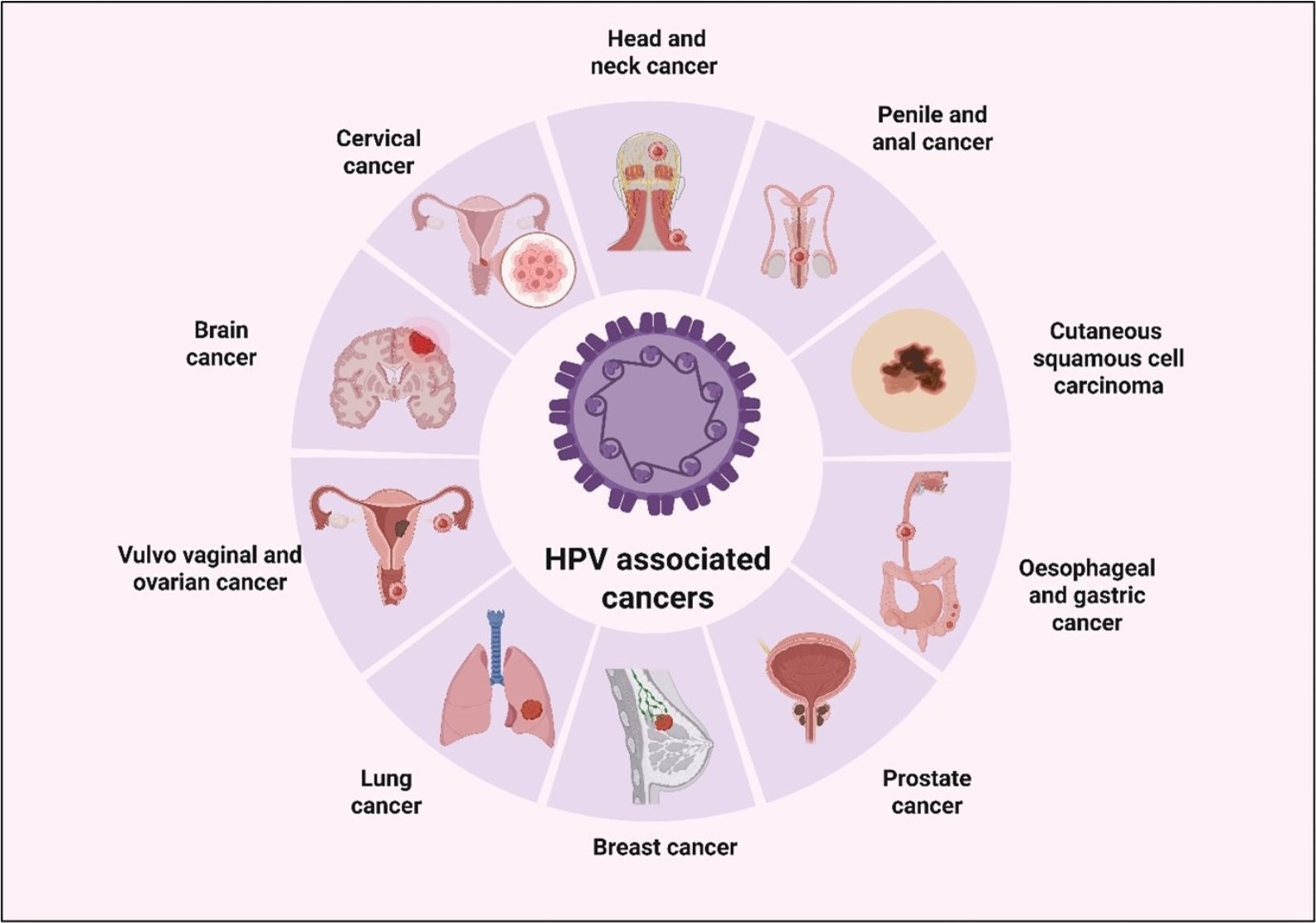
Therapeutic Landscape of HPV-Associated Cancers: From Mechanisms and Conventional Approaches to Future Innovations

 ,
,
Simple Summary
Abstract
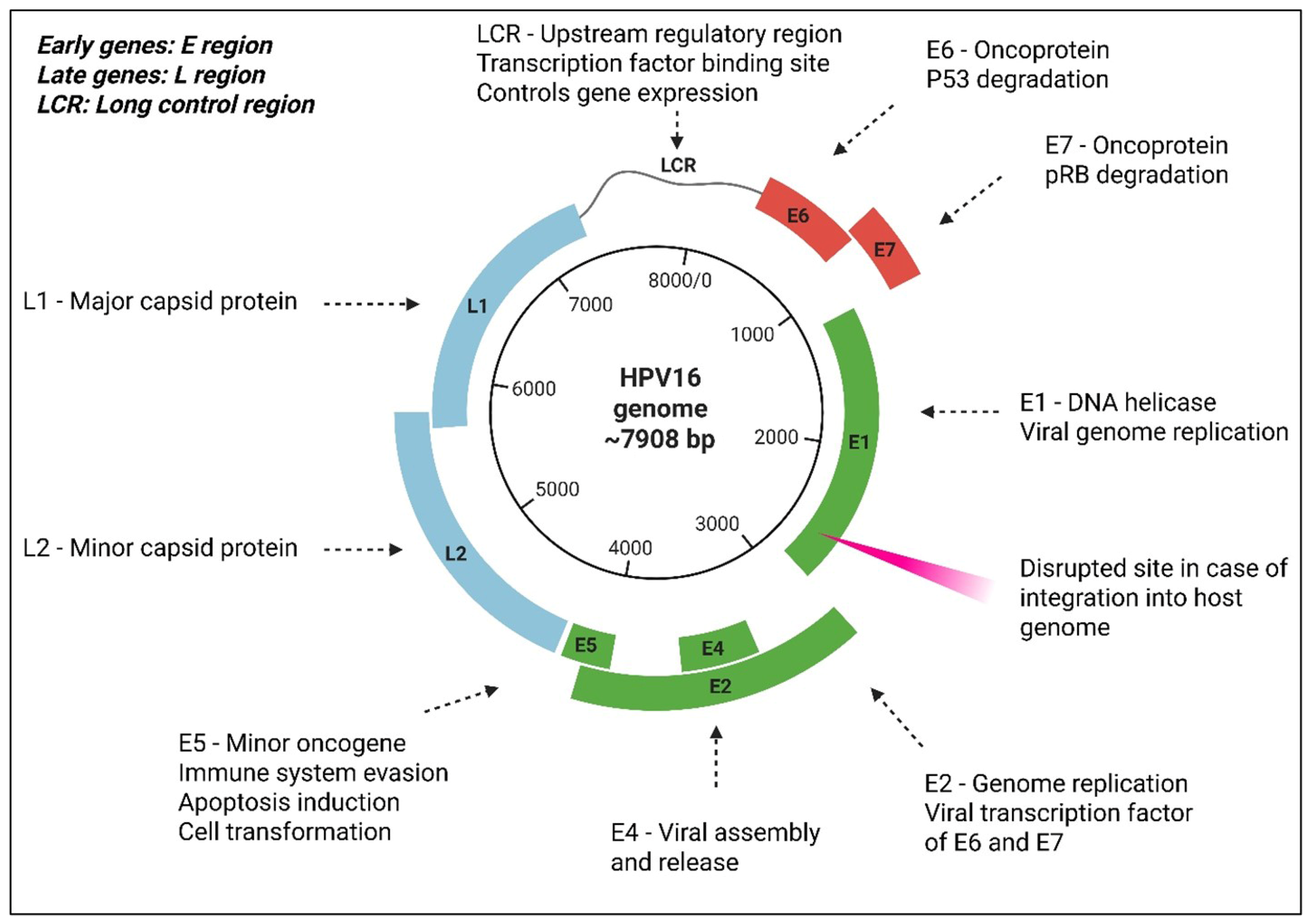
1. Human Papillomavirus
2. Modes of HPV Transmission
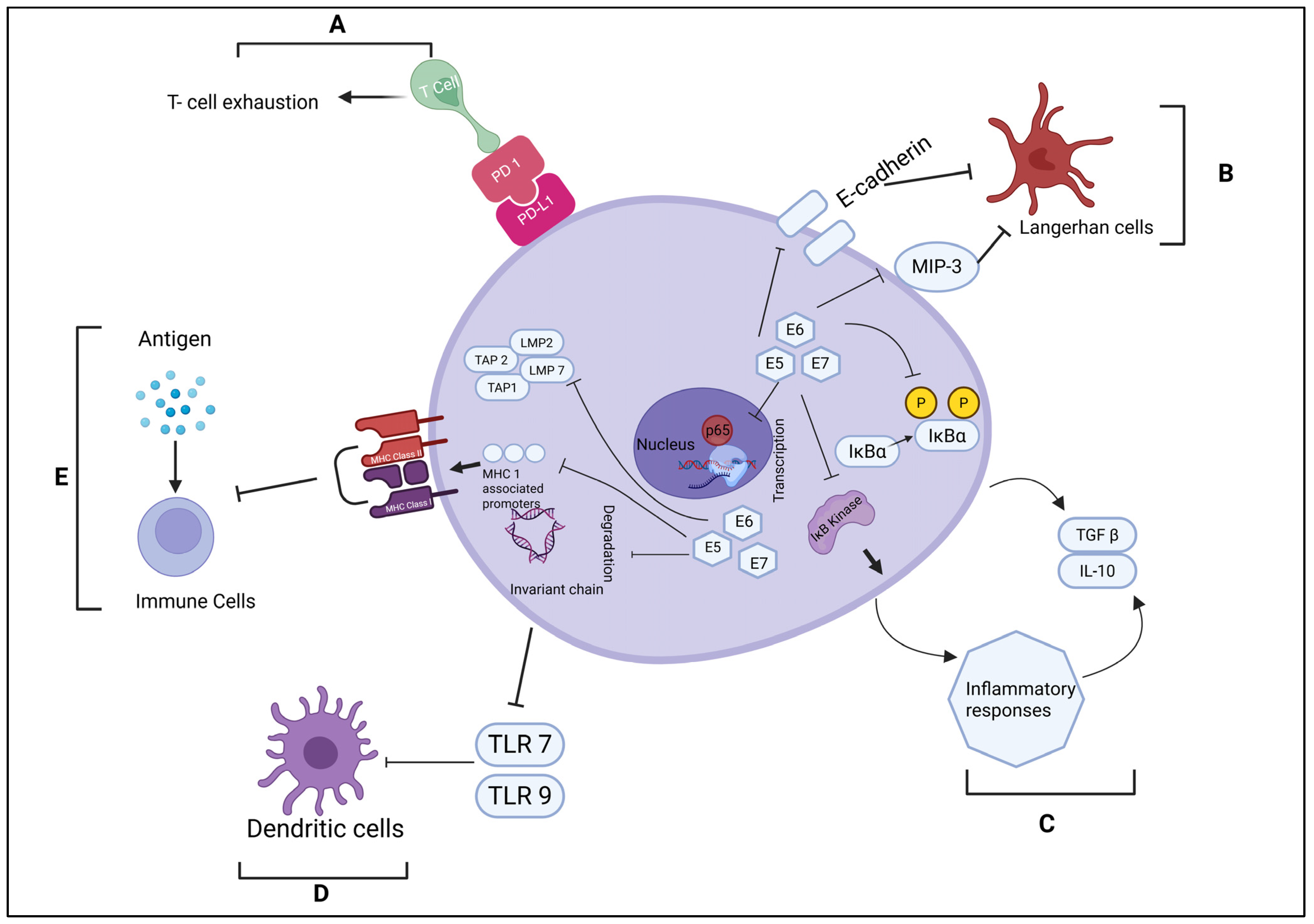
3. HPV–Host Interaction
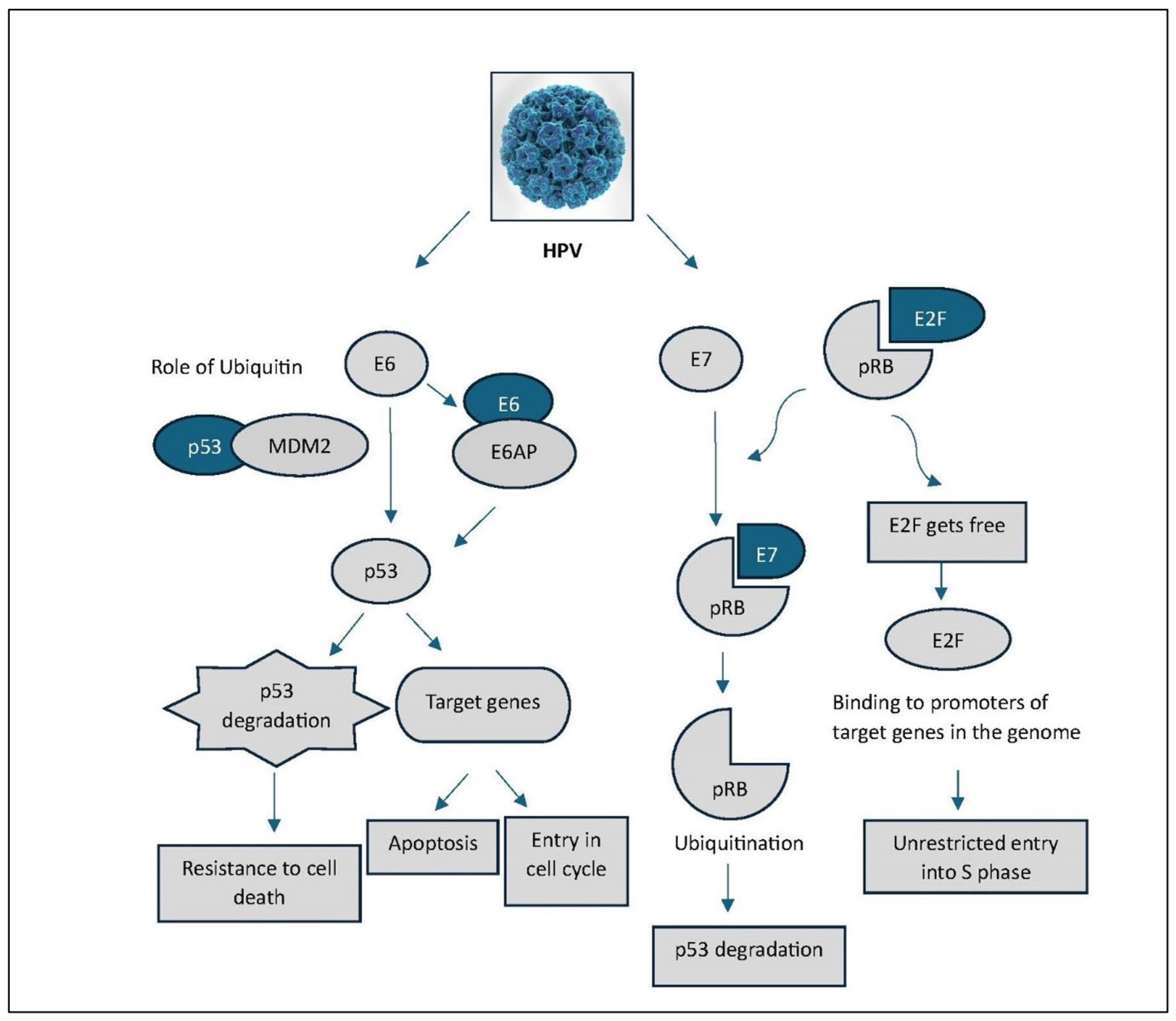
4. Role of Viral Oncoprotein in Carcinogenesis
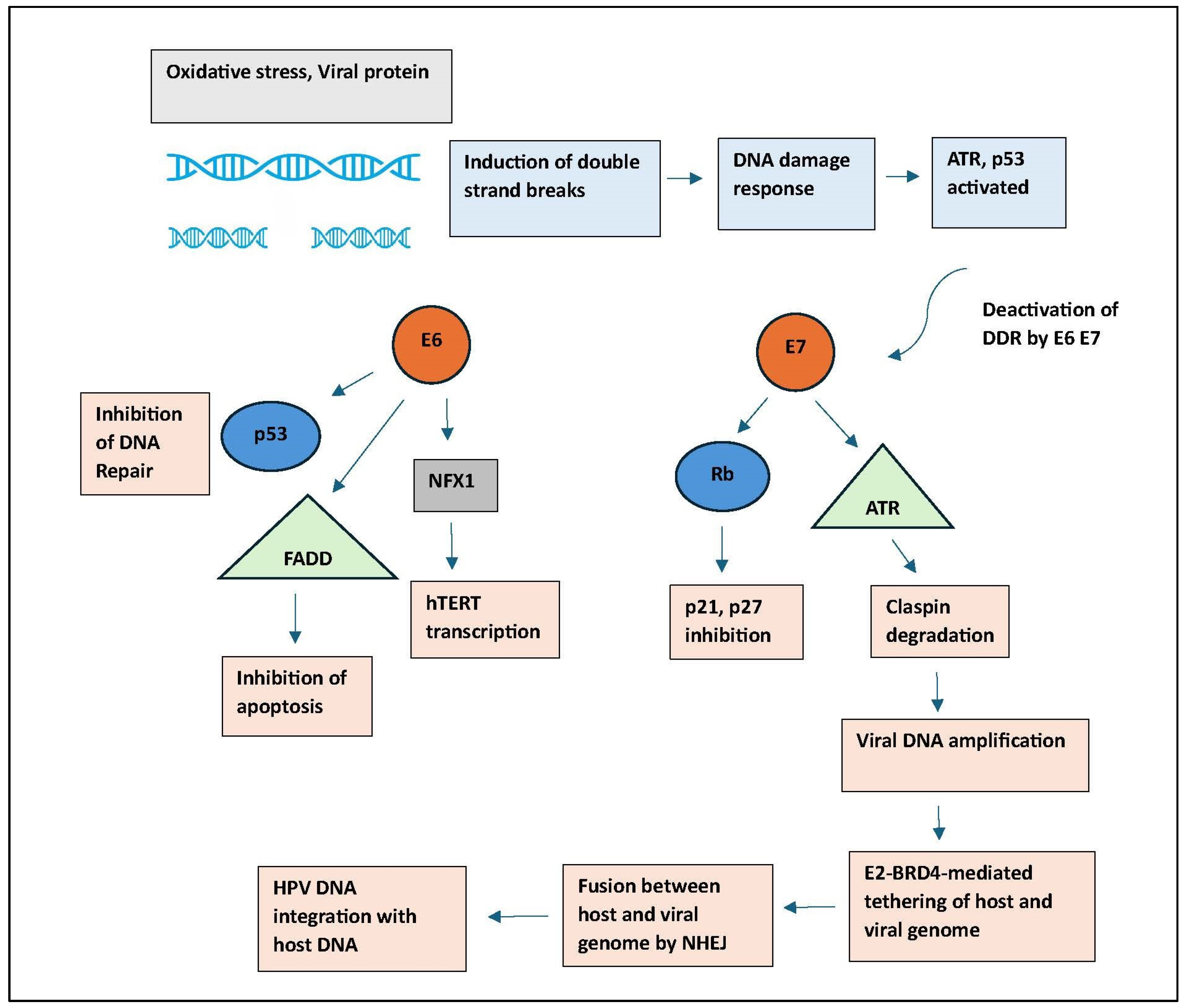
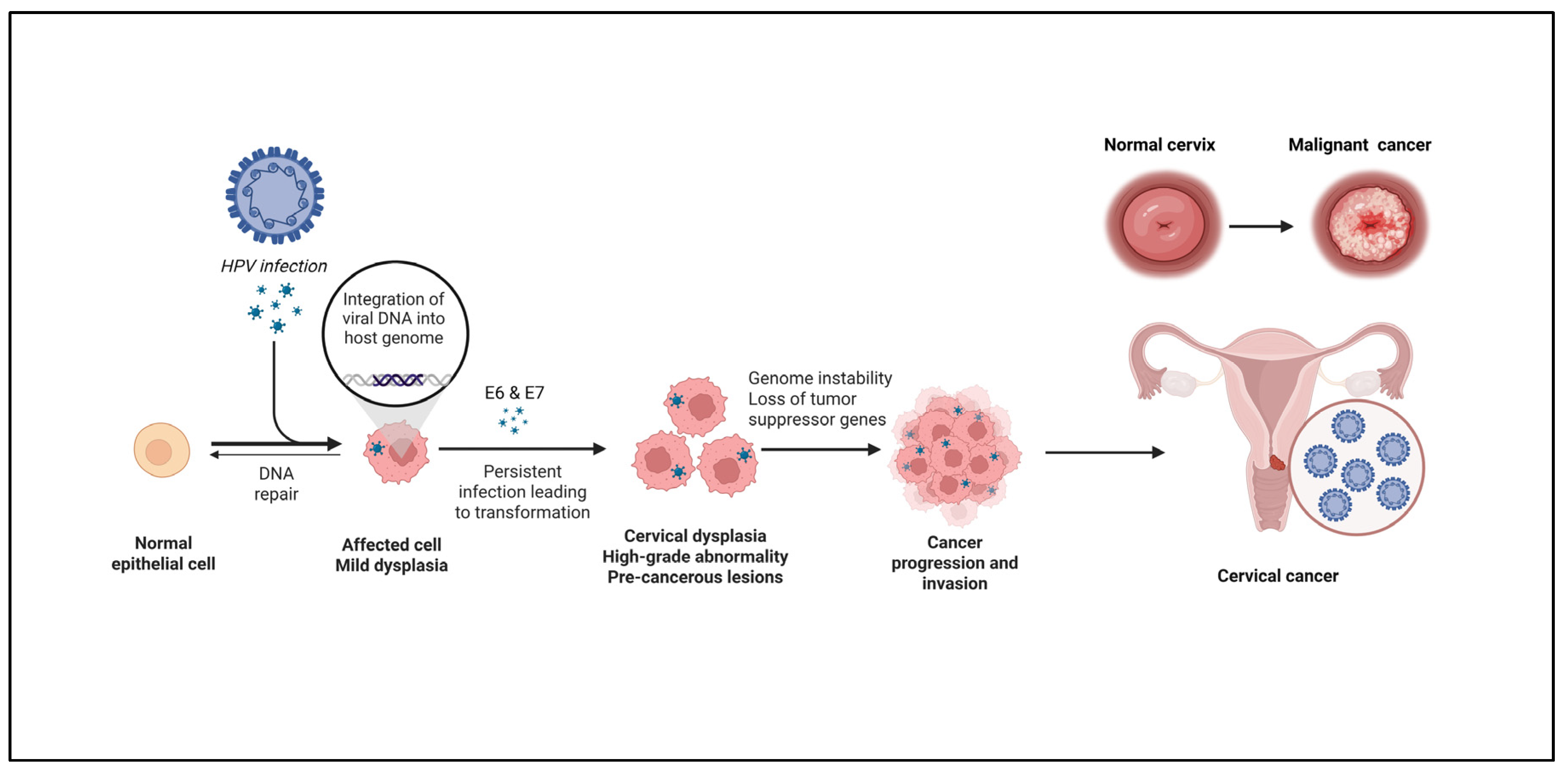
5. Integration of Viral DNA into the Host Genome
6. Development of Malignancy
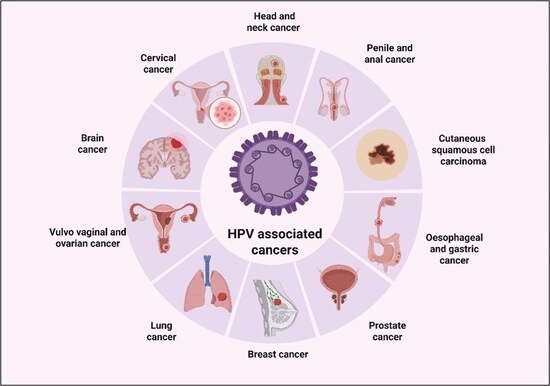
7. HPV and Cancer
7.1. Smoking as a Co-Factor in HPV-Mediated Carcinogenesis
7.2. Anogenital Cancers
7.2.1. HPV and Cervical Cancer
7.2.2. HPV and Anal Cancer
7.2.3. HPV and Vulvovaginal Cancer
7.2.4. HPV and Head and Neck Cancers
7.3. HPV-Associated Malignancies in HIV-Positive and Immunocompromised Populations
7.4. Cancers with Emerging or Controversial Association with HPV
7.4.1. HPV and Oesophageal Cancer
7.4.2. HPV and Lung Cancer
7.4.3. HPV and Brain Tumour
7.4.4. HPV and Cutaneous Squamous Cell Carcinoma
7.4.5. Other Cancers
8. Prevention for HPV-Associated Cancers
8.1. Primary Prevention by Vaccination
8.2. Effectiveness and Recommendations for Different Age Groups
8.2.1. Adolescents and Pre-Adolescents (9–14 Years) Effectiveness
8.2.2. Young Adults (15 to 26 Years) Effectiveness
8.2.3. Adults (Ages 27–45) Effectiveness
8.2.4. Senior Adults (Ages 46+) Effectiveness
8.3. Secondary Prevention by Diagnostics and Screening

| Study Number | Vaccine Tested | Phase | Sponsor | Inclusion Criteria | Study Type & Participant Count (PC) | Main Outcome | Reference |
|---|---|---|---|---|---|---|---|
| NCT04180215 | HB-200 (arenavirus-based) | I/II | HOOKIPA Pharma | HPV16+ recurrent/metastatic head and neck cancer; prior treatment with pembrolizumab | Open-label, multicentre PC—35 (20 first-line, 15 second line) | Safety, tolerability, and preliminary efficacy of HB-200 in combination with pembrolizumab | [103] |
| NCT03418480 | BNT113 (HARE-40) | I/II | University of Southampton & BioNTech SE | HPV16+ head and neck, cervical, or anogenital cancers; prior treatment with chemotherapy or immunotherapy | Dose escalation, open-label PC—Not specified | Safety, tolerability, and recommended dose of BNT113 | [104] |
| NCT03180034 | Cervarix (bivalent) | Not specified | National Cancer Institute (NCI) | Girls aged 9–14 years; no prior HPV vaccination | Immunobridging PC—1240 (620 girls, 620 women) | Immunogenicity of a single dose of HPV vaccine compared to three doses of Gardasil | [105] |
| NCT06623409 | V540B (next-gen HPV vaccine) | I | Merck & Co., Inc. | Healthy adults aged 18–45 years; no prior HPV vaccination | Open-label, multicentre PC—Not specified | Safety and tolerability of V540B in healthy adults | [106] |
| NCT03180684 | VGX-3100 (DNA vaccine) | II | Inovio Pharmaceuticals | Women with vulvar HSIL (VIN 2 or VIN 3) associated with HPV types 16 and/or 18 | Randomized, open-label PC—Not specified | Efficacy of VGX-3100 in preventing progression to vulvar cancer | [107] |
| NCT04965350 | Bivalent HPV vaccine (Types 16, 18) | III | Shanghai Zerun Biotechnology Co., Ltd. | Healthy females aged 9–30 years | Randomized, double-blind PC—not specified | Immunogenicity and safety of three consecutive lots of bivalent HPV vaccine | [108] |
| Type Screening/Diagnosis | Description | Indication |
|---|---|---|
| Next-Generation Sequencing (NGS) | Thorough examination of the HPV genome alongside host genetic variations. | Investigating new biomarkers and comprehending the integration of HPV. |
| HPV DNA Testing | Identifies the existence of high-risk HPV DNA within cervical cells. | Evaluation for females between the ages of 30 and 65, particularly for those presenting with atypical Pap smear results. |
| E6/E7 Oncoprotein Detection | Identifies E6 and E7 oncoproteins from high-risk HPV types, signifying active viral oncogenesis. Examination of circulating tumour DNA (ctDNA) or alternative markers present in blood or various body fluids. | Evaluation of HPV-positive women, determining the likelihood of disease advancement. Clear evidence of cancer-causing potential, with a strong focus on specificity. |
| Pap Smear (Papanicolaou Test) | Gathering cellular samples from the cervix and conducting microscopic analysis to detect any irregularities. | Regular screening for women between the ages of 21 and 65, particularly for those who are sexually active |
| Digital Cervicography | A method involving the capture and examination of cervical images to identify any irregularities. | Assessment of atypical cytology or HPV test outcomes, subsequent evaluation for VIA/VILI findings |
8.3.1. Cervical Sampling
8.3.2. Anal Screening
8.3.3. Human Papillomavirus DNA Testing
9. Therapeutic Approaches for HPV-Associated Cancers
9.1. Surgery
9.2. Radiation Therapy
9.3. Chemotherapy
9.4. Targeted Therapy
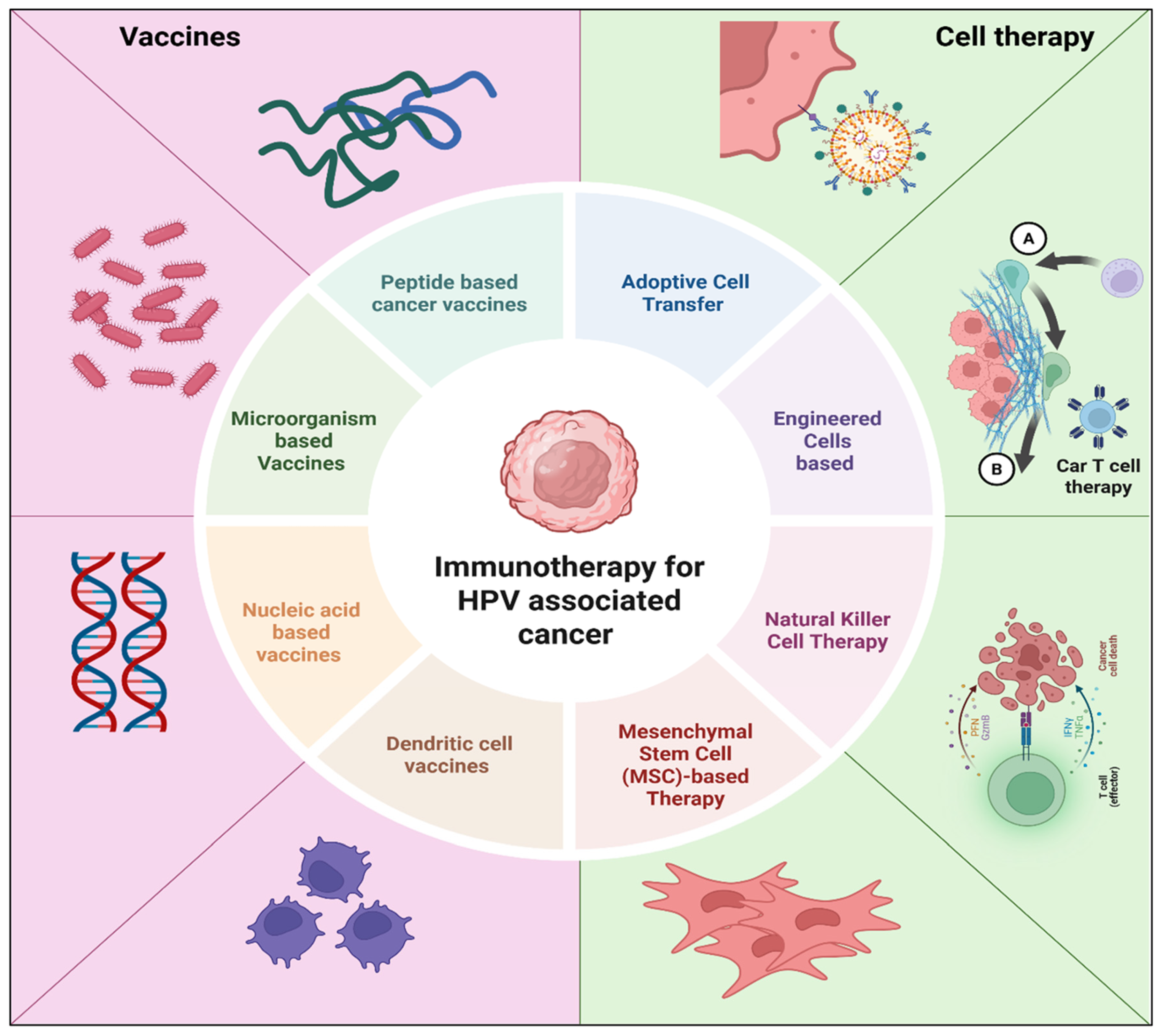
9.5. Immunotherapy
9.6. New and Improved Treatments for HPV-Related Cancers
9.7. Immunotherapy and Combination Regimens
9.7.1. Immune Check-Point Inhibitors-Based Immunotherapy
9.7.2. New Therapeutic Vaccine and Immunotherapy
9.7.3. Antibody–Drug Conjugates and Immunotherapy
9.8. Adoptive Cell Therapies
9.9. Other Systemic Therapies and Combination Therapies
10. Advances in Disease Screening Methods
10.1. Enhanced Molecular Evaluation
10.2. Early Detection of Biomarkers
10.3. Next-Generation Sequencing
10.4. Technology and AI in Screening
11. Conclusions and Future Prospects
Author Contributions
Funding
Institutional Review Board Statement
Informed Consent Statement
Data Availability Statement
Acknowledgments
Conflicts of Interest
References
- Doorbar, J. Papillomavirus Life Cycle Organization and Biomarker Selection. Dis. Markers 2007, 23, 297–313. [Google Scholar] [CrossRef] [PubMed]
- de Villiers, E.M. Cross-roads in the classification of papillomaviruses. Virology 2013, 445, 2–10. [Google Scholar] [CrossRef] [PubMed]
- Amador-Molina, A.; Hernández-Valencia, J.F.; Lamoyi, E.; Contreras-Paredes, A.; Lizano, M. Role of Innate Immunity against Human Papillomavirus (HPV) Infections and Effect of Adjuvants in Promoting Specific Immune Response. Viruses 2013, 5, 2624–2642. [Google Scholar] [CrossRef] [PubMed]
- Tungteakkhun, S.S.; Duerksen-Hughes, P.J. Cellular binding partners of the human papillomavirus E6 protein. Arch. Virol. 2008, 153, 397–408. [Google Scholar] [CrossRef]
- Munger, K.; Baldwin, A.; Edwards, K.M.; Hayakawa, H.; Nguyen, C.L.; Owens, M.; Grace, M.; Huh, K. Mechanisms of Human Papillomavirus-Induced Oncogenesis. J. Virol. 2004, 78, 11451–11460. [Google Scholar] [CrossRef]
- Minichsdorfer, C. Hpv-associated cancers. Memo Mag. Eur. Med. Oncol. 2019, 12, 352–356. [Google Scholar]
- Burd, E.M. Human papillomavirus and cervical cancer. Clin. Microbiol. Rev. 2003, 16, 1–17. [Google Scholar] [CrossRef]
- Day, P.M.; Schelhaas, M. Concepts of papillomavirus entry into host cells. Curr. Opin. Virol. 2014, 4, 24–31. [Google Scholar] [CrossRef]
- Vashisht, S.; Mishra, H.; Mishra, P.K.; Ekielski, A.; Talegaonkar, S. Structure, Genome, Infection Cycle and Clinical Manifestations Associated with Human Papillomavirus. Curr. Pharm. Biotechnol. 2019, 20, 1260–1280. [Google Scholar] [CrossRef]
- Wolf, J.; Kist, L.F.; Pereira, S.B.; Quessada, M.A.; Petek, H.; Pille, A.; Maccari, J.G.; Mutlaq, M.P.; Nasi, L.A. Human papillomavirus infection: Epidemiology, biology, host interactions, cancer development, prevention, and therapeutics. Rev. Med. Virol. 2024, 34, e2537. [Google Scholar] [CrossRef]
- McBride, A.A.; Warburton, A.; Khurana, S. Multiple Roles of Brd4 in the Infectious Cycle of Human Papillomaviruses. Front. Mol. Biosci. 2021, 8, 725794. [Google Scholar] [CrossRef]
- Stanley, M. Host defence and persistent human papillomavirus infection. Curr. Opin. Virol. 2021, 51, 106–110. [Google Scholar] [CrossRef] [PubMed]
- Wakabayashi, R.; Nakahama, Y.; Nguyen, V.; Espinoza, J.L. The Host-Microbe Interplay in Human Papillomavirus-Induced Carcinogenesis. Microorganisms 2019, 7, 199. [Google Scholar] [CrossRef] [PubMed]
- Doorbar, J. Host control of human papillomavirus infection and disease. Best Pract. Res. Clin. Obstet. Gynaecol. 2018, 47, 27–41. [Google Scholar] [PubMed]
- Oyervides-Muñoz, M.A.; Pérez-Maya, A.A.; Rodríguez-Gutiérrez, H.F.; Gómez-Macias, G.S.; Fajardo-Ramírez, O.R.; Treviño, V.; Barrera-Saldaña, H.A.; Garza-Rodríguez, M.L. Understanding the HPV integration and its progression to cervical cancer. Infect. Genet. Evol. 2018, 61, 134–144. [Google Scholar] [CrossRef]
- Aksoy, P.; Gottschalk, E.Y.; Meneses, P.I. HPV entry into cells. Mutat. Res./Rev. Mutat. Res. 2017, 772, 13–22. [Google Scholar] [CrossRef]
- Kombe, A.J.K.; Li, B.; Zahid, A.; Mengist, H.M.; Bounda, G.-A.; Zhou, Y.; Jin, T. Epidemiology and Burden of Human Papillomavirus and Related Diseases, Molecular Pathogenesis, and Vaccine Evaluation. Front. Public Health 2021, 8, 552028. [Google Scholar] [CrossRef]
- DiMaio, D.; Petti, L.M. The e5 proteins. Virology 2013, 445, 99–114. [Google Scholar] [CrossRef]
- Moody, C.A.; Laimins, L.A. Human papillomavirus oncoproteins: Pathways to transformation. Nat. Rev. Cancer 2010, 10, 550–560. [Google Scholar] [CrossRef]
- Suprynowicz, F.A.; Krawczyk, E.; Hebert, J.D.; Sudarshan, S.R.; Simic, V.; Kamonjoh, C.M.; Schlegel, R. The Human Papillomavirus Type 16 E5 Oncoprotein Inhibits Epidermal Growth Factor Trafficking Independently of Endosome Acidification. J. Virol. 2010, 84, 10619–10629. [Google Scholar] [CrossRef]
- Zhang, B.; Srirangam, A.; A Potter, D.; Roman, A. HPV16 E5 protein disrupts the c-Cbl–EGFR interaction and EGFR ubiquitination in human foreskin keratinocytes. Oncogene 2005, 24, 2585–2588. [Google Scholar] [CrossRef] [PubMed]
- Mirghani, H.; Sturgis, E.M.; Aupérin, A.; Monsonego, J.; Blanchard, P. Is there an increased risk of cancer among spouses of patients with an HPV-related cancer: A systematic review. Oral Oncol. 2017, 67, 138–145. [Google Scholar] [CrossRef] [PubMed]
- Hemmat, N.; Bannazadeh Baghi, H. Association of human papillomavirus infection and inflammation in cervical cancer. Pathog. Dis. 2019, 77, ftz048. [Google Scholar] [CrossRef] [PubMed]
- Li, S.; Ye, M.; Chen, Y.; Gong, Q.; Mei, B. Genetic variation of E6 and E7 genes of human papillomavirus 52 from Central China. J. Med. Virol. 2020, 93, 3849–3856. [Google Scholar] [CrossRef]
- Ye, M.; Li, S.; Luo, P.; Tang, X.; Gong, Q.; Mei, B. Genetic variation of E6, E7, and L1 genes of human papillomavirus 51 from central China. J. Med. Virol. 2022, 94, 2811–2823. [Google Scholar] [CrossRef]
- Harden, M.E.; Munger, K. Human papillomavirus molecular biology. Mutat. Res. Rev. Mutat. Res. 2017, 772, 3–12. [Google Scholar] [CrossRef]
- Wang, Y.; Chen, F.; Qu, W.; Gong, Y.; Wang, Y.; Chen, L.; Zhou, Q.; Mo, J.; Zhang, H.; Lin, L.; et al. Alternative splicing in the genome of HPV and its regulation. Front. Cell. Infect. Microbiol. 2024, 14, 1443868. [Google Scholar] [CrossRef]
- Porter, V.L.; Marra, M.A. The Drivers, Mechanisms, and Consequences of Genome Instability in HPV-Driven Cancers. Cancers 2022, 14, 4623. [Google Scholar] [CrossRef]
- Yu, L.; Majerciak, V.; Lobanov, A.; Mirza, S.; Band, V.; Liu, H.; Cam, M.; Hughes, S.H.; Lowy, D.R.; Zheng, Z.-M. HPV oncogenes expressed from only one of multiple integrated HPV DNA copies drive clonal cell expansion in cervical cancer. mBio 2024, 15, e0072924. [Google Scholar] [CrossRef]
- Karimzadeh, M.; Arlidge, C.; Rostami, A.; Lupien, M.; Bratman, S.V.; Hoffman, M.M. Human papillomavirus integration transforms chromatin to drive oncogenesis. Genome Biol. 2023, 24, 142. [Google Scholar] [CrossRef]
- Tang, K.-W.; Alaei-Mahabadi, B.; Samuelsson, T.; Lindh, M.; Larsson, E. The landscape of viral expression and host gene fusion and adaptation in human cancer. Nat. Commun. 2013, 4, 2513. [Google Scholar] [CrossRef]
- Ukić, A. Interactions of Hpv e6 Oncoproteins with Binding Partners: Implications on e6 Stability and Cellular Functions. Ph.D. Thesis, University of Rijeka, Department of Biotechnology, Rijeka, Croatia, 2023. [Google Scholar]
- Bhattacharjee, R.; Das, S.S.; Biswal, S.S.; Nath, A.; Das, D.; Basu, A.; Malik, S.; Kumar, L.; Kar, S.; Singh, S.K.; et al. Mechanistic role of HPV-associated early proteins in cervical cancer: Molecular pathways and targeted therapeutic strategies. Crit. Rev. Oncol. 2022, 174, 103675. [Google Scholar] [CrossRef] [PubMed]
- Yeo-Teh, N.S.L.; Ito, Y.; Jha, S. High-Risk Human Papillomaviral Oncogenes E6 and E7 Target Key Cellular Pathways to Achieve Oncogenesis. Int. J. Mol. Sci. 2018, 19, 1706. [Google Scholar] [CrossRef] [PubMed]
- de Martel, C.; Georges, D.; Bray, F.; Ferlay, J.; Clifford, G.M. Global burden of cancer attributable to infections in 2018: A worldwide incidence analysis. Lancet Glob. Health 2020, 8, e180–e190. [Google Scholar] [CrossRef] [PubMed]
- Gopalani, S.V.; Saraiya, M.; Huang, B.; Tucker, T.C.; Mix, J.M.; Chaturvedi, A.K. Population-level incidence of human papillomavirus–positive oropharyngeal, cervical, and anal cancers, by smoking status. JNCI J. Natl. Cancer Inst. 2024, 116, 1173–1177. [Google Scholar] [CrossRef]
- Ma, K.; Li, S.; Wu, S.; Zhu, J.; Yang, Y. Impact of smoking exposure on human papillomavirus clearance among Chinese women: A follow-up propensity score matching study. Tob. Induc. Dis. 2023, 21, 42. [Google Scholar] [CrossRef]
- Kayar, I.; Goc, G.; Cetin, F.; Birge, Ö. Impact of Smoking on Cervical Histopathological Changes in High-Risk HPV-Positive Women: A Matched Case–Control Study. Medicina 2025, 61, 235. [Google Scholar] [CrossRef]
- Thakral, A.; Lee, J.J.; Hou, T.; Hueniken, K.; Dudding, T.; Gormley, M.; Virani, S.; Olshan, A.; Diergaarde, B.; Ness, A.R.; et al. Smoking and alcohol by HPV status in head and neck cancer: A Mendelian randomization study. Nat. Commun. 2024, 15, 7835. [Google Scholar] [CrossRef]
- Zhu, Y.; Diao, W.; Zhu, X.; Yu, S.; Xia, X.; Han, W.; Chen, X. Impact of Smoking on Outcomes in HPV-Positive Oropharyngeal Squamous Cell Carcinoma in a Chinese Cohort Under AJCC 8th Edition Staging. J. Clin. Med. 2025, 14, 6802. [Google Scholar] [CrossRef]
- de Sanjose, S.; Quint, W.G.; Alemany, L.; Geraets, D.T.; Klaustermeier, J.E.; Lloveras, B.; Tous, S.; Felix, A.; Bravo, L.E.; Shin, H.R.; et al. Human papillomavirus genotype attribution in invasive cervical cancer: A retrospective cross-sectional worldwide study. Lancet Oncol. 2010, 11, 1048–1056. [Google Scholar] [CrossRef]
- Sung, H.; Ferlay, J.; Siegel, R.L.; Laversanne, M.; Soerjomataram, I.; Jemal, A.; Bray, F. Global Cancer Statistics 2020: GLOBOCAN Estimates of Incidence and Mortality Worldwide for 36 Cancers in 185 Countries. CA Cancer J. Clin. 2021, 71, 209–249. [Google Scholar] [CrossRef]
- Alkhaldi, O.R.; Alzahrani, A.H.; Metwally, A.L. Awareness Level About Cervical Cancer, Human Papillomavirus (HPV) and Corresponding Vaccine Among Women Living in the Western Region of Saudi Arabia. Cureus 2023, 15, e37512. [Google Scholar] [CrossRef]
- D’SOuza, G.; Wentz, A.; Kluz, N.; Zhang, Y.; Sugar, E.; Youngfellow, R.M.; Guo, Y.; Xiao, W.; Gillison, M.L. Sex Differences in Risk Factors and Natural History of Oral Human Papillomavirus Infection. J. Infect. Dis. 2016, 213, 1893–1896. [Google Scholar] [CrossRef]
- De Villiers, E.-M.; Fauquet, C.; Broker, T.R.; Bernard, H.-U.; Hausen, Z.H. Classification of papillomaviruses. Virology 2004, 324, 17–27. [Google Scholar] [CrossRef] [PubMed]
- Jallah, J.K.; Anjankar, A.; A Nankong, F. Public Health Approach in the Elimination and Control of Cervical Cancer: A Review. Cureus 2023, 15, e44543. [Google Scholar] [CrossRef] [PubMed]
- Stelzle, D.; Tanaka, L.F.; Lee, K.K.; Ibrahim Khalil, A.; Baussano, I.; Shah, A.S.V.; McAllister, D.A.; Gottlieb, S.L.; Klug, S.J.; Winkler, A.S.; et al. Estimates of the global burden of cervical cancer associated with HIV. Lancet Glob. Health 2021, 9, e161–e169. [Google Scholar] [CrossRef] [PubMed]
- Sastre-Garau, X.; Harlé, A. Pathology of HPV-Associated Head and Neck Carcinomas: Recent Data and Perspectives for the Development of Specific Tumor Markers. Front. Oncol. 2020, 10, 528957. [Google Scholar] [CrossRef]
- Bhatla, N.; Aoki, D.; Sharma, D.N.; Sankaranarayanan, R. Cancer of the cervix uteri: 2021 update. Int. J. Gynecol. Obstet. 2021, 155, 28–44. [Google Scholar] [CrossRef]
- Bosch, F.X.; Lorincz, A.; Munoz, N.; Meijer, C.J.L.M.; Shah, K.V. The causal relation between human papillomavirus and cervical cancer. J. Clin. Pathol. 2002, 55, 244–265. [Google Scholar] [CrossRef]
- Lu, X.; Wang, T.; Zhang, Y.; Liu, Y. Analysis of influencing factors of viral load in patients with high-risk human papillomavirus. Virol. J. 2021, 18, 6. [Google Scholar] [CrossRef]
- Stanley, A.M.; Winder, D.M.; Sterling, J.C.; Goon, P.K. HPV infection, anal intra-epithelial neoplasia (AIN) and anal cancer: Current issues. BMC Cancer 2012, 12, 398. [Google Scholar] [CrossRef]
- van Seters, M.; van Beurden, M.; de Craen, A.J. Is the assumed natural history of vulvar intraepithelial neoplasia iii based on enough evidence? A systematic review of 3322 published patients. Gynecol. Oncol. 2005, 97, 645–651. [Google Scholar] [CrossRef] [PubMed]
- Garland, S.M.; Hernandez-Avila, M.; Wheeler, C.M.; Perez, G.; Harper, D.M.; Leodolter, S.; Tang, G.W.; Ferris, D.G.; Steben, M.; Bryan, J.; et al. Quadrivalent Vaccine against Human Papillomavirus to Prevent Anogenital Diseases. N. Engl. J. Med. 2007, 356, 1928–1943. [Google Scholar] [CrossRef] [PubMed]
- Irvine, A.M.; Stolk, A.W.; Smith, E.M.; Subramanian, S.; Singh, B.K.; Weil, G.J.; Michael, E.; Hollingsworth, T.D. Effectiveness of a triple-drug regimen for global elimination of lymphatic filariasis: A modelling study. Lancet Infect. Dis. 2017, 17, 451–458. [Google Scholar] [CrossRef] [PubMed]
- Johnson, D.E.; Burtness, B.; Leemans, C.R.; Lui, V.W.Y.; Bauman, J.E.; Grandis, J.R. Head and neck squamous cell carcinoma. Nat. Rev. Dis. Primers 2020, 6, 92. [Google Scholar] [CrossRef]
- Kamangar, F.; Dores, G.M.; Anderson, W.F. Patterns of Cancer Incidence, Mortality, and Prevalence Across Five Continents: Defining Priorities to Reduce Cancer Disparities in Different Geographic Regions of the World. J. Clin. Oncol. 2006, 24, 2137–2150. [Google Scholar] [CrossRef]
- De Martel, C.; Plummer, M.; Vignat, J.; Franceschi, S. Worldwide burden of cancer attributable to HPV by site, country and HPV type. Int. J. Cancer 2017, 141, 664–670. [Google Scholar] [CrossRef]
- Betiol, J.; Villa, L.; Sichero, L. Impact of HPV infection on the development of head and neck cancer. Braz. J. Med. Biol. Res. 2013, 46, 217–226. [Google Scholar] [CrossRef]
- Marur, S.; D’Souza, G.; Westra, W.H.; Forastiere, A.A. HPV-associated head and neck cancer: A virus-related cancer epidemic. Lancet Oncol. 2010, 11, 781–789. [Google Scholar] [CrossRef]
- Castellsagué, X.; Alemany, L.; Quer, M.; Halec, G.; Quirós, B.; Tous, S.; Clavero, O.; Alòs, L.; Biegner, T.; Szafarowski, T.; et al. HPV Involvement in Head and Neck Cancers: Comprehensive Assessment of Biomarkers in 3680 Patients. J. Natl. Cancer Inst. 2016, 108, djv403. [Google Scholar] [CrossRef]
- Chen, S.Y.; Massa, S.; Mazul, A.L.; Kallogjeri, D.; Yaeger, L.; Jackson, R.S.; Zevallos, J.; Pipkorn, P. The association of smoking and outcomes in HPV-positive oropharyngeal cancer: A systematic review. Am. J. Otolaryngol. 2020, 41, 102592. [Google Scholar] [CrossRef] [PubMed]
- Canning, M.; Guo, G.; Yu, M.; Myint, C.; Groves, M.W.; Byrd, J.K.; Cui, Y. Heterogeneity of the Head and Neck Squamous Cell Carcinoma Immune Landscape and Its Impact on Immunotherapy. Front. Cell Dev. Biol. 2019, 7, 52. [Google Scholar] [CrossRef] [PubMed]
- Agrawal, N.; Dasaradhi, P.V.N.; Mohmmed, A.; Malhotra, P.; Bhatnagar, R.K.; Mukherjee, S.K. RNA Interference: Biology, Mechanism, and Applications. Microbiol. Mol. Biol. Rev. 2003, 67, 657–685. [Google Scholar] [CrossRef] [PubMed]
- Sablin, M.-P.; Dubot, C.; Klijanienko, J.; Vacher, S.; Ouafi, L.; Chemlali, W.; Caly, M.; Sastre-Garau, X.; Lappartient, E.; Mariani, O.; et al. Identification of new candidate therapeutic target genes in head and neck squamous cell carcinomas. Oncotarget 2016, 7, 47418–47430. [Google Scholar] [CrossRef]
- Rosty, C.; Sheffer, M.; Tsafrir, D.; Stransky, N.; Tsafrir, I.; Peter, M.; de Crémoux, P.; de La Rochefordière, A.; Salmon, R.; Dorval, T.; et al. Identification of a proliferation gene cluster associated with HPV E6/E7 expression level and viral DNA load in invasive cervical carcinoma. Oncogene 2005, 24, 7094–7104. [Google Scholar] [CrossRef]
- Pyeon, D.; Newton, M.A.; Lambert, P.F.; den Boon, J.A.; Sengupta, S.; Marsit, C.J.; Woodworth, C.D.; Connor, J.P.; Haugen, T.H.; Smith, E.M.; et al. Fundamental differences in cell cycle deregulation in human papillomavirus–positive and human papillomavirus–negative head/neck and cervical cancers. Cancer Res. 2007, 67, 4605–4619. [Google Scholar] [CrossRef]
- Grulich, A.E.; van Leeuwen, M.T.; Falster, M.O.; Vajdic, C.M. Incidence of cancers in people with HIV/AIDS compared with immunosuppressed transplant recipients: A meta-analysis. Lancet 2007, 370, 59–67. [Google Scholar] [CrossRef]
- Clifford, G.M.; Gonçalves, M.A.G.; Franceschi, S. Human papillomavirus types among women infected with HIV: A meta-analysis. AIDS 2006, 20, 2337–2344. [Google Scholar] [CrossRef]
- A Engels, E.; Pfeiffer, R.M.; Goedert, J.J.; Virgo, P.; McNeel, T.S.; Scoppa, S.M.; Biggar, R.J. Trends in cancer risk among people with AIDS in the United States 1980–2002. AIDS 2006, 20, 1645–1654. [Google Scholar] [CrossRef]
- Lagergren, J.; Smyth, E.; Cunningham, D.; Lagergren, P. Oesophageal cancer. Lancet 2017, 390, 2383–2396. [Google Scholar] [CrossRef]
- Abnet, C.C.; Arnold, M.; Wei, W.-Q. Epidemiology of esophageal squamous cell carcinoma. Gastroenterology 2018, 154, 360–373. [Google Scholar] [CrossRef] [PubMed]
- Petrelli, F.; De Santi, G.; Rampulla, V.; Ghidini, A.; Mercurio, P.; Mariani, M.; Manara, M.; Rausa, E.; Lonati, V.; Viti, M.; et al. Human papillomavirus (HPV) types 16 and 18 infection and esophageal squamous cell carcinoma: A systematic review and meta-analysis. J. Cancer Res. Clin. Oncol. 2021, 147, 3011–3023. [Google Scholar] [CrossRef] [PubMed]
- Torre, L.A.; Bray, F.; Siegel, R.L.; Ferlay, J.; Lortet-Tieulent, J.; Jemal, A. Global cancer statistics, 2012. CA Cancer J. Clin. 2015, 65, 87–108. [Google Scholar] [CrossRef] [PubMed]
- Bach, P.B.; Mirkin, J.N.; Oliver, T.K.; Azzoli, C.G.; Berry, D.A.; Brawley, O.W.; Byers, T.; Colditz, G.A.; Gould, M.K.; Jett, J.R.; et al. Benefits and harms of ct screening for lung cancer: A systematic review. JAMA 2012, 307, 2418–2429. [Google Scholar] [CrossRef]
- Xue, X.; Yin, Z.; Lu, Y.; Zhang, H.; Yan, Y.; Zhao, Y.; Li, X.; Cui, Z.; Yu, M.; Yao, L.; et al. The Joint Effect of hOGG1, APE1, and ADPRT Polymorphisms and Cooking Oil Fumes on the Risk of Lung Adenocarcinoma in Chinese Non-Smoking Females. PLoS ONE 2013, 8, e71157. [Google Scholar] [CrossRef]
- Sequeira, T.; Pinto, R.; Cardoso, C.; Almeida, C.; Aragão, R.; Almodovar, T.; Bicho, M.; Bicho, M.C.; Bárbara, C. Hpv and lung cancer: A systematic review. Cancers 2024, 16, 3325. [Google Scholar] [CrossRef]
- Karnosky, J.; Dietmaier, W.; Knüttel, H.; Freigang, V.; Koch, M.; Koll, F.; Zeman, F.; Schulz, C. HPV and lung cancer: A systematic review and meta-analysis. Cancer Rep. 2021, 4, e1350. [Google Scholar] [CrossRef]
- Chen, Z.; Lin, H.; Zheng, J.; Cai, L.; Chen, Z.; Li, J.; Yu, L. Epidemiological study of HPV infection in 40,693 women in Putian: A population study based on screening for high-risk HPV infection. BMC Infect. Dis. 2022, 22, 893. [Google Scholar] [CrossRef]
- Tamimi, A.F.; Juweid, M. Epidemiology and outcome of glioblastoma. Exon Publ. 2017, 143–153. [Google Scholar] [CrossRef]
- Vidone, M.; Alessandrini, F.; Marucci, G.; Farnedi, A.; de Biase, D.; Ricceri, F.; Calabrese, C.; Kurelac, I.; Porcelli, A.M.; Cricca, M.; et al. Evidence of association of human papillomavirus with prognosis worsening in glioblastoma multiforme. Neuro-oncology 2013, 16, 298–302. [Google Scholar] [CrossRef]
- Alibek, K.; Kakpenova, A.; Baiken, Y. Role of infectious agents in the carcinogenesis of brain and head and neck cancers. Infect. Agents Cancer 2013, 8, 7. [Google Scholar] [CrossRef] [PubMed]
- Jamieson, L.M.; Garvey, G.; Hedges, J.; Leane, C.; Hill, I.; Brown, A.; Ju, X.; Sethi, S.; Roder, D.; Logan, R.M.; et al. Cohort profile: Indigenous human papillomavirus and oropharyngeal squamous cell carcinoma study—A prospective longitudinal cohort. BMJ Open 2021, 11, e046928. [Google Scholar] [CrossRef] [PubMed]
- Boxman, I.L.; Berkhout, R.J.; Mulder, L.H.; Wolkers, M.C.; Bavinck, J.N.B.; Vermeer, B.J.; ter Schegget, J. Detection of Human Papillomavirus DNA in Plucked Hairs from Renal Transplant Recipients and Healthy Volunteers. J. Investig. Dermatol. 1997, 108, 712–715. [Google Scholar] [CrossRef] [PubMed]
- Gonzalez, D.I., Jr.; Zahn, C.M.; Retzloff, M.G.; Moore, W.F.; Kost, E.R.; Snyder, R.R. Recurrence of dysplasia after loop electrosurgical excision procedures with long-term follow-up. Am. J. Obstet. Gynecol. 2001, 184, 315–321. [Google Scholar] [CrossRef]
- Cao, F.; Li, Y.-Z.; Zhang, D.-Y.; Wang, X.-Y.; Chen, W.-X.; Liu, F.-H.; Men, Y.-X.; Gao, S.; Lin, C.-Q.; Zou, H.-C.; et al. Human papillomavirus infection and the risk of cancer at specific sites other than anogenital tract and oropharyngeal region: An umbrella review. EBioMedicine 2024, 104, 105155. [Google Scholar] [CrossRef]
- Lawson, J.S.; Glenn, W.K. Evidence for a causal role by human papillomaviruses in prostate cancer—A systematic review. Infect. Agents Cancer 2020, 15, 41. [Google Scholar] [CrossRef]
- Kreimer, A.R.; González, P.; A Katki, H.; Porras, C.; Schiffman, M.; Rodriguez, A.C.; Solomon, D.; Jiménez, S.; Schiller, J.T.; Lowy, D.R.; et al. Efficacy of a bivalent HPV 16/18 vaccine against anal HPV 16/18 infection among young women: A nested analysis within the Costa Rica Vaccine Trial. Lancet Oncol. 2011, 12, 862–870. [Google Scholar] [CrossRef]
- Brisson, M.; Kim, J.J.; Canfell, K.; Drolet, M.; Gingras, G.; A Burger, E.; Martin, D.; Simms, K.T.; Bénard, É.; Boily, M.-C.; et al. Impact of HPV vaccination and cervical screening on cervical cancer elimination: A comparative modelling analysis in 78 low-income and lower-middle-income countries. Lancet 2020, 395, 575–590. [Google Scholar] [CrossRef]
- Spinner, C.; Ding, L.; Bernstein, D.I.; Brown, D.R.; Franco, E.L.; Covert, C.; Kahn, J.A. Human Papillomavirus Vaccine Effectiveness and Herd Protection in Young Women. Pediatrics 2019, 143, e20181902. [Google Scholar] [CrossRef]
- Harper, D.M.; DeMars, L.R. HPV vaccines—A review of the first decade. Gynecol. Oncol. 2017, 146, 196–204. [Google Scholar] [CrossRef]
- Spearman, P.; Kalams, S.; Elizaga, M.; Metch, B.; Chiu, Y.-L.; Allen, M.; Weinhold, K.J.; Ferrari, G.; Parker, S.D.; McElrath, M.J.; et al. Safety and immunogenicity of a CTL multiepitope peptide vaccine for HIV with or without GM-CSF in a phase I trial. Vaccine 2008, 27, 243–249. [Google Scholar] [CrossRef] [PubMed]
- Suresh, A.; Suresh, P.; Biswas, R.; Rajanbabu, A.; Sreedhar, S.; Biswas, L. Prevalence of high-risk HPV and its genotypes—Implications in the choice of prophylactic HPV vaccine. J. Med. Virol. 2021, 93, 5188–5192. [Google Scholar] [CrossRef] [PubMed]
- Yousefi, Z.; Aria, H.; Ghaedrahmati, F.; Bakhtiari, T.; Azizi, M.; Bastan, R.; Hosseini, R.; Eskandari, N. An Update on Human Papilloma Virus Vaccines: History, Types, Protection, and Efficacy. Front. Immunol. 2022, 12, 805695. [Google Scholar] [CrossRef] [PubMed]
- Wang, R.; Pan, W.; Jin, L.; Huang, W.; Li, Y.; Wu, D.; Gao, C.; Ma, D.; Liao, S. Human papillomavirus vaccine against cervical cancer: Opportunity and challenge. Cancer Lett. 2020, 471, 88–102. [Google Scholar] [CrossRef]
- Cheng, L.; Wang, Y.; Du, J. Human Papillomavirus Vaccines: An Updated Review. Vaccines 2020, 8, 391. [Google Scholar] [CrossRef]
- Garbuglia, A.R.; Lapa, D.; Sias, C.; Capobianchi, M.R.; Del Porto, P. The Use of Both Therapeutic and Prophylactic Vaccines in the Therapy of Papillomavirus Disease. Front. Immunol. 2020, 11, 188. [Google Scholar] [CrossRef]
- Kamolratanakul, S.; Pitisuttithum, P. Human Papillomavirus Vaccine Efficacy and Effectiveness against Cancer. Vaccines 2021, 9, 1413. [Google Scholar] [CrossRef]
- CDC. Centers for Disease Control and Prevention-hpv Vaccination Recommendations. Available online: https://www.cdc.gov/vaccines/vpd/hpv/hcp/recommendations.html (accessed on 10 May 2023).
- Sachan, P.L.; Singh, M.; Patel, M.L.; Sachan, R. A Study on Cervical Cancer Screening Using Pap Smear Test and Clinical Correlation. Asia-Pac. J. Oncol. Nurs. 2018, 5, 337–341. [Google Scholar] [CrossRef]
- Srivastava, A.N.; Misra, J.S.; Srivastava, S.; Das, B.C.; Gupta, S. Cervical cancer screening in rural india: Status & current concepts. Indian J. Med. Res. 2018, 148, 687–696. [Google Scholar]
- Saslow, D.; Solomon, D.; Lawson, H.W.; Killackey, M.; Kulasingam, S.L.; Cain, J.; Garcia, F.A.R.; Moriarty, A.T.; Waxman, A.G.; Wilbur, D.C.; et al. American Cancer Society, American Society for Colposcopy and Cervical Pathology, and American Society for Clinical Pathology Screening Guidelines for the Prevention and Early Detection of Cervical Cancer. Am. J. Clin. Pathol. 2012, 137, 516–542. [Google Scholar] [CrossRef]
- Ho, A.L.; Nabell, L.; Neupane, P.C.; Posner, M.R.; Yilmaz, E.; Niu, J.; Naqash, A.R.; Pearson, A.T.; Wong, S.J.; Nieva, J.J.; et al. HB-200 arenavirus-based immunotherapy plus pembrolizumab as first-line treatment of patients with recurrent/metastatic HPV16-positive head and neck cancer: Updated results. J. Clin. Oncol. 2024, 42, 6005. [Google Scholar] [CrossRef]
- HARE-40: HPV Anti-CD40 RNA vaccinE (HARE-40). Available online: https://clinicaltrials.gov/study/NCT03418480 (accessed on 12 January 2026).
- Cortés, B.; Ocampo, R.; Porras, C.; Liu, D.; Gail, M.H.; Sierra, M.S.; Herrero, R.; Lowy, D.R.; Carvajal, L.J.; Kemp, T.J.; et al. Human papillomavirus (HPV) type 16 and type 18 antibody concentrations after a single dose of bivalent HPV vaccine in girls aged 9–14 years compared with three doses of quadrivalent HPV vaccine in women aged 18–25 years in Costa Rica (PRIMAVERA): A non-randomised, open-label, immunobridging, non-inferiority trial. Lancet Infect. Diseases. 2025, 25, 1314–1324. [Google Scholar] [CrossRef]
- Safety and Immunogenicity of V540B in Healthy Adults (V540B-002). Available online: https://clinicaltrials.gov/study/NCT06623409 (accessed on 29 December 2025).
- Evaluation of VGX-3100 and Electroporation Alone or in Combination With Imiquimod for the Treatment of HPV-16 and/or HPV-18 Related Vulvar HSIL (Also Referred as: VIN 2 or VIN 3). Available online: https://clinicaltrials.gov/study/NCT03180684 (accessed on 12 January 2026).
- Lot Consistency Clinical Trial of Bivalent HPV Vaccine in 9 to 30 Years Old Healthy Females. Available online: https://ichgcp.net/clinical-trials-registry/NCT04965350 (accessed on 12 January 2026).
- Aimagambetova, G.; Atageldiyeva, K.; Marat, A.; Suleimenova, A.; Issa, T.; Raman, S.; Huang, T.; Ashimkhanova, A.; Aron, S.; Dongo, A.; et al. Comparison of diagnostic accuracy and acceptability of self-sampling devices for human Papillomavirus detection: A systematic review. Prev. Med. Rep. 2024, 38, 102590. [Google Scholar] [CrossRef] [PubMed]
- Tranberg, M.; Jensen, J.S.; Bech, B.H.; Blaakær, J.; Svanholm, H.; Andersen, B. Good concordance of HPV detection between cervico-vaginal self-samples and general practitioner-collected samples using the Cobas 4800 HPV DNA test. BMC Infect. Dis. 2018, 18, 348. [Google Scholar] [CrossRef] [PubMed]
- De Pauw, H.; Donders, G.; Weyers, S.; De Sutter, P.; Doyen, J.; Tjalma, W.A.A.; Broeck, D.V.; Peeters, E.; Van Keer, S.; Vorsters, A.; et al. Cervical cancer screening using HPV tests on self-samples: Attitudes and preferences of women participating in the VALHUDES study. Arch. Public Health 2021, 79, 155. [Google Scholar] [CrossRef]
- Kimura, C.M.; Nahas, C.S.; Silva-Filho, E.V.; Ribeiro, V.L.; Segurado, A.C.; Alcântara, F.F.; Cecconello, I.; Nahas, S.C. High-risk human papillomavirus test in anal smears: Can it optimize the screening for anal cancer? AIDS 2020, 35, 737–745. [Google Scholar] [CrossRef]
- Albuquerque, A.; Rios, E.; Schmitt, F. Recommendations Favoring Anal Cytology as a Method for Anal Cancer Screening: A Systematic Review. Cancers 2019, 11, 1942. [Google Scholar] [CrossRef]
- Chaturvedi, A.K.; D’souza, G.; Gillison, M.L.; Katki, H.A. Burden of HPV-positive oropharynx cancers among ever and never smokers in the U.S. population. Oral Oncol. 2016, 60, 61–67. [Google Scholar] [CrossRef]
- Berman, T.A.; Schiller, J.T. Human papillomavirus in cervical cancer and oropharyngeal cancer: One cause, two diseases. Cancer 2017, 123, 2219–2229. [Google Scholar] [CrossRef]
- Höhn, A.K.; Brambs, C.E.; Hiller, G.G.R.; May, D.; Schmoeckel, E.; Horn, L.-C. 2020 WHO Classification of Female Genital Tumors. Geburtshilfe Frauenheilkd. 2021, 81, 1145–1153. [Google Scholar] [CrossRef]
- Palumbo, M.; Della Corte, L.; Ronsini, C.; Guerra, S.; Giampaolino, P.; Bifulco, G. Surgical Treatment for Early Cervical Cancer in the HPV Era: State of the Art. Healthcare 2023, 11, 2942. [Google Scholar] [CrossRef]
- Thejas, A.; Shailesh, T.; Hemanth Kumar, S. Evolving strategies in cervical cancer therapy: A comprehensive review navigating from molecular insights to regulatory challenges. J. Drug Deliv. Sci. Technol. 2024, 104, 106568. [Google Scholar] [CrossRef]
- Rieu, R.; Eminowicz, G. Chemotherapy for cervical cancer. In Uterine Cervical Cancer: Clinical and Therapeutic Perspectives; Farghaly, S.A., Ed.; Springer International Publishing: Cham, Switzerland, 2019; pp. 215–231. [Google Scholar]
- Kumar, L.; Harish, P.; Malik, P.S.; Khurana, S. Chemotherapy and targeted therapy in the management of cervical cancer. Curr. Probl. Cancer 2018, 42, 120–128. [Google Scholar] [CrossRef] [PubMed]
- Anwer, M.; Bhaliya, K.; Munn, A.; Wei, M.Q. Bacterial ghosts: A breakthrough approach to cancer vaccination. Biomed. Pharmacother. 2024, 182, 117766. [Google Scholar] [CrossRef] [PubMed]
- Roof, L.; Yilmaz, E. Immunotherapy in HPV-Related Oropharyngeal Cancers. Curr. Treat. Options Oncol. 2023, 24, 170–183. [Google Scholar] [CrossRef] [PubMed]
- Conroy, R. FDA Approves Pembrolizumab/Chemoradiation in Stage III/IVA Cervical Cancer. Cancer Network. 2024 Jan 12:NA-. Available online: https://go.gale.com/ps/i.do?p=HRCA&sw=w&issn=&v=2.1&it=r&id=GALE%7CA780380830&sid=googleScholar&linkaccess=abs&userGroupName=griffith&aty=ip (accessed on 2 January 2026).
- Ang, D.J.M.; Chan, J.J. Evolving standards and future directions for systemic therapies in cervical cancer. J. Gynecol. Oncol. 2024, 35, e65. [Google Scholar] [CrossRef]
- Tewari, K.S.; Monk, B.J.; Vergote, I.; Miller, A.; de Melo, A.C.; Kim, H.-S.; Kim, Y.M.; Lisyanskaya, A.; Samouëlian, V.; Lorusso, D.; et al. Survival with Cemiplimab in Recurrent Cervical Cancer. N. Engl. J. Med. 2022, 386, 544–555. [Google Scholar] [CrossRef]
- Floudas, C.S.; Goswami, M.; Donahue, R.N.; Pastor, D.M.; Redman, J.M.; Brownell, I.; Turkbey, E.B.; Cordes, L.M.; Steinberg, S.M.; Manu, M.; et al. Novel combination immunotherapy and clinical activity in patients with hpv-associated cancers: A nonrandomized clinical trial. JAMA Oncol. 2025, 11, 394–399. [Google Scholar] [CrossRef]
- Klinghammer, K.; Saba, N.; Castelluci, E.; Colevas, A.; Rutkowski, T.; Greil, R.; Thurner, D.; Müller-Richter, U.; Di Giacomo, A.; Grewal, J.; et al. 155P BNT113 + pembrolizumab as first-line treatment in patients with unresectable recurrent/metastatic HNSCC: Preliminary safety data from AHEAD-MERIT. Immuno-Oncol. Technol. 2022, 16, 100267. [Google Scholar] [CrossRef]
- Lorusso, D.; Xiang, Y.; Hasegawa, K.; Scambia, G.; Leiva, M.; Ramos-Elias, P.; Acevedo, A.; Cvek, J.; Randall, L.; Gomes, A.J.P.d.S.; et al. Pembrolizumab or placebo with chemoradiotherapy followed by pembrolizumab or placebo for newly diagnosed, high-risk, locally advanced cervical cancer (ENGOT-cx11/GOG-3047/KEYNOTE-A18): Overall survival results from a randomised, double-blind, placebo-controlled, phase 3 trial. Lancet 2024, 404, 1321–1332. [Google Scholar] [CrossRef]
- Monk, B.J.; Colombo, N.; Tewari, K.S.; Dubot, C.; Caceres, M.V.; Hasegawa, K.; Shapira-Frommer, R.; Salman, P.; Yañez, E.; Gümüş, M.; et al. First-Line Pembrolizumab + Chemotherapy Versus Placebo + Chemotherapy for Persistent, Recurrent, or Metastatic Cervical Cancer: Final Overall Survival Results of KEYNOTE-826. J. Clin. Oncol. 2023, 41, 5505–5511. [Google Scholar] [CrossRef]
- Sisodia, R.C.; Dewdney, S.B.; Fader, A.N.; Wethington, S.L.; Melamed, A.; Von Gruenigen, V.E.; Zivanovic, O.; Carter, J.; Cohn, D.E.; Huh, W.; et al. Patient reported outcomes measures in gynecologic oncology: A primer for clinical use, part I. Gynecol. Oncol. 2020, 158, 194–200. [Google Scholar] [CrossRef] [PubMed]
- Rosenberg, A.J.; Perez, C.A.; Guo, W.; Novaes, J.M.d.O.; Reis, K.F.O.d.S.; McGarrah, P.W.; Price, K.A. Breaking Ground in Recurrent or Metastatic Head and Neck Squamous Cell Carcinoma: Novel Therapies Beyond PD-L1 Immunotherapy. Am. Soc. Clin. Oncol. Educ. Book 2024, 44, e433330. [Google Scholar] [CrossRef] [PubMed]
- Poppe, L.K.; Roller, N.; Medina-Enriquez, M.M.; Lassoued, W.; Burnett, D.; E Lothstein, K.; Khelifa, A.S.; Miyamoto, M.; Gulley, J.L.; Jochems, C.; et al. Combination of HDAC inhibition and cytokine enhances therapeutic HPV vaccine therapy. J. Immunother. Cancer 2025, 13, e011074. [Google Scholar] [CrossRef] [PubMed]
- Grippin, A.; Court, K.; O’hAra, M.; Gjyshi, O.; Mathew, G.; Domingo, M.; Lin, L.; Jhingran, A.; Joyner, M.; Napravnik, T.C.; et al. IMMUNOCERV Phase II Trial Combining the HPV-Specific T Cell Immunotherapy PDS0101 with Chemoradiation for Treatment of Locally Advanced Cervical Cancer. Int. J. Radiat. Oncol. 2024, 120, S113. [Google Scholar] [CrossRef]
- Wang, B.; Liang, Y.; Wu, Y.; Li, Q.; Zeng, Y.; Liu, L.; Cao, W.; Geng, X.; Huang, Y.; Wu, Y.; et al. Sintilimab plus HPV vaccine for recurrent or metastatic cervical cancer. J. Immunother. Cancer 2024, 12, e009898. [Google Scholar] [CrossRef]
- Meric-Bernstam, F.; Makker, V.; Oaknin, A.; Oh, D.-Y.; Banerjee, S.; González-Martín, A.; Jung, K.H.; Ługowska, I.; Manso, L.; Manzano, A.; et al. Efficacy and Safety of Trastuzumab Deruxtecan in Patients With HER2-Expressing Solid Tumors: Primary Results From the DESTINY-PanTumor02 Phase II Trial. J. Clin. Oncol. 2024, 42, 47–58. [Google Scholar] [CrossRef]
- Lu, Z.; Haghollahi, S.; Afzal, M. Potential Therapeutic Targets for the Treatment of HPV-Associated Malignancies. Cancers 2024, 16, 3474. [Google Scholar] [CrossRef]
- Jin, B.Y.; Campbell, T.E.; Draper, L.M.; Stevanović, S.; Weissbrich, B.; Yu, Z.; Restifo, N.P.; Rosenberg, S.A.; Trimble, C.L.; Hinrichs, C.S. Engineered t cells targeting e7 mediate regression of human papillomavirus cancers in a murine model. JCI Insight 2018, 3, e99488. [Google Scholar] [CrossRef]
- Messa, L.; Loregian, A. HPV-induced cancers: Preclinical therapeutic advancements. Expert Opin. Investig. Drugs 2022, 31, 79–93. [Google Scholar] [CrossRef]
- Petersen, Z.; Jaca, A.; Ginindza, T.G.; Maseko, G.; Takatshana, S.; Ndlovu, P.; Zondi, N.; Zungu, N.; Varghese, C.; Hunting, G.; et al. Barriers to uptake of cervical cancer screening services in low-and-middle-income countries: A systematic review. BMC Womens Health 2022, 22, 486. [Google Scholar] [CrossRef]
- Arbyn, M.; Smith, S.B.; Temin, S.; Sultana, F.; Castle, P. Detecting cervical precancer and reaching underscreened women by using HPV testing on self samples: Updated meta-analyses. BMJ 2018, 363, k4823. [Google Scholar] [CrossRef] [PubMed]
- Schreiberhuber, L.; Barrett, J.E.; Wang, J.; Redl, E.; Herzog, C.; Vavourakis, C.D.; Sundström, K.; Dillner, J.; Widschwendter, M. Cervical cancer screening using DNA methylation triage in a real-world population. Nat. Med. 2024, 30, 2251–2257. [Google Scholar] [CrossRef] [PubMed]
- Mazurec, K.; Trzeszcz, M.; Mazurec, M.; Streb, J.; Halon, A.; Jach, R. Triage Strategies for Non-16/Non-18 HPV-Positive Women in Primary HPV-Based Cervical Cancer Screening: P16/Ki67 Dual Stain vs. Cytology. Cancers 2023, 15, 5095. [Google Scholar] [CrossRef] [PubMed]
- Califano, J.; Yousef, A.; Mostafa, H.; Valsamakis, A.; Zhang, X.; Batis, N.; Varghese, C.; Parish, J.; Forman, M.; Jarrett, J.; et al. Lead Time to Recurrence After Posttreatment Plasma and Saliva HPV DNA Testing in Patients With Low-Risk HPV Oropharynx Cancer. Arch. Otolaryngol. Neck Surg. 2023, 149, 812–819. [Google Scholar] [CrossRef]
- Galati, L.; Tagliabue, M.; Gheit, T.; De Berardinis, R.; Maffini, F.; McKay-Chopin, S.; De Palma, G.; Vecchio, S.; Paradiso, A.V.; Sichero, L.; et al. HPV Biomarkers in Oral and Blood-Derived Body Fluids in Head and Neck Cancer Patients. J. Med. Virol. 2025, 97, e70278. [Google Scholar] [CrossRef]
- Lagström, S.; Umu, S.U.; Lepistö, M.; Ellonen, P.; Meisal, R.; Christiansen, I.K.; Ambur, O.H.; Rounge, T.B. TaME-seq: An efficient sequencing approach for characterisation of HPV genomic variability and chromosomal integration. Sci. Rep. 2019, 9, 524. [Google Scholar] [CrossRef]
- Lee, J.Y.; Garcia-Murillas, I.; Cutts, R.J.; De Castro, D.G.; Grove, L.; Hurley, T.; Wang, F.; Nutting, C.; Newbold, K.; Harrington, K.; et al. Predicting response to radical (chemo)radiotherapy with circulating HPV DNA in locally advanced head and neck squamous carcinoma. Br. J. Cancer 2017, 117, 876–883. [Google Scholar] [CrossRef]
- Wang, J.; Yu, Y.; Tan, Y.; Wan, H.; Zheng, N.; He, Z.; Mao, L.; Ren, W.; Chen, K.; Lin, Z.; et al. Artificial intelligence enables precision diagnosis of cervical cytology grades and cervical cancer. Nat. Commun. 2024, 15, 4369. [Google Scholar] [CrossRef]
- Ouh, Y.-T.; Kim, T.J.; Ju, W.; Kim, S.W.; Jeon, S.; Kim, S.-N.; Kim, K.G.; Lee, J.-K. Development and validation of artificial intelligence-based analysis software to support screening system of cervical intraepithelial neoplasia. Sci. Rep. 2024, 14, 1957. [Google Scholar] [CrossRef]
- Wu, T.; Lucas, E.; Zhao, F.; Basu, P.; Qiao, Y. Artificial intelligence strengthenes cervical cancer screening—Present and future. Cancer Biol. Med. 2024, 21, 864–879. [Google Scholar] [CrossRef]




| HPV Types | Risk Classification | Associated Diseases | Vaccine Coverage | Reference |
|---|---|---|---|---|
| 6, 11 | Low risk | Genital warts, laryngeal papillomatosis, oral papillomas | Quadrivalent (Gardasil), Nonavalent (Gardasil 9) | [10] |
| 16, 18 | High risk | Cervical, anal, vulvar, vaginal, penile, and oropharyngeal cancers | Bivalent (Cervarix), Quadrivalent, Nonavalent | [93,94] |
| 31, 33, 45, 52, 58 | High risk | Cervical and other anogenital cancers | Nonavalent (Gardasil 9) | [58] |
| 35, 39, 51, 56, 59, 66, 68 | High risk | Cervical and other anogenital cancers | Not covered by current vaccines. Next-gen multivalent and L2-based vaccines under research for broader coverage | [95] |
| 26, 53, 73, 82 | Probable high risk | Potential association with cervical and other anogenital cancers | Not covered by current vaccines. Broad-spectrum L2-based, DNA, and peptide vaccines under investigation | [96,97] |
| 1, 2, 4, 7, 10, 28, 40, 42, 43, 44, 54, 61, 70, 72, 81, CP6108 | Low risk | Common warts, plantar warts, flat warts, and other benign lesions | Not covered by current vaccines. Therapeutic vaccines, live attenuated, and bacterial vector vaccines under investigation | [93,98] |
| Trial Name | Target | Therapy | Phase | Status/Outcome | Reference |
|---|---|---|---|---|---|
| KEYNOTE-A18 | Cervical cancer | Pembrolizumab + Chemoradiotherapy (CRT) | Phase 3 | FDA-approved, improved PFS and OS | [128] |
| KEYNOTE-826 | Advanced cervical cancer | Pembrolizumab + Chemotherapy + Bevacizumab | Phase 3 | FDA-approved, significant OS benefit | [129] |
| NCT03189719 (ADXS-HPV) | Recurrent/metastatic cervical cancer | Listeria monocytogenes-based immunotherapy (Axalimogene filolisbac) | Phase 3 (Terminated) | Terminated early, informative for live-vector vaccines | [130] |
| VERSATILE-002/VERSATILE-003 | HPV16+ Head and Neck Squamous Cell Carcinoma (HNSCC) | PDS0101 + Pembrolizumab (Therapeutic vaccine + PD-1 inhibitor) | Phase 2/Phase 3 | Positive Phase 2 data, Phase 3 ongoing | [126] |
| AHEAD-MERIT Trial (BNT113) | HPV16+ HNSCC | BNT113 mRNA vaccine + Pembrolizumab | Phase 2 | Recruiting, early promising data | [131] |
| NCT04287868 (Triplet Therapy) | HPV16-associated cancers | PDS0101 + IL-12 Antibody-Drug Conjugate + Bintrafusp alfa | Phase 1/2 | Promising ORR, ongoing trials | [132] |
Disclaimer/Publisher’s Note: The statements, opinions and data contained in all publications are solely those of the individual author(s) and contributor(s) and not of MDPI and/or the editor(s). MDPI and/or the editor(s) disclaim responsibility for any injury to people or property resulting from any ideas, methods, instructions or products referred to in the content. |
© 2026 by the authors. Licensee MDPI, Basel, Switzerland. This article is an open access article distributed under the terms and conditions of the Creative Commons Attribution (CC BY) license.
Share and Cite
Anwer, M.; Bhaliya, K.; Zahra, M.; Virk, U.Y.; Malik, H.A.; Wei, M.Q. Therapeutic Landscape of HPV-Associated Cancers: From Mechanisms and Conventional Approaches to Future Innovations. Cancers 2026, 18, 636. https://doi.org/10.3390/cancers18040636
Anwer M, Bhaliya K, Zahra M, Virk UY, Malik HA, Wei MQ. Therapeutic Landscape of HPV-Associated Cancers: From Mechanisms and Conventional Approaches to Future Innovations. Cancers. 2026; 18(4):636. https://doi.org/10.3390/cancers18040636
Chicago/Turabian StyleAnwer, Muneera, Krupa Bhaliya, Memoona Zahra, Urooj Yousaf Virk, Hafiza Aasia Malik, and Ming Q. Wei. 2026. "Therapeutic Landscape of HPV-Associated Cancers: From Mechanisms and Conventional Approaches to Future Innovations" Cancers 18, no. 4: 636. https://doi.org/10.3390/cancers18040636
APA StyleAnwer, M., Bhaliya, K., Zahra, M., Virk, U. Y., Malik, H. A., & Wei, M. Q. (2026). Therapeutic Landscape of HPV-Associated Cancers: From Mechanisms and Conventional Approaches to Future Innovations. Cancers, 18(4), 636. https://doi.org/10.3390/cancers18040636