The Role of Low CD36 Expression in the Development of Non-Small Cell Lung Cancer and Its Potential for Therapy

 and
and
Simple Summary
Abstract
1. Introduction
2. Molecular Mechanisms of CD36 in Lung Cancer Development
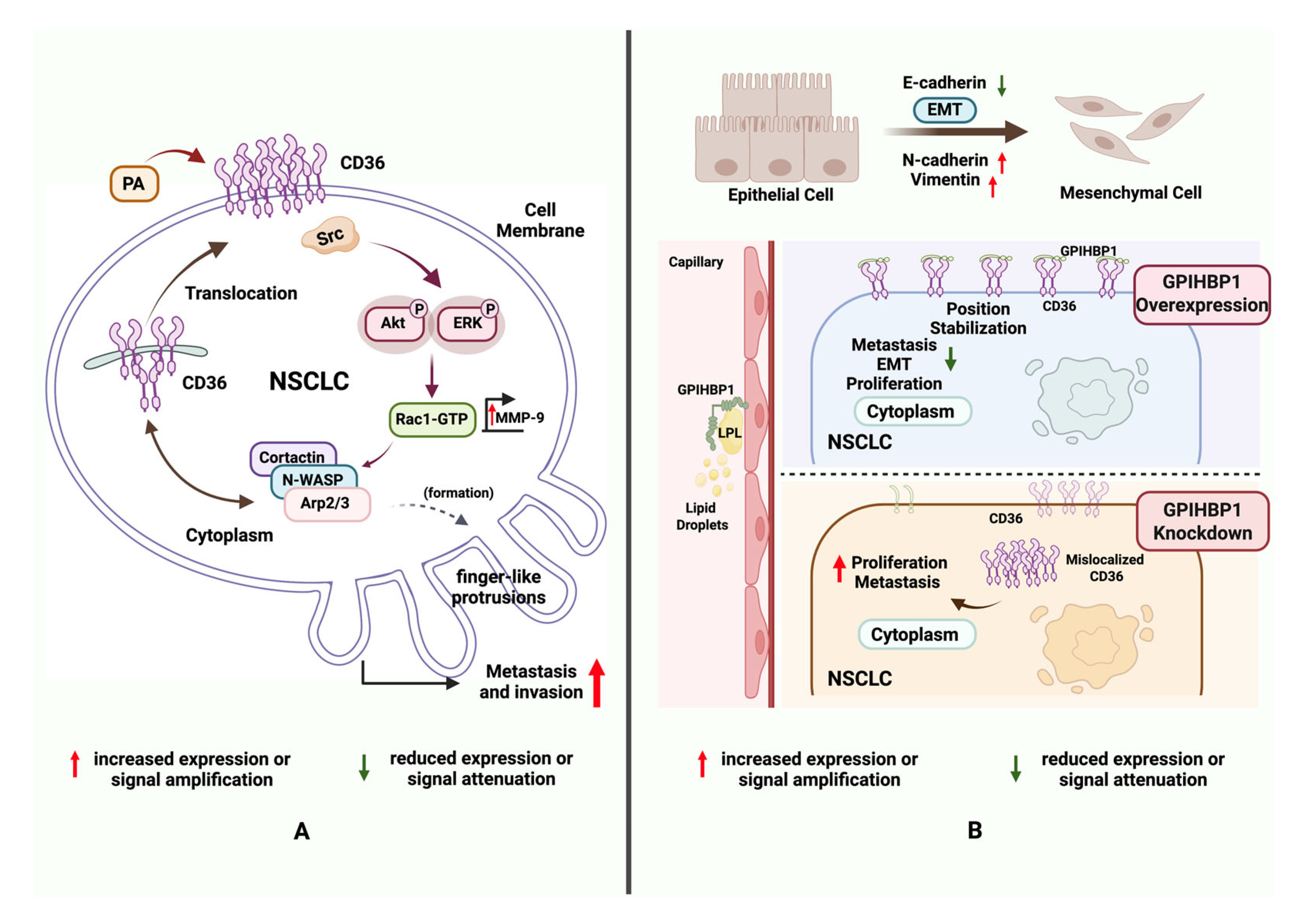
2.1. Relationship of CD36 to NSCLC Cell Proliferation, Migration, and EMT
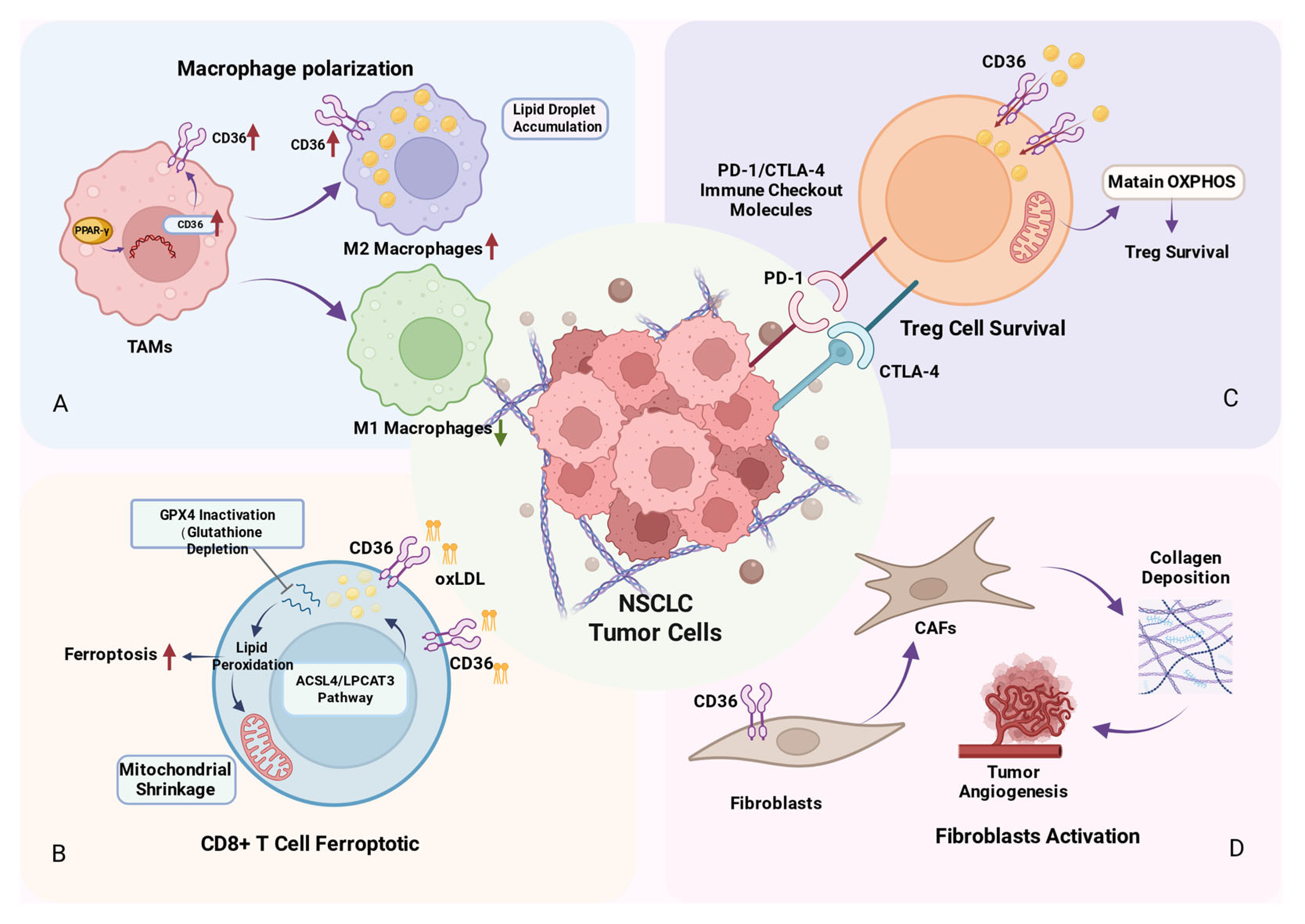
2.2. Regulatory Role of CD36 in the NSCLC Tumor Microenvironment
2.2.1. CD36 Regulates the Polarization State of Tumor-Associated Macrophages (TAMs)
2.2.2. CD36 Regulates Lipid Metabolism and Ferroptosis in CD8+ T Cells
2.2.3. Role of CD36 in Regulating Metabolic Adaptation of Treg Cells
2.2.4. Role of CD36 in Cancer-Associated Fibroblasts (CAFs)
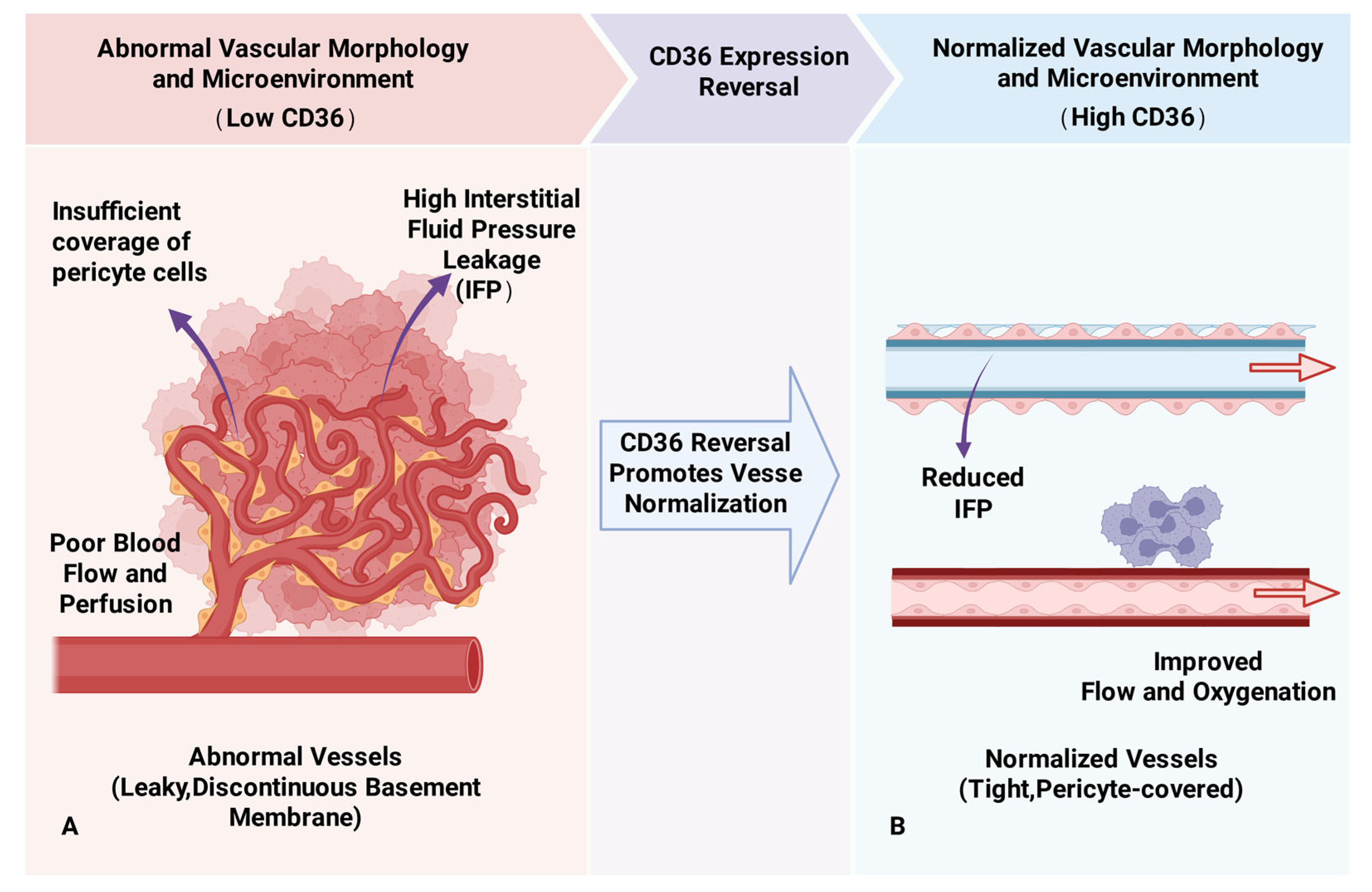
2.3. Regulatory Role of CD36 in Tumor Angiogenesis
3. CD36-Based Therapeutic Strategies and Progress in Lung Cancer
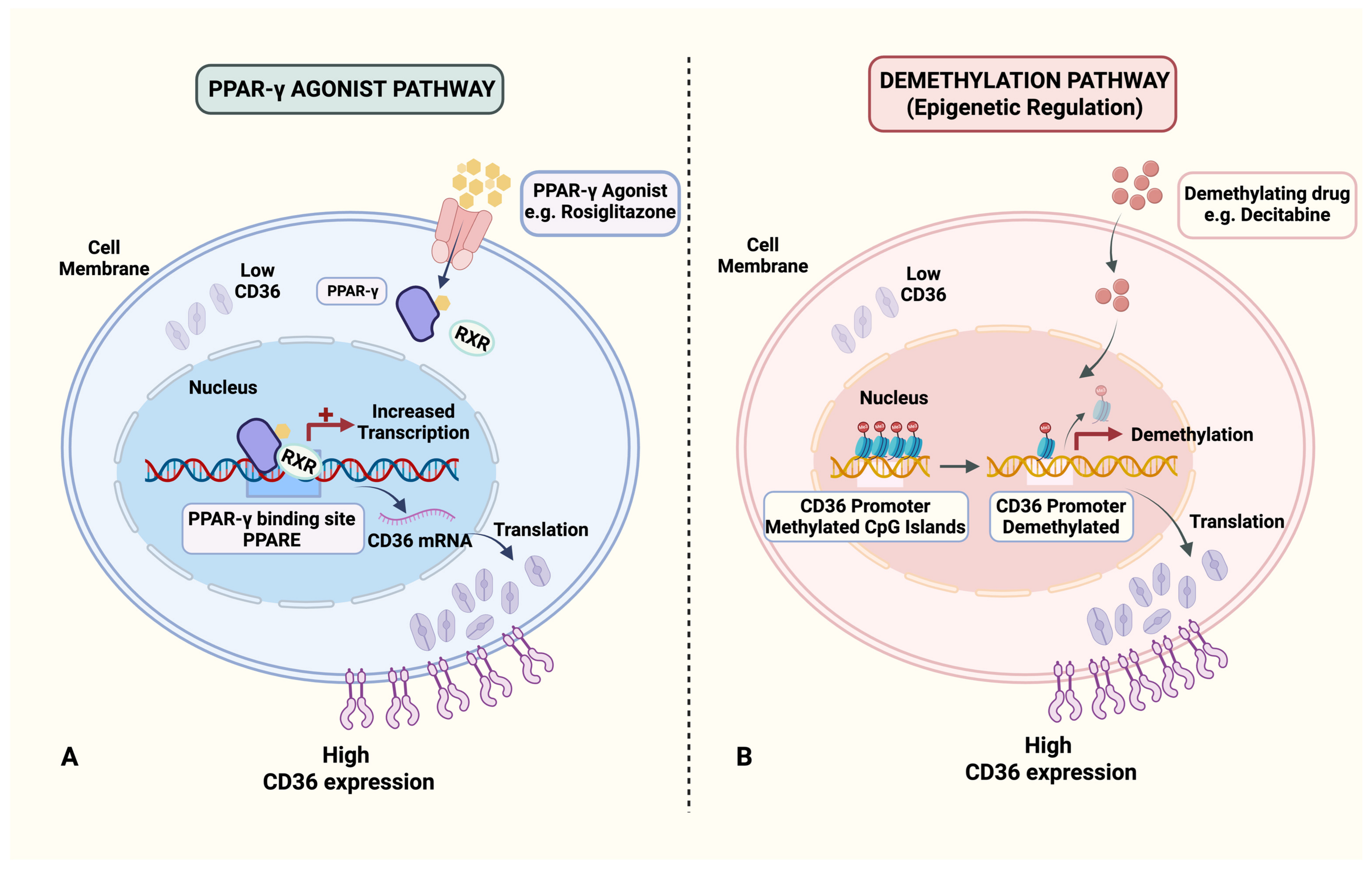
3.1. Exploration of Drugs Regulating CD36 Expression
3.2. Exploration of Epigenetic Regulation-Related Drugs
3.3. CD36-Based Targeted Therapy and Application of Immune Checkpoint Inhibitors
4. Conclusions
Author Contributions
Funding
Institutional Review Board Statement
Informed Consent Statement
Data Availability Statement
Acknowledgments
Conflicts of Interest
Abbreviations
| NSCLC | Non-small cell lung cancer |
| CD36 | Directory of Open Access Journals |
| LCFAs | Long-chain fatty acids |
| ox LDL | Oxidized low-density lipoprotein |
| TSP | Thrombospondin |
| HGSOC | High-grade serous ovarian carcinoma |
| DCIS | Ductal carcinoma in situ |
| IBC | Invasive ductal carcinoma |
| EMT | Epithelial–mesenchymal transition |
| LUAD | Lung adenocarcinoma |
| PA | Palmitic acid |
| HFD | High-fat diet |
| MMP-9 | Matrix metallopeptidase 9 |
| GPIHBP1 | Glycosylphosphatidylinositol-anchored high-density lipoprotein-binding protein 1 |
| lncRNA | Long non-coding RNA |
| CCAT1 | Colon cancer-associated transcript 1 |
| FABP5 | Fatty acid-binding protein 5 |
| RXR | Retinoid X receptor |
| PPAR-γ | Peroxisome proliferator-activated receptor γ |
| PDK1 | Pyruvate dehydrogenase kinase 1 |
| VEGFA | Vascular endothelial growth factor A |
| TME | Tumor microenvironment |
| CAFs | Cancer-associated fibroblasts |
| TAMs | Tumor-associated macrophages |
| ACSL4 | Acyl-CoA synthetase long-chain family member 4 |
| LPCAT3 | Lysophosphatidylcholine acyltransferase 3 |
| OXPHOS | Oxidative phosphorylation |
| CTLA-4 | Cytotoxic T-lymphocyte-associated protein 4 |
| LLC | Lewis lung carcinoma |
| TRAF3 | Tumor necrosis factor receptor-associated factor 3 |
| iNOS | Inducible nitric oxide synthase |
| ABCC3 | ATP-binding cassette subfamily C member 3 |
| GA | Glycyrrhetinic acid |
| AA | Arachidonic acid |
| OS | Overall survival |
| RFS | Recurrence-free survival |
| NAD | Nicotinamide adenine dinucleotide |
| 7NFs | Normal fibroblasts |
| Lung-CAFs | Lung tissue-derived cancer-associated fibroblasts |
| LN-CAFs | Lymph node-derived cancer-associated fibroblasts |
| VEGF | Vascular endothelial growth factor |
| VEGFR | vascular endothelial growth factor receptor |
| PI3K | Phosphatidylinositol 3-kinase |
| ECM | Extracellular matrix |
| VM | Vasculogenic mimicry |
| IFP | Interstitial fluid pressure |
| NRF2 | Nuclear factor erythroid 2-related factor 2 |
| CRC | Colorectal cancer |
References
- Thai, A.A.; Solomon, B.J.; Sequist, L.V.; Gainor, J.F.; Heist, R.S. Lung cancer. Lancet 2021, 398, 535–554. [Google Scholar] [CrossRef]
- Xie, S.; Wu, Z.; Qi, Y.; Wu, B.; Zhu, X. The metastasizing mechanisms of lung cancer: Recent advances and therapeutic challenges. Biomed. Pharmacother. 2021, 138, 111450. [Google Scholar] [CrossRef] [PubMed]
- Yue, H.; Febbraio, M.; Klenotic, P.A.; Kennedy, D.J.; Wu, Y.; Chen, S.; Gohara, A.F.; Li, O.; Belcher, A.; Kuang, B.; et al. CD36 Enhances Vascular Smooth Muscle Cell Proliferation and Development of Neointimal Hyperplasia. Arter. Thromb. Vasc. Biol. 2019, 39, 263–275. [Google Scholar] [CrossRef] [PubMed]
- Płóciennikowska, A.; Hromada-Judycka, A.; Borzęcka, K.; Kwiatkowska, K. Co-operation of TLR4 and raft proteins in LPS-induced pro-inflammatory signaling. Cell Mol. Life Sci. 2015, 72, 557–581. [Google Scholar] [CrossRef] [PubMed]
- Proulx, C.; Zhang, J.; Sabatino, D.; Chemtob, S.; Ong, H.; Lubell, W.D. Synthesis and Biomedical Potential of Azapeptide Modulators of the Cluster of Differentiation 36 Receptor (CD36). Biomedicines 2020, 8, 241. [Google Scholar] [CrossRef]
- Xia, L.; Zhou, Z.; Chen, X.; Luo, W.; Ding, L.; Xie, H.; Zhuang, W.; Ni, K.; Li, G. Ligand-dependent CD36 functions in cancer progression, metastasis, immune response, and drug resistance. Biomed. Pharmacother. 2023, 168, 115834. [Google Scholar] [CrossRef] [PubMed]
- Chen, Y.J.; Liao, W.X.; Huang, S.Z.; Yu, Y.F.; Wen, J.Y.; Chen, J.; Lin, D.G.; Wu, X.Y.; Jiang, N.; Li, X. Prognostic and immunological role of CD36: A pan-cancer analysis. J. Cancer 2021, 12, 4762–4773. [Google Scholar] [CrossRef]
- Jia, S.; Zhou, L.; Shen, T.; Zhou, S.; Ding, G.; Cao, L. Down-expression of CD36 in pancreatic adenocarcinoma and its correlation with clinicopathological features and prognosis. J. Cancer 2018, 9, 578–583. [Google Scholar] [CrossRef]
- Grech, C.T.; Aust, S.; Hofstetter, G.; Uhl, E.; Hinterleitner, L.; Grimm, C.; Polterauer, S.; Pils, D. High CD36 expression in the tumor microenvironmental vasculature correlates with unfavorable overall survival in high grade serous ovarian cancer. Sci. Rep. 2025, 15, 19354. [Google Scholar] [CrossRef]
- Caruso, J.A.; Wang, X.; Murrow, L.M.; Rodriguez, C.I.; Chen-Tanyolac, C.; Vu, L.; Chen, Y.Y.; Gascard, P.; Gartner, Z.J.; Kerlikowske, K.; et al. Loss of PPARγ activity characterizes early protumorigenic stromal reprogramming and dictates the therapeutic window of opportunity. Proc. Natl. Acad. Sci. USA 2023, 120, e2303774120. [Google Scholar] [CrossRef]
- Fang, Y.; Shen, Z.Y.; Zhan, Y.Z.; Feng, X.C.; Chen, K.L.; Li, Y.S.; Deng, H.J.; Pan, S.M.; Wu, D.H.; Ding, Y. CD36 inhibits β-catenin/c-myc-mediated glycolysis through ubiquitination of GPC4 to repress colorectal tumorigenesis. Nat. Commun. 2019, 10, 3981. [Google Scholar] [CrossRef]
- Liao, C.Y.; Li, G.; Kang, F.P.; Lin, C.F.; Xie, C.K.; Wu, Y.D.; Hu, J.F.; Lin, H.Y.; Zhu, S.C.; Huang, X.X.; et al. Necroptosis enhances ‘don’t eat me’ signal and induces macrophage extracellular traps to promote pancreatic cancer liver metastasis. Nat. Commun. 2024, 15, 6043. [Google Scholar] [CrossRef]
- Nishiga, Y.; Drainas, A.P.; Baron, M.; Bhattacharya, D.; Barkal, A.A.; Ahrari, Y.; Mancusi, R.; Ross, J.B.; Takahashi, N.; Thomas, A.; et al. Radiotherapy in combination with CD47 blockade elicits a macrophage-mediated abscopal effect. Nat. Cancer 2022, 3, 1351–1366. [Google Scholar] [CrossRef]
- Hu, L.Y.; Zhuang, W.T.; Chen, M.J.; Liao, J.; Wu, D.F.; Zhang, Y.X.; Pang, L.L.; Huang, Y.H.; Mao, T.Q.; Yang, M.J.; et al. EGFR Oncogenic Mutations in NSCLC Impair Macrophage Phagocytosis and Mediate Innate Immune Evasion Through Up-Regulation of CD47. J. Thorac. Oncol. 2024, 19, 1186–1200. [Google Scholar] [CrossRef]
- Zhuang, Z.; Zhou, J.; Qiu, M.; Li, J.; Lin, Z.; Yi, H.; Liu, X.; Huang, C.; Tang, B.; Liu, B.; et al. The Combination of Anti-CD47 Antibody with CTLA4 Blockade Enhances Anti-Tumor Immunity in Non-Small Cell Lung Cancer via Normalization of Tumor Vasculature and Reprogramming of the Immune Microenvironment. Cancers 2024, 16, 832. [Google Scholar] [CrossRef] [PubMed]
- Sun, Q.; Zhang, W.; Wang, L.; Guo, F.; Song, D.; Zhang, Q.; Zhang, D.; Fan, Y.; Wang, J. Hypermethylated CD36 gene affected the progression of lung cancer. Gene 2018, 678, 395–406. [Google Scholar] [CrossRef] [PubMed]
- Huang, Q.; Fan, L.; Gong, M.; Ren, J.; Chen, C.; Xie, S. Metabolic reprogramming in lung cancer and its clinical implication. Front. Pharmacol. 2024, 15, 1516650. [Google Scholar] [CrossRef]
- Liu, L.Z.; Wang, B.; Zhang, R.; Wu, Z.; Huang, Y.; Zhang, X.; Zhou, J.; Yi, J.; Shen, J.; Li, M.Y.; et al. The activated CD36-Src axis promotes lung adenocarcinoma cell proliferation and actin remodeling-involved metastasis in high-fat environment. Cell Death Dis. 2023, 14, 548. [Google Scholar] [CrossRef] [PubMed]
- Hall, A. Rho GTPases and the actin cytoskeleton. Science 1998, 279, 509–514. [Google Scholar] [CrossRef]
- Ni, K.; Wang, D.; Xu, H.; Mei, F.; Wu, C.; Liu, Z.; Zhou, B. miR-21 promotes non-small cell lung cancer cells growth by regulating fatty acid metabolism. Cancer Cell Int. 2019, 19, 219. [Google Scholar] [CrossRef]
- Babaei, G.; Aziz, S.G.; Jaghi, N.Z.Z. EMT, cancer stem cells and autophagy; The three main axes of metastasis. Biomed. Pharmacother. 2021, 133, 110909. [Google Scholar] [CrossRef]
- Shi, Y.; Zhao, D.; Xiao, Z.; Wang, Y.; Feng, Q.; Gu, Y. The impact of miRNAs on epithelial-mesenchymal transition in lung cancer and the latest advances in their use as diagnostic markers. J. Cancer Res. Clin. Oncol. 2025, 151, 252. [Google Scholar] [CrossRef]
- Young, S.G.; Song, W.; Yang, Y.; Birrane, G.; Jiang, H.; Beigneux, A.P.; Ploug, M.; Fong, L.G. A protein of capillary endothelial cells, GPIHBP1, is crucial for plasma triglyceride metabolism. Proc. Natl. Acad. Sci. USA 2022, 119, e2211136119. [Google Scholar] [CrossRef]
- Liu, W.; Qiao, D.; Chen, J.; Gao, Y.; Okuda, K.; Shimada, Y.; Yao, L. Aspirin impedes non-small cell lung cancer development via fine-tuning the CD36 localization regulated by GPIHBP1. Transl. Lung Cancer Res. 2025, 14, 491–512. [Google Scholar] [CrossRef]
- Chen, J.; Alduais, Y.; Zhang, K.; Zhu, X.; Chen, B. CCAT1/FABP5 promotes tumour progression through mediating fatty acid metabolism and stabilizing PI3K/AKT/mTOR signalling in lung adenocarcinoma. J. Cell. Mol. Med. 2021, 25, 9199–9213. [Google Scholar] [CrossRef]
- Bejarano, L.; Jordāo, M.J.C.; Joyce, J.A. Therapeutic Targeting of the Tumor Microenvironment. Cancer Discov. 2021, 11, 933–959. [Google Scholar] [CrossRef]
- Liao, X.; Yan, S.; Li, J.; Jiang, C.; Huang, S.; Liu, S.; Zou, X.; Zhang, G.; Zou, J.; Liu, Q. CD36 and Its Role in Regulating the Tumor Microenvironment. Curr. Oncol. 2022, 29, 8133–8145. [Google Scholar] [CrossRef] [PubMed]
- Shapouri-Moghaddam, A.; Mohammadian, S.; Vazini, H.; Taghadosi, M.; Esmaeili, S.A.; Mardani, F.; Seifi, B.; Mohammadi, A.; Afshari, J.T.; Sahebkar, A. Macrophage plasticity, polarization, and function in health and disease. J. Cell. Physiol. 2018, 233, 6425–6440. [Google Scholar] [CrossRef]
- Xu, Z.; Kuhlmann-Hogan, A.; Xu, S.; Tseng, H.; Chen, D.; Tan, S.; Sun, M.; Tripple, V.; Bosenberg, M.; Miller-Jensen, K.; et al. Scavenger Receptor CD36 in Tumor-Associated Macrophages Promotes Cancer Progression by Dampening Type-I IFN Signaling. Cancer Res. 2025, 85, 462–476. [Google Scholar] [CrossRef] [PubMed]
- Kadomoto, S.; Izumi, K.; Mizokami, A. Macrophage Polarity and Disease Control. Int. J. Mol. Sci. 2021, 23, 144. [Google Scholar] [CrossRef] [PubMed]
- Yin, X.; Sun, X.; Li, A.; Ruan, J.; Niu, H.; Zhou, Y.; Chen, G.; Guo, J.; He, Q.; Ji, X. Wenxia Changfu formula inhibits Lewis lung cancer metastasis by reprogramming tumor-associated macrophages through the PPAR-γ/CD36 pathway. J. Ethnopharmacol. 2025, 351, 120103. [Google Scholar] [CrossRef]
- Shi, J.H.; Liu, L.N.; Song, D.D.; Liu, W.W.; Ling, C.; Wu, F.X.; Wang, T.T.; Liu, B.; Cui, N.P.; Qin, Y.; et al. TRAF3/STAT6 axis regulates macrophage polarization and tumor progression. Cell Death Differ. 2023, 30, 2005–2016. [Google Scholar] [CrossRef]
- Shi, H.; Chen, S.; Chi, H. Immunometabolism of CD8(+) T cell differentiation in cancer. Trends Cancer 2024, 10, 610–626. [Google Scholar] [CrossRef]
- Xu, S.; Chaudhary, O.; Rodríguez-Morales, P.; Sun, X.; Chen, D.; Zappasodi, R.; Xu, Z.; Pinto, A.F.M.; Williams, A.; Schulze, I.; et al. Uptake of oxidized lipids by the scavenger receptor CD36 promotes lipid peroxidation and dysfunction in CD8(+) T cells in tumors. Immunity 2021, 54, 1561–1577.e7. [Google Scholar] [CrossRef] [PubMed]
- Guo, D.; Cai, S.; Deng, L.; Xu, W.; Fu, S.; Lin, Y.; Jiang, T.; Li, Q.; Shen, Z.; Zhang, J.; et al. Ferroptosis in Pulmonary Disease and Lung Cancer: Molecular Mechanisms, Crosstalk Regulation, and Therapeutic Strategies. MedComm (2020) 2025, 6, e70116. [Google Scholar] [CrossRef]
- Qin, Y.; Huo, F.; Feng, Z.; Hou, J.; Ding, Y.; Wang, Q.; Gui, Y.; Yang, Z.; Yang, J.; Zhou, G.; et al. CD36 promotes iron accumulation and dysfunction in CD8+ T cells via the p38-CEBPB-TfR1 axis in early-stage hepatocellular carcinoma. Clin. Mol. Hepatol. 2025, 31, 960–980. [Google Scholar] [CrossRef]
- Lin, Z.; Zou, S.; Wen, K. The crosstalk of CD8+ T cells and ferroptosis in cancer. Front. Immunol. 2023, 14, 1255443. [Google Scholar] [CrossRef]
- Ma, X.; Xiao, L.; Liu, L.; Ye, L.; Su, P.; Bi, E.; Wang, Q.; Yang, M.; Qian, J.; Yi, Q. CD36-mediated ferroptosis dampens intratumoral CD8(+) T cell effector function and impairs their antitumor ability. Cell Metab. 2021, 33, 1001–1012.e5. [Google Scholar] [CrossRef] [PubMed]
- Ma, X.; Sun, Z.; Chen, H.; Cao, L.; Zhao, S.; Fan, L.; Zhao, C.; Yin, S.; Hu, H. 18β-glycyrrhetinic acid suppresses Lewis lung cancer growth through protecting immune cells from ferroptosis. Cancer Chemother. Pharmacol. 2024, 93, 575–585. [Google Scholar] [CrossRef] [PubMed]
- Ao, Y.Q.; Gao, J.; Zhang, L.X.; Deng, J.; Wang, S.; Lin, M.; Wang, H.K.; Ding, J.Y.; Jiang, J.H. Tumor-infiltrating CD36(+)CD8(+)T cells determine exhausted tumor microenvironment and correlate with inferior response to chemotherapy in non-small cell lung cancer. BMC Cancer 2023, 23, 367. [Google Scholar] [CrossRef]
- Subramanian, M.; Marelli-Berg, F.M. CD36 pumps fat to defang killer T cells in tumors. Cell Metab. 2021, 33, 1509–1511. [Google Scholar] [CrossRef]
- Chen, P.; Wang, H.; Tang, Z.; Shi, J.; Cheng, L.; Zhao, C.; Li, X.; Zhou, C. Selective Depletion of CCR8+Treg Cells Enhances the Antitumor Immunity of Cytotoxic T Cells in Lung Cancer by Dendritic Cells. J. Thorac. Oncol. 2025, 20, 1050–1074. [Google Scholar] [CrossRef]
- Wang, H.; Franco, F.; Tsui, Y.C.; Xie, X.; Trefny, M.P.; Zappasodi, R.; Mohmood, S.R.; Fernández-García, J.; Tsai, C.H.; Schulze, I.; et al. CD36-mediated metabolic adaptation supports regulatory T cell survival and function in tumors. Nat. Immunol. 2020, 21, 298–308. [Google Scholar] [CrossRef]
- Cabezón-Gutiérrez, L.; Palka-Kotlowska, M.; Custodio-Cabello, S.; Chacón-Ovejero, B.; Pacheco-Barcia, V. Metabolic mechanisms of immunotherapy resistance. Explor. Target. Antitumor Ther. 2025, 6, 1002297. [Google Scholar] [CrossRef]
- Singh, S.; Singh, A.P.; Mitra, R. Cancer-Associated Fibroblasts: Major Co-Conspirators in Tumor Development. Cancers 2024, 16, 211. [Google Scholar] [CrossRef]
- Shintani, Y.; Kimura, T.; Funaki, S.; Ose, N.; Kanou, T.; Fukui, E. Therapeutic Targeting of Cancer-Associated Fibroblasts in the Non-Small Cell Lung Cancer Tumor Microenvironment. Cancers 2023, 15, 335. [Google Scholar] [CrossRef]
- Li, D.; Yu, H.; Guo, Z.; Li, S.; Li, Y.; Guo, Y.; Zhong, H.; Xiong, H.; Liu, Z. SERS analysis of carcinoma-associated fibroblasts in a tumor microenvironment based on targeted 2D nanosheets. Nanoscale 2020, 12, 2133–2141. [Google Scholar] [CrossRef] [PubMed]
- Kim, B.G.; Park, K.; Hwang, M.; Lee, H.; Park, K.M.; Choe, J.; Shin, S.H.; Jeong, B.H.; Lee, K.; Lee, J.; et al. Identification of GREM-1 and GAS6 as Specific Biomarkers for Cancer-Associated Fibroblasts Derived from Patients with Non-Small-Cell Lung Cancer. Cancers 2025, 17, 2858. [Google Scholar] [CrossRef] [PubMed]
- Chu, L.Y.; Ramakrishnan, D.P.; Silverstein, R.L. Thrombospondin-1 modulates VEGF signaling via CD36 by recruiting SHP-1 to VEGFR2 complex in microvascular endothelial cells. Blood 2013, 122, 1822–1832. [Google Scholar] [CrossRef] [PubMed]
- Mehan, M.R.; Ayers, D.; Thirstrup, D.; Xiong, W.; Ostroff, R.M.; Brody, E.N.; Walker, J.J.; Gold, L.; Jarvis, T.C.; Janjic, N.; et al. Protein signature of lung cancer tissues. PLoS ONE 2012, 7, e35157. [Google Scholar] [CrossRef]
- Soto-Pantoja, D.R.; Kaur, S.; Roberts, D.D. CD47 signaling pathways controlling cellular differentiation and responses to stress. Crit. Rev. Biochem. Mol. Biol. 2015, 50, 212–230. [Google Scholar] [CrossRef]
- Lawler, P.R.; Lawler, J. Molecular basis for the regulation of angiogenesis by thrombospondin-1 and -2. Cold Spring Harb. Perspect. Med. 2012, 2, a006627. [Google Scholar] [CrossRef]
- Isenberg, J.S.; Jia, Y.; Fukuyama, J.; Switzer, C.H.; Wink, D.A.; Roberts, D.D. Thrombospondin-1 inhibits nitric oxide signaling via CD36 by inhibiting myristic acid uptake. J. Biol. Chem. 2007, 282, 15404–15415. [Google Scholar] [CrossRef]
- Reiher, F.K.; Volpert, O.V.; Jimenez, B.; Crawford, S.E.; Dinney, C.P.; Henkin, J.; Haviv, F.; Bouck, N.P.; Campbell, S.C. Inhibition of tumor growth by systemic treatment with thrombospondin-1 peptide mimetics. Int. J. Cancer 2002, 98, 682–689. [Google Scholar] [CrossRef]
- Huang, J.; Wang, C.; Hou, Y.; Tian, Y.; Li, Y.; Zhang, H.; Zhang, L.; Li, W. Molecular mechanisms of Thrombospondin-2 modulates tumor vasculogenic mimicry by PI3K/AKT/mTOR signaling pathway. Biomed. Pharmacother. 2023, 167, 115455. [Google Scholar] [CrossRef]
- Martini, C.; DeNichilo, M.; King, D.P.; Cockshell, M.P.; Ebert, B.; Dale, B.; Ebert, L.M.; Woods, A.; Bonder, C.S. CD36 promotes vasculogenic mimicry in melanoma by mediating adhesion to the extracellular matrix. BMC Cancer 2021, 21, 765. [Google Scholar] [CrossRef]
- Hale, J.S.; Li, M.; Sinyuk, M.; Jahnen-Dechent, W.; Lathia, J.D.; Silverstein, R.L. Context dependent role of the CD36-thrombospondin-histidine-rich glycoprotein axis in tumor angiogenesis and growth. PLoS ONE 2012, 7, e40033. [Google Scholar] [CrossRef]
- Lin, Q.; Choyke, P.L.; Sato, N. Visualizing vasculature and its response to therapy in the tumor microenvironment. Theranostics 2023, 13, 5223–5246. [Google Scholar] [CrossRef]
- Qian, C.; Zhou, Y.; Zhang, T.; Dong, G.; Song, M.; Tang, Y.; Wei, Z.; Yu, S.; Shen, Q.; Chen, W.; et al. Targeting PKM2 signaling cascade with salvianic acid A normalizes tumor blood vessels to facilitate chemotherapeutic drug delivery. Acta Pharm. Sin. B 2024, 14, 2077–2096. [Google Scholar] [CrossRef]
- Kane, K.; Edwards, D.; Chen, J. The influence of endothelial metabolic reprogramming on the tumor microenvironment. Oncogene 2025, 44, 51–63. [Google Scholar] [CrossRef]
- Tan, Y.; Li, J.; Zhao, G.; Huang, K.C.; Cardenas, H.; Wang, Y.; Matei, D.; Cheng, J.X. Metabolic reprogramming from glycolysis to fatty acid uptake and beta-oxidation in platinum-resistant cancer cells. Nat. Commun. 2022, 13, 4554. [Google Scholar] [CrossRef]
- Liu, Y.Y.; Huang, W.L.; Wang, S.T.; Hsu, H.P.; Kao, T.C.; Chung, W.P.; Young, K.C. CD36 inhibition enhances the anti-proliferative effects of PI3K inhibitors in PTEN-loss anti-HER2 resistant breast cancer cells. Cancer Metab. 2025, 13, 6. [Google Scholar] [CrossRef]
- Hajri, T.; Zaiou, M.; Fungwe, T.V.; Ouguerram, K.; Besong, S. Epigenetic Regulation of Peroxisome Proliferator-Activated Receptor Gamma Mediates High-Fat Diet-Induced Non-Alcoholic Fatty Liver Disease. Cells 2021, 10, 1355. [Google Scholar] [CrossRef]
- Huang, H.; Campbell, S.C.; Bedford, D.F.; Nelius, T.; Veliceasa, D.; Shroff, E.H.; Henkin, J.; Schneider, A.; Bouck, N.; Volpert, O.V. Peroxisome proliferator-activated receptor gamma ligands improve the antitumor efficacy of thrombospondin peptide ABT510. Mol. Cancer Res. 2004, 2, 541–550. [Google Scholar] [CrossRef]
- McCarty, M.F.; Barroso-Aranda, J.; Contreras, F. PPAR gamma agonists can be expected to potentiate the efficacy of metronomic chemotherapy through CD36 up-regulation. Med. Hypotheses 2008, 70, 419–423. [Google Scholar] [CrossRef]
- Keshamouni, V.G.; Arenberg, D.A.; Reddy, R.C.; Newstead, M.J.; Anthwal, S.; Standiford, T.J. PPAR-gamma activation inhibits angiogenesis by blocking ELR+CXC chemokine production in non-small cell lung cancer. Neoplasia 2005, 7, 294–301. [Google Scholar] [CrossRef]
- Jin, N.; Qian, Y.Y.; Jiao, X.F.; Wang, Z.; Li, X.; Pan, W.; Jiang, J.K.; Huang, P.; Wang, S.Y.; Jin, P.; et al. Niraparib restricts intraperitoneal metastases of ovarian cancer by eliciting CD36-dependent ferroptosis. Redox Biol. 2025, 80, 103528. [Google Scholar] [CrossRef]
- Yang, B.; Tang, H.; Wang, N.; Gu, J.; Wang, Q. Targeted DNA demethylation of the ZNF334 promoter inhibits colorectal cancer growth. Cell Death Dis. 2023, 14, 210. [Google Scholar] [CrossRef]
- Su, P.L.; Furuya, N.; Asrar, A.; Rolfo, C.; Li, Z.; Carbone, D.P.; He, K. Recent advances in therapeutic strategies for non-small cell lung cancer. J. Hematol. Oncol. 2025, 18, 35. [Google Scholar] [CrossRef]
- Zhou, X.; Su, M.; Lu, J.; Li, D.; Niu, X.; Wang, Y. CD36: The Bridge between Lipids and Tumors. Molecules 2024, 29, 531. [Google Scholar] [CrossRef]
- Wang, Z.; Pan, B.S.; Manne, R.K.; Chen, J.; Lv, D.; Wang, M.; Tran, P.; Weldemichael, T.; Yan, W.; Zhou, H.; et al. CD36-mediated endocytosis of proteolysis-targeting chimeras. Cell 2025, 188, 3219–3237.e8. [Google Scholar] [CrossRef]
- Sang, C.Y.; Liu, J.R.; Zheng, Y.D.; Chai, T.; Shi, J.T.; Naghavi, M.R.; Alibekovna, K.E.; Solievich, B.A.; Yang, J.L. Obacunone potentiated PD-1 immunotherapy in pancreatic cancer by mediating CD36. Eur. J. Pharmacol. 2025, 994, 177367. [Google Scholar] [CrossRef]
- Zeng, A.; Chen, H.; Luo, T.; Chen, W.; Song, Y.; Xu, Y.; Chen, Z.; Tang, Q.; Zhu, X.; Deng, C.; et al. Targeting OxLDL-mediated CD36 + CAF reprogramming potentiates PD-1 immunotherapy in osteosarcoma. Mol. Cancer 2025. [Google Scholar] [CrossRef]
- Jiang, Q.; Chen, Z.; Meng, F.; Zhang, H.; Chen, H.; Xue, J.; Shen, X.; Liu, T.; Dong, L.; Zhang, S.; et al. CD36-BATF2\MYB Axis Predicts Anti-PD-1 Immunotherapy Response in Gastric Cancer. Int. J. Biol. Sci. 2023, 19, 4476–4492. [Google Scholar] [CrossRef]


Disclaimer/Publisher’s Note: The statements, opinions and data contained in all publications are solely those of the individual author(s) and contributor(s) and not of MDPI and/or the editor(s). MDPI and/or the editor(s) disclaim responsibility for any injury to people or property resulting from any ideas, methods, instructions or products referred to in the content. |
© 2026 by the authors. Licensee MDPI, Basel, Switzerland. This article is an open access article distributed under the terms and conditions of the Creative Commons Attribution (CC BY) license.
Share and Cite
Wu, R.; Xu, X.; Luo, D.; Wu, J.; Chang, X.; Ma, C.; Huang, B.; Fan, J.; Nie, X. The Role of Low CD36 Expression in the Development of Non-Small Cell Lung Cancer and Its Potential for Therapy. Cancers 2026, 18, 217. https://doi.org/10.3390/cancers18020217
Wu R, Xu X, Luo D, Wu J, Chang X, Ma C, Huang B, Fan J, Nie X. The Role of Low CD36 Expression in the Development of Non-Small Cell Lung Cancer and Its Potential for Therapy. Cancers. 2026; 18(2):217. https://doi.org/10.3390/cancers18020217
Chicago/Turabian StyleWu, Ran, Xiaohong Xu, Danju Luo, Junhua Wu, Xiaona Chang, Chenggong Ma, Bo Huang, Jun Fan, and Xiu Nie. 2026. "The Role of Low CD36 Expression in the Development of Non-Small Cell Lung Cancer and Its Potential for Therapy" Cancers 18, no. 2: 217. https://doi.org/10.3390/cancers18020217
APA StyleWu, R., Xu, X., Luo, D., Wu, J., Chang, X., Ma, C., Huang, B., Fan, J., & Nie, X. (2026). The Role of Low CD36 Expression in the Development of Non-Small Cell Lung Cancer and Its Potential for Therapy. Cancers, 18(2), 217. https://doi.org/10.3390/cancers18020217