Deep Learning-Based Computer-Aided Detection and Diagnosis System for Malignant Biliary Stricture (With Video) †

 , , ,
, , ,
Simple Summary
Abstract
1. Introduction
2. Materials and Methods
2.1. Study Design
2.2. Study Population
2.3. DSOC Procedure
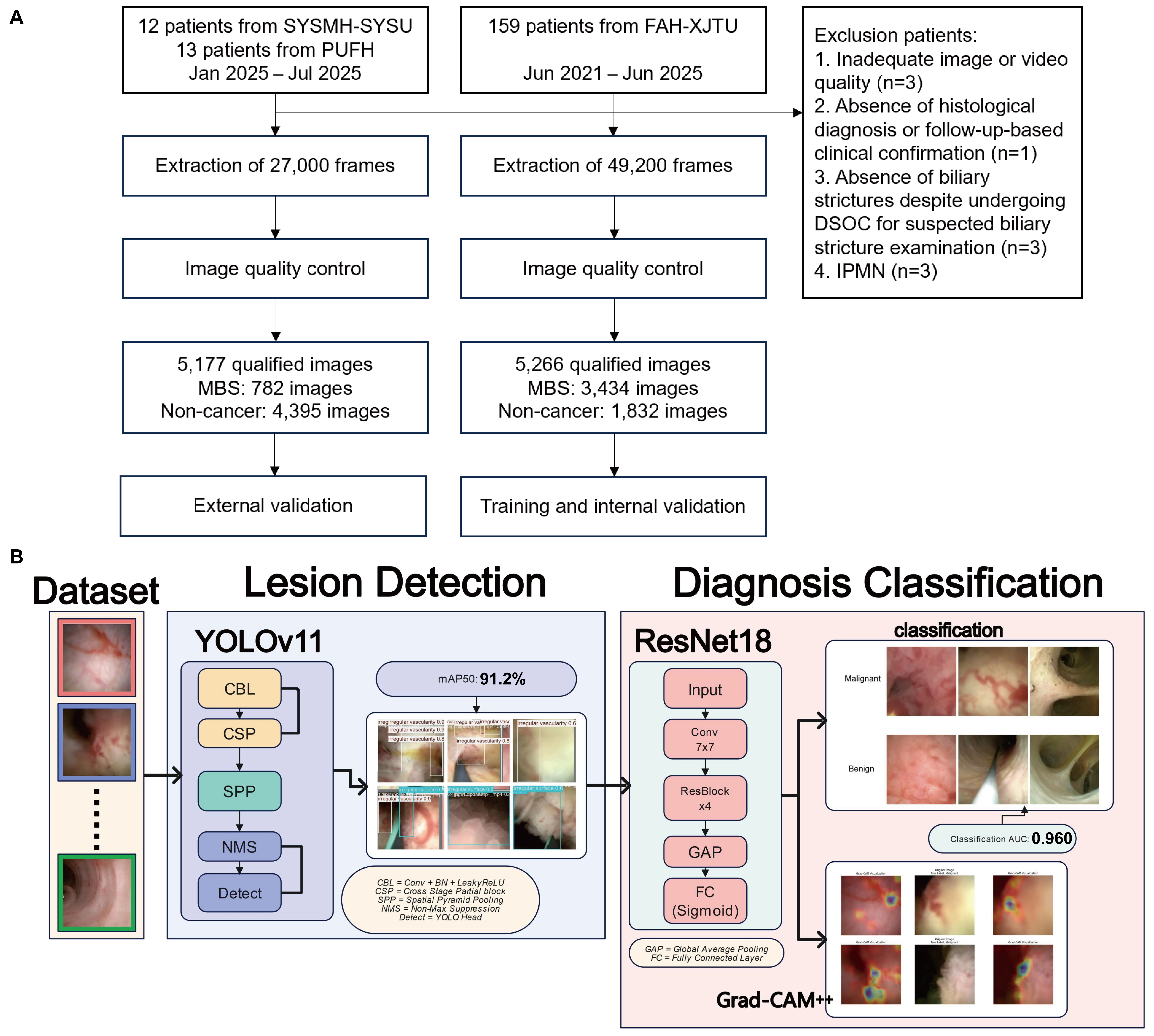
2.4. Development and Evaluation Procedures for the DL-Based MBS CADe and CADx System
2.5. Statistical Methods
2.6. Interpretability Analyses and Exploratory Reader Study
2.7. Development and Intended Use of the Online Demonstration Platform
3. Results
3.1. Baseline Information of Participants
3.2. Development and Validation of the DL-Based MBS CADe and CADx System
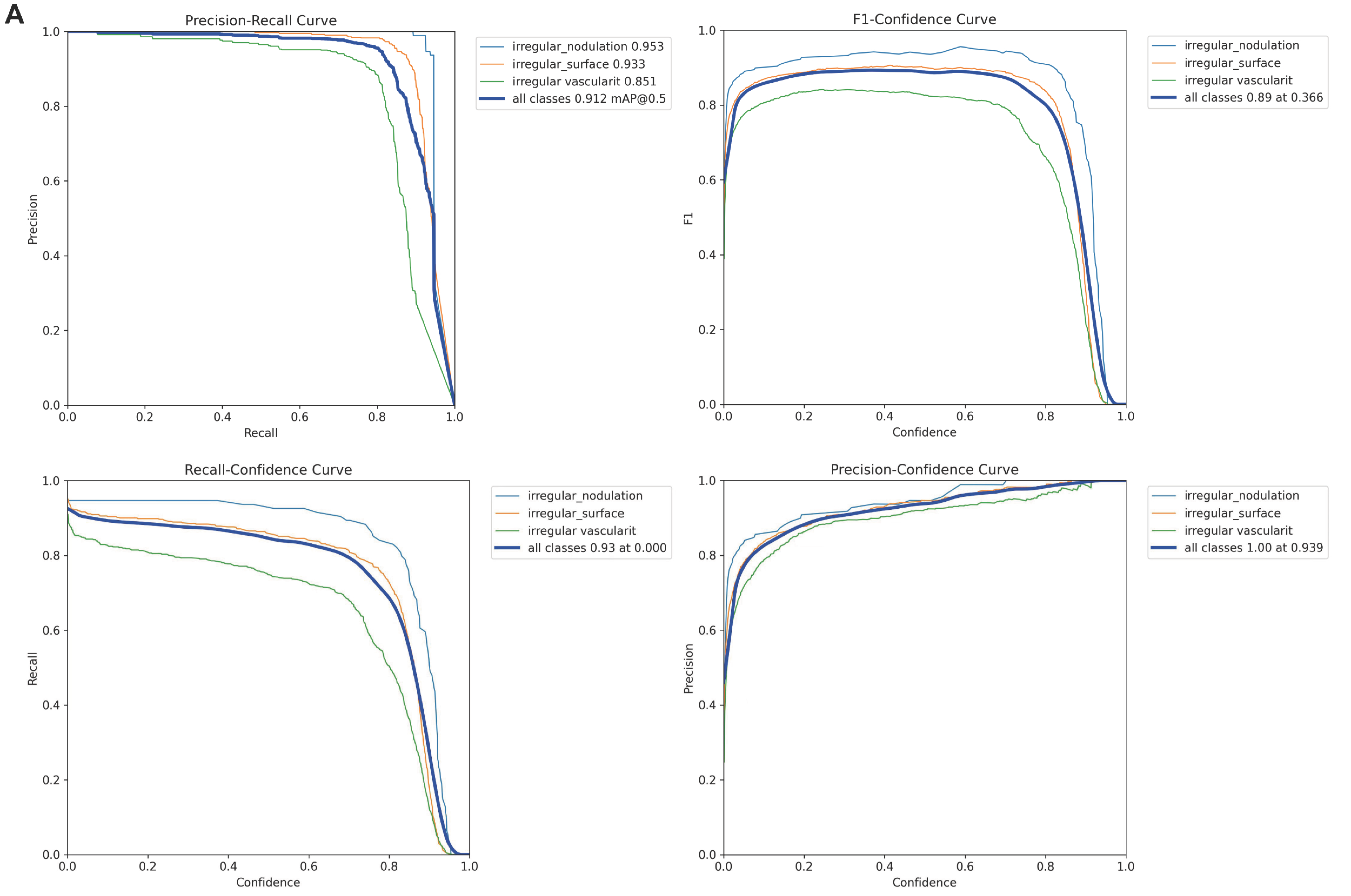
3.2.1. Stage I: CADe Performance
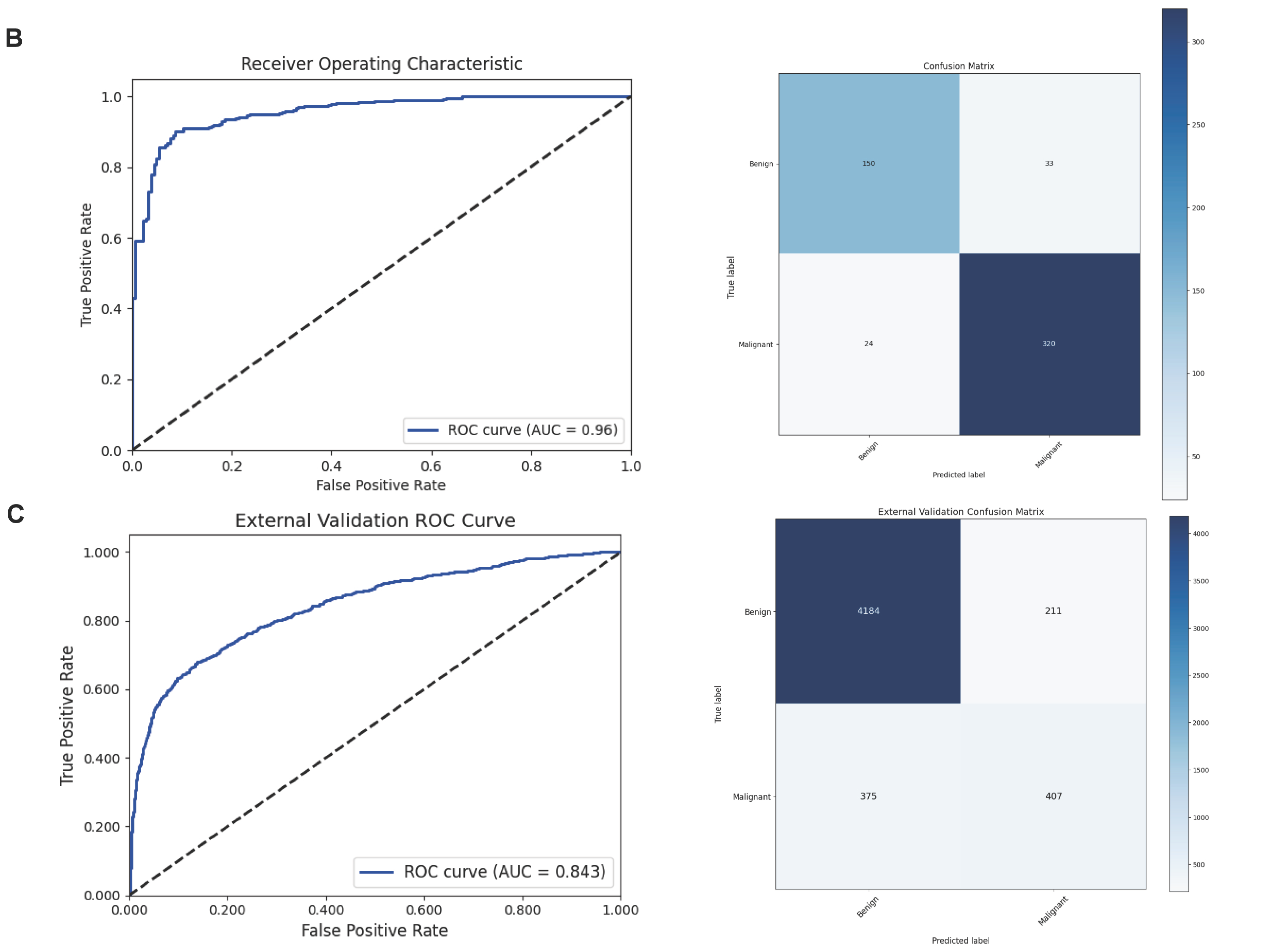
3.2.2. Stage II: CADx Performance
3.2.3. External Validation
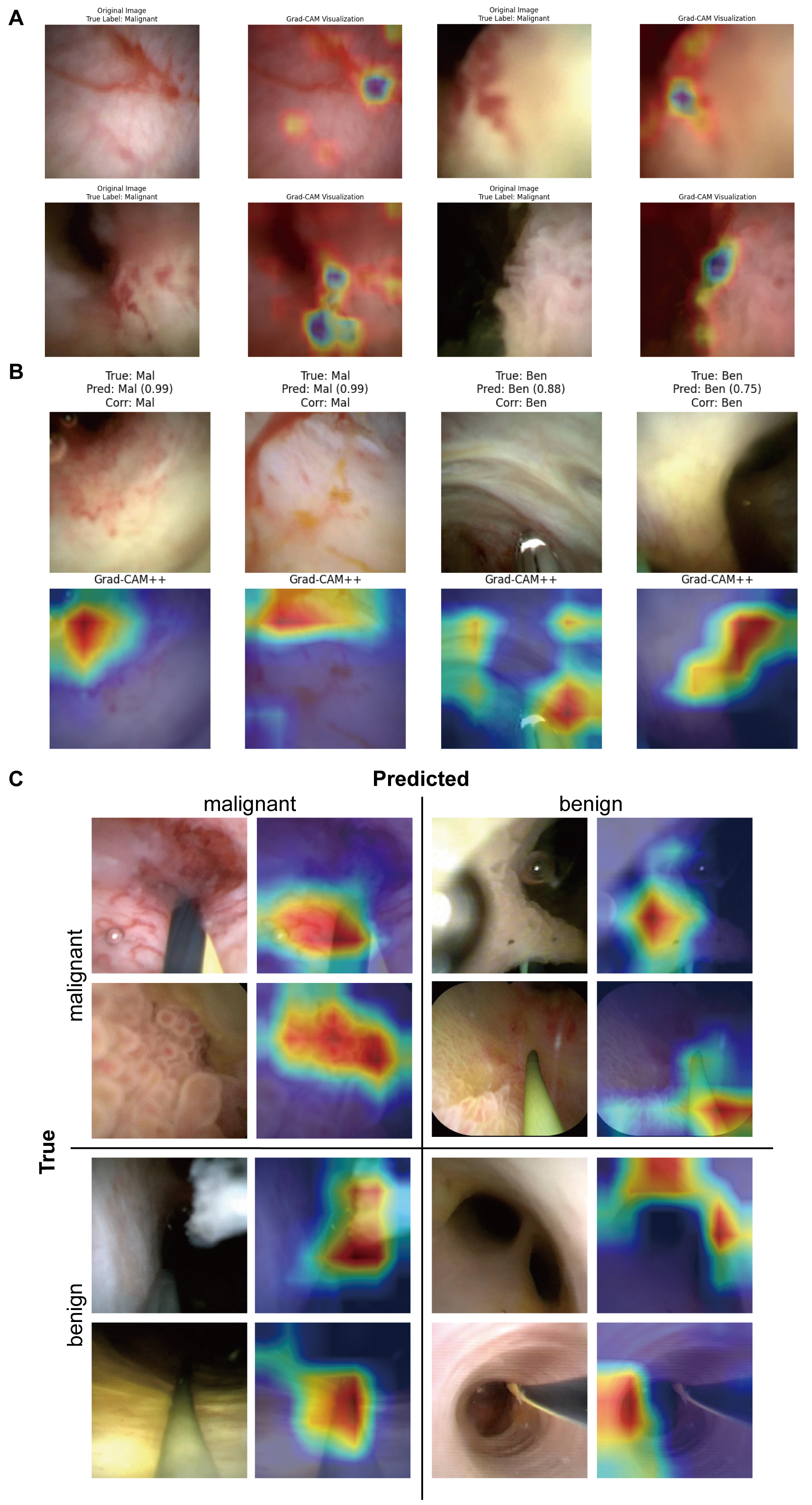
3.3. Interpretability of the DL-Based MBS CADe and CADx System
3.4. Online Demo of the DL-Based MBS CADe and CADx System
4. Discussion
5. Conclusions
Supplementary Materials
Author Contributions
Funding
Institutional Review Board Statement
Informed Consent Statement
Data Availability Statement
Acknowledgments
Conflicts of Interest
Abbreviations
| AI | Artificial Intelligence |
| AUC | Area Under the Curve |
| CADe | Computer-Aided Detection |
| CADx | Computer-Aided Diagnosis |
| CI | Confidence Interval |
| CNN | Convolutional Neural Network |
| CRM | Carlos Robles-Medranda (Classification) |
| DL | Deep Learning |
| DSOC | Digital Single-Operator Cholangioscopy |
| ERCP | Endoscopic Retrograde Cholangiopancreatography |
| Grad-CAM | Gradient-Weighted Class Activation Mapping |
| IPMN-B | Intraductal Papillary Mucinous Neoplasm of the Bile Duct |
| IQR | Interquartile Range |
| mAP50 | Mean Average Precision at IoU 0.50 |
| MBS | Malignant Biliary Stricture |
| NPV | Negative Predictive Value |
| PPV | Positive Predictive Value |
| PSC | Primary Sclerosing Cholangitis |
| ResNet18 | Residual Network-18 |
| YOLOv11 | You Only Look Once version 11 |
References
- Larghi, A.; Tringali, A.; Lecca, P.G.; Giordano, M.; Costamagna, G. Management of Hilar Biliary Strictures. Am. J. Gastroenterol. 2008, 103, 458–473. [Google Scholar] [CrossRef] [Scilit] [PubMed]
- European Association for the Study of the Liver. EASL Clinical Practice Guidelines on the Management of Extrahepatic Cholangiocarcinoma. J. Hepatol. 2025, 83, 211–238. [Google Scholar] [CrossRef] [Scilit] [PubMed]
- Navaneethan, U.; Njei, B.; Lourdusamy, V.; Konjeti, R.; Vargo, J.J.; Parsi, M.A. Comparative Effectiveness of Biliary Brush Cytology and Intraductal Biopsy for Detection of Malignant Biliary Strictures: A Systematic Review and Meta-Analysis. Gastrointest. Endosc. 2015, 81, 168–176. [Google Scholar] [CrossRef] [Scilit] [PubMed]
- Robles-Medranda, C.; Valero, M.; Soria-Alcivar, M.; Puga-Tejada, M.; Oleas, R.; Ospina-Arboleda, J.; Alvarado-Escobar, H.; Baquerizo-Burgos, J.; Robles-Jara, C.; Pitanga-Lukashok, H. Reliability and Accuracy of a Novel Classification System Using Peroral Cholangioscopy for the Diagnosis of Bile Duct Lesions. Endoscopy 2018, 50, 1059–1070. [Google Scholar] [CrossRef] [Scilit] [PubMed]
- Chandrasekar, V.T.; Faigel, D. Diagnosis and Treatment of Biliary Malignancies: Biopsy, Cytology, Cholangioscopy and Stenting. Mini-Invasive Surg. 2021, 5, 33. [Google Scholar] [CrossRef] [Scilit]
- Seo, D.W.; Lee, S.K.; Yoo, K.S.; Kang, G.H.; Kim, M.H.; Suh, D.J.; Min, Y.I. Cholangioscopic Findings in Bile Duct Tumors. Gastrointest. Endosc. 2000, 52, 630–634. [Google Scholar] [CrossRef] [Scilit] [PubMed]
- Wen, L.-J.; Chen, J.-H.; Xu, H.-J.; Yu, Q.; Liu, K. Efficacy and Safety of Digital Single-Operator Cholangioscopy in the Diagnosis of Indeterminate Biliary Strictures by Targeted Biopsies: A Systematic Review and Meta-Analysis. Diagnostics 2020, 10, 666. [Google Scholar] [CrossRef] [Scilit] [PubMed]
- Sun, X.; Zhou, Z.; Tian, J.; Wang, Z.; Huang, Q.; Fan, K.; Mao, Y.; Sun, G.; Yang, Y. Is Single-Operator Peroral Cholangioscopy a Useful Tool for the Diagnosis of Indeterminate Biliary Lesion? A Systematic Review and Meta-Analysis. Gastrointest. Endosc. 2015, 82, 79–87. [Google Scholar] [CrossRef] [Scilit] [PubMed]
- Ogura, T.; Hirose, Y.; Ueno, S.; Okuda, A.; Nishioka, N.; Miyano, A.; Yamamoto, Y.; Ueshima, K.; Higuchi, K. Prospective Registration Study of Diagnostic Yield and Sample Size in Forceps Biopsy Using a Novel Device under Digital Cholangioscopy Guidance with Macroscopic On-Site Evaluation. J. Hepatobiliary Pancreat. Sci. 2023, 30, 686–692. [Google Scholar] [PubMed]
- Thiruvengadam, N.R.; Solaimani, P.; Shrestha, M.; Buller, S.; Carson, R.; Reyes-Garcia, B.; Gnass, R.D.; Wang, B.; Albasha, N.; Leonor, P.; et al. The Efficacy of Real-Time Computer-Aided Detection of Colonic Neoplasia in Community Practice: A Pragmatic Randomized Controlled Trial. Clin. Gastroenterol. Hepatol. 2024, 22, 2221–2230.e15. [Google Scholar] [CrossRef] [Scilit] [PubMed]
- Yao, J.; Wang, Y.; Lei, Z.; Wang, K.; Feng, N.; Dong, F.; Zhou, J.; Li, X.; Hao, X.; Shen, J.; et al. Multimodal GPT Model for Assisting Thyroid Nodule Diagnosis and Management. npj Digit. Med. 2025, 8, 245. [Google Scholar] [CrossRef] [Scilit] [PubMed]
- Ziegler, J.; Dobsch, P.; Rozema, M.; Zuber-Jerger, I.; Weigand, K.; Reuther, S.; Müller, M.; Kandulski, A. Multimodal Convolutional Neural Network-Based Algorithm for Real-Time Detection and Differentiation of Malignant and Inflammatory Biliary Strictures in Cholangioscopy: A Proof-of-Concept Study (with Video). Gastrointest. Endosc. 2025, 101, 830–842.e2. [Google Scholar] [CrossRef] [Scilit] [PubMed]
- Zhang, X.; Tang, D.; Zhou, J.-D.; Ni, M.; Yan, P.; Zhang, Z.; Yu, T.; Zhan, Q.; Shen, Y.; Zhou, L.; et al. A Real-Time Interpretable Artificial Intelligence Model for the Cholangioscopic Diagnosis of Malignant Biliary Stricture (with Videos). Gastrointest. Endosc. 2023, 98, 199–210.e10. [Google Scholar] [CrossRef] [Scilit] [PubMed]
- Marya, N.B.; Powers, P.D.; Petersen, B.T.; Law, R.; Storm, A.; Abusaleh, R.R.; Rau, P.; Stead, C.; Levy, M.J.; Martin, J.; et al. Identification of Patients with Malignant Biliary Strictures Using a Cholangioscopy-Based Deep Learning Artificial Intelligence (with Video). Gastrointest. Endosc. 2023, 97, 268–278.e1. [Google Scholar] [CrossRef] [Scilit] [PubMed]
- Robles-Medranda, C.; Baquerizo-Burgos, J.; Alcivar-Vasquez, J.; Kahaleh, M.; Raijman, I.; Kunda, R.; Puga-Tejada, M.; Egas-Izquierdo, M.; Arevalo-Mora, M.; Mendez, J.C.; et al. Artificial Intelligence for Diagnosing Neoplasia on Digital Cholangioscopy: Development and Multicenter Validation of a Convolutional Neural Network Model. Endoscopy 2023, 55, 719–727. [Google Scholar] [CrossRef] [Scilit] [PubMed]
- Saraiva, M.M.; Ribeiro, T.; Ferreira, J.P.S.; Vilas-Boas, F.; Afonso, J.; Santos, A.L.; Parente, M.P.; Jorge, R.N.; Pereira, P.; Macedo, G. Artificial Intelligence for Automatic Diagnosis of Biliary Stricture Malignancy Status in Single-Operator Cholangioscopy: A Pilot Study. Gastrointest. Endosc. 2022, 95, 339–348. [Google Scholar] [CrossRef] [Scilit] [PubMed]
- Saraiva, M.M.; Ribeiro, T.; González-Haba, M.; Agudo Castillo, B.; Ferreira, J.P.S.; Vilas-Boas, F.; Afonso, J.; Mendes, F.; Martins, M.; Cardoso, P.; et al. Deep Learning for Automatic Diagnosis and Morphologic Characterization of Malignant Biliary Strictures Using Digital Cholangioscopy: A Multicentric Study. Cancers 2023, 15, 4827. [Google Scholar] [CrossRef] [Scilit] [PubMed]
- Mascarenhas, M.; Almeida, M.J.; González-Haba, M.; Agudo Castillo, B.; Widmer, J.; Costa, A.; Fazel, Y.; Ribeiro, T.; Mendes, F.; Martins, M.; et al. Artificial Intelligence for Automatic Diagnosis and Pleomorphic Morphological Characterization of Malignant Biliary Strictures Using Digital Cholangioscopy. Sci. Rep. 2025, 15, 5447. [Google Scholar] [CrossRef] [Scilit] [PubMed]
- Marya, N.B.; Powers, P.D.; AbiMansour, J.P.; Marcello, M.; Thiruvengadam, N.R.; Nasser-Ghodsi, N.; Rau, P.; Zivny, J.; Mehta, S.; Marshall, C.; et al. Multicenter Validation of a Cholangioscopy Artificial Intelligence System for the Evaluation of Biliary Tract Disease. Endoscopy 2026, 58, 47–55. [Google Scholar] [PubMed]
- Marya, N.B.; Powers, P.D.; Marcello, M.; Rau, P.; Nasser-Ghodsi, N.; Marshall, C.; Zivny, J.; AbiMansour, J.P.; Chandrasekhara, V. Classification of Biliary Strictures Using Real-Time Cholangioscopy Artificial Intelligence: The SMART-AI Trial. Clin. Gastroenterol. Hepatol. 2026, in press. [Google Scholar] [CrossRef] [Scilit] [PubMed]
- Ribeiro, T.; Saraiva, M.M.; Afonso, J.; Ferreira, J.P.S.; Vilas-Boas, F.; Parente, M.P.L.; Jorge, R.N.; Pereira, P.; Macedo, G. Automatic Identification of Papillary Projections in Indeterminate Biliary Strictures Using Digital Single-Operator Cholangioscopy. Clin. Transl. Gastroenterol. 2021, 12, e00418. [Google Scholar] [CrossRef] [Scilit] [PubMed]
- Pereira, P.; Mascarenhas, M.; Ribeiro, T.; Afonso, J.; Ferreira, J.P.S.; Vilas-Boas, F.; Parente, M.P.; Jorge, R.N.; Macedo, G. Automatic Detection of Tumor Vessels in Indeterminate Biliary Strictures in Digital Single-Operator Cholangioscopy. Endosc. Int. Open 2022, 10, E262–E268. [Google Scholar] [CrossRef] [Scilit] [PubMed]
- Mascarenhas, M.; Afonso, J.; Ribeiro, T.; Andrade, P.; Cardoso, H.; Macedo, G. The Promise of Artificial Intelligence in Digestive Healthcare and the Bioethics Challenges It Presents. Medicina 2023, 59, 790. [Google Scholar] [CrossRef] [Scilit] [PubMed]
- Kahaleh, M.; Gaidhane, M.; Shahid, H.M.; Tyberg, A.; Sarkar, A.; Ardengh, J.C.; Kedia, P.; Andalib, I.; Gress, F.; Sethi, A.; et al. Digital Single-Operator Cholangioscopy Interobserver Study Using a New Classification: The Mendoza Classification (with Video). Gastrointest. Endosc. 2022, 95, 319–326. [Google Scholar] [CrossRef] [Scilit] [PubMed]
- He, K.; Zhang, X.; Ren, S.; Sun, J. Deep Residual Learning for Image Recognition. In Proceedings of the 2016 IEEE Conference on Computer Vision and Pattern Recognition (CVPR), Las Vegas, NV, USA, 27–30 June 2016; pp. 770–778. [Google Scholar]
- Selvaraju, R.R.; Cogswell, M.; Das, A.; Vedantam, R.; Parikh, D.; Batra, D. Grad-CAM: Visual Explanations from Deep Networks via Gradient-Based Localization. Int. J. Comput. Vis. 2020, 128, 336–359. [Google Scholar]
- Chattopadhay, A.; Sarkar, A.; Howlader, P.; Balasubramanian, V.N. Grad-CAM++: Generalized Gradient-Based Visual Explanations for Deep Convolutional Networks. In Proceedings of the 2018 IEEE Winter Conference on Applications of Computer Vision (WACV), Lake Tahoe, NV, USA, 12–15 March 2018; pp. 839–847. [Google Scholar]
- von Elm, E.; Altman, D.G.; Egger, M.; Pocock, S.J.; Gøtzsche, P.C.; Vandenbroucke, J.P.; STROBE Initiative. The Strengthening the Reporting of Observational Studies in Epidemiology (STROBE) Statement: Guidelines for Reporting Observational Studies. Lancet 2007, 370, 1453–1457. [Google Scholar] [CrossRef] [Scilit] [PubMed]
- Burnett, A.S.; Calvert, T.J.; Chokshi, R.J. Sensitivity of Endoscopic Retrograde Cholangiopancreatography Standard Cytology: 10-Year Review of the Literature. J. Surg. Res. 2013, 184, 304–311. [Google Scholar] [CrossRef] [Scilit] [PubMed]
- Gerges, C.; Beyna, T.; Tang, R.S.Y.; Bahin, F.; Lau, J.Y.W.; van Geenen, E.; Neuhaus, H.; Reddy, D.N.; Ramchandani, M. Digital Single-Operator Peroral Cholangioscopy-Guided Biopsy Sampling versus ERCP-Guided Brushing for Indeterminate Biliary Strictures: A Prospective, Randomized, Multicenter Trial (with Video). Gastrointest. Endosc. 2020, 91, 1105–1113. [Google Scholar] [CrossRef] [Scilit] [PubMed]
- Robles-Medranda, C.; Oleas, R.; Sánchez-Carriel, M.; Olmos, J.I.; Alcívar-Vásquez, J.; Puga-Tejada, M.; Baquerizo-Burgos, J.; Icaza, I.; Pitanga-Lukashok, H. Vascularity Can Distinguish Neoplastic from Non-Neoplastic Bile Duct Lesions during Digital Single-Operator Cholangioscopy. Gastrointest. Endosc. 2021, 93, 935–941. [Google Scholar] [CrossRef] [Scilit] [PubMed]
- Tang, Q.; Zhou, S.; Tang, Z.; Li, K.; Huang, Z.; Zhang, L.; Bian, D.; Feng, Q.; Li, Q.; Sun, H.; et al. Deep Learning–Based Computer-Aided Detection and Diagnosis System for Malignant Biliary Stricture (with Videos). J. Clin. Oncol. 2026, 44, e16007. [Google Scholar] [CrossRef] [Scilit]



| Characteristic | Total (n = 149) | Neoplasia (n = 74) | Non-Neoplasia (n = 75) | p Value |
|---|---|---|---|---|
| Age, median (IQR), years | 63.0 (54.0–69.0) | 65.0 (60.2–70.0) | 60.0 (50.5–67.5) | 0.002 |
| Sex | 0.367 | |||
| Female | 60 (40.3%) | 33 (44.6%) | 27 (36.0%) | |
| Male | 89 (59.7%) | 41 (55.4%) | 48 (64.0%) | |
| Age group | 0.008 | |||
| <30 years | 4 (2.7%) | 0 (0.0%) | 4 (5.3%) | |
| 30–49 years | 18 (12.1%) | 5 (6.8%) | 13 (17.3%) | |
| 50–59 years | 32 (21.5%) | 13 (17.6%) | 19 (25.3%) | |
| ≥60 years | 95 (63.8%) | 56 (75.7%) | 39 (52.0%) | |
| Presenting symptoms | ||||
| Jaundice | 81 (54.4%) | 52 (70.3%) | 29 (38.7%) | <0.001 |
| Pruritus | 19 (12.8%) | 13 (17.6%) | 6 (8.0%) | 0.091 |
| Abdominal pain | 58 (38.9%) | 28 (37.8%) | 30 (40.0%) | 0.867 |
| Weight loss | 56 (37.6%) | 30 (40.5%) | 26 (34.7%) | 0.501 |
| Laboratory parameters, median (IQR) [available n] | ||||
| Total bilirubin, umol/L | 29.9 (17.9–69.9) [149] | 42.5 (20.2–163.5) [74] | 27.3 (15.7–41.2) [75] | <0.001 |
| ALP, U/L | 201.0 (143.0–365.0) [149] | 217.5 (147.8–368.8) [74] | 187.0 (137.5–355.0) [75] | 0.410 |
| GGT, U/L | 206.0 (99.8–432.8) [148] | 189.0 (88.0–573.2) [74] | 216.0 (109.0–346.2) [74] | 0.921 |
| ALT, U/L | 69.0 (34.0–125.0) [149] | 69.0 (33.0–130.8) [74] | 68.0 (36.5–123.0) [75] | 0.896 |
| AST, U/L | 51.0 (29.0–79.0) [149] | 49.0 (33.0–90.5) [74] | 52.0 (28.0–71.5) [75] | 0.145 |
| AFP, ng/mL | 2.7 (2.1–3.8) [116] | 2.7 (2.1–3.6) [67] | 2.7 (2.0–4.0) [49] | 0.978 |
| CEA, ng/mL | 2.3 (1.6–4.3) [121] | 2.8 (1.7–4.9) [72] | 2.0 (1.6–2.8) [49] | 0.007 |
| CA19–9, U/mL | 59.9 (23.8–218.9) [115] | 152.5 (37.3–538.5) [65] | 27.8 (15.0–81.5) [50] | <0.001 |
| CA125, U/mL | 15.4 (10.6–28.2) [120] | 17.6 (12.0–34.7) [70] | 13.0 (9.6–19.7) [50] | 0.014 |
| Diagnosis | ||||
| Neoplastic etiologies | ||||
| Hilar cholangiocarcinoma | 39 (26.2%) | 39 (52.7%) | 0 | |
| Distal cholangiocarcinoma | 22 (14.8%) | 22 (29.7%) | 0 | |
| Gallbladder carcinoma-related stricture | 4 (2.7%) | 4 (5.4%) | 0 | |
| Intrahepatic cholangiocarcinoma | 3 (2.0%) | 3 (4.1%) | 0 | |
| Multiple recurrent biliary malignancies | 3 (2.0%) | 3 (4.1%) | 0 | |
| Cholangiocarcinoma, site unspecified | 3 (2.0%) | 3 (4.1%) | 0 | |
| Non-neoplastic etiologies | ||||
| Stone-associated stricture | 28 (18.8%) | 0 | 28 (37.3%) | |
| Postoperative stricture | 20 (13.4%) | 0 | 20 (26.7%) | |
| Other inflammatory strictures | 17 (11.4%) | 0 | 17 (22.7%) | |
| IgG4-related sclerosing cholangitis | 4 (2.7%) | 0 | 4 (5.3%) | |
| Benign biliary neoplasm | 2 (1.3%) | 0 | 2 (2.7%) | |
| Congenital biliary dilatation | 1 (0.7%) | 0 | 1 (1.3%) | |
| Indeterminate benign stricture | 3 (2.0%) | 0 | 3 (4.0%) | |
| Stricture location | ||||
| Cystic duct | 5 (3.4%) | 2 (2.7%) | 3 (4.0%) | 1.000 |
| Intrahepatic bile ducts | 14 (9.4%) | 5 (6.8%) | 9 (12.0%) | 0.401 |
| Hilar region | 63 (42.3%) | 44 (59.5%) | 19 (25.3%) | <0.001 |
| Common bile duct | 57 (38.3%) | 29 (39.2%) | 28 (37.3%) | 0.867 |
| Bilioenteric anastomosis | 20 (13.4%) | 3 (4.1%) | 17 (22.7%) | 0.001 |
| Diffuse biliary stricture | 8 (5.4%) | 2 (2.7%) | 6 (8.0%) | 0.276 |
| Reference standard | <0.001 | |||
| Surgical histopathological confirmation | 107 (71.8%) | 66 (89.2%) | 41 (54.7%) | |
| Composite clinical reference standard (≥6-month follow-up) | 42 (28.2%) | 8 (10.8%) | 34 (45.3%) |
| Metrics | Internal Validation | External Validation |
|---|---|---|
| AUC (95% CI) | 0.960 (0.945–0.975) | 0.843 (0.826–0.864) |
| Sensitivity (95% CI) | 0.930 (0.898–0.953) | 0.520 (0.344–0.620) |
| Specificity (95% CI) | 0.820 (0.758–0.869) | 0.952 (0.918–0.969) |
| Accuracy (95% CI) | 0.892 (0.862–0.916) | 0.887 (0.845–0.916) |
| PPV (95% CI) | 0.907 (0.872–0.933) | 0.659 (0.488–0.777) |
| NPV (95% CI) | 0.862 (0.803–0.906) | 0.918 (0.890–0.935) |
Disclaimer/Publisher’s Note: The statements, opinions and data contained in all publications are solely those of the individual author(s) and contributor(s) and not of MDPI and/or the editor(s). MDPI and/or the editor(s) disclaim responsibility for any injury to people or property resulting from any ideas, methods, instructions or products referred to in the content. |
© 2026 by the authors. Licensee MDPI, Basel, Switzerland. This article is an open access article distributed under the terms and conditions of the Creative Commons Attribution (CC BY) license.
Share and Cite
Tang, Q.; Zhou, S.; Tang, Z.; Li, K.; Huang, Z.; Zhang, L.; Bian, D.; Feng, Q.; Li, Q.; Sun, H.; et al. Deep Learning-Based Computer-Aided Detection and Diagnosis System for Malignant Biliary Stricture (With Video). Cancers 2026, 18, 2410. https://doi.org/10.3390/cancers18152410
Tang Q, Zhou S, Tang Z, Li K, Huang Z, Zhang L, Bian D, Feng Q, Li Q, Sun H, et al. Deep Learning-Based Computer-Aided Detection and Diagnosis System for Malignant Biliary Stricture (With Video). Cancers. 2026; 18(15):2410. https://doi.org/10.3390/cancers18152410
Chicago/Turabian StyleTang, Qingyu, Sanping Zhou, Zizhan Tang, Kangpeng Li, Zejian Huang, Lei Zhang, Dapeng Bian, Qiushi Feng, Qi Li, Hao Sun, and et al. 2026. "Deep Learning-Based Computer-Aided Detection and Diagnosis System for Malignant Biliary Stricture (With Video)" Cancers 18, no. 15: 2410. https://doi.org/10.3390/cancers18152410
APA StyleTang, Q., Zhou, S., Tang, Z., Li, K., Huang, Z., Zhang, L., Bian, D., Feng, Q., Li, Q., Sun, H., Tao, J., Wang, L., Geng, Z., & Chen, C. (2026). Deep Learning-Based Computer-Aided Detection and Diagnosis System for Malignant Biliary Stricture (With Video). Cancers, 18(15), 2410. https://doi.org/10.3390/cancers18152410