Current Molecular-Targeted Therapies in Melanoma and Their Mechanism of Resistance

 , , , , , ,
  , ,
, ,  and
and
Simple Summary
Abstract
1. Introduction
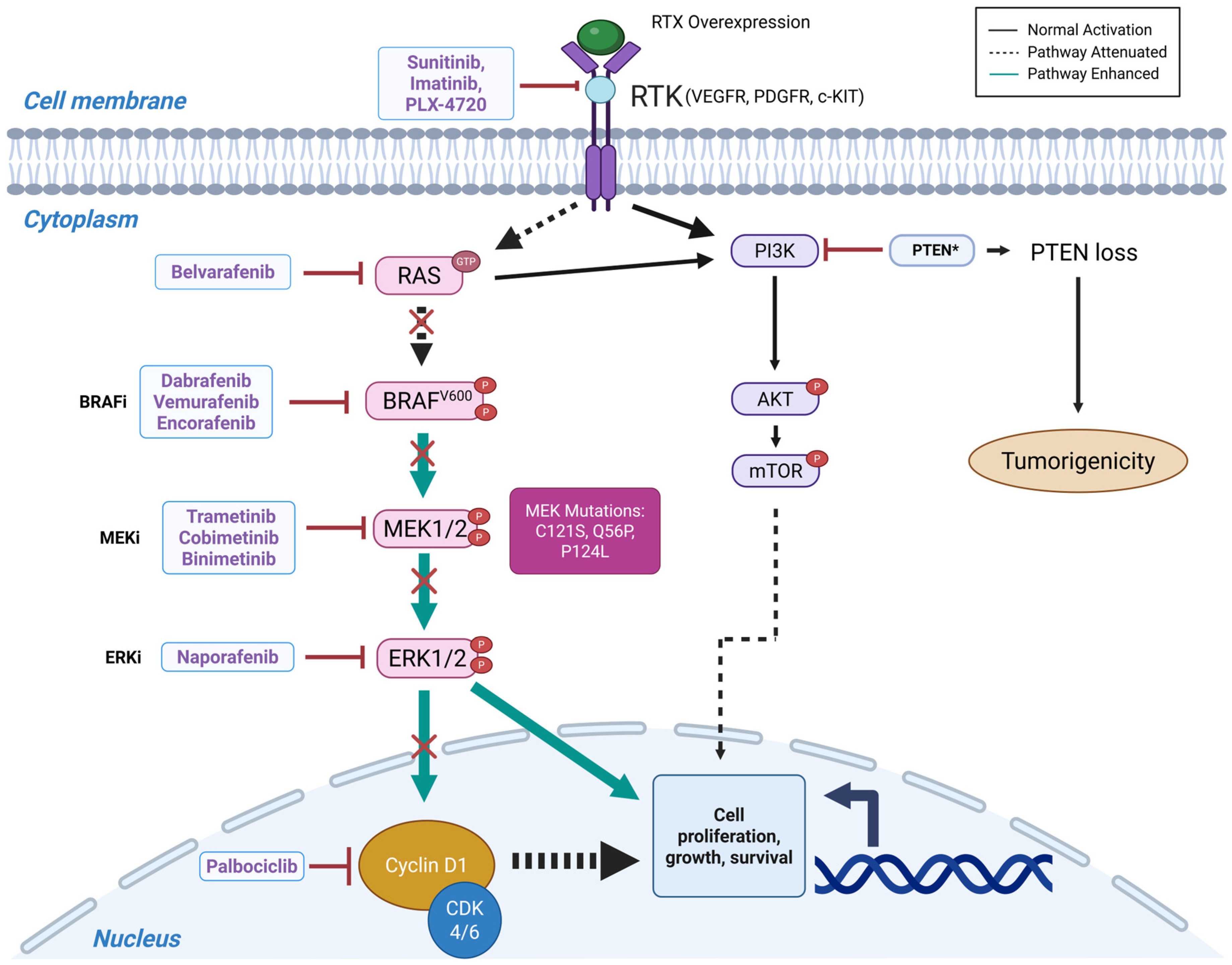
2. B-Raf
2.1. MAPK Pathway Reactivation
2.2. Alternative Survival Pathways
2.3. Tumor Microenvironment and Phenotypic Plasticity
2.4. Immune Escape During BRAFi/MEKi Therapy
2.5. Dabrafenib, Trametinib, Ipilimumab, or Pembrolizumab
2.6. Vemurafenib, Cobimetinib, Atezolizumab (Anti-PD-L1), or Ipilimumab (Anti-CTLA-4 Antibody)
2.7. Encorafenib, Binimetinib, and Pembrolizumab
3. MEK
3.1. Trametinib (MEK Inhibitor) Plus Pembrolizumab (PD-1 Inhibitor)
3.2. Cobimetinib (MEK Inhibitor) Plus Atezolizumab (PD-L1 Inhibitor)
3.3. Binimetinib, Nivolumab, and Ipilimumab
4. HRas
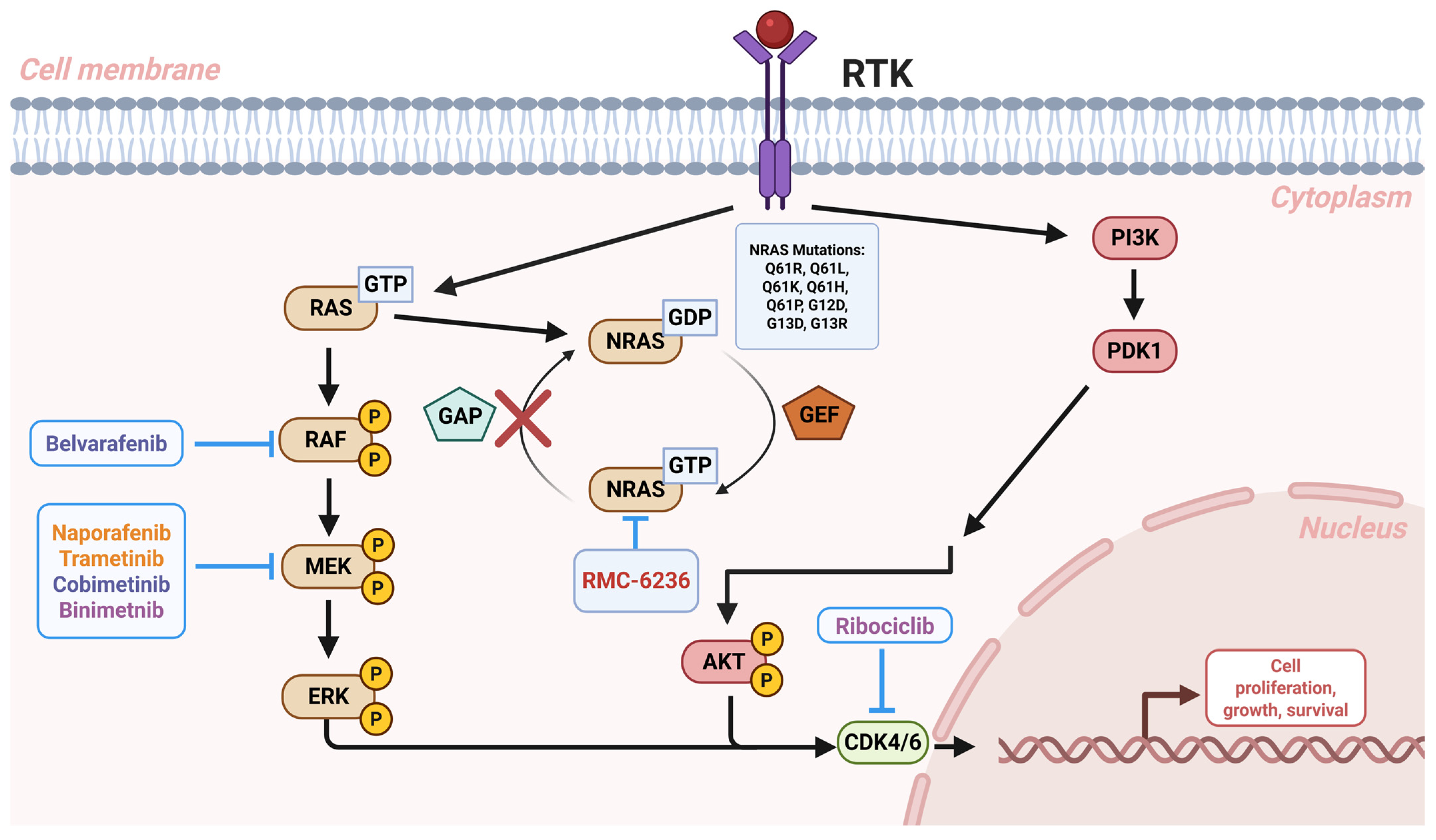
5. NRAS
6. K-Ras
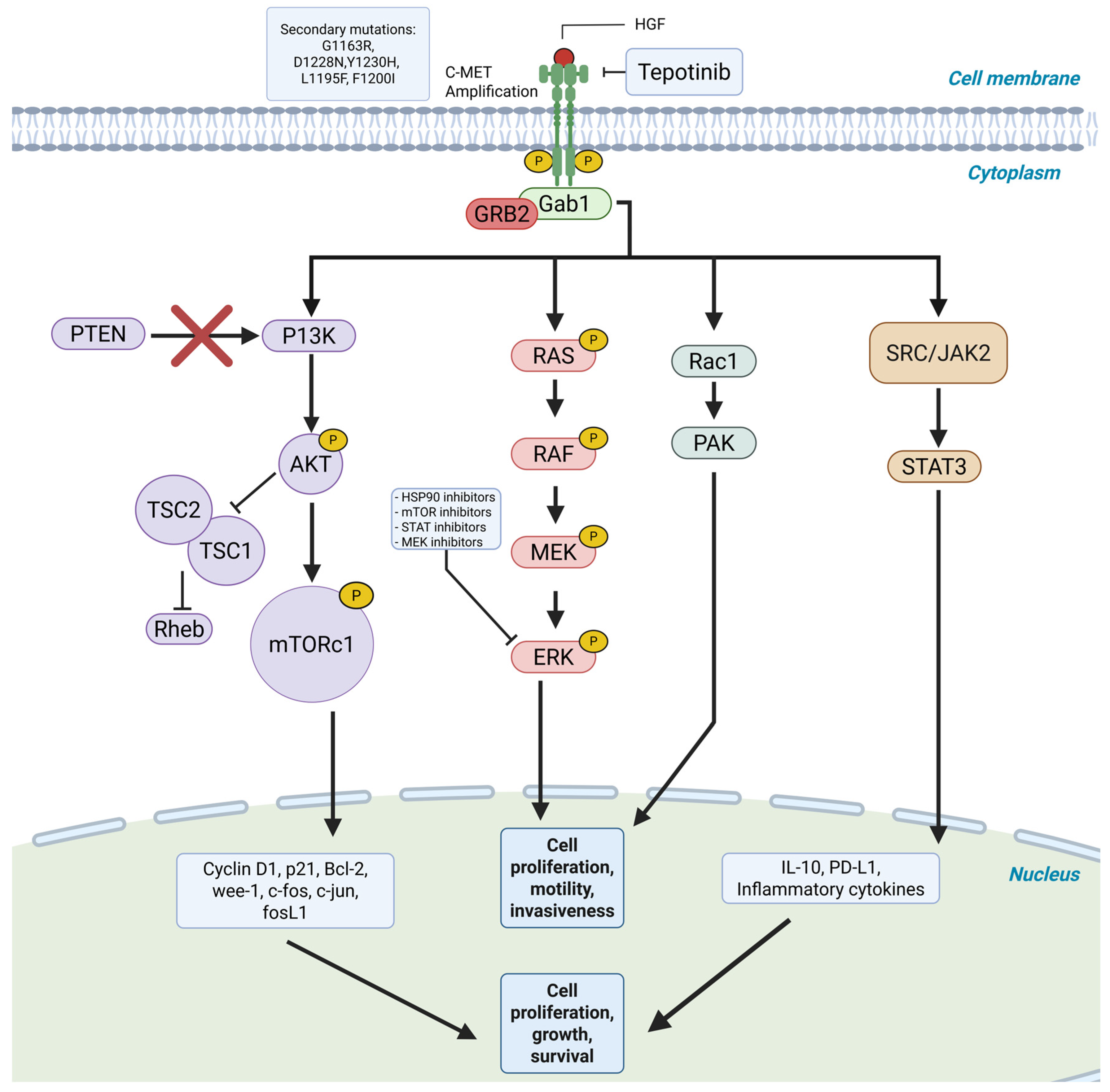
7. c-MET
8. Discussion
9. Conclusions
Author Contributions
Funding
Data Availability Statement
Conflicts of Interest
Abbreviations
| AKT | Refers to three serine/threonine kinases: Akt1, Akt2, and Akt3. |
| AST | Abbreviation of aspartate aminotransferase. |
| BRAF (protein) | RAF isoform. Shortened name for BRAF proto-oncogene serine/threonine kinase. |
| BRAF (proto-oncogene) | The gene that encodes for BRAF. |
| BRAFi | Abbreviation of BRAF inhibitors. |
| CDK 4/6 | Refers to two cyclin-dependent kinases. An abbreviation of cyclin-dependent kinases 4 and 6. |
| c-Jun | Transcription factor protein. Shortened name for transcription factor Jun. |
| c-Raf | RAF isoform. Shortened name for RAF proto-oncogene serine/threonine-protein kinase. RAF isoform. |
| CTLA-4 | Abbreviation of cytotoxic T-lymphocyte-associated protein 4. |
| dMMR | Referring to a tumor cell’s inability to properly repair DNA damage. Abbreviation of deficient mismatch repair. |
| DOR | Duration of Response. |
| ECOG PS | Eastern Cooperative Oncology Group Performance Status. |
| ERK 1/2 | Refers to two members of the MAPK family. An abbreviation of extracellular signal-regulated protein kinases 1 and 2. |
| Fd-7 | Receptor protein. Abbreviation of Frizzled-7. |
| FTI | Abbreviation of farnesyltransferase inhibitors. |
| GAP | Abbreviation of GTPase-activating protein. |
| GGT | Abbreviation of gamma-glutamyl transferase. |
| GGTase-1 | Abbreviation of geranylgeranyltranferase-I. |
| GTPase | An enzyme that binds to guanosine triphosphate and hydrolyzes it, turning the molecule into guanosine diphosphate. |
| HDACs | A family of enzymes. An abbreviation of histone deacetylases. |
| HGF | Growth factor protein. Abbreviation of hepatocyte growth factor. |
| HNSCC | Abbreviation of Head and Neck Squamous Cell Carcinoma. |
| HR | Abbreviation of hazard ratio. |
| HRAS | RAS isoform. Shortened form of Harvey Rat sarcoma viral oncogene homolog. |
| ICIs | Immune checkpoint inhibitors. |
| IHC | Abbreviation of immunohistochemistry. |
| JAK2 | Refers to both the human gene and the non-receptor tyrosine kinase encoded by the JAK2 gene. With regard to the protein, JAK2 is an abbreviation of Janus kinase 2. |
| JNKs | Mitogen-activated protein kinases. Abbreviation of c-Jun terminal kinases. |
| KRAS | RAS isoform. Shortened form of Kirsten rat sarcoma virus oncogene homolog. |
| LDH | Lactate dehydrogenase. |
| MAPK | A type of serine/threonine-specific protein kinase which includes ERKs, JNKs, and p38s. Abbreviation of mitogen-activated protein kinase. |
| MEK 1/2 | Refers to two dual-specificity kinase enzymes. An abbreviation of dual-specificity mitogen-activated protein kinase kinase 1 and 2. |
| MEKi | Abbreviation of MEK inhibitors. |
| MSI-H | Referring to a tumor cell’s inability to properly repair DNA replication errors. Abbreviation of microsatellite instability-high. |
| mTOR | A regulatory serine-threonine protein kinase. Abbreviation of mechanistic target of rapamycin. |
| NGS | Next-generation sequencing |
| NRAS | RAS isoform. Shortened form of neuroblastoma Ras viral oncogene homolog. |
| OS | Overall survival. |
| PD-1 | Programmed cell death protein 1. |
| PD-L1 | Programmed cell death ligand 1. |
| PI3Ks | A family of kinase enzymes. Abbreviation of Phosphoinositide 3-kinases. |
| PFS | Progression-free survival. |
| PTEN | A tumor suppressor gene. Abbreviation of phosphatidylinositol-3,4,5-trisphosphate 3-phosphatase. |
| RAF | A family of serine/threonine-specific protein kinases. Abbreviation of rapidly accelerated fibrosarcoma. |
| RTKs | Receptor tyrosine kinases. |
| RYKs | Atypical member of the RTK family. Abbreviation of receptor-like tyrosine kinases. |
| TAZ | A transcriptional regulatory protein. Abbreviation of transcriptional coactivator with a PDZ-binding motif. |
| TKIs | Tyrosine kinase inhibitors. |
| UV | Abbreviation for ultraviolet. |
| V600E | BRAF gene missense mutation that replaces valine (V) with glutamic acid (E) at amino acid 600. |
| V600K | BRAF gene missense mutation that replaces valine (V) with lysine (K) at amino acid 600. |
| Wnt5a | Signaling glycoprotein. Abbreviation of wingless type MMTV integration site family member 5A. |
| YAP | A transcriptional regulatory protein. Abbreviation of yes-associated protein 1. |
References
- Sung, H.; Filho, A.M.; Laversanne, M.; Ferlay, J.; Siegel, R.L.; Soerjomataram, I.; Jemal, A.; Bray, F. Global cancer statistics 2024: GLOBOCAN estimates of incidence and mortality worldwide for 34 cancers in 186 countries. CA A Cancer J. Clin. 2026, 76, e70090. [Google Scholar] [CrossRef] [PubMed]
- Joshi, U.M.; Kashani-Sabet, M.; Kirkwood, J.M. Cutaneous Melanoma: A Review. JAMA 2025, 334, 2113–2125. [Google Scholar] [CrossRef] [PubMed]
- Schadendorf, D.; van Akkooi, A.C.J.; Berking, C.; Griewank, K.G.; Gutzmer, R.; Hauschild, A.; Stang, A.; Roesch, A.; Ugurel, S. Melanoma. Lancet 2018, 392, 971–984. [Google Scholar] [CrossRef] [PubMed]
- Gutierrez-Castaneda, L.D.; Nova, J.A.; Tovar-Parra, J.D. Frequency of mutations in BRAF, NRAS, and KIT in different populations and histological subtypes of melanoma: A systemic review. Melanoma Res. 2020, 30, 62–70. [Google Scholar] [CrossRef] [PubMed]
- Testa, U.; Castelli, G.; Pelosi, E. Melanoma: Genetic Abnormalities, Tumor Progression, Clonal Evolution and Tumor Initiating Cells. Med. Sci. 2017, 5, 28. [Google Scholar] [CrossRef] [PubMed]
- Tasdogan, A.; Sullivan, R.J.; Katalinic, A.; Lebbe, C.; Whitaker, D.; Puig, S.; van de Poll-Franse, L.V.; Massi, D.; Schadendorf, D. Cutaneous melanoma. Nat. Rev. Dis. Primers 2025, 11, 23. [Google Scholar] [CrossRef] [PubMed]
- Thomas, N.E.; Edmiston, S.N.; Alexander, A.; Millikan, R.C.; Groben, P.A.; Hao, H.; Tolbert, D.; Berwick, M.; Busam, K.; Begg, C.B.; et al. Number of nevi and early-life ambient UV exposure are associated with BRAF-mutant melanoma. Cancer Epidemiol. Biomark. Prev. 2007, 16, 991–997. [Google Scholar] [CrossRef] [PubMed]
- Long, G.V.; Carlino, M.S.; Au-Yeung, G.; Spillane, A.J.; Shannon, K.F.; Gyorki, D.E.; Hsiao, E.; Kapoor, R.; Thompson, J.R.; Batula, I.; et al. Neoadjuvant pembrolizumab, dabrafenib and trametinib in BRAF(V600)-mutant resectable melanoma: The randomized phase 2 NeoTrio trial. Nat. Med. 2024, 30, 2540–2548. [Google Scholar] [CrossRef] [PubMed]
- Ferrucci, P.F.; Di Giacomo, A.M.; Del Vecchio, M.; Atkinson, V.; Schmidt, H.; Schachter, J.; Queirolo, P.; Long, G.V.; Stephens, R.; Svane, I.M.; et al. KEYNOTE-022 part 3: A randomized, double-blind, phase 2 study of pembrolizumab, dabrafenib, and trametinib in BRAF-mutant melanoma. J. Immunother. Cancer 2020, 8, e001806. [Google Scholar] [CrossRef] [PubMed]
- Atkins, M.B.; Lee, S.J.; Chmielowski, B.; Tarhini, A.A.; Cohen, G.I.; Truong, T.G.; Moon, H.H.; Davar, D.; O’Rourke, M.; Stephenson, J.J.; et al. Combination Dabrafenib and Trametinib Versus Combination Nivolumab and Ipilimumab for Patients With Advanced BRAF-Mutant Melanoma: The DREAMseq Trial-ECOG-ACRIN EA6134. J. Clin. Oncol. 2023, 41, 186–197. [Google Scholar] [CrossRef] [PubMed]
- Bottos, A.; Martini, M.; Di Nicolantonio, F.; Comunanza, V.; Maione, F.; Minassi, A.; Appendino, G.; Bussolino, F.; Bardelli, A. Targeting oncogenic serine/threonine-protein kinase BRAF in cancer cells inhibits angiogenesis and abrogates hypoxia. Proc. Natl. Acad. Sci. USA 2012, 109, E353–E359. [Google Scholar] [CrossRef] [PubMed]
- Welti, M.; Dimitriou, F.; Gutzmer, R.; Dummer, R. Triple Combination of Immune Checkpoint Inhibitors and BRAF/MEK Inhibitors in BRAFV600 Melanoma: Current Status and Future Perspectives. Cancers 2022, 14, 5489. [Google Scholar] [CrossRef] [PubMed]
- Long, G.V.; Stroyakovskiy, D.; Gogas, H.; Levchenko, E.; de Braud, F.; Larkin, J.; Garbe, C.; Jouary, T.; Hauschild, A.; Grob, J.J.; et al. Dabrafenib and trametinib versus dabrafenib and placebo for Val600 BRAF-mutant melanoma: A multicentre, double-blind, phase 3 randomised controlled trial. Lancet 2015, 386, 444–451. [Google Scholar] [CrossRef] [PubMed]
- Robert, C.; Karaszewska, B.; Schachter, J.; Rutkowski, P.; Mackiewicz, A.; Stroiakovski, D.; Lichinitser, M.; Dummer, R.; Grange, F.; Mortier, L.; et al. Improved overall survival in melanoma with combined dabrafenib and trametinib. N. Engl. J. Med. 2015, 372, 30–39. [Google Scholar] [CrossRef] [PubMed]
- Gutzmer, R.; Stroyakovskiy, D.; Gogas, H.; Robert, C.; Lewis, K.; Protsenko, S.; Pereira, R.P.; Eigentler, T.; Rutkowski, P.; Demidov, L.; et al. Atezolizumab, vemurafenib, and cobimetinib as first-line treatment for unresectable advanced BRAF(V600) mutation-positive melanoma (IMspire150): Primary analysis of the randomised, double-blind, placebo-controlled, phase 3 trial. Lancet 2020, 395, 1835–1844. [Google Scholar] [CrossRef] [PubMed]
- Larkin, J.; Chiarion-Sileni, V.; Gonzalez, R.; Grob, J.J.; Cowey, C.L.; Lao, C.D.; Schadendorf, D.; Dummer, R.; Smylie, M.; Rutkowski, P.; et al. Combined Nivolumab and Ipilimumab or Monotherapy in Untreated Melanoma. N. Engl. J. Med. 2015, 373, 23–34. [Google Scholar] [CrossRef] [PubMed]
- Zimmer, L.; Livingstone, E.; Krackhardt, A.; Schultz, E.S.; Goppner, D.; Assaf, C.; Trebing, D.; Stelter, K.; Windemuth-Kieselbach, C.; Ugurel, S.; et al. Encorafenib, binimetinib plus pembrolizumab triplet therapy in patients with advanced BRAF(V600) mutant melanoma: Safety and tolerability results from the phase I IMMU-TARGET trial. Eur. J. Cancer 2021, 158, 72–84. [Google Scholar] [CrossRef] [PubMed]
- Schadendorf, D.; Dummer, R.; Robert, C.; Ribas, A.; Sullivan, R.J.; Panella, T.; McKean, M.; Santos, E.S.; Brill, K.; Polli, A.; et al. STARBOARD: Encorafenib + binimetinib + pembrolizumab for first-line metastatic/unresectable BRAF V600-mutant melanoma. Future Oncol. 2022, 18, 2041–2051. [Google Scholar] [CrossRef]
- Eroglu, Z.; Moon, J.; Najjar, Y.G.; Kotecha, R.; Wu, M.; Spektor, V.; Khushalani, N.I.; Korde, L.A.; Sharon, E.; Grossmann, K.F.; et al. A randomized phase 2 trial of encorafenib + binimetinib + nivolumab vs ipilimumab + nivolumab in BRAFV600-mutant melanoma brain metastases: SWOG S2000 (NCT04511013). J. Clin. Oncol. 2025, 43, LBA9507. [Google Scholar] [CrossRef]
- Huynh, S.; Mortier, L.; Dutriaux, C.; Maubec, E.; Boileau, M.; Dereure, O.; Leccia, M.T.; Arnault, J.P.; Brunet-Possenti, F.; Aubin, F.; et al. Combined Therapy with Anti-PD1 and BRAF and/or MEK Inhibitor for Advanced Melanoma: A Multicenter Cohort Study. Cancers 2020, 12, 1666. [Google Scholar] [CrossRef]
- Schuler, M.; Zimmer, L.; Kim, K.B.; Sosman, J.A.; Ascierto, P.A.; Postow, M.A.; De Vos, F.; van Herpen, C.M.L.; Carlino, M.S.; Johnson, D.B.; et al. Phase Ib/II Trial of Ribociclib in Combination with Binimetinib in Patients with NRAS-mutant Melanoma. Clin. Cancer Res. 2022, 28, 3002–3010. [Google Scholar] [CrossRef] [PubMed]
- Amaria, R.; Duvivier, H.; Tsai, K.; Momtaz, P.; Galamaga, R.; Pisick, E.; Doonan, B.; Weise, A.; Langr, N.; Winkler, J.; et al. Nautilus, a phase 1b/2 trial of combining oral HDAC inhibitor (HDACi) with MEK inhibitor (MEKi) in patients with NRAS-mutated metastatic melanoma (MM). J. Clin. Oncol. 2025, 43, 9552. [Google Scholar] [CrossRef]
- de Braud, F.; Dooms, C.; Heist, R.S.; Lebbe, C.; Wermke, M.; Gazzah, A.; Schadendorf, D.; Rutkowski, P.; Wolf, J.; Ascierto, P.A.; et al. Initial Evidence for the Efficacy of Naporafenib in Combination With Trametinib in NRAS-Mutant Melanoma: Results From the Expansion Arm of a Phase Ib, Open-Label Study. J. Clin. Oncol. 2023, 41, 2651–2660. [Google Scholar] [CrossRef]
- Shin, S.J.; Lee, J.; Kim, T.m.; Kim, J.-S.; Kim, Y.J.; Hong, Y.S.; Kim, S.Y.; Kim, J.-E.; Lee, D.H.; Hong, Y.-H.; et al. A phase Ib trial of belvarafenib in combination with cobimetinib in patients with advanced solid tumors: Interim results of dose-escalation and patients with NRAS-mutant melanoma of dose-expansion. J. Clin. Oncol. 2021, 39, 3007. [Google Scholar] [CrossRef]
- Wei, X.; Zou, Z.; Zhang, W.; Fang, M.; Zhang, X.; Luo, Z.; Chen, J.; Huang, G.; Zhang, P.; Cheng, Y.; et al. A phase II study of efficacy and safety of the MEK inhibitor tunlametinib in patients with advanced NRAS-mutant melanoma. Eur. J. Cancer 2024, 202, 114008. [Google Scholar] [CrossRef] [PubMed]
- Corcoran, R.B.; Do, K.T.; Kim, J.E.; Cleary, J.M.; Parikh, A.R.; Yeku, O.O.; Xiong, N.; Weekes, C.D.; Veneris, J.; Ahronian, L.G.; et al. Phase I/II Study of Combined BCL-xL and MEK Inhibition with Navitoclax and Trametinib in KRAS or NRAS Mutant Advanced Solid Tumors. Clin. Cancer Res. 2024, 30, 1739–1749. [Google Scholar] [CrossRef] [PubMed]
- Rager, T.; Eckburg, A.; Patel, M.; Qiu, R.; Gantiwala, S.; Dovalovsky, K.; Fan, K.; Lam, K.; Roesler, C.; Rastogi, A.; et al. Treatment of Metastatic Melanoma with a Combination of Immunotherapies and Molecularly Targeted Therapies. Cancers 2022, 14, 3779. [Google Scholar] [CrossRef] [PubMed]
- Gajewski, T.F.; Salama, A.K.; Niedzwiecki, D.; Johnson, J.; Linette, G.; Bucher, C.; Blaskovich, M.A.; Sebti, S.M.; Haluska, F.; Cancer and Leukemia Group B. Phase II study of the farnesyltransferase inhibitor R115777 in advanced melanoma (CALGB 500104). J. Transl. Med. 2012, 10, 246. [Google Scholar] [CrossRef] [PubMed]
- Jing, G.; Yu, F.; Xue, H. Tepotinib suppresses proliferation, invasion, migration, and promotes apoptosis of melanoma cells via inhibiting MET and PI3K/AKT signaling pathways. Oncol. Lett. 2022, 23, 170. [Google Scholar] [CrossRef] [PubMed]
- Guo, Y.J.; Pan, W.W.; Liu, S.B.; Shen, Z.F.; Xu, Y.; Hu, L.L. ERK/MAPK signalling pathway and tumorigenesis. Exp. Ther. Med. 2020, 19, 1997–2007. [Google Scholar] [CrossRef] [PubMed]
- Beck, D.; Niessner, H.; Smalley, K.S.; Flaherty, K.; Paraiso, K.H.; Busch, C.; Sinnberg, T.; Vasseur, S.; Iovanna, J.L.; Driessen, S.; et al. Vemurafenib potently induces endoplasmic reticulum stress-mediated apoptosis in BRAFV600E melanoma cells. Sci. Signal. 2013, 6, ra7. [Google Scholar] [CrossRef] [PubMed]
- Lythgoe, M.P.; Liu, D.S.K.; Annels, N.E.; Krell, J.; Frampton, A.E. Gene of the month: Lymphocyte-activation gene 3 (LAG-3). J. Clin. Pathol. 2021, 74, 543–547. [Google Scholar] [CrossRef] [PubMed]
- Larkin, J.; Ascierto, P.A.; Dreno, B.; Atkinson, V.; Liszkay, G.; Maio, M.; Mandala, M.; Demidov, L.; Stroyakovskiy, D.; Thomas, L.; et al. Combined vemurafenib and cobimetinib in BRAF-mutated melanoma. N. Engl. J. Med. 2014, 371, 1867–1876. [Google Scholar] [CrossRef] [PubMed]
- Zhong, J.; Yan, W.; Wang, C.; Liu, W.; Lin, X.; Zou, Z.; Sun, W.; Chen, Y. BRAF Inhibitor Resistance in Melanoma: Mechanisms and Alternative Therapeutic Strategies. Curr. Treat. Options Oncol. 2022, 23, 1503–1521. [Google Scholar] [CrossRef] [PubMed]
- Paraiso, K.H.; Xiang, Y.; Rebecca, V.W.; Abel, E.V.; Chen, Y.A.; Munko, A.C.; Wood, E.; Fedorenko, I.V.; Sondak, V.K.; Anderson, A.R.; et al. PTEN loss confers BRAF inhibitor resistance to melanoma cells through the suppression of BIM expression. Cancer Res. 2011, 71, 2750–2760. [Google Scholar] [CrossRef] [PubMed]
- Nguyen, C.D.K.; Yi, C. YAP/TAZ Signaling and Resistance to Cancer Therapy. Trends Cancer 2019, 5, 283–296. [Google Scholar] [CrossRef] [PubMed]
- Anastas, J.N.; Kulikauskas, R.M.; Tamir, T.; Rizos, H.; Long, G.V.; von Euw, E.M.; Yang, P.T.; Chen, H.W.; Haydu, L.; Toroni, R.A.; et al. WNT5A enhances resistance of melanoma cells to targeted BRAF inhibitors. J. Clin. Investig. 2014, 124, 2877–2890. [Google Scholar] [CrossRef] [PubMed]
- Bokharaie, H.; Kolch, W.; Krstic, A. Analysis of Alternative mRNA Splicing in Vemurafenib-Resistant Melanoma Cells. Biomolecules 2022, 12, 993. [Google Scholar] [CrossRef] [PubMed]
- Frederick, D.T.; Piris, A.; Cogdill, A.P.; Cooper, Z.A.; Lezcano, C.; Ferrone, C.R.; Mitra, D.; Boni, A.; Newton, L.P.; Liu, C.; et al. BRAF inhibition is associated with enhanced melanoma antigen expression and a more favorable tumor microenvironment in patients with metastatic melanoma. Clin. Cancer Res. 2013, 19, 1225–1231. [Google Scholar] [CrossRef] [PubMed]
- Kakadia, S.; Yarlagadda, N.; Awad, R.; Kundranda, M.; Niu, J.; Naraev, B.; Mina, L.; Dragovich, T.; Gimbel, M.; Mahmoud, F. Mechanisms of resistance to BRAF and MEK inhibitors and clinical update of US Food and Drug Administration-approved targeted therapy in advanced melanoma. OncoTargets Ther. 2018, 11, 7095–7107. [Google Scholar] [CrossRef] [PubMed]
- Dixon-Douglas, J.R.; Patel, R.P.; Somasundram, P.M.; McArthur, G.A. Triplet Therapy in Melanoma—Combined BRAF/MEK Inhibitors and Anti-PD-(L)1 Antibodies. Curr. Oncol. Rep. 2022, 24, 1071–1079. [Google Scholar] [CrossRef] [PubMed]
- Ascierto, P.A.; Casula, M.; Bulgarelli, J.; Pisano, M.; Piccinini, C.; Piccin, L.; Cossu, A.; Mandala, M.; Ferrucci, P.F.; Guidoboni, M.; et al. Sequential immunotherapy and targeted therapy for metastatic BRAF V600 mutated melanoma: 4-year survival and biomarkers evaluation from the phase II SECOMBIT trial. Nat. Commun. 2024, 15, 146. [Google Scholar] [CrossRef] [PubMed]
- Atkins, M.B.; Lee, S.J.; Chmielowski, B.; Tarhini, A.A.; Cohen, G.I.; Gibney, G.T.; Truong, T.-G.; Davar, D.; Stephenson, J.; Curti, B.D.; et al. DREAMseq: A phase III trial of treatment sequences in BRAFV600-mutant (m) metastatic melanoma (MM)—Final clinical results. J. Clin. Oncol. 2025, 43, 9506. [Google Scholar] [CrossRef]
- Patel, M.; Eckburg, A.; Gantiwala, S.; Hart, Z.; Dein, J.; Lam, K.; Puri, N. Resistance to Molecularly Targeted Therapies in Melanoma. Cancers 2021, 13, 1115. [Google Scholar] [CrossRef] [PubMed]
- Ullah, R.; Yin, Q.; Snell, A.H.; Wan, L. RAF-MEK-ERK pathway in cancer evolution and treatment. Semin. Cancer Biol. 2022, 85, 123–154. [Google Scholar] [CrossRef] [PubMed]
- Lai, X.; Friedman, A. Combination therapy for melanoma with BRAF/MEK inhibitor and immune checkpoint inhibitor: A mathematical model. BMC Syst. Biol. 2017, 11, 70. [Google Scholar] [CrossRef] [PubMed]
- Neuzillet, C.; Tijeras-Raballand, A.; de Mestier, L.; Cros, J.; Faivre, S.; Raymond, E. MEK in cancer and cancer therapy. Pharmacol. Ther. 2014, 141, 160–171. [Google Scholar] [CrossRef] [PubMed]
- Zeng, Q.; Deng, Y.; Zhang, L.; Wang, W. Interstitial lung disease associated with combination therapy of dabrafenib and trametinib in metastatic BRAF(V600E)-mutated poorly differentiated thyroid cancer: A case report and review of the literature. Int. J. Clin. Pharmacol. Ther. 2022, 60, 225–231. [Google Scholar] [CrossRef] [PubMed]
- Mincu, R.I.; Mahabadi, A.A.; Michel, L.; Mrotzek, S.M.; Schadendorf, D.; Rassaf, T.; Totzeck, M. Cardiovascular Adverse Events Associated With BRAF and MEK Inhibitors: A Systematic Review and Meta-analysis. JAMA Netw. Open 2019, 2, e198890. [Google Scholar] [CrossRef] [PubMed]
- Hellmann, M.D.; Kim, T.W.; Lee, C.B.; Goh, B.C.; Miller, W.H., Jr.; Oh, D.Y.; Jamal, R.; Chee, C.E.; Chow, L.Q.M.; Gainor, J.F.; et al. Phase Ib study of atezolizumab combined with cobimetinib in patients with solid tumors. Ann. Oncol. Off. J. Eur. Soc. Med. Oncol. 2019, 30, 1134–1142. [Google Scholar] [CrossRef] [PubMed]
- Chatziioannou, E.; Lallas, K.; Sinnberg, T.; Niessner, H.; Stratigos, A.J.; Flatz, L.; Amaral, T. Insights into RAS-driven melanoma and its therapeutic implications. Cancer Treat. Rev. 2026, 143, 103090. [Google Scholar] [CrossRef] [PubMed]
- Kareff, S.A.; Trabolsi, A.; Krause, H.B.; Samec, T.; Elliott, A.; Rodriguez, E.; Olazagasti, C.; Watson, D.C.; Bustos, M.A.; Hoon, D.S.B.; et al. The Genomic, Transcriptomic, and Immunologic Landscape of HRAS Mutations in Solid Tumors. Cancers 2024, 16, 1572. [Google Scholar] [CrossRef] [PubMed]
- Wan, X.; Liu, R.; Li, Z. The Prognostic Value of HRAS mRNA Expression in Cutaneous Melanoma. Biomed. Res. Int. 2017, 2017, 5356737. [Google Scholar] [CrossRef] [PubMed]
- Hood, F.E.; Sahraoui, Y.M.; Jenkins, R.E.; Prior, I.A. Ras protein abundance correlates with Ras isoform mutation patterns in cancer. Oncogene 2023, 42, 1224–1232. [Google Scholar] [CrossRef] [PubMed]
- Lee, K.H.; Koh, M.; Moon, A. Farnesyl transferase inhibitor FTI-277 inhibits breast cell invasion and migration by blocking H-Ras activation. Oncol. Lett. 2016, 12, 2222–2226. [Google Scholar] [CrossRef] [PubMed]
- Cox, A.D.; Der, C.J. “Undruggable KRAS”: Druggable after all. Genes Dev. 2025, 39, 132–162. [Google Scholar] [CrossRef] [PubMed]
- Britten, C.D.; Rowinsky, E.K.; Soignet, S.; Patnaik, A.; Yao, S.L.; Deutsch, P.; Lee, Y.; Lobell, R.B.; Mazina, K.E.; McCreery, H.; et al. A phase I and pharmacological study of the farnesyl protein transferase inhibitor L-778,123 in patients with solid malignancies. Clin. Cancer Res. 2001, 7, 3894–3903. [Google Scholar] [PubMed]
- Papadimitrakopoulou, V.; Agelaki, S.; Tran, H.T.; Kies, M.; Gagel, R.; Zinner, R.; Kim, E.; Ayers, G.; Wright, J.; Khuri, F. Phase I study of the farnesyltransferase inhibitor BMS-214662 given weekly in patients with solid tumors. Clin. Cancer Res. 2005, 11, 4151–4159. [Google Scholar] [CrossRef] [PubMed]
- Niessner, H.; Beck, D.; Sinnberg, T.; Lasithiotakis, K.; Maczey, E.; Gogel, J.; Venturelli, S.; Berger, A.; Mauthe, M.; Toulany, M.; et al. The farnesyl transferase inhibitor lonafarnib inhibits mTOR signaling and enforces sorafenib-induced apoptosis in melanoma cells. J. Investig. Dermatol. 2011, 131, 468–479. [Google Scholar] [CrossRef] [PubMed]
- Fedorenko, I.V.; Gibney, G.T.; Smalley, K.S. NRAS mutant melanoma: Biological behavior and future strategies for therapeutic management. Oncogene 2013, 32, 3009–3018. [Google Scholar] [CrossRef] [PubMed]
- Burd, C.E.; Liu, W.; Huynh, M.V.; Waqas, M.A.; Gillahan, J.E.; Clark, K.S.; Fu, K.; Martin, B.L.; Jeck, W.R.; Souroullas, G.P.; et al. Mutation-specific RAS oncogenicity explains NRAS codon 61 selection in melanoma. Cancer Discov. 2014, 4, 1418–1429. [Google Scholar] [CrossRef] [PubMed]
- Phadke, M.S.; Smalley, K.S.M. Targeting NRAS Mutations in Advanced Melanoma. J. Clin. Oncol. 2023, 41, 2661–2664. [Google Scholar] [CrossRef] [PubMed]
- Dinter, L.; Karitzky, P.C.; Schulz, A.; Wurm, A.A.; Mehnert, M.C.; Sergon, M.; Tunger, A.; Lesche, M.; Wehner, R.; Muller, A.; et al. BRAF and MEK inhibitor combinations induce potent molecular and immunological effects in NRAS-mutant melanoma cells: Insights into mode of action and resistance mechanisms. Int. J. Cancer 2024, 154, 1057–1072. [Google Scholar] [CrossRef] [PubMed]
- Seth, R.; Agarwala, S.S.; Messersmith, H.; Alluri, K.C.; Ascierto, P.A.; Atkins, M.B.; Bollin, K.; Chacon, M.; Davis, N.; Faries, M.B.; et al. Systemic Therapy for Melanoma: ASCO Guideline Update. J. Clin. Oncol. 2023, 41, 4794–4820. [Google Scholar] [CrossRef] [PubMed]
- Dummer, R.; Schadendorf, D.; Ascierto, P.A.; Arance, A.; Dutriaux, C.; Di Giacomo, A.M.; Rutkowski, P.; Del Vecchio, M.; Gutzmer, R.; Mandala, M.; et al. Binimetinib versus dacarbazine in patients with advanced NRAS-mutant melanoma (NEMO): A multicentre, open-label, randomised, phase 3 trial. Lancet Oncol. 2017, 18, 435–445. [Google Scholar] [CrossRef] [PubMed]
- Spira, A.I.; McKean, M.; Daud, A.; Thein, K.Z.; Tine, B.A.V.; Wang, J.S.; Antal, J.; Sutton, R.; Cui, Y.; Hong, D.S. An open-label study to assess the safety and efficacy of naporafenib (ERAS-254) administered with trametinib in previously treated patients with locally advanced unresectable or metastatic solid tumor malignancies with RAS Q61X mutations (SEACRAFT-1). J. Clin. Oncol. 2024, 42, TPS3178. [Google Scholar] [CrossRef]
- Keam, S.J. Tunlametinib: First Approval. Drugs 2024, 84, 1005–1010. [Google Scholar] [CrossRef] [PubMed]
- Wu, J.; Wang, J.; O’Connor, T.N.; Tzetzo, S.L.; Gurova, K.V.; Knudsen, E.S.; Witkiewicz, A.K. Separable Cell Cycle Arrest and Immune Response Elicited through Pharmacological CDK4/6 and MEK Inhibition in RASmut Disease Models. Mol. Cancer Ther. 2024, 23, 1801–1814. [Google Scholar] [CrossRef] [PubMed]
- Gallagher, S.J.; Gunatilake, D.; Beaumont, K.A.; Sharp, D.M.; Tiffen, J.C.; Heinemann, A.; Weninger, W.; Haass, N.K.; Wilmott, J.S.; Madore, J.; et al. HDAC inhibitors restore BRAF-inhibitor sensitivity by altering PI3K and survival signalling in a subset of melanoma. Int. J. Cancer 2018, 142, 1926–1937. [Google Scholar] [CrossRef] [PubMed]
- Huang, L.; Guo, Z.; Wang, F.; Fu, L. KRAS mutation: From undruggable to druggable in cancer. Signal Transduct. Target. Ther. 2021, 6, 386. [Google Scholar] [CrossRef] [PubMed]
- Yang, Y.; Zhang, H.; Huang, S.; Chu, Q. KRAS Mutations in Solid Tumors: Characteristics, Current Therapeutic Strategy, and Potential Treatment Exploration. J. Clin. Med. 2023, 12, 709. [Google Scholar] [CrossRef] [PubMed]
- Vanni, I.; Tanda, E.T.; Dalmasso, B.; Pastorino, L.; Andreotti, V.; Bruno, W.; Boutros, A.; Spagnolo, F.; Ghiorzo, P. Non-BRAF Mutant Melanoma: Molecular Features and Therapeutical Implications. Front. Mol. Biosci. 2020, 7, 172. [Google Scholar] [CrossRef] [PubMed]
- Etnyre, D.; Stone, A.L.; Fong, J.T.; Jacobs, R.J.; Uppada, S.B.; Botting, G.M.; Rajanna, S.; Moravec, D.N.; Shambannagari, M.R.; Crees, Z.; et al. Targeting c-Met in melanoma: Mechanism of resistance and efficacy of novel combinatorial inhibitor therapy. Cancer Biol. Ther. 2014, 15, 1129–1141. [Google Scholar] [CrossRef] [PubMed]
- Czyz, M. HGF/c-MET Signaling in Melanocytes and Melanoma. Int. J. Mol. Sci. 2018, 19, 3844. [Google Scholar] [CrossRef] [PubMed]
- Machiraju, D.; Hassel, J.C. Targeting the cMET pathway to enhance immunotherapeutic approaches for mUM patients. Front. Oncol. 2022, 12, 1068029. [Google Scholar] [CrossRef] [PubMed]
- Wu, S.; Singh, R.K. Resistance to chemotherapy and molecularly targeted therapies: Rationale for combination therapy in malignant melanoma. Curr. Mol. Med. 2011, 11, 553–563. [Google Scholar] [CrossRef] [PubMed]
- Qin, Z.; Zheng, M. Advances in targeted therapy and immunotherapy for melanoma (Review). Exp. Ther. Med. 2023, 26, 416. [Google Scholar] [CrossRef] [PubMed]
- Seyhan, A.A.; Carini, C. Insights and Strategies of Melanoma Immunotherapy: Predictive Biomarkers of Response and Resistance and Strategies to Improve Response Rates. Int. J. Mol. Sci. 2022, 24, 41. [Google Scholar] [CrossRef] [PubMed]
- Mihaila, R.I.; Gheorghe, A.S.; Zob, D.L.; Stanculeanu, D.L. A Complete Response in a Metastatic Melanoma Patient After a Single Dose of Dual Checkpoint Inhibitors Blockade Could Be Predictable: A Case Report. Cureus 2024, 16, e69301. [Google Scholar] [CrossRef] [PubMed]
- Mandal, R.; Chan, T.A. Personalized Oncology Meets Immunology: The Path toward Precision Immunotherapy. Cancer Discov. 2016, 6, 703–713. [Google Scholar] [CrossRef] [PubMed]
- Haist, M.; Stege, H.; Ebner, R.; Fleischer, M.I.; Loquai, C.; Grabbe, S. The Role of Treatment Sequencing with Immune-Checkpoint Inhibitors and BRAF/MEK Inhibitors for Response and Survival of Patients with BRAFV600-Mutant Metastatic Melanoma-A Retrospective, Real-World Cohort Study. Cancers 2022, 14, 2082. [Google Scholar] [CrossRef] [PubMed]
- Jalil, A.; Donate, M.M.; Mattei, J. Exploring resistance to immune checkpoint inhibitors and targeted therapies in melanoma. Cancer Drug Resist. 2024, 7, 42. [Google Scholar] [CrossRef] [PubMed]
- van Zeijl, M.C.T.; Ismail, R.K.; de Wreede, L.C.; van den Eertwegh, A.J.M.; de Boer, A.; van Dartel, M.; Hilarius, D.L.; Aarts, M.J.B.; van den Berkmortel, F.; Boers-Sonderen, M.J.; et al. Real-world outcomes of advanced melanoma patients not represented in phase III trials. Int. J. Cancer 2020, 147, 3461–3470. [Google Scholar] [CrossRef] [PubMed]



| Drug 1 (Target) | Drug 2 (Target) | Drug 3 (Target) | Mutation Context | Study Type | Refs. |
|---|---|---|---|---|---|
| BRAF V600-Mutant—Targeted Therapy Doublet | |||||
| Dabrafenib (B-Raf) | Trametinib (MEK) | — | BRAF V600E/K | FDA-Approved (2014/2015; COMBI-d, COMBI-v) | [13,14] |
| BRAF V600-Mutant-Targeted Therapy + Immunotherapy Triplet | |||||
| Vemurafenib (B-Raf) | Cobimetinib (MEK) | Atezolizumab (PD-L1) | BRAF V600 (any variant) | FDA-Approved (2020; IMspire150) | [15] |
| Any Advanced Melanoma—Dual Immunotherapy | |||||
| Nivolumab (PD-1) | Ipilimumab (CTLA-4) | — | Any (BRAF-mutant or wild-type) | FDA-Approved (2015; CheckMate 067) | [16] |
| Drug 1 (Target) | Drug 2 (Target) | Drug 3 (Target) | Mutation Context | Study Type | Ref. |
|---|---|---|---|---|---|
| BRAF V600-Mutant—Investigational Triplets | |||||
| Encorafenib (B-Raf) | Binimetinib (MEK) | Pembrolizumab (PD-1) | BRAF V600E/K | Phase I/II (IMMU-TARGET) | [17] |
| Encorafenib (B-Raf) | Binimetinib (MEK) | Pembrolizumab (PD-1) | BRAF V600E/K | Phase III, ongoing (STARBOARD) | [18] |
| Dabrafenib (B-Raf) | Trametinib (MEK) | Pembrolizumab (PD-1) | BRAF V600E/K | Phase II (KEYNOTE-022) | [9] |
| Binimetinib (MEK) | Nivolumab (PD-1) | Ipilimumab (CTLA-4) | BRAF V600-mutant (brain mets) | Phase II (SWOG S2000) | [19] |
| BRAF V600-Mutant—MEK + ICI Doublets | |||||
| Trametinib (MEK) | Pembrolizumab (PD-1) | — | BRAF-mutant (late-line) | Retrospective/case series | [20] |
| Cobimetinib (MEK) | Atezolizumab (PD-L1) | — | BRAF V600E/K | Phase III (arm within IMspire150) | [15] |
| NRAS-Mutant—MEK + CDK4/6 Inhibition | |||||
| Binimetinib (MEK) | Ribociclib (CDK4/6) | — | NRAS-mutant | Phase Ib/II | [21] |
| NRAS-Mutant—MEK + HDAC Inhibition | |||||
| Binimetinib (MEK) | Bocodepsin (HDAC) | — | NRAS-mutant | Phase Ib/2 (Nautilus) | [22] |
| NRAS-Mutant—RAF + MEK Inhibition | |||||
| Trametinib (MEK) | Naporafenib (pan-RAF) | — | NRAS-mutant | Phase Ib | [23] |
| Cobimetinib (MEK) | Belvarafenib (RAF dimer) | — | NRAS-mutant | Phase Ib | [24] |
| NRAS-Mutant—MEK Monotherapy | |||||
| Tunlametinib (MEK) | — | — | NRAS-mutant | Phase II (monotherapy) | [25] |
| RAS-Mutant Solid Tumors—BCL-xL + MEK Inhibition | |||||
| Trametinib (MEK) | Navitoclax (BCL-xL) | — | KRAS- or NRAS-mutant (basket) | Phase I/II | [26] |
| HRAS-Mutant—Preclinical/Early-Phase | |||||
| ASN007 (ERK1/2) | Copanlisib (PI3K) | — | RAS-mutant (preclinical) | Preclinical | [27] |
| Tipifarnib (FTI) | — | — | HRAS-mutant | Phase II—no clinical benefit | [28] |
| MET-Preclinical | |||||
| Tepotinib (c-MET) | — | — | MET overexpressed | Preclinical (cell line WM451) | [29] |
Disclaimer/Publisher’s Note: The statements, opinions and data contained in all publications are solely those of the individual author(s) and contributor(s) and not of MDPI and/or the editor(s). MDPI and/or the editor(s) disclaim responsibility for any injury to people or property resulting from any ideas, methods, instructions or products referred to in the content. |
© 2026 by the authors. Licensee MDPI, Basel, Switzerland. This article is an open access article distributed under the terms and conditions of the Creative Commons Attribution (CC BY) license.
Share and Cite
Bahari, R.; Nguyen, M.; Sohail, N.; Lopez, S.; Saravanaguru Vasanthi, S.; Amin, J.; Ramaswami, D.; Kapetaneas, G.; Karne, R.; Altayeh, U.; et al. Current Molecular-Targeted Therapies in Melanoma and Their Mechanism of Resistance. Cancers 2026, 18, 2310. https://doi.org/10.3390/cancers18142310
Bahari R, Nguyen M, Sohail N, Lopez S, Saravanaguru Vasanthi S, Amin J, Ramaswami D, Kapetaneas G, Karne R, Altayeh U, et al. Current Molecular-Targeted Therapies in Melanoma and Their Mechanism of Resistance. Cancers. 2026; 18(14):2310. https://doi.org/10.3390/cancers18142310
Chicago/Turabian StyleBahari, Rose, Molly Nguyen, Nayyab Sohail, Stephanie Lopez, Subaranjana Saravanaguru Vasanthi, Jeeya Amin, Dhruv Ramaswami, Georgia Kapetaneas, Riya Karne, Usama Altayeh, and et al. 2026. "Current Molecular-Targeted Therapies in Melanoma and Their Mechanism of Resistance" Cancers 18, no. 14: 2310. https://doi.org/10.3390/cancers18142310
APA StyleBahari, R., Nguyen, M., Sohail, N., Lopez, S., Saravanaguru Vasanthi, S., Amin, J., Ramaswami, D., Kapetaneas, G., Karne, R., Altayeh, U., Rodgers, K. J., Mehta, A. P., & Puri, N. (2026). Current Molecular-Targeted Therapies in Melanoma and Their Mechanism of Resistance. Cancers, 18(14), 2310. https://doi.org/10.3390/cancers18142310