
MKRN2-Mediated Degradation of IGF2BP3 Suppresses MYC and Enhances CDK4/6 Inhibitor Sensitivity in Bladder Cancer
Simple Summary
Abstract
1. Introduction
2. Materials and Methods
2.1. Online Databases and Associated Analyses
2.2. Clinical Data Analysis
2.3. Cell Lines and Cultures
2.4. Cell Proliferation and Viability Assays
2.5. 5-Ethynyl-2′-Deoxyuridine (EdU) Assays
2.6. Clone Formation Assay
2.7. Cell-Cycle Assays
2.8. Terminal Deoxynucleotidyl Transferase dUTP Nick End Labeling (TUNEL) Assay
2.9. Lentivirus Construction and Infection
2.10. Western Blot (WB)
2.11. Ubiquitination Assay
2.12. Cycloheximide (CHX) Chase Assay for Protein Stability
2.13. Co-Immunoprecipitation (Co-IP)
2.14. RNA Immunoprecipitation (RIP)
2.15. m6A-RNA Immunoprecipitation (Me-RIP)
2.16. RNA Extraction
2.17. qRT-PCR Assay
2.18. RNA Stability Assay
2.19. Chromatin Immunoprecipitation Assay (ChIP)
2.20. Immunohistochemical Staining (IHC)
2.21. Xenograft Tumor Model
2.22. Statistical Analysis
3. Results
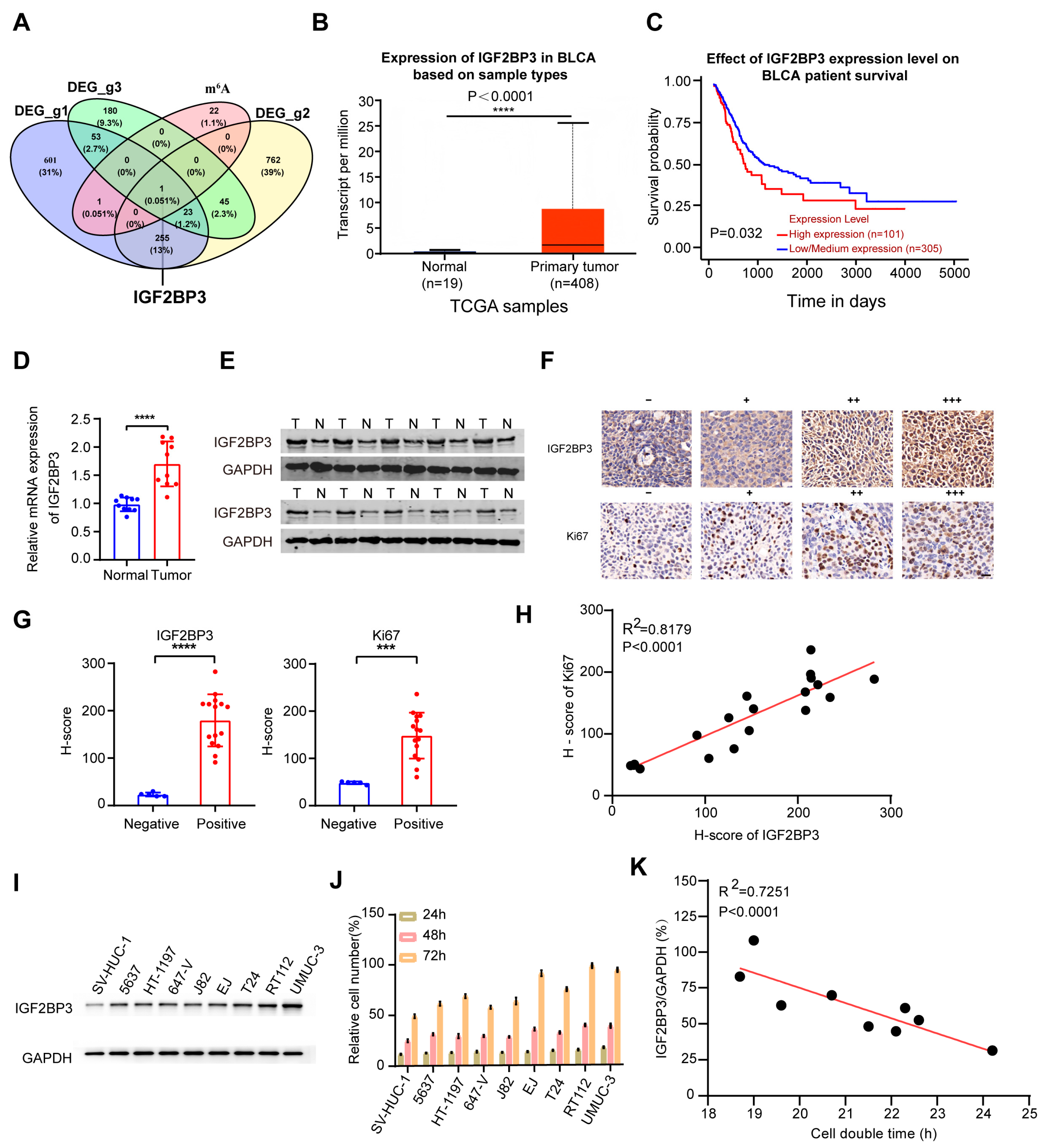
3.1. A Palbociclib-Perturbation Screen Nominates IGF2BP3 as an m6A-Linked Determinant of Attenuated CDK4/6 Inhibitor Response and Poor Patient Outcome
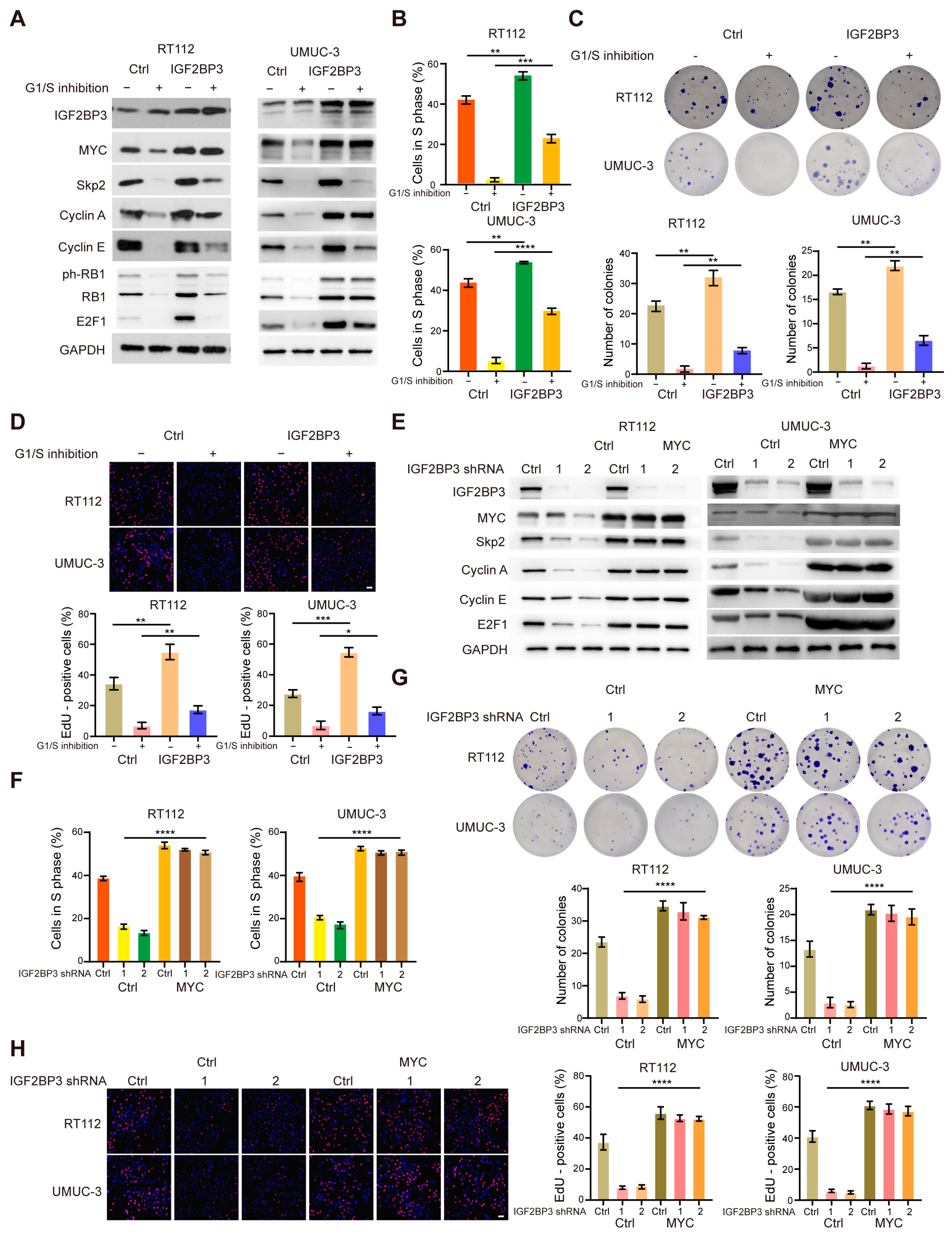
3.2. IGF2BP3 Sustains Cell-Cycle Drive and Partially Buffers Palbociclib-Induced G1 Arrest
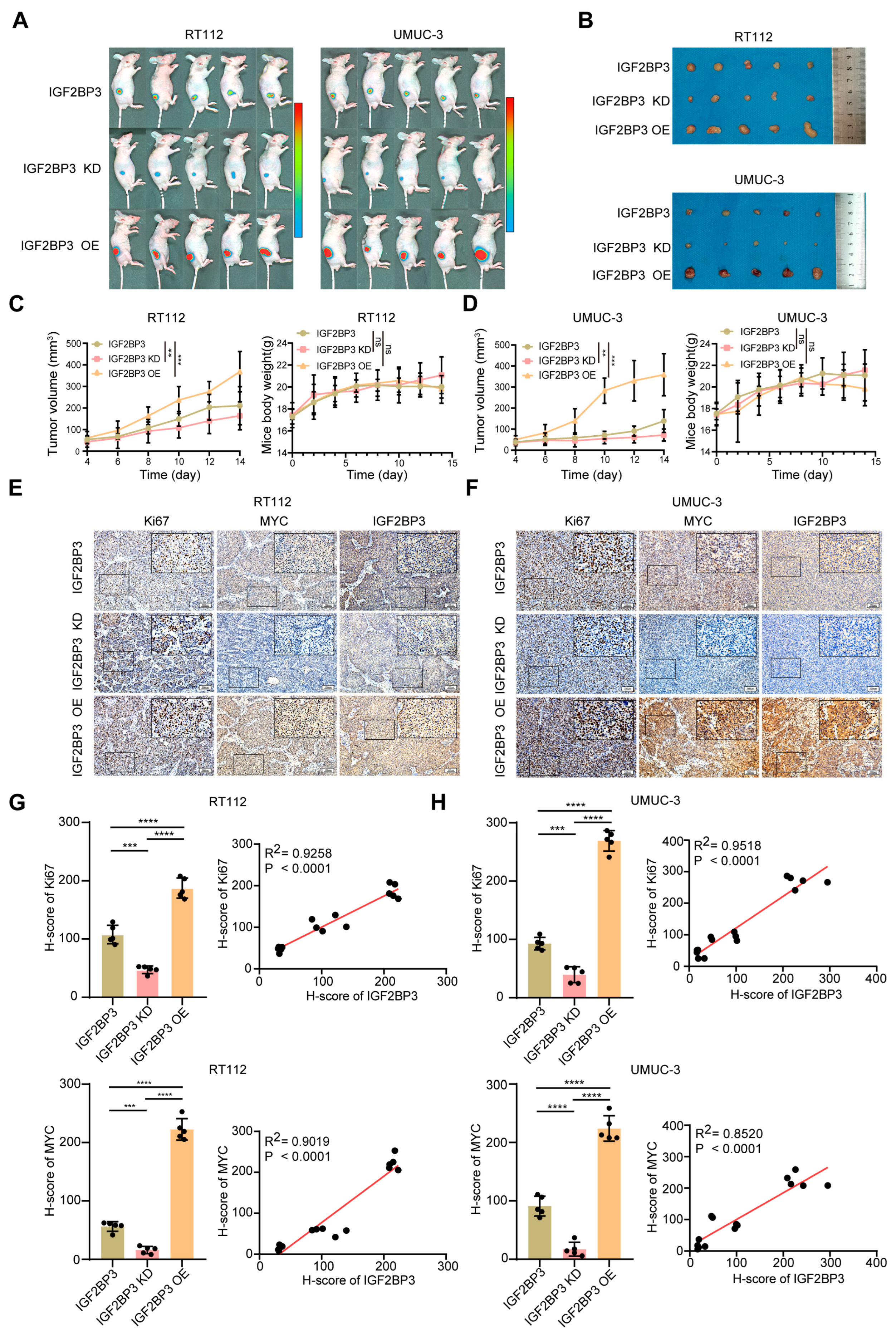
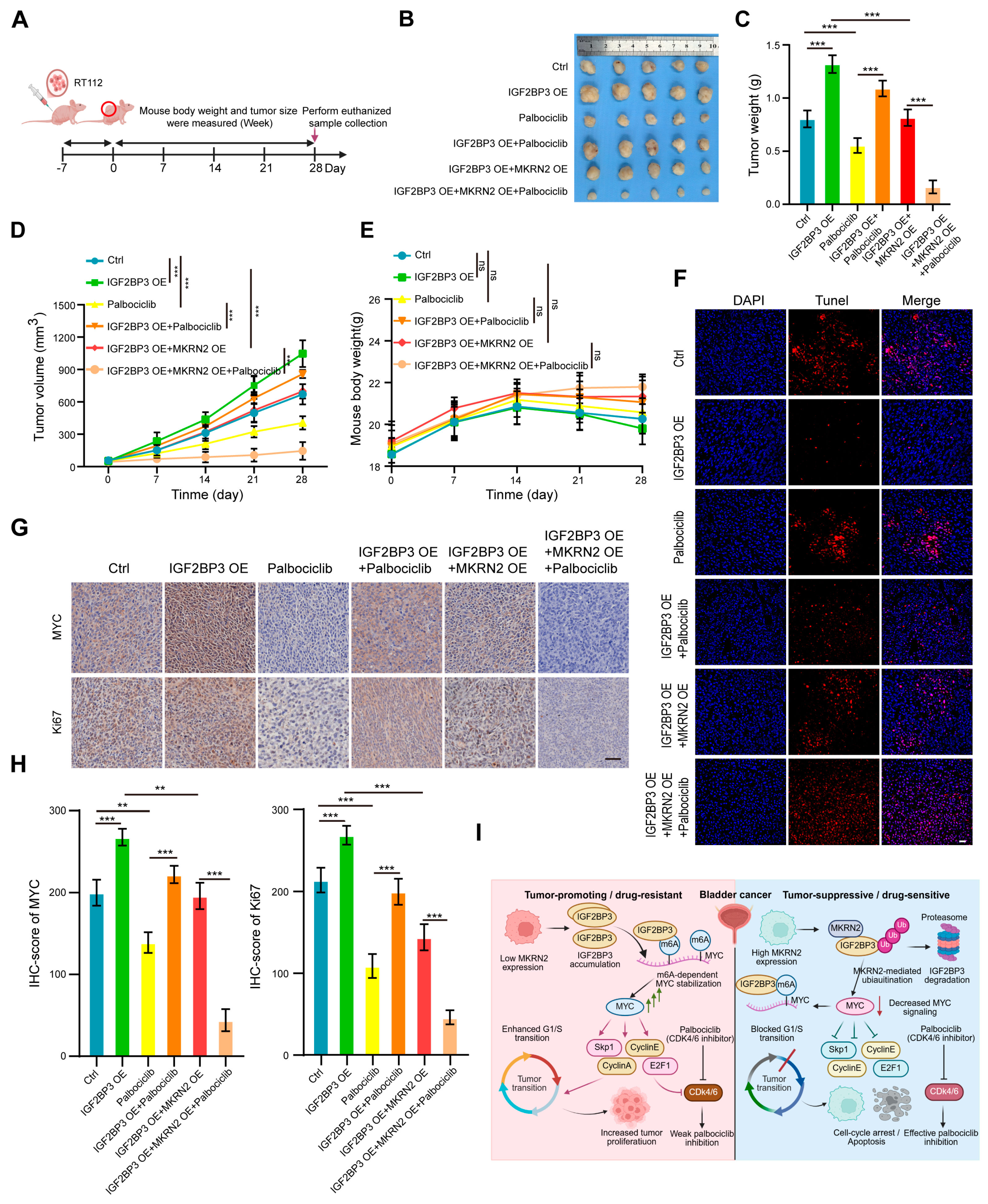
3.3. The IGF2BP3–MYC Axis Controls Tumor Growth In Vivo
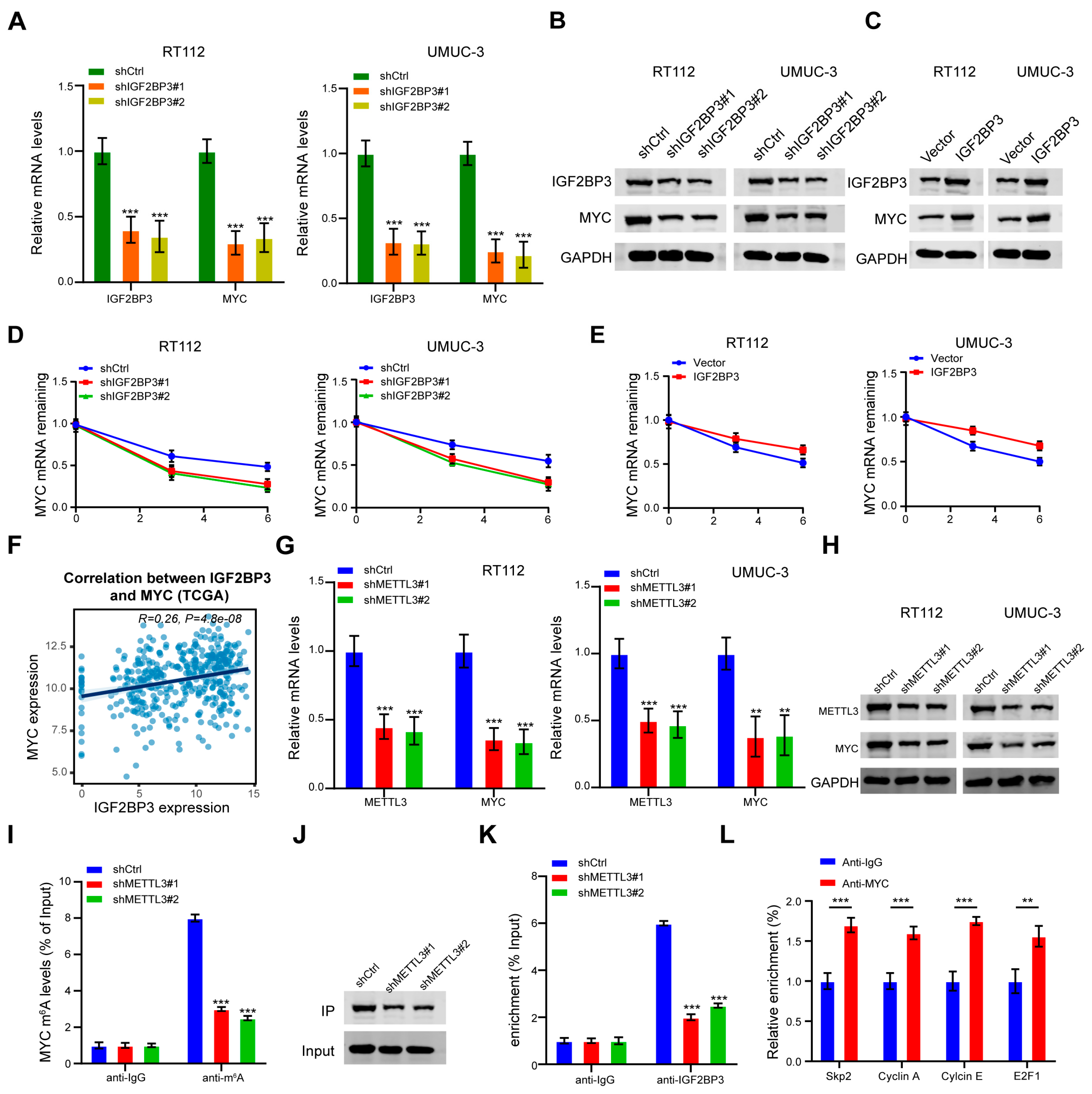
3.4. IGF2BP3 Facilitates MYC Expression in Bladder Cancer Cells Through Recognition of m6A Modification
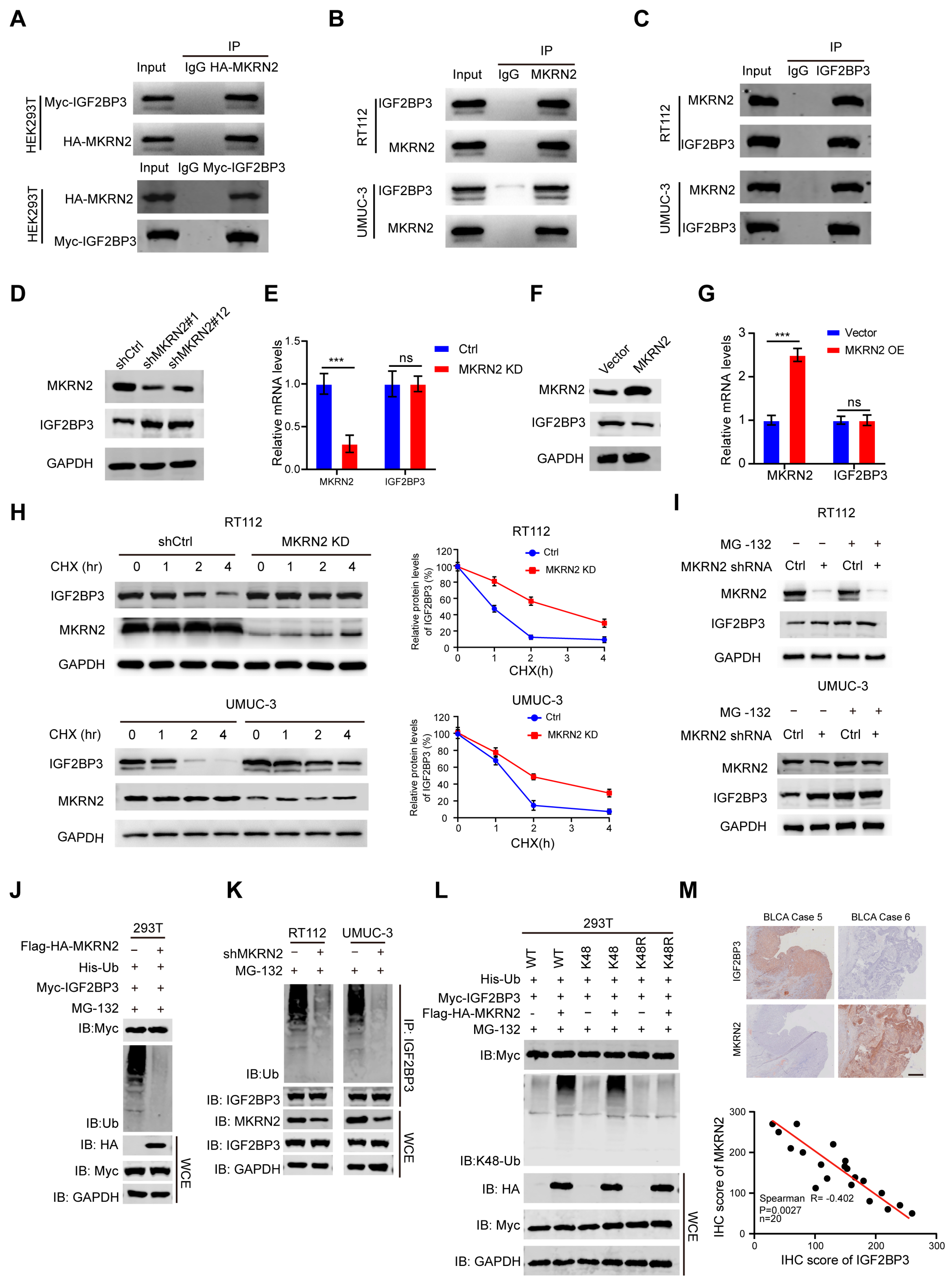
3.5. MKRN2 Mediates Ubiquitination and Proteasomal Degradation of IGF2BP3 in Bladder Cancer Cells
3.6. MKRN2 Suppresses MYC Expression by Degrading IGF2BP3 and Synergizes with Palbociclib to Inhibit Bladder Cancer Progression In Vivo
4. Discussion
5. Conclusions
Supplementary Materials
Author Contributions
Funding
Institutional Review Board Statement
Informed Consent Statement
Data Availability Statement
Conflicts of Interest
Abbreviations
| BLCA | Bladder cancer |
| CDK4/6 | Cyclin-dependent kinase 4/6 |
| ChIP | Chromatin immunoprecipitation |
| CHX | Cycloheximide |
| Co-IP | Co-immunoprecipitation |
| DEGs | Differentially expressed genes |
| EdU | 5-Ethynyl-2′-deoxyuridine |
| FBS | Fetal bovine serum |
| HRP | Horseradish peroxidase |
| IHC | Immunohistochemistry |
| KD | Knockdown |
| m6A | N6-methyladenosine |
| Me-RIP | Methylated RNA immunoprecipitation |
| OE | Overexpression |
| OS | Overall survival |
| PBS | Phosphate-buffered saline |
| PVDF | Polyvinylidene fluoride |
| qRT-PCR | Quantitative real-time polymerase chain reaction |
| RIPA | Radioimmunoprecipitation assay |
| RIP | RNA immunoprecipitation |
| SDS-PAGE | Sodium dodecyl sulfate–polyacrylamide gel electrophoresis |
| TCGA | The Cancer Genome Atlas |
| TUNEL | Terminal deoxynucleotidyl transferase dUTP nick end labeling |
| WB | Western blot |
References
- Knowles, M.A.; Hurst, C.D. Molecular biology of bladder cancer: New insights into pathogenesis and clinical diversity. Nat. Rev. Cancer. 2015, 15, 25–41. [Google Scholar] [PubMed]
- Bellmunt, J.; de Wit, R.; Vaughn, D.J.; Fradet, Y.; Lee, J.-L.; Fong, L.; Vogelzang, N.J.; Climent, M.A.; Petrylak, D.P.; Choueiri, T.K.; et al. Pembrolizumab as Second-Line Therapy for Advanced Urothelial Carcinoma. N. Engl. J. Med. 2017, 376, 1015–1026. [Google Scholar] [CrossRef] [PubMed]
- Schmid, P.; Adams, S.; Rugo, H.S.; Schneeweiss, A.; Barrios, C.H.; Iwata, H.; Diéras, V.; Hegg, R.; Im, S.A.; Shaw Wright, G.; et al. Atezolizumab and Nab-Paclitaxel in Advanced Triple-Negative Breast Cancer. N. Engl. J. Med. 2018, 379, 2108–2121. [Google Scholar] [PubMed]
- Robertson, A.G.; Kim, J.; Al-Ahmadie, H.; Bellmunt, J.; Guo, G.; Cherniack, A.D.; Hinoue, T.; Laird, P.W.; Hoadley, K.A.; Akbani, R.; et al. Comprehensive Molecular Characterization of Muscle-Invasive Bladder Cancer. Cell 2017, 171, 540–556.e25. [Google Scholar] [CrossRef] [PubMed]
- Weinstein, J.N.; Lerner, S.P. Comprehensive molecular characterization of urothelial bladder carcinoma. Nature 2014, 507, 315–322. [Google Scholar] [CrossRef]
- Finn, R.S.; Dering, J.; Conklin, D.; Kalous, O.; Cohen, D.J.; Desai, A.J.; Ginther, C.; Atefi, M.; Chen, I.; Fowst, C.; et al. PD 0332991, a selective cyclin D kinase 4/6 inhibitor, preferentially inhibits proliferation of luminal estrogen receptor-positive human breast cancer cell lines in vitro. Breast Cancer Res. 2009, 11, R77. [Google Scholar] [CrossRef] [PubMed]
- Konecny, G.E.; Winterhoff, B.; Kolarova, T.; Qi, J.; Manivong, K.; Dering, J.; Yang, G.; Chalukya, M.; Wang, H.-J.; Anderson, L.; et al. Expression of p16 and retinoblastoma determines response to CDK4/6 inhibition in ovarian cancer. Clin. Cancer Res. 2011, 17, 1591–1602. [Google Scholar] [CrossRef] [PubMed]
- Goel, S.; Wang, Q.; Watt, A.C.; Tolaney, S.M.; Dillon, D.A.; Li, W.; Ramm, S.; Palmer, A.C.; Yuzugullu, H.; Varadan, V.; et al. Overcoming Therapeutic Resistance in HER2-Positive Breast Cancers with CDK4/6 Inhibitors. Cancer Cell 2016, 29, 255–269. [Google Scholar] [CrossRef] [PubMed]
- Zhang, G.; Ma, F.; Li, L.; Li, J.; Li, P.; Zeng, S.; Sun, H.; Li, E. Palbociclib triggers apoptosis in bladder cancer cells by Cdk2-induced Rad9-mediated reorganization of the Bak.Bcl-xl complex. Biochem. Pharmacol. 2019, 163, 133–141. [Google Scholar] [PubMed]
- Kositza, J.; Nguyen, J.; Hong, T.; Mantwill, K.; Nawroth, R. Identification of the KIF and MCM protein families as novel targets for combination therapy with CDK4/6 inhibitors in bladder cancer. Urol. Oncol. 2023, 41, 253.e11–253.e20. [Google Scholar] [CrossRef] [PubMed]
- Klein, F.G.; Granier, C.; Zhao, Y.; Pan, Q.; Tong, Z.; Gschwend, J.E.; Holm, P.S.; Nawroth, R. Combination of Talazoparib and Palbociclib as a Potent Treatment Strategy in Bladder Cancer. J. Pers. Med. 2021, 11, 340. [Google Scholar] [CrossRef] [PubMed]
- O’Leary, B.; Cutts, R.J.; Liu, Y.; Hrebien, S.; Huang, X.; Fenwick, K.; André, F.; Loibl, S.; Loi, S.; Garcia-Murillas, I.; et al. The Genetic Landscape and Clonal Evolution of Breast Cancer Resistance to Palbociclib plus Fulvestrant in the PALOMA-3 Trial. Cancer Discov. 2018, 8, 1390–1403. [Google Scholar] [CrossRef] [PubMed]
- Sherr, C.J.; Beach, D.; Shapiro, G.I. Targeting CDK4 and CDK6: From Discovery to Therapy. Cancer Discov. 2016, 6, 353–367. [Google Scholar] [CrossRef] [PubMed]
- Ma, J.; Li, L.; Ma, B.; Liu, T.; Wang, Z.; Ye, Q.; Peng, Y.; Wang, B.; Chen, Y.; Xu, S.; et al. MYC induces CDK4/6 inhibitors resistance by promoting pRB1 degradation. Nat. Commun. 2024, 15, 1871. [Google Scholar] [CrossRef] [PubMed]
- He, L.; Li, H.; Wu, A.; Peng, Y.; Shu, G.; Yin, G. Functions of N6-methyladenosine and its role in cancer. Mol. Cancer 2019, 18, 176. [Google Scholar] [CrossRef] [PubMed]
- Sun, T.; Wu, R.; Ming, L. The role of m6A RNA methylation in cancer. Biomed. Pharmacother. 2019, 112, 108613. [Google Scholar] [CrossRef] [PubMed]
- Huang, H.; Weng, H.; Sun, W.; Qin, X.; Shi, H.; Wu, H.; Zhao, B.S.; Mesquita, A.; Liu, C.; Yuan, C.L.; et al. Recognition of RNA N(6)-methyladenosine by IGF2BP proteins enhances mRNA stability and translation. Nat. Cell Biol. 2018, 20, 285–295. [Google Scholar] [PubMed]
- Wang, B.; Wang, Y.; Wang, W.; Wang, Z.; Zhang, Y.; Pan, X.; Wen, X.; Leng, H.; Guo, J.; Ma, X.-X. WTAP/IGF2BP3 mediated m6A modification of the EGR1/PTEN axis regulates the malignant phenotypes of endometrial cancer stem cells. J. Exp. Clin. Cancer Res. 2024, 43, 204. [Google Scholar] [PubMed]
- Dang, C.V. MYC on the path to cancer. Cell 2012, 149, 22–35. [Google Scholar] [CrossRef] [PubMed]
- Wang, B.; Wang, B.; Ma, J.; Wang, Z.; Zhang, Y.; Pan, X.; Wen, X.; Leng, H.; Guo, J.; Ma, X.-X. LIN28B induced PCAT5 promotes endometrial cancer progression and glycolysis via IGF2BP3 deubiquitination. Cell Death Dis. 2024, 15, 242. [Google Scholar] [PubMed]
- Jia, C.; Tang, H.; Yang, Y.; Yuan, S.; Han, T.; Fang, M.; Huang, S.; Hu, R.; Li, C.; Geng, W. Ubiquitination of IGF2BP3 by E3 ligase MKRN2 regulates the proliferation and migration of human neuroblastoma SHSY5Y cells. Biochem. Biophys. Res. Commun. 2020, 529, 43–50. [Google Scholar] [PubMed]
- Wang, Y.; Song, W.; Feng, C.; Wu, S.; Qin, Z.; Liu, T.; Ye, Y.; Huang, R.; Xie, Y.; Tang, Z.; et al. Multi-omics analysis unveils the predictive value of IGF2BP3/SPHK1 signaling in cancer stem cells for prognosis and immunotherapeutic response in muscle-invasive bladder cancer. J. Transl. Med. 2024, 22, 900. [Google Scholar] [PubMed]
- Hu, C.; Liu, T.; Han, C.; Xuan, Y.; Jiang, D.; Sun, Y.; Zhang, X.; Zhang, W.; Xu, Y.; Liu, Y.; et al. HPV E6/E7 promotes aerobic glycolysis in cervical cancer by regulating IGF2BP2 to stabilize m(6)A-MYC expression. Int. J. Biol. Sci. 2022, 18, 507–521. [Google Scholar] [PubMed]
- Zaccara, S.; Ries, R.J.; Jaffrey, S.R. Reading, writing and erasing mRNA methylation. Nat. Rev. Mol. Cell Biol. 2019, 20, 608–624. [Google Scholar] [CrossRef] [PubMed]
- Dai, Z.; Lin, B.; Qin, M.; Lin, Y.; Wang, L.; Liao, K.; Xie, G.; Wang, F.; Zhang, J. METTL3-mediated m6A modification of SLC7A11 enhances nasopharyngeal carcinoma radioresistance by inhibiting ferroptosis. Int. J. Biol. Sci. 2025, 21, 1837–1851. [Google Scholar] [PubMed]
- Zhang, F.; Cheng, F.; He, Z.; Zhao, C. Hsa_circ_0003611 hinders the transformation of mesenchymal stem cells into osteosarcoma cells through suppressing MYC by IGF2BP3 via m(6)A modification. Biol. Res. 2025, 59, 2. [Google Scholar] [PubMed]
- Singh, A.M.; Dalton, S. The cell cycle and Myc intersect with mechanisms that regulate pluripotency and reprogramming. Cell Stem Cell 2009, 5, 141–149. [Google Scholar] [CrossRef] [PubMed]
- Freeman-Cook, K.; Hoffman, R.L.; Miller, N.; Almaden, J.; Chionis, J.; Zhang, Q.; Eisele, K.; Liu, C.; Zhang, C.; Huser, N.; et al. Expanding control of the tumor cell cycle with a CDK2/4/6 inhibitor. Cancer Cell 2021, 39, 1404–1421.e11. [Google Scholar] [CrossRef] [PubMed]
- Ebadi, P.; Stratton, C.M.; Olsen, S.K. E3 ubiquitin ligases in signaling, disease, and therapeutics. Trends Biochem. Sci. 2025, 50, 960–976. [Google Scholar] [CrossRef] [PubMed]
- Sosič, I.; Bricelj, A.; Steinebach, C. E3 ligase ligand chemistries: From building blocks to protein degraders. Chem. Soc. Rev. 2022, 51, 3487–3534. [Google Scholar] [CrossRef] [PubMed]
- Cai, M.Y.; Yin, P.; Wang, Z.W.; Huang, Y.-Z.; Wang, Y.-X.; Wu, K.-F.; Zhang, X.; Shi, L.; Wei, J.-F.; Ding, Q. Dual regulation of FZD1/7 by IGF2BP3 enhances stem-like properties and carboplatin resistance in triple-negative breast cancer. Cancer Lett. 2025, 632, 217944. [Google Scholar] [PubMed]
- Yang, L.; Ying, J.; Tao, Q.; Zhang, Q. RNA N(6)-methyladenosine modifications in urological cancers: From mechanism to application. Nat. Rev. Urol. 2024, 21, 460–476. [Google Scholar] [PubMed]
- Tong, Y.; Chen, Z.; Wu, J.; Huang, Q.; He, Y.; Shang, H.; Xia, D.; Peng, E.; Wang, Z.; Liang, X.; et al. METTL3 promotes an immunosuppressive microenvironment in bladder cancer via m6A-dependent CXCL5/CCL5 regulation. J. Immunother. Cancer 2025, 13, e011108. [Google Scholar] [PubMed]
- Wang, C.; Hou, X.; Guan, Q.; Zhou, H.; Luo, Y.; Jin, W.; Bai, F.; Liu, L.; Wang, J.; Xie, L.; et al. USP10-stabilized IGF2BP3 promotes tumor growth via m(6)A-modified SKP2 mRNA in non-small-cell lung cancer. Int. J. Biol. Macromol. 2025, 329, 147753. [Google Scholar] [PubMed]
- O’Leary, B.; Finn, R.S.; Turner, N.C. Treating cancer with selective CDK4/6 inhibitors. Nat. Rev. Clin. Oncol. 2016, 13, 417–430. [Google Scholar] [CrossRef] [PubMed]
- Portman, N.; Alexandrou, S.; Carson, E.; Wang, S.; Lim, E.; Caldon, C.E. Overcoming CDK4/6 inhibitor resistance in ER-positive breast cancer. Endocr.-Relat. Cancer 2019, 26, R15–R30. [Google Scholar] [CrossRef] [PubMed]
- Saranya, U.; Shangavy, P.; Devadass, J.M.; Suresh, J.; Jagadeesh Kumar, J.R.; Girigoswami, A.; Girigoswami, K. Revolutionizing Cancer Vaccine: The Power of Advanced Nanotechnology. Chemistry 2025, 7, 97. [Google Scholar] [CrossRef]
- Zheng, R.; Cai, Y.; Ding, W.; Yang, F.; Ke, X.; Gao, Y. The landscape of genitourinary cancer vaccines: Clinical advances and future opportunities. J. Adv. Res. 2025; in press.


Disclaimer/Publisher’s Note: The statements, opinions and data contained in all publications are solely those of the individual author(s) and contributor(s) and not of MDPI and/or the editor(s). MDPI and/or the editor(s) disclaim responsibility for any injury to people or property resulting from any ideas, methods, instructions or products referred to in the content. |
© 2026 by the authors. Licensee MDPI, Basel, Switzerland. This article is an open access article distributed under the terms and conditions of the Creative Commons Attribution (CC BY) license.
Share and Cite
Pan, Q.; Shi, Q.; Zhao, Y.; Yu, T.; Bai, S.; Zhu, H.; Zhang, W.; Li, Y.; Liu, Z.; Li, H.; et al. MKRN2-Mediated Degradation of IGF2BP3 Suppresses MYC and Enhances CDK4/6 Inhibitor Sensitivity in Bladder Cancer. Cancers 2026, 18, 2164. https://doi.org/10.3390/cancers18132164
Pan Q, Shi Q, Zhao Y, Yu T, Bai S, Zhu H, Zhang W, Li Y, Liu Z, Li H, et al. MKRN2-Mediated Degradation of IGF2BP3 Suppresses MYC and Enhances CDK4/6 Inhibitor Sensitivity in Bladder Cancer. Cancers. 2026; 18(13):2164. https://doi.org/10.3390/cancers18132164
Chicago/Turabian StylePan, Qi, Qing Shi, Yubo Zhao, Tianxi Yu, Shiyu Bai, Haoran Zhu, Wei Zhang, Yaowei Li, Ziyi Liu, Haonan Li, and et al. 2026. "MKRN2-Mediated Degradation of IGF2BP3 Suppresses MYC and Enhances CDK4/6 Inhibitor Sensitivity in Bladder Cancer" Cancers 18, no. 13: 2164. https://doi.org/10.3390/cancers18132164
APA StylePan, Q., Shi, Q., Zhao, Y., Yu, T., Bai, S., Zhu, H., Zhang, W., Li, Y., Liu, Z., Li, H., Wang, Z., & Tong, Z. (2026). MKRN2-Mediated Degradation of IGF2BP3 Suppresses MYC and Enhances CDK4/6 Inhibitor Sensitivity in Bladder Cancer. Cancers, 18(13), 2164. https://doi.org/10.3390/cancers18132164