Rational Immune Checkpoint Inhibitor-Based Combination Immunotherapy in Cancer: Mechanistic Design, Biomarker Selection, and Implications for Oncology Pharmacy

 , ,
, ,
Simple Summary
Abstract
1. Introduction
2. Materials and Methods
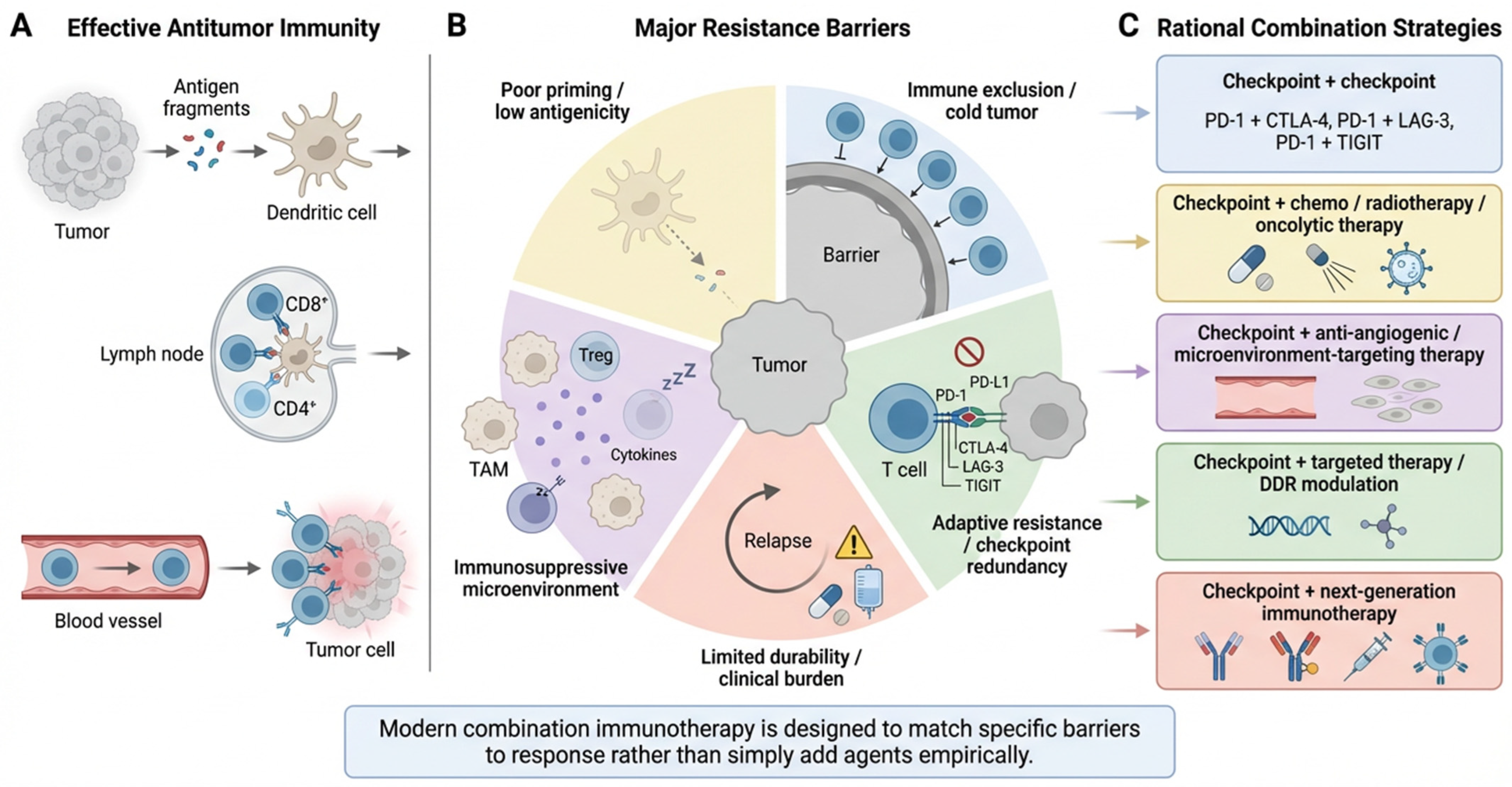
3. Why Monotherapy Plateaus: The Barrier Framework
3.1. Inadequate Immune Priming and Antigenicity
3.2. Spatial Exclusion and Non-Inflamed Tumors
3.3. Intratumoral Immunosuppression
3.4. Adaptive Resistance and Checkpoint Redundancy
3.5. Limited Durability and Clinical Manageability

| Biological Barrier | Hallmark TME/ Immune Feature | Rational Combination Class | Representative Targets or Platforms | Best-Fit Tumor Contexts | Expected Advantage | Main Challenge |
|---|---|---|---|---|---|---|
| Inadequate immune priming/antigenicity [6,8,12] | Weak antigen release; poor DC activation; low cross-presentation | Priming-enhancing combinations | Chemotherapy; radiotherapy; oncolytic viruses; cancer vaccines; ADCs that increase immunogenic cell death; checkpoint inhibitors | Immune-desert tumors; poorly immunogenic tumors | Stronger antigen release and T-cell priming | Myelosuppression; inflammatory toxicity; schedule complexity |
| Spatial exclusion/non-inflamed tumor [12,23,24] | Margin-restricted T cells; dense stroma; abnormal vasculature | Trafficking/inflaming combinations | Anti-angiogenic mAbs; TGF-β-targeting agents; radiotherapy; oncolytic therapy; checkpoint inhibitors; selected bispecifics | Immune-excluded and cold tumors | Improved infiltration and intratumoral access | Vascular toxicity; GI/hepatic effects; biomarker uncertainty |
| Intratumoral immunosuppression [6,12,25] | TAMs; MDSCs; Tregs; IL-10; TGF-β; adenosine; hypoxia | TME-remodeling combinations | VEGF/VEGFR agents; CSF1R; CCR2/CXCR4; CD39/CD73/A2A pathway inhibitors; Fc-optimized antibodies; checkpoint inhibitors | Myeloid-rich, hypoxic, adenosine-high tumors | Restored effector activity; reduced local suppression | Overlapping immune and inflammatory toxicities |
| Adaptive resistance/checkpoint redundancy [6,26,27] | PD-1, LAG-3, TIGIT, TIM-3 coexpression; compensatory inhibitory circuits | Redundancy-overcoming immune combinations | PD-1 + CTLA-4; PD-1 + LAG-3; PD-1 + TIGIT; bispecific antibodies; T-cell engagers; TCR-based platforms | Inflamed or partially responsive tumors; post-ICI resistance | Broader rescue of exhausted/dysfunctional immunity | Higher irAE burden; CRS/ICANS for some platforms; cost |
| Limited durability/clinical manageability [6,18,19] | Relapse; cumulative toxicity; medication burden; logistical complexity | Durability- and implementation-optimized combinations | Sequenced regimens; maintenance immunotherapy; antibody-based regimens; subcutaneous formulations; pharmacy-guided supportive care; cell therapy consolidation strategies | Older adults; frail patients; long-duration treatment settings | Better persistence, feasibility, and real-world delivery | Polypharmacy; DDI risk; monitoring burden; multidisciplinary coordination |
4. Combination Classes Organized by the Problem They Solve
4.1. Combinations That Deepen T-Cell Activation and Restore Exhausted Immunity
4.2. Combinations That Convert “Cold” Tumors into Inflamed Tumors
4.3. Combinations That Dismantle Suppressive Tumor Microenvironments
4.4. Combinations with Targeted Therapy, DDR Modulation, and Precision Combinations
4.5. Next-Generation Immune Platforms in Combination
| Combination Platform | Biological Rationale | Representative Agents/Targets | Main Evidence Level | Biomarkers Used or Proposed | Representative Tumor Context | Main Efficacy Signal | Main Limitation | Pharmacy/Medication-Management Implication |
|---|---|---|---|---|---|---|---|---|
| PD-1/PD-L1 + CTLA-4 [12,28] | Expands priming/clonal breadth and restores effector function | Nivolumab + ipilimumab; pembrolizumab + ipilimumab-type logic | Approved/phase III | PD-L1, TILs, T-cell inflamed state, organ site | Advanced melanoma (also RCC, MSI-H CRC, NSCLC, HCC, mesothelioma) | 10-y mOS 71.9 mo in combination vs. 36.9 mo with nivolumab alone 19.9 mo with Ipilimumab alone | High irAE burden; not universal across tumors | Colitis, hepatitis, endocrinopathies, steroid use, multidisciplinary irAE pathways |
| PD-1 + LAG-3 [12,27] | Rescues exhausted T cells beyond PD-1 alone | Nivolumab + relatlimab | Approved/phase III | LAG-3 expression, PD-L1, exhausted T-cell phenotype | Advanced melanoma (predominant evidence base). | mPFS 10.1 vs. 4.6 mo; 4-y OS 52.0% vs. 42.8% | Biomarker selection still weak; melanoma-weighted evidence | Immune toxicity lower than CTLA-4 doublets but still requires close monitoring |
| PD-1/PD-L1 + TIGIT [12,29,30] | Addresses checkpoint redundancy in inflamed disease | Domvanalimab + zimberelimab; tiragolumab + atezolizumab | Early clinical → phase III mixed | PD-L1, TIGIT axis, TAP/immune-inflamed GI tumors | Gastric/GEJ/esophageal adenocarcinoma (positive phase II); extensive-stage SCLC (negative phase III). | EDGE-Gastric: ORR 59%, mPFS 12.9 mo, mOS 26.7 mo; phase III SCLC negative | Strong context dependence; not class-wide validated | Added infusion/chemo burden; assay standardization and patient selection unresolved |
| Chemotherapy + ICI [32,33,34] | Increases antigen release, cross-presentation, local inflammation; may reduce suppressive cells | Nivolumab + platinum doublet; pembrolizumab + platinum doublet | Phase III/approved in several settings | PD-L1, ctDNA/MRD, resectability, pathologic response | Resectable/advanced NSCLC (perioperative); also TNBC, gastric, esophageal, cervical, SCLC. | CheckMate 816: pCR 24.0% vs. 2.2%; KEYNOTE-671: pCR 18.1% vs. 4.0%, OS benefit | Benefit is disease- and timing-dependent; not purely immunologic | Count recovery, perioperative timing, steroid/antiemetic exposure, surgery coordination |
| Perioperative/neoadjuvant ICI + surgery (±chemotherapy) [32,33,34,49] | Initiates immune activation while tumor antigen and tumor-draining lymph nodes remain in situ; surgery consolidates control and yields a pathologic-response readout | Neoadjuvant/perioperative nivolumab or pembrolizumab ± platinum chemotherapy + surgery; neoadjuvant nivolumab + ipilimumab + surgery | Phase III/practice-changing | Pathologic (complete/major) response, ctDNA/MRD, PD-L1, resectability | Resectable stage III melanoma | NADINA: 12-mo EFS 83.7% vs. 57.2%; 59% major pathologic response | Surgical timing; perioperative irAEs; wound-healing/steroid effects; avoiding surgical delay | Coordinate surgery-systemic timing; peri-operative steroid/irAE stewardship; wound-healing precautions; communicate pathologic response |
| Radiotherapy + ICI [12,35] | Promotes immunogenic cell death, antigen release, IFN signaling, in situ vaccination | PD-1/PD-L1 + SBRT/ablative RT | Preclinical/early clinical/selected approvals by setting | Lesion choice, dose/fractionation, lymphocyte preservation, TCR clonality | Stage III NSCLC (consolidation) and oligometastatic settings | Clear biologic synergy; clinical benefit remains context-dependent, not uniformly phase III-positive | Lymphodepletion, field effects, sequencing uncertainty | Pneumonitis risk, timing with systemic therapy, dose/field planning, steroid effects |
| Oncolytic virus + PD-1 [12,37] | Direct lysis plus local immune priming; aims to convert non-inflamed tumors | T-VEC + pembrolizumab; next-gen HSV platforms | Early clinical/mixed phase III | Injectable disease, prior PD-1 exposure, local immune competence | Advanced/anti-PD-1-relapsed melanoma. | MASTERKEY-115: ORR 40.0–46.7% in adjuvant-relapse melanoma cohorts; broad phase III melanoma negative | Requires biologically receptive setting; systemic refractory disease less responsive | Injection logistics, biosafety handling, local reactions, HSV precautions |
| Anti-angiogenic + ICI [12,39,40] | Normalizes vasculature, improves trafficking, reduces VEGF-driven suppression | Atezolizumab + bevacizumab; pembrolizumab + lenvatinib | Approved/phase III | VEGF biology, vascular exclusion, liver disease context, MMR status | Unresectable HCC; advanced endometrial carcinoma (also RCC). | HCC: OS 19.2 vs. 13.4 mo; endometrial cancer: OS 17.4 vs. 12.0 mo | Class works, but toxicity and disease fit matter | Hypertension, proteinuria, bleeding, hepatic monitoring, dose holds around procedures |
| Myeloid/metabolic TME-targeting + ICI [12,50] | Relieves TAM/MDSC/adenosine-mediated suppression | CSF1R, CCR2/CXCR4, CD39/CD73/A2A, IDO-type concepts + PD-1/PD-L1 | Preclinical/early clinical | Myeloid-high TME, CD73, hypoxia, adenosine signatures | Cross-tumor (NSCLC, RCC; predominantly early-phase | Strong rationale; clinical signal inconsistent and biomarker dependent | Attractive biology, limited validated efficacy so far | Overlapping fatigue, hepatic and inflammatory toxicities; biomarker testing not standardized |
| Targeted therapy + ICI (positive precision example) [12,41] | Pathway blockade may improve antigenicity, TME access, and immune sensitivity in selected genomics | Atezolizumab + vemurafenib + cobimetinib | Phase III/approved in selected setting | BRAF V600, immune-inflamed features | BRAF V600-mutant advanced melanoma. | IMspire150: mPFS 15.1 vs. 10.6 mo | OS not significantly improved; triplet tolerability limits use | Pyrexia, rash, hepatotoxicity, ocular/cardiac monitoring, adherence to oral agents |
| Targeted therapy + ICI (negative precision example) [42,43] | Tests whether post-TKI disease becomes more immune-responsive | Nivolumab + chemotherapy after EGFR TKI; pembrolizumab + chemotherapy after EGFR TKI | Phase III negative | EGFR mutation, low TMB, low PD-L1, TKI-resistant setting | EGFR-mutant, TKI-resistant NSCLC. | CheckMate 722 and KEYNOTE-789: no significant PFS/OS gain | Demonstrates that not all precision + ICI pairings are biologically fit | Added toxicity without clear value; avoid indiscriminate escalation |
| PARP/DDR modulation + ICI [50] | DNA damage may raise neoantigens, cGAS-STING signaling, and immune visibility | Olaparib + pembrolizumab/durvalumab; DDRi + ICI concepts | Early clinical/translational | BRCA/HRD, DDR alterations, STING/IFN signatures | Ovarian/breast/prostate (HRD-enriched). | Promising activity in selected HRD settings; no broad standard yet | Biomarker-enriched benefit likely; class remains unsettled | Cytopenias, fatigue, marrow reserve, germline/somatic testing workflows |
| ADC + ICI [46] | Targeted cytotoxicity plus antigen release and secondary immune activation | Trastuzumab deruxtecan + nivolumab; ADC backbones + PD-1/PD-L1 | Early clinical | HER2 expression, payload sensitivity, ILD risk | HER2-positive/HER2-low metastatic breast cancer; urothelial carcinoma. | DS8201-A-U105: ORR 65.6% in HER2+ mBC; 50.0% in HER2-low mBC | Early-phase data; payload-specific toxicity narrows window | ILD/pneumonitis vigilance, HER2 testing consistency, infusion scheduling |
| Neoantigen vaccine + PD-1 [47] | Expands tumor-specific T-cell repertoire on a checkpoint-permissive background | mRNA-4157/V940 + pembrolizumab | Randomized phase IIb | Neoantigen burden, resected high-risk disease, ctDNA/MRD | Resected high-risk melanoma (also adjuvant NSCLC under study). | KEYNOTE-942: recurrence/death HR 0.561; 18-mo RFS 79% vs. 62% | Personalized manufacturing, turnaround time, early-stage focus | Custom manufacturing logistics, sample quality, schedule synchronization |
| Bispecific antibodies/T-cell engagers ± ICI [45] | Redirects immune effectors to tumor; may bypass weak endogenous priming | DLL3×CD3, CLDN18.2×CD3, BCMA×CD3, HER2/HER3 platforms; ICI combinations under study | Approved in hematologic malignancies/early clinical in solid tumors | Target antigen density, spatial accessibility, immune fitness | Mature in hematologic malignancies; emerging in SCLC, gastric (CLDN18.2), and other solid tumors. | Solid-tumor activity emerging; strongest proof still outside most solid tumors | On-target off-tumor risk, antigen heterogeneity, CRS/ICANS | Step-up dosing, hospitalization, tocilizumab/steroid readiness, prophylaxis pathways |
| Cell therapy in rational combinations [48] | Addresses trafficking, persistence, exhaustion, and antigen escape through multimodal support | CAR-T/TIL/TCR + checkpoint blockade, RT, cytokines, stromal/metabolic modulation | Preclinical/early clinical | Antigen density, T-cell fitness, exhaustion markers, TME composition | Melanoma/synovial sarcoma (TIL/TCR); solid-tumor CAR-T early. | Strong rationale; solid-tumor combination data still early | Manufacturing, persistence, suppressive TME, cost | Bridging therapy, CRS/ICANS, REMS/certified centers, long logistics chain |
5. Biomarker-Guided Selection: From Broad Combinations to Rational Personalization
5.1. Why PD-L1 Alone Is Not Enough
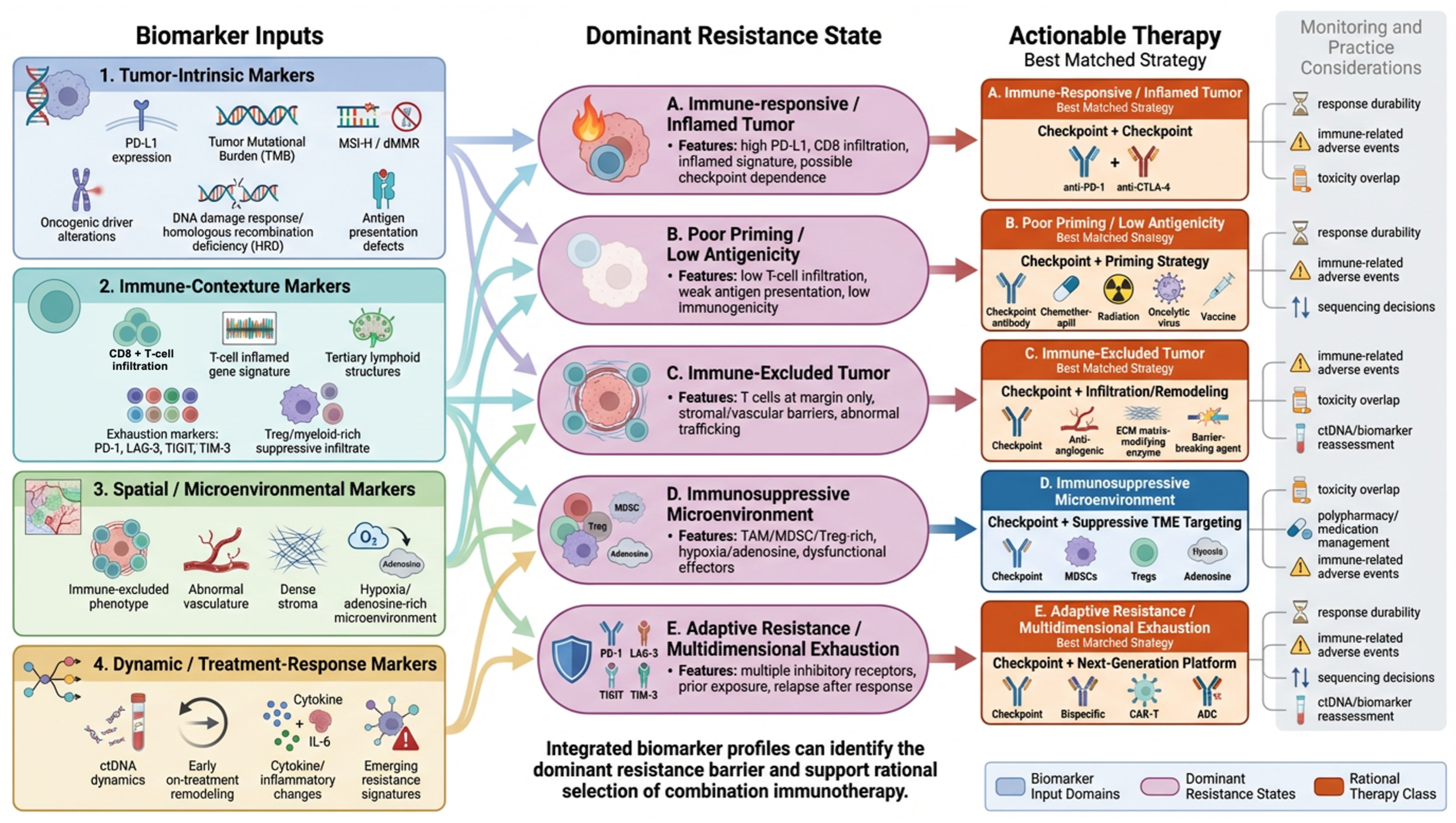
5.2. Multi-Parameter Biomarker Strategies
5.3. What Makes a Biomarker Actionable for Combination Therapy
5.4. Unresolved Issues
5.5. Toward a Practical Barrier-Identification Workflow
| Biomarker | What It Reflects Biologically | Most Relevant Combination Classes | Strength of Current Evidence | Major Caveat for Clinical Use |
|---|---|---|---|---|
| PD-L1 expression [14,15,16] | Adaptive immune pressure; IFN-driven tumor/immune checkpoint engagement | PD-1/PD-L1 + chemotherapy; PD-1/PD-L1 + anti-angiogenic; some dual-checkpoint settings | Clinically established, but imperfect | Assay/platform heterogeneity; dynamic and spatially variable; weak standalone guidance for mechanism-specific combinations |
| Tumor mutational burden (TMB) [15,16,17] | Neoantigen load potential; genomic immunogenicity | Checkpoint-intensified regimens; vaccine/priming combinations; selected tissue-agnostic settings | Clinically recognized in selected contexts | Thresholds vary; not interchangeable across tumor types; high TMB does not guarantee inflamed biology |
| MSI-H/dMMR [14,15,16] | Hypermutated, immunogenic phenotype with defective mismatch repair | Checkpoint backbone regimens; dual checkpoint; de-escalation or organ-preservation strategies in selected disease settings | Strong/clinically actionable in selected tumors | Prevalence is low in many cancers; does not distinguish best combination once ICI sensitivity is already high |
| DDR/HRD alterations [15,17] | DNA repair defects; cGAS-STING/type I IFN potential; altered immune visibility | PARP/DDR + ICI; platinum + ICI; genomically selected precision combinations | Emerging clinical/translational | Not all DDR alterations are equivalent; context- and gene-specific interpretation required |
| Immune-inflamed/IFNγ-related gene signatures [15,16,17] | Pre-existing effector T-cell activity; antigen presentation; interferon responsiveness | Dual checkpoint; checkpoint + TIGIT/LAG-3; checkpoint + vaccine or priming approaches | Strong translational/growing clinical use | Signature composition varies; bulk RNA can miss spatial exclusion and suppressive niches |
| Tumor-infiltrating lymphocytes/CD8 density [14,15,16] | Effector-cell presence and baseline immune engagement | Dual checkpoint; priming-enhancing regimens; inflamed vs. cold-tumor stratification | Moderate to strong, disease dependent | Thresholds and scoring lack standardization; location matters more than density alone |
| Tertiary lymphoid structures (TLSs) [61,63] | Organized local antitumor immunity; B-cell/T-cell coordination; immune maturation | PD-1-based combinations; vaccine/priming strategies; combinations seeking durable immune memory | Strong emerging evidence | Detection, maturity scoring, and pathology workflows are not standardized |
| Spatial immune architecture [15,59,64] | Whether immune cells are intratumoral, margin-restricted, excluded, myeloid-clustered, or compartmentalized | Anti-angiogenic + ICI; stroma/TGF-β-targeting; radiotherapy + ICI; trafficking-focused combinations | Emerging/high-value translational | Requires specialized imaging and analysis; disease-specific spatial features not yet harmonized |
| ctDNA dynamics [15,48,60] | Real-time tumor burden change; early molecular response or resistance | Perioperative chemo-ICI; vaccine + PD-1; maintenance/escalation decisions; recurrence-risk settings | Rapidly emerging clinical evidence | Shedding varies by tumor and site; assay sensitivity, timing, and cutoffs remain inconsistent |
| Single-cell and spatial-omics readouts [16,59,64] | Cell states, exhaustion programs, ligand-receptor interactions, immune neighborhoods | Mechanism-matched trial selection across all advanced combinations | Exploratory but highly informative | Expensive, tissue intensive, analytically complex, limited routine availability |
| Pathologic response (neoadjuvant/perioperative) [49,65] | Depth of treatment-induced tumor regression; an integrated in vivo readout of antitumor immunity | Neoadjuvant/perioperative chemo-ICI and dual-checkpoint regimens; response-directed (de-)escalation | Strong; increasingly used as a surrogate in resectable disease | Requires a surgical specimen and standardized pathologic assessment; radiographic response correlates imperfectly; setting-specific |
| Composite/computational models [17,64,67] | Integrated prediction across tumor, immune, spatial, and liquid-biopsy data | Cross-platform personalization for multi-agent regimens | Promising, not practice ready | External validation, transparency, portability, and reimbursement remain major barriers |
6. Toxicity, Sequencing, Polypharmacy, and the Oncology Pharmacy Lens
6.1. Toxicity Stacking in Combination Regimens
6.2. Sequencing and Regimen Design
6.3. Real-World Medication Management
6.4. Role of Oncology Pharmacists
7. Where the Field Is Moving: 2026 Outlook
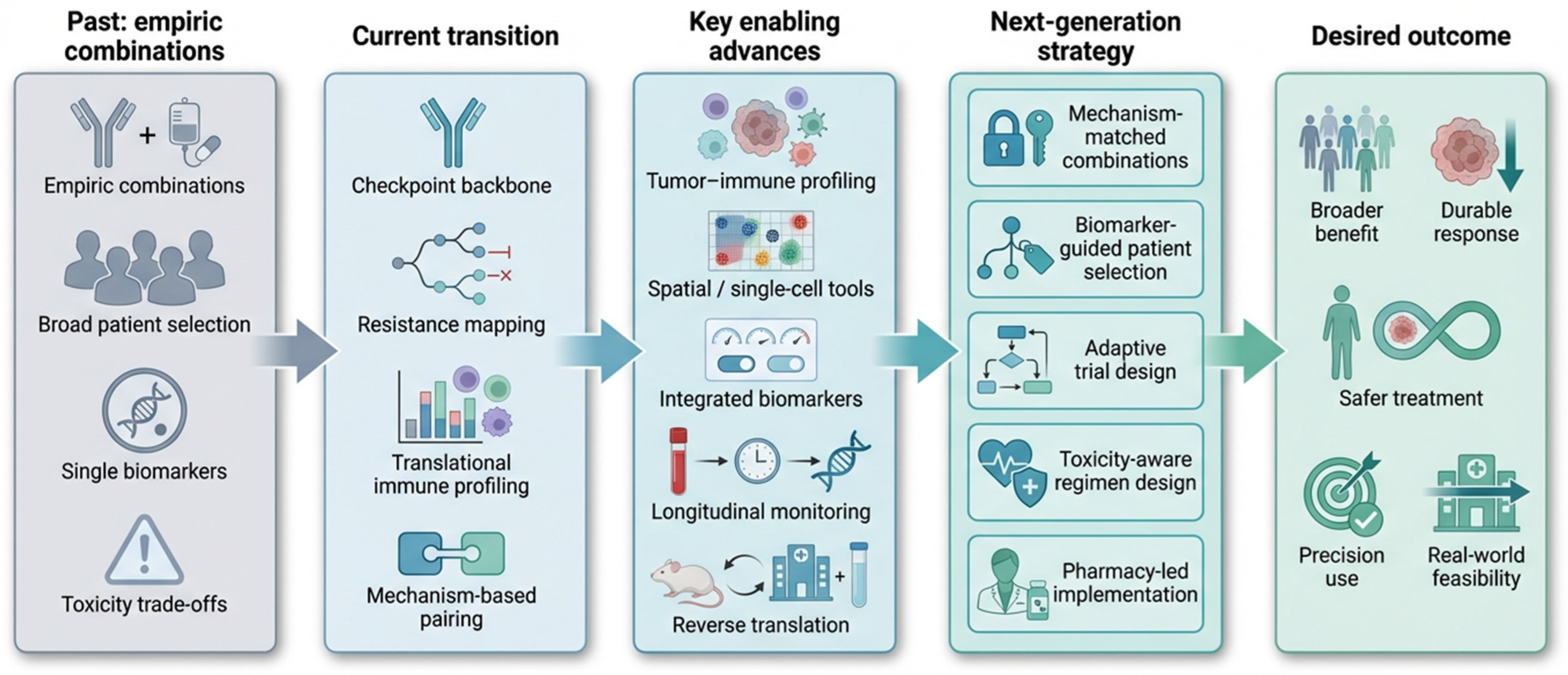
7.1. From Empiric Combinations to Mechanism-Matched Combinations
7.2. From Single Biomarkers to Integrated Biomarker Panels
7.3. From Metastatic-Only Use to Perioperative and Earlier-Disease Settings
7.4. From Efficacy-Only Endpoints to Clinically Manageable Regimens
7.5. What Will Likely Define the Next Successful Combinations
8. Conclusions
Author Contributions
Funding
Institutional Review Board Statement
Informed Consent Statement
Data Availability Statement
Acknowledgments
Conflicts of Interest
References
- Bray, F.; Laversanne, M.; Sung, H.; Ferlay, J.; Siegel, R.L.; Soerjomataram, I.; Jemal, A. Global Cancer Statistics 2022: GLOBOCAN Estimates of Incidence and Mortality Worldwide for 36 Cancers in 185 Countries. CA Cancer J. Clin. 2024, 74, 229–263. [Google Scholar] [CrossRef] [PubMed]
- Siegel, R.L.; Kratzer, T.B.; Giaquinto, A.N.; Sung, H.; Jemal, A. Cancer Statistics, 2025. CA Cancer J. Clin. 2025, 75, 10–45. [Google Scholar] [CrossRef] [PubMed]
- Dobosz, P.; Dzieciątkowski, T. The Intriguing History of Cancer Immunotherapy. Front. Immunol. 2019, 10, 2965. [Google Scholar] [CrossRef] [PubMed]
- Sharma, P.; Siddiqui, B.A.; Anandhan, S.; Yadav, S.S.; Subudhi, S.K.; Gao, J.; Goswami, S.; Allison, J.P. The Next Decade of Immune Checkpoint Therapy. Cancer Discov. 2021, 11, 838–857. [Google Scholar] [CrossRef] [PubMed]
- Wang, D.-R.; Wu, X.-L.; Sun, Y.-L. Therapeutic Targets and Biomarkers of Tumor Immunotherapy: Response versus Non-Response. Sig. Transduct. Target. Ther. 2022, 7, 331. [Google Scholar] [CrossRef] [PubMed]
- Morad, G.; Helmink, B.A.; Sharma, P.; Wargo, J.A. Hallmarks of Response, Resistance, and Toxicity to Immune Checkpoint Blockade. Cell 2021, 184, 5309–5337. [Google Scholar] [CrossRef] [PubMed]
- Bracamonte-Baran, W.; Kim, S.T. The Current and Future of Biomarkers of Immune Related Adverse Events. Rheum. Dis. Clin. N. Am. 2024, 50, 201–227. [Google Scholar] [CrossRef] [PubMed]
- Chen, D.S.; Mellman, I. Oncology Meets Immunology: The Cancer-Immunity Cycle. Immunity 2013, 39, 1–10. [Google Scholar] [CrossRef] [PubMed]
- Mellman, I.; Chen, D.S.; Powles, T.; Turley, S.J. The Cancer-Immunity Cycle: Indication, Genotype, and Immunotype. Immunity 2023, 56, 2188–2205. [Google Scholar] [CrossRef] [PubMed]
- Patel, S.A.; Minn, A.J. Combination Cancer Therapy with Immune Checkpoint Blockade: Mechanisms and Strategies. Immunity 2018, 48, 417–433. [Google Scholar] [CrossRef] [PubMed]
- Yang, M.; Cui, M.; Sun, Y.; Liu, S.; Jiang, W. Mechanisms, Combination Therapy, and Biomarkers in Cancer Immunotherapy Resistance. Cell Commun. Signal. 2024, 22, 338. [Google Scholar] [CrossRef] [PubMed]
- Butterfield, L.H.; Najjar, Y.G. Immunotherapy Combination Approaches: Mechanisms, Biomarkers and Clinical Observations. Nat. Rev. Immunol. 2024, 24, 399–416. [Google Scholar] [CrossRef] [PubMed]
- Wei, J.; Li, W.; Zhang, P.; Guo, F.; Liu, M. Current Trends in Sensitizing Immune Checkpoint Inhibitors for Cancer Treatment. Mol. Cancer 2024, 23, 279. [Google Scholar] [CrossRef] [PubMed]
- Holder, A.M.; Dedeilia, A.; Sierra-Davidson, K.; Cohen, S.; Liu, D.; Parikh, A.; Boland, G.M. Defining Clinically Useful Biomarkers of Immune Checkpoint Inhibitors in Solid Tumours. Nat. Rev. Cancer 2024, 24, 498–512. [Google Scholar] [CrossRef] [PubMed]
- Wang, S.L.; Chan, T.A. Navigating Established and Emerging Biomarkers for Immune Checkpoint Inhibitor Therapy. Cancer Cell 2025, 43, 641–664. [Google Scholar] [CrossRef] [PubMed]
- Davoudi, F.; Moradi, A.; Sadeghirad, H.; Kulasinghe, A. Tissue Biomarkers of Immune Checkpoint Inhibitor Therapy. Immunol. Cell Biol. 2024, 102, 179–193. [Google Scholar] [CrossRef] [PubMed]
- Liu, Y.; Altreuter, J.; Bodapati, S.; Cristea, S.; Wong, C.J.; Wu, C.J.; Michor, F. Predicting Patient Outcomes after Treatment with Immune Checkpoint Blockade: A Review of Biomarkers Derived from Diverse Data Modalities. Cell Genom. 2024, 4, 100444. [Google Scholar] [CrossRef] [PubMed]
- Sieber, B.; Strauss, J.; Li, Z.; Gatti-Mays, M.E. Concomitant Medication Effects on Immune Checkpoint Inhibitor Efficacy and Toxicity. Front. Oncol. 2022, 12, 836934. [Google Scholar] [CrossRef] [PubMed]
- Guven, D.C.; Kavgaci, G.; Aktepe, O.H.; Yildirim, H.C.; Sahin, T.K.; Aksoy, S.; Erman, M.; Kilickap, S.; Yalcin, S. The Burden of Polypharmacy and Drug–Drug Interactions in Older Cancer Patients Treated with Immunotherapy. J. Oncol. Pharm. Pract. 2022, 28, 785–793. [Google Scholar] [CrossRef] [PubMed]
- Lira, G.A.; Brandão, J.D.A.; Anderson, L.; Bassi, Ê.J. Immune Checkpoint Inhibitors in Cancer Patients from the Perspective of Pharmaceutical Care: A Scoping Review. Int. J. Pharm. Pract. 2025, 33, 19–33. [Google Scholar] [CrossRef] [PubMed]
- Sun, Q.; Hong, Z.; Zhang, C.; Wang, L.; Han, Z.; Ma, D. Immune Checkpoint Therapy for Solid Tumours: Clinical Dilemmas and Future Trends. Sig. Transduct. Target. Ther. 2023, 8, 320. [Google Scholar] [CrossRef] [PubMed]
- Ma, W.; Xue, R.; Zhu, Z.; Farrukh, H.; Song, W.; Li, T.; Zheng, L.; Pan, C. Increasing Cure Rates of Solid Tumors by Immune Checkpoint Inhibitors. Exp. Hematol. Oncol. 2023, 12, 10. [Google Scholar] [CrossRef] [PubMed]
- Wu, B.; Zhang, B.; Li, B.; Wu, H.; Jiang, M. Cold and Hot Tumors: From Molecular Mechanisms to Targeted Therapy. Sig. Transduct. Target. Ther. 2024, 9, 274. [Google Scholar] [CrossRef] [PubMed]
- Ouyang, P.; Wang, L.; Wu, J.; Tian, Y.; Chen, C.; Li, D.; Yao, Z.; Chen, R.; Xiang, G.; Gong, J.; et al. Overcoming Cold Tumors: A Combination Strategy of Immune Checkpoint Inhibitors. Front. Immunol. 2024, 15, 1344272. [Google Scholar] [CrossRef] [PubMed]
- Wang, R.; Liu, Z.; Wang, T.; Zhang, J.; Liu, J.; Zhou, Q. Landscape of Adenosine Pathway and Immune Checkpoint Dual Blockade in NSCLC: Progress in Basic Research and Clinical Application. Front. Immunol. 2024, 15, 1320244. [Google Scholar] [CrossRef] [PubMed]
- Joller, N.; Anderson, A.C.; Kuchroo, V.K. LAG-3, TIM-3, and TIGIT: Distinct Functions in Immune Regulation. Immunity 2024, 57, 206–222. [Google Scholar] [CrossRef] [PubMed]
- Tawbi, H.A.; Schadendorf, D.; Lipson, E.J.; Ascierto, P.A.; Matamala, L.; Castillo Gutiérrez, E.; Rutkowski, P.; Gogas, H.J.; Lao, C.D.; De Menezes, J.J.; et al. Relatlimab and Nivolumab versus Nivolumab in Untreated Advanced Melanoma. N. Engl. J. Med. 2022, 386, 24–34. [Google Scholar] [CrossRef] [PubMed]
- Wolchok, J.D.; Chiarion-Sileni, V.; Rutkowski, P.; Cowey, C.L.; Schadendorf, D.; Wagstaff, J.; Queirolo, P.; Dummer, R.; Butler, M.O.; Hill, A.G.; et al. Final, 10-Year Outcomes with Nivolumab plus Ipilimumab in Advanced Melanoma. N. Engl. J. Med. 2025, 392, 11–22. [Google Scholar] [CrossRef] [PubMed]
- Rudin, C.M.; Liu, S.V.; Soo, R.A.; Lu, S.; Hong, M.H.; Lee, J.-S.; Bryl, M.; Dumoulin, D.W.; Rittmeyer, A.; Chiu, C.-H.; et al. SKYSCRAPER-02: Tiragolumab in Combination With Atezolizumab Plus Chemotherapy in Untreated Extensive-Stage Small-Cell Lung Cancer. JCO 2024, 42, 324–335. [Google Scholar] [CrossRef] [PubMed]
- Janjigian, Y.Y.; Oh, D.-Y.; Pelster, M.; Wainberg, Z.A.; Prusty, S.; Nelson, S.; DuPage, A.; Thompson, A.; Koralek, D.O.; Sison, E.A.R.; et al. Domvanalimab and Zimberelimab in Advanced Gastric, Gastroesophageal Junction or Esophageal Cancer: A Phase 2 Trial. Nat. Med. 2025, 31, 4274–4280. [Google Scholar] [CrossRef] [PubMed]
- Sun, L.; Li, C.; Gao, T.; Liu, Z.; Hou, Y.; Han, W. Combining Immune Checkpoints with TNFSF Agonists: A New Horizon for Cancer and Autoimmune Therapies. Front. Immunol. 2025, 16, 1557176. [Google Scholar] [CrossRef] [PubMed]
- Forde, P.M.; Spicer, J.; Lu, S.; Provencio, M.; Mitsudomi, T.; Awad, M.M.; Felip, E.; Broderick, S.R.; Brahmer, J.R.; Swanson, S.J.; et al. Neoadjuvant Nivolumab plus Chemotherapy in Resectable Lung Cancer. N. Engl. J. Med. 2022, 386, 1973–1985. [Google Scholar] [CrossRef] [PubMed]
- Wakelee, H.; Liberman, M.; Kato, T.; Tsuboi, M.; Lee, S.-H.; Gao, S.; Chen, K.-N.; Dooms, C.; Majem, M.; Eigendorff, E.; et al. Perioperative Pembrolizumab for Early-Stage Non–Small-Cell Lung Cancer. N. Engl. J. Med. 2023, 389, 491–503. [Google Scholar] [CrossRef] [PubMed]
- Spicer, J.D.; Garassino, M.C.; Wakelee, H.; Liberman, M.; Kato, T.; Tsuboi, M.; Lee, S.-H.; Chen, K.-N.; Dooms, C.; Majem, M.; et al. Neoadjuvant Pembrolizumab plus Chemotherapy Followed by Adjuvant Pembrolizumab Compared with Neoadjuvant Chemotherapy Alone in Patients with Early-Stage Non-Small-Cell Lung Cancer (KEYNOTE-671): A Randomised, Double-Blind, Placebo-Controlled, Phase 3 Trial. Lancet 2024, 404, 1240–1252. [Google Scholar] [CrossRef] [PubMed]
- Lynch, C.; Pitroda, S.P.; Weichselbaum, R.R. Radiotherapy, Immunity, and Immune Checkpoint Inhibitors. Lancet Oncol. 2024, 25, e352–e362. [Google Scholar] [CrossRef] [PubMed]
- Chesney, J.A.; Ribas, A.; Long, G.V.; Kirkwood, J.M.; Dummer, R.; Puzanov, I.; Hoeller, C.; Gajewski, T.F.; Gutzmer, R.; Rutkowski, P.; et al. Randomized, Double-Blind, Placebo-Controlled, Global Phase III Trial of Talimogene Laherparepvec Combined with Pembrolizumab for Advanced Melanoma. JCO 2023, 41, 528–540. [Google Scholar] [CrossRef] [PubMed]
- Robert, C.; Gastman, B.; Gogas, H.; Rutkowski, P.; Long, G.V.; Chaney, M.F.; Joshi, H.; Lin, Y.-L.; Snyder, W.; Chesney, J.A. Open-Label, Phase II Study of Talimogene Laherparepvec plus Pembrolizumab for the Treatment of Advanced Melanoma That Progressed on Prior Anti–PD-1 Therapy: MASTERKEY-115. Eur. J. Cancer 2024, 207, 114120. [Google Scholar] [CrossRef] [PubMed]
- Song, J.; Yang, P.; Chen, C.; Ding, W.; Tillement, O.; Bai, H.; Zhang, S. Targeting Epigenetic Regulators as a Promising Avenue to Overcome Cancer Therapy Resistance. Sig. Transduct. Target. Ther. 2025, 10, 219. [Google Scholar] [CrossRef] [PubMed]
- Cheng, A.-L.; Qin, S.; Ikeda, M.; Galle, P.R.; Ducreux, M.; Kim, T.-Y.; Lim, H.Y.; Kudo, M.; Breder, V.; Merle, P.; et al. Updated Efficacy and Safety Data from IMbrave150: Atezolizumab plus Bevacizumab vs. Sorafenib for Unresectable Hepatocellular Carcinoma. J. Hepatol. 2022, 76, 862–873. [Google Scholar] [CrossRef] [PubMed]
- Makker, V.; Colombo, N.; Casado Herráez, A.; Santin, A.D.; Colomba, E.; Miller, D.S.; Fujiwara, K.; Pignata, S.; Baron-Hay, S.; Ray-Coquard, I.; et al. Lenvatinib plus Pembrolizumab for Advanced Endometrial Cancer. N. Engl. J. Med. 2022, 386, 437–448. [Google Scholar] [CrossRef] [PubMed]
- Ascierto, P.A.; Stroyakovskiy, D.; Gogas, H.; Robert, C.; Lewis, K.; Protsenko, S.; Pereira, R.P.; Eigentler, T.; Rutkowski, P.; Demidov, L.; et al. Overall Survival with First-Line Atezolizumab in Combination with Vemurafenib and Cobimetinib in BRAFV600 Mutation-Positive Advanced Melanoma (IMspire150): Second Interim Analysis of a Multicentre, Randomised, Phase 3 Study. Lancet Oncol. 2023, 24, 33–44. [Google Scholar] [CrossRef] [PubMed]
- Mok, T.; Nakagawa, K.; Park, K.; Ohe, Y.; Girard, N.; Kim, H.R.; Wu, Y.-L.; Gainor, J.; Lee, S.-H.; Chiu, C.-H.; et al. Nivolumab Plus Chemotherapy in Epidermal Growth Factor Receptor–Mutated Metastatic Non–Small-Cell Lung Cancer After Disease Progression on Epidermal Growth Factor Receptor Tyrosine Kinase Inhibitors: Final Results of CheckMate 722. JCO 2024, 42, 1252–1264. [Google Scholar] [CrossRef] [PubMed]
- Yang, J.C.-H.; Lee, D.H.; Lee, J.-S.; Fan, Y.; De Marinis, F.; Iwama, E.; Inoue, T.; Rodríguez-Cid, J.; Zhang, L.; Yang, C.-T.; et al. Phase III KEYNOTE-789 Study of Pemetrexed and Platinum With or Without Pembrolizumab for Tyrosine Kinase Inhibitor–Resistant, EGFR–Mutant, Metastatic Nonsquamous Non–Small Cell Lung Cancer. JCO 2024, 42, 4029–4039. [Google Scholar] [CrossRef] [PubMed]
- Tozuka, T.; Seike, M.; Minegishi, Y.; Kitagawa, S.; Kato, T.; Takano, N.; Hisakane, K.; Takahashi, S.; Kobayashi, K.; Kashiwada, T.; et al. Pembrolizumab and Salvage Chemotherapy in EGFR T790M-Positive Non-Small-Cell Lung Cancer with High PD-L1 Expression. OncoTargets Ther. 2018, 11, 5601–5605. [Google Scholar] [CrossRef] [PubMed]
- Shanshal, M.; Caimi, P.F.; Adjei, A.A.; Ma, W.W. T-Cell Engagers in Solid Cancers—Current Landscape and Future Directions. Cancers 2023, 15, 2824. [Google Scholar] [CrossRef] [PubMed]
- Hamilton, E.; Galsky, M.D.; Ochsenreither, S.; Del Conte, G.; Martín, M.; De Miguel, M.J.; Yu, E.Y.; Williams, A.; Gion, M.; Tan, A.R.; et al. Trastuzumab Deruxtecan with Nivolumab in HER2-Expressing Metastatic Breast or Urothelial Cancer: Analysis of the Phase Ib DS8201-A-U105 Study. Clin. Cancer Res. 2024, 30, 5548–5558. [Google Scholar] [CrossRef] [PubMed]
- Weber, J.S.; Carlino, M.S.; Khattak, A.; Meniawy, T.; Ansstas, G.; Taylor, M.H.; Kim, K.B.; McKean, M.; Long, G.V.; Sullivan, R.J.; et al. Individualised Neoantigen Therapy mRNA-4157 (V940) plus Pembrolizumab versus Pembrolizumab Monotherapy in Resected Melanoma (KEYNOTE-942): A Randomised, Phase 2b Study. Lancet 2024, 403, 632–644. [Google Scholar] [CrossRef] [PubMed]
- Liu, S.; Jiang, W.; Sheng, J.; Wang, L.; Cui, M. Adoptive Cell Therapy for Cancer: Combination Strategies and Biomarkers. Front. Immunol. 2025, 16, 1603792. [Google Scholar] [CrossRef] [PubMed]
- Blank, C.U.; Lucas, M.W.; Scolyer, R.A.; Van De Wiel, B.A.; Menzies, A.M.; Lopez-Yurda, M.; Hoeijmakers, L.L.; Saw, R.P.M.; Lijnsvelt, J.M.; Maher, N.G.; et al. Neoadjuvant Nivolumab and Ipilimumab in Resectable Stage III Melanoma. N. Engl. J. Med. 2024, 391, 1696–1708. [Google Scholar] [CrossRef] [PubMed]
- Papageorgiou, G.I.; Skouteris, N.; Eleftheriou, K.; Kosmas, C. Combining Immunotherapy with PARP Inhibitors. Is It Possible to Find the Way Through? Immunotherapy 2024, 16, 999–1003. [Google Scholar] [CrossRef] [PubMed]
- Yap, T.A.; Parkes, E.E.; Peng, W.; Moyers, J.T.; Curran, M.A.; Tawbi, H.A. Development of Immunotherapy Combination Strategies in Cancer. Cancer Discov. 2021, 11, 1368–1397. [Google Scholar] [CrossRef] [PubMed]
- Sanmamed, M.F.; Chen, L. A Paradigm Shift in Cancer Immunotherapy: From Enhancement to Normalization. Cell 2018, 175, 313–326. [Google Scholar] [CrossRef] [PubMed]
- Du, Q.; An, Q.; Zhang, J.; Liu, C.; Hu, Q. Unravelling Immune Microenvironment Features Underlying Tumor Progression in the Single-Cell Era. Cancer Cell Int. 2024, 24, 143. [Google Scholar] [CrossRef] [PubMed]
- Vranic, S.; Gatalica, Z. PD-L1 Testing by Immunohistochemistry in Immuno-Oncology. Biomol. Biomed. 2023, 23, 15–25. [Google Scholar] [CrossRef] [PubMed]
- Mandal, K.; Barik, G.K.; Santra, M.K. Overcoming Resistance to Anti-PD-L1 Immunotherapy: Mechanisms, Combination Strategies, and Future Directions. Mol. Cancer 2025, 24, 246. [Google Scholar] [CrossRef] [PubMed]
- Xu-Monette, Z.Y.; Zhang, M.; Li, J.; Young, K.H. PD-1/PD-L1 Blockade: Have We Found the Key to Unleash the Antitumor Immune Response? Front. Immunol. 2017, 8, 1597. [Google Scholar] [CrossRef] [PubMed]
- Chandra Sekar, P.K.; Veerabathiran, R. Systems Immunology Meets Clinical Translation: Multi-Omic Approaches to Predict Therapy Response in Cancer and Autoimmune Disease. Clin. Immunol. Commun. 2026, 9, 12–22. [Google Scholar] [CrossRef]
- Hegoburu, A.; Amer, M.; Frizelle, F.; Purcell, R. B Cells and Tertiary Lymphoid Structures in Cancer Therapy Response. BJC Rep. 2025, 3, 40. [Google Scholar] [CrossRef] [PubMed]
- Williams, H.L.; Frei, A.L.; Koessler, T.; Berger, M.D.; Dawson, H.; Michielin, O.; Zlobec, I. The Current Landscape of Spatial Biomarkers for Prediction of Response to Immune Checkpoint Inhibition. npj Precis. Oncol. 2024, 8, 178. [Google Scholar] [CrossRef] [PubMed]
- Schroeder, C.; Gatidis, S.; Kelemen, O.; Schütz, L.; Bonzheim, I.; Muyas, F.; Martus, P.; Admard, J.; Armeanu-Ebinger, S.; Gückel, B.; et al. Tumour-Informed Liquid Biopsies to Monitor Advanced Melanoma Patients under Immune Checkpoint Inhibition. Nat. Commun. 2024, 15, 8750. [Google Scholar] [CrossRef] [PubMed]
- Jiang, B.; Wu, Z.; Zhang, Y.; Yang, X. Associations between Tertiary Lymphoid Structure Density and Immune Checkpoint Inhibitor Efficacy in Solid Tumors: Systematic Review and Meta-Analysis. Front. Immunol. 2024, 15, 1414884. [Google Scholar] [CrossRef] [PubMed]
- Wang, S.; Wang, H.; Li, C.; Liu, B.; He, S.; Tu, C. Tertiary Lymphoid Structures in Cancer: Immune Mechanisms and Clinical Implications. MedComm (2020) 2024, 5, e489. [Google Scholar] [CrossRef] [PubMed]
- Yang, F.; Yang, J.; Wu, M.; Chen, C.; Chu, X. Tertiary Lymphoid Structures: New Immunotherapy Biomarker. Front. Immunol. 2024, 15, 1394505. [Google Scholar] [CrossRef] [PubMed]
- Addala, V.; Newell, F.; Pearson, J.V.; Redwood, A.; Robinson, B.W.; Creaney, J.; Waddell, N. Computational Immunogenomic Approaches to Predict Response to Cancer Immunotherapies. Nat. Rev. Clin. Oncol. 2024, 21, 28–46. [Google Scholar] [CrossRef] [PubMed]
- Błoński, P.J.; Czarnecka, A.M.; Ostaszewski, K.; Szumera-Ciećkiewicz, A.; Rutkowski, P. Molecular and Clinicopathological Biomarkers in the Neoadjuvant Treatment of Patients with Advanced Resectable Melanoma. Biomedicines 2024, 12, 669. [Google Scholar] [CrossRef] [PubMed]
- Gnjatic, S.; Bronte, V.; Brunet, L.R.; Butler, M.O.; Disis, M.L.; Galon, J.; Hakansson, L.G.; Hanks, B.A.; Karanikas, V.; Khleif, S.N.; et al. Identifying Baseline Immune-Related Biomarkers to Predict Clinical Outcome of Immunotherapy. J. Immunother. Cancer 2017, 5, 44. [Google Scholar] [CrossRef] [PubMed]
- Qin, Y.; Huo, M.; Liu, X.; Li, S.C. Biomarkers and Computational Models for Predicting Efficacy to Tumor ICI Immunotherapy. Front. Immunol. 2024, 15, 1368749. [Google Scholar] [CrossRef] [PubMed]
- Wu, X.; Yang, X.; Dai, Y.; Zhao, Z.; Zhu, J.; Guo, H.; Yang, R. Single-Cell Sequencing to Multi-Omics: Technologies and Applications. Biomark. Res. 2024, 12, 110. [Google Scholar] [CrossRef] [PubMed]
- Liu, B.; Zhou, H.; Tan, L.; Siu, K.T.H.; Guan, X.-Y. Exploring Treatment Options in Cancer: Tumor Treatment Strategies. Sig. Transduct. Target. Ther. 2024, 9, 175. [Google Scholar] [CrossRef] [PubMed]
- Thompson, J.A.; Schneider, B.J.; Brahmer, J.; Zaid, M.A.; Achufusi, A.; Armand, P.; Berkenstock, M.K.; Bermas, B.; Braaten, T.; Budde, L.E.; et al. NCCN Guidelines® Insights: Management of Immunotherapy-Related Toxicities, Version 2.2024: Featured Updates to the NCCN Guidelines. J. Natl. Compr. Cancer Netw. 2024, 22, 582–592. [Google Scholar] [CrossRef] [PubMed]
- Haanen, J.; Obeid, M.; Spain, L.; Carbonnel, F.; Wang, Y.; Robert, C.; Lyon, A.R.; Wick, W.; Kostine, M.; Peters, S.; et al. Management of Toxicities from Immunotherapy: ESMO Clinical Practice Guideline for Diagnosis, Treatment and Follow-Up. Ann. Oncol. 2022, 33, 1217–1238. [Google Scholar] [CrossRef] [PubMed]
- Shen, X.; Yang, J.; Qian, G.; Sheng, M.; Wang, Y.; Li, G.; Yan, J. Treatment-Related Adverse Events of Immune Checkpoint Inhibitors in Clinical Trials: A Systematic Review and Meta-Analysis. Front. Oncol. 2024, 14, 1391724. [Google Scholar] [CrossRef] [PubMed]
- Rached, L.; Laparra, A.; Sakkal, M.; Danlos, F.-X.; Barlesi, F.; Carbonnel, F.; De Martin, E.; Ducreux, M.; Even, C.; Le Pavec, J.; et al. Toxicity of Immunotherapy Combinations with Chemotherapy across Tumor Indications: Current Knowledge and Practical Recommendations. Cancer Treat. Rev. 2024, 127, 102751. [Google Scholar] [CrossRef] [PubMed]
- Jang, H.; Chang, J.-E. Strategic Combinations of Antibody–Drug Conjugates from 2023 to 2025: From Dual Therapies to Innovative ADC-Based Regimens. Pharmaceutics 2025, 17, 1581. [Google Scholar] [CrossRef] [PubMed]
- Van Aken, E.S.M.; Devnani, B.; Prelaj, A.; Castelo-Branco, L.; Marijnen, C.A.M.; Martins-Branco, D.; Gambacorta, M.A.; Lamarca, A.; Harrington, K.; Minniti, G.; et al. ESMO–ESTRO Consensus Statements on the Safety of Combining Radiotherapy with Immune Checkpoint Inhibitors, VEGF(R) Inhibitors, or Multitargeted Tyrosine Kinase Inhibitors. Ann. Oncol. 2026, 37, 17–32. [Google Scholar] [CrossRef] [PubMed]
- Durbin, S.M.; Zubiri, L.; Perlman, K.; Wu, C.-Y.; Lim, T.; Grealish, K.; Hathaway, N.; LoPiccolo, J.; Wang, M.; Falade, A.; et al. Late-Onset Immune-Related Adverse Events After Immune Checkpoint Inhibitor Therapy. JAMA Netw. Open 2025, 8, e252668. [Google Scholar] [CrossRef] [PubMed]
- Spigel, D.R.; Faivre-Finn, C.; Gray, J.E.; Vicente, D.; Planchard, D.; Paz-Ares, L.; Vansteenkiste, J.F.; Garassino, M.C.; Hui, R.; Quantin, X.; et al. Five-Year Survival Outcomes from the PACIFIC Trial: Durvalumab After Chemoradiotherapy in Stage III Non–Small-Cell Lung Cancer. JCO 2022, 40, 1301–1311. [Google Scholar] [CrossRef] [PubMed]
- Da Silva, I.P.; Zimmer, L.; Blay, J.-Y.; Maio, M.; Larkin, J.; Grimm, M.-O.; Puri, S.; Butler, M.O.; Patel, S.; Thakkar, P.K.; et al. Retreatment, Rechallenge, and Escalation with Subsequent Immune Checkpoint Inhibitor Therapies across Cancers after Initial Failure. ESMO Open 2025, 10, 105833. [Google Scholar] [CrossRef] [PubMed]
- Lallas, K.; Chatziioannou, E.; Durak, D.; Frey, G.; Serna-Higuita, L.M.; Rasch, M.-L.; Kyrgidis, A.; Timotheadou, E.; Apalla, Z.; Leiter, U.; et al. Discontinuation of Immune Checkpoint Inhibitors for Reasons Other than Disease Progression and the Impact on Relapse and Survival of Advanced Melanoma Patients. A Systematic Review and Meta-Analysis. Front. Immunol. 2025, 16, 1524945. [Google Scholar] [CrossRef] [PubMed]
- Nara, K.; Taguchi, S.; Buti, S.; Kawai, T.; Uemura, Y.; Yamamoto, T.; Kume, H.; Takada, T. Associations of Concomitant Medications with Immune-Related Adverse Events and Survival in Advanced Cancers Treated with Immune Checkpoint Inhibitors: A Comprehensive Pan-Cancer Analysis. J. Immunother. Cancer 2024, 12, e008806. [Google Scholar] [CrossRef] [PubMed]
- Santamaria, F.; Roberto, M.; Buccilli, D.; Di Civita, M.A.; Giancontieri, P.; Maltese, G.; Nicolella, F.; Torchia, A.; Scagnoli, S.; Pisegna, S.; et al. Clinical Implications of the Drug-Drug Interaction in Cancer Patients Treated with Innovative Oncological Treatments. Crit. Rev. Oncol./Hematol. 2024, 200, 104405. [Google Scholar] [CrossRef] [PubMed]
- Ortland, I.; Mendel Ott, M.; Kowar, M.; Sippel, C.; Ko, Y.-D.; Jacobs, A.H.; Jaehde, U. Medication Risks in Older Patients (70 +) with Cancer and Their Association with Therapy-Related Toxicity. BMC Geriatr. 2022, 22, 716. [Google Scholar] [CrossRef] [PubMed]
- Lei, W.; Zhou, K.; Lei, Y.; Li, Q.; Zhu, H. Gut Microbiota Shapes Cancer Immunotherapy Responses. npj Biofilms Microbiomes 2025, 11, 143. [Google Scholar] [CrossRef] [PubMed]
- Myers, G.; Stevens, J.; Flewelling, A.; Richard, J.; London, M. Evaluation and Clinical Impact of a Pharmacist-Led, Interdisciplinary Service Focusing on Education, Monitoring and Toxicity Management of Immune Checkpoint Inhibitors. J. Oncol. Pharm. Pract. 2023, 29, 145–154. [Google Scholar] [CrossRef] [PubMed]
- Johnson, L.; Khattab, S.; Strawbridge, J.; Cadogan, C.; Stewart, D.; De Frein, A.M.; Eustace-Cook, J.; Lowrey, M.A.; Brady, A.M.; Harding, S.; et al. Pharmacist Prescribing in Cancer Services: A Scoping Review. Res. Soc. Adm. Pharm. 2025, 21, 951–974. [Google Scholar] [CrossRef] [PubMed]
- Rothausen, C.S.; Dieperink, K.B.; Ruhlmann, C.H.; Pappot, H.; Tolstrup, L.K. Patient and Caregiver Education to Support Self-Efficacy and Self-Management During Immunotherapy—An Integrative Review. Psycho-Oncology 2025, 34, e70100. [Google Scholar] [CrossRef] [PubMed]
- Uddin, S.; Sanchez Machado, M.; Alshahrouri, B.; Echeverri, J.I.; Rico, M.C.; Rao, A.D.; Ruchalski, C.; Barrero, C.A. Empowering Pharmacists in Type 2 Diabetes Care: Opportunities for Prevention, Counseling, and Therapeutic Optimization. J. Clin. Med. 2025, 14, 3822. [Google Scholar] [CrossRef] [PubMed]
- Villacampa, G.; Cresta Morgado, P.; Carità, L.; Navarro, V.; Pascual, T.; Dienstmann, R. Safety and Efficacy of Antibody-Drug Conjugates plus Immunotherapy in Solid Tumours: A Systematic Review and Meta-Analysis. Cancer Treat. Rev. 2024, 131, 102847. [Google Scholar] [CrossRef] [PubMed]
- Thommen, D.S.; Peeper, D.S. Rational Combination of Cancer Therapies with PD1 Axis Blockade. Nat. Rev. Cancer 2024. [Google Scholar] [CrossRef] [PubMed]
- Goswami, S.; Pauken, K.E.; Wang, L.; Sharma, P. Next-Generation Combination Approaches for Immune Checkpoint Therapy. Nat. Immunol. 2024, 25, 2186–2199. [Google Scholar] [CrossRef] [PubMed]
- Emens, L.A.; Moussion, C.; Hwu, P.; Gulley, J.L.; Ohashi, P.S.; Bifulco, C.B.; Feltquate, D. SITC Perspective: Leveraging Patient Enrichment Biomarkers to Accelerate Early Phase IO Drug Development. J. Immunother. Cancer 2025, 13, e010739. [Google Scholar] [CrossRef] [PubMed]
- Björkström, K.; Matikas, A.; Svedman, F.C.; Björgvinsson, E.; Zupancic, M.; Villabona, L.; Eriksson, H.; Skribek, M.; Fernebro, J.; Lindskog, M.; et al. Perioperative Immune Checkpoint Inhibitor Therapy across Tumors: Insights and Shared Lessons from a Rapidly Evolving Field. J. Intern. Med. 2026, 299, 538–569. [Google Scholar] [CrossRef] [PubMed]
- Han, J.; Yang, Z.; Zhao, H. Lung Cancer Immunotherapy in 2025: Where We Stand and What Comes Next? Front. Immunol. 2026, 16, 1728163. [Google Scholar] [CrossRef] [PubMed]
- Fourie Zirkelbach, J.; Shah, M.; Vallejo, J.; Cheng, J.; Ayyoub, A.; Liu, J.; Hudson, R.; Sridhara, R.; Ison, G.; Amiri-Kordestani, L.; et al. Improving Dose-Optimization Processes Used in Oncology Drug Development to Minimize Toxicity and Maximize Benefit to Patients. JCO 2022, 40, 3489–3500. [Google Scholar] [CrossRef] [PubMed]
- Gao, W.; Liu, J.; Shtylla, B.; Venkatakrishnan, K.; Yin, D.; Shah, M.; Nicholas, T.; Cao, Y. Realizing the Promise of Project Optimus: Challenges and Emerging Opportunities for Dose Optimization in Oncology Drug Development. CPT Pharmacom. Syst. Pharma. 2024, 13, 691–709. [Google Scholar] [CrossRef] [PubMed]


| Regimen Class | Typical Overlapping Adverse Events | Common Interaction or Medication-Burden Issue | Monitoring Priorities | Counseling Points | Practice Pearl for Pharmacists | Refs. |
|---|---|---|---|---|---|---|
| Dual checkpoint blockade (PD-1/PD-L1 + CTLA-4 or LAG-3) [71,84,85,86] | Colitis/diarrhea; hepatitis; rash/pruritus; endocrinopathies; pneumonitis; fatigue | High-dose steroid use; prolonged tapers; PJP prophylaxis when needed; glucose/BP burden; thyroid/adrenal replacement | Baseline and serial CBC, CMP/LFTs, TSH/free T4; stool pattern; cough/dyspnea; headache/visual change; late irAE surveillance | Report diarrhea, rash, cough, severe fatigue, headache, vision change, polyuria/polydipsia early; toxicities can occur after treatment stops | With ipilimumab-containing regimens, set a low threshold for GI workup and early steroid pathway activation; endocrine AEs may be permanent | [1,2,12,13,14,15] |
| Chemotherapy + ICI [19,20,84] | Myelosuppression; febrile neutropenia; nausea/vomiting; neuropathy; mucositis; diarrhea; hepatitis; rash; pneumonitis | Dexamethasone premedication; antiemetics; G-CSF; antibiotics; transfusion support; infection-prophylaxis burden | CBC, renal/liver function, temperature, bowel pattern, cough, oxygenation, hydration status | Fever, diarrhea, cough, jaundice, poor intake, worsening neuropathy should trigger contact; do not self-treat prolonged diarrhea as “just chemo” | Attribution matters: not every diarrhea/transaminitis is chemotherapy alone, and not every fever is immune-related; mixed toxicities are common | [1,2,3,8,9,10,11] |
| Anti-angiogenic/multikinase inhibitor + ICI [18,19,20,81] | Hypertension; proteinuria; bleeding; thrombosis; diarrhea; hand-foot syndrome; hepatotoxicity; hypothyroidism; immune hepatitis/colitis/pneumonitis | Anticoagulants/antiplatelets; peri-procedural holds; CYP3A4 interactions for oral TKIs; BP medications; adherence burden | Home BP, urine protein, renal/hepatic function, bleeding, wound healing, thyroid function | Teach home BP logging, bleeding precautions, surgery/dental hold rules, prompt reporting of severe diarrhea or RUQ pain | Pharmacists should own the oral TKI adherence plan, drug-interaction screen, and peri-procedural medication hold calendar | [1,2,6,8,10,11,12] |
| Targeted therapy + ICI [18,71,81] | Rash; diarrhea; pyrexia; transaminitis; pneumonitis/ILD; cardiotoxicity or ocular toxicity for selected agents; immune AEs | CYP interactions; acid suppression (selected TKIs); QT-prolonging drugs; oral adherence; OTC/herbal interactions | Agent-specific LFTs, ECG, dermatologic review, pulmonary symptoms, temperature, vision/cardiac surveillance | Avoid starting OTCs/supplements without review; report rash, fever, cough, dyspnea, vision change quickly; do not interrupt oral therapy without instruction | The main pearl is biologic fit: these regimens should not be normalized as class-wide standards; toxicity is often easier to create than benefit | [1,2,8,10] |
| Radiotherapy + ICI [70,71,81] | Site-specific RT toxicity plus immune AEs; pneumonitis; esophagitis; dermatitis; hepatitis depending field/site | Steroid use for radiation symptoms; timing with VEGF(R)/multikinase inhibitors; analgesics and supportive-care layering | Document site, field, dose, fractionation, dates; monitor irradiated-organ symptoms; pulmonary symptoms after thoracic RT | Explain what local RT toxicity is expected and what symptoms may instead indicate systemic immune toxicity | Accurate RT documentation in the pharmacy note helps later attribution of pneumonitis, hepatitis, or mucosal injury | [1,2,6] |
| ADC + ICI [20,46,88] | Cytopenias; nausea/vomiting; neuropathy or ocular toxicity depending payload; infusion reactions; ILD/pneumonitis; immune AEs | Antiemetics; corticosteroid premeds for some agents; growth factor support; pulmonary workups; scheduling complexity | CBC, LFTs, pulmonary symptoms/imaging when relevant, ocular exams for selected ADCs, infusion reaction history | New cough or dyspnea should never be minimized; early reporting is critical, especially with deruxtecan-based ADCs | Differentiate payload toxicity from irAE, but treat suspected ILD urgently and involve pulmonary teams early | [1,2,4,5,12] |
| Bispecific antibodies/T-cell engagers ± ICI [20,45,71] | CRS; ICANS/neurotoxicity; cytopenias; infections; hypogammaglobulinemia; injection/infusion reactions; possible added irAEs if combined with ICI | Step-up dosing; hospitalization/observation; tocilizumab/steroid availability; PJP/HSV prophylaxis; IVIG burden | Vitals, fever curve, neuro checks, CBC, infection surveillance, immunoglobulins; timing around step-up doses | Fever, confusion, tremor, aphasia, dizziness, or rigors need immediate reporting; caregiver awareness is essential | Pre-build admission logistics, rescue-medication access, and nursing/pharmacy education before first dose operations determine safety | [1,2,12,16] |
| Vaccine or oncolytic therapy + ICI [37,47,71] | Flu-like symptoms; fever; injection-site reactions; cellulitis/local inflammation; overlapping immune AEs | Cold-chain handling; biosafety/lesion precautions for oncolytic virus; timing with steroids or procedures; personalized manufacturing for neoantigen vaccines | Local-site review, fever, delayed inflammatory symptoms, treatment-timing adherence | For oncolytic HSV platforms, teach lesion care and contact precautions; for personalized vaccines, emphasize schedule adherence and specimen logistics | Operational failure can negate biologic promise; pharmacy should confirm product handling, storage, and coordination windows | [1,2,18,19] |
| Cell therapy combinations (CAR-T/TIL/TCR + checkpoint or TME modulation) [20,48,71] | CRS; ICANS; prolonged cytopenias; infections; hypogammaglobulinemia; delayed neurotoxicity; organ toxicities from conditioning/IL-2 (TIL) | Bridging therapy; lymphodepletion; antimicrobial prophylaxis; transfusion support; REMS/certified-center logistics; caregiver burden | CRS/ICANS scoring, CBC, ferritin/CRP if used locally, infection monitoring, organ function, caregiver readiness | Patients may need to remain near the treating center; teach neurotoxicity red flags and caregiver reporting responsibilities | Medication reconciliation at the handoff between bridging therapy, conditioning, infusion, and post-discharge follow-up is a high-risk pharmacy task | [1,2,12,17] |
Disclaimer/Publisher’s Note: The statements, opinions and data contained in all publications are solely those of the individual author(s) and contributor(s) and not of MDPI and/or the editor(s). MDPI and/or the editor(s) disclaim responsibility for any injury to people or property resulting from any ideas, methods, instructions or products referred to in the content. |
© 2026 by the authors. Licensee MDPI, Basel, Switzerland. This article is an open access article distributed under the terms and conditions of the Creative Commons Attribution (CC BY) license.
Share and Cite
Sanchez Machado, M.; Upadhyaya, S.A.; Gadiraju, S.; Santhosh, M.; Gaba, J.; Mcdonnell, P.J.; Hincapie-Echeverri, J.; Barrero, C.A. Rational Immune Checkpoint Inhibitor-Based Combination Immunotherapy in Cancer: Mechanistic Design, Biomarker Selection, and Implications for Oncology Pharmacy. Cancers 2026, 18, 2163. https://doi.org/10.3390/cancers18132163
Sanchez Machado M, Upadhyaya SA, Gadiraju S, Santhosh M, Gaba J, Mcdonnell PJ, Hincapie-Echeverri J, Barrero CA. Rational Immune Checkpoint Inhibitor-Based Combination Immunotherapy in Cancer: Mechanistic Design, Biomarker Selection, and Implications for Oncology Pharmacy. Cancers. 2026; 18(13):2163. https://doi.org/10.3390/cancers18132163
Chicago/Turabian StyleSanchez Machado, Mathias, Sangnya A. Upadhyaya, Saipriya Gadiraju, Matthew Santhosh, John Gaba, Patrick J. Mcdonnell, Jacobo Hincapie-Echeverri, and Carlos A. Barrero. 2026. "Rational Immune Checkpoint Inhibitor-Based Combination Immunotherapy in Cancer: Mechanistic Design, Biomarker Selection, and Implications for Oncology Pharmacy" Cancers 18, no. 13: 2163. https://doi.org/10.3390/cancers18132163
APA StyleSanchez Machado, M., Upadhyaya, S. A., Gadiraju, S., Santhosh, M., Gaba, J., Mcdonnell, P. J., Hincapie-Echeverri, J., & Barrero, C. A. (2026). Rational Immune Checkpoint Inhibitor-Based Combination Immunotherapy in Cancer: Mechanistic Design, Biomarker Selection, and Implications for Oncology Pharmacy. Cancers, 18(13), 2163. https://doi.org/10.3390/cancers18132163