Autophagy–Apoptosis Crosstalk in Cancer: Mechanisms, Signaling Pathways, and Therapeutic Targeting


Simple Summary
Abstract
1. Introduction
2. Proteins Involved in Autophagy–Apoptosis Crosstalk
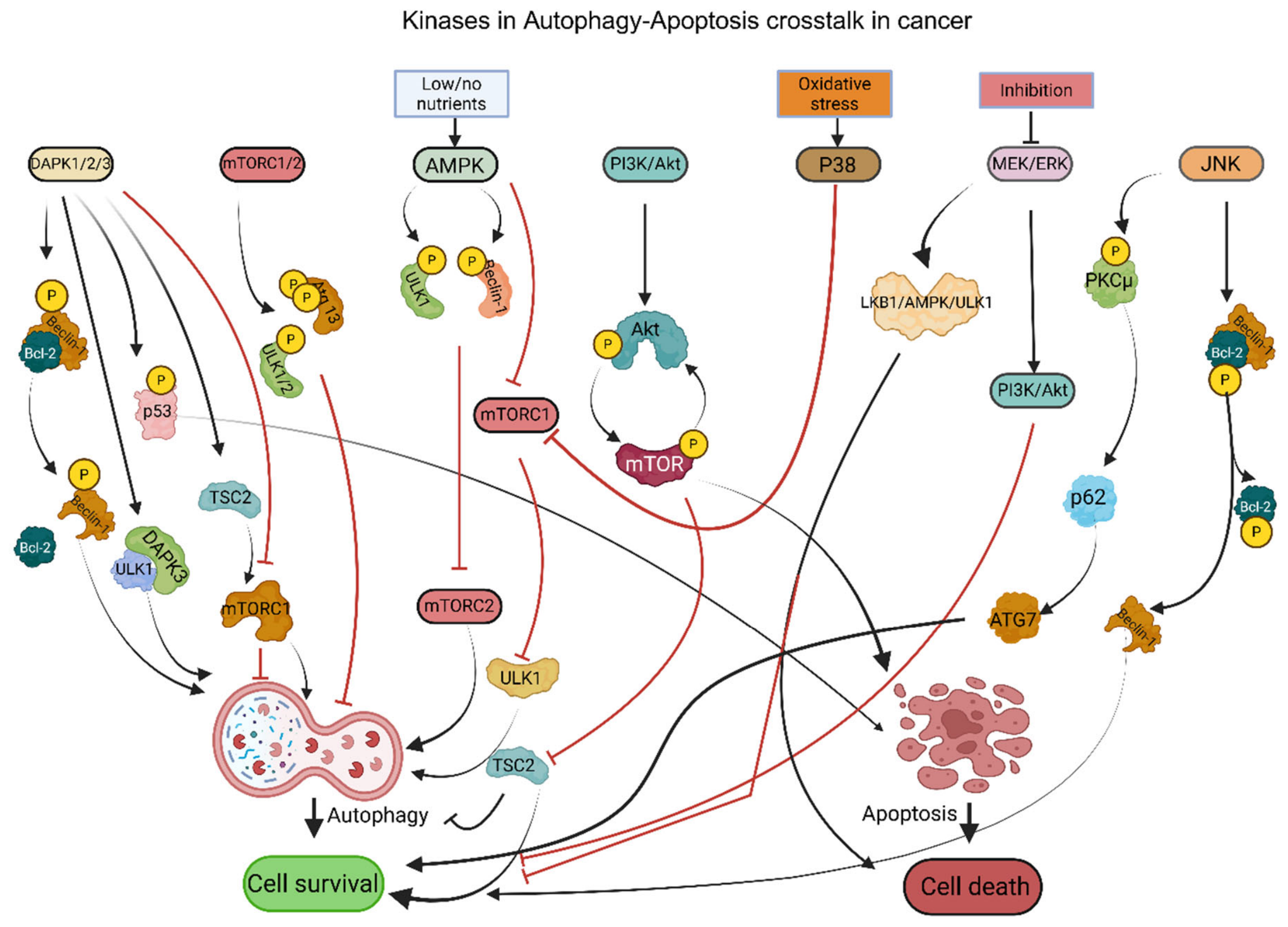
2.1. Kinases
2.1.1. Death-Associated Protein Kinase (DAPK)
2.1.2. Mechanistic Target of Rapamycin (mTOR)
2.1.3. AMP-Activated Protein Kinase (AMPK)
2.1.4. Phosphoinositide 3-Kinase (PI3K)/Akt
2.1.5. p38 Mitogen-Activated Protein Kinase (p38 MAPK)
2.1.6. Mitogen-Activated Protein Kinase (MEK)/Extracellular Signal-Regulated Kinase (ERK)
2.1.7. c-Jun N-Terminal Kinase (JNK)
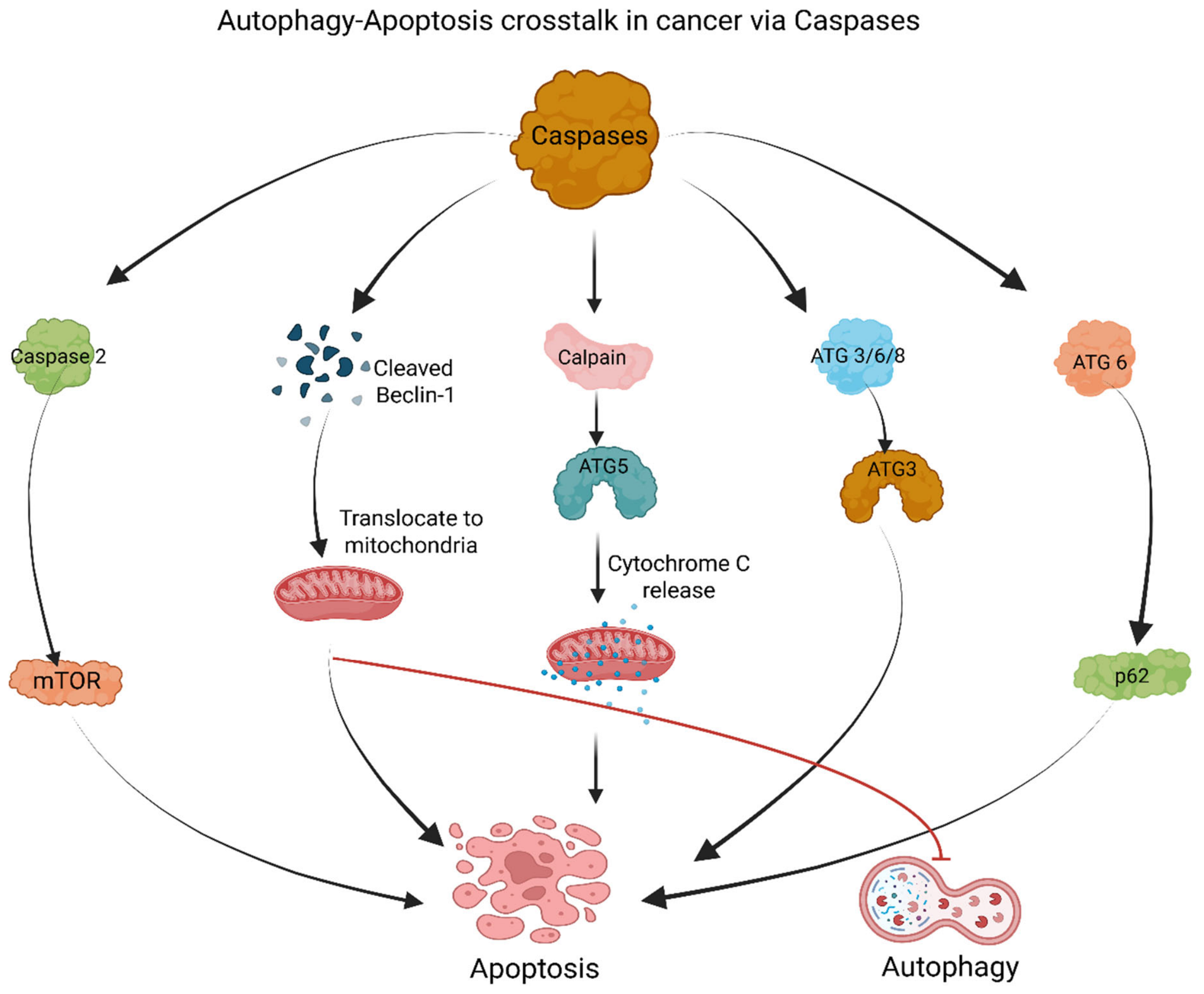
2.2. Caspases
2.3. Heat Shock Proteins
2.4. Transcription Factor
2.4.1. C/EBP Homologous Protein (CHOP)
2.4.2. Activating of Transcription Factor 4 (ATF4)
2.4.3. Forkhead Box O (FOXO)
2.4.4. Hypoxia-Inducible Factor-1α (HIF-1α)
2.4.5. Nuclear Factor Erythroid 2-Related Factor 2 (NRF2)
2.4.6. p53
2.4.7. Signal Transducer and Activator of Transcription 3 (STAT3)
2.4.8. Nuclear Factor Kappa B (NF-κB)
3. Signal Transduction Pathways in Autophagy–Apoptosis Crosstalk
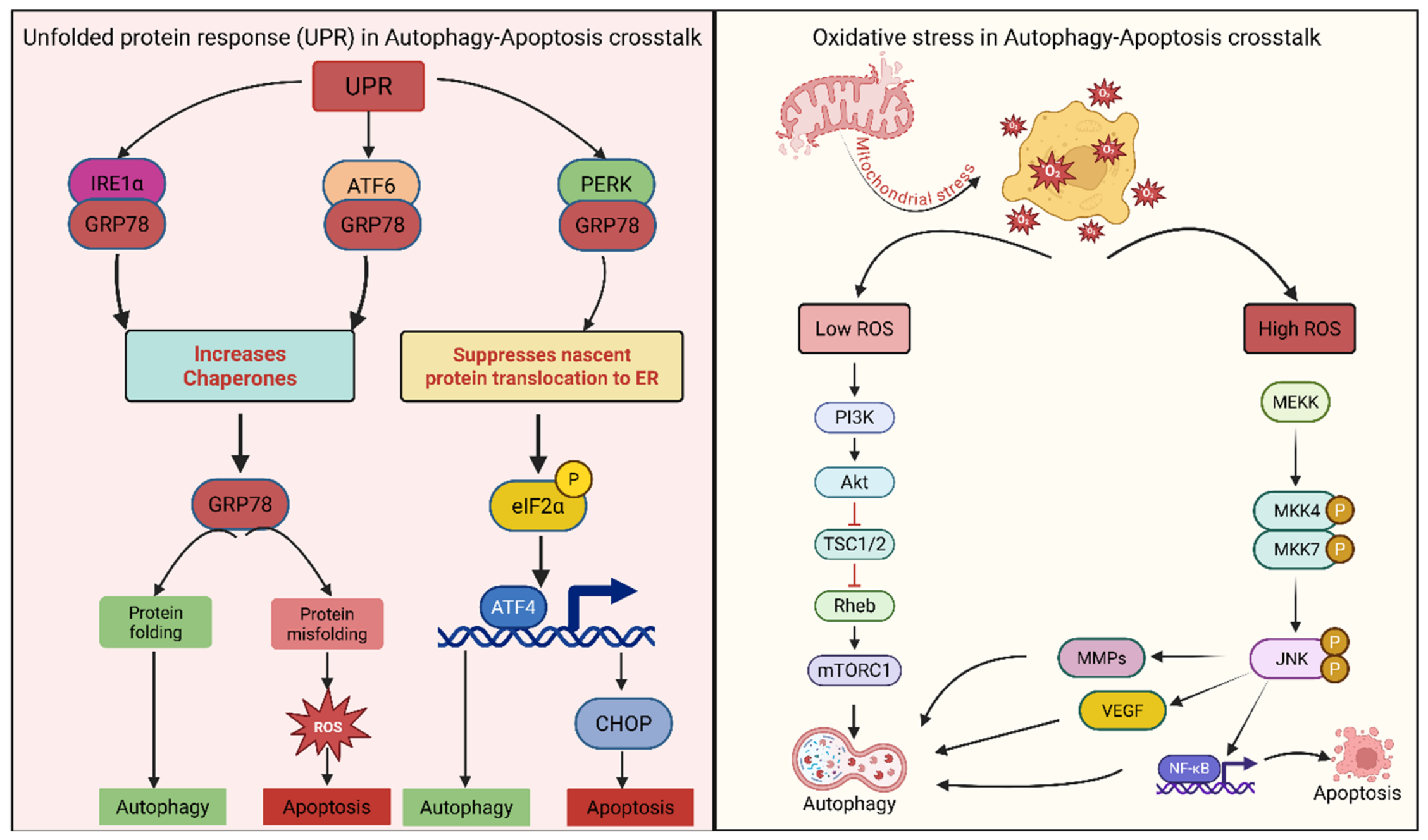
3.1. Unfolded Protein Response (UPR)
3.2. Oxidative Stress
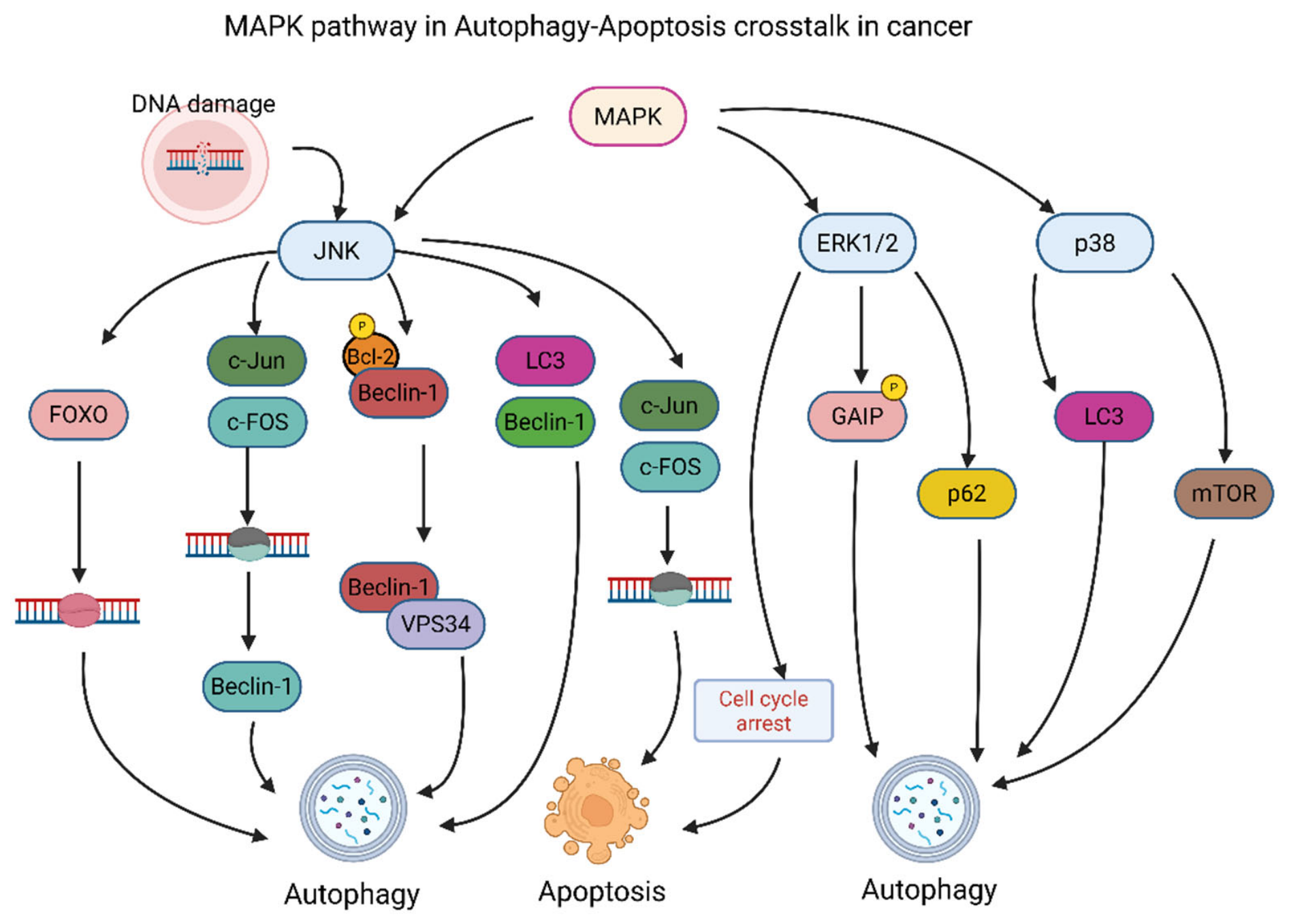
3.3. MAPK Pathway
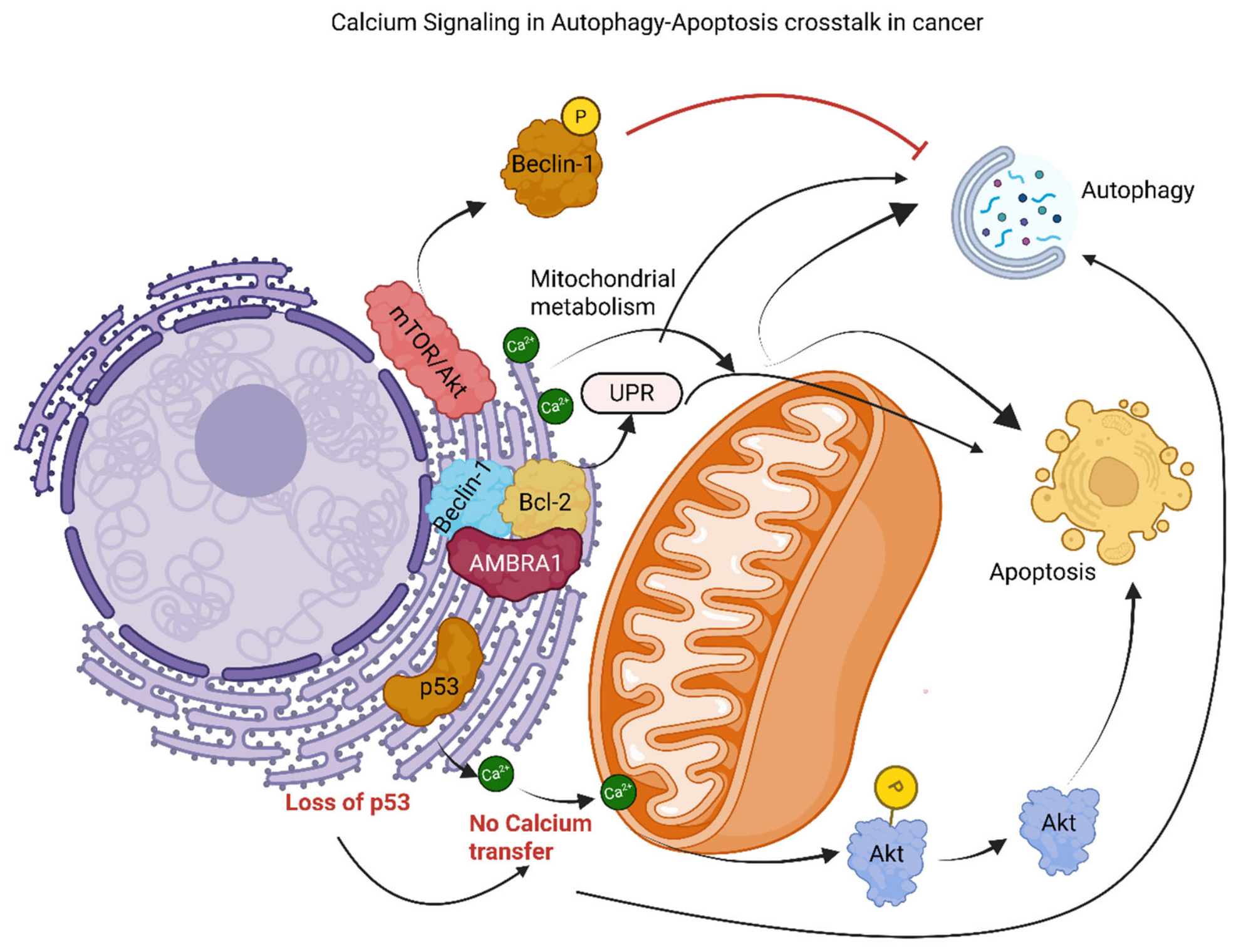
3.4. Calcium Signaling
4. Natural Products and FDA-Approved Drugs in Modulating Autophagy–Apoptosis Crosstalk
4.1. Natural Compounds
4.2. FDA Approved Drugs
5. Conclusions
Author Contributions
Funding
Data Availability Statement
Acknowledgments
Conflicts of Interest
Abbreviations
| AMPK | AMP-activated protein kinase |
| ARE | Antioxidant response element |
| ATF4 | Activating transcription factor 4 |
| ATF6 | Activating transcription factor 6 |
| ATG | Autophagy-related gene/protein |
| BACH1 | BTB and CNC homology 1 |
| BAX | BCL2-associated X protein |
| BCL2 | B-cell lymphoma 2 |
| BCLAF1 | BCL2-associated transcription factor 1 |
| BECN1 | Beclin-1 |
| BH3 | BCL2 homology 3 |
| BiP/GRP78 | Binding immunoglobulin protein/Glucose-regulated protein 78 |
| BNIP3 | BCL2 interacting protein 3 |
| BNIP3L | BCL2 interacting protein 3-like |
| Ca2+ | Calcium ion |
| CaMKKβ | Ca2+/calmodulin-dependent protein kinase kinase beta |
| CHOP | C/EBP homologous protein |
| DAPK | Death-associated protein kinase |
| DRAM | Damage-regulated autophagy modulator |
| EIF2α | Eukaryotic initiation factor 2 alpha |
| ER | Endoplasmic reticulum |
| ERK | Extracellular signal-regulated kinase |
| FADD | Fas-associated protein with death domain |
| FOXO | Forkhead box O |
| GADD153 | Growth arrest and DNA damage-inducible protein 153 |
| GSK3β | Glycogen synthase kinase 3 beta |
| HIF-1α | Hypoxia-inducible factor 1 alpha |
| HSP | Heat shock protein |
| IRE1α | Inositol-requiring enzyme 1 alpha |
| IP3R | Inositol 1,4,5-trisphosphate receptor |
| JNK | c-Jun N-terminal kinase |
| LC3 | Microtubule-associated protein 1 light chain 3 |
| LAMP2A | Lysosome-associated membrane protein 2A |
| MAPK | Mitogen-activated protein kinase |
| MAM | Mitochondria-associated membrane |
| MEK | Mitogen-activated protein kinase kinase |
| mTOR | Mechanistic target of rapamycin |
| mTORC1 | mTOR complex 1 |
| mTORC2 | mTOR complex 2 |
| NF-κB | Nuclear factor kappa B |
| NRF2 | Nuclear factor erythroid 2-related factor 2 |
| PERK | Protein kinase RNA-like endoplasmic reticulum kinase |
| PHLPP | PH domain and Leucine-rich repeat Protein Phosphatase |
| PI3K | Phosphoinositide 3-kinase |
| PML | Promyelocytic leukemia protein |
| p38 MAPK | p38 mitogen-activated protein kinase |
| PP2A | Protein Phosphatase 2A |
| PTEN | Phosphatase and tensin homolog |
| PUMA | p53 Upregulated Modulator of Apoptosis |
| ROS | Reactive oxygen species |
| SQSTM1/p62 | Sequestosome 1 |
| STAT3 | Signal transducer and activator of transcription 3 |
| TSC1/2 | Tuberous sclerosis complex 1/2 |
| ULK1 | Unc-51-like autophagy activating kinase 1 |
| UPR | Unfolded protein response |
| VPS34 | Vacuolar protein sorting 34 |
| XBP1 | X-box binding protein 1 |
| XBP1s | Spliced X-box binding protein 1 |
| XBP1u | Unspliced X-box binding protein 1 |
References
- Liu, S.; Yao, S.; Yang, H.; Liu, S.; Wang, Y. Autophagy: Regulator of cell death. Cell Death Dis. 2023, 14, 648. [Google Scholar] [CrossRef]
- Chai, H.; Qian, H.; Yao, S.; Ma, S.; Su, W. Endoplasmic reticulum stress-mediated programmed cell death in the tumor microenvironment. Cell Death Discov. 2025, 11, 559. [Google Scholar] [CrossRef]
- Eskander, G.; AbdelHamid, S.G.; Wahdan, S.A.; Radwan, S.M. Insights on the crosstalk among different cell death mechanisms. Cell Death Discov. 2025, 11, 56. [Google Scholar] [CrossRef]
- Rahal, Z.; Darzi, R.E.; Moghaddam, S.J.; Cascone, T.; Kadara, H. Tumour and microenvironment crosstalk in NSCLC progression and response to therapy. Nat. Rev. Clin. Oncol. 2025, 22, 463. [Google Scholar] [CrossRef]
- Das, S.; Shukla, N.; Singh, S.S.; Kushwaha, S.; Shrivastava, R. Mechanism of interaction between autophagy and apoptosis in cancer. Apoptosis 2021, 26, 512. [Google Scholar] [CrossRef] [PubMed]
- Liao, P.A.; Chu, P.Y.; Tan, Z.L.; Hsu, F.T.; Lee, Y.C.; Wu, H.J. STAT3 Inactivation and Induction of Apoptosis Associate with Fluoxetine-Inhibited Epithelial–Mesenchymal Transition and Growth of Triple-Negative Breast Cancer In Vivo. Anticancer Res. 2022, 42, 3807–3814. [Google Scholar] [CrossRef] [PubMed]
- Sartori, G.; Tarantelli, C.; Spriano, F.; Gaudio, E.; Cascione, L.; Mascia, M.; Barreca, M.; Arribas, A.J.; Licenziato, L.; Golino, G.; et al. The ATR Inhibitor Elimusertib Exhibits Anti-Lymphoma Activity and Synergizes with the PI3K Inhibitor Copanlisib. Br. J. Haematol. 2024, 204, 191–205. [Google Scholar] [CrossRef]
- Li, M.; Gao, P.; Zhang, J. Crosstalk between Autophagy and Apoptosis: Potential and Emerging Therapeutic Targets for Cardiac Diseases. Int. J. Mol. Sci. 2016, 17, 332. [Google Scholar] [CrossRef]
- Chen, Q.; Kang, J.; Fu, C. The independence of and associations among apoptosis, autophagy, and necrosis. Signal Transduct. Target. Ther. 2018, 3, 18. [Google Scholar] [CrossRef]
- Ojha, R.; Ishaq, M.; Kumar, M. Caspase-mediated crosstalk between autophagy and apoptosis. J. Cancer Res. Ther. 2015, 11, 514. [Google Scholar] [CrossRef] [PubMed]
- Tam, S.Y.; Wu, V.; Law, H. Influence of autophagy on the efficacy of radiotherapy. Radiat. Oncol. 2017, 12, 57. [Google Scholar] [CrossRef] [PubMed]
- Gremke, N.; Polo, P.; Dort, A.; Schneikert, J.; Elmshäuser, S.; Brehm, C.U.; Klingmüller, U.; Schmitt, A.; Reinhardt, H.C.; Timofeev, O.; et al. mTOR-mediated cancer drug resistance suppresses autophagy and generates a druggable metabolic vulnerability. Nat. Commun. 2020, 11, 4684. [Google Scholar] [CrossRef]
- Zhang, J.; Xiang, Q.; Wu, M.; Lao, Y.-Z.; Xian, Y.-F.; Xu, H.-X.; Lin, Z.-X. Autophagy Regulators in Cancer. Int. J. Mol. Sci. 2023, 24, 10944. [Google Scholar] [CrossRef]
- Guo, T.; Wu, C.; Zhang, J.; Yu, J.; Li, G.; Jiang, H.; Zhang, X.; Yu, R.; Liu, X. Dual blockade of EGFR and PI3K signaling pathways offers a therapeutic strategy for glioblastoma. Cell Commun. Signal. 2023, 21, 363. [Google Scholar] [CrossRef]
- Kitai, H.; Choi, P.H.; Yang, Y.C.; Boyer, J.A.; Whaley, A.; Pancholi, P.; Thant, C.; Reiter, J.; Chen, K.; Markov, V.; et al. Combined inhibition of KRASG12C and mTORC1 kinase is synergistic in non-small cell lung cancer. Nat. Commun. 2024, 15, 6076. [Google Scholar] [CrossRef]
- Li, X.; He, S.; Ma, B. Autophagy and autophagy-related proteins in cancer. Mol. Cancer 2020, 19, 12. [Google Scholar] [CrossRef] [PubMed]
- Debnath, J.; Gammoh, N.; Ryan, K.M. Autophagy and autophagy-related pathways in cancer. Nat. Rev. Mol. Cell Biol. 2023, 24, 560. [Google Scholar] [CrossRef]
- Singh, P.; Ravanan, P.; Talwar, P. Death Associated Protein Kinase 1 (DAPK1): A Regulator of Apoptosis and Autophagy. Front. Mol. Neurosci. 2016, 9, 46. [Google Scholar] [CrossRef]
- Wu, Y.; Chou, T.F.; Young, L.; Hsieh, F.; Pan, H.Y.; Mo, S.T.; Brown, S.B.; Chen, R.Y.; Kimchi, A.; Lai, M.Z.; et al. Tumor suppressor death-associated protein kinase 1 inhibits necroptosis by p38 MAPK activation. Cell Death Dis. 2020, 11, 305. [Google Scholar] [CrossRef]
- Hill, S.M.; Wróbel, L.; Rubinsztein, D.C. Post-translational modifications of Beclin 1 provide multiple strategies for autophagy regulation. Cell Death Differ. 2018, 26, 617. [Google Scholar] [CrossRef]
- Zhang, X.; Assaraf, Y.G.; Lin, Y. Death-associated protein kinase 1: A double-edged sword in health and disease. Front. Immunol. 2025, 16, 1593394. [Google Scholar] [CrossRef] [PubMed]
- Wang, Y.; Lin, K.; Xu, T.; Wang, L.; Fu, L.; Zhang, G.; Jing, A.; Jiao, Y.; Zhu, R.; Han, X.; et al. Development and validation of prognostic model based on the analysis of autophagy-related genes in colon cancer. Aging 2021, 13, 19028. [Google Scholar] [CrossRef]
- Shiloh, R.; Gilad, Y.; Ber, Y.; Eisenstein, M.; Aweida, D.; Bialik, S.; Cohen, S.; Kimchi, A. Non-canonical activation of DAPK2 by AMPK constitutes a new pathway linking metabolic stress to autophagy. Nat. Commun. 2018, 9, 1759. [Google Scholar] [CrossRef]
- Makgoo, L.; Mosebi, S.; Mbita, Z. The Role of Death-Associated Protein Kinase-1 in Cell Homeostasis-Related Processes. Genes 2023, 14, 1274. [Google Scholar] [CrossRef]
- Chen, H.; MacDonald, J.A. Network analysis identifies DAPK3 as a potential biomarker for lymphovascular invasion and prognosis of colon adenocarcinoma. medRxiv 2021. [Google Scholar] [CrossRef]
- Xie, Y.; Zhao, G.; Lei, X.; Cui, N.; Wang, H. Advances in the regulatory mechanisms of mTOR in necroptosis. Front. Immunol. 2023, 14, 1297408. [Google Scholar] [CrossRef]
- Narayanan, L.; Thekkekkara, D.; Kondaveeti, S.N.; Babu, A.; Sailen, B.A.; Chidambaram, S.B.; Manjula, S.N. Deciphering the intricate role of mTOR signaling and autophagy in Parkinson’s disease and therapeutic prospects. J. Appl. Pharm. Sci. 2024, 14, 001–010. [Google Scholar] [CrossRef]
- Marafie, S.K.; Al-Mulla, F.; Abubaker, J. MTOR: Its critical role in metabolic diseases, cancer, and the aging process. Int. J. Mol. Sci. 2024, 25, 6141. [Google Scholar] [CrossRef] [PubMed]
- Divé, I.; Klann, K.; Michaelis, J.B.; Heinzen, D.; Steinbach, J.P.; Münch, C.; Ronellenfitsch, M. Inhibition of mTOR signaling protects human glioma cells from hypoxia-induced cell death in an autophagy-independent manner. Cell Death Discov. 2022, 8, 409. [Google Scholar] [CrossRef]
- An, P.; Xu, W.; Luo, J.; Luo, Y. Expanding TOR Complex 2 Signaling: Emerging Regulators and New Connections. Front. Cell Dev. Biol. 2021, 9, 713806. [Google Scholar] [CrossRef]
- Sun, Y.; Wang, H.; Qu, T.; Luo, J.; An, P.; Ren, F.; Luo, Y.; Li, Y. mTORC2: A multifaceted regulator of autophagy. Cell Commun. Signal. 2023, 21, 4. [Google Scholar] [CrossRef]
- Deleyto-Seldas, N.; Efeyan, A. The MTOR–autophagy axis and the control of metabolism. Front. Cell Dev. Biol. 2021, 9, 655731. [Google Scholar] [CrossRef]
- Giampieri, F.; Afrin, S.; Forbes-Hernandez, T.Y.; Gasparrini, M.; Cianciosi, D.; Reboredo-Rodriguez, P.; Varela-Lopez, A.; Quiles, J.L.; Battino, M. Autophagy in human health and disease: Novel therapeutic opportunities. Antioxid. Redox Signal. 2018, 30, 577–634. [Google Scholar] [CrossRef]
- Shi, L.; Yin, J.; Chen, Y.; Shi, J.; Miao, J. DAPK2 promotes autophagy to accelerate the progression of ossification of the posterior longitudinal ligament through the mTORC1 complex. Biocell 2024, 48, 1389–1400. [Google Scholar] [CrossRef]
- Movahhed, P.; Saberiyan, M.; Safi, A.; Arshadi, Z.; Kazerouni, F.; Teimori, H. The impact of DAPK1 and mTORC1 signaling association on autophagy in cancer. Mol. Biol. Rep. 2022, 49, 4959–4964. [Google Scholar] [CrossRef]
- Dite, T.A.; Ling, N.X.Y.; Scott, J.W.; Hoque, A.; Galić, S.; Parker, B.L.; Ngoei, K.R.W.; Langendorf, C.G.; O’Brien, M.T.; Kundu, M.; et al. The autophagy initiator ULK1 sensitizes AMPK to allosteric drugs. Nat. Commun. 2017, 8, 571. [Google Scholar] [CrossRef]
- Saikia, R.; Joseph, J. AMPK: A key regulator of energy stress and calcium-induced autophagy. J. Mol. Med. 2021, 99, 1539. [Google Scholar] [CrossRef]
- Grasso, D.; Renna, F.J.; Vaccaro, M.I. Initial Steps in Mammalian Autophagosome Biogenesis. Front. Cell Dev. Biol. 2018, 6, 146. [Google Scholar] [CrossRef] [PubMed]
- Zachari, M.; Ganley, I.G. The mammalian ULK1 complex and autophagy initiation. Essays Biochem. 2017, 61, 585. [Google Scholar] [CrossRef] [PubMed]
- Lee, Y.; Jang, S.; Song, H.S.; Kwon, J.E.; Ko, M.; Hong, W.; Gwon, A.; Park, S.; Jeong, Y.; Kim, H.; et al. Bakuchiol from Cullen corylifolium and its efficacy on apoptosis and autophagy in HepG2 cells. Heliyon 2025, 10, e40758. [Google Scholar] [CrossRef] [PubMed]
- Zheng, Y.; Feng, N.; Li, C.; Li, Z. Natural products target programmed cell death signaling mechanisms to treat colorectal cancer. Front. Pharmacol. 2025, 16, 1565332. [Google Scholar] [CrossRef] [PubMed]
- Dibble, C.C.; Cantley, L.C. Regulation of mTORC1 by PI3K signaling. Trends Cell Biol. 2015, 25, 545. [Google Scholar] [CrossRef]
- Hoxhaj, G.; Manning, B.D. The PI3K–AKT network at the interface of oncogenic signalling and cancer metabolism. Nat. Rev. Cancer 2019, 20, 74. [Google Scholar] [CrossRef]
- Endicott, S.J.; Ziemba, Z.; Beckmann, L.J.; Boynton, D.N.; Miller, R.A. Inhibition of class I PI3K enhances chaperone-mediated autophagy. J. Cell Biol. 2020, 219, e202001031. [Google Scholar] [CrossRef]
- Kim, Y.C.; Guan, K. mTOR: A pharmacologic target for autophagy regulation. J. Clin. Investig. 2015, 125, 25. [Google Scholar] [CrossRef]
- Popova, N.V.; Jücker, M. The Role of mTOR Signaling as a Therapeutic Target in Cancer. Int. J. Mol. Sci. 2021, 22, 1743. [Google Scholar] [CrossRef]
- Glaviano, A.; Foo, A.S.C.; Lam, H.Y.; Yap, K.C.-Y.; Jacot, W.; Jones, R.H.; Eng, H.; Nair, M.G.; Makvandi, P.; Geoerger, B.; et al. PI3K/AKT/mTOR signaling transduction pathway and targeted therapies in cancer. Mol. Cancer 2023, 22, 138. [Google Scholar] [CrossRef] [PubMed]
- Zhou, L.; Wang, J.; Hou, H.; Li, J.; Li, J.; Liang, J.; Li, J.; Niu, X.; Hou, R.; Zhang, K.-M.; et al. Autophagy inhibits inflammation via down-regulation of p38 MAPK/mTOR signaling cascade in endothelial cells. Res. Sq. 2022. [Google Scholar] [CrossRef]
- Shang, Y.-Y.; Yao, M.; Zhou, Z.-W.; Cui, J.; Xia, L.; Hu, R.-Y.; Yu, Y.-Y.; Gao, Q.; Yang, B.; Liu, Y.-X.; et al. Alisertib promotes apoptosis and autophagy in melanoma through p38 MAPK-mediated aurora a signaling. Oncotarget 2017, 8, 107076. [Google Scholar] [CrossRef] [PubMed]
- Zhou, L.; Wang, J.; Hou, H.; Li, J.; Li, J.; Liang, J.; Li, J.; Niu, X.; Hou, R.; Zhang, K. Autophagy Inhibits Inflammation via Down-Regulation of p38 MAPK/mTOR Signaling Cascade in Endothelial Cells. Clin. Cosmet. Investig. Dermatol. 2023, 16, 659–669. [Google Scholar] [CrossRef]
- Mustafa, M.; Ahmad, R.; Tantry, I.Q.; Ahmad, W.; Siddiqui, S.; Alam, M.; Abbas, K.; Moinuddin; Hassan, M.I.; Habib, S. Apoptosis: A comprehensive overview of signaling pathways, morphological changes, and physiological significance and therapeutic implications. Cells 2024, 13, 1838. [Google Scholar] [CrossRef]
- Song, Y.; Du, Y.; Li, W.; Fan, Y.; Zhang, Y.; Shen, H.; Cheng, L.; Wang, J.; Deng, F.; Tang, B. Targeting the p38/MAPK pathway to induce apoptosis: A multidimensional mechanistic exploration of Mentha and its active compound diosmetin against liver cancer. Sci. Rep. 2025, 15, 39432. [Google Scholar] [CrossRef]
- Wei, Y.; An, Z.; Zou, Z.; Sumpter, R.; Su, M.; Zang, X.; Sinha, S.; Gaestel, M.; Levine, B. The stress-responsive kinases MAPKAPK2/MAPKAPK3 activate starvation-induced autophagy through Beclin 1 phosphorylation. eLife 2015, 4, e05289. [Google Scholar] [CrossRef] [PubMed]
- Kinsey, C.G.; Camolotto, S.A.; Boespflug, A.; Guillen, K.P.; Foth, M.; Truong, A.; Schuman, S.S.; Shea, J.E.; Seipp, M.T.; Yap, J.T.; et al. Protective autophagy elicited by RAF→MEK→ERK inhibition suggests a treatment strategy for RAS-driven cancers. Nat. Med. 2019, 25, 620. [Google Scholar] [CrossRef]
- Marchand, B.; Poulin, M.-A.; Lawson, C.; Tai, L.; Jean, S.; Boucher, M. Gemcitabine promotes autophagy and lysosomal function through ERK- and TFEB-dependent mechanisms. Cell Death Discov. 2023, 9, 45. [Google Scholar] [CrossRef] [PubMed]
- Bryant, K.L.; Stalnecker, C.A.; Zeitouni, D.; Klomp, J.E.; Peng, S.; Tikunov, A.P.; Gunda, V.; Pierobon, M.; Waters, A.M.; George, S.D.; et al. Combination of ERK and autophagy inhibition as a treatment approach for pancreatic cancer. Nat. Med. 2019, 25, 628. [Google Scholar] [CrossRef]
- Abdelrahman, K.S.; Hassan, H.A.; Abdel-Aziz, S.A.; Marzouk, A.A.; Narumi, A.; Konno, H.; Abdel-Aziz, M. JNK signaling as a target for anticancer therapy. Pharmacol. Rep. 2021, 73, 405. [Google Scholar] [CrossRef]
- Zhou, Y.; Li, Y.; Jiang, W.; Zhou, L. MAPK/JNK signalling: A potential autophagy regulation pathway. Biosci. Rep. 2015, 35, e00199. [Google Scholar] [CrossRef] [PubMed]
- Bhardwaj, M.; Leli, N.M.; Koumenis, C.; Amaravadi, R.K. Regulation of autophagy by canonical and non-canonical ER stress responses. Semin. Cancer Biol. 2019, 66, 116. [Google Scholar] [CrossRef]
- Schlütermann, D.; Berleth, N.; Deitersen, J.; Hieke, N.; Friesen, O.; Wu, W.; Stuhldreier, F.; Sun, Y.; Berning, L.; Friedrich, A.; et al. FIP200 controls the TBK1 activation threshold at SQSTM1/p62-positive condensates. Sci. Rep. 2021, 11, 13863. [Google Scholar] [CrossRef]
- Jiang, X.; Bao, Y.; Liu, H.; Kou, X.; Zhang, Z.; Sun, F.; Qian, Z.; Lin, Z.; Li, X.; Liu, X.; et al. VPS34 stimulation of p62 phosphorylation for cancer progression. Oncogene 2017, 36, 6850. [Google Scholar] [CrossRef] [PubMed]
- Li, H.-Y.; Zhang, J.; Sun, L.-L.; Li, B.-H.; Gao, H.-L.; Xie, T.; Zhang, N.; Ye, Z.M. Celastrol induces apoptosis and autophagy via the ROS/JNK signaling pathway in human osteosarcoma cells: An in vitro and in vivo study. Cell Death Dis. 2015, 6, e1604. [Google Scholar] [CrossRef]
- Booth, L.; Roberts, J.L.; Dent, P. The role of cell signaling in the crosstalk between autophagy and apoptosis in the regulation of tumor cell survival in response to sorafenib and neratinib. Semin. Cancer Biol. 2019, 66, 129. [Google Scholar] [CrossRef]
- Siddiqui, M.A.; Mukherjee, S.; Manivannan, P.; Malathi, K. RNase L Cleavage Products Promote Switch from Autophagy to Apoptosis by Caspase-Mediated Cleavage of Beclin-1. Int. J. Mol. Sci. 2015, 16, 17611. [Google Scholar] [CrossRef]
- Vega-Rubín-de-Celis, S. The Role of Beclin 1-Dependent Autophagy in Cancer. Biology 2019, 9, 4. [Google Scholar] [CrossRef] [PubMed]
- Mnich, K.; Koryga, I.; Pakos-Zebrucka, K.; Thomas, M.; Logue, S.E.; Eriksson, L.A.; Gorman, A.M.; Samali, A. The stressosome, a caspase-8-activating signalling complex assembled in response to cell stress in an ATG5-mediated manner. J. Cell. Mol. Med. 2021, 25, 8809. [Google Scholar] [CrossRef] [PubMed]
- Tsapras, P.; Nezis, I.P. Caspase involvement in autophagy. Cell Death Differ. 2017, 24, 1369. [Google Scholar] [CrossRef]
- Frudd, K.; Burgoyne, T.; Burgoyne, J.R. Oxidation of Atg3 and Atg7 mediates inhibition of autophagy. Nat. Commun. 2018, 9, 95. [Google Scholar] [CrossRef]
- Qin, P.; Li, Q.; Zu, Q.; Dong, R.; Qi, Y. Natural products targeting autophagy and apoptosis in NSCLC: A novel therapeutic strategy. Front. Oncol. 2024, 14, 1379698. [Google Scholar] [CrossRef]
- Zhang, L.; Li, J.; Ouyang, L.; Liu, B.; Cheng, Y. Unraveling the roles of Atg4 proteases from autophagy modulation to targeted cancer therapy. Cancer Lett. 2016, 373, 19. [Google Scholar] [CrossRef]
- Fritsch, M.; Günther, S.D.; Schwarzer, R.; Albert, M.; Schorn, F.; Werthenbach, J.P.; Schiffmann, L.M.; Stair, N.; Stocks, H.; Seeger, J.M.; et al. Caspase-8 is the molecular switch for apoptosis, necroptosis and pyroptosis. Nature 2019, 575, 683. [Google Scholar] [CrossRef]
- Beltrán-Visiedo, M.; Soler-Agesta, R.; Sarosiek, K.A.; Green, D.R.; Galluzzi, L. Regulation of inflammatory processes by caspases. Nat. Rev. Mol. Cell Biol. 2025, 26, 884. [Google Scholar] [CrossRef] [PubMed]
- Dho, S.H.; Cho, M.; Woo, W.; Jeong, S.; Kim, L.K. Caspases as master regulators of programmed cell death: Apoptosis, pyroptosis and beyond. Exp. Mol. Med. 2025, 57, 1121. [Google Scholar] [CrossRef]
- Lim, Y.; Dorstyn, L.; Kumar, S. The p53-caspase-2 axis in the cell cycle and DNA damage response. Exp. Mol. Med. 2021, 53, 517. [Google Scholar] [CrossRef]
- Shalini, S.; Kumar, S. Caspase-2 and the oxidative stress response. Mol. Cell. Oncol. 2015, 2, e1004956. [Google Scholar] [CrossRef]
- Wible, D.J.; Bratton, S.B. Reciprocity in ROS and autophagic signaling. Curr. Opin. Toxicol. 2017, 7, 28. [Google Scholar] [CrossRef]
- Guo, W.; Dong, A.; Pan, X.-H.; Lin, X.; Lin, Y.N.; He, M.; Zhu, B.; Jin, L.; Yao, R. Role of caspase-10 in the death of acute leukemia cells. Oncol. Lett. 2016, 12, 1623. [Google Scholar] [CrossRef][Green Version]
- Ikwegbue, P.C.; Masamba, P.; Oyinloye, B.E.; Kappo, A.P. Roles of Heat Shock Proteins in Apoptosis, Oxidative Stress, Human Inflammatory Diseases, and Cancer. Pharmaceuticals 2017, 11, 2. [Google Scholar] [CrossRef] [PubMed]
- Zuo, W.; Pang, Q.; Zhu, X.; Yang, Q.; Zhao, Q.; He, G.; Han, B.; Huang, W. Heat shock proteins as hallmarks of cancer: Insights from molecular mechanisms to therapeutic strategies. J. Hematol. Oncol. 2024, 17, 81. [Google Scholar] [CrossRef] [PubMed]
- Du, S.; Liu, Y.; Yuan, Y.; Wang, Y.; Chen, Y.; Wang, S.; Chi, Y. Advances in the study of HSP70 inhibitors to enhance the sensitivity of tumor cells to radiotherapy. Front. Cell Dev. Biol. 2022, 10, 942828. [Google Scholar] [CrossRef]
- Kunachowicz, D.; Król-Kulikowska, M.; Raczycka, W.; Sleziak, J.; Błażejewska, M.; Kulbacka, J. Heat Shock Proteins, a Double-Edged Sword: Significance in Cancer Progression, Chemotherapy Resistance and Novel Therapeutic Perspectives. Cancers 2024, 16, 1500. [Google Scholar] [CrossRef]
- Albakova, Z.; Mangasarova, Y.; Albakov, A.; Gorenkova, L. HSP70 and HSP90 in Cancer: Cytosolic, Endoplasmic Reticulum and Mitochondrial Chaperones of Tumorigenesis. Front. Oncol. 2022, 12, 829520. [Google Scholar] [CrossRef]
- Hino, C.; Chan, G.; Jordaan, G.; Chang, S.S.; Saunders, J.T.; Bashir, M.T.; Hansen, J.E.; Gera, J.; Weisbart, R.H.; Nishimura, R.N. Cellular protection from H2O2 toxicity by Fv-Hsp70: Protection via catalase and gamma-glutamyl-cysteine synthase. Cell Stress Chaperones 2023, 28, 429. [Google Scholar] [CrossRef]
- Sha, G.; Jiang, Z.; Zhang, W.; Jiang, C.; Wang, D.; Tang, D. The multifunction of HSP70 in cancer: Guardian or traitor to the survival of tumor cells and the next potential therapeutic target. Int. Immunopharmacol. 2023, 122, 110492. [Google Scholar] [CrossRef]
- Alhasan, B.A.; Gladova, Y.A.; Sverchinsky, D.V.; Aksenov, N.D.; Margulis, B.A.; Guzhova, I.V. Hsp70 Negatively Regulates Autophagy via Governing AMPK Activation, and Dual Hsp70-Autophagy Inhibition Induces Synergetic Cell Death in NSCLC Cells. Int. J. Mol. Sci. 2024, 25, 9090. [Google Scholar] [CrossRef] [PubMed]
- Wang, B.; Chen, Z.; Yu, F.; Chen, Q.; Tian, Y.; Ma, S.; Wang, T.; Liu, X. Hsp90 regulates autophagy and plays a role in cancer therapy. Tumor Biol. 2015, 37, 1–6. [Google Scholar] [CrossRef]
- Schopf, F.H.; Biebl, M.M.; Büchner, J. The HSP90 chaperone machinery. Nat. Rev. Mol. Cell Biol. 2017, 18, 345. [Google Scholar] [CrossRef]
- Schaefer, S.; Svenstrup, T.H.; Guerra, B. The small-molecule kinase inhibitor D11 counteracts 17-AAG-mediated up-regulation of HSP70 in brain cancer cells. PLoS ONE 2017, 12, e0177706. [Google Scholar] [CrossRef] [PubMed]
- Fuhrmann-Stroissnigg, H.; Ling, Y.Y.; Zhao, J.; McGowan, S.J.; Zhu, Y.; Brooks, R.W.; Grassi, D.; Gregg, S.Q.; Stripay, J.L.; Dorronsoro, A.; et al. Identification of HSP90 inhibitors as a novel class of senolytics. Nat. Commun. 2017, 8, 422. [Google Scholar] [CrossRef] [PubMed]
- Ahn, C.; Park, J.E.; Sim, D.Y.; Park, S.; Cha, H.; Shim, B.; Kim, B.; Kim, S. H STK32C as a Therapeutic Target in Colorectal Cancer via HSP90-PI3K/AKT/mTOR Signaling. Int. J. Biol. Sci. 2025, 21, 6215. [Google Scholar] [CrossRef]
- Bekki, H.; Kohashi, K.; Maekawa, A.; Yamada, Y.; Yamamoto, H.; Harimaya, K.; Hakozaki, M.; Nabeshima, K.; Iwamoto, Y.; Oda, Y. Elevated expression of HSP90 and the antitumor effect of an HSP90 inhibitor via inactivation of the Akt/mTOR pathway in undifferentiated pleomorphic sarcoma. BMC Cancer 2015, 15, 804. [Google Scholar] [CrossRef]
- Peng, C.; Zhao, F.; Li, H.; Li, L.; Yang, Y.; Liu, F. HSP90 mediates the connection of multiple programmed cell death in diseases. Cell Death Dis. 2022, 13, 929. [Google Scholar] [CrossRef] [PubMed]
- Jiang, M.; Zhang, K.; Zhang, Z.; Zeng, X.; Huang, Z.; Qin, P.; Xie, Z.; Cai, X.; Ashrafizadeh, M.; Tian, Y.; et al. PI3K/AKT/MTOR axis in cancer: From pathogenesis to treatment. MedComm 2025, 6, e70295. [Google Scholar] [CrossRef] [PubMed]
- Panwar, V.; Singh, A.; Bhatt, M.; Tonk, R.K.; Azizov, S.; Raza, A.S.; Sengupta, S.; Kumar, D.; Garg, M. Multifaceted role of mTOR (mammalian target of rapamycin) signaling pathway in human health and disease. Signal Transduct. Target. Ther. 2023, 8, 375. [Google Scholar] [CrossRef]
- Matsuda-Lennikov, M.; Suizu, F.; Hirata, N.; Hashimoto, M.; Kimura, K.; Nagamine, T.; Fujioka, Y.; Ohba, Y.; Iwanaga, T.; Noguchi, M. Lysosomal interaction of Akt with Phafin2: A critical step in the induction of autophagy. PLoS ONE 2014, 9, e79795. [Google Scholar] [CrossRef]
- Fang, Y.; Bai, J.; Bo, S.; Cui, X.; Song, H.; Guo, L.; Luan, Z.; Sui, Q.; Zheng, Y.; Sun, L. Targeting the AKT/mTOR axis: Pectolinarigenin induces autophagy and apoptosis in human cervical cancer cells. Front. Pharmacol. 2026, 17, 1544170. [Google Scholar] [CrossRef]
- Biamonte, M.A.; Van De Water, R.; Arndt, J.W.; Scannevin, R.H.; Perret, D.; Lee, W. Heat shock protein 90: Inhibitors in clinical trials. J. Med. Chem. 2009, 53, 3–17. [Google Scholar] [CrossRef]
- Xiong, R.; Zhou, W.; Siegel, D.; Kitson, R.R.; Freed, C.R.; Moody, C.J.; Ross, D. A novel HSP90 inhibitor activates compensatory heat shock protein responses and autophagy and alleviates mutant A53T α-synuclein toxicity. Mol. Pharmacol. 2015, 88, 1045–1054. [Google Scholar] [CrossRef]
- Liang, X.; Chen, R.; Wang, C.; Wang, Y.; Zhang, J. Targeting HSP90 for cancer therapy: Current progress and emerging prospects. J. Med. Chem. 2024, 67, 15968–15995. [Google Scholar] [CrossRef]
- Sun, C.; Bai, M.; Ke, W.; Wang, X.; Zhao, X.; Lu, Z. The HSP90 Inhibitor, XL888, Enhanced Cell Apoptosis via Downregulating STAT3 after Insufficient Radiofrequency Ablation in Hepatocellular Carcinoma. Life Sci. 2021, 282, 119762. [Google Scholar] [CrossRef]
- Doi, T.; Yamamoto, N.; Ohkubo, S. Pimitespib for the treatment of advanced gastrointestinal stromal tumors and other tumors. Future Oncol. 2023, 20, 507–519. [Google Scholar] [CrossRef]
- Goel, B.; Jaiswal, S.; Tripathi, N. Recent advances in HSP90 inhibitors as targeted cancer therapy: Chemical scaffolds, isoform selectivity, and clinical progress. Bioorg. Chem. 2025, 163, 108782. [Google Scholar] [CrossRef]
- Kurokawa, Y.; Honma, Y.; Sawaki, A.; Naito, Y.; Iwagami, S.; Komatsu, Y.; Takahashi, T.; Nishida, T.; Doi, T. Pimitespib in patients with advanced gastrointestinal stromal tumor (CHAPTER-GIST-301): A randomized, double-blind, placebo-controlled phase III trial. Ann. Oncol. 2022, 33, 959–967. [Google Scholar] [CrossRef]
- Naito, Y.; Iwagami, S.; Doi, T.; Takahashi, T.; Kurokawa, Y. Pimitespib in patients with advanced gastrointestinal stromal tumors in Japan: An expanded access program. Int. J. Clin. Oncol. 2025, 30, 935–943. [Google Scholar] [CrossRef]
- Rastogi, S.; Joshi, A.; Sato, N.; Lee, S.; Lee, M.; Trepel, J.B.; Neckers, L. An update on the status of HSP90 inhibitors in cancer clinical trials. Cell Stress Chaperones 2024, 29, 519–539. [Google Scholar] [CrossRef] [PubMed]
- Li, L.; Wang, L.; You, Q.; Xu, X. Heat shock protein 90 inhibitors: An update on achievements, challenges, and future directions. J. Med. Chem. 2019, 63, 1798–1822. [Google Scholar] [CrossRef] [PubMed]
- Pillai, R.N.; Fennell, D.A.; Kovcin, V.; Ciuleanu, T.; Ramlau, R.; Kowalski, D.; Schenker, M.; Yalcin, I.; Teofilovici, F.; Vukovic, V.M.; et al. Randomized phase III study of ganetespib, a heat shock protein 90 inhibitor, with docetaxel versus docetaxel in advanced non–small-cell lung cancer (GALAXY-2). J. Clin. Oncol. 2019, 38, 613–622. [Google Scholar] [CrossRef] [PubMed]
- Tufano, M.; Marrone, L.; D’Ambrosio, C.; Giacomo, V.D.; Urzini, S.; Xiao, Y.; Matuozzo, M.; Scaloni, A.; Romano, M.F.; Romano, S. FKBP51 plays an essential role in Akt ubiquitination that requires Hsp90 and PHLPP. Cell Death Dis. 2023, 14, 116. [Google Scholar] [CrossRef]
- Li, W.; Zhu, J.; Dou, J.; She, H.; Tao, K.; Xu, H.; Yang, Q.; Mao, Z. Phosphorylation of LAMP2A by p38 MAPK couples ER stress to chaperone-mediated autophagy. Nat. Commun. 2017, 8, 1763. [Google Scholar] [CrossRef]
- Xiao, X.; Wang, W.; Li, Y.; Yang, D.; Li, X.; Shen, C.; Liu, Y.; Ke, X.; Guo, S.; Guo, Z. HSP90AA1-mediated autophagy promotes drug resistance in osteosarcoma. J. Exp. Clin. Cancer Res. 2018, 37, 201. [Google Scholar] [CrossRef]
- Giulino-Roth, L.; van Besien, H.J.; Dalton, T.C.; Totonchy, J.; Rodina, A.; Taldone, T.; Bolaender, A.; Erdjument-Bromage, H.; Sadek, J.; Chadburn, A.; et al. Inhibition of Hsp90 Suppresses PI3K/AKT/mTOR Signaling and Has Antitumor Activity in Burkitt Lymphoma. Mol. Cancer Ther. 2017, 16, 1779. [Google Scholar] [CrossRef]
- Albakova, Z. HSP90 multi-functionality in cancer. Front. Immunol. 2024, 15, 1436973. [Google Scholar] [CrossRef] [PubMed]
- Joshi, A.; Itoh, T.; Picard, D.; Neckers, L. The Mitochondrial HSP90 Paralog TRAP1: Structural Dynamics, Interactome, Role in Metabolic Regulation, and Inhibitors. Biomolecules 2022, 12, 880. [Google Scholar] [CrossRef] [PubMed]
- Wengert, L.A.; Backe, S.J.; Bourboulia, D.; Mollapour, M.; Woodford, M.R. TRAP1 Chaperones the Metabolic Switch in Cancer. Biomolecules 2022, 12, 786. [Google Scholar] [CrossRef]
- Zada, S.; Hwang, J.S.; Ahmed, M.; Lai, T.H.; Pham, T.M.; Elashkar, O.; Kim, D.R. Cross talk between autophagy and oncogenic signaling pathways and implications for cancer therapy. Biochim. Biophys. Acta (BBA) Rev. Cancer 2021, 1876, 188565. [Google Scholar] [CrossRef]
- Li, S.; Song, Y.; Quach, C.; Guo, H.; Jang, G.-B.; Maazi, H.; Zhao, S.; Sands, N.A.; Liu, Q.; In, G.K.; et al. Transcriptional regulation of autophagy-lysosomal function in BRAF-driven melanoma progression and chemoresistance. Nat. Commun. 2019, 10, 1693. [Google Scholar] [CrossRef]
- Malta, C.D.; Cinque, L.; Settembre, C. Transcriptional Regulation of Autophagy: Mechanisms and Diseases. Front. Cell Dev. Biol. 2019, 7, 114. [Google Scholar] [CrossRef] [PubMed]
- Rozpędek-Kamińska, W.; Pytel, D.; Mucha, B.; Leszczynska, H.; Diehl, J.A.; Majsterek, I. The Role of the PERK/eIF2α/ATF4/CHOP Signaling Pathway in Tumor Progression During Endoplasmic Reticulum Stress. Curr. Mol. Med. 2016, 16, 533. [Google Scholar] [CrossRef]
- Madhoun, A.A.; Haddad, D.; Tarrah, M.A.; Jacob, S.; Al-Ali, W.; Nizam, R.; Miranda, L.; Al-Rashed, F.; Sindhu, S.; Ahmad, R.; et al. Microarray analysis reveals ONC201 mediated differential mechanisms of CHOP gene regulation in metastatic and nonmetastatic colorectal cancer cells. Sci. Rep. 2021, 11, 11893. [Google Scholar] [CrossRef]
- Fusakio, M.E.; Willy, J.A.; Wang, Y.; Mirek, E.T.; Al-Baghdadi, R.J.T.; Adams, C.M.; Anthony, T.G.; Wek, R.C. Transcription factor ATF4 directs basal and stress-induced gene expression in the unfolded protein response and cholesterol metabolism in the liver. Mol. Biol. Cell 2016, 27, 1536. [Google Scholar] [CrossRef]
- Ong, G.; Logue, S.E. Unfolding the Interactions between Endoplasmic Reticulum Stress and Oxidative Stress. Antioxidants 2023, 12, 981. [Google Scholar] [CrossRef]
- Gonuguntla, S.; Humphrey, R.K.; Gorantla, A.; Hao, E.; Jhala, U.S. Stress-induced pseudokinase TRB3 augments IL1β signaling by interacting with Flightless homolog 1. J. Biol. Chem. 2023, 299, 104803. [Google Scholar] [CrossRef]
- Hu, H.; Tian, M.; Ding, C.; Yu, S. The C/EBP homologous protein (CHOP) transcription factor functions in endoplasmic reticulum stress-induced apoptosis and microbial infection. Front. Immunol. 2019, 9, 3083. [Google Scholar] [CrossRef] [PubMed]
- Yan, M.; Ni, J.; Song, D.; Ding, M.; Huang, J. Interplay between unfolded protein response and autophagy promotes tumor drug resistance. Oncol. Lett. 2015, 10, 1959. [Google Scholar] [CrossRef] [PubMed]
- Hetz, C.; Zhang, K.; Kaufman, R.J. Mechanisms, regulation and functions of the unfolded protein response. Nat. Rev. Mol. Cell Biol. 2020, 21, 421. [Google Scholar] [CrossRef] [PubMed]
- Han, J.; Kaufman, R.J. Physiological/pathological ramifications of transcription factors in the unfolded protein response. Genes Dev. 2017, 31, 1417. [Google Scholar] [CrossRef]
- Rashid, H.-O.; Yadav, R.K.; Kim, H.; Chae, H. ER stress: Autophagy induction, inhibition and selection. Autophagy 2015, 11, 1956. [Google Scholar] [CrossRef]
- Kolluru, V.; Tyagi, A.; Chandrasekaran, B.; Ankem, M.K.; Damodaran, C. Induction of endoplasmic reticulum stress might be responsible for defective autophagy in cadmium-induced prostate carcinogenesis. Toxicol. Appl. Pharmacol. 2019, 373, 62. [Google Scholar] [CrossRef]
- Alasiri, G.; Jiramongkol, Y.; Zona, S.; Fan, L.Y.-N.; Mahmud, Z.; Gong, G.; Lee, H.J.; Lam, E.W. Regulation of PERK expression by FOXO3: A vulnerability of drug-resistant cancer cells. Oncogene 2019, 38, 6382. [Google Scholar] [CrossRef]
- Calissi, G.; Lam, E.W.-F.; Link, W. Therapeutic strategies targeting FOXO transcription factors. Nat. Rev. Drug Discov. 2020, 20, 21. [Google Scholar] [CrossRef]
- Urushihara, Y.; Hashimoto, T.; Fujishima, Y.; Hosoi, Y. AMPK/FOXO3a Pathway Increases Activity and/or Expression of ATM, DNA-PKcs, Src, EGFR, PDK1, and SOD2 and Induces Radioresistance under Nutrient Starvation. Int. J. Mol. Sci. 2023, 24, 12828. [Google Scholar] [CrossRef]
- Xing, Y.; Li, A.; Yang, Y.; Li, X.; Zhang, L.; Guo, H. The regulation of FOXO1 and its role in disease progression. Life Sci. 2017, 193, 124. [Google Scholar] [CrossRef] [PubMed]
- Fitzwalter, B.E.; Thorburn, A. Recent insights into cell death and autophagy. FEBS J. 2015, 282, 4279. [Google Scholar] [CrossRef] [PubMed]
- Chauhan, S.; Goodwin, J.G.; Chauhan, S.; Manyam, G.; Wang, J.; Kamat, A.M.; Boyd, D.D. ZKSCAN3 is a master transcriptional repressor of autophagy. Mol. Cell 2013, 50, 16–28. [Google Scholar] [CrossRef]
- Metur, S.P.; Lei, Y.; Zhang, Z.; Klionsky, D.J. Regulation of autophagy gene expression and its implications in cancer. J. Cell Sci. 2023, 136, jcs260631. [Google Scholar] [CrossRef]
- Zhao, G.; Pan, H.; Ouyang, D.; He, X. The critical molecular interconnections in regulating apoptosis and autophagy. Ann. Med. 2015, 47, 305–315. [Google Scholar] [CrossRef]
- Singh, A.; Wilson, J.W.; Schofield, C.J.; Chen, R. Hypoxia-inducible factor (HIF) prolyl hydroxylase inhibitors induce autophagy and have a protective effect in an in-vitro ischaemia model. Sci. Rep. 2020, 10, 1597. [Google Scholar] [CrossRef]
- Zaarour, R.F.; Azakir, B.; Hajam, E.Y.; Nawafleh, H.; Zeinelabdin, N.A.; Engelsen, A.S.T.; Thiery, J.; Jamora, C.; Chouaib, S. Role of Hypoxia-Mediated Autophagy in Tumor Cell Death and Survival. Cancers 2021, 13, 533. [Google Scholar] [CrossRef]
- Yang, G.; Shi, R.; Zhang, Q. Hypoxia and Oxygen-Sensing Signaling in Gene Regulation and Cancer Progression. Int. J. Mol. Sci. 2020, 21, 8162. [Google Scholar] [CrossRef] [PubMed]
- Yang, X.; Yu, D.; Yan, F.; Jing, Y.; Han, Z.; Sun, K.; Liang, L.; Hou, J.; Wei, L.X. The role of autophagy induced by tumor microenvironment in different cells and stages of cancer. Cell Biosci. 2015, 5, 14. [Google Scholar] [CrossRef]
- El-Ella, D.M.A. Autophagy/Apoptosis Induced by Geraniol through HIF-1α/BNIP3/Beclin-1 Signaling Pathway in A549 CoCl2 Treated Cells. Adv. Pharm. Bull. 2020, 12, 155–162. [Google Scholar] [CrossRef]
- Thomas, L.W.; Ashcroft, M. Exploring the molecular interface between hypoxia-inducible factor signalling and mitochondria. Cell. Mol. Life Sci. 2019, 76, 1759. [Google Scholar] [CrossRef]
- Cyran, A.M.; Zhitkovich, A. HIF1, HSF1, and NRF2: Oxidant-responsive trio raising cellular defenses and engaging immune system. Chem. Res. Toxicol. 2022, 35, 1690–1700. [Google Scholar] [CrossRef]
- Xiong, S.; Chng, W.J.; Zhou, J. Crosstalk between endoplasmic reticulum stress and oxidative stress: A dynamic duo in multiple myeloma. Cell. Mol. Life Sci. 2021, 78, 3883. [Google Scholar] [CrossRef]
- Naidu, S.D.; Dikovskaya, D.; Gaurilcikaite, E.; Knatko, E.V.; Healy, Z.R.; Mohan, H.; Koh, G.; Laurell, A.; Ball, G.; Olagnier, D.; et al. Transcription factors NRF2 and HSF1 have opposing functions in autophagy. Sci. Rep. 2017, 7, 11023. [Google Scholar] [CrossRef] [PubMed]
- Dodson, M.; Redmann, M.; Rajasekaran, N.S.; Darley-Usmar, V.; Zhang, J. KEAP1–NRF2 signalling and autophagy in protection against oxidative and reductive proteotoxicity. Biochem. J. 2015, 469, 347. [Google Scholar] [CrossRef]
- He, F.; Ru, X.; Wen, T. NRF2, a Transcription Factor for Stress Response and Beyond. Int. J. Mol. Sci. 2020, 21, 4777. [Google Scholar] [CrossRef] [PubMed]
- Küper, A.; Baumann, J.; Göpelt, K.; Baumann, M.; Sänger, C.; Metzen, E.; Kranz, P.; Brockmeier, U. Overcoming hypoxia-induced resistance of pancreatic and lung tumor cells by disrupting the PERK-NRF2-HIF-axis. Cell Death Dis. 2021, 12, 82. [Google Scholar] [CrossRef]
- Zhang, C.; Ma, S.; Zhao, X.; Wen, B.; Sun, P.; Fu, Z. Upregulation of antioxidant and autophagy pathways via NRF2 activation protects spinal cord neurons from ozone damage. Mol. Med. Rep. 2021, 23, 428. [Google Scholar] [CrossRef] [PubMed]
- Kageyama, S.; Guðmundsson, S.; Sou, Y.; Ichimura, Y.; Tamura, N.; Kazuno, S.; Ueno, T.; Miura, Y.; Noshiro, D.; Abe, M.; et al. p62/SQSTM1-droplet serves as a platform for autophagosome formation and anti-oxidative stress response. Nat. Commun. 2021, 12, 16. [Google Scholar] [CrossRef]
- Jiang, T.; Harder, B.; De La Vega, M.R.; Wong, P.K.; Chapman, E.; Zhang, D.D. p62 links autophagy and Nrf2 signaling. Free Radic. Biol. Med. 2015, 88, 199–204. [Google Scholar] [CrossRef] [PubMed]
- Ichimura, Y.; Komatsu, M. Activation of p62/SQSTM1–Keap1–nuclear factor erythroid 2-related factor 2 pathway in cancer. Front. Oncol. 2018, 8, 210. [Google Scholar] [CrossRef]
- Rathore, A.S.; Singh, S.S.; Singh, S.S.; Birla, H.; Zahra, W.; Keshri, P.K.; Dilnashin, H.; Singh, R.; Singh, S.; Singh, S.P. Curcumin Modulates p62–Keap1–Nrf2-Mediated Autophagy in Rotenone-Induced Parkinson’s Disease Mouse Models. ACS Chem. Neurosci. 2023, 14, 1412–1423. [Google Scholar] [CrossRef]
- Xia, Q.; Xie, J.; Zhang, J.; Zhang, L.; Zhou, Y.; Zhu, B.; Wu, Y.; Yang, Z.; Li, J. Ovatodiolide induces autophagy-mediated cell death through the p62-Keap1-Nrf2 signaling pathway in chronic myeloid leukemia cells. Chem.-Biol. Interact. 2023, 387, 110819. [Google Scholar] [CrossRef]
- Hennig, P.; Fenini, G.; Filippo, M.D.; Karakaya, T.; Beer, H. The Pathways Underlying the Multiple Roles of p62 in Inflammation and Cancer. Biomedicines 2021, 9, 707. [Google Scholar] [CrossRef]
- Glorieux, C.; Enríquez, C.; González, C.D.; Aguirre-Martínez, G.V.; Calderón, P.B. The Multifaceted Roles of NRF2 in Cancer: Friend or Foe? Antioxidants 2024, 13, 70. [Google Scholar] [CrossRef]
- Li, W.; Cao, J.; Zhang, Y.; Ling, G.; Tan, N.; Wei, Y.; Zhang, Y.; Wang, X.; Qian, W.; Jiang, J.; et al. Aucubin alleviates doxorubicin-induced cardiotoxicity through crosstalk between NRF2 and HIPK2 mediating autophagy and apoptosis. Phytomedicine 2024, 127, 155473. [Google Scholar] [CrossRef]
- Wang, Y.; Mandal, A.; Son, Y.; Pratheeshkumar, P.; Wise, J.; Wang, L.; Zhang, Z.; Shi, X.; Chen, Z. Roles of ROS, Nrf2, and autophagy in cadmium-carcinogenesis and its prevention by sulforaphane. Toxicol. Appl. Pharmacol. 2018, 353, 23. [Google Scholar] [CrossRef] [PubMed]
- Guo, Y.; Yu, S.; Zhang, C.; Kong, A.T. Epigenetic regulation of Keap1-Nrf2 signaling. Free Radic. Biol. Med. 2015, 88, 337. [Google Scholar] [CrossRef]
- Kim, Y.-J.; Lee, H.-H.; Jung, Y.-H.; Han, K.-H.; Han, J.-M. The Roles of SQSTM1/p62 in Selective Autophagy and Oncogenic Signaling. Int. J. Mol. Sci. 2026, 27, 2324. [Google Scholar] [CrossRef]
- Shi, Y.; Norberg, E.; Vakifahmetoglu-Norberg, H. Mutant p53 as a Regulator and Target of Autophagy. Front. Oncol. 2021, 10, 607149. [Google Scholar] [CrossRef]
- Yang, Y.; Karsli-Uzunbas, G.; Poillet-Perez, L.; Sawant, A.; Hu, Z.; Zhao, Y.; Moore, D.; Hu, W.; White, E. Autophagy promotes mammalian survival by suppressing oxidative stress and p53. Genes Dev. 2020, 34, 688. [Google Scholar] [CrossRef]
- Shim, D.; Duan, L.; Maki, C.G. P53-regulated autophagy and its impact on drug resistance and cell fate. Cancer Drug Resist. 2021, 4, 85–95. [Google Scholar] [CrossRef] [PubMed]
- Mrakovcic, M.; Fröhlich, L.F. p53-Mediated Molecular Control of Autophagy in Tumor Cells. Biomolecules 2018, 8, 14. [Google Scholar] [CrossRef]
- Xia, Z.; Kon, N.; Gu, A.P.; Tavana, O.; Gu, W. Deciphering the acetylation code of p53 in transcription regulation and tumor suppression. Oncogene 2022, 41, 3039. [Google Scholar] [CrossRef]
- Ghate, N.B.; Kim, S.; Mehmood, R.; Shin, Y.; Kim, K.; An, W. VprBP/DCAF1 regulates p53 function and stability through site-specific phosphorylation. Oncogene 2023, 42, 1405. [Google Scholar] [CrossRef] [PubMed]
- Marei, H.E.; Althani, A.; Afifi, N.; Hasan, A.; Caceci, T.; Pozzoli, G.; Morrione, A.; Giordano, A.; Cenciarelli, C. p53 signaling in cancer progression and therapy. Cancer Cell Int. 2021, 21, 703. [Google Scholar] [CrossRef] [PubMed]
- Kruiswijk, F.; Labuschagne, C.F.; Vousden, K.H. p53 in survival, death and metabolic health: A lifeguard with a licence to kill. Nat. Rev. Mol. Cell Biol. 2015, 16, 393. [Google Scholar] [CrossRef]
- Eriksson, S.; Ceder, S.; Bykov, V.J.N.; Wiman, K.G. p53 as a hub in cellular redox regulation and therapeutic target in cancer. J. Mol. Cell Biol. 2019, 11, 330. [Google Scholar] [CrossRef]
- Zhong, Y.; Le, F.; Cheng, J.; Luo, C.; Zhang, X.; Wu, X.; Xu, F.; Zuo, Q.; Tan, B. Triptolide inhibits JAK2/STAT3 signaling and induces lethal autophagy through ROS generation in cisplatin-resistant SKOV3/DDP ovarian cancer cells. Oncol. Rep. 2021, 45, 69. [Google Scholar] [CrossRef]
- Liang, F.; Ren, C.; Wang, J.; Wang, S.; Yang, L.; Han, X.; Chen, Y.; Tong, G.; Yang, G. The crosstalk between STAT3 and p53/RAS signaling controls cancer cell metastasis and cisplatin resistance via the Slug/MAPK/PI3K/AKT-mediated regulation of EMT and autophagy. Oncogenesis 2019, 8, 59. [Google Scholar] [CrossRef]
- Sarapultsev, A.; Gusev, E.; Komelkova, M.; Utepova, I.A.; Luo, S.; Hu, D. JAK-STAT signaling in inflammation and stress-related diseases: Implications for therapeutic interventions. Mol. Biomed. 2023, 4, 40. [Google Scholar] [CrossRef]
- Tolomeo, M.; Cascio, A. The Multifaced Role of STAT3 in Cancer and Its Implication for Anticancer Therapy. Int. J. Mol. Sci. 2021, 22, 603. [Google Scholar] [CrossRef] [PubMed]
- Remy, J.; Linder, B.; Weirauch, U.; Day, B.W.; Stringer, B.W.; Herold-Mende, C.; Aigner, A.; Krohn, K.; Kögel, D. STAT3 enhances sensitivity of glioblastoma to drug-induced autophagy-dependent cell death. Cancers 2022, 14, 339. [Google Scholar] [CrossRef]
- Niso-Santano, M.; Shen, S.; Adjemian, S.; Malik, S.A.; Mariño, G.; Lachkar, S.; Senovilla, L.; Kepp, O.; Galluzzi, L.; Maiuri, M.C.; et al. Direct interaction between STAT3 and EIF2AK2 controls fatty acid-induced autophagy. Autophagy 2012, 9, 415–417. [Google Scholar] [CrossRef]
- Kim, S.; Saeidi, S.; Cho, N.-C.; Kim, S.H.; Lee, H.; Han, W.; Noh, D.Y.; Surh, Y.J. Interaction of Nrf2 with dimeric STAT3 induces IL-23 expression: Implications for breast cancer progression. Cancer Lett. 2020, 500, 147. [Google Scholar] [CrossRef] [PubMed]
- Iqbal, M.J.; Kabeer, A.; Abbas, Z.; Siddiqui, H.A.; Călina, D.; Sharifi-Rad, J.; Cho, W.C. Interplay of oxidative stress, cellular communication and signaling pathways in cancer. Cell Commun. Signal. 2024, 22, 7. [Google Scholar] [CrossRef]
- Avalle, L.; Camporeale, A.; Camperi, A.; Poli, V. STAT3 in cancer: A double edged sword. Cytokine 2017, 98, 42. [Google Scholar] [CrossRef]
- Laribee, R.N.; Boucher, A.; Madireddy, S.; Pfeffer, L.M. The STAT3-Regulated Autophagy Pathway in Glioblastoma. Pharmaceuticals 2023, 16, 671. [Google Scholar] [CrossRef]
- You, L.; Wang, Z.; Li, H.; Shou, J.; Zhao, J.; Xie, J.-J.; Sui, X.; Pan, H.; Han, W. The role of STAT3 in autophagy. Autophagy 2015, 11, 729. [Google Scholar] [CrossRef] [PubMed]
- Sorrentino, D. Role and Regulation of Autophagy in ALK Positive Cancers. Ph.D. Thesis, HAL (Le Centre pour la Communication Scientifique Directe), Villeurbanne, France, 2020. [Google Scholar]
- Xu, J.; Zhang, J.; Mao, Q.; Wu, J.; Wang, Y. The Interaction Between Autophagy and JAK/STAT3 Signaling Pathway in Tumors. Front. Genet. 2022, 13, 880359. [Google Scholar] [CrossRef] [PubMed]
- Tošić, I.; Frank, D.A. STAT3 as a mediator of oncogenic cellular metabolism: Pathogenic and therapeutic implications. Neoplasia 2021, 23, 1167. [Google Scholar] [CrossRef] [PubMed]
- Guo, X.; Hong, S.; He, H.; Zeng, Y.; Chen, Y.; Mo, X.; Li, J.; Li, L.; Steinmetz, R.; Liu, Q. NFκB promotes oxidative stress-induced necrosis and ischemia/reperfusion injury by inhibiting Nrf2-ARE pathway. Free Radic. Biol. Med. 2020, 159, 125. [Google Scholar] [CrossRef]
- Kanamoto, M.; Tsuchiya, Y.; Nakao, Y.; Suzuki, T.; Motohashi, H.; Yamamoto, M.; Kamata, H. Structural instability of IκB kinase β promotes autophagic degradation through enhancement of Keap1 binding. PLoS ONE 2018, 13, e0203978. [Google Scholar] [CrossRef] [PubMed]
- Lee, E.; Kim, H.; Choi, M.S.; Chang, J. Crosstalk between Autophagy and Inflammatory Processes in Cancer. Life 2021, 11, 903. [Google Scholar] [CrossRef]
- Mao, H.; Zhao, X.; Sun, S. NF-κB in inflammation and cancer. Cell. Mol. Immunol. 2025, 22, 811. [Google Scholar] [CrossRef]
- Verzella, D.; Pescatore, A.; Capece, D.; Vecchiotti, D.; Ursini, M.V.; Franzoso, G.; Alesse, E.; Zazzeroni, F. Life, death, and autophagy in cancer: NF-κB turns up everywhere. Cell Death Dis. 2020, 11, 210. [Google Scholar] [CrossRef]
- Vega-Rubín-de-Celis, S.; Kinch, L.N.; Peña-Llopis, S. Regulation of Beclin 1-Mediated Autophagy by Oncogenic Tyrosine Kinases. Int. J. Mol. Sci. 2020, 21, 9210. [Google Scholar] [CrossRef]
- Peng, X.; Wang, Y.; Li, H.; Fan, J.; Shen, J.; Yu, X.; Zhou, Y.; Mao, H. ATG5-mediated autophagy suppresses NF-κB signaling to limit epithelial inflammatory response to kidney injury. Cell Death Dis. 2019, 10, 253. [Google Scholar] [CrossRef]
- Nandy, A.; Lin, L.; Velentzas, P.D.; Wu, L.P.; Baehrecke, E.H.; Silverman, N. The NF-κB Factor Relish Regulates Atg1 Expression and Controls Autophagy. Cell Rep. 2018, 25, 2110. [Google Scholar] [CrossRef]
- Zhang, Y.; Guo, X.; Yan, W.; Chen, Y.; Ke, M.; Cheng, C.; Zhu, X.; Xue, W.; Zhou, Q.; Zheng, L.; et al. ANGPTL8 negatively regulates NF-κB activation by facilitating selective autophagic degradation of IKKγ. Nat. Commun. 2017, 8, 2164. [Google Scholar] [CrossRef] [PubMed]
- Hennig, P.; Garstkiewicz, M.; Grossi, S.; Filippo, M.D.; French, L.E.; Beer, H. The Crosstalk between Nrf2 and Inflammasomes. Int. J. Mol. Sci. 2018, 19, 562. [Google Scholar] [CrossRef] [PubMed]
- Pajares, M.; Rojo, A.I.; Cuadrado, A. NRF2 controls proteostasis through the transcriptional regulation of autophagy. Free Radic. Biol. Med. 2017, 108, S47. [Google Scholar] [CrossRef][Green Version]
- Yuan, S.C.; She, D.; Jiang, S.; Deng, N.; Peng, J.; Ma, L. Endoplasmic reticulum stress and therapeutic strategies in metabolic, neurodegenerative diseases and cancer. Mol. Med. 2024, 30, 40. [Google Scholar] [CrossRef]
- Hetz, C.; Chevet, É.; Oakes, S.A. Proteostasis control by the unfolded protein response. Nat. Cell Biol. 2015, 17, 829. [Google Scholar] [CrossRef]
- Bhattarai, K.R.; Riaz, T.A.; Kim, H.; Chae, H. The aftermath of the interplay between the endoplasmic reticulum stress response and redox signaling. Exp. Mol. Med. 2021, 53, 151. [Google Scholar] [CrossRef]
- Corazzari, M.; Gagliardi, M.; Fimia, G.M.; Piacentini, M. Endoplasmic Reticulum Stress, Unfolded Protein Response, and Cancer Cell Fate. Front. Oncol. 2017, 7, 78. [Google Scholar] [CrossRef]
- Yin, D.; Wu, X.; Chen, J.; An, K.; Fang, Y.; Xiong, H.; Wang, L.; Huang, C.; Zhu, G.; Cheng, L.; et al. Spatiotemporal activation of unfolded protein response by combined sonodynamic therapy and proteasome inhibition with bortezomib-conjugated TiN nanoparticles. Bioact. Mater. 2026, 61, 774–795. [Google Scholar] [CrossRef] [PubMed]
- Wei, S.; Zhang, N.; Zhang, H.; Chen, Z.; Li, S.; Wu, W.; Liu, Z.; Xia, Z.; Luo, P.; Cheng, Q. Endoplasmic reticulum stress in disease pathogenesis: Its implications for therapy. Signal Transduct. Target. Ther. 2026, 11, 136. [Google Scholar] [CrossRef]
- Ong, G.; Ragetli, R.; Mnich, K.; Doble, B.W.; Kammouni, W.; Logue, S.E. IRE1 signaling increases PERK expression during chronic ER stress. Cell Death Dis. 2024, 15, 276. [Google Scholar] [CrossRef]
- Kopp, M.C.; Larburu, N.; Durairaj, V.; Adams, C.J.; Ali, M.M.U. UPR proteins IRE1 and PERK switch BiP from chaperone to ER stress sensor. Nat. Struct. Mol. Biol. 2019, 26, 1053. [Google Scholar] [CrossRef]
- Adams, C.J.; Kopp, M.C.; Larburu, N.; Nowak, P.R.; Ali, M.M.U. Structure and Molecular Mechanism of ER Stress Signaling by the Unfolded Protein Response Signal Activator IRE1. Front. Mol. Biosci. 2019, 6, 11. [Google Scholar] [CrossRef] [PubMed]
- Daverkausen-Fischer, L.; Draga, M.; Pröls, F. Regulation of Translation, Translocation, and Degradation of Proteins at the Membrane of the Endoplasmic Reticulum. Int. J. Mol. Sci. 2022, 23, 5576. [Google Scholar] [CrossRef]
- Gonen, N.; Sabath, N.; Burge, C.B.; Shalgi, R. Widespread PERK-dependent repression of ER targets in response to ER stress. Sci. Rep. 2019, 9, 4330. [Google Scholar] [CrossRef]
- Yu, X.; Li, W.; Sun, S.; Li, J. Endoplasmic reticulum stress in cancer progression: A comprehensive review of its role and mechanisms. Int. J. Med. Sci. 2025, 22, 4561–4585. [Google Scholar] [CrossRef]
- Luo, Q.; Gao, X.; Meng, P.; Qi, X.; Wang, W.; Li, S.; Duan, L. Endoplasmic reticulum stress in non-small cell lung cancer: A review of therapeutic agents, mechanistic insights, and implications for therapy. Front. Cell Dev. Biol. 2025, 13, 1693023. [Google Scholar] [CrossRef] [PubMed]
- Bhat, T.A.; Chaudhary, A.K.; Kumar, S.; O’Malley, J.; Inigo, J.R.; Kumar, R.; Yadav, N.; Chandra, D. Endoplasmic reticulum-mediated unfolded protein response and mitochondrial apoptosis in cancer. Biochim. Biophys. Acta (BBA) Rev. Cancer 2016, 1867, 58. [Google Scholar] [CrossRef]
- Xu, Y.; Wang, C.; Su, J.; Xie, Q.; Ma, L.; Zeng, L.; Yu, Y.; Liu, S.; Li, S.; Li, Z.; et al. Tolerance to endoplasmic reticulum stress mediates cisplatin resistance in human ovarian cancer cells by maintaining endoplasmic reticulum and mitochondrial homeostasis. Oncol. Rep. 2015, 34, 3051. [Google Scholar] [CrossRef] [PubMed]
- Hong, Y.H.; Uddin, M.H.; Jo, U.; Kim, B.; Song, J.; Suh, D.H.; Kim, H.S.; Song, Y.S. ROS accumulation by PEITC selectively kills ovarian cancer cells via UPR-mediated apoptosis. Front. Oncol. 2015, 5, 167. [Google Scholar] [CrossRef]
- Zong, Y.; Feng, S.; Cheng, J.-W.; Yu, C.; GuoCai, L. Up-Regulated ATF4 Expression Increases Cell Sensitivity to Apoptosis in Response to Radiation. Cell. Physiol. Biochem. 2017, 41, 784. [Google Scholar] [CrossRef]
- Unal, B.; Saatcioglu, F. Targeting the unfolded protein response for cancer therapy: Mitigating tumor adaptation and immune suppression. Biomark. Res. 2025, 13, 156. [Google Scholar] [CrossRef] [PubMed]
- Flindris, S.; Flindris, K.; Foutadakis, S.; Kalinderis, M.; Traianos, A.; Kigka, V.I.; Nteka, F.; Mpourazanis, G.; Styliara, I.; Styliara, E.; et al. The role of endoplasmic reticulum stress and unfolded protein response in gynecological cancers: A narrative review. Cureus 2025, 17, e94434. [Google Scholar] [CrossRef] [PubMed]
- Ghemrawi, R.; Kremesh, S.; Mousa, W.K.; Khair, M. The role of ER stress and the unfolded protein response in cancer. Cancer Genom. Proteom. 2025, 22, 363–381. [Google Scholar] [CrossRef]
- Wiese, W.; Siwecka, N.; Wawrzynkiewicz, A.; Rozpędek-Kamińska, W.; Kucharska, E.; Majsterek, I. IRE1α inhibitors as a promising therapeutic strategy in blood malignancies. Cancers 2022, 14, 2526. [Google Scholar] [CrossRef]
- Mimura, N.; Fulciniti, M.; Gorgun, G.; Tai, Y.; Cirstea, D.D.; Santo, L.; Hu, Y.; Fabre, C.; Minami, J.; Ohguchi, H.; et al. Blockade of XBP1 splicing by inhibition of IRE1α is a promising therapeutic option in multiple myeloma. Blood 2011, 118, 133. [Google Scholar] [CrossRef]
- Mai, P.M.Q.; Truong, T.; Samala, S.K.; Lakshmisha, B.M.; Biswal, P.; Koushki, K.; Mallepaddi, P.C.; Vijay, G.; Krishnan, S. The unfolded protein response—Novel mechanisms, challenges, and key considerations for therapeutic intervention. Cancers 2025, 17, 3639. [Google Scholar] [CrossRef]
- Marfatiya, S.; Mubariz, F.; Pal, A.; RoyChoudhuri, D.; Mukherjee, S.; Maharajan, N.; Zalzman, M.; Banerjee, A. Targeting the unfolded protein response in cancer: Exploiting endoplasmic reticulum stress for therapeutic intervention. Biochem. Pharmacol. 2025, 242, 117221. [Google Scholar] [CrossRef]
- Taucher, E.; Mykoliuk, I.; Fediuk, M.; Smolle-Jüttner, F. Autophagy, Oxidative Stress and Cancer Development. Cancers 2022, 14, 1637. [Google Scholar] [CrossRef] [PubMed]
- Catalani, E.; Giovarelli, M.; Zecchini, S.; Perrotta, C.; Cervia, D. Oxidative Stress and Autophagy as Key Targets in Melanoma Cell Fate. Cancers 2021, 13, 5791. [Google Scholar] [CrossRef]
- Deng, J.; Pan, T.; Liu, Z.; McCarthy, C.; Vicencio, J.M.; Cao, L.; Alfano, G.; Suwaidan, A.A.; Yin, M.; Beatson, R. The role of TXNIP in cancer: A fine balance between redox, metabolic, and immunological tumor control. Br. J. Cancer 2023, 129, 1877. [Google Scholar] [CrossRef]
- Endale, H.T.; Tesfaye, W.; Mengstie, T.A. ROS induced lipid peroxidation and their role in ferroptosis. Front. Cell Dev. Biol. 2023, 11, 1226044. [Google Scholar] [CrossRef]
- Wang, B.; Wang, Y.; Zhang, J.; Hu, C.; Jiang, J.; Li, Y.; Peng, Z. ROS-induced lipid peroxidation modulates cell death outcome: Mechanisms behind apoptosis, autophagy, and ferroptosis. Arch. Toxicol. 2023, 97, 1439. [Google Scholar] [CrossRef]
- Arfin, S.; Jha, N.K.; Jha, S.K.; Kesari, K.K.; Ruokolainen, J.; Roychoudhury, S.; Rathi, B.; Kumar, D. Oxidative Stress in Cancer Cell Metabolism. Antioxidants 2021, 10, 642. [Google Scholar] [CrossRef]
- George, S.D.; Abrahamse, H. Redox Potential of Antioxidants in Cancer Progression and Prevention. Antioxidants 2020, 9, 1156. [Google Scholar] [CrossRef]
- Ren, Y.; Wang, R.; Weng, S.; Xu, H.; Zhang, Y.; Chen, S.; Liu, S.; Ba, Y.; Zhou, Z.; Luo, P.; et al. Multifaceted role of redox pattern in the tumor immune microenvironment regarding autophagy and apoptosis. Mol. Cancer 2023, 22, 130. [Google Scholar] [CrossRef]
- Sies, H.; Jones, D.P. Reactive oxygen species (ROS) as pleiotropic physiological signalling agents. Nat. Rev. Mol. Cell Biol. 2020, 21, 363. [Google Scholar] [CrossRef]
- Sahu, M.; Jain, U. ROS-mediated therapeutic approach through oxidative stress and cell signalling modulation. Crit. Rev. Oncol. Hematol. 2026, 220, 105168. [Google Scholar] [CrossRef]
- Li, L.; Tan, J.; Miao, Y.; Lei, P.; Zhang, Q. ROS and Autophagy: Interactions and Molecular Regulatory Mechanisms. Cell. Mol. Neurobiol. 2015, 35, 615. [Google Scholar] [CrossRef]
- He, J.; Dong, L.; Luo, L.; Wang, K. Redox Regulation of Autophagy in Cancer: Mechanism, Prevention and Therapy. Life 2022, 13, 98. [Google Scholar] [CrossRef]
- Koundouros, N.; Poulogiannis, G. Phosphoinositide 3-Kinase/Akt Signaling and Redox Metabolism in Cancer. Front. Oncol. 2018, 8, 160. [Google Scholar] [CrossRef]
- Bae, T.; Hallis, S.P.; Kwak, M. Hypoxia, oxidative stress, and the interplay of HIFs and NRF2 signaling in cancer. Exp. Mol. Med. 2024, 56, 501. [Google Scholar] [CrossRef]
- Kirtonia, A.; Sethi, G.; Garg, M. The multifaceted role of reactive oxygen species in tumorigenesis. Cell. Mol. Life Sci. 2020, 77, 4459. [Google Scholar] [CrossRef]
- Seebacher, N.A.; Krchniaková, M.; Stacy, A.E.; Škoda, J.; Jansson, P.J. Tumour Microenvironment Stress Promotes the Development of Drug Resistance. Antioxidants 2021, 10, 1801. [Google Scholar] [CrossRef]
- Wu, L.; Zheng, H.; Guo, X.; Li, N.; Qin, L.; Li, X.; Lou, G. Integrative analyses of genes associated with oxidative stress and cellular senescence in triple-negative breast cancer. Heliyon 2024, 10, e34524. [Google Scholar] [CrossRef]
- Aggarwal, V.; Tuli, H.S.; Varol, A.; Thakral, F.; Yerer, M.B.; Sak, K.; Varol, M.; Jain, A.; Khan, M.A.; Sethi, G. Role of Reactive Oxygen Species in Cancer Progression: Molecular Mechanisms and Recent Advancements. Biomolecules 2019, 9, 735. [Google Scholar] [CrossRef]
- Sun, C.; Cao, D.; Ren, Q.; Zhang, S.; Zhou, N.; Mai, S.; Feng, B.; Wang, H.Y. Combination Treatment With Inhibitors of ERK and Autophagy Enhances Antitumor Activity of Betulinic Acid in Non–small-Cell Lung Cancer In Vivo and In Vitro. Front. Pharmacol. 2021, 12, 684243. [Google Scholar] [CrossRef]
- Hu, M.; Yu, Z.; Mei, P.; Li, J.; Luo, D.; Zhang, H.; Zhou, M.; Liang, F.; Chen, R. Lycorine induces autophagy-associated apoptosis by targeting MEK2 and enhances vemurafenib activity in colorectal cancer. Aging 2020, 12, 138. [Google Scholar] [CrossRef]
- Deng, L.; Gao, X.; Liu, B.; He, X.; Xu, J.; Qiang, J.; Wu, Q.; Liu, S. NMT1 inhibition modulates breast cancer progression through stress-triggered JNK pathway. Cell Death Dis. 2018, 9, 1143. [Google Scholar] [CrossRef]
- Slobodnyuk, K.; Radic, N.; Ivanova, S.; Lladó, A.; Trempolec, N.; Zorzano, A.; Nebreda, A.R. Autophagy-induced senescence is regulated by p38α signaling. Cell Death Dis. 2019, 10, 376. [Google Scholar] [CrossRef]
- Menon, M.; Dhamija, S. Beclin 1 Phosphorylation—At the Center of Autophagy Regulation. Front. Cell Dev. Biol. 2018, 6, 137. [Google Scholar] [CrossRef]
- Ge, D.; Tao, H.; Fang, L.; Kong, X.; Han, L.; Li, N.; Xu, Y.X.; Li, L.Y.; Yu, M.; Zhang, H. 11-Methoxytabersonine Induces Necroptosis with Autophagy through AMPK/mTOR and JNK Pathways in Human Lung Cancer Cells. Chem. Pharm. Bull. 2020, 68, 244. [Google Scholar] [CrossRef]
- Ma, Q.; Long, S.; Gan, Z.; Tettamanti, G.; Li, K.; Tian, L. Transcriptional and Post-Transcriptional Regulation of Autophagy. Cells 2022, 11, 441. [Google Scholar] [CrossRef]
- Sansa, A.; Miralles, M.P.; Beltran, M.; Nos, F.C.; Calderó, J.; Garcerá, A.; Soler, R.M. ERK MAPK signaling pathway inhibition as a potential target to prevent autophagy alterations in Spinal Muscular Atrophy motoneurons. Cell Death Discov. 2023, 9, 113. [Google Scholar] [CrossRef]
- Cánovas, B.; Nebreda, Á.R. Diversity and versatility of p38 kinase signalling in health and disease. Nat. Rev. Mol. Cell Biol. 2021, 22, 346. [Google Scholar] [CrossRef]
- Pua, L.J.W.; Mai, C.; Chung, F.F.; Khoo, A.S.B.; Leong, C.; Lim, W.M.; Hii, L.W. Functional Roles of JNK and p38 MAPK Signaling in Nasopharyngeal Carcinoma. Int. J. Mol. Sci. 2022, 23, 1108. [Google Scholar] [CrossRef]
- Nishimura, T.; Tooze, S.A. Emerging roles of ATG proteins and membrane lipids in autophagosome formation. Cell Discov. 2020, 6, 32. [Google Scholar] [CrossRef]
- She, H.; He, Y.; Zhao, S.; Mao, Z. Autophagy in Inflammation: The p38α MAPK-ULK1 Axis. Macrophage 2018, 4, e1629. [Google Scholar] [CrossRef][Green Version]
- Patergnani, S.; Danese, A.; Bouhamida, E.; Aguiari, G.; Previati, M.; Pinton, P.; Giorgi, C. Various Aspects of Calcium Signaling in the Regulation of Apoptosis, Autophagy, Cell Proliferation, and Cancer. Int. J. Mol. Sci. 2020, 21, 8323. [Google Scholar] [CrossRef]
- Kania, E.; Roest, G.; Vervliet, T.; Parys, J.B.; Bultynck, G. IP3 Receptor-Mediated Calcium Signaling and Its Role in Autophagy in Cancer. Front. Oncol. 2017, 7, 140. [Google Scholar] [CrossRef]
- Sun, F.; Xu, X.; Wang, X.; Zhang, B. Regulation of autophagy by Ca2+. Tumor Biol. 2016, 37, 15467. [Google Scholar] [CrossRef]
- Chiu, W.; Chang, H.-A.; Lin, Y.-H.; Lin, Y.-S.; Chang, H.-T.; Lin, H.H.; Huang, S.C.; Tang, M.J.; Shen, M.R. Bcl-2 regulates store-operated Ca2+ entry to modulate ER stress-induced apoptosis. Cell Death Discov. 2018, 4, 37. [Google Scholar] [CrossRef]
- Marchi, S.; Patergnani, S.; Missiroli, S.; Morciano, G.; Rimessi, A.; Więckowski, M.R.; Giorgi, C.; Pinton, P. Mitochondrial and endoplasmic reticulum calcium homeostasis and cell death. Cell Calcium 2017, 69, 62. [Google Scholar] [CrossRef]
- Genovese, I.; Vezzani, B.; Danese, A.; Modesti, L.; Vitto, V.A.M.; Corazzi, V.; Pelucchi, S.; Pinton, P.; Giorgi, C. Mitochondria as the decision makers for cancer cell fate: From signaling pathways to therapeutic strategies. Cell Calcium 2020, 92, 102308. [Google Scholar] [CrossRef]
- Dejos, C.; Gkika, D.; Cantelmo, A.R. The Two-Way Relationship Between Calcium and Metabolism in Cancer. Front. Cell Dev. Biol. 2020, 8, 573747. [Google Scholar] [CrossRef]
- Kuchay, S.; Giorgi, C.; Simoneschi, D.; Pagan, J.K.; Missiroli, S.; Saraf, A.; Florens, L.; Washburn, M.P.; Collazo-Lorduy, A.; Castillo-Martin, M.; et al. PTEN counteracts FBXL2 to promote IP3R3- and Ca2+-mediated apoptosis limiting tumour growth. Nature 2017, 546, 554. [Google Scholar] [CrossRef]
- Mangla, A.; Guerra, M.T.; Nathanson, M.H. Type 3 inositol 1,4,5-trisphosphate receptor: A calcium channel for all seasons. Cell Calcium 2019, 85, 102132. [Google Scholar] [CrossRef]
- Sassano, M.L.; van Vliet, A.R.; Agostinis, P. Mitochondria-Associated Membranes As Networking Platforms and Regulators of Cancer Cell Fate. Front. Oncol. 2017, 7, 174. [Google Scholar] [CrossRef]
- Cárdenas, C.; Lovy, A.; Silva-Pavez, E.; Urra, F.A.; Mizzoni, C.; Ahumada-Castro, U.; Bustos, G.; Jaňa, F.; Cruz, P.; Farias, P.; et al. Cancer cells with defective oxidative phosphorylation require endoplasmic reticulum–to–mitochondria Ca 2+ transfer for survival. Sci. Signal. 2020, 13, eaay1212. [Google Scholar] [CrossRef]
- Madreiter-Sokolowski, C.T.; Gottschalk, B.; Sokolowski, A.; Malli, R.; Graier, W.F. Dynamic Control of Mitochondrial Ca2+ Levels as a Survival Strategy of Cancer Cells. Front. Cell Dev. Biol. 2021, 9, 614668. [Google Scholar] [CrossRef]
- Chen, Q.; Lei, J.H.; Bao, J.; Wang, H.; Hao, W.; Li, L.; Peng, C.; Masuda, T.; Miao, K.; Xu, J.; et al. BRCA1 Deficiency Impairs Mitophagy and Promotes Inflammasome Activation and Mammary Tumor Metastasis. Adv. Sci. 2020, 7, 1903616. [Google Scholar] [CrossRef]
- Yu, H.; Sun, C.; Gong, Q.; Feng, D. Mitochondria-Associated Endoplasmic Reticulum Membranes in Breast Cancer. Front. Cell Dev. Biol. 2021, 9, 629669. [Google Scholar] [CrossRef]
- Chaikovsky, A.C.; Li, C.; Jeng, E.E.; Loebell, S.; Lee, M.C.; Murray, C.W.; Cheng, R.; Demeter, J.; Swaney, D.L.; Chen, S.H.; et al. The AMBRA1 E3 ligase adaptor regulates the stability of cyclin D. Nature 2021, 592, 794. [Google Scholar] [CrossRef]
- Peruzzo, R.; Costa, R.; Bachmann, M.; Leanza, L.; Szabó, I. Mitochondrial Metabolism, Contact Sites and Cellular Calcium Signaling: Implications for Tumorigenesis. Cancers 2020, 12, 2574. [Google Scholar] [CrossRef]
- Yan, S.; Zhou, N.; Zhang, D.; Zhang, K.; Zheng, W.; Bao, Y.; Yang, W. PFKFB3 Inhibition Attenuates Oxaliplatin-Induced Autophagy and Enhances Its Cytotoxicity in Colon Cancer Cells. Int. J. Mol. Sci. 2019, 20, 5415. [Google Scholar] [CrossRef]
- Missiroli, S.; Bonora, M.; Patergnani, S.; Giorgi, C. Novel function of the tumor suppressor PML at ER-mitochondria sites in the control of autophagy. Oncotarget 2017, 8, 81723. [Google Scholar] [CrossRef] [PubMed]
- Wu, Y.; Huang, P.; Dong, X. Lysosomal Calcium Channels in Autophagy and Cancer. Cancers 2021, 13, 1299. [Google Scholar] [CrossRef]
- Santoni, G.; Santoni, M.; Maggi, F.; Marinelli, O.; Morelli, M.B. Emerging Role of Mucolipins TRPML Channels in Cancer. Front. Oncol. 2020, 10, 659. [Google Scholar] [CrossRef]
- Radogna, F.; Dicato, M.; Diederich, M. Cancer-type-specific crosstalk between autophagy, necroptosis and apoptosis as a pharmacological target. Biochem. Pharmacol. 2015, 94, 1–11. [Google Scholar] [CrossRef] [PubMed]
- Guamán-Ortiz, L.M.; Orellana, M.; Ratovitski, E.A. Natural Compounds As Modulators of Non-apoptotic Cell Death in Cancer Cells. Curr. Genom. 2017, 18, 132. [Google Scholar] [CrossRef] [PubMed]
- Xiao, M.; Benoit, A.; Hasmim, M.; Duhem, C.; Vogin, G.; Berchem, G.; Noman, M.Z.; Janji, B. Targeting Cytoprotective Autophagy to Enhance Anticancer Therapies. Front. Oncol. 2021, 11, 626309. [Google Scholar] [CrossRef]
- Harrath, A.H.; Jalouli, M.; Al-Zharani, M.; Rahman, A. Recent Update Targeting Autophagy-Apoptosis Crosstalk Using Bioactive Natural Products for Ovarian Cancer Treatment. Biomedicines 2026, 14, 212. [Google Scholar] [CrossRef]
- Rahman, A.; Hannan, A.; Dash, R.; Rahman, H.; Islam, R.; Uddin, J.; Sohag, A.A.M.; Rahman, H.; Rhim, H. Phytochemicals as a Complement to Cancer Chemotherapy: Pharmacological Modulation of the Autophagy-Apoptosis Pathway. Front. Pharmacol. 2021, 12, 639628. [Google Scholar] [CrossRef]
- Mosoh, D.A. Recent Advances in Phytochemical Research for Cancer Treatment. In Biochemistry; IntechOpen: London, UK, 2024. [Google Scholar] [CrossRef]
- Patra, S.; Pradhan, B.; Nayak, R.; Behera, C.; Panda, K.C.; Das, S.; Jena, M.; Bhutia, S.K. Apoptosis and autophagy modulating dietary phytochemicals in cancer therapeutics: Current evidences and future perspectives. Phytother. Res. 2021, 35, 4194. [Google Scholar] [CrossRef]
- Achi, I.T.; Sarbadhikary, P.; George, B.P.; Abrahamse, H. Multi-Target Potential of Berberine as an Antineoplastic and Antimetastatic Agent: A Special Focus on Lung Cancer Treatment. Cells 2022, 11, 3433. [Google Scholar] [CrossRef]
- Haasler, L.; Kondadi, A.K.; Tsigaras, T.; von Montfort, C.; Graf, P.; Stahl, W.; Brenneisen, P. The BH3 mimetic (±) gossypol induces ROS-independent apoptosis and mitochondrial dysfunction in human A375 melanoma cells in vitro. Arch. Toxicol. 2021, 95, 1349. [Google Scholar] [CrossRef] [PubMed]
- Lu, J.; He, R.; Liu, Y.; Zhang, J.; Xu, H.; Zhang, T.; Chen, L.; Yang, G.; Zhang, J.; Liu, J.; et al. Exploiting cell death and tumor immunity in cancer therapy: Challenges and future directions. Front. Cell Dev. Biol. 2024, 12, 1416115. [Google Scholar] [CrossRef] [PubMed]
- Jin, X.; Tang, J.; Qiu, X.; Nie, X.; Ou, S.-H.I.; Wu, G.; Zhang, R.; Zhu, J. Ferroptosis: Emerging mechanisms, biological function, and therapeutic potential in cancer and inflammation. Cell Death Discov. 2024, 10, 45. [Google Scholar] [CrossRef] [PubMed]
- Hajj, S.E.; Canabady-Rochelle, L.; Gaucher, C. Nature-Inspired Bioactive Compounds: A Promising Approach for Ferroptosis-Linked Human Diseases? Molecules 2023, 28, 2636. [Google Scholar] [CrossRef]
- Zhang, Y.; Xie, J. Targeting ferroptosis regulators by natural products in colorectal cancer. Front. Pharmacol. 2024, 15, 1374722. [Google Scholar] [CrossRef]
- Talebi, M.; Shahbazi, K.; Dakkali, M.S.; Akbari, M.; Ghale, R.A.; Hashemi, S.; Sashourpour, M.; Mojab, F.; Aminzadeh, S. Phytosomes: A promising nanocarrier system for enhanced bioavailability and therapeutic efficacy of herbal products. Phytomed. Plus 2025, 5, 100779. [Google Scholar] [CrossRef]
- Li, L.; Jin, P.; Guan, Y.; Luo, M.; Wang, Y.; He, B.; Li, B.; He, K.; Cao, J.; Huang, C.; et al. Exploiting Polyphenol-Mediated Redox Reorientation in Cancer Therapy. Pharmaceuticals 2022, 15, 1540. [Google Scholar] [CrossRef]
- Petsri, K.; Thongsom, S.; Racha, S.; Chamni, S.; Jindapol, S.; Kaekratoke, N.; Zou, H.; Chanvorachote, P. Novel mechanism of napabucasin, a naturally derived furanonaphthoquinone: Apoptosis and autophagy induction in lung cancer cells through direct targeting on Akt/mTOR proteins. BMC Complement. Med. Ther. 2022, 22, 250. [Google Scholar] [CrossRef]
- Song, G.; Lu, H.; Chen, F.; Wang, Y.; Fan, W.; Shao, W.; Lu, H.; Lin, B. Tetrahydrocurcumin-induced autophagy via suppression of PI3K/Akt/mTOR in non-small cell lung carcinoma cells. Mol. Med. Rep. 2018, 17, 5964–5969. [Google Scholar] [CrossRef]
- Yang, W.; Liu, J.; Hou, L.; Chen, Q.; Liu, Y. Shikonin differentially regulates glucose metabolism via PKM2 and HIF1α to overcome apoptosis in a refractory HCC cell line. Life Sci. 2020, 265, 118796. [Google Scholar] [CrossRef] [PubMed]
- Shuvalov, O.; Kirdeeva, Y.; Daks, A.; Fedorova, O.; Parfenyev, S.; Simon, H.; Barlev, N.A. Phytochemicals Target Multiple Metabolic Pathways in Cancer. Antioxidants 2023, 12, 2012. [Google Scholar] [CrossRef]
- Li, X.; Cheng, X.; Wu, J.; Wu, K.; Liu, T. Targeted inhibition of the PI3K/AKT/mTOR pathway by (+)-anthrabenzoxocinone induces cell cycle arrest, apoptosis, and autophagy in non-small cell lung cancer. Cell. Mol. Biol. Lett. 2024, 29, 58. [Google Scholar] [CrossRef]
- Ivanova, H.; Kerkhofs, M.; Rovere, R.M.L.; Bultynck, G. Endoplasmic Reticulum–Mitochondrial Ca2+ Fluxes Underlying Cancer Cell Survival. Front. Oncol. 2017, 7, 70. [Google Scholar] [CrossRef] [PubMed]
- Chen, P.; Wu, Q.; Feng, J.; Yan, L.; Sun, Y.; Liu, S.; Xiang, Y.; Zhang, M.; Pan, T.; Chen, X. Erianin, a novel dibenzyl compound in Dendrobium extract, inhibits lung cancer cell growth and migration via calcium/calmodulin-dependent ferroptosis. Signal Transduct. Target. Ther. 2020, 5, 51. [Google Scholar] [CrossRef] [PubMed]
- Xie, Q.; Chen, Y.; Tan, H.; Liu, B.; Zheng, L.; Mu, Y. Targeting Autophagy with Natural Compounds in Cancer: A Renewed Perspective from Molecular Mechanisms to Targeted Therapy. Front. Pharmacol. 2021, 12, 748149. [Google Scholar] [CrossRef]
- El-Baba, C.; Baassiri, A.; Kiriako, G.; Dia, B.; Fadlallah, S.; Moodad, S.; Darwiche, N. Terpenoids’ anti-cancer effects: Focus on autophagy. Apoptosis 2021, 26, 491. [Google Scholar] [CrossRef]
- Ye, F.; Dewanjee, S.; Li, Y.; Jha, N.K.; Chen, Z.; Kumar, A.; Vishakha; Behl, T.; Jha, S.K.; Tang, H. Advancements in clinical aspects of targeted therapy and immunotherapy in breast cancer. Mol. Cancer 2023, 22, 105. [Google Scholar] [CrossRef]
- Fu, L.; Han, B.; Zhou, Y.; Ren, J.; Cao, W.; Patel, G.; Kai, G.; Zhang, J. The Anticancer Properties of Tanshinones and the Pharmacological Effects of Their Active Ingredients. Front. Pharmacol. 2020, 11, 193. [Google Scholar] [CrossRef]
- Yoo, H.; Kim, J.M.; Jo, E.; Cho, C.-K.; Lee, S.-Y.; Kang, H.S.; Lee, M.G.; Yang, P.Y.; Jang, I.S. Modified Panax ginseng extract regulates autophagy by AMPK signaling in A549 human lung cancer cells. Oncol. Rep. 2017, 37, 3287. [Google Scholar] [CrossRef] [PubMed]
- Chen, L.; Meng, Y.; Sun, Q.; Zhang, Z.; Guo, X.; Sheng, X.; Tai, G.; Cheng, H.; Zhou, Y. Ginsenoside compound K sensitizes human colon cancer cells to TRAIL-induced apoptosis via autophagy-dependent and -independent DR5 upregulation. Cell Death Dis. 2016, 7, e2334. [Google Scholar] [CrossRef]
- Giansanti, L.; Condello, M.; Altieri, B.; Galantini, L.; Meschini, S.; Mancini, G. Influence of lipid composition on the ability of liposome loaded voacamine to improve the reversion of doxorubicin resistant osteosarcoma cells. Chem. Phys. Lipids 2019, 223, 104781. [Google Scholar] [CrossRef]
- Liou, J.; Lin, C.; Liao, Y.-C.; Ho, L.; Yang, S.-P.; Lai, J.-H. JNK/AP-1 activation contributes to tetrandrine resistance in T-cell acute lymphoblastic leukaemia. Acta Pharmacol. Sin. 2017, 38, 1171. [Google Scholar] [CrossRef]
- Liu, T.; Liu, X.; Li, W. Tetrandrine, a Chinese plant-derived alkaloid, is a potential candidate for cancer chemotherapy. Oncotarget 2016, 7, 40800. [Google Scholar] [CrossRef]
- Li, C.; Wang, Y.; Wang, C.; Yi, X.; Ming-ya, L.; He, X. Anticancer activities of harmine by inducing a pro-death autophagy and apoptosis in human gastric cancer cells. Phytomedicine 2017, 28, 10. [Google Scholar] [CrossRef] [PubMed]
- Mielcke, T.R.; Muradás, T.C.; Filippi–Chiela, E.C.; Amaral, M.E.A.; Kist, L.W.; Bogo, M.R.; Mascarello, A.; Neuenfeldt, P.D.; Nunes, R.J.; Campos, M.M. Mechanisms underlying the antiproliferative effects of a series of quinoxaline-derived chalcones. Sci. Rep. 2017, 7, 15850. [Google Scholar] [CrossRef]
- Qin, R.; You, F.; Zhao, Q.; Xie, X.; Peng, C.; Zhan, G.; Han, B. Naturally derived indole alkaloids targeting regulated cell death (RCD) for cancer therapy: From molecular mechanisms to potential therapeutic targets. J. Hematol. Oncol. 2022, 15, 133. [Google Scholar] [CrossRef] [PubMed]
- An, G.; Park, J.; Song, J.; Hong, T.; Song, G.; Lim, W. Relevance of the endoplasmic reticulum-mitochondria axis in cancer diagnosis and therapy. Exp. Mol. Med. 2024, 56, 40. [Google Scholar] [CrossRef]
- Sui, X.; Han, X.; Chen, P.; Wu, Q.; Feng, J.; Duan, T.; Chen, X.; Pan, T.; Yan, L.; Jin, T.; et al. Baicalin Induces Apoptosis and Suppresses the Cell Cycle Progression of Lung Cancer Cells Through Downregulating Akt/mTOR Signaling Pathway. Front. Mol. Biosci. 2021, 7, 602282. [Google Scholar] [CrossRef]
- Wang, F.; Mao, Y.; You, Q.; Hua, D.; Cai, D. Piperlongumine induces apoptosis and autophagy in human lung cancer cells through inhibition of PI3K/Akt/mTOR pathway. Int. J. Immunopathol. Pharmacol. 2015, 28, 362. [Google Scholar] [CrossRef]
- Zhao, L.; Liu, S.; Xu, J.; Li, W.; Duan, G.; Wang, H.; Yang, H.; Yang, Z.; Zhou, R. A new molecular mechanism underlying the EGCG-mediated autophagic modulation of AFP in HepG2 cells. Cell Death Dis. 2017, 8, e3160. [Google Scholar] [CrossRef] [PubMed]
- Huang, K.; Chen, Y.; Zhang, R.; Wu, Y.; Ma, Y.; Fang, X.; Shen, S. Honokiol induces apoptosis and autophagy via the ROS/ERK1/2 signaling pathway in human osteosarcoma cells in vitro and in vivo. Cell Death Dis. 2018, 9, 157. [Google Scholar] [CrossRef]
- Lee, H.; Park, B.-S.; Kang, H.; Kim, J.; Shin, S.; Kim, I. Role of Luteolin-Induced Apoptosis and Autophagy in Human Glioblastoma Cell Lines. Medicina 2021, 57, 879. [Google Scholar] [CrossRef]
- Bai, L.; Wu, Q.; Zhang, X.; Zhao, Y. Autosis as a selective type of cell death. Front. Cell Dev. Biol. 2023, 11, 1164681. [Google Scholar] [CrossRef]
- Deng, S.; Shanmugam, M.K.; Kumar, A.P.; Yap, C.T.; Sethi, G.; Bishayee, A. Targeting autophagy using natural compounds for cancer prevention and therapy. Cancer 2019, 125, 1228. [Google Scholar] [CrossRef] [PubMed]
- Wang, J.; Qi, Q.; Feng, Z.; Zhang, X.; Huang, B.; Chen, A.; Prestegarden, L.; Li, X.; Wang, J. Berberine induces autophagy in glioblastoma by targeting the AMPK/mTOR/ULK1-pathway. Oncotarget 2016, 7, 66944. [Google Scholar] [CrossRef]
- Holczer, M.; Hajdú, B.; Lőrincz, T.; Szarka, A.; Bánhegyi, G.; Kapuy, O. Fine-tuning of AMPK–ULK1–mTORC1 regulatory triangle is crucial for autophagy oscillation. Sci. Rep. 2020, 10, 17803. [Google Scholar] [CrossRef] [PubMed]
- Musiał, C.; Siedlecka-Kroplewska, K.; Kmieć, Z.; Górska-Ponikowska, M. Modulation of Autophagy in Cancer Cells by Dietary Polyphenols. Antioxidants 2021, 10, 123. [Google Scholar] [CrossRef]
- Zheng, W.; Xie, W.; Yin, D.; Luo, R.; Liu, M.; Guo, F. ATG5 and ATG7 induced autophagy interplays with UPR via PERK signaling. Cell Commun. Signal. 2019, 17, 42. [Google Scholar] [CrossRef] [PubMed]
- Lin, Y.; Jiang, M.; Chen, W.; Zhao, T.; Wei, Y. Cancer and ER stress: Mutual crosstalk between autophagy, oxidative stress and inflammatory response. Biomed. Pharmacother. 2019, 118, 109249. [Google Scholar] [CrossRef] [PubMed]
- Rong, L.; Wang, R.; Zheng, X.; Feng, X.; Zhang, L.; Zhang, L.; Zhang, L.; Lin, Y.; Li, Z.P.; Wang, X. Combination of wogonin and sorafenib effectively kills human hepatocellular carcinoma cells through apoptosis potentiation and autophagy inhibition. Oncol. Lett. 2017, 13, 5028. [Google Scholar] [CrossRef]
- Wang, H.; Li, J.; Kan, W.; Xu, G.; Luo, G.; Song, N.; Wu, W.B.; Feng, B.; Fu, J.F.; Tu, Y.T.; et al. Chloroquine enhances the efficacy of chemotherapy drugs against acute myeloid leukemia by inactivating the autophagy pathway. Acta Pharmacol. Sin. 2023, 44, 2296. [Google Scholar] [CrossRef]
- Zhang, Z.; Zhou, L.; Xie, N.; Nice, E.C.; Zhang, T.; Cui, Y.; Huang, C. Overcoming cancer therapeutic bottleneck by drug repurposing. Signal Transduct. Target. Ther. 2020, 5, 113. [Google Scholar] [CrossRef]
- Liu, X.; Sun, K.; Wang, H.; Dai, Y. Inhibition of Autophagy by Chloroquine Enhances the Antitumor Efficacy of Sorafenib in Glioblastoma. Cell. Mol. Neurobiol. 2016, 36, 1197. [Google Scholar] [CrossRef] [PubMed]
- Kriel, J.; Müller-Nedebock, K.K.; Maarman, G.J.; Mbizana, S.; Ojuka, E.O.; Klumperman, B.; Loos, B. Coordinated autophagy modulation overcomes glioblastoma chemoresistance through disruption of mitochondrial bioenergetics. Sci. Rep. 2018, 8, 1164681. [Google Scholar] [CrossRef]
- Lernia, G.D.; Leone, P.; Solimando, A.G.; Buonavoglia, A.; Saltarella, I.; Ria, R.; Ditonno, P.; Silvestris, N.; Crudele, L.; Vacca, A.; et al. Bortezomib Treatment Modulates Autophagy in Multiple Myeloma. J. Clin. Med. 2020, 9, 552. [Google Scholar] [CrossRef]
- Yamamoto, K.; Iwadate, D.; Kato, H.; Nakai, Y.; Tateishi, K.; Fujishiro, M. Targeting autophagy as a therapeutic strategy against pancreatic cancer. J. Gastroenterol. 2022, 57, 603. [Google Scholar] [CrossRef]
- He, K.; Chen, M.; Liu, J.; Du, S.; Ren, C.; Zhang, J. Nanomedicine for cancer targeted therapy with autophagy regulation. Front. Immunol. 2024, 14, 1238827. [Google Scholar] [CrossRef] [PubMed]
- Yang, Q.; Gao, L.; Huang, X.; Weng, J.; Chen, Y.; Lin, S.; Yin, Q. Sorafenib prevents the proliferation and induces the apoptosis of liver cancer cells by regulating autophagy and hypoxia-inducible factor-1. Exp. Ther. Med. 2021, 22, 980. [Google Scholar] [CrossRef]
- Salama, B.M.; Helmy, M.W.; Fouad, H.; Shamaa, M.M.; Houssen, M.E. The Synergistic Antitumor Effect of Decitabine and Vorinostat Combination on HepG2 Human Hepatocellular Carcinoma Cell Line via Epigenetic Modulation of Autophagy–Apoptosis Molecular Crosstalk. Curr. Issues Mol. Biol. 2023, 45, 5935. [Google Scholar] [CrossRef]
- Sun, T.; Liu, H.; Ming, L. Multiple Roles of Autophagy in the Sorafenib Resistance of Hepatocellular Carcinoma. Cell. Physiol. Biochem. 2017, 44, 716. [Google Scholar] [CrossRef]
- Qian, H.; Shi, Z.; Zhu, H.; Gu, L.; Wang, X.; Yang, Y. Interplay between apoptosis and autophagy in colorectal cancer. Oncotarget 2017, 8, 62759. [Google Scholar] [CrossRef]
- Inamura, S.; Ito, H.; Taga, M.; Tsuchiyama, K.; Hoshino, H.; Kobayashi, M.; Yokoyama, O. Low-dose Docetaxel Enhanced the Anticancer Effect of Temsirolimus by Overcoming Autophagy in Prostate Cancer Cells. Anticancer Res. 2019, 39, 5417. [Google Scholar] [CrossRef] [PubMed]
- Rahman, M.A.; Engelsen, A.S.T.; Sarowar, S.; Bindesbøll, C.; Birkeland, E.; Goplen, D.; Lotsberg, M.L.; Knappskog, S.; Simonsen, A.; Chekenya, M. Bortezomib abrogates temozolomide-induced autophagic flux through an ATG5 dependent pathway. Front. Cell Dev. Biol. 2022, 10, 1022191. [Google Scholar] [CrossRef]
- Zhuang, L.; Ma, Y.; Wang, Q.; Zhang, J.; Zhu, C.; Zhang, L.; Xu, X. Atg3 Overexpression Enhances Bortezomib-Induced Cell Death in SKM-1 Cell. PLoS ONE 2016, 11, e0158761. [Google Scholar] [CrossRef]
- Liu, T.; Li, A.; Xu, Y.; Yu, X. Momelotinib sensitizes glioblastoma cells to temozolomide by enhancement of autophagy via JAK2/STAT3 inhibition. Oncol. Rep. 2019, 41, 1883–1892. [Google Scholar] [CrossRef] [PubMed]
- Pandey, V.; Ranjan, N.; Narne, P.; Babu, P.P. Roscovitine effectively enhances antitumor activity of temozolomide in vitro and in vivo mediated by increased autophagy and Caspase-3 dependent apoptosis. Sci. Rep. 2019, 9, 5012. [Google Scholar] [CrossRef]
- Rangwala, R.; Chang, Y.C.; Hu, J.; Algazy, K.M.; Evans, T.L.; Fecher, L.A.; Schuchter, L.M.; Torigian, D.A.; Panosian, J.T.; Troxel, A.B.; et al. Combined MTOR and autophagy inhibition. Autophagy 2014, 10, 1391. [Google Scholar] [CrossRef]
- Cao, Y.; Chen, M.; Tang, D.; Yan, H.; Ding, X.; Zhou, F.; Zhang, M.; Xu, G.; Zhang, W.; Zhang, S.; et al. The proton pump inhibitor pantoprazole disrupts protein degradation systems and sensitizes cancer cells to death under various stresses. Cell Death Dis. 2018, 9, 604. [Google Scholar] [CrossRef]
- Rangwala, R.; Leone, R.D.; Chang, Y.C.; Fecher, L.A.; Schuchter, L.M.; Kramer, A.; Tan, K.S.; Heitjan, D.F.; Rodgers, G.; Gallagher, M.; et al. Phase I trial of hydroxychloroquine with dose-intense temozolomide in patients with advanced solid tumors and melanoma. Autophagy 2014, 10, 1369. [Google Scholar] [CrossRef]
- Fan, Y.; Chiu, J.; Liu, J.; Deng, Y.; Xu, C.; Zhang, J.; Li, G. Resveratrol induces autophagy-dependent apoptosis in HL-60 cells. BMC Cancer 2018, 18, 581. [Google Scholar] [CrossRef] [PubMed]
- Liu, T.; Zhang, J.; Li, K.; Deng, L.; Wang, H. Combination of an Autophagy Inducer and an Autophagy Inhibitor: A Smarter Strategy Emerging in Cancer Therapy. Front. Pharmacol. 2020, 11, 408. [Google Scholar] [CrossRef]
- Kozalak, G.; Koşar, A. Autophagy-related mechanisms for treatment of multiple myeloma. Cancer Drug Resist. 2023, 6, 838. [Google Scholar] [CrossRef] [PubMed]
- Salimi, A.; Schroeder, K.M.; Schemionek, M.; Vieri, M.; Maletzke, S.; Gezer, D.; Masouleh, B.K.; Appelmann, I. Targeting autophagy increases the efficacy of proteasome inhibitor treatment in multiple myeloma by induction of apoptosis and activation of JNK. BMC Cancer 2022, 22, 735. [Google Scholar] [CrossRef] [PubMed]
- Wang, Y.; Han, C.; Lu, L.; Magliato, S.; Wu, T. Hedgehog Signaling Pathway Regulates Autophagy in Human Hepatocellular Carcinoma Cells. Hepatology 2013, 58, 995. [Google Scholar] [CrossRef]
- Kolour, H.R.; Bahrami, N.; Mojarad, E.N.; Sadeghi, A.; Shamsara, M.; Fatemi, N. Metformin’s multifaceted role in colorectal cancer: Mechanisms of action and synergy with standard treatments. Discov. Oncol. 2025, 16, 2055. [Google Scholar] [CrossRef]
- Zhao, Z.; Yu, Z.-Y.; Li, J.; Ouyang, X. Gefitinib induces lung cancer cell autophagy and apoptosis via blockade of the PI3K/AKT/mTOR pathway. Oncol. Lett. 2016, 12, 63. [Google Scholar] [CrossRef]
- Dragowska, W.H.; Weppler, S.A.; Wang, J.C.; Wong, L.Y.; Kapanen, A.I.; Rawji, J.S.; Warburton, C.; Qadir, M.A.; Donohue, E.; Roberge, M.; et al. Induction of Autophagy Is an Early Response to Gefitinib and a Potential Therapeutic Target in Breast Cancer. PLoS ONE 2013, 8, e76503. [Google Scholar] [CrossRef] [PubMed]
- Ho, J.; Byun, S.; Kim, D.H.; Ryu, H.; Lee, S. Dasatinib induces apoptosis and autophagy by suppressing the PI3K/Akt/mTOR pathway in bladder cancer cells. Investig. Clin. Urol. 2024, 65, 593. [Google Scholar] [CrossRef]
- Lee, H.; Mustafa, A.; Hudes, G.R.; Kruger, W.D. Hydroxychloroquine Destabilizes Phospho-S6 in Human Renal Carcinoma Cells. PLoS ONE 2015, 10, e0131464. [Google Scholar] [CrossRef]
- Haas, N.B.; Appleman, L.J.; Stein, M.N.; Redlinger, M.; Wilks, M.; Xu, X.; Onorati, A.; Kalavacharla, A.; Kim, T.; Zhen, C.J.; et al. Autophagy Inhibition to Augment mTOR Inhibition: A Phase I/II Trial of Everolimus and Hydroxychloroquine in Patients with Previously Treated Renal Cell Carcinoma. Clin. Cancer Res. 2019, 25, 2080. [Google Scholar] [CrossRef]
- Cordani, M.; Somoza, Á. Targeting autophagy using metallic nanoparticles: A promising strategy for cancer treatment. Cell. Mol. Life Sci. 2018, 76, 1215. [Google Scholar] [CrossRef] [PubMed]
- Rachamala, H.K.; Madamsetty, V.S.; Angom, R.S.; Nakka, N.M.R.; Dutta, S.K.; Wang, E.; Mukhopadhyay, D.; Pal, K. Targeting mTOR and survivin concurrently potentiates radiation therapy in renal cell carcinoma by suppressing DNA damage repair and amplifying mitotic catastrophe. J. Exp. Clin. Cancer Res. 2024, 43, 159. [Google Scholar] [CrossRef] [PubMed]


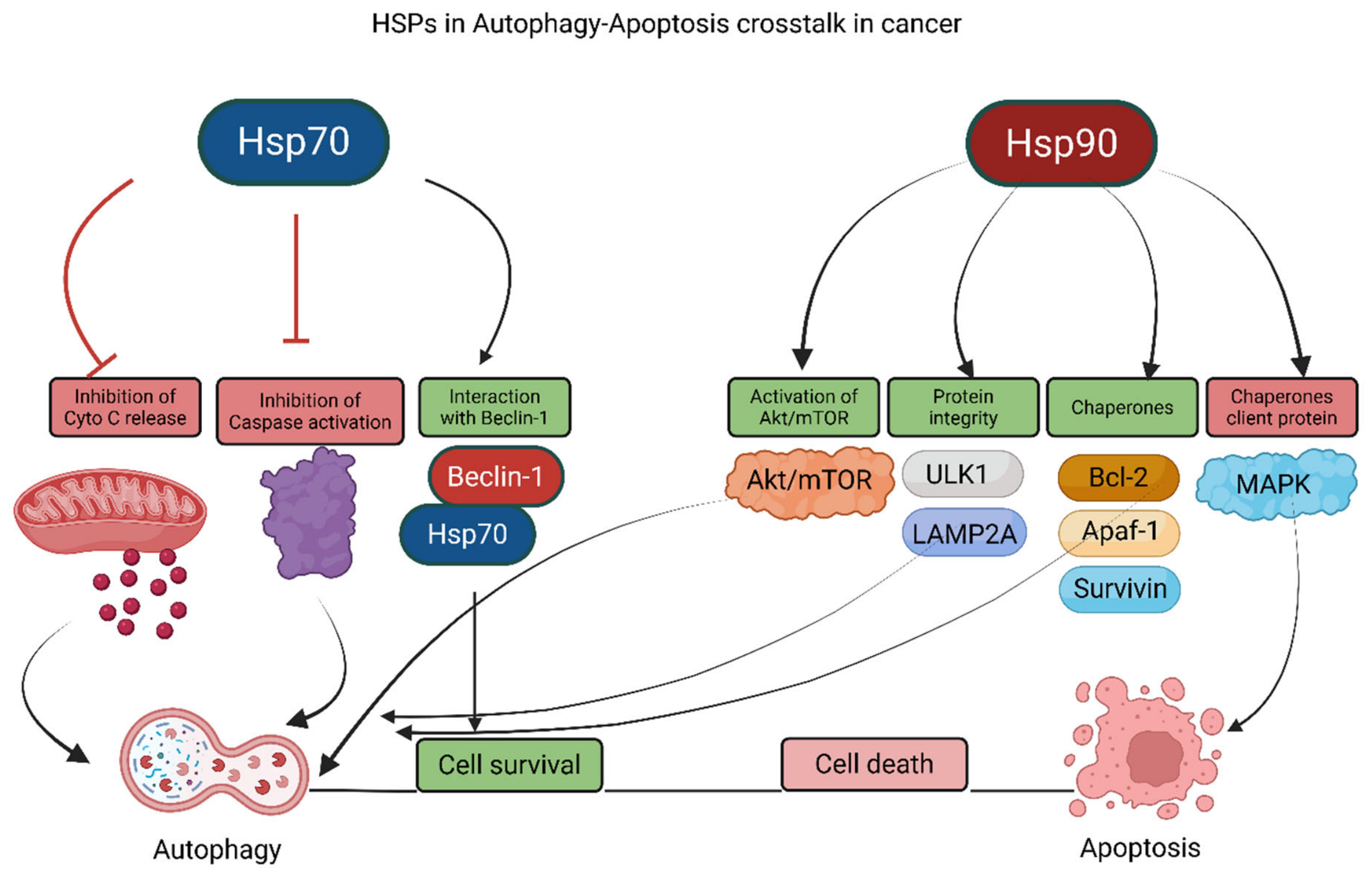
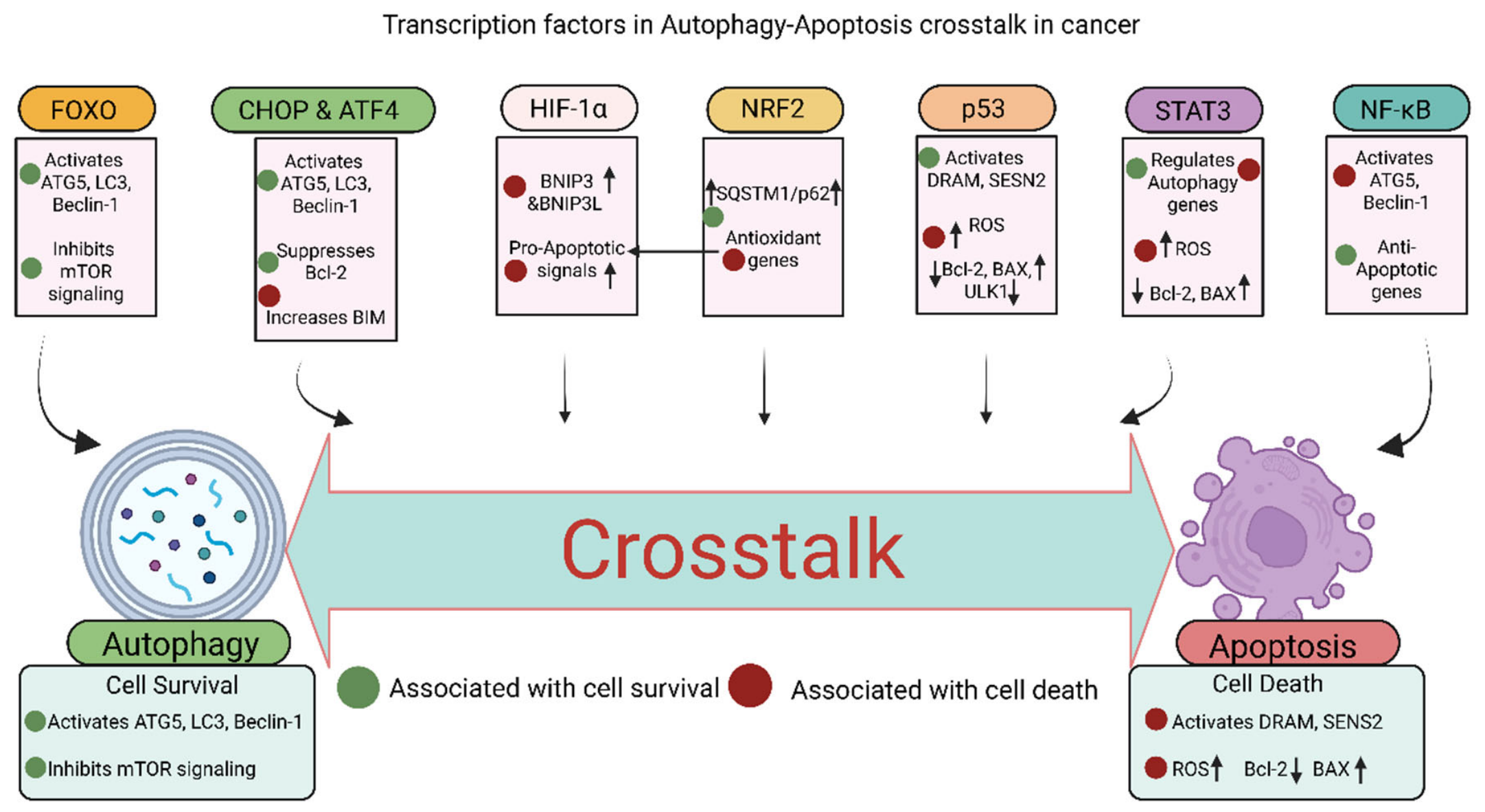



| Kinase | Autophagy Targets | Apoptosis Targets | Cellular Outcome |
|---|---|---|---|
| DAPK | Beclin-1 (Thr119), Bcl-2/Bcl-XL dissociation, Vps34 complex, mTORC1 (via TSC2), cytoskeletal remodeling | p53 (Ser20), ARF, Ca2+ influx (GluN2B), myosin light chain | Context-dependent autophagy or apoptosis; stress adaptation and cell death |
| mTOR (mTORC1/mTORC2) | ULK1/2, Atg13 (by mTORC1); indirect AKT–FOXO regulation (by mTORC2) | Akt, SGK1, PKC activation | mTORC1 suppresses autophagy; mTORC2 supports survival and modulates autophagy |
| AMPK | ULK1, Beclin-1, TSC2, Raptor (mTORC1 inhibition) | p53; Bax; Bcl-2; Caspase-9; Caspase-3; PARP (indirectly regulated via AMPK activation and Akt–mTOR inhibition) | Induction of intrinsic (mitochondrial) apoptosis by increasing Bax/Bcl-2 ratio, activation of caspase cascade (caspase-3 via caspase 9), PARP cleavage, and suppression of cell survival signaling (Akt–mTOR), leading to programmed cell death |
| PI3K/Akt | mTORC1 activation, TSC1/2 inhibition | Inhibition of apoptotic pathways | Promotes growth, proliferation, and survival; suppresses autophagy |
| p38 MAPK | mTORC1 inhibition, ULK1 activation (oxidative stress) | p53; Bax; Bcl-2; Caspase-3 | p38 enhances p53 transcriptional activity, promotes Bax-mediated mitochondrial apoptosis, inhibits anti-apoptotic Bcl-2, and activates caspase-3 to execute apoptosis |
| MEK/ERK | ULK1 (via AMPK), ROS-mediated autophagy | ROS-mediated cell death | Regulates autophagy and stress-induced cell death in a context-dependent manner |
| JNK | Bcl-2 phosphorylation, Beclin-1 release, Vps34, ATG7, LC3, p62 recruitment | ROS-mediated apoptosis (sustained activation) | Balances autophagy and apoptosis under stress conditions |
| Caspase | Type | Target Substrate | Molecular Mechanism/Site | Biological Outcome |
|---|---|---|---|---|
| Caspase-2 | Initiator | Autophagy regulatory pathways (AMPK, mTOR, MAPK) | Modulates stress-responsive signaling pathways | Suppresses basal autophagy; promotes apoptosis under cellular stress |
| Caspase-3 | Executioner | Beclin-1 | Cleavage generates a C-terminal fragment that translocate to mitochondria | Inhibits autophagy (disrupts Beclin-1–Vps34 complex); promotes apoptosis via MOMP and cytochrome c release |
| Caspase-3 | Executioner | ATG4D | Proteolytic cleavage | Generates pro-apoptotic mitochondrial fragment |
| Caspase-3/-6/-8 | Executioner/Initiator | ATG3 | Proteolytic cleavage | Disrupts LC3 conjugation system; inhibits autophagosome formation |
| Caspase-3/-6/-8 | Executioner/Initiator | ATG7 | Proteolytic cleavage | Impairs LC3 lipidation and autophagy progression |
| Caspase-6 | Executioner | p62 (SQSTM1) | Cleavage affecting cargo-binding function | Impairs selective autophagy and cargo recognition |
| Caspase-8 | Initiator | ATG5, ATG12, ATG16L1 | Sequestration at autophagosomal membranes limits caspase-8 activation | Autophagy suppresses apoptosis by inhibiting caspase-8 activation |
| Caspase-10 | Initiator | BCLAF1 | Downregulation via proteolytic regulation | Limits excessive autophagy; maintains survival balance |
| Class | Specific Agent | Structural Origin/Basis | Clinical Status/Application | References |
|---|---|---|---|---|
| Ansamycins (1st Gen) | Geldanamycin (GA) | Benzoquinone ansamycin (natural product) | Discontinued (Hepatotoxicity) | [97,98,99,100,101] |
| Ansamycin Analogs | Tanespimycin (17-AAG) | Semi-synthetic (allyl-amino derivative) | Phase II/III (Hematologic/Breast) | [97,98,99,100,101] |
| Ansamycin Analogs | Alvespimycin (17-DMAG) | Semi-synthetic (water-soluble) | Phase I/II (Solid tumors) | [97,98,99,100,101] |
| Purine Analogs | BIIB021 | Purine scaffold ATP mimic | Phase II (Solid tumors) | [102,103,104,105] |
| Benzamides | Pimitespib (TAS-116) | Selective N-terminal inhibitor | Approved in Japan for gastric cancer | [102,103,104,105] |
| Resorcinols (2nd Gen) | Ganetespib (STA-9090) | Triazolone/Resorcinol derivative | Failed Phase III (NSCLC) | [106,107] |
| Resorcinols | Luminespib (AUY922) | Isoxazole/Resorcinol derivative | Phase II (NSCLC/Breast) | [106,107] |
| Transcription Factor | Regulatory Pathway | Autophagy Targets | Apoptosis Targets | Cellular Outcome |
|---|---|---|---|---|
| ATF4 | PERK/eIF2-a (UPR) | ATG5, ATG12, BECN1, MAP1LC3B | DDIT3 (CHOP), ASNS | Cytoprotection during acute stress; shifts to death if stress is chronic |
| CHOP | ATF4/ATF6 (UPR) | ATG5, ATG7, BECN1 (via BCL2 inhibition), TRB3, GADD34 | BCL2 (repression), BAX, PUMA, NOXA, BIM, ERO1A | Primarily pro-apoptotic; induces cell death under severe ER stress |
| FOXO (1,3,4) | PI3K/Akt/mTOR, AMPK | ATG5, MAP1LC3B, BECN1 | BIM | Promotes survival through nutrient recycling or apoptosis under severe deprivation |
| HIF1-a | Hypoxia (VHL/PHD) | BNIP3, BNIP3L | BCL2 (stabilization), BAX (context-dependent) | Mitophagy-mediated survival in hypoxic cores; metabolic reprogramming |
| NRF2 | p62-KEAP1-NRF2 | SQSTM1 (p62), autophagy-related genes | BCL2, GPX4 | Antioxidant defense and survival; contributes to chemoresistance |
| P53 | DNA Damage, ROS | DRAM, ATGs, SESN1/2 | BAX, PUMA, NOXA, BCL2 (repression) | Tumor suppression; dual role in autophagy based on localization |
| STAT3 | IL-6/JAK, Growth Factors | HIF1A, BNIP3, BECN1 | BCL2, MCL1, BCL-XL | Oncogenic; cytoplasmic pool inhibits autophagy via PKR |
| NF-KB | IKK Complex, UPR | BECN1, SQSTM1 (p62) | BCL2, XIAP, BFL1/A1 | Pro-survival and inflammatory; suppresses apoptosis; regulates p62 |
| Compound | Molecular Target | Effect on Autophagy | Effect on Apoptosis | Cancer Type | Mechanistic Crosstalk | Structure |
|---|---|---|---|---|---|---|
| Curcumin, Berberine | AMPK, PI3K/Akt/mTOR | Induces autophagy | Induces apoptosis | Non-small cell lung carcinoma | Activates AMPK and inhibits PI3K/Akt/mTOR → shifts balance toward apoptosis under metabolic stress |  |
| Gossypol | Bcl-2 family | Modulates autophagy | Induces apoptosis | Prostate cancer, lung cancer, breast cancer | Disrupts Bcl-2 interaction, promotes autophagy-mediated necroptosis, and apoptosis |  |
| Obatoclax | Bcl-2 family | Modulates autophagy | Induces apoptosis | Leukemia, lung cancer, lymphoma | BH3 mimetic, which alters the apoptosis-autophagy balance in the cells | 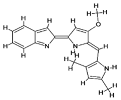 |
| Resveratrol | Inhibits PI3K/Akt signaling | Induces Beclin-1-dependent autophagy | Activates mitochondrial apoptosis (Bax, caspase activation) | Lung cancer, breast cancer, and colon cancer | AMPK activation links autophagy induction with apoptotic signaling | 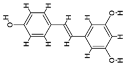 |
| Quercetin | Ca2+ signaling | Modulates autophagy | Enhances apoptosis | Triple negative breast cancer, lung cancer, and colon cancer | Alters Ca2+ homeostasis, which enhances the apoptotic pathway in cancers | 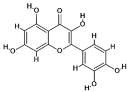 |
| Anthocyanin | Ca2+ signaling | Modulates autophagy | Enhances apoptosis | Breast cancer, colon cancer | Ca2+ signaling is affected, which causes disruption of the survival pathways of cells |  |
| Ginsenoside K | AMPK/mTOR, JNK | Induces autophagy | Induces apoptosis | Non-small cell lung carcinoma | JNK activation with Bcl-2 disruption causes autophagy-mediated apoptosis |  |
| Voacamine | Beclin1 | Induces autophagy-dependent cell death | No known effect on apoptosis | Osteosarcoma | Enhances doxorubicin cytotoxicity via autophagy |  |
| Tetrandrine | JNK, ERK | PKCα, mTOR | Induces apoptosis | Breast, Liver, Leukemia, Colon, Pancreatic cancers | JNK/ERK imbalance is caused, which in turn leads to pro-apoptotic signaling |  |
| Evodiamine | JNK, Ca2+ signaling | Induces autophagy | Induces apoptosis | Glioblastoma | Ca2+ and JNK signaling are combinatorially affected, which then links autophagy with mitochondrial apoptosis |  |
| Baicalein | Inhibits PI3K/Akt/mTOR pathway | Induces autophagy through elevated LC3-II/LC3-I and Beclin-1 levels | Promotes apoptosis via mitochondrial pathway | Non-small cell lung carcinoma | PI3K/Akt inhibition coordinates autophagy activation with apoptotic cell death | 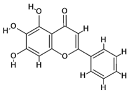 |
| Shikonin | Inhibits PI3K/Akt/mTOR signaling. | Induces autophagy in tumor cells | Activates apoptosis and ferroptosis | Lung Cancer | Suppression of survival signaling promotes both autophagy and apoptosis |  |
| Harmine | Inhibits Akt/mTOR/p70S6K pathway | Induces autophagy | Promotes apoptosis in cancer cells | Gastric cancer | mTOR pathway suppression links autophagy induction with apoptotic signaling |  |
| Piperlongumine | PI3K/Akt/mTOR | Inhibits autophagy | Induces apoptosis | Lung, Breast, Colon cancer | Promotes apoptosis while suppressing autophagy | 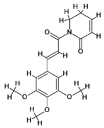 |
| EGCG | LC3, Caspase 3 | Induces autophagy | Induces apoptosis | Hepatocellular carcinoma Breast cancer | Enhances autophagic degradation of tumor proteins |  |
| Honokiol | ROS, ERK | Induces autophagy | Induces apoptosis | Osteosarcoma, Breast cancer | ROS-mediated ERK activation takes place, and this leads to dual pathway activation |  |
| Luteolin | Mitochondrial pathway | Induces protective autophagy | Induces apoptosis | Glioblastoma, Breast cancer | Autophagy is protective; inhibition enhances apoptosis |  |
| Celastrol | PI3K/Akt/mTOR STAT3 | Induces autophagy | Induces apoptosis | Breast, Prostate cancer | mTOR inhibition takes place, and this leads to autophagy activation via ULK1 |  |
| Withaferin A | PI3K/Akt/mTOR Bcl-2 | Induces autophagy | Induces apoptosis | Breast cancer, Lung cancer | Inhibits Bcl-2 & Akt, which in turn promotes apoptosis and autophagy |  |
| Drug | Molecular Target | Effect on Autophagy | Effect on Apoptosis | Cancer Type | Mechanistic Crosstalk | Structure |
|---|---|---|---|---|---|---|
| Sorafenib | Multi-kinase inhibitor | Induces cellular stress pathways, triggering autophagy and apoptosis. | Activates caspase-dependent apoptosis | Hepatocellular carcinoma. Renal cell carcinoma, differentiated thyroid carcinoma. | Autophagy is initially cytoprotective; prolonged stress shifts the balance toward apoptosis. If combined with wogonin, it can reduce autophagy and increase apoptosis. | 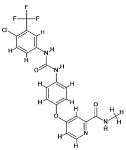 |
| Chloroquine+ Temozolomide | EGFRvIII | Blocks the late stage of autophagy by preventing lysosomal acidification | Enhanced apoptosis due to disruption of autophagy | Glioblastoma | Autophagy blockage leads to increased accumulation of autophagosomes due to the synergy of chemotherapeutic agents; increased apoptosis | Chloroquine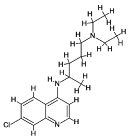 Temozolomide 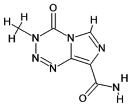 |
| Hydroxychloroquine+ Gemcitabine+ bortezomib | Multiple molecular targets (p62, S-phase arrest and NFκB) | Disrupts autophagic flux | Enhanced apoptosis due to disruption of autophagy | Glioblastoma, pancreatic cancer, multiple myeloma | Disruption of autophagy upregulates apoptosis and sensitizes the tumor to treatment-induced stress. | Hydroxychloroquine Gemcitabine  Bortezomib  |
| Metformin | AMPK activation; mTOR inhibition | Metformin promotes mitochondrial-dependent apoptosis in cancer cells: sensitize cancer cells to apoptosis by activating AMPK and inhibiting mTOR signaling | Enhances apoptotic signaling | Colorectal cancer, breast cancer, pancreatic, prostate cancer, lung cancer | Energy stress-induced autophagy sensitizes cells to apoptosis |  |
| Bortezomib | Proteasome inhibition | Sensitizing cancer cells to TRAIL-mediated apoptosis. | Triggers intrinsic apoptosis | Multiple myeloma | Influence the crosstalk between autophagy and apoptosis by suppressing protective autophagy in lymphoma models and enhancing apoptosis through interactions with mTOR pathway regulators. |  |
| Vorinostat | Histone deacetylase | Inhibits autophagy by acetylating Beclin-1 | Promotes apoptosis and cell cycle arrest | Hepatocellular carcinoma, lung cancer, breast cancer, prostate cancer, glioblastoma | Beclin-1 inhibition leads to autophagy inhibition; upregulation of apoptosis due to Bcl2 activity. |  |
| Everolimus+ Tivozanib+ Chloroquine | DR5, Caspase8 axis | Autophagy is blocked | Apoptosis is induced due to DR5/Fas-associated/Caspase8 axis | Refractory metastatic colorectal cancer | Compensatory survival apoptosis is suppressed; apoptosis is upregulated by caspase 8 activity | Everolimus Tivozanib 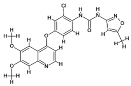 |
| Doxorubicin | DNA, Topo II | Induces protective autophagy | Apoptosis in induced in resistant cancer cells | Breast cancer, leukemia, lymphoma | ROS and DNA damage leads to autophagy induction due to high stress; mitochondrial damage leads to apoptosis via Bax activity | 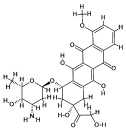 |
| Rapamycin | mTORC1 inhibition | Strong autophagy induction | Increased tumor cell death via apoptosis | Breast Cancer | Synergy with resveratrol linking autophagy induction to apoptosis | 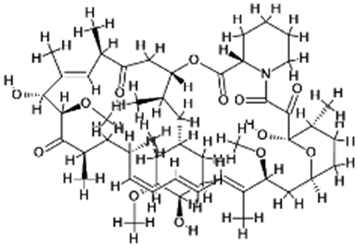 |
| Carfilzomib | Proteasome inhibition | Induces autophagy | Activates apoptotic pathways | Myeloma | Autophagy inhibition potentiates drug-induced apoptosis (1) |  |
| Temsirolimus + Hydroxychloroquine | mTOR inhibition + lysosomal blockade | Induction followed by autophagic flux inhibition | Enhanced apoptotic response | Melanoma | Dual modulation forces shift from protective autophagy to apoptosis (2) | Hydroxychloroquine Temsirolimus  |
| Imatinib | Tyrosine kinase receptor | Induces protective autophagy | Induces apoptosis via the formation of autophagosomes | Chronic myeloid leukemia, Glioma | The drug induces cytotoxicity and apoptosis via the formation of autophagosomes; clearance is blocked and further induces cellular stress. |  |
| GANT61 | Hedgehog signaling pathway | Induces autophagy-dependent cytotoxicity | Induces apoptosis | Hepatocellular carcinoma | Leads to drug-induced autophagy-dependent cytotoxicity, which can be reversed using other drugs like Chloroquine. Hence, making its use context dependent |  |
| Gefitinib | EGFR; inhibits PI3K/AKT/mTOR pathway and ERK pathways | Induces autophagy (early protective response; increases autophagic flux) | Induces apoptosis (enhanced when autophagy is inhibited) | Lung cancer, Breast cancer | Gefitinib suppresses PI3K/AKT/mTOR signaling, induces autophagy and apoptosis; autophagy acts as a survival mechanism; inhibition (e.g., hydroxychloroquine) enhances apoptosis, demonstrates autophagy–apoptosis switch | 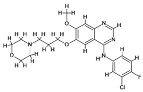 |
| Dasatinib | SRC family kinases; inhibits PI3K/AKT/mTOR pathway | Induces autophagy (upregulates LC3-II, ATG5; downregulates p62) | Strongly induces apoptosis (caspase activation, PARP cleavage, cytochrome c release) | Bladder cancer (wild type & resistant cell lines) | Simultaneously induces autophagy and apoptosis via PI3K/AKT/mTOR suppression; autophagy and apoptosis are co-activated, with apoptosis driven by caspase signaling, coordinated crosstalk rather than purely protective autophagy | 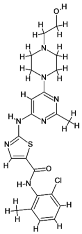 |
Disclaimer/Publisher’s Note: The statements, opinions and data contained in all publications are solely those of the individual author(s) and contributor(s) and not of MDPI and/or the editor(s). MDPI and/or the editor(s) disclaim responsibility for any injury to people or property resulting from any ideas, methods, instructions or products referred to in the content. |
© 2026 by the authors. Licensee MDPI, Basel, Switzerland. This article is an open access article distributed under the terms and conditions of the Creative Commons Attribution (CC BY) license.
Share and Cite
Kakkar, D.; Saxena, S.; Dhawan, U.; Dosi, N.; Khanna, C.; Paul, S. Autophagy–Apoptosis Crosstalk in Cancer: Mechanisms, Signaling Pathways, and Therapeutic Targeting. Cancers 2026, 18, 1564. https://doi.org/10.3390/cancers18101564
Kakkar D, Saxena S, Dhawan U, Dosi N, Khanna C, Paul S. Autophagy–Apoptosis Crosstalk in Cancer: Mechanisms, Signaling Pathways, and Therapeutic Targeting. Cancers. 2026; 18(10):1564. https://doi.org/10.3390/cancers18101564
Chicago/Turabian StyleKakkar, Dia, Saloni Saxena, Utkarshita Dhawan, Naman Dosi, Charvi Khanna, and Souren Paul. 2026. "Autophagy–Apoptosis Crosstalk in Cancer: Mechanisms, Signaling Pathways, and Therapeutic Targeting" Cancers 18, no. 10: 1564. https://doi.org/10.3390/cancers18101564
APA StyleKakkar, D., Saxena, S., Dhawan, U., Dosi, N., Khanna, C., & Paul, S. (2026). Autophagy–Apoptosis Crosstalk in Cancer: Mechanisms, Signaling Pathways, and Therapeutic Targeting. Cancers, 18(10), 1564. https://doi.org/10.3390/cancers18101564