The Urokinase-Type Plasminogen Activator Receptor (uPAR) as a Mediator of Physiological and Pathological Processes: Potential Therapeutic Strategies



1
Department of Human Genetics, McGill University, Montréal, QC H4A 3J1, Canada
2
Department of Medicine, McGill University, Montréal, QC H4A 3J1, Canada
*
Author to whom correspondence should be addressed.
Cancers 2025, 17(20), 3309; https://doi.org/10.3390/cancers17203309
Submission received: 7 September 2025
/
Revised: 6 October 2025
/
Accepted: 9 October 2025
/
Published: 14 October 2025
(This article belongs to the Special Issue Feature Papers in Section "Tumor Microenvironment")
Simple Summary
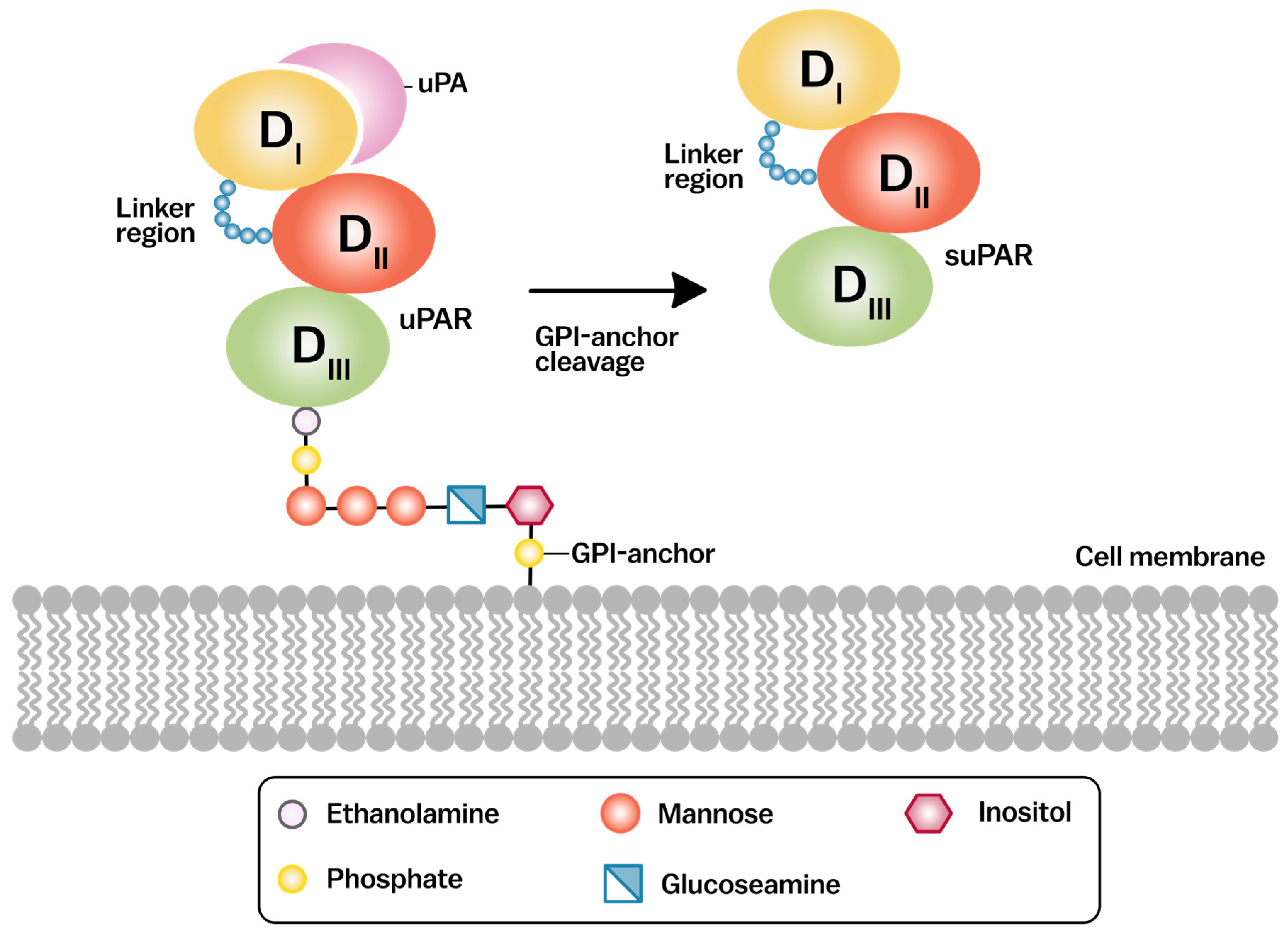
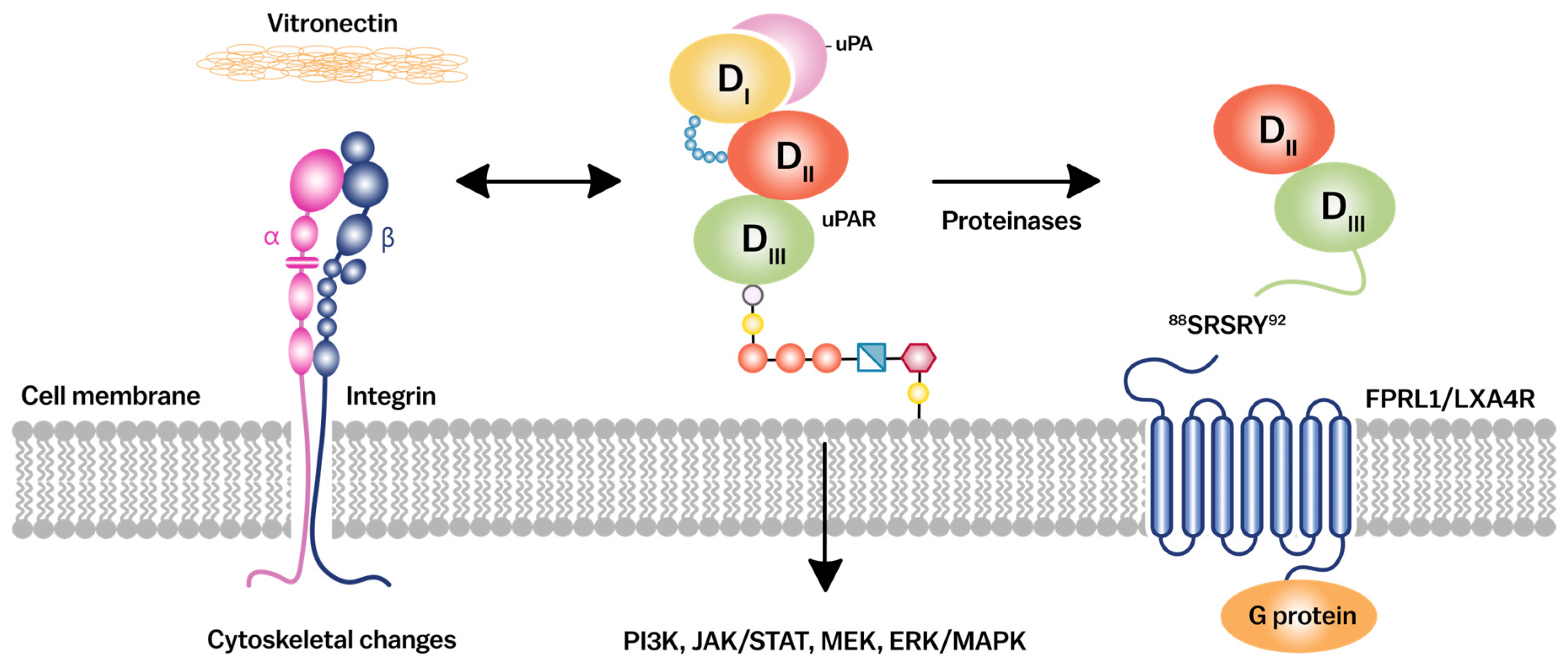
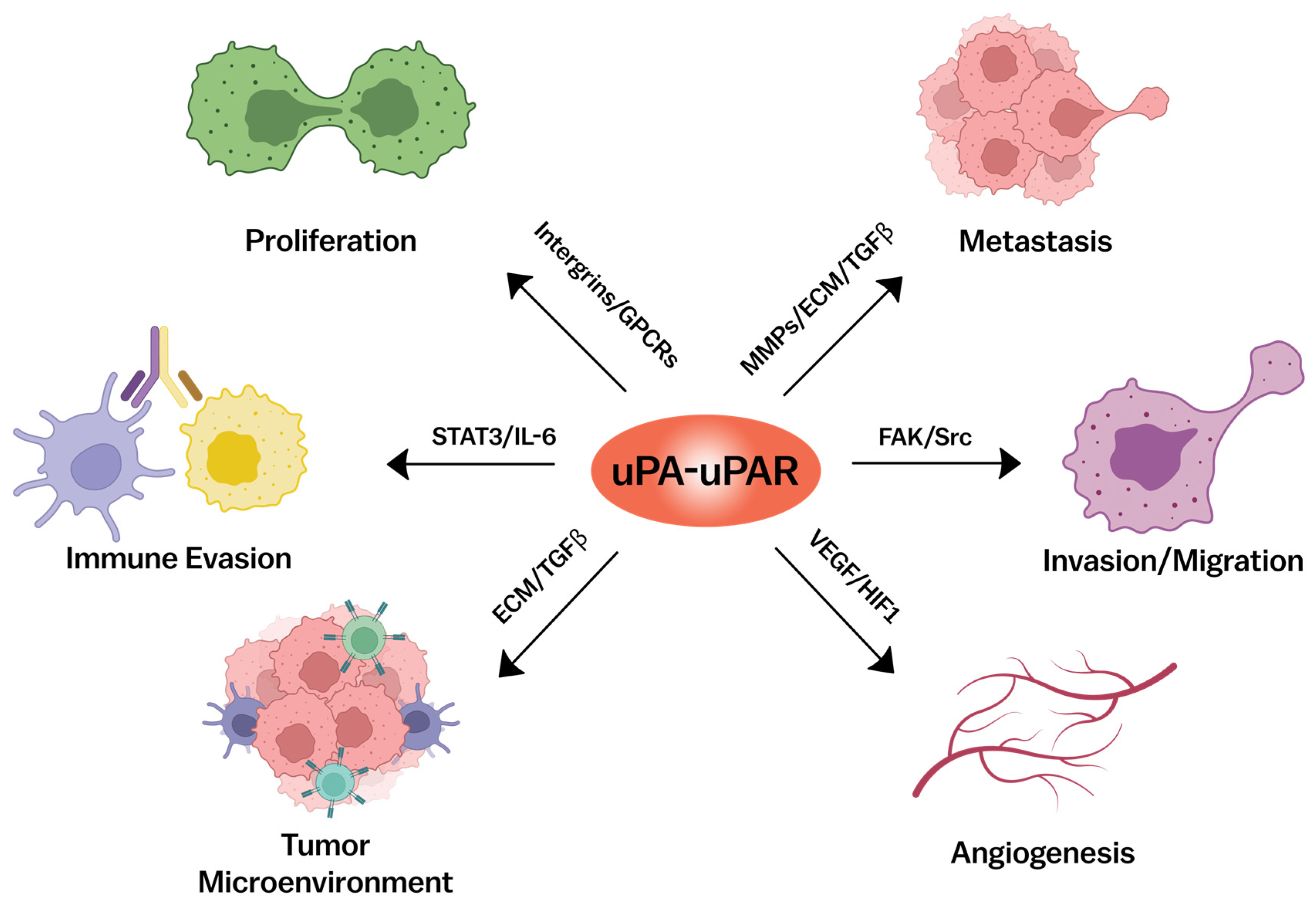
uPAR (PLAUR) is a GPI-anchored receptor that concentrates pericellular proteolysis and couples it to cell migration and invasion via urokinase (uPA), vitronectin, integrins and the epidermal growth factor receptor (EGFR). These complexes activate FAK/Src-ERK and PI3K-AKT signaling, promoting the epithelial-to-mesenchymal transition, angiogenesis, immune modulation and metastatic dissemination. The circulating form, suPAR, is quantified in blood and often tracks disease activity. This review provides a detailed synthesis of uPAR biology across oncology and selected cardiovascular, infectious and neurological settings and evaluates diagnostics (including uPAR-targeted imaging) and therapeutics: uPA–uPAR antagonists (peptides/small molecules) and anti-uPAR antibodies that disrupt uPAR–integrin signaling (e.g., huATN-658) and RNA-based approaches.
Abstract
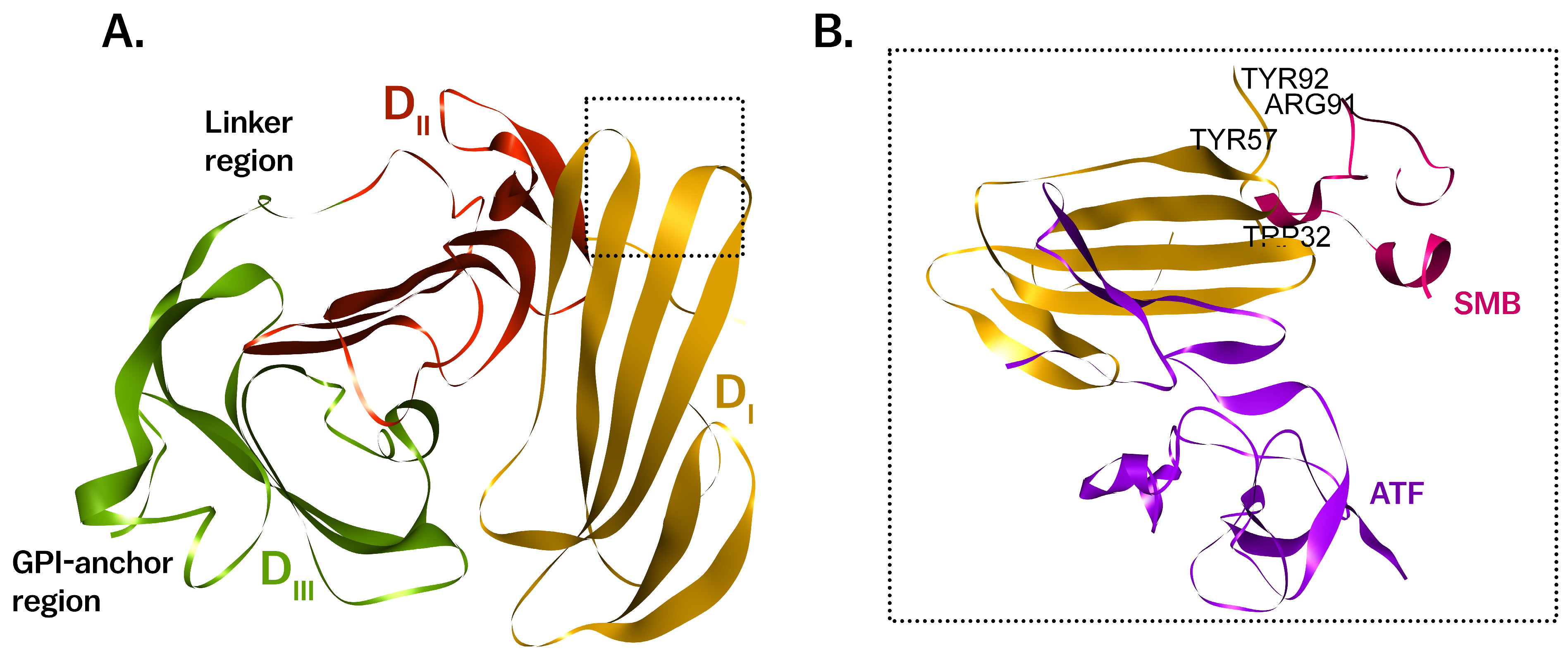
The urokinase-type plasminogen activator receptor (uPAR) plays a pivotal role in regulating extracellular proteolysis, cell migration, immune responses, and tissue remodeling across diverse physiological and pathological contexts. This review provides detailed insights into the structure of uPAR, ligand interactions, and signaling mechanisms, emphasizing its central function in cancer progression, including tumor invasion, metastasis, angiogenesis, and modulation of the tumor microenvironment. We also summarize the involvement of uPAR as a key player in cardiovascular, infectious, and neurological diseases, where it contributes to inflammation, tissue damage, and disease progression. However, translational gaps remain, most notably inconsistent assay harmonization (especially for suPAR), uncertain context-specific cut-offs and patient-selection criteria and limited multicenter validation for uPAR-targeted imaging and therapeutics. This review addresses these gaps by synthesizing cross-disease evidence to clarify clinical use cases and outline practical selection frameworks. Furthermore, we discuss the clinical potential of uPAR as a diagnostic and prognostic biomarker in diverse disease contexts, along with recent advances in therapeutic strategies targeting uPAR.
Keywords:
urokinase; receptor; cancer; metastasis; cell signaling