Prognostic Factors in Therapy Regimes of Breast Cancer Patients with Brain Metastases: A Retrospective Monocentric Analysis
 , , , ,
Simple Summary
Abstract
1. Introduction
2. Materials and Methods
3. Results
3.1. Patients’ Characteristics
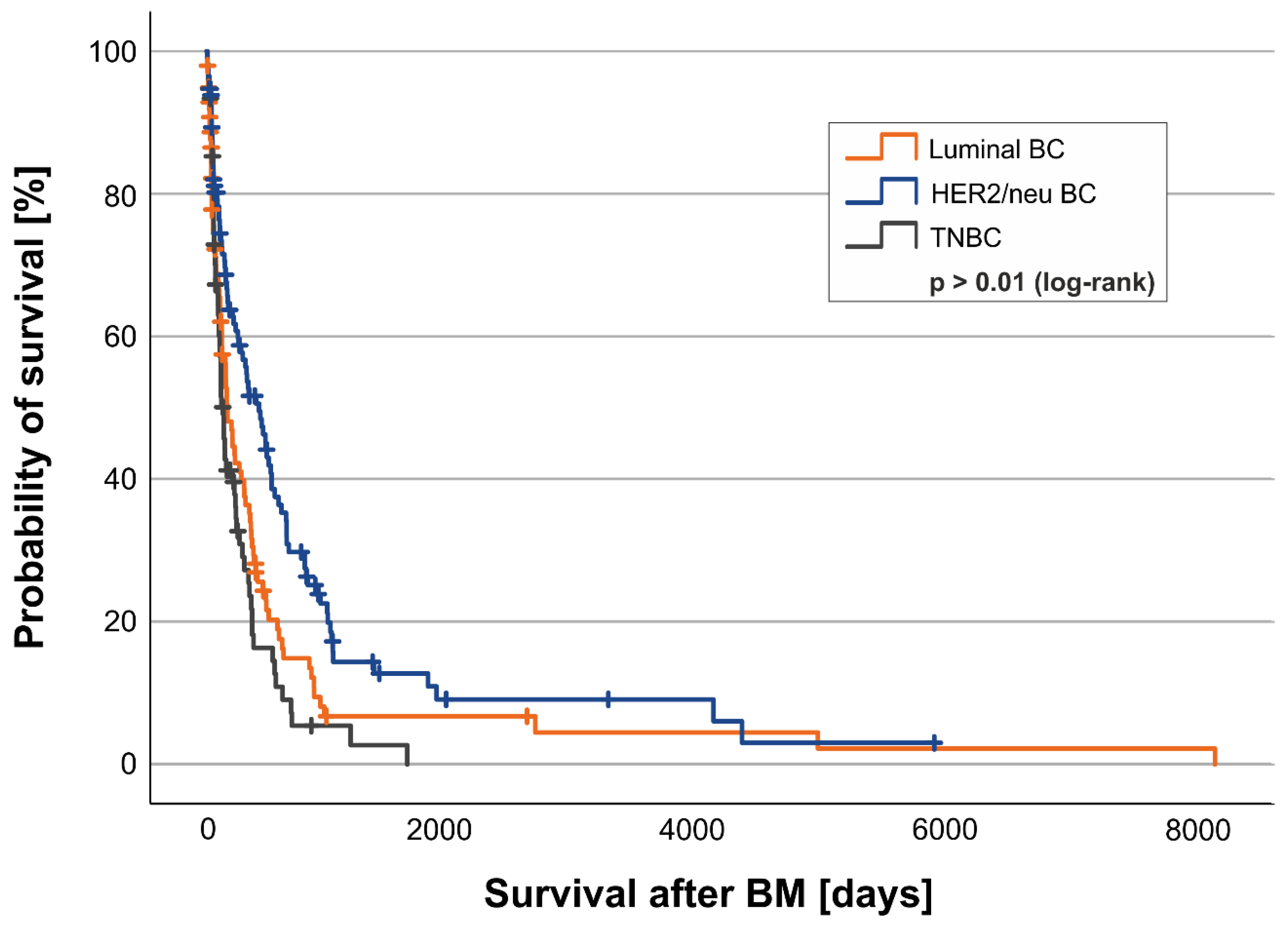
3.2. Survival Analyses Depending on the Receptor State
3.3. Negative Prognostic Factors
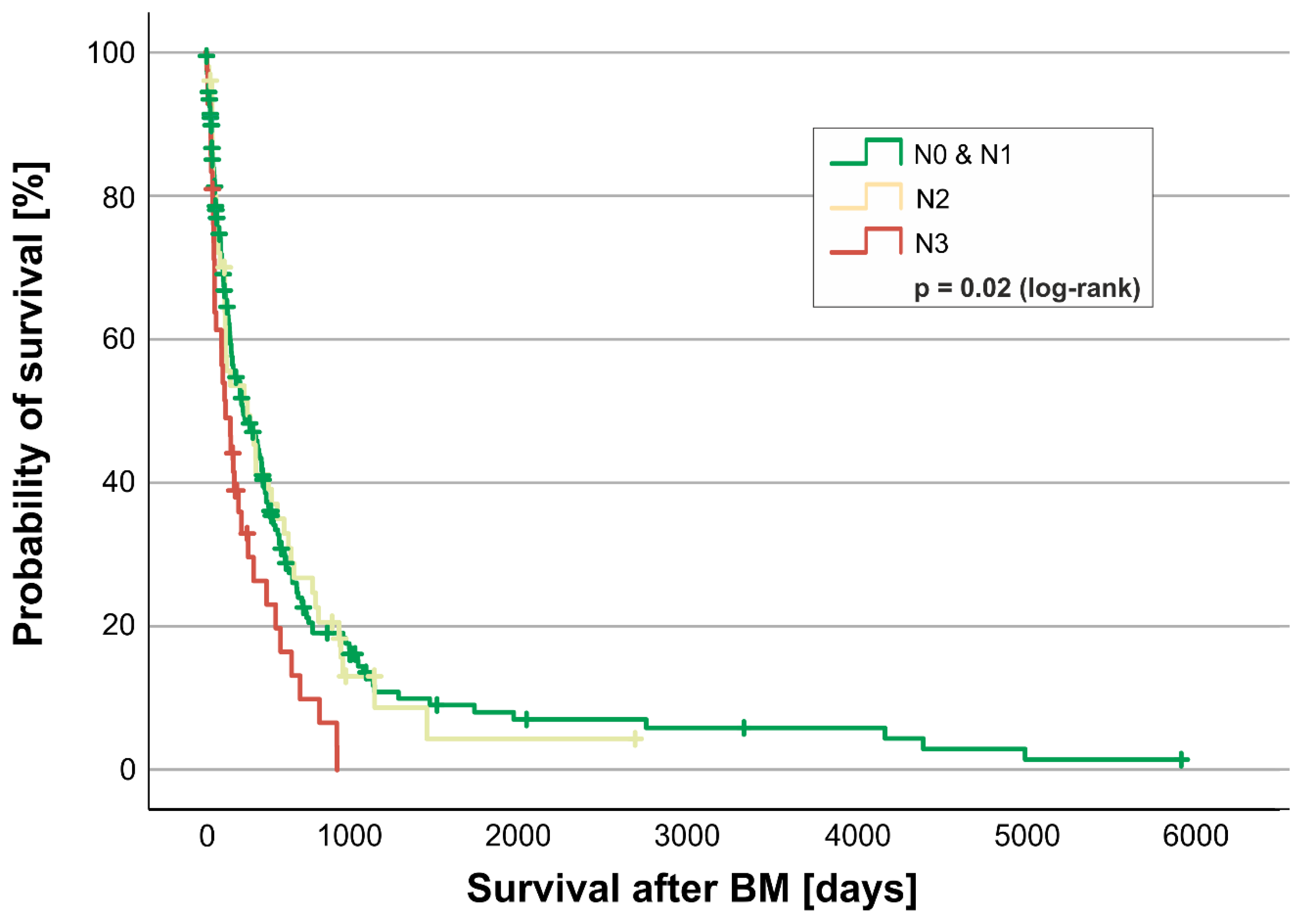
3.3.1. Involvement of Regional Lymph Nodes at Primary Diagnosis of BC and Subtype of TNBC
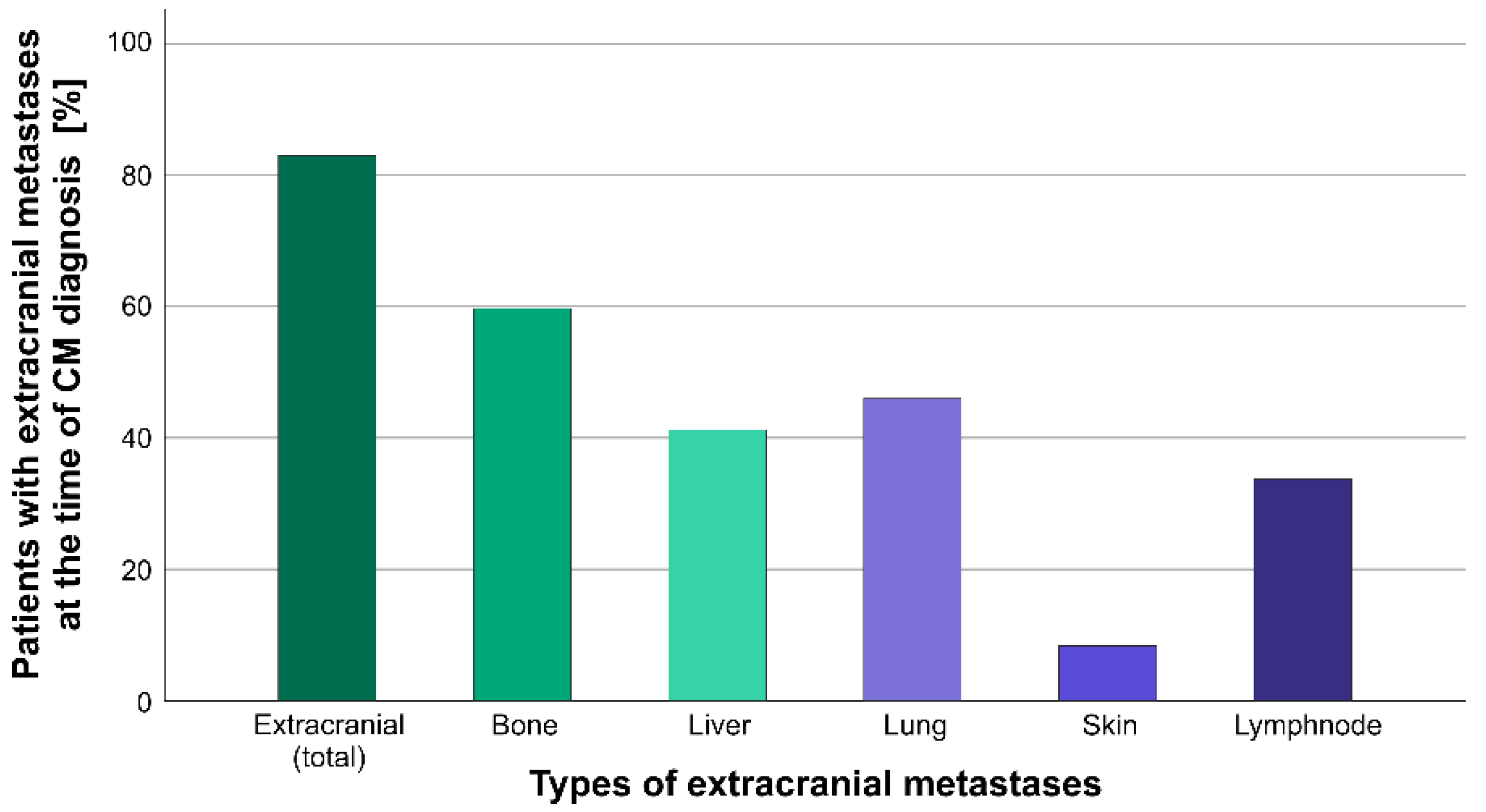
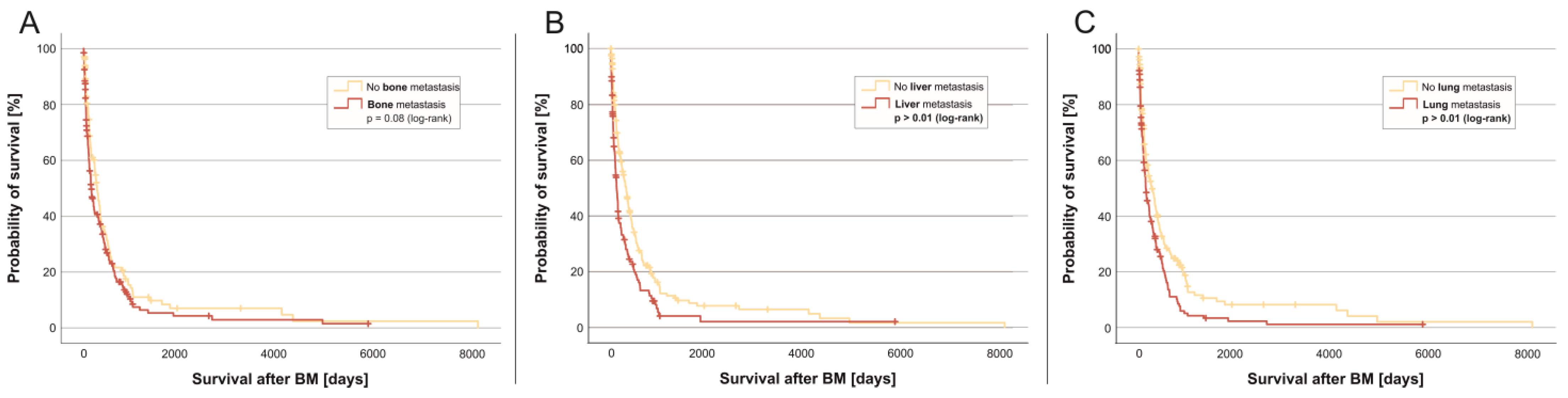
3.3.2. Extracranial Metastasis at the Time of Brain Metastasis Diagnosis
3.4. Positive Prognostic Factors
3.4.1. Immunohistochemical Subtype of HER2/Neu-Positive BMBC
3.4.2. Singular Brain Metastasis
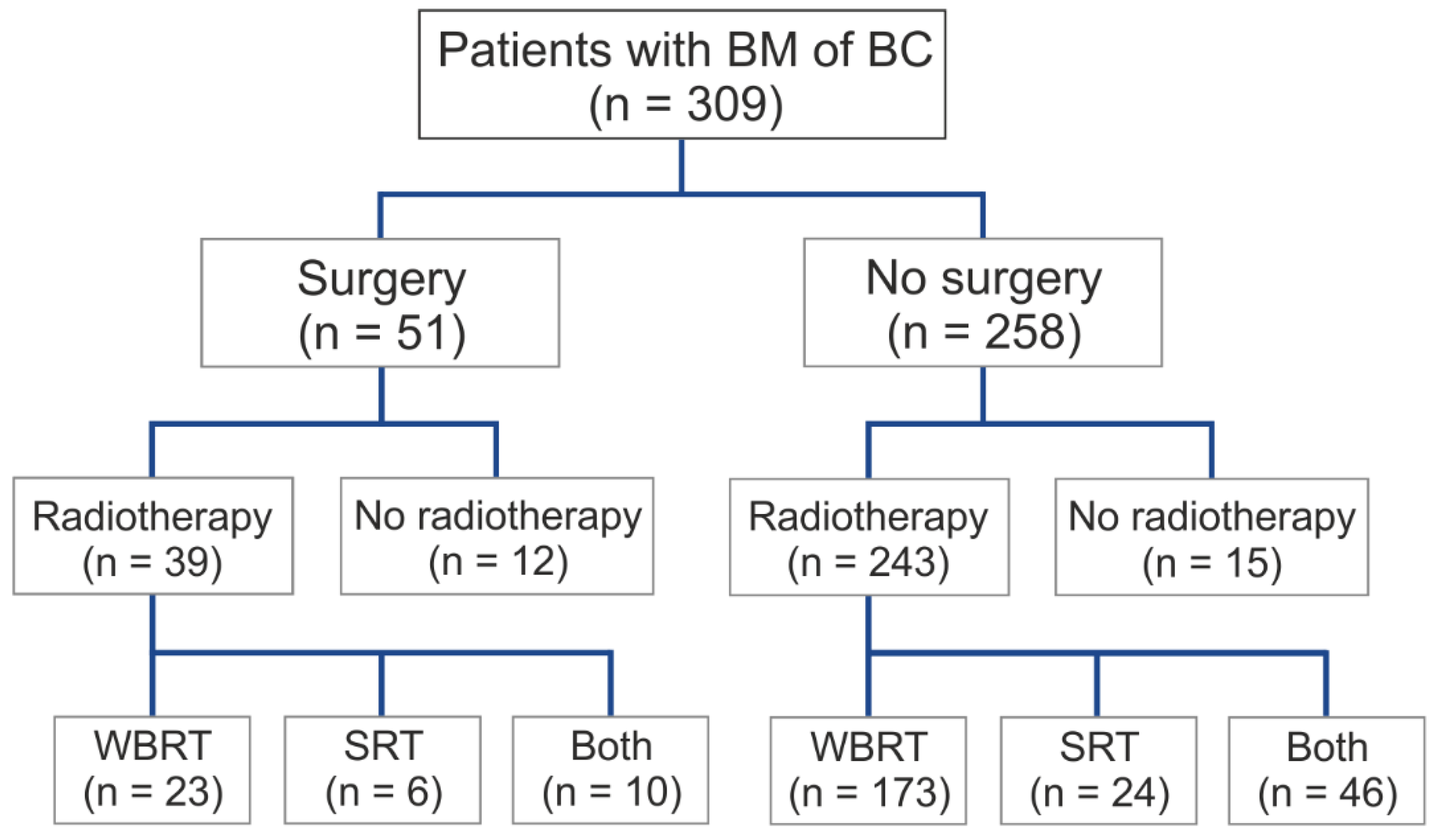
3.4.3. Surgery of Brain Metastasis
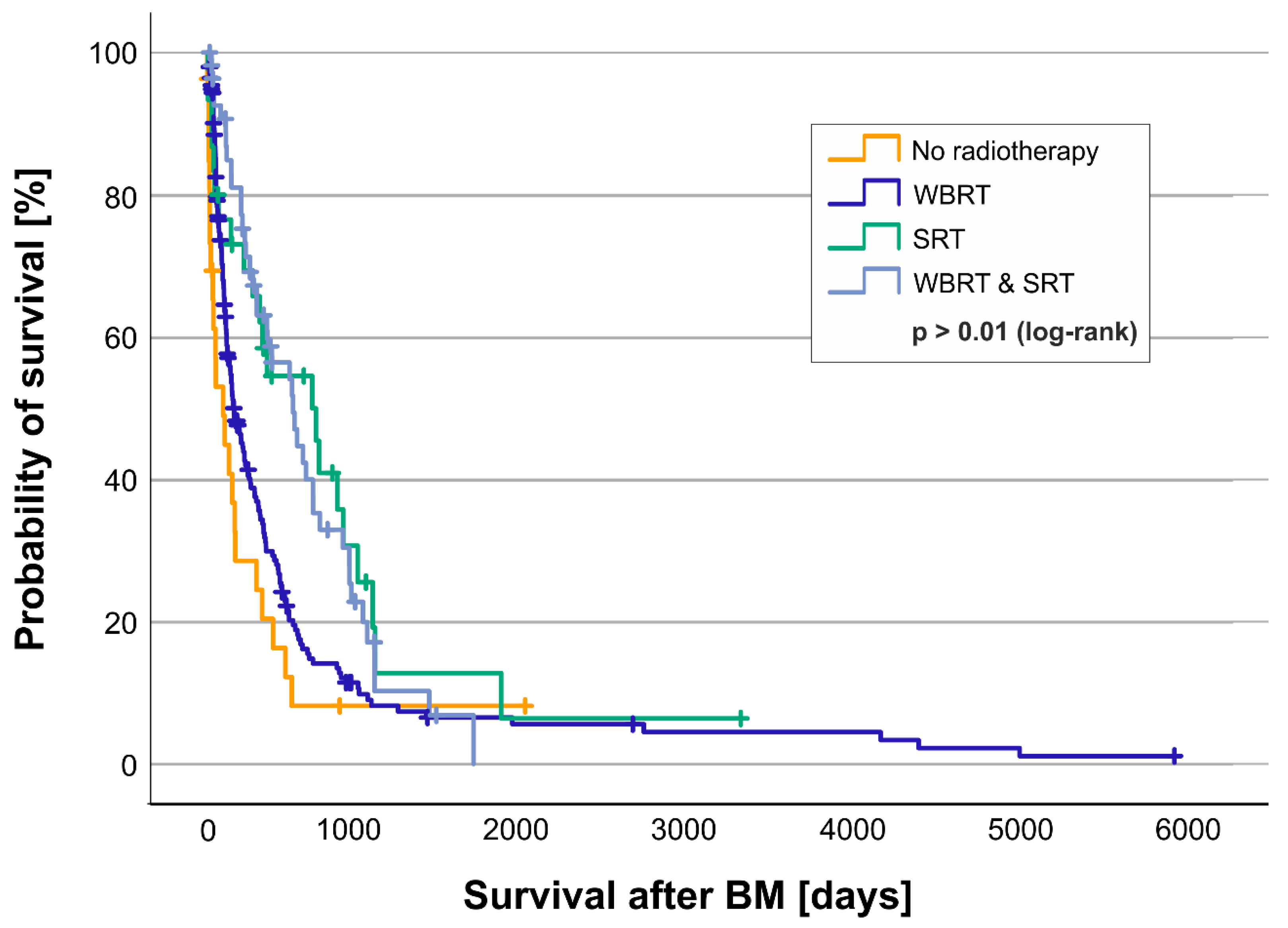
3.4.4. Radiotherapy of Brain Metastasis
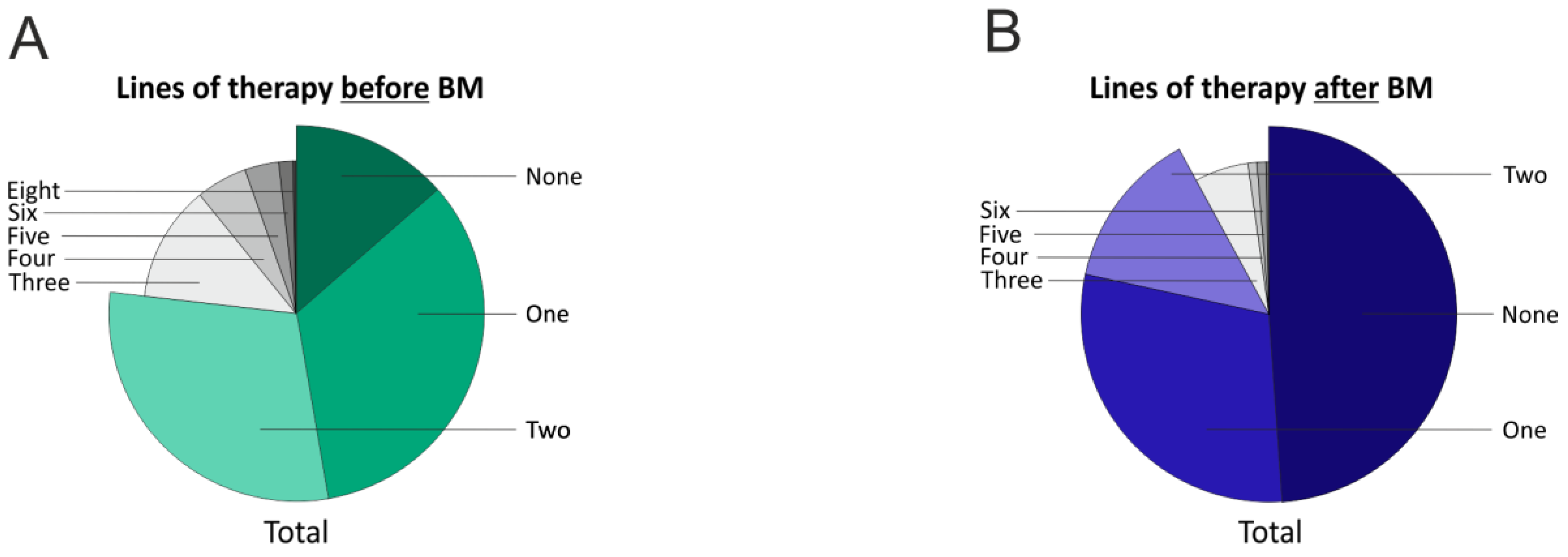
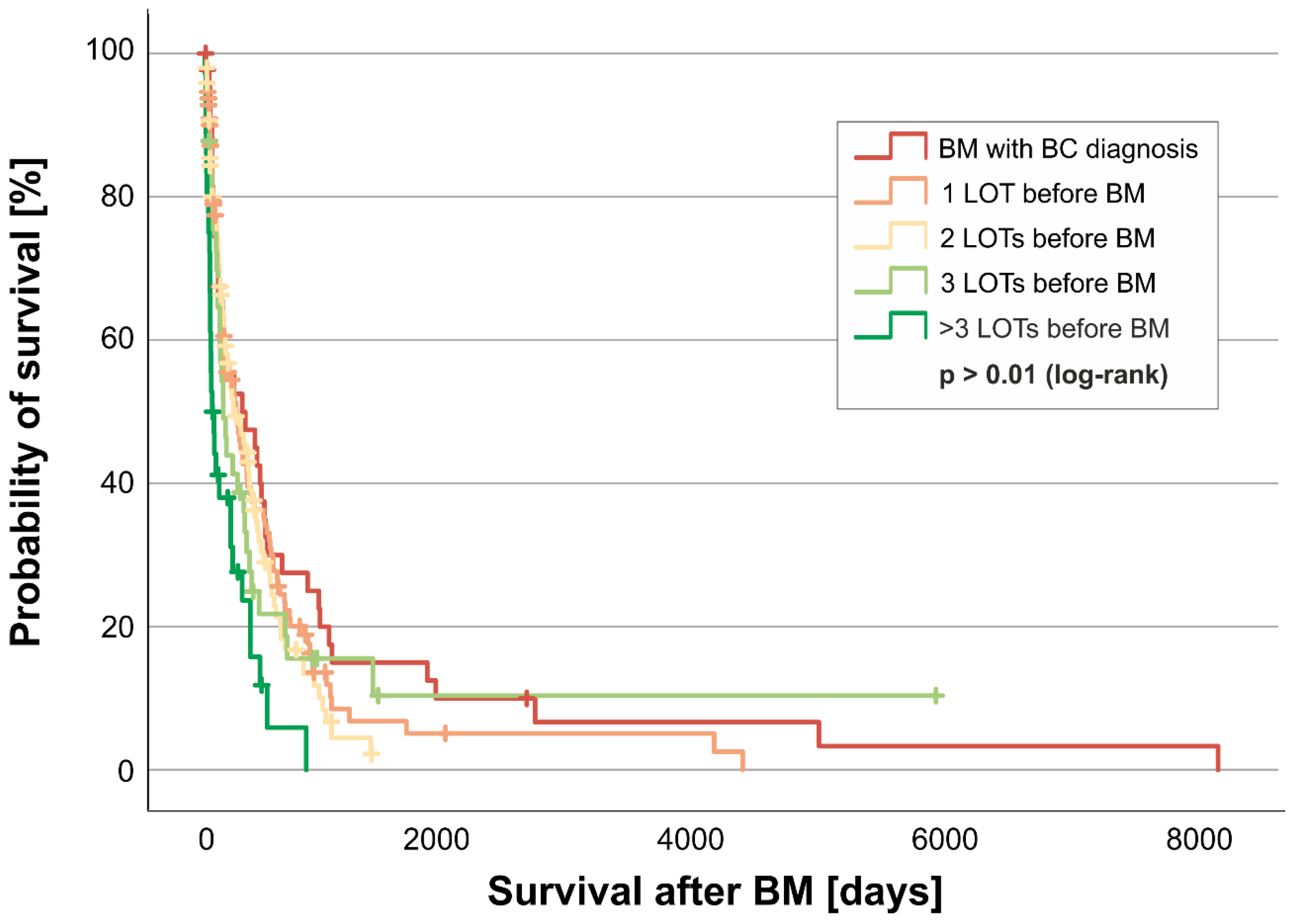
3.4.5. Lines of Therapy Regimens Before the Diagnosis of Brain Metastasis
3.4.6. Multivariable Survival Analysis
4. Discussion
5. Conclusions
Author Contributions
Funding
Institutional Review Board Statement
Informed Consent Statement
Data Availability Statement
Conflicts of Interest
References
- Taylor, C.; McGale, P.; Probert, J.; Broggio, J.; Charman, J.; Darby, S.C.; Kerr, A.J.; Whelan, T.; Cutter, D.J.; Mannu, G.; et al. Breast cancer mortality in 500 000 women with early invasive breast cancer in England, 1993–2015: Population based observational cohort study. BMJ 2023, 381, e074684. [Google Scholar] [CrossRef] [Scilit]
- Rick, J.W.; Shahin, M.; Chandra, A.; Ore, C.D.; Yue, J.K.; Nguyen, A.; Yagnik, G.; Sagar, S.; Arfaie, S.; Aghi, M.K. Systemic therapy for brain metastases. Crit. Rev. Oncol. Hematol. 2019, 142, 44–50. [Google Scholar] [CrossRef] [Scilit] [PubMed]
- Duchnowska, R.; Jassem, J.; Goswami, C.P.; Dundar, M.; Gökmen-Polar, Y.; Li, L.; Woditschka, S.; Biernat, W.; Sosińska-Mielcarek, K.; Czartoryska-Arłukowicz, B.; et al. Predicting early brain metastases based on clinicopathological factors and gene expression analysis in advanced HER2-positive breast cancer patients. J. Neuro-Oncol. 2015, 122, 205–216. [Google Scholar] [CrossRef] [Scilit] [PubMed]
- Kim, Y.-J.; Kim, J.-S.; Kim, I.A. Molecular subtype predicts incidence and prognosis of brain metastasis from breast cancer in SEER database. J. Cancer Res. Clin. Oncol. 2018, 144, 1803–1816. [Google Scholar] [CrossRef] [Scilit]
- Le Rhun, E.; Devos, P.; Weller, J.; Seystahl, K.; Mo, F.; Compter, A.; Berghoff, A.S.; Jongen, J.L.M.; Wolpert, F.; Rudà, R.; et al. Prognostic validation and clinical implications of the EANO ESMO classification of leptomeningeal metastasis from solid tumors. Neuro-Oncol. 2021, 23, 1100–1112. [Google Scholar] [CrossRef] [Scilit] [PubMed]
- Bertolini, F.; Spallanzani, A.; Fontana, A.; Depenni, R.; Luppi, G. Brain metastases: An overview. CNS Oncol. 2015, 4, 37–46. [Google Scholar] [CrossRef] [Scilit] [PubMed]
- Kuksis, M.; Gao, Y.; Tran, W.; Hoey, C.; Kiss, A.; Komorowski, A.S.; Dhaliwal, A.J.; Sahgal, A.; Das, S.; Chan, K.K.; et al. The incidence of brain metastases among patients with metastatic breast cancer: A systematic review and meta-analysis. Neuro-Oncol. 2021, 23, 894–904. [Google Scholar] [CrossRef] [Scilit]
- Witzel, I.; Laakmann, E.; Weide, R.; Neunhöffer, T.; Park-Simon, T.-J.; Schmidt, M.; Fasching, P.; Hesse, T.; Polasik, A.; Mohrmann, S.; et al. Treatment and outcomes of patients in the Brain Metastases in Breast Cancer Network Registry. Eur. J. Cancer 2018, 102, 1–9. [Google Scholar] [CrossRef] [Scilit] [PubMed]
- Witzel, I.; Oliveira-Ferrer, L.; Pantel, K.; Müller, V.; Wikman, H. Breast cancer brain metastases: Biology and new clinical perspectives. Breast Cancer Res. 2016, 18, 8. [Google Scholar] [CrossRef] [Scilit]
- Curtaz, C.J.; Kiesel, L.; Meybohm, P.; Wöckel, A.; Burek, M. Anti-Hormonal Therapy in Breast Cancer and Its Effect on the Blood-Brain Barrier. Cancers 2022, 14, 5132. [Google Scholar] [CrossRef] [Scilit] [PubMed]
- Corti, C.; Antonarelli, G.; Criscitiello, C.; Lin, N.U.; Carey, L.A.; Cortés, J.; Poortmans, P.; Curigliano, G. Targeting brain metastases in breast cancer. Cancer Treat. Rev. 2022, 103, 102324. [Google Scholar] [CrossRef] [Scilit] [PubMed]
- Steeg, P.S. The blood–tumour barrier in cancer biology and therapy. Nat. Rev. Clin. Oncol. 2021, 18, 696–714. [Google Scholar] [CrossRef] [Scilit]
- Hulsbergen, A.F.C.; Claes, A.; Kavouridis, V.K.; Ansaripour, A.; Nogarede, C.; Hughes, M.E.; Smith, T.R.; Brastianos, P.K.; Verhoeff, J.J.C.; Lin, N.U.; et al. Subtype switching in breast cancer brain metastases: A multicenter analysis. Neuro Oncol. 2020, 22, 1173–1181. [Google Scholar] [CrossRef] [Scilit] [PubMed]
- Morgan, A.J.; Giannoudis, A.; Palmieri, C. The genomic landscape of breast cancer brain metastases: A systematic review. Lancet Oncol. 2021, 22, e7–e17. [Google Scholar] [CrossRef] [Scilit]
- Clayton, A.J.; Danson, S.; Jolly, S.; Ryder, W.D.J.; Burt, P.A.; Stewart, A.L.; Wilkinson, P.M.; Welch, R.S.; Magee, B.; Wilson, G.; et al. Incidence of cerebral metastases in patients treated with trastuzumab for metastatic breast cancer. Br. J. Cancer 2004, 91, 639–643. [Google Scholar] [CrossRef] [Scilit] [PubMed]
- Garcia-Alvarez, A.; Papakonstantinou, A.; Oliveira, M. Brain Metastases in HER2-Positive Breast Cancer: Current and Novel Treatment Strategies. Cancers 2021, 13, 2927. [Google Scholar] [CrossRef] [Scilit] [PubMed]
- Camidge, D.R.; Lee, E.Q.; Lin, N.U.; Margolin, K.; Ahluwalia, M.S.; Chang, S.M.; Dancey, J.; de Vries, E.G.E.; Harris, G.J.; Hodi, F.S.; et al. Clinical trial design for systemic agents in patients with brain metastases from solid tumours: A guideline by the Response Assessment in Neuro-Oncology Brain Metastases working group. Lancet Oncol. 2018, 19, e20–e32. [Google Scholar] [CrossRef] [Scilit] [PubMed]
- Witzel, I.; Oliveira-Ferrer, L.; Müller, V. Brain Metastasis in Breast Cancer Patients—Need for Improvement. Cancers 2020, 12, 3190. [Google Scholar] [CrossRef] [Scilit]
- Upadhyay, R.K. Drug Delivery Systems, CNS protection, and the blood brain barrier. BioMed Res. Int. 2014, 2014, 869269. [Google Scholar] [CrossRef] [Scilit] [PubMed]
- Bernatz, S.; Ilina, E.I.; Devraj, K.; Harter, P.N.; Mueller, K.; Kleber, S.; Braun, Y.; Penski, C.; Renner, C.; Halder, R.; et al. Impact of Docetaxel on blood-brain barrier function and formation of breast cancer brain metastases. J. Exp. Clin. Cancer Res. 2019, 38, 434. [Google Scholar] [CrossRef] [Scilit]
- Niwińska, A.; Tacikowska, M.; Murawska, M. The effect of early detection of occult brain metastases in HER2-positive breast cancer patients on survival and cause of death. Int. J. Radiat. Oncol. 2010, 77, 1134–1139. [Google Scholar] [CrossRef] [Scilit]
- Laakmann, E.; Witzel, I.; Scriba, V.; Grzyska, U.; Zu Eulenburg, C.; Burchardi, N.; Hesse, T.; Würschmidt, F.; Fehm, T.; Möbus, V.; et al. Radiological Patterns of Brain Metastases in Breast Cancer Patients: A Subproject of the German Brain Metastases in Breast Cancer (BMBC) Registry. Int. J. Mol. Sci. 2016, 17, 1615. [Google Scholar] [CrossRef] [Scilit] [PubMed]
- Cardoso, F.; Paluch-Shimon, S.; Senkus, E.; Curigliano, G.; Aapro, M.S.; André, F.; Barrios, C.H.; Bergh, J.; Bhattacharyya, G.S.; Biganzoli, L.; et al. 5th ESO-ESMO international consensus guidelines for advanced breast cancer (ABC 5). Ann. Oncol. 2020, 31, 1623–1649. [Google Scholar] [CrossRef] [Scilit] [PubMed]
- Soffietti, R.; Abacioglu, U.; Baumert, B.; Combs, S.E.; Kinhult, S.; Kros, J.M.; Marosi, C.; Metellus, P.; Radbruch, A.; Freixa, S.S.V.; et al. Diagnosis and treatment of brain metastases from solid tumors: Guidelines from the European Association of Neuro-Oncology (EANO). Neuro-Oncol. 2017, 19, 162–174. [Google Scholar] [CrossRef] [Scilit] [PubMed]
- Le Rhun, E.; Guckenberger, M.; Smits, M.; Dummer, R.; Bachelot, T.; Sahm, F.; Galldiks, N.; de Azambuja, E.; Berghoff, A.; Metellus, P.; et al. EANO–ESMO Clinical Practice Guidelines for diagnosis, treatment and follow-up of patients with brain metastasis from solid tumours. Ann. Oncol. 2021, 32, 1332–1347. [Google Scholar] [CrossRef] [Scilit] [PubMed]
- Werter, I.M.; Remmelzwaal, S.; Burchell, G.L.; de Gruijl, T.D.; Konings, I.R.; van der Vliet, H.J.; Menke-van der Houven van Oordt, C.W. Systemic Therapy for Patients with HER2-Positive Breast Cancer and Brain Metastases: A Systematic Review and Meta-Analysis. Cancers 2022, 14, 5612. [Google Scholar] [CrossRef] [Scilit] [PubMed]
- Quigley, M.R.; Fukui, O.; Chew, B.; Bhatia, S.; Karlovits, S. The shifting landscape of metastatic breast cancer to the CNS. Neurosurg. Rev. 2013, 36, 377–382. [Google Scholar] [CrossRef] [Scilit] [PubMed]
- Le Rhun, E.; Taillibert, S.; Chamberlain, M.C. Neoplastic Meningitis Due to Lung, Breast, and Melanoma Metastases. Cancer Control. 2017, 24, 22–32. [Google Scholar] [CrossRef] [Scilit] [PubMed]
- Curtaz, C.J.; Wucherpfennig, S.; Al-Masnaea, E.; Herbert, S.-L.; Wöckel, A.; Meybohm, P.; Burek, M. High-throughput drug screening to investigate blood-brain barrier permeability in vitro with a focus on breast cancer chemotherapeutic agents. Front. Drug Deliv. 2024, 4, 1331126. [Google Scholar] [CrossRef] [Scilit]
- Riecke, K.; Müller, V.; Weide, R.; Schmidt, M.; Park-Simon, T.-W.; Möbus, V.; Mundhenke, C.; Polasik, A.; Lübbe, K.; Hesse, T.; et al. Predicting Prognosis of Breast Cancer Patients with Brain Metastases in the BMBC Registry—Comparison of Three Different GPA Prognostic Scores. Cancers 2021, 13, 844. [Google Scholar] [CrossRef] [Scilit]
- Thulin, A.; Rönnerman, E.; Zhang, C.; De Lara, S.; Chamalidou, C.; Schoenfeldt, A.; Andersson, C.; Kovács, A.; Enlund, F.; Linderholm, B. Clinical outcome of patients with brain metastases from breast cancer—A population based study over 21 years. Breast 2020, 50, 113–124. [Google Scholar] [CrossRef] [Scilit]
- Murad, K.M.; Muhammad, H.A.; Muhammad, H.A.; Arif, S.O.; Mohammed, S.A.; Mohammed, K.A.; Ali, J.S.; Muhsin, B.M.; Saeed, N.O.; Majeed, S.S.; et al. Brain Metastasis from Breast Cancer: Risk factors and radi-otherapy perspective from a tertiary Middle Eastern facility. Gulf. J. Oncolog. 2021, 1, 36–41. [Google Scholar]
- Shen, Q.; Sahin, A.A.; Hess, K.R.; Suki, D.; Aldape, K.D.; Sawaya, R.; Ibrahim, N.K. Breast cancer with brain metastases: Clinicopathologic features, survival, and paired biomarker analysis. Oncologist 2015, 20, 466–473. [Google Scholar] [CrossRef] [Scilit]
- Dogan, I.; Kizildag, I.; Özkurt, S.; Ibis, K.; Vatansever, S.; Saip, P.; Aydiner, A. Outcomes and Prognostic Factors in HER2-Positive Metastatic Breast Cancer Patients Who Had Developed Brain Metastasis in the Treatment Process. Oncology 2023, 101, 262–269. [Google Scholar] [CrossRef] [Scilit]
- Müller, V.; Bachelot, T.; Curigliano, G.; de Azambuja, E.; Furtner, J.; Gempt, J.; Jereczek-Fossa, B.A.; Jerzak, K.J.; Le Rhun, E.; Palmieri, C.; et al. Expert consensus on the prevention of brain metastases in patients with HER2-positive breast cancer. Cancer Treat. Rev. 2024, 132, 102860. [Google Scholar] [CrossRef] [Scilit] [PubMed]
- Thill, M.; Lüftner, D.; Kolberg-Liedtke, C.; Albert, U.-S.; Banys-Paluchowski, M.; Bauerfeind, I.; Blohmer, J.-U.; Budach, W.; Dall, P.; Fallenberg, E.M.; et al. AGO Recommendations for the Diagnosis and Treatment of Patients with Locally Advanced and Metastatic Breast Cancer: Update 2022. Breast Care 2022, 17, 421–429. [Google Scholar] [CrossRef] [Scilit]
- Thill, M.; Kolberg-Liedtke, C.; Albert, U.-S.; Banys-Paluchowski, M.; Bauerfeind, I.; Blohmer, J.-U.; Budach, W.; Dall, P.; Ditsch, N.; Fallenberg, E.M.; et al. AGO Recommendations for the Diagnosis and Treatment of Patients with Locally Advanced and Metastatic Breast Cancer: Update 2023. Breast Care 2023, 18, 306–315. [Google Scholar] [CrossRef] [Scilit]
- Harbeck, N.; Ciruelos, E.; Jerusalem, G.; Müller, V.; Niikura, N.; Viale, G.; Bartsch, R.; Kurzeder, C.; Higgins, M.J.; Connolly, R.M.; et al. Trastuzumab deruxtecan in HER2-positive advanced breast cancer with or without brain metastases: A phase 3b/4 trial. Nat. Med. 2024, 30, 3717–3727. [Google Scholar] [CrossRef] [Scilit] [PubMed]
- Lin, N.U.; Murthy, R.K.; Abramson, V.; Anders, C.; Bachelot, T.; Bedard, P.L.; Borges, V.; Cameron, D.; Carey, L.A.; Chien, A.J.; et al. Tucatinib vs Placebo, Both in Combination With Trastuzumab and Capecitabine, for Previously Treated ERBB2 (HER2)-Positive Metastatic Breast Cancer in Patients With Brain Metastases: Updated Exploratory Analysis of the HER2CLIMB Randomized Clinical Trial. JAMA Oncol. 2023, 9, 197–205. [Google Scholar] [CrossRef] [Scilit]
- Thill, M.; Janni, W.; Albert, U.-S.; Banys-Paluchowski, M.; Bauerfeind, I.; Blohmer, J.; Budach, W.; Dall, P.; Ditsch, N.; Fallenberg, E.M.; et al. Arbeitsgemeinschaft Gynäkologische Onkologie Recommendations for the Diagnosis and Treatment of Patients with Locally Advanced and Metastatic Breast Cancer: Update 2024. Breast Care 2024, 19, 183–191. [Google Scholar] [CrossRef] [Scilit] [PubMed]
- Vogelbaum, M.A.; Brown, P.D.; Messersmith, H.; Brastianos, P.K.; Burri, S.; Cahill, D.; Dunn, I.F.; Gaspar, L.E.; Gatson, N.T.N.; Gondi, V.; et al. Treatment for Brain Metastases: ASCO-SNO-ASTRO Guideline. J. Clin. Oncol. 2022, 40, 492–516. [Google Scholar] [CrossRef] [Scilit] [PubMed]
- Brown, P.D.; Jaeckle, K.; Ballman, K.V.; Farace, E.; Cerhan, J.H.; Anderson, S.K.; Carrero, X.W.; Barker, F.G.; Deming, R.; Burri, S.H.; et al. Effect of Radiosurgery Alone vs Radiosurgery With Whole Brain Radiation Therapy on Cognitive Function in Patients With 1 to 3 Brain Metastases: A Randomized Clinical Trial. JAMA 2016, 316, 401–409. [Google Scholar] [CrossRef] [Scilit] [PubMed]
- Sun, H.; Xu, J.; Dai, S.; Ma, Y.; Sun, T. Breast cancer brain metastasis: Current evidence and future directions. Cancer Med. 2023, 12, 1007–1024. [Google Scholar] [CrossRef] [Scilit]
- Sperduto, P.W.; Berkey, B.; Gaspar, L.E.; Mehta, M.; Curran, W. A new prognostic index and comparison to three other indices for patients with brain metastases: An analysis of 1960 patients in the RTOG database. Int. J. Radiat. Oncol. Biol. Phys. 2008, 70, 510–514. [Google Scholar] [CrossRef] [Scilit]
- Sperduto, P.W.; Kased, N.; Roberge, D.; Xu, Z.; Shanley, R.; Luo, X.; Sneed, P.K.; Chao, S.T.; Weil, R.J.; Suh, J.; et al. Summary report on the graded prognostic assessment: An accurate and facile diagnosis-specific tool to estimate survival for patients with brain metastases. J. Clin. Oncol. 2012, 30, 419–425. [Google Scholar] [CrossRef] [Scilit]
- Sperduto, P.W.; Mesko, S.; Li, J.; Cagney, D.; Aizer, A.; Lin, N.U.; Nesbit, E.; Kruser, T.J.; Chan, J.; Braunstein, S.; et al. Beyond an Updated Graded Prognostic Assessment (Breast GPA): A Prognostic Index and Trends in Treatment and Survival in Breast Cancer Brain Metastases From 1985 to Today. Int. J. Radiat. Oncol. Biol. Phys. 2020, 107, 334–343. [Google Scholar] [CrossRef] [Scilit] [PubMed]


| Demographic Data and Tumor Histology | ||||
|---|---|---|---|---|
| Age at diagnosis of BC (median) | 51 years (44–60 years) | |||
| Age at diagnosis of CM (median) | 57 years (49–66 years) | |||
| Tumor size (T-classification) | T0: 1/0.3% | T1: 102/30.3% | T2: 140/41.5% | |
| T3: 30/8.9% | T4: 41/12.2% | Unknown: 23/6.8% | ||
| Involvement of regional lymph nodes (N-classification) | N0: 100/29.7% | N1: 100/29.7% | N2: 51/15.2% | |
| N3: 42/12.4% | Unknown: 44/13.1% | |||
| Tumor grading (G-classification) | G1: 4/1.2% | G2: 117/34.7% | G3: 150/44.5% | Unknown: 66/19.6% |
| Histological subtype | Luminal: 99/34.2% | HER2-positive: 114/33.8% | Triple-negative: 76/22.6% | Unknown: 48/14.2% |
| Tumor histology | Ductal *: 190/56.4% | Lobular *: 27/8.0% | Others:5/1.5% | Unknown: 115/34.1% |
| Therapy | ||||
| Neoadjuvant therapy | Neoadjuvant therapy: 68/20.2% | No neoadjuvant therapy: 262/77.7% | Unknown: 7/2.1% | |
| Therapy against bone resorption | Therapy against bone resorption: 168/49.9% | No therapy against bone resorption: 167/49.6% | Missing: 2/0.6% | |
| Surgical intervention after diagnosis of BC | Only biopsy: 17/5.0% | Breast-conserving resection: 142/42.1% | Mastectomy: 137/40.7% | |
| Breast-conserving resection followed by mastectomy: 28/8.3% | Unknown: 13/3.9% | |||
| Recurrence and metastases | ||||
| Extracerebral metastases of BC before or with the diagnosis of BMs | Extracerebral metastasis: 278/82.5% | No extracerebral metastasis: 57/16.9% | Unknown: 2/0.6% | |
| Localization of extracerebral metastases | Bone metastases: 200/59.3% | Liver metastases: 138/40.9% | Lung metastases: 154/45.7% | |
| Skin metastases: 28/8.3% | Lymph node metastases: 113/33.5% | |||
| Karnofsky index at diagnosis of BMs | 10–30%: 5/1.5% | 40–50%: 24/7.1% | 60–70%: 48/14.2% | |
| 80–90%: 125/37.1% | 100%: 60/17.8% | Unknown: 75/22.3% | ||
| Symptoms of BMs | Neurological symptoms: 263/78.0% | Asymptomatic: 21/6.2% | Unknown: 53/15.7% | |
| Localization of BMs | Singular solid metastasis: 64/19.0% | Multifocal solid metastases: 234/69.4% | ||
| Only leptomeningeal: 25/7.4% | Unknown: 14/4.2% | |||
| Therapy of BMs—surgery | Resection: 52/15.4% | No resection: 258/76.6% | Unknown: 27/8.0% | |
| Therapy of BMs— radiotherapy | Whole-brain radiation **: 252/74.8% | Stereotactic radiation **: 86/25.5% | ||
| No radiotherapy: 27/8.0% | Unknown: 28/8.3% | |||
| Survival | ||||
| OS (diagnosis BC—death) | 65.5 months (1991 days, quartiles 1038–4207 days) | |||
| OS (diagnosis BMs—death) | 7.0 months (212 days; quartiles 65–537 days) | |||
| Luminal-like subgroup 5.4 months (164 days; quartiles 50–443) | HER2-positive 16.6 months (414 days; quartiles 105–860 days) | TNBC 4.3 months (132 days; quartiles 56–338 days) | ||
| PFS (diagnosis BC—diagnosis BMs) | 45.1 months (1371 days; quartiles 685–2869 days) | |||
Disclaimer/Publisher’s Note: The statements, opinions and data contained in all publications are solely those of the individual author(s) and contributor(s) and not of MDPI and/or the editor(s). MDPI and/or the editor(s) disclaim responsibility for any injury to people or property resulting from any ideas, methods, instructions or products referred to in the content. |
© 2025 by the authors. Licensee MDPI, Basel, Switzerland. This article is an open access article distributed under the terms and conditions of the Creative Commons Attribution (CC BY) license (https://creativecommons.org/licenses/by/4.0/).
Share and Cite
Curtaz, C.J.; Harms, J.; Schmitt, C.; Sauer, S.T.; Christner, S.A.; Keßler, A.; Wöckel, A.; Meybohm, P.; Burek, M.; Feldheim, J.; et al. Prognostic Factors in Therapy Regimes of Breast Cancer Patients with Brain Metastases: A Retrospective Monocentric Analysis. Cancers 2025, 17, 261. https://doi.org/10.3390/cancers17020261
Curtaz CJ, Harms J, Schmitt C, Sauer ST, Christner SA, Keßler A, Wöckel A, Meybohm P, Burek M, Feldheim J, et al. Prognostic Factors in Therapy Regimes of Breast Cancer Patients with Brain Metastases: A Retrospective Monocentric Analysis. Cancers. 2025; 17(2):261. https://doi.org/10.3390/cancers17020261
Chicago/Turabian StyleCurtaz, Carolin Julia, Judith Harms, Constanze Schmitt, Stephanie Tina Sauer, Sara Aniki Christner, Almuth Keßler, Achim Wöckel, Patrick Meybohm, Malgorzata Burek, Julia Feldheim, and et al. 2025. "Prognostic Factors in Therapy Regimes of Breast Cancer Patients with Brain Metastases: A Retrospective Monocentric Analysis" Cancers 17, no. 2: 261. https://doi.org/10.3390/cancers17020261
APA StyleCurtaz, C. J., Harms, J., Schmitt, C., Sauer, S. T., Christner, S. A., Keßler, A., Wöckel, A., Meybohm, P., Burek, M., Feldheim, J., & Feldheim, J. (2025). Prognostic Factors in Therapy Regimes of Breast Cancer Patients with Brain Metastases: A Retrospective Monocentric Analysis. Cancers, 17(2), 261. https://doi.org/10.3390/cancers17020261