Systematic Review of Preoperative Prognostic Biomarkers in Perihilar Cholangiocarcinoma
by

Rishaan Pawaskar
1,†, 
Kevin Zhang Huang
2,†,
Helen Pham
1,2,3,
Adnan Nagrial
4,5,
Mark Wong
4,5,
Siobhan O’Neill
5,
Henry Pleass
1,2,3,4,
Lawrence Yuen
1,2,3,4,
Vincent W. T. Lam
1,2,3,4,6,
Arthur Richardson
1,2,3,
Tony Pang
1,2,3,4 and
Christopher B. Nahm
1,2,3,4,* 1
Department of Upper GI Surgery, Westmead Hospital, Sydney, NSW 2145, Australia
2
Westmead Hospital, Sydney, NSW 2145, Australia
3
Surgical Innovations Unit, Westmead Hospital, Sydney, NSW 2145, Australia
4
Westmead Clinical School, Faculty of Medicine and Health Sciences, The University of Sydney, Sydney, NSW 2006, Australia
5
Crown Princess Mary Cancer Centre, Westmead Hospital, Sydney, NSW 2145, Australia
6
Macquarie University Medical School, Macquarie University, Sydney, NSW 2145, Australia
*
Author to whom correspondence should be addressed.
†
These authors contributed equally to this work.
Cancers 2024, 16(4), 698; https://doi.org/10.3390/cancers16040698
Submission received: 18 January 2024
/
Revised: 3 February 2024
/
Accepted: 5 February 2024
/
Published: 7 February 2024
(This article belongs to the Special Issue Improving Surgical Care for Patients with Hepatobiliary and Pancreatic Cancers)
Simple Summary
Perihilar cholangiocarcinoma (pCCA) is an uncommon biliary tree malignancy with overall poor prognosis. Surgery is the main curative treatment; however, it carries high perioperative morbidity and mortality, with a 20–50% 5-year overall survival rate. Established prognostic factors like regional lymphatic involvement are available postoperatively; thus, invasive surgery may produce minimal oncological benefits. This systematic review aimed to summarise preoperative serum or tumour-based prognostic biomarkers in pCCA patients receiving curative intent surgery. Serum CA19-9, bilirubin, albumin, CEA, neutrophil-to-lymphocyte ratio, and platelet-to-lymphocyte ratio were most frequently associated with prognosis. Tumour matrix metalloproteinase-9 and several other molecular biomarkers were promising prognostic indicators; however, validation across multiple studies with preoperative biopsy specimens is required before their routine use. Molecular biomarkers have provided valuable insights regarding tumour biology and prognosis, thus improving staging and treatment planning in various cancers. Identification of prognostic biomarkers in pCCA may similarly improve our understanding of pCCA, potentially improving therapy and patient outcomes.
Abstract
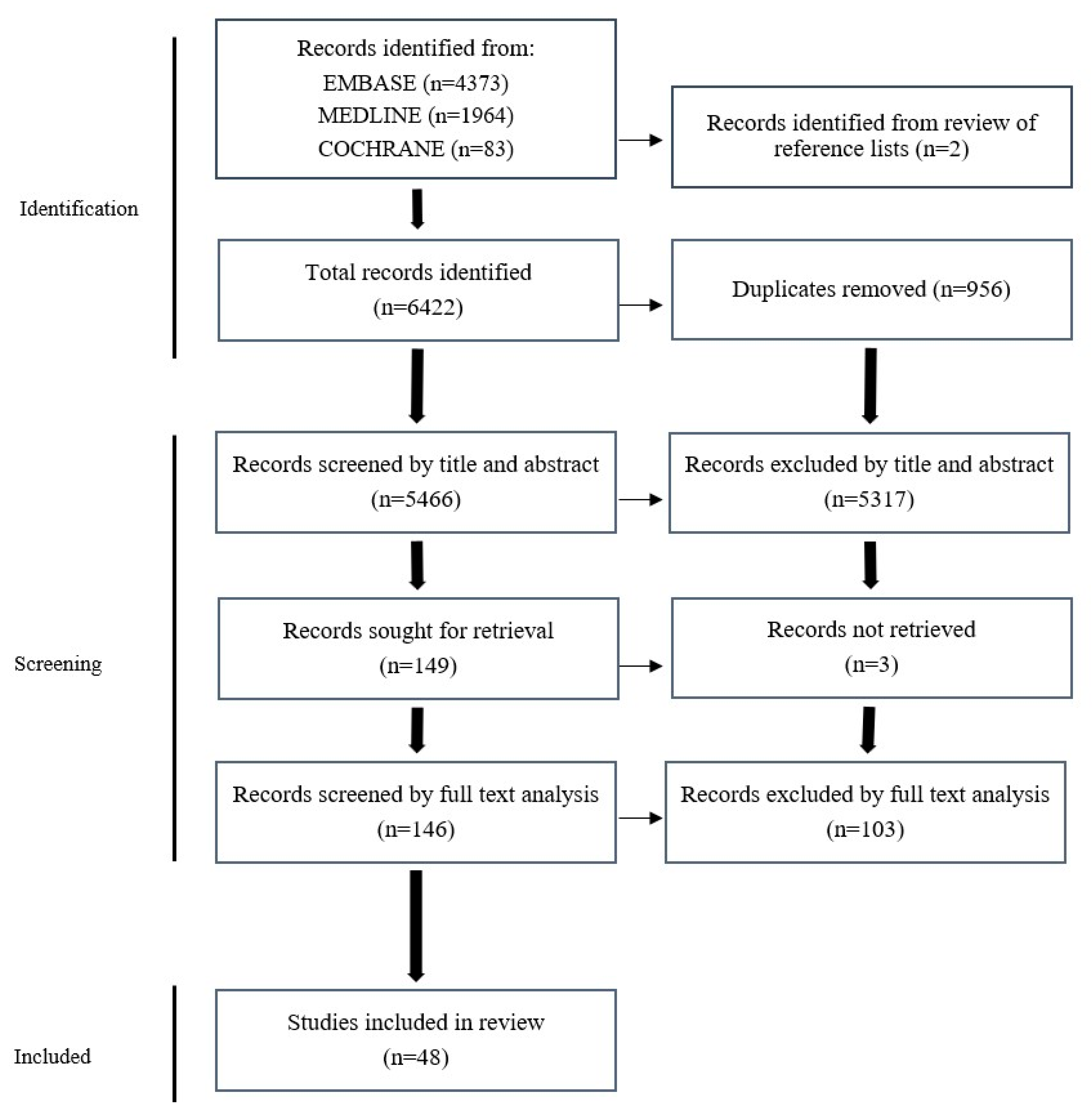
Perihilar cholangiocarcinoma (pCCA) is an uncommon malignancy with generally poor prognosis. Surgery is the primary curative treatment; however, the perioperative mortality and morbidity rates are high, with a low 5-year survival rate. Use of preoperative prognostic biomarkers to predict survival outcomes after surgery for pCCA are not well-established currently. This systematic review aimed to identify and summarise preoperative biomarkers associated with survival in pCCA, thereby potentially improving treatment decision-making. The Embase, Medline, and Cochrane databases were searched, and a systematic review was performed using the PRISMA guidelines. English-language studies examining the association between serum and/or tissue-derived biomarkers in pCCA and overall and/or disease-free survival were included. Our systematic review identified 64 biomarkers across 48 relevant studies. Raised serum CA19-9, bilirubin, CEA, neutrophil-to-lymphocyte ratio (NLR), platelet-to-lymphocyte ratio (PLR) and tumour MMP9, and low serum albumin were most associated with poorer survival; however, the cutoff values used widely varied. Several promising molecular markers with prognostic significance were also identified, including tumour HMGA2, MUC5AC/6, IDH1, PIWIL2, and DNA index. In conclusion, several biomarkers have been identified in serum and tumour specimens that prognosticate overall and disease-free survival after pCCA resection. These, however, require external validation in large cohort studies and/or in preoperatively obtained specimens, especially tissue biopsy, to recommend their use.