A Single Dose of PEG-Asparaginase at the Beginning of Induction Not Only Accelerates MRD Clearance but Also Improves Long-Term Outcome in Children with B-Lineage ALL
by
 , , ,
, , ,
Alexander Popov
1,*,† ,
,
Günter Henze
2,†,
Julia Roumiantseva
1,
Oleh Bydanov
1,
Mikhail Belevtsev
3,
Tatiana Verzhbitskaya
4,5,
Liudmila Movchan
3,
Grigory Tsaur
4,5,
Svetlana Lagoyko
1,
Liudmila Zharikova
1,
Natalia Myakova
1,
Dmitry Litvinov
1,
Olga Khlebnikova
4,
Olga Streneva
4,5,
Elena Stolyarova
3,
Natalia Ponomareva
6,
Galina Novichkova
1,
Larisa Fechina
4,5,
Olga Aleinikova
1 and
Alexander Karachunskiy
1 1
Dmitry Rogachev National Medical Research Center of Pediatric Hematology, Oncology and Immunology, 1, S. Mashela St., Moscow 117998, Russia
2
Department of Pediatric Oncology Hematology, Charité—Universitätsmedizin Berlin, 10117 Berlin, Germany
3
Belarussian Research Center for Pediatric Oncology, Hematology and Immunology, 223053 Minsk, Belarus
4
Regional Children’s Hospital, Ekaterinburg 620149, Russia
5
Research Institute of Medical Cell Technologies, Ekaterinburg 620026, Russia
6
Republican Children’s Hospital, Moscow 594268, Russia
*
Author to whom correspondence should be addressed.
†
These authors contributed equally to this work.
Cancers 2023, 15(23), 5547; https://doi.org/10.3390/cancers15235547
Submission received: 17 October 2023
/
Revised: 16 November 2023
/
Accepted: 21 November 2023
/
Published: 23 November 2023
(This article belongs to the Special Issue Drug Development for Acute Lymphoblastic Leukemia)
Simple Summary
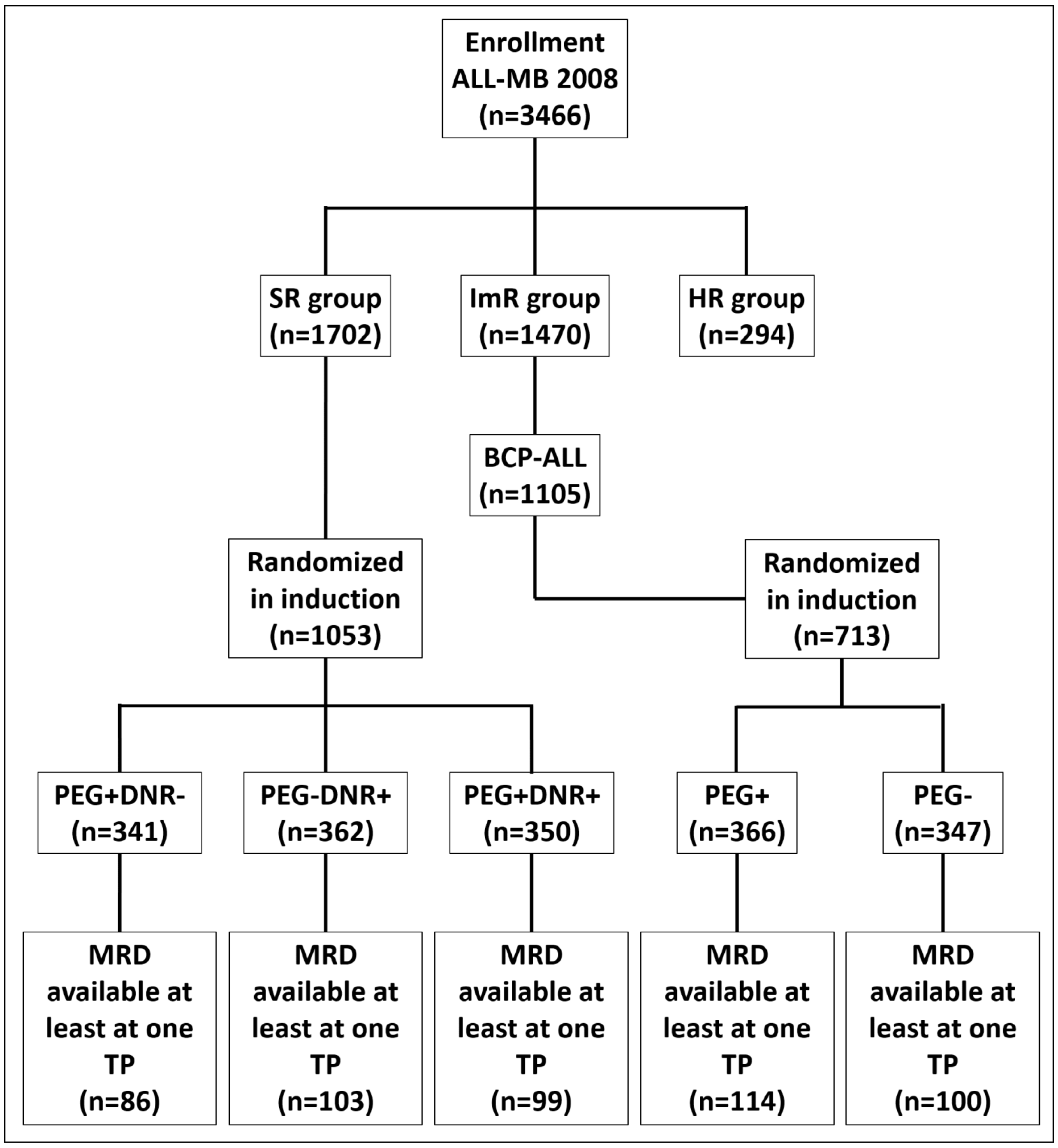
This report presents the results of the randomized use of PEG-ASP at a dose of 1000 U/m2 administered on day 3 of induction therapy in children with B-cell precursor ALL (BCP-ALL) studied for MRD response. At the start of induction therapy, 502 patients were randomized, standard-risk patients into three and intermediate-risk patients into two groups. The single dose of PEG-ASP resulted in a significantly larger proportion of rapidly responding patients. Despite only low or moderately intensive therapy (no or only low-dose anthracyclines, no oxazaphosphorines, no high-dose therapy), these rapid responders also showed excellent long-term outcomes.
Abstract
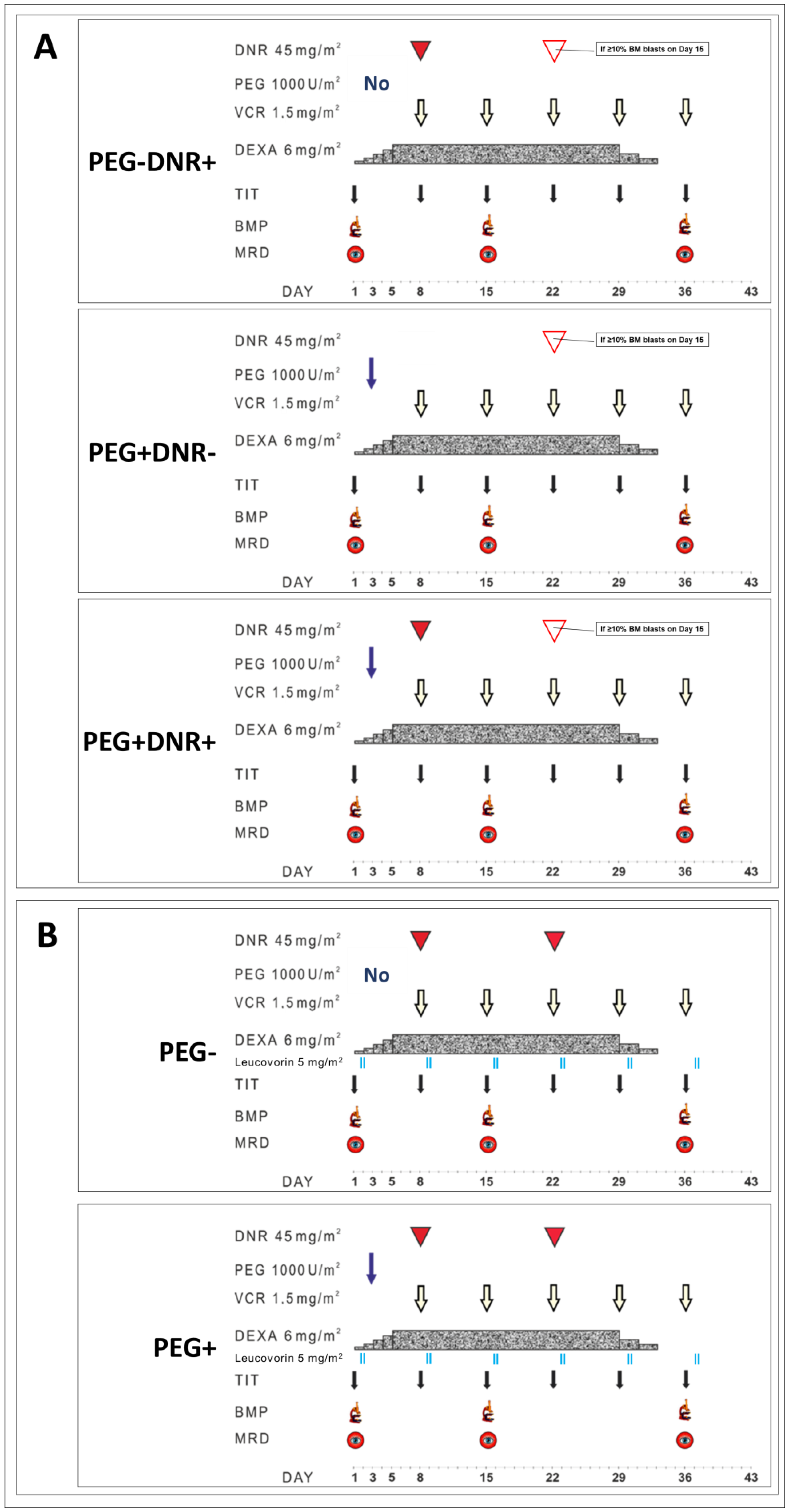
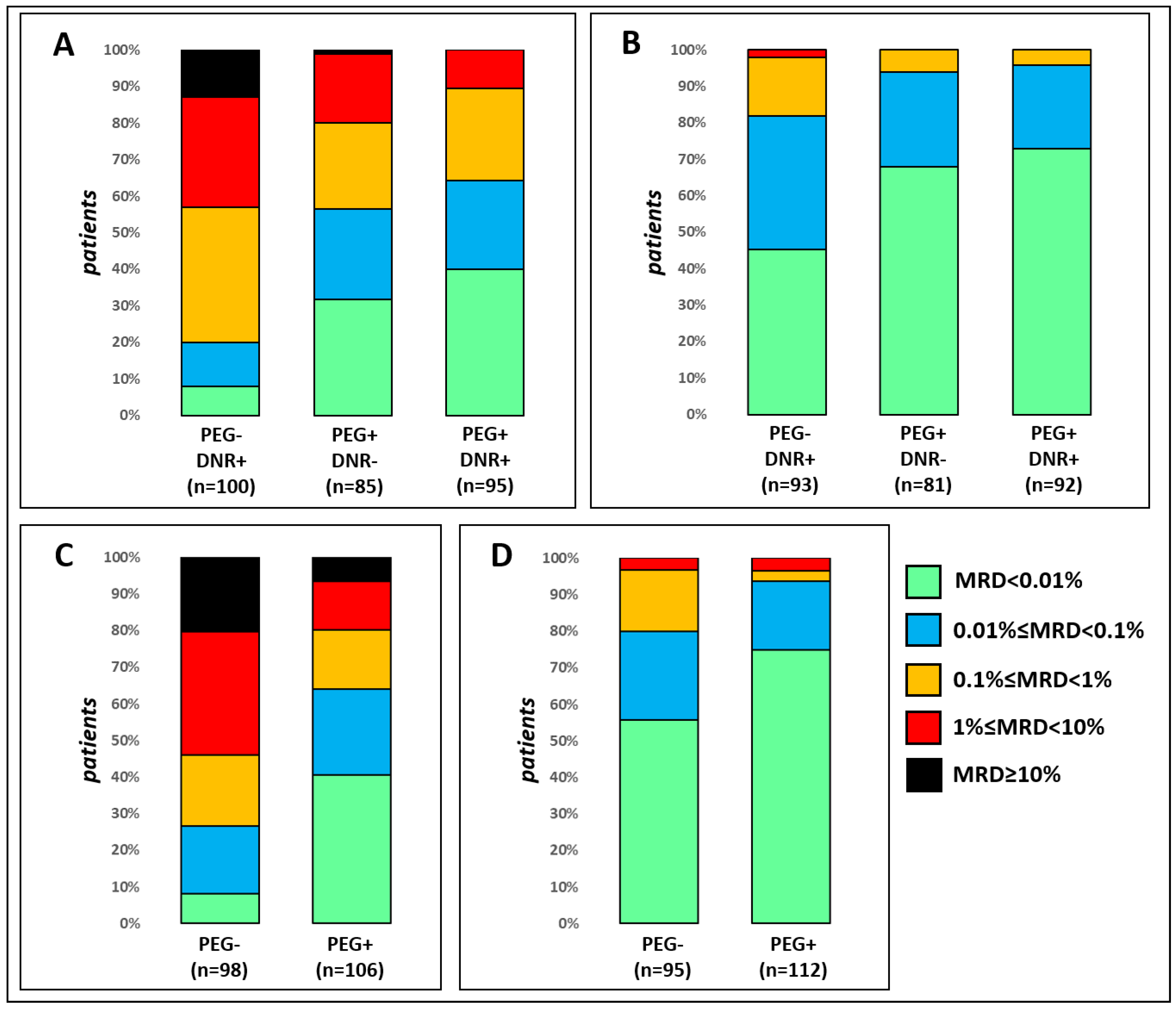
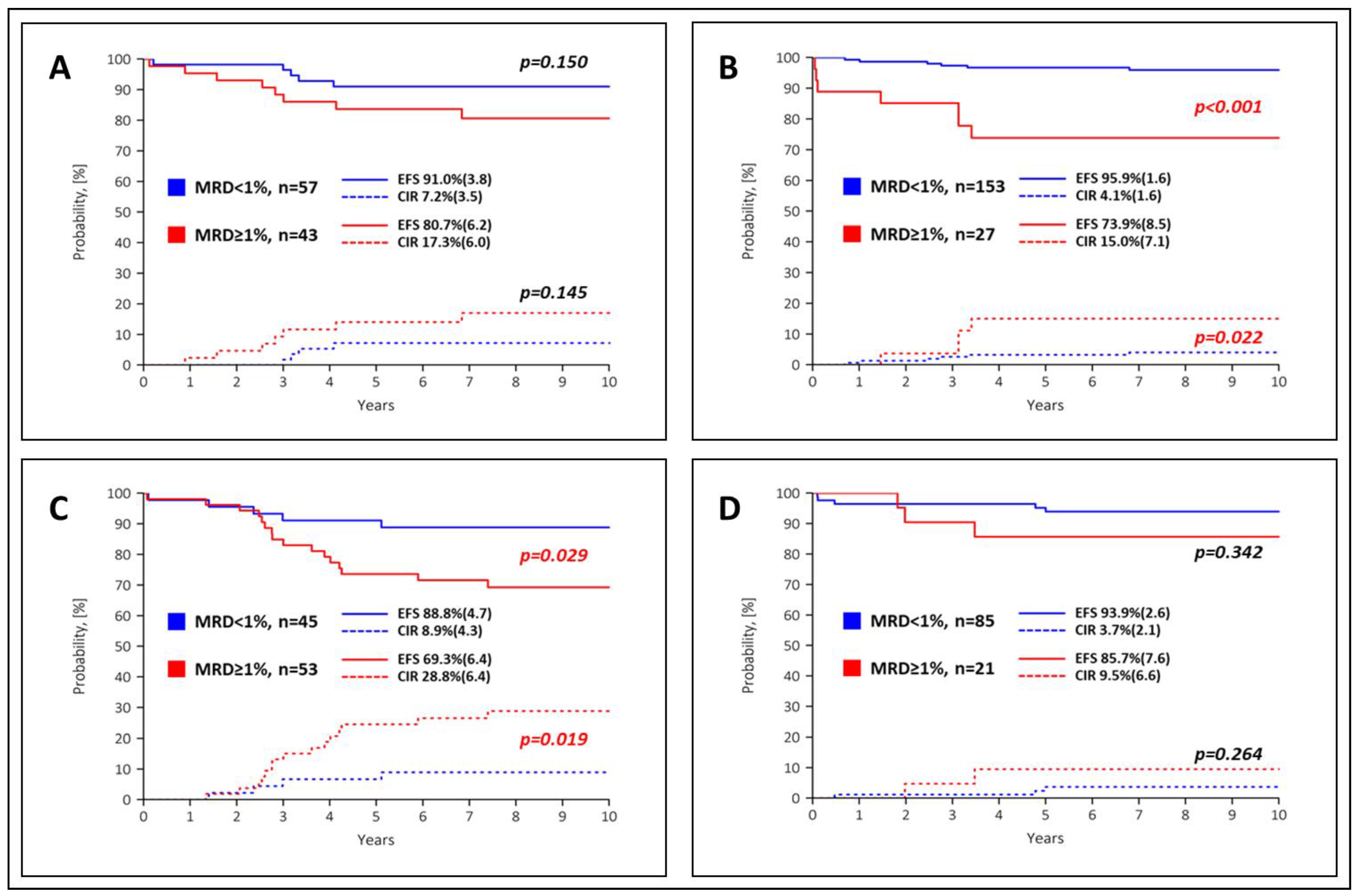
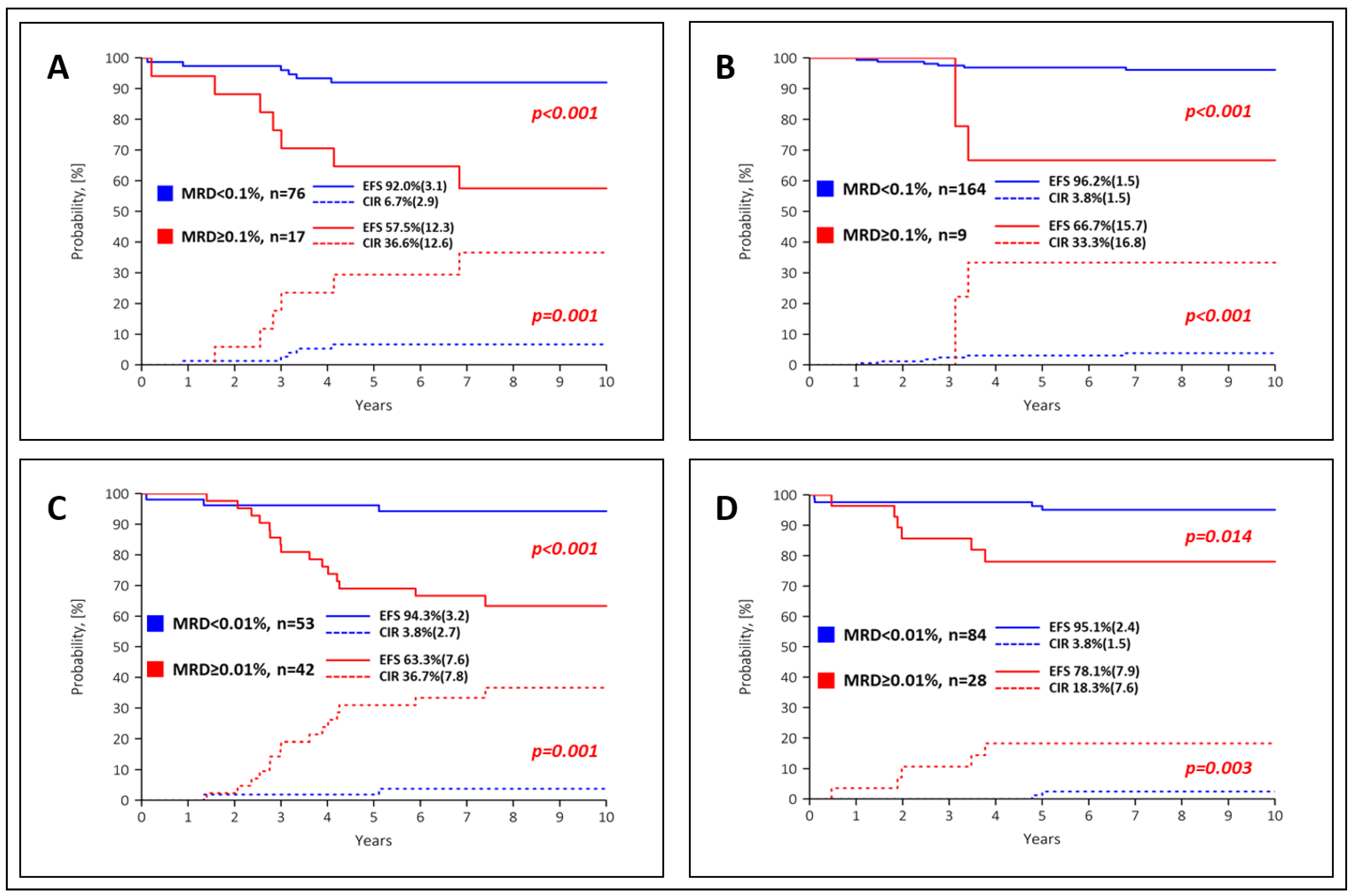
This report presents the results of the assessment of MRD response by multicolor flow cytometry (MFC) with regard to the randomized use of pegylated asparaginase (PEG). In this study, PEG was randomly administered at a dose of 1000 U/m2 on day 3 of induction therapy in children with B-lineage ALL. Methods. Conventional induction therapy consisted of dexamethasone, vincristine, and daunorubicin. MRD data was available in 502 patients who were randomized at the start of induction therapy, standard-risk (SR) patients into three (conventional induction without PEG, induction with additional PEG and with PEG but without daunorubicin) and intermediate-risk (ImR) patients into two groups (with additional PEG and without PEG). Results. The single administration of PEG resulted in a significantly higher proportion of rapid responders, in SR patients even when no anthracyclines were used for induction. In the SR group, the event-free survival of the MFC-MRD fast responders was similar in the PEG− and PEG+ arms (92.0 ± 3.1% vs. 96.2 ± 1.5%, respectively), and the same unfavorable trend was observed for MFC-MRD slow responders (57.5 ± 12.3% vs. 66.7 ± 15.7%, respectively). Results were similar in ImR patients: (94.3 ± 3.2% vs. 95.1 ± 2.4%, for fast responders and 63.3 ± 7.6% vs. 78.1 ± 7.9%, for slow responders in PEG− and PEG+ arms, respectively). However, there is a large difference between the proportion of MFC-MRD slow responders in the PEG− and PEG+ groups (18.3% vs. 5.2% for the SR group and 44.2% vs. 25.0% for the ImR group). Conclusions. Therefore, early use of PEG-ASP not only leads to an accelerated reduction of blasts, but also to an excellent outcome in a significantly larger proportion of patients in both risk groups.