The Association between Proton Pump Inhibitors and the Effectiveness of CDK Inhibitors in HR+/HER- Advanced Breast Cancer Patients: A Systematic Review and Meta-Analysis
by
 , , ,
, , ,
Yu-Cheng Chang
1,2,†, 
Junmin Song
2,3,†,
Yu Chang
4,
Chin-Hsuan Huang
2,
Aarushi Sudan
3,
Pei-Chin Chen
5,* and
Kuan-Yu Chi
2,3,* 1
Department of Internal Medicine, Danbury Hospital, Danbury, CT 06810, USA
2
Department of Education, Center for Evidence-Based Medicine, Taipei Medical University Hospital, Taipei 110, Taiwan
3
Department of Medicine, Jacobi Medical Center, Albert Einstein College of Medicine, 1400 Pelham Parkway South, Building 1, 3N21, Bronx, NY 10461, USA
4
Section of Neurosurgery, Department of Surgery, National Cheng Kung University Hospital, College of Medicine, National Cheng Kung University, Tainan 704, Taiwan
5
Division of Gastroenterology and Hepatology, Department of Internal Medicine, Taipei Medical University Hospital, Taipei 110, Taiwan
*
Authors to whom correspondence should be addressed.
†
These authors contributed equally to this work.
Cancers 2023, 15(21), 5133; https://doi.org/10.3390/cancers15215133
Submission received: 27 September 2023
/
Revised: 18 October 2023
/
Accepted: 19 October 2023
/
Published: 25 October 2023
(This article belongs to the Section Systematic Review or Meta-Analysis in Cancer Research)
Simple Summary
Proton pump inhibitors (PPIs) are frequently used in many patients with advanced breast cancer who are being treated with cyclin-dependent kinase inhibitors. In this study, our aim was to determine if there is an association between the use of PPIs and the effectiveness of cyclin-dependent kinase inhibitors, specifically Palbociclib and Ribociclib. We conducted a systematic review and meta-analysis through which to address this clinical question and found that the use of Palbociclib resulted in a lower survival rate for both overall and progression-free survival. However, the concurrent use of PPIs and Ribociclib did not lead to a decrease in the survival rates. Therefore, for cases in which advanced breast cancer patients require the use of PPIs, it may be reasonable to consider using Ribociclib.
Abstract
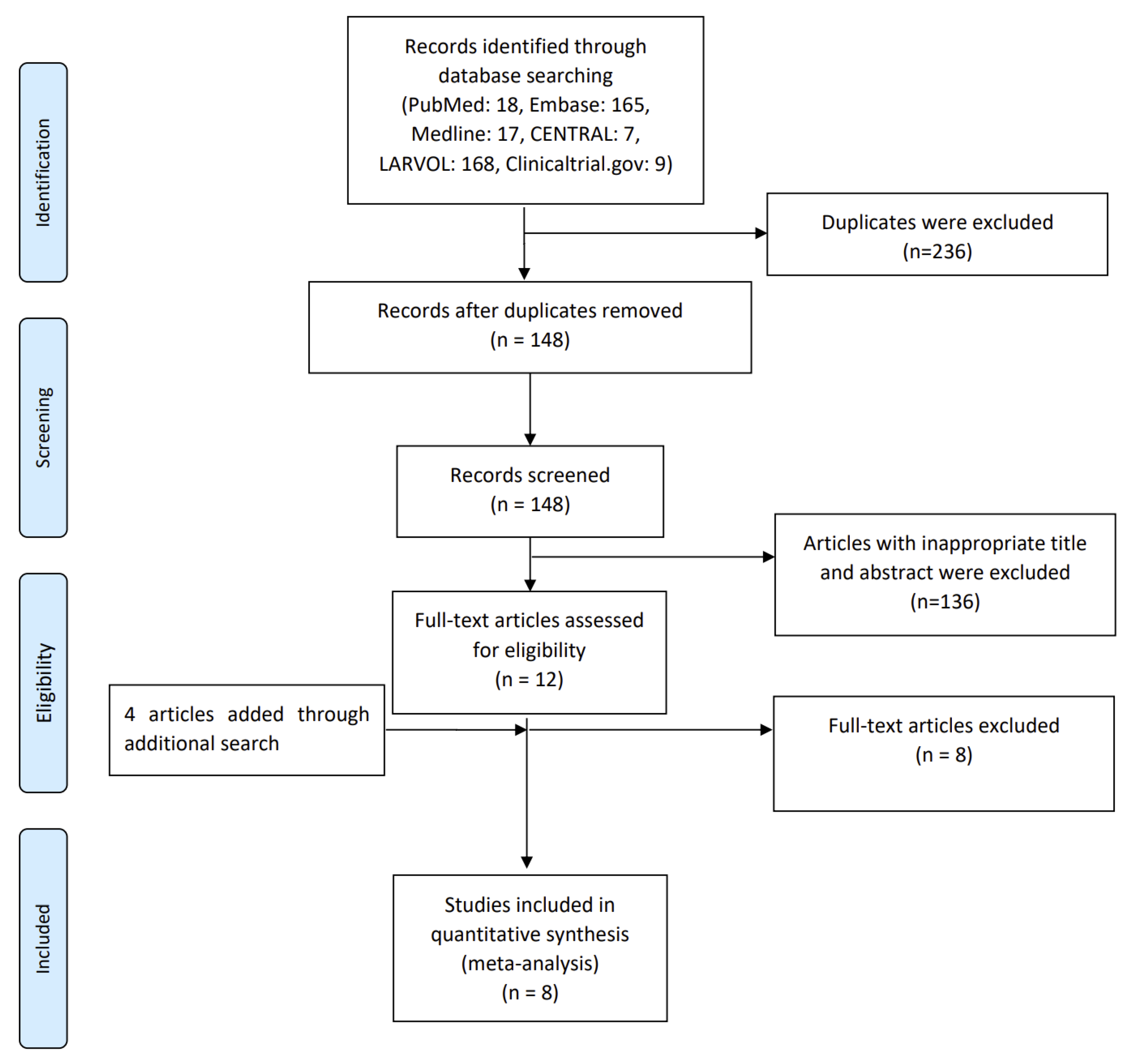
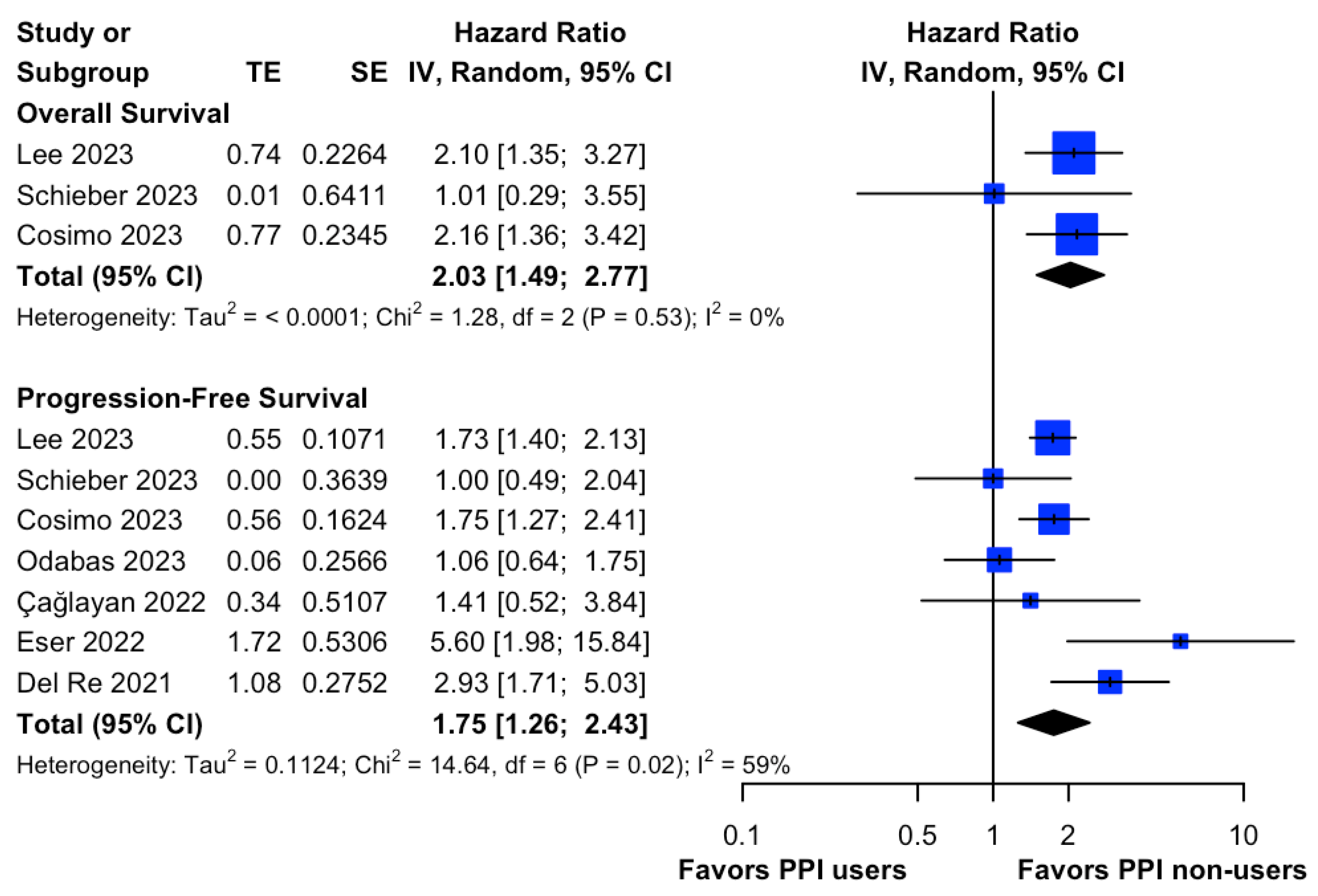
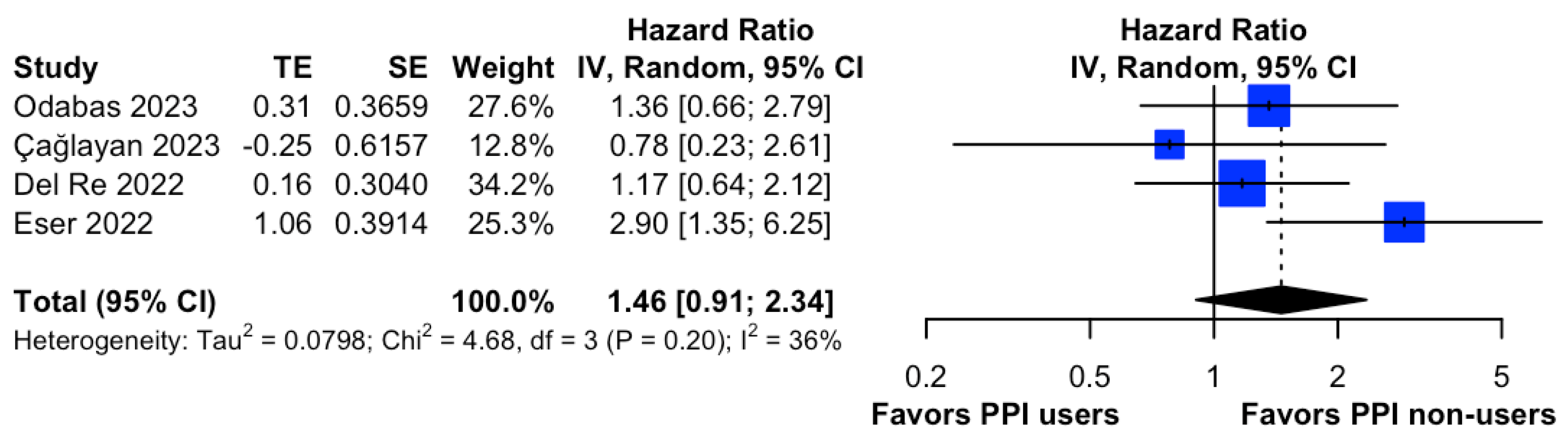
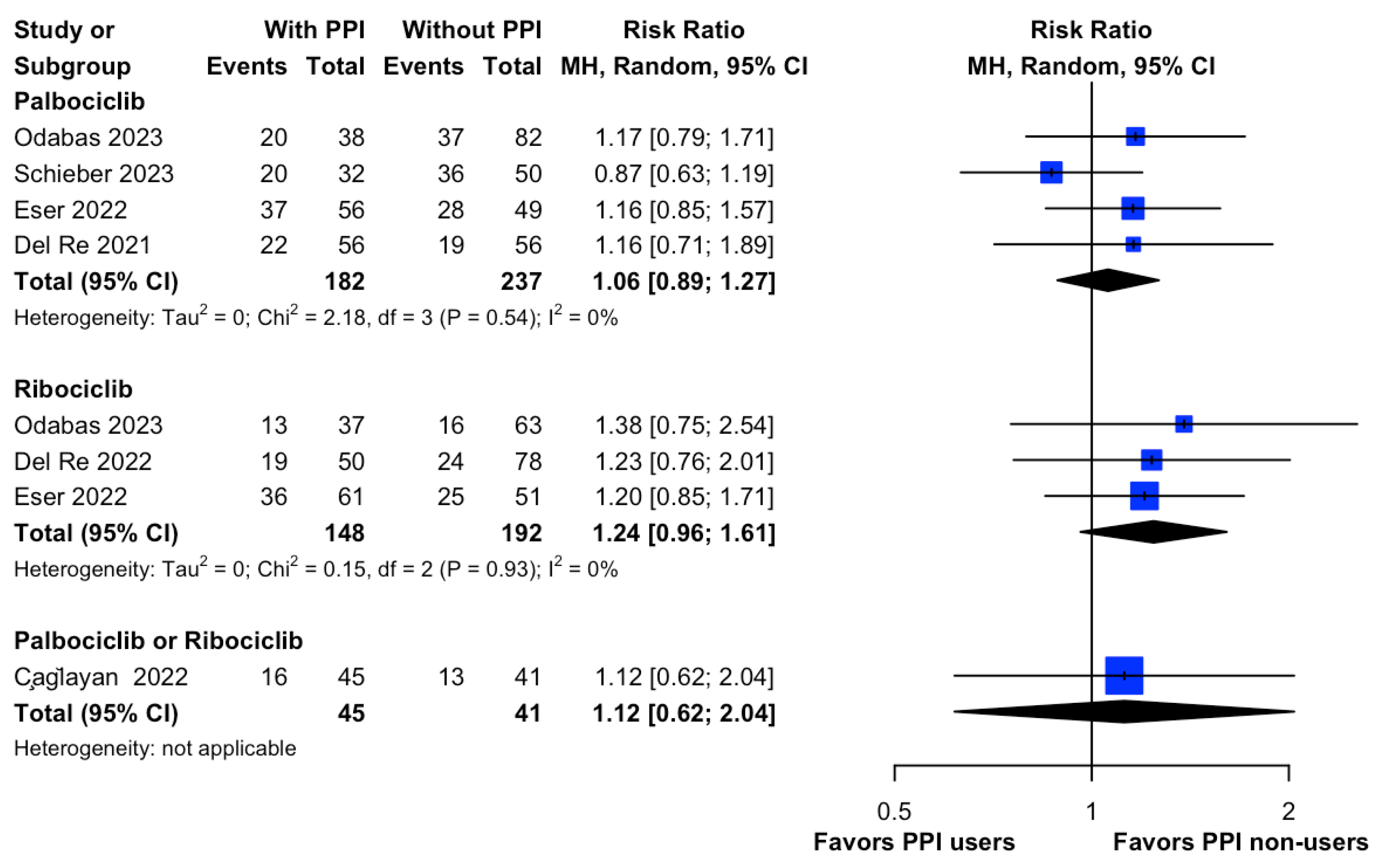
There have been many clinical questions regarding whether the use of proton pump inhibitors (PPIs) could deteriorate the effects of cyclin-dependent kinase inhibitors (CDKIs) in HR+/HER2- advanced breast cancer patients. We performed a systematic review and meta-analysis of this clinical question, including studies enrolling HR+/HER2- metastatic breast cancer patients treated with CDKIs (Palbociclib or Ribociclib) and reporting at least one comparative survival outcome, either overall survival (OS) or progression-free survival (PFS), between concomitant PPI users and non-users. Eight studies met the eligibility criteria, with a total of 2584 patients included (PPI users: 830, PPI non-users: 1754), demonstrating that concomitant PPI use was associated with significantly higher risks of all-cause mortality (HR = 2.03; 95% CI, 1.49 to 2.77; I2 = 0%) and disease progression (HR = 1.75; 95% CI, 1.26 to 2.43; I2 = 59%) in breast cancer patients taking Palbociclib. In contrast, there were no significant survival impacts of PPIs on Ribociclib (HR = 1.46; 95% CI, 0.91 to 2.34; I2 = 36%). Additionally, there was no significant difference in the risk associated with CDKI dose reduction due to drug toxicity (RR = 1.12; 95% CI, 0.97 to 1.29). Therefore, when HR+/HER2- advanced breast cancer patients require the use of PPIs, it may be reasonable to consider using Ribociclib.