Insights into Melanoma Clinical Practice: A Perspective for Future Research
by
 , , , , , , , , , , , and
Giang T. Lam
1, 
Carmela Martini
1 ,
,
Tiffany Brooks
2,3,
Sarita Prabhakaran
4,
Ashley M. Hopkins
4,
Ben S.-Y. Ung
1,
Jingying Tang
1,
Maria C. Caruso
1,
Robert D. Brooks
1 ,
,
Ian R. D. Johnson
1 ,
,
Alexandra Sorvina
1 ,
,
Shane M. Hickey
1 ,
,
Litsa Karageorgos
1,
Sonja Klebe
4,5,
John J. O’Leary
6,
Douglas A. Brooks
1,6,† and
and
Jessica M. Logan
1,*,† 1
Clinical and Health Sciences, University of South Australia, North Terrace, Adelaide, SA 5000, Australia
2
Adelaide Medical School, University of Adelaide, North Terrace, Adelaide, SA 5000, Australia
3
Aware Women’s Health Private Clinic, Adelaide, SA 5006, Australia
4
College of Medicine and Public Health, Flinders University, Adelaide, SA 5042, Australia
5
Department of Surgical Pathology, SA Pathology at Flinders Medical Centre, Adelaide, SA 5042, Australia
6
Department of Histopathology, Trinity College Dublin, D02 PN40 Dublin, Ireland
*
Author to whom correspondence should be addressed.
†
These authors contributed equally to this work.
Cancers 2023, 15(18), 4631; https://doi.org/10.3390/cancers15184631
Submission received: 3 August 2023
/
Revised: 30 August 2023
/
Accepted: 18 September 2023
/
Published: 19 September 2023
(This article belongs to the Special Issue Skin Cancer: Recent Advances in Diagnosis, Treatment, and Prevention)
Simple Summary
This study acknowledges the challenges in melanoma diagnosis and the need for new technology that aids clinical decision making. Biomarkers that can accurately report on the underlying biology during melanoma progression are needed to enable an accurate diagnosis and prognostic risk stratification to provide new opportunities for personalized medicine.
Abstract
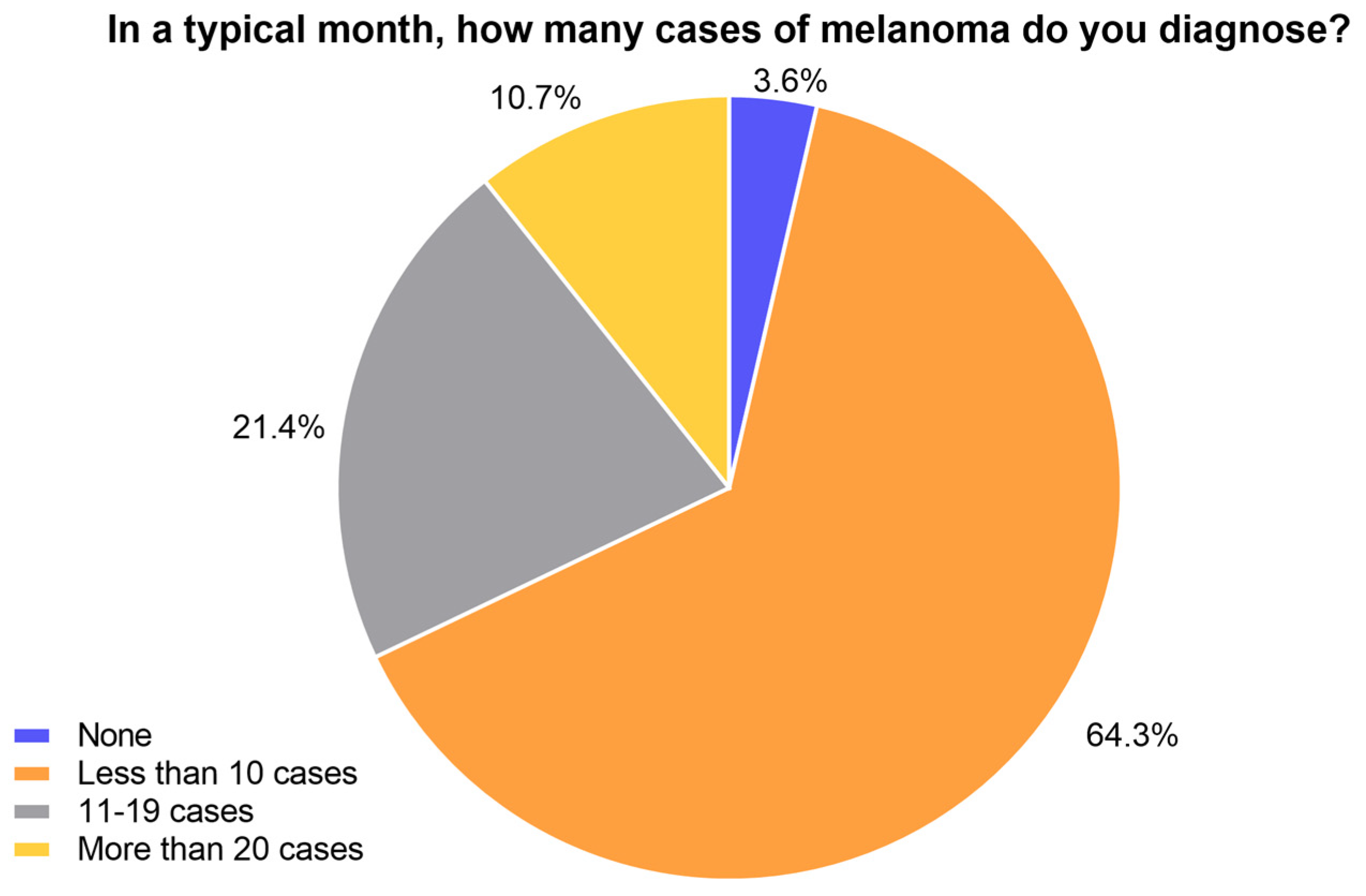
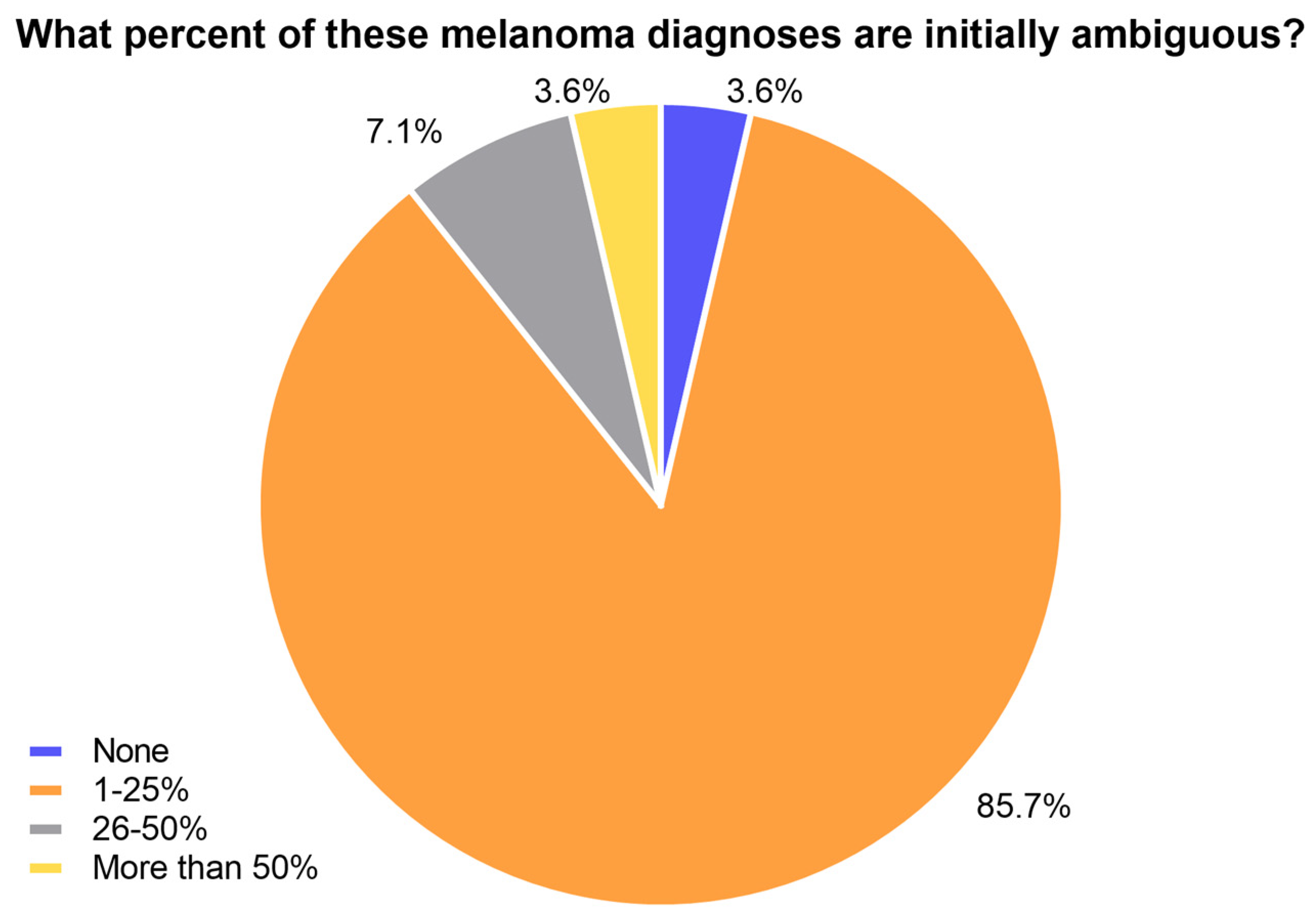
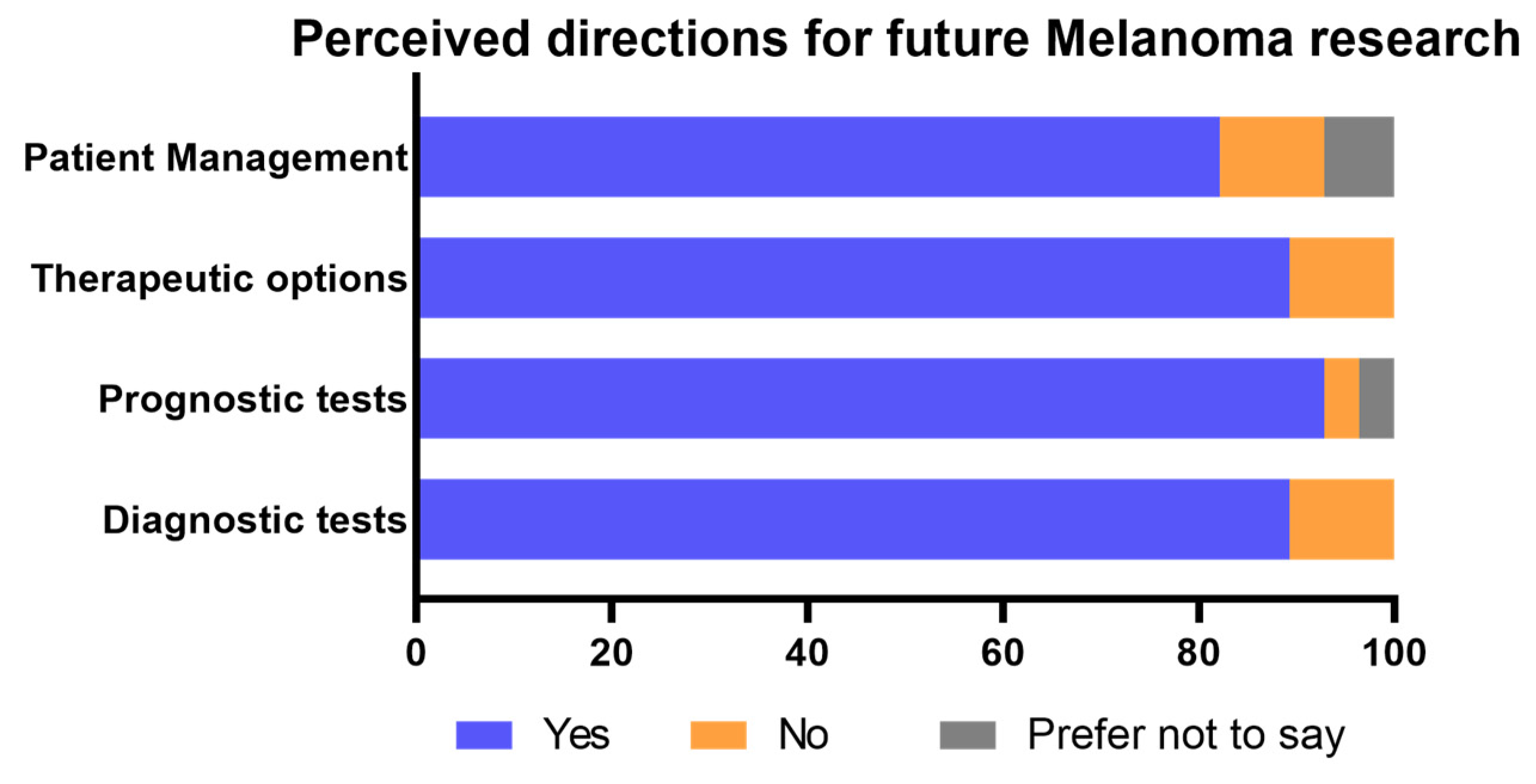
Background: Early diagnosis is the key to improving outcomes for patients with melanoma, and this requires a standardized histological assessment approach. The objective of this survey was to understand the challenges faced by clinicians when assessing melanoma cases, and to provide a perspective for future studies. Methods: Between April 2022 and February 2023, national and international dermatologists, pathologists, general practitioners, and laboratory managers were invited to participate in a six-question online survey. The data from the survey were assessed using descriptive statistics and qualitative responses. Results: A total of 54 responses were received, with a 51.4% (n = 28) full completion rate. Of the respondents, 96.4% reported ambiguity in their monthly melanoma diagnosis, and 82.1% routinely requested immunohistochemistry (IHC) testing to confirm diagnosis. SOX10 was the most frequently requested marker, and most respondents preferred multiple markers over a single marker. Diagnostic and prognostic tests, as well as therapeutic options and patient management, were all identified as important areas for future research. Conclusions: The respondents indicated that the use of multiple IHC markers is essential to facilitate diagnostic accuracy in melanoma assessment. Survey responses indicate there is an urgent need to develop new biomarkers for clinical decision making at multiple critical intervention points.
Keywords:
melanoma; survey; biomarker; clinical practice; diagnosis; prognosis; therapeutic options; patient management