AKT Isoforms Interplay in High-Grade Serous Ovarian Cancer Prognosis and Characterization
by
 , , , and
Eros Azzalini
1,2, 
Domenico Tierno
1,
Michele Bartoletti
3,4,
Renzo Barbazza
1,
Giorgio Giorda
5,
Fabio Puglisi
3,4 ,
,
Sabrina Chiara Cecere
6,
Nunzia Simona Losito
6,
Daniela Russo
6,
Giorgio Stanta
1,
Vincenzo Canzonieri
1,2,* and
and
Serena Bonin
1,*
1
Department of Medical Sciences (DSM), University of Trieste, 34147 Trieste, Italy
2
Pathology Unit, IRCCS CRO Aviano-National Cancer Institute, 33081 Aviano, Italy
3
Unit of Medical Oncology and Cancer Prevention, Department of Medical Oncology, IRCCS CRO Aviano-National Cancer Institute, 33081 Aviano, Italy
4
Department of Medicine (DAME), University of Udine, 33100 Udine, Italy
5
Unit of Gynecologic Oncology Surgery, IRCCS CRO Aviano, National Cancer Institute, 33081 Aviano, Italy
6
Istituto Nazionale Tumori IRCCS—Fondazione G. Pascale, 80131 Napoli, Italy
*
Authors to whom correspondence should be addressed.
Cancers 2022, 14(2), 304; https://doi.org/10.3390/cancers14020304
Submission received: 25 November 2021
/
Revised: 29 December 2021
/
Accepted: 5 January 2022
/
Published: 8 January 2022
(This article belongs to the Special Issue Feature Paper from Journal Reviewers)
Simple Summary
New therapeutical strategies are needed to improve survival in high-grade serous ovarian cancer (HGSOC) patients. AKT inhibitors are promising agents able to act in synergy with PARP inhibitors and platinum-based therapies, but the subset of patients who could benefit from this approach is still unclear. We analyzed AKT isoforms expression in a retrospective cohort and we identified four AKT expression groups related to patients’ survival, tumor morphology and the BRCA status that could help in stratifying patients for future clinical trials.
Abstract
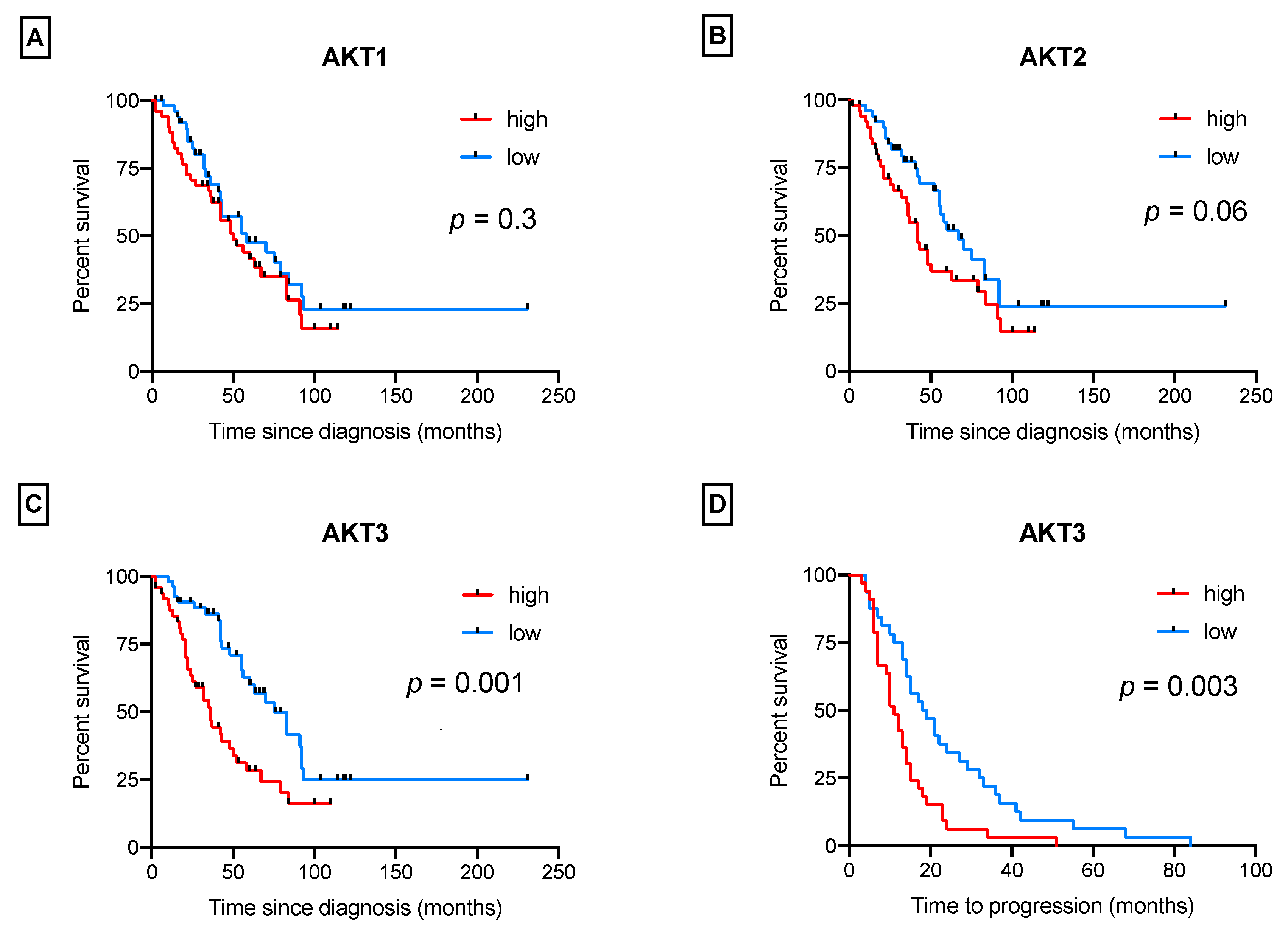
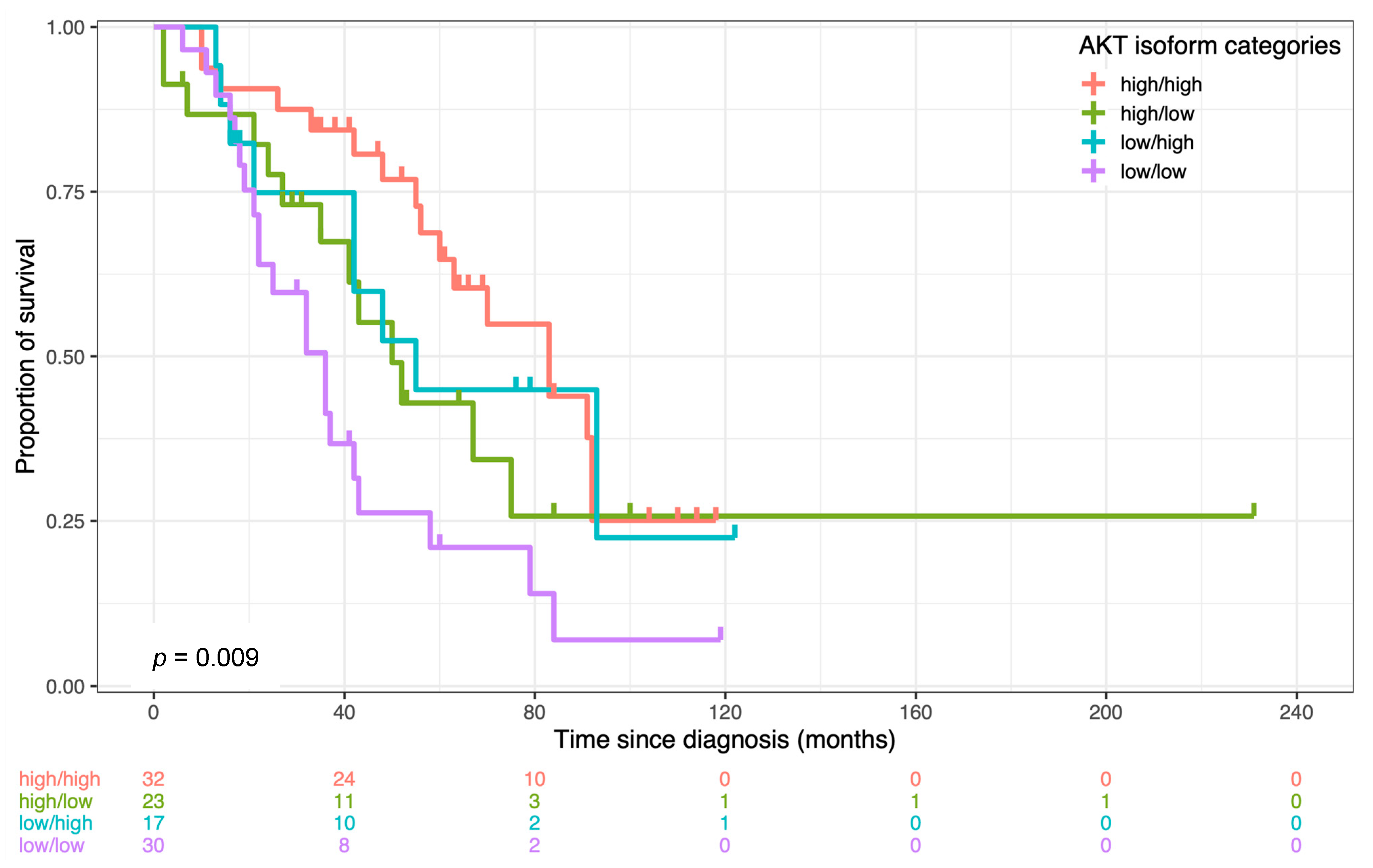
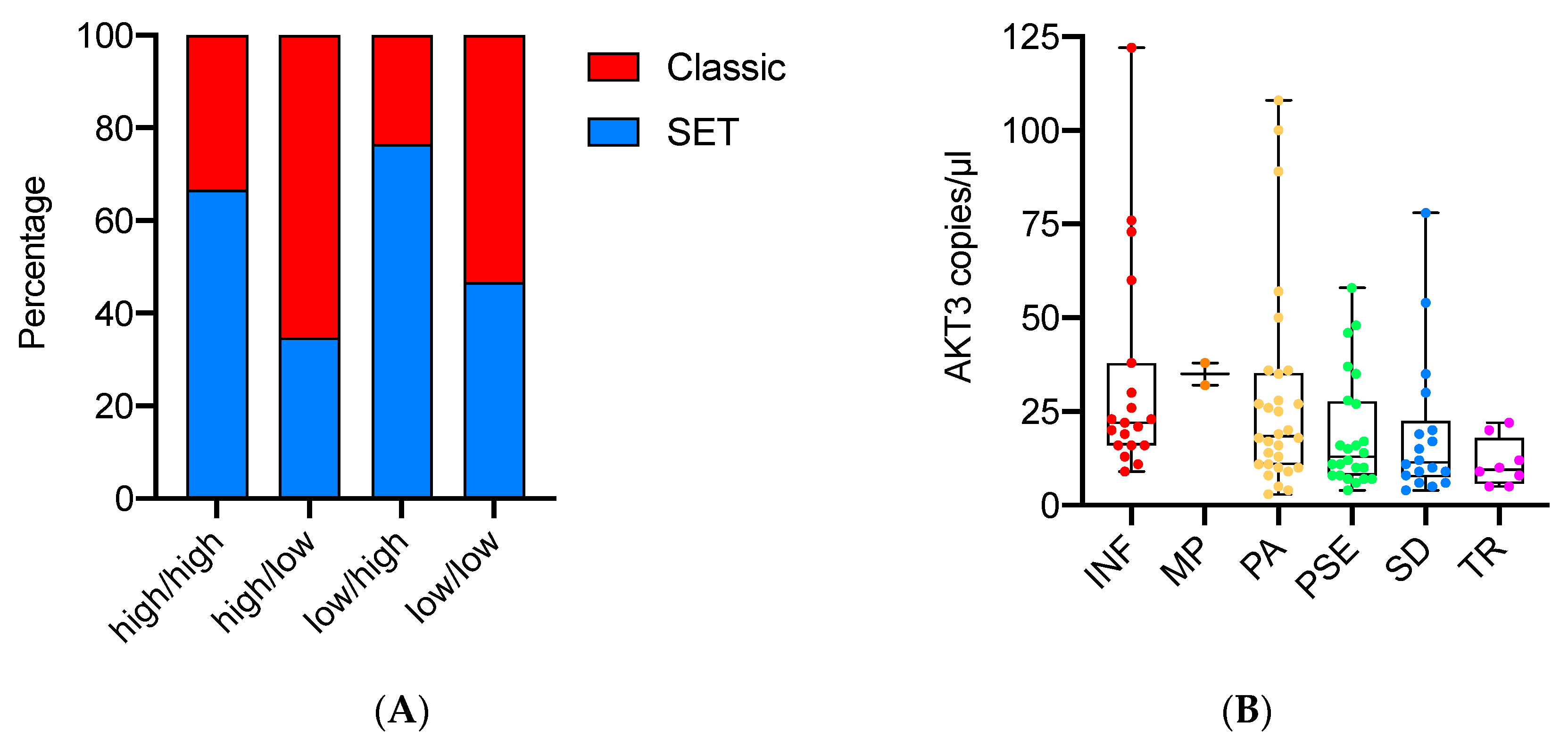
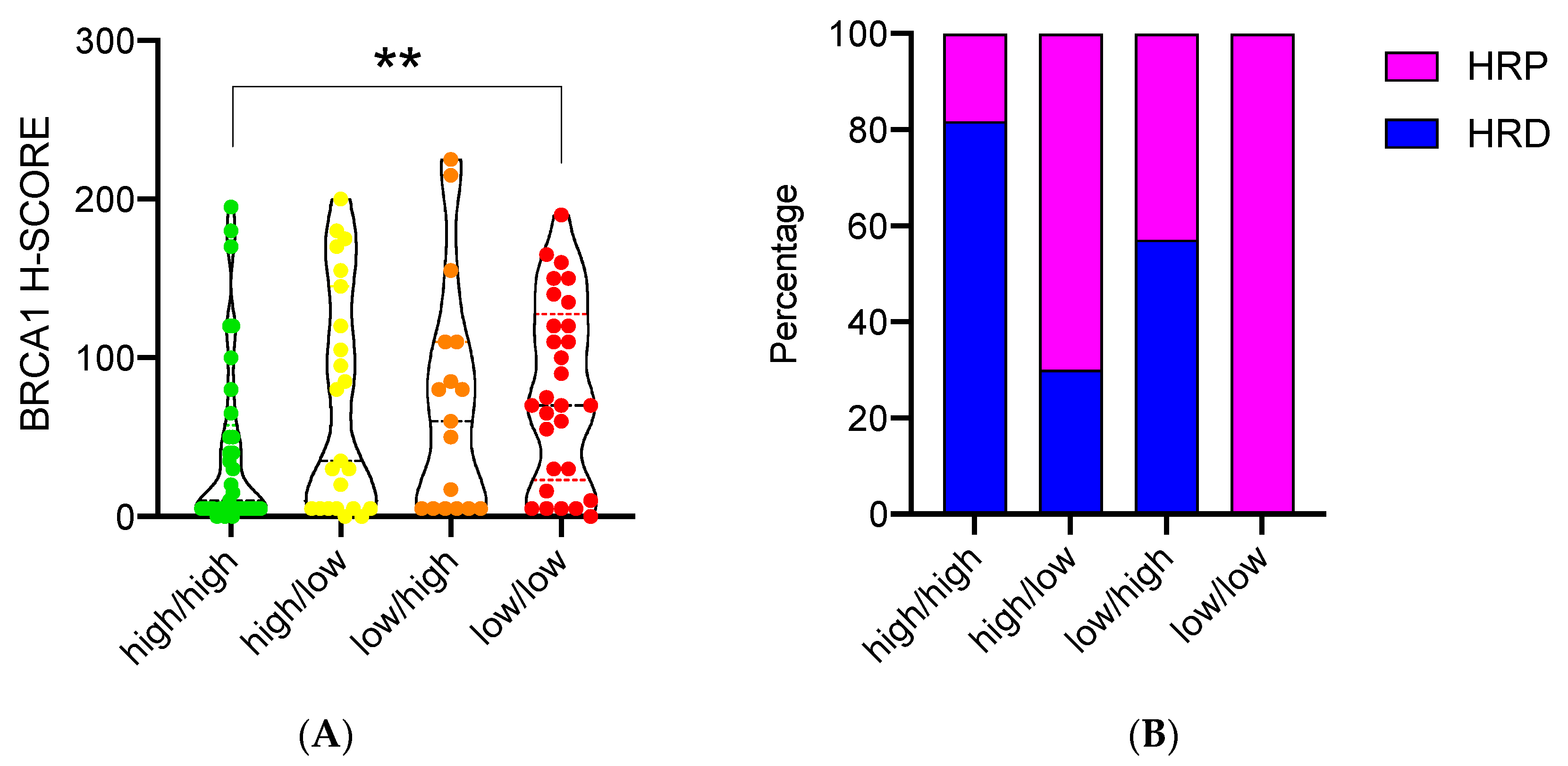
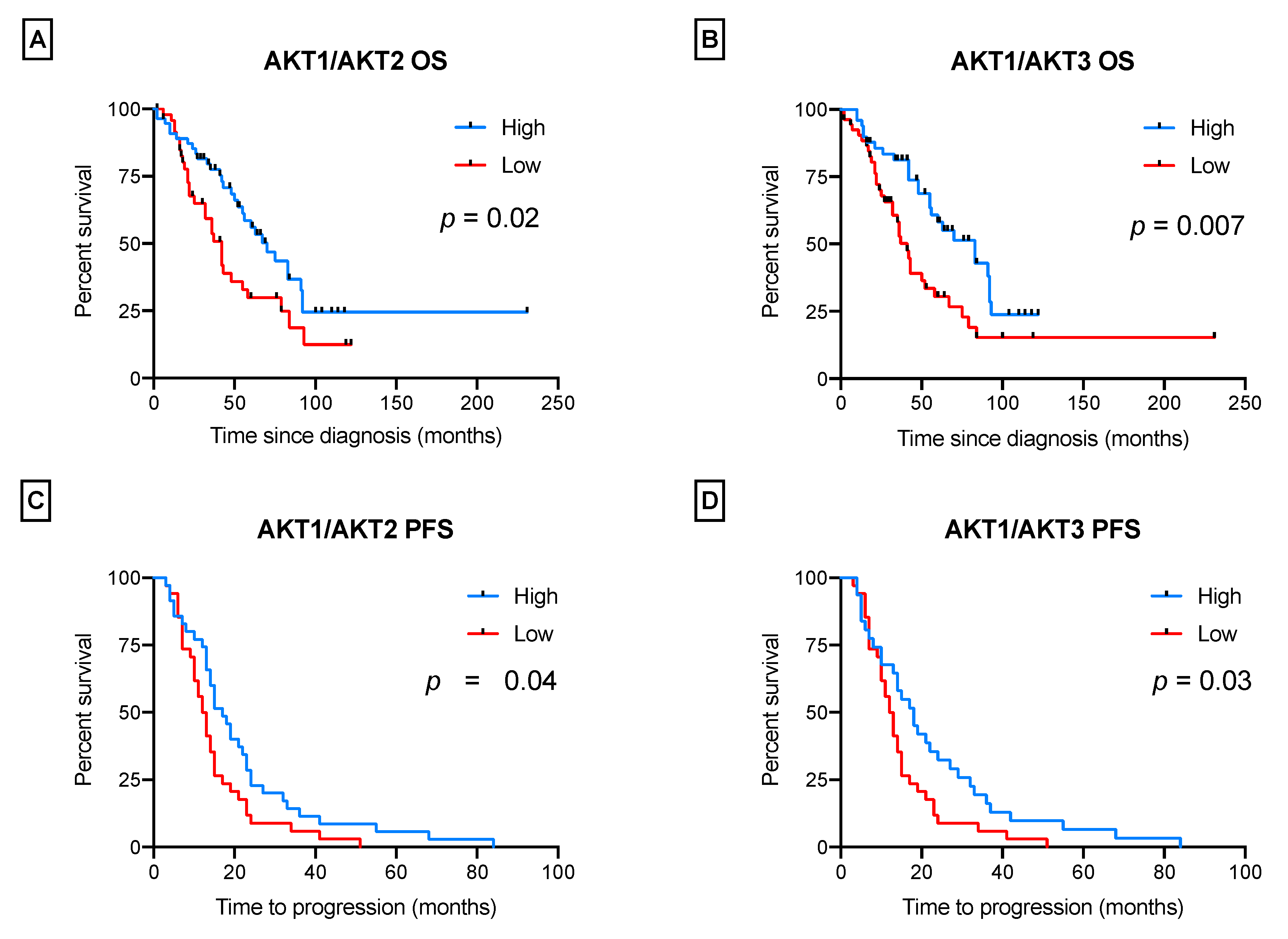
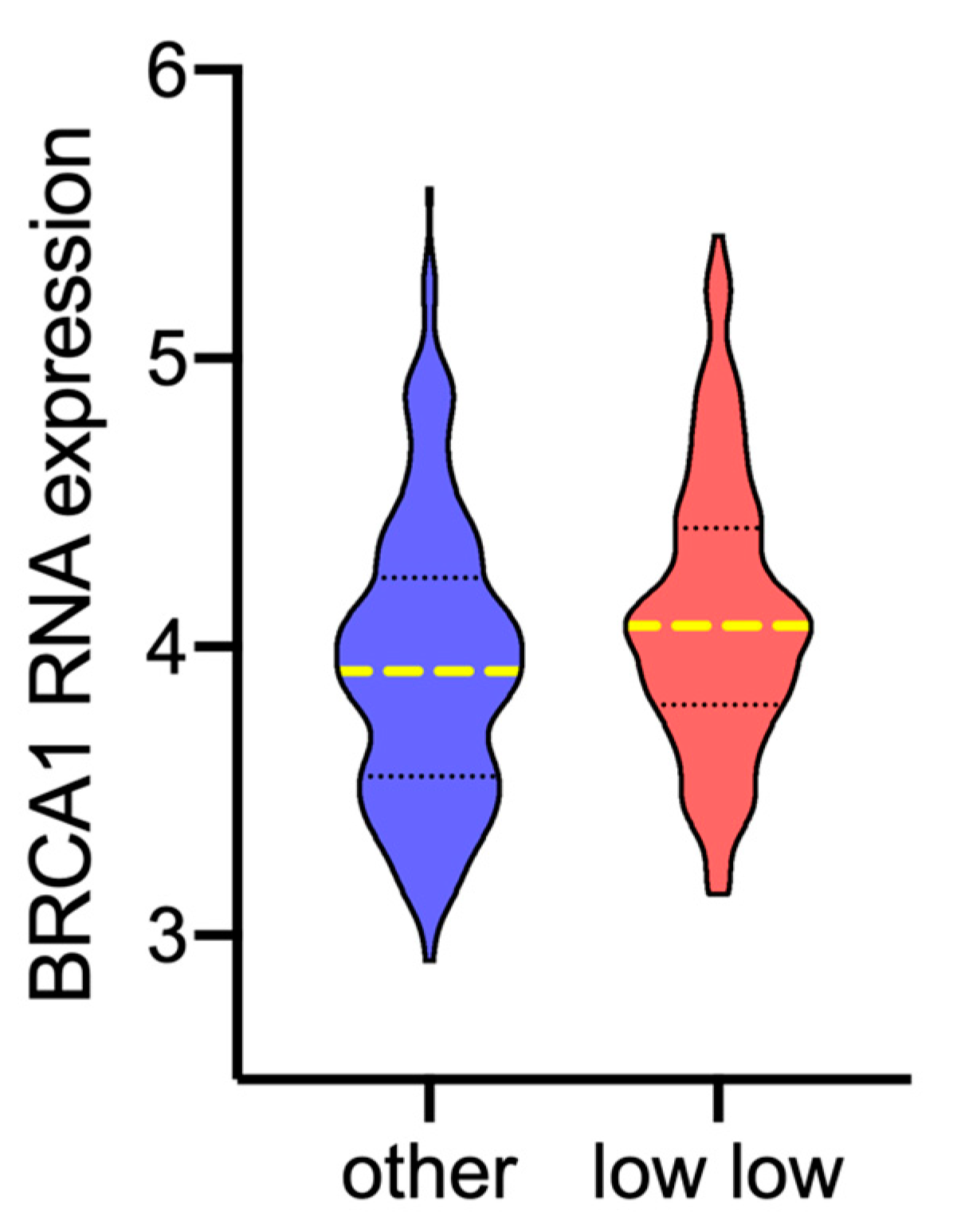
High-grade serous ovarian cancer (HGSOC) is among the deadliest gynecological malignancies. The acquired resistance to platinum-based therapies and the intrinsic heterogeneity of the disease contribute to the low survival rate. To improve patients’ outcomes, new combinatorial approaches able to target different tumor vulnerabilities and enhance the efficacy of the current therapies are required. AKT inhibitors are promising antineoplastic agents able to act in synergy with PARP inhibitors, but the spectrum of patients who can benefit from this combination is unclear, since the role of the three different isoforms of AKT is still unknown. Here, we study the expression of AKT isoforms on a retrospective cohort of archive tissue by RT-droplet digital PCR (ddPCR) analyzing their association with the clinicopathological features of patients. Based on AKT1/AKT2 and AKT1/AKT3 ratios, we define four AKT classes which were related to patients’ survival, tumor morphology and BRCA1 expression. Moreover, our results show that high AKT3 expression levels were frequently associated with tumors having classic features, a low number of mitoses and the presence of psammoma bodies. Overall, our study obtains new insights on AKT isoforms and their associations with the clinicopathological features of HGSOC patients. These evidences could help to better define the subsets of patients who can benefit from AKT and PARP inhibitors therapy in future clinical trials.
Keywords:
HGSOC; AKT1; AKT2; AKT3; SET; classic; surrogate marker; BRCA status; homologous recombination status