Prospective Validation of Indocyanine Green Lymphangiography Staging of Breast Cancer-Related Lymphedema
by
 ,
,
Mads Gustaf Jørgensen
1,2,3,* ,
,
Navid Mohamadpour Toyserkani
4,
Frederik Christopher Gulmark Hansen
1,
Jørn Bo Thomsen
1 and
Jens Ahm Sørensen
1,2 1
Department of Plastic Surgery, Research Unit for Plastic Surgery, Odense University Hospital, 5000 Odense, Denmark
2
Clinical Institute, University of Southern Denmark, 5000 Odense, Denmark
3
OPEN, Open Patient data Explorative Network, Odense University Hospital, 5000 Odense, Denmark
4
Department of Plastic Surgery and Burns Treatment, Rigshospitalet, 2100 Copenhagen, Denmark
*
Author to whom correspondence should be addressed.
Cancers 2021, 13(7), 1540; https://doi.org/10.3390/cancers13071540
Submission received: 11 February 2021
/
Revised: 23 March 2021
/
Accepted: 23 March 2021
/
Published: 26 March 2021
(This article belongs to the Special Issue Cancer Related Lymphedema)
Simple Summary
Indocyanine green lymphangiography (ICG-L) allows real-time investigation of lymphatics; however, the applicability in evaluating breast cancer-related lymphedema (BCRL) is sparse and not well established. In this prospective study, we aimed to validate ICG-L assessment of BCRL in a large patient group. We found that evaluation of BCRL with ICG-L was easy and safe to perform in the outpatient clinic and provided unique disease information unobtainable by clinical assessment alone. Future studies that evaluate the efficacy of therapeutic treatments on lymphatic function morphology should incorporate lymphatic imaging as an outcome.
Abstract
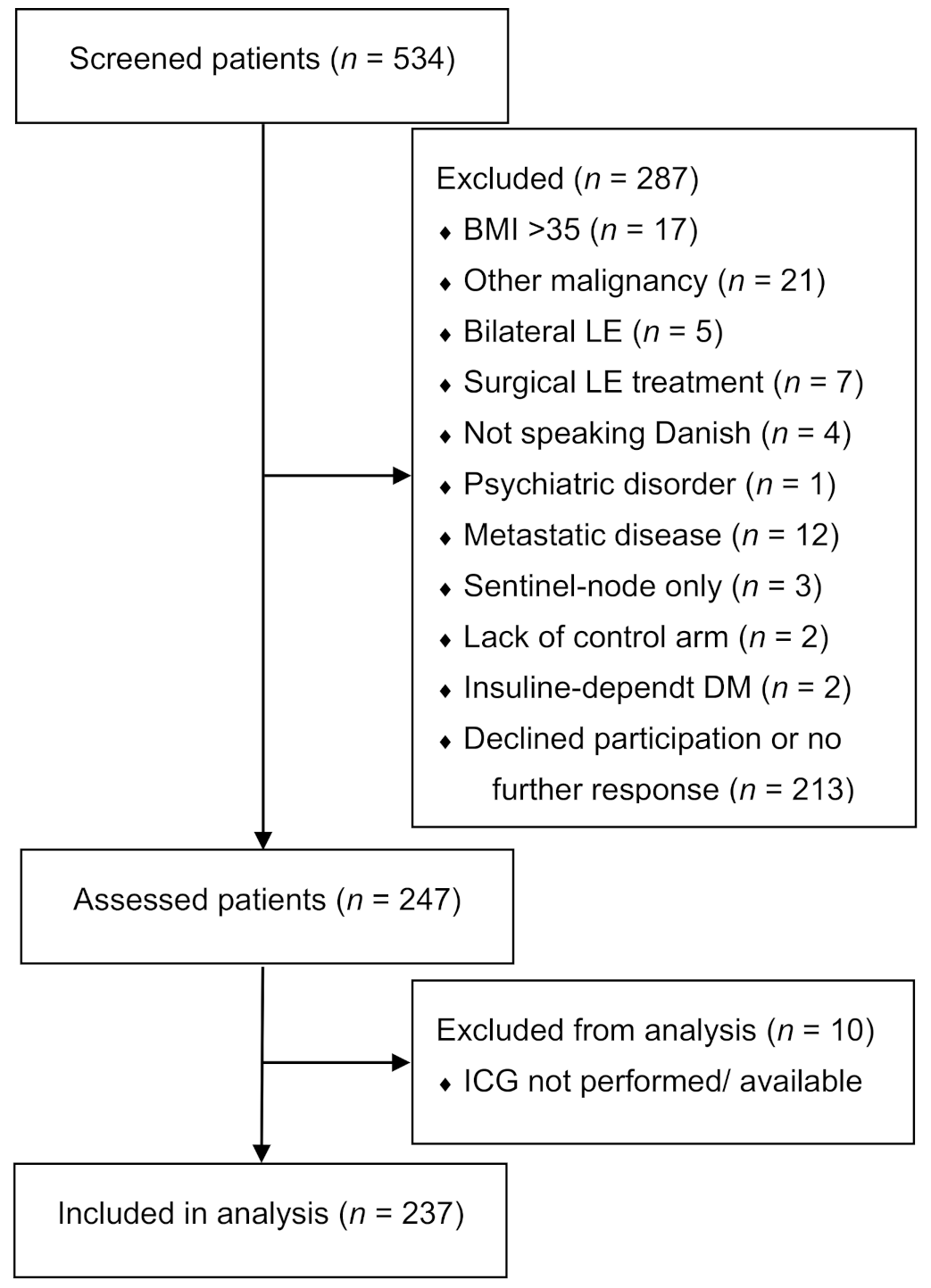
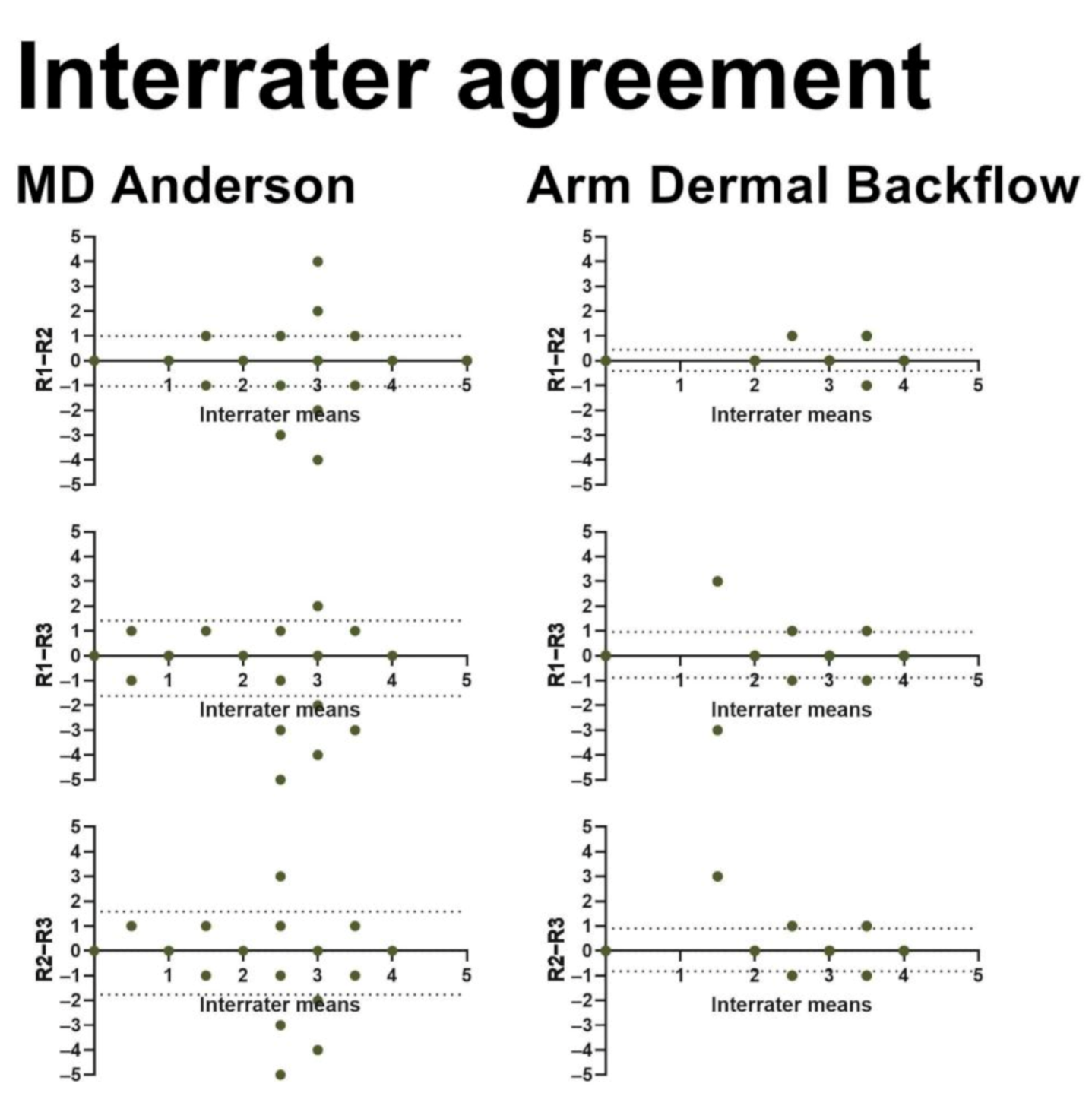
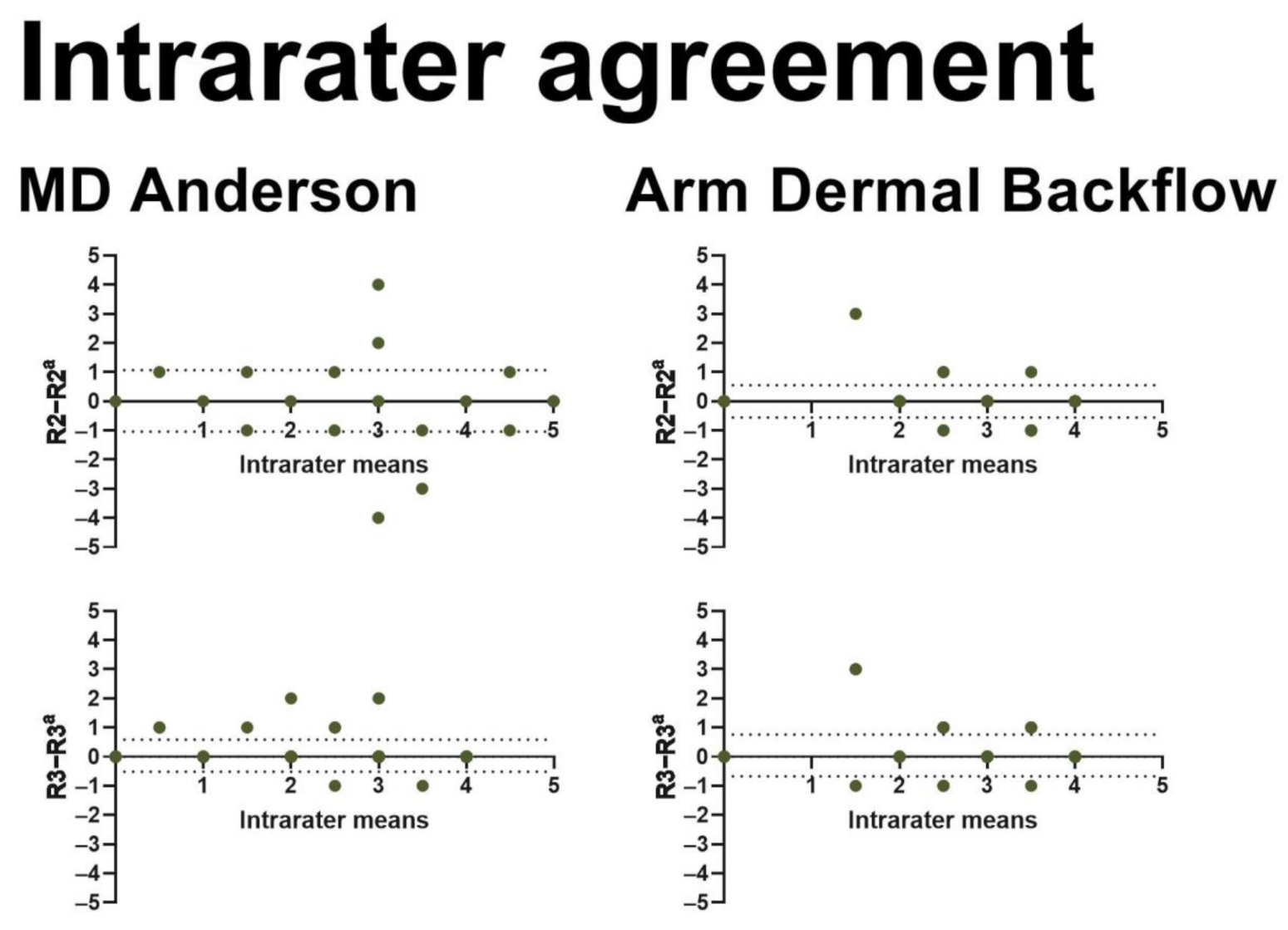
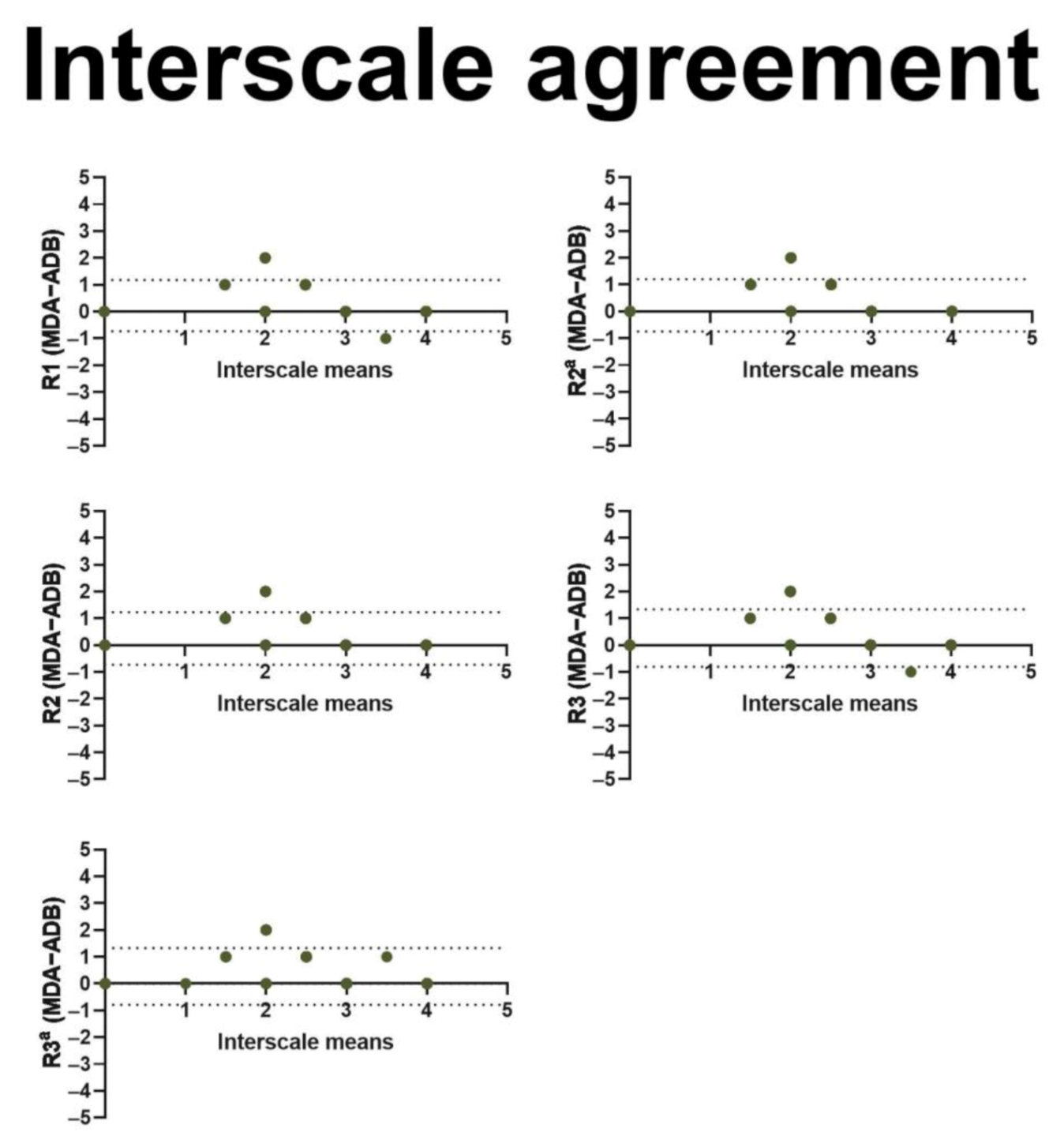
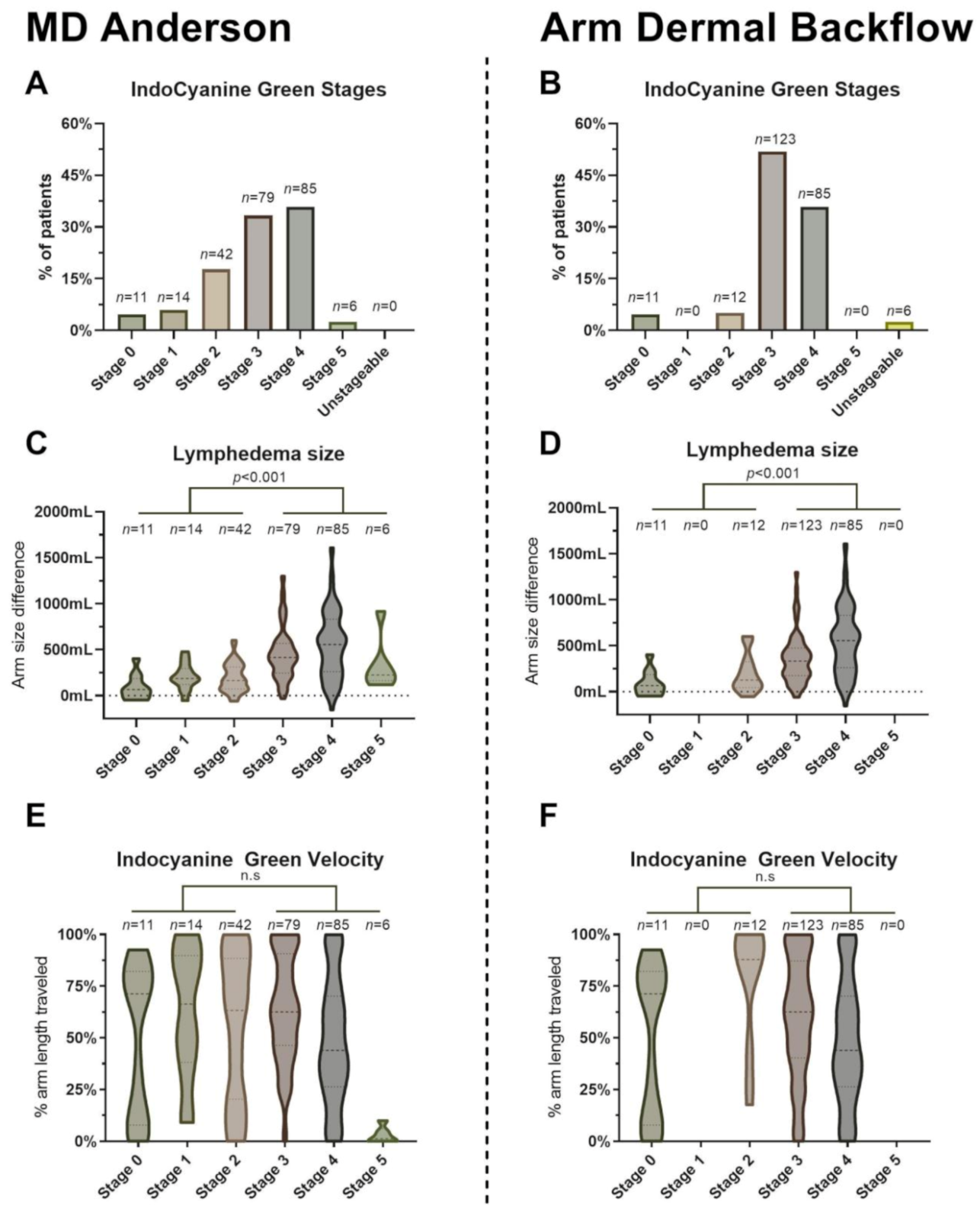
Indocyanine green lymphangiography (ICG-L) allows real-time investigation of lymphatics. Plastic surgeons performing lymphatic reconstruction use the ICG-L for patient selection and stratification using the MD Anderson (MDA) and the Arm Dermal Backflow (ADB) grading systems. However, the applicability of ICG-L in evaluating breast cancer-related lymphedema (BCRL) is sparse and not well established. This study comprehensively examines the usability of ICG-L in the assessment of BCRL. We prospectively performed ICG-L in 237 BCRL patients between January 2019 and February 2020. The aim of this study was to assess the interrater and intrarater agreement and interscale consensus of ratings made using the MDA and ADB scales. Three independent raters performed a total of 2607 ICG-L assessments. The ICG-L stage for each grading system was correlated to the lymphedema volume to assess the agreement between the ICG-L stage and clinical severity. The interrater agreement was near perfect for the MDA scale (kappa 0.82–0.90) and the ADB scale (kappa 0.80–0.91). Similarly, we found a near-perfect intrarater agreement for the MDA scale (kappa 0.84–0.94) and the ADB scale (kappa 0.88–0.89). The agreement between the MDA and the ADB scales was substantial (kappa 0.65–0.68); however, the ADB scale systematically overestimated lower ICG-L stages compared to the MDA scale. The volume of lymphedema correlated slightly with MDA stage (Spearmans rho = 0.44, p < 0.001) and ADB stage (rs = 0.35, p < 0.001). No serious adverse events occurred. The staging of BCRL with ICG-L is reliable, safe, and provides unique disease information unobtainable with clinical measurements alone. The MDA scale seems to provide better disease stratification compared to the ADB scale.
Keywords:
lymphedema; indocyanine green; lymphangiography; breast cancer; observer