Oncologic Outcomes of Laparoscopic Radical Hysterectomy Using the No-Look No-Touch Technique for Early Stage Cervical Cancer: A Propensity Score-Adjusted Analysis
by
 , ,
, ,
Atsushi Fusegi
1 ,
,
Hiroyuki Kanao
1,*,
Naoki Ishizuka
2,
Hidetaka Nomura
1,
Yuji Tanaka
1,
Makiko Omi
1,
Yoichi Aoki
1,
Tomoko Kurita
1,
Mayu Yunokawa
1,
Kohei Omatsu
1,
Koji Matsuo
3,4 and 
Naoyuki Miyasaka
5 1
Department of Gynecologic Oncology, Cancer Institute Hospital of the Japanese Foundation for Cancer Research, Tokyo 135-8550, Japan
2
Clinical Research Center, Cancer Institute Hospital of the Japanese Foundation for Cancer Research, Tokyo 135-8550, Japan
3
Division of Gynecologic Oncology, Department of Obstetrics and Gynecology, University of Southern California, Los Angeles, CA 90033, USA
4
Norris Comprehensive Cancer Center, University of Southern California, Los Angeles, CA 90033, USA
5
Department of Obstetrics and Gynecology, Tokyo Medical and Dental University, Tokyo 113-8510, Japan
*
Author to whom correspondence should be addressed.
Cancers 2021, 13(23), 6097; https://doi.org/10.3390/cancers13236097
Submission received: 1 October 2021
/
Revised: 4 November 2021
/
Accepted: 30 November 2021
/
Published: 3 December 2021
(This article belongs to the Special Issue Management of Early Stage Cervical Cancer)
Simple Summary
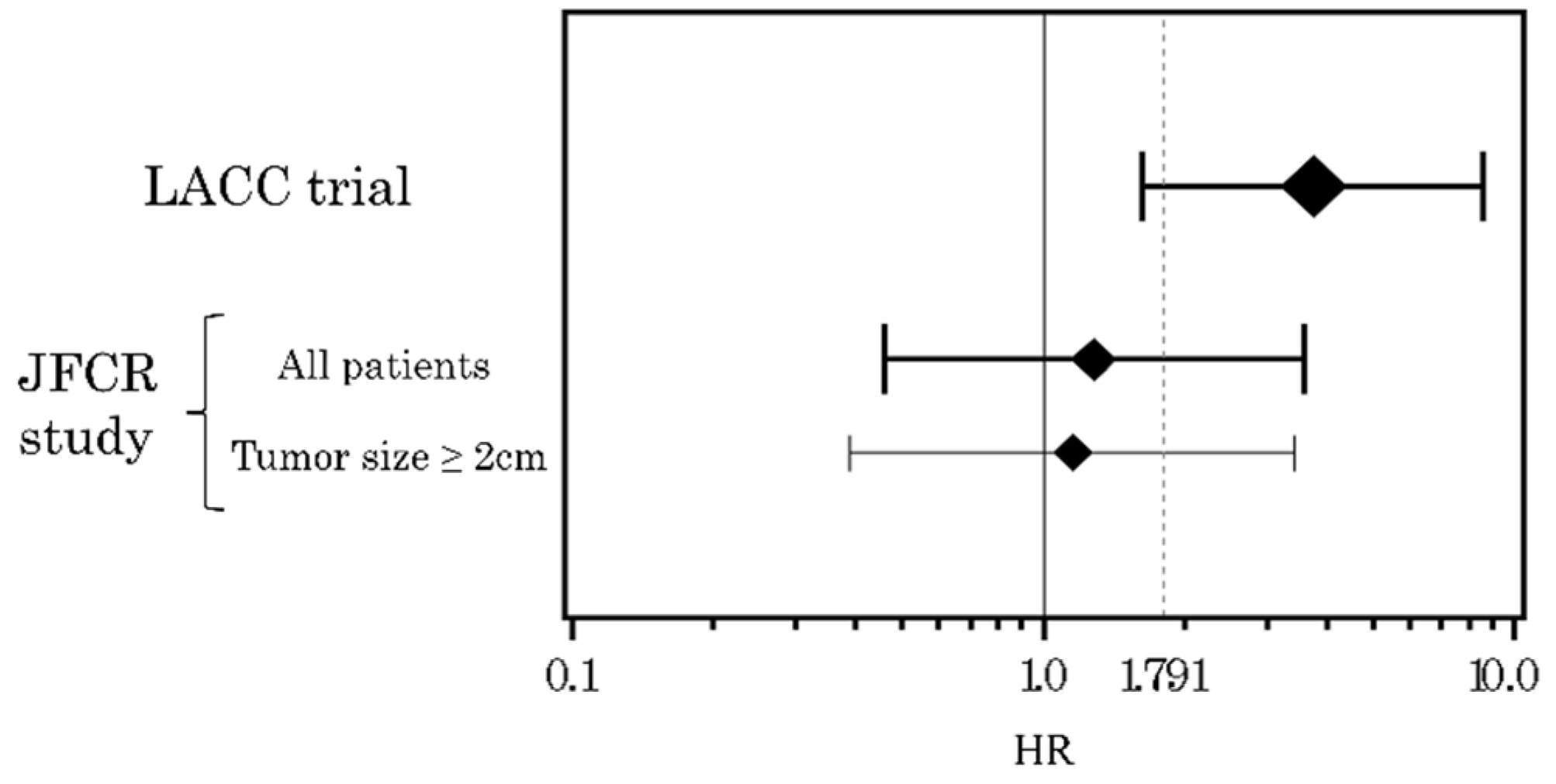
Minimally invasive radical hysterectomy is contraindicated in early stage cervical cancer cases because of poor prognosis. The no-look no-touch technique (NLNT) eliminates intraoperative tumor spillage and may improve survival outcomes. We evaluated oncologic outcomes of laparoscopic radical hysterectomy performed using NLNT. We compared the outcomes of abdominal radical hysterectomy and NLNT using inverse probability of treatment weighting. We found no significant differences in disease-free survival between the groups, even in patients with tumor sizes ≥ 2 cm. We also studied NLNT’s non-inferiority to abdominal radical hysterectomy by evaluating heterogeneity between the results of the Laparoscopic Approach to Cervical Cancer (LACC) trial and those of our study. We did not observe significant heterogeneity, although there was a trend toward a lower hazard ratio in our study compared with the non-inferiority margin in the LACC trial. Laparoscopic radical hysterectomy using NLNT is a plausible alternative surgical treatment for early stage cervical cancer.
Abstract
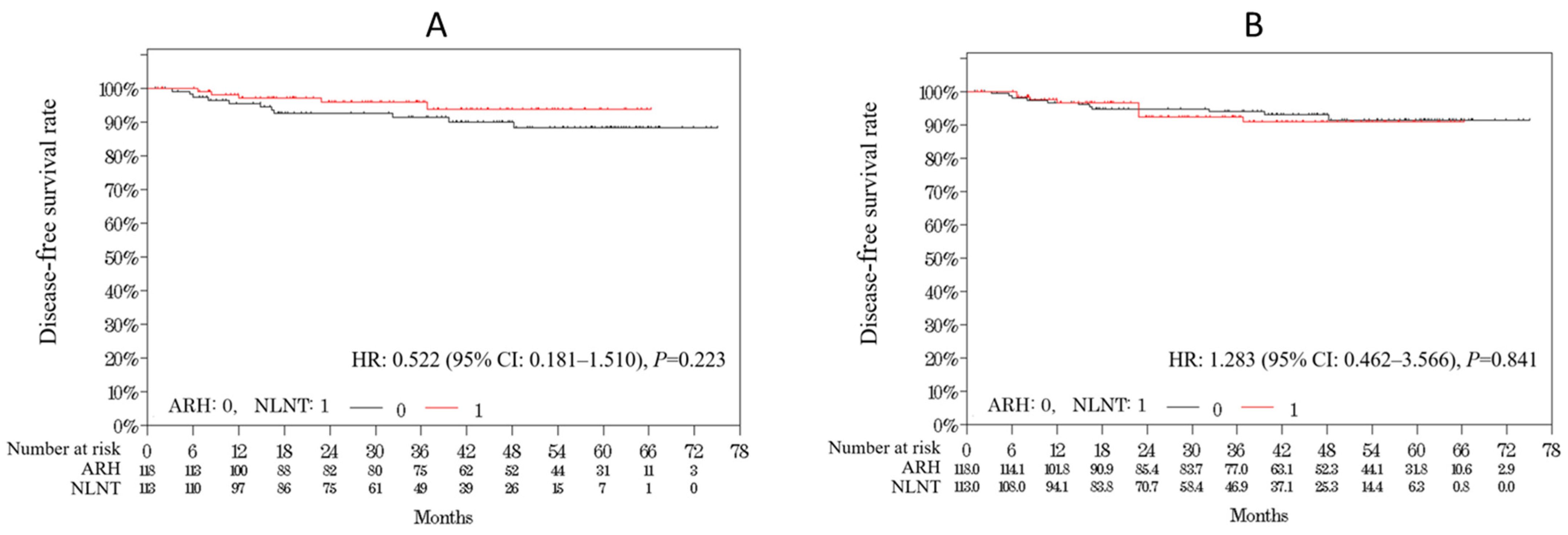
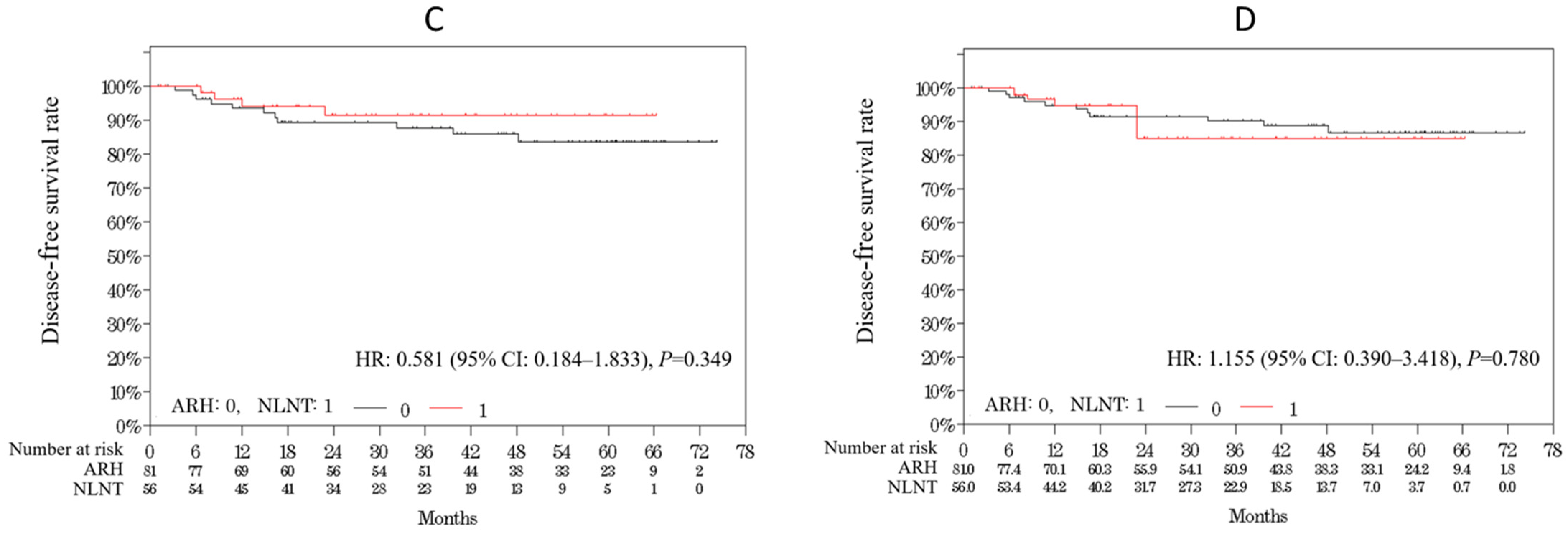
We evaluated oncologic outcomes of laparoscopic radical hysterectomy using the no-look no-touch technique (NLNT). We analyzed patients with early stage (IA2, IB1, and IIA1, FIGO2008) cervical cancer treated between December 2014 and December 2019. The primary endpoint was disease-free survival (DFS). We compared the outcomes of the abdominal radical hysterectomy (ARH) and NLNT groups using a Cox model with inverse probability of treatment weighting (IPTW), according to propensity scores. We also evaluated NLNT’s non-inferiority to ARH using an evaluation of heterogeneity between the results of the Laparoscopic Approach to Cervical Cancer (LACC) trial and our study. ARH and NLNT were performed in 118 and 113 patients, respectively. The median follow-up duration was 3.2 years. After IPTW adjustment, the 3-year DFS rates (NLNT 92.4%; ARH 94.0%) and overall survival rates did not differ significantly between the groups. Furthermore, the 3-year DFS rates for patients with tumor sizes ≥ 2 cm in the NLNT (85.0%) and ARH (90.3%) groups did not differ significantly. No significant heterogeneity was observed between the LACC trial and our study (I2 = 60.5%, p = 0.111), although there was a trend toward a lower hazard ratio in our study. Laparoscopic radical hysterectomy using NLNT provides a favorable prognosis for early stage cervical cancer.