CD14 Expressing Precursors Give Rise to Highly Functional Conventional Dendritic Cells for Use as Dendritic Cell Vaccine
by
 ,
,
Maud Plantinga
1,2 ,
,
Denise A. M. H. van den Beemt
1,2,
Ester Dünnebach
1,2 and
Stefan Nierkens
1,2,* 1
Center for Translational Immunology, University Medical Center Utrecht, 3584 CX Utrecht, The Netherlands
2
Princess Máxima Center for Pediatric Oncology, 3584 CS Utrecht, The Netherlands
*
Author to whom correspondence should be addressed.
Cancers 2021, 13(15), 3818; https://doi.org/10.3390/cancers13153818
Submission received: 25 June 2021
/
Revised: 23 July 2021
/
Accepted: 27 July 2021
/
Published: 29 July 2021
(This article belongs to the Special Issue Advances in Immuno-Oncology Research)
Simple Summary
Dendritic cells are attractive candidates for immunotherapy to prevent disease recurrence in cancer patients. Dendritic cells are a plastic population of antigen presenting cells and a variety of protocols have been described to generate dendritic cells from either monocytes or stem cells. To induce long lasting immunity, dendritic cells need to have a fully mature phenotype and activate naïve T-cells. Here, we describe a good manufacturer protocol to generate very potent conventional DC-like cells, derived from cord blood stem cells via a CD14+CD115+ precursor stage. They express high levels of CD1c and strongly activate both naïve as well as antigen-experienced T-cells. Implementation of this protocol in the clinic could advance the efficiency of dendritic cell based vaccines.
Abstract
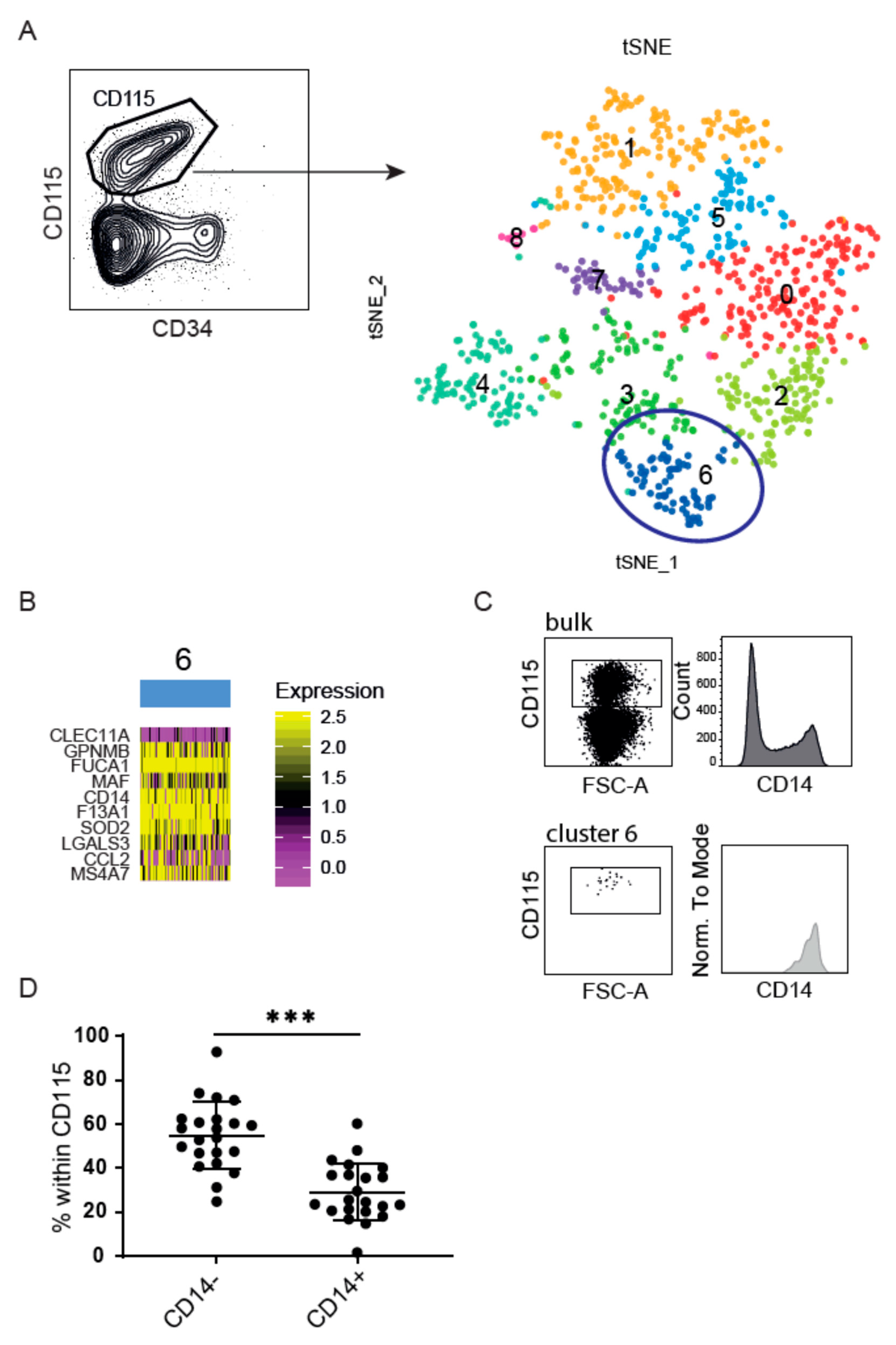
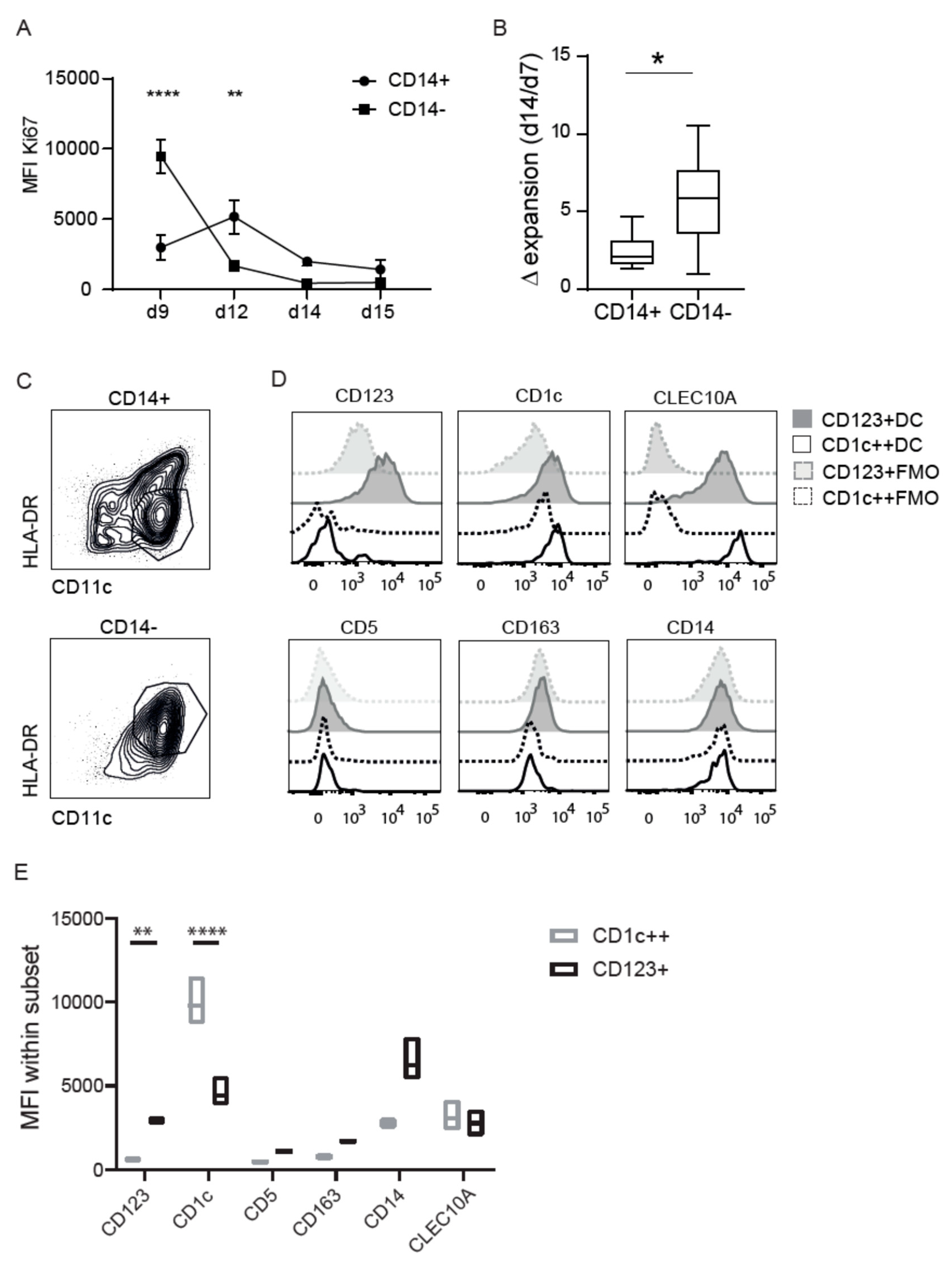
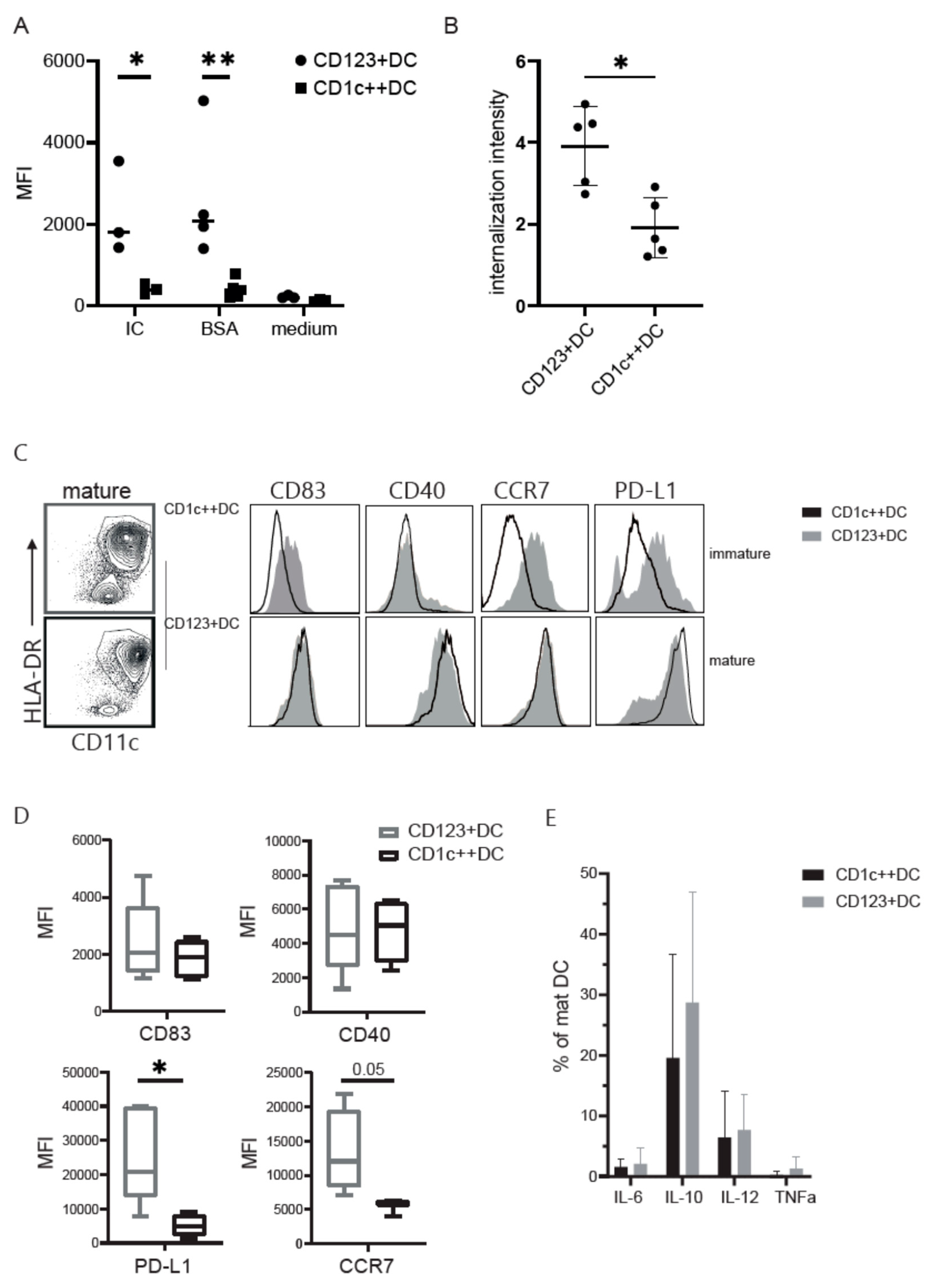
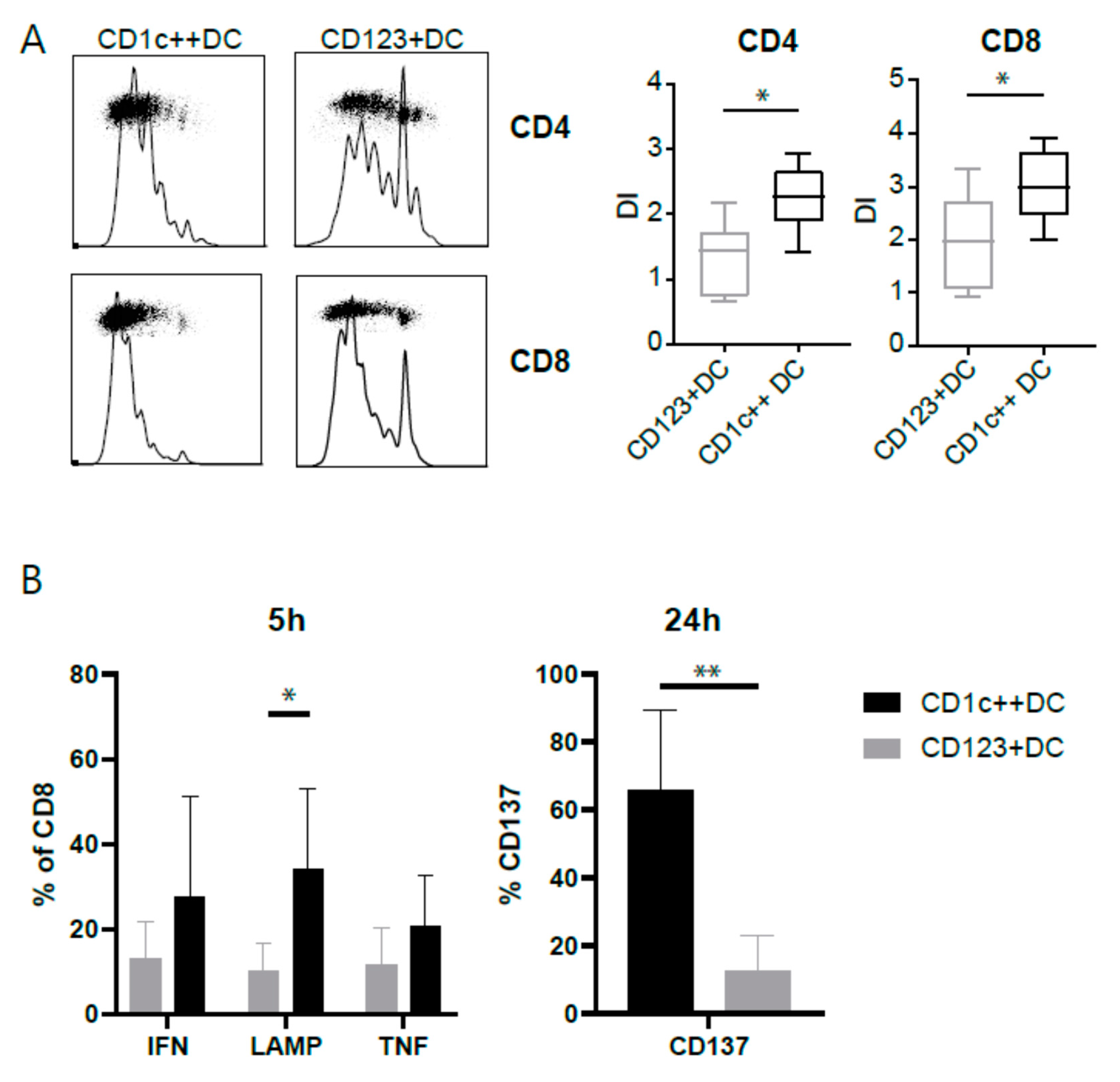
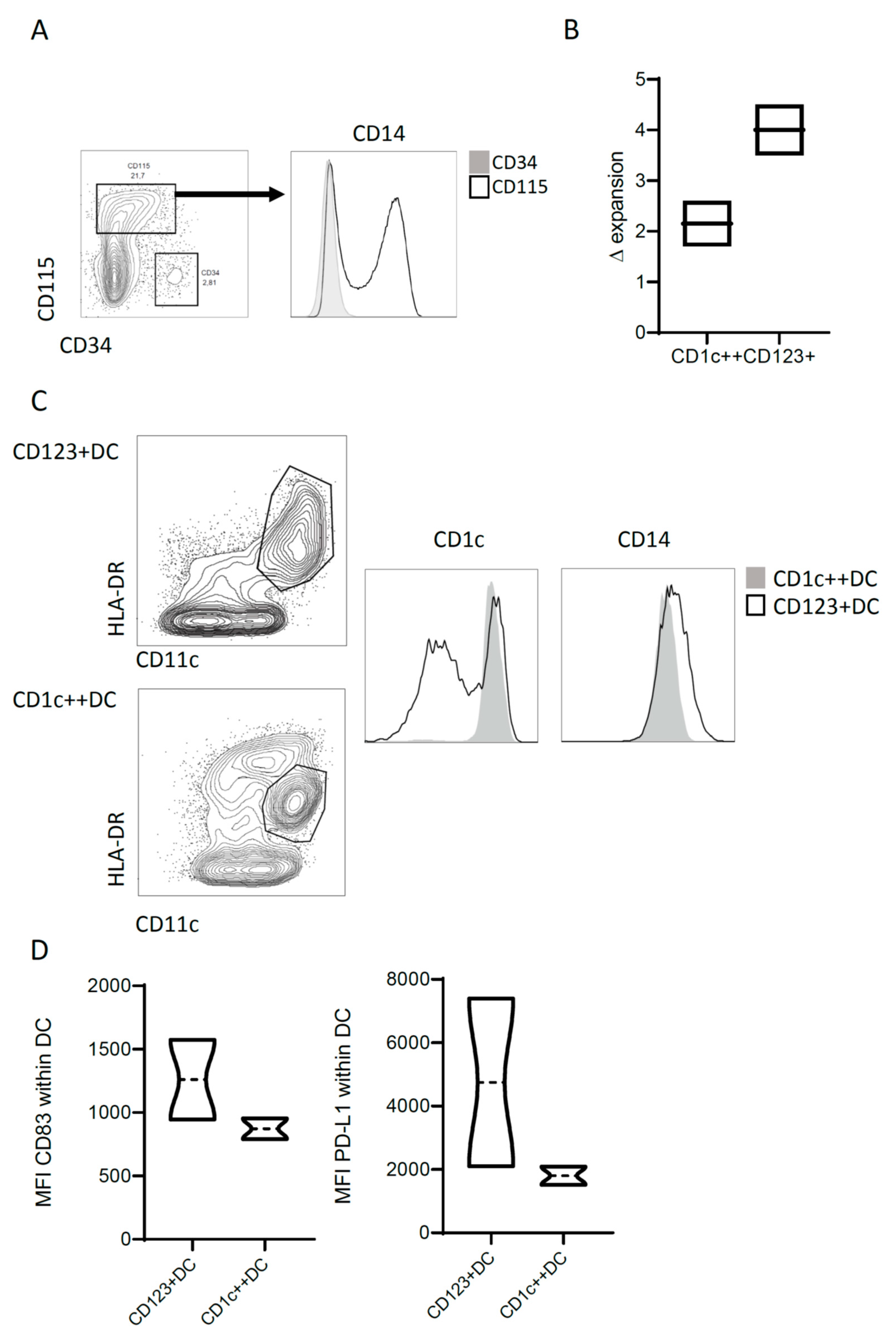
Induction of long-lasting immunity by dendritic cells (DCs) makes them attractive candidates for anti-tumor vaccination. Although DC vaccinations are generally considered safe, clinical responses remain inconsistent in clinical trials. This initiated studies to identify subsets of DCs with superior capabilities to induce effective and memory anti-tumor responses. The use of primary DCs has been suggested to overcome the functional limitations of ex vivo monocyte-derived DCs (moDC). The ontogeny of primary DCs has recently been revised by the introduction of DC3, which phenotypically resembles conventional (c)DC2 as well as moDC. Previously, we developed a protocol to generate cDC2s from cord blood (CB)-derived stem cells via a CD115-expressing precursor. Here, we performed index sorting and single-cell RNA-sequencing to define the heterogeneity of in vitro developed DC precursors and identified CD14+CD115+ expressing cells that develop into CD1c++DCs and the remainder cells brought about CD123+DCs, as well as assessed their potency. The maturation status and T-cell activation potential were assessed using flow cytometry. CD123+DCs were specifically prone to take up antigens but only modestly activated T-cells. In contrast, CD1c++ are highly mature and specialized in both naïve as well as antigen-experienced T-cell activation. These findings show in vitro functional diversity between cord blood stem cell-derived CD123+DC and CD1c++DCs and may advance the efficiency of DC-based vaccines.
Keywords:
dendritic cells; DC subsets; cord blood; vaccine; functional differences