


Simple Summary
MET amplification is one of the resistance determinants after EGFR-TKI therapy in EGFR mutant NSCLC. In this study, we evaluated the emergence of MET amplification after EGFR-TKI treatment failure. The median progression-free survival associated with the most recent EGFR-TKI treatment was shorter in MET amplification-positive patients than in negative patients. Smoking history and less intracranial progression are associated with MET amplification. Suboptimal responses with previous EGFR-TKI are associated with MET amplification. Proper MET amplification screening for therapeutic targeting is needed.
Abstract
Objectives: Patients with epidermal growth factor receptor (EGFR) mutant non-small cell lung cancer (NSCLC) ultimately acquire resistance to EGFR tyrosine kinase inhibitors (TKIs) during treatment. In 5–22% of these patients, resistance is mediated by aberrant mesenchymal epithelial transition factor (MET) gene amplification. Here, we evaluated the emergence of MET amplification after EGFR-TKI treatment failure based on clinical parameters. Materials and Methods: We retrospectively analyzed 186 patients with advanced EGFR-mutant NSCLC for MET amplification status by in situ hybridization (ISH) assay after EGFR-TKI failure. We collected information including baseline patient characteristics, metastatic locations and generation, line, and progression-free survival (PFS) of EGFR-TKI used before MET evaluation. Multivariate logistic regression analysis was conducted to evaluate associations between MET amplification status and clinical variables. Results: Regarding baseline EGFR mutations, exon 19 deletion was predominant (57.5%), followed by L858R mutation (37.1%). The proportions of MET ISH assays performed after first/second-generation and third-generation TKI failure were 66.7% and 33.1%, respectively. The median PFS for the most recent EGFR-TKI treatment was shorter in MET amplification-positive patients than in MET amplification-negative patients (median PFS 7.0 vs. 10.4 months, p = 0.004). Multivariate logistic regression demonstrated that a history of smoking, short PFS on the most recent TKI, and less intracranial progression were associated with a high probability of MET amplification (all p < 0.05). Conclusions: Our results demonstrated the distinct clinical characteristics of patients with MET amplification-positive NSCLC after EGFR-TKI therapy. Our clinical prediction can aid physicians in selecting patients eligible for MET amplification screening and therapeutic targeting.
1. Introduction
Patients with non-small cell lung cancer (NSCLC) with epidermal growth factor receptor (EGFR) gene mutations are defined as an important targetable molecular subset [1]. First- or second-generation EGFR tyrosine kinase inhibitor (EGFR-TKI) therapies in previous trials have been shown to induce robust tumor regression that lasts for 9–12 months on average [2,3]. In contrast, third-generation EGFR-TKIs, designed as antagonists to both T790M-mutated EGFR and conventional EGFR mutations (exon 19 deletion and L858R substitution), exhibit robust activity against T790M-mutant NSCLCs, showing progression after first-line EGFR-TKI therapy, with a progression-free survival (PFS) of 8.5 months and a prolonged PFS of 17.2 months in a upfront trial [4,5]. However, acquired resistance is inevitable in most patients during the course of EGFR-TKI therapy, and the molecular determinants of resistance are highly variable from patient to patient [6,7]. Moreover, recent studies elucidated uncommon EGFR mutation and coexisting genetic alteration might likely justify resistance to TKIs treatment. Different studies have assessed that the uncommon EGFR mutation and concurrent presence of mutation provide worse prognosis in EGFR-positive NSCLC patients treated with first-, second-, and third-generation TKIs [8,9].
Mesenchymal epithelial transition factor (MET) is a receptor for hepatocyte growth factor (HGF) in mammalian cells and transduces growth factor signals to downstream mitogen-activated protein kinase and phosphatidylinositol 3-kinase pathways through tyrosine kinase activity [10]. Aberrant MET activation promotes cellular proliferation, angiogenesis, and metastasis in many cancer types, including kidney, liver, stomach, breast, and brain cancers. Importantly, amplification of the MET gene has been reported to be involved in acquired resistance after EGFR-TKI therapy, accounting for 3–5% of resistance to first/second-generation EGFR-TKIs [11,12]. Resistance after first-line osimertinib therapy is even more enriched for MET amplification, which is the most common cause of resistance, observed in 15% of all cases [13]. Interestingly, the recent TATTON trial demonstrated the promising activity of the MET inhibitor salvolitinib in patients with MET-amplified NSCLC, establishing MET amplification as the most important actionable target after EGFR-TKI resistance besides T790M EGFR mutation [14,15]. However, the incidence of MET amplification is considerably low, limiting routine MET in situ hybridization (ISH) or mutation screening after EGFR-TKI failure.
NSCLC comprises heterogeneous molecular subtypes harboring mutations in various oncogenes, including EGFR, ALK receptor tyrosine kinase (ALK), ROS proto-oncogene 1 (ROS1), RET, B-Raf proto-oncogene, and human epidermal growth factor receptor 2. During analysis of the “long-tail” distribution patterns of mutations, previous studies have reported distinct clinicopathological characteristics of each genotype. For example, EGFR-mutant NSCLC is highly prevalent in never-smokers and Asian populations [16]. ALK rearrangement is associated with young patient age at diagnosis, signet ring cell pathology, and bronchioalveolar involvement pattern [17]. These features have facilitated the diagnosis of the different subtypes in clinical practice and enabled the focused molecular investigation of a wide range of clinical presentations of NSCLC. Moreover, recent studies have reported distinct clinical characteristics of patients with emergence of the T790M mutation during EGFR-TKI therapy [18]. However, the clinicopathological characteristics of MET-amplified NSCLC after EGFR-TKI failure have not been evaluated, and no predictive factors for MET amplification have been reported.
Accordingly, in this study, we retrospectively analyzed 186 consecutive patients with EGFR-mutant NSCLC who underwent MET ISH assays on rebiopsied tumors. We compared the clinicopathological parameters and therapy responses for the previous EGFR-TKI therapy between patients with MET-amplified and non-MET-amplified NSCLC. We ultimately aimed to develop a clinical prediction method for MET amplification after EGFR-TKI failure, which is an essential step for focused MET screening and subsequent therapeutic MET targeting in patients.
2. Methods
2.1. Patients
This study retrospectively analyzed 186 patients with advanced EGFR-mutant NSCLC who progressed on EGFR-TKI therapy and underwent MET ISH assays at Yonsei Cancer Center between April 2004 and March 2019. All patients received EGFR-TKI therapy, and post-treatment tumor biopsy was performed after documented progression. The clinicopathological data for the patients, including age, sex, smoking status, type of EGFR mutation, metastatic site, line of EGFR-TKI therapy, type of EGFR-TKIs used, and PFS on previous EGFR-TKI, were collected by electronic medical chart review. Informed consent for MET ISH analysis and use of data was obtained at the time of rebiopsy. This study was approved by the institutional review board of Severance Hospital (institutional review board approval No. 4-2019-0426).
2.2. Assessments
Chest computed tomography (CT) and abdominal CT were taken every 2–3 months during treatment. Besides regular assessment follow-up, additional imaging was performed according to the physician’s intention. The response to EGFR-TKI treatment was radiologically assessed according to the Response Evaluation Criteria in Solid Tumors, version 1.1. The objective response rate (ORR) was defined as the proportion of patients with complete response (CR) or partial response (PR), and the disease control rate (DCR) was defined as the proportion of patients with CR, PR, or stable disease. Progression-free survival (PFS) was defined as the time from the start of EGFR-TKI treatment to disease progression or death. Overall survival (OS) was defined as the start of TKI treatment initiation to the date of death. In order to characterize OS based on treatment lines and TKIs, we also measured OS from the date of MET ISH assays to the date of death.
2.3. EGFR Mutation and MET ISH Analyses
The diagnosis of NSCLC with non-squamous histology was confirmed by pathological and radiological examination. In all patients, the EGFR mutation status was evaluated using a PANA Mutyper detection kit. The MET amplification status was assessed using MET VENTANA dual probe sliver ISH assays, defining a MET/CEP7 signal ratio of greater than or equal to 2 or a MET average copy number in at least 50 enumerated cells of greater than or equal to 5 as MET amplification positive [19].
2.4. Statistical Analysis
The categorical parameters were compared between MET amplification-positive and -negative patients using chi-squared or Fisher’s exact tests as appropriate. Continuous variables were compared using Student’s t-tests. The PFS and OS were estimated using Kaplan–Meier curves, and subgroups were compared using log-rank tests. Logistic regression analyses were done to identify significant clinical factors predicting the emergence of MET amplification after EGFR-TKI therapy in the study cohort. Statistical analyses were performed with Statistical Package for Social Sciences (SPSS, Chicago, IL, USA) version 23.0 for Windows and GraphPad Prism version 8.0 (GraphPad Software, San Diego, CA, USA). Two-sided p-values of less than or equal to 0.05 were considered significant.
3. Results
3.1. Clinicopathological Characteristics of the Study Population
In total, 186 patients with advanced EGFR-mutant NSCLC were enrolled; the majority of patients were women (62.4%), and the median age was 61 years (range, 28–84 years). Most of the patients were never smokers (67.2%), and 0.0 pack-years of smoking was the median for the whole patient population. Regarding primary EGFR mutation status before MET ISH biopsy, the existence of exon 19 deletion mutation was predominant (57.5%), followed by L858R mutation (37.1%). Other mutations including Exon 20 insertion (p.A767_V769dup) (0.5%), G719X (1.1%), L861Q (2.2%), S768I (1.1%), and G179S/L861Q (0.5%) also existed. Almost all patients in the third-generation TKI cohort, except for six cases, had T790M mutation coexistence at the point of MET ISH assay owing to label use of third-generation TKIs in Korea. The six cases excluded from this regulation included one with off-label use of osimertinib, one with use of rociletinib during clinical trials (without T790M mutation), and three with use of mavelertinib during clinical trials (without T790M mutation). The proportions of MET ISH assays performed after first/second-generation (gefetinib, erlotinib, and afatinib) or third-generation (osimertinib, olmutinib, rociletinib, mavelertinib, and lazertinib) TKI failure were 66.7% and 33.3%, respectively. The proportions after failure of first-line and later-line EGFR-TKIs were 44.1% and 55.9%, respectively. At baseline, 78 (41.9%) patients had brain metastasis. At the time of MET ISH screening, 64 patients had progression of existing intracranial lesions, and 39 patients progressed with new lesions in the brain. Additionally, 8.1% (n = 15) of patients had liver metastasis at baseline. Eleven patients showed progression of existing lesions, and 28 patients had new liver metastasis at the time of rebiopsy.
MET amplification was identified in 30 (16.1%) of 186 patients. Patient characteristics based on MET amplification status are shown in Table 1, Tables S1 and S2. No significant differences in terms of patient characteristics, including sex, age, and liver metastasis status, were observed between the two groups. In contrast, smoking status (p = 0.013), previous TKI generation (p = 0.034), previous TKI line (p = 0.003), and intracranial progression at the time of TKI failure (p < 0.001) showed significant differences between the two groups. By the time of data lock (4 March 2021), 133 deaths (71.5%) had occurred, and 53 patients (28.5%) were alive. The median follow-up duration for all patients was 65.4 months.
Table 1.
Patient characteristics based on MET status (N = 186).
3.2. Treatment Outcomes of EGFR-TKIs According to MET Status
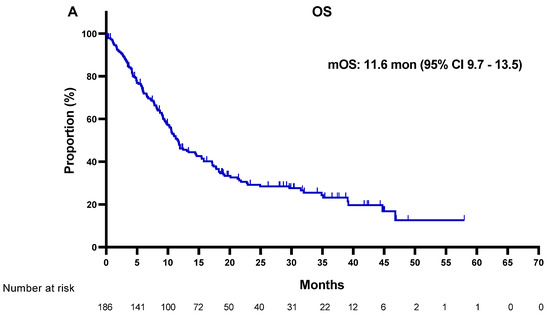
The median OS (calculated from the date of MET ISH assays) for the total population was:
11.6 months (95% confidence interval [CI]: 9.7–13.5) (Figure 1A). The median OS from the initiation of EGFR-TKI therapy was 39.2 months (95% CI: 33.6–44.8). Only slight differences in the two OS attributes were observed after early initiation of EGFR-TKI treatment in most patients. There were no significant differences in OS (from the initiation of EGFR-TKI therapy) according to the MET amplification status (40.0 months [95% CI: 34.7–45.2] versus 34.7 months [95% CI: 21.5–47.88]; p = 0.53). However, it was difficult to interpret the actual prognostic effects of MET status because some patients (n = 23) were enrolled in MET inhibitor clinical trials.
Figure 1.
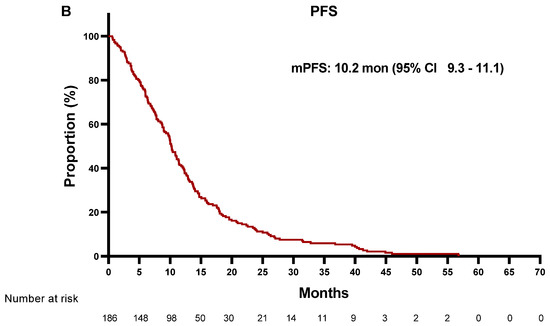
Kaplan–Meier plot for the entire study population. (A) Overall survival calculated from the date of MET ISH to the last follow-up date. (B) Progression-free survival of most recent tyrosine kinase inhibitor used. mOS, median overall survival; mPFS, median progression-free survival; CI, confidence interval; mon, month.
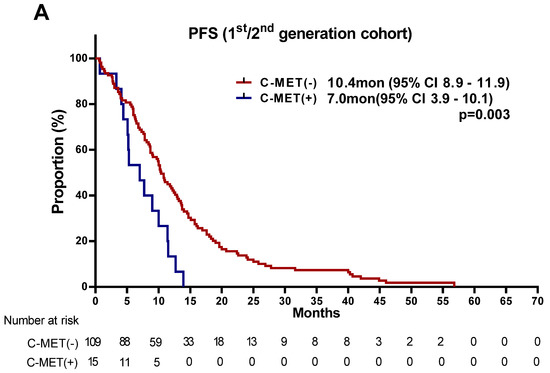
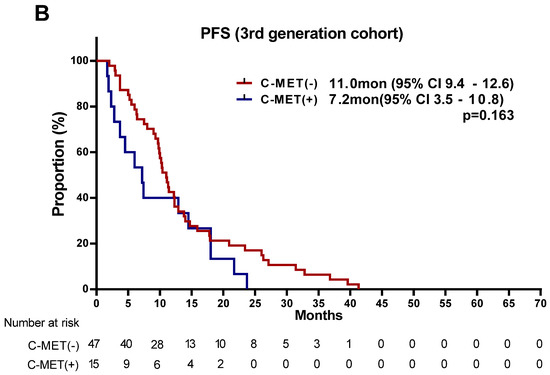
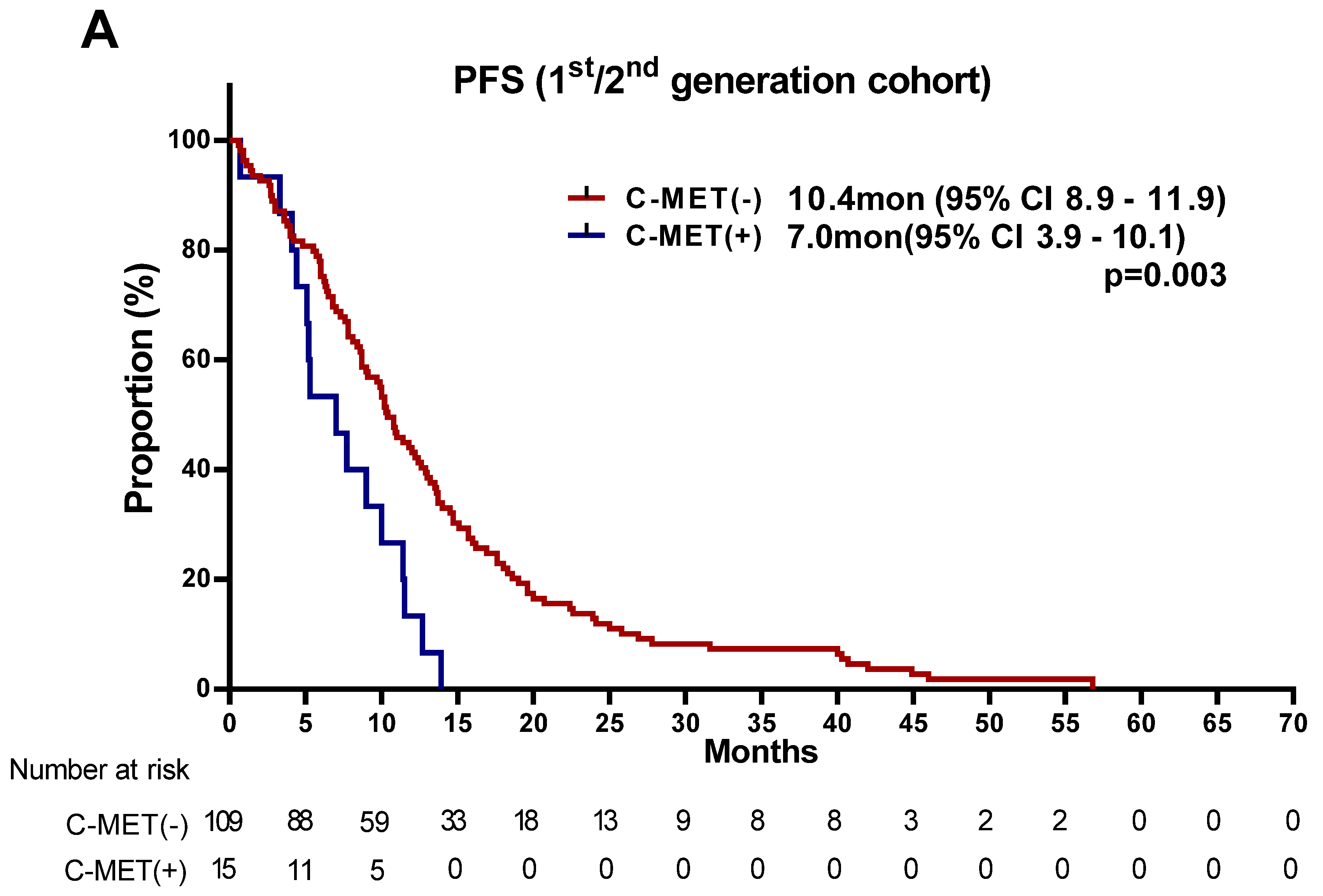
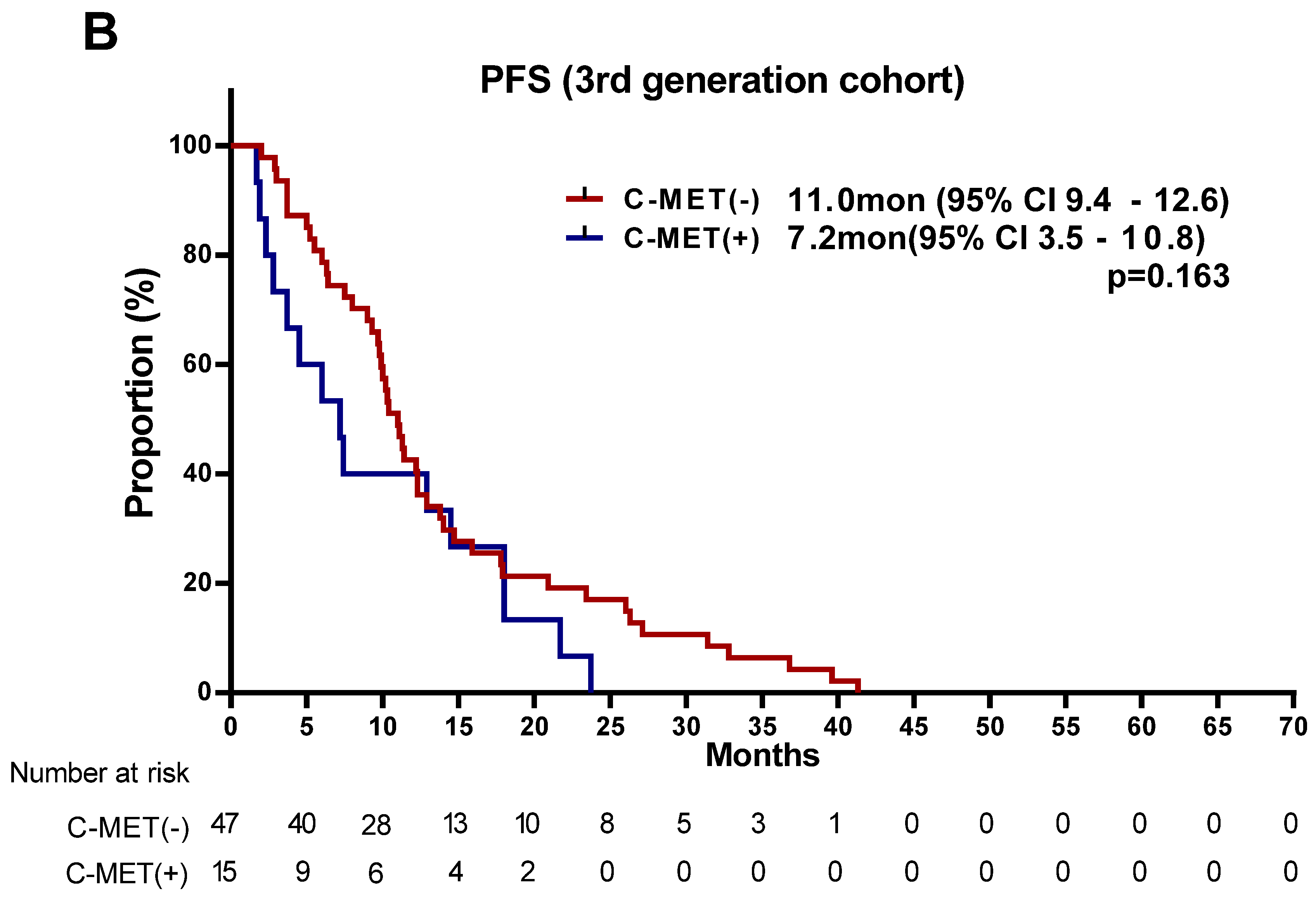
The median PFS for the latest TKI in the total population was 10.2 months (95% CI: 9.3–11.1) (Figure 1B). Because of differences in PFS between first-/second- and third-generation TKIs, we analyzed these drugs separately. For patients receiving first-/second-generation TKIs, PFS was significantly shorter in the MET-positive group than in the negative group (7.0 versus 10.4 months; p = 0.003). However, in the third-generation TKI group, there were no significant differences in PFS (7.2 versus 11.0 months; p = 0.163), and only similar trends were observed (Figure 2).
Figure 2.
Kaplan-Meier plot of the progression-free survival (PFS) stratified by MET amplification status. (A) PFS of 1st/2nd generation tyrosine kinase inhibitor cohort. (B) PFS of 3rd generation tyrosine kinase inhibitor cohort. MET, mesenchymal epithelial transition factor; CI, confidence interval; mon, month.
3.3. Potential Predictors for MET Amplification
Table 2 shows the results of univariate and multivariate analysis by a logistic regression model to determine the predictive factors for MET amplification. Univariate analysis showed that smoking status, TKI generation, lines of EGFR-TKI therapy, PFS of the most recent TKI, and brain metastasis status at presentation were significant predictive factors. However, multivariate analysis considering all covariables identified only smoking status (hazard ratio [HR]: 3.475, 95% CI: 1.326–8.440; p = 0.011), PFS of most recent TKI (HR: 0.898, 95% CI: 0.833–0.967; p = 0.004), and intracranial progression status (HR: 0.138, 95% CI: 0.051–0.347; p < 0.001) as significant variables. The presence of smoking history, short PFS on latest TKI, and no intracranial progression at EGFR-TKI failure were associated with a high probability of MET amplification emergence.
Table 2.
Logistic regression analysis of clinical factors predicting MET amplified status.
The T790M mutation was not included in the logistic regression analysis. The reason is that in the case of acquiring the T790M mutation, since most of the patients were administered the 3rd generation TKI, multicollinearity occurred between the two variables.
3.4. Characteristics of Patients with MET Amplification
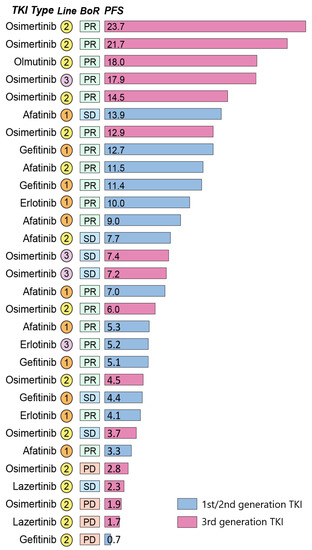
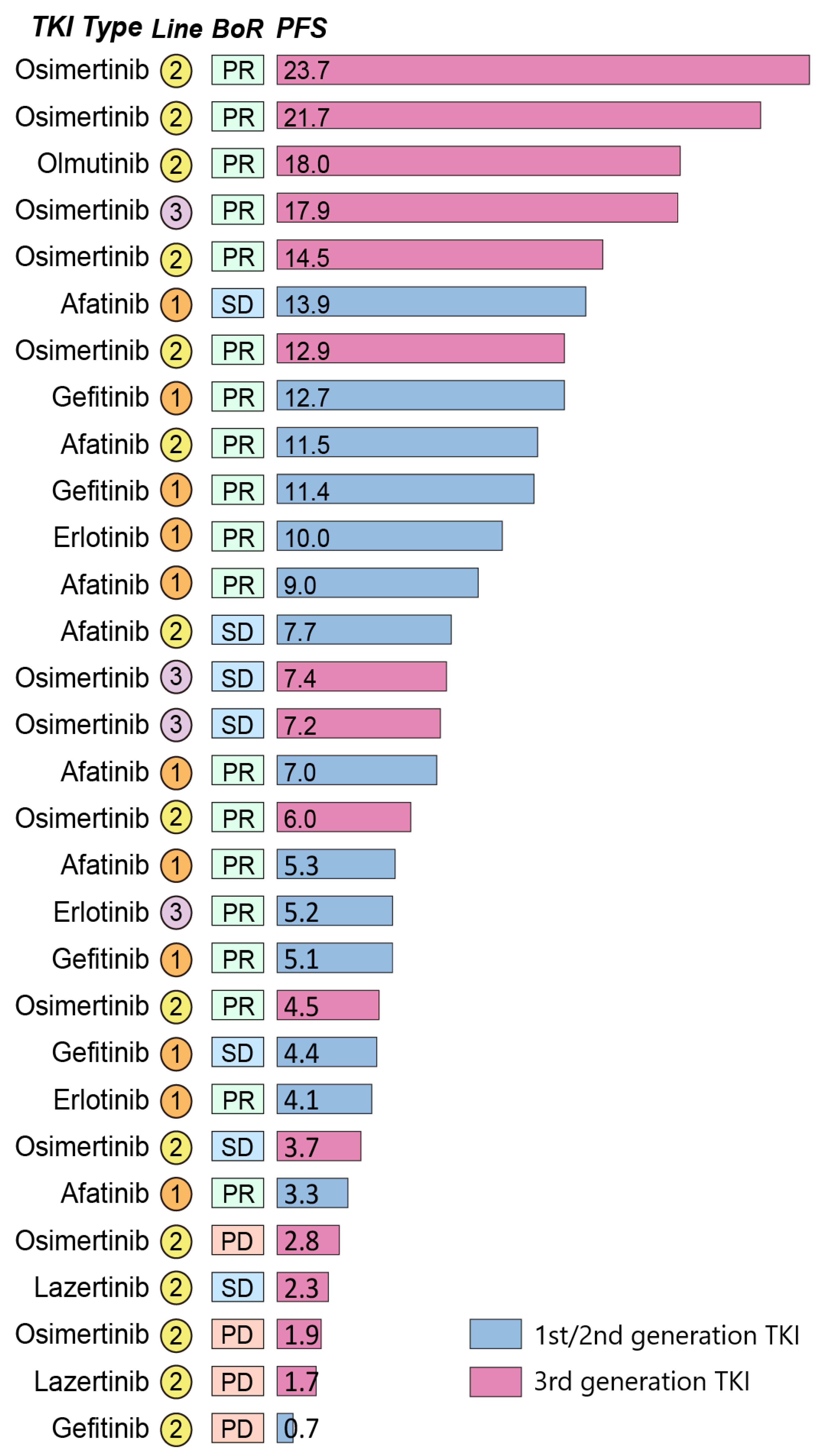
We further investigated the characteristics of patients with MET amplification (n = 30) based on the most recent TKI outcomes and progression site (Table 3). The ORR of first/second-generation TKIs was 73.3%, which was numerically higher than that of third-generation TKIs (53.3%), although the difference was not significant (p = 0.26). Additionally, the DCRs of the most recent first-/second-generation and third-generation TKIs were 93.3% and 80%, respectively (p = 0.29). Regarding the PFS of the most recent TKI, there were no differences between the first/second-generation group and the third-generation group (7.0 versus 7.2 month; p = 0.15). The treatment PFS of the most recent TKI and the best responses are shown in Figure 3.
Table 3.
Overall response based on latest TKIs of MET-positive patients (N = 30).
Figure 3.
Treatment response with the most recent tyrosine kinase inhibitor. Response indicates the best response to the treatment. The number in the bar indicates progression-free survival in months. TKI, tyrosine kinase inhibitor; BoR, best of response; PFS, progression-free survival; PR, partial response; SD, stable disease; PD, progressive disease.
There was no metastatic tropism of MET-amplified cancer during progression after EGFR-TKI therapy. The most common site of progression was primary lung lesions (n = 23), followed by intrathoracic lesions, which were indicative of lymph node, pleura, and secondary lung metastases (n = 17). Among the biopsy sites from which MET-amplified tissue was obtained, lung lesions were the most frequent site for rebiopsy (n = 17), followed by the liver because of its easy accessibility. The intrathoracic lymph node, extrathoracic lymph node, and skin were the rest of the sites for rebiopsy, as shown in Figure S1.
4. Discussion
Predictive genomic markers, particularly EGFR mutant status, are indicative of the efficacy of EGFR-TKI therapy in advanced NSCLC and are now routinely evaluated in clinical practice [20]. Additionally, after acquisition of resistance to first/second-generation EGFR-TKIs, it is now considered routine practice to rebiopsy the progression site for T790M mutation by locked nucleic acid-based assays to determine whether initiation of third-generation EGFR-TKIs is appropriate [21,22]. Because the T790M mutation is the most common mechanism (50–60%) for acquired resistance to first/second-generation TKIs, it is rational to screen for the presence of this mutation routinely [23]. However, other determinants of resistance cannot be as easily screened since they are so rare [24,25].
In our study, the proportion of MET-positive patients was 16.1%; in the first/second-generation and third-generation TKI failure groups, 12.1% and 24.2% of patients were positive for MET, respectively, consistent with previous studies [13,24,25,26]. Despite the limitations of our study as a single-center study of an unselected EGFR mutant lung cancer cohort, this consistent proportion of MET amplification as determinant of resistance makes it reasonable to find the enriched population to evaluate. To the best of our knowledge, this is the first MET ISH study to confine its scope to patients who developed resistance to prior EGFR-TKI failure, which we commonly encounter in our clinical practice. Although first-line osimertinib treatment is the standard of care in many countries, in Korea, it is not often selected as 1st line TKI because it is not covered by the National Insurance Service of Korea health insurance. Thus, this point should be considered because it is unclear whether the characteristics of the present patients are predictive of MET amplification in resistance after first-line therapy in osimertinib.
In this study, MET positivity occurred more frequently in ever-smokers who had a history of tobacco use than in never-smokers. Typically, other driver mutations (e.g., EGFR, ALK, and ROS) of lung cancer tend to occur in never-smokers [17,27,28]. Some reports have described a high incidence of ever-smokers in patients with MET exon 14 mutation [29,30] and in patients with MET amplification [31]. However, another study assumed that patients with MET exon 14 mutations whose smoking statuses were not known would be mostly never-smokers owing to their low tumor mutation burden [29]. Although further comprehensive profiling of patients with MET amplifications is needed, considering real-world data, it is reasonable to screen patients with a history of tobacco use for MET amplification.
Lung cancer easily metastasizes to the brain; indeed, 10–50% of all patients with lung cancer develop brain metastases during their disease course [32,33]. Moreover, patients with ALK-positive lung cancer have a higher incidence of brain metastasis, whereas patients with ROS1-positive lung cancer have a lower incidence [34,35,36]. To date, no data have described the preferred metastatic site of MET-positive lung cancer after previous TKI failure. A recent study in a treatment-naïve population showed that there were no differences in the presence of brain metastasis between MET-high and MET-low patients, as defined by copy number gain [37]. However, in our study, tropism toward the brain was less prominent in patients with MET amplification than in patients without amplification. Our findings suggested a need to identify pathways other than MET amplification as resistance mechanisms associated with EGFR-TKI failure in patients having brain metastasis.
Last but not least we found a significant tendency toward a shorter PFS for the most recent TKI in patients with MET amplification compared with that in patients without amplification. Some reports have shown that various oncogenic MET-driven cancers are associated with poor prognoses [38,39,40]. However, few studies have evaluated PFS associated with previous EGFR-TKIs in patients with MET amplification. A recent study of treatment-naïve EGFR mutant lung cancer showed that there were no differences in time to treatment failure (TTF) between two groups distinguished according to MET copy number. Instead, patients with MET amplification showed short TTF and poor outcomes (median TTF: 5 months; range, 1.0–6.4 months) [37]. Although different populations and parameters were used, our results were consistent with the previous results in terms of the shorter PFS in patients with MET amplification. Overall, we believe that it is reasonable to perform MET ISH in patients who show suboptimal responses to previous EGFR-TKIs in practice.
Clear-cut relationships between MET amplification, mutation, and overexpression have not yet been confirmed when collectively applied as predictive markers for MET-targeting therapy. Owing to failed results of clinical trials in which patients with MET-overexpressing tumors, measured by immunohistochemistry of MET protein, were enrolled [41], the preferred biomarker for recent MET-TKI clinical trials is gene amplification [15,42]. In addition to codrivers in NSCLC, MET mutations are generally thought to be mutually exclusive with mutations in other major lung cancer drivers and have not been shown to be associated with acquired resistance to EGFR-TKI therapy [43]. Because the de novo prevalence of MET amplification [44,45] and overlap by verifying degrees with other oncogenic drivers [46] are confounding factors that need to be studied in greater detail, our MET ISH results for EGFR-TKI-resistant lung cancer have clinical relevance in routine practice.
This study provided the largest series of MET analysis data in patients with lung cancer who developed resistance after EGFR-TKI therapy. However, there are still several limitations to this study. Given the retrospective nature of the study and the heterogeneity of the real world, this study was subject to potential biases. Additionally, because of the low discovery rate of MET positivity and the diversity of treatments, it was difficult to perform well-controlled analyses. Therefore, additional studies based on stratification of the generation of EGFT-TKIs and line of therapy should be conducted.
In conclusion, our results revealed the distinct clinical characteristics of patients with MET amplification-positive NSCLC after acquisition of resistance to EGFR-TKI therapy. Although MET amplified NSCLC is rare, our clinical predictions could aid physicians in identifying patients eligible for MET amplification screening and therapeutic targeting. Further efforts are required to standardize the diagnostic method and improve patient access to screening.
Supplementary Materials
The following are available online at https://www.mdpi.com/article/10.3390/cancers13123096/s1, Figure S1: Rebiopsied sites for MET ISH assays, Table S1: Patient characteristics based on MET status (first/second generation cohort, N = 124), Table S2. Patient characteristics based on MET status (third generation cohort, N = 62).
Author Contributions
Conceptualization, B.-C.A. and J.H.L.; methodology, B.-C.A. and J.H.L.; software, B.-C.A. and J.H.L.; validation, K.-H.P.; formal analysis, B.-C.A. and J.H.L.; investigation, B.-C.A. and J.H.L.; resources, B.-C.A., M.H.K., K.-H.P., C.-k.L., S.M.L., H.R.K., B.C.C. and M.H.H.; data curation, B.-C.A. and J.H.L.; writing—original draft preparation B.-C.A. and J.H.L.; writing—review and editing, M.H.H.; visualization, B.-C.A. and J.H.L.; supervision, M.H.H.; project administration B.C.C. and M.H.H.; funding acquisition, B.C.C. All authors have read and agreed to the published version of the manuscript.
Funding
No specific funding was disclosed.
Institutional Review Board Statement
The study protocol adhered to the ethical guidelines of the 1975 Declaration of Helsinki and was approved by the institutional review board of Severance Hospital (institutional review board approval No. 4-2019-0426).
Informed Consent Statement
The requirement for written informed consent was waived, given the retrospective nature of the study.
Data Availability Statement
The data that support the findings of this study are available from the corresponding author upon reasonable request.
Acknowledgments
We thank all of the patients, the investigators, research nurses, and operations staff who participated in this study.
Conflicts of Interest
The authors have no conflict of interest to disclose.
References
- Rosell, R.; Bivona, T.G.; Karachaliou, N. Genetics and biomarkers in personalisation of lung cancer treatment. Lancet 2013, 382, 720–731. [Google Scholar] [CrossRef] [Scilit]
- Mok, T.S.; Wu, Y.; Thongprasert, S.; Yang, C.; Chu, D.; Saijo, N.; Sunpaweravong, P.; Han, B.; Margono, B.; Nishiwaki, Y.; et al. Gefitinib or carboplatin-paclitaxel in pulmonary adenocarcinoma. N. Engl. J. Med. 2009, 361, 947–957. [Google Scholar] [CrossRef] [Scilit]
- Park, K.; Tan, E.H.; O’Byrne, K.; Zhang, L.; Boyer, M.; Mok, T.; Hirsh, V.; Yang, J.h.; Lee, K.H.; Lu, S.; et al. Afatinib versus gefitinib as first-line treatment of patients with EGFR mutation-positive non-small-cell lung cancer (LUX-Lung 7): A phase 2B, open-label, randomised controlled trial. Lancet Oncol. 2016, 17, 577–589. [Google Scholar] [CrossRef] [Scilit]
- Soria, J.C.; Ohe, Y.; Vansteenkiste, J.; Reungwetwattana, T.; Chewaskulyong, B.; Lee, K.H.; Dechaphunkul, A.; Imamura, F.; Nogami, N.; Kurata, T.; et al. Osimertinib in Untreated EGFR-Mutated Advanced Non-Small-Cell Lung Cancer. N. Engl. J. Med. 2018, 378, 113–125. [Google Scholar] [CrossRef] [Scilit] [PubMed]
- Mok, T.S.; Wu, Y.L.; Ahn, M.J.; Garassino, M.C.; Kim, H.R.; Ramalingam, S.S.; Shepherd, F.A.; He, Y.; Akamatsu, H.; Theelen, W.S.; et al. Osimertinib or Platinum-Pemetrexed in EGFR T790M-Positive Lung Cancer. N. Engl. J. Med. 2017, 376, 629–640. [Google Scholar] [CrossRef] [Scilit] [PubMed]
- Oxnard, G.R.; Hu, Y.; Mileham, K.F.; Husain, H.; Costa, D.B.; Tracy, P.; Feeney, N.; Sholl, L.M.; Dahlberg, S.E.; Redig, A.J.; et al. Assessment of Resistance Mechanisms and Clinical Implications in Patients With EGFR T790M-Positive Lung Cancer and Acquired Resistance to Osimertinib. JAMA Oncol. 2018, 4, 1527–1534. [Google Scholar] [CrossRef] [Scilit] [PubMed]
- Lim, S.M.; Syn, N.L.; Cho, B.C.; Soo, R.A. Acquired resistance to EGFR targeted therapy in non-small cell lung cancer: Mechanisms and therapeutic strategies. Cancer Treat. Rev. 2018, 65, 1–10. [Google Scholar] [CrossRef] [Scilit]
- Gristina, V.; La Mantia, M.; Galvano, A.; Cutaia, S.; Barraco, N.; Castiglia, M.; Perez, A.; Bono, M.; Iacono, F.; Greco, M. Non-Small Cell Lung Cancer Harboring Concurrent EGFR Genomic Alterations: A Systematic Review and Critical Appraisal of the Double Dilemma. J. Mol. Pathol. 2021, 2, 173–196. [Google Scholar] [CrossRef] [Scilit]
- Gristina, V.; Malapelle, U.; Galvano, A.; Pisapia, P.; Pepe, F.; Rolfo, C.; Tortorici, S.; Bazan, V.; Troncone, G.; Russo, A. The significance of epidermal growth factor receptor uncommon mutations in non-small cell lung cancer: A systematic review and critical appraisal. Cancer Treat. Rev. 2020, 85, 101994. [Google Scholar] [CrossRef] [Scilit] [PubMed]
- Gherardi, E.; Birchmeier, W.; Birchmeier, C.; Vande Woude, G. Targeting MET in cancer: Rationale and progress. Nat. Rev. Cancer 2012, 12, 89–103. [Google Scholar] [CrossRef] [Scilit] [PubMed]
- Engelman, J.A.; Zejnullahu, K.; Mitsudomi, T.; Song, Y.; Hyland, C.; Park, J.O.; Lindeman, N.; Gale, C.M.; Zhao, X.; Christensen, J.; et al. MET amplification leads to gefitinib resistance in lung cancer by activating ERBB3 signaling. Science 2007, 316, 1039–1043. [Google Scholar] [CrossRef] [Scilit] [PubMed]
- Yu, H.A.; Arcila, M.E.; Rekhtman, N.; Sima, C.S.; Zakowski, M.F.; Pao, W.; Kris, M.G.; Miller, V.A.; Ladanyi, M.; Riely, G.J. Analysis of tumor specimens at the time of acquired resistance to EGFR-TKI therapy in 155 patients with EGFR-mutant lung cancers. Clin. Cancer Res. 2013, 19, 2240–2247. [Google Scholar] [CrossRef] [Scilit]
- Ramalingam, S.S.; Cheng, Y.; Zhou, C.; Ohe, Y.; Imamura, F.; Cho, B.C.; Lin, M.; Majem, M.; Shah, R.; Rukazenkov, Y.; et al. Mechanisms of acquired resistance to first-line osimertinib: Preliminary data from the phase III FLAURA study. Ann. Oncol. 2018, 29 (Suppl. 9), 173–178. [Google Scholar] [CrossRef] [Scilit]
- Gan, H.K.; Millward, M.J.; Hua, Y.; Qi, C.; Sai, Y.; Su, W.; Wang, J.; Zhang, L.; Frigault, M.M.; Morgan, S.; et al. First-in-Human Phase I Study of the Selective MET Inhibitor, Savolitinib, in Patients with Advanced Solid Tumors: Safety, Pharmacokinetics and Anti-Tumor Activity. Clin. Cancer Res. 2019. [Google Scholar] [CrossRef] [Scilit]
- Yu, H.; Ahn, M.-J.; Kim, S.-W.; Cho, B.C.; Sequist, L.; Orlov, S.; Ottesen, L.H.; Verheijen, R.B.; Mellemgaard, A.; Wessen, J.; et al. Abstract CT032: TATTON Phase Ib expansion cohort: Osimertinib plus savolitinib for patients (pts) with EGFR-mutant, MET-amplified NSCLC after progression on prior first/second-generation epidermal growth factor receptor (EGFR) tyrosine kinase inhibitor (TKI). In Proceedings of the AACR Annual Meeting, Atlanta, GA, USA, 29 March–3 April 2019. [Google Scholar]
- Lee, Y.J.; Kim, J.H.; Kim, S.K.; Ha, S.J.; Mok, T.S.; Mitsudomi, T.; Cho, B.C. Lung cancer in never smokers: Change of a mindset in the molecular era. Lung Cancer 2011, 72, 9–15. [Google Scholar] [CrossRef] [Scilit]
- Shaw, A.T.; Yeap, B.Y.; Mino-Kenudson, M.; Digumarthy, S.R.; Costa, D.B.; Heist, R.S.; Solomon, B.; Stubbs, H.; Admane, S.; McDermott, U.; et al. Clinical features and outcome of patients with non-small-cell lung cancer who harbor EML4-ALK. J. Clin. Oncol. 2009, 27, 4247–4253. [Google Scholar] [CrossRef] [Scilit]
- Wang, S.; Yan, B.; Zhang, Y.; Xu, J.; Qiao, R.; Dong, Y.; Zhang, B.; Zhao, Y.; Zhang, L.; Qian, J.; et al. Different characteristics and survival in non-small cell lung cancer patients with primary and acquired EGFR T790M mutation. Int. J. Cancer 2019, 144, 2880–2886. [Google Scholar] [CrossRef] [Scilit] [PubMed]
- Oxnard, G.R.; Yang, J.C.H.; Yu, H.; Kim, S.W.; Saka, H.; Horn, L.; Goto, K.; Ohe, Y.; Mann, H.; Thress, K.S.; et al. TATTON: A multi-arm, phase Ib trial of osimertinib combined with selumetinib, savolitinib, or durvalumab in EGFR-mutant lung cancer. Ann. Oncol. 2020, 31, 507–516. [Google Scholar] [CrossRef] [Scilit]
- Lynch, T.J.; Bell, D.W.; Sordella, R.; Gurubhagavatula, S.; Okimoto, R.A.; Brannigan, B.W.; Harris, P.L.; Haserlat, S.M.; Supko, J.G.; Haluska, F.G.; et al. Activating Mutations in the Epidermal Growth Factor Receptor Underlying Responsiveness of Non–Small-Cell Lung Cancer to Gefitinib. N. Engl. J. Med. 2004, 350, 2129–2139. [Google Scholar] [CrossRef] [Scilit] [PubMed]
- Arcila, M.E.; Oxnard, G.R.; Nafa, K.; Riely, G.J.; Solomon, S.B.; Zakowski, M.F.; Kris, M.G.; Pao, W.; Miller, V.A.; Ladanyi, M. Rebiopsy of Lung Cancer Patients with Acquired Resistance to EGFR Inhibitors and Enhanced Detection of the T790M Mutation Using a Locked Nucleic Acid-Based Assay. Clin. Cancer Res. 2011, 17, 1169–1180. [Google Scholar] [CrossRef] [Scilit]
- Cross, D.A.E.; Ashton, S.E.; Ghiorghiu, S.; Eberlein, C.; Nebhan, C.A.; Spitzler, P.J.; Orme, J.P.; Finlay, M.R.V.; Ward, R.A.; Mellor, M.J.; et al. AZD9291, an Irreversible EGFR TKI, Overcomes T790M-Mediated Resistance to EGFR Inhibitors in Lung Cancer. Cancer Discov. 2014, 4, 1046–1061. [Google Scholar] [CrossRef] [Scilit] [PubMed]
- Kobayashi, S.; Boggon, T.J.; Dayaram, T.; Jänne, P.A.; Kocher, O.; Meyerson, M.; Johnson, B.E.; Eck, M.J.; Tenen, D.G.; Halmos, B. EGFR Mutation and Resistance of Non–Small-Cell Lung Cancer to Gefitinib. N. Engl. J. Med. 2005, 352, 786–792. [Google Scholar] [CrossRef] [Scilit] [PubMed]
- Nagano, T.; Tachihara, M.; Nishimura, Y. Mechanism of Resistance to Epidermal Growth Factor Receptor-Tyrosine Kinase Inhibitors and a Potential Treatment Strategy. Cells 2018, 7. [Google Scholar] [CrossRef] [Scilit]
- Ortiz-Cuaran, S.; Scheffler, M.; Plenker, D.; Dahmen, l.; Scheel, A.H.; Fernandez-Cuesta, L.; Meder, L.; Lovly, C.M.; Persigehl, T.; Merkelbach-Bruse, S.; et al. Heterogeneous Mechanisms of Primary and Acquired Resistance to Third-Generation EGFR Inhibitors. Clin. Cancer Res. 2016, 22, 4837–4847. [Google Scholar] [CrossRef] [Scilit]
- Loriot, Y.; Planchard, D.; André, F.; Gobert, A.; Soria, J.C.; Auger, N.; Lacroix, L. EGFR-independent mechanisms of acquired resistance to AZD9291 in EGFR T790M-positive NSCLC patients. Ann. Oncol. 2015, 26, 2073–2078. [Google Scholar] [CrossRef] [Scilit]
- Pao, W.; Miller, V.; Zakowski, M.; Doherty, J.; Politi, K.; Sarkaria, I.; Singh, B.; Heelan, R.; Rusch, V.; Fulton, L.; et al. EGF receptor gene mutations are common in lung cancers from “never smokers” and are associated with sensitivity of tumors to gefitinib and erlotinib. Proc. Natl. Acad. Sci. USA 2004, 101, 13306–13311. [Google Scholar] [CrossRef] [Scilit]
- Bergethon, K.; Shaw, A.T.; Ou, S.H.; Katayama, R.; Lovly, C.M.; McDonald, N.T.; Massion, P.P.; Siwak-Tapp, C.; Gonzalez, A.; Fang, R.; et al. ROS1 rearrangements define a unique molecular class of lung cancers. J. Clin. Oncol. 2012, 30, 863–870. [Google Scholar] [CrossRef] [Scilit]
- Schrock, A.B.; Frampton, G.M.; Suh, J.; Chalmers, Z.R.; Rosenzweig, M.; Erlich, R.L.; Halmos, B.; Goldman, J.; Forde, P.; Leuenberger, K.; et al. Characterization of 298 Patients with Lung Cancer Harboring MET Exon 14 Skipping Alterations. J. Thorac. Oncol. 2016, 11, 1493–1502. [Google Scholar] [CrossRef] [Scilit]
- Awad, M.M.; Oxnard, G.R.; Jackman, D.M.; Savukoski, D.O.; Hall, D.; Shivdasani, P.; Heng, J.C.; Dahlberg, S.E.; Janne, P.A.; Verma, S.; et al. MET Exon 14 Mutations in Non-Small-Cell Lung Cancer Are Associated With Advanced Age and Stage-Dependent MET Genomic Amplification and c-Met Overexpression. J. Clin. Oncol. 2016, 34, 721–730. [Google Scholar] [CrossRef] [Scilit]
- Bubendorf, L.; Dafni, U.; Schöbel, M.; Finn, S.P.; Tischler, V.; Sejda, A.; Marchetti, A.; Thunnissen, E.; Verbeken, E.K.; Warth, A.; et al. Prevalence and clinical association of MET gene overexpression and amplification in patients with NSCLC: Results from the European Thoracic Oncology Platform (ETOP) Lungscape project. Lung Cancer 2017, 111, 143–149. [Google Scholar] [CrossRef] [Scilit]
- Sørensen, J.B.; Hansen, H.H.; Hansen, M.; Dombernowsky, P. Brain metastases in adenocarcinoma of the lung: Frequency, risk groups, and prognosis. J. Clin. Oncol. 1988, 6, 1474–1480. [Google Scholar] [CrossRef] [Scilit]
- Villano, J.L.; Durbin, E.B.; Normandeau, C.; Thakkar, J.P.; Moirangthem, V.; Davis, F.G. Incidence of brain metastasis at initial presentation of lung cancer. Neuro Oncol. 2014, 17, 122–128. [Google Scholar] [CrossRef] [Scilit]
- Soria, J.C.; Tan, D.S.W.; Chiari, R.; Wu, Y.L.; Paz-Ares, L.; Wolf, J.; Geater, S.L.; Orlov, S.; Cortinovis, D.; Yu, C.J.; et al. First-line ceritinib versus platinum-based chemotherapy in advanced ALK-rearranged non-small-cell lung cancer (ASCEND-4): A randomised, open-label, phase 3 study. Lancet 2017, 389, 917–929. [Google Scholar] [CrossRef] [Scilit]
- Gainor, J.F.; Tseng, D.; Yoda, S.; Dagogo-Jack, I.; Friboulet, L.; Lin, J.J.; Hubbeling, H.G.; Dardaei, L.; Farago, A.F.; Schultz, K.R.; et al. Patterns of Metastatic Spread and Mechanisms of Resistance to Crizotinib in ROS1-Positive Non-Small-Cell Lung Cancer. JCO Precis. Oncol. 2017, 2017. [Google Scholar] [CrossRef] [Scilit]
- Park, S.; Ahn, B.C.; Lim, S.W.; Sun, J.M.; Kim, H.R.; Hong, M.H.; Lee, S.H.; Ahn, J.S.; Park, K.; Choi, Y.; et al. Characteristics and Outcome of ROS1-Positive Non-Small Cell Lung Cancer Patients in Routine Clinical Practice. J. Thorac. Oncol. 2018, 13, 1373–1382. [Google Scholar] [CrossRef] [Scilit] [PubMed]
- Lai, G.G.Y.; Lim, T.H.; Lim, J.; Liew, P.J.R.; Kwang, X.L.; Nahar, R.; Aung, Z.W.; Takano, A.; Lee, Y.Y.; Lau, D.P.X.; et al. Clonal MET Amplification as a Determinant of Tyrosine Kinase Inhibitor Resistance in Epidermal Growth Factor Receptor-Mutant Non-Small-Cell Lung Cancer. J. Clin. Oncol. 2019, 37, 876–884. [Google Scholar] [CrossRef] [Scilit]
- Catenacci, D.V.; Ang, A.; Liao, W.L.; Shen, J.; O’Day, E.; Loberg, R.D.; Cecchi, F.; Hembrough, T.; Ruzzo, A.; Graziano, F. MET tyrosine kinase receptor expression and amplification as prognostic biomarkers of survival in gastroesophageal adenocarcinoma. Cancer 2017, 123, 1061–1070. [Google Scholar] [CrossRef] [Scilit] [PubMed]
- Go, H.; Jeon, Y.K.; Park, H.J.; Sung, S.W.; Seo, J.W.; Chung, D.H. High MET gene copy number leads to shorter survival in patients with non-small cell lung cancer. J. Thorac. Oncol. 2010, 5, 305–313. [Google Scholar] [CrossRef] [Scilit]
- Tong, J.H.; Yeung, S.F.; Chan, A.W.H.; Chung, L.Y.; Chau, S.L.; Lung, R.W.M.; Tong, C.Y.; Chow, C.; Tin, E.K.Y.; Yu, Y.H.; et al. MET Amplification and Exon 14 Splice Site Mutation Define Unique Molecular Subgroups of Non–Small Cell Lung Carcinoma with Poor Prognosis. Clin. Cancer Res. 2016, 22, 3048–3056. [Google Scholar] [CrossRef] [Scilit]
- Spigel, D.R.; Edelman, M.J.; O’Byrne, K.; Paz-Ares, L.; Mocci, S.; Phan, S.; Shames, D.S.; Smith, D.; Yu, W.; Paton, V.E.; et al. Results From the Phase III Randomized Trial of Onartuzumab Plus Erlotinib Versus Erlotinib in Previously Treated Stage IIIB or IV Non-Small-Cell Lung Cancer: METLung. J. Clin. Oncol. 2017, 35, 412–420. [Google Scholar] [CrossRef] [Scilit]
- Wu, Y.L.; Zhang, L.; Kim, D.W.; Liu, X.; Lee, D.H.; Yang, J.C.; Ahn, M.J.; Vansteenkiste, J.F.; Su, W.C.; Felip, E.; et al. Phase Ib/II Study of Capmatinib (INC280) Plus Gefitinib After Failure of Epidermal Growth Factor Receptor (EGFR) Inhibitor Therapy in Patients With EGFR-Mutated, MET Factor-Dysregulated Non-Small-Cell Lung Cancer. J. Clin. Oncol. 2018, 36, 3101–3109. [Google Scholar] [CrossRef] [Scilit]
- Onozato, R.; Kosaka, T.; Kuwano, H.; Sekido, Y.; Yatabe, Y.; Mitsudomi, T. Activation of MET by gene amplification or by splice mutations deleting the juxtamembrane domain in primary resected lung cancers. J. Thorac. Oncol. 2009, 4, 5–11. [Google Scholar] [CrossRef] [Scilit] [PubMed]
- Okuda, K.; Sasaki, H.; Yukiue, H.; Yano, M.; Fujii, Y. Met gene copy number predicts the prognosis for completely resected non-small cell lung cancer. Cancer Sci. 2008, 99, 2280–2285. [Google Scholar] [CrossRef] [Scilit] [PubMed]
- Cappuzzo, F.; Marchetti, A.; Skokan, M.; Rossi, E.; Gajapathy, S.; Felicioni, L.; Grammastro, M.d.; Sciarrotta, M.G.; Buttitta, F.; Incarbone, M.; et al. Increased MET Gene Copy Number Negatively Affects Survival of Surgically Resected Non–Small-Cell Lung Cancer Patients. J. Clin. Oncol. 2009, 27, 1667–1674. [Google Scholar] [CrossRef] [Scilit] [PubMed]
- Noonan, S.A.; Berry, L.; Lu, X.; Gao, D.; Barón, A.E.; Chesnut, P.; Sheren, J.; Aisner, D.L.; Merrick, D.; Doebele, R.C.; et al. Identifying the Appropriate FISH Criteria for Defining MET Copy Number–Driven Lung Adenocarcinoma through Oncogene Overlap Analysis. J. Thorac. Oncol. 2016, 11, 1293–1304. [Google Scholar] [CrossRef] [Scilit] [PubMed]

Publisher’s Note: MDPI stays neutral with regard to jurisdictional claims in published maps and institutional affiliations. |
© 2021 by the authors. Licensee MDPI, Basel, Switzerland. This article is an open access article distributed under the terms and conditions of the Creative Commons Attribution (CC BY) license (https://creativecommons.org/licenses/by/4.0/).