BH3 Mimetics for the Treatment of B-Cell Malignancies—Insights and Lessons from the Clinic




1
The Walter and Eliza Hall Institute of Medical Research, 1G Royal Parade, 3052 Parkville, Australia
2
Faculty of Medicine, Dentistry and Health Sciences, University of Melbourne, 3000 Melbourne, Australia
3
School of Medicine, Tsinghua University, 30 Shuangqing Road, Haidian District, Beijing 100084, China
4
Department of Medical Biology, University of Melbourne, 3000 Melbourne, Australia
*
Author to whom correspondence should be addressed.
†
These authors contributed equally to this work.
Cancers 2020, 12(11), 3353; https://doi.org/10.3390/cancers12113353
Submission received: 13 October 2020
/
Revised: 6 November 2020
/
Accepted: 10 November 2020
/
Published: 12 November 2020
(This article belongs to the Special Issue B Cell Malignancies (including B Cell Lymphoma, Multiple Myeloma and B-CLL))
Simple Summary
B-cell malignancies, including chronic lymphocytic leukemia (CLL), non-Hodgkin lymphoma (NHL), and plasma cell dyscrasias, are significant contributors to cancer morbidity and mortality worldwide. The pathogenesis of many B-cell malignancies involves perturbations in the intrinsic pathway of apoptosis that allow cells to evade cell death. BH3 mimetics represent a class of anti-cancer agents that can restore the ability of cancer cells to undergo apoptosis. Venetoclax, a recently approved BH3 mimetic, has transformed the therapeutic landscape for CLL. Other BH3 mimetics are currently under development. This review summarizes the available data on existing BH3 mimetics and highlights both the rapidly expanding role of BH3 mimetics in the treatment of B-cell malignancies and the clinical challenges of their use.
Abstract
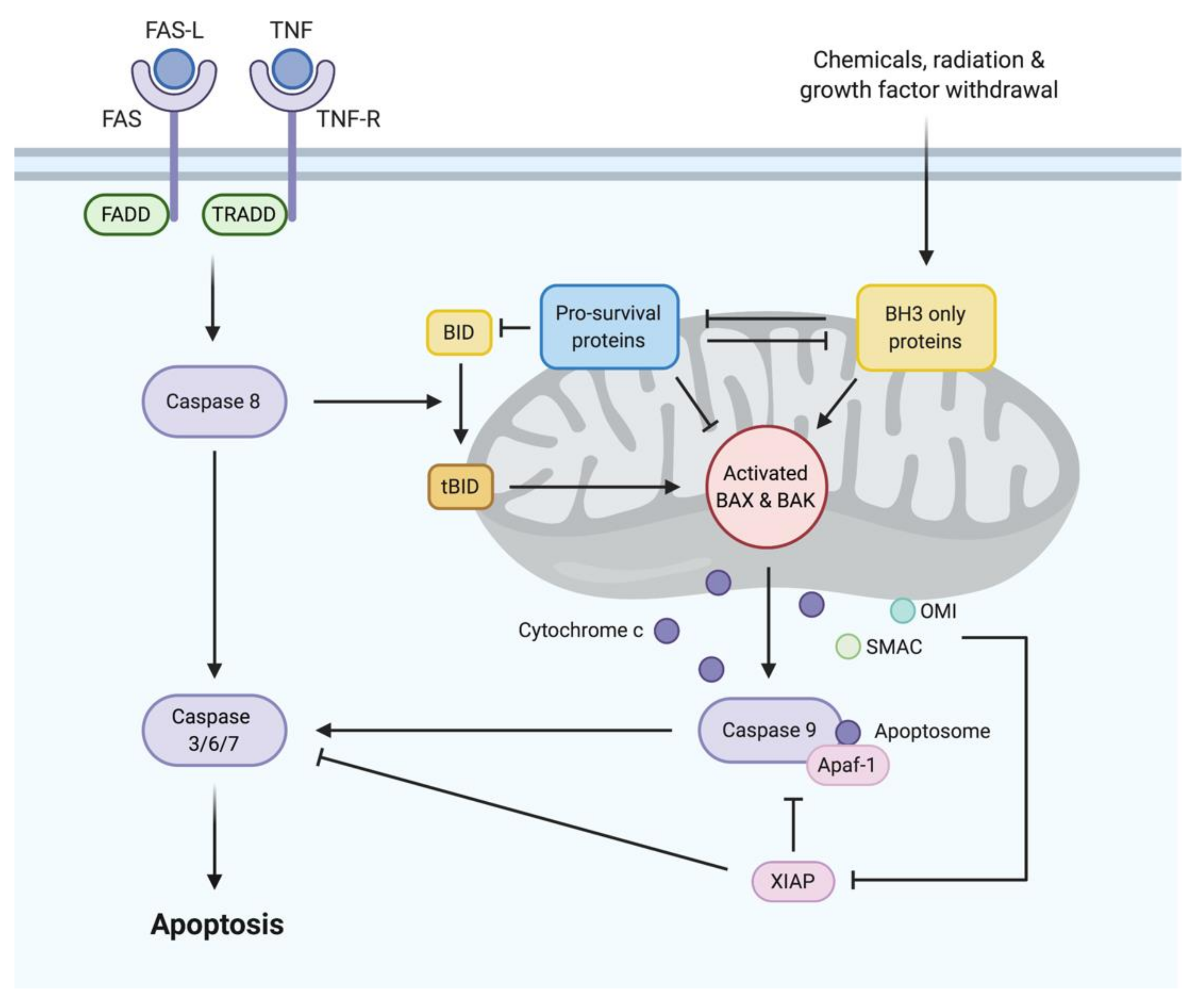
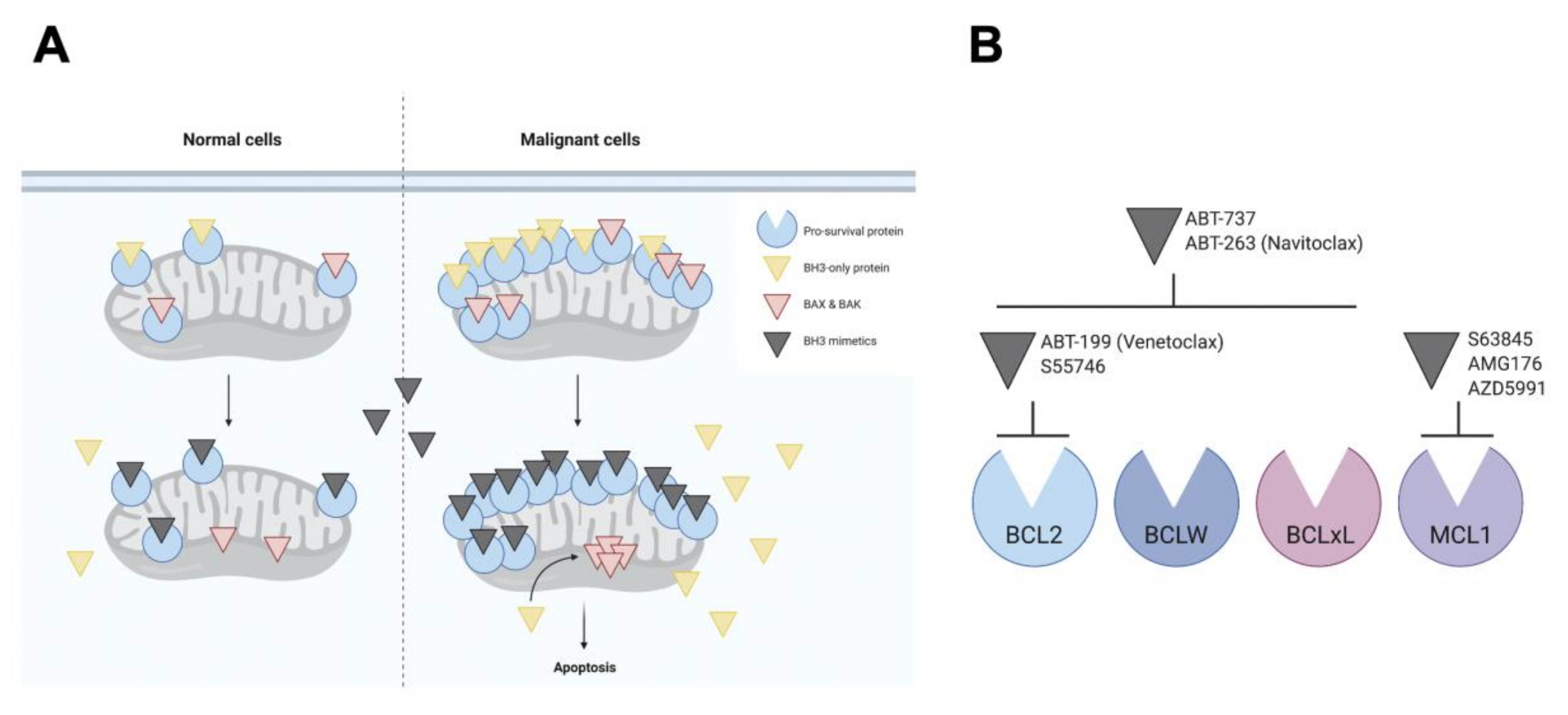
The discovery of the link between defective apoptotic regulation and cancer cell survival engendered the idea of targeting aberrant components of the apoptotic machinery for cancer therapy. The intrinsic pathway of apoptosis is tightly controlled by interactions amongst members of three distinct subgroups of the B-cell lymphoma 2 (BCL2) family of proteins. The pro-survival BCL2 proteins prevent apoptosis by keeping the pro-apoptotic effector proteins BCL2-associated X protein (BAX) and BCL2 homologous antagonist/killer (BAK) in check, while the BH3-only proteins initiate apoptosis by either neutralizing the pro-survival BCL2 proteins or directly activating the pro-apoptotic effector proteins. This tripartite regulatory mechanism is commonly perturbed in B-cell malignancies facilitating cell death evasion. Over the past two decades, structure-based drug discovery has resulted in the development of a series of small molecules that mimic the function of BH3-only proteins called the BH3 mimetics. The most clinically advanced of these is venetoclax, which is a highly selective inhibitor of BCL2 that has transformed the treatment landscape for chronic lymphocytic leukemia (CLL). Other BH3 mimetics, which selectively target myeloid cell leukemia 1 (MCL1) and B-cell lymphoma extra large (BCLxL), are currently under investigation for use in diverse malignancies. Here, we review the current role of BH3 mimetics in the treatment of CLL and other B-cell malignancies and address open questions in this rapidly evolving field.
Keywords:
BH3 mimetics; venetoclax; apoptosis; BCL2; MCL1; BCLxL; B-cell malignancies; leukemia; lymphoma; myeloma