Evaluation of Carbon Ion Radiation-Induced Trismus in Head and Neck Tumors Using Dose-Volume Histograms
by
 , , , ,
Atsushi Musha
1,2,* ,
,
Hirofumi Shimada
1,
Nobuteru Kubo
1,
Hidemasa Kawamura
1,
Naoko Okano
1,
Yuhei Miyasaka
1,
Hiro Sato
1,
Katsuyuki Shirai
3 ,
,
Jun-ichi Saitoh
4,
Satoshi Yokoo
2,
Kazuaki Chikamatsu
5 and
Tatsuya Ohno
1 1
Gunma University Heavy Ion Medical Center, Maebashi, Gunma 371-8511, Japan
2
Department of Oral and Maxillofacial Surgery/Plastic Surgery, Gunma University Graduate School of Medicine, Maebashi, Gunma 371-8511, Japan
3
Department of Radiology, Jichi Medical University Hospital, Shimotsuke, Tochigi 329-0498, Japan
4
Department of Radiation Oncology, Faculty of Medicine, University of Toyama, Toyama 930-0194, Japan
5
Department of Otolaryngology-Head and Neck Surgery, Gunma University Graduate School of Medicine, Maebashi, Gunma 371-8511, Japan
*
Author to whom correspondence should be addressed.
Cancers 2020, 12(11), 3116; https://doi.org/10.3390/cancers12113116
Submission received: 23 September 2020
/
Revised: 19 October 2020
/
Accepted: 23 October 2020
/
Published: 25 October 2020
(This article belongs to the Special Issue Head and Neck Cancers)
Simple Summary
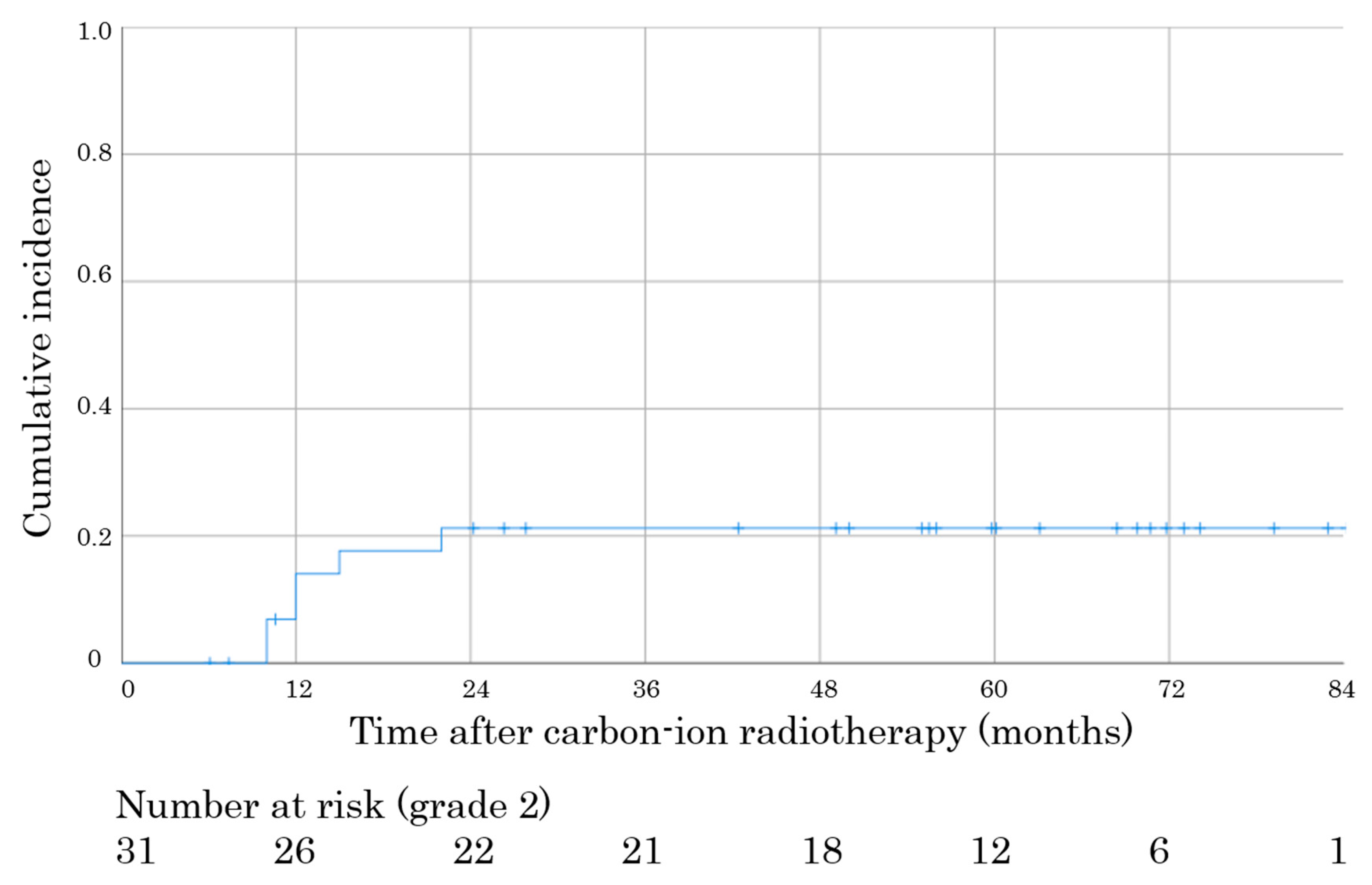
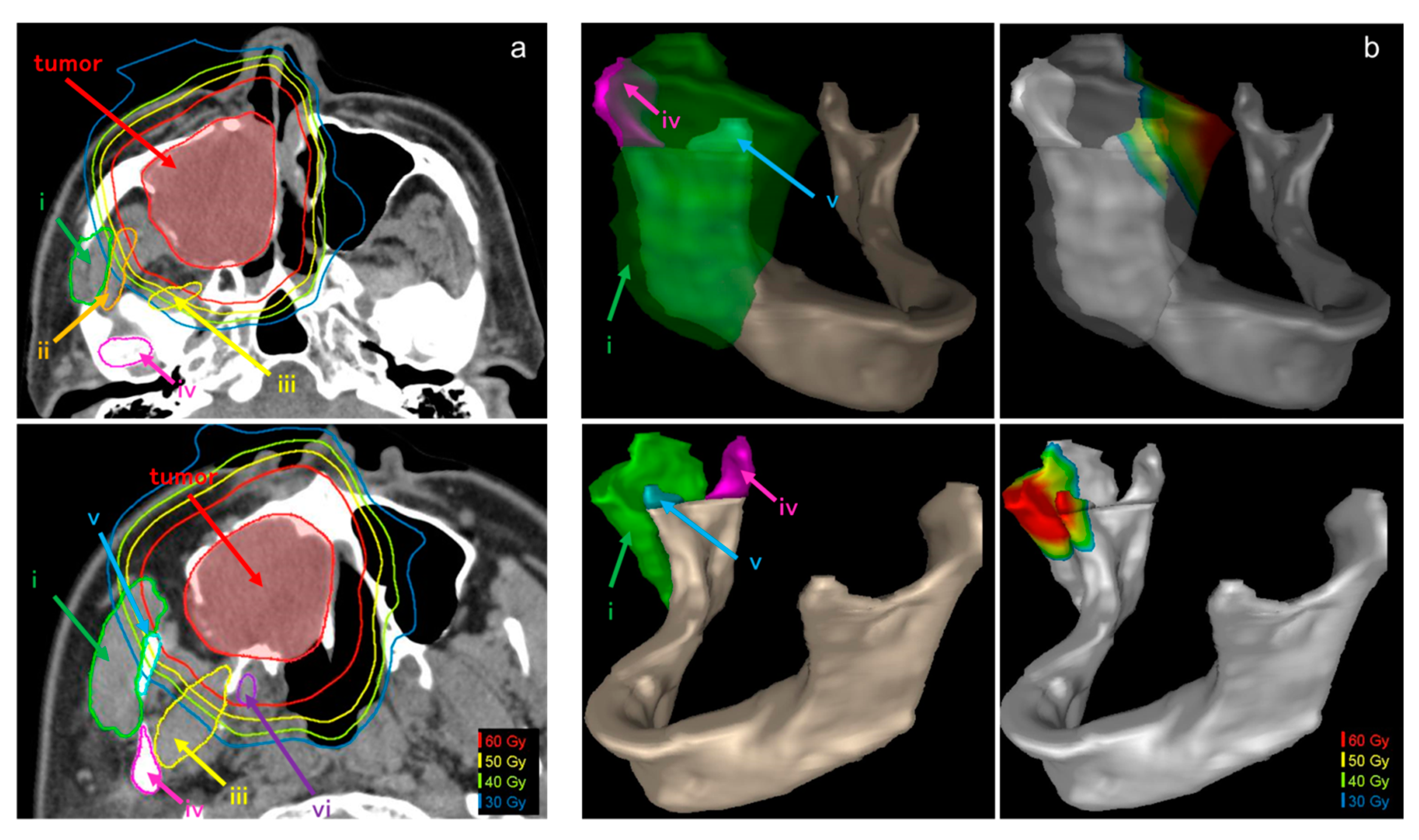
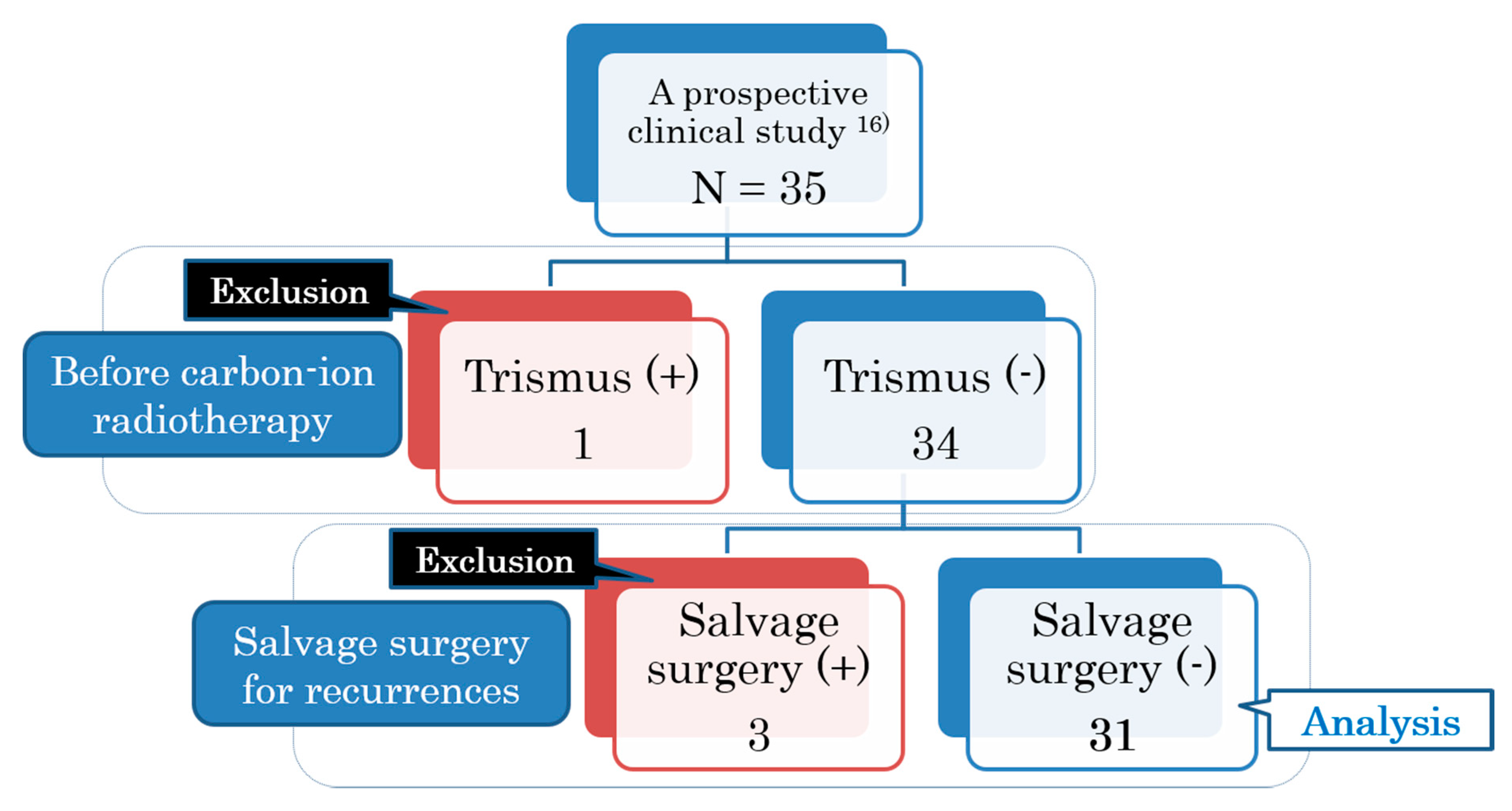
Patients who receive carbon ion radiotherapy (C-ion RT) for tumors near the temporomandibular joint are likely to experience trismus, a condition characterized by reduced jaw opening. However, the relationship between the dose of carbon ion and the onset of trismus remains unclear. Therefore, we conducted a subgroup analysis of a prospective observational study to understand the relationship between the dose of carbon ion and the occurrence of trismus. Of 35 patients included in the study, six developed grade 2 trismus, and the median onset time was 12 months. The affected muscles included masticatory muscles and the coronoid process. Our findings suggest better treatment planning, such as dose optimization, to minimize the occurrence of muscle-related adverse effects associated with C-ion RT.
Abstract
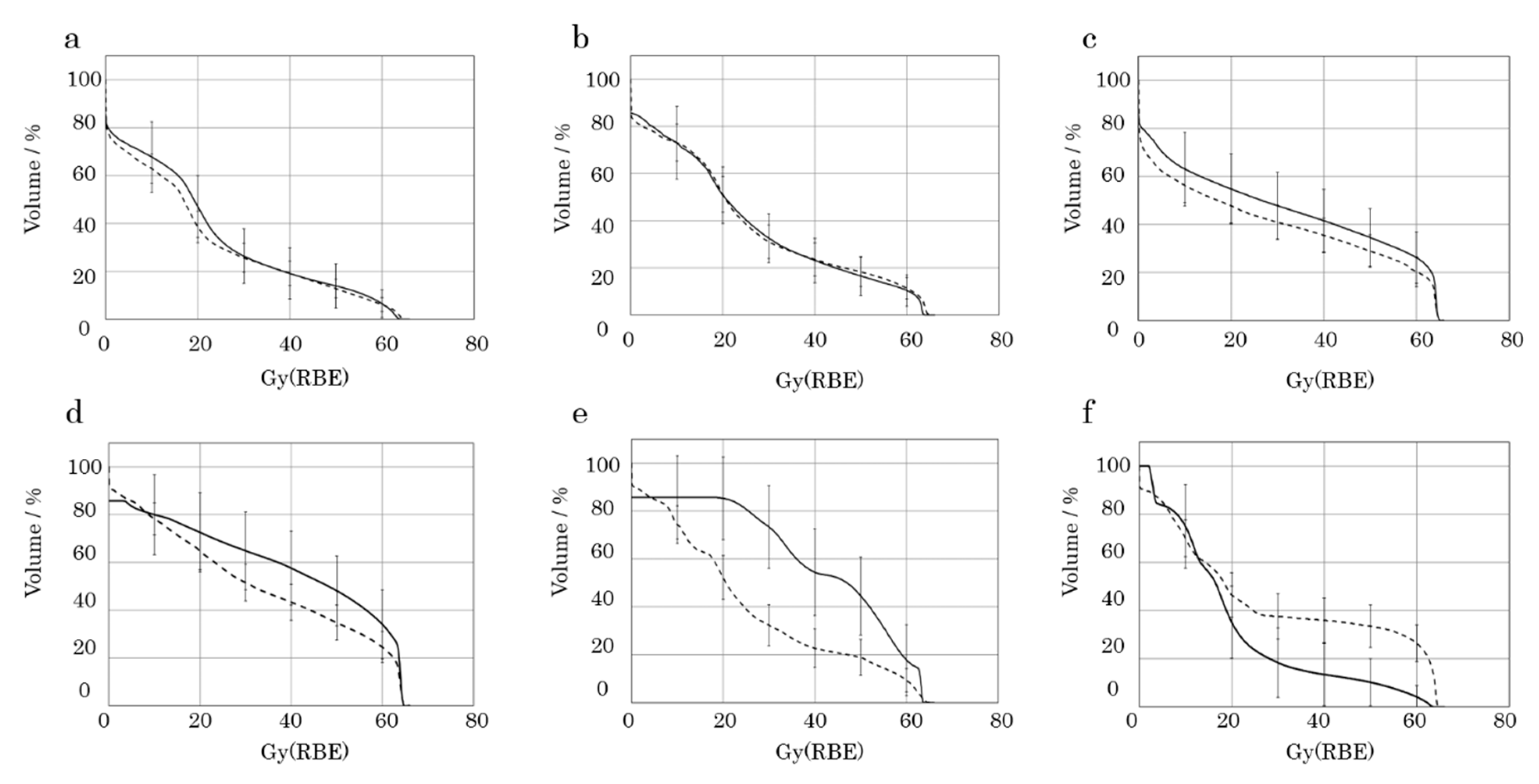
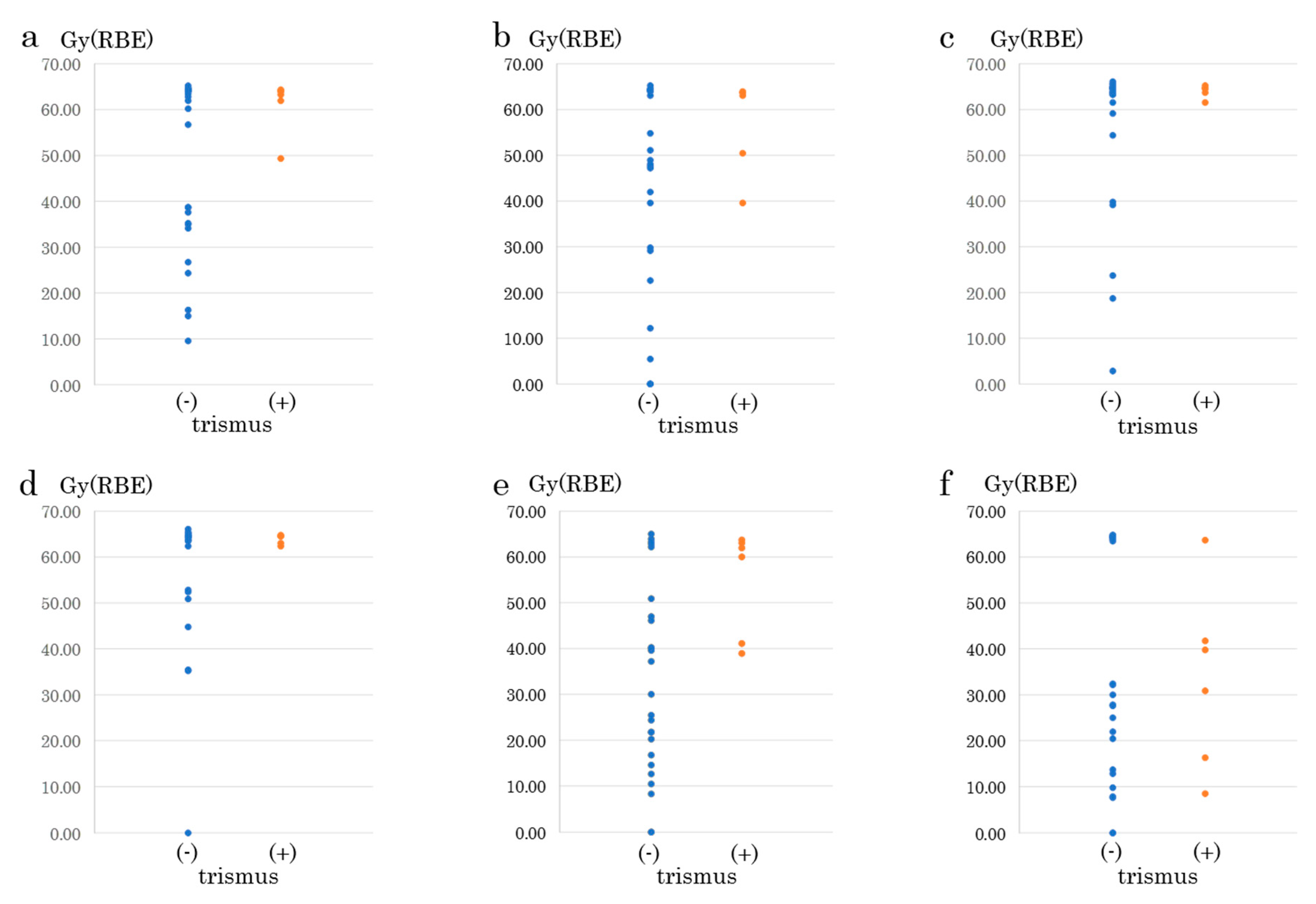
Carbon ion radiotherapy (C-ion RT) provides a highly localized deposition of energy that can increase radiation doses to tumors while minimizing irradiation of adjacent normal tissues. For tumors located near the temporomandibular joint, C-ion RT-induced trismus may occur. However, the relationship between the carbon ion dose and the onset of trismus is unclear. In this prospective observational study, we assessed the trismus/carbon ion dose relationship using dose−volume histograms in 35 patients who received C-ion RT in their head and neck regions between 2010 and 2014. Trismus was evaluated in patients according to the Common Terminology Criteria for Adverse Events, version 4.0. All patients were treated with 57.6 or 64.0 Gy (relative biological effectiveness (RBE)) in 16 fractions, and the median follow-up time was 57 months. Grade 2 trismus was observed in six patients. The median onset time was 12 months. At maximum radiation doses, all masticatory muscles and coronoid processes, particularly the masseter muscle, were significantly different (p = 0.003). The contouring of the masseter muscle and coronoid process requires different treatment planning. The maximum radiation doses of the coronoid process can be proposed as a guideline for treatment planning, considering the ease of contouring in C-ion RT.