Cx43 and Associated Cell Signaling Pathways Regulate Tunneling Nanotubes in Breast Cancer Cells
by
 ,
,
Alexander Tishchenko
1,†,‡, 
Daniel D. Azorín
1,†,§,
Laia Vidal-Brime
1,
María José Muñoz
1,
Pol Jiménez Arenas
1,
Christopher Pearce
1,
Henrique Girao
2,3,4,
Santiago Ramón y Cajal
1,5,6 and 
Trond Aasen
1,6,7,*
1
Patologia Molecular Translacional, Vall d’Hebron Institut de Recerca (VHIR), Vall d’Hebron Hospital Universitari, Vall d’Hebron Barcelona Hospital Campus, Passeig Vall d’Hebron 119-129, 08035 Barcelona, Spain
2
Biomedical Research (iCBR), Faculty of Medicine, University of Coimbra, Azinhaga de Santa Comba, Celas, 3000-548 Coimbra, Portugal
3
Center for Innovative Biomedicine and Biotechnology, University of Coimbra, 3000-548 Coimbra, Portugal
4
Clinical Academic Centre of Coimbra, CACC, 3000-548 Coimbra, Portugal
5
Anatomía Patológica, Vall d’Hebron Hospital Universitari, Vall d’Hebron Barcelona Hospital Campus, Passeig Vall d’Hebron 119-129, 08035 Barcelona, Spain
6
CIBER de Cáncer (CIBERONC), Instituto de Salud Carlos III, Avenida de Monforte de Lemos 3-5, 28029 Madrid, Spain
7
Universitat Autònoma de Barcelona, 08193 Bellaterra, Spain
*
Author to whom correspondence should be addressed.
†
These authors contributed equally to this work.
‡
Current address: Department of Virology, Parasitology and Immunology, Faculty of Veterinary Medicine, Ghent University, 9820 Merelbeke, Belgium.
§
Current address: Clinical Cooperation Unit Neuro-Oncology, German Cancer Consortium (DKTK), German Cancer Research Center (DKFZ), 69120 Heidelberg, Germany.
Cancers 2020, 12(10), 2798; https://doi.org/10.3390/cancers12102798
Submission received: 7 September 2020
/
Revised: 25 September 2020
/
Accepted: 25 September 2020
/
Published: 29 September 2020
(This article belongs to the Special Issue The Role of Tunneling Nanotubes in Intercellular Communication and Pathophysiology of Cancer)
Simple Summary
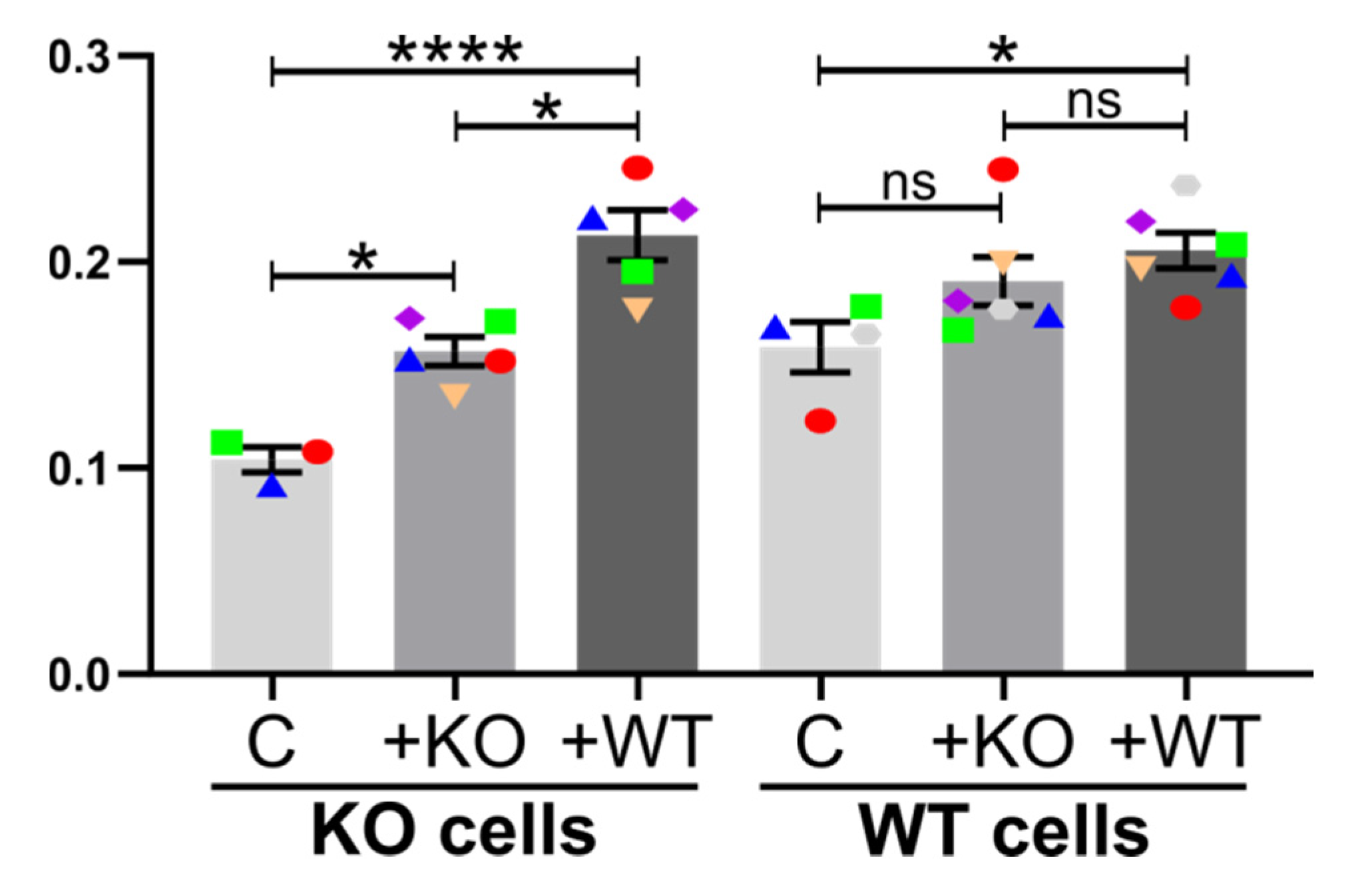
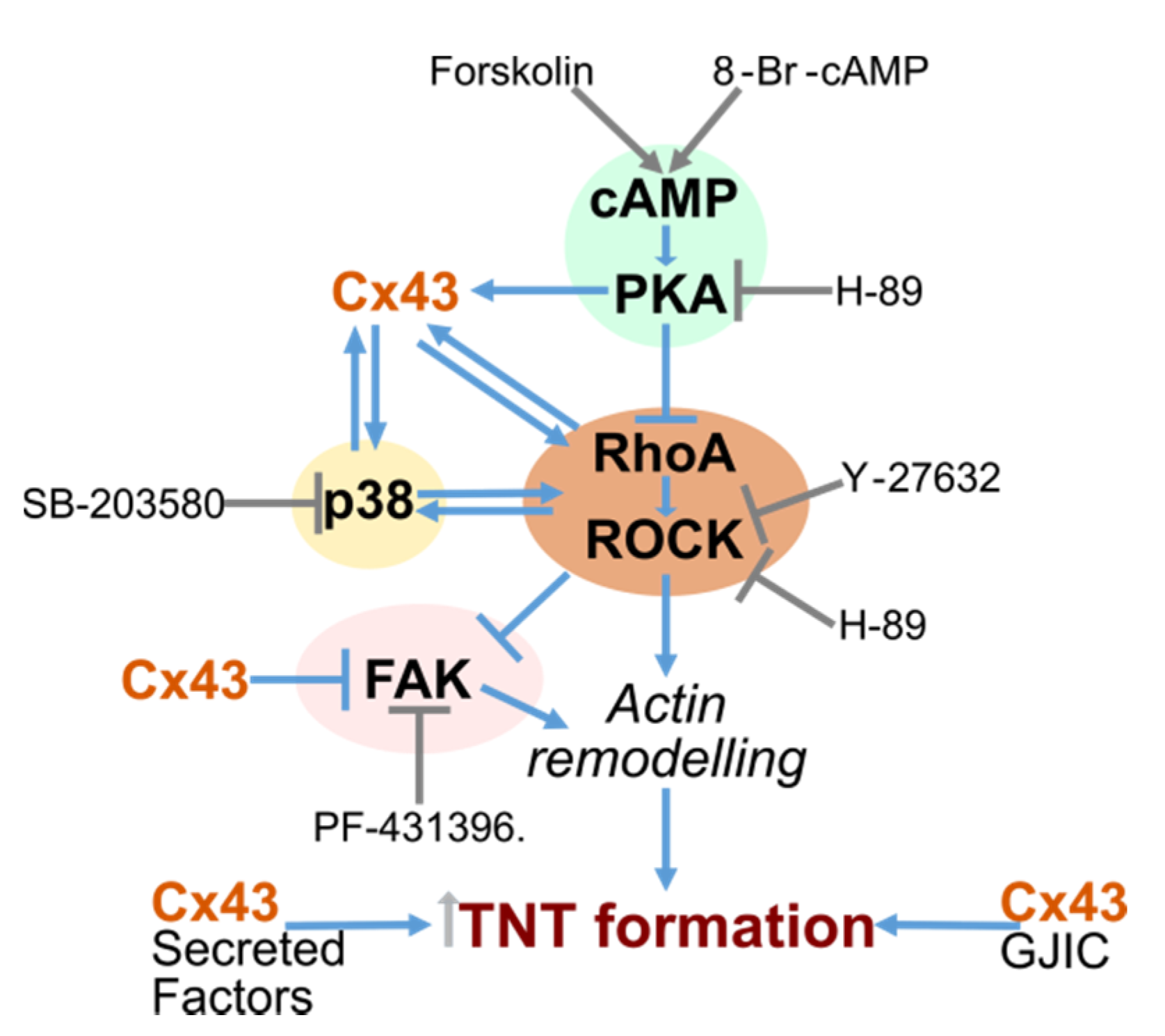
The gap junction protein connexin 43 (Cx43) facilitates direct intercellular communication and displays a complex dichotomous role in cancer. Here, we used breast cancer cell lines and CRISPR/Cas9 technology to dissect some of the poorly understood multimodal functions of Cx43 in this setting. Our data show that Cx43 directly modulates the formation of pro-tumorigenic tunneling nanotubes (TNTs), which are cellular protrusions that connect non-adjacent cells to facilitate cellular communication, including the direct cell–cell transfer of organelles. We identify several important cancer signaling pathways that affect TNT formation and show that this effect is strongly influenced by the presence or absence of Cx43. Finally, we demonstrate that Cx43 can affect TNT formation by modulating the cellular secretome. This work provides important insight into the pro-tumorigenic role of Cx43 and its interconnections with TNTs.
Abstract
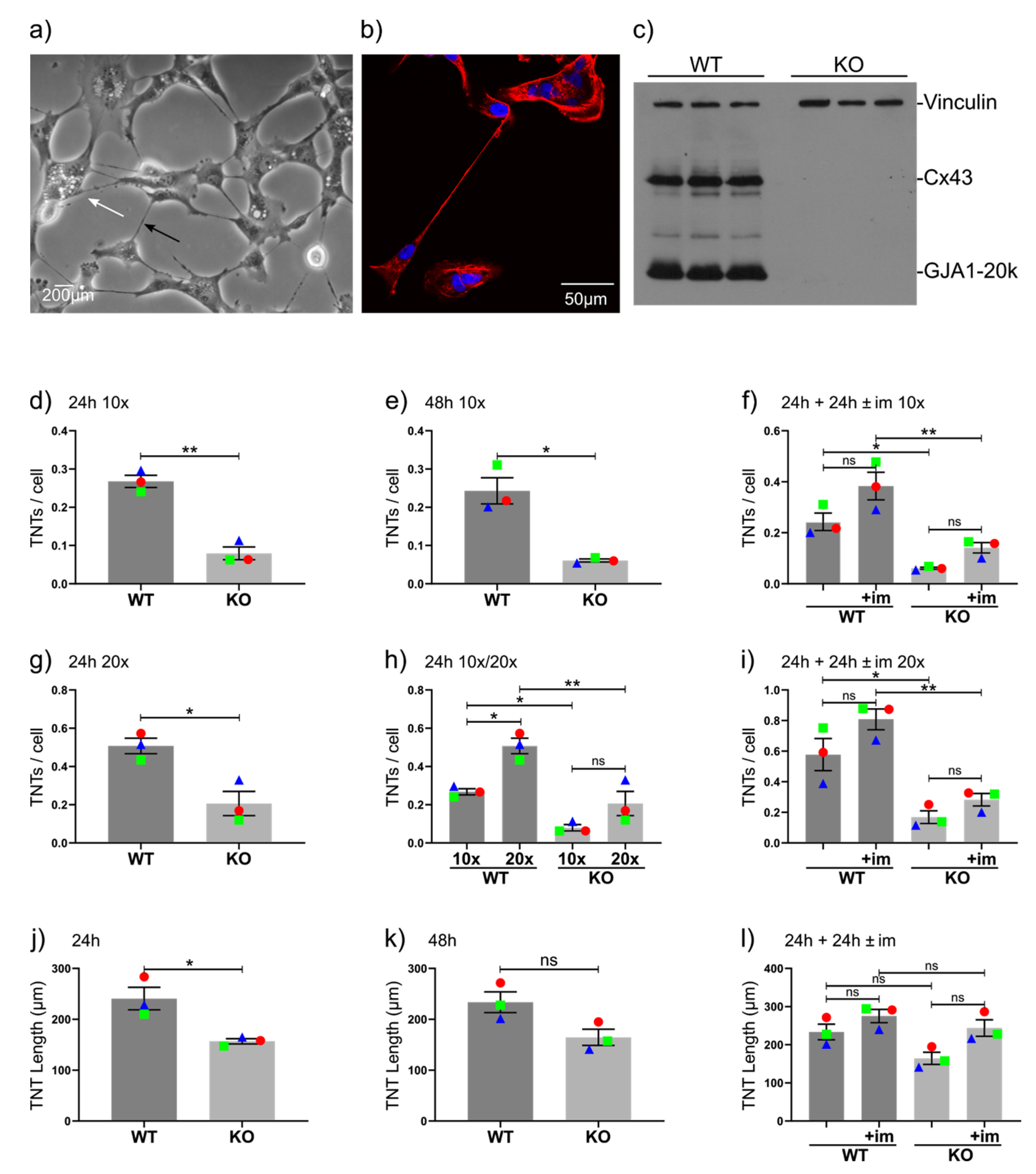
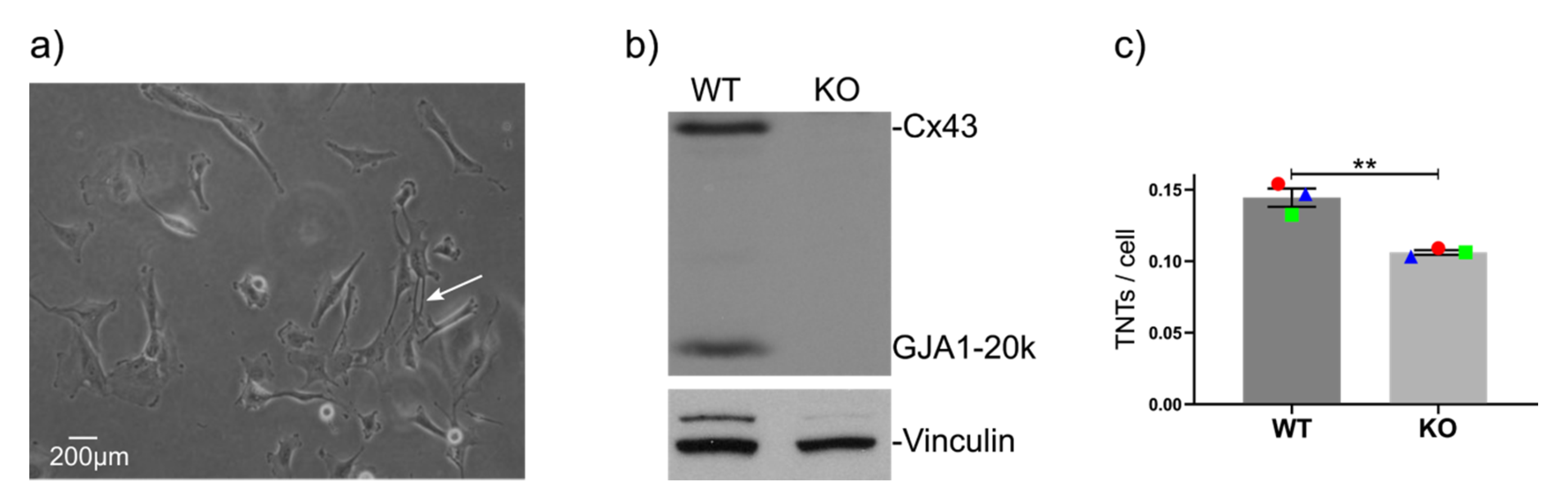
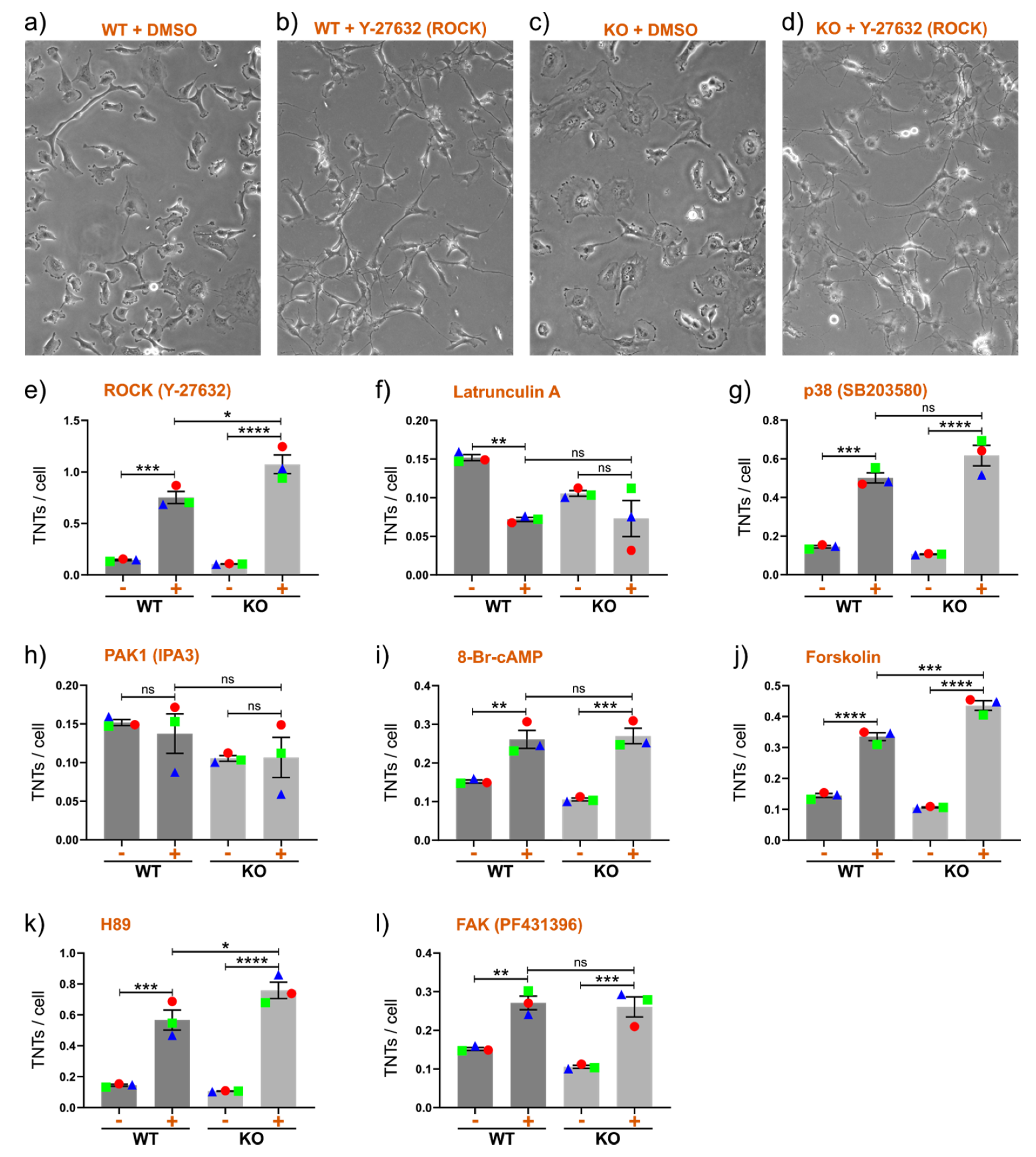
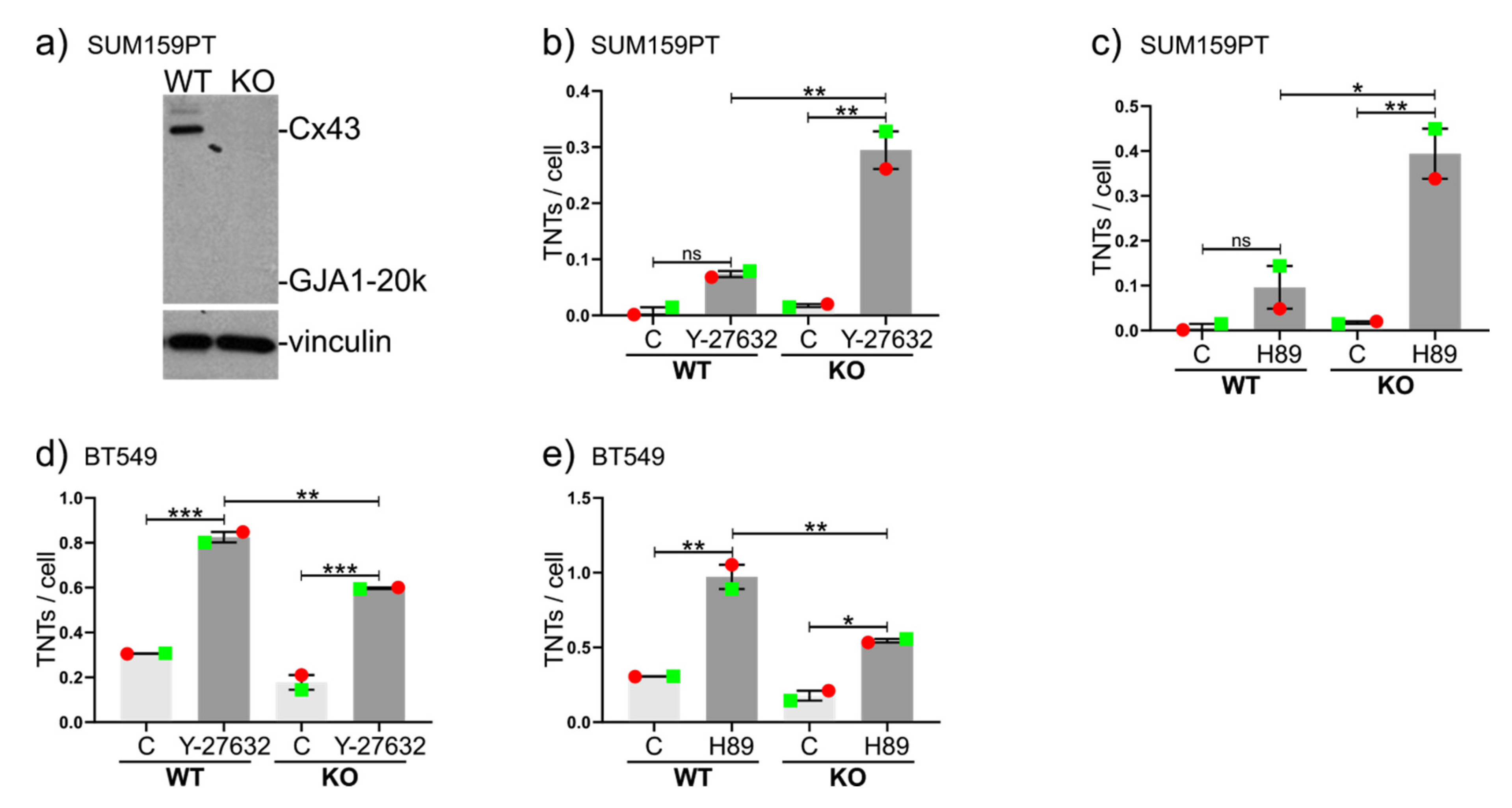
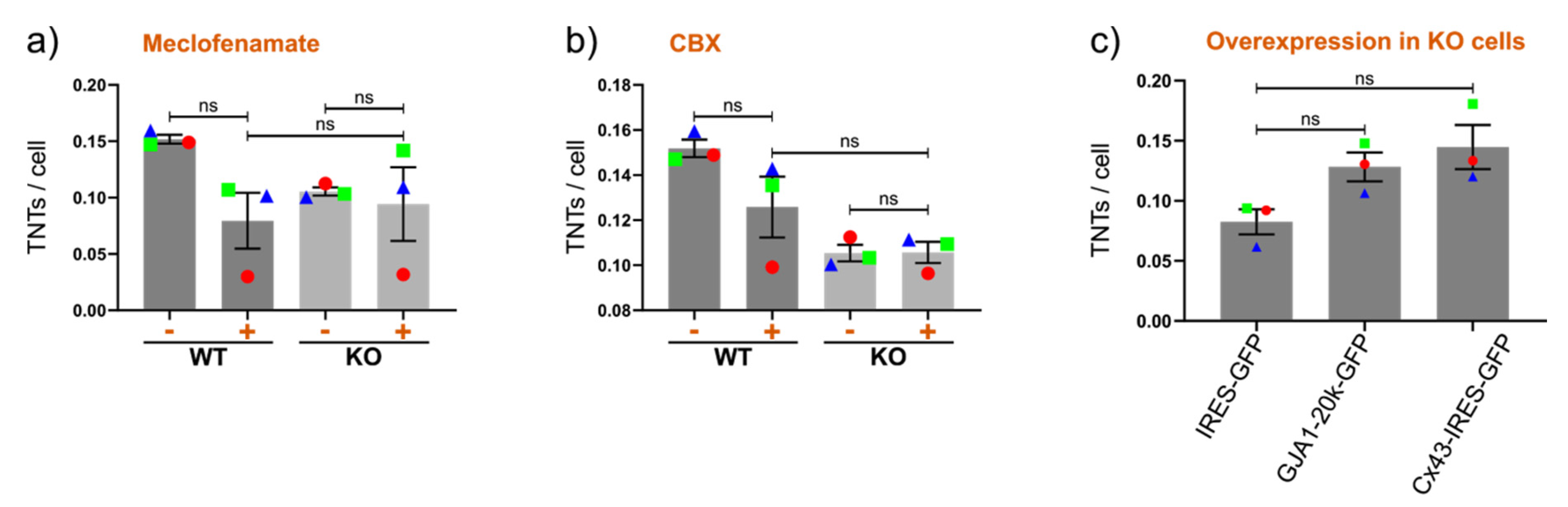
Connexin 43 (Cx43) forms gap junctions that mediate the direct intercellular diffusion of ions and small molecules between adjacent cells. Cx43 displays both pro- and anti-tumorigenic properties, but the mechanisms underlying these characteristics are not fully understood. Tunneling nanotubes (TNTs) are long and thin membrane projections that connect cells, facilitating the exchange of not only small molecules, but also larger proteins, organelles, bacteria, and viruses. Typically, TNTs exhibit increased formation under conditions of cellular stress and are more prominent in cancer cells, where they are generally thought to be pro-metastatic and to provide growth and survival advantages. Cx43 has been described in TNTs, where it is thought to regulate small molecule diffusion through gap junctions. Here, we developed a high-fidelity CRISPR/Cas9 system to knockout (KO) Cx43. We found that the loss of Cx43 expression was associated with significantly reduced TNT length and number in breast cancer cell lines. Notably, secreted factors present in conditioned medium stimulated TNTs more potently when derived from Cx43-expressing cells than from KO cells. Moreover, TNT formation was significantly induced by the inhibition of several key cancer signaling pathways that both regulate Cx43 and are regulated by Cx43, including RhoA kinase (ROCK), protein kinase A (PKA), focal adhesion kinase (FAK), and p38. Intriguingly, the drug-induced stimulation of TNTs was more potent in Cx43 KO cells than in wild-type (WT) cells. In conclusion, this work describes a novel non-canonical role for Cx43 in regulating TNTs, identifies key cancer signaling pathways that regulate TNTs in this setting, and provides mechanistic insight into a pro-tumorigenic role of Cx43 in cancer.