Article

Western-Type Helicobacter pylori CagA are the Most Frequent Type in Mongolian Patients

by
Tegshee Tserentogtokh
1,2,†,
Boldbaatar Gantuya
1,3,†,
Phawinee Subsomwong
3,†,
Khasag Oyuntsetseg
1,
Dashdorj Bolor
4,
Yansan Erdene-Ochir
5,
Dashdorj Azzaya
3,
Duger Davaadorj
1,
Tomohisa Uchida
6,
Takeshi Matsuhisa
7 and
Yoshio Yamaoka
3,8,9,*
1
Department of Gastroenterology, Mongolian National University of Medical Sciences, Ulaanbaatar city 14210, Mongolia
2
Department of Endoscopy, Medipas hospital, Orkhon province, Bayan-Undur soum, Zest bag 61029, Mongolia
3
Department of Environmental and Preventive Medicine, Oita University Faculty of Medicine, Yufu city 879-5593, Japan
4
Department of Endoscopy, National Cancer Center, Ulaanbaatar city 13370, Mongolia
5
Department of General Surgery National Cancer Center, Ulaanbaatar city 13370, Mongolia
6
Department of Molecular Pathology, Oita University Faculty of Medicine, Yufu city 879-5593, Japan
7
Department of Endoscopy, Nippon Medical University Tama Nagayama Hospital, Tokyo 113-8602, Japan
8
Global Oita Medical Advanced Research Center for Health, Yufu city 879-5593, Japan
9
Department of Medicine, Gastroenterology and Hepatology section, Baylor College of Medicine, Houston, TX 77030, USA
*
Author to whom correspondence should be addressed.
These authors contributed equally to this work.
Cancers 2019, 11(5), 725; https://doi.org/10.3390/cancers11050725

Submission received: 26 March 2019 / Revised: 27 April 2019 / Accepted: 22 May 2019 / Published: 24 May 2019
(This article belongs to the Special Issue Helicobacter pylori Associated Cancer)

Abstract

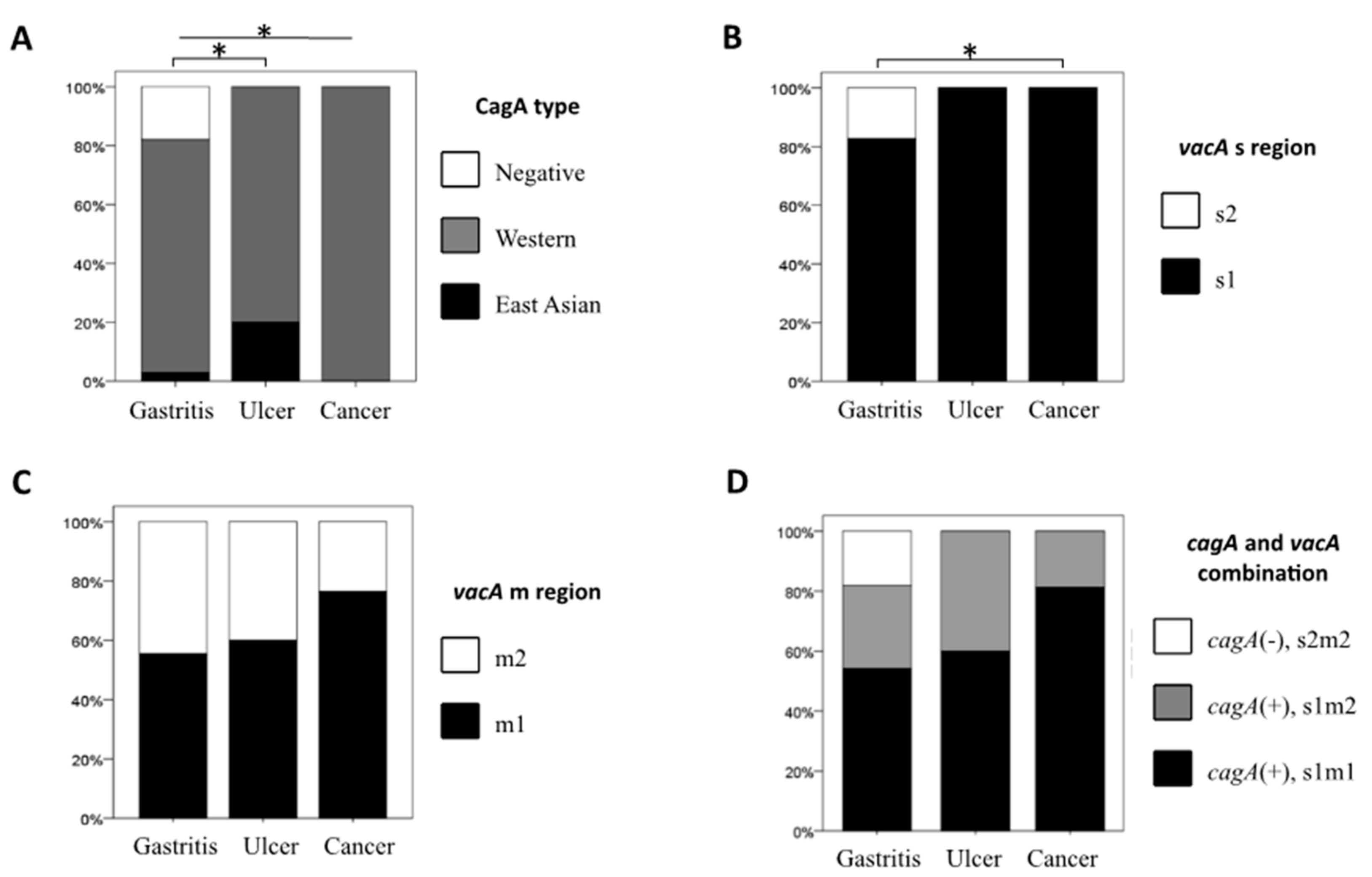
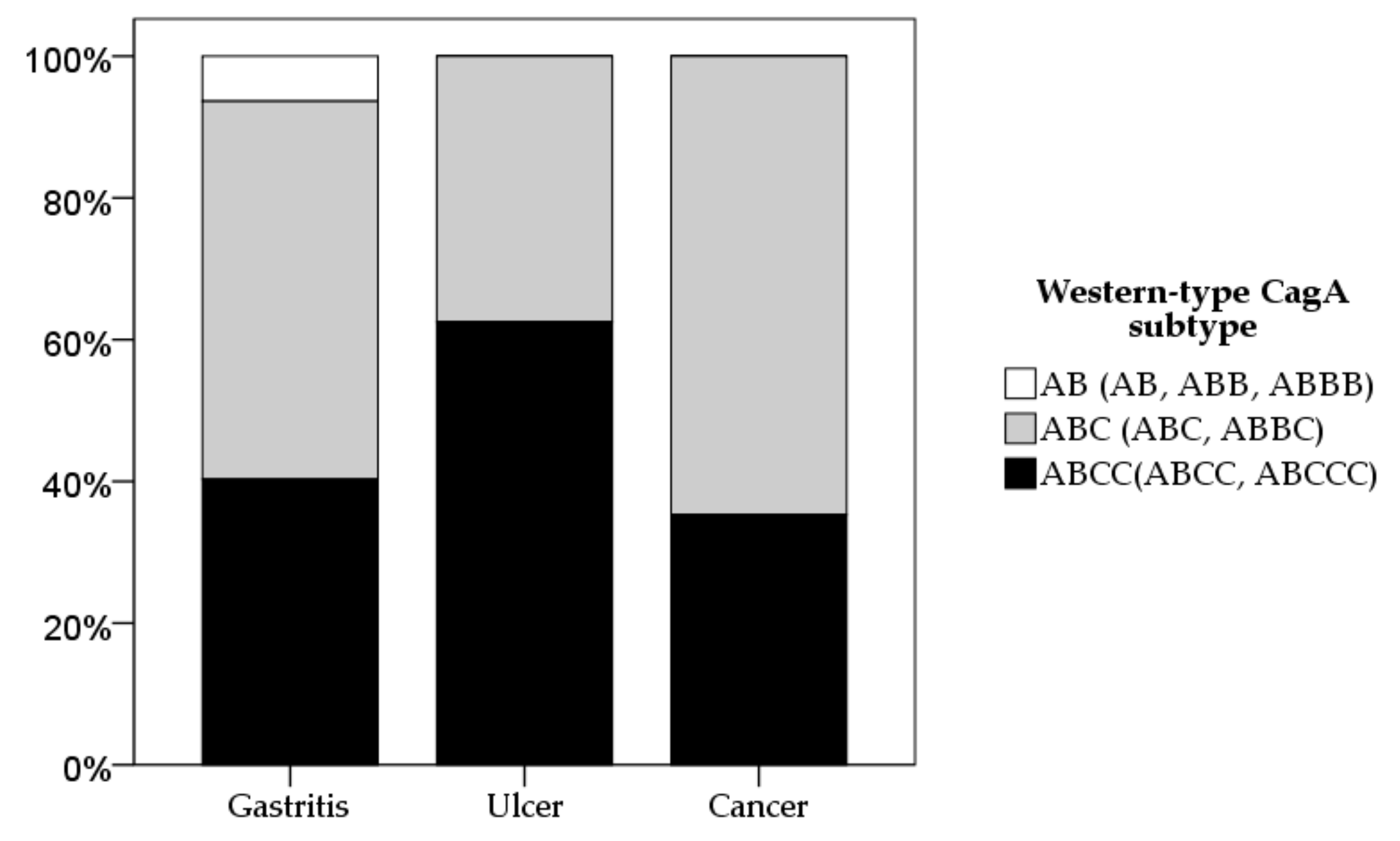
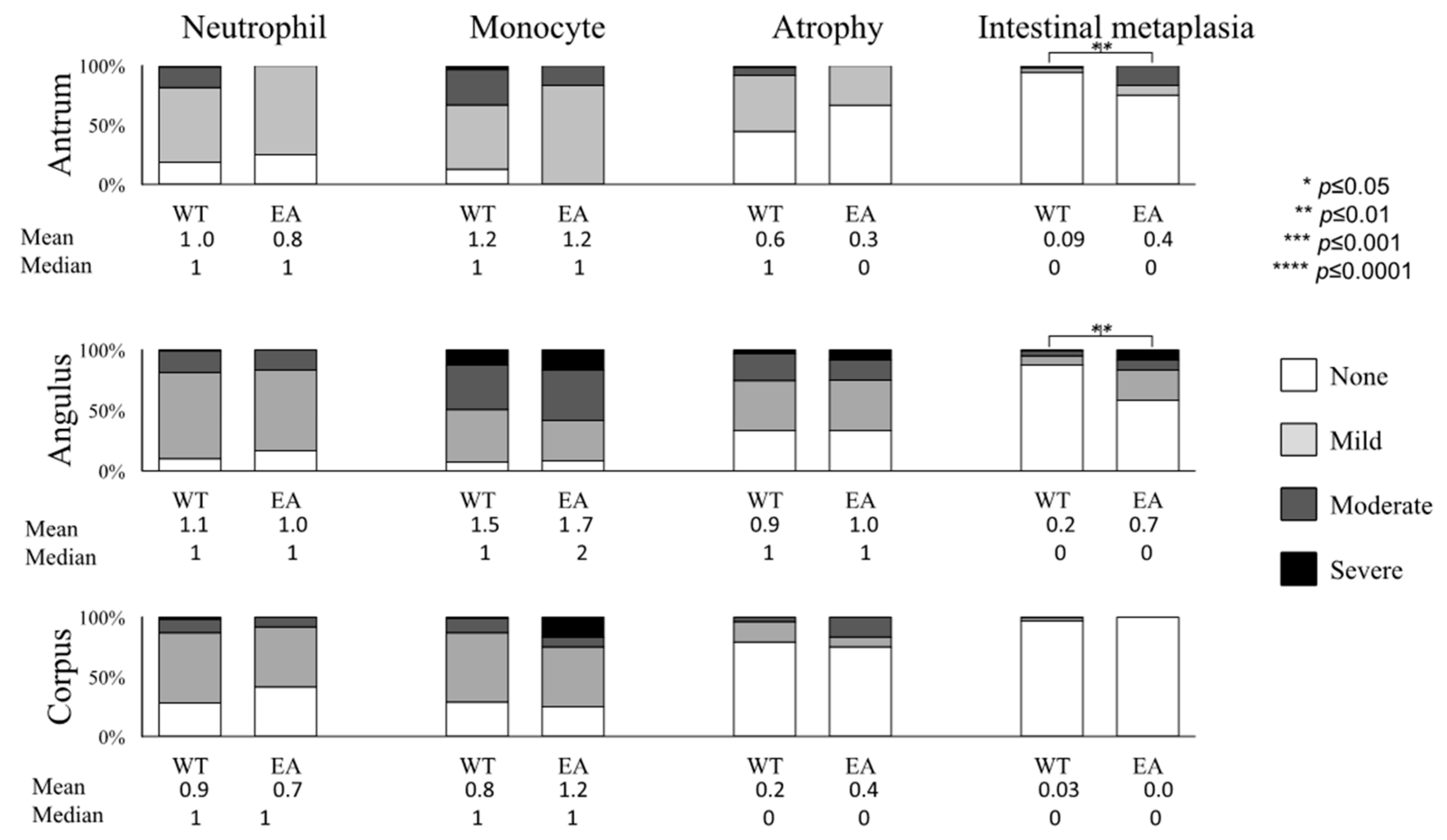
Helicobacter pylori infection possessing East-Asian-type CagA is associated with carcinogenesis. Mongolia has the highest mortality rate from gastric cancer. Therefore, we evaluated the CagA status in the Mongolian population. High risk and gastric cancer patients were determined using endoscopy and histological examination. H. pylori strains were isolated from different locations in Mongolia. The CagA subtypes (East-Asian-type or Western-type, based on sequencing of Glu-Pro-Ile-Tyr-Ala (EPIYA) segments) and vacA genotypes (s and m regions) were determined using PCR-based sequencing and PCR, respectively. In total, 368 patients were examined (341 gastritis, 10 peptic ulcer, and 17 gastric cancer). Sixty-two (16.8%) strains were cagA-negative and 306 (83.1%) were cagA-positive (293 Western-type, 12 East-Asian-type, and one hybrid type). All cagA-negative strains were isolated from gastritis patients. In the gastritis group, 78.6% (268/341) had Western-type CagA, 2.9% (10/341) had East-Asian-type, and 18.2% (61/341) were cagA-negative. However, all H. pylori from gastric cancer patients possessed Western-type CagA. Histological analyses showed that East-Asian-type CagA was the most virulent strains, followed by Western-type and cagA-negative strains. This finding agreed with the current consensus. CagA-positive strains were the most virulent type. However, the fact that different CagA types can explain the high incidence of gastric cancer might be inapplicable in Mongolia.
Keywords: Helicobacter pylori; CagA; VacA; genotyping; gastric cancer; Mongolia Helicobacter pylori; CagA; VacA; genotyping; gastric cancer; Mongolia