Article

Effect of Surface Tension of Cleaning Solutions on the Cleanability of Through-Glass via (TGV) Substrates †

Research and Development Division, Parker Corporation, Tokyo 135-0051, Japan
*
Author to whom correspondence should be addressed.
This article is a revised and expanded version of the published conference paper “Effect of Cleaning Solution Surface Tension on the Cleanability of Through-Glass Via (TGV) Substrates,” which was presented at the 40th JIEP Spring Conference, Tokyo, Japan, 10–12 March 2026.
Micromachines 2026, 17(8), 920; https://doi.org/10.3390/mi17080920
Submission received: 27 June 2026 / Revised: 23 July 2026 / Accepted: 29 July 2026 / Published: 30 July 2026
(This article belongs to the Collection Microdevices and Applications Based on Advanced Glassy Materials)

Abstract

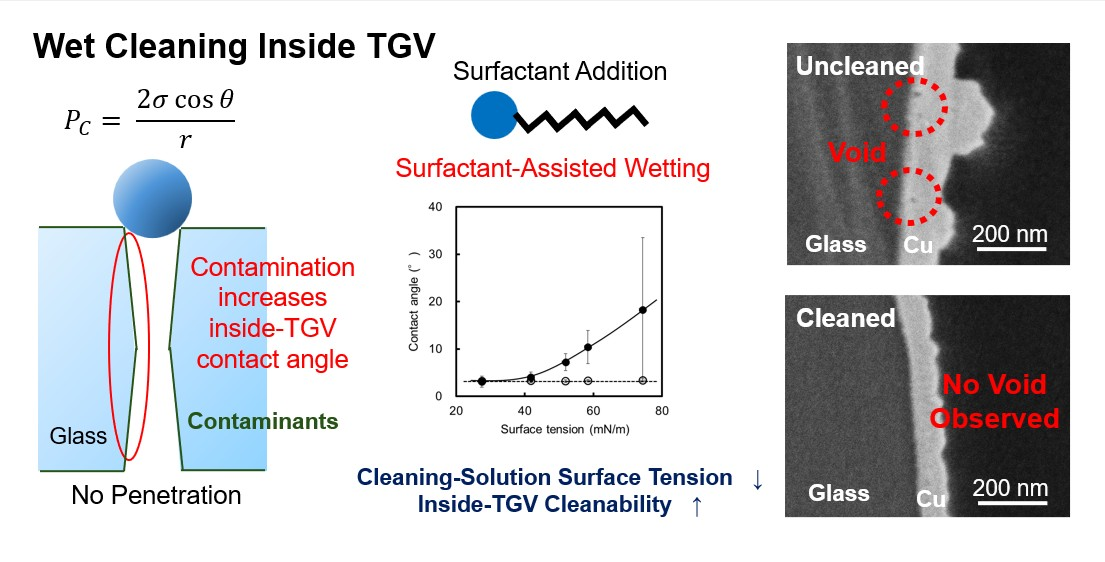
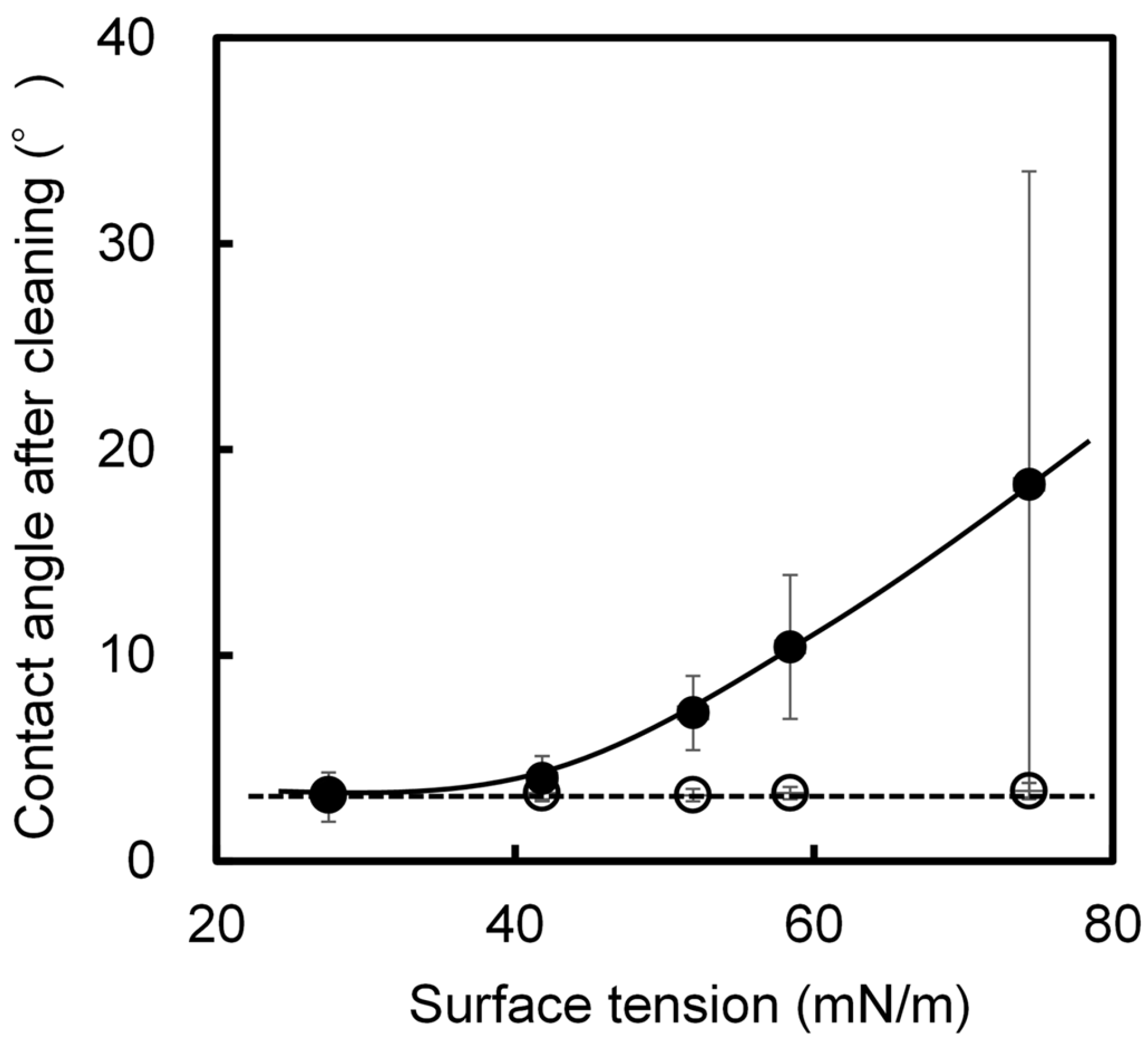
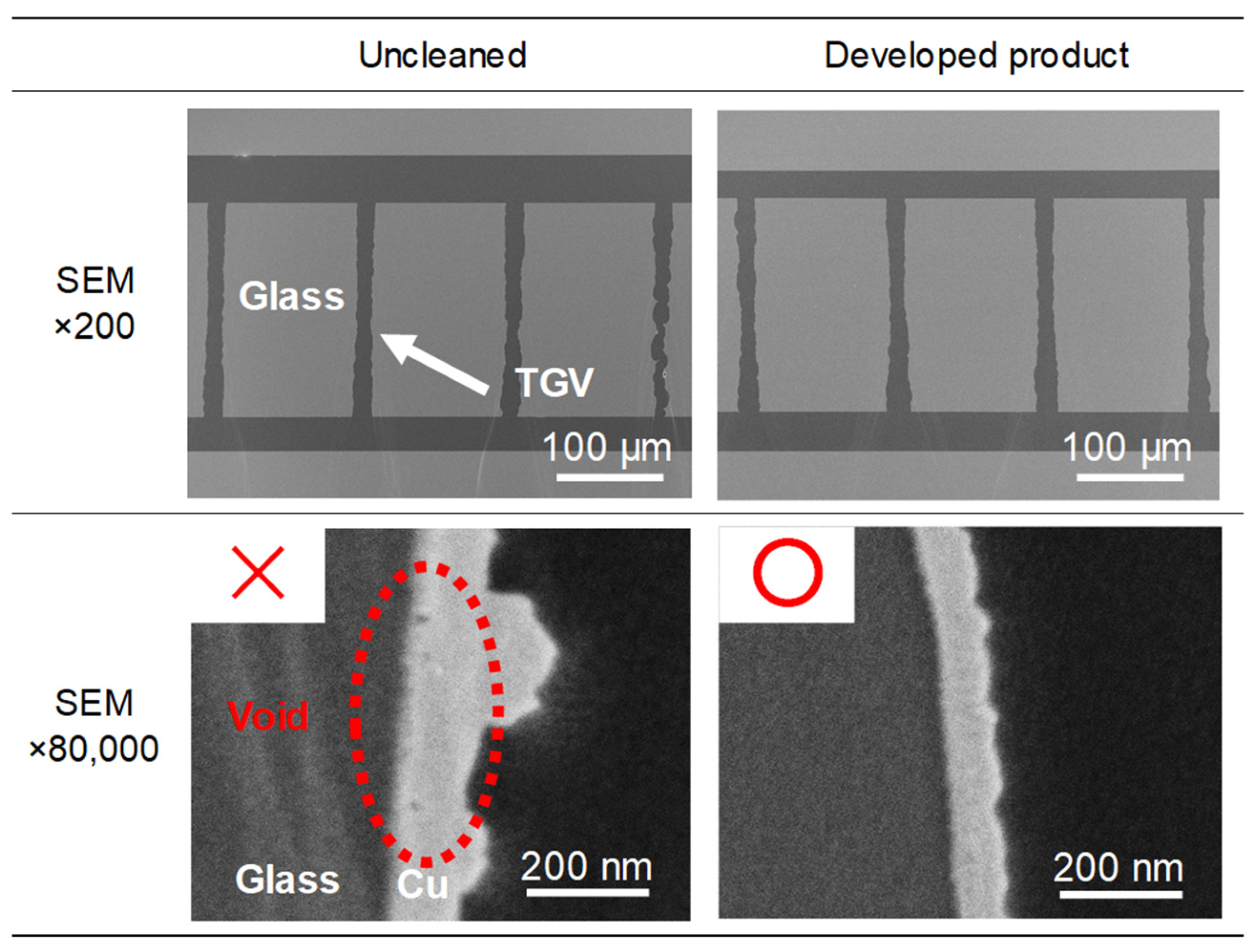
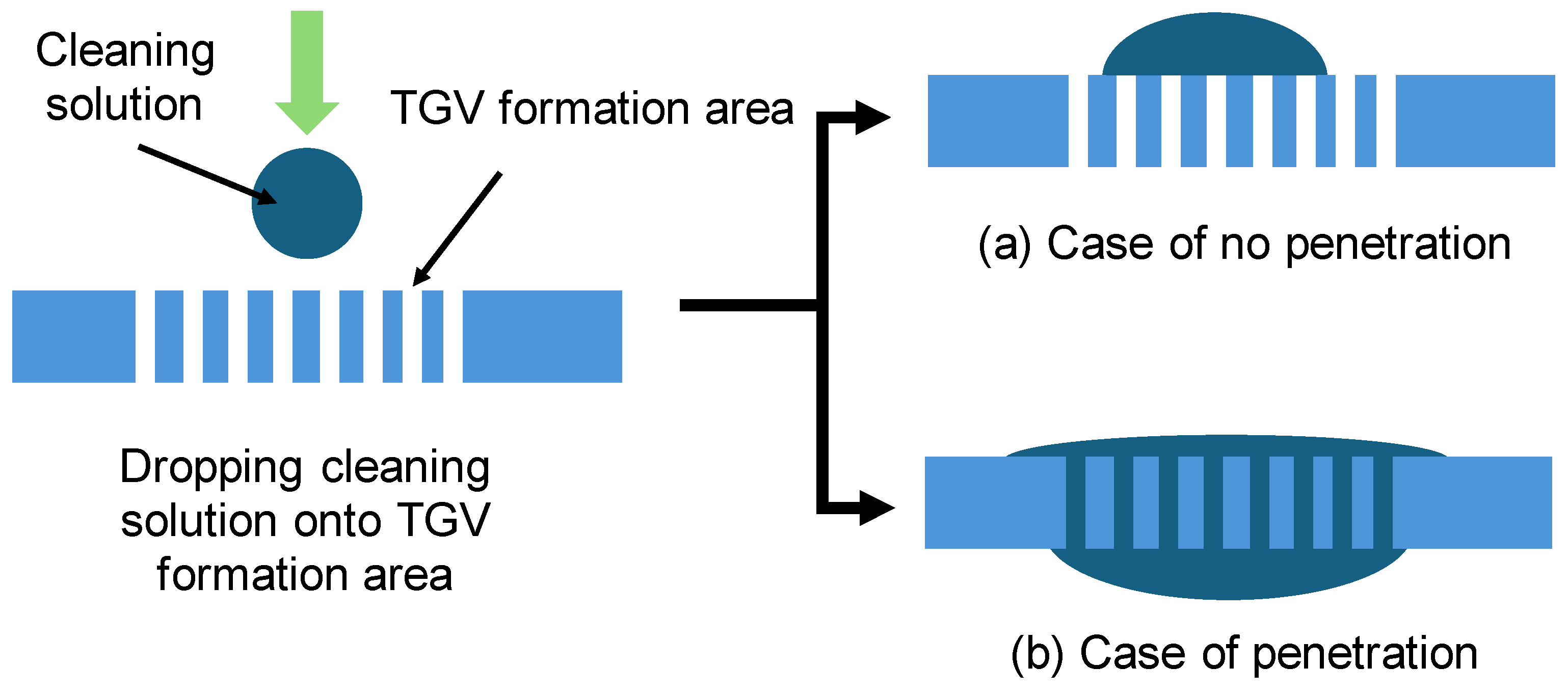
Through-glass via (TGV) substrates have attracted increasing attention as interposers and core substrates for advanced packaging. However, contaminants adhere to glass surfaces; in particular, airborne organic substances increase the contact angle, hindering the penetration of cleaning solutions into TGVs and thereby reducing the cleaning effect. Reducing the cleaning-solution surface tension by adding a surfactant may promote penetration into TGVs with high contact angles. This study investigated the effect of cleaning-solution surface tension on cleanability inside TGVs. Under the tested conditions, the contact angle outside the TGV after cleaning was 3–4° for all cleaning solutions, regardless of their surface tension. In contrast, the contact angle inside the TGV after cleaning decreased with decreasing surface tension. At 27.5 and 41.8 mN/m, the contact angle inside the TGV after cleaning decreased to 3–4° under both conditions. These results indicate that the surface tension of the cleaning solution affects the cleanability inside the TGV. For a TGV with an opening diameter of 20 μm and an aspect ratio of 10, cleaning with a 27.5 mN/m solution prior to electroless Cu plating was associated with reduced void formation and film thickness variation in the Cu film inside the TGV under the tested conditions.
Keywords: through-glass via; TGV; glass substrate; wet cleaning; surface tension; surfactant; cleanability; electroless copper plating; cleaner through-glass via; TGV; glass substrate; wet cleaning; surface tension; surfactant; cleanability; electroless copper plating; cleaner
Graphical Abstract