3.1. Work Function Dependence
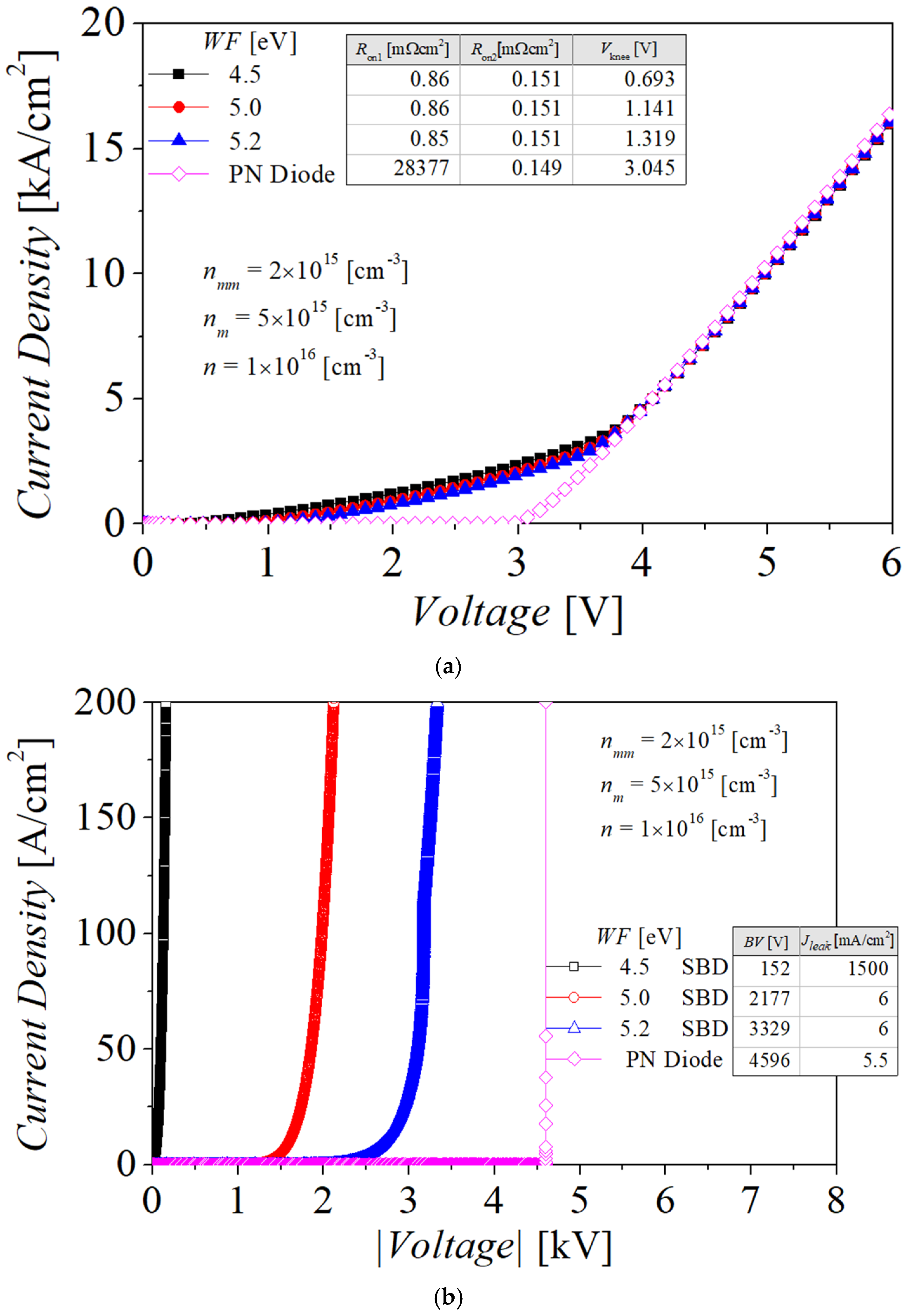
Figure 2 compares the forward and reverse
I-V characteristics of three Schottky diodes with different metal work functions (
WF = 4.5, 5.0, and 5.2 eV) and a conventional PN diode.
Table 2 summarizes the forward and reverse performance metrics extracted from
Figure 2. All devices were simulated using an identical multi-drift-layer doping profile of
nmm = 2 × 10
15,
nm = 5 × 10
15, and
n = 1 × 10
16 cm
−3, ensuring that the observed performance differences arise primarily from the contact type and carrier transport mechanism rather than from variations in the drift region. Filled squares, filled circles, filled triangles, and open diamonds denote the
I-V characteristics of Schottky diodes with
WFs of 4.5, 5.0, and 5.2 eV, and the PN diode, respectively.
Table 2.
Forward and reverse performance metrics as a function of metal work function.
Table 2.
Forward and reverse performance metrics as a function of metal work function.
| WF [eV] | Type | Ron1 [mΩ·cm2] | Ron2 [mΩ·cm2] | Vknee [V] | BV [V] |
|---|
| 4.5 | SBD | 0.86 | 0.151 | 0.693 | 152 |
| 5.0 | SBD | 0.86 | 0.151 | 1.141 | 2177 |
| 5.2 | SBD | 0.85 | 0.151 | 1.319 | 3329 |
| — | PN Diode | 28,377 | 0.149 | 3.045 | 4596 |
As shown in
Figure 2a, the forward
I-V characteristics of the Schottky diodes are strongly dependent on the metal work function. A lower work function reduces
ϕB, resulting in a smaller
Vknee at low forward bias [
35,
36]. In contrast, the PN diode exhibits a significantly higher
Vknee and a much larger
Ron1, reflecting the inherent voltage drop associated with bipolar junction turn-on. Notably, as indicated in
Table 2,
Ron1 and
Ron2 remain nearly constant for all Schottky diodes, regardless of the work function, demonstrating that the high-current on-state resistance is dominated by the drift-layer resistance rather than by the Schottky contact.
Figure 2b highlights the reverse
I-V characteristics and breakdown behavior. The PN diode shows excellent reverse blocking capability with low leakage current, which is characteristic of a junction-controlled device. In contrast, conventional Schottky diodes typically suffer from limited
BV due to strong electric-field crowding at the metal–semiconductor interface [
10,
19]. However, in the present devices, all Schottky diodes achieve
BVs in the kilovolt range, comparable to that of the PN diode. This improvement is attributed to the multi-drift-layer structure, which effectively redistributes the electric field into the bulk drift region, thereby shifting the breakdown mechanism from being Schottky-contact-limited to drift-region-limited [
23]. Moreover, increasing the metal work function further enhances
BV and suppresses
Jleak by increasing
ϕB [
35].
These results clearly illustrate the intrinsic trade-off between
Ron and
BV in power devices. The PN diode achieves high
BV at the expense of a large
Ron, particularly in the low- to moderate-current regime, whereas a Schottky diode offers low
Ron but is traditionally limited in
BV [
17,
18]. The MPS diode structure effectively overcomes this limitation by combining a Schottky conduction path with a drift-layer-supported blocking mechanism. As a result, the MPS diode maintains a low
Vknee and reduced
Ron, characteristic of unipolar Schottky conduction, while simultaneously achieving a high
BV comparable to that of a PN diode. This decoupling of forward conduction loss from reverse blocking capability relaxes the conventional
Ron–
BV trade-off and underscores the necessity of the MPS structure for high-voltage, low-loss power device applications [
15,
16].
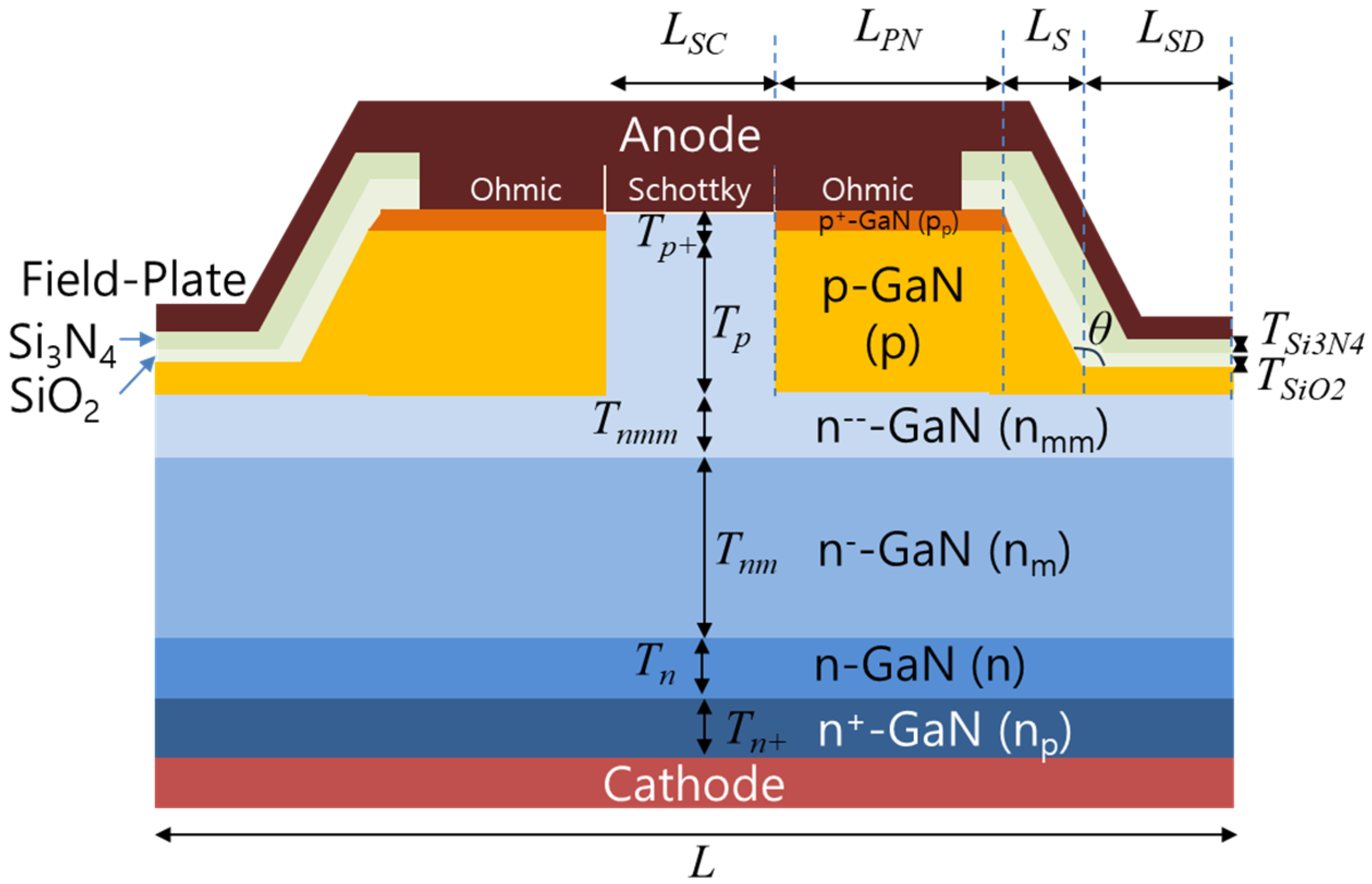
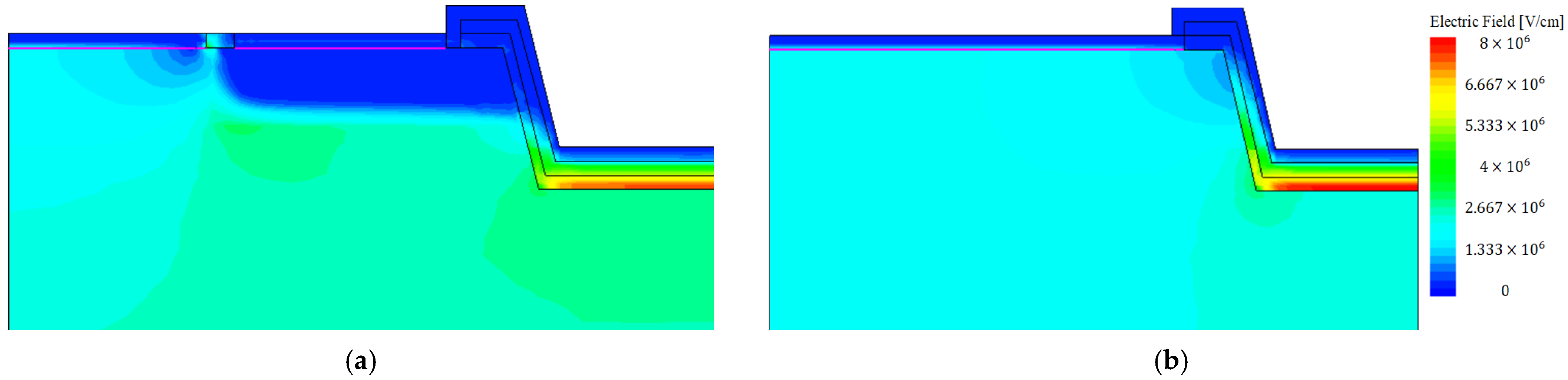
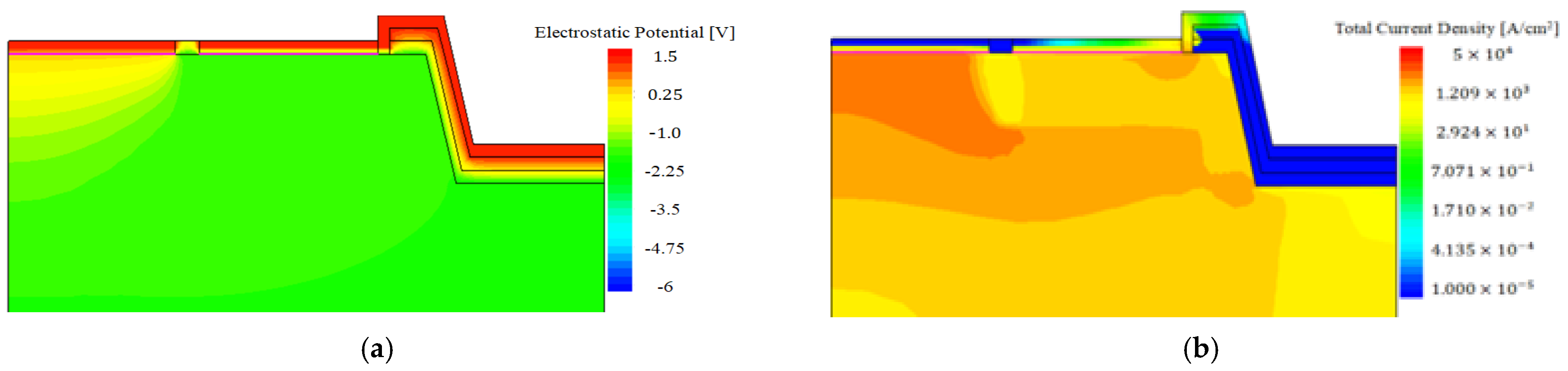
To physically substantiate the carrier-transport and field-redistribution mechanisms of the proposed MPS architecture,
Figure 3 and
Figure 4 present the internal distributions of key physical quantities.
Figure 3a,b show the electrostatic potential and the total current density under forward bias (
V = +3 V). The potential map confirms that the forward bias is correctly localized at the Schottky junction, while the current-density map demonstrates parallel dual-path conduction: high current density flows from the anode through both the central Schottky contact and the lateral p
+-GaN ohmic contacts, directly visualizing the dual-path conduction mechanism of the MPS architecture.
Figure 4a,b compare the reverse-bias (
V = −5 kV) electric-field distributions of the proposed MPS diode and the conventional Schottky diode (i.e., the same drift structure but without the embedded p-GaN regions), respectively. In the MPS diode [
Figure 4a], the embedded p-GaN regions effectively shield the Schottky/GaN interface and redistribute the high-field region into the n
− −-GaN layer beneath the p-GaN junctions, whereas in the conventional Schottky diode [
Figure 4b] the high field is concentrated directly at the Schottky/GaN interface across the entire anode area—the well-known origin of premature Schottky-contact-limited breakdown. This field-redistribution mechanism is the direct physical origin of the elevated
BV reported in
Table 2,
Table 3 and
Table 4.
3.2. Multi-Drift-Layer Doping Concentration Dependence in the Proposed MPS Diode
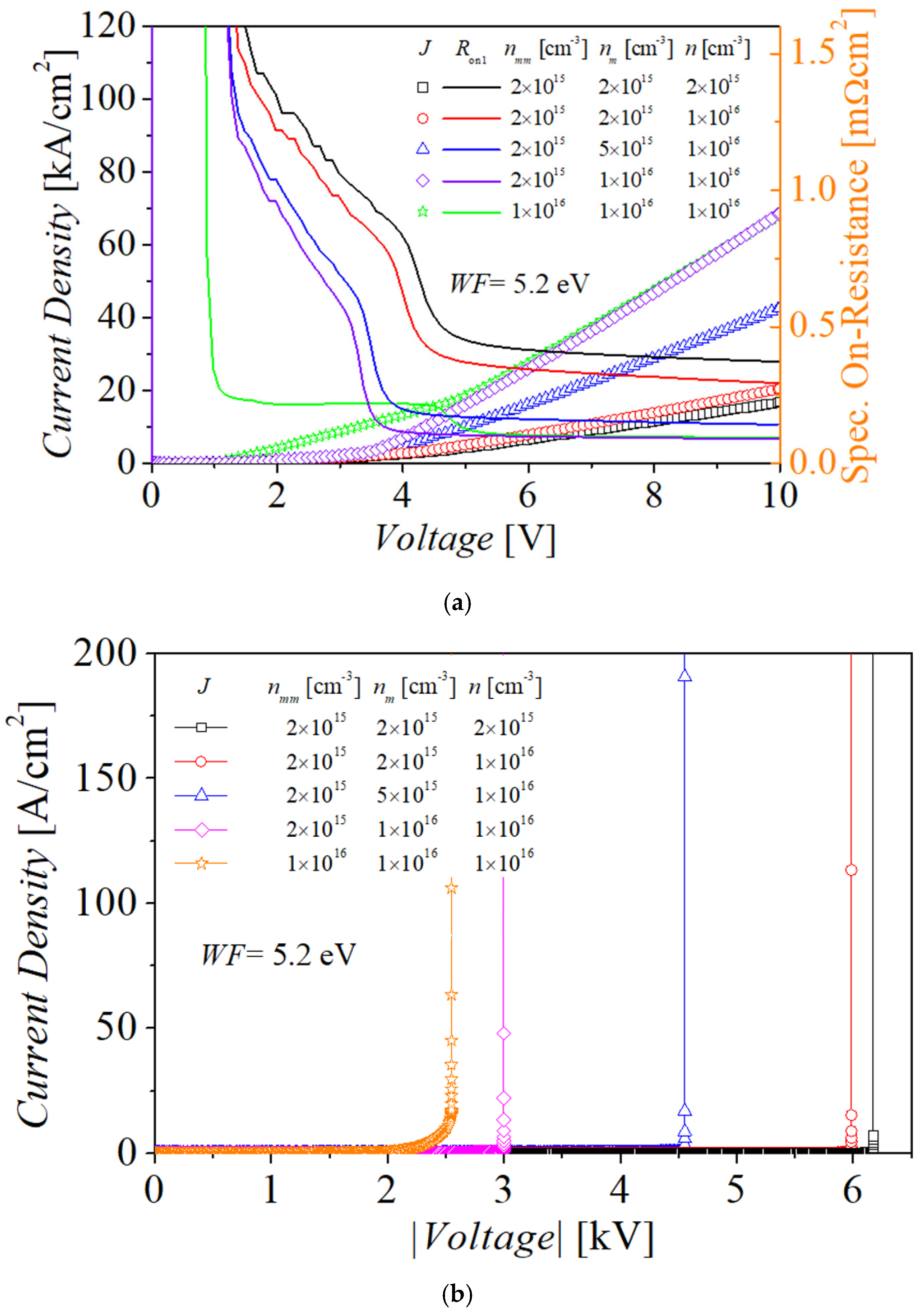
Figure 5 compares the forward and reverse
I-V characteristics of MPS diodes employing four different multi-drift-layer doping profiles, all evaluated at a fixed
WF of 5.2 eV. From these characteristics, the key performance metrics—including
Vknee,
Ron,
BV,
Jleak, and
BFOM—are extracted and summarized in
Table 3. Because all devices share the same MPS architecture and Schottky contact, the observed variations can be directly attributed to differences in the drift-layer doping configuration.
As shown in
Figure 5a, the forward
I-V characteristics exhibit systematic changes with the doping profile. Increasing the drift-layer doping concentration reduces both
Vknee and
Ron by lowering the series resistance in the current path [
23]. This trend is clearly reflected in
Table 3, where
Ron decreases monotonically with higher drift-layer doping. However, excessively high doping levels significantly increase reverse leakage and degrade the blocking capability.
The reverse
I-V characteristics in
Figure 5b reveal the complementary effect of the drift-layer doping on
BV. Lightly doped profiles achieve higher
BV due to reduced electric-field peak intensity within the drift region, while more heavily doped structures suffer from premature breakdown [
5,
17]. This behavior highlights the fundamental
Ron–
BV trade-off governed by drift-layer design.
Table 3.
BFOM performance comparison across multi-drift-layer doping configurations in the MPS diode (WF = 5.2 eV).
Table 3.
BFOM performance comparison across multi-drift-layer doping configurations in the MPS diode (WF = 5.2 eV).
| nmm [cm−3] | nm [cm−3] | n [cm−3] | Vknee [V] | Ron1 [mΩ·cm2] | BV [V] | Jleak [mA/cm2] | BFOM [GW/cm2] |
|---|
| 1 × 10¹⁴ | 1 × 10¹⁴ | 1 × 10¹⁴ | 4.411 | 23.30 | 6673 | 0.16 | 1.91 |
| 1 × 10¹⁵ | 1 × 10¹⁵ | 1 × 10¹⁵ | 1.875 | 2.415 | 6551 | 0.41 | 17.77 |
| 2 × 10¹⁵ | 2 × 10¹⁵ | 2 × 10¹⁵ | 1.365 | 1.20 | 6170 | 0.55 | 31.72 |
| 2 × 10¹⁵ | 2 × 10¹⁵ | 1 × 10¹⁶ | 1.352 | 1.12 | 5984 | 0.55 | 31.97 |
| 2 × 10¹⁵ | 5 × 10¹⁵ | 1 × 10¹⁶ | 1.319 | 0.86 | 4560 | 0.55 | 24.18 |
| 2 × 10¹⁵ | 1 × 10¹⁶ | 1 × 10¹⁶ | 1.307 | 0.77 | 2994 | 0.55 | 11.64 |
| 1 × 10¹⁶ | 1 × 10¹⁶ | 1 × 10¹⁶ | 1.006 | 0.22 | 2545 | 1.10 | 29.44 |
Among the four profiles examined, the doping configuration with nmm = 2 × 10¹⁵, nm = 2 × 10¹⁵, and n = 1 × 1016 cm−3, exhibits the most balanced performance. This structure achieves a moderate Vknee of approximately 1.35 V, a low Ron of about 1.12 mΩ·cm2, and a high BV of approximately 6 kV. As a result, it delivers the highest BFOM, approximately 31.97 GW·cm−2, among all investigated cases.
In contrast, more lightly doped configurations improve
BV but suffer from a substantial increase in
Ron, whereas more heavily doped profiles reduce
Ron at the expense of severely degraded
BV. These results confirm that the optimal performance of an MPS diode cannot be achieved through uniform or extreme drift-layer doping, but instead requires a carefully engineered multi-drift-layer profile [
23].
Overall, this optimization study demonstrates that the MPS diode effectively relaxes the conventional
Ron–
BV trade-off by decoupling forward conduction and reverse blocking mechanisms. The Schottky contact ensures low turn-on voltage and reduced conduction loss, while the optimized multi-drift-layer structure sustains high breakdown voltage through electric-field redistribution. Consequently, the identified optimal doping profile provides a clear design guideline for realizing high-voltage, low-loss MPS diodes suitable for next-generation power electronic applications. Among the investigated doping profiles, the structure with
nmm = 2 × 10
15,
nm = 2 × 10
15, and
n = 1 × 10
16 cm
−3 achieves the highest
BFOM and represents the best trade-off between
Ron and
BV. Accordingly, all subsequent analyses in
Section 3.3 and beyond were carried out using this optimized doping profile with a fixed
WF = 5.2 eV to ensure a consistent evaluation of device performance.
It is noteworthy that the uniformly high-doped profile (nmm = nm = n = 1 × 1016 cm−3) achieves a BFOM of 29.44 GW/cm2, which is only 8% below the optimal graded profile (31.97 GW/cm2) despite a 2.4× lower BV. This apparent paradox is a consequence of the quadratic-vs-inverse-quadratic dependence of BFOM on BV and Ron: as the drift doping is increased uniformly from 2 × 10¹⁵ to 1 × 1016 cm−3, Ron1 decreases by a factor of ~5.5× (from 1.20 to 0.22 mΩ·cm2), which almost exactly compensates for the ~5.9× reduction in BV2 (from 61702 to 25452). The net BFOM is therefore reduced by less than 10%. However, the absolute BV of 2545 V is below the practical requirement for the medium-voltage (≥3.3 kV class) power-electronic applications targeted by this work, so the uniformly high-doped configuration is not preferred despite its competitive BFOM. This observation highlights a general limitation of using BFOM alone as a design metric: an additional constraint on the absolute BV is required for high-voltage device design.
To further explore the low-doping regime, we extended the uniform-doping sweep in
Table 3 to include 1 × 10
14 and 1 × 10
15 cm
−3. The results show that
BV is essentially saturated across the entire low-doping range—
BV = 6673 → 6551 → 6170 V for doping = 1 × 10
14 → 1 × 10
15 → 2 × 10
15 cm
−3 (only ~8% variation across a 20× change in doping). This saturation indicates that the device is already fully punched-through at 2 × 10
15 cm
−3, with the depletion region filling the entire drift stack. Meanwhile,
Ron1 degrades by ~19× (from 1.20 to 23.30 mΩ·cm
2) and
Vknee rises from 1.365 to 4.411 V due to series-resistance domination of the current-density definition point. As a result,
BFOM collapses from 31.72 to 1.91 GW/cm
2—a 16× degradation. We conclude that 2 × 10
15 cm
−3 represents a practical lower bound for the lightly-doped layer in the present drift geometry; operation below this value is not beneficial unless the drift stack is also substantially thickened to raise the punch-through-limited
BV ceiling.
In actual epitaxial material, compensation by point defects further reduces both the carrier concentration and the mobility in the 10
14–10
15 cm
−3 range [
31,
32,
33,
34], so the
Ron values in
Table 3 for these cases are best-case estimates and the practical lower bound of 2 × 10
15 cm
−3 is, if anything, conservative. The overall conclusions are robust to this idealization, since
BV is insensitive to mobility and the optimum design conducts mainly through the heavily doped n layer (1 × 10
16 cm
−3), where compensation is weak and the mobility model is most reliable.
Importantly, the doping ranking established in this section is conditional on the default drift-layer thicknesses. The complete picture—including the joint doping–thickness optimum, which uncovers a configuration superior to the doping-only optimum reported above—is established in the new
Section 3.6.
3.3. Schottky-to-PN Contact Length Ratio Dependence of the Proposed MPS Diode
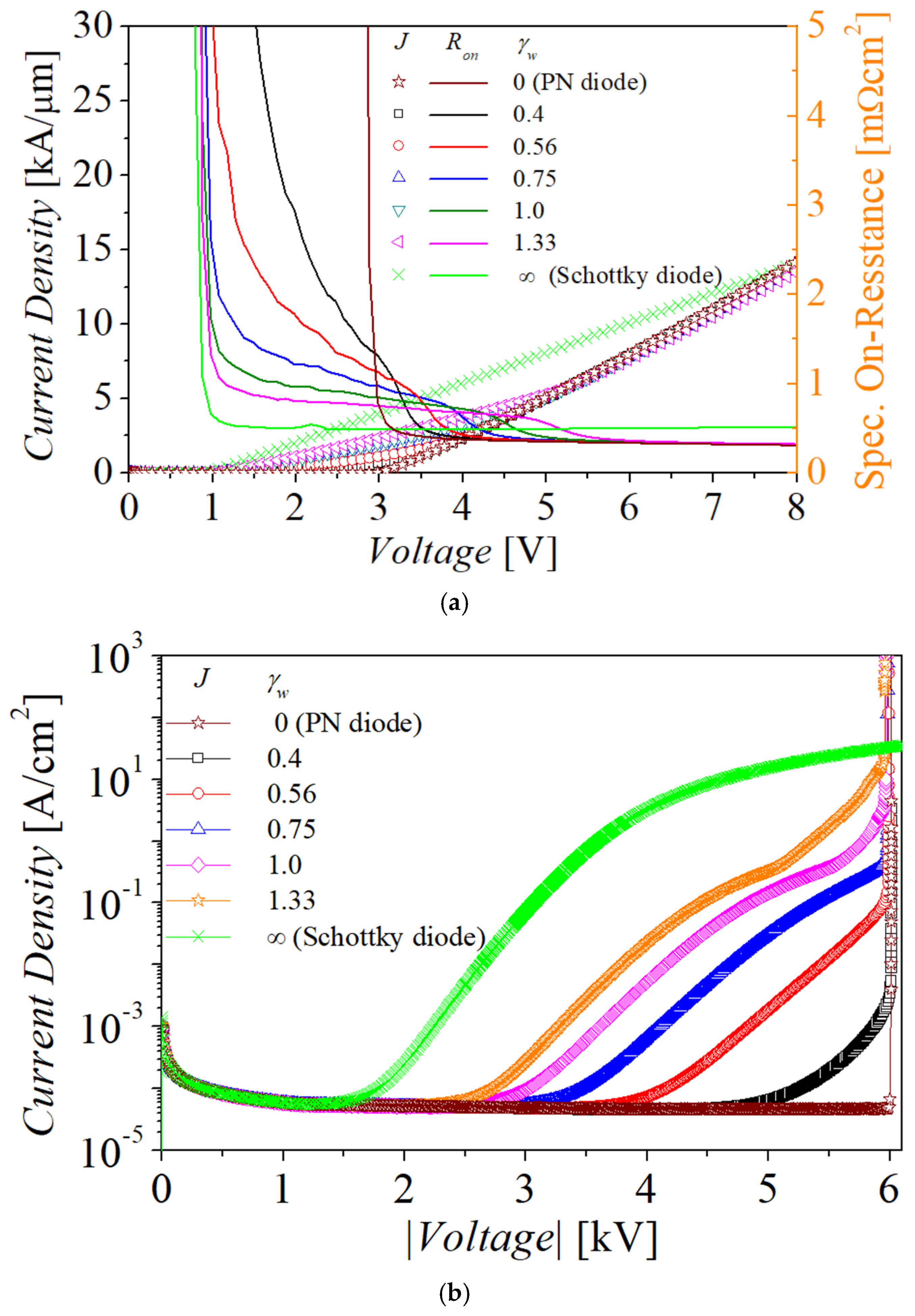
Figure 6 and
Table 4 summarize the forward and reverse
I-V characteristics of the MPS diodes as a function of the Schottky-to-PN contact length ratio, defined as
γw =
LSC/
LPN, together with the extracted performance metrics including
Vknee,
Ron,
BV,
Jleak, and
BFOM. To provide clear reference points, two limiting cases are also included: a conventional PN diode corresponding to
γw = 0 and a pure Schottky diode corresponding to
γw → ∞. For all devices, the total anode contact length is fixed as
LA =
LSC +
LPN, and an identical multi-drift-layer doping profile with a fixed
WF of 5.2 eV is employed. This configuration allows a direct and systematic investigation of the impact of lateral contact ratio on the MPS diode performance.
Table 4.
Performance metrics extracted from
Figure 6 as a function of
.
Table 4.
Performance metrics extracted from
Figure 6 as a function of
.
| γw (=LSC/LPN) | Ron1 [mΩ·cm2] | Vknee [V] | BV [V] | Jleak [mA/cm2] | BFOM [GW/cm2] |
|---|
| 0 (PN diode) | 0.31 * | 3.060 | 6011 | 0.55 | 240.88 * |
| 0.4 (=1.0/2.5) | 1.91 | 2.068 | 6008 | 0.55 | 18.90 |
| 0.56 (=1.25/2.25) | 1.40 | 1.588 | 5989 | 0.55 | 25.62 |
| 0.75 (=1.5/2.0) | 1.12 | 1.352 | 5984 | 0.55 | 31.94 |
| 1.0 (=1.75/1.75) | 0.92 | 1.232 | 5890 | 0.55 | 37.71 |
| 1.33 (=2.0/1.5) | 0.79 | 1.169 | 5530 | 0.55 | 38.71 |
| ∞ (Schottky diode) | 0.49 | 1.044 | 3813 | 0.60 | 29.67 |
Figure 6a shows the forward
I-V characteristics of the proposed MPS diodes for different values of
γw. The PN diode (
γw = 0) exhibits a high
Vknee and a steep rise in on-resistance at low forward bias, reflecting the inherent conduction loss associated with bipolar junction turn-on [
11]. As
γw increases and a Schottky conduction path is introduced, both
Vknee and
Ron decrease monotonically. This trend is clearly quantified in
Table 4. As
γw increases from 0.40 to 1.33,
Vknee decreases from 3.06 V to 1.17 V, while
Ron is reduced from 3.06 to 0.79 mΩ·cm
2. In the limiting case of the pure Schottky diode (
γw → ∞), the lowest
Ron of 0.49 mΩ·cm
2 is achieved, confirming the superior forward conduction capability of unipolar Schottky transport [
9,
14]. These results demonstrate that increasing
γw effectively transitions the dominant conduction mechanism from bipolar PN conduction to unipolar Schottky conduction, leading to progressively reduced forward losses.
The reverse
I-V characteristics shown in
Figure 6b reveal a fundamentally different trend. The PN diode exhibits excellent reverse blocking capability with a
BV of approximately 6.0 kV and negligible
Jleak. Introducing a Schottky contact through the MPS structure preserves this high
BV across a wide range of
γw, indicating that the reverse blocking mechanism remains drift-region-limited [
15,
16]. For all MPS diodes with finite
γw, the
BV remains close to 6 kV, despite substantial changes in the Schottky contact fraction. Moreover,
Jleak prior to breakdown is nearly identical for all
γw values, demonstrating that the embedded PN regions effectively shield the Schottky interface from electric-field crowding under reverse bias [
13,
14]. In contrast, the pure Schottky diode (
γw → ∞) exhibits a significantly reduced
BV of approximately 3.8 kV and a higher leakage current, reflecting Schottky-contact-limited breakdown. Importantly, the reverse current in the MPS diodes begins to increase gradually above approximately 2 kV, well before the final breakdown. This increase originates from high-field effects in the lightly doped drift region, where the expanding depletion region enhances electric fields and activates field-assisted Shockley–Read–Hall generation [
28] and impact-ionization-assisted pre-avalanche carrier multiplication [
29]. The insensitivity of this behavior to
γw confirms that it is governed by the drift region rather than by Schottky-related leakage mechanisms.
The interplay between forward conduction loss and reverse blocking capability is reflected in the
BFOM, summarized in
Table 4. The PN diode achieves a
BV but suffers from a large
Ron, resulting in limited
BFOM despite excellent leakage suppression. Conversely, the pure Schottky diode offers very low
Ron but a severely degraded
BV, leading to a reduced
BFOM. The proposed MPS diode bridges these two extremes. As
γw increases from 0.40 to 1.33, the
BFOM increases monotonically from 18.9 to 38.7 GW·cm
−2, driven primarily by the strong reduction in
Ron while maintaining a
BV comparable to that of the PN diode. This result demonstrates that the MPS architecture effectively decouples forward conduction optimization from reverse blocking capability, thereby relaxing the conventional
Ron–
BV trade-off.
From a design perspective, the results identify γw as a powerful tuning parameter for MPS diodes. While increasing continuously improves forward conduction, excessively large values approaching the pure Schottky limit compromise BV and leakage performance. Within the investigated range, the highest BFOM is achieved at γw = 1.33, which represents an optimal balance between Schottky-dominated conduction and effective PN-assisted electric-field management.
Overall, this study demonstrates that the proposed MPS diode provides a continuous and controllable transition between PN and Schottky diode behaviors. By optimizing the γw, the MPS structure combines the low forward loss of Schottky diodes with the high breakdown robustness of PN diodes, making it a compelling solution for high-voltage, low-loss power electronics.
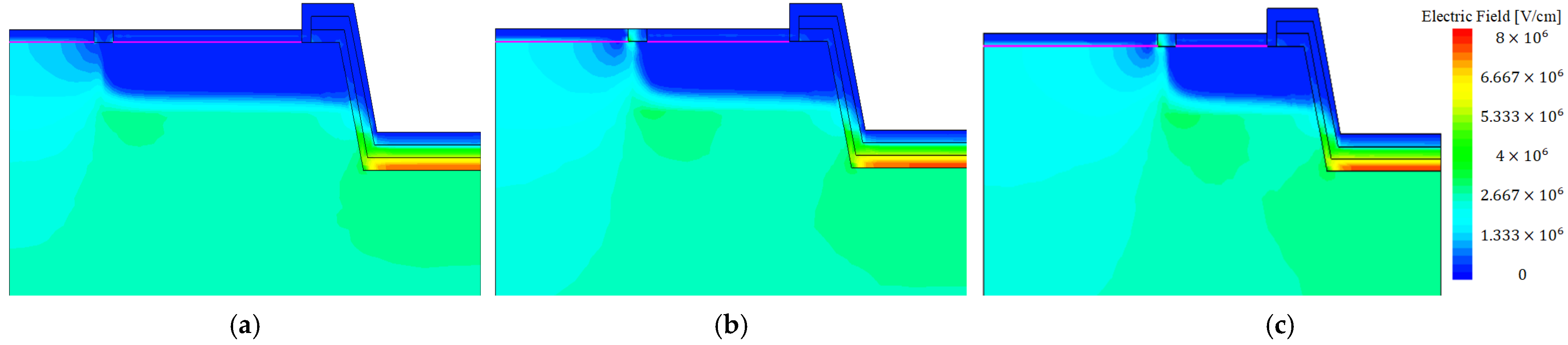
To further visualize the
γw-dependent field-shielding mechanism,
Figure 7 shows the 2D electric-field distributions of the proposed MPS diode for three
γw values (0.4, 0.75, and 1.33) under a reverse anode bias of
V = −5 kV. As
γw increases (i.e., the Schottky region widens while the p-GaN region narrows), the field-redistribution pattern visibly evolves: the high-field region migrates from being well-confined under the p-GaN to extending laterally toward the mesa edge. This visual evolution provides a direct physical explanation for the mild BV reduction (6008 → 5530 V) observed in
Table 4 as
γw increases.
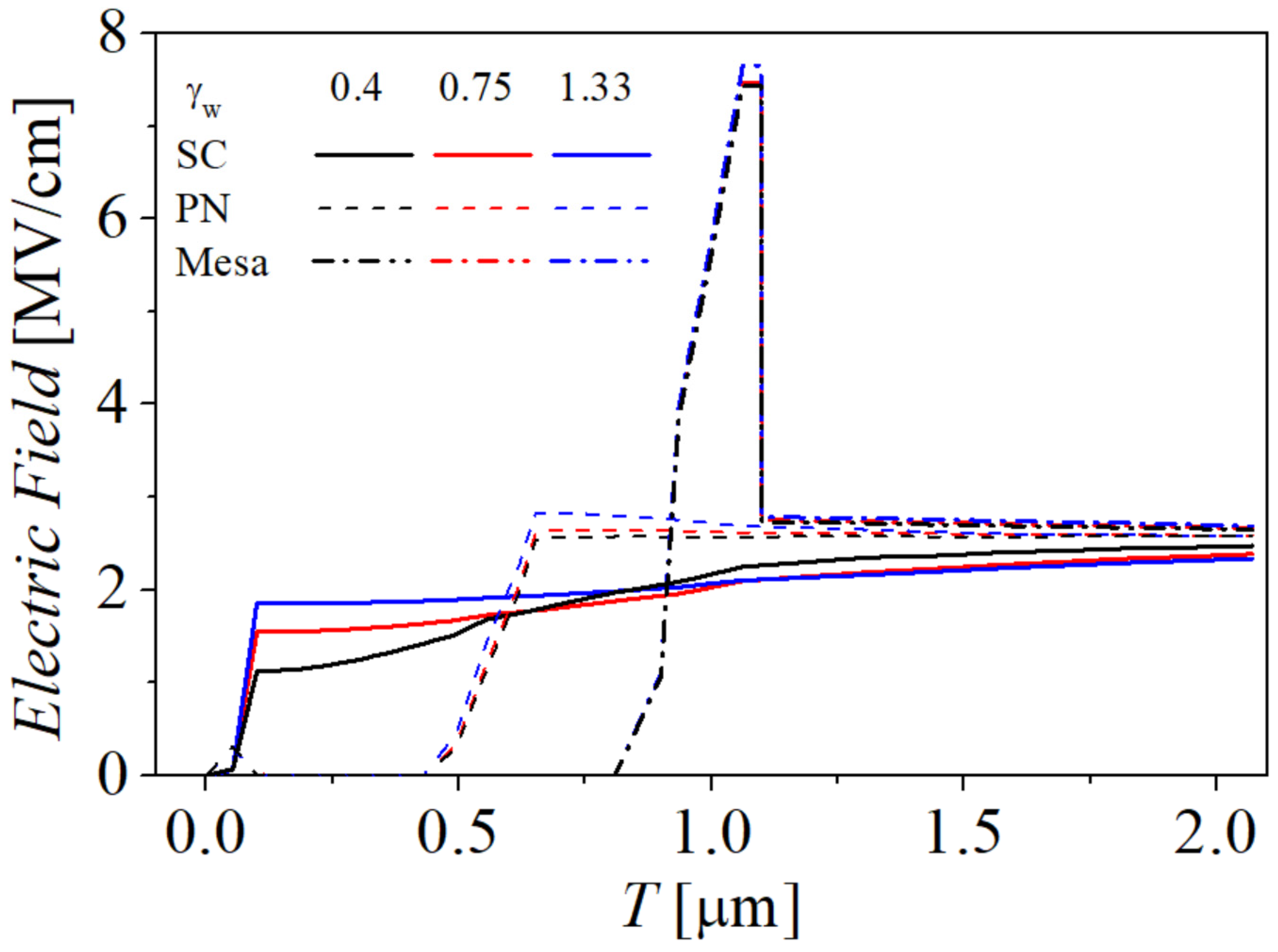
Figure 8 provides a quantitative comparison of the vertical electric-field profiles along three representative cut-lines—through the Schottky center (SC, solid lines), through the p-GaN center (PN, dashed lines), and at the mesa edge (Mesa, dash-dotted lines)—for the same three
γw values. Three key observations emerge: (i) the field at the Schottky center remains well below 2 MV/cm for all
γw values, quantitatively confirming the effective p-GaN shielding of the Schottky interface; (ii) the field at the p-GaN center is moderate (~2.5–3 MV/cm); and (iii) the field at the mesa edge rises sharply when
γw increases from 0.4 to 0.75 (from ~2.5 to ~7 MV/cm), with a smaller further increase at
γw = 1.33. This identifies the mesa edge as the dominant
BV-limiting location at high
γw and explains the
BV trend in
Table 4 quantitatively.
3.4. Temperature Dependence of the Proposed MPS Diode
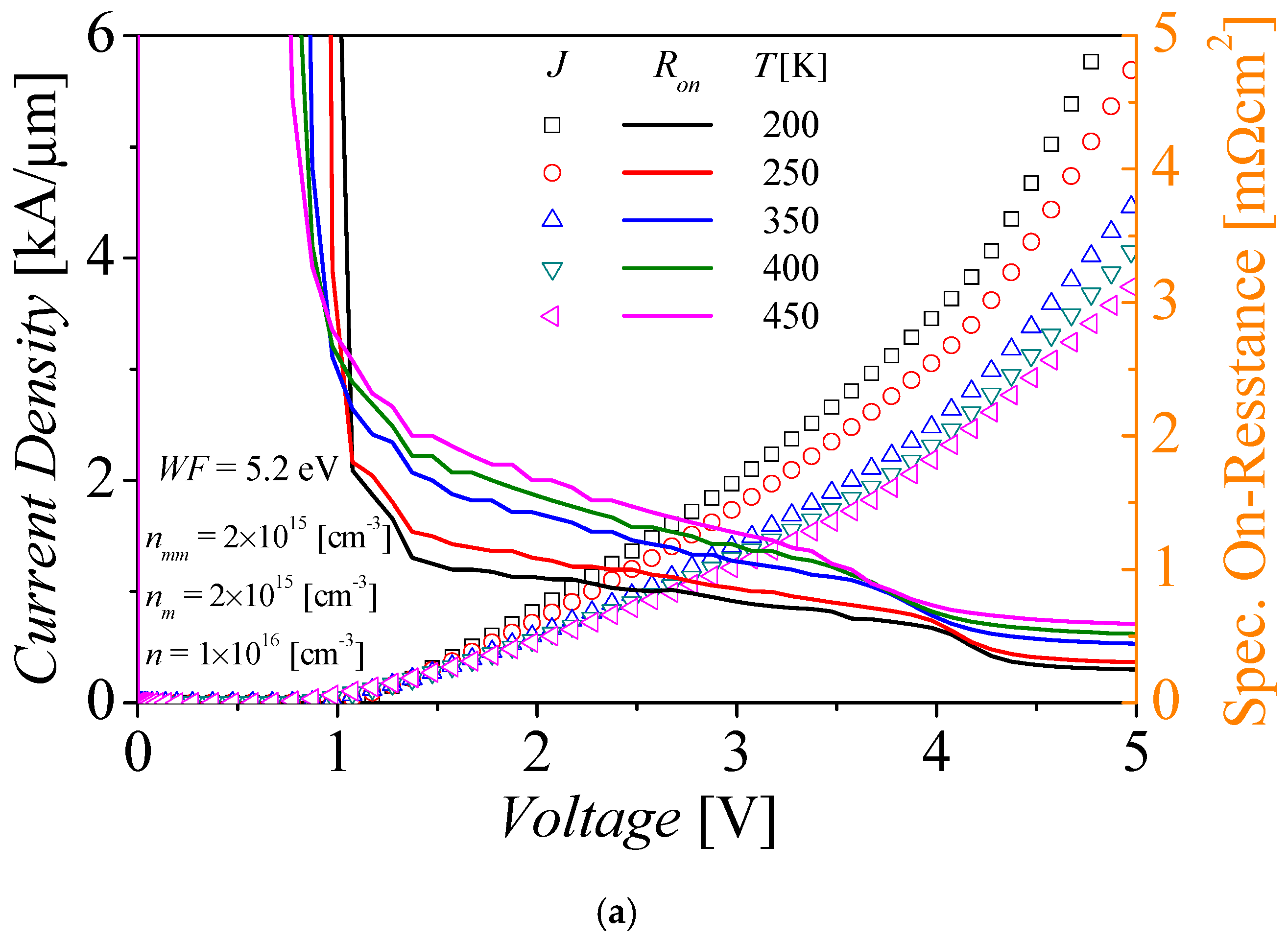
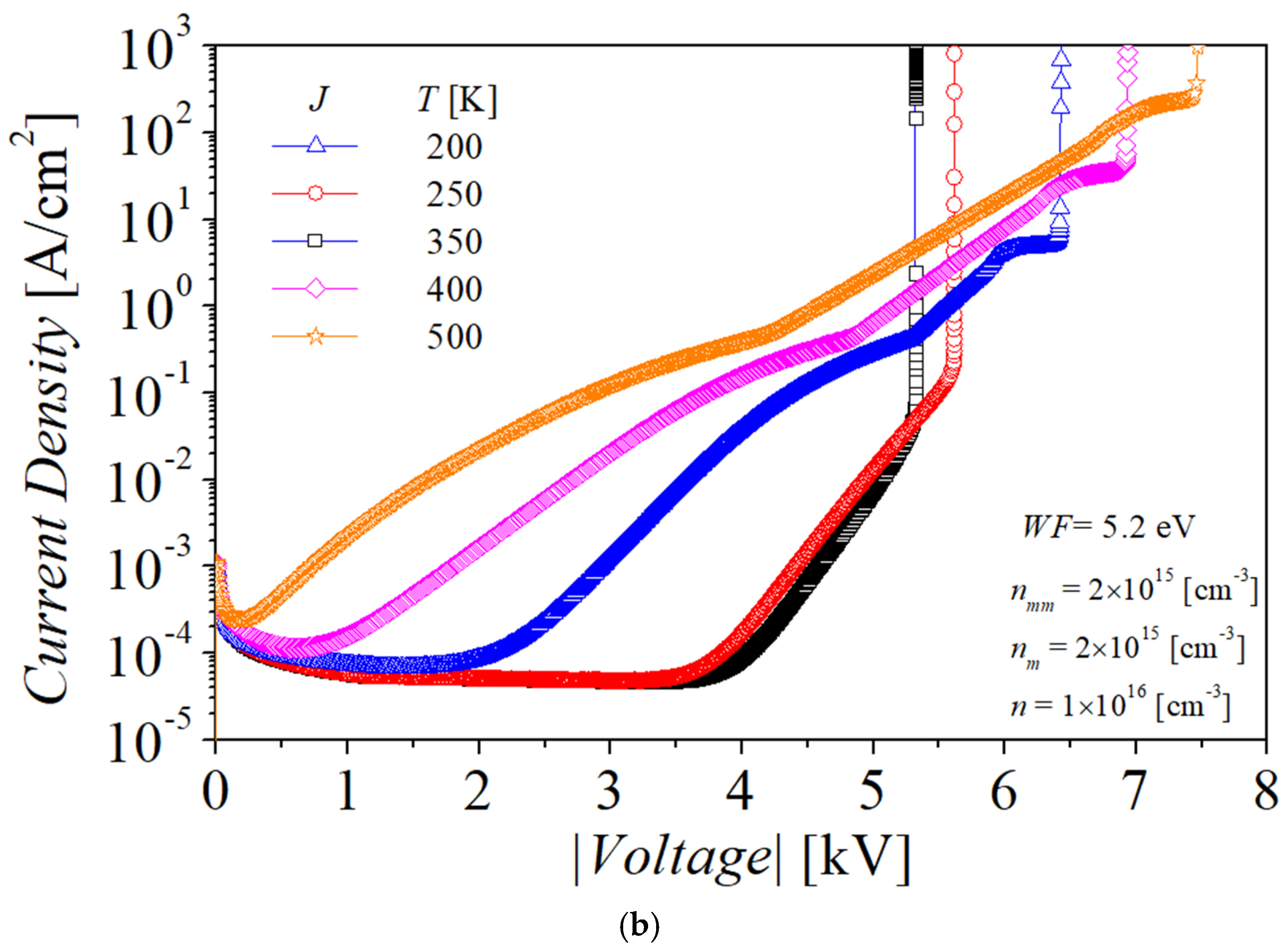
Figure 9 shows the temperature dependence of the forward and reverse
I-V characteristics of the MPS diode, measured over a temperature range from 200 K to 450 K. The corresponding extracted performance metrics, including
Vknee,
Ron,
BV,
Jleak, and
BFOM, are summarized in
Table 5. All devices employ an identical MPS structure with a fixed
WF of 5.2 eV and the same optimized multi-drift-layer doping profile and Schottky contact length, ensuring that the observed variations arise solely from temperature effects.
As shown in
Figure 9a, the forward
I-V characteristics exhibit a systematic temperature dependence. With increasing temperature, the
Vknee slightly decreases, reflecting the temperature-induced reduction of the effective
ϕB and the enhanced thermionic emission at the metal–semiconductor interface [
35,
36]. At the same time, the extracted
Ron increases monotonically with temperature, as summarized in
Table 5. This increase in
Ron is primarily attributed to reduced electron mobility in the GaN drift region due to enhanced phonon scattering at elevated temperatures [
27,
37]. Nevertheless, even at 450 K, the increase in
Ron remains moderate, indicating that the unipolar Schottky conduction path in the MPS structure mitigates excessive conduction loss compared with purely bipolar devices.
Figure 9b presents the reverse
I-V characteristics as a function of temperature. Unlike conventional Schottky diodes, which often suffer from premature breakdown and strong temperature sensitivity due to Schottky-contact-limited electric-field crowding [
10], the MPS diode maintains robust reverse blocking capability across the entire temperature range. Notably, the
BV exhibits a clear positive temperature dependence, increasing from approximately 5.32 kV at 200 K to about 7.43 kV at 450 K, as listed in
Table 5. This positive temperature coefficient of
BV indicates that breakdown in the MPS diode is dominated by avalanche multiplication in the drift region rather than by Schottky-contact-limited mechanisms [
38,
39]. As temperature increases, enhanced phonon scattering reduces the impact ionization coefficient, thereby requiring a higher electric field to initiate avalanche breakdown [
40]. The effectiveness of the embedded PN regions in shielding the Schottky contact is further evidenced by the nearly constant reverse leakage current density prior to breakdown, which remains below 10
−3 A/cm
2 over the investigated temperature range. In addition, a gradual increase in reverse current is observed at high reverse voltages below breakdown, particularly above approximately 2 kV. This behavior originates from field-enhanced generation and pre-avalanche carrier multiplication within the extended depletion region of the drift layers and represents intrinsic high-field behavior rather than premature breakdown or Schottky-induced leakage [
28,
29].
The combined temperature dependence of
Ron and
BV is directly reflected in the evolution of
BFOM. As shown in
Table 5, despite the gradual increase in
Ron with temperature, the
BFOM improves monotonically from approximately 33.3 GW·cm
−2 at 200 K to 37.8 GW·cm
−2 at 450 K. This enhancement is primarily driven by the strong positive temperature coefficient of
BV, which more than compensates for the increase in
Ron. This behavior demonstrates a key advantage of the MPS diode architecture. While conventional power devices often suffer from a worsened
Ron–
BV trade-off at elevated temperatures, the proposed MPS diode effectively decouples forward conduction degradation from reverse blocking capability. The Schottky contact ensures low turn-on voltage and efficient carrier transport, whereas the PN-assisted drift-region-limited breakdown mechanism provides enhanced
BV and thermal stability.
Overall, these results confirm that the proposed MPS diode exhibits robust electrical performance and improved BFOM over a wide temperature range, underscoring its suitability for high-voltage, high-temperature power electronic applications.
3.5. Switching Transient Analysis and Dynamic Performance
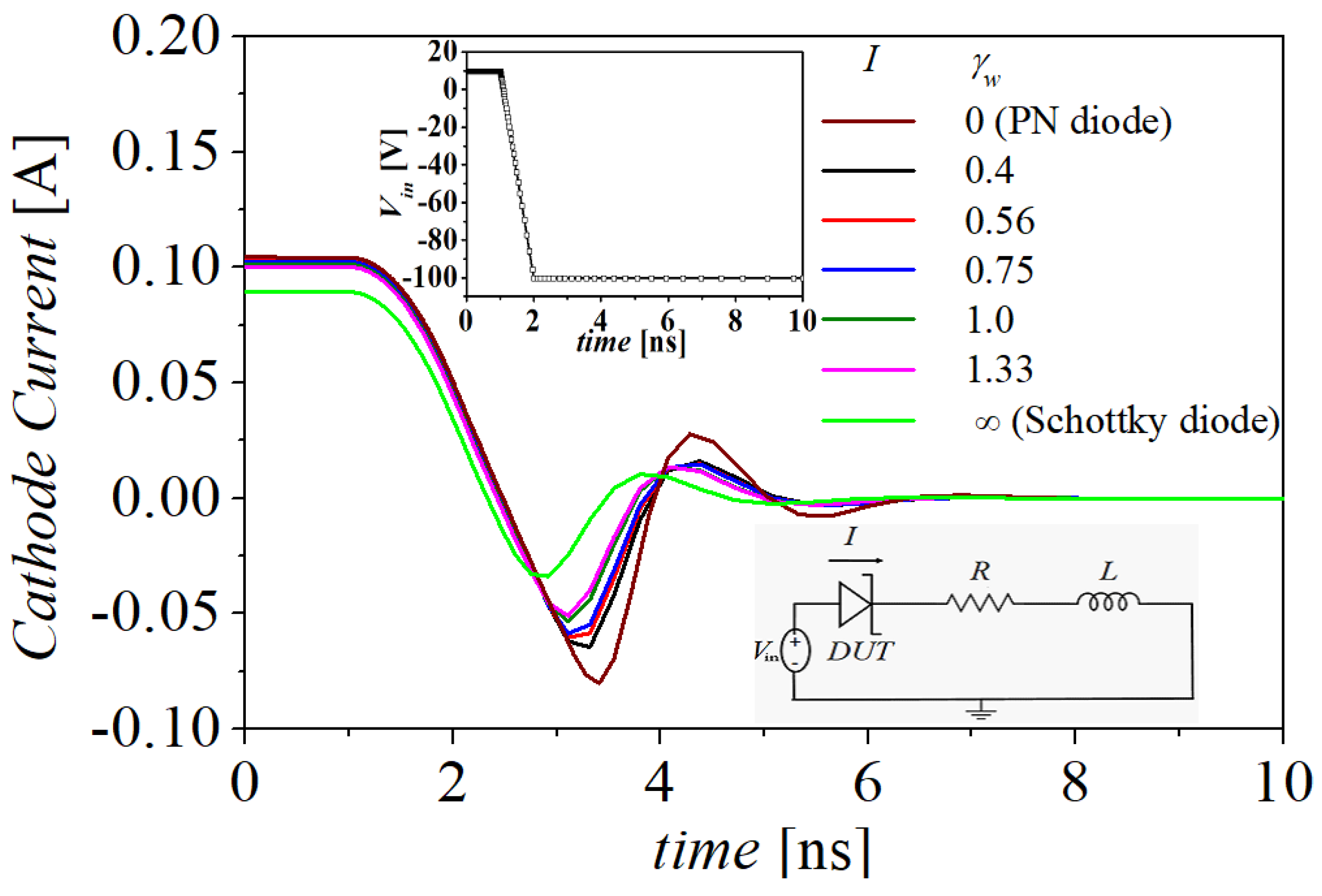
Figure 10 shows the reverse recovery switching characteristics of the proposed MPS diodes as a function of
γw, together with reference results for a conventional PN diode (
γw = 0) and a pure Schottky diode (
γw → ∞). The transient responses were obtained using mixed-mode TCAD simulations [
26] that coupled a two-dimensional diode structure with an external
R–
L circuit, as illustrated in the right inset of
Figure 10, where
L = 1 μH and
R = 1 mΩ. The applied pulse input voltage
Vin is shown in the left inset. As shown in
Figure 6, the PN diode exhibits a large reverse recovery current peak (
Irr(peak)) and a pronounced recovery tail, which originate from the extraction of stored minority carriers during turn-off [
41,
42]. This behavior results in a relatively high
Irr,peak of 80.15 mA and a large reverse recovery charge
Qrr of 65.80 pC, as summarized in
Table 6. The reverse recovery time
trr is also relatively long, reaching 1.462 ns, which is detrimental for high-frequency switching operation. In contrast, the pure Schottky diode shows a substantially reduced reverse recovery current and a much shorter recovery interval, reflecting the absence of stored charge and the predominance of capacitive effects [
43]. As a result,
Irr,peak,
trr, and
Qrr are reduced to 33.84 mA, 1.140 ns, and 21.71 pC, respectively. However, this improvement in dynamic performance is accompanied by a severe degradation in
BV, which decreases to 3.81 kV, highlighting the intrinsic trade-off between switching speed and blocking capability in conventional Schottky diodes.
The proposed MPS diodes exhibit an intermediate and controllable reverse recovery behavior between these two extremes. As
γw increases, a systematic reduction in reverse recovery parameters is observed. Specifically, when
γw increases from 0.4 to 1.33,
Irr,peak decreases from 64.44 mA to 50.90 mA, while the reverse recovery time
trr is reduced from 1.467 ns to 1.321 ns. Correspondingly,
Qrr decreases from 52.08 pC to 36.86 pC, representing a reduction of approximately 29% compared with the PN diode case. This improvement is attributed to the enhanced contribution of the Schottky conduction path, which suppresses minority-carrier injection, while the embedded PN regions continue to provide effective electric-field shielding under reverse bias [
14,
15].
Notably, the MPS diode with
γw = 1.0 and 1.33 achieves a favorable balance between dynamic and blocking performance. For
γw = 1.33, the device maintains a high
BV of 5.53 kV while exhibiting a significantly reduced
Qrr of 36.86 pC and a shortened
trr of 1.321 ns. Compared with the PN diode, this corresponds to a marked reduction in reverse recovery loss without sacrificing high-voltage robustness. These characteristics are particularly advantageous for high-frequency power systems, where
Qrr and
trr directly impact switching loss, current overshoot, and electromagnetic interference [
43,
44].
Overall, the results in
Figure 10 and
Table 6 clearly demonstrate that the Schottky-to-PN contact length ratio is a critical design parameter governing the reverse recovery dynamics of the MPS diode. By appropriately selecting
γw, the proposed MPS structure effectively alleviates the conventional trade-off between fast switching and high breakdown voltage, enabling improved dynamic performance while preserving PN-like blocking capability. This balance underscores the suitability of the proposed MPS diodes for high-voltage, high-frequency power electronic applications.
3.6. Drift-Layer Thickness Optimization and Joint Doping-Thickness Optimum
While
Section 3.2 established the optimal doping concentrations under fixed default drift-layer thicknesses, the layer thicknesses themselves represent an additional degree of design freedom that we had not yet exploited. To complete the design optimization, this new section systematically varies the three drift-layer thicknesses (
Tnmm,
Tnm,
Tn) for the two leading doping profiles from
Section 3.2—the uniform profile (
nmm =
nm = 2 × 10
15,
n = 1 × 10
16 cm
−3) and the graded profile (
nmm = 2 × 10
15,
nm = 5 × 10
15,
n = 1 × 10
16 cm
−3)—at the fixed optimum
WF = 5.2 eV. The simulation set is organized into two complementary groups: Group A (
Tnmm fixed at 4.49 μm;
Tnm and
Tn traded off at constant
Tnm +
Tn = 25 μm) and Group B (
Tn fixed at 5 μm;
Tnmm and
Tnm traded off at constant
Tnmm +
Tnm = 24.49 μm).
For the uniform doping profile, as shown in
Table 7, three key findings emerge. (1) The optimum is at (
Tnmm,
Tnm,
Tn) = (4.49, 5, 20) μm, achieving
BFOM = 51.05 GW/cm
2 (
BV = 6626 V,
Ron1 = 0.86 mΩ·cm
2)—a substantial improvement over the default configuration (
T_
nm = 20,
Tn = 5:
BFOM = 31.97 GW/cm
2). Remarkably, this new configuration simultaneously improves both metrics:
BV increases by +11% and
Ron1 decreases by −23%. (2)
Tn is the dominant thickness parameter. The monotonic trend in Group A (
BFOM = 31.97 → 42.37 → 46.37 → 51.05 GW/cm
2 as
Tn increases from 5 to 20 μm) clearly identifies
Tn as the dominant knob. (3)
Tnmm and
Tnm are electrically interchangeable when
nmm =
nm. The Group B rows in
Table 7 (4.49/20/5, 8.49/16/5, 14.49/10/5) yield identical
Vknee,
Ron1,
BV, and
BFOM, because
nmm =
nm makes the n
− − and n
− layers electrically indistinguishable; only their combined thickness (
Tnmm +
Tnm) matters.
For the graded doping profile, as shown in
Table 8, the same thickness pattern (large
Tn and small
Tnm) achieves an even better result:
BFOM = 55.36 GW/cm
2 (
BV = 6613 V,
Ron1 = 0.79 mΩ·cm
2) at (
Tnmm,
Tnm,
Tn) = (4.49, 5, 20) μm. This is the overall optimum of this work—+73% improvement over the doping-only optimum reported in
Section 3.2 (31.97 GW/cm
2). The improvement comes mainly from the lower
Ron (0.79 vs. 0.86 mΩ·cm
2), enabled by the more conductive
n− layer (5 × 10
15 vs. 2 × 10
15 cm
−3).
Moreover,
Table 8 reveals two important physical distinctions from the uniform-doping case. First,
Tnmm and
Tnm are no longer interchangeable—the Group B rows of
Table 8 (4.49/20/5, 8.49/16/5, 14.49/10/5) yield strongly different
BFOM (24.18 → 26.51 → 44.47 GW/cm
2), because
nmm ≠
nm makes the two layers electrically distinguishable. Second, increasing
Tnmm (the lightly-doped layer adjacent to the p-GaN junction) substantially raises
BV (4560 → 6635 V in Group B), because the depletion peak-field zone has more lightly-doped material available before reaching the higher-doped
n− layer.
Physical interpretation—punch-through/field-stop principle. The performance gain at large
Tn can be understood as follows. The lightly-doped (
n− − +
n−) region acts as the primary blocking region, while the more heavily doped n region (5× higher doping) acts as a quasi-field-stop layer. In the default configuration (
Tn = 5 μm), the light region (24.49 μm thick) supports most of the reverse voltage with a strongly triangular electric-field profile, and the thin n layer plays only a minor role. In the new optimum (
Tn = 20 μm, light region = 9.49 μm), the depletion punches through the thin light region at lower reverse voltage and then extends into the n layer. The wider n layer thus contributes a large additional voltage-supporting region (raising
BV), while simultaneously providing a lower-resistivity bulk current path (reducing
Ron). This is precisely the punch-through/field-stop principle that has been successfully exploited in IGBTs and SiC power diodes for decades [
45,
46], and we have now established it as the governing design principle for the proposed GaN MPS diode.
A major paper-level finding—doping-thickness coupling. In the original
Section 3.2, the doping was optimized at the fixed default thicknesses; under that constraint, the uniform profile (2, 2, 10) × 10
15 was found to be best (
BFOM = 31.97), and the graded profile (2, 5, 10) × 10
15 appeared suboptimal (
BFOM = 24.18). However, the present joint study shows that those ranking reverses when the thickness is also optimized: the graded profile becomes the overall best (
BFOM = 55.36), exceeding the uniform-profile thickness-optimum (
BFOM = 51.05). The original
Section 3.2 conclusion is therefore conditional on the default thickness, and the true optimum requires joint doping-thickness optimization. To our knowledge, this coupled doping-thickness design space has not been previously reported for GaN MPS diodes.
In summary, the overall optimum of the proposed MPS diode is: doping (
nmm,
nm,
n) = (2 × 10
15, 5 × 10
15, 1 × 10
16) cm
−3; thickness (
Tnmm,
Tnm,
Tn) = (4.49, 5, 20) μm; performance
BV = 6.61 kV,
Ron1 = 0.79 mΩ·cm
2,
BFOM = 55.36 GW·cm
−2. This optimum is also fully consistent with the lower-bound finding of
Section 3.2 that
nmm = 2 × 10
15 cm
−3 represents a practical lower limit for the lightly-doped layer.