
Numerical Study on Heat Transfer Performance of Turbulence Enhancement Configurations for Galinstan Based Mini-Channel Cooling


Abstract
1. Introduction
2. Research Subject and Boundary Conditions
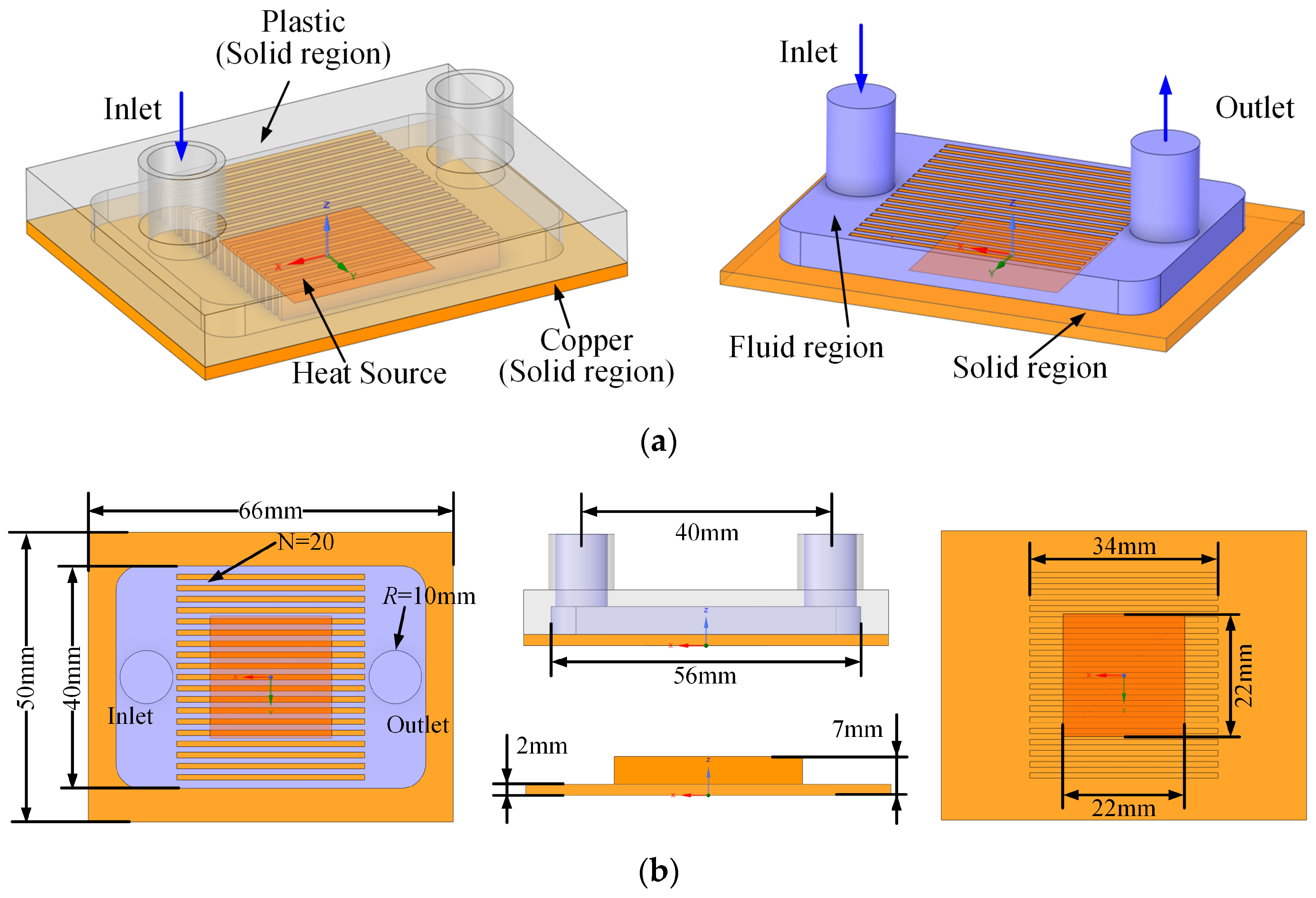
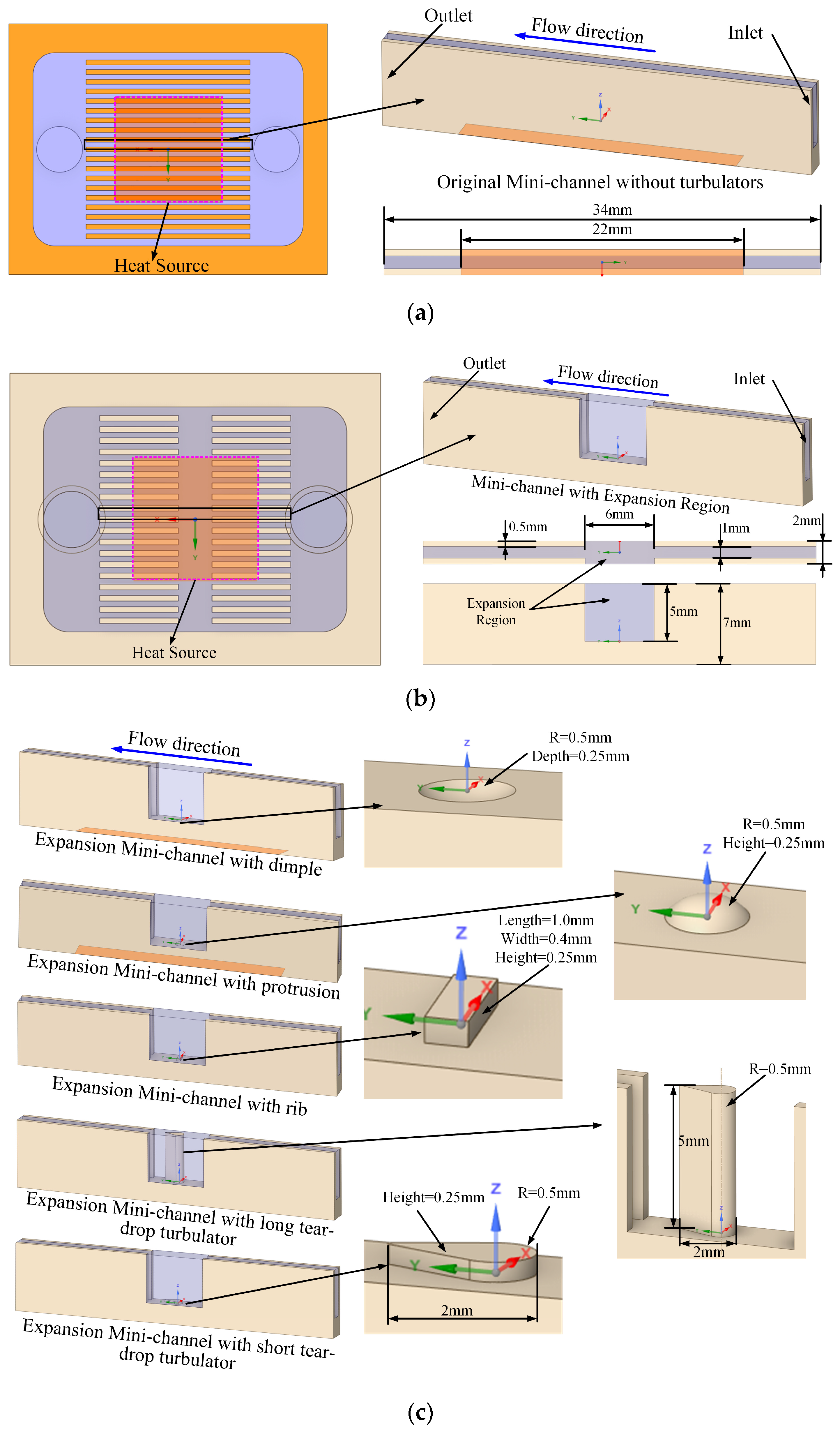
2.1. Research Subject
2.2. Material Properties and Boundary Conditions
2.3. Data Reduction
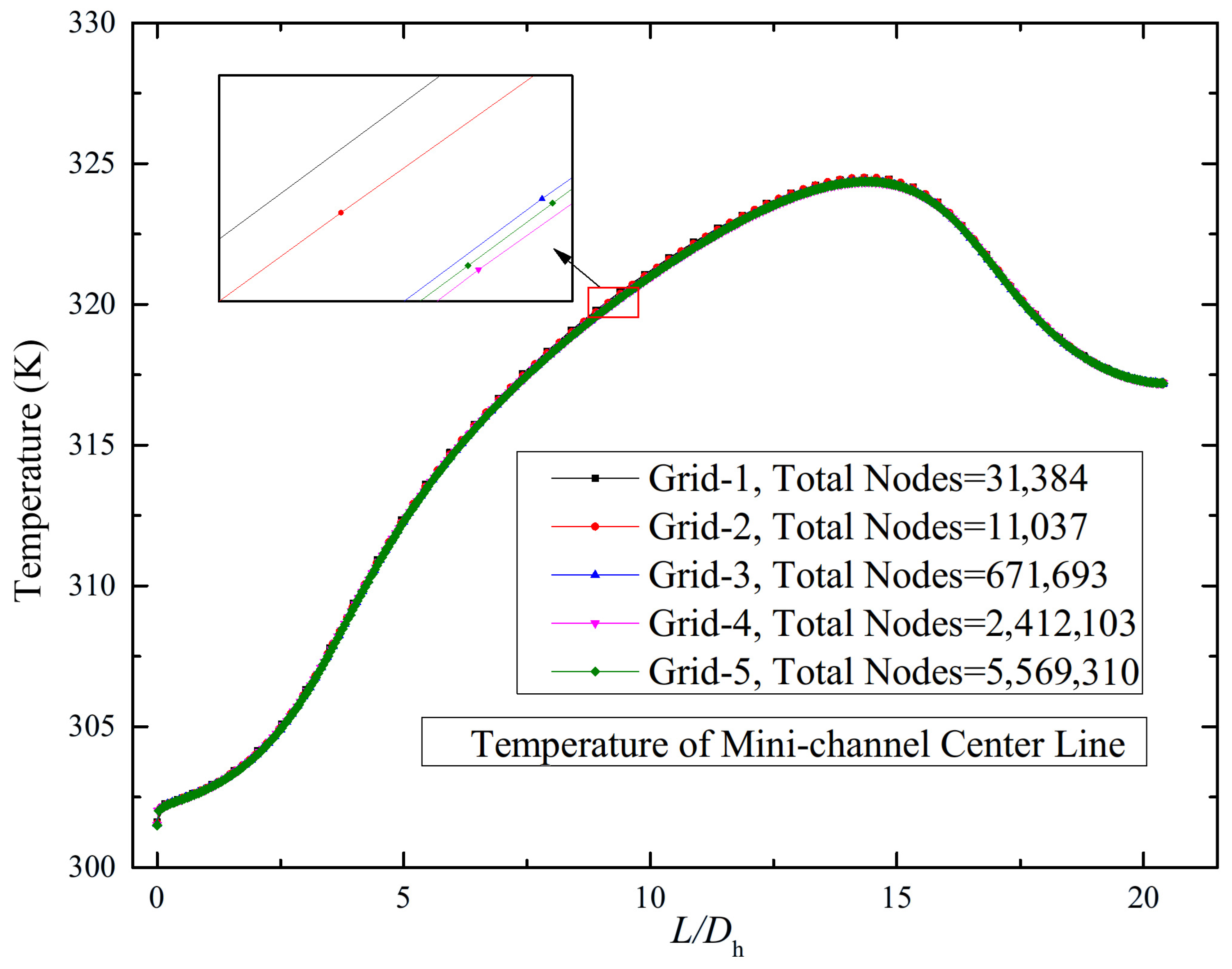
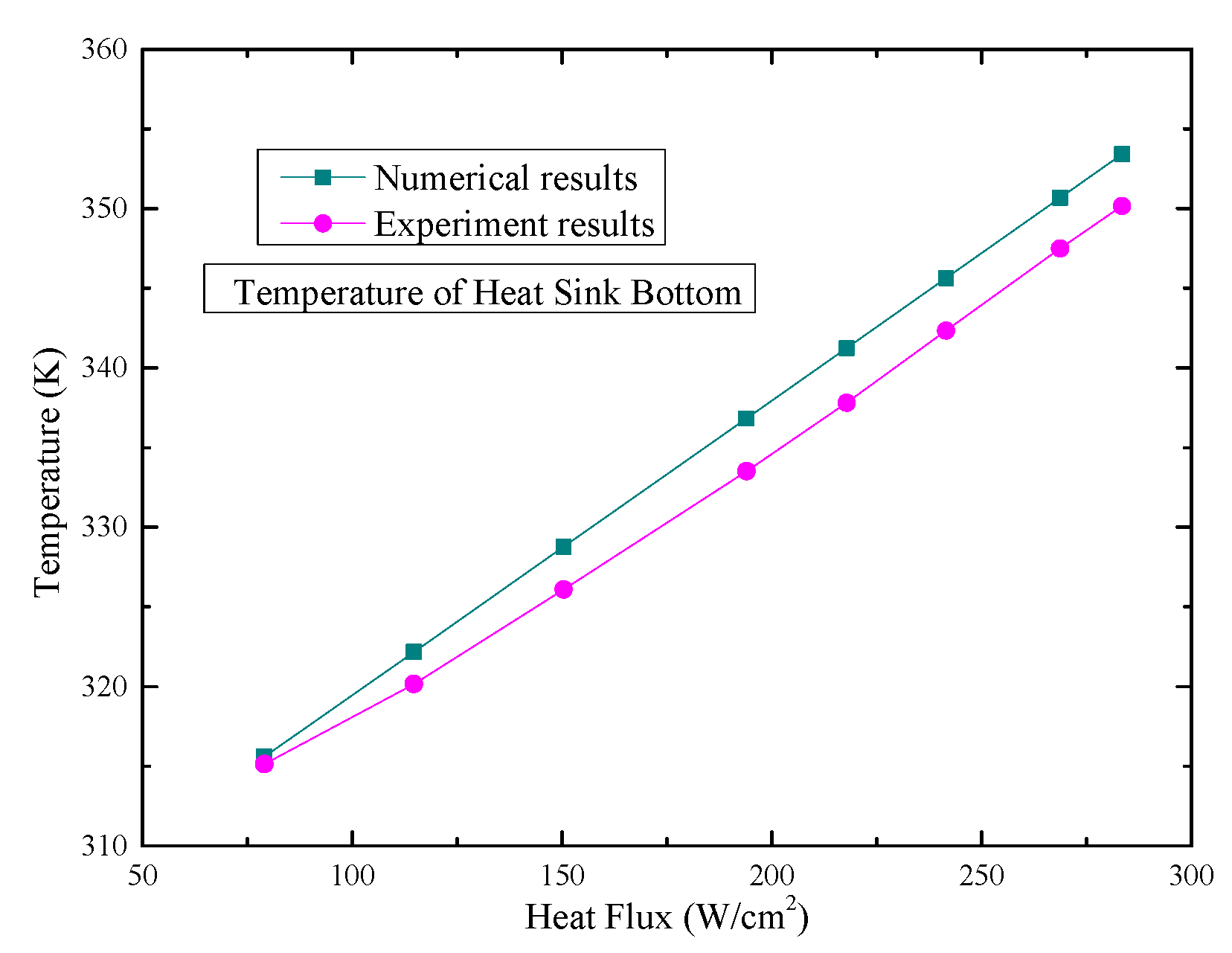
2.4. Grid Independence Test and Numerical Model Validation
3. Results and Discussion
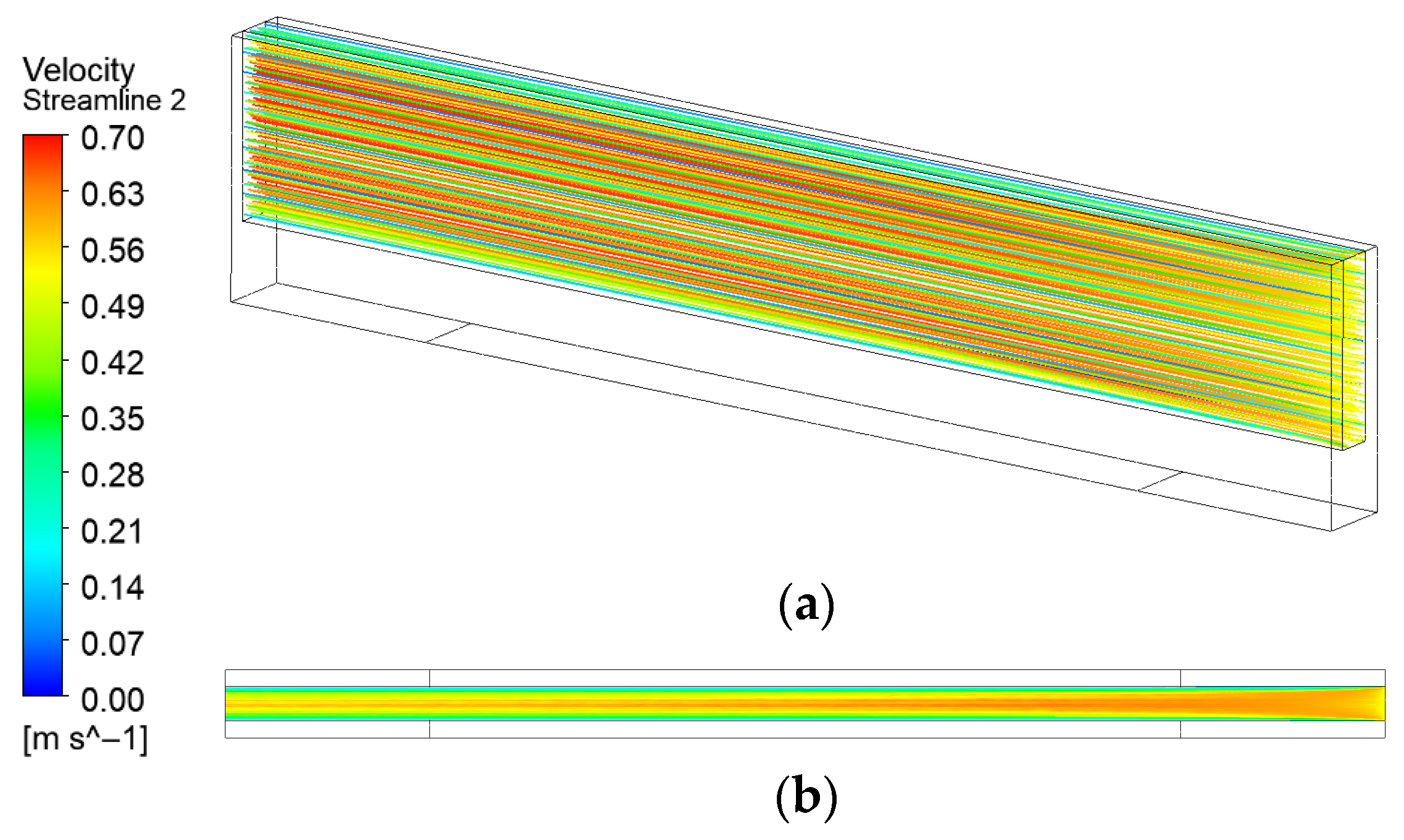
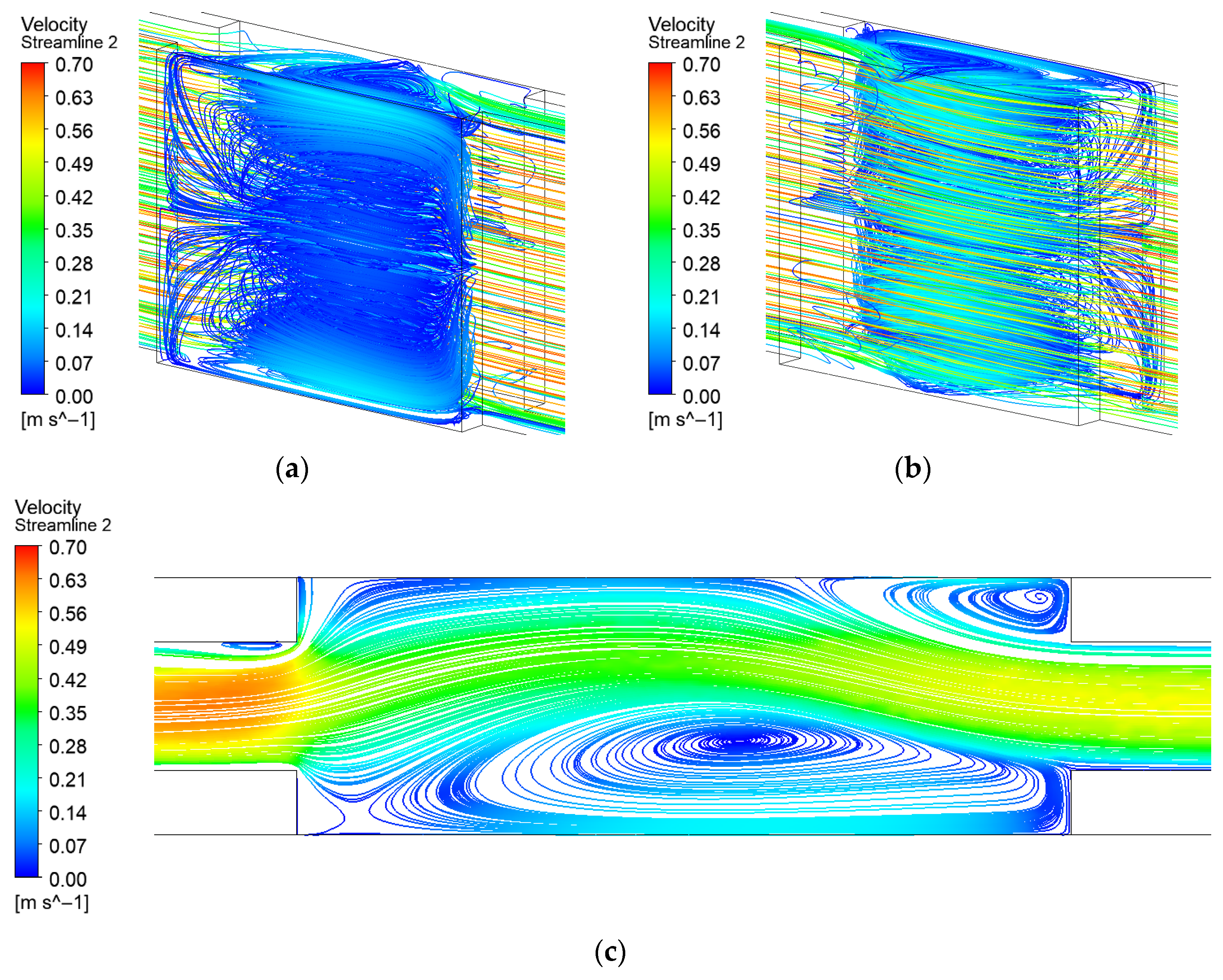
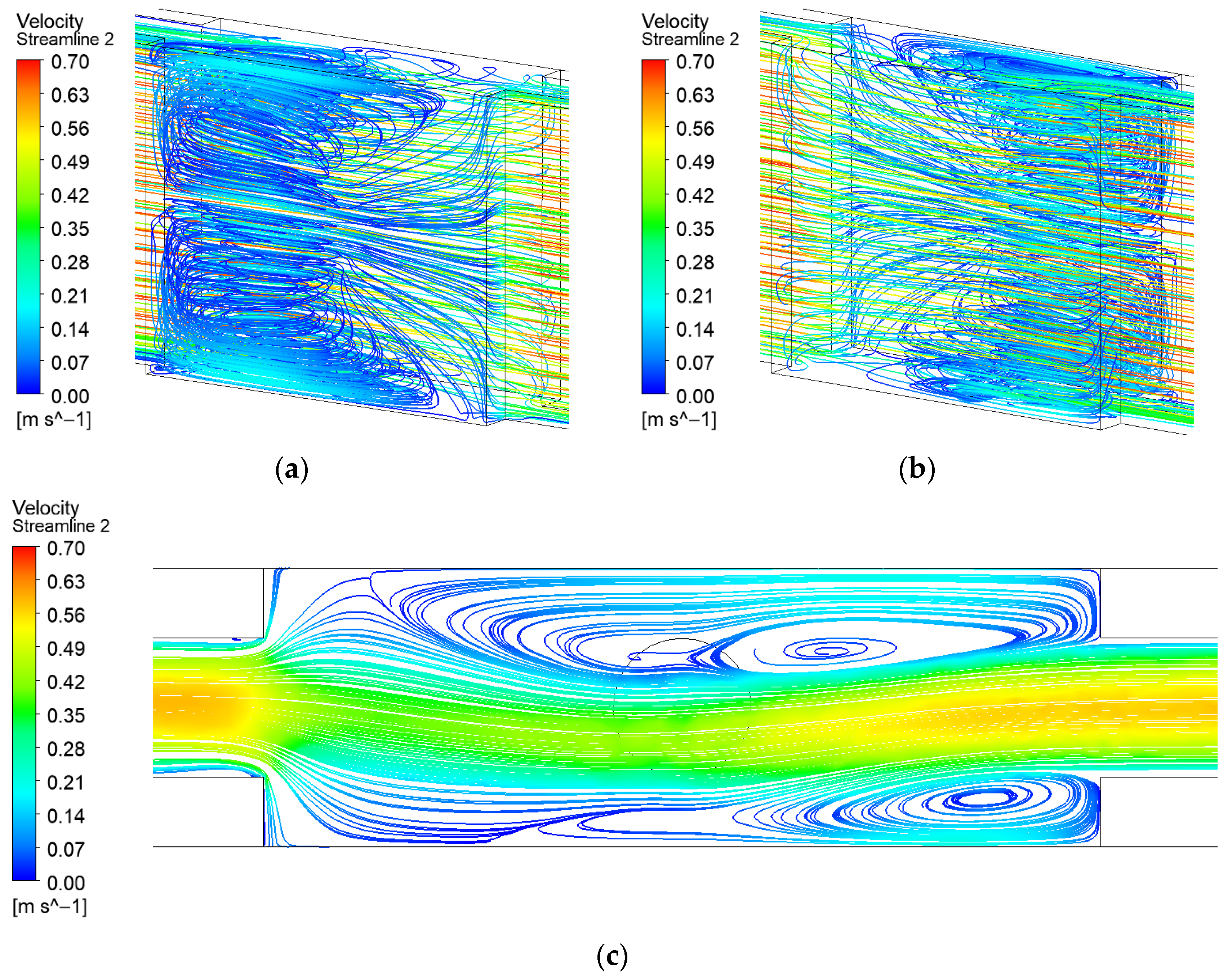
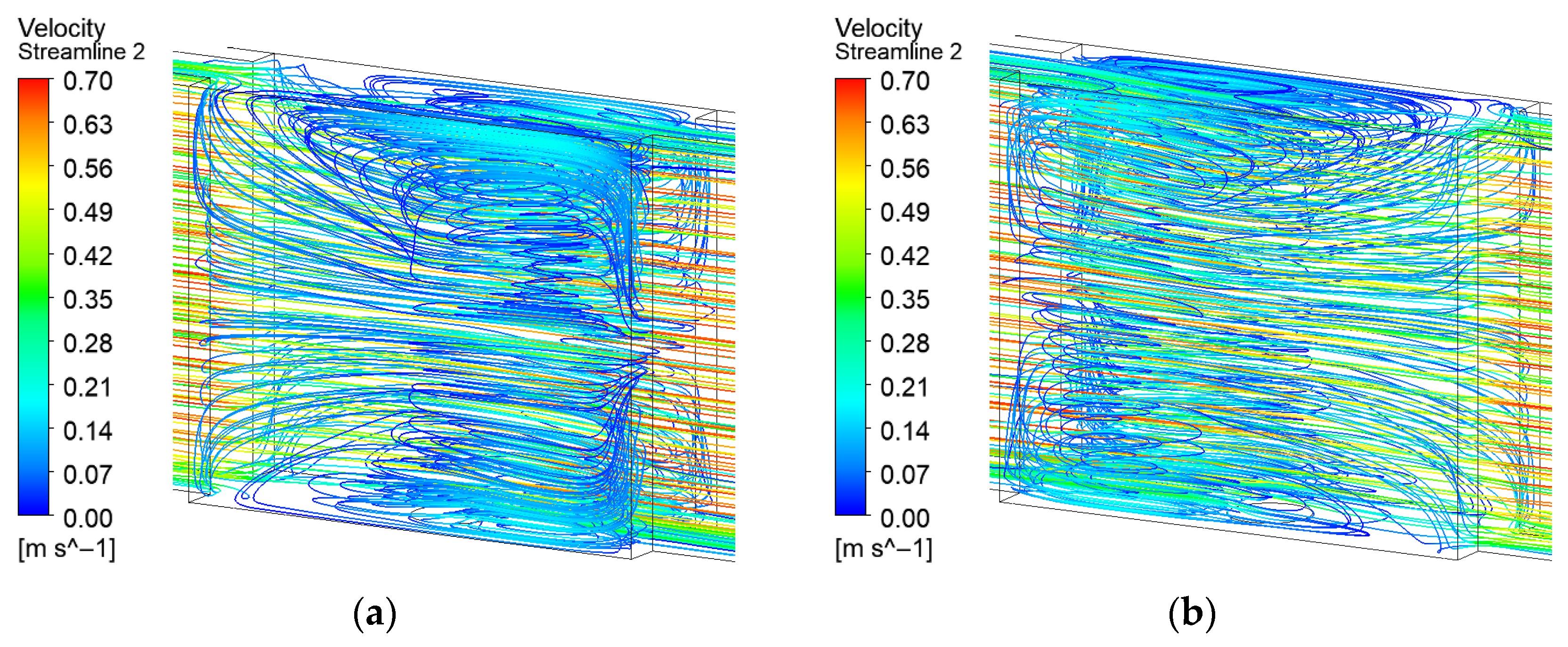
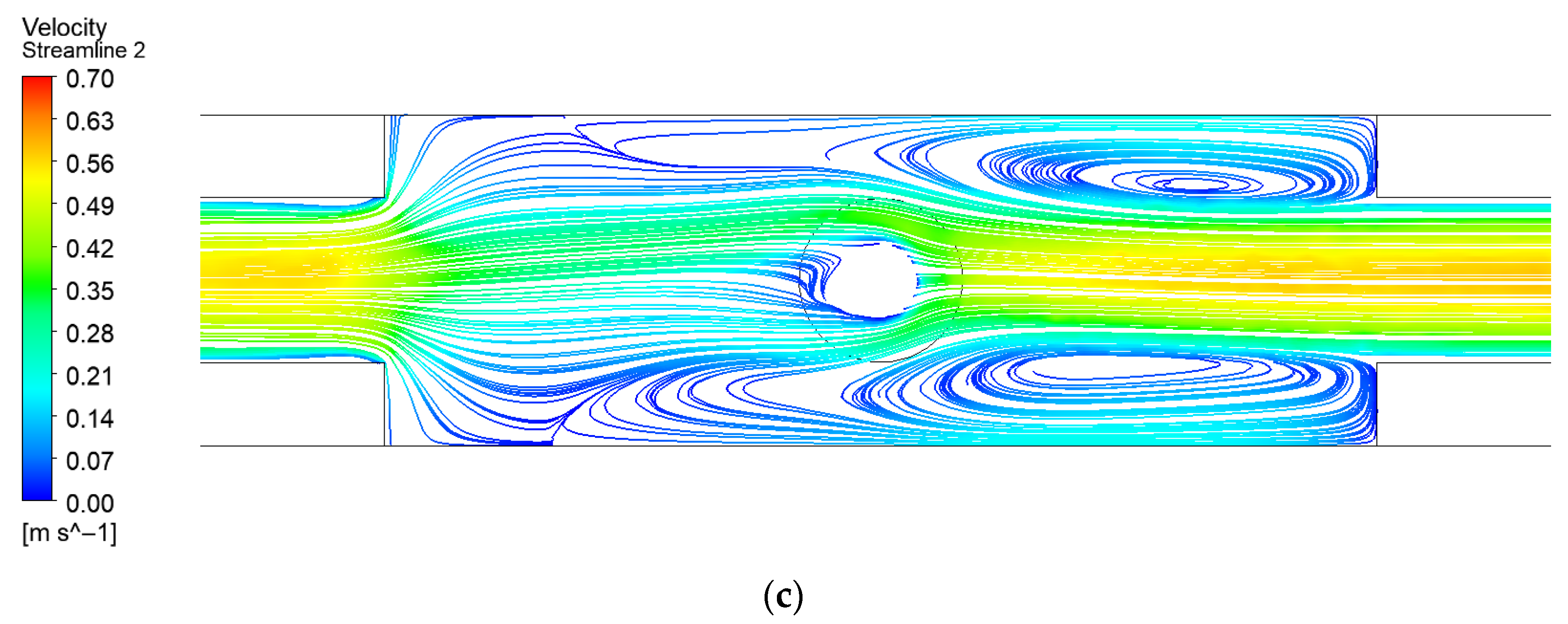
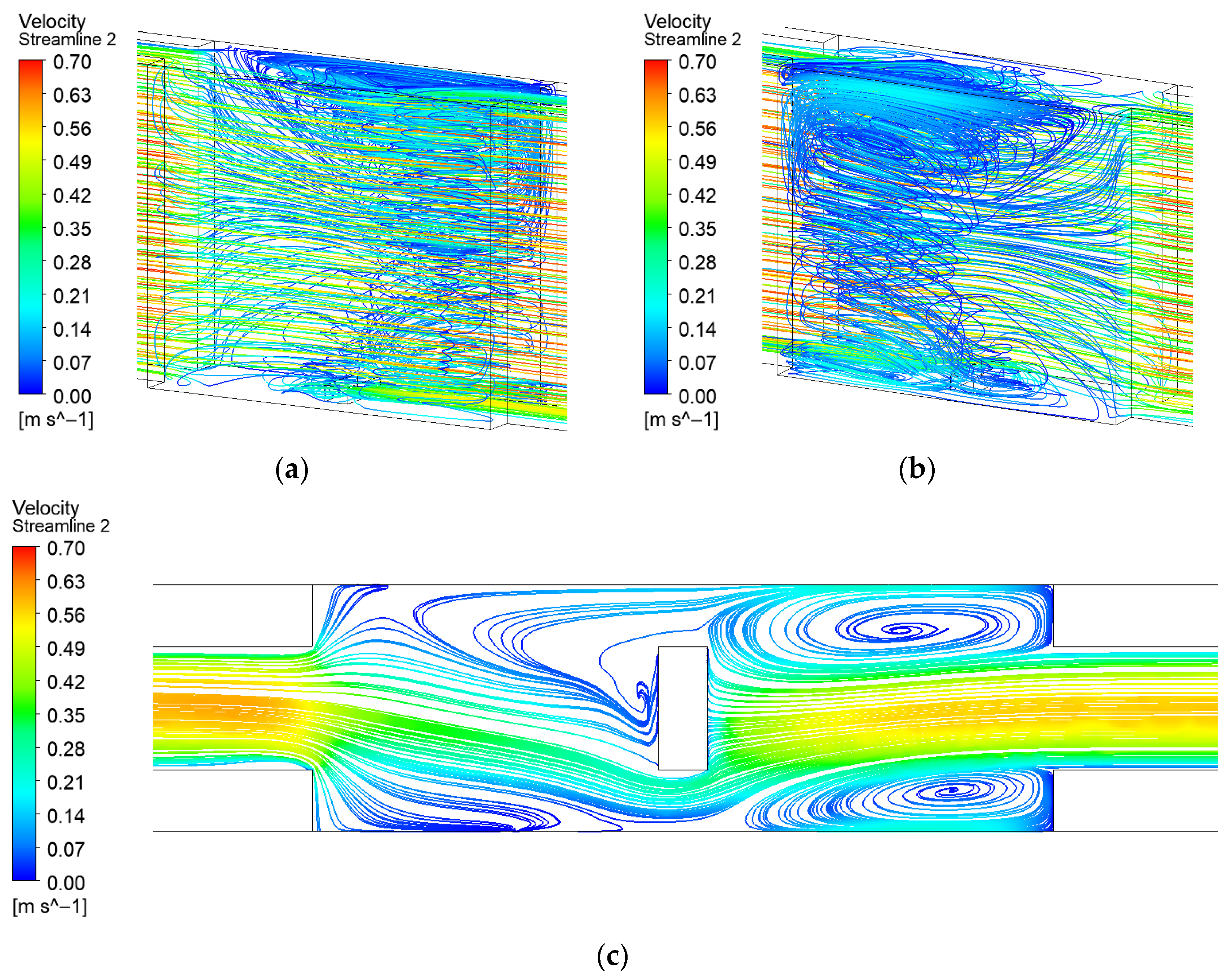
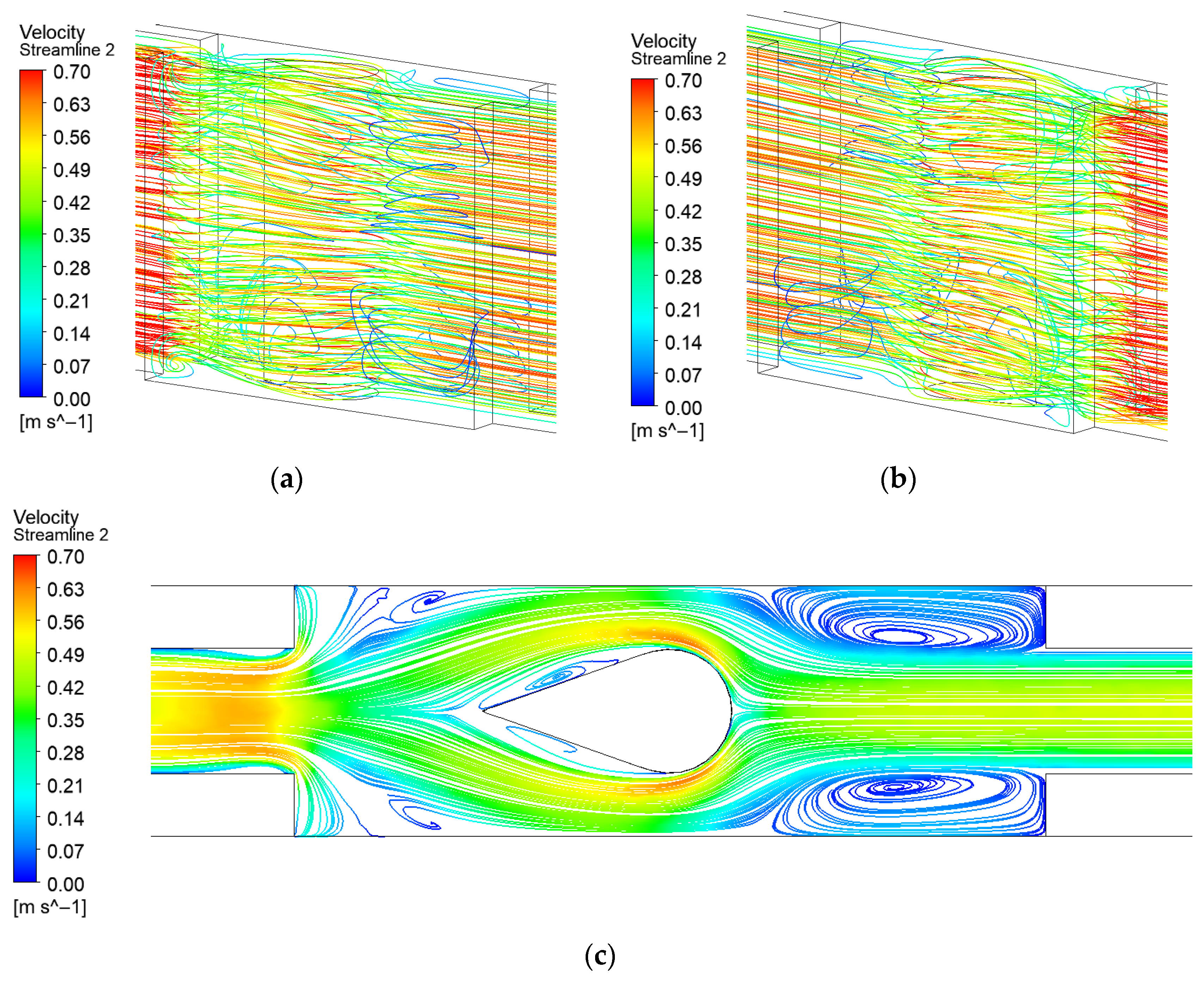
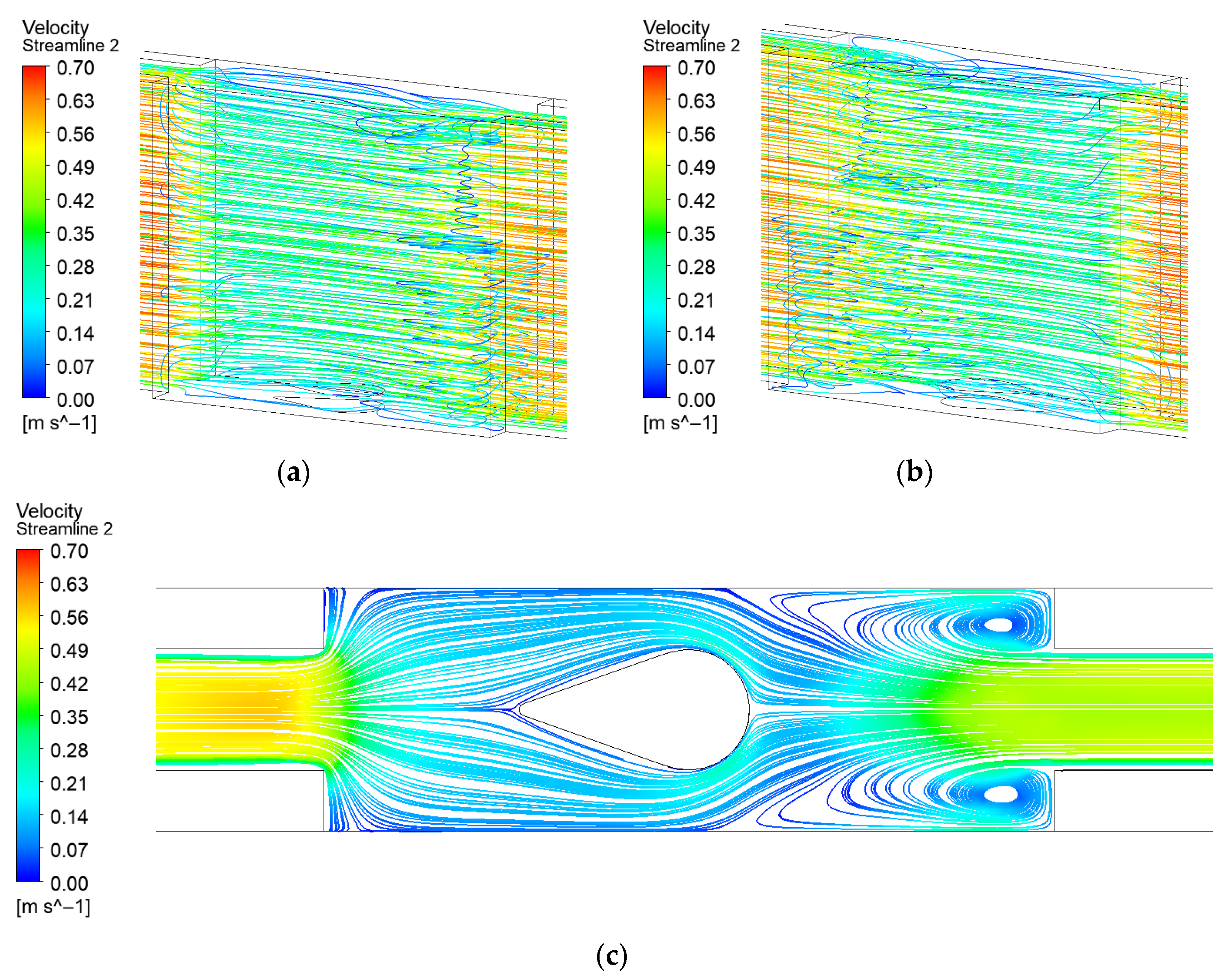
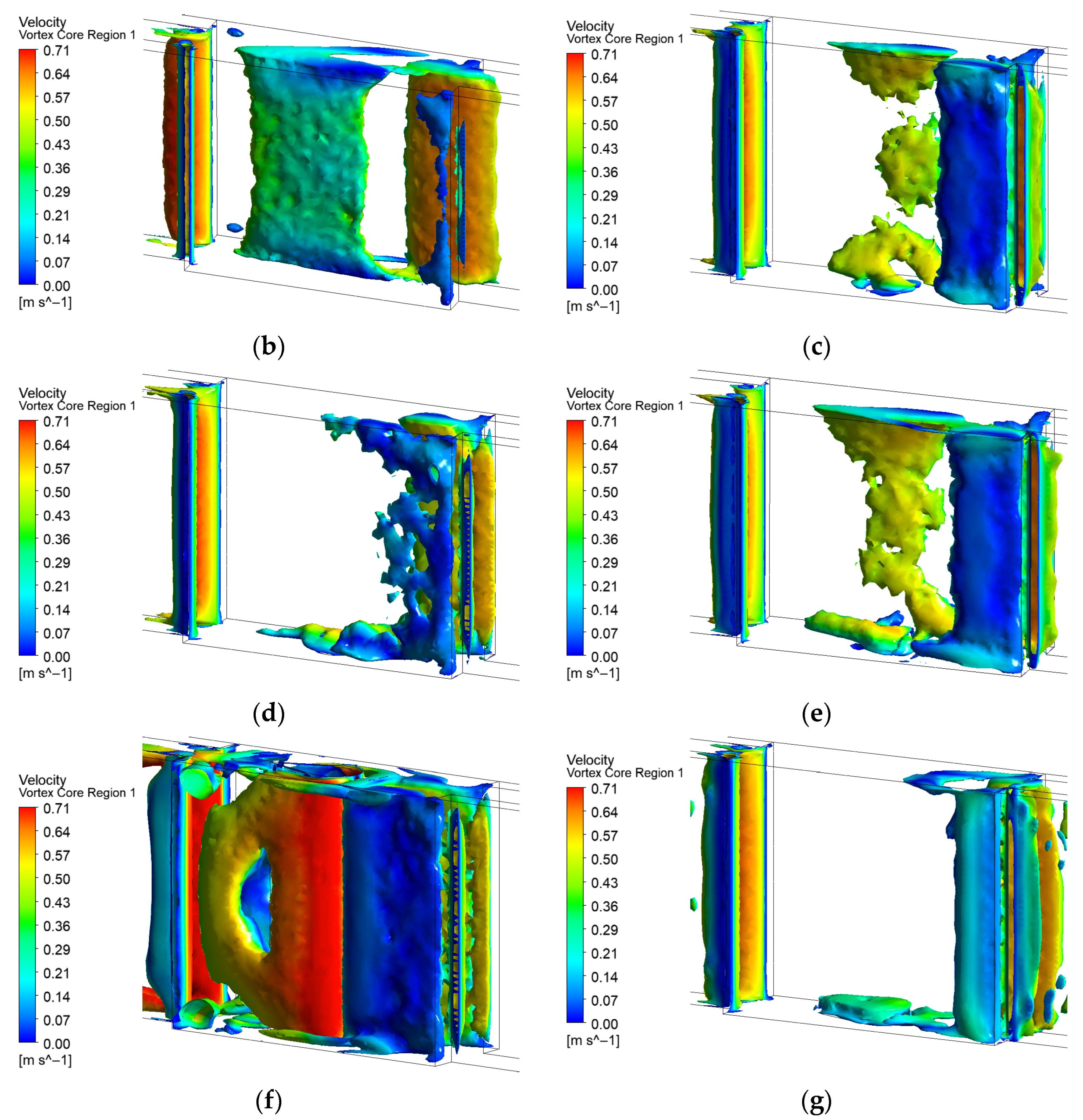
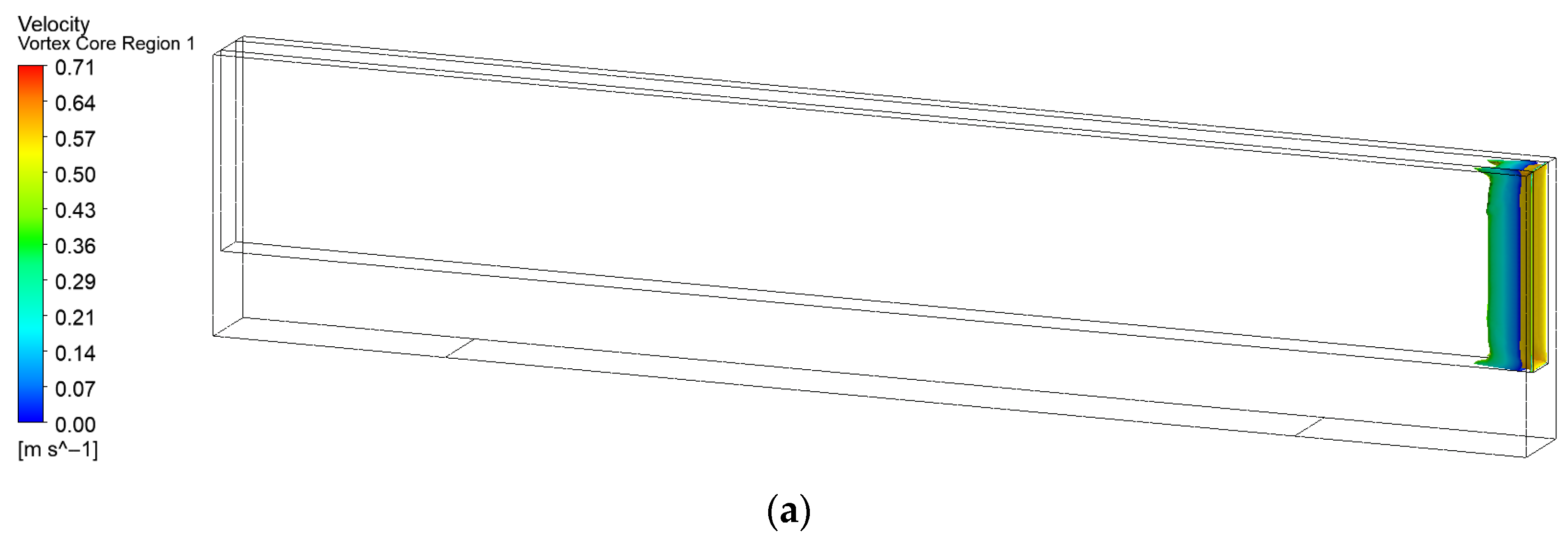
3.1. Vortex and Flow Field Distributions of Different Turbulator Configurations
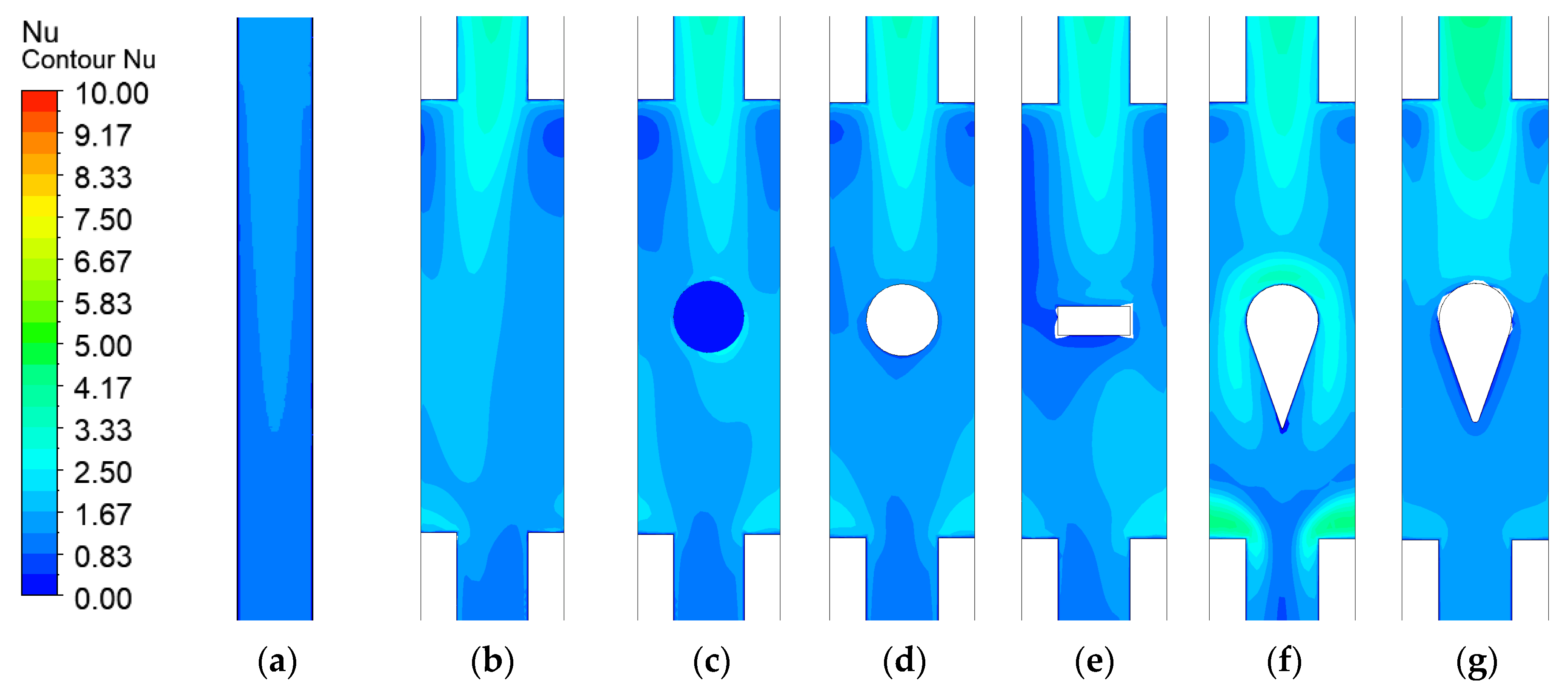
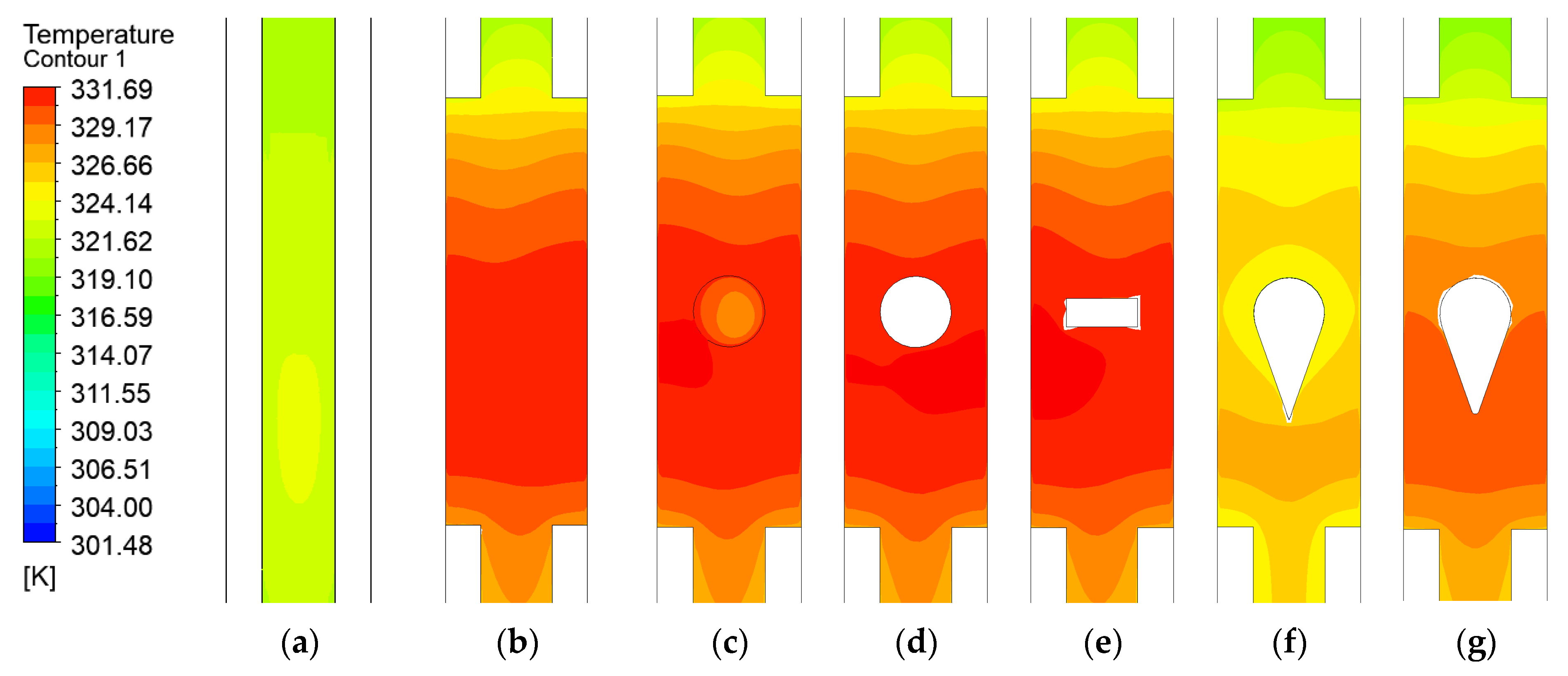
3.2. Thermal Performance of the Bottom Wall with Various Turbulator

| Configurations | Average Nusselt Number |
|---|---|
| Original microchannel | 1.265 |
| Expanded-region microchannel | 1.691 |
| EM with dimple | 1.679 |
| EM with spherical protrusion | 1.574 |
| EM with rib | 1.531 |
| EM with long teardrop turbulator | 1.928 |
| EM with short teardrop turbulator | 1.694 |
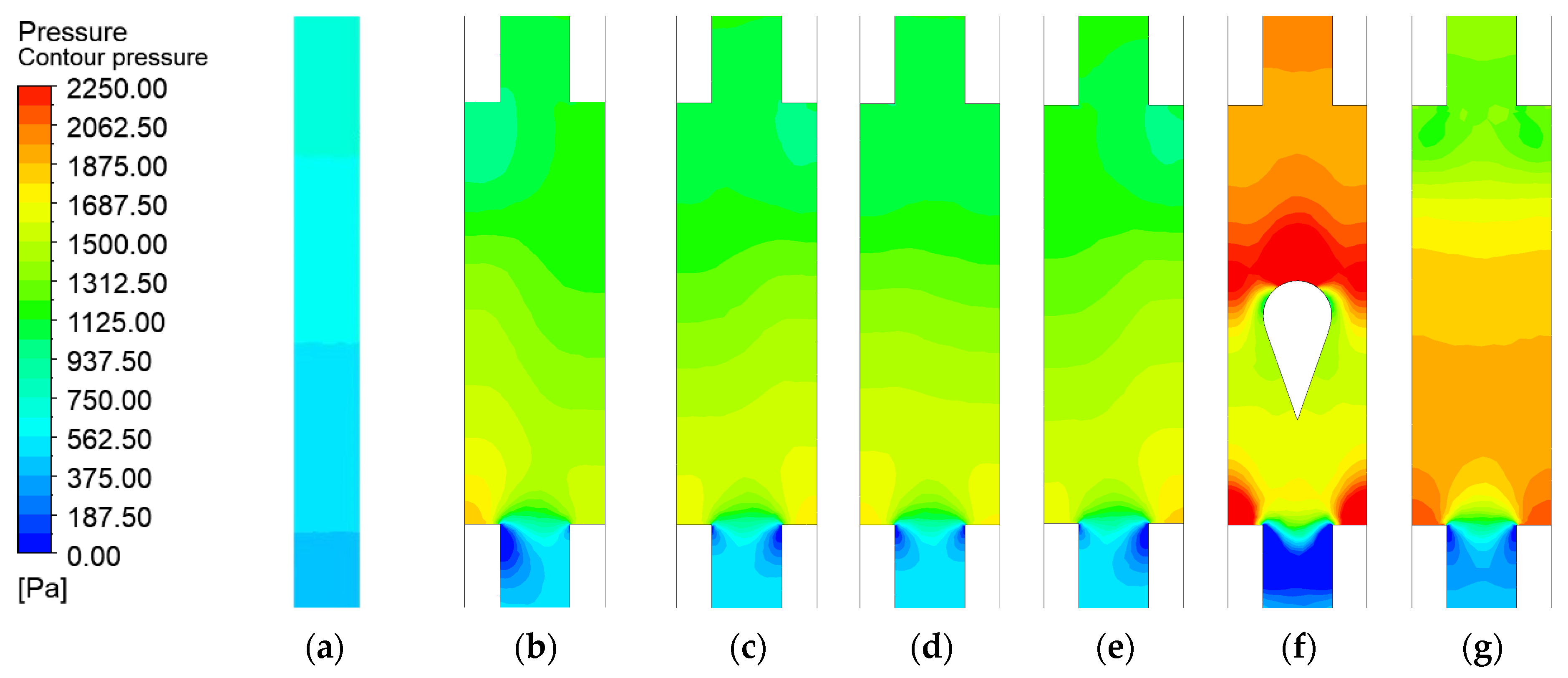
3.3. Microchannel Pressure Loss with Different Turbulence Configurations
| Configurations | Pressure Loss [Pa] |
|---|---|
| Original microchannel | 1245.78 |
| Expanded-region microchannel | 1588.14 |
| EM with dimple | 1595.93 |
| EM with spherical protrusion | 1593.55 |
| EM with rib | 1608.23 |
| EM with long teardrop turbulator | 2239.94 |
| EM with short teardrop turbulator | 1748.17 |
4. Conclusions
- (1)
- For microchannels with an expansion region, turbulator designs that induce highly symmetric flow fields are preferable. The long teardrop turbulator, which effectively constricts the flow passage to increase coolant velocity and enhance heat transfer, improved thermal performance by 13.8–25.9% compared to other configurations.
- (2)
- The long teardrop turbulator generates a highly symmetric flow field but also induces significant flow stagnation on its windward side and the contraction surface, leading to a pressure loss 28–41% higher than other turbulator configurations. This indicates that the long teardrop-shaped turbulator provides the best heat transfer performance among all the investigated heat transfer enhancement structures. Although, from a numerical perspective, the increase in pressure loss is more pronounced, recent advances in liquid metal pump technology have enabled liquid metal pumps to provide progressively higher pressure. In this study, the authors place more attention on enhancing heat transfer performance.
- (3)
- The sudden expansion of the cross-sectional area substantially reduces fluid velocity. Consequently, all microchannels with expansion regions exhibited a higher bottom surface temperature than the original design without an expansion region, underscoring that the incorporation of expansion regions requires careful consideration in thermal design.
Author Contributions
Funding
Data Availability Statement
Conflicts of Interest
Nomenclature
| D | hydraulic diameter [m] |
| h | convective heat transfer coefficient [W/(m2·K)] |
| H | height of the microchannel [m] |
| ms | mass flow rate [kg/s] |
| Nu | averaged Nusselt number |
| q | heat flux [W/m2] |
| Tw | temperature of bottom wall [K] |
| Tb | temperature of Galinstan [K] |
| W | width of the microchannel [m] |
| Re | Reynolds number |
| λ | thermal conductivity [W/(m·K)] |
| µ | dynamic viscosity [kg/(m·s)] |
| MC | Expanded-region microchannel |
References
- Li, M.; Li, S.; Zhang, Z.; Su, C.; Wong, B.; Hu, Y. Advancing thermal management technology for power semiconductors through materials and interface engineering. Acc. Mater. Res. 2025, 6, 563–576. [Google Scholar] [CrossRef] [PubMed]
- Yoomyeong, L.; Hyunmuk, P.; Hyeon, T.N.; Yong-Hyeon, K.; Jae-Hwan, A. Temperature effects on wicking dynamics: Experimental and numerical study on micropillar-structured surfaces. Micromachines 2025, 16, 512. [Google Scholar] [CrossRef]
- Soleimanikutanaei, S.; Ghasemisahebi, E.; Lin, C.X. Numerical study of heat transfer enhancement using transverse microchannels in a heat sink. Int. J. Therm. Sci. 2018, 125, 89–100. [Google Scholar] [CrossRef]
- Eslami, M.; Derakhshanpour, K.; Kamali, R. Effect of rib shape and fillet radius on thermal-hydrodynamic performance of microchannel heat sinks: A CFD study. Int. Commun. Heat Mass Transf. 2020, 119, 104928. [Google Scholar] [CrossRef]
- Bayrak, E.; Olcay, A.B.; Serincan, M.F. Numerical investigation of the effects of geometric structure of microchannel heat sink on flow characteristics and heat transfer performance. Int. J. Therm. Sci. 2019, 135, 589–600. [Google Scholar] [CrossRef]
- Zhu, Q.; Su, R.; Xia, H.; Zeng, J.; Chen, J. Numerical simulation study of thermal and hydraulic characteristics of laminar flow in microchannel heat sink with water droplet cavities and different rib columns. Int. J. Therm. Sci. 2022, 172, 107319. [Google Scholar] [CrossRef]
- Han, X.; Liu, H.; Xie, G.; Sang, L.; Zhou, J. Topology optimization for spider web heat sinks for electronic cooling. Appl. Therm. Eng. 2021, 195, 117154. [Google Scholar] [CrossRef]
- Zhai, Y.; Li, Z.; Shen, X.; Wang, H. Thermal performance analysis of multi-objective optimized microchannels with triangular cavity and rib based on field synergy principle. Case Stud. Therm. Eng. 2021, 25, 100963. [Google Scholar] [CrossRef]
- Lu, X.; Wang, L.; Wang, L.; Hu, Y. Heat Transfer Enhancement of Diamond Rib Mounted in Periodic Merging Chambers of Micro Channel Heat Sink. Micromachines 2025, 16, 533. [Google Scholar] [CrossRef]
- Aprea, C.; Greco, A.; Maiorino, A.; Masselli, C. Numerical Investigation on a Caloric Heat Pump Employing Nanofluids. Int. J. Heat Technol. 2019, 37, 675–681. [Google Scholar] [CrossRef]
- Kamran, M.; Qayoum, A. Experimental investigation of buoyancy-driven convective heat transfer of Ag/Fe3O4 hybrid nanofluid inside an enclosure. Eur. Phys. J. Plus 2025, 140, 419. [Google Scholar] [CrossRef]
- Nashee, S.R. Enhancement of heat transfer in nanofluid flow through elbows with varied cross-sections: A computational study. Int. J. Heat Technol. 2024, 42, 311–319. [Google Scholar] [CrossRef]
- Scarpa, F.; Slimani, S. Galinstan liquid metal as the heat transfer fluid in magnetic refrigeration. Appl. Therm. Eng. 2023, 232, 120971. [Google Scholar] [CrossRef]
- Li, Z.W.; Li, J.; Li, X.P.; Ni, M.L. Free surface flow and heat transfer characteristics of liquid metal Galinstan at low flow velocity. Exp. Therm. Fluid Sci. 2017, 82, 240–248. [Google Scholar]
- Zhang, X.D.; Yang, X.H.; Zhou, Y.X.; Rao, W.; Gao, J.-Y.; Ding, Y.-J.; Shu, Q.-Q.; Liu, J. Experimental investigation of galinstan based minichannel cooling for high heat flux and large heat power thermal management. Energy Convers. Manag. 2019, 185, 248–258. [Google Scholar] [CrossRef]
- Chen, Z.; Qian, P.; Huang, Z.; Zhang, W.; Liu, M. Study on flow and heat transfer of liquid metal in the microchannel heat sink. Int. J. Therm. Sci. 2023, 183, 107840. [Google Scholar] [CrossRef]
- Guo, W.; Zhao, R.; Wang, S.; Yang, Y.; Huang, D. Melting behavior and migration characteristics of microencapsulated phase change material particles in galinstan flow and application in minichannel heat sink. Case Stud. Therm. Eng. 2022, 36, 102165. [Google Scholar] [CrossRef]
- Muhammad, A.; Selvakumar, D.; Wu, J. Numerical investigation of laminar flow and heat transfer in a liquid metal cooled mini-channel heat sink. Int. J. Heat Mass Transf. 2020, 150, 119265. [Google Scholar] [CrossRef]
- Xiang, X.; Liu, W.; Fan, A. Comparison between the cooling performances of micro-jet impingement systems using liquid metal and water as coolants for high power electronics. Int. J. Therm. Sci. 2022, 173, 107375. [Google Scholar] [CrossRef]
- Schriener, T.M.; El-Genk, M.S. Comparative CFD analyses of liquid metal cooled reactor for lunar surface power. Nucl. Eng. Des. 2014, 280, 105–121. [Google Scholar] [CrossRef]
- Gao, T.; Zeng, J.; Li, J.; Gong, J. Numerical prediction on mist/steam cooling in a square ribbed channel at real gas turbine operational conditions. Int. J. Heat Mass Transf. 2017, 108, 1089–1102. [Google Scholar] [CrossRef]







| Material | Ga68In20Sn12 | Copper | Plastic |
|---|---|---|---|
| Density [kg/m3] | 6363.2 | 8978.0 | 1190.0 |
| Thermal conductivity [W/(m·K)] | 23.67 + 0.061 T | 387.6 | 0.15 |
| Specific heat capacity [J/(kg·K)] | 366 − 0.70 T | 381.0 | 1464.0 |
| Viscosity [10−3 kg/(m·s)] | 2.22 | / | / |
| Numerical Conditions | Model Validation Boundary Conditions | Single Microchannel Boundary Conditions |
|---|---|---|
| Inlet temperature [K] | 301 | 301 |
| Inlet mass flow rate [ml/s] | 51.8 | 2.59 |
| Inlet pressure difference [k·Pa] | 8.0 | 8.0 |
| Heat flux density [W/cm2] | 79.0~283.4 | 150.37 |
| Scheme | Grid Number |
|---|---|
| Grid-1 | 31,384 |
| Grid-2 | 110,372 |
| Grid-3 | 671,693 |
| Grid-4 | 2,412,103 |
| Grid-5 | 5,569,310 |
Disclaimer/Publisher’s Note: The statements, opinions and data contained in all publications are solely those of the individual author(s) and contributor(s) and not of MDPI and/or the editor(s). MDPI and/or the editor(s) disclaim responsibility for any injury to people or property resulting from any ideas, methods, instructions or products referred to in the content. |
© 2026 by the authors. Licensee MDPI, Basel, Switzerland. This article is an open access article distributed under the terms and conditions of the Creative Commons Attribution (CC BY) license.
Share and Cite
Li, F.; Han, J.; Wang, Z.; Dai, Y.; Chen, P. Numerical Study on Heat Transfer Performance of Turbulence Enhancement Configurations for Galinstan Based Mini-Channel Cooling. Micromachines 2026, 17, 83. https://doi.org/10.3390/mi17010083
Li F, Han J, Wang Z, Dai Y, Chen P. Numerical Study on Heat Transfer Performance of Turbulence Enhancement Configurations for Galinstan Based Mini-Channel Cooling. Micromachines. 2026; 17(1):83. https://doi.org/10.3390/mi17010083
Chicago/Turabian StyleLi, Fajing, Junxi Han, Zhifeng Wang, Yi Dai, and Peizhu Chen. 2026. "Numerical Study on Heat Transfer Performance of Turbulence Enhancement Configurations for Galinstan Based Mini-Channel Cooling" Micromachines 17, no. 1: 83. https://doi.org/10.3390/mi17010083
APA StyleLi, F., Han, J., Wang, Z., Dai, Y., & Chen, P. (2026). Numerical Study on Heat Transfer Performance of Turbulence Enhancement Configurations for Galinstan Based Mini-Channel Cooling. Micromachines, 17(1), 83. https://doi.org/10.3390/mi17010083