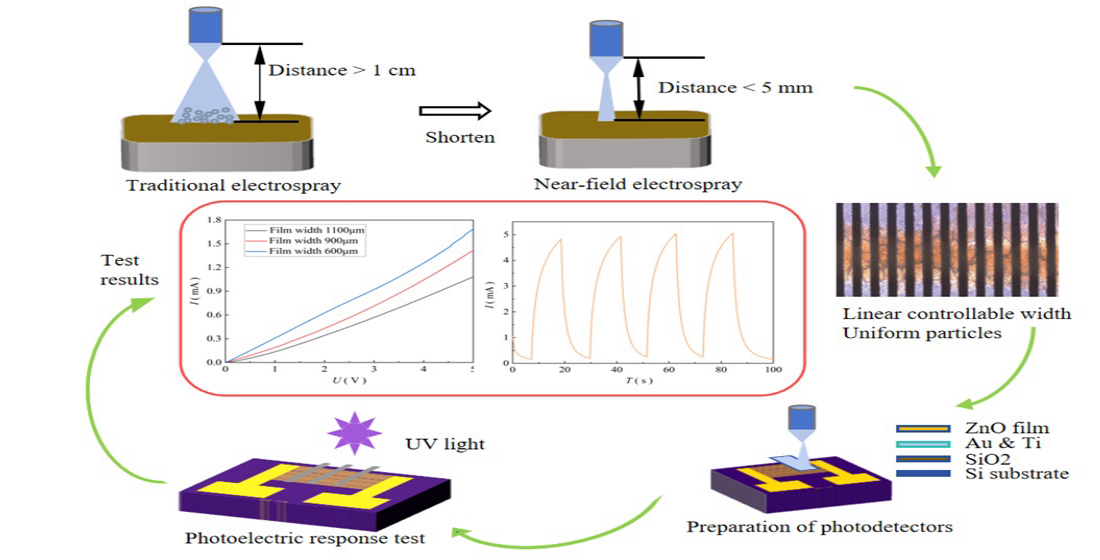
Near-Field Electrospray ZnO Thin Film for Ultraviolet Photodetectors


Abstract
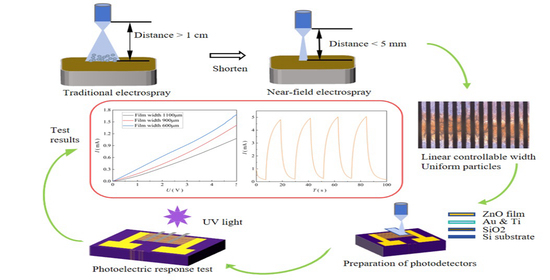
1. Introduction
2. Materials and Methods
2.1. Experimental Instruments and Equipment
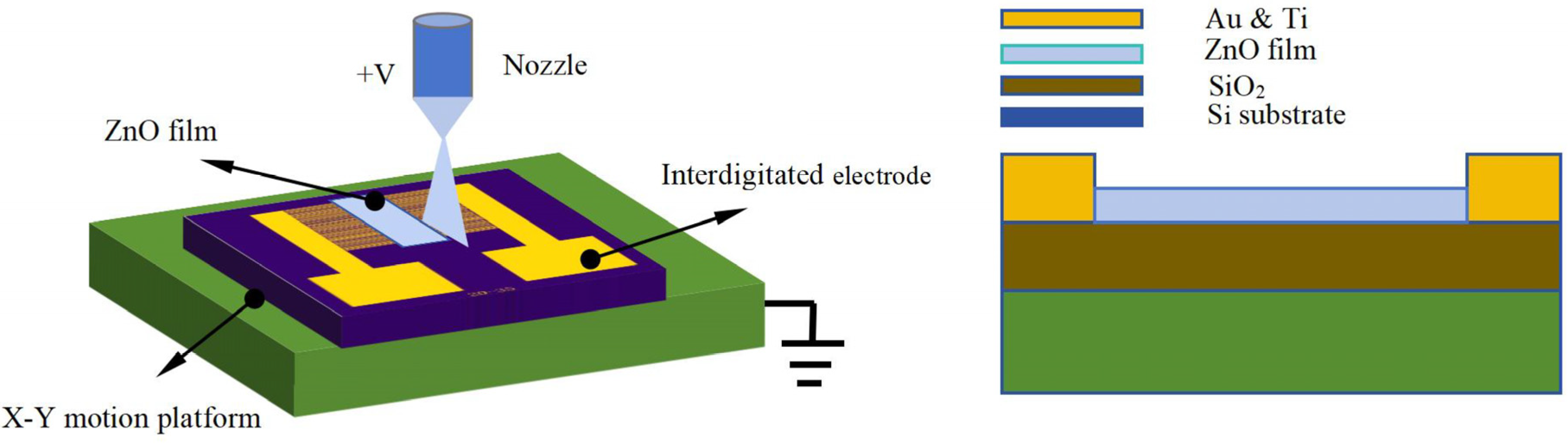
2.2. Preparation Materials and Processes for Photodetectors
2.3. Optoelectronic Performance Testing of ZnO Thin-Film Ultraviolet Photodetectors
- (1)
- Light absorption and the generation of photogenerated charge carriers.
- (2)
- Separation and transmission of the photogenerated carriers.
- (3)
- Current generation and detection.
3. Results
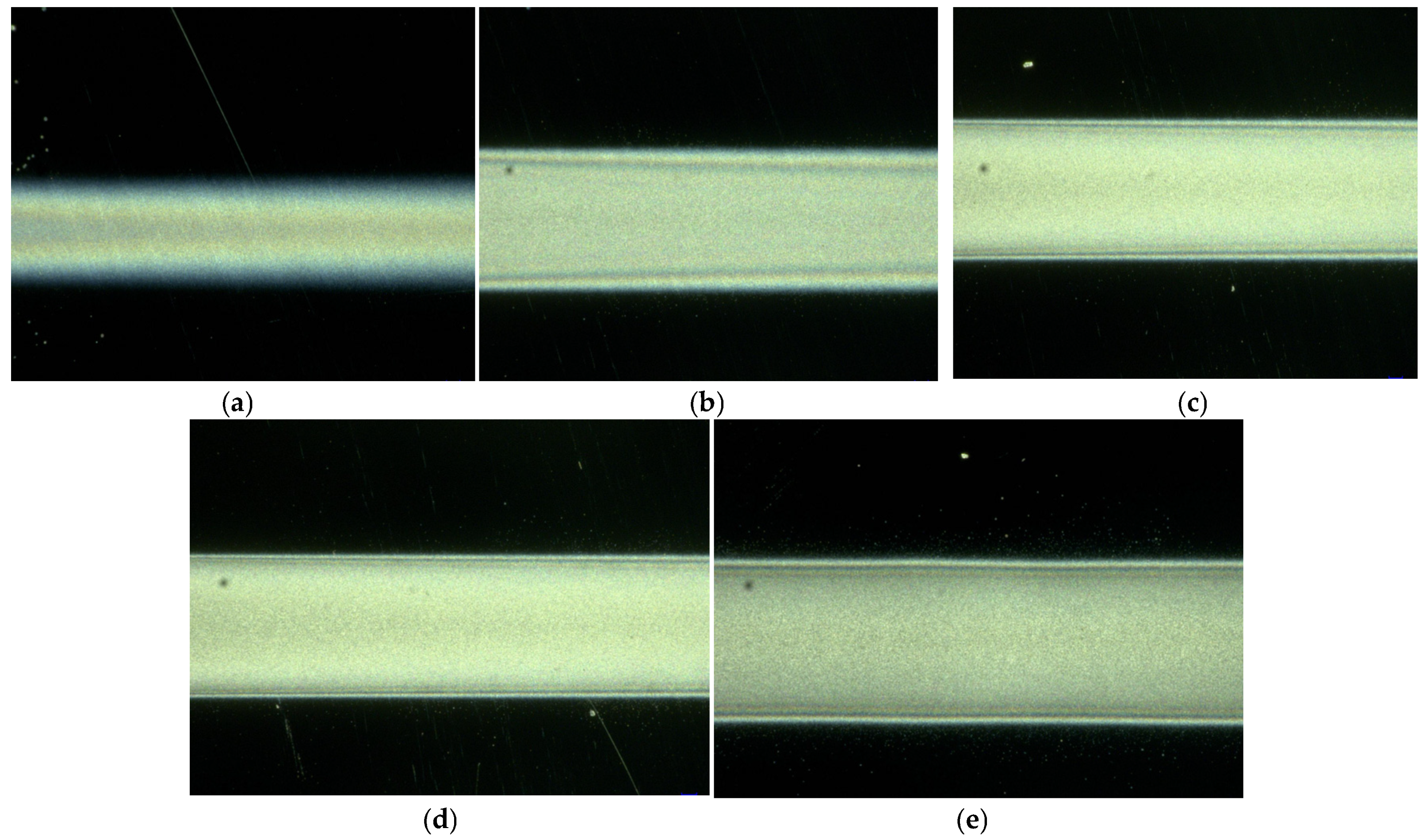
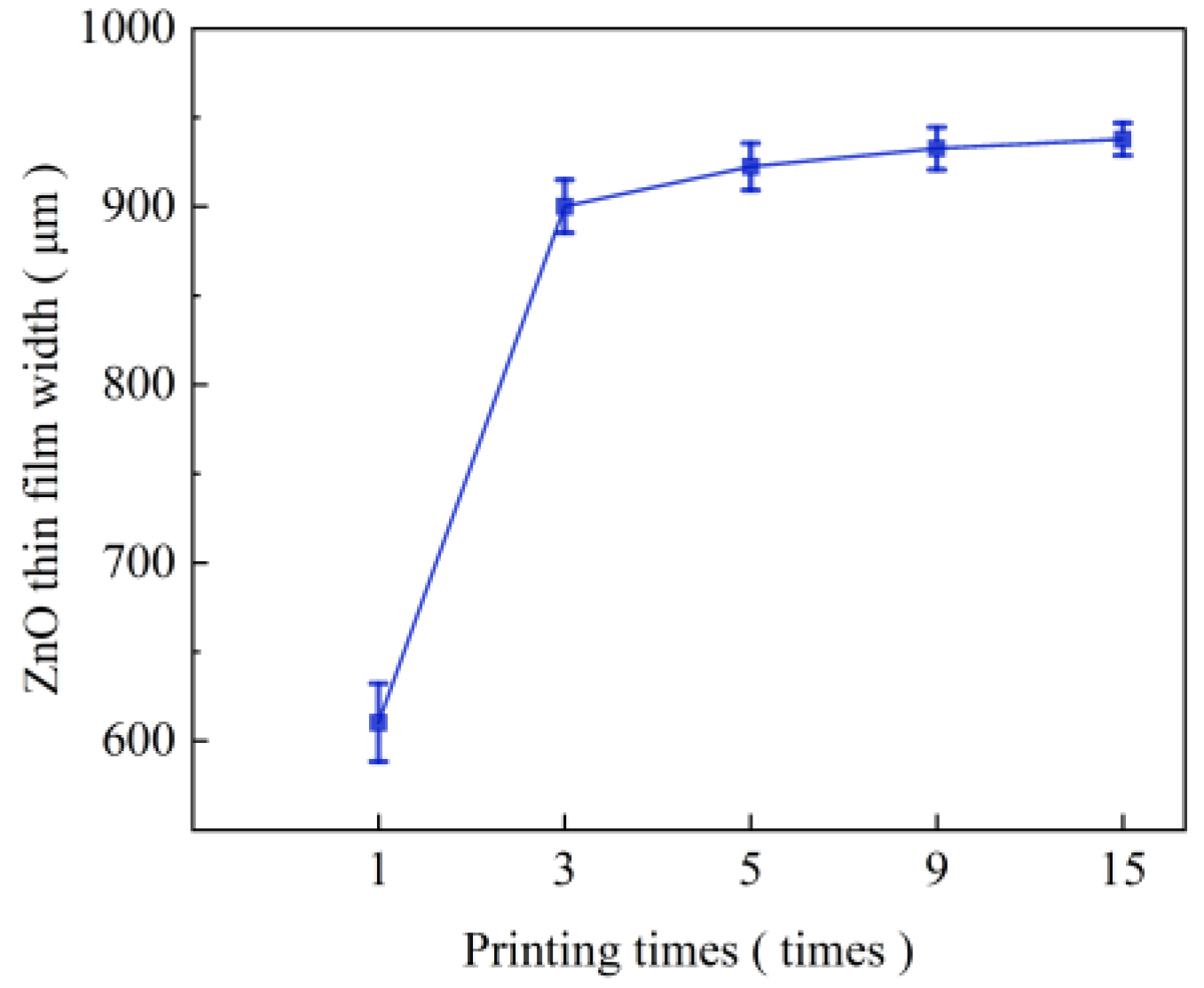
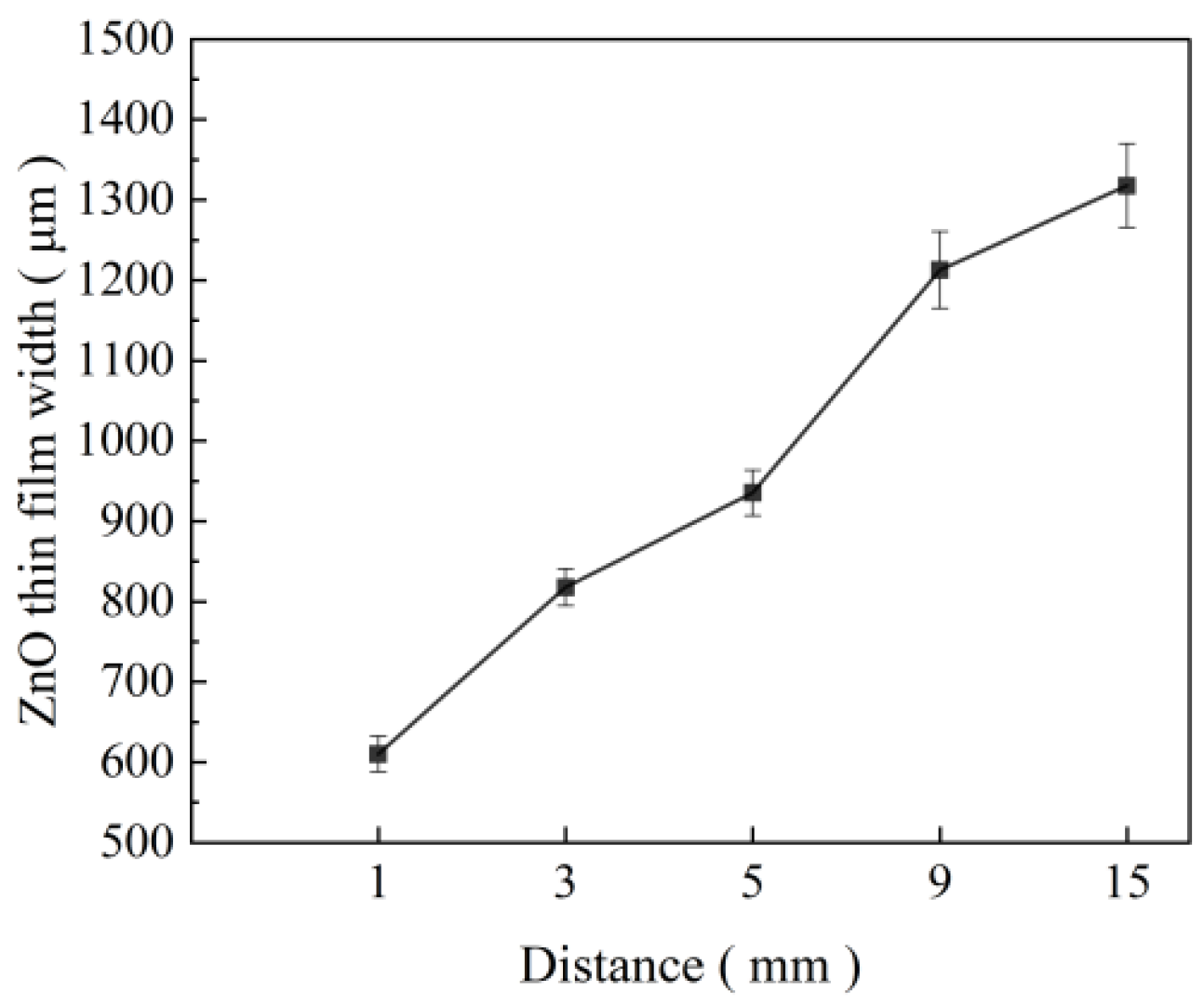
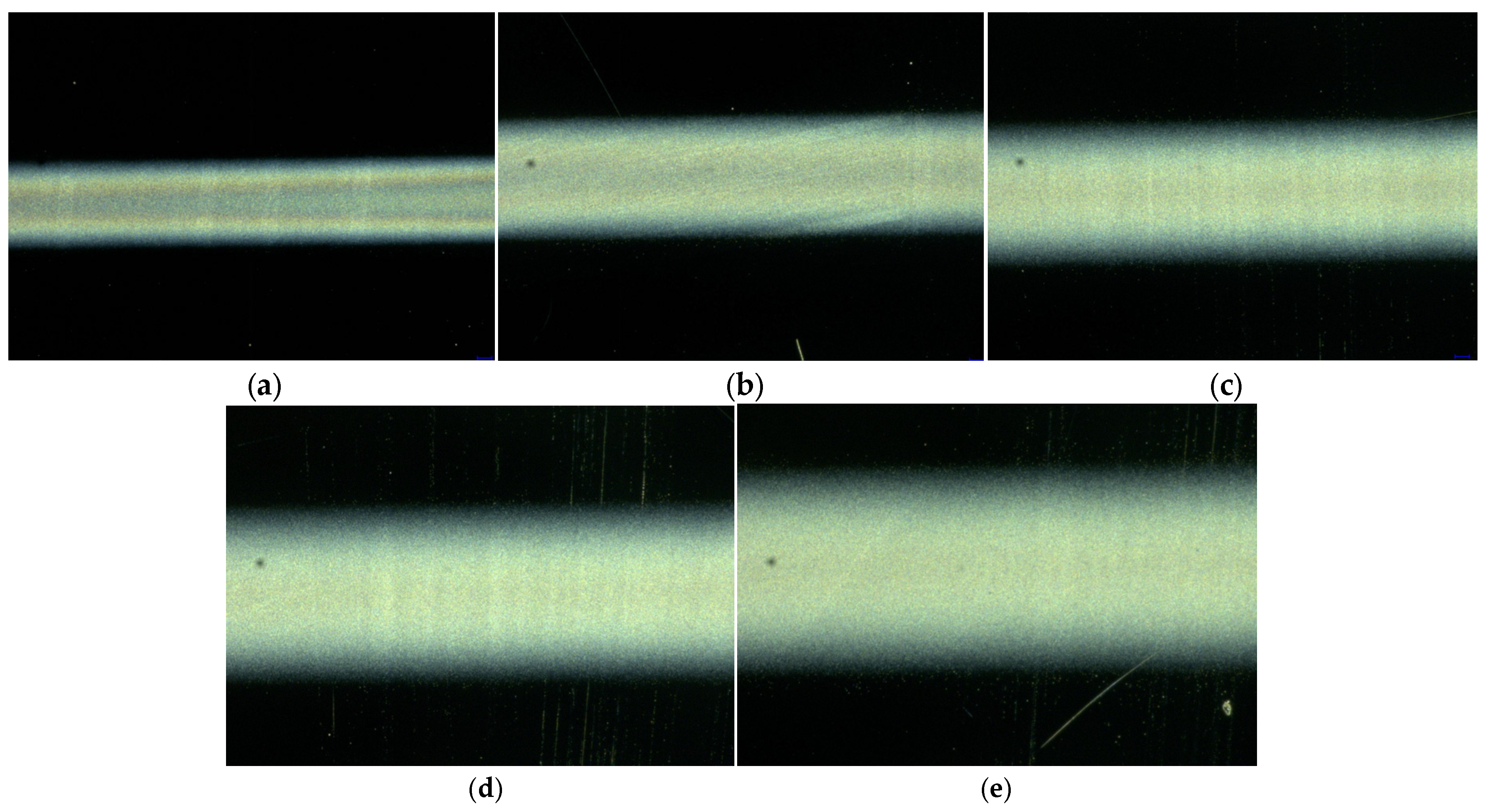
3.1. Preparation of ZnO Thin Films Using Near-Field Electrospray
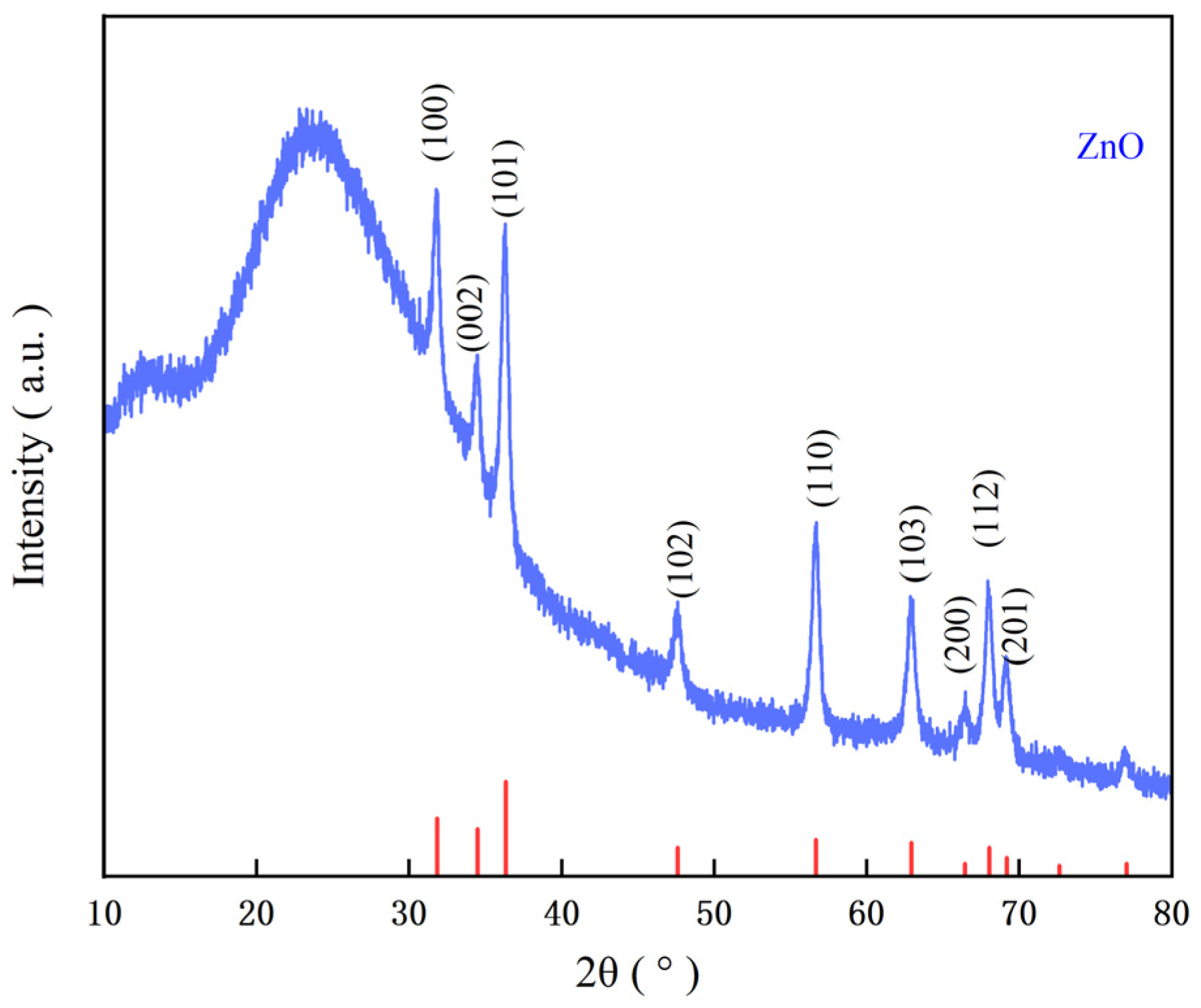
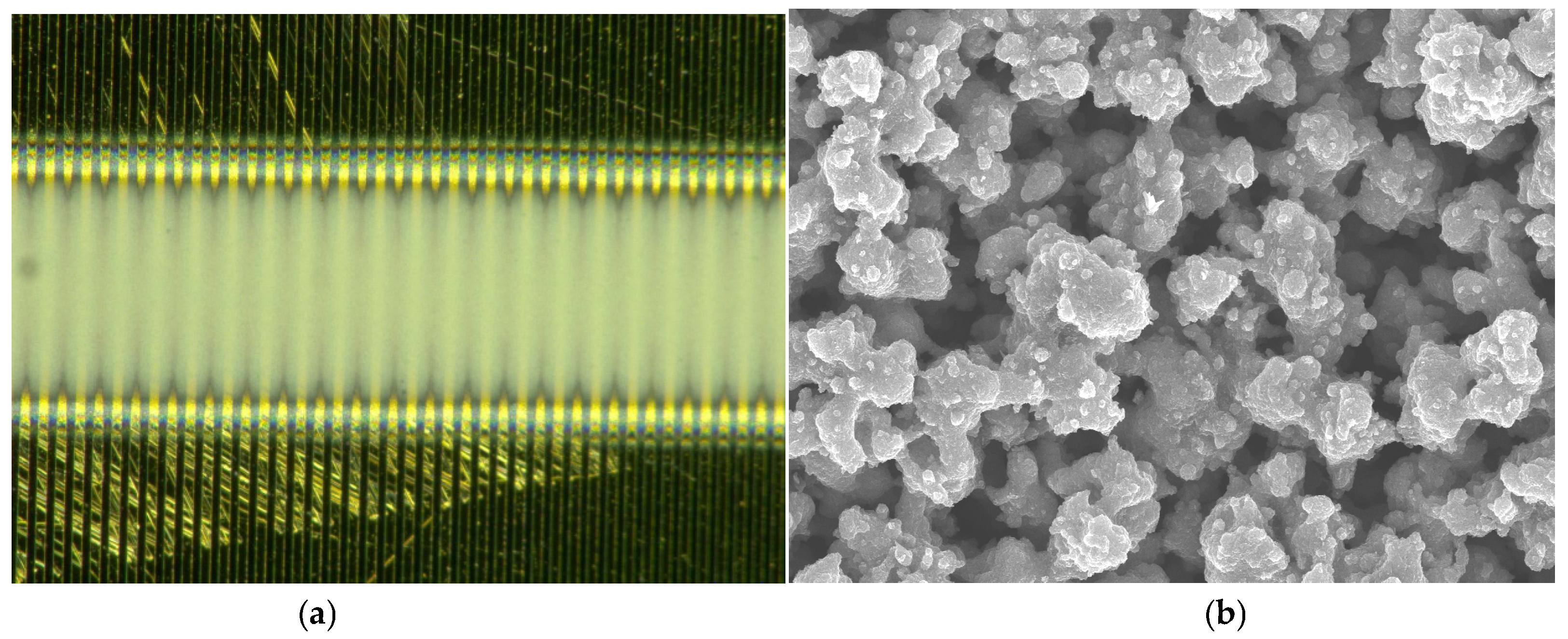
3.2. Morphology of ZnO Thin Films
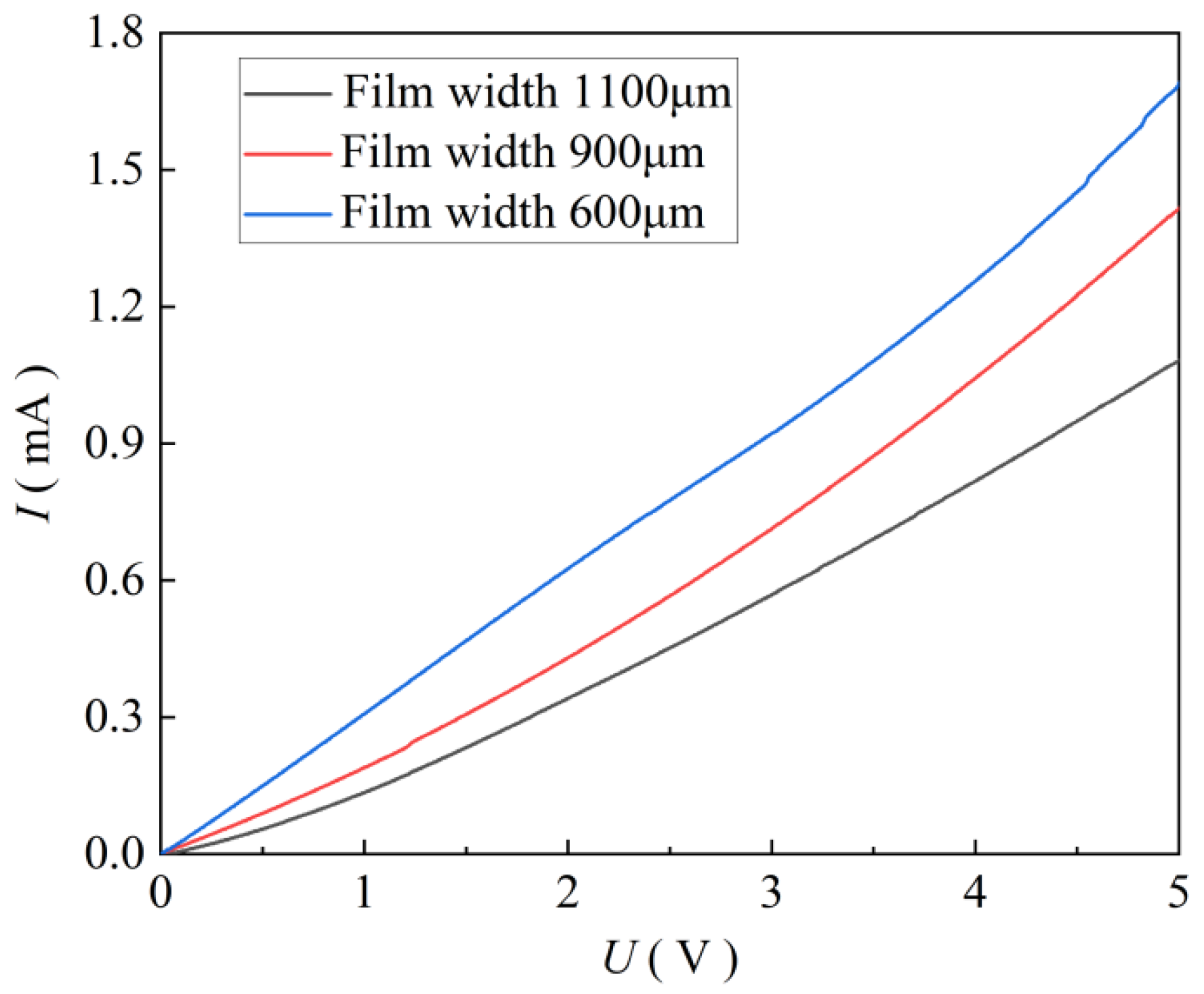
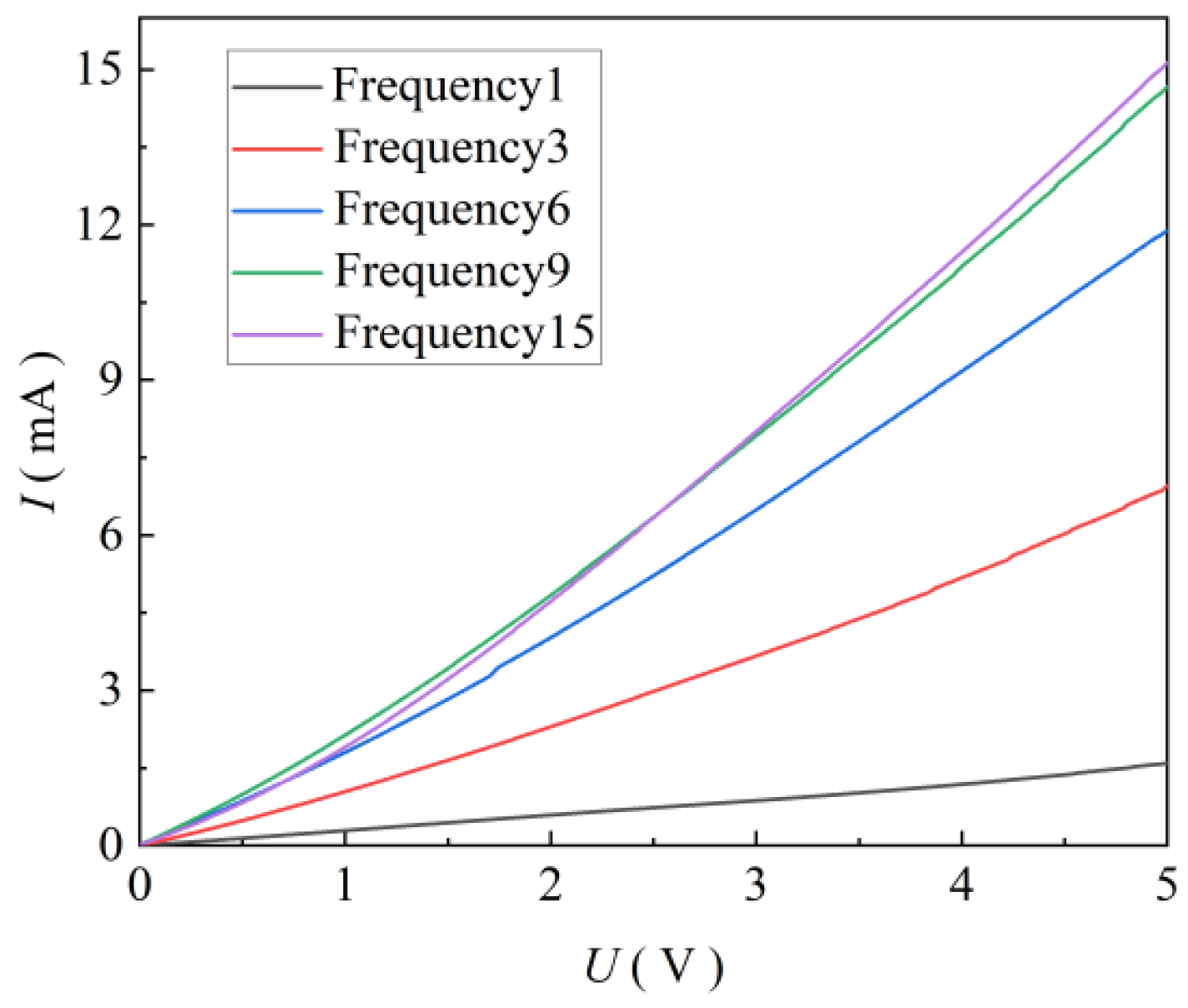
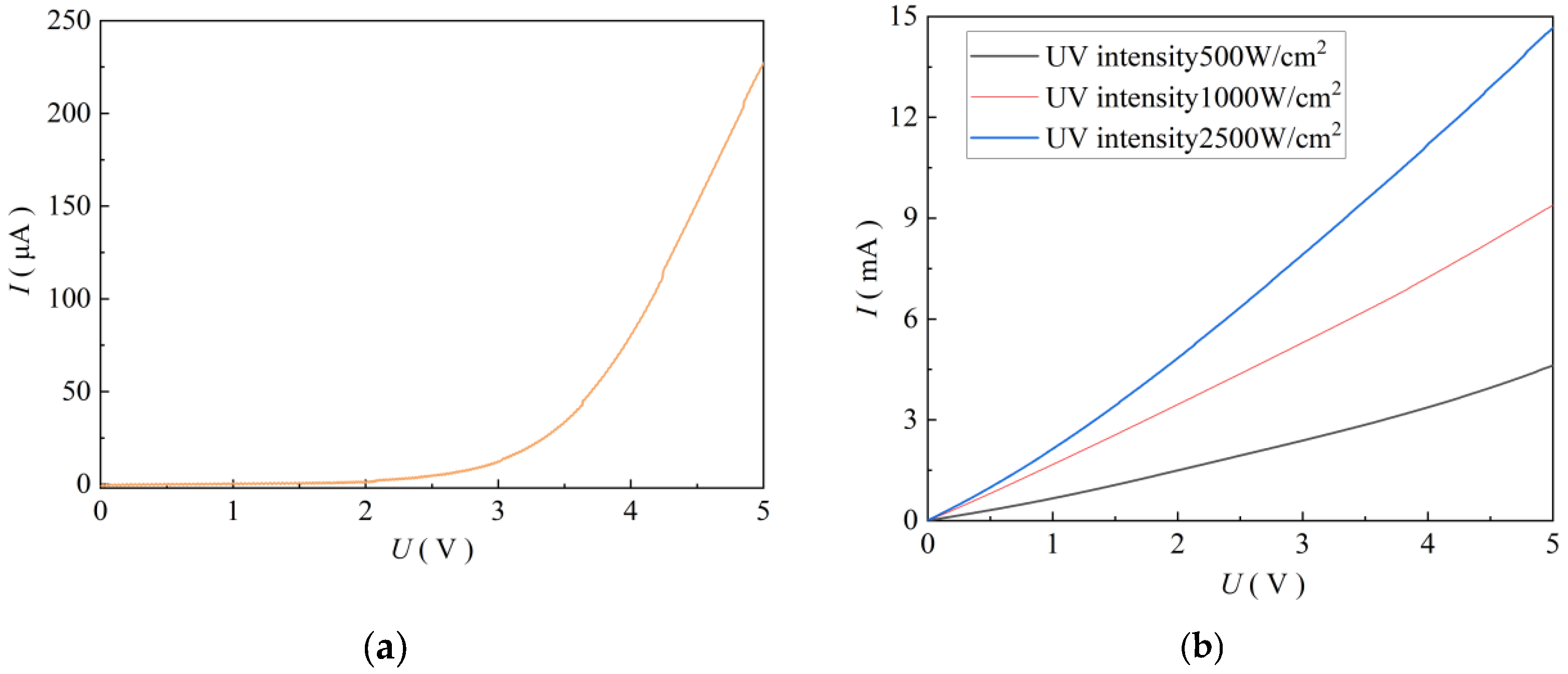
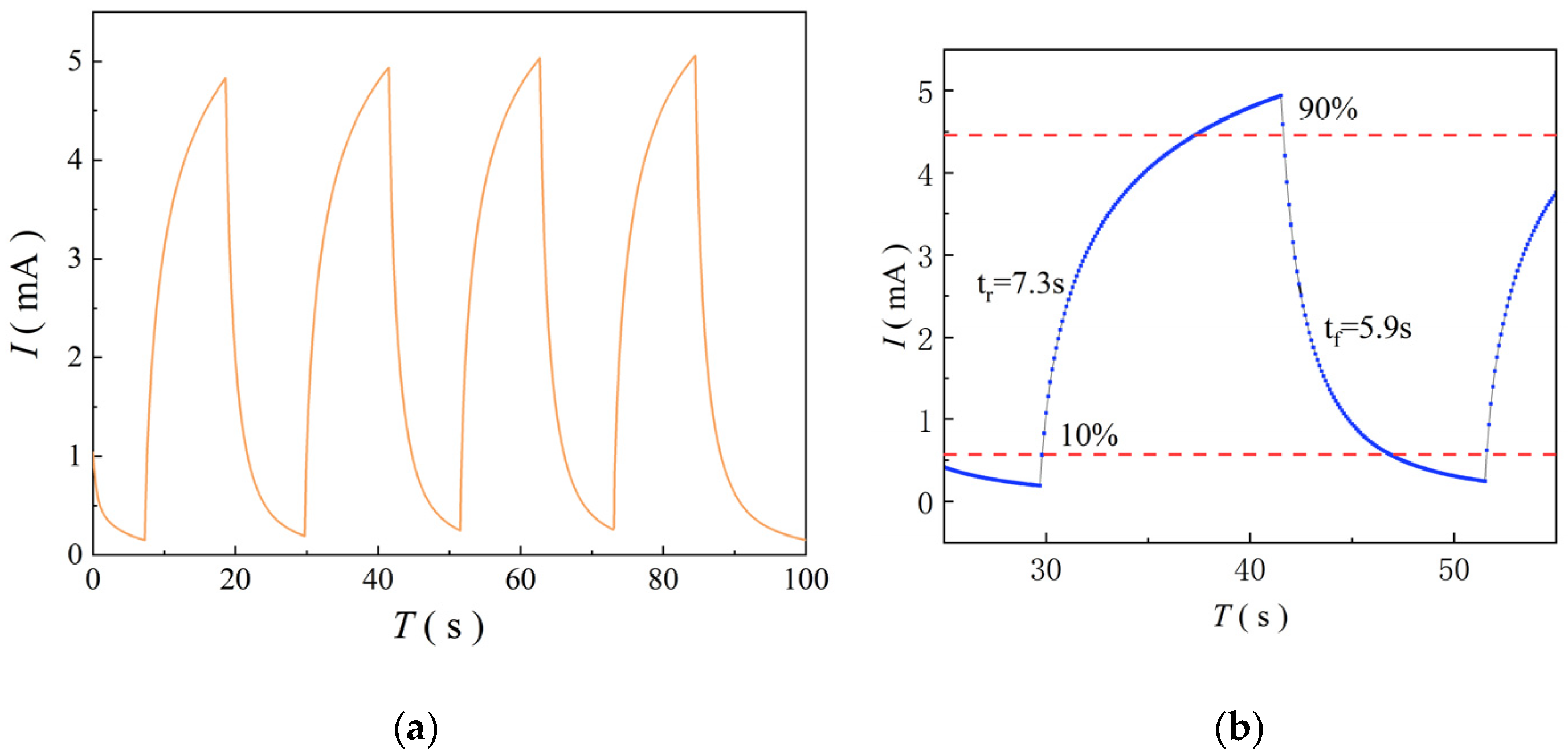
3.3. Photoelectric Performance Testing of ZnO Ultraviolet Photodetectors
4. Conclusions
Author Contributions
Funding
Data Availability Statement
Conflicts of Interest
References
- Chen, H.Y.; Liu, K.W.; Chen, X.; Zhang, Z.Z.; Fan, M.M.; Jiang, M.M.; Xie, X.H.; Zhao, H.F.; Shen, D.Z. Realization of a self-powered ZnO MSM UV photodetector with high Responsivity using Anasym metric pair of Au electrodes. J. Mater. Chem. C 2014, 2, 9689–9694. [Google Scholar] [CrossRef]
- Fang, M.J.; Tsao, C.W.; Hsu, Y.J. Semiconductor nanoheterostructures for photoconversion applications. J. Phys. D Appl. Phys. 2019, 53, 143001. [Google Scholar] [CrossRef]
- Padha, B.; Ahmed, Z.; Dutta, S.; Pandey, A.; Padha, N.; Yadav, I.; Arya, S. Transient response of low-temperature ALD-grown ZnO thin film-based p-i-n UV photodetector. Opt. Mater. 2025, 167, 117264. [Google Scholar] [CrossRef]
- Rajamanickams, S.; Mohmmand, S.M.; Razak, I.A.; Muhammad, A.; Abed, S.M. Enhanced sensitivity from Ag micro-flakes encapsulated Ag-doped ZnO nanorods-based UV photodetector. Mater. Res. Bull. 2023, 161, 112148. [Google Scholar] [CrossRef]
- Wang, J.; Chen, C.; Jin, M.; Zhu, Y.; Zhang, N. The carbon dots modified ZnO films photodetector with broadband and fast photoresponse. Opt. Mater. 2023, 135, 113341. [Google Scholar] [CrossRef]
- Nguyen, T.H.N.; Koompai, N.; Turpaud, V.; Montesinos-Ballester, M.; Frigerio, J.; Calcaterra, S.; Ballabio, A.; Le Roux, X.; Coudevylle, J.-R.; Villebasse, C.; et al. Room temperature-integrated photodetector between 5 μm and 8 μm wavelength. Adv. Photonics Res. 2023, 4, 2200237. [Google Scholar] [CrossRef]
- Prasad, R.K.; Ghosh, K.; Giri, P.K.; Kim, D.S.; Singh, D.K. High-efficiency photodetector based on a CVD-grown WS2 monolayer. ACS Appl. Electron. Mater. 2023, 5, 3634–3640. [Google Scholar] [CrossRef]
- Montanero, J.M.; Gañán-Calvo, A.M. Dripping, jetting and tip streaming. Rep. Prog. Phys. 2020, 83, 097001. [Google Scholar] [CrossRef] [PubMed]
- Jaworek, A.; Sobczyk, A.T. Electrospray route to nanotechnology: An overview. J. Electrosprays 2008, 66, 197–219. [Google Scholar] [CrossRef]
- Li, W.; Zheng, G.; Xu, L.; Wang, X. Fabrication of micro-patterns via near-field electrospray. AIP Adv. 2016, 6, 115002. [Google Scholar] [CrossRef]
- Ingram, M.; Campbell, E.; Molotnikov, A.; Feih, S.; Zhong, Y.L. Recent advances in multifunctional polymer/2D nanocomposite development for fused filament fabrication and direct ink writing of electrically and thermally conductive components. Adv. Nanocompos. 2024, 1, 157–170. [Google Scholar] [CrossRef]
- Jia, D.; Jiang, K.; Zhang, Y.; Lv, Z.; Li, C. Model for atomization droplet size and energy distribution ratio at the distal end of an electrospray nozzle. Adv. Mech. Eng. 2024, 12, 2150093. [Google Scholar]
- Lee, H.; Harden-Chaters, W.; Han, S.D.; Zhan, S.; Li, B.; Bang, S.Y.; Choi, H.W.; Lee, S.; Hou, B.; Occhipinti, L.G.; et al. Nano-to-Microporous Networks via Inkjet Printing of ZnO Nanoparticles/Graphene Hybrid for Ultraviolet Photodetectors. ACS Appl. Nano Mater. 2020, 3, 4454–4464. [Google Scholar] [CrossRef]
- Li, W.; Lin, J.; Wang, X.; Jiang, J.; Guo, S.; Zheng, G. Electrospray Deposition of ZnO Thin Films and Its Application to Gas Sensors. Micromachines 2018, 9, 66. [Google Scholar] [CrossRef] [PubMed]
- Jiang, L.; Chang, T.; Zhang, G.; Zhao, Y.; Chen, H.; Liu, N.; Liu, X. Formation mechanism of ceramic/metal composite spherical magnetic abrasive prepared via gas-solid atomization. J. Alloys Compd. 2022, 923, 166400. [Google Scholar] [CrossRef]
- Xing, R.; Xu, G.; Qu, N.; Zhou, R.; Yang, J.; Kong, J. 3D Printing of Liquid-Metal-in-Ceramic Metamaterials for High-Efficient Microwave Absorption. Adv. Funct. Mater. 2024, 34, 2307499. [Google Scholar] [CrossRef]
- Jin, W.; Deen, N.G.; Finotello, G. Ultrasonic atomization for efficient and sustainable metal powder production in 3D Printing. In Proceedings of the International Conference on Metal Forming, Toulouse, France, 12–16 May 2025; pp. 506–517. [Google Scholar]
- Kim, J.H.; Shin, S.S.; Noh, H.S.; Son, J.-W.; Choi, M.; Kim, H. Tailoring ceramic membrane structures of solid oxide fuel cells via polymer-assisted electrospray deposition-ScienceDirect. J. Membr. Sci. 2017, 544, 234–242. [Google Scholar] [CrossRef]
- Wang, X.; Lin, J.; Jiang, J.; Guo, S.; Li, W.; Zheng, G. Continuous near-field electrospray using a glass capillary nozzle. Micromachimnes 2018, 9, 56. [Google Scholar] [CrossRef] [PubMed]
- Jiang, J.; Zheng, G.; Zhu, P.; Liu, J.; Liu, Y.; Wang, X.; Li, W.; Guo, S. Controlling of electrospry deposition for micropatters. Micromachines 2018, 9, 72. [Google Scholar] [CrossRef] [PubMed]








Disclaimer/Publisher’s Note: The statements, opinions and data contained in all publications are solely those of the individual author(s) and contributor(s) and not of MDPI and/or the editor(s). MDPI and/or the editor(s) disclaim responsibility for any injury to people or property resulting from any ideas, methods, instructions or products referred to in the content. |
© 2025 by the authors. Licensee MDPI, Basel, Switzerland. This article is an open access article distributed under the terms and conditions of the Creative Commons Attribution (CC BY) license.
Share and Cite
Zhuo, L.; Peng, T.; Jiang, J.; Zheng, G. Near-Field Electrospray ZnO Thin Film for Ultraviolet Photodetectors. Micromachines 2026, 17, 69. https://doi.org/10.3390/mi17010069
Zhuo L, Peng T, Jiang J, Zheng G. Near-Field Electrospray ZnO Thin Film for Ultraviolet Photodetectors. Micromachines. 2026; 17(1):69. https://doi.org/10.3390/mi17010069
Chicago/Turabian StyleZhuo, Liyun, Tao Peng, Jiaxin Jiang, and Gaofeng Zheng. 2026. "Near-Field Electrospray ZnO Thin Film for Ultraviolet Photodetectors" Micromachines 17, no. 1: 69. https://doi.org/10.3390/mi17010069
APA StyleZhuo, L., Peng, T., Jiang, J., & Zheng, G. (2026). Near-Field Electrospray ZnO Thin Film for Ultraviolet Photodetectors. Micromachines, 17(1), 69. https://doi.org/10.3390/mi17010069