
Article

Experimental Verification of Model-Based Wavefront Sensorless Adaptive Optics System for Large Aberrations

1
School of Network & Telecom Engineering, Jinling Institute of Technology, Nanjing 211169, China
2
School of Electronic Engineering, Jiangsu Ocean University, Lianyungang 222005, China
3
The Astronomical Optical Instrument Group, Shanghai Astronomical Observatory, Chinese Academy of Sciences, Shanghai 200030, China
*
Author to whom correspondence should be addressed.
Micromachines 2026, 17(1), 58; https://doi.org/10.3390/mi17010058
Submission received: 24 November 2025 / Revised: 19 December 2025 / Accepted: 29 December 2025 / Published: 31 December 2025
(This article belongs to the Special Issue Micro/Nano Optical Devices and Sensing Technology)

Abstract

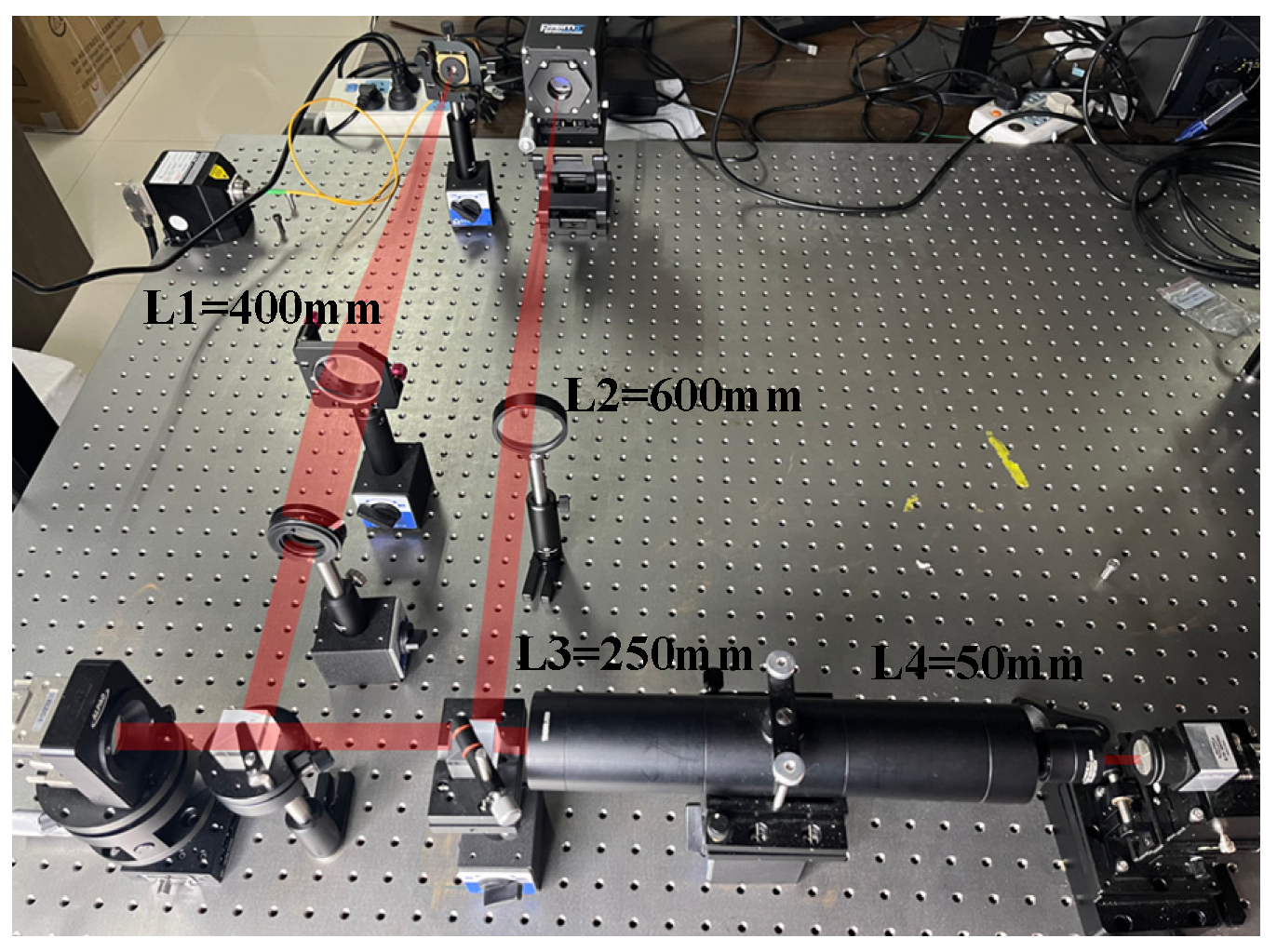
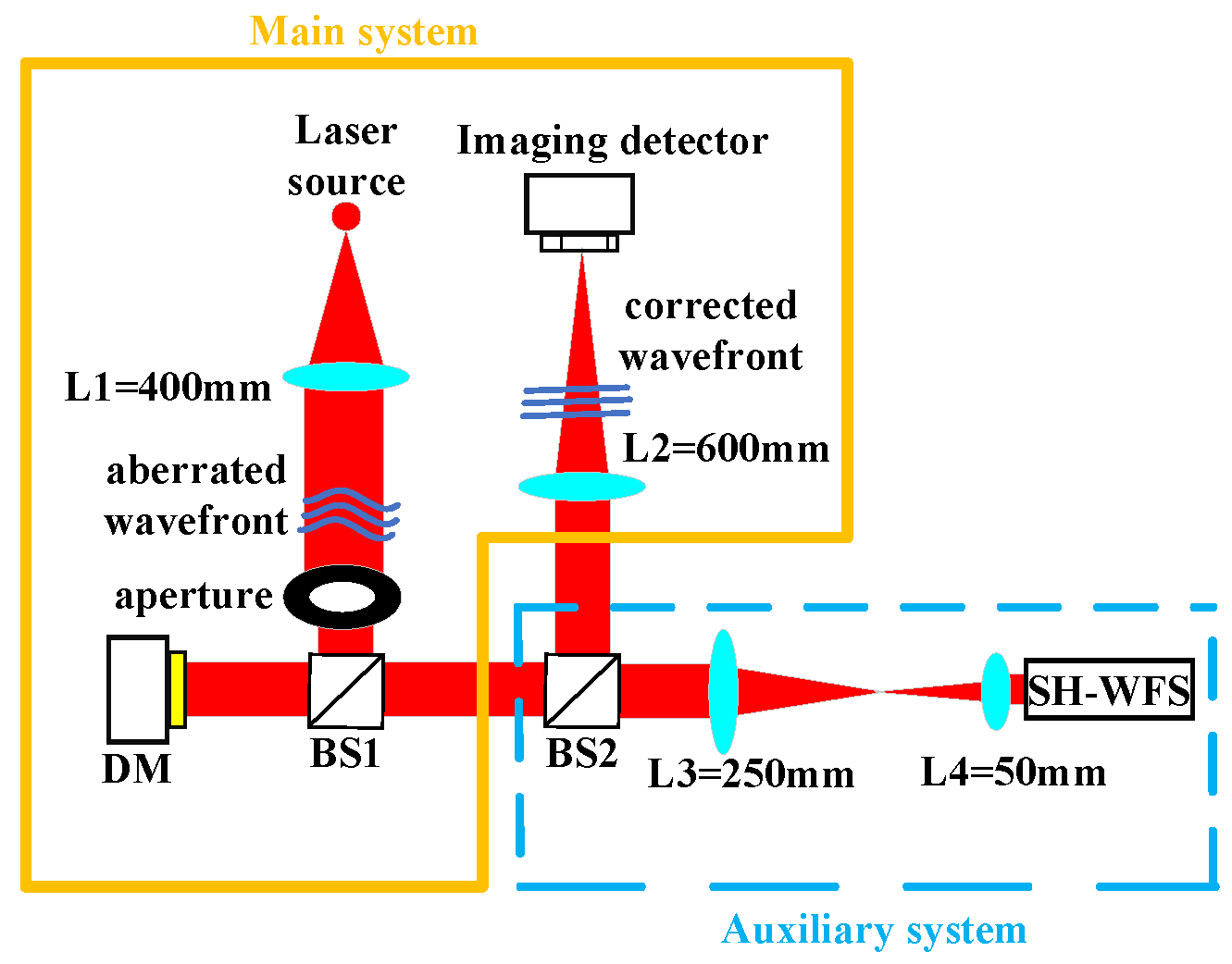
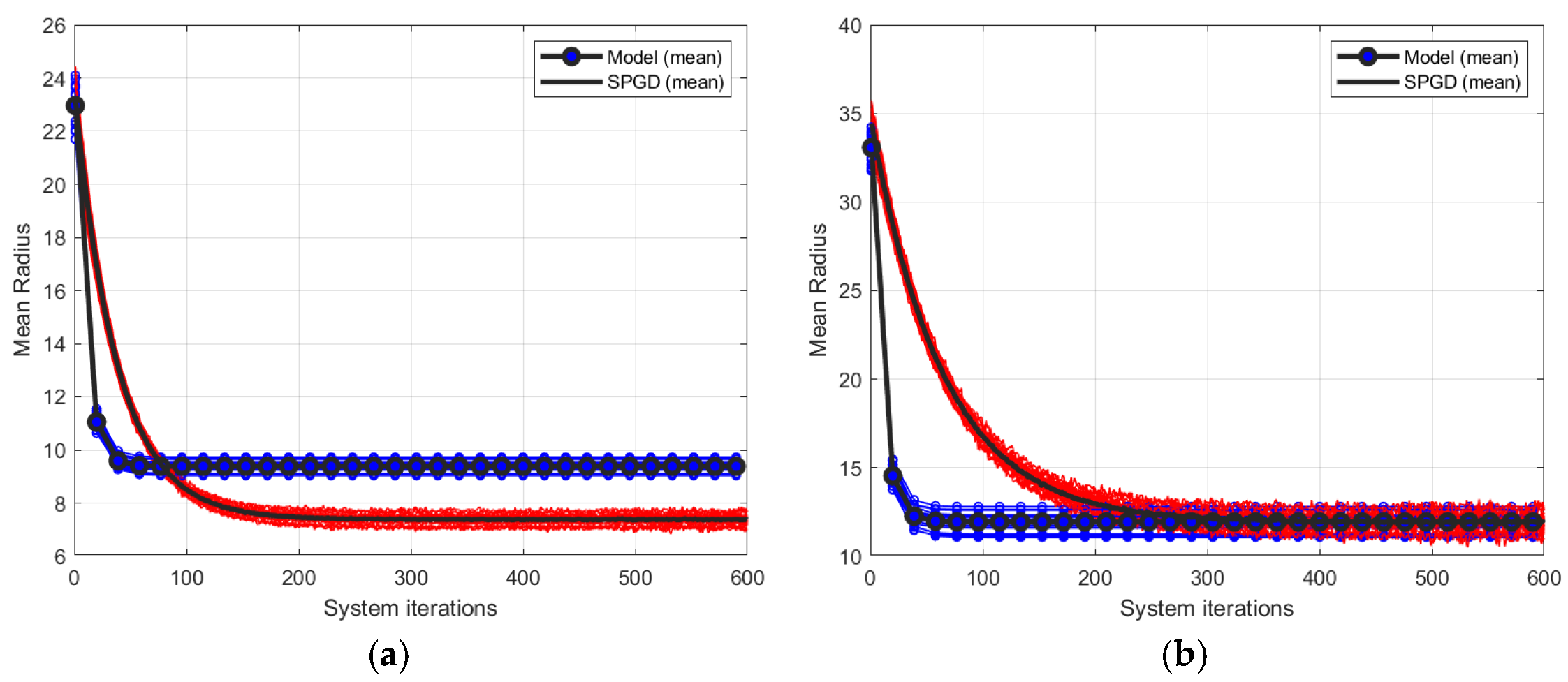
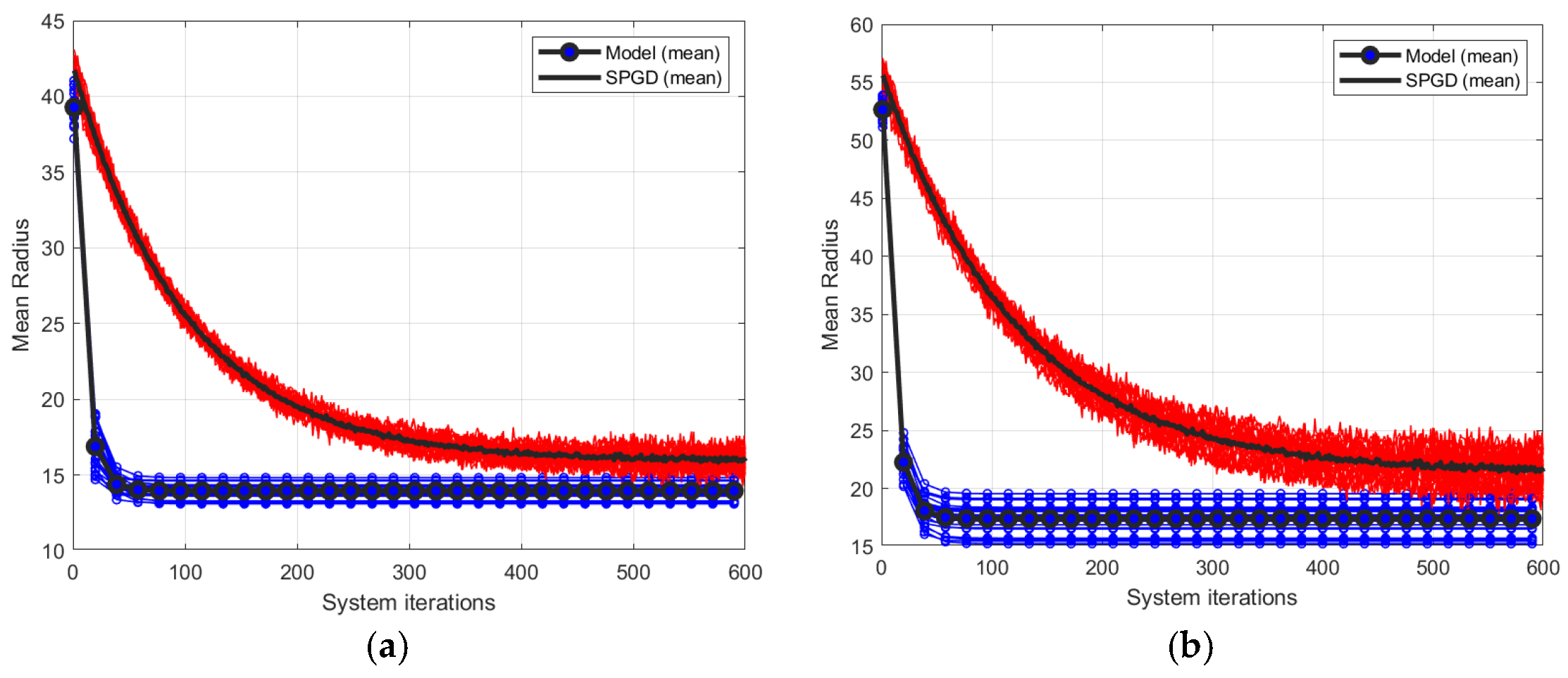
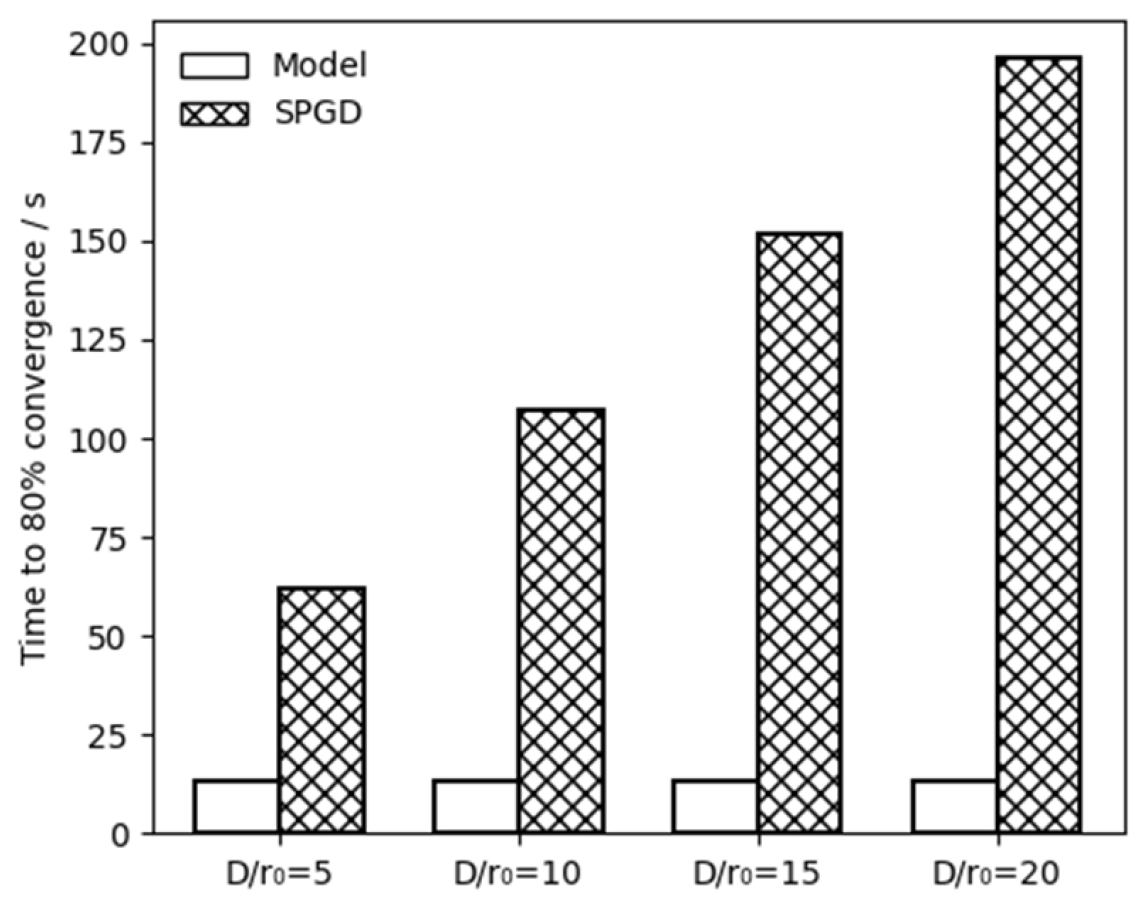
To address the limitations of conventional wavefront sensorless adaptive optics (AO) systems regarding iteration efficiency and convergence speed, this study conducts an experimental validation of a model-based wavefront sensorless AO approach. A physical experimental platform was established, which consisted of a light source, a Shack–Hartmann wavefront sensor, a deformable mirror (DM), and an imaging detector. Wavefront aberrations under different turbulence levels were employed as correction objects to evaluate the performance of the model-based wavefront sensorless AO system. For comparative analysis, experimental results obtained by using the classical stochastic parallel gradient descent (SPGD) control algorithm are also presented. Under identical software and hardware conditions, the experimental results show that as the turbulence level increases, the SPGD-based wavefront sensorless AO system requires a larger number of iterations and exhibits a slower convergence. In contrast, the model-based wavefront sensorless AO system demonstrates improved applicability and robustness in correcting large aberrations under strong turbulence levels, maintaining an almost constant convergence speed and achieving better correction performance. These findings offer theoretical insights and technical support for the real-time correction potential of large wavefront aberrations.
Keywords: adaptive optics; model-based method; deformable mirror; wavefront correction adaptive optics; model-based method; deformable mirror; wavefront correction