Article

Low-Viscosity Polydimethylsiloxane Resin for Facile 3D Printing of Elastomeric Microfluidics

1
ECLS Laboratory, Department of Surgery, University of Michigan, Ann Arbor, MI 48109, USA
2
VA Ann Arbor Healthcare System, Ann Arbor, MI 48105, USA
*
Authors to whom correspondence should be addressed.
Micromachines 2023, 14(4), 773; https://doi.org/10.3390/mi14040773
Submission received: 14 February 2023 / Revised: 21 March 2023 / Accepted: 27 March 2023 / Published: 30 March 2023
(This article belongs to the Special Issue Women’s Special Issue Series: Micromachines)

Abstract

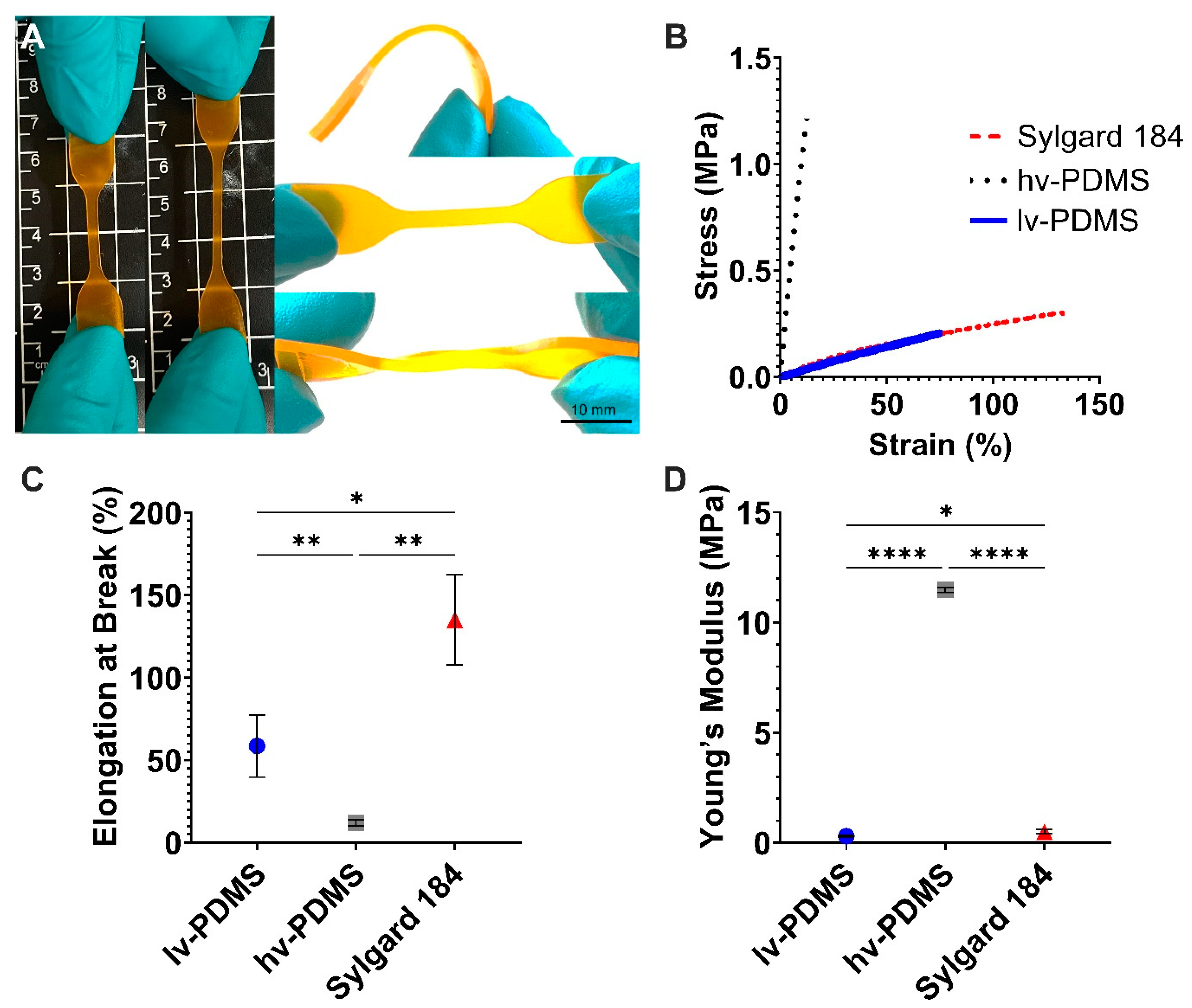
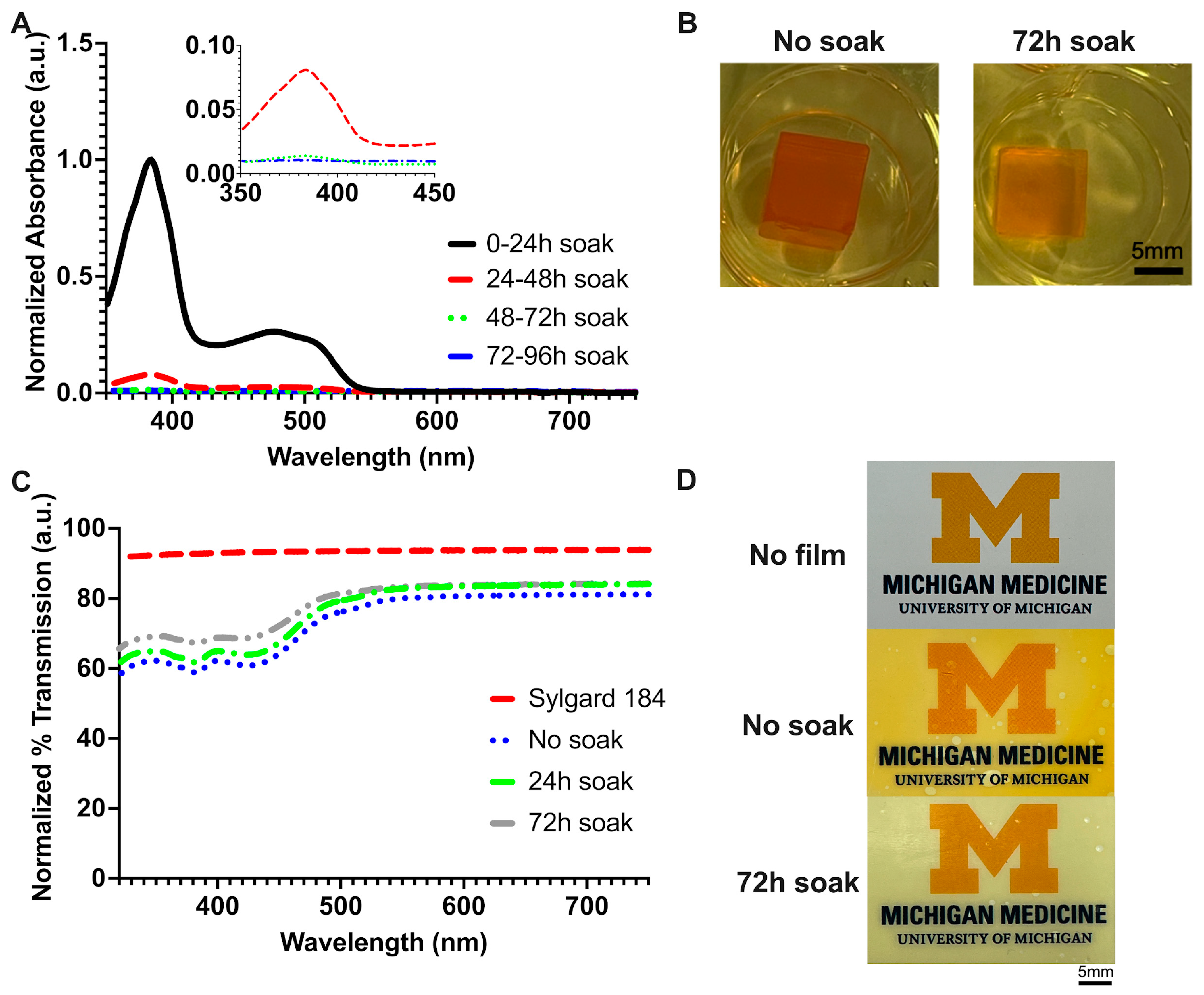
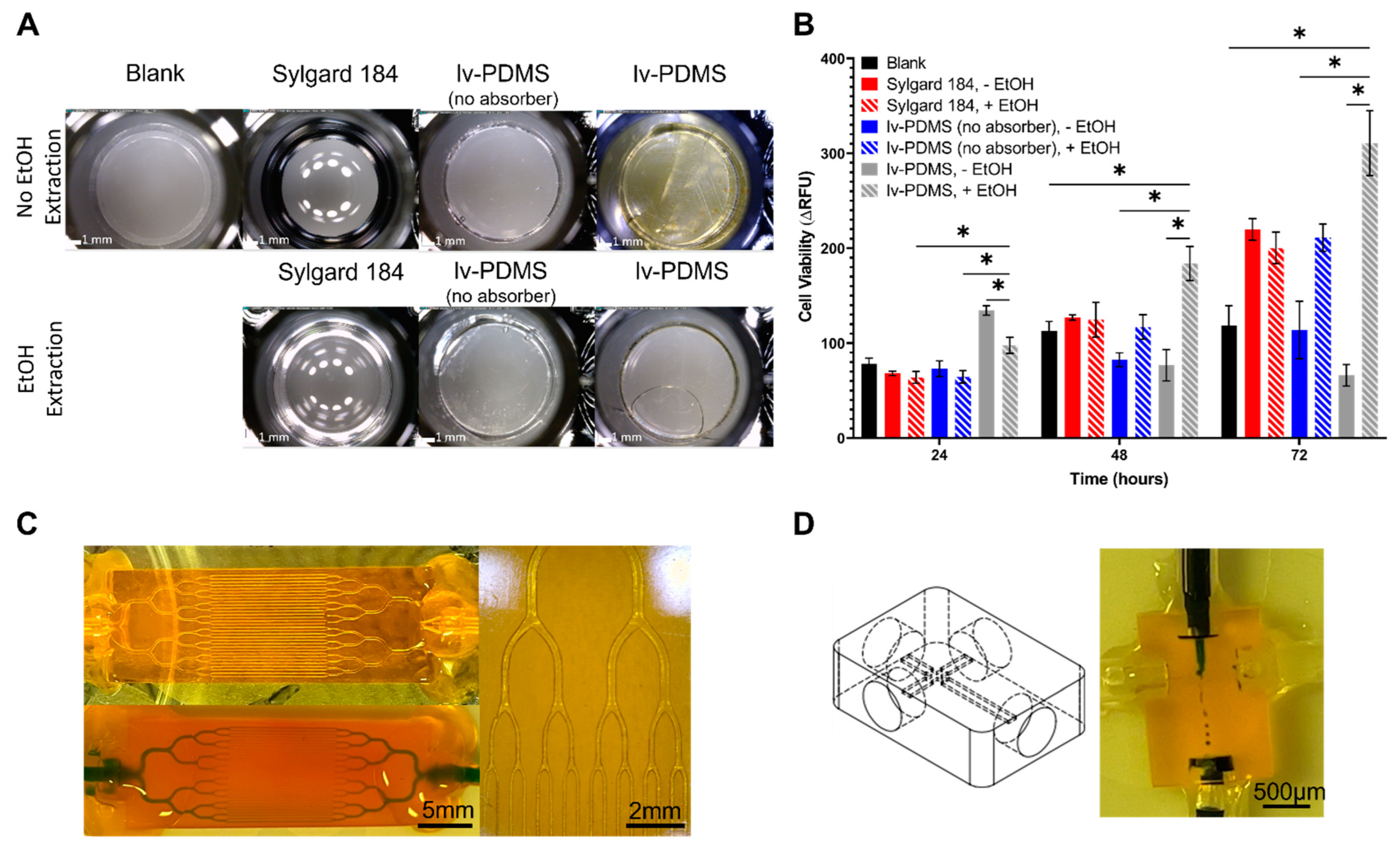
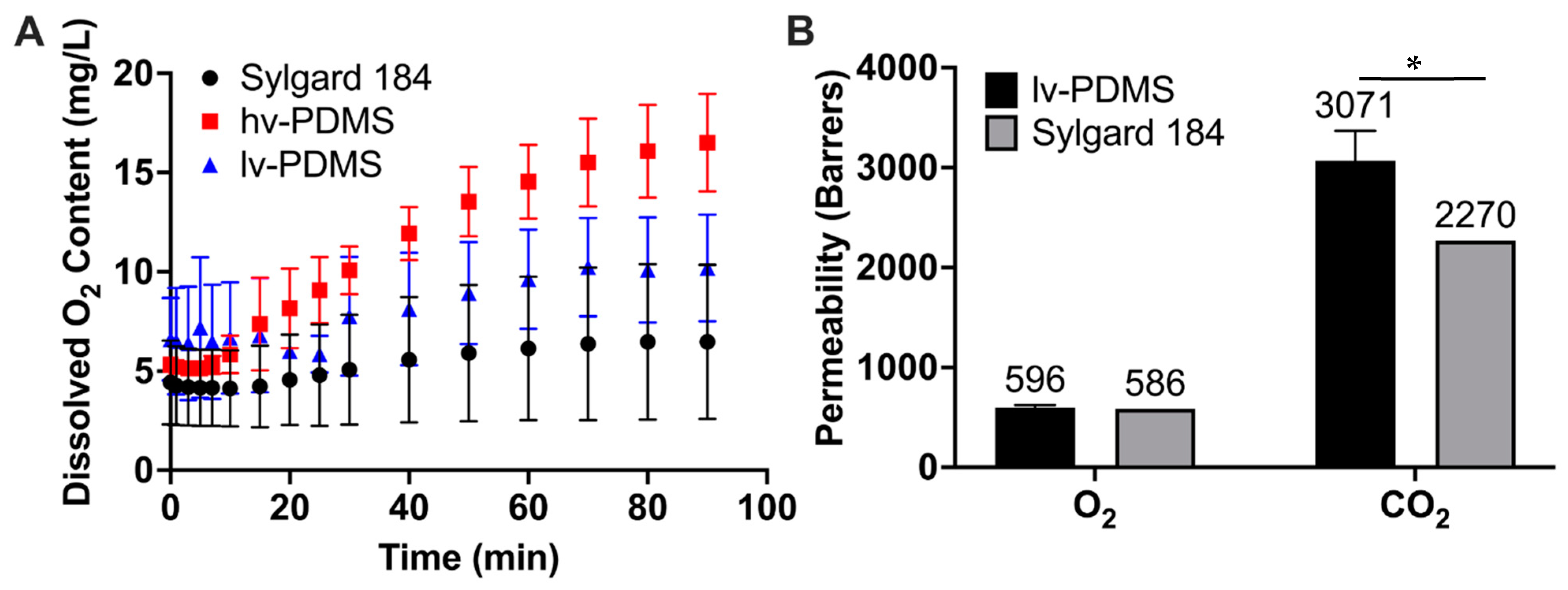
Microfluidics is a rapidly advancing technology with expansive applications but has been restricted by slow, laborious fabrication techniques for polydimethylsiloxane (PDMS)-based devices. Currently, 3D printing promises to address this challenge with high-resolution commercial systems but is limited by a lack of material advances in generating high-fidelity parts with micron-scale features. To overcome this limitation, a low-viscosity, photopolymerizable PDMS resin was formulated with a methacrylate-PDMS copolymer, methacrylate-PDMS telechelic polymer, photoabsorber, Sudan I, photosensitizer, 2-isopropylthioxanthone, and a photoinitiator, 2,4,6-trimethyl benzoyl diphenylphosphine oxide. The performance of this resin was validated on a digital light processing (DLP) 3D printer, an Asiga MAX X27 UV. Resin resolution, part fidelity, mechanical properties, gas permeability, optical transparency, and biocompatibility were investigated. This resin produced resolved, unobstructed channels as small as 38.4 (±5.0) µm tall and membranes as thin as 30.9 (±0.5) µm. The printed material had an elongation at break of 58.6% ± 18.8%, Young’s modulus of 0.30 ± 0.04 MPa, and was highly permeable to O2 (596 Barrers) and CO2 (3071 Barrers). Following the ethanol extraction of the unreacted components, this material demonstrated optical clarity and transparency (>80% transmission) and viability as a substrate for in vitro tissue culture. This paper presents a high-resolution, PDMS 3D-printing resin for the facile fabrication of microfluidic and biomedical devices.
Keywords: 3D printing; digital light processing; microfluidics; microfabrication; Poly(dimethylsiloxane) 3D printing; digital light processing; microfluidics; microfabrication; Poly(dimethylsiloxane)