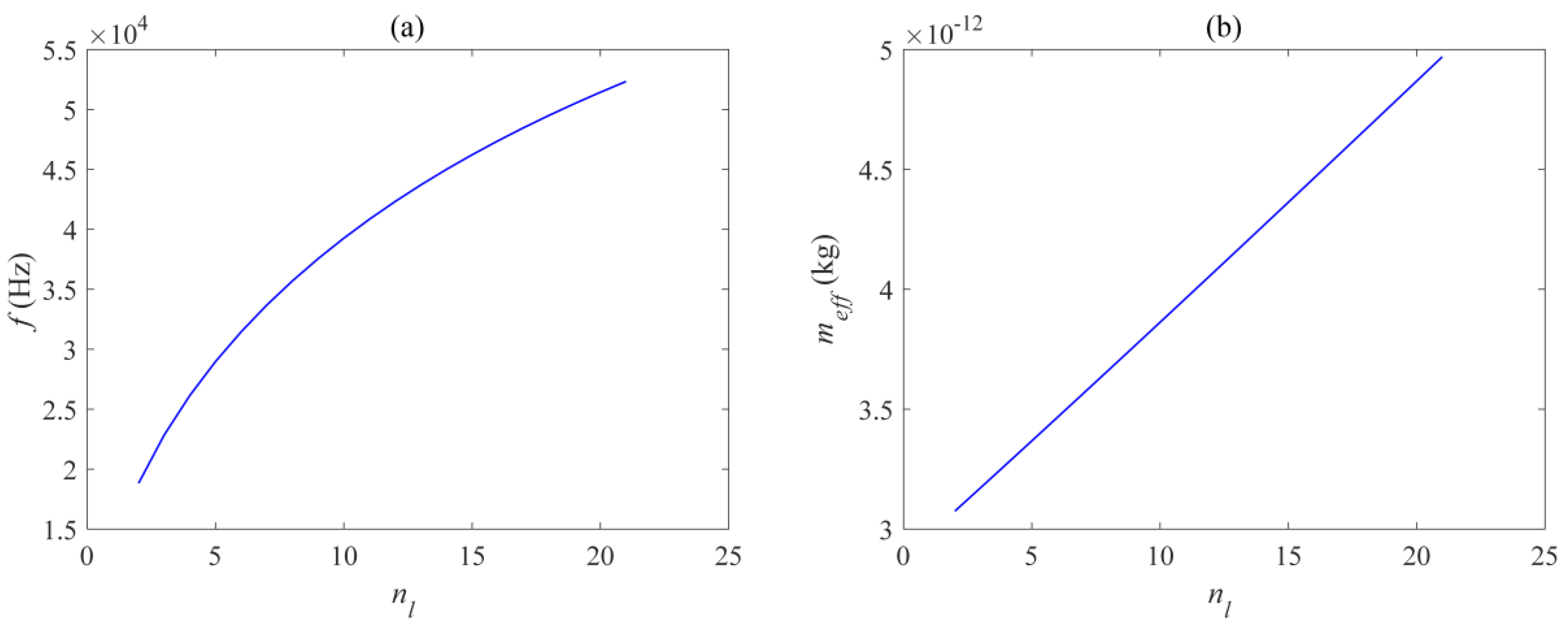
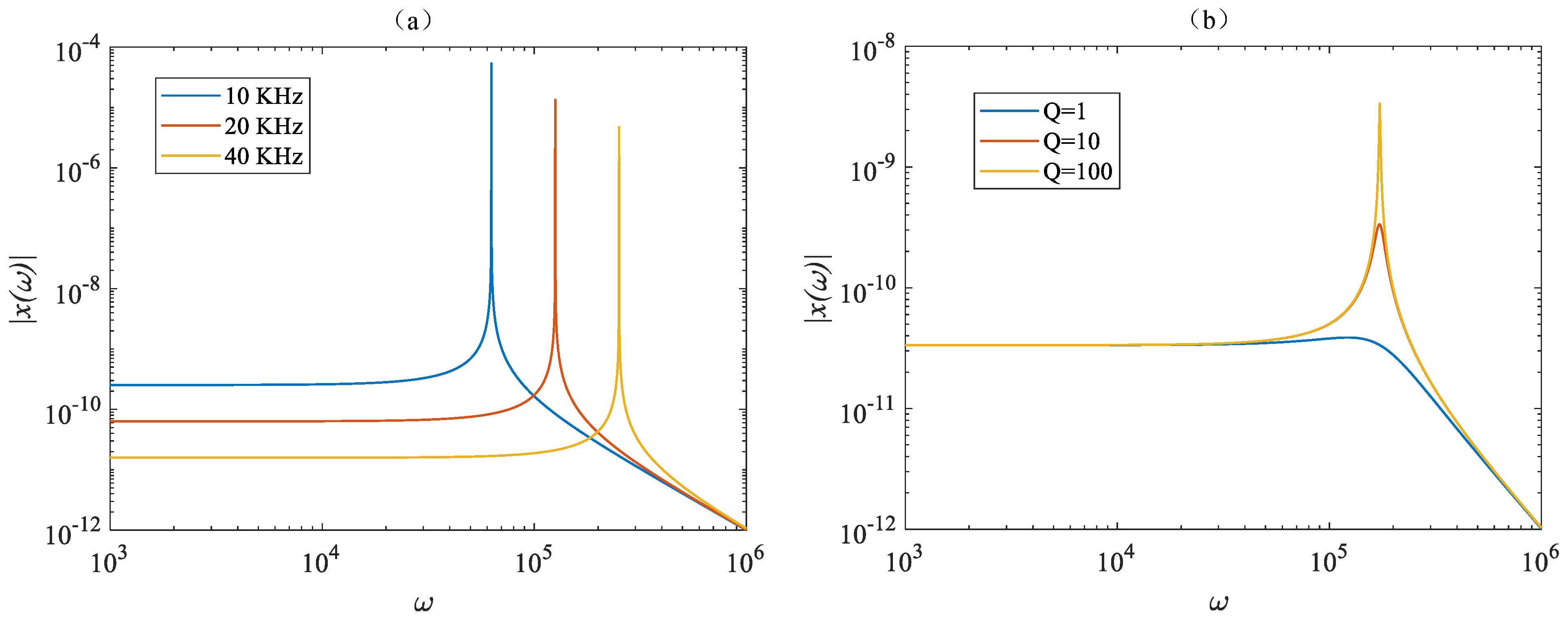
Silicon-Based Zipper Photonic Crystal Cavity Optomechanical System for Accelerometers

Abstract
1. Introduction
2. Structure Design
2.1. Silicon-Based Zipper Photonic Crystal Cavity
2.2. Mechanical Vibrator
3. Simulation Analysis
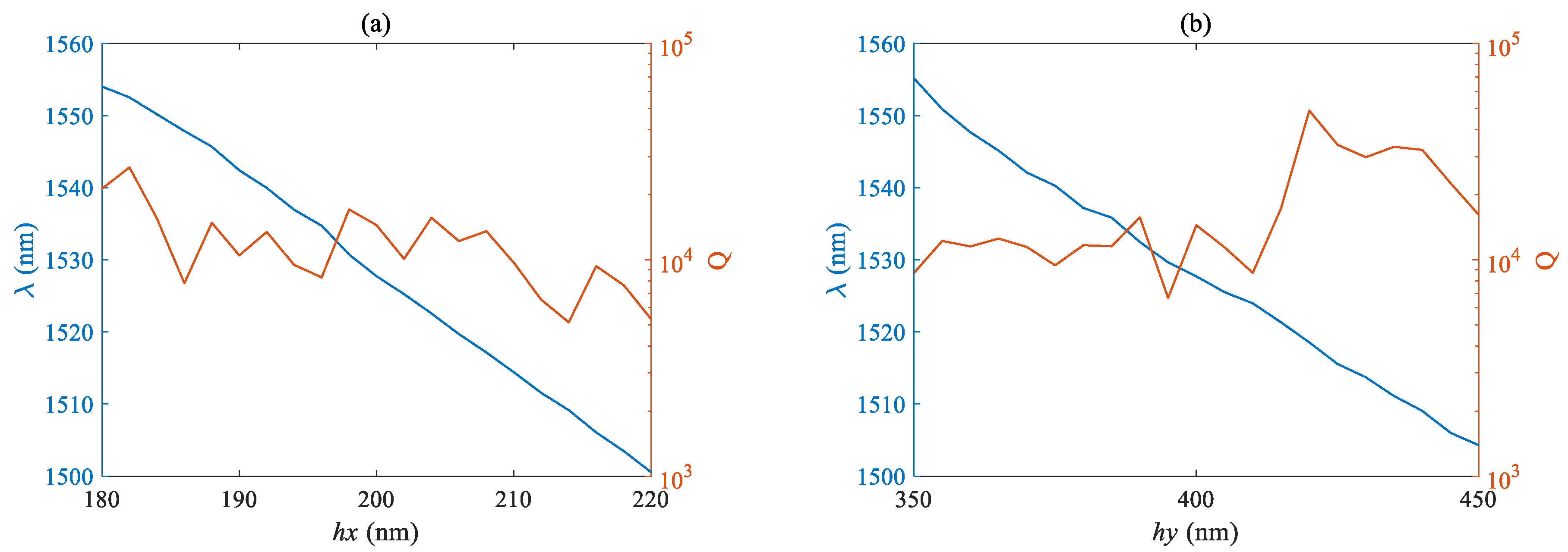
3.1. Optical Characteristics of Silicon Based Zipper Photonic Crystal Cavity
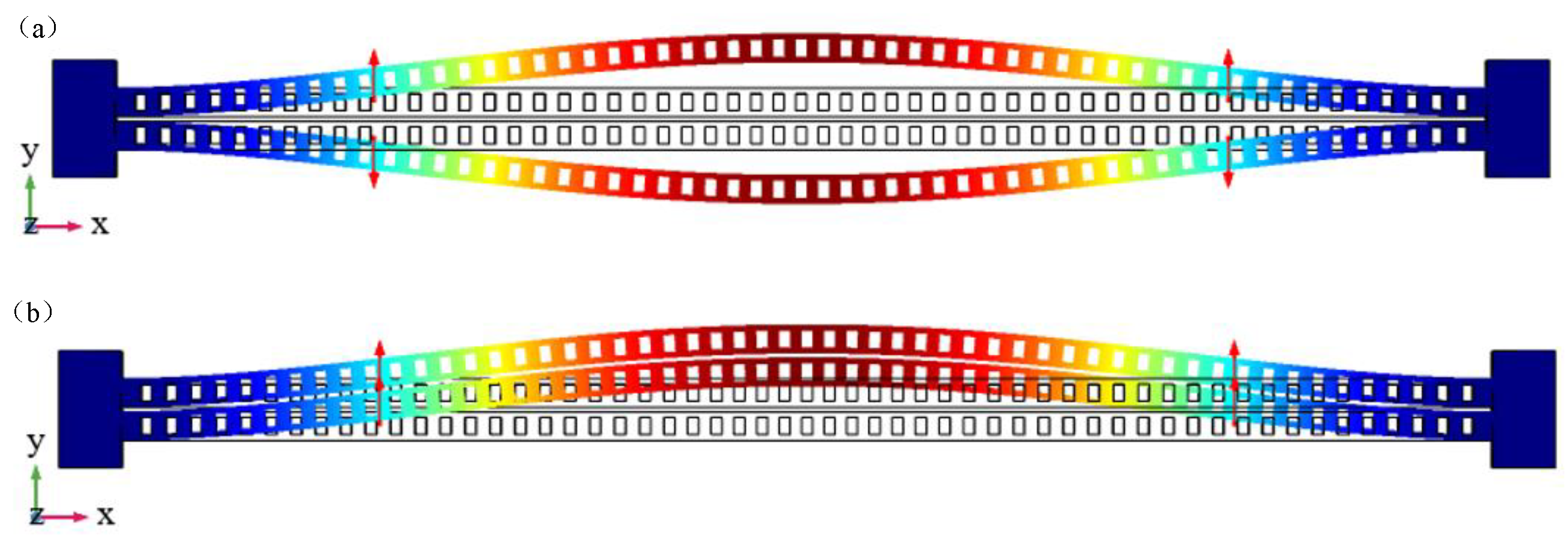
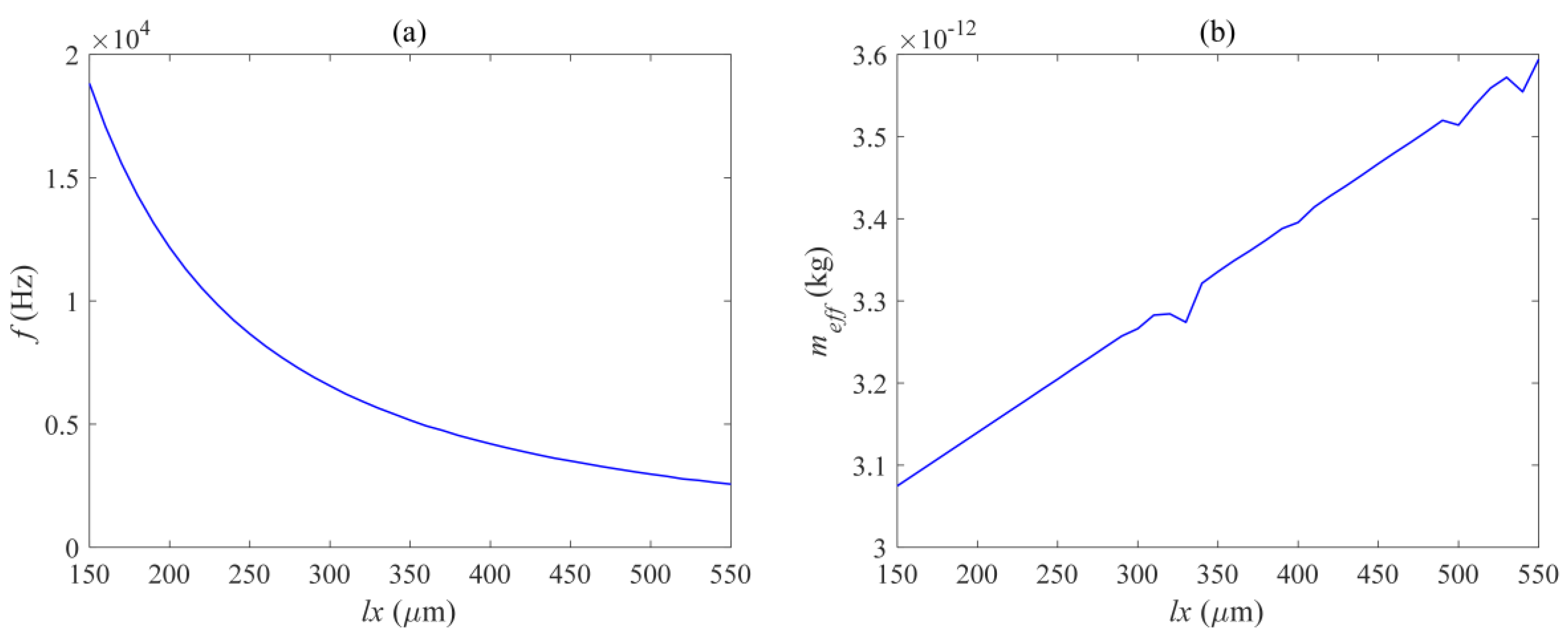
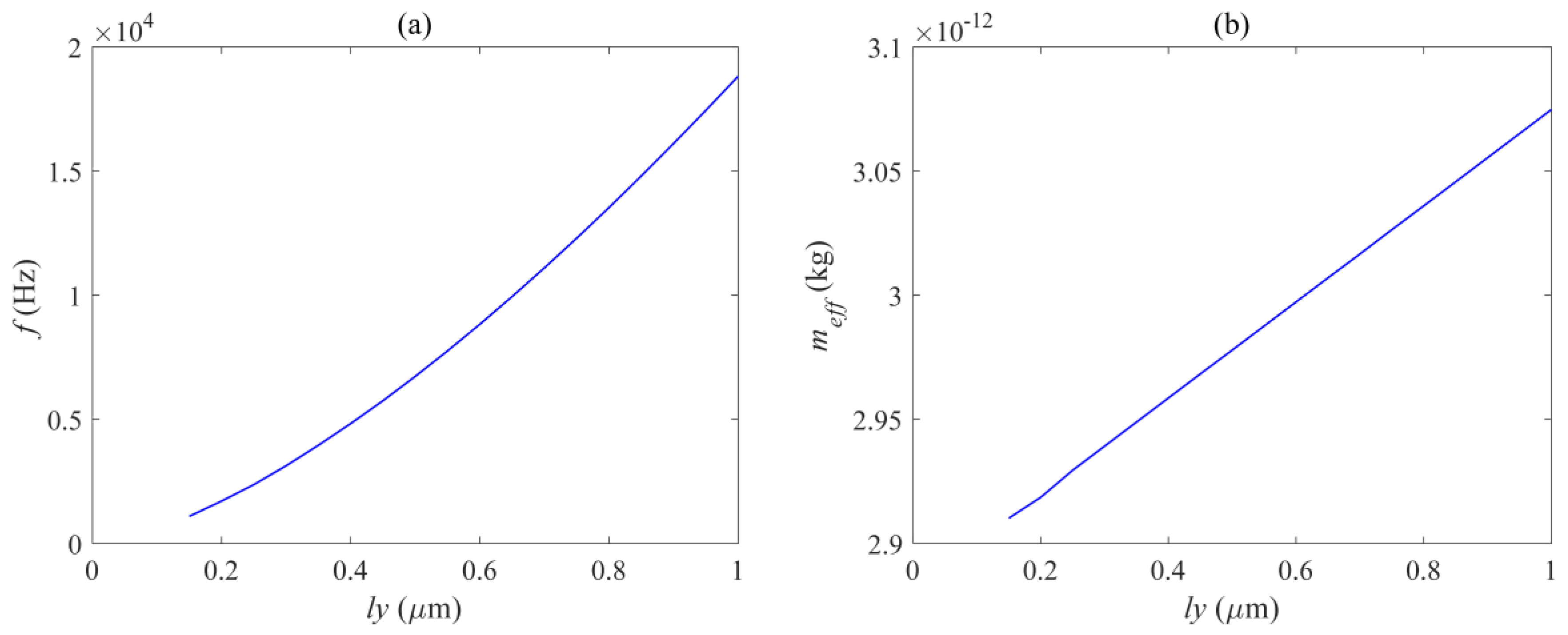
3.2. Mechanical Properties
4. Conclusions
Author Contributions
Funding
Data Availability Statement
Conflicts of Interest
References
- Li, Y.; Zheng, Q.; Hu, Y.; Xu, Y. Micromachined piezoresistive accelerometers based on an asymmetrically. J. Microelectromech. Syst. 2011, 20, 83–94. [Google Scholar] [CrossRef] [Scilit]
- Xu, Y.; Zhao, L.; Jiang, Z.; Ding, J.; Peng, N.; Zhao, Y. A novel piezoresistive accelerometer with spbs to improve the tradeoff between the sensitivity and the resonant frequency. Sensors 2016, 16, 210. [Google Scholar] [CrossRef] [Scilit] [PubMed]
- Hari, K.; Verma, S.K.; Krishna, I.R.P.; Seena, V. Out-of-plane dual flexure mems piezoresistive accelerometer with low cross axis sensitivity. Microsyst. Technol. 2017, 24, 2437–2444. [Google Scholar] [CrossRef] [Scilit]
- Jia, C.; Mao, Q.; Luo, G.; Zhao, L.; Lu, D.; Yang, P.; Yu, M.; Li, C.; Chang, B.; Jiang, Z. Novel high-performance piezoresistive shock accelerometer for ultra-high-g measurement utilizing self-support sensing beams. Rev. Sci. Instrum. 2020, 91, 085001. [Google Scholar] [CrossRef] [Scilit] [PubMed]
- Aydin, O.; Akin, T. A bulk-micromachined fully differential mems accelerometer with split interdigitated fingers. IEEE Sens. J. 2013, 13, 2914–2921. [Google Scholar] [CrossRef] [Scilit]
- Xu, H.; Liu, X.; Yin, L. A closed-loop interface for a high-q micromechanical capacitive accelerometer with 200 ng/√hz input noise density. IEEE J. Solid-State Circuits 2015, 50, 2101–2112. [Google Scholar] [CrossRef] [Scilit]
- Kavitha, S.; Daniel, R.J.; Sumangala, K. Design and analysis of mems comb drive capacitive accelerometer for shm and seismic applications. Measurement 2016, 93, 327–339. [Google Scholar] [CrossRef] [Scilit]
- Wei, X.U.E.; Cui, W. Highly sensitive micromachined tunneling sensors. Opt. Precis. Eng. 2004, 12, 491–503. [Google Scholar]
- Kumar, V.; Guo, X.; Pourkamali, S. Single-mask field emission based tunable mems tunneling accelerometer. In Proceedings of the 2015 IEEE 15th International Conference on Nanotechnology (IEEE-NANO), Rome, Italy, 27–30 July 2015; pp. 755–758. [Google Scholar]
- Yang, B.; Wang, B.; Yan, H.; Gao, X. Design of a micromachined z-axis tunneling magnetoresistive accelerometer with electrostatic force feedback. Micromachines 2019, 10, 158. [Google Scholar] [CrossRef] [Scilit]
- Yang, B.; Gao, X.; Li, C. A novel micromachined z-axis torsional accelerometer based on the tunneling magnetoresistive effect. Micromachines 2020, 11, 422. [Google Scholar] [CrossRef] [Scilit]
- Zandi, K.; Bélanger, J.A.; Peter, Y.A. Design and Demonstration of an In-Plane Silicon-on-Insulator Optical MEMS Fabry–Pérot-Based Accelerometer Integrated With Channel Waveguides. J. Microelectromech. Syst. 2012, 21, 1464–1470. [Google Scholar] [CrossRef] [Scilit]
- Stefani, A.; Andresen, S.; Yuan, W.; Herholdt-Rasmussen, N.; Bang, O. High sensitivity polymer optical fiber-bragg-grating-based accelerometer. IEEE Photonics Technol. Lett. 2012, 24, 763–765. [Google Scholar] [CrossRef] [Scilit]
- Ali, A.R. Micro-optical vibrometer/accelerometer using dielectric microspheres. Appl. Opt. 2019, 58, 4211–4219. [Google Scholar] [CrossRef] [Scilit]
- Teufel, J.D.; Donner, T.; Castellanos-Beltran, M.A.; Harlow, J.W.; Lehnert, K.W. Nanomechanical motion measured with an imprecision below that at the standard quantum limit. Nat. Nanotechnol. 2009, 4, 820–823. [Google Scholar] [CrossRef] [Scilit]
- Hu, Y.-W.; Xiao, Y.-F.; Liu, Y.-C.; Gong, Q. Optomechanical sensing with on-chip microcavities. Front. Phys. 2013, 8, 475–490. [Google Scholar] [CrossRef] [Scilit]
- Aspelmeyer, M.; Kippenberg, T.J.; Marquardt, F. Cavity optomechanics. Rev. Mod. Phys. 2014, 86, 1391–1452. [Google Scholar] [CrossRef] [Scilit]
- Sheard, B.S.; Gray, M.B.; Mow-Lowry, C.M.; McClelland, D.E.; Whitcomb, S.E. Observation and characterization of an optical spring. Phys. Rev. A 2004, 69, 051801. [Google Scholar] [CrossRef] [Scilit]
- Riviere, R.; Deleglise, S.; Weis, S.; Gavartin, E.; Arcizet, O.; Schliesser, A.; Kippenberg, T.J. Optomechanical sideband cooling of a micromechanical vibrator close to the quantum ground state. Phys. Rev. A 2011, 83, 063835. [Google Scholar] [CrossRef] [Scilit]
- Horodecki, R.; Horodecki, P.; Horodecki, M.; Horodecki, K. Quantum entanglement. Rev. Mod. Phys. 2009, 81, 865–942. [Google Scholar] [CrossRef] [Scilit]
- Safavi-Naeini, A.H.; Alegre, T.M.; Chan, J.; Eichenfield, M.; Winger, M.; Lin, Q.; Hill, I.T.; Chang, D.E.; Painter, O. Electromagnetically induced transparency and slow light with optomchanics. Nature 2011, 472, 69–73. [Google Scholar] [CrossRef] [Scilit]
- Yablonovitch, E. Inhibited spontaneous emission in solid-state physics and electronics. Phys. Rev. Lett. 1987, 58, 2059–2062. [Google Scholar] [CrossRef] [Scilit] [PubMed]
- ACucinotta; Selleri, S.; Vincetti, L.; Zoboli, M. Holey fiber analysis through the finite-element method. IEEE Photonics Technol. Lett. 2002, 14, 1530–1532. [Google Scholar] [CrossRef] [Scilit]
- Saitoh, K.; Koshiba, M.; Member, S. Full-vectorial imaginary distance beam propagation method based on a finite element scheme: Application to photonic crystal fibers. IEEE J. Quantum Electron. 2002, 38, 927–933. [Google Scholar] [CrossRef] [Scilit]
- Krause, A.G.; Winger, M.; Blasius, T.D.; Lin, Q.; Painter, O. A high-resolution microchip optomechanical accelerometer. Nat. Photonics 2012, 6, 768–772. [Google Scholar] [CrossRef] [Scilit]
- Chan, J.; Eichenfield, M.; Camacho, R.; Painter, O. Optical and mechanical design of a zipper photonic crystal optomechanical cavity. Opt. Express 2009, 17, 3802. [Google Scholar] [CrossRef] [Scilit] [PubMed]



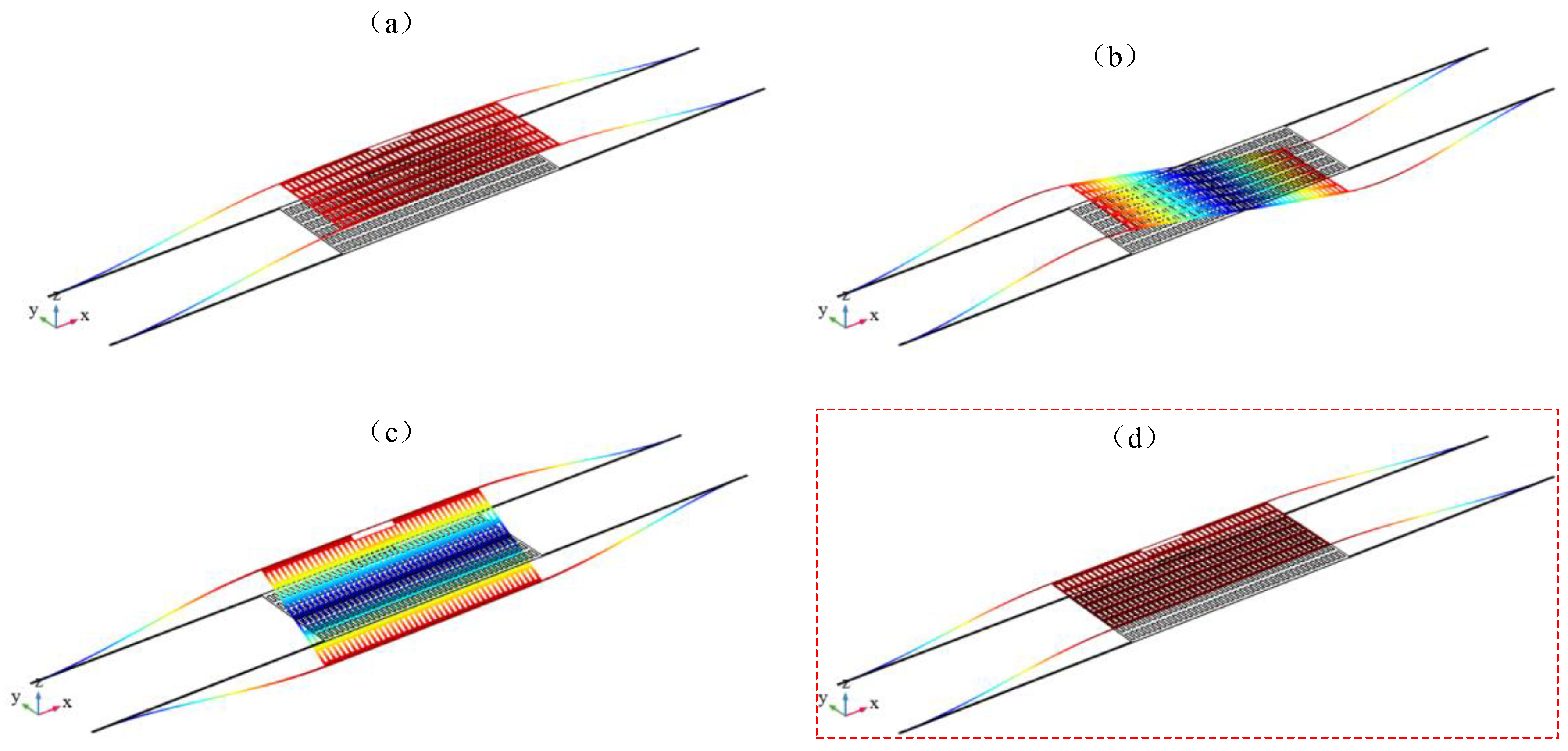


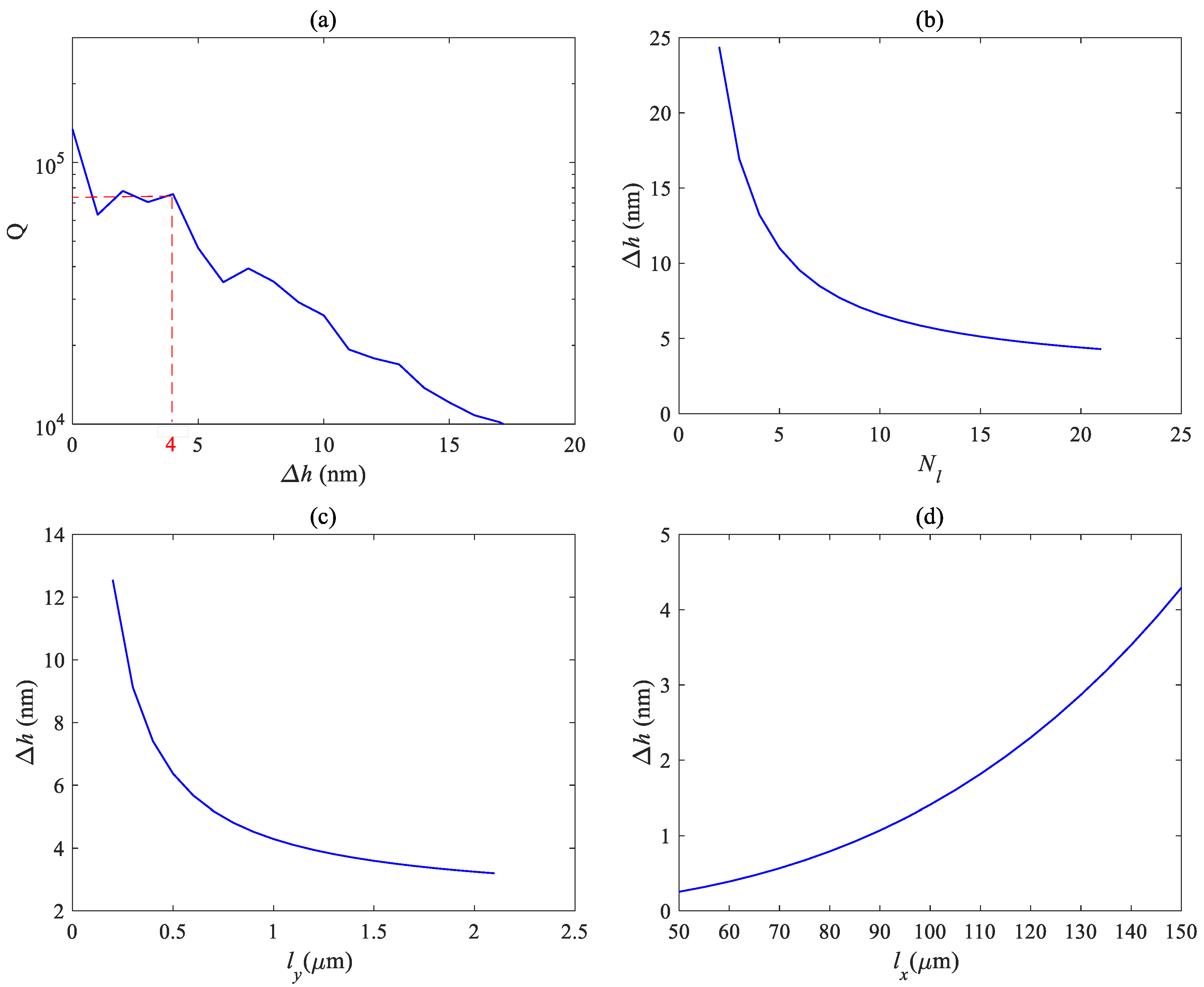

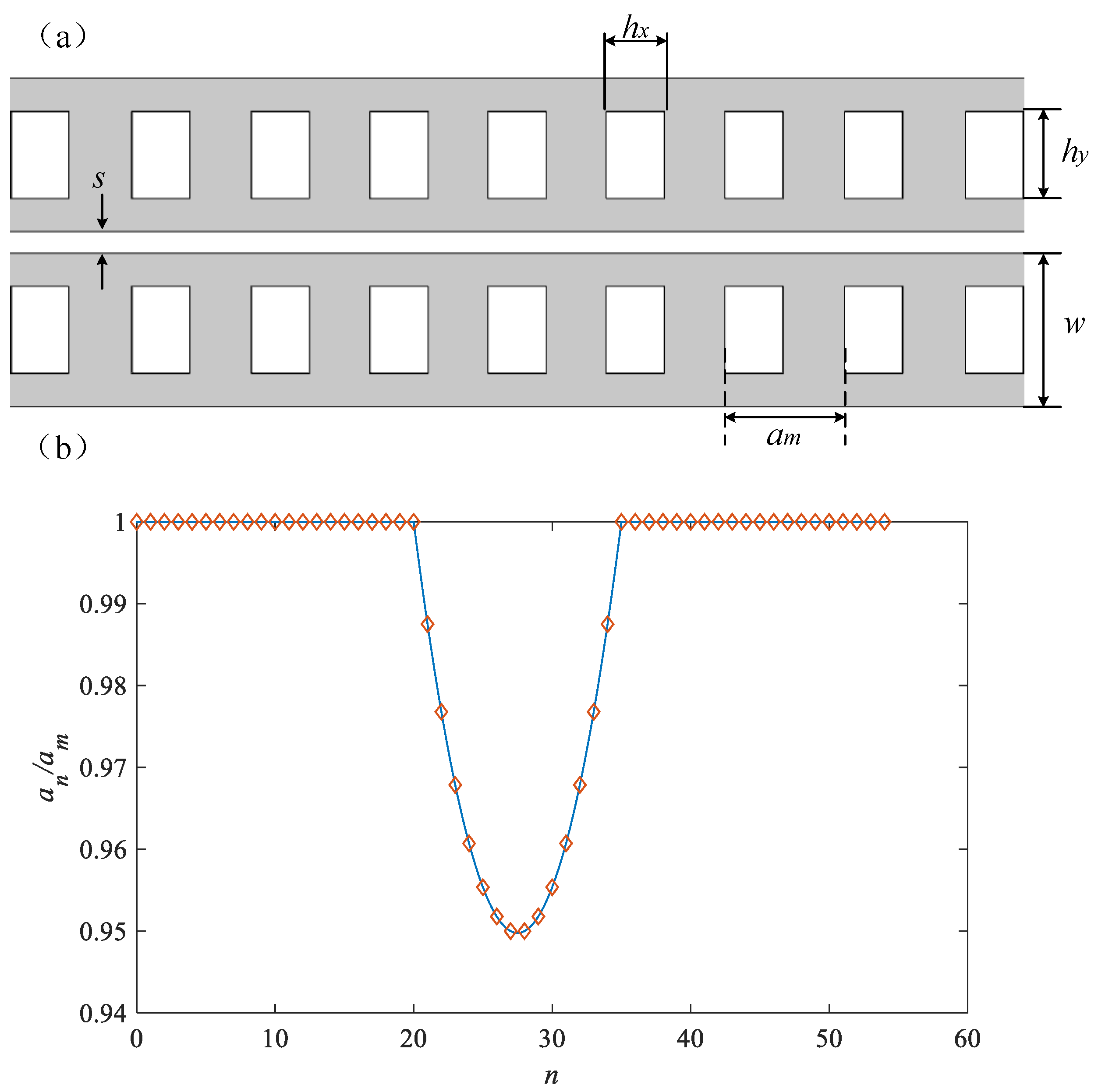
| Parameters | am | w | t | hx | hy | s |
|---|---|---|---|---|---|---|
| Value (nm) | 600 | 700 | 220 | 214 | 400 | 60 |
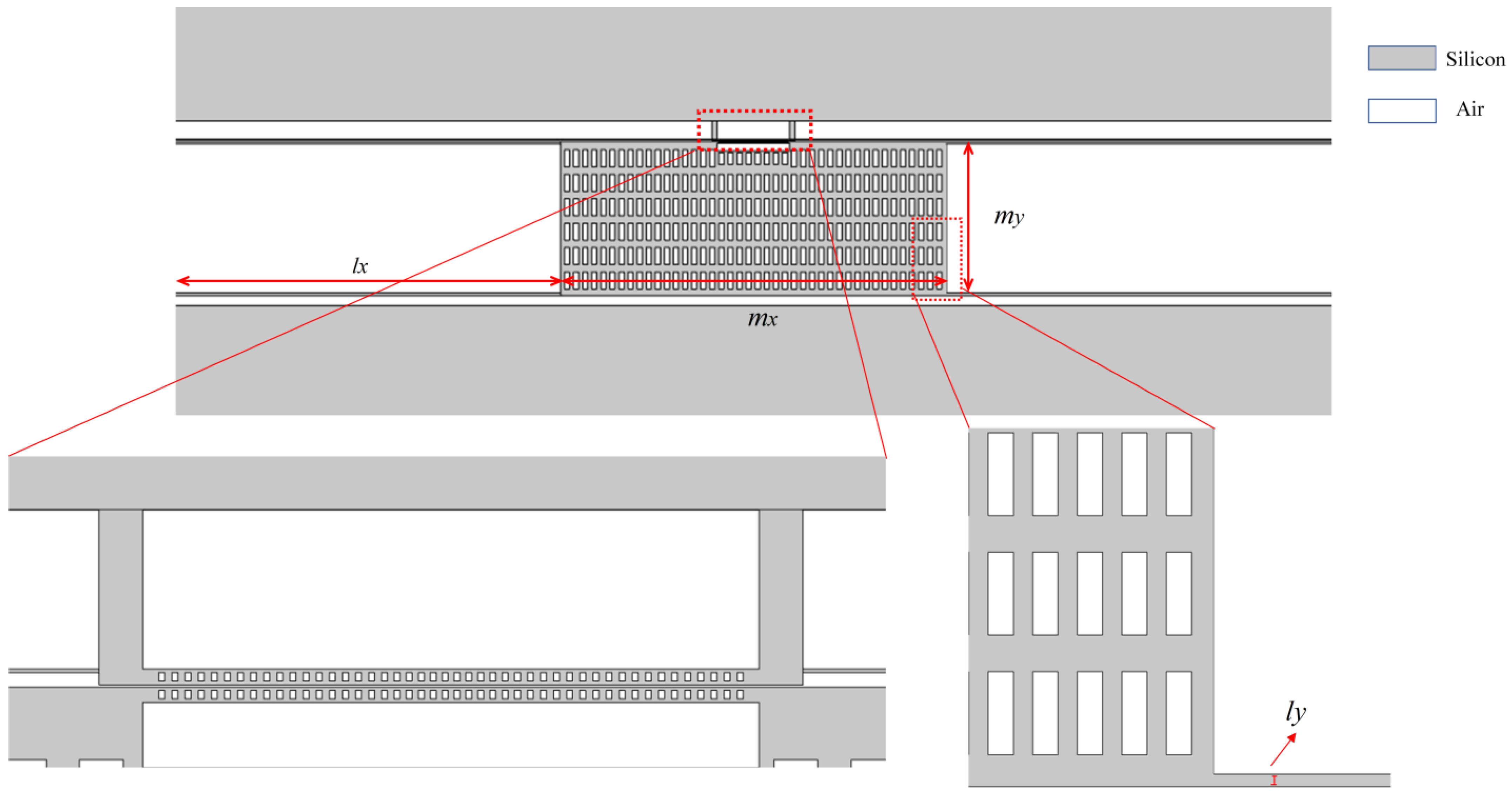
| Parameters | mx | my | tm | lx | ly | Nl |
|---|---|---|---|---|---|---|
| Value | 150 µm | 60 µm | 220 µm | 150 µm | 1 µm | 2 |
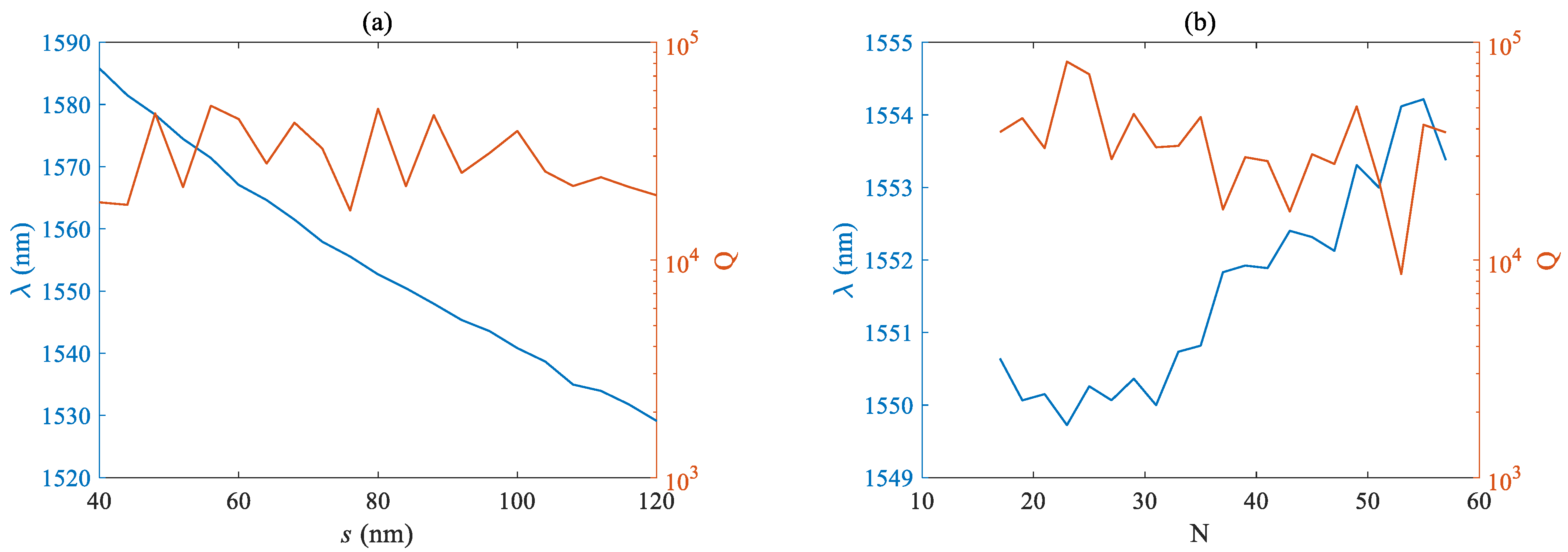
| Number of Holes | 47 | 49 | 51 | 53 | 55 |
| In-plane differential mode (MHz) | 6.56 | 6.05 | 5.59 | 5.18 | 4.82 |
| In-plane common mode (MHz) | 6.61 | 6.09 | 6.63 | 5.22 | 4.85 |
Disclaimer/Publisher’s Note: The statements, opinions and data contained in all publications are solely those of the individual author(s) and contributor(s) and not of MDPI and/or the editor(s). MDPI and/or the editor(s) disclaim responsibility for any injury to people or property resulting from any ideas, methods, instructions or products referred to in the content. |
© 2023 by the authors. Licensee MDPI, Basel, Switzerland. This article is an open access article distributed under the terms and conditions of the Creative Commons Attribution (CC BY) license (https://creativecommons.org/licenses/by/4.0/).
Share and Cite
Tan, H.; Pan, D.; Wang, C.; Yao, Y. Silicon-Based Zipper Photonic Crystal Cavity Optomechanical System for Accelerometers. Micromachines 2023, 14, 1870. https://doi.org/10.3390/mi14101870
Tan H, Pan D, Wang C, Yao Y. Silicon-Based Zipper Photonic Crystal Cavity Optomechanical System for Accelerometers. Micromachines. 2023; 14(10):1870. https://doi.org/10.3390/mi14101870
Chicago/Turabian StyleTan, Hongyu, Debin Pan, Chensheng Wang, and Yuan Yao. 2023. "Silicon-Based Zipper Photonic Crystal Cavity Optomechanical System for Accelerometers" Micromachines 14, no. 10: 1870. https://doi.org/10.3390/mi14101870
APA StyleTan, H., Pan, D., Wang, C., & Yao, Y. (2023). Silicon-Based Zipper Photonic Crystal Cavity Optomechanical System for Accelerometers. Micromachines, 14(10), 1870. https://doi.org/10.3390/mi14101870