Article

Soft Molds with Micro-Machined Internal Skeletons Improve Robustness of Flapping-Wing Robots

Department of Mechanical and Aerospace Engineering, Univeristy of California San Diego (UCSD), La Jolla, CA 92093, USA
*
Author to whom correspondence should be addressed.
Micromachines 2022, 13(9), 1489; https://doi.org/10.3390/mi13091489
Submission received: 15 August 2022 / Revised: 1 September 2022 / Accepted: 2 September 2022 / Published: 7 September 2022

Abstract

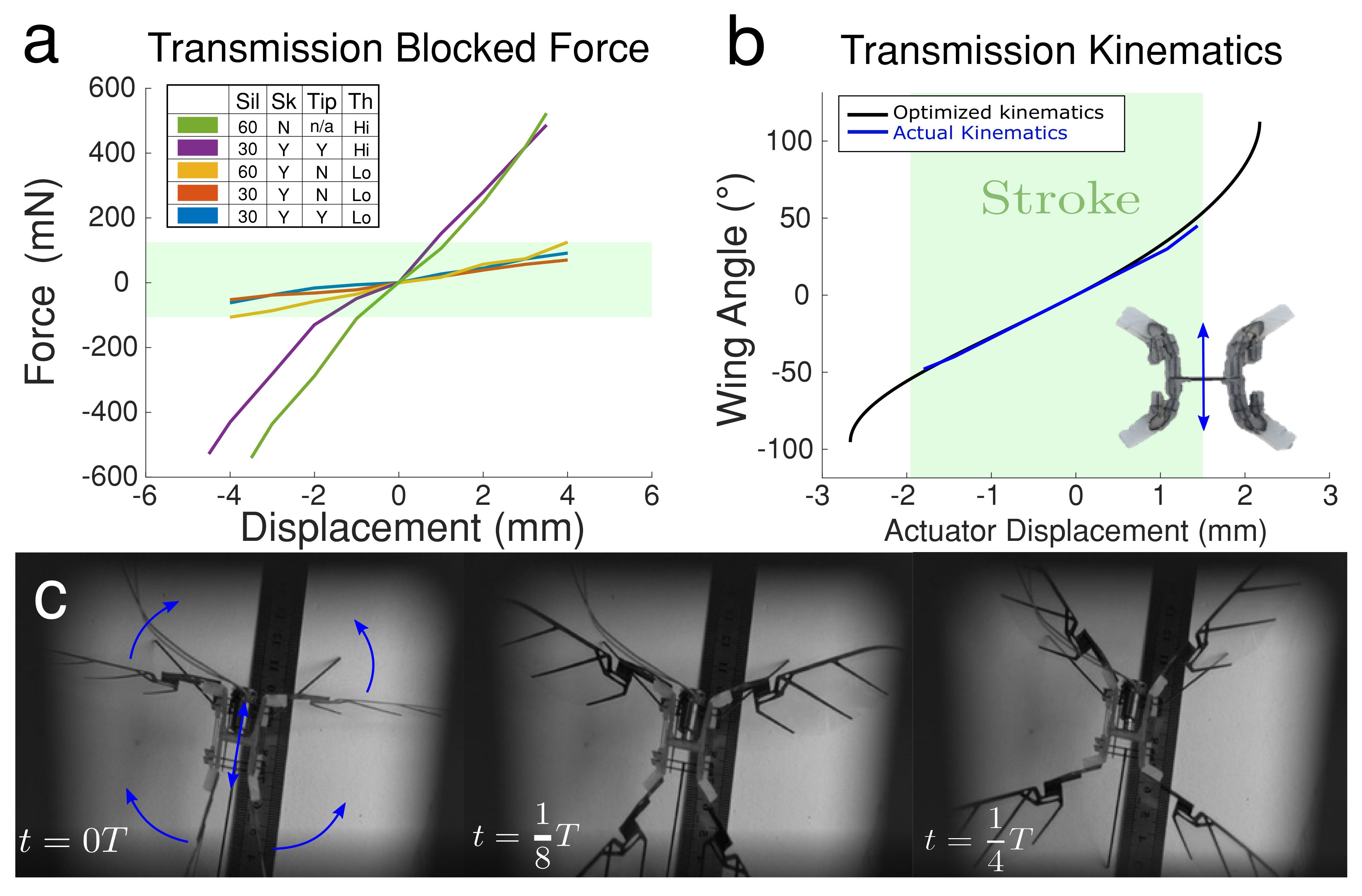
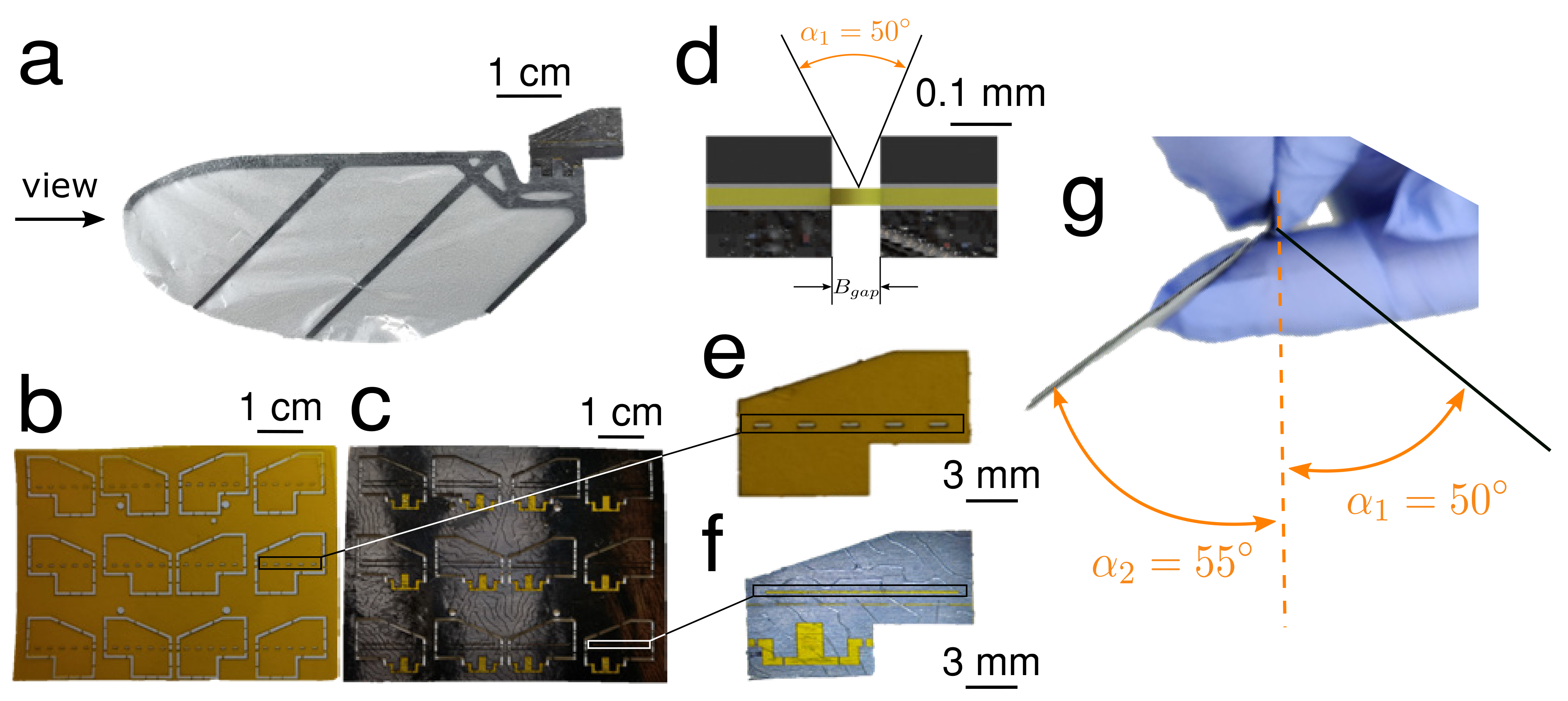
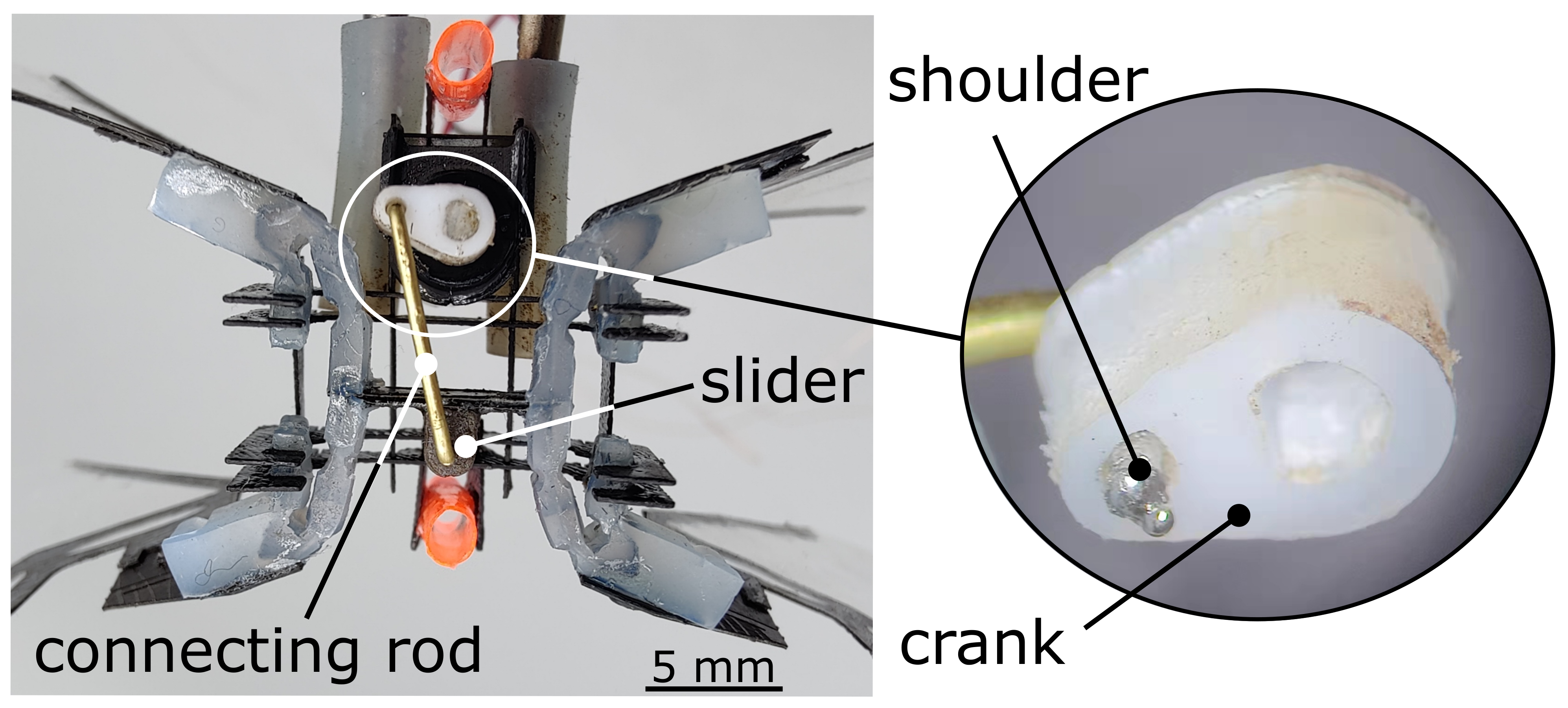
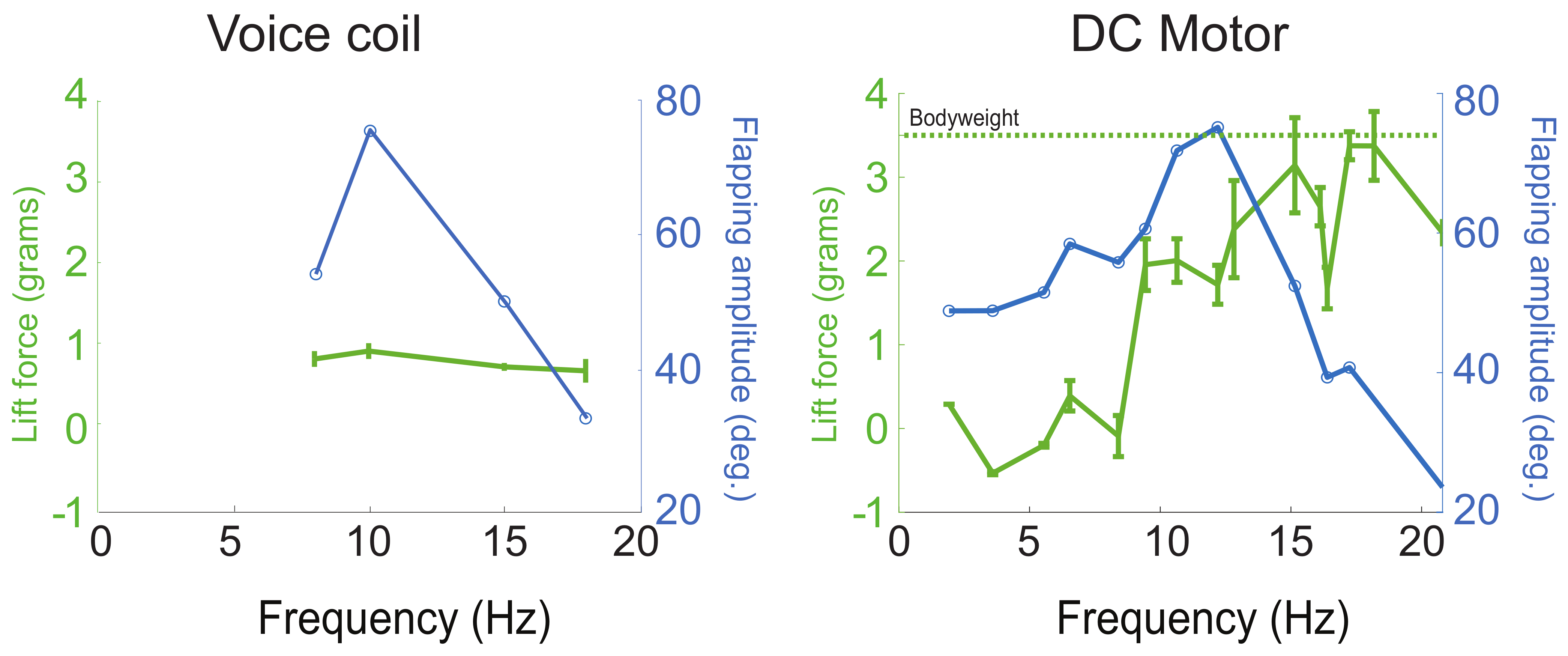
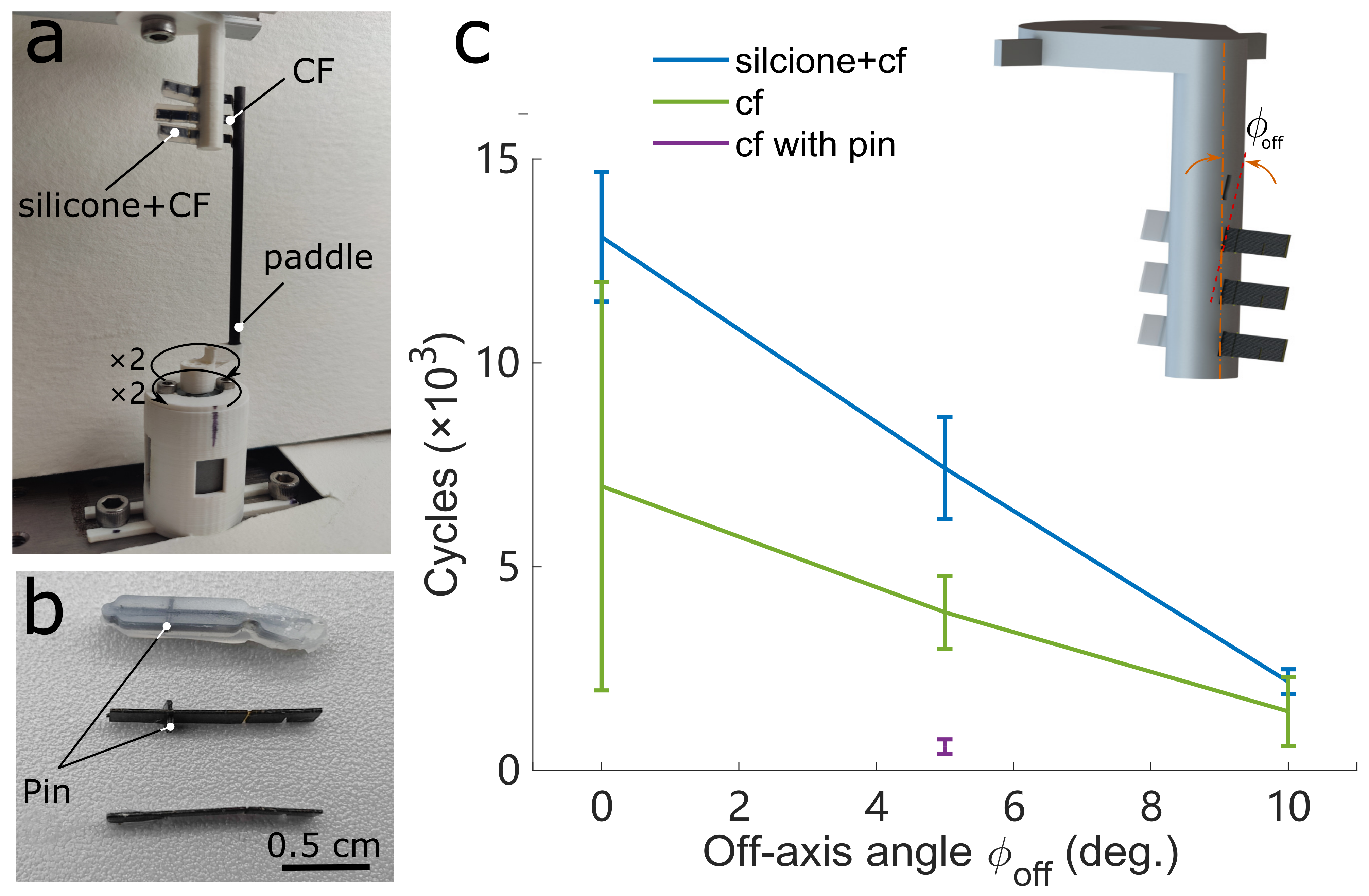
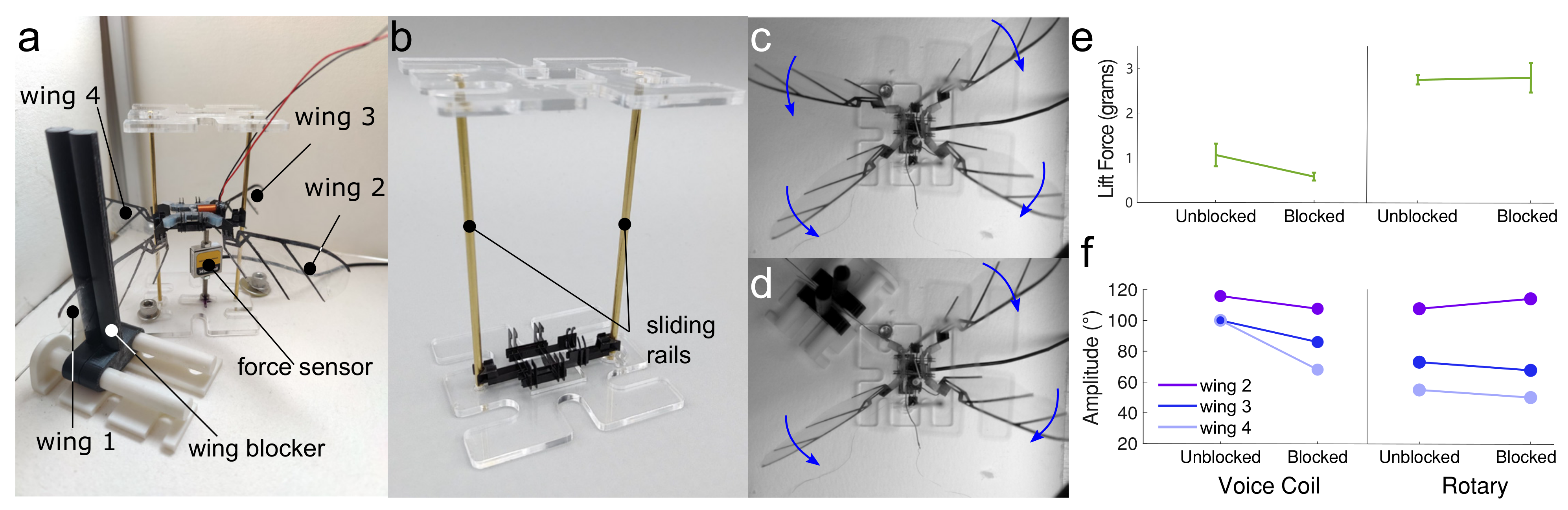
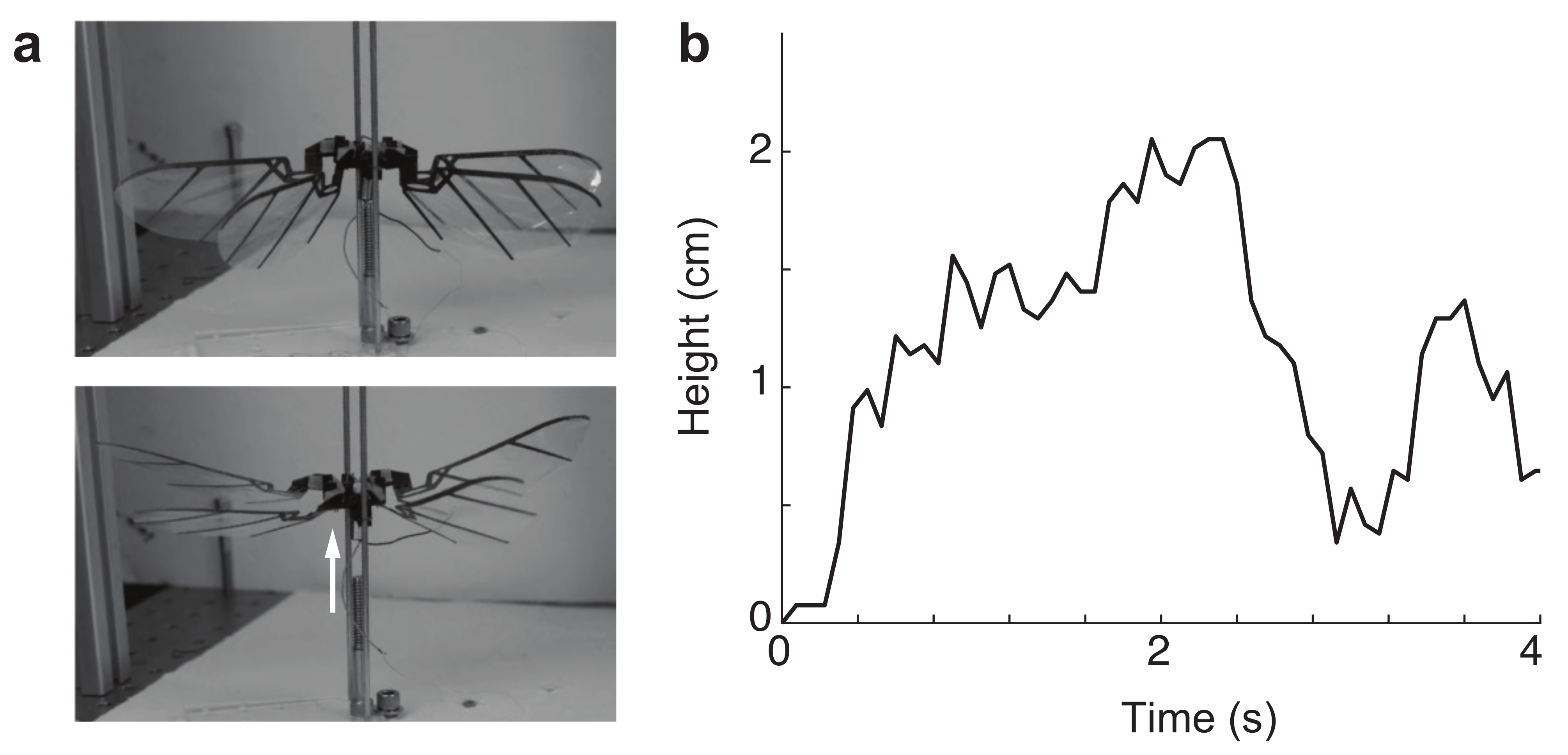
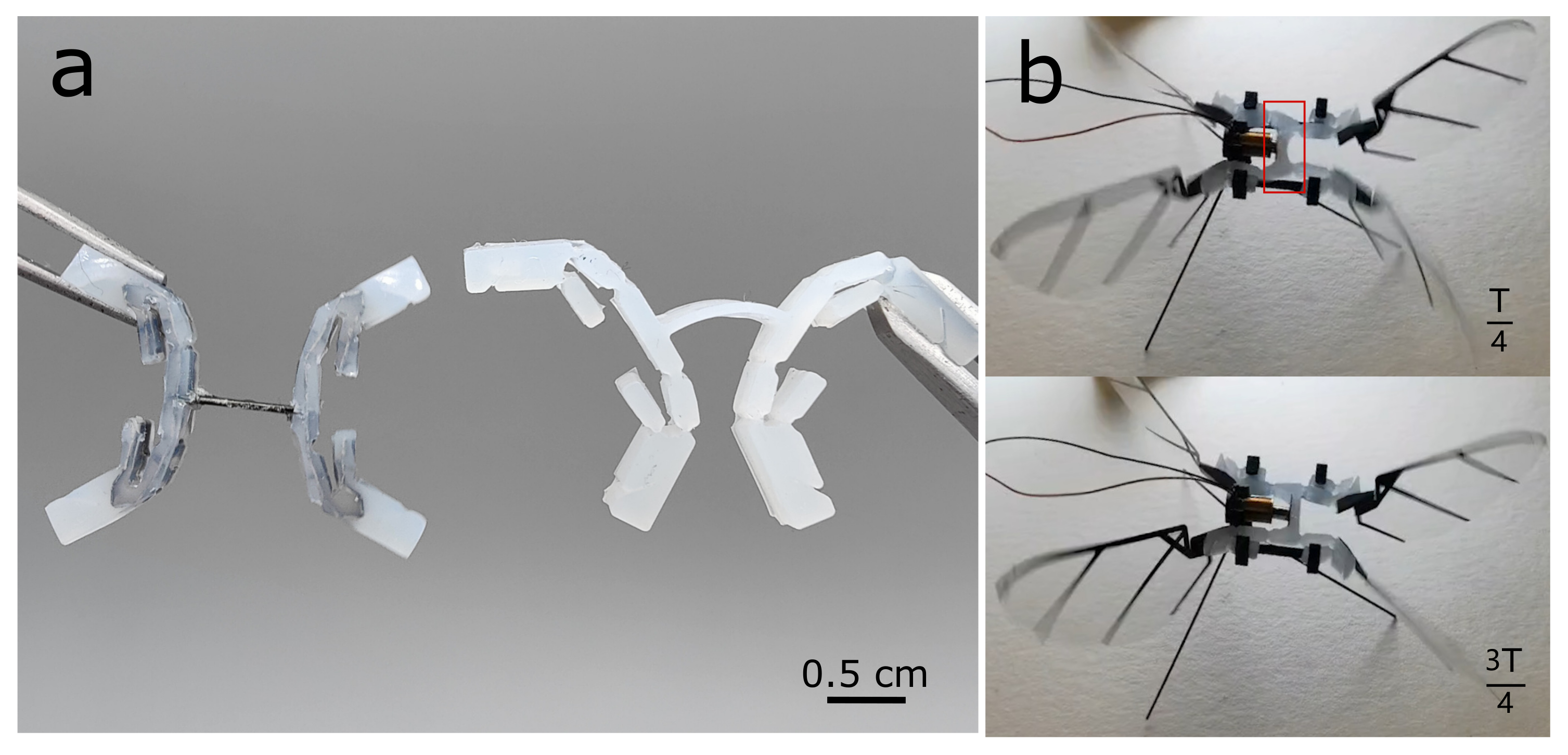
Mobile millimeter and centimeter scale robots often use smart composite manufacturing (SCM) for the construction of body components and mechanisms. The fabrication of SCM mechanisms requires laser machining and laminating flexible, adhesive, and structural materials into small-scale hinges, transmissions, and, ultimately, wings or legs. However, a fundamental limitation of SCM components is the plastic deformation and failure of flexures. In this work, we demonstrate that encasing SCM components in a soft silicone mold dramatically improves the durability of SCM flexure hinges and provides robustness to SCM components. We demonstrate this advance in the design of a flapping-wing robot that uses an underactuated compliant transmission fabricated with an inner SCM skeleton and exterior silicone mold. The transmission design is optimized to achieve desired wingstroke requirements and to allow for independent motion of each wing. We validate these design choices in bench-top tests, measuring transmission compliance, kinematics, and fatigue. We integrate the transmission with laminate wings and two types of actuation, demonstrating elastic energy exchange and limited lift-off capabilities. Lastly, we tested collision mitigation through flapping-wing experiments that obstructed the motion of a wing. These experiments demonstrate that an underactuated compliant transmission can provide resilience and robustness to flapping-wing robots.
Keywords: soft robot materials and design; elastic energy exchange; resonance; compliant components soft robot materials and design; elastic energy exchange; resonance; compliant components