Article

Enhancement of the Bond Strength and Reduction of Wafer Edge Voids in Hybrid Bonding
1
Graduate School of Nano IT Design Fusion, Seoul National University of Science and Technology, Seoul 01811, Korea
2
Institute of Science and Technology, Ministry of Public Security, Hanoi 11355, Vietnam
*
Author to whom correspondence should be addressed.
Micromachines 2022, 13(4), 537; https://doi.org/10.3390/mi13040537
Submission received: 27 February 2022 / Revised: 20 March 2022 / Accepted: 21 March 2022 / Published: 29 March 2022
(This article belongs to the Section D1: Semiconductor Devices)

Abstract

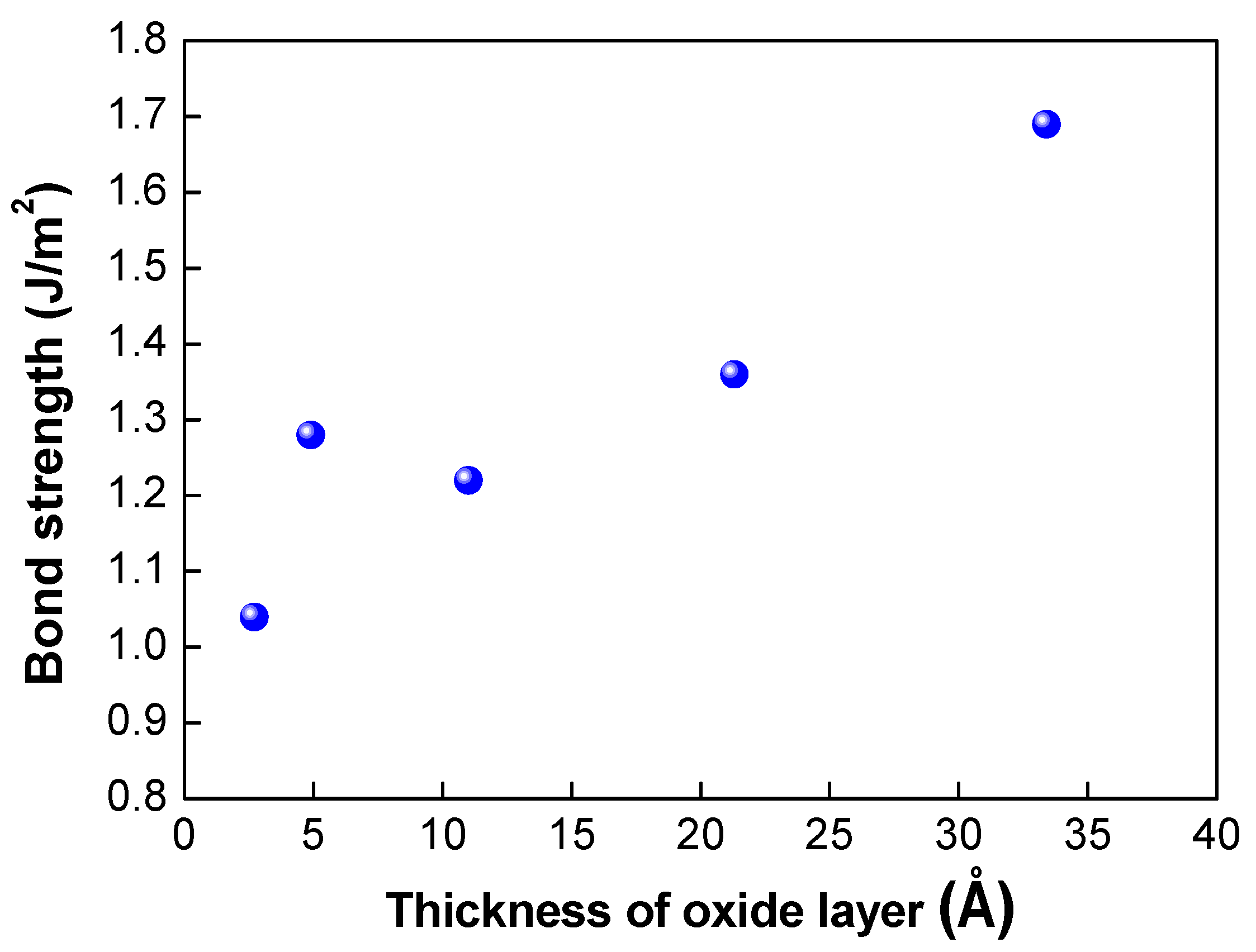
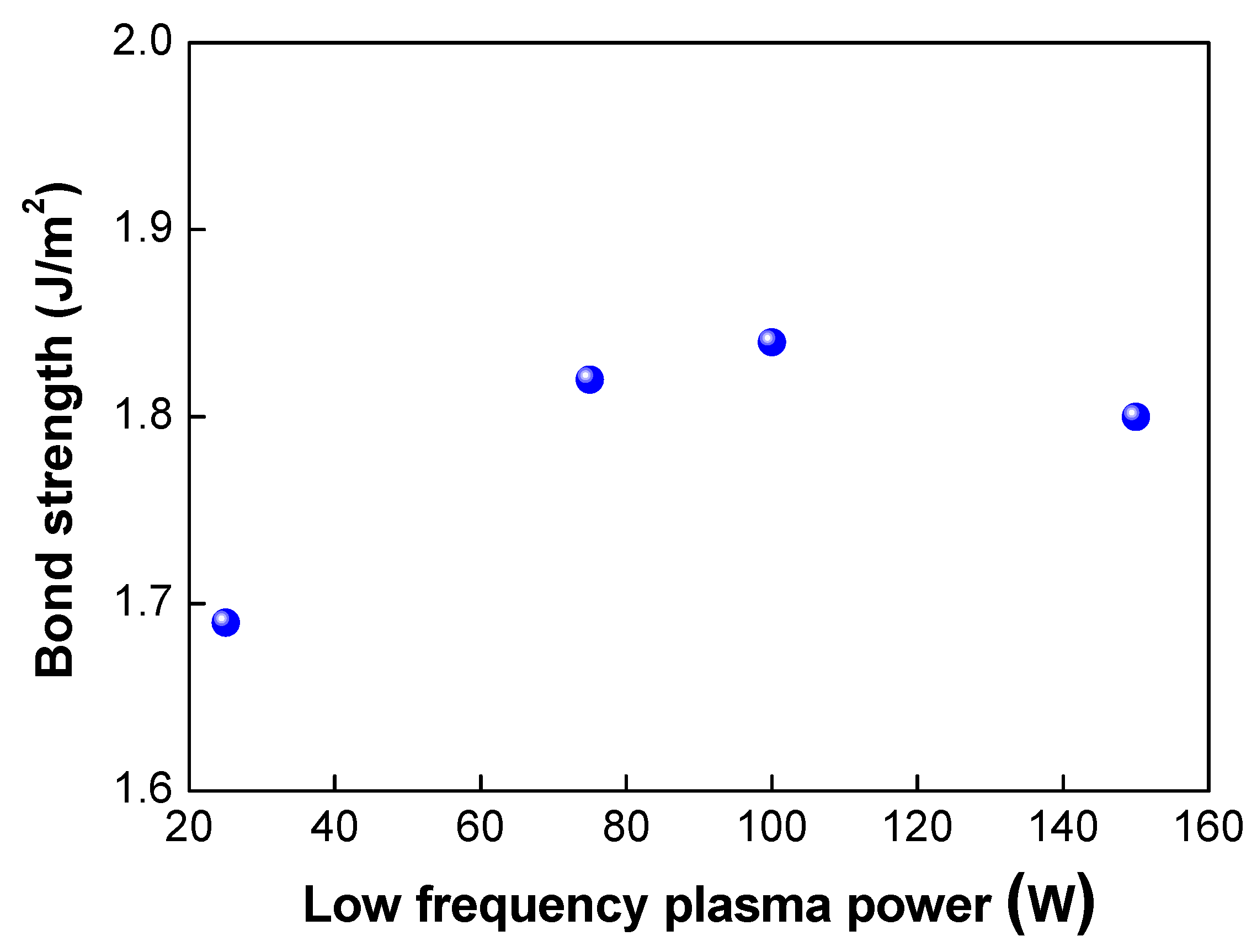
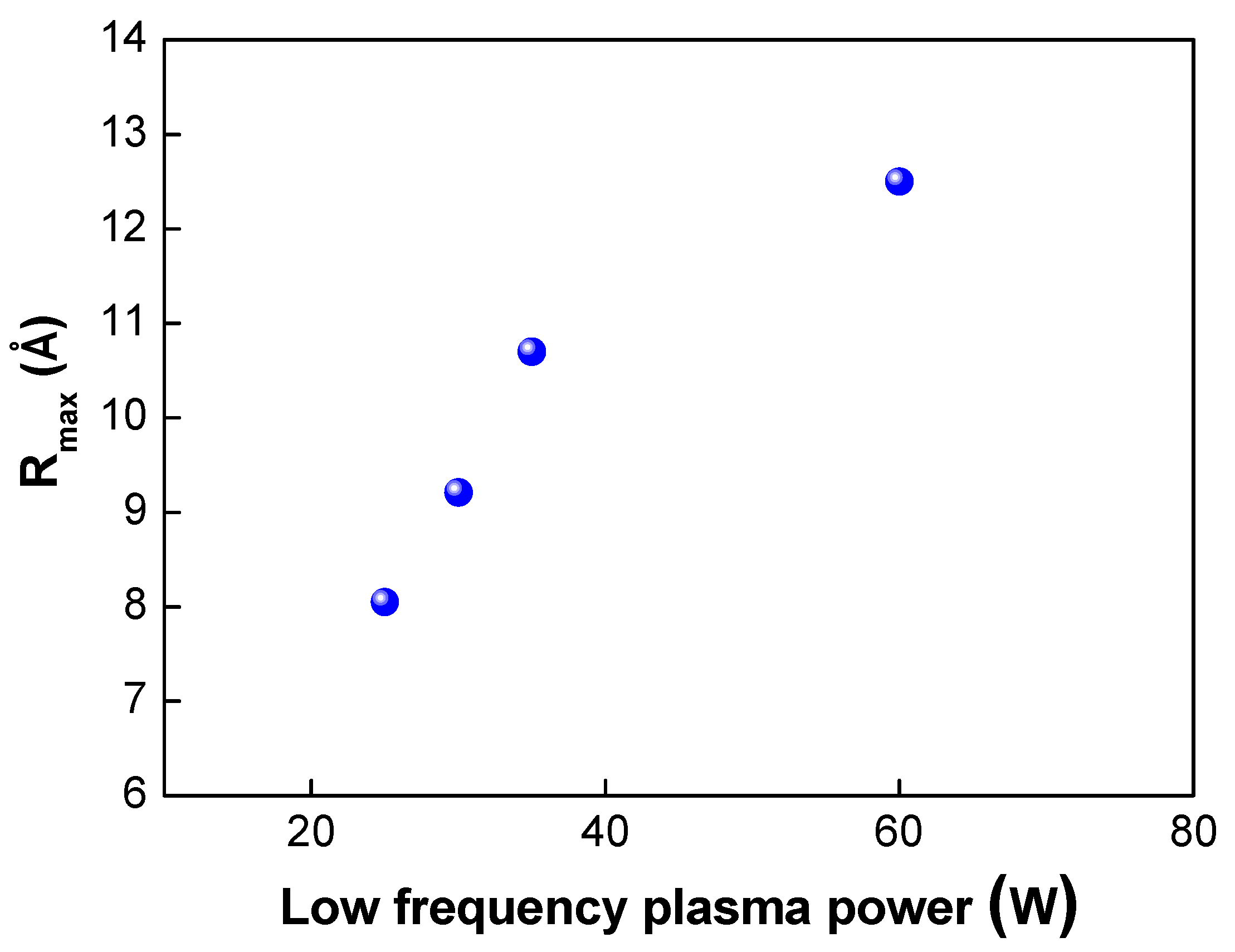
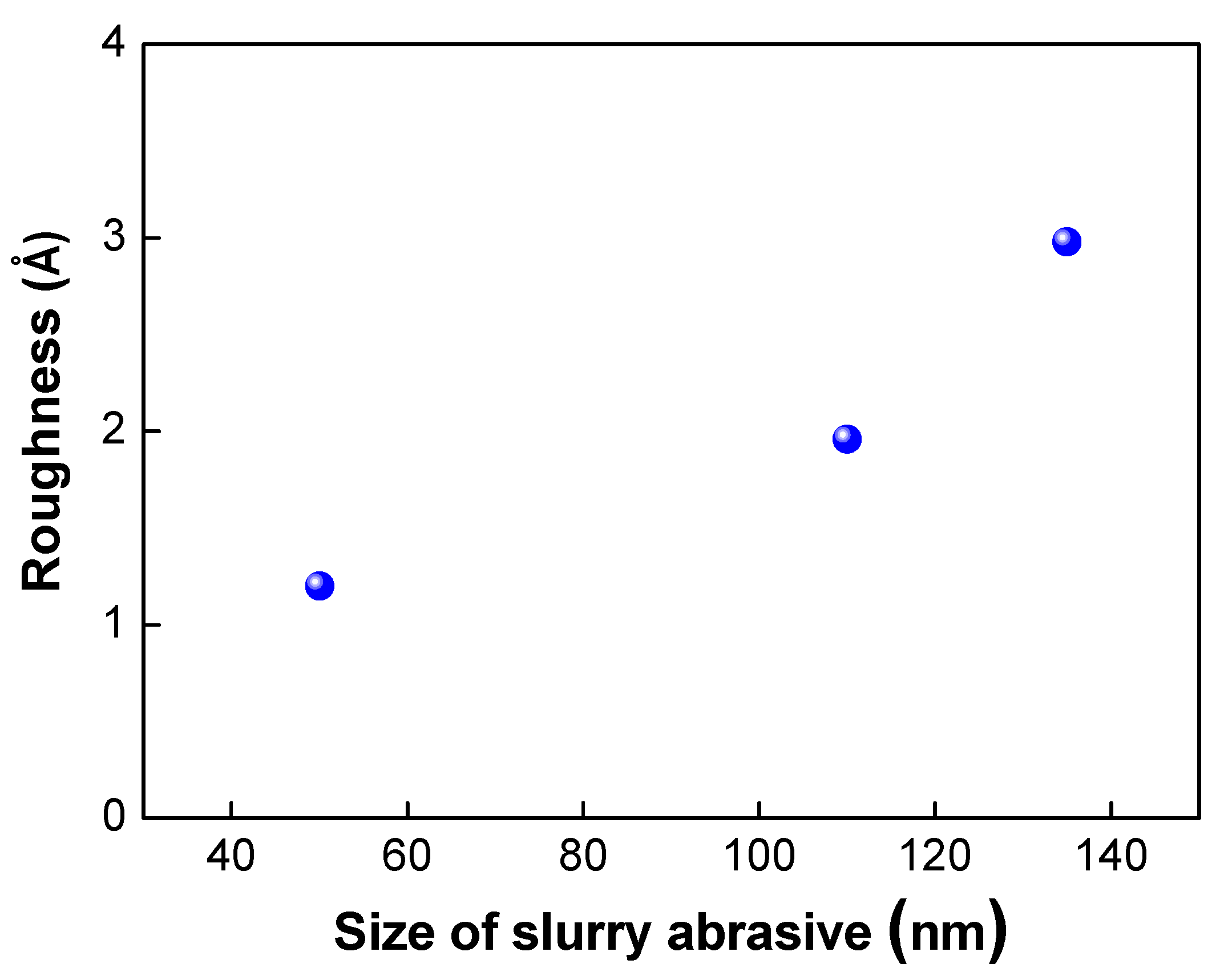
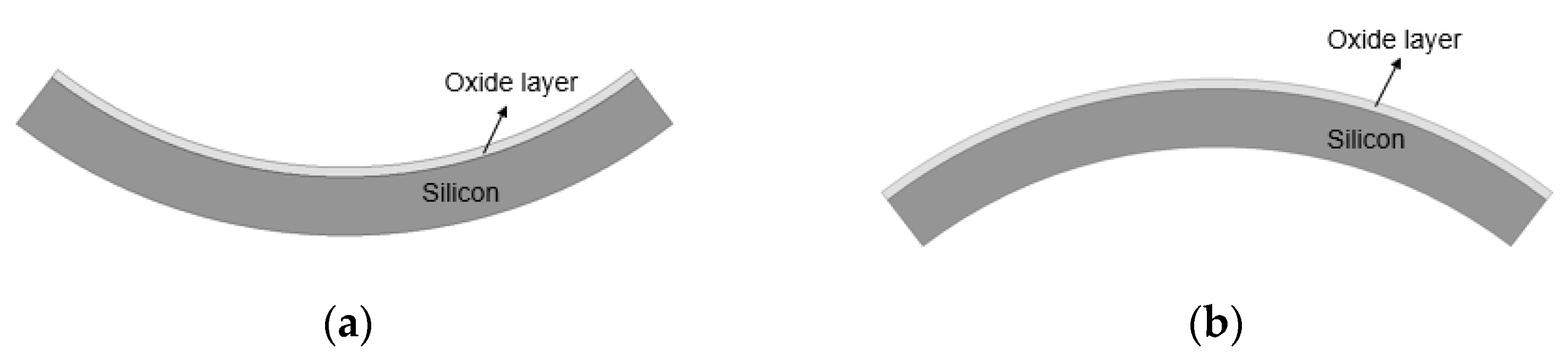
The hybrid wafer bonding technique is drawing much interest in relation to three-dimensional integration technology, and its areas of application are expanding from image sensors to semiconductor memory packages. In hybrid bonding, the bond strength and void formation are the main issues influencing the performance, reliability, and yield of the bonding. In this study, we systematically investigate several parameters that affect both the bond strength and void formation, including the plasma gas, plasma power, and surface roughness. In particular, the effects of the wafer warpage on void formation were investigated. As O2 gas was used during plasma activation, the highest oxide growth rate and strongest bond strength were achieved. The bond strength improved when the oxide thickness was increased. An increase in the low-frequency plasma power improved the bond strength. However, when the plasma power increased further, the surface roughness increased due to the ion bombardment effect during the use of the plasma, resulting in a reduction in the bond strength. Therefore, optimization of the plasma power is required to improve the bond strength. It was found that the wafer warpage was also an important parameter which affected the formation of edge voids. The wafers with residual compressive stress exhibited fewer edge voids than those with tensile stress. Several methods to minimize edge void formation in wafers are proposed. The present study will provide practical guidelines to enhance the quality and yield of the bonding process and devices.
Keywords: hybrid bonding; bond strength; edge void; plasma conditions; wafer warpage hybrid bonding; bond strength; edge void; plasma conditions; wafer warpage