Article

Safe Coated Microneedles with Reduced Puncture Occurrence after Administration


1
Department of Bionano Technology, Gachon University, Gyeonggi-do 13120, Korea
2
QuadMedicine R&D Centre, QuadMedicine, Inc., Seongnam 13209, Korea
3
Department of Microbiology and Immunology, Institute for Immunology and Immunological Diseases, Brain Korea 21 PLUS Project for Medical Science, Yonsei University College of Medicine, Seoul 03722, Korea
*
Author to whom correspondence should be addressed.
Micromachines 2020, 11(8), 710; https://doi.org/10.3390/mi11080710
Submission received: 22 June 2020 / Revised: 18 July 2020 / Accepted: 20 July 2020 / Published: 22 July 2020
(This article belongs to the Special Issue Microneedles)

Abstract

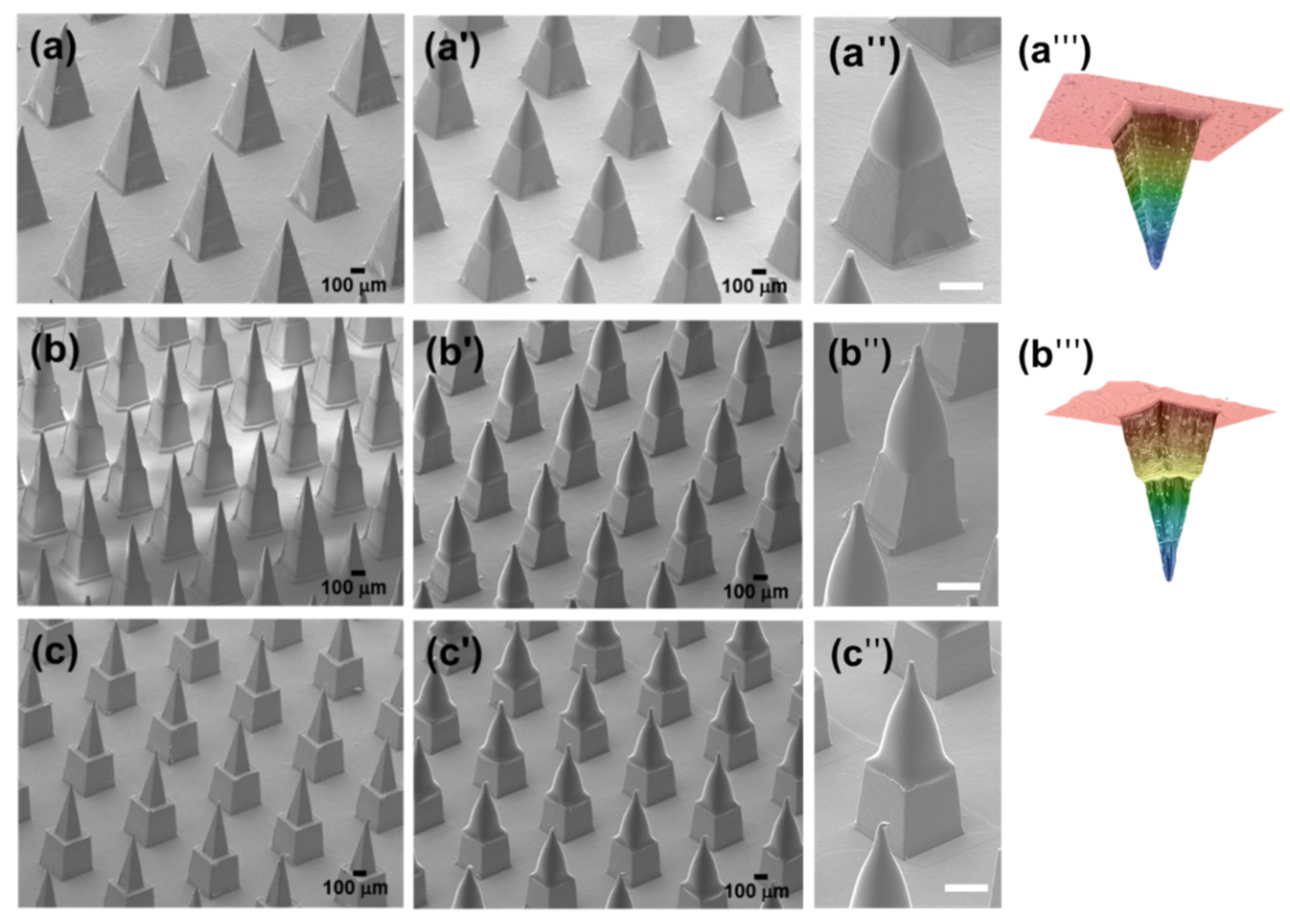
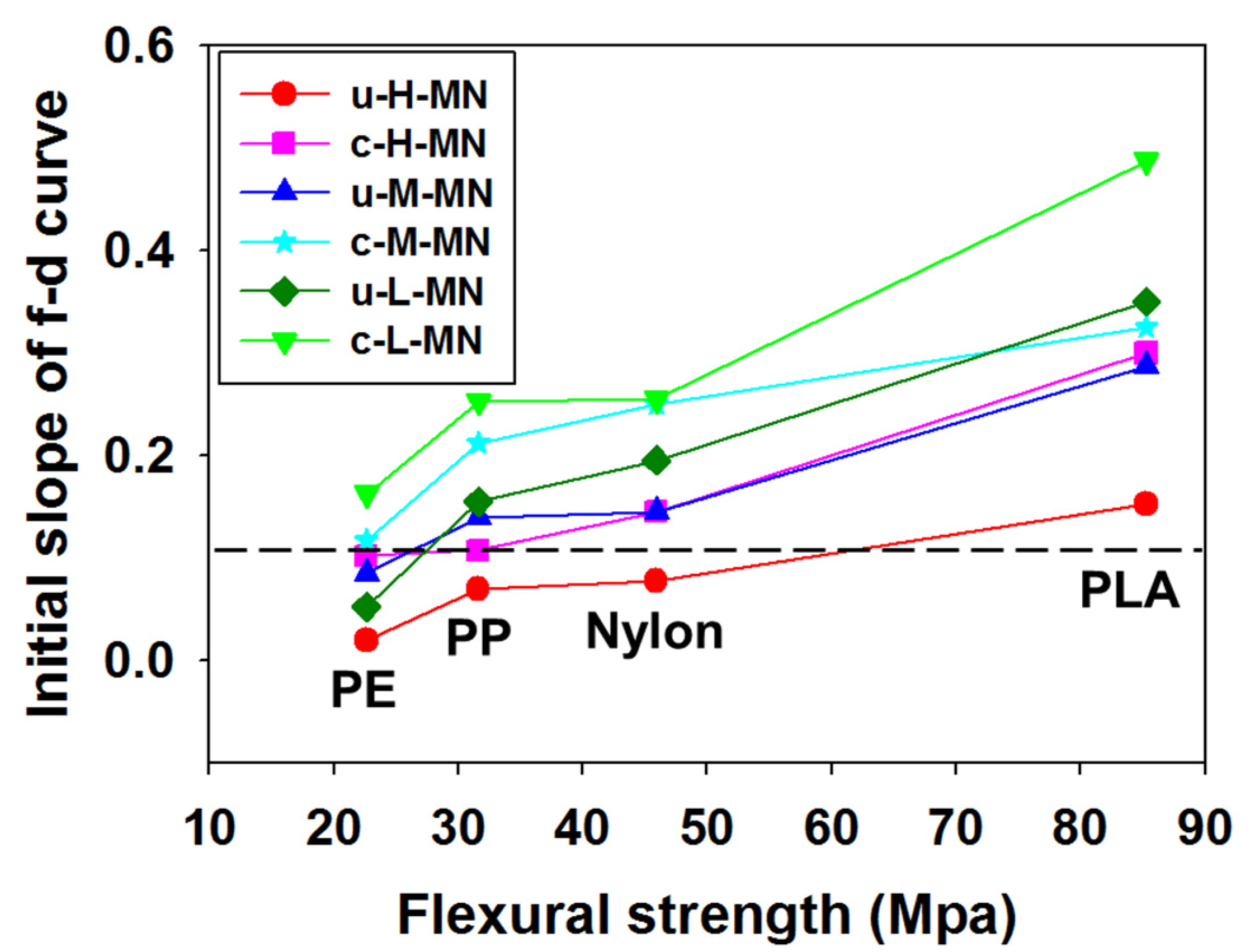
The goal of this study is the preparation of safer coated microneedles so that tips remaining after the initial use are less likely to be reinserted on a second use. Twelve groups of uncoated microneedles (u-MNs) were prepared from the combination of three different aspect ratios (height to base width) and four kinds of polymer (polyethylene (PE), polypropylene (PP), nylon and polylactic acid (PLA)). After coating the u-MNs with polyvinyl alcohol formulation to make coated MNs (c-MNs), the force displacement of the u-MNs and the c-MNs was measured. The aspect ratio was reduced from 2.2, 2.5 and 3.0 with u-MNs to 1.3, 1.4 and 1.6 with c-MNs, respectively, after the coating formulation was applied to the MNs. All PLA MNs had a puncture performance of more than 95%. However, the puncture performance of u-MNs made of PE and of PP with a 3.0 aspect ratio was only 8% and 53%, respectively, whereas the rates of c-MNs made of PE and of PP were 82% and 95%, respectively. In animal experiments with PP MNs with a 3.0 aspect ratio, the 59% rate of puncture performance with u-MNs increased to above 96% with c-MNs and fell to 13% for r-MNs. Safe c-MNs can overcome the disadvantages of standard c-MNs by reducing the probable contamination of remaining tips after use. Safe c-MNs have advantages over standard c-MNs in terms of humidity resistance, reasonable cost, sterilization process and short processing time through the separate process of u-MN preparation and simple dip-coating.
Keywords: puncture performance; coated microneedles; aspect ratio; re-administration; mechanical property of polymer puncture performance; coated microneedles; aspect ratio; re-administration; mechanical property of polymer