Article

Analytical Guidelines for Designing Curvature-Induced Dielectrophoretic Particle Manipulation Systems


1
Electrical Engineering Division, CAPE Building, Department of Engineering, University of Cambridge, Cambridge CB3 0FA, UK
2
Department of Mechanical Engineering, Clemson University, Clemson, SC 29634, USA
*
Author to whom correspondence should be addressed.
Micromachines 2020, 11(7), 707; https://doi.org/10.3390/mi11070707
Submission received: 24 June 2020 / Revised: 15 July 2020 / Accepted: 20 July 2020 / Published: 21 July 2020
(This article belongs to the Special Issue Micromachines for Dielectrophoresis)

Abstract

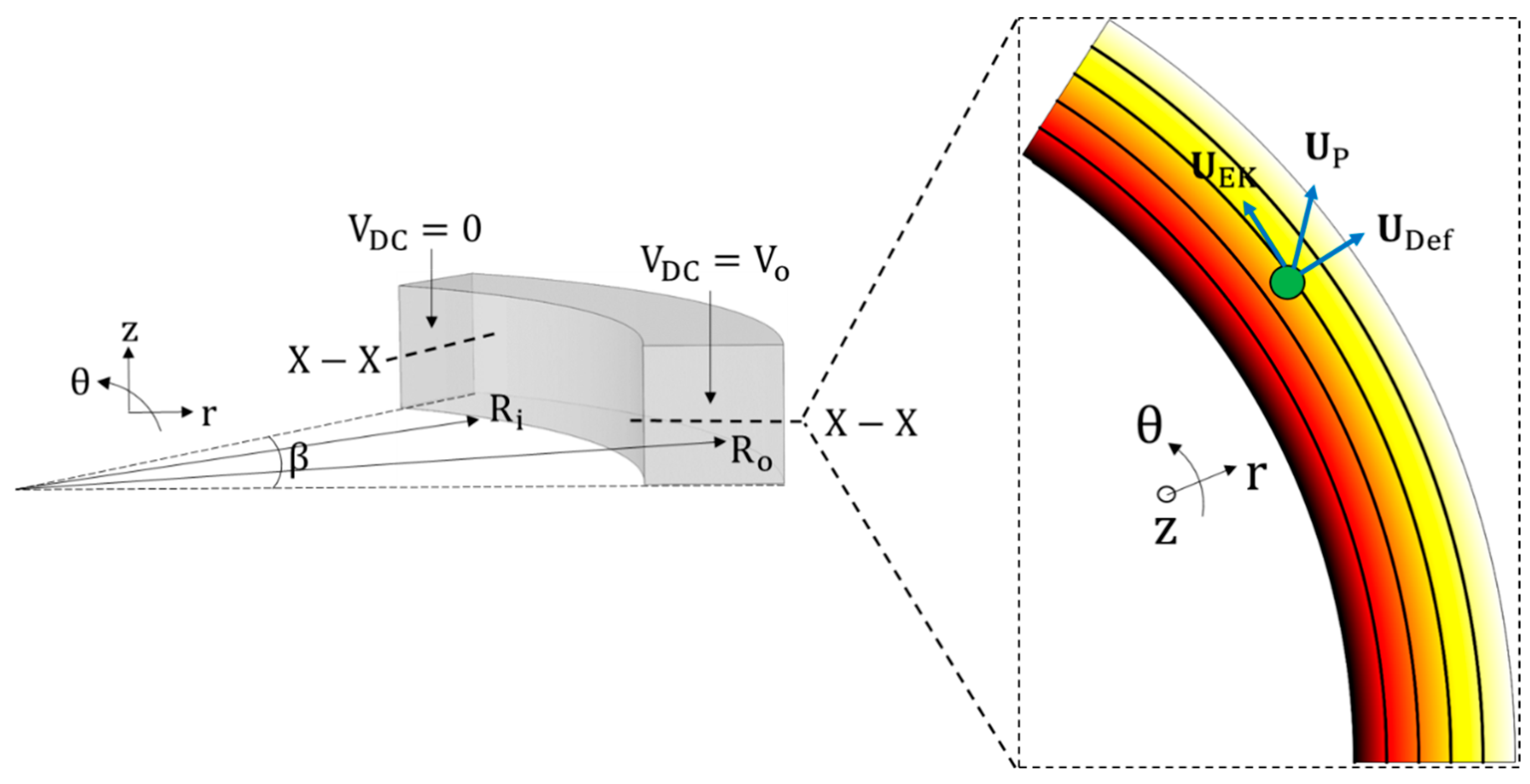
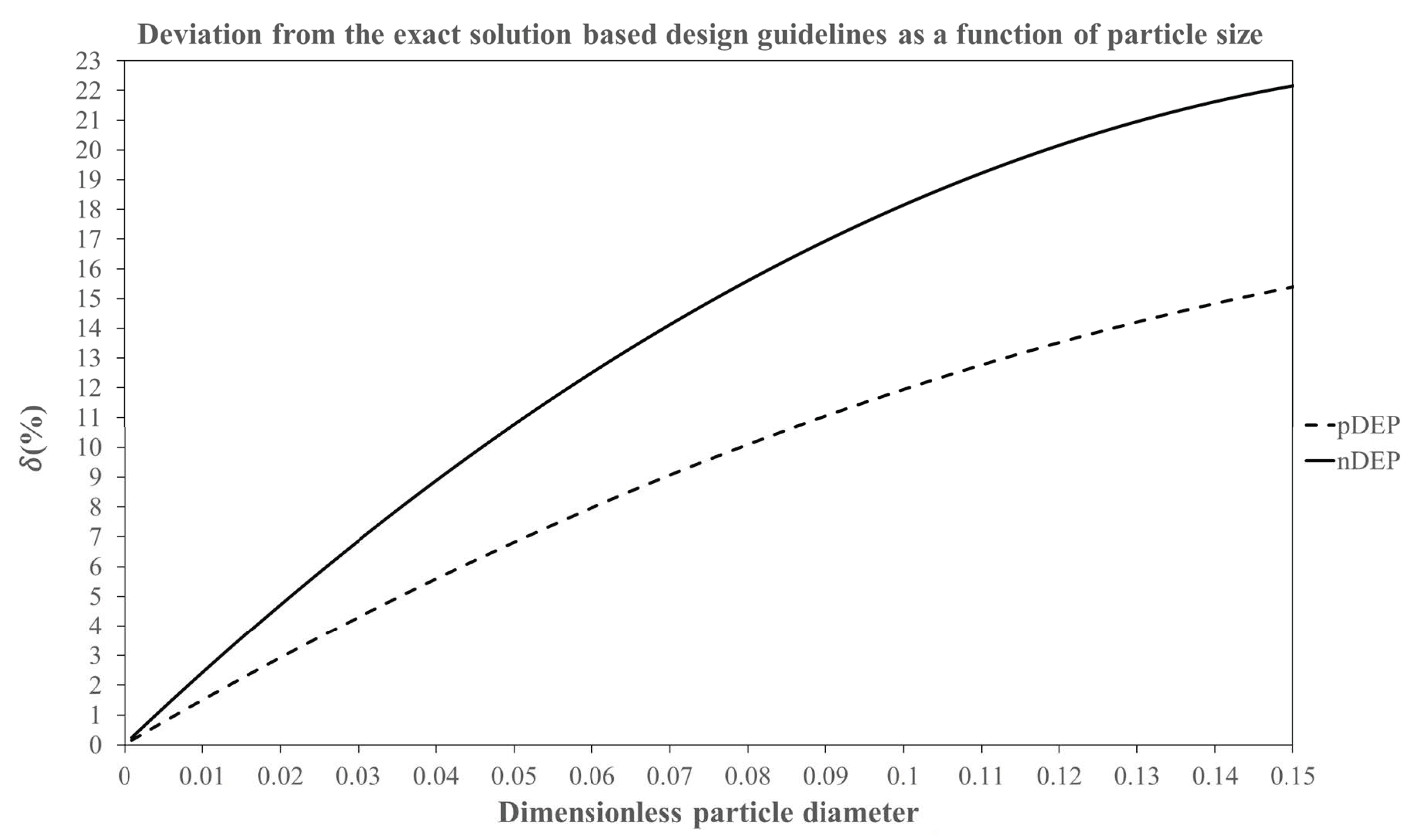
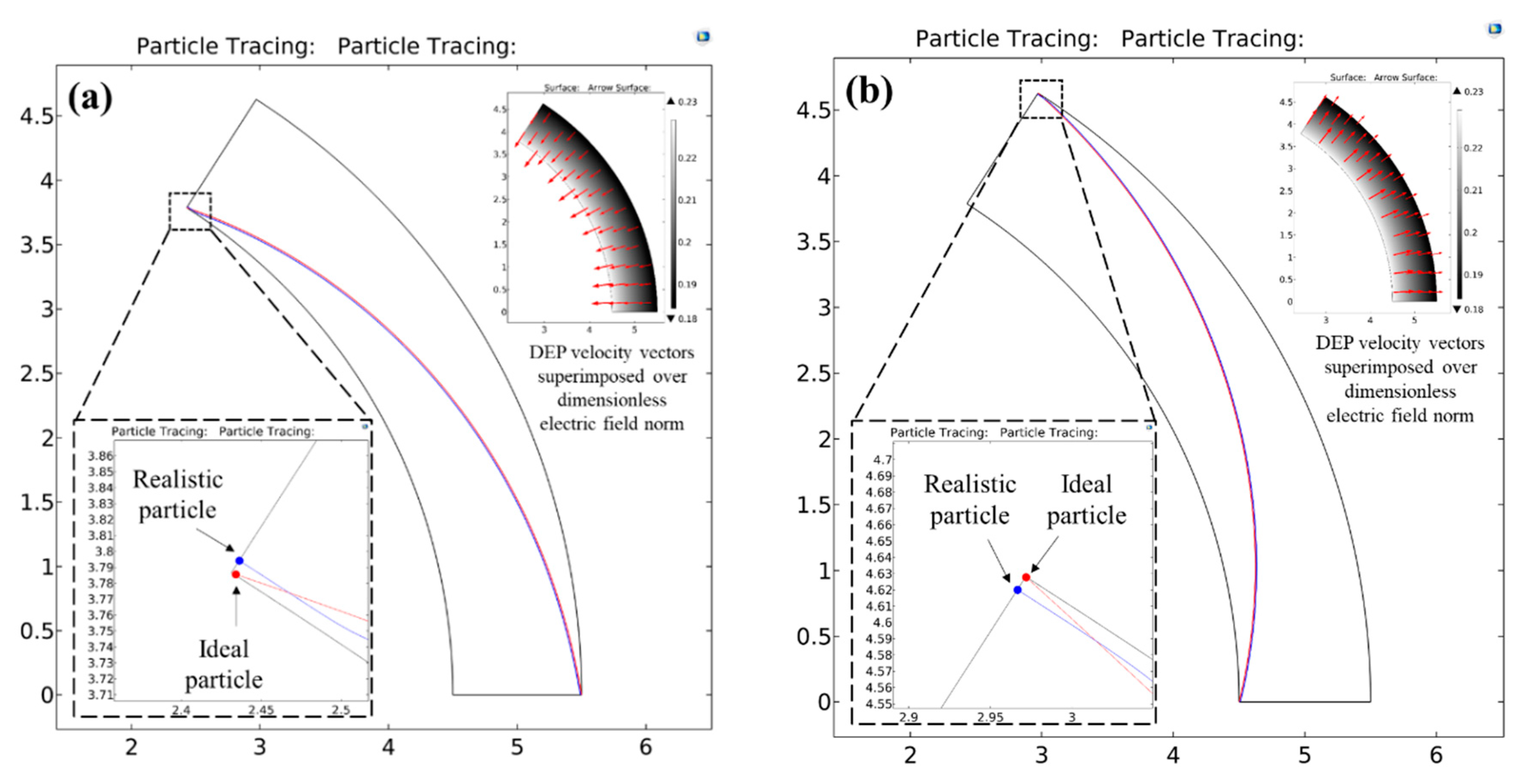
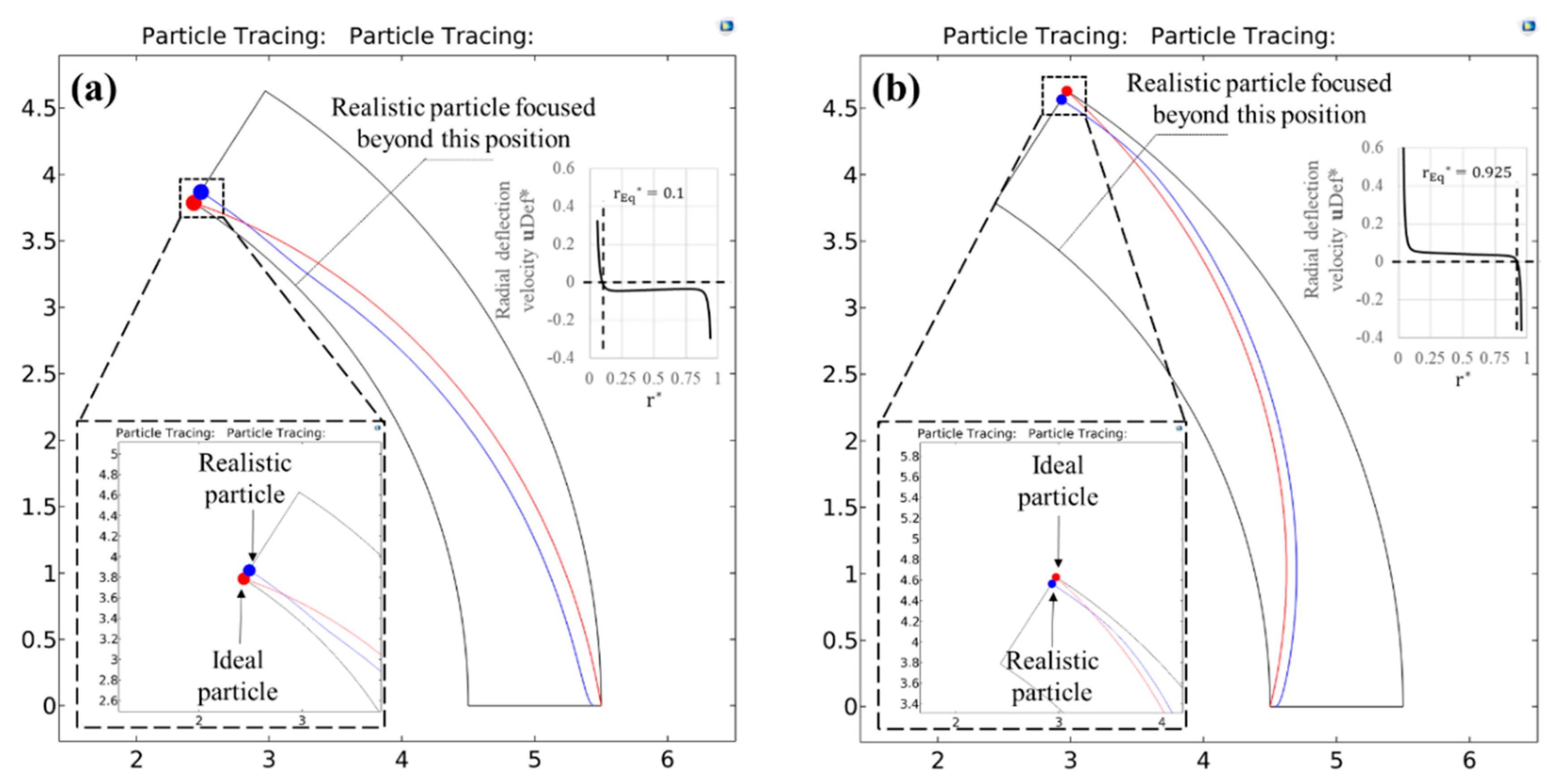
Curvature-induced dielectrophoresis (C-iDEP) is an established method of applying electrical energy gradients across curved microchannels to obtain a label-free manipulation of particles and cells. This method offers several advantages over the other DEP-based methods, such as increased chip area utilisation, simple fabrication, reduced susceptibility to Joule heating and reduced risk of electrolysis in the active region. Although C-iDEP systems have been extensively demonstrated to achieve focusing and separation of particles, a detailed mathematical analysis of the particle dynamics has not been reported yet. This work computationally confirms a fully analytical dimensionless study of the electric field-induced particle motion inside a circular arc microchannel, the simplest design of a C-iDEP system. Specifically, the analysis reveals that the design of a circular arc microchannel geometry for manipulating particles using an applied voltage is fully determined by three dimensionless parameters. Simple equations are established and numerically confirmed to predict the mutual relationships of the parameters for a comprehensive range of their practically relevant values, while ensuring design for safety. This work aims to serve as a starting point for microfluidics engineers and researchers to have a simple calculator-based guideline to develop C-iDEP particle manipulation systems specific to their applications.
Keywords: microfluidics; dielectrophoresis; curvature-induced; electrokinetic; particle focusing microfluidics; dielectrophoresis; curvature-induced; electrokinetic; particle focusing