Article

Stretchable and Robust Candle-Soot Nanoparticle-Polydimethylsiloxane Composite Films for Laser-Ultrasound Transmitters


Department of Electrical and Computer Engineering, Sungkyunkwan University, Suwon 16419, Korea
*
Author to whom correspondence should be addressed.
Micromachines 2020, 11(7), 631; https://doi.org/10.3390/mi11070631
Submission received: 14 May 2020 / Revised: 21 June 2020 / Accepted: 26 June 2020 / Published: 28 June 2020
(This article belongs to the Special Issue Deformable Bioelectronics Based on Functional Micro/nanomaterials)

Abstract

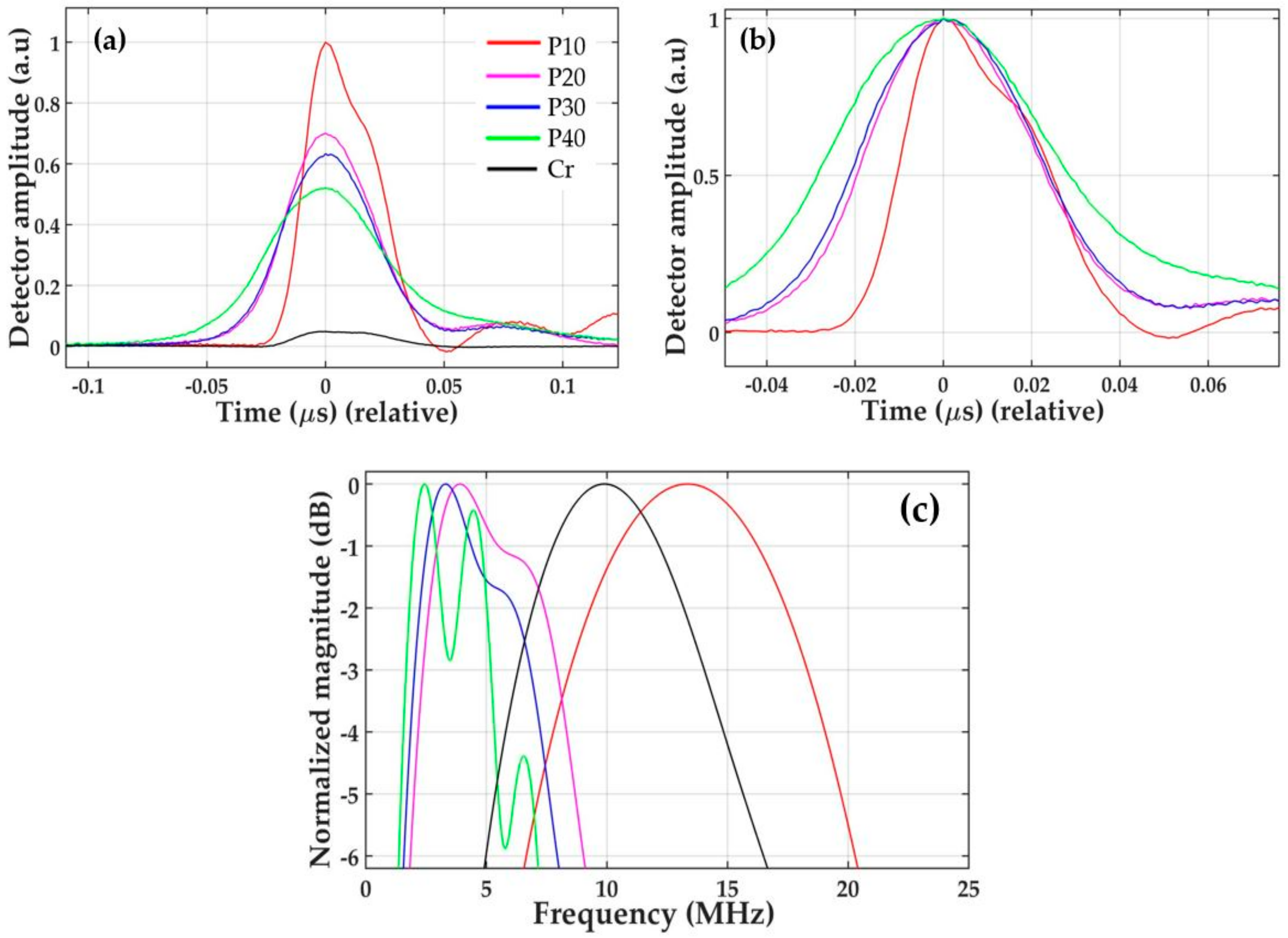
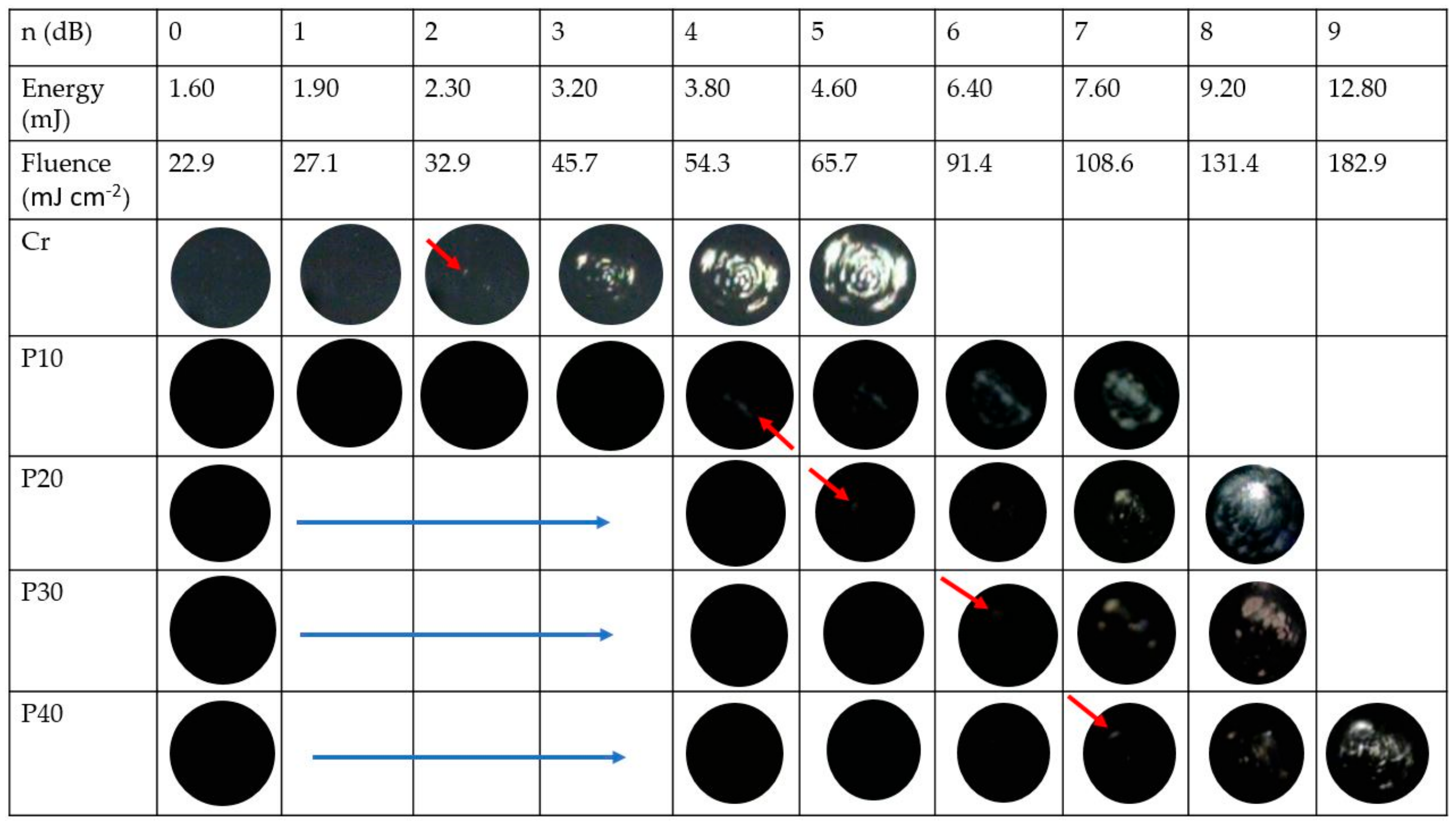
Considerable attention has been devoted to the development of nanomaterial-based photoacoustic transmitters for ultrasound therapy and diagnosis applications. Here, we fabricate and characterize candle-soot nanoparticles (CSNPs) and polydimethylsiloxane (PDMS) composite-based photoacoustic transmitters, based on a solution process, not just to achieve high-frequency and high-amplitude pressure outputs, but also to develop physically stretchable ultrasound transmitters. Owing to its non-porous and non-agglomerative characteristics, the composite exhibits unique photo-thermal and mechanical properties. The output pressure amplitudes from CSNPs–PDMS composites were 20–26 dB stronger than those of Cr film, used as a reference. The proposed transmitters also offered a center frequency of 2.44–13.34 MHz and 6-dB bandwidths of 5.80–13.62 MHz. Importantly, we characterize the mechanical robustness of CSNPs–PDMS quantitatively, by measuring laser-damage thresholds, to evaluate the upper limit of laser energy that can be ultimately used as an input, i.e., proportional to the maximum-available pressure output. The transmitters could endure an input laser fluence of 54.3–108.6 mJ·cm−2. This is 1.65–3.30 times higher than the Cr film, and is significantly higher than the values of other CSNPs–PDMS transmitters reported elsewhere (22–81 mJ·cm−2). Moreover, we characterized the strain-dependent photoacoustic output of a stretchable nanocomposite film, obtained by delaminating it from the glass substrate. The transmitter could be elongated elastically up to a longitudinal strain of 0.59. Under this condition, it maintained a center frequency of 6.72–9.44 MHz, and 6-dB bandwidth ranges from 12.05 to 14.02 MHz. We believe that the stretchable CSNPs–PDMS composites would be useful in developing patch-type ultrasound devices conformally adhered on skin for diagnostic and therapeutic applications.
Keywords: stretchable devices; functional nanomaterials; carbon nanoparticles; nanocomposite; photoacoustic stretchable devices; functional nanomaterials; carbon nanoparticles; nanocomposite; photoacoustic