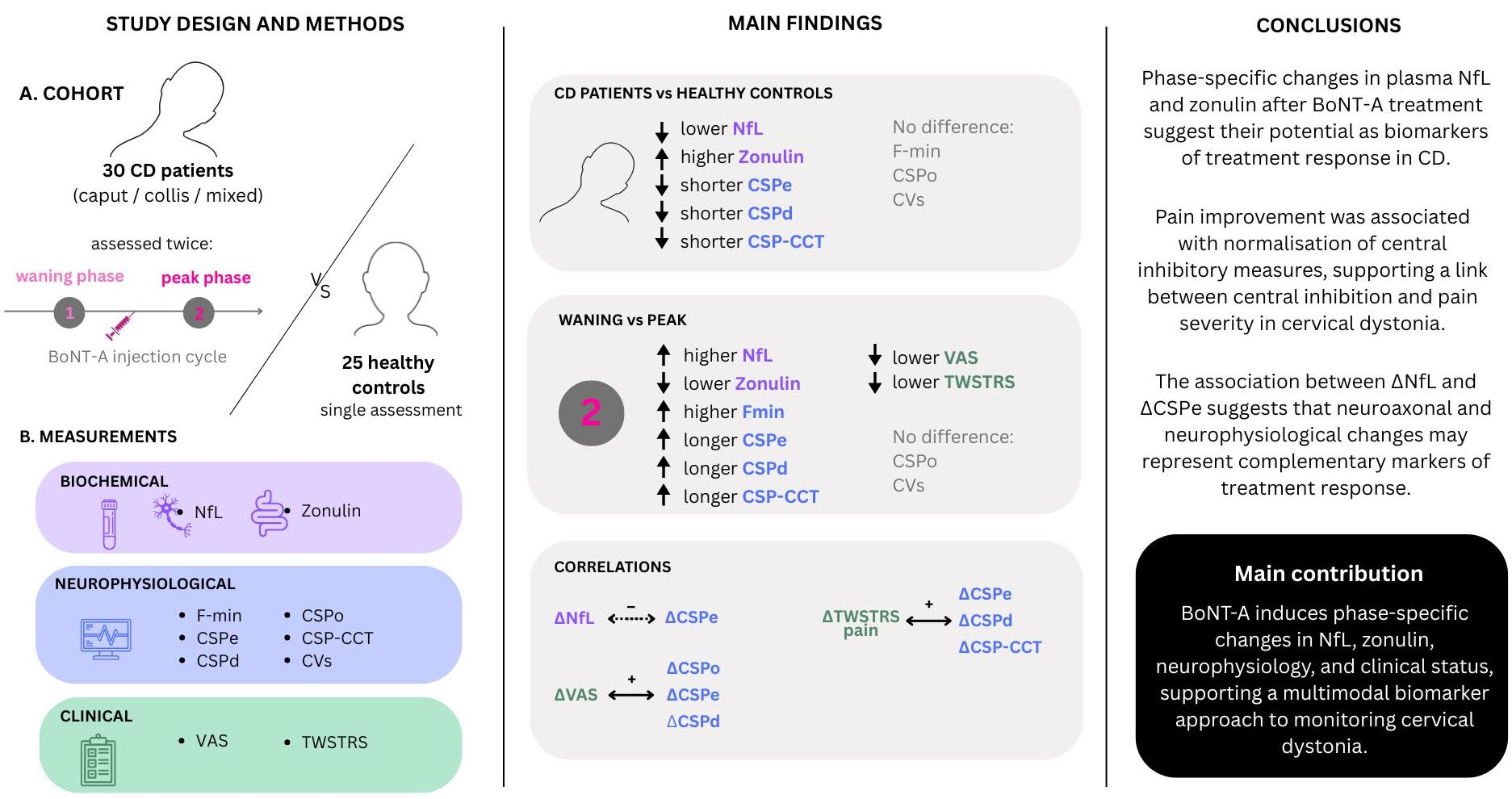
Biomarkers, Neurophysiological and Clinical Correlates Following Botulinum Toxin Treatment in Various Clinical Presentations of Cervical Dystonia: A Controlled Study Across Peak and Waning Response Phases

 ,
,  and
and 
Abstract
Share and Cite
Drużdż, A.; Dudzic, M.; Poszwa, J.; Bednarski, I.; Hojan, K.; Dorszewska, J. Biomarkers, Neurophysiological and Clinical Correlates Following Botulinum Toxin Treatment in Various Clinical Presentations of Cervical Dystonia: A Controlled Study Across Peak and Waning Response Phases. Toxins 2026, 18, 314. https://doi.org/10.3390/toxins18070314
Drużdż A, Dudzic M, Poszwa J, Bednarski I, Hojan K, Dorszewska J. Biomarkers, Neurophysiological and Clinical Correlates Following Botulinum Toxin Treatment in Various Clinical Presentations of Cervical Dystonia: A Controlled Study Across Peak and Waning Response Phases. Toxins. 2026; 18(7):314. https://doi.org/10.3390/toxins18070314
Chicago/Turabian StyleDrużdż, Artur, Małgorzata Dudzic, Joanna Poszwa, Igor Bednarski, Katarzyna Hojan, and Jolanta Dorszewska. 2026. "Biomarkers, Neurophysiological and Clinical Correlates Following Botulinum Toxin Treatment in Various Clinical Presentations of Cervical Dystonia: A Controlled Study Across Peak and Waning Response Phases" Toxins 18, no. 7: 314. https://doi.org/10.3390/toxins18070314
APA StyleDrużdż, A., Dudzic, M., Poszwa, J., Bednarski, I., Hojan, K., & Dorszewska, J. (2026). Biomarkers, Neurophysiological and Clinical Correlates Following Botulinum Toxin Treatment in Various Clinical Presentations of Cervical Dystonia: A Controlled Study Across Peak and Waning Response Phases. Toxins, 18(7), 314. https://doi.org/10.3390/toxins18070314