Review

Overview of Current Regulatory and Methodological Approaches for the Risk Assessment of Mycotoxins


by
Bozidar Udovicki
1,*,
Dragan Milicevic
2 and
Andreja Rajkovic
1,3
1
Department of Food Safety and Quality Management, Faculty of Agriculture, University of Belgrade, Nemanjina 6, Zemun, 11080 Belgrade, Serbia
2
Institute of Meat Hygiene and Technology, Kaćanskog 13, 11000 Belgrade, Serbia
3
Laboratory of Food Microbiology and Food Preservation, Department of Food Technology, Safety and Health, Faculty of Bioscience Engineering, Ghent University, Coupure Links 635, 9000 Ghent, Belgium
*
Author to whom correspondence should be addressed.
Toxins 2026, 18(7), 294; https://doi.org/10.3390/toxins18070294
Submission received: 7 May 2026 / Revised: 23 June 2026 / Accepted: 1 July 2026 / Published: 5 July 2026

Abstract

Risk assessment is a dynamic and continuously evolving process aimed at characterizing the potential adverse effects on life and health arising from exposure to hazards. Among these hazards, mycotoxins represent one of the most significant and widely investigated contaminants in food and feed. This review aims to summarize current knowledge on mycotoxin risk assessment practice, both for single substances and for cumulative risk assessment, and to provide practical guidance for future researchers. As individual substances, mycotoxins are well characterized from a toxicological perspective, and numerous risk assessments have been conducted globally across a wide range of food products. Although well-established methodological frameworks exist to support the cumulative risk assessment of mycotoxins, further efforts are needed to define common assessment groups, especially considering the pleiotropic nature of these compounds.
Key Contribution: This review aims to summarize current knowledge on mycotoxin risk assessment practice, with particular focus on methodological developments and providing practical guidance for future researchers.

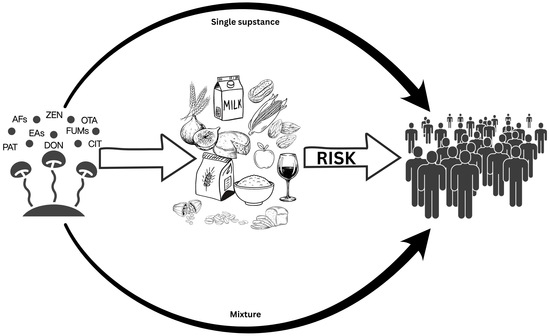
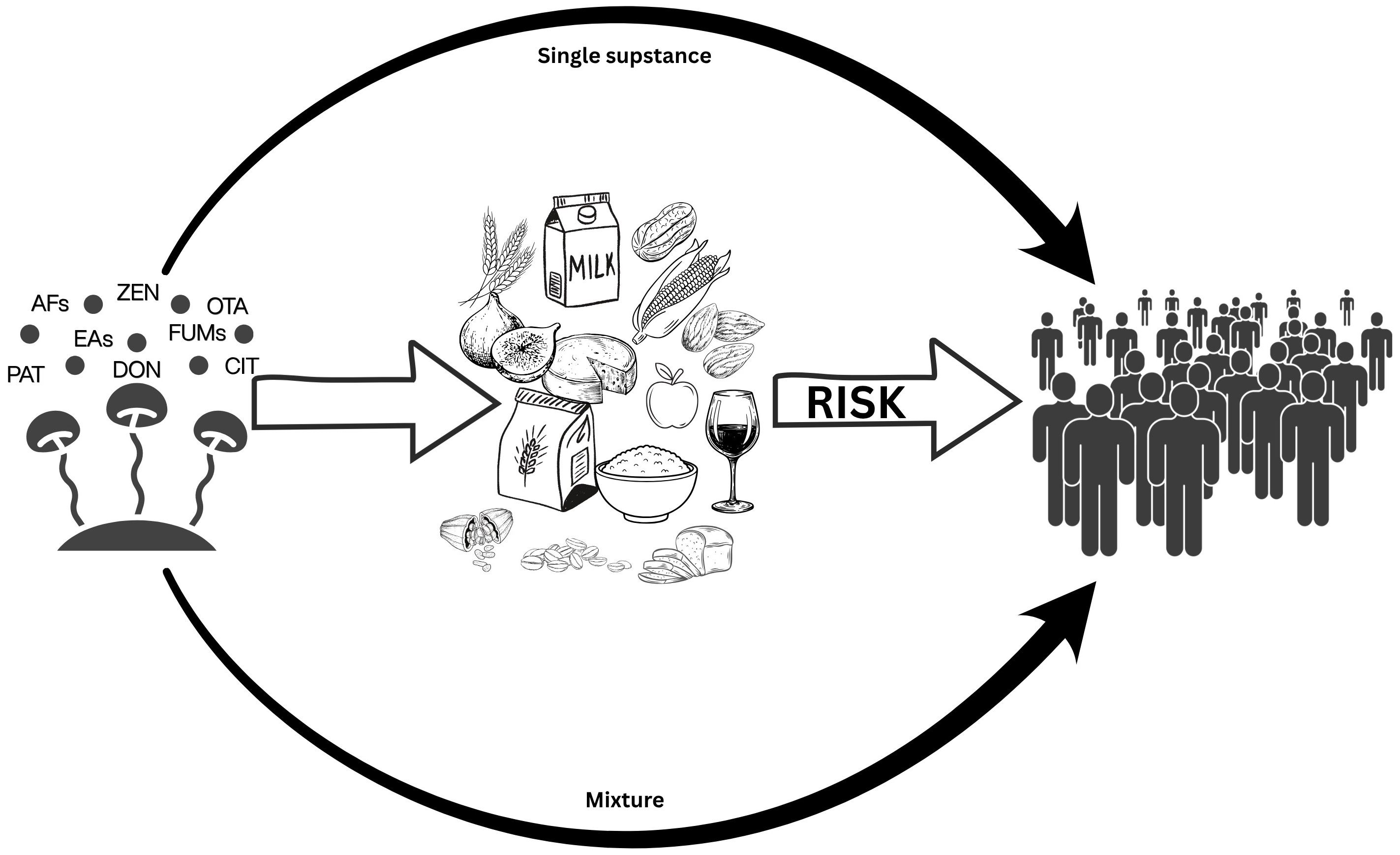
Graphical Abstract

1. Introduction

Food safety is a basic public health concern, and as a fundamental part of risk analysis, risk assessment is globally recognized as a core principle in establishing food policies [1,2,3]. Risk assessment, a process of characterizing the potential adverse effects on life and health arising from exposure to hazards over a specified period of time, represents a central scientific component of risk analysis and has evolved largely in response to the need to support decision-making pointed at protecting human health under conditions of scientific uncertainty [4]. It is a scientifically based process that includes four sequential steps: hazard identification, hazard characterization, exposure assessment, and risk characterization, which together support the evaluation of potential health risks. Risk assessment is a dynamic and continuously evolving process that adapts to advances in analytical methods, changes in agricultural practice and climate, increasing volume and diversity of food trade, increased public awareness and changes in dietary habits [4]. Continuous risk assessment provides valuable information on exposure trends, the effectiveness of control measures, and the impact of new agricultural, safety or food production practices [5]. Usually, regulatory approaches for assessing chemicals evaluate chemicals one at the time, an approach that fails to consider the human real-world scenario of low-dose combined exposures to chemical mixture [6]. Bearing in mind that humans are exposed to a contaminant’s mixture, in recent years, there has been a regulatory and scientific shift toward developing cumulative risk assessment models, emphasizing the growing complexity of the food safety environment and food safety risk assessment and the need for continuous improvement in toxicology assessments and methodological approaches.
Given their acute and chronic toxicity and their unavoidable presence in food, mycotoxins represent one of the most significant and widely investigated contaminants in food and feed, occurring globally. Of the approximately 400 different mycotoxins that have been identified to date, a relatively small group represents priority mycotoxins [7,8]. The most important mycotoxins affecting food safety are produced by filamentous fungi, mainly belonging to the genera Aspergillus, Fusarium, Penicillium, and to a minor extent Alternaria and Claviceps which encompass species responsible for key toxins including aflatoxins (AFs), fumonisins (FUMs), ochratoxin A (OTA), trichothecenes, zearalenone (ZEN), patulin (PAT), ergot alkaloids (EAs), and citrinin (CIT) [9,10]. Most important mycotoxins and their main producers are shown in Table 1. Fungal infection and the production of mycotoxins occur throughout the whole food chain, beginning in the field during plant growth, and may continue through harvesting, storage, and processing [10]. Mycotoxins can occur in a wide range of food commodities and, owing to their chemical stability, may also persist in highly processed foods. Of particular importance is their occurrence in staple crops, especially cereals. Furthermore, they often co-occur in crops, and given the diversity of modern diets, simultaneous exposure to mixtures of mycotoxins is common [11]. Co-occurrence with at least two mycotoxins was reported in over 50% of European cereals [7]. It is estimated that around 60–80% of global crops have detectable levels of mycotoxin, with a quarter of analyzed samples exceeding legal limits [11]. This is explained by a combination of the improved analytical sensitivity and the impact of climate change [11]. It is recognized that climate change will increase the complexity of mycotoxin risk as it may induce a shift in both geographical distribution and patterns of mycotoxin production [9,12].
Considering that mycotoxins rank among the most prevalent and important chemical contaminants in food, due to their toxic effects and frequent occurrence in food, they are strictly regulated globally. In the European Union, Maximum levels (MLs) for mycotoxins in food are set in Commission Regulation (EU) 2023/915 [21], which repealed long-standing Commission Regulation (EC) No. 1881/2006 [22]. While the final decision-making for setting MLs is determined through risk management processes, the scientific risk basis for the establishment and revision of MLs in food is grounded in scientific risk assessment conducted by the European Food Safety Authority (EFSA). The general recommendation for mycotoxins is to keep their levels “as low as reasonably achievable”—i.e., to the lowest level of contamination that can be reasonably achieved without removing the food from the food supply [23]. A clear example of the dynamic and continuously evolving nature of both the food safety ecosystem and risk assessment process is reflected in the growth of EU legislation, particularly in the transition from Commission Regulation (EC) No. 1881/2006 to the current Regulation (EU) 2023/915, as reflected in updated ML for established mycotoxins and the inclusion of newly regulated ones. The initial legal framework covered a partial number of major mycotoxins and included several dozen specific food-mycotoxin combinations with established MLs, while, in contrast, the current regulation expands both the range of regulated mycotoxins and the number of ML entries, now comprising over one hundred food-mycotoxin combinations [21,22]. It is reasonable to assume that the list of food–mycotoxin combinations with established MLs will continue to evolve in the coming years, as climate change represents an important risk factor that further emphasizes the need for continuous risk assessment.
This review aims to summarize current knowledge on mycotoxin risk assessment practice, focusing on methodological developments, for single substances and for cumulative risk assessment, and to provide practical guidance for future researchers.

2. Hazard Assessment

Hazard identification and hazard characterization are closely connected, frequently parallel processes in risk assessment, often referred to as hazard assessment [24]. The purpose of hazard identification is to evaluate the weight of evidence for adverse health effects, based on assessment of all available data on toxicity and mode of action (MoA), while hazard characterization describes the relationship between the administered dose of, or exposure to, a chemical and the incidence of an adverse health effect [25]. In other words, hazard identification aims to identify potential critical endpoints that may be relevant to human health, while hazard characterization explores the nature of dose–response relationships in detail, with the overall aim of identifying a dose from toxicity studies that will then be used to establish a level of human intake at which it is confidently expected that there would be no appreciable adverse health effects, taking into account uncertainty and variability [26].

2.1. Reference Points and Health-Based Guidance Values

The data obtained from toxicity studies may be further scrutinized to identify a dose (known as Reference Point (RP) or Point of Departure (PoD)) that can be used as a starting point in the establishment of health-based guidance values (HBGV) such as Tolerable Daily Intake (TDI) or Tolerable Weekly Intake (TWI), or used further in the risk assessment process [25,26]. Two main statistical approaches are currently used to establish an RP: the no-observed-adverse-effect level (NOAEL) approach and the benchmark dose (BMD) approach. NOAEL is defined as the highest dose tested in a study that does not result in observable adverse effects, while the LOAEL corresponds to the lowest dose at which a statistically significant adverse effect is detected [26]. The BMD is a dose level estimated from a fitted dose–response curve, corresponding to a specified change in response comparative to the control (background) response, known as the benchmark response [26]. The lower confidence bound of the BMD, referred to as the BMDL, is typically used as the RP.
Liver carcinogenicity, i.e., the development of hepatocellular carcinoma (HCC), is the critical effect of oral exposure to AFs. In the early AF exposure and risk assessment, performed to assess the impact of a possible change in the maximum levels for almonds, hazelnuts, and pistachios, the EFSA Panel on Contaminants in the Food Chain (CONTAM Panel) used a BMDL10 value of 0.17 μg/kg bw per day, from the range of 0.17 μg to 0.34 μg/kg bw per day, based on data from a study on male Fisher rats by Wogan et al. [27,28]. Another (human) BMDL10 of 0.87 μg/kg bw per day, based on the study of a population [29], was used for the risk characterization. These values were subsequently commonly found to be used in scientific literature regarding AF risk assessment. In 2020, the CONTAM Panel selected a BMDL10 of 0.4 μg/kg bw per day, using model averaging and using the same data for the incidence of HCC in male rats from the study of Wogan et al. [13,27]. In the same opinion, they concluded that the calculation of a BMDL from the human data was not appropriate.
In 2006, the EFSA CONTAM panel adopted a scientific opinion regarding OTA in food, concluding that it is a potent renal toxin that accumulates in the kidney. Based on the LOAEL of 8 μg/kg bw per day for the early markers of renal toxicity in pigs, they established a TWI of 0.12 μg/kg bw [30]. In its 2020 updated opinion on OTA, EFSA concluded that, in light of recent studies raising uncertainty regarding the MoA for kidney carcinogenicity, it is inappropriate to establish an HBGV [14]. For the characterization of non-neoplastic effects, a BMDL10 of 4.73 μg/kg bw per day was calculated based on the microscopic kidney lesions seen in the study of Krogh et al. [31] and used as a non-neoplastic RP [14]. For characterization of neoplastic effects, a BMDL10 of 14.5 μg/kg bw per day was calculated from the combined incidences of carcinoma and adenoma from the 2 year male rat oral study [32] and used as a neoplastic RP [14].
In 2014, EFSA evaluated the potential public health implications of a temporary derogation from the MLs for DON, ZEN, and FUMs in maize and maize products [33]. As it was not possible to carry out a full FUMs hazard characterization for this assessment, EFSA used the group provisional maximum TDI of 2 μg/kg bw established by the Joint FAO/WHO Expert Committee on Food Additives (JECFA) [34]. This value was reaffirmed in 2017, when JECFA published an additional assessment on FUMs [35]. In 2018, the CONTAM Panel derived a BMDL10 of 100 μg/kg of FB1 per day based on the increased incidence of megalocytic hepatocytes in the liver, which was considered the critical effect [36]. Based on this BMDL10, a TDI of 1 μg/kg bw per day for the FB1 was set [36]. Considering their structural similarity and the limited data suggesting similar MoA and toxic potency, the CONTAM Panel determined that FB2, FB3, and FB4 should be included with FB1 within a group TDI [36].
In a scientific report on the occurrence and exposure of DON, EFSA used a provisional TDI of 1 µg/kg bw per day, set in 2002 by the Scientific Committee for Food, based on a NOAEL of 100 μg/kg bw per day due to decreased body weight gain observed in a 2-year mice feeding study [37]. This value was confirmed in 2010 by JECFA, which extended it to the group of DON and its acetyl derivatives (3-acetyl-DON (3-Ac-DON) and 15-acetyl-DON) [37]. In a subsequent opinion, the CONTAM Panel identified reduced body weight gain in experimental animals as the critical endpoint for chronic human risk assessment, and using a BMDL05 of 110 μg/kg bw per day, the Panel established a group TDI of 1 μg/kg bw per day for the combined exposure to DON, 3-Ac-DON, 15-Ac-DON, and DON-3-glucoside [38].
In its initial assessment of T-2 and HT-2 toxins, the CONTAM Panel considered a reduced specific antibody response in pigs to be the critical endpoint for human risk assessment and, based on a BMDL05 of 10 μg T-2 toxin/kg bw per day, established a group TDI of 0.1 μg/kg bw per day for the combined exposure to T-2 and HT-2 toxins [39]. In the following 2017 evaluation, reduction in total leukocyte count was identified as the critical effect for T-2 and HT-2 toxins. Using this endpoint, a BMDL10 of 3.33 μg T2/kg bw per day was calculated, and a new group TDI for T-2 and HT-2 of 0.02 μg/kg bw was established [40].
In an earlier opinion on the public health risks associated with the presence of ZEN in food, a TDI of 0.25 μg/kg bw per day was derived based on the NOAEL of 10 μg/kg bw per day, with its estrogenic activity identified as the critical effect [16]. To date, no new studies have been identified to replace this TDI. In 2016, the CONTAM Panel established a group TDI of 0.25 μg/kg bw per day, expressed as ZEN equivalents, for ZEN and its modified forms. [41].
The provisional TDI for patulin is set at 0.4 µg/kg bw per day based on the no observable effect level of 43 µg/kg bw per day [42]. For EAs, the critical effect used for hazard characterization was the vasoconstrictive effect of ergotamine, observed through tail muscular atrophy in rats [18]. BMDL10 of 330 µg/kg bw per day was calculated, and a TDI of 0.6 μg/kg bw per day was established [18]. CIT was characterized based on the available data on nephrotoxicity. NOAEL of 20 µg/kg bw per day was used to determine a level of no concern for nephrotoxicity of a 0.2 µg/kg bw per day [19].

2.2. Combined Effects

Hazard assessment of combined exposure to multiple chemicals aims to derive quantitative metrics reflecting the combined toxicity of a certain mixture [24]. Chemical mixtures can be assessed with a whole-mixture approach when data on the mixture components are not available, or with a component-based approach when data on the mixture components are sufficient. In the whole mixture approach, the mixture is treated like a single chemical substance, while a component-based exposure assessment accounts for the variability of the mixture’s composition [24]. A component-based approach includes the grouping of chemicals into common assessment groups. These assessment groups can be formed based on regulatory criteria, on occurrence in a common source, on similarity of chemical structures (common functional groups, similar base structure, or similar carbon range numbers) and based on the compounds’ biological and toxicological properties [24]. Grouping chemicals into assessment groups based on biological and toxicological properties is preferred because this hazard-driven criterion provides the most scientifically robust and least uncertain basis for cumulative risk assessment [43]. This grouping can be further refined to reduce uncertainty, as shown by Nielsen et al. [44] in the identification of cumulative assessment groups (CAGs) for pesticide exposure. This refinement included a tiered approach for the establishment of four CAGs levels, where CAG1 active substances were grouped at the effect on the target tissue/organ level, CAG2 at the specific phenomenological effect level, CAG3 at the MoA level, and CAG4 at the mechanism of action level [44].
While HBGVs are usually defined based on the most critical or the most sensitive endpoint effect, mycotoxins have many additional and often entwined endpoint health effects. These effects, although not critical, could be of importance when considering combined exposure and forming common assessment groups. While not all these effects have sufficient evidence to be considered as established endpoints, they must be considered, whether they are observed in vitro, in animal studies, or in epidemiologic studies.
Across different mycotoxins, the most consistently reported effects include developmental and reproductive toxicity, carcinogenicity, immunotoxicity, and organ-specific toxicity targeting primarily the liver and kidneys. Apart from the genotoxic and carcinogenic critical effects of AFs, they can cause a range of additional effects after both short-term and prolonged exposure. These effects include inhibition of normal growth, liver and kidney damage, alterations in the intestinal microbiota, effects on reproductive and developmental parameters (e.g., brain development, low birth weight), immunosuppression, stunted child growth, induction of oxidative stress, and effects on steroid hormone homeostasis [13]. Next to nephrotoxicity and carcinogenicity, OTA is linked to immunotoxicity, neurotoxicity, developmental effects, bladder or hepatocellular cancer, induction of oxidative stress, disruption of protein production, lipid peroxidation, calcium metabolism, mitochondrial respiration, and sugar metabolism [14,45]. While not acutely potent in humans, FUMs are linked to kidney toxicity and eventual development of liver and kidney tumours, embryotoxicity, esophageal cancer, growth impairment, inhibition of ceramide synthases and neural tube defects [36]. DON is linked with reduced body weight gain, diarrhea, hematological disturbances, immunotoxicity, developmental and reproductive toxicity (reduced fertility, embryotoxicity, skeletal abnormalities, effects on body weight), oxidative stress, nutrient malabsorption, endocrine disruption, inhibited protein synthesis and even hepatoxicity [38,46]. T-2 and HT-2 toxins have anorectic effects upon short-term exposure, cause haematotoxicity and myelotoxicity, and inhibit protein synthesis or cell viability [47]. Apart from its oestrogenicity and related effects, ZEA induces genotoxicity and liver lesions accompanied by cancer development; it is immunotoxic and nephrotoxic, damages intestinal health, interferes with endocrine stability, and may induce retinopathy and cataracts [48]. Some studies indicate that PAT induces carcinogenicity, mutagenicity, teratogenicity, and neurotoxicity effects [45]. EAs’ exposure induces signs of neurotoxicity, effects on the reproductive process, and embryotoxicity [18]. Next to the nephrotoxicity, CIT affects other target organs such as the liver and bone marrow [49].
When assessing the combined effect of multiple chemicals within a component-based approach and grouping of chemicals into common assessment groups, the use of dose addition is a default assumption of the combined effect, meaning that every contaminant theoretically contributes to the cumulative effect proportionally to its dose and individual potency [24]. Dose addition typically gives the most conservative prediction, especially at low doses, and therefore this approach is preferred in decision-making processes [24,50,51]. Dose addition, or Loewe’s additivity model, assumes that components behave as dilutions of one another and share a common MoA [51,52]. While it is preferable to apply the dose addition model and define assessment groups based on a common MoA, a more pragmatic approach is commonly accepted. Current consensus holds that chemicals acting through different MoA, but leading to the same adverse outcome, may be grouped and assumed to produce combined effects according to the dose addition model, even when the underlying MoA is not fully understood [53,54,55,56].
An example of creating common assessment groups using a common target organ is shown in the work of van den Brand et al. [57], where mycotoxins were grouped as follows: diacetoxyscirpenol (DAS), nivalenol (NIV), moniliformin, T2, and HT2 toxin were grouped as mycotoxins that are relevant for effects on the hematological system; CIT, FUMs, NIV, OTA, and PAT were categorized as mycotoxins of concern for effects on the kidney; and FUMs and ZEN were categorized as mycotoxins of concern for effects on the liver. Vejdovszky et al. [58,59] created common assessment groups for nephrotoxicity, neurotoxicity and pre- and neonatal development, where they included not only mycotoxins but also other food contaminants that can cause the same adverse health effects.
Emphasizing the importance of cumulative mycotoxin exposure assessments, biomonitoring studies prove that humans are indeed continually exposed to multiple mycotoxins. Battilani et al. [10] summarized data on multi-mycotoxin biomonitoring studies that showed different combinations of mycotoxins in human biological fluids. From the 27 studies reporting multi-mycotoxin exposure, the following different combinations were registered: two mycotoxins—OTA+CIT, AFM1+OTA, CIT+OTA, AFs+FUMs, and AFs+DON; three mycotoxins—AFM1+FUMs+OTA, DON+FUMs+ZEN, AFs+FUMs+OTA, AFM1+OTA+DON, and ALT+DON+ZEN; four mycotoxins—CIT+DON+OTA+ZEN; five mycotoxins—AFs+DON+FUMs+OTA+ZEN, CIT+DON+ENNs+T2+ZEN, DON+FUMs+NIV, and OTA+ZEN; six mycotoxins—AFs+DON+FUMs+NIV+OTA+ZEN and AFs+DON+FUMs+OTA+T2+ZEN; and seven mycotoxins—AFs+CIT+DON+ENNs+FUMs+OTA+ZEN, DAS+DON+FUSX+NEO+NIV+T+ZEN, and DAS+DON+FUSX+NEO+NIV+T2+ZEN (ALT—altenuene, ENNs—enniatins, FUSX—fusarenon-X, and NEO—neosolaniol).
As humans frequently consume a mixture of various mycotoxins, due to both co-occurrence and dietary diversity, all possible interactions of these mycotoxins are also clearly important when deriving possible assessment groups. These interactions fall into three types: antagonistic, additive, and synergistic. Interaction types are characterized by comparing the observed combined effect of substances with the effect expected from their individual actions: when the observed effect exceeds the expected value, it is classified as synergism, when it is lower, it is considered antagonism, and when the observed and expected effects are equal, it is defined as an additive interaction [60]. Examples of possible mycotoxin interactions are presented in Table 2.
Examples shown in Table 2 are just a fragment of the published combined effects of mycotoxins [60,67]. The type of interaction reported for mycotoxin combinations depends on numerous factors, in particular cell models or specific organisms and endpoints, substance types, and their doses and mixture ratios. Such interactions cannot be incorporated into a general risk assessment scheme, but must be treated on a case-by-case basis [51,68,69].
Despite the presence of evident interactions within chemical (mycotoxin) mixtures, dose addition remains the default and preferred model due to its pragmatic advantages and its ability to provide conservative predictions at low exposure levels. Synergistic and antagonistic interactions are difficult to model even in binary mixtures, and the inclusion of multiple substances, each with potentially different interaction profiles, further increases methodological complexity several fold. The key practical benefit of applying dose addition as the default approach is its mathematical simplicity, as it can be readily implemented by comparing exposure doses or concentrations with reference values derived from toxicity data (e.g., no-effect or effect concentrations), which are often available in public databases [24].

3. Exposure Assessment

Exposure assessment is the process of qualitatively and/or quantitatively evaluating the likely intake of biological, chemical, or physical agents from food and other relevant exposure sources [70]. Accurate estimates of exposure to mycotoxins are essential, and exposure assessment could be considered the most essential and practical part of the whole process, or at least the one with the highest overall impact if not conducted properly.
Based on food consumption and mycotoxin concentration data, the exposure calculation follows a simple mathematical equation:
E D I = Σ   ( C i I R i ) B W
where EDI is the Estimated Daily Intake, C represents the concentration of the mycotoxin in a particular food item i (e.g., µg/kg), IR denotes the intake rate or daily consumption of that food i (e.g., kg/day), and BW refers to the body weight (kg). In the case of multiple food items, total exposure is calculated as the sum of the products of concentration and intake across all relevant foods, normalized by body weight. As an extension of the basic exposure equation, processing factors can be incorporated as coefficients to account for changes in mycotoxin concentrations resulting from food processing. This is particularly relevant when occurrence data are derived from earlier stages of the food chain (e.g., raw agricultural commodities), where processing may significantly alter contaminant levels before consumption.
A review of the available literature, even at a cursory level, reveals substantial variability in the approaches used to assess dietary exposure to mycotoxins regarding the sources of food consumption data (i.e., using Food Balance Sheets, national dietary surveys, raw data from individual-level dietary surveys, and summary statistics from the EFSA Comprehensive Food Consumption Database); the sources of occurrence data on mycotoxin concentrations in food (monitoring data, national ML, literature sources, global database data); the length of intake (acute or chronic exposure); the number of food items in the analysis (single food exposure and aggregated exposure); and the modelling approaches applied (deterministic or probabilistic). Without aiming to provide an in-depth analysis of the applied methodologies, it can be noted that each approach may be fit for purpose depending on the desired level of accuracy and/or refinement. Although some methods may be associated with higher levels of uncertainty than others, they can still represent valuable sources of information.
While various approaches to dietary exposure assessment to mycotoxins are employed, there is an evident trend toward the use of individual-level food consumption data and larger, more comprehensive occurrence datasets, with an increased number of food items included in the analysis. In addition, the application of probabilistic modelling approaches has become increasingly prevalent. Probabilistic models introduce more realism in the risk assessment as they apply probability distributions to variables in a risk equation to capture both variability (true heterogeneity in exposure) and uncertainty (lack of knowledge about parameters) [71]. Probabilistic methods play an important role in cumulative risk assessment, as they can potentially incorporate parameters not readily addressed by deterministic approaches, thereby increasing the robustness of the assessment and minimizing the likelihood of over- or underestimation. Examples of these parameters are negative and positive correlations in food consumption, where consumption of fish and meat is negatively correlated, and meat and vegetables are positively correlated [24]. The increasing application of probabilistic models can be attributed to the growing availability of software tools on the market, including both commercial and open-access solutions, as well as to the expanding body of published research that has contributed to advancing methodological knowledge in this field. Some of the most used software for the mycotoxins exposure modelling are @RISK, Oracle Crystal Ball, and R-environment [72,73,74,75].
This increased use of statistical software has also enabled the use of advanced statistical treatment of left-censored data (i.e., negative values or non-detects). In most cases, these are not real negative samples but are values below a limit of detection (LOD) or limit of quantification (LOQ), representing limits of analytical methods. The most common approach for dealing with this type of data, observed in both deterministic and probabilistic methods, is the substitution method. In the substitution method, non-detect values are replaced with 0 or LOD (LOQ)/2 and LOD (LOQ) values, which create lower, middle, and upper bounds of the exposure [5,76]. Although the substitution method is still commonly preferred, it is widely recognized as biased [76]. Therefore, applying statistical approaches, such as maximum likelihood estimation, to determine the distribution parameters of left-censored mycotoxin contamination data can offer a more accurate, unbiased, and realistic solution to the problem [56,72,77].
When performing cumulative mycotoxin risk assessment, the exposure assessment step can be used to apply dose addition modelling with the use of Relative Potency Factors (RPF). This approach employs a scaling factor, the RPF, whereby the concentrations (or doses) of mixture components are expressed relative to an index compound and subsequently summed [68]. In other words, the concentrations of all chemicals are expressed as an equivalent of the most potent chemical in the mixture and then summed. The RPF of each mycotoxin can be calculated by dividing the RP of the identified reference (index) compound (RPindex, i.e., the most potent compound) by the RP of each mycotoxin (RPi) as follows [78]:
R P F = R P i n d e x R P i
Then, the combined concentration Cm, expressed in terms of the index compound for n compounds, is:
C m = i = 1 n ( C i R P F i )
where Ci is the concentration of the ith mixture component, and RPF1 = 1, since i = 1 indicates the index chemical [68].
For this approach to be fully applicable, the derivation of RPFs needs to be based on the assumption of the toxicological similarity of substances in the mixture (i.e., same endpoint), and if possible, the data should originate from similar experimental setups [57,68]. This RPF approach was used by EFSA in the opinion on ZEN and its modified forms, where modified forms were expressed as ZEN equivalents, enabling combined exposure assessment under the assumption of dose addition [41]. A modification of this potency-adjusted exposure calculation was used by Battilani et al. [10] in an exploratory risk assessment case study of combined exposure to multiple mycotoxins in food, where they analyzed two mycotoxin mixtures from Fusarium mycotoxins, namely DON, FBs and ZEN, and T2/HT2, DON and NIV. An additional example of this approach was seen in a tiered approach to a mycotoxin mixture risk assessment by van den Brand et al. [57].

4. Risk Characterization

In the final stage of risk assessment, risk characterization, the findings from the exposure assessment and hazard characterization are combined to assess the potential risk to human health in a form suitable for decision-making in risk management [70].
Most exposure (risk) assessments of nongenotoxic/noncarcinogenic mycotoxins (threshold mycotoxins) report the risk in simple terms of EDI not exceeding or exceeding the HBGV set for individual mycotoxins. This can be translated as the Hazard Quotient (HQ) approach, where HQ is obtained by dividing mycotoxin EDI and its HBGV, as follows:
H Q = E D I H B G V
When HQ is less than 1, the risk is low, whereas an HQ greater than 1 indicates a risk for adverse health effects.
For mycotoxins with clear genotoxic/carcinogenic properties (i.e., AFs and OTA), the focus is on the Margin of Exposure (MOE) approach, in which the MOE is obtained by dividing the RP of a certain mycotoxin by its EDI, as follows:
M O E = R P E D I
As an RP, EFSA recommends the use of the BMDL10 [79]. An MOE smaller than 10,000 indicates a higher level of concern, while a MOE larger than 10,000 suggests a lower level of concern [79]. Although the MOE approach is primarily applied to genotoxic and carcinogenic substances, it has also been used for non-genotoxic substances and endpoints, in which case a lower MOE cutoff value is considered appropriate (e.g., non-neoplastic effects of OTA and an MOE cutoff value of 200 [14]).
Examples of cumulative risk assessments for mycotoxins are relatively limited in the literature, and are mostly focused on groups of structurally related compounds, such as AFs, FUMs, and DON and its modified forms. These are typically assessed by simple dose addition, expressed as the sum of their concentrations (e.g., total AFs or total FUMs), assuming equal potency. Nevertheless, there are also studies addressing mixtures of different mycotoxins, as well as combinations of mycotoxins and other contaminants sharing common toxicological endpoints, providing examples of more complex mixture risk characterization [10,57,58,59,75,80,81].
Building on the HQ approach, the Hazard Index approach represents a relatively simple solution for risk characterization of multiple mycotoxin exposure, as it can be calculated as the sum of HQs for each of the substances i in the mixture [24,57,68], as follows:
H I = i = 1 n H Q i
As with HQ, an HI greater than 1 indicates the presence of risk. This approach is often considered as a first, screening, and conservative step in cumulative risk assessment. It is based on HBGV, which are in most cases derived from different critical effects, which can lead to overestimation of risk [43,82]. Alternatively, the Point of Departure Index (PODI) can be used. PODI is like the HI, but it uses RPs (PoDs) for the specific endpoint effect instead of HBGVs [24,68]. While this is more specific than HI, it can underestimate risk as it does not include health protective uncertainty factors (UF) incorporated in HBGVs.
Representing cumulative risk, the MOET approach uses the reciprocal sum of the reciprocals of the MOEs or the reciprocal of the PODI for each of the substances i in the mixture [83]. However, in this case, MOE does not necessarily represent risk related to genotoxic/carcinogenic compounds [84]. It can be calculated as follows:
1 M O E T = i = 1 n 1 M O E i = 1 M O E 1 + 1 M O E 2 + + 1 M O E n
There are no universally established criteria for defining an acceptable MOET value, and an MOET of 100 is usually considered to be the minimum acceptable cutoff value [84,85]. Alternatively, if the exposure is calculated using RPFs (Equations (2) and (3)), the MOET can be expressed as a ratio of the RPindex and potency-adjusted exposure [10,24].
An example of the use of HI and MOET to assess cumulative risk of mycotoxins is presented in the work of de Sá et al. [81]. To evaluate the risk that mycotoxins from cereal-based foods pose to infants and children, they used the HI approach to assess the non-carcinogenic cumulative risk of nine mycotoxins and the MOET approach to assess the risk of carcinogenic and genotoxic mycotoxins, namely AFs and OTA [81].
Proposed by Vejdovszky et al. [58], the modified Reference Point Index (mRPI) combines the advantages of the HI and the PODI. This approach combines the sensitivity of HBGVs regarding UFs and the direct consideration of the particular endpoint effect of the RP [58,59]. The mRPI is calculated as the sum of Reference Point Quotients (RPQs):
m R P I = i = 1 n R P Q i
where RPQ represents a single substance i in the mixture, and it is calculated as:
R P Q = E D I i U F i R P i
As with HI and PODI, an mRPI less than 1 indicates low health risks. In the same study, the authors also developed a method for the derivation of UFs, if not already available, based on the decision tree and generally accepted conventions [58,86].
In the context of cumulative risk assessment, the appropriate regulatory response to identified risks remains an area of ongoing consideration. Responding is relatively straightforward in the context of single-substance risk assessment; however, when an elevated risk is identified through cumulative risk assessment, determining the most appropriate measures becomes more complex. In other words, the challenge lies in identifying how to effectively reduce exposure to chemical mixtures originating from multiple sources. While examples of cumulative risk assessment are increasingly numerous in the literature, from a regulatory point of view, cumulative risk assessment for substance mixtures conducted by the EFSA, particularly in relation to pesticide exposure, is probably the only true example of mixture assessment. This is because pesticides, although classified as plant protection products, represent a highly heterogeneous group with respect to chemical class, translocation within the plant, and transformation into metabolites or degradation products. EFSA has performed three cumulative risk assessments of pesticide residues: one considering two chronic effects on the thyroid system, one looking at two acute effects on the nervous system, and a third on acute craniofacial alterations [54,84,85]. For these assessments, the MOET approach was used; a MOET value of above 100 was generally considered protective for human health, and a MOET of 100 at the 99.9th percentile of exposure was established as the threshold for regulatory consideration. In most cases, this value was within health protective limits. The most concerning case of MOET under 100 at the 99.9th percentile was for toddlers and children, and the nervous system assessment. While it was noted that the main drivers of exposure were active substances for which corrective actions had already been implemented by Member States (e.g., lowering legal limits), an equally important observation was that exposure estimates at the 99.9th percentile were driven primarily by the presence of a single pesticide in a single food commodity, rather than by simultaneous exposure to multiple substances [87]. Similar results were observed in the assessment conducted by Vejdovszky et al. [59]. This implies that risk management measures may be easier to implement if the cumulative risk is primarily attributable to a single substance–commodity combination, rather than to complex co-exposure scenarios involving multiple chemicals and sources.
Hazard assessment data are based on animal models, which can show important differences in biokinetic activity and the metabolite pattern compared to humans [88]. For that reason, in silico approaches have been increasingly applied. Among these so-called new approach methodologies (NAMs), physiologically based pharmacokinetic (PBPK) models have shown potential to improve hazard assessment by removing inter-species differences, and at the same time, reducing the need for animal experiments in human risk assessment [89]. PBPK models predict the absorption, distribution, metabolism and excretion of a substance in an organism through a series of differential equations representing the underlying physiological processes [90]. These models have been proven to be efficient in translating in vitro toxicity data for different toxic endpoints to in vivo data used to define PoDs and HBGVs [91]. They have been used for hazard assessment of single mycotoxins [91,92], but they have also found their application in predicting interactions between different substances [93].
Regardless of whether a single or cumulative exposure is assessed, the presented risk indicators share a common limitation: they are not an ideal basis for risk ranking, as they are based on different critical health endpoint outcomes, making direct comparisons between hazards or mixtures intrinsically difficult. Risk ranking can enable governmental and regulatory organizations to prioritize resources for mitigating hazards and their anticipated public health impacts by using a common denominator [94]. While several methods of risk ranking exist, the Disability Adjusted Life Year approach is considered one that provides the most comprehensive perspective because it incorporates morbidity, mortality, and severity of the exposure, thus allowing comparisons between very different types of hazards [95]. Still, for food hazards, its full application is limited to the most toxic and characterized contaminants, such as heavy metals and environmental contaminants. Key challenges in applying this approach include establishing causal links between chemical exposure and subsequent disease or mortality, inadequate evidence to estimate the incidences of chronic disability, the occurrence of the specific endpoints from other causes, and the time-intensive nature and complexity of the associated mathematical modelling and analytical processes [95,96,97]. In the field of mycotoxin research, this approach has been applied almost entirely to the risk assessment of AF exposure. This is because the quantitative HCC risk approach is based on the carcinogenic potency of AFB1 resulting from synergistic hepato-carcinogenic effects of AFB1 and hepatitis B virus infection [98]. This approach allows estimation of the occurrence of possible HCC cases, which can then later be used in counterfactual analysis in which the current disease outcomes with current exposure are compared to the disease outcomes under an alternate exposure [99].

5. Conclusions

Mycotoxins remain a significant challenge for food safety due to their frequent occurrence, diverse toxicological effects and the fact that they cannot be effectively eliminated from the food. As individual compounds, mycotoxins are well-characterized from a toxicological perspective, and numerous risk assessments have been conducted at the global level, covering a wide range of foods. These assessments illustrate diverse approaches, both in terms of the data sources and the mathematical and statistical modelling applied for exposure assessment. Given the frequent occurrence of mycotoxins and the documented co-exposure to multiple mycotoxins, greater attention should be paid to cumulative risk assessment, not only for mycotoxins themselves but also for other co-occurring contaminants. While well-established methodological frameworks exist to support cumulative risk assessment of mycotoxins, additional efforts are needed to define common assessment groups considering the pleiotropic nature of the mycotoxins.

Author Contributions

B.U., D.M. and A.R.: Conceptualization, literature review, writing—original draft, writing—review and editing. All authors have read and agreed to the published version of the manuscript.

Funding

This research received no external funding.

Institutional Review Board Statement

Not applicable.

Informed Consent Statement

Not applicable.

Data Availability Statement

No new data were created or analyzed in this study.

Acknowledgments

This work was carried out at the University of Belgrade and the Ministry of Education, Science and Technological Development of the Republic of Serbia, agreement number 451-03-34/2026-03/200116.

Conflicts of Interest

The authors declare no conflicts of interest.

Abbreviations

The following abbreviations are used in this manuscript:
AFsAflatoxins
FUMsFumonisins
OTAOchratoxin A
ZENZearalenone
PAT Patulin
EAsErgot alkaloids
CITCitrinin
DONDeoxynivalenol
MLs Maximum levels
EFSAEuropean Food Safety Authority
MoA Mode of action
RPReference point
PoD Point of departure
HBGVHealth based guidance value
TDITolerable daily intake
TWITolerable weekly intake
NOAELNo-observed-adverse-effect level
BMDBenchmark dose
LOAELLowest-observed-adverse-effect-level
BMDL Lower confidence bound of the BMD
HCCHepatocellular carcinoma
CONTAMEFSA Panel on Contaminants in the Food Chain
JECFA The Joint FAO/WHO Expert Committee on Food Additives
CAGCumulative assessment group
DASDiacetoxyscirpenol
NIVNivalenol
LODLimit of detection
LOQLimit of quantification
RPFRelative potency factors
HQHazard quotient
MOEMargin of exposure
HIHazard index
UFUncertainty factors
mRPIModified reference point index
RPQReference point quotient
NAMsNew approach methodologies
PBPKPhysiologically based pharmacokinetic

References

  1. Codex. Working Principles for Risk Analysis for Food Safety for Application by Governments; Codex Alimentarius Commission: Rome, Italy, 2007. [Google Scholar]
  2. European Commission. Regulation (EC) No 178/2002 of the European Parliament and of the Council of 28 January 2002 Laying down the General Principles and Requirements of Food Law, Establishing the European Food Safety Authority and Laying down Procedures in Matters of Food Saf. Off. J. Eur. Communities 2026, 50, 1–24. [Google Scholar]
  3. IMNRC. Enhancing Food Safety: The Role of the Food and Drug Administration; Wallace, R.B., Oria, M., Eds.; The National Academies Press: Washington, DC, USA, 2010. [Google Scholar]
  4. WHO; FAO. Food Safety Risk Analysis: A Guide for National Food Safety Authorities, 2009th ed.; Food and Agriculture Organization of the United Nations (FAO): Rome, Italy; World Health Organization (WHO): Geneva, Switzerland, 2006. [Google Scholar]
  5. Udovicki, B.; Djekic, I. Quick Roadmap for Exposure Assessment of Contaminants in Food. Standards 2024, 4, 25–38. [Google Scholar] [CrossRef]
  6. Boberg, J.; Dybdahl, M.; Petersen, A.; Hass, U.; Svingen, T.; Vinggaard, A.M. A Pragmatic Approach for Human Risk Assessment of Chemical Mixtures. Curr. Opin. Toxicol. 2019, 15, 1–7. [Google Scholar] [CrossRef]
  7. Palumbo, R.; Crisci, A.; Venâncio, A.; Cortiñas Abrahantes, J.; Dorne, J.-L.; Battilani, P.; Toscano, P. Occurrence and Co-Occurrence of Mycotoxins in Cereal-Based Feed and Food. Microorganisms 2020, 8, 74. [Google Scholar] [CrossRef] [PubMed]
  8. Milićević, D.; Udovički, B.; Petrović, Z.; Janković, S.; Radulović, S.; Gurinović, M.; Rajković, A. Current Status of Mycotoxin Contamination of Food and Feeds and Associated Public Health Risk in Serbia. Sci. J. Meat Technol. 2020, 61, 1–36. [Google Scholar] [CrossRef]
  9. Moretti, A.; Pascale, M.; Logrieco, A.F. Mycotoxin Risks under a Climate Change Scenario in Europe. Trends Food Sci. Technol. 2019, 84, 38–40. [Google Scholar] [CrossRef]
  10. Battilani, P.; Palumbo, R.; Giorni, P.; Dall’Asta, C.; Dellafiora, L.; Gkrillas, A.; Toscano, P.; Crisci, A.; Brera, C.; De Santis, B.; et al. Mycotoxin Mixtures in Food and Feed: Holistic, Innovative, Flexible Risk Assessment Modelling Approach: MYCHIF. EFSA Support. Publ. 2020, 17, 1757E. [Google Scholar] [CrossRef]
  11. Eskola, M.; Kos, G.; Elliott, C.T.; Hajšlová, J.; Mayar, S.; Krska, R. Worldwide Contamination of Food-Crops with Mycotoxins: Validity of the Widely Cited ‘FAO Estimate’ of 25%. Crit. Rev. Food Sci. Nutr. 2020, 60, 2773–2789. [Google Scholar] [CrossRef] [PubMed]
  12. Battilani, P.; Toscano, P.; Van der Fels-Klerx, H.J.; Moretti, A.; Camardo Leggieri, M.; Brera, C.; Rortais, A.; Goumperis, T.; Robinson, T. Aflatoxin B1 Contamination in Maize in Europe Increases Due to Climate Change. Sci. Rep. 2016, 6, 24328. [Google Scholar] [CrossRef] [PubMed]
  13. EFSA Panel on Contaminants in the Food Chain (CONTAM); Schrenk, D.; Bignami, M.; Bodin, L.; Chipman, J.K.; Del Mazo, J.; Grasl-Kraupp, B.; Hogstrand, C.; Hoogenboom, L.; Leblanc, J.; et al. Risk Assessment of Aflatoxins in Food. EFSA J. 2020, 18, e06040. [Google Scholar] [CrossRef] [PubMed]
  14. EFSA Panel on Contaminants in the Food Chain (CONTAM); Schrenk, D.; Bodin, L.; Chipman, J.K.; Del Mazo, J.; GraslKraupp, B.; Hogstrand, C.; Hoogenboom, L.; Leblanc, J.-C.; Nebbia, C.S.; et al. Risk Assessment of Ochratoxin A in Food. EFSA J. 2020, 18, e06113. [Google Scholar] [CrossRef] [PubMed]
  15. Acuña-Gutiérrez, C.; Schock, S.; Jiménez, V.M.; Müller, J. Detecting Fumonisin B1 in Black Beans (Phaseolus vulgaris L.) by near-Infrared Spectroscopy (NIRS). Food Control 2021, 130, 108335. [Google Scholar] [CrossRef]
  16. EFSA Panel on Contaminants in the Food Chain (CONTAM). Scientific Opinion on the Risks for Public Health Related to the Presence of Zearalenone in Food. EFSA J. 2011, 9, 2197. [CrossRef]
  17. Ioi, J.D.; Zhou, T.; Tsao, R.; Marcone, F.M. Mitigation of Patulin in Fresh and Processed Foods and Beverages. Toxins 2017, 9, 157. [Google Scholar] [CrossRef] [PubMed]
  18. EFSA Panel on Contaminants in the Food Chain (CONTAM). Scientific Opinion on Ergot Alkaloids in Food and Feed. EFSA J. 2012, 10, 2798. [CrossRef] [PubMed]
  19. EFSA Panel on Contaminants in the Food Chain (CONTAM). Scientific Opinion on the Risks for Public and Animal Health Related to the Presence of Citrinin in Food and Feed. EFSA J. 2012, 10, 2605. [CrossRef] [PubMed]
  20. Markov, K.; Pleadin, J.; Bevardi, M.; Vahčić, N.; Sokolić-Mihalak, D.; Frece, J. Natural Occurrence of Aflatoxin B1, Ochratoxin A and Citrinin in Croatian Fermented Meat Products. Food Control 2013, 34, 312–317. [Google Scholar] [CrossRef]
  21. European Commission. COMMISSION REGULATION (EU) 2023/915 of 25 April 2023 on Maximum Levels for Certain Contaminants in Food and Repealing Regulation (EC) No 1881/2006. Off. J. Eur. Union 2025, 83, 103–157. [Google Scholar] [CrossRef]
  22. European Commission. Commission Regulation 1881/2006 of 19 December 2006 Setting Maximum Levels for Certain Contaminants in Foodstuffs. Off. J. Eur. Union 2006, 364, 32–43. [Google Scholar]
  23. FAO; WHO. Dietary Exposure Assessment for Chemicals in Food. In Environmental Health Criteria 240: Principles and Methods for the Risk Assessment of Chemicals in Food; World Health Organization: Geneva, Switzerland, 2020; p. 141. [Google Scholar]
  24. EFSA Scientific Committee; More, S.J.; Bampidis, V.; Benford, D.; Bennekou, S.H.; Bragard, C.; Halldorsson, T.I.; Hernández-Jerez, A.F.; Koutsoumanis, K.; Naegeli, H.; et al. Guidance on Harmonised Methodologies for Human Health, Animal Health and Ecological Risk Assessment of Combined Exposure to Multiple Chemicals. EFSA J. 2019, 17, e05634. [Google Scholar] [CrossRef] [PubMed]
  25. FAO; WHO. Principles and Methods for the Risk Assessment of Chemicals in Food; World Health Organization: Geneva, Switzerland, 2009. [Google Scholar]
  26. EFSA Scientific Committee; More, S.J.; Bampidis, V.; Benford, D.; Bragard, C.; Halldorsson, T.I.; Hernández-Jerez, A.F.; Bennekou, S.H.; Koutsoumanis, K.; Lambré, C.; et al. Guidance on the Use of the Benchmark Dose Approach in Risk Assessment. EFSA J. 2022, 20, e07584. [Google Scholar] [CrossRef] [PubMed]
  27. Wogan, G.N.; Paglialunga, S.; Newberne, P.M. Carcinogenic Effects of Low Dietary Levels of Aflatoxin B1 in Rats. Food Cosmet. Toxicol. 1974, 12, 681–685. [Google Scholar] [CrossRef] [PubMed]
  28. EFSA. Opinion of the Scientific Panel on Contaminants in the Food Chain [CONTAM] Related to the Potential Increase of Consumer Health Risk by a Possible Increase of the Existing Maximum Levels for Aflatoxins in Almonds, Hazelnuts and Pistachios and Derived Prod. EFSA J. 2007, 5, 446. [Google Scholar] [CrossRef]
  29. Yeh, F.-S.; Mimi, C.Y.; Mo, C.-C.; Luo, S.; Tong, M.J.; Henderson, B.E. Hepatitis B Virus, Aflatoxins, and Hepatocellular Carcinoma in Southern Guangxi, China. Cancer Res. 1989, 49, 2506–2509. [Google Scholar] [PubMed]
  30. EFSA. Opinion of the Scientific Panel on Contaminants in the Food Chain [CONTAM] Related to Ochratoxin A in Food. EFSA J. 2006, 4, 365. [Google Scholar] [CrossRef]
  31. Krogh, P.; Axelsen, N.H.; Elling, F.; Gyrd-Hansen, N.; Hald, B.; Hyldgaard-Jensen, J.; Larsen, A.E.; Madsen, A.; Mortensen, H.P.; Moller, T. Experimental Porcine Nephropathy. Changes of Renal Function and Structure Induced by Ochratoxin A-Contaminated Feed. Acta Pathol. Microbiol. Scand. 1974, 82B, 301–302. [Google Scholar] [CrossRef]
  32. NTP. Toxicology and Carcinogenesis Studies of Ochratoxin A (CAS No. 303-47-9) in F344/N Rats (Gavage Studies). Natl. Toxicol. Program Tech. Rep. Ser. 1989, 358, 1–142. [Google Scholar] [PubMed]
  33. EFSA. Evaluation of the Increase of Risk for Public Health Related to a Possible Temporary Derogation from the Maximum Level of Deoxynivalenol, Zearalenone and Fumonisins for Maize and Maize Products. EFSA J. 2014, 12, 3699. [Google Scholar] [CrossRef] [PubMed]
  34. FAO; WHO. Evaluation of Certain Food Additives and Contaminants: Seventy-Fourth Report of the Joint FAO/WHO Expert Committee on Food Additives; WHO: Geneva, Switzerland, 2011. [Google Scholar]
  35. FAO; WHO. Evaluation of Certain Contaminants in Food: Eighty-Third Report of the Joint FAO/WHO Expert Committee on Food Additives; WHO Food Additives Series, No. 74; World Health Organization: Geneva, Switzerland, 2017. [Google Scholar]
  36. EFSA Panel on Contaminants in the Food Chain (CONTAM); Knutsen, H.-K.; Barregård, L.; Bignami, M.; Brüschweiler, B.; Ceccatelli, S.; Cottrill, B.; Dinovi, M.; Edler, L.; Grasl-Kraupp, B.; et al. Appropriateness to Set a Group Health-Based Guidance Value for Fumonisins and Their Modified Forms. EFSA J. 2018, 16, e05172. [Google Scholar] [CrossRef] [PubMed]
  37. EFSA Panel on Contaminants in the Food Chain (CONTAM). Deoxynivalenol in Food and Feed: Occurrence and Exposure. EFSA J. 2013, 11, 3379–3434. [CrossRef]
  38. EFSA Panel on Contaminants in the Food Chain (CONTAM); Knutsen, H.K.; Alexander, J.; Barregård, L.; Bignami, M.; Brüschweiler, B.; Ceccatelli, S.; Cottrill, B.; DiNovi, M.; Grasl-Kraupp, B.; et al. Risks to Human and Animal Health Related to the Presence of Deoxynivalenol and Its Acetylated and Modified Forms in Food and Feed. EFSA J. 2017, 15, e04718. [Google Scholar] [CrossRef] [PubMed]
  39. EFSA Panel on Contaminants in the Food Chain (CONTAM). Scientific Opinion on the Risks for Animal and Public Health Related to the Presence of T-2 and HT-2 Toxin in Food and Feed. EFSA J. 2011, 9, 2481. [CrossRef]
  40. EFSA; Arcella, D.; Gergelova, P.; Innocenti, M.L.; Steinkellner, H. Human and Animal Dietary Exposure to T-2 and HT-2 Toxin. EFSA J. 2017, 15, e04972. [Google Scholar] [CrossRef] [PubMed]
  41. EFSA Panel on Contaminants in the Food Chain (CONTAM). Appropriateness to Set a Group Health-Based Guidance Value for Zearalenone and Its Modified Forms. EFSA J. 2016, 14, e04425. [Google Scholar] [CrossRef]
  42. FAO; WHO. Evaluation of Certain Food Additives and Contaminants: Forty-Fourth Report of the Joint FAO/WHO Expert Committee on Food Additives; World Health Organization: Geneva, Switzerland, 1995. [Google Scholar]
  43. EFSA; More, S.J.; Bampidis, V.; Benford, D.; Bragard, C.; Hernandez-Jerez, A.; Bennekou, S.H.; Halldorsson, T.I.; Koutsoumanis, K.P.; Lambré, C.; et al. Guidance Document on Scientific Criteria for Grouping Chemicals into Assessment Groups for Human Risk Assessment of Combined Exposure to Multiple Chemicals. EFSA J. 2021, 19, e07033. [Google Scholar] [CrossRef] [PubMed]
  44. Nielsen, E.; Nørhede, P.; Boberg, J.; Krag Isling, L.; Kroghsbo, S.; Hadrup, N.; Bredsdorff, L.; Mortensen, A.; Christian Larsen, J. Identification of Cumulative Assessment Groups of Pesticides. EFSA Support. Publ. 2012, 9, 269E. [Google Scholar] [CrossRef]
  45. Khan, R.; Anwar, F.; Ghazali, F.M. A Comprehensive Review of Mycotoxins: Toxicology, Detection, and Effective Mitigation Approaches. Heliyon 2024, 10, e28361. [Google Scholar] [CrossRef] [PubMed]
  46. Kamle, M.; Mahato, D.K.; Gupta, A.; Pandhi, S.; Sharma, B.; Dhawan, K.; Vasundhara; Mishra, S.; Kumar, M.; Tripathi, A.D.; et al. Deoxynivalenol: An Overview on Occurrence, Chemistry, Biosynthesis, Health Effects and Its Detection, Management, and Control Strategies in Food and Feed. Microbiol. Res. 2022, 13, 292–314. [Google Scholar] [CrossRef]
  47. EFSA Panel on Contaminants in the Food Chain (CONTAM); Knutsen, H.; Barregård, L.; Bignami, M.; Brüschweiler, B.; Ceccatelli, S.; Cottrill, B.; Dinovi, M.; Edler, L.; Grasl-Kraupp, B.; et al. Appropriateness to Set a Group Health Based Guidance Value for T2 and HT2 Toxin and Its Modified Forms. EFSA J. 2017, 15, e04655. [Google Scholar] [CrossRef] [PubMed]
  48. Han, X.; Huangfu, B.; Xu, T.; Xu, W.; Asakiya, C.; Huang, K.; He, X. Research Progress of Safety of Zearalenone: A Review. Toxins 2022, 14, 386. [Google Scholar] [CrossRef] [PubMed]
  49. Silva, L.J.G.; Pereira, A.M.P.T.; Pena, A.; Lino, C.M. Citrinin in Foods and Supplements: A Review of Occurrence and Analytical Methodologies. Foods 2021, 10, 14. [Google Scholar] [CrossRef]
  50. Bloch, D.; Diel, P.; Epe, B.; Hellwig, M.; Lampen, A.; Mally, A.; Marko, D.; Villar Fernández, M.A.; Guth, S.; Roth, A. Basic Concepts of Mixture Toxicity and Relevance for Risk Evaluation and Regulation. Arch. Toxicol. 2023, 97, 3005–3017. [Google Scholar] [CrossRef] [PubMed]
  51. Combarros, R.G.; González-García, M.; Blanco-Díaz, G.D.; Bravo, K.S.; Moya, J.L.R.; López-Sánchez, J.I. Risk Assessment of Chemical Mixtures in Foods: A Comprehensive Methodological and Regulatory Review. Foods 2026, 15, 244. [Google Scholar] [CrossRef]
  52. Loewe, S. Die Quantitativen Probleme Der Pharmakologie. Ergeb. Physiol. 1928, 27, 47–187. [Google Scholar] [CrossRef]
  53. EFSA Panel on Plant Protection Products and their Residues (PPR). PPR Scientific Opinion on the Identification of Pesticides to Be Included in Cumulative Assessment Groups on the Basis of Their Toxicological Profile. EFSA J. 2013, 11, 3293. [Google Scholar] [CrossRef]
  54. EFSA. Retrospective Cumulative Dietary Risk Assessment of Craniofacial Alterations by Residues of Pesticides. EFSA J. 2022, 20, e07550. [Google Scholar] [CrossRef] [PubMed]
  55. Udovicki, B.; Tomic, N.; Brkic, D.; Sredojevic, A.; Kaludjerovic, M.; Spirovic Trifunovic, B.; Smigic, N.; Djekic, I. Cumulative Risk Assessment of Dietary Exposure of the Adult Population in Serbia to Pesticides That Have Chronic Effects on the Thyroid Gland through Fresh Fruits and Vegetables. Food Chem. Toxicol. 2024, 186, 114541. [Google Scholar] [CrossRef] [PubMed]
  56. Udovicki, B.; Tomic, N.; Radusin, K.; Kaludjerovic, M.; Spirovic-Trifunovic, B.; Smigic, N.; Djekic, I. Cumulative Dietary Risk Assessment of Pesticide Residues Concerning Craniofacial Alterations in Serbia through Fruits and Vegetable Intake. Food Chem. Toxicol. 2025, 204, 115618. [Google Scholar] [CrossRef] [PubMed]
  57. van den Brand, A.D.; Bokkers, B.G.H.; te Biesebeek, J.D.; Mengelers, M.J.B. Combined Exposure to Multiple Mycotoxins: An Example of Using a Tiered Approach in a Mixture Risk Assessment. Toxins 2022, 14, 303. [Google Scholar] [CrossRef] [PubMed]
  58. Vejdovszky, K.; Mihats, D.; Griesbacher, A.; Wolf, J.; Steinwider, J.; Lueckl, J.; Jank, B.; Kopacka, I.; Rauscher-Gabernig, E. Modified Reference Point Index (MRPI) and a Decision Tree for Deriving Uncertainty Factors: A Practical Approach to Cumulative Risk Assessment of Food Contaminant Mixtures. Food Chem. Toxicol. 2019, 134, 110812. [Google Scholar] [CrossRef] [PubMed]
  59. Vejdovszky, K.; Mihats, D.; Griesbacher, A.; Wolf, J.; Steinwider, J.; Lueckl, J.; Jank, B.; Kopacka, I.; Rauscher-Gabernig, E. A Tiered Approach to Cumulative Risk Assessment for Reproductive and Developmental Toxicity of Food Contaminants for the Austrian Population Using the Modified Reference Point Index (MRPI). Food Chem. Toxicol. 2021, 147, 111861. [Google Scholar] [CrossRef] [PubMed]
  60. Kifer, D.; Jakšić, D.; Šegvić Klarić, M. Assessing the Effect of Mycotoxin Combinations: Which Mathematical Model Is (the Most) Appropriate? Toxins 2020, 12, 153. [Google Scholar] [CrossRef] [PubMed]
  61. Zingales, V.; Esposito, M.R.; Quagliata, M.; Cimetta, E.; Ruiz, M.-J. Cytotoxic Effects Induced by Combined Exposure to the Mycotoxins Sterigmatocystin, Ochratoxin A and Patulin on Human Tumour and Healthy 3D Spheroids. Food Chem. Toxicol. 2024, 192, 114951. [Google Scholar] [CrossRef] [PubMed]
  62. Zhou, H.; George, S.; Hay, C.; Lee, J.; Qian, H.; Sun, X. Individual and Combined Effects of Aflatoxin B1, Deoxynivalenol and Zearalenone on HepG2 and RAW 264.7 Cell Lines. Food Chem. Toxicol. 2017, 103, 18–27. [Google Scholar] [CrossRef] [PubMed]
  63. Du, M.; Liu, Y.; Zhang, G. Interaction of Aflatoxin B1 and Fumonisin B1 in HepG2 Cell Apoptosis. Food Biosci. 2017, 20, 131–140. [Google Scholar] [CrossRef]
  64. Solhaug, A.; Karlsøen, L.M.; Holme, J.A.; Kristoffersen, A.B.; Eriksen, G.S. Immunomodulatory Effects of Individual and Combined Mycotoxins in the THP-1 Cell Line. Toxicol. In Vitro 2016, 36, 120–132. [Google Scholar] [CrossRef] [PubMed]
  65. Bensassi, F.; Gallerne, C.; Sharaf el dein, O.; Hajlaoui, M.R.; Lemaire, C.; Bacha, H. In Vitro Investigation of Toxicological Interactions between the Fusariotoxins Deoxynivalenol and Zearalenone. Toxicon 2014, 84, 1–6. [Google Scholar] [CrossRef] [PubMed]
  66. Ficheux, A.S.; Sibiril, Y.; Parent-Massin, D. Co-Exposure of Fusarium Mycotoxins: In Vitro Myelotoxicity Assessment on Human Hematopoietic Progenitors. Toxicon 2012, 60, 1171–1179. [Google Scholar] [CrossRef] [PubMed]
  67. Alassane-Kpembi, I.; Schatzmayr, G.; Taranu, I.; Marin, D.; Puel, O.; Oswald, I.P. Mycotoxins Co-Contamination: Methodological Aspects and Biological Relevance of Combined Toxicity Studies. Crit. Rev. Food Sci. Nutr. 2017, 57, 3489–3507. [Google Scholar] [CrossRef] [PubMed]
  68. Kortenkamp, A.; Backhaus, T.; Faust, M. State of the Art Report on Mixture Toxicity; European Commission: Brussels, Belgium, 2009. [Google Scholar]
  69. ECHA. Transitional Guidance on Mixture Toxicity Assessment for Biocidal Products for the Environment; European Chemicals Agency (ECHA): Helsinki, Finland, 2014. [Google Scholar]
  70. FAO; WHO. Codex Alimentarius Commission Procedural Manual, 18th ed.; Food and Agriculture Organization of the United Nations, Codex Alimentarius Commission: Rome, Italy, 2008. [Google Scholar]
  71. EPA. Risk Assessment Guidance for Superfund: Volume III-Part A; U.S. Environmental Protection Agency (EPA): Washington, DC, USA, 2001.
  72. Udovicki, B.; Keskic, T.; Aleksic, B.; Smigic, N.; Rajkovic, A. Second Order Probabilistic Assessment of Chronic Dietary Exposure to Aflatoxin M1 in Serbia. Food Chem. Toxicol. 2023, 178, 113906. [Google Scholar] [CrossRef] [PubMed]
  73. Zhang, W.; Liu, Y.; Liang, B.; Zhang, Y.; Zhong, X.; Luo, X.; Huang, J.; Wang, Y.; Cheng, W.; Chen, K. Probabilistic Risk Assessment of Dietary Exposure to Aflatoxin B1 in Guangzhou, China. Sci. Rep. 2020, 10, 7973. [Google Scholar] [CrossRef] [PubMed]
  74. Gallardo, J.A.; Marin, S.; Ramos, A.J.; Cano-Sancho, G.; Sanchis, V. Deterministic and Probabilistic Dietary Exposure Assessment to Deoxynivalenol in Spain and the Catalonia Region. Toxins 2022, 14, 506. [Google Scholar] [CrossRef] [PubMed]
  75. Han, Y.; Wang, L.; Yuan, Q.; Guo, L.; Kang, C.; Yang, Y.; Xiao, C.; Yang, C.; Zhang, J.; Zhou, T. Mycotoxins Co-Exposure Risk Assessment in Coix Seed: Contamination Levels and Safety for Dietary Consumption and Medicinal Intake. Foods 2025, 14, 3965. [Google Scholar] [CrossRef] [PubMed]
  76. EFSA. Management of Left-Censored Data in Dietary Exposure Assessment of Chemical Substances. EFSA J. 2010, 8, 1557. [Google Scholar] [CrossRef]
  77. Feraldi, A.; De Santis, B.; Finocchietti, M.; Debegnach, F.; Mandile, A.; Alfò, M. Evaluation of Statistical Treatment of Left-Censored Contamination Data: Example Involving Deoxynivalenol Occurrence in Pasta and Pasta Substitute Products. Toxins 2023, 15, 521. [Google Scholar] [CrossRef] [PubMed]
  78. Varshavsky, J.R.; Zota, A.R.; Woodruff, T.J. A Novel Method for Calculating Potency-Weighted Cumulative Phthalates Exposure with Implications for Identifying Racial/Ethnic Disparities among US Reproductive-Aged Women in NHANES 2001–2012. Environ. Sci. Technol. 2016, 50, 10616–10624. [Google Scholar] [CrossRef] [PubMed]
  79. EFSA Scientific Committee. Statement on the Use and Interpretation of the Margin of Exposure Approach. EFSA J. 2025, 23, e9606. [Google Scholar] [CrossRef] [PubMed]
  80. Assunção, R.; Vasco, E.; Nunes, B.; Loureiro, S.; Martins, C.; Alvito, P. Single-Compound and Cumulative Risk Assessment of Mycotoxins Present in Breakfast Cereals Consumed by Children from Lisbon Region, Portugal. Food Chem. Toxicol. 2015, 86, 274–281. [Google Scholar] [CrossRef] [PubMed]
  81. de Sá, S.V.M.; Fernandes, J.O.; Faria, M.A.; Cunha, S.C. Assessment of Mycotoxins in Infants and Children Cereal-Based Foods: Dietary Exposure and Potential Health Risks. Expo. Health 2025, 17, 425–444. [Google Scholar] [CrossRef]
  82. Boberg, J.; Bredsdorff, L.; Petersen, A.; Löbl, N.; Jensen, B.H.; Vinggaard, A.M.; Nielsen, E. Chemical Mixture Calculator—A Novel Tool for Mixture Risk Assessment. Food Chem. Toxicol. 2021, 152, 112167. [Google Scholar] [CrossRef] [PubMed]
  83. OECD. Considerations for Assessing the Risks of Combined Exposure to Multiple Chemicals; Series on.; OECD Environment Directorate, Environment, Health and Safety Division: Paris, France, 2018. [Google Scholar]
  84. EFSA. Cumulative Dietary Risk Characterisation of Pesticides That Have Chronic Effects on the Thyroid. EFSA J. 2020, 18, e06088. [Google Scholar] [CrossRef] [PubMed]
  85. van Klaveren, J.D.; Kruisselbrink, J.W.; de Boer, W.J.; van Donkersgoed, G.; Biesebeek, J.D.T.; Sam, M.; van der Voet, H. Cumulative Dietary Exposure Assessment of Pesticides That Have Acute Effects on the Nervous System Using MCRA Software. EFSA Support. Publ. 2019, 16, 1708E. [Google Scholar] [CrossRef]
  86. EFSA Scientific Committee. Guidance on Selected Default Values to Be Used by the EFSA Scientific Committee, Scientific Panels and Units in the Absence of Actual Measured Data. EFSA J. 2012, 10, 2579. [Google Scholar] [CrossRef] [PubMed]
  87. EFSA. Cumulative Risk Assessment of Pesticides: FAQ; European Food Safety Authority (EFSA): Parma, Italy, 2020. [Google Scholar]
  88. Maul, R.; Warth, B.; Schebb, N.H.; Krska, R.; Koch, M.; Sulyok, M. In Vitro Glucuronidation Kinetics of Deoxynivalenol by Human and Animal Microsomes and Recombinant Human UGT Enzymes. Arch. Toxicol. 2015, 89, 949–960. [Google Scholar] [CrossRef] [PubMed]
  89. Andersen, M.E.; McMullen, P.D.; Phillips, M.B.; Yoon, M.; Pendse, S.N.; Clewell, H.J.; Hartman, J.K.; Moreau, M.; Becker, R.A.; Clewell, R.A. Developing Context Appropriate Toxicity Testing Approaches Using New Alternative Methods (NAMs). ALTEX-Altern. Anim. Exp. 2019, 36, 523–534. [Google Scholar] [CrossRef]
  90. Pletz, J. Physiologically-Based Kinetics and Mechanistic Models to Assess Exposure to Chemicals; Liverpool John Moores University: Liverpool, UK, 2020. [Google Scholar]
  91. Wang, J.; de Bruijn, V.; Rietjens, I.M.C.M.; Kramer, N.I.; Bouwmeester, H. Use of Physiologically Based Kinetic Modeling to Predict Deoxynivalenol Metabolism and Its Role in Intestinal Inflammation and Bile Acid Kinetics in Humans. J. Agric. Food Chem. 2023, 72, 761–772. [Google Scholar] [CrossRef] [PubMed]
  92. Su, B.-D.; Li, X.-M.; Huang, Z.-W.; Wang, Y.; Shao, J.; Xu, Y.-Y.; Shu, L.-X.; Li, Y.-B. Development and Application of the Physiologically-Based Toxicokinetic (PBTK) Model for Ochratoxin A (OTA) in Rats and Humans. Ecotoxicol. Environ. Saf. 2024, 276, 116277. [Google Scholar] [CrossRef] [PubMed]
  93. Lootens, O.; De Boevre, M.; Ning, J.; Gasthuys, E.; Van Bocxlaer, J.; De Saeger, S.; Vermeulen, A. Building a Human Physiologically Based Pharmacokinetic Model for Aflatoxin B1 to Simulate Interactions with Drugs. Pharmaceutics 2023, 15, 894. [Google Scholar] [CrossRef] [PubMed]
  94. van der Fels-Klerx, H.J.; van Asselt, E.D.; Raley, M.; Poulsen, M.; Korsgaard, H.; Bredsdorff, L.; Nauta, M.; Flari, V.; d’Agostino, M.; Coles, D.; et al. Critical Review of Methodology and Application of Risk Ranking for Prioritisation of Food and Feed Related Issues, on the Basis of the Size of Anticipated Health Impact. EFSA Support. Publ. 2015, 12, 710E. [Google Scholar] [CrossRef]
  95. Chen, W.; van den Broek, R.P.J.; Schuur, G.; McKeon, H.; Mengelers, M. A DALY-Based Comparison of the Health Impacts of Foodborne Chemicals—A Feasibility Study; Rijksinstituut voor Volksgezondheid en Milieu RIVM: Bilthoven, The Netherlands, 2024. [Google Scholar]
  96. Van der Fels-Klerx, H.J.; Van Asselt, E.D.; Raley, M.; Poulsen, M.; Korsgaard, H.; Bredsdorff, L.; Nauta, M.; D’AGostino, M.; Coles, D.; Marvin, H.J.P.; et al. Critical Review of Methods for Risk Ranking of Food-Related Hazards, Based on Risks for Human Health. Crit. Rev. Food Sci. Nutr. 2018, 58, 178–193. [Google Scholar] [CrossRef] [PubMed]
  97. Gibb, H.; Devleesschauwer, B.; Bolger, P.M.; Wu, F.; Ezendam, J.; Cliff, J.; Zeilmaker, M.; Verger, P.; Pitt, J.; Baines, J.; et al. World Health Organization Estimates of the Global and Regional Disease Burden of Four Foodborne Chemical Toxins, 2010: A Data Synthesis. F1000Research 2015, 4, 1393. [Google Scholar] [CrossRef] [PubMed]
  98. JECFA. Evaluation of Certain Food Additives and Contaminants (Forty-Ninth Report of the Joint FAO/WHO Expert Committee on Food Additives). Available online: http://www.inchem.org/documents/jecfa/jecmono/v040je16.htm (accessed on 23 June 2026).
  99. Devleesschauwer, B.; Haagsma, J.A.; Angulo, F.J.; Bellinger, D.C.; Cole, D.; Döpfer, D.; Fazil, A.; Fèvre, E.M.; Gibb, H.J.; Hald, T.; et al. Methodological Framework for World Health Organization Estimates of the Global Burden of Foodborne Disease. PLoS ONE 2015, 10, e0142498. [Google Scholar] [CrossRef] [PubMed]

Table 1. Major mycotoxins and their principal producers.
MycotoxinMain Producer SpeciesReferences
AFsAspergillus flavus
Aspergillus parasiticus
[10,13]
OTAPenicillium verrucosum
Aspergillus ochraceus
[10,14]
FUMsFusarium verticillioides
F. fujikuroi
[10,15]
Deoxynivalenol (DON)Fusarium culmorum
Fusarium graminearum
[10]
T-2/HT-2Fusarium sporotrichioides
Fusarium langsethiae
Fusarium poae
[10]
ZENFusarium culmorum
Fusarium graminearum,
Fusarium verticillioides
[10,16]
PATPenicillium expansum
Aspergillus clavatus,
Byssoclamys nivea
[17]
EAsClaviceps spp.[18]
CITPenicillium spp.
Aspergillus spp.
Monascus spp.
[19,20]
Table 2. In vitro assessment of mycotoxin interactions.
MixtureEndpoint
Effect
Combined
Effect
Cellular
Model
Reference
STE+OTA
OTA+PAT
STE+PAT
STE+OTA+PAT
CytotoxicitySynergistic3D spheroids
(tumour Neuroblastoma and healthy Mesenchymal Stem Cells)
[61]
AFB1+DON
AFB1+ZEN
DON+ZEN
AFB1+DON+ZEN
CytotoxicityHepG2:
Synergistic (DON+ZEN, AFB1+DON+ZEN)
Additive (AFB1+DON)
Antagonistic (AFB1+ZEN)
RAW 264.7:
Synergistic (AFB1+DON, DON+ZEN, AFB1+DON+ZEN)
Additive (AFB1+DON, DON+ZEN, AFB1+DON+ZEN)
Antagonistic (AFB1 + ZEN)
HepG2,
RAW 264.7 cells
[62]
AFB1+FBCytotoxicityAdditive and synergisticHepG2 cells[63]
AOH+DON
DON+ZEA
AOH+ZEA
CytotoxicityAdditive (AOH+DON, DON+ZEA)
Synergistic (AOH+ZEA)
THP-1 cels[64]
DON+ZENCytotoxicityAntagonisticHCT116 cells[65]
ZEN+T-2
DON+ZEN
DON+T-2
DON+FB1
MyelotoxicityAdditive (ZEN+T-2, DON+ZEN)
Additive and synergistic (DON+T-2)
Antagonistic (DON+FB1)
hCFU-GM cells[66]
Disclaimer/Publisher’s Note: The statements, opinions and data contained in all publications are solely those of the individual author(s) and contributor(s) and not of MDPI and/or the editor(s). MDPI and/or the editor(s) disclaim responsibility for any injury to people or property resulting from any ideas, methods, instructions or products referred to in the content.