Article

Toxicokinetics of Zearalenone following Oral Administration in Female Dezhou Donkeys


1
State Key Laboratory of Animal Nutrition and Feeding, College of Animal Science and Technology, China Agricultural University, Beijing 100193, China
2
National Engineering Research Center for Gelatin-Based Traditional Chinese Medicine, Dong-E-E-Jiao Co., Ltd., Liaocheng 252201, China
3
Liaocheng Research Institute of Donkey High-Efficiency Breeding and Ecological Feeding, Liaocheng University, Liaocheng 252000, China
*
Authors to whom correspondence should be addressed.
Toxins 2024, 16(1), 51; https://doi.org/10.3390/toxins16010051

Submission received: 11 December 2023 / Revised: 5 January 2024 / Accepted: 10 January 2024 / Published: 17 January 2024
(This article belongs to the Special Issue Metabolism and Toxicology of Mycotoxins and Their Masked Forms)

Abstract

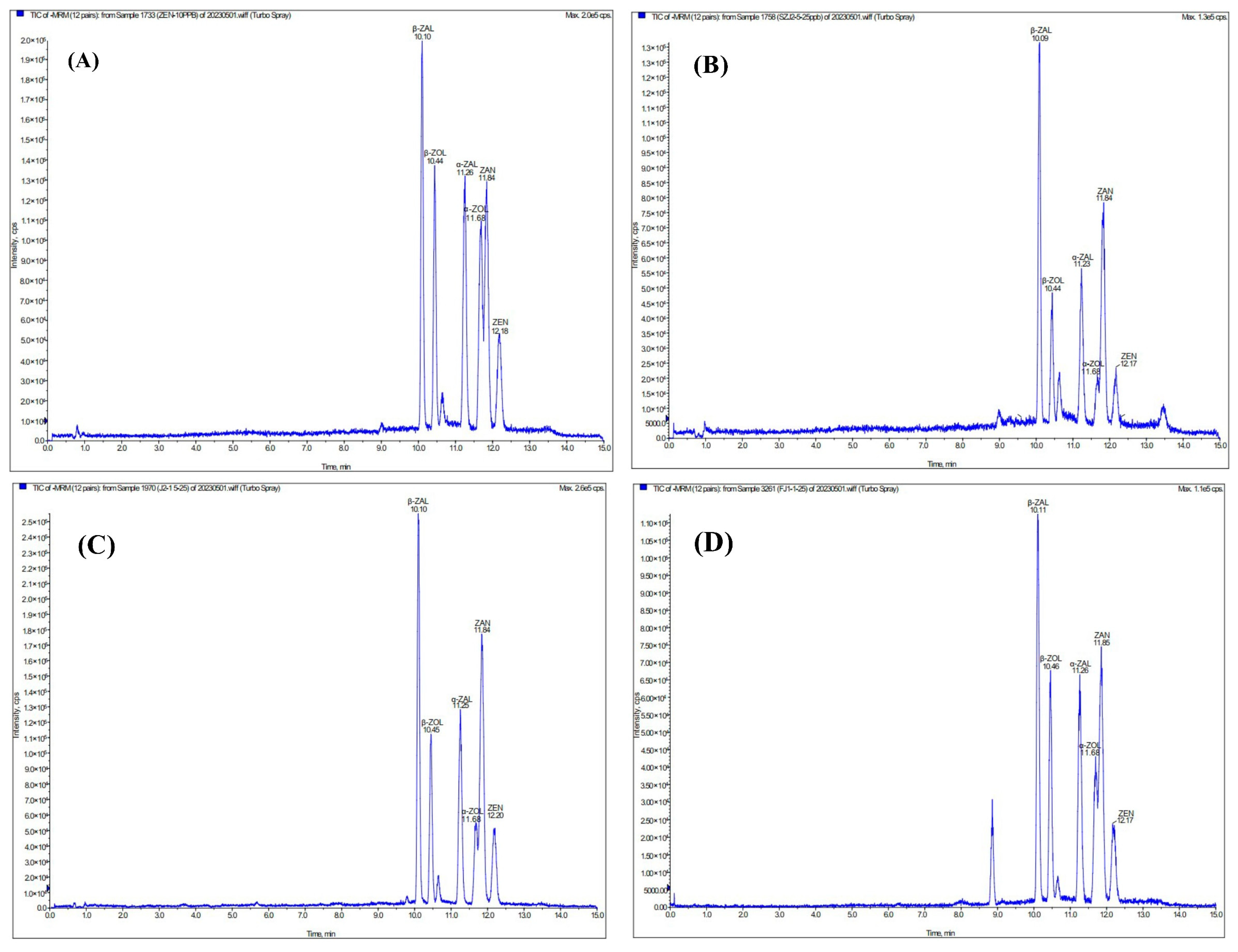
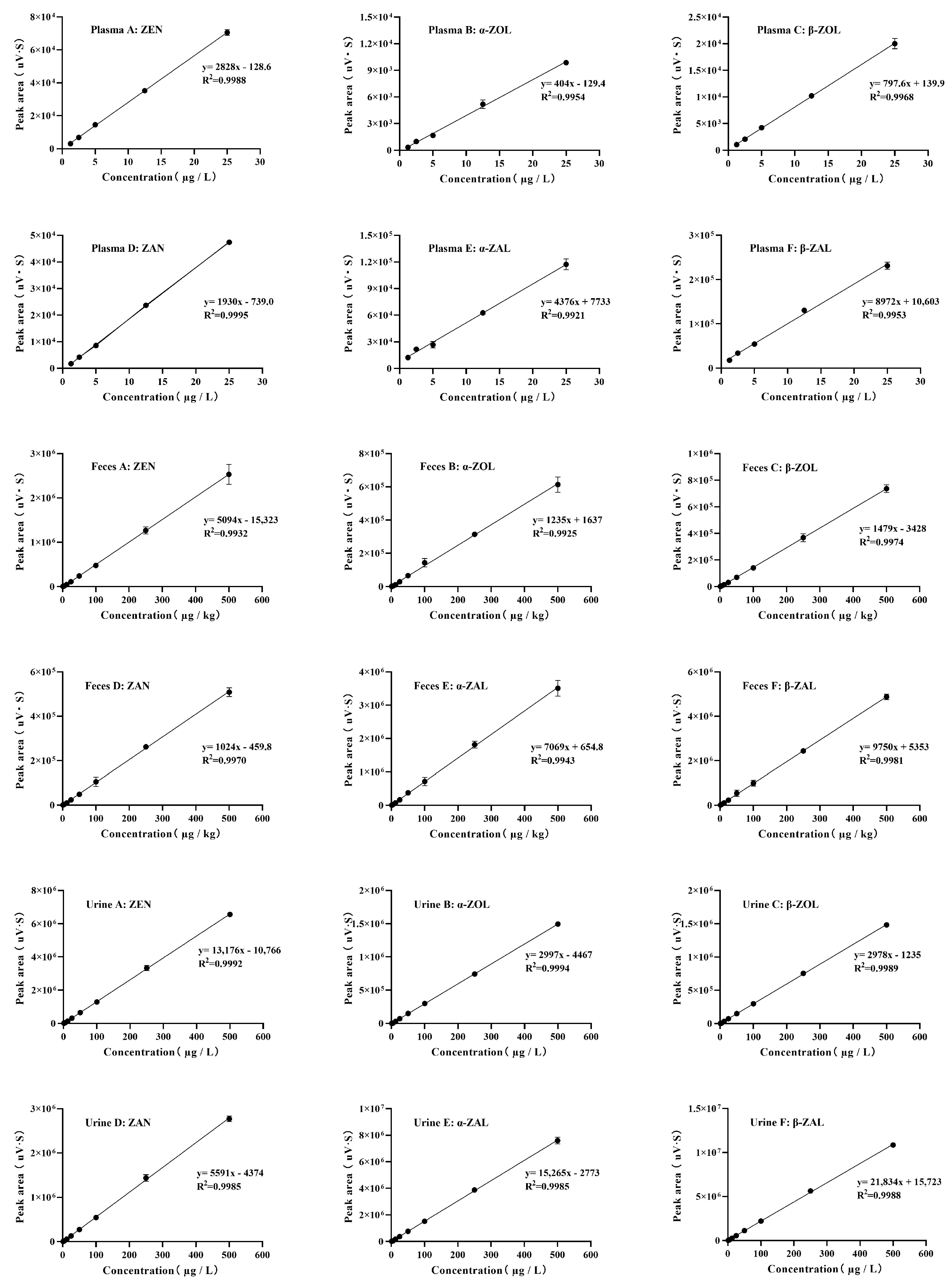
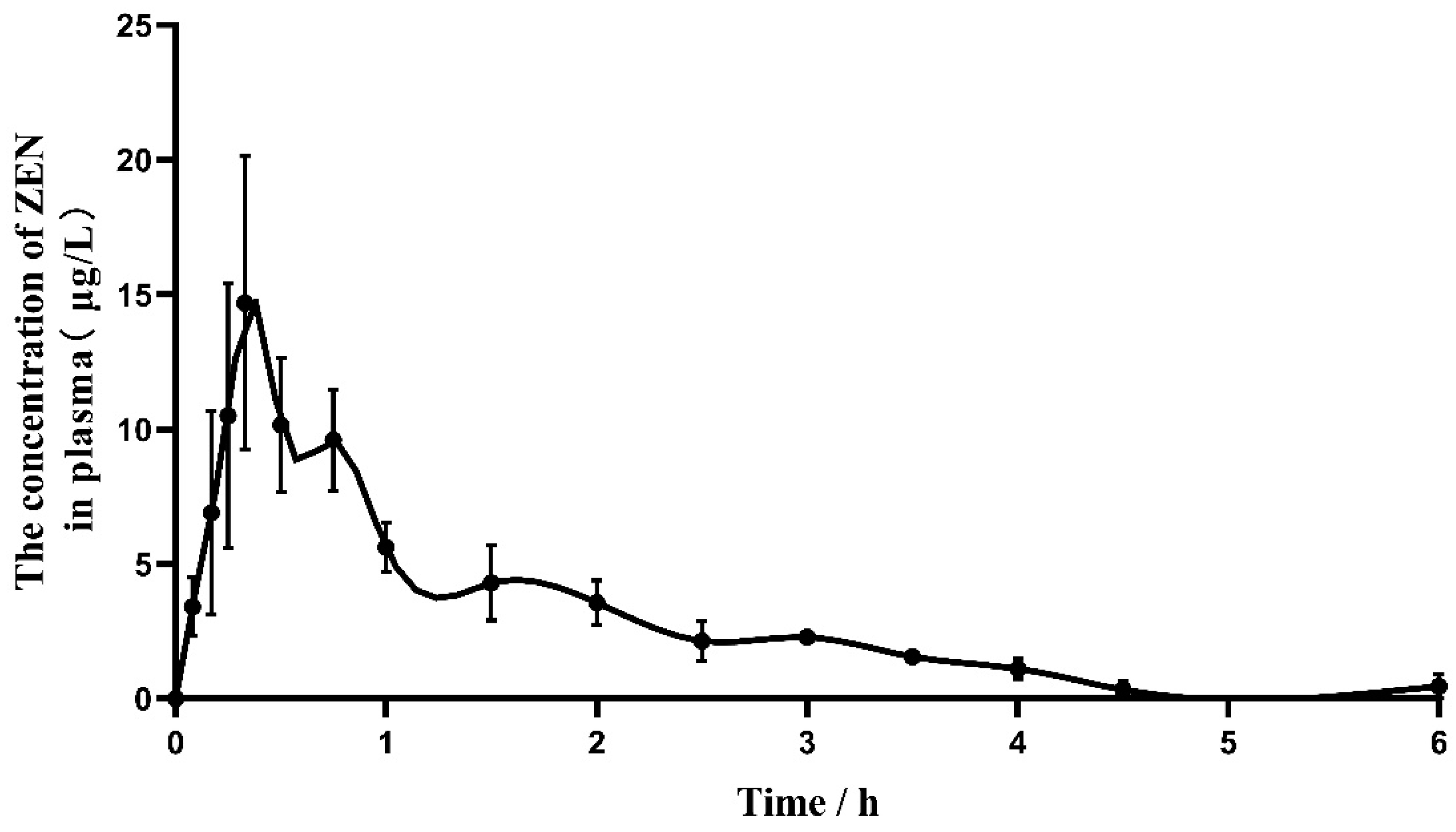
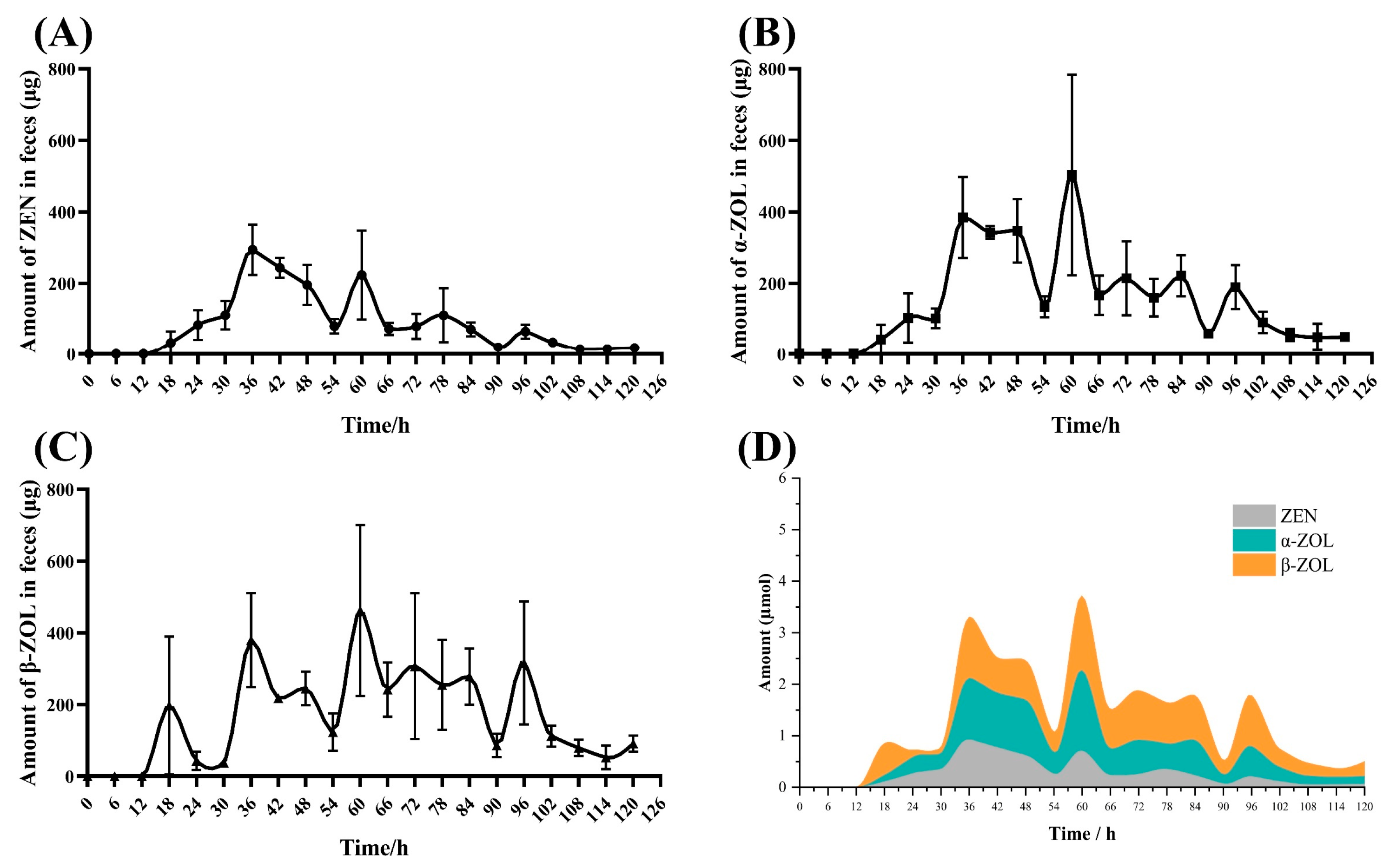
Zearalenone (ZEN) is a mycotoxin produced by various Fusarium strains, that is present in food and feed raw materials worldwide, causing toxicity effects in animals and humans. This research aimed to explore the toxicokinetics of ZEN on female Dezhou donkeys following a single oral exposure dosage of 2 mg/kg BW (body weight). The sample collection of donkeys plasma was carried out at 0, 5, 10, 15, 20, 30, 45, 60, 90 min, 2 h, 2.5 h, 3 h, 3.5 h, 4 h, 4.5 h, 6 h, 9 h, 12 h, 24 h, 48 h, 72 h, 96 h and 120 h via intravenous catheter, and fecal and urinary samples were severally collected at 0 h and every 6 h until 120 h. The concentrations of ZEN, α-zearalenol (α-ZOL), β-zearalenol (β-ZOL), α-zearalanol (α-ZAL), β-zearalanol (β-ZAL), zearalanone (ZAN) in plasma, urine, and feces were detected by UPLC-MS/MS. Only ZEN was detected in plasma, and the maximum was 15.34 ± 5.12 µg/L occurred at 0.48 h after gavage. The total plasma clearance (Cl) of ZEN was 95.20 ± 8.01 L·kg·BW−1·h−1. In addition, the volume of distribution (Vd) was up to 216.17 ± 58.71 L/kg. The percentage of total ZEN (ZEN plus the main metabolites) excretion in feces and urine was 2.49% and 2.10%, respectively. In summary, ZEN was fast absorbed and relatively slowly excreted in female donkeys during 120 h after a single gavage, indicating a trend of wider tissue distribution and longer tissue persistence.
Keywords: toxicokinetic; donkey; mycotoxins; zearalenone toxicokinetic; donkey; mycotoxins; zearalenone