Review

Regulatory Networks Controlling Neurotoxin Synthesis in Clostridium botulinum and Clostridium tetani


by
Michel R. Popoff
1,* and
Holger Brüggemann
2
1
Bacterial Toxins, Institut Pasteur, 75724 Paris, France
2
Department of Biomedicine, Aarhus University, 8000 Aarhus, Denmark
*
Author to whom correspondence should be addressed.
Toxins 2022, 14(6), 364; https://doi.org/10.3390/toxins14060364
Submission received: 14 April 2022 / Revised: 16 May 2022 / Accepted: 21 May 2022 / Published: 24 May 2022
(This article belongs to the Special Issue Toxins: Mr Hyde or Dr Jekyll?)

Abstract

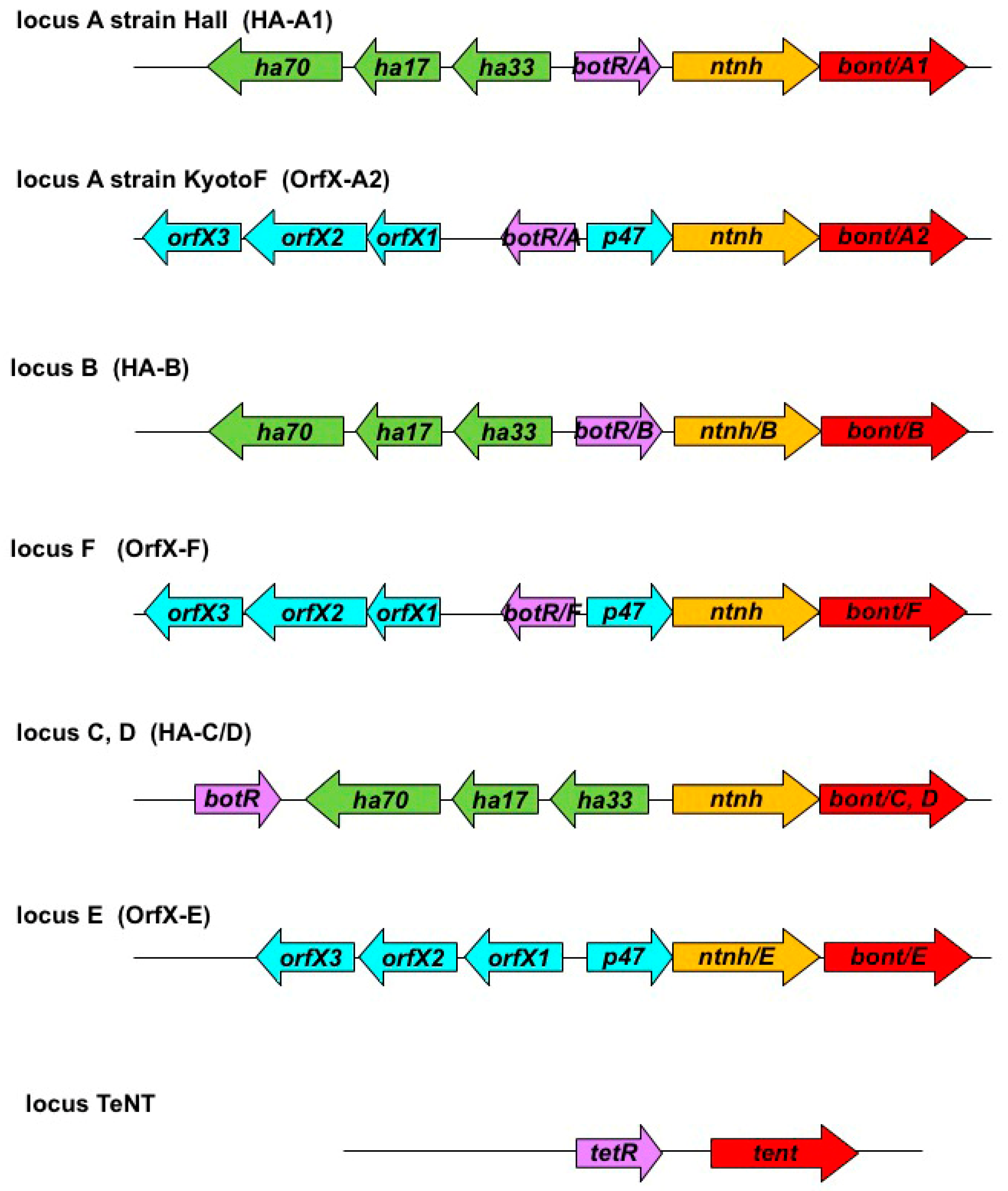
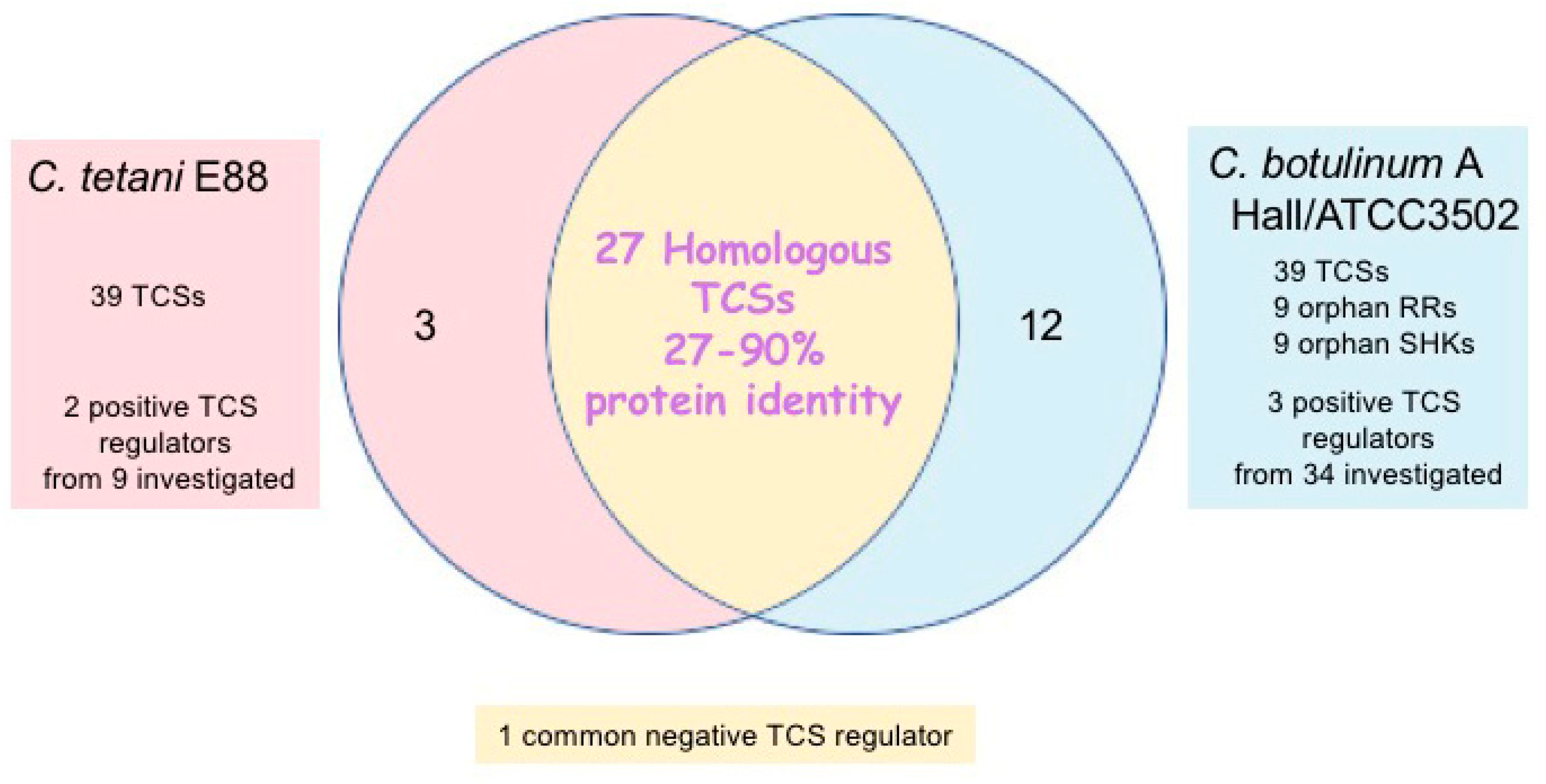
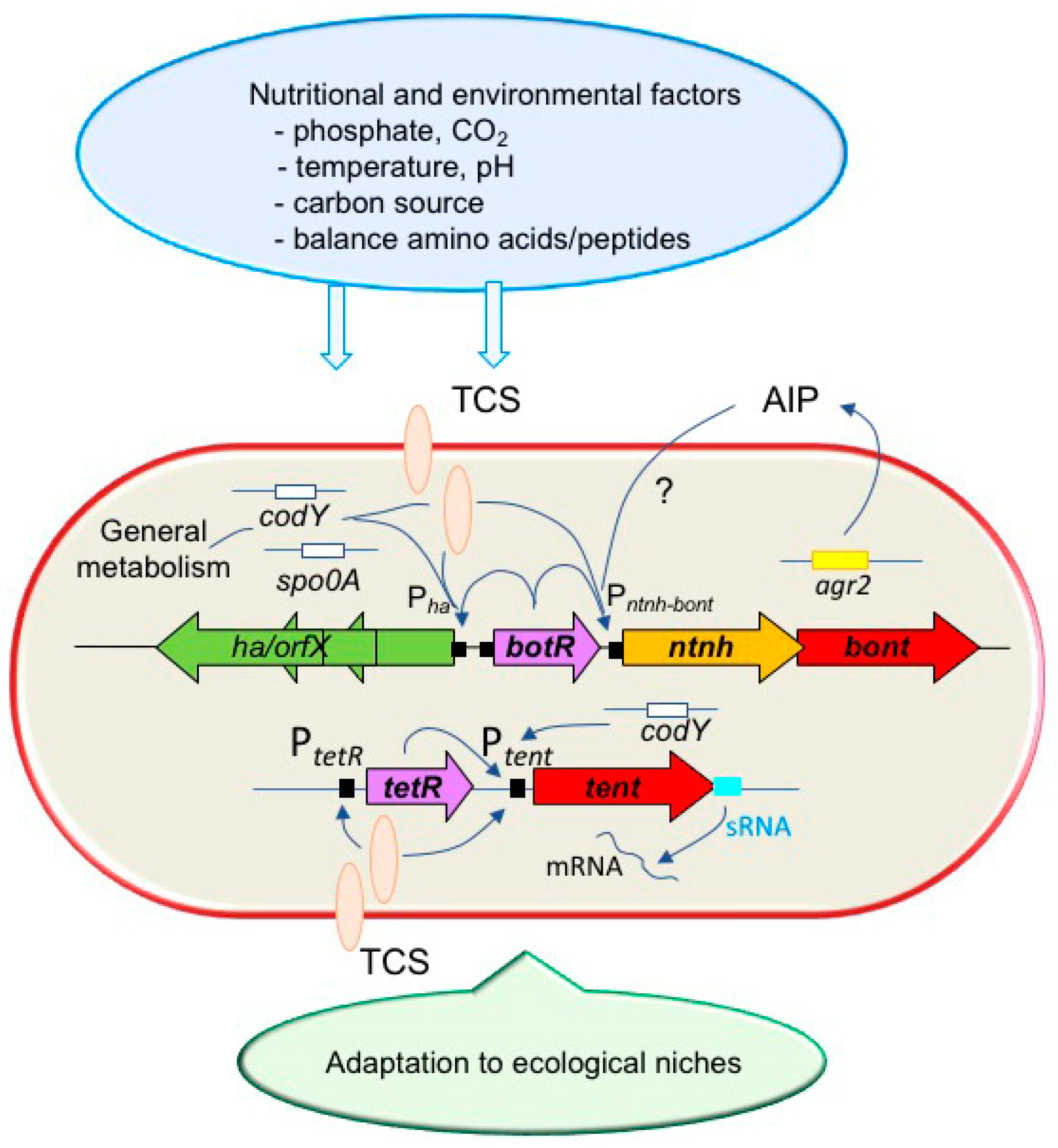
Clostridium botulinum and Clostridium tetani are Gram-positive, spore-forming, and anaerobic bacteria that produce the most potent neurotoxins, botulinum toxin (BoNT) and tetanus toxin (TeNT), responsible for flaccid and spastic paralysis, respectively. The main habitat of these toxigenic bacteria is the environment (soil, sediments, cadavers, decayed plants, intestinal content of healthy carrier animals). C. botulinum can grow and produce BoNT in food, leading to food-borne botulism, and in some circumstances, C. botulinum can colonize the intestinal tract and induce infant botulism or adult intestinal toxemia botulism. More rarely, C. botulinum colonizes wounds, whereas tetanus is always a result of wound contamination by C. tetani. The synthesis of neurotoxins is strictly regulated by complex regulatory networks. The highest levels of neurotoxins are produced at the end of the exponential growth and in the early stationary growth phase. Both microorganisms, except C. botulinum E, share an alternative sigma factor, BotR and TetR, respectively, the genes of which are located upstream of the neurotoxin genes. These factors are essential for neurotoxin gene expression. C. botulinum and C. tetani share also a two-component system (TCS) that negatively regulates neurotoxin synthesis, but each microorganism uses additional distinct sets of TCSs. Neurotoxin synthesis is interlocked with the general metabolism, and CodY, a master regulator of metabolism in Gram-positive bacteria, is involved in both clostridial species. The environmental and nutritional factors controlling neurotoxin synthesis are still poorly understood. The transition from amino acid to peptide metabolism seems to be an important factor. Moreover, a small non-coding RNA in C. tetani, and quorum-sensing systems in C. botulinum and possibly in C. tetani, also control toxin synthesis. However, both species use also distinct regulatory pathways; this reflects the adaptation of C. botulinum and C. tetani to different ecological niches.
Keywords: Clostridium tetani; Clostridium botulinum; botulinum neurotoxin; tetanus neurotoxin; toxin gene regulation; two-component system; small RNA Clostridium tetani; Clostridium botulinum; botulinum neurotoxin; tetanus neurotoxin; toxin gene regulation; two-component system; small RNA