Communication

Inhibition of Essential Oils on Growth of Aspergillus flavus and Aflatoxin B1 Production in Broth and Poultry Feed


1
Key Laboratory of Feed Biotechnology, Ministry of Agriculture and Rural Affairs, Institute of Feed Research, Chinese Academy of Agricultural Sciences, No. 12 Zhong Guan Cun South Street, Haidian District, Beijing 100081, China
2
China Animal Husbandry Industry Corporation, Ltd., No. 156 Beiqing Road, Haidian District, Beijing 100095, China
*
Authors to whom correspondence should be addressed.
Toxins 2022, 14(10), 655; https://doi.org/10.3390/toxins14100655

Submission received: 26 August 2022 / Revised: 16 September 2022 / Accepted: 20 September 2022 / Published: 22 September 2022
(This article belongs to the Special Issue Novel Strategies for Biodegradation and Detoxification of Mycotoxins)

Abstract

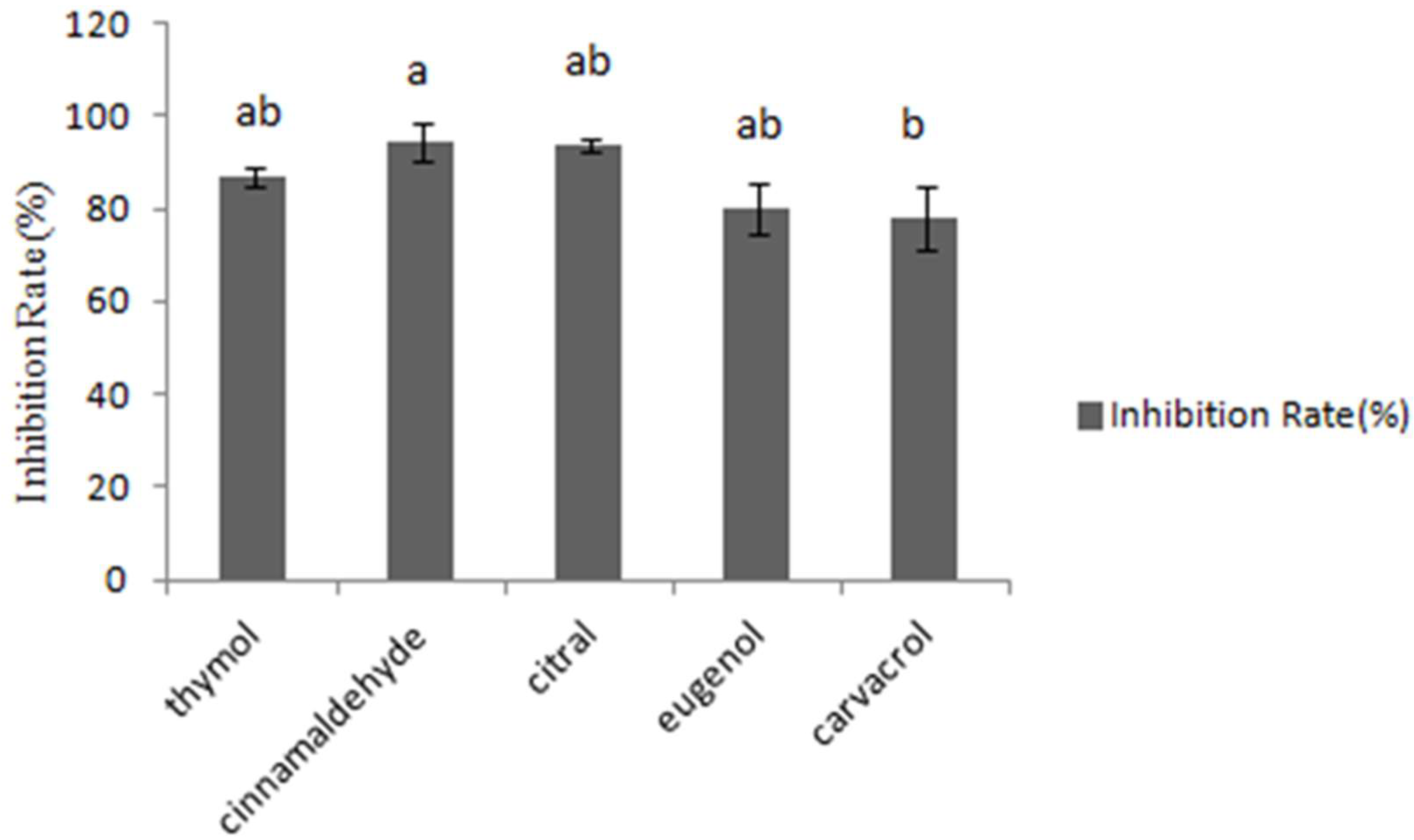
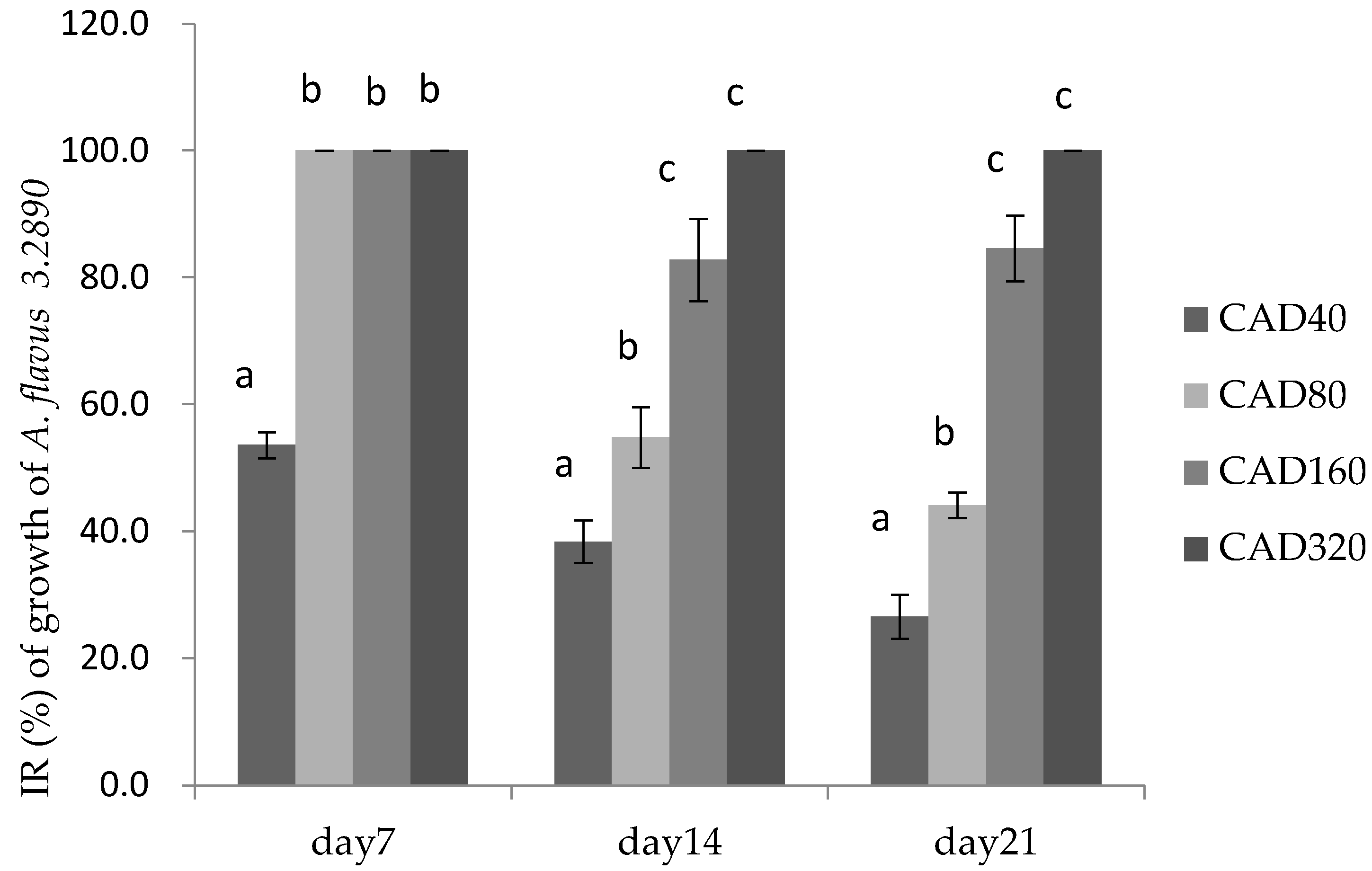
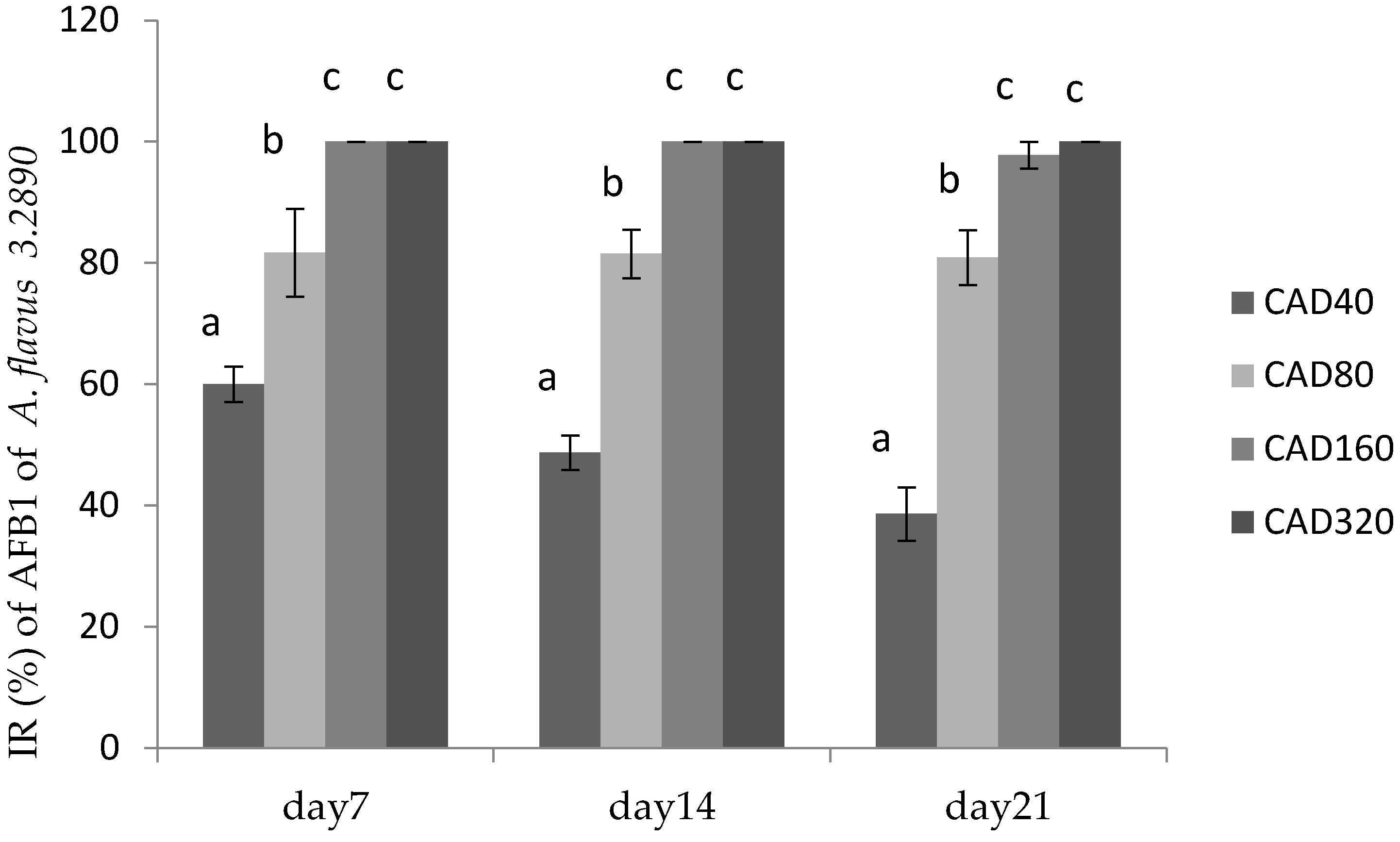
Aflatoxin B1 (AFB1), a common contaminant in food and feed during storage, does great harm to human and animal health. Five essential oils (thymol, carvacrol, cinnamaldehyde, eugenol, and citral) were tested for their inhibition effect against Aspergillus flavus (A. flavus) in broth and feed. Cinnamaldehyde and citral were proven to be most effective against A. flavus compared to others and have a synergistic effect when used simultaneously. The broth supplemented with cinnamaldehyde and citral was inoculated with A. flavus (106 CFU/mL) by using the checkerboard method, and mold counts and AFB1 production were tested on days 0, 1, 3, and 5. Similarly, 100 g poultry feed supplemented with the mixture of cinnamaldehyde and citral at the ratio 1:1 was also inoculated with A. flavus, and the same parameters were tested on days 0, 7, 14, and 21. In poultry feed, cinnamaldehyde and citral significantly reduced mold counts and AFB1 concentrations (p < 0.05). Results showed that cinnamaldehyde and citral have a positive synergy effect and could both inhibit at least 90% the fungal growth and aflatoxin B1 production at 40 μg/mL in broth and poultry feed, and could be an alternative to control aflatoxin contamination in food and feed in future.
Keywords: aflatoxin B1; cinnamaldehyde; citral; inhibition; synergy aflatoxin B1; cinnamaldehyde; citral; inhibition; synergy