

Variability of Botulinum Toxins: Challenges and Opportunities for the Future


Abstract
1. Introduction
2. Entry of BoNTs into Neuronal Cells and Other Cells
3. Susceptibility to Different Botulinum Neurotoxin Toxinotypes and Subtypes
4. Implications for the Future Clinical Applications and Antibodies Development
5. Concluding Remarks and Perspectives
Funding
Conflicts of Interest
References
- Peck, M.W.; Smith, T.J.; Anniballi, F.; Austin, J.W.; Bano, L.; Bradshaw, M.; Cuervo, P.; Cheng, L.W.; Derman, Y.; Dorner, B.G.; et al. Historical Perspectives and Guidelines for Botulinum Neurotoxin Subtype Nomenclature. Toxins 2017, 9, 38. [Google Scholar] [CrossRef] [Scilit] [PubMed]
- Sobel, J. Botulism. Clin. Infect. Dis. 2005, 41, 1167–1173. [Google Scholar] [CrossRef] [Scilit] [PubMed]
- Brook, I. Botulism symptoms, incubation period and complications, diagnosis and management. In Clostridium Botulinum: A Spore Forming Organism and a Challenge to Food Safety; Advances in Food Safety and Food Microbiology; Nova Science Publishers: Hauppauge, NJ, USA, 2012; ISBN 978-1-61470-575-8. [Google Scholar]
- Gill, D.M. Bacterial toxins: A table of lethal amounts. Microbiol. Rev. 1982, 46, 86–94. [Google Scholar] [PubMed]
- Arnon, S.S.; Schechter, R.; Inglesby, T.V.; Henderson, D.A.; Bartlett, J.G.; Ascher, M.S.; Eitzen, E.; Fine, A.D.; Hauer, J.; Layton, M.; et al. Botulinum toxin as a biological weapon: Medical and public health management. JAMA 2001, 285, 1059–1070. [Google Scholar] [CrossRef] [Scilit] [PubMed]
- Bozheyeva, G.; Kunakbayev, Y.; Yeleukenov, D. Former Soviet Biological Weapons Facilities in Kazakhstan: Past, Present, and Future; Occasional Paper No. 1; Monterey Institute of International Studies: Monterey, CA, USA, 1999. [Google Scholar]
- Wein, L.M.; Liu, Y. Analyzing a bioterror attack on the food supply: The case of botulinum toxin in milk. Proc. Natl. Acad. Sci. USA 2005, 102, 9984–9989. [Google Scholar] [CrossRef] [Scilit] [PubMed]
- Jalava, K.; Selby, K.; Pihlajasaari, A.; Kolho, E.; Dahlsten, E.; Forss, N.; Bäcklund, T.; Korkeala, H.; Honkanen-Buzalski, T.; Hulkko, T.; et al. Two cases of food-borne botulism in Finland caused by conserved olives, October 2011. Euro Surveill. 2011, 16, 20034. [Google Scholar] [CrossRef] [Scilit] [PubMed]
- Pingeon, J.M.; Vanbockstael, C.; Popoff, M.R.; King, L.A.; Deschamps, B.; Pradel, G.; Dupont, H.; Spanjaard, A.; Houdard, A.; Mazuet, C.; et al. Two outbreaks of botulism associated with consumption of green olive paste, France, September 2011. Euro Surveill. 2011, 16, 20035. [Google Scholar] [CrossRef] [Scilit] [PubMed]
- Coffield, J.A.; Bakry, N.; Carlson, J.; Gomella, L.G.; Simpson, L.L. In vitro characterization of botulinum toxin types A, C and D action on human tissues: Combined electrophysiologic, pharmacologic and molecular biologic approaches. J. Pharmacol. Exp. Ther. 1997, 280, 1489–1498. [Google Scholar] [PubMed]
- Barash, J.R.; Arnon, S.S. A Novel Strain of Clostridium botulinum That Produces Type B and Type H Botulinum Toxins. J. Infect. Dis. 2014, 209, 183–191. [Google Scholar] [CrossRef] [Scilit] [PubMed]
- Dover, N.; Barash, J.R.; Hill, K.K.; Xie, G.; Arnon, S.S. Molecular characterization of a novel botulinum neurotoxin type H gene. J. Infect. Dis. 2014, 209, 192–202. [Google Scholar] [CrossRef] [Scilit] [PubMed]
- Maslanka, S.E.; Lúquez, C.; Dykes, J.K.; Tepp, W.H.; Pier, C.L.; Pellett, S.; Raphael, B.H.; Kalb, S.R.; Barr, J.R.; Rao, A.; et al. A Novel Botulinum Neurotoxin, Previously Reported as Serotype H, has a Hybrid-Like Structure with Regions of Similarity to the Structures of Serotypes A and F and Is Neutralized With Serotype A Antitoxin. J. Infect. Dis. 2016, 213, 379–385. [Google Scholar] [CrossRef] [Scilit] [PubMed]
- Mansfield, M.J.; Wentz, T.G.; Zhang, S.; Lee, E.J.; Dong, M.; Sharma, S.K. Newly identified relatives of botulinum neurotoxins shed light on their molecular evolution. bioRxiv 2017, 220806. [Google Scholar] [CrossRef] [Scilit]
- Mansfield, M.J.; Adams, J.B.; Doxey, A.C. Botulinum neurotoxin homologs in non-Clostridium species. FEBS Lett. 2015, 589, 342–348. [Google Scholar] [CrossRef] [Scilit] [PubMed]
- Zhang, S.; Masuyer, G.; Zhang, J.; Shen, Y.; Lundin, D.; Henriksson, L.; Miyashita, S.I.; Martínez-Carranza, M.; Dong, M.; Stenmark, P. Identification and characterization of a novel botulinum neurotoxin. Nat. Commun. 2017, 8, 14130. [Google Scholar] [CrossRef] [Scilit] [PubMed]
- Lacy, D.B.; Tepp, W.; Cohen, A.C.; DasGupta, B.R.; Stevens, R.C. Crystal structure of botulinum neurotoxin type A and implications for toxicity. Nat. Struct. Biol. 1998, 5, 898–902. [Google Scholar] [CrossRef] [Scilit] [PubMed]
- Kumaran, D.; Eswaramoorthy, S.; Furey, W.; Navaza, J.; Sax, M.; Swaminathan, S. Domain organization in Clostridium botulinum neurotoxin type E is unique: Its implication in faster translocation. J. Mol. Biol. 2009, 386, 233–245. [Google Scholar] [CrossRef] [Scilit] [PubMed]
- Schiavo, G.; Matteoli, M.; Montecucco, C. Neurotoxins affecting neuroexocytosis. Physiol. Rev. 2000, 80, 717–766. [Google Scholar] [CrossRef] [Scilit] [PubMed]
- Montal, M. Botulinum neurotoxin: A marvel of protein design. Annu. Rev. Biochem. 2010, 79, 591–617. [Google Scholar] [CrossRef] [Scilit] [PubMed]
- Benedetto, A.V. The cosmetic uses of botulinum toxin type A. Int. J. Dermatol. 1999, 38, 641–655. [Google Scholar] [CrossRef] [Scilit] [PubMed]
- Turton, K.; Chaddock, J.A.; Acharya, K.R. Botulinum and tetanus neurotoxins: Structure, function and therapeutic utility. Trends Biochem. Sci. 2002, 27, 552–558. [Google Scholar] [CrossRef] [Scilit]
- Fujinaga, Y.; Sugawara, Y.; Matsumura, T. Uptake of botulinum neurotoxin in the intestine. Curr. Top. Microbiol. Immunol. 2013, 364, 45–59. [Google Scholar] [PubMed]
- Connan, C.; Popoff, M.R. Two-component systems and toxinogenesis regulation in Clostridium botulinum. Res. Microbiol. 2015, 166, 332–343. [Google Scholar] [CrossRef] [Scilit] [PubMed]
- Simpson, L.L. Identification of the major steps in botulinum toxin action. Annu. Rev. Pharmacol. Toxicol. 2004, 44, 167–193. [Google Scholar] [CrossRef] [Scilit] [PubMed]
- Yowler, B.C.; Kensinger, R.D.; Schengrund, C.-L. Botulinum neurotoxin A activity is dependent upon the presence of specific gangliosides in neuroblastoma cells expressing synaptotagmin I. J. Biol. Chem. 2002, 277, 32815–32819. [Google Scholar] [CrossRef] [Scilit] [PubMed]
- Rummel, A.; Eichner, T.; Weil, T.; Karnath, T.; Gutcaits, A.; Mahrhold, S.; Sandhoff, K.; Proia, R.L.; Acharya, K.R.; Bigalke, H.; et al. Identification of the protein receptor binding site of botulinum neurotoxins B and G proves the double-receptor concept. Proc. Natl. Acad. Sci. USA 2007, 104, 359–364. [Google Scholar] [CrossRef] [Scilit] [PubMed]
- Stenmark, P.; Dupuy, J.; Imamura, A.; Kiso, M.; Stevens, R.C. Crystal structure of botulinum neurotoxin type A in complex with the cell surface co-receptor GT1b-insight into the toxin–neuron interaction. PLoS Pathog. 2008, 4, e1000129. [Google Scholar] [CrossRef] [Scilit] [PubMed]
- Berntsson, R.P.; Penh, L.; Dong, M.; Stenmark, P. Structure of dual receptor binding to botulinum neurotoxin B. Nat. Commun. 2013, 4, 2058. [Google Scholar] [CrossRef] [Scilit] [PubMed]
- Benson, M.A.; Fu, Z.; Kim, J.J.; Baldwin, M.R. Unique ganglioside recognition strategies for clostridial neurotoxins. J. Biol. Chem. 2011, 286, 34015–34022. [Google Scholar] [CrossRef] [Scilit] [PubMed]
- Fu, Z.; Chen, C.; Barbieri, J.T.; Kim, J.J.; Baldwin, M.R. Glycosylated SV2 and gangliosides as dual receptors for botulinum neurotoxin serotype F. Biochemistry 2009, 48, 5631–5641. [Google Scholar] [CrossRef] [Scilit] [PubMed]
- Rummel, A.; Mahrold, S.; Bigalke, H.; Binz, T. The HcC-domain of botulinum neurotoxins A and B exhibits a singular ganglioside binding site displaying serotype specific carbohydrate interaction. Mol. Microbiol. 2004, 51, 631–643. [Google Scholar] [CrossRef] [Scilit] [PubMed]
- Rummel, A.; Karnath, T.; Henke, T.; Bigalke, H.; Binz, T. Synaptotagmins I and II act as nerve cell receptors for botulinum neurotoxin G. J. Biol. Chem. 2004, 279, 30865–30870. [Google Scholar] [CrossRef] [Scilit] [PubMed]
- Rummel, A.; Hafner, K.; Mahrold, S.; Darashchonak, N.; Holt, M.; Jahn, R.; Beermann, S.; Kamath, T.; Bigalke, H.; Binz, T. Botulinum neurotoxins C, E and F bind gangliosides via a conserved binding site prior to stimulation dependent uptake with botulinum neurotoxin F utilising the three isoforms of SV2 as second receptor. J. Neurochem. 2009, 110, 1942–1954. [Google Scholar] [CrossRef] [Scilit] [PubMed]
- Schmidt, J.; Karalewitz, A.; Benefield, D.A.; Mushrush, D.J.; Pruitt, R.N.; Spiller, B.W.; Barbieri, J.T.; Lacy, B. Structural analysis of botulinum neurotoxin type G receptor binding. Biochemistry 2010, 49, 5200–5205. [Google Scholar] [CrossRef] [Scilit] [PubMed]
- Nishiki, T.; Kamata, Y.; Nemoto, Y.; Omori, A.; Ito, T.; Takahashi, M.; Kozaki, S. Identification of protein receptor for Clostridium botulinum type B neurotoxin in rat brain synaptosomes. J. Biol. Chem. 1994, 269, 10498–10503. [Google Scholar] [PubMed]
- Dong, M.; Yeh, F.; Tepp, W.H.; Dean, C.; Johnson, E.A.; Janz, R.; Chapman, E.R. SV2 is the protein receptor for botulinum neurotoxin A. Science 2006, 312, 592–596. [Google Scholar] [CrossRef] [Scilit] [PubMed]
- Mahrhold, S.; Rummel, A.; Bigalke, H.; Davletov, B.; Binz, T. The synaptic vesicle protein 2C mediates the uptake of botulinum neurotoxin A into phrenic nerves. FEBS Lett. 2006, 580, 2011–2014. [Google Scholar] [CrossRef] [Scilit] [PubMed]
- Rummel, A. Two Feet on the Membrane: Uptake of Clostridial Neurotoxins. Curr. Top. Microbiol. Immunol. 2017, 406, 1–37. [Google Scholar] [CrossRef] [Scilit] [PubMed]
- Sun, S.; Suresh, H.; Liu, H.; Tepp, W.H.; Johnson, E.A.; Edwardson, J.M.; Chapman, E.R. Receptor binding enables botulinum neurotoxin B to sense low pH for translocation channel assembly. Cell Host Microbe 2011, 10, 237–247. [Google Scholar] [CrossRef] [Scilit] [PubMed]
- Strohmeier, J.; Lee, K.; Volker, A.K.; Mahrold, S.; Zong, Y.; Zeiser, J.; Zhou, J.; Pich, A.; Bigalke, H.; Binz, T.; et al. Botulinum neurotoxin serotype D attacks neurons via two carbohydrate-binding sites in a ganglioside-dependent manner. Biochem. J. 2010, 431, 207–216. [Google Scholar] [CrossRef] [Scilit] [PubMed]
- Zhang, S.; Berntsson, R.P.; Tepp, W.H.; Tao, L.; Johnson, E.A.; Stenmark, P.; Dong, M. Structural basis for the unique ganglioside and cell membrane recognition mechanism of botulinum neurotoxin DC. Nat. Commun. 2017, 8, 1637. [Google Scholar] [CrossRef] [Scilit] [PubMed]
- Stern, D.; Weisemann, J.; Le Blanc, A.; von Berg, L.; Mahrhold, S.; Piesker, J.; Laue, M.; Luppa, P.B.; Dorner, M.B.; Dorner, B.G.; et al. A lipid-binding loop of botulinum neurotoxin serotypes B, DC and G is an essential feature to confer their exquisite potency. PLoS Pathog. 2018, 14, e1007048. [Google Scholar] [CrossRef] [Scilit] [PubMed]
- Baldwin, M.R.; Kim, J.-J.P.; Barbieri, J.T. Botulinum neurotoxin B-host receptor recognition: It takes two receptors to tango. Nat. Struct. Mol. Biol. 2007, 14, 9–10. [Google Scholar] [CrossRef] [Scilit] [PubMed]
- Gu, S.; Rumpel, S.; Zhou, J.; Strotmeier, J.; Bigalke, H.; Perry, K.; Shoemaker, C.B.; Rummel, A.; Jin, R. Botulinum neurotoxin is shielded by NTNHA in an interlocked complex. Science 2012, 335, 977–981. [Google Scholar] [CrossRef] [Scilit] [PubMed]
- Muraro, L.; Yosatto, S.; Motterlini, L.; Rossetto, O.; Montecucco, C. The N-terminal half of the receptor domain of botulinum neurotoxin A binds to microdomains of the plasma membrane. Biochem. Biophys. Res. Commun. 2009, 380, 76–80. [Google Scholar] [CrossRef] [Scilit] [PubMed]
- Chai, Q.; Arndt, J.W.; Dong, M.; Tepp, W.H.; Johnson, E.A.; Chapman, E.R.; Stevens, R.C. Structural basis of cell surface receptor recognition by botulinum neurotoxin B. Nature 2006, 444, 1096–1100. [Google Scholar] [CrossRef] [Scilit] [PubMed]
- Meng, J.; Wang, J.; Lawrence, G.W.; Dolly, J.O. Molecular components required for resting and stimulated endocytosis of botulinum neurotoxins by glutamatergic and peptidergic neurons. FASEB J. 2013, 27, 3167–3180. [Google Scholar] [CrossRef] [Scilit] [PubMed]
- Couesnon, A.; Pereira, Y.; Popoff, M.R. Receptor-mediated transcytosis of botulinum neurotoxin A through intestinal cell monolayers. Cell. Microbiol. 2008, 10, 375–387. [Google Scholar] [CrossRef] [Scilit] [PubMed]
- Couesnon, A.; Shimizu, T.; Popoff, M.R. Differential entry of botulinum neurotoxin A into neuronal and intestinal cells. Cell. Microbiol. 2009, 11, 289–308. [Google Scholar] [CrossRef] [Scilit] [PubMed]
- Connan, C.; Popoff, M.R. Uptake of Clostridial Neurotoxins into Cells and Dissemination. Curr. Top. Microbiol. Immunol. 2017, 406, 39–78. [Google Scholar] [CrossRef] [Scilit] [PubMed]
- Matsumura, T.; Sugawara, Y.; Yutani, M.; Amatsu, S.; Yagita, H.; Kohda, T.; Fukuoka, S.; Nakamura, Y.; Fukuda, S.; Hase, K.; et al. Botulinum toxin A complex exploits intestinal M cells to enter the host and exert neurotoxicity. Nat. Commun. 2015, 6, 6255. [Google Scholar] [CrossRef] [Scilit] [PubMed]
- Kim, D.-W.; Lee, S.K.; Ahnn, J. Botulinum Toxin as a Pain Killer: Players and Actions in Antinociception. Toxins 2015, 7, 2435–2453. [Google Scholar] [CrossRef] [Scilit] [PubMed]
- Grando, S.A.; Zachary, C.B. The Non-Neuronal and Non-Muscular Effects of Botulinum Toxin: A Graceful Opportunity for a Deadly Molecule to Treat a Human Disease in the Skin and Beyond. Br. J. Dermatol. 2018, 178, 1011–1019. [Google Scholar] [CrossRef] [Scilit] [PubMed]
- Anza, I.; Skarin, H.; Vidal, D.; Lindberg, A.; Baverud, V.; Mateo, R. The same clade of Clostridium botulinum strains is causing avian botulism in southern and northern Europe. Anaerobe 2014, 26, 20–23. [Google Scholar] [CrossRef] [Scilit] [PubMed]
- Woudstra, C.; Skarin, H.; Anniballi, F.; Fenicia, L.; Bano, L.; Drigo, I.; Koene, M.; Bayon-Auboyer, M.H.; Buffereau, J.P.; de Medici, D.; et al. Neurotoxin gene profiling of Clostridium botulinum types C and D native to different countries within Europe. Appl. Environ. Microbiol. 2012, 78, 3120–3127. [Google Scholar] [CrossRef] [Scilit] [PubMed]
- Popoff, M.R. Ecology of neurotoxigenic strains of clostridia. Curr. Top. Microbiol. Immunol. 1995, 195, 1–29. [Google Scholar] [PubMed]
- Davletov, B.; Bajohrs, M.; Binz, T. Beyond BOTOX: Advantages and limitations of individual botulinum neurotoxins. Trends Neurosci. 2005, 8, 446–452. [Google Scholar] [CrossRef] [Scilit] [PubMed]
- Keller, J.E. Recovery from botulinum neurotoxin poisonning in vivo. Neuroscience 2006, 139, 629–637. [Google Scholar] [CrossRef] [Scilit] [PubMed]
- Wang, J.; Meng, J.; Lawrence, G.W.; Zurawski, T.H.; Sasse, A.; Bodeker, M.O.; Gilmore, M.A.; Fernández-Salas, E.; Francis, J.; Steward, L.E.; et al. Novel chimeras of botulinum neurotoxins A and E unveil contributions from the binding, translocation, and protease domains to their functional characteristics. J. Biol. Chem. 2008, 283, 16993–17002. [Google Scholar] [CrossRef] [Scilit] [PubMed]
- Megighian, A.; Zordan, M.; Pantano, S.; Scorzeto, M.; Rigoni, M.; Zanini, D.; Rossetto, O.; Montecucco, C. Evidence for a radial SNARE super-complex mediating neurotransmitter release at the Drosophila neuromuscular junction. J. Cell Sci. 2013, 126, 3134–3140. [Google Scholar] [CrossRef] [Scilit] [PubMed]
- Pantano, S.; Montecucco, C. The blockade of the neurotransmitter release apparatus by botulinum neurotoxins. Cell. Mol. Life Sci. 2014, 71, 793–811. [Google Scholar] [CrossRef] [Scilit] [PubMed]
- Whittaker, R.L.; Gilbertson, R.B.; Garrett, A.S., Jr. Botulism, type E: Report of eight simultaneous cases. Ann. Intern. Med. 1964, 61, 448–454. [Google Scholar] [CrossRef] [Scilit] [PubMed]
- Whitemarsh, R.C.; Tepp, W.H.; Bradshaw, M.; Lin, G.; Pier, C.L.; Scherf, J.M.; Johnson, E.A.; Pellett, S. Characterization of botulinum neurotoxin A subtypes 1 through 5 by investigation of activities in mice, in neuronal cell cultures, and in vitro. Infect. Immun. 2013, 81, 3894–3902. [Google Scholar] [CrossRef] [Scilit] [PubMed]
- Tepp, W.H.; Lin, G.; Johnson, E.A. Purification and characterization of a novel subtype A3 botulinum neurotoxin. Appl. Environ. Microbiol. 2012, 78, 3108–3113. [Google Scholar] [CrossRef] [Scilit] [PubMed]
- Whitemarsh, R.C.; Tepp, W.H.; Johnson, E.A.; Pellett, S. Persistence of botulinum neurotoxin A subtypes 1–5 in primary rat spinal cord cells. PLoS ONE 2014, 9, e90252. [Google Scholar] [CrossRef] [Scilit] [PubMed]
- Henkel, J.S.; Jacobson, M.; Tepp, W.; Pier, C.; Johnson, E.A.; Barbieri, J.T. Catalytic properties of botulinum neurotoxin subtypes A3 and A4. Biochemistry 2009, 48, 2522–2528. [Google Scholar] [CrossRef] [Scilit] [PubMed]
- Kroken, A.R.; Blum, F.C.; Zuverink, M.; Barbieri, J.T. Entry of Botulinum Neurotoxin Subtypes A1 and A2 into Neurons. Infect. Immun. 2016, 85. [Google Scholar] [CrossRef] [Scilit] [PubMed]
- Davies, J.R.; Rees, J.; Liu, S.M.; Acharya, K.R. High resolution crystal structures of Clostridium botulinum neurotoxin A3 and A4 binding domains. J. Struct. Biol. 2018, 202, 113–117. [Google Scholar] [CrossRef] [Scilit] [PubMed]
- Erbguth, R.J.; Naumann, M. Historical Aspects of Botulinum Toxin: Justinus Kerner (1786–1862) and the “Sausage Poison”. Neurology 1999, 53, 1850–1853. [Google Scholar] [CrossRef] [Scilit] [PubMed]
- Brin, M.F. Development of future indications for BOTOX. Toxicon 2009, 54, 668–674. [Google Scholar] [CrossRef] [Scilit] [PubMed]
- Aoki, K.R.; Francis, J. Updates on the antinociceptive mechanism hypothesis of botulinum toxin A. Parkinsonism Relat. Disord. 2011, 17, S28–S33. [Google Scholar] [CrossRef] [Scilit] [PubMed]
- Hanchanale, V.S.; Rao, A.R.; Martin, F.L.; Matanhelia, S.S. The unusual history and the urological applications of botulinum neurotoxin. Urol. Int. 2010, 85, 125–130. [Google Scholar] [CrossRef] [Scilit] [PubMed]
- Simpson, D.M.; Hallett, M.; Ashman, E.J.; Comella, C.L.; Green, M.W.; Gronseth, G.S.; Armstrong, M.J.; Gloss, D.; Potrebic, S.; Jankovic, J.; et al. Practice guideline update summary: Botulinum neurotoxin for the treatment of blepharospasm, cervical dystonia, adult spasticity, and headache: Report of the Guideline Development Subcommittee of the American Academy of Neurology. Neurology 2016, 86, 1818–1826. [Google Scholar] [CrossRef] [Scilit] [PubMed]
- Benoit, R.M.; Frey, D.; Hilbert, M.; Kevenaar, J.T.; Wieser, M.M.; Stirnimann, C.U.; McMillan, D.; Ceska, T.; Lebon, F.; Jaussi, R.; et al. Structural basis for recognition of synaptic vesicle protein 2C by botulinum neurotoxin A. Nature 2014, 505, 108–111. [Google Scholar] [CrossRef] [Scilit] [PubMed]
- Pellett, S.; Bradshaw, M.; Tepp, W.H.; Pier, C.L.; Whitemarsh, R.C.M.; Chen, C.; Barbieri, J.T.; Johnson, E.A. The Light Chain Defines the Duration of Action of Botulinum Toxin Serotype A Subtypes. MBio 2018, 9. [Google Scholar] [CrossRef] [Scilit] [PubMed]
- Caleo, M.; Antonucci, F.; Restani, L.; Mazzocchio, R. A reappraisal of the central effects of botulinum neurotoxin type A: By what mechanism? J. Neurochem. 2009, 109, 15–24. [Google Scholar] [CrossRef] [Scilit] [PubMed]
- Caleo, M.; Schiavo, G. Central effects of tetanus and botulinum neurotoxins. Toxicon 2009, 54, 593–599. [Google Scholar] [CrossRef] [Scilit] [PubMed]
- Restani, L.; Giribaldi, F.; Manich, M.; Bercsenyi, K.; Menendez, G.; Rossetto, O.; Caleo, M.; Schiavo, G. Botulinum neurotoxins A and E undergo retrograde axonal transport in primary motor neurons. PLoS Pathog. 2012, 8, e1003087. [Google Scholar] [CrossRef] [Scilit] [PubMed]
- Ali, S.O.; Thomassen, M.; Schulz, G.M.; Hosey, L.A.; Varga, M.; Ludlow, C.L.; Braun, A.R. Alterations in CNS activity induced by botulinum toxin treatment in spasmodic dysphonia: An H2O15 PET study. J. Speech Lang Hear. Res. 2006, 49, 1127–1146. [Google Scholar] [CrossRef] [Scilit]
- Kato, K.; Kohda, T.; Kozaki, S. Application of botulinum neurotoxin in the treatment of epilepsy. Brain Nerve 2009, 61, 939–948. [Google Scholar] [PubMed]
- Abbruzzese, G.; Berardelli, A. Sensorimotor Integration in Movement Disorders. Mov. Disord. 2003, 18, 231–240. [Google Scholar] [CrossRef] [Scilit] [PubMed]
- Ceballos-Baumann, A.O.; Sheean, G.; Passingham, R.E.; Marsden, C.D.; Brooks, D.J. Botulinum toxin does not reverse the cortical dysfunction associated with writer’s cramp: A PET study. Brain 1997, 120, 571–582. [Google Scholar] [CrossRef] [Scilit] [PubMed]
- Palomar, F.J.; Mir, P. Neurophysiological changes after intramuscular injection of botulinum toxin. Clin. Neurophysiol. 2012, 123, 54–60. [Google Scholar] [CrossRef] [Scilit] [PubMed]
- Das, C.P.; Dressler, D.; Hallett, M. Botulinum toxin therapy of writer’s cramp. Eur. J. Neurol. 2006, 13 (Suppl. S1), 55–59. [Google Scholar] [CrossRef] [Scilit] [PubMed]
- Hallett, M. Mechanism of action of botulinum neurotoxin: Unexpected consequences. Toxicon 2018, 147, 73–76. [Google Scholar] [CrossRef] [Scilit] [PubMed]
- Dresel, C.; Haslinger, B.; Castrop, F.; Wohlschlaeger, A.M.; Ceballos-Baumann, A.O. Silent event-related fMRI reveals deficient motor and enhanced somatosensory activation in orofacial dystonia. Brain 2006, 129, 36–46. [Google Scholar] [CrossRef] [Scilit] [PubMed]
- Kostrzewa, R.M.; Kostrzewa, R.A.; Kostrzewa, J.P. Botulinum neurotoxin: Progress in negating its neurotoxicity; and in extending its therapeutic utility via molecular engineering. MiniReview. Peptides 2015, 72, 80–87. [Google Scholar] [CrossRef] [Scilit] [PubMed]
- Sikorra, S.; Litschko, C.; Müller, C.; Thiel, N.; Galli, T.; Eichner, T.; Binz, T. Identification and Characterization of Botulinum Neurotoxin A Substrate Binding Pockets and Their Re-Engineering for Human SNAP-23. J. Mol. Biol. 2016, 428, 372–384. [Google Scholar] [CrossRef] [Scilit] [PubMed]
- Rasetti-Escargueil, C.; Avril, A.; Miethe, S.; Mazuet, C.; Derman, Y.; Selby, K.; Thullier, P.; Pelat, T.; Urbain, R.; Fontayne, A.; et al. The European AntibotABE Framework Program and Its Update: Development of Innovative Botulinum Antibodies. Toxins 2017, 9, 309. [Google Scholar] [CrossRef] [Scilit] [PubMed]
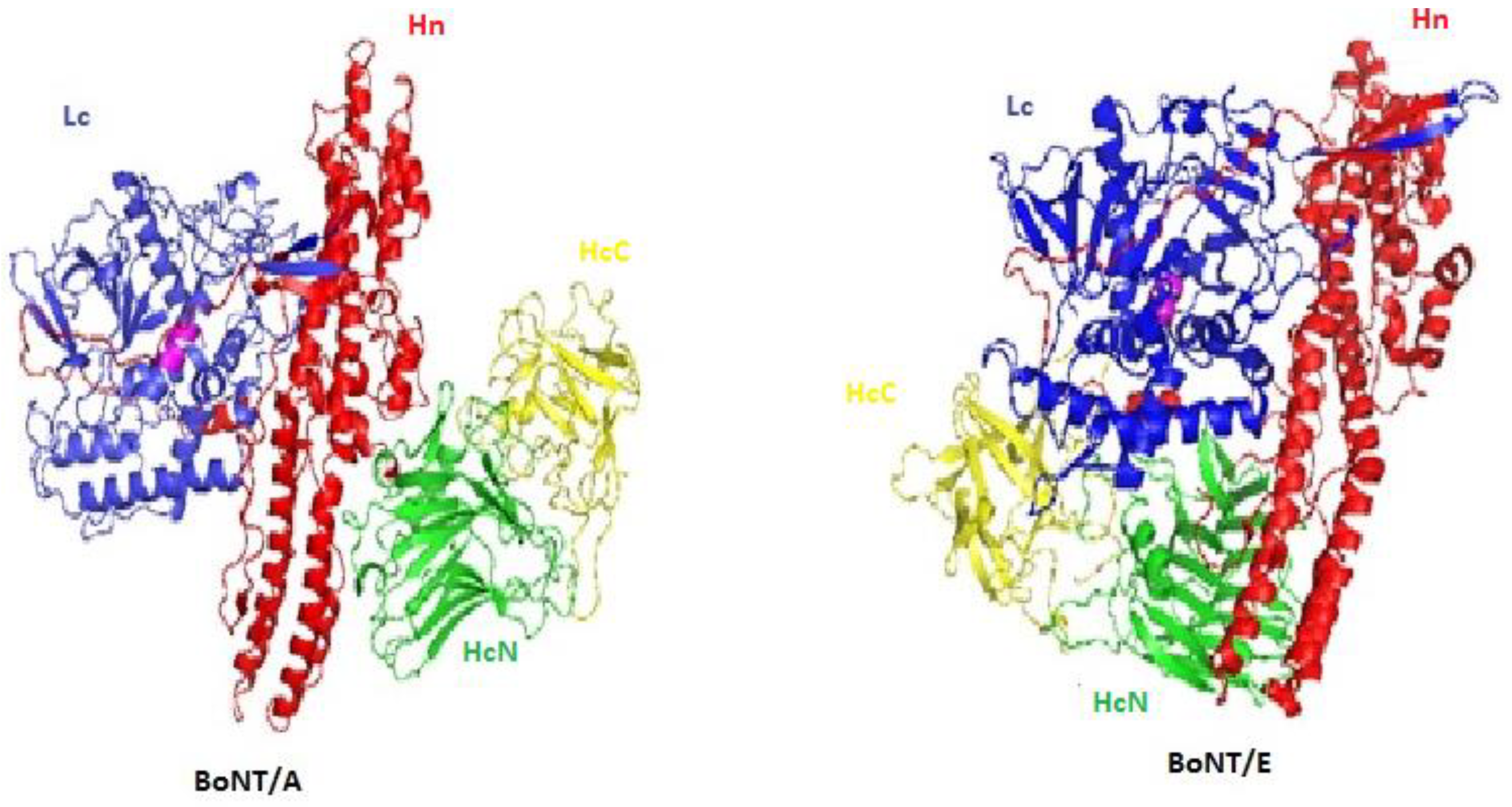
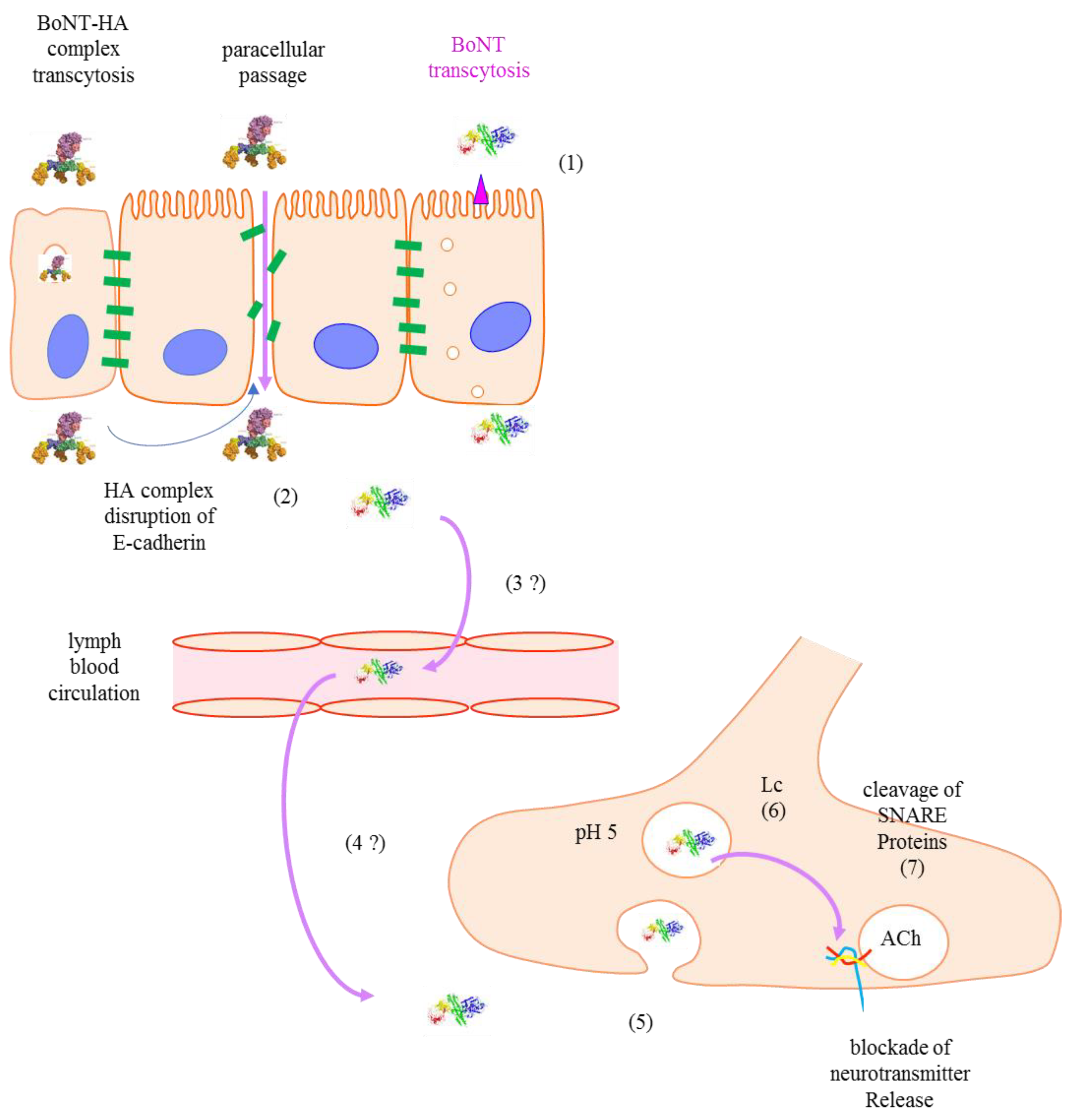

| Timeline | Name/Affiliation | Event |
|---|---|---|
| 886 AD | Emperor Leo IV | banned ‘blood sausage’ as it caused fatal illness |
| 1822 | Justinus Kerner | sausage poison (possible therapeutic use) |
| 1870 | Müller | botulism (Latin: botulus) for sausage |
| 1895 | Van Ermengem | Clostridium botulinum (causative agent of botulism) |
| 1919 | G.S. Burke | determination of minimum lethal dose in guinea pigs |
| 1928 | Herman Sommer | BoNT (purified) isolation |
| 1946 | Carl Lamanna Edward Schantz | LD50 test: neurotoxin activity BTA in in crystalline form |
| 1949 | Arnold Burgen | neuromuscular transmission blockade |
| 1950 | Vernon Brooks | BoNT/A: blockade of acetylcholine from motor nerve endings |
| 1960s | Schantz/Scott | strabismus: monkeys |
| 1980 | Scott | strabismus: humans |
| 1984 | FDA | designates BoNT/A for blepharospasm in adults |
| 1986 | FDA | designates BoNT/A for cervical dystonia |
| 1987 | Drs. Jean and Alastair Carruthers | Cosmetic benefits of BoNT/A found accidentally by ophthalmologists treating patients for involuntary blinking |
| 1988 | Allergan | Oculinum (BoNT/A): clinical trials |
| 1989 | FDA Allergan | Oculinum (BoNT/A): strabismus, blepharospasm, hemifacial spasm and dystonia (~25–40 ng/100 mouse LD50) Allergan buys Oculinum and renames as Botox |
| 1993 | SNAP-25: molecular target of botulinum toxin type A | |
| 1995 | MHRA | approves Dysport® (Ipsen)(~5 ng/500 mouse LD50) for strabismus in UK |
| 2000 | FDA | approves Botox® (Allergan) for cervical dystonia |
| 2001 | -CPMP | Botox® approval for cosmetic procedures in Canada and New Zealand. approves first type B toxin, NeuroBloc® for cervical dystonia |
| 2002 | FDA | approves Botox® for cosmetic therapy (Australia, Switzerland, Taiwan, and Singapore) |
| 2003 | AFSSAPS | approves Botox as Vistabel® (France) |
| 2003 | FDA | approves Myobloc® (Solstice Neuroscience) for cervical dystonia Neurobloc® |
| 2004 | FDA | approves Botox for primary axillary hyperhidrosis (severe underarm sweating) |
| 2006 | MHRA | approves Botox as Vistabel® for treatment of glabellar lines |
| - | Xeomin® (Merz) licensed in Germany for blepharospasm and cervical dystonia in adults | |
| 2006 | Korean FDA | Neuronox® (Medy-Tox) approval for blepharospasm |
| 2009 | MHRA | approves Azzalure® for treatment of glabellar lines |
| 2010 | FDA | approves Botox® to treat chronic migraine |
| 2011 | FDA | approves Botox to treat specific form of urinary incontinence: bladder detrusor over-activity in patients with neurologic conditions |
| FDA | approves Xeomin (incobotulinumtoxinA) as Bocouture® for cosmetic uses in adult patients | |
| 2012 | NHS UK | approves Botox® to treat chronic migraine |
| 2013 | Thailand | approves Nabota® (Daewoongs Pharmaceuticals) |
| 2014 | China | BTX-A product also approved as Lantox® and Prosigne® (Lanzhou Institute of Biological Products, China) |
| 2015 | FDA | FDA Approval of Xeomin (incobotulinumtoxinA) for adult upper limb spasticity |
| 2017 | FDA and EMEA | approve Botox® and Dysport® to treat adult upper and lower limb spasticity and Dysport® only to treat children lower limb spasticity |
| 2018 | FDA | FDA approves Xeomin® for sialorrhea |
© 2018 by the authors. Licensee MDPI, Basel, Switzerland. This article is an open access article distributed under the terms and conditions of the Creative Commons Attribution (CC BY) license (http://creativecommons.org/licenses/by/4.0/).
Share and Cite
Rasetti-Escargueil, C.; Lemichez, E.; Popoff, M.R. Variability of Botulinum Toxins: Challenges and Opportunities for the Future. Toxins 2018, 10, 374. https://doi.org/10.3390/toxins10090374
Rasetti-Escargueil C, Lemichez E, Popoff MR. Variability of Botulinum Toxins: Challenges and Opportunities for the Future. Toxins. 2018; 10(9):374. https://doi.org/10.3390/toxins10090374
Chicago/Turabian StyleRasetti-Escargueil, Christine, Emmanuel Lemichez, and Michel R. Popoff. 2018. "Variability of Botulinum Toxins: Challenges and Opportunities for the Future" Toxins 10, no. 9: 374. https://doi.org/10.3390/toxins10090374
APA StyleRasetti-Escargueil, C., Lemichez, E., & Popoff, M. R. (2018). Variability of Botulinum Toxins: Challenges and Opportunities for the Future. Toxins, 10(9), 374. https://doi.org/10.3390/toxins10090374

